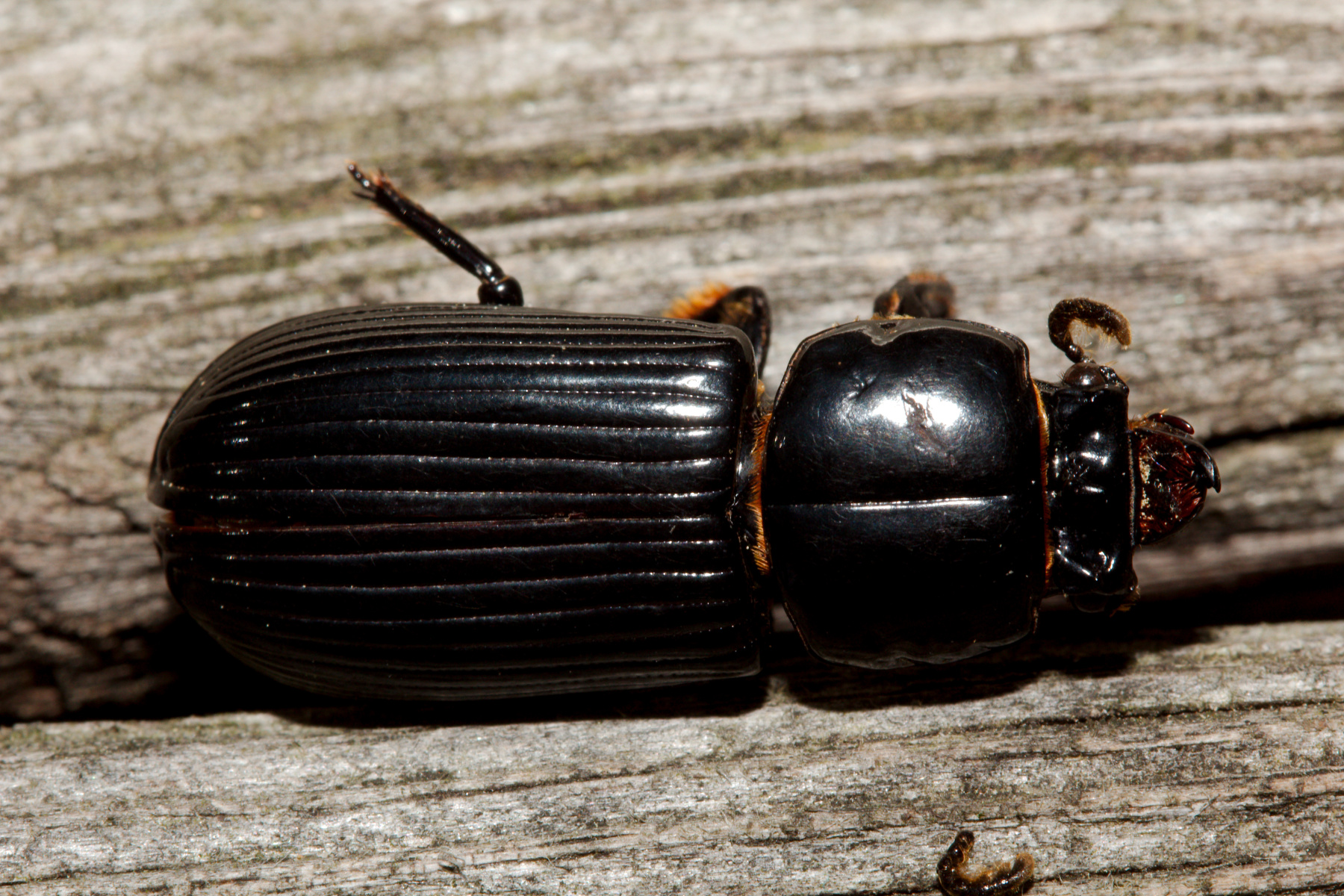
According to Bugguide.net, the common name for this beetle listed by the Entomological Society of America is horned Passalus. The common name used by laypeople, however, is Bess Bug. This apparently comes from the French word, baiser, “to kiss.” That in turn probably refers to the sound it makes (stridulation), which sounds a bit like a squeaky “kissy” sound. They eat rotting wood, so it was no surprise this was found where it was, in an area that has a fair amount of wood for beetles to eat. This one is dead, as perhaps you can tell, which made it much easier to photograph, although because of that it lacks a certain something. Still, I think it’s a beautiful beetle. It looks to me like a quilter went over the elytra (the hardened forewings on its abdomen) an put neat rows of stitches down their length.
Odontotaenius disjunctus (Horned Passalus)
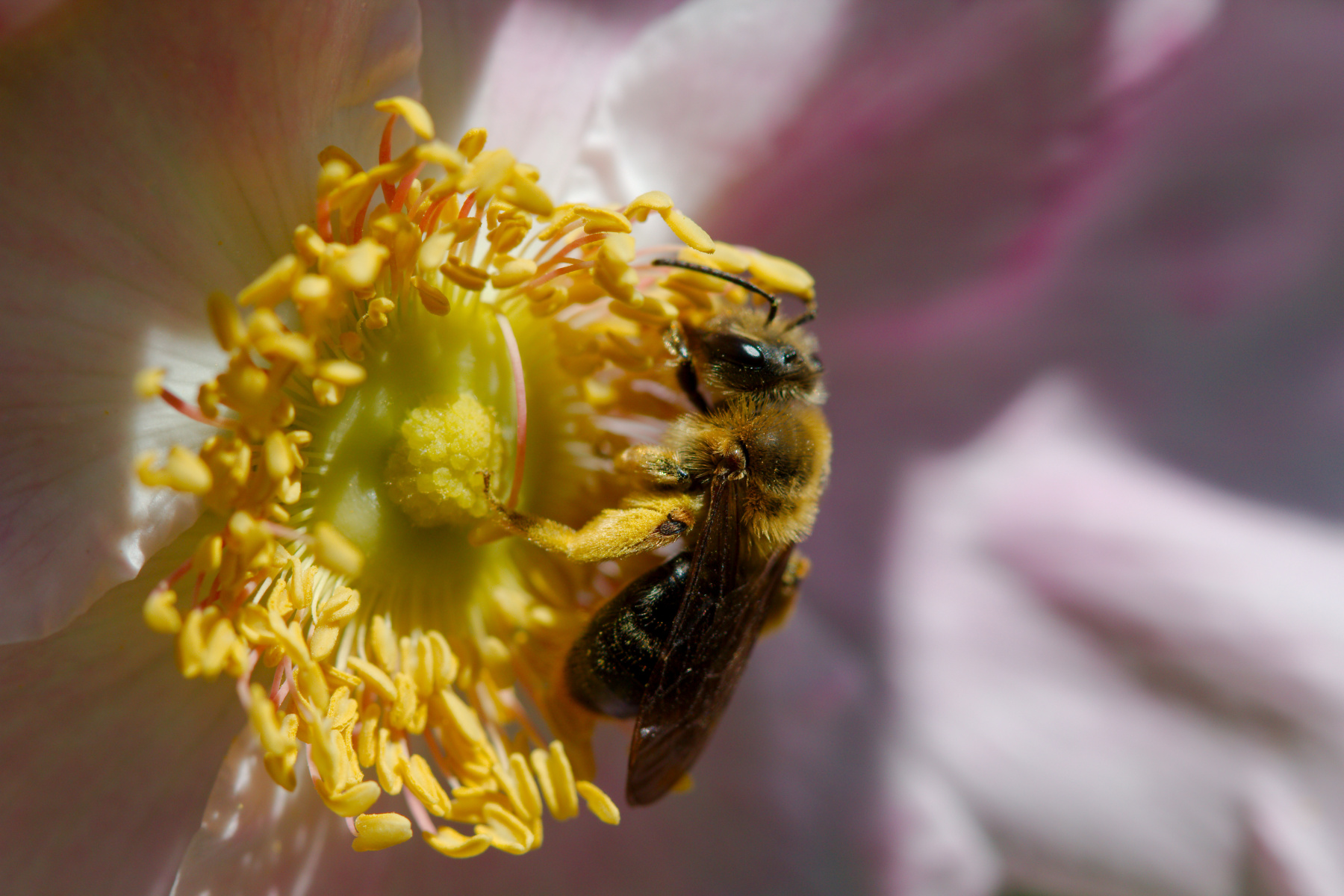
Honey Bee on Rosa micrugosa
We had a late spring this year in the mid-Atlantic region with snow and sleet up to the end of March and cooler than normal well into April. Most plants have been about two weeks behind normal in terms of blooming and the roses are no exception. I have one bush in bloom (and it’s glorious) with the others just about ready to start. I visited Nick Weber’s rose garden this morning knowing ahead of time that there wouldn’t be a lot to see. Of course, 2% or 3% of Nick’s roses is still more than most people have, but the best is definitely yet to come. I got to see a few early bloomers, which was a treat, and I enjoyed this honey bee on a R. micrugosa bloom.
Abstract
Cathy and I went out to dinner this evening. While I usually have my camera with me these days, usually a crowded restaurant isn’t the sort of place I’m comfortable taking lots of pictures. I had the camera sitting on the table as we waited for our meal, however. I turned on the screen on the back and moved it around. seeing what I could see through the electronic viewfinder and taking a few pictures. This abstract image is one of those pictures. I’m not sure what it is supposed to convey, but there you are.
Aquilegia (Columbine)
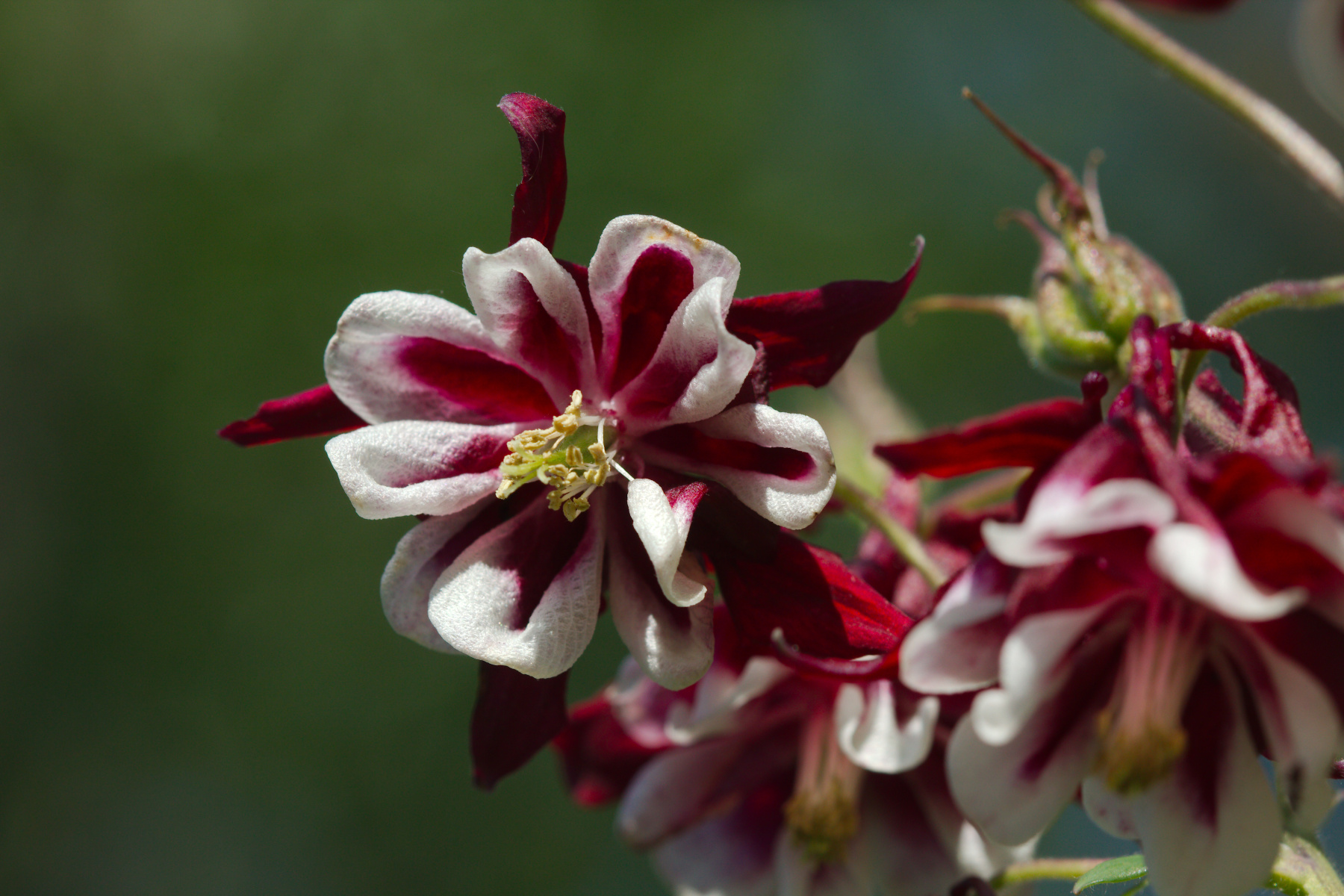
We have a fair amount of columbine in our garden, scattered around in various places and even in containers. Most of it looks like this, dark red tending ever so slightly towards purple, with white around the edges. We have on that is pink and one that is almost blue and I’m quite happy for the variety. We really do need to get more colors, since they are available.
This is growing in the back corner of the yard, near the Lenten rose and epimedium.
Rosa multiflora
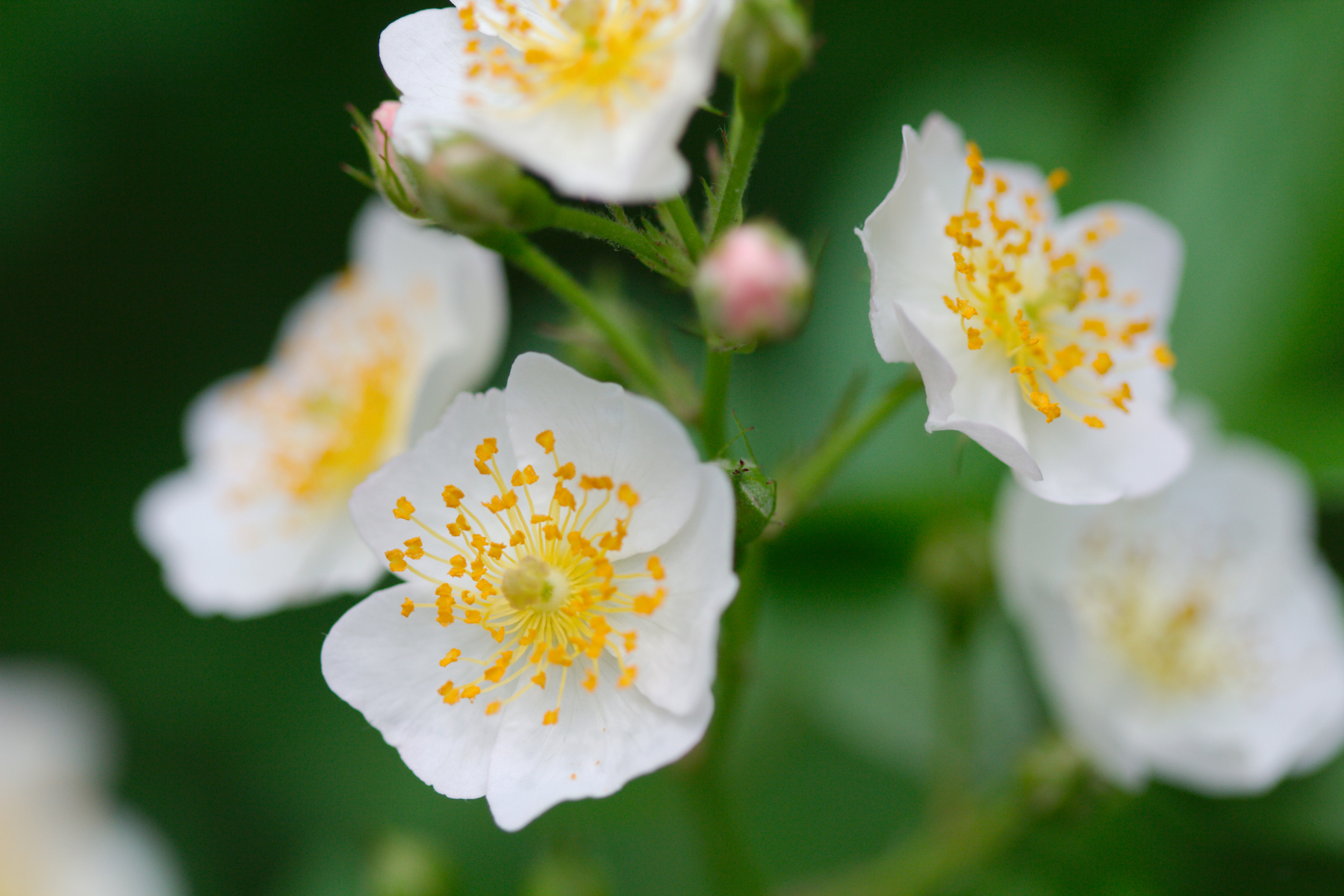
Cathy and I took a walk early this afternoon. The multiflora roses are starting to bloom, so I took a few pictures (sorry, it’s that or a disgusting deer skull, I’m afraid). As most of my friends know, I’m a fan of roses, but R. multiflora can certainly be a pest. It is a strong, vigorous grower and doesn’t seem to be bothered by many of the ailments that are so much trouble in the garden — blackspot and rust, to name a couple. The flowers are also very small and generally pure white, and of course, they only bloom once a season. But they are still quite pretty little things, when they aren’t your responsibility to get rid of.
Spanish Bluebells and Forget-Me-Nots
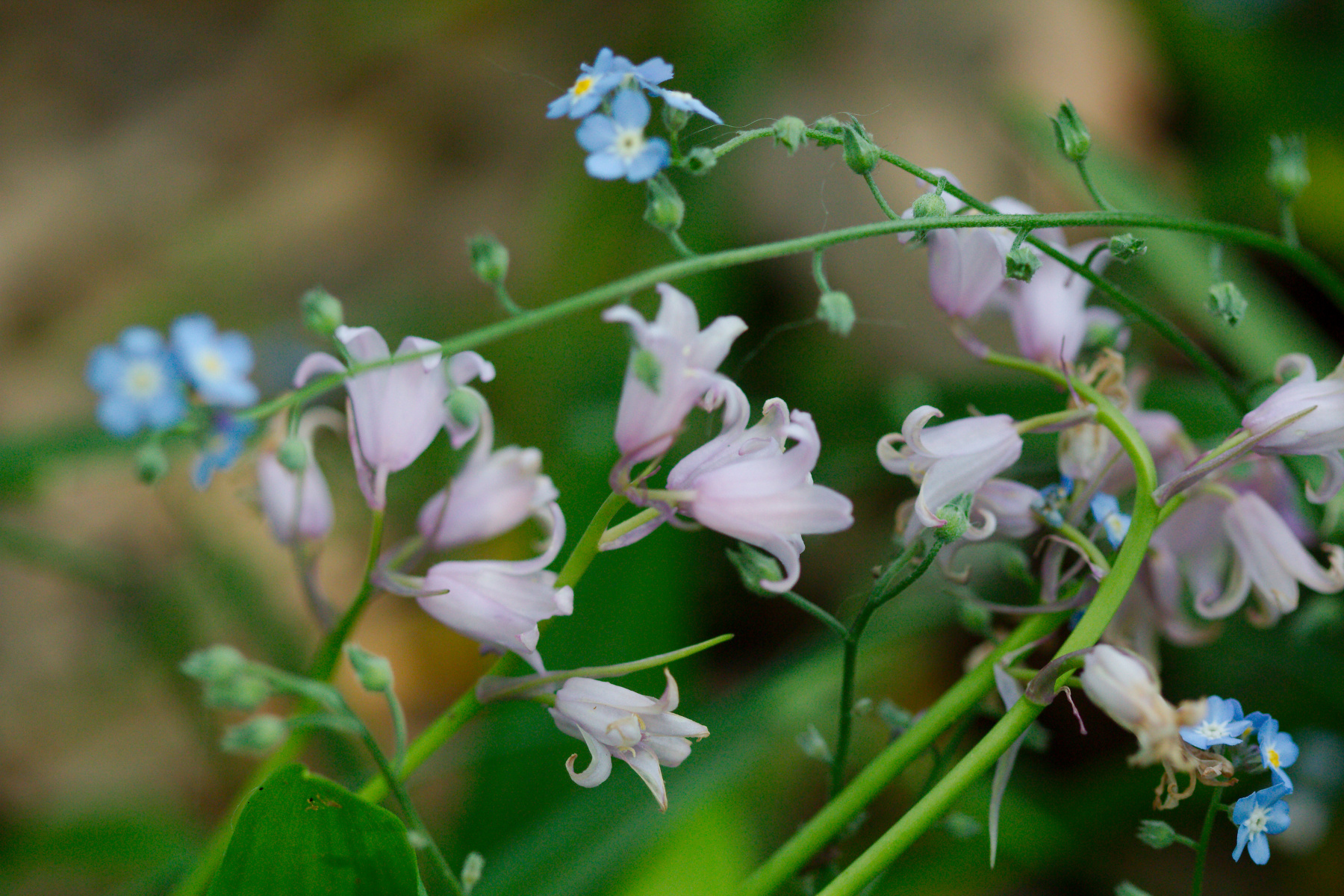
I didn’t exactly promise that I’d post a picture of the Spanish bluebells (Hyacinthoides hispanica) the other day, when I put up a picture of Lily of the Valley and Forget-Me-Not, but I sort of mentioned it. They are almost finished now, but there are a few holding on still and I took some pictures today. So, here are the Spanish bluebells, which are actually more closely related to hyacinths than to our native Virginia bluebells, along with the Forget-Me-Nots. These are growing in our shade garden, under a dying cherry tree on the north end of our front yard. I’ve planted an apple tree near this, so hopefully by the time the cherry finishes dying, there will be something big enough to replace it.
Chives
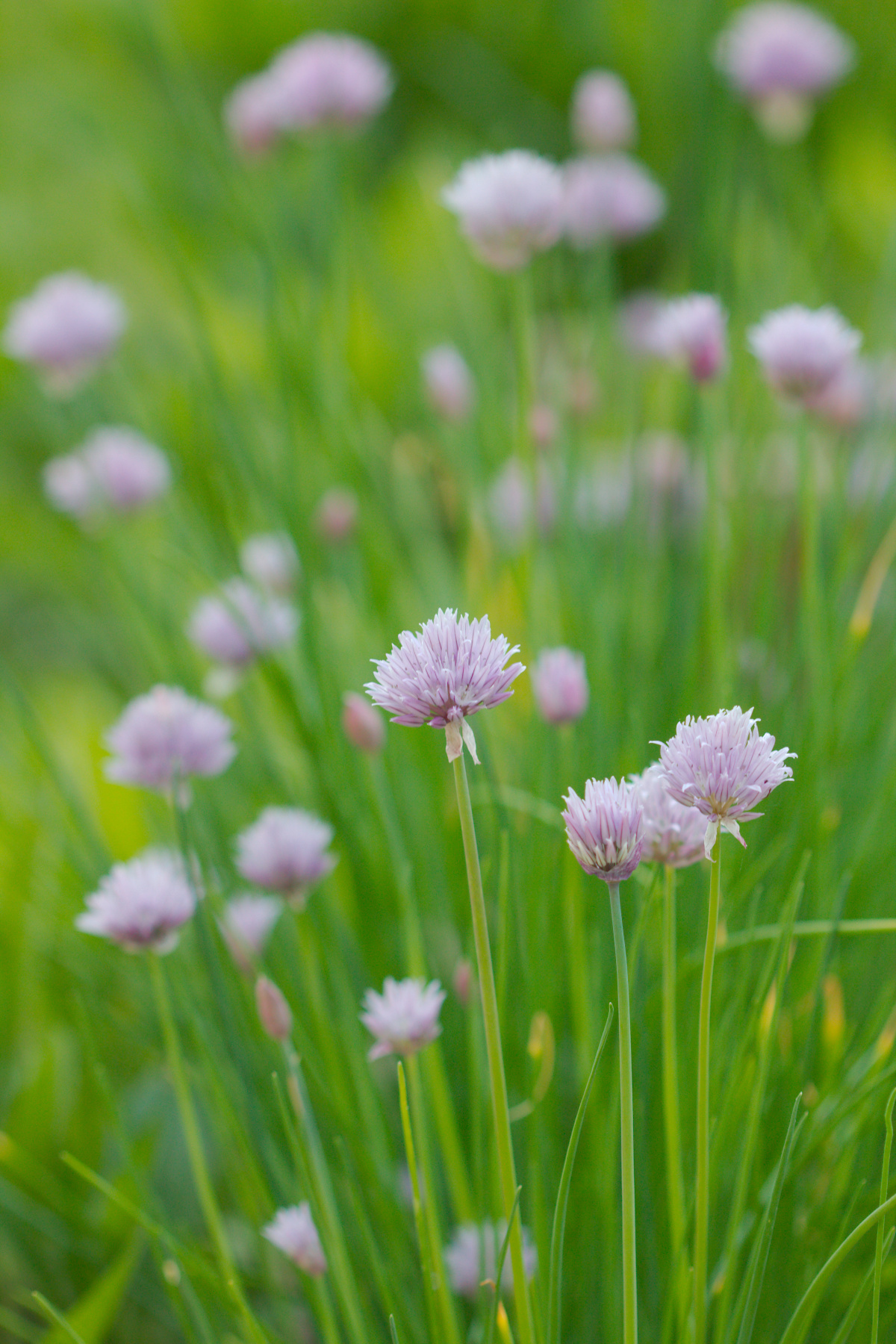
I have a small, rectangular container filled with chives and it comes up each year, happy as ever. Every year I take pictures of the chive flowers but try to get something new, but they really don’t vary very much. So, this year I tried to make it look more like a small section of a field of chives.
One nice thing about having a container of chives is going out with a pair of scissors and cutting a small bunch to add to dinner. I also like cutting a flower head and chopping that up as a garnish. It adds both flavour and colour to a dish. We have a friend who is a little unnerved by flowers in food, but in this case, it really is a good thing. Little pale, purple, and slightly oniony bits floating on soup, sprinkled over a juicy piece of grilled steak, or on a fresh salad adds a wonderful touch.
Try it, you may like it.
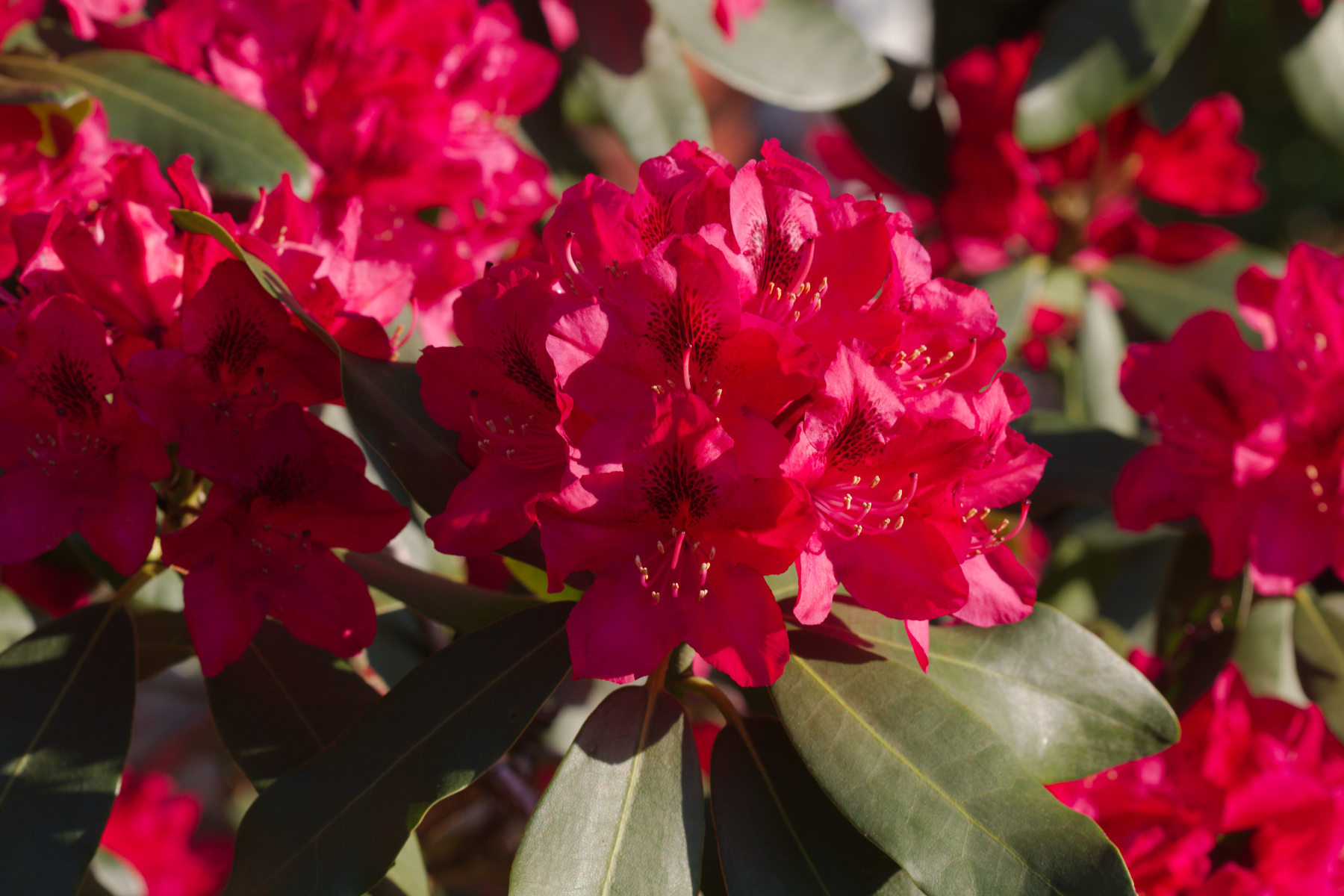
Red Rhododendron
We don’t have any rhododendrons in our yard. Well, we have azaleas, which are in the same genus, but we don’t have any proper rhododendrons. This one, though, is next to our neighbor’s house, on the side facing ours, so we get the benefit of it.
One reason I don’t have any is because I cannot decide what color to get. I do love these red flowers, but some of the paler colors are nice, also. There are even a few with yellow flowers and that might be nice. I know I don’t have enough room for more than a few, so I need to decide.
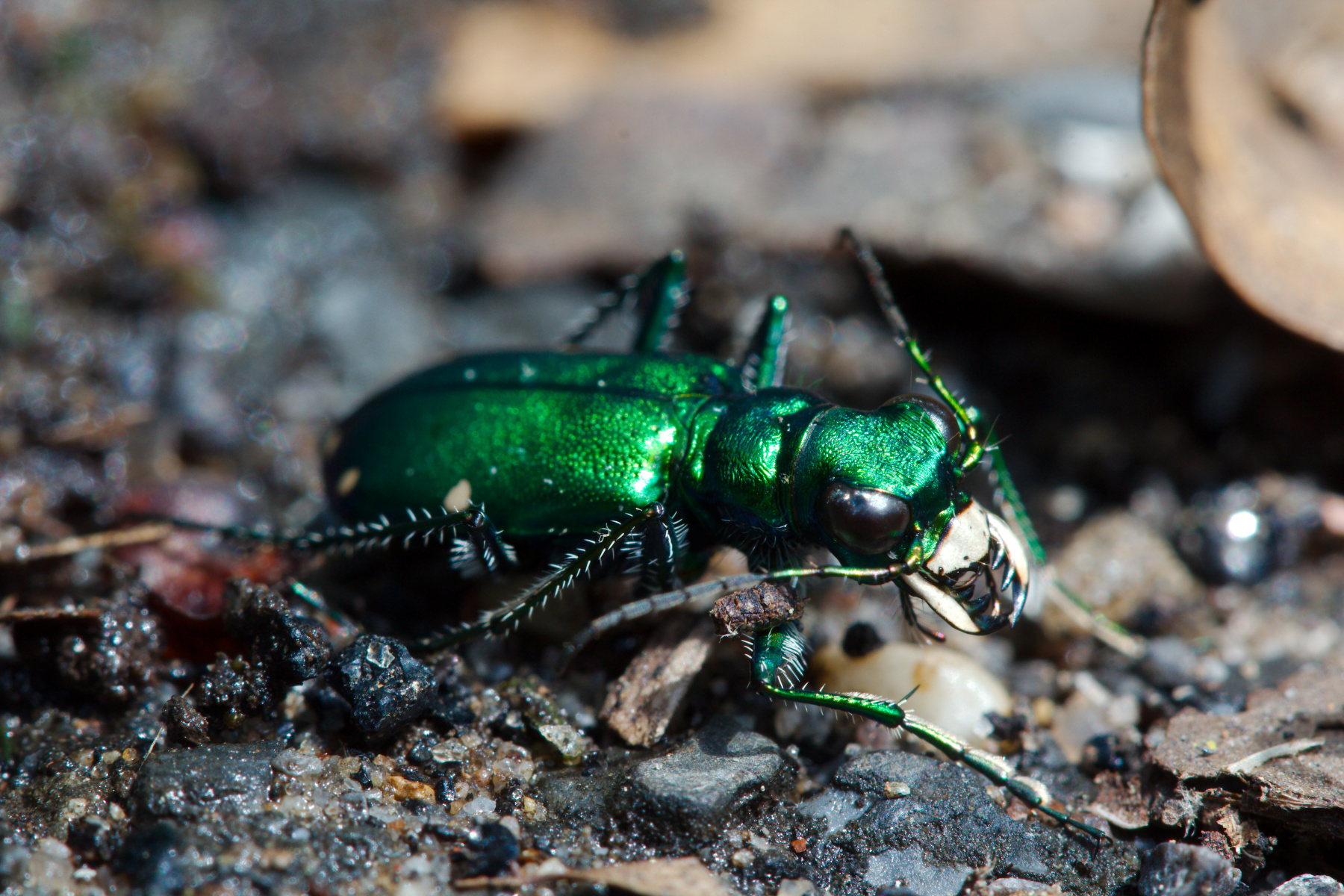
Cicindela sexguttata (Six-spotted Tiger Beetle)
What a beautiful day we had today. Just as well that we had a lot of yard work to do, and we spent much of the day outside. Two of my roses (both Noisettes, ‘Crépuscule’ and ‘Jaune Desprez’) died over the winter. They were both climbers and were pretty good size and very well established but the combination of unusually cold weather and the repeated snow (but mostly the cold, I think) did them in. ‘Crépuscule’ in particular, was more than covering a 10 by 12 foot frame on the end of the house. I need something new for that spot.
Anyway, that has nothing to do with this picture, except Cathy was potting up some seedling lilies and we were moving potted plants around on the driveway. This metallic, green beetle, a six-spotted tiger beetle (Cicindela sexguttata), was under one of the pots. I ran to get my camera but didn’t think it was all that urgent, because it appeared to be dead. After taking a half dozen pictures, though, it moved. I got three more, very quickly, and it flew away. The most impressive thing about this beetle, I think, are its serious mandibles. The eat small insects, spiders, and other arthropods, including other beetles, springtails, sawflies, caterpillars, flies, ants, and grasshoppers.
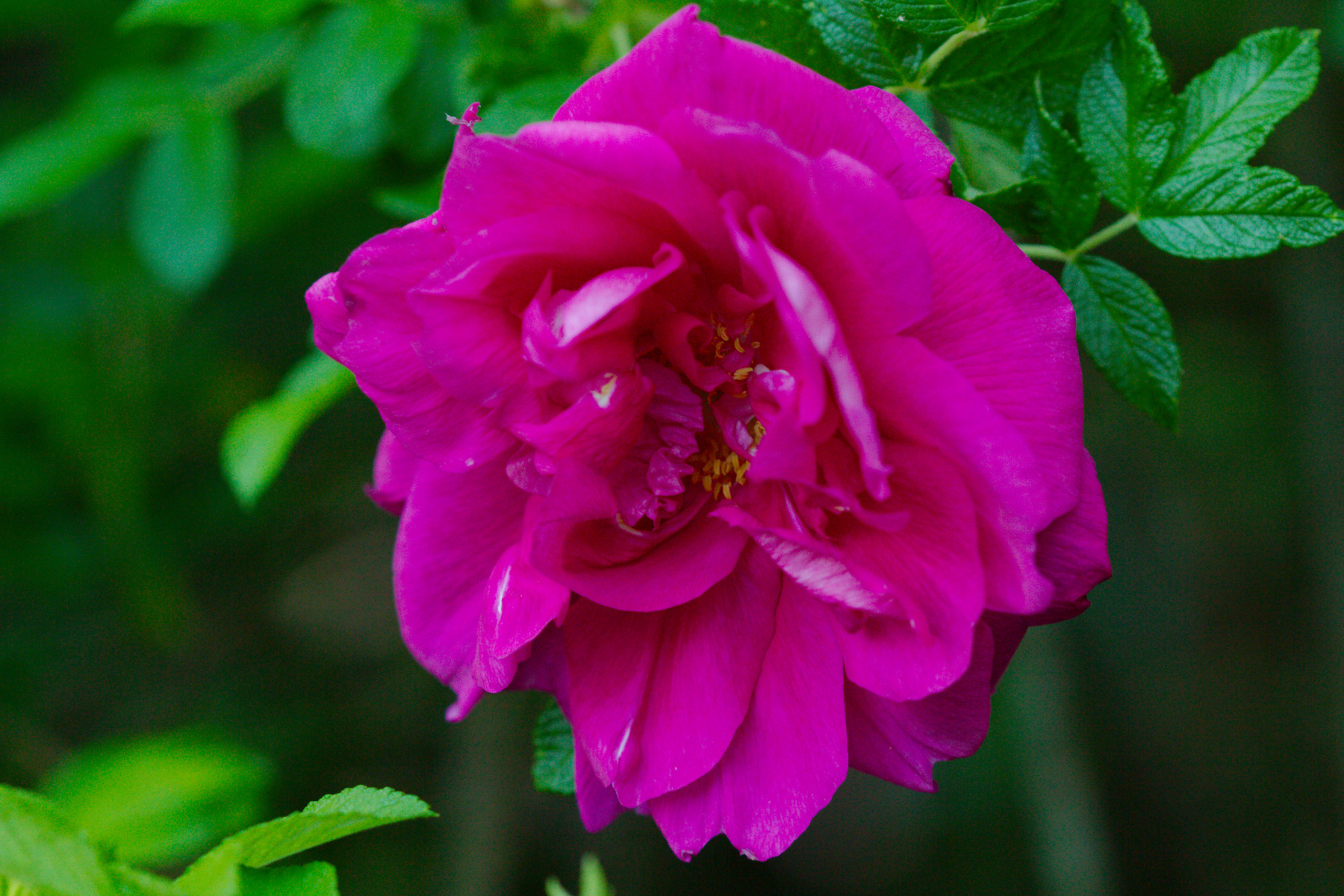
Rose ‘Roseraie De l’Hay’
Most of my roses are a long way from blooming at this point. Like with the bulbs earlier in the spring, we’re at least two weeks behind last year in that regard. One rose, however, the rugosa ‘Roseraie De l’Hay’ is starting to open up. This rose has gotten quite large, about seven feet tall and just about as much across. The flowers, as you can see, are a crimson purple mix. They are very large, about five inches across, and have that wonderful, strong scent so typical of rugosa roses. It’s also a great shrub for birds, because it is so thorny that pretty much nothing of any size can get to them when they are in its branches.
Luna
Luna came to stay with us for a long weekend, while Albert and Brady were out of town. As I post this on Monday, May 19, they are back and Luna is at home, but the evening the picture was taken, on the Ides of May, she was relaxing on our living room sofa. She’s an easy dog to care for, not being particularly excitable, except possibly by other dogs. We did have one “near incident” on a walk, when another largish dog came running towards us, not on a leash. Fortunately that dog was obedient and came as soon as his master called, although a dog that runs loose in the neighborhood is probably destined for a shorter than natural life. In this instance, all was well.
We Are The Champions
It was a very busy day today. Dorothy had her test for Advanced Placement European History from noon to four. Then she had to get to the Mount Vernon Campus of The George Washington University (at Foxhall Road and Whitehaven Parkway, in Northwest D.C.). Cathy and I came from work, getting there as the teams were finishing warming up, so we were able to see the entire championship game. The game went well, from our perspective, and our WCA Wildcats won 9 to 5. Here is the team with their championship banner. For us, the day was a long way from over. We drove from the game to Richmond, dropped Dorothy off at about 11:00 PM, and then drove home, getting in just before 1:00 a.m. tomorrow morning.
Cathy
It’s been a little while since I posted a picture of Cathy, so, here you go. Usually when I post another picture of Cathy or Dorothy, I wonder “aloud” if I’m being too repetitive. This time, I won’t even mention that (oops!). Instead, I’ll say that I’m fortunate, indeed, to be married to such a woman as this.
We’re coming up on 30 years of marriage and in fact, have past 30 years since I asked her (and she agreed) to marry me. That’s a pretty good while, but we aren’t done yet. Of course, no one knows how long he has before he shuffles off this mortal coil (as Hamlet might say). While we need to look to the future, we also need to think back on the past, both with thankfulness and with humility. Thankfulness for all that we’ve been given. Humility in light of our misdeeds, sins both of commission and of omission. Nevertheless, we live in an amazing time, a time like no other in the brief history of mankind. And while there has been and continues to be war and strife throughout the world, we have been blessed with relative peace and prosperity the likes of which has never been seen. I could go on about the abundance we share, but today, I’m thankful for this one person, Cathy, who has been kind enough to live with me. And for as many more years as we are given. Thank you.
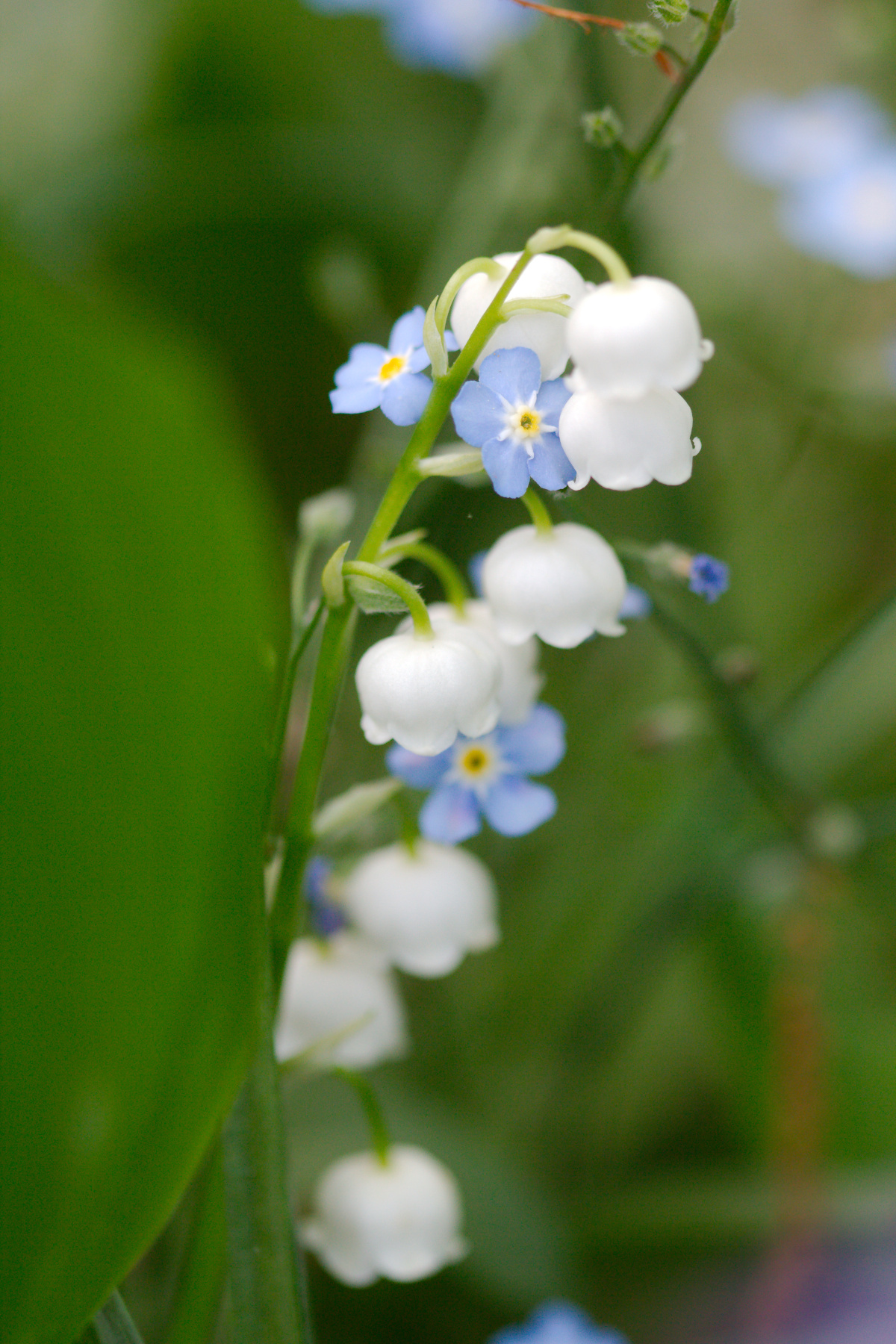
Lily of the Valley and Forget Me Not
I try not to post similar pictures on consecutive days. In fact, I try not to post similar pictures even within a week or two. Sometime, though, I’ll take a picture that I like and then take a similar picture in the next day or two that I like enough more (or enough, anyway) that I decide to post it regardless. This is such a post.
Yesterday’s picture was of a few lily of the valley flowers, looking up at them from a very low angle. This afternoon I decided to take some pictures of the Spanish bluebells (Hyacinthoides hispanica) in the shade garden on the north side of your yard. mixed in with them, however, are some lily of the valley and some forget me nots. I think they go well together. Don’t you?
For those who want a picture of Spanish bluebells, I’ll see what I can do, but not today.
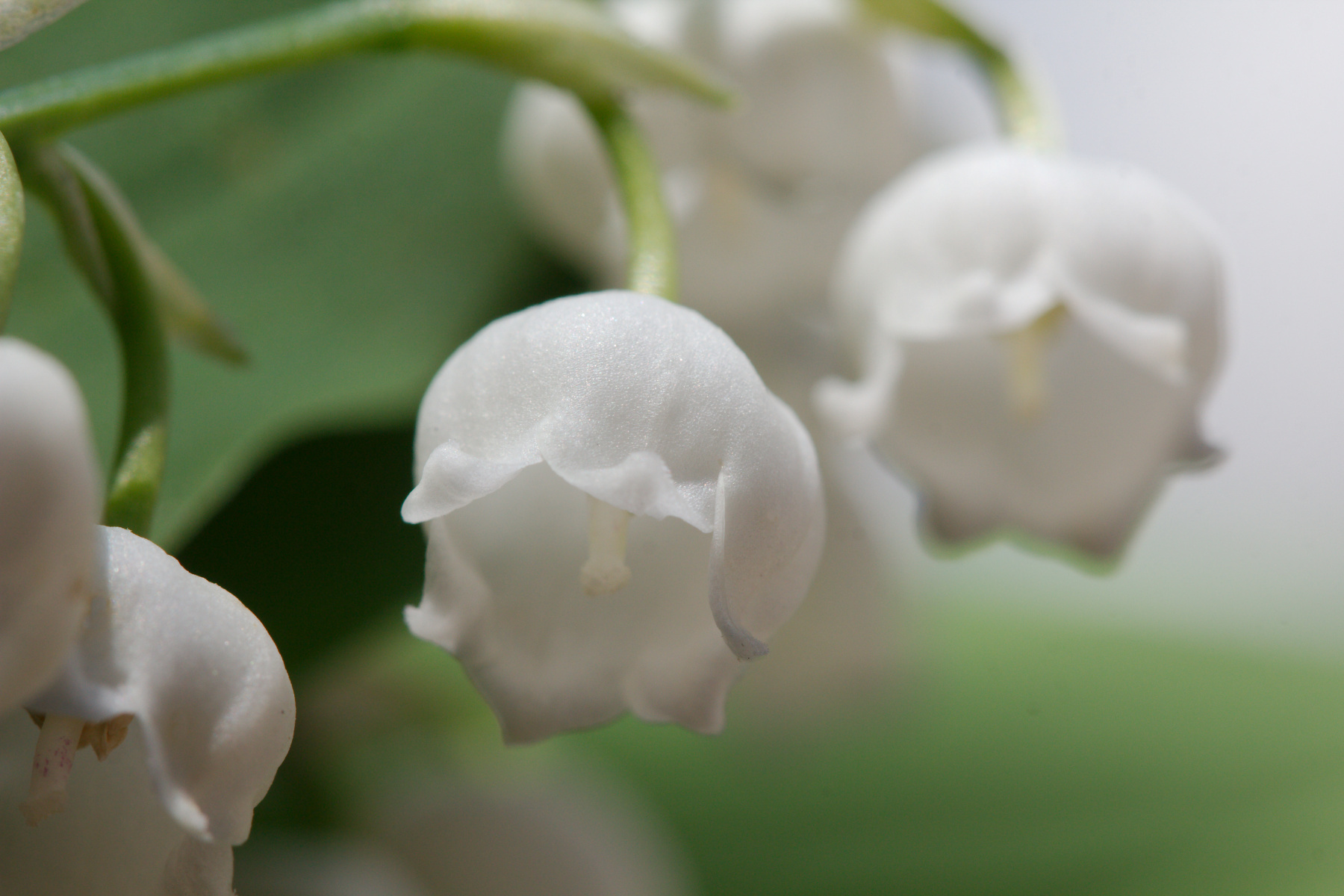
Lily of the Valley (Convallaria majalis)
It’s lily of the valley time, which is certainly a pretty time of year. Buying this pretty little plant can be quite expensive, and while a little will spread and go a long way, it takes a while to get established. We were fortunate in two ways. First, we knew of a house that had been condemned and was to be torn down for a road widening project. We got permission from the owner to take whatever we wanted from her garden, before it was gone. That included a huge amount of lily of the valley. Then, when we moved to our new house a few years later, we found a reasonably large patch already established in one area of the back yard.
One difficulty in taking pictures of lily of the valley (Convallaria majalis) is getting them from a different angle. Most of you know that getting down on the ground doesn’t bother me in the least. But I wanted to get lower still, down far enough that I could look up at the blooms of this little beauty. With a macro lens on the camera, getting down far enough to still have room to focus was the real trick, but I think I’ve accomplished it here. So, an mole’s eye view of lily of the valley flowers.
Terrapene carolina carolina (Eastern Box Turtle)
I saw two box turtles today, this one and another that was much more yellow. This one closed up a fair amount when I first found him (I think this is a male) but with a little patience, I was able to get a few pictures of him. I set my camera down on the ground fairly close and waited for him to open up again. I also saw a newt but didn’t have my camera with me at the time.
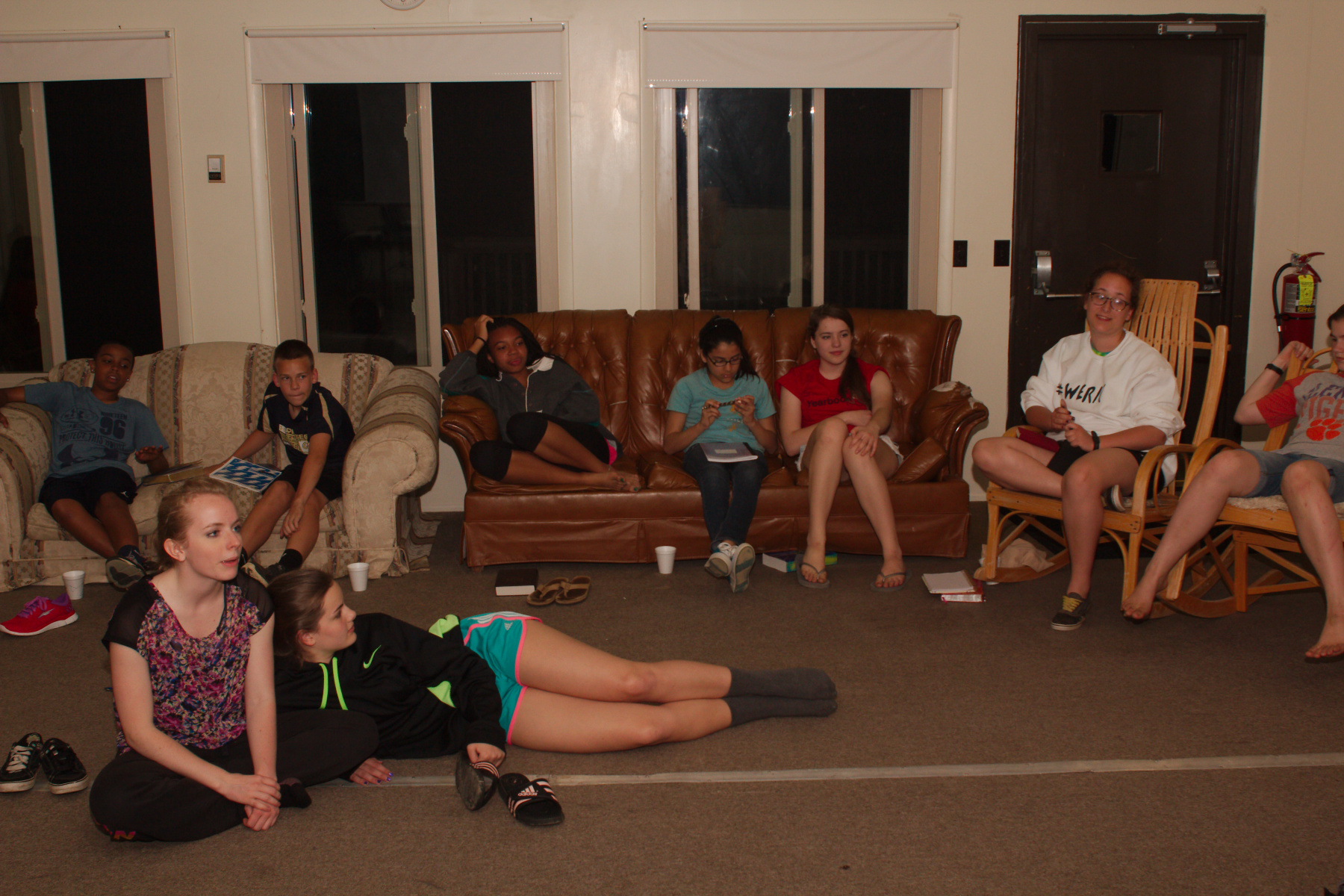
“Winter” Retreat (Spring Edition)
As I was making plans early this year for things to do with the youth group at church, I decided that in addition to our summer trip, it would be nice to have a winter retreat, something close to six months opposite, in late January or early February. Unfortunately, because I was making this decision in late January and early February, it was a bit late. I decided that I didn’t want to wait 11 months for our first winter retreat and I also wanted to include this year’s seniors. So, we had our first “Winter” Retreat on May 9 through 11 (thus the “Spring Edition” part of the name). This picture is of some of our youth, sprawled around the meeting room Friday evening, at Covenant Village in Pennsylvania. If you’re looking for a place for a retreat or camp, you should give Covenant Village a look. We found it perfect for our needs and I’m pretty sure most had a great time.
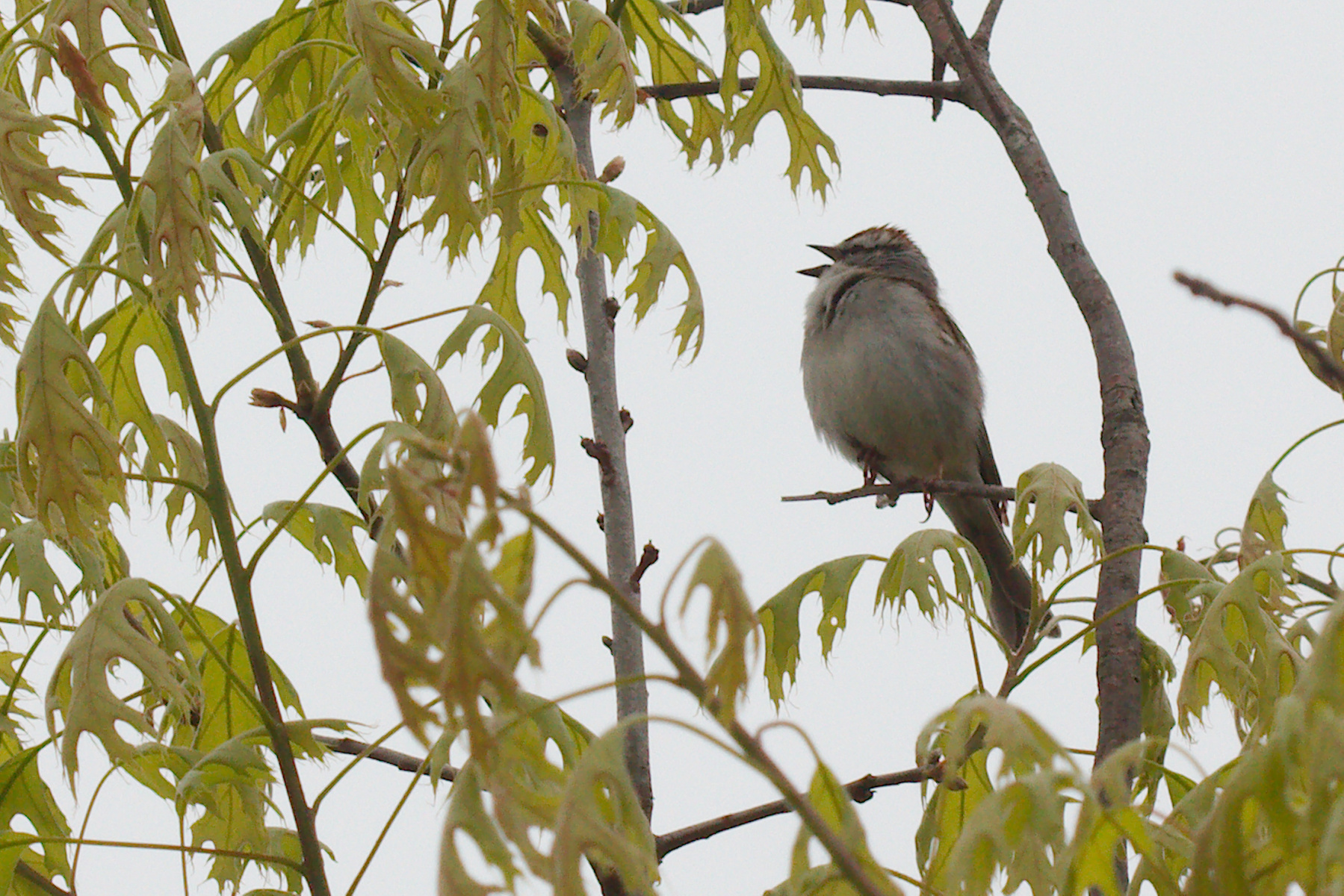
Chipping Sparrow (Spizella passerina)
I dropped Dorothy off at school today for one of her finals (AP Literature, I think) and went in to visit briefly with a few of my friends in the lower school and office. On the way back to the car I heard a high-pitched chirping coming from the top of a small oak tree next to my van. This is the source, sitting high in the tree. I wasn’t sure what it was, partly because of the angle from which I was seeing it but mostly because I don’t know my birds nearly as well as I might. So, I did what any self-respecting person would do, I asked my brothers. Albert and George both thought it looked like a chipping sparrow (the dark line through the eye) and Albert asked if the song sounded like those presented at the All About Birds page for the chipping sparrow. Indeed it did. Quite recognizably.
Katie, Jessie, and Dorothy
I took a bunch of pictures at church this evening and as usual, I had a hard time deciding which one to post. Some of them were not very flattering, so were easy to eliminate. I don’t mind having unflattering pictures of people. They come in handy once in a while, and they are good for a laugh years later. But for posting here, I would rather pick flattering pictures, or at least not-unflattering pictures. This one is pretty nice. It is Dorothy with two of her friends, Katie on the left and Jessie in the middle.
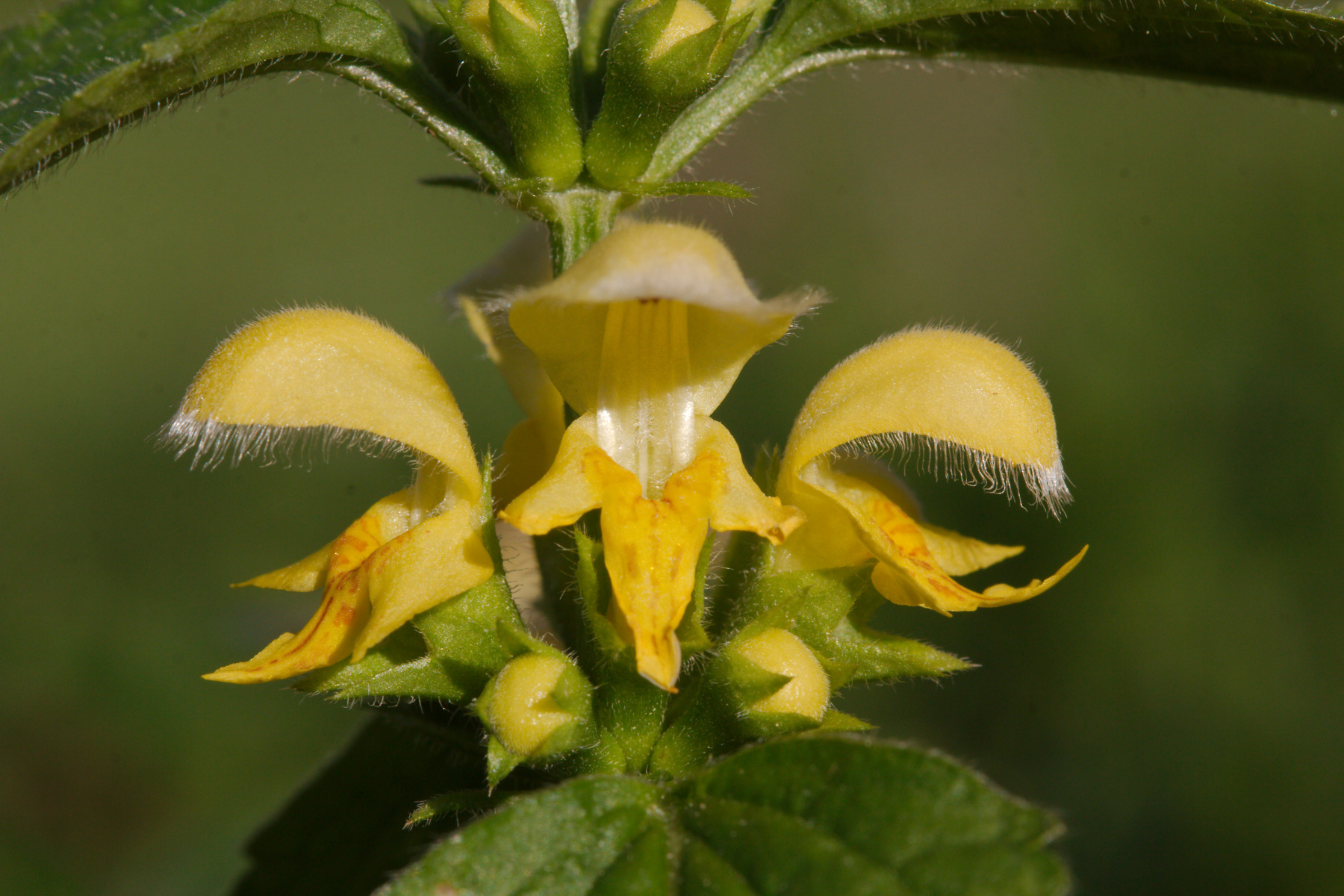
Yellow Archangel (Lamium galeobdolon)
In the area that used to be under the big tree in our back yard there are a few things growing. The tree is gone and we’ll probably change some of the plants, moving them to shadier spots if necessary. I also plan to put a few roses there, now that it’s got a good bit of sun. One of the more successful plants there is yellow archangel (Lamium galeobdolon), a member of the mint family (Lamiaceae). It is considered by some to be an invasive species, although we haven’t found it nearly so problematic as a few other things in our yard. It makes a nice ground cover, although it isn’t evergreen, so it doesn’t do the job year round. It is under a foot tall and, as you can see, has yellow flowers right about now.