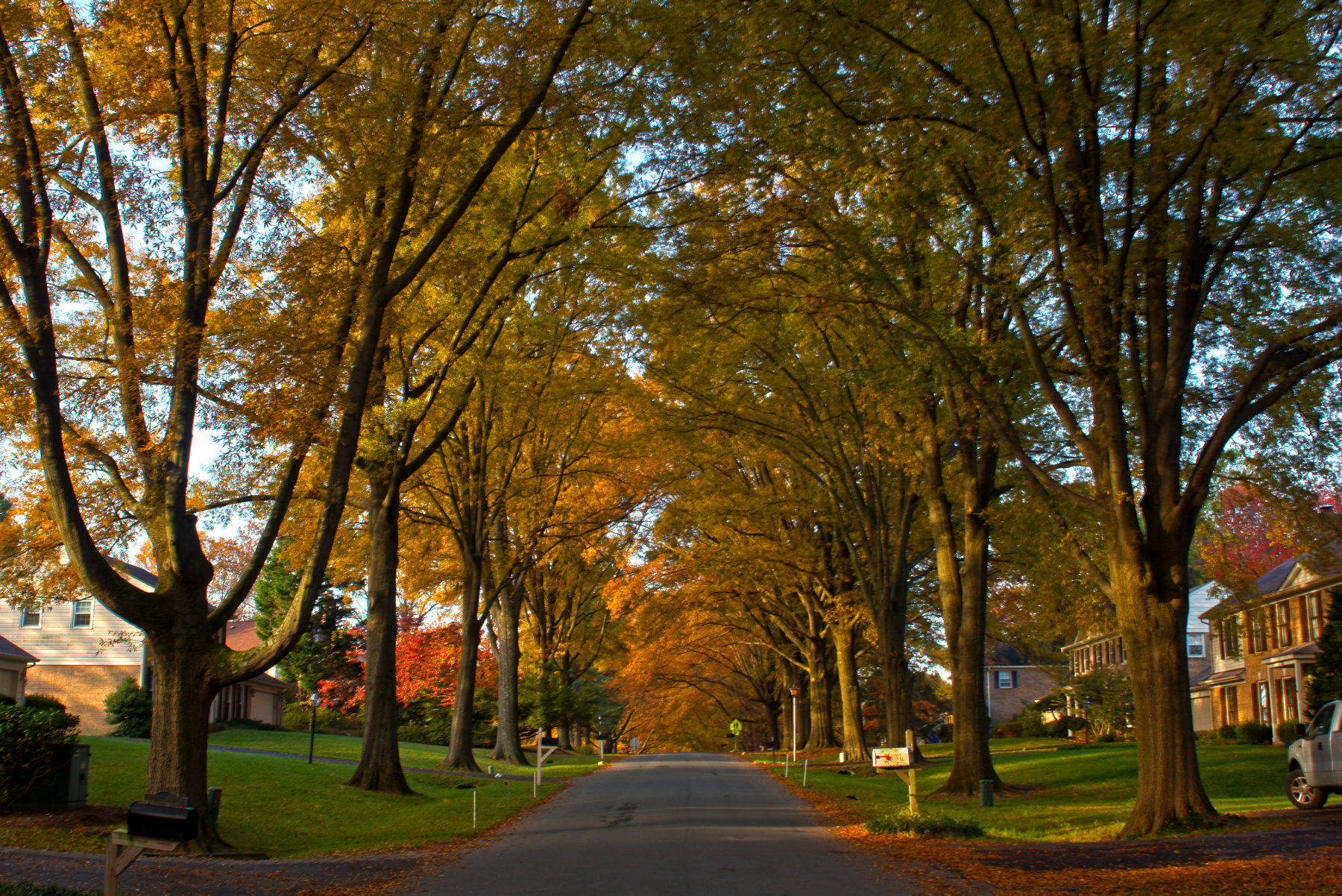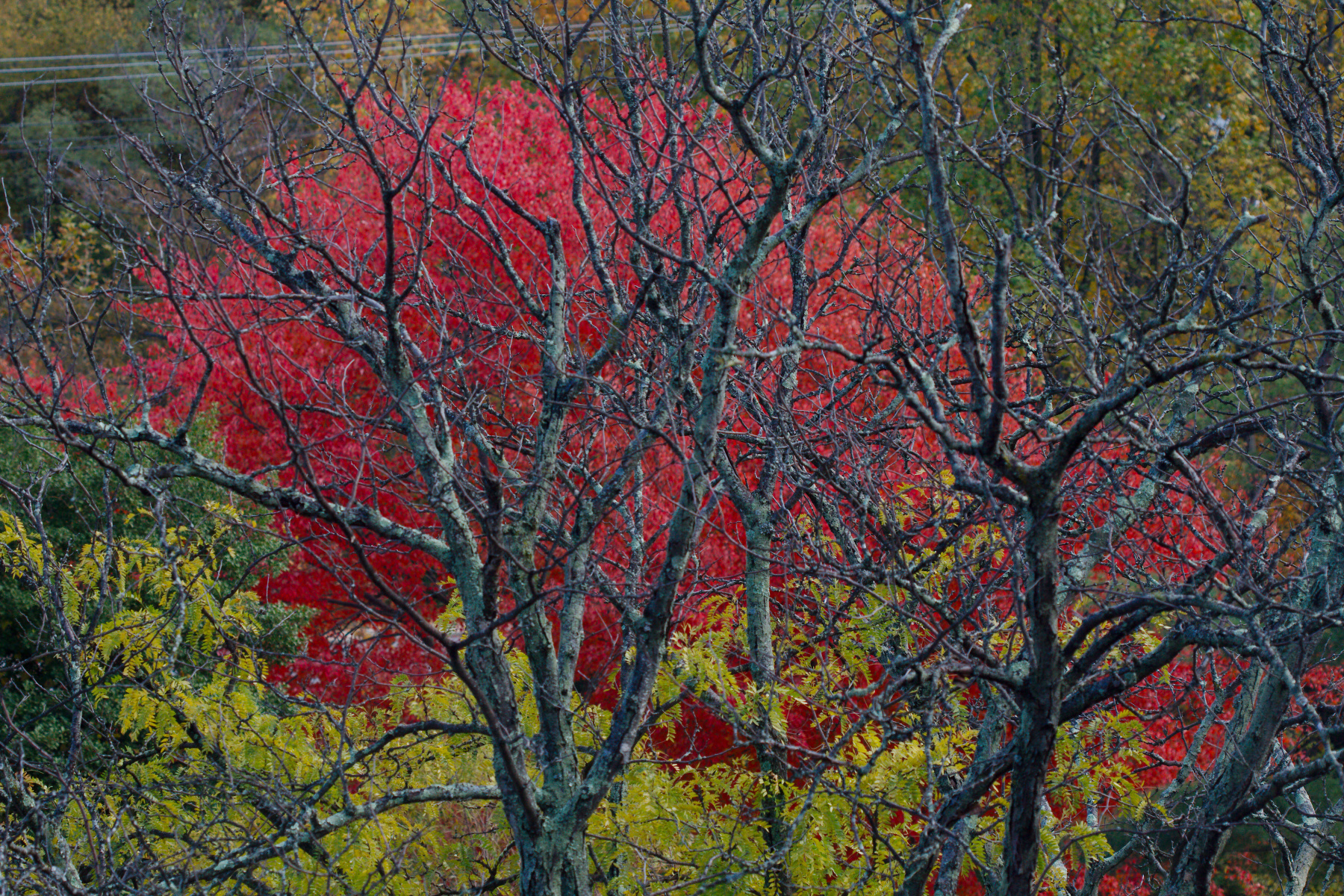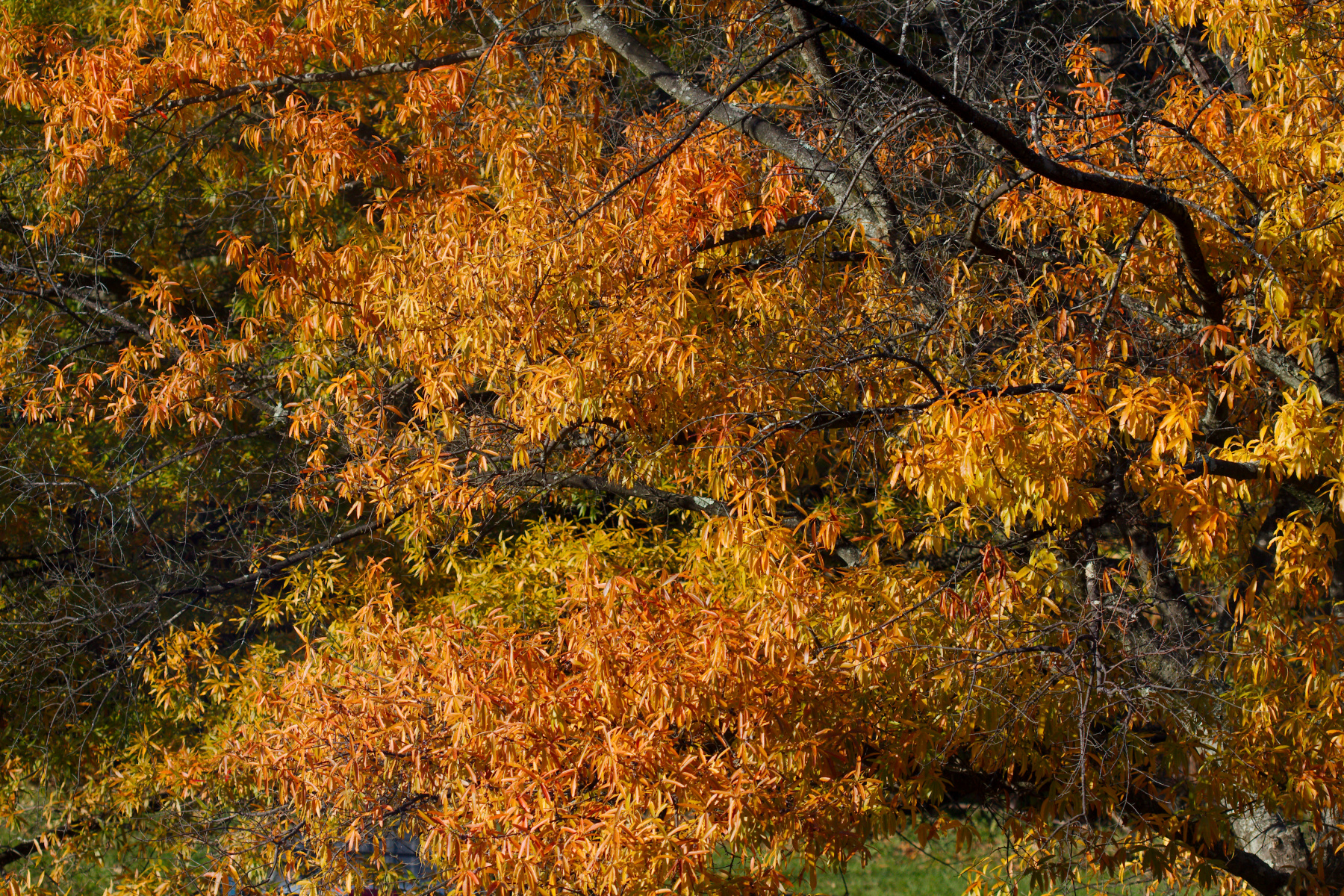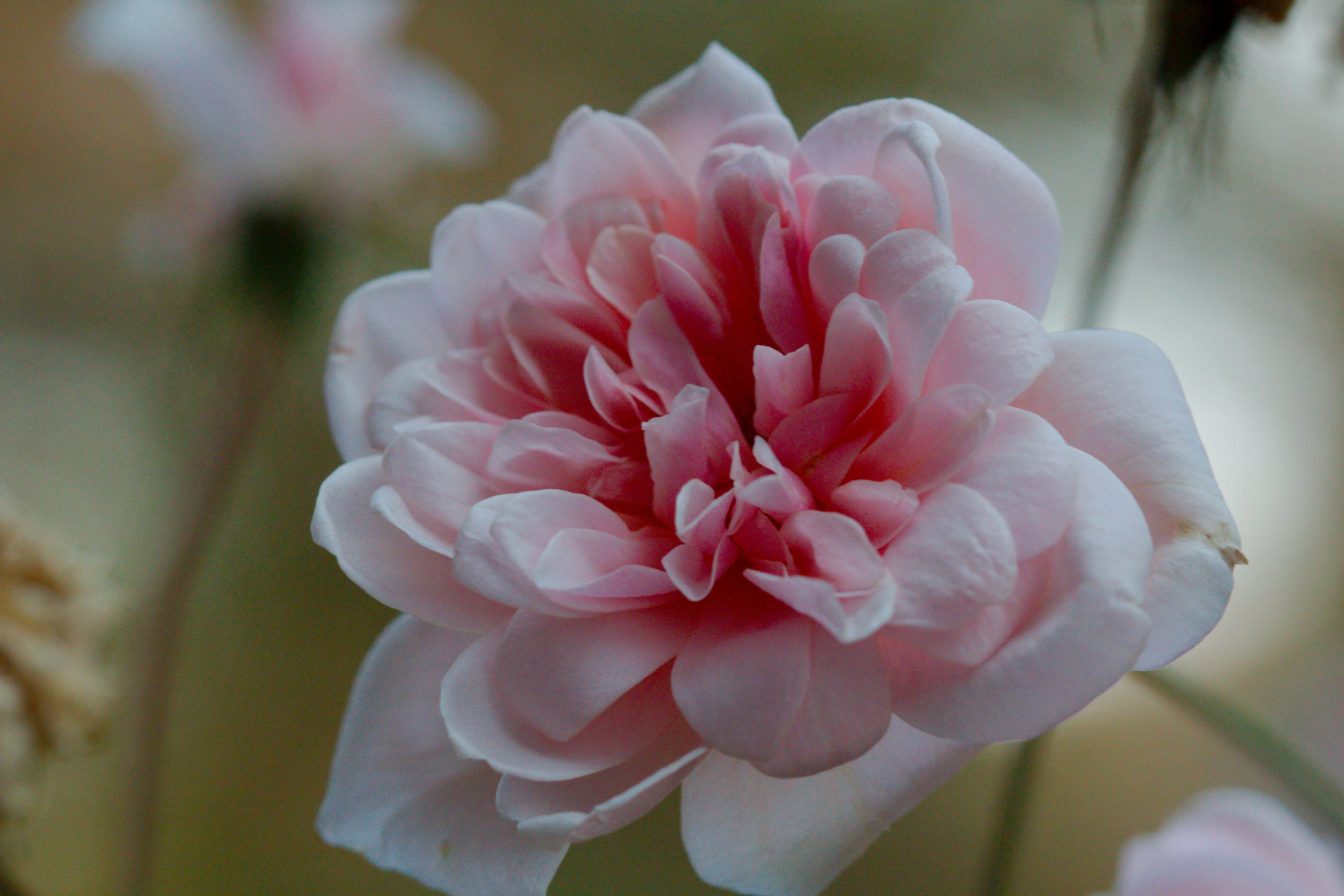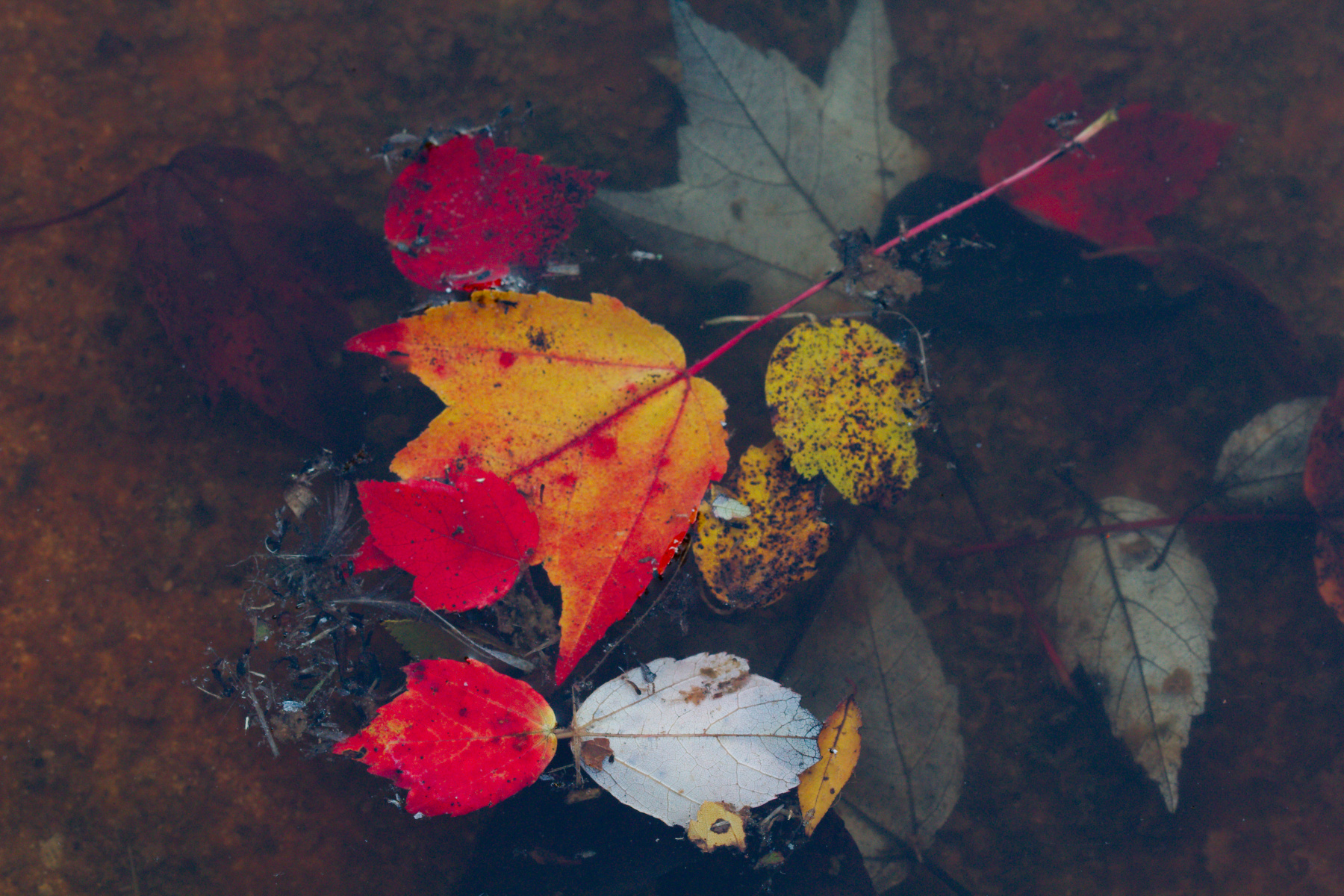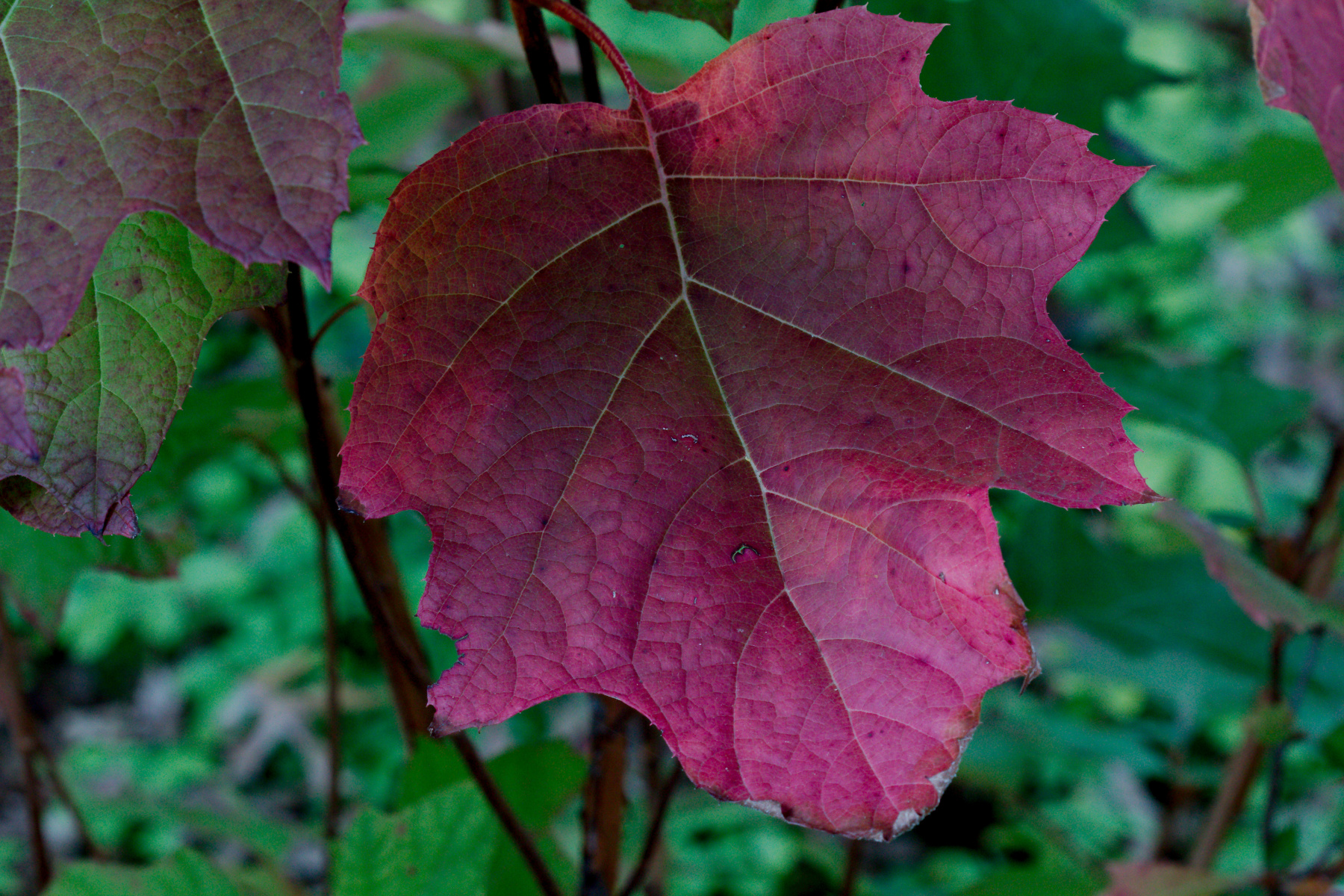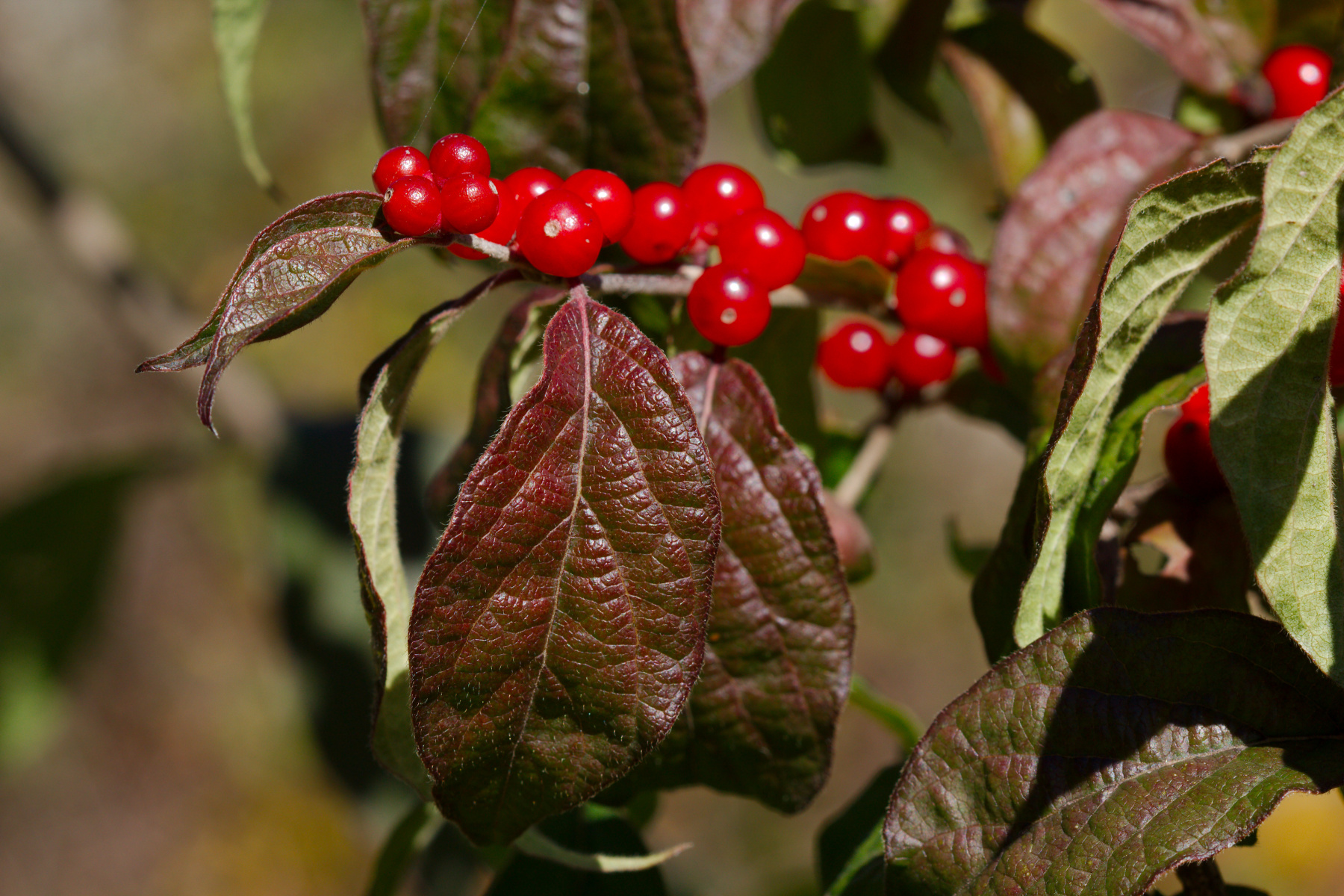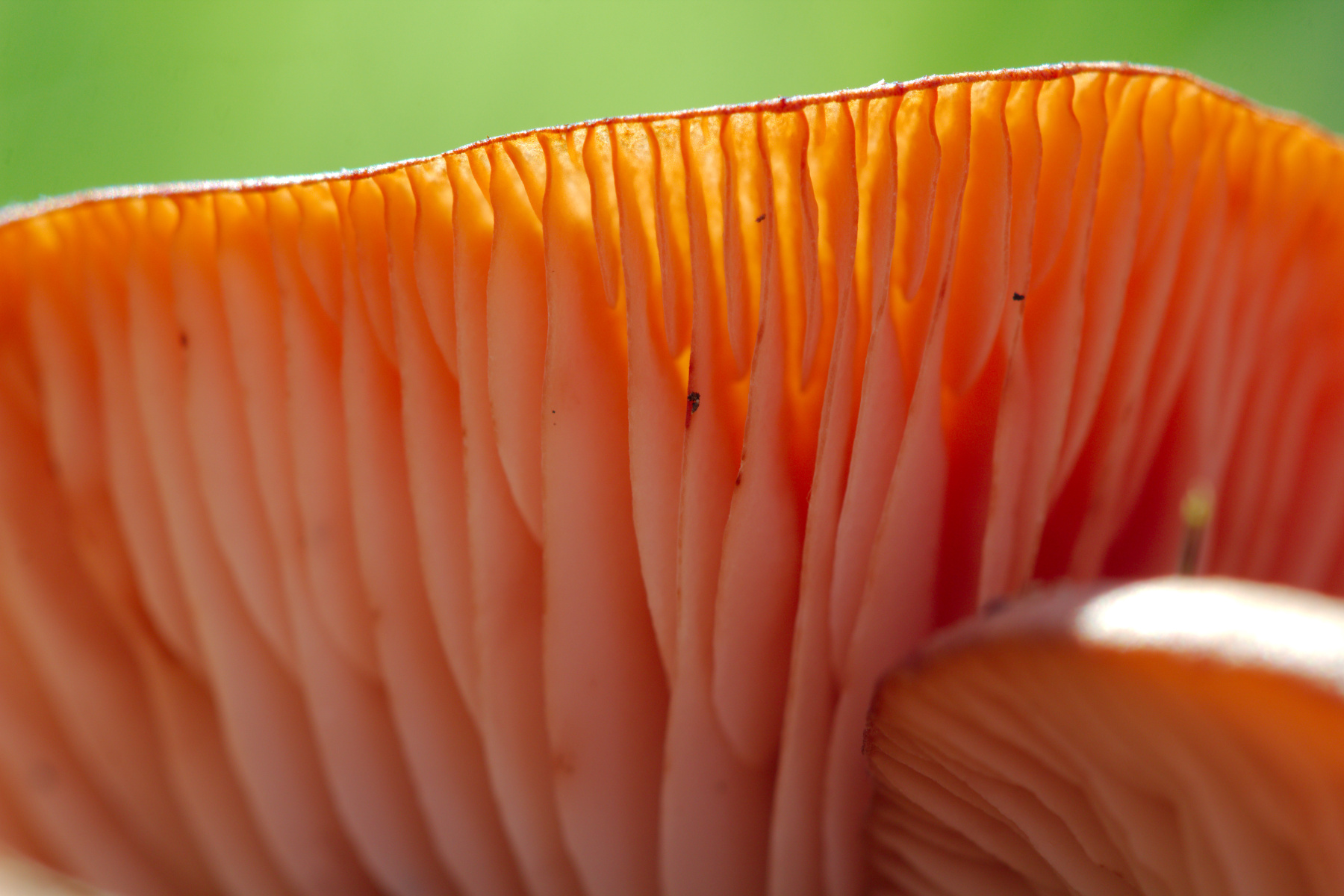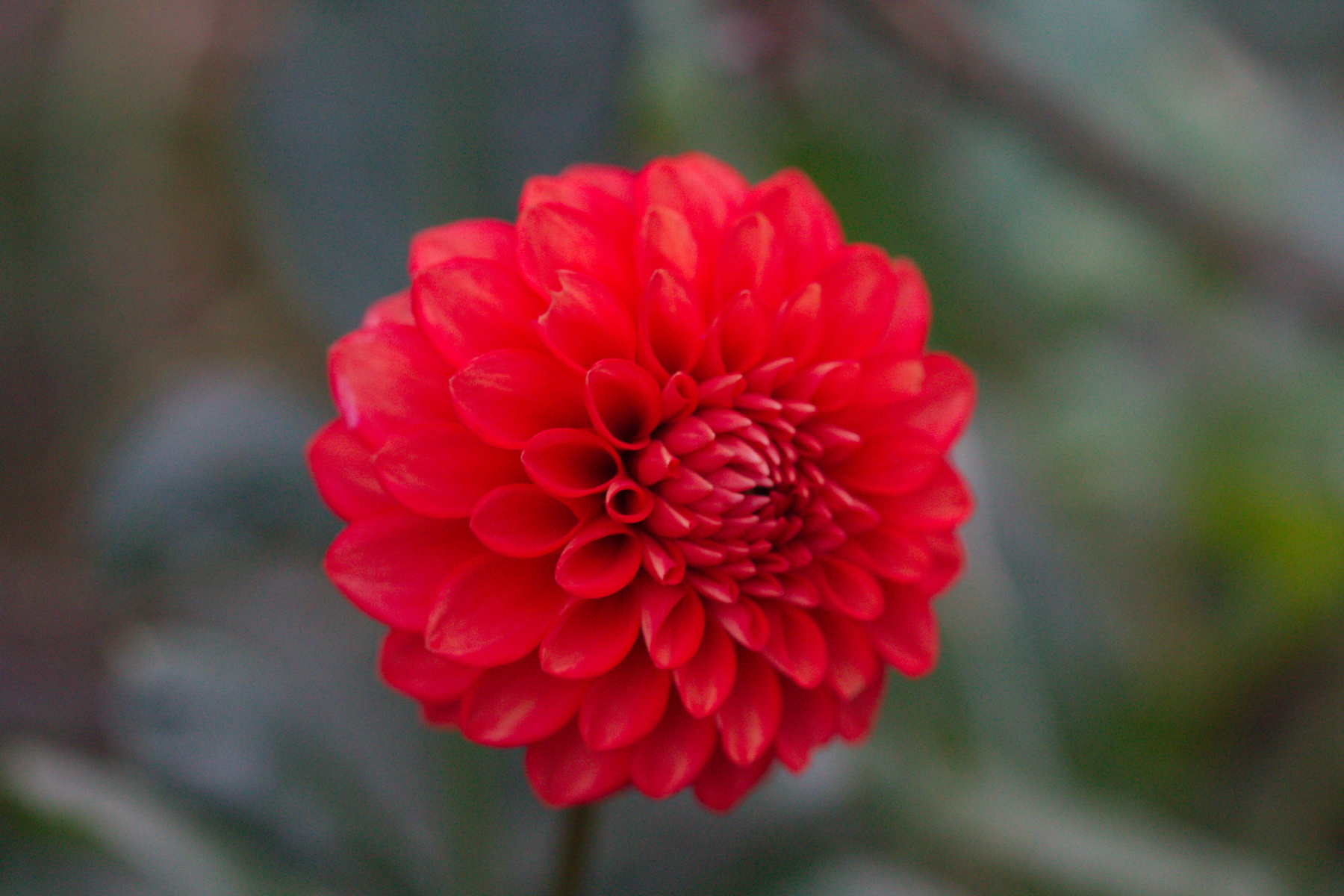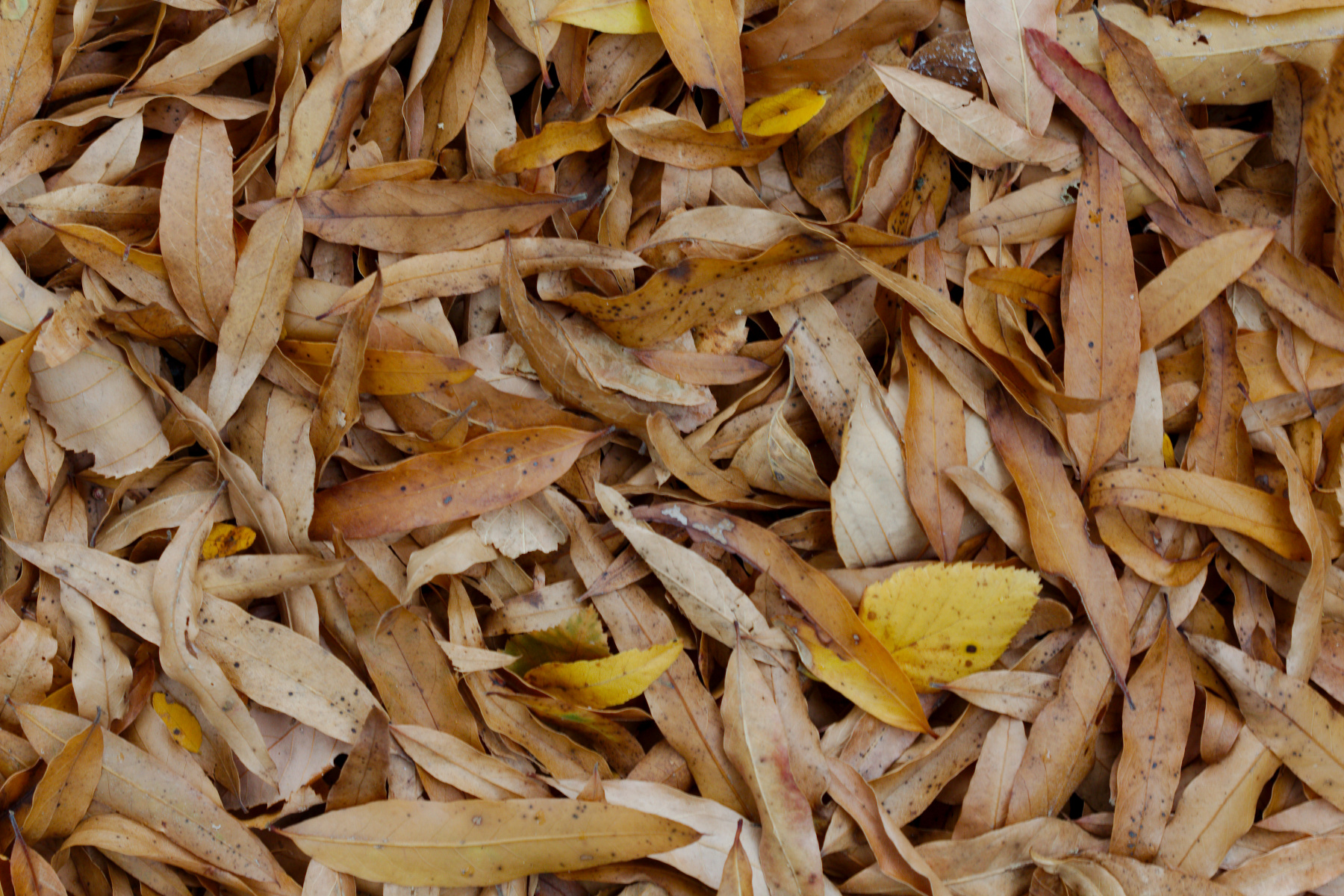
I love a good forest. I guess I’m particularly partial to temperate hardwood forests because that’s what I know best, although the southeast Alaska’s rain forest is pretty amazing, too. But we don’t have to look far to find small pockets of forest, even in our almost entirely suburban county. As the crow flies, this is about two thirds of a mile from our house. It’s not actually a deep, dark forest, certainly not a Mirkwood of Fangorn but it’s at the very least a ‘wood.’ I love the color of beech leaves in winter, particular in contrast to the pale grey of their bark.
Flowers and Plants
Sycamore Leaf
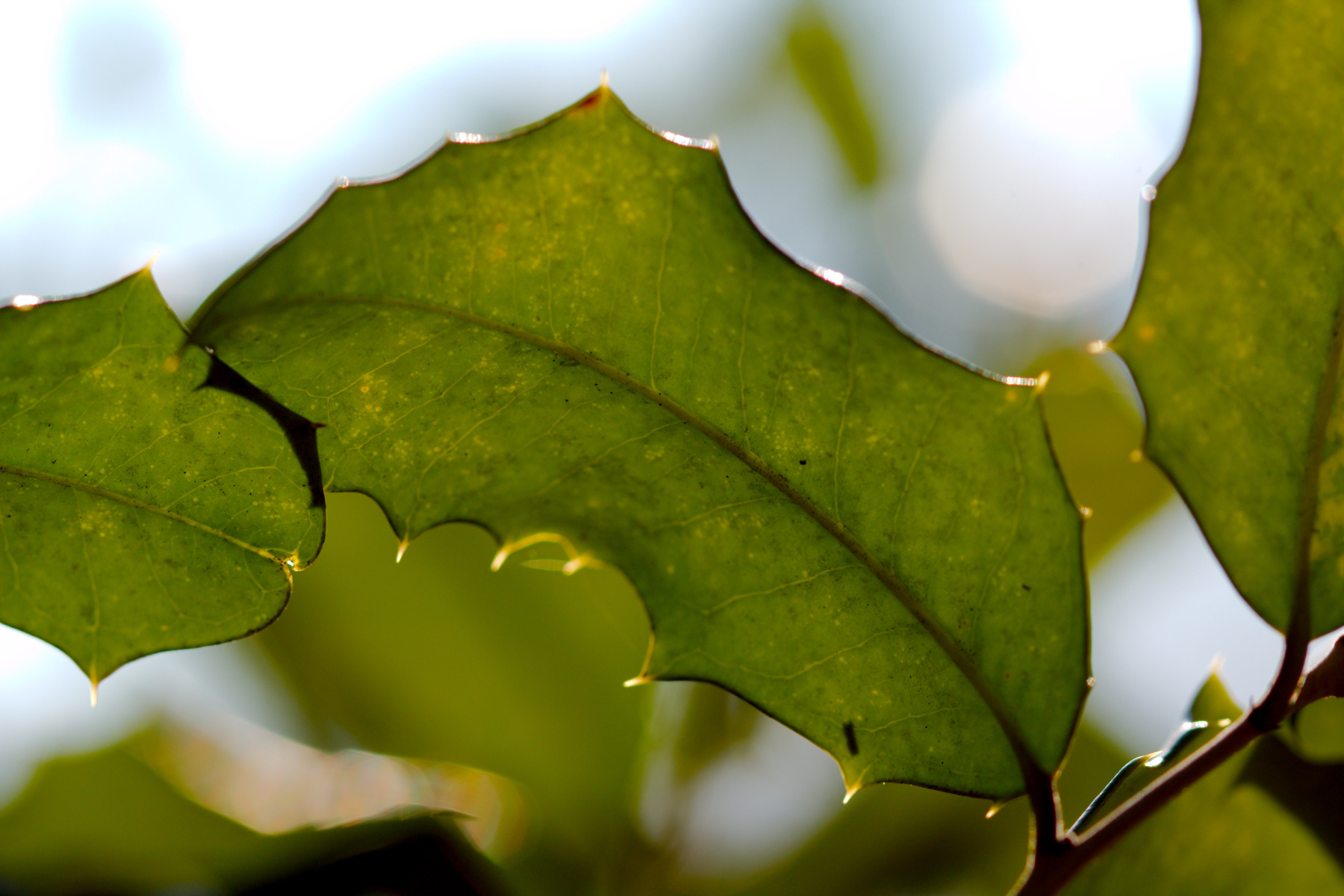
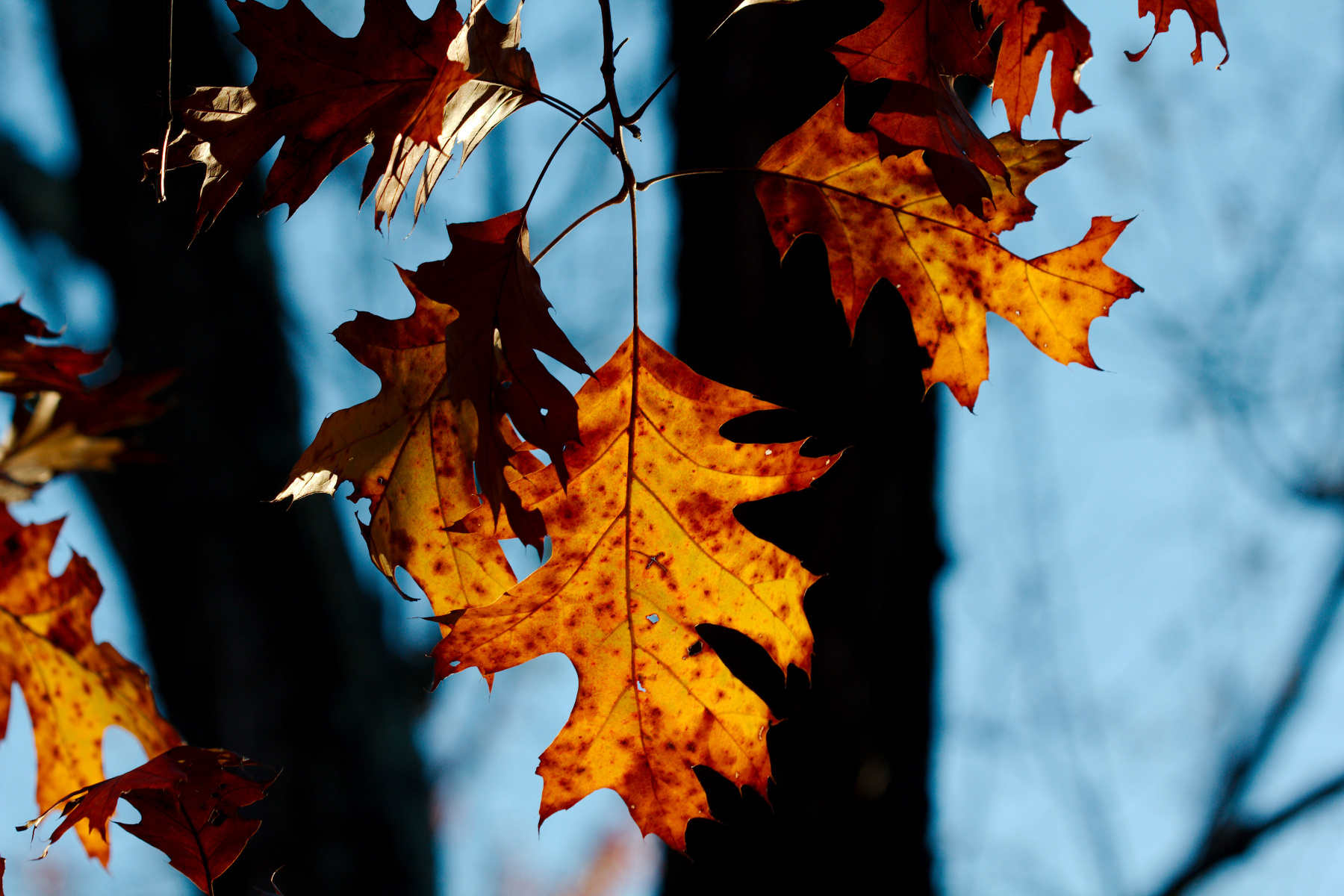
I went for a short walk today, going through the woods and across the street to a small pond and back. I took some pictures of grass seeds and then stopped when I saw the light shining through this sycamore leaf. I love the bright yellow of the leaf and the dark brown of the veins. Sycamores are not really known for their spectacular fall color as their leaves often are brown by the time they fall but the leaves do often pass though yellow on their way to brown, as you can see.
Bradford Pear
The fall color continues to fade, but there are still some good instances here and there. The Bradford pears are notable for their fall color and in this picture I think you can see why. The Bradford pear is a cultivar of Pyrus calleryana, native to China and Vietnam. When they were beginning to be used, they were the only pear variety around so they didn’t set fruit but now there is enough variation in them that they pretty much all do. They do make a good show but I wouldn’t really recommend them in most situations. There are much better choices, anyway.
Oriental Bittersweet (Celastrus orbiculatus)
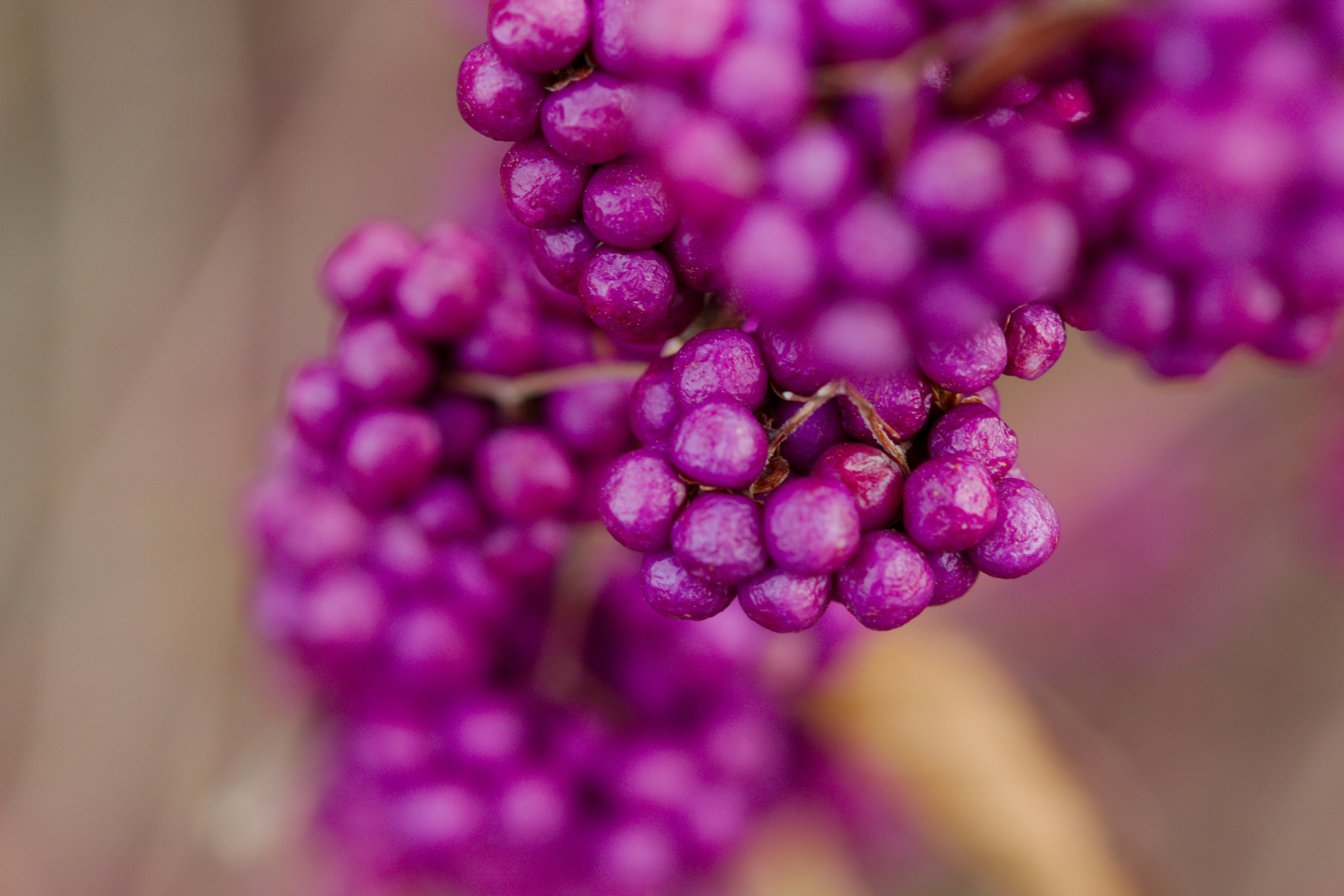
Oriental or Asiatic bittersweet, Celastrus orbiculatus, is an invasive species in our area. There’s a fair amount of it about, climbing up into trees. This vine is growing into a small tree on the other side of the woods from my office. It gets full afternoon sun and it’s quite happy there. Of course, multiflora roses (Rosa multiflora), Japanese and Amur honeysuckle (Lonicera japonica and L. maackii), porcelain-berry (Ampelopsis brevipedunculata), mile-a-minute vine (Persicaria perfoliata), and tree of heaven (Ailanthus altissima) to name only a few, are also in profusion through the area, so a little bittersweet is the least of our problems. It’s also quite pretty.
Dipsacus (Teasel)
Because it gets dark about the time I leave work, if I’m going to take pictures outdoors I have to go out during the day. It’s actually a good thing, because it breaks up my day and gets me out of my chair. It isn’t exactly vigorous exercise but at least I’m moving about. Today I went out shortly after noon and went along the edge of the woods. I took some pictures of bright red oak leaves and then saw these teasels (Dipsacus Sp.) growing on the bank sloping down from the road. I especially like the curly bits, which I think add a bit of whimsy to the spiny bracts.
According to Wikipedia, the species Dipsacus includes about 15 species native to Europe, Asia and northern Africa. They are considered an invasive species here, although I think in the scheme of invasive species, they are not as noxious as some others I can think of. This is most likely Dipsacus fullonum, the common of fullers teasel.
Zelkova Lane
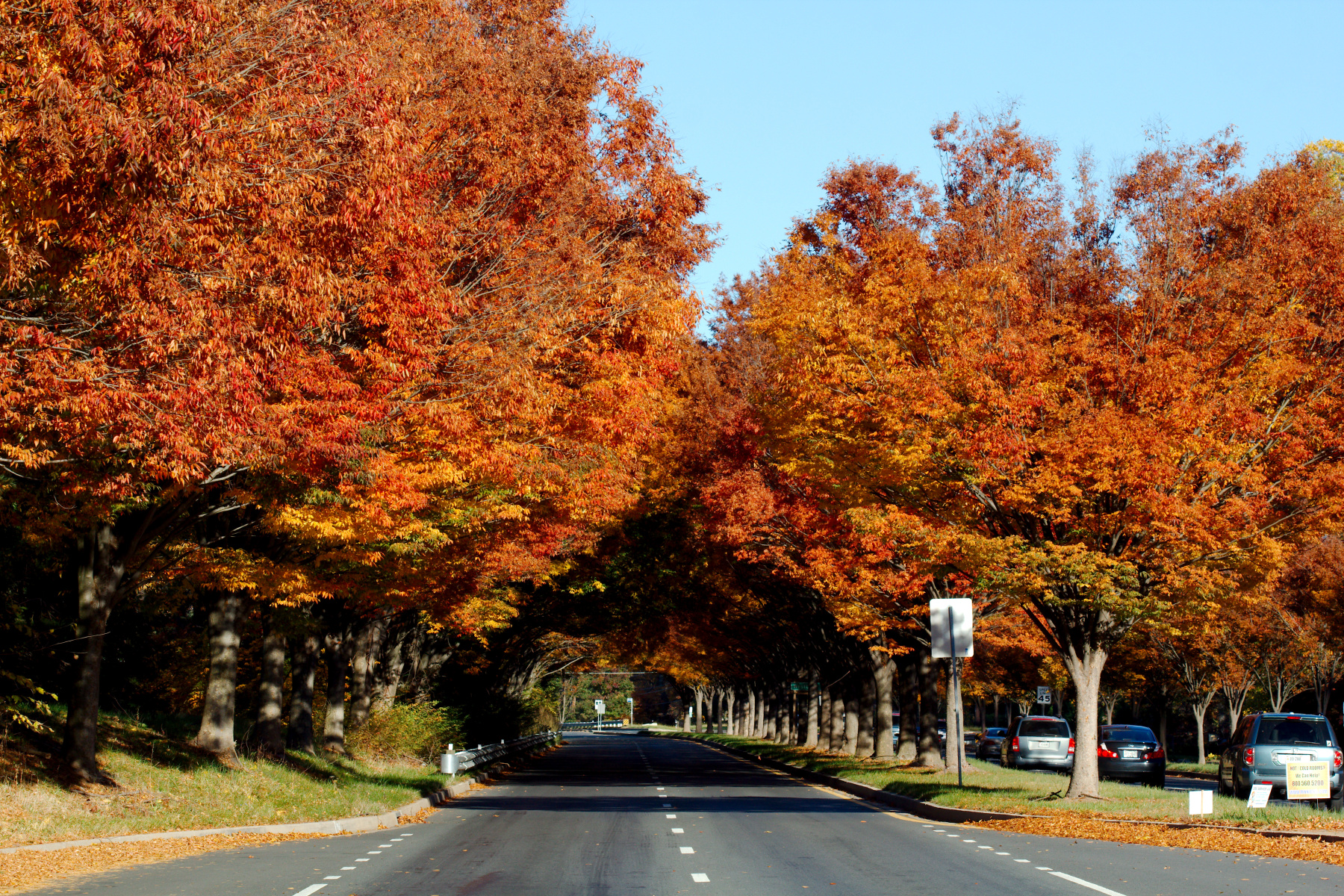
No, this isn’t really called Zelkova Lane, but at least for this stretch of Norbeck, I think it could be. Zelkova serrata, the Japanese zelkova, is a really nice tree and should be grown more. As you can see, they turn a beautiful rust color in the fall. I’m not sure it’s the perfect tree for roadway medians like this, but then, few trees do well past a certain size when their root zones are so limited. These are just getting to that size where their roots cannot support any more upstairs and they are starting to die. Those on the side of the road are doing a lot better, though, and should have quite a few more years in them.
Mum’s Mums
Fleurette mums are a group of Chrysanthemum hybrids made between a domestic and a wild, Asiatic Chrysanthemum. They tend to be a more compact and are (like most mums) quite easy to care for and have flowers that last a good, long while. These are technically my mum-in-law’s mum, but that wouldn’t have been as good in the title. These are in a small pot on her kitchen table and are quite cheerful.
Lake Needwood
After voting today, I drove back to the office by way of Lake Needwood. The trees are a little past peak, I’d say (boy, that was fast) but are still quite beautiful. Also, the little bits of cloud contributed to the variety of colors. I’ll probably have a few more fall-color pictures for you, but it won’t be long until they are replaced by branches, dried leaves, and wintry scenes. While all the seasons have something to recommend them, for me, autumn is the prettiest, followed by Spring. But spring is followed by summer, which means heat, and I’m less fond of that than cold. I’m looking forward to the winter.
Japanese Maple
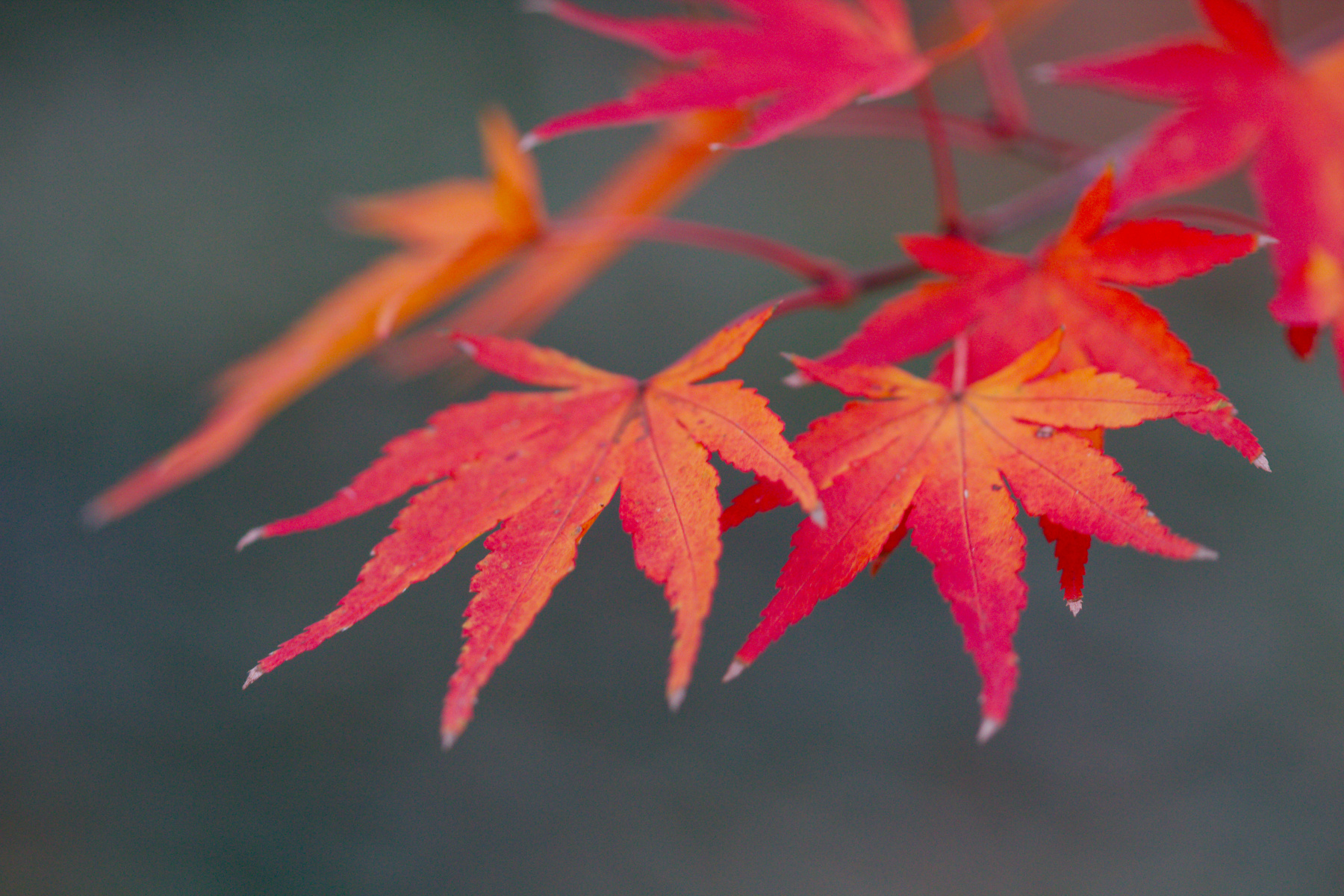
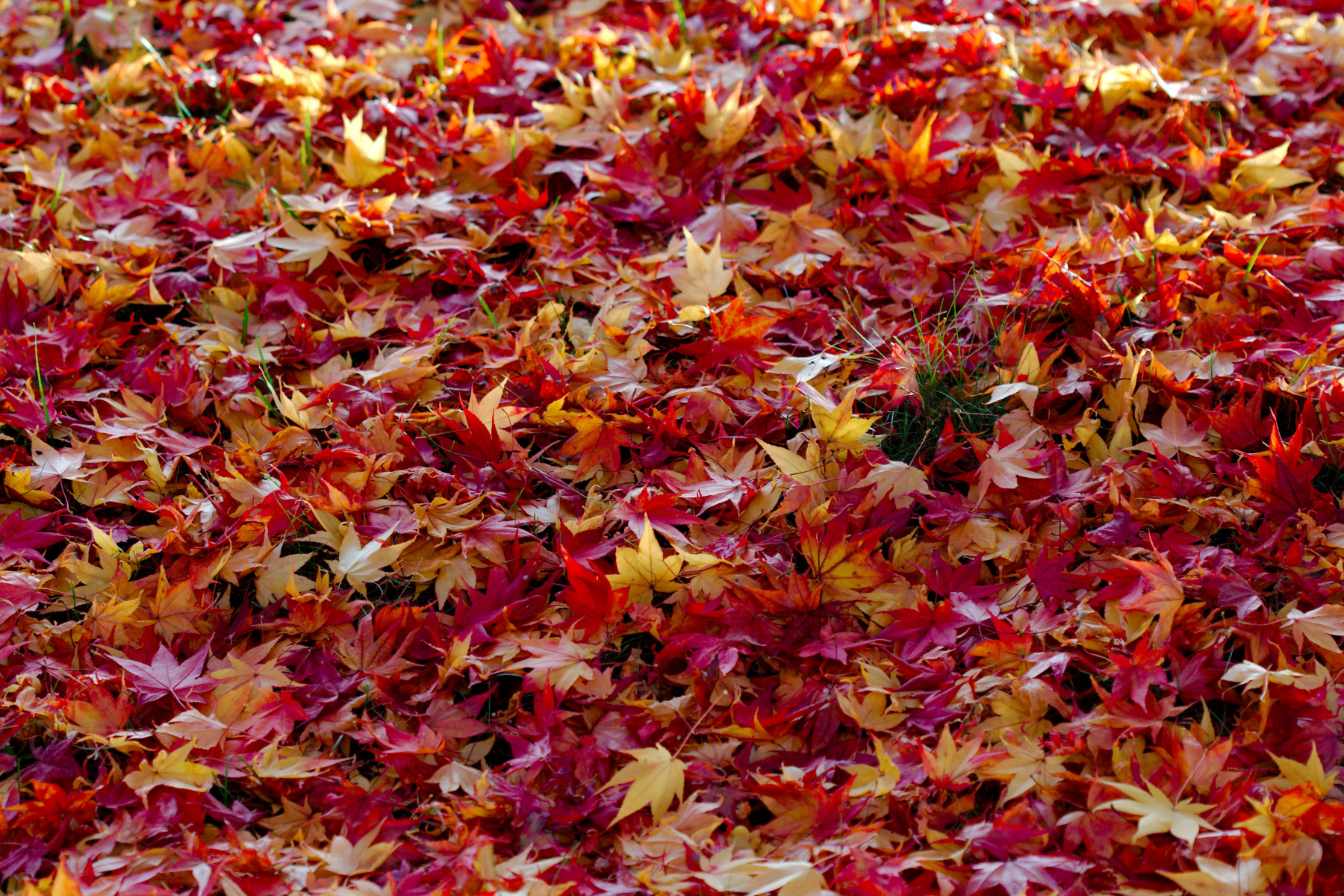
At the other end of our neighborhood is a yard with a few absolutely beautiful Japanese maples (Acer palmatum) and every fall I look forward to seeing them. This is often the more ‘plain’ of the two most prominent trees but at this point in the fall, it’s the more spectacular of the two. The other is not a pure a red but is more mixed with reds and oranges throughout. As I drove past this afternoon, I stopped, grabbed my camera, and took a few pictures from my car. It’s possibly not as good a picture as I could have gotten, but it does show the bright color of the tree. I’m really enjoying the autumn and it’s going to be done all too soon.
Walnut Shells
The walnuts are falling in great numbers from the many black walnut trees (Juglans nigra) around my office building. I suppose it would be strange if they were falling from anywhere else. The ground under them is covered quite densely, in some places the ground is almost entirely covered with walnuts varying in color from bright chartreuse in the newly fallen fruit to almost black in those that have been on the ground a little while. There are a couple picnic tables along the edge of the woods and the squirrels seem to enjoy using those for their walnut meals. I did move these closer together but they were on the table, along with a bunch of smaller pieces.
Plumbago (Ceratostigma plumbaginoides)
I was in a different neighborhood this evening and went into an shopping center I don’t usually visit. On the way in a saw these little flowers and when I was done shopping I took the time to get some pictures. The bright red leaves with beautiful, blue flowers were quite striking. Cathy recognized it as plumbago (Ceratostigma plumbaginoides), which is a perennial hardy to USDA zone 6. I know I’ve seen it before but don’t remember seeing the fall color, which is reason enough to get some a sunny spot in the garden.
Hickory Color
As I was driving home, I stopped at a traffic light (like you do) and looked to my left. This is what I saw. I thought, that’s pretty nice, with the late afternoon sun shining on it. So, I picked up my camera (which I try to keep within reach most of the time) and took five pictures before the light turned green. From this distance, I’m not 100% sure what kind of tree is was, but at a guess, I’m going to say it’s a mockernut hickory (Carya tomentosa. The dark red leaves in the lower right are on a Bradford-like pear (Pyrus calleryana).
Carpenter Bee
There are not nearly as many flowers left in the yard as we approach the end of October. We’ll still have some warm days (today was in the 80s!) but in general, plants are switching into autumn mode. Annuals, of course, don’t have the luxury of going dormant so they can overwinter and start up again in the sprint. So, some of them bloom until the cold kills them once and for all. Marigolds (Tagetes species and cultivars) are a good example. This is one that Cathy planted in a small bed where a dead tree was removed. The bees, of course, are still active and looking for anything they can get. This is an eastern carpenter bee (Xylocopa virginica).
More Maple Colors
The colors are getting better on a daily basis and by next week they should be at peak in the area. Looking out my window at work, there are lots of yellows on the willow oaks and walnuts. The two large elms are still bright green with only a hint of yellow around the edges. The Virginia creeper has mostly passed red into leaflessness. At home, though, where this picture was taken, the two maples in the back yard are at their reddest best. The red oaks in the front have barely started to change and won’t until after the maples are bare.
Fall Colors, Maple Edition
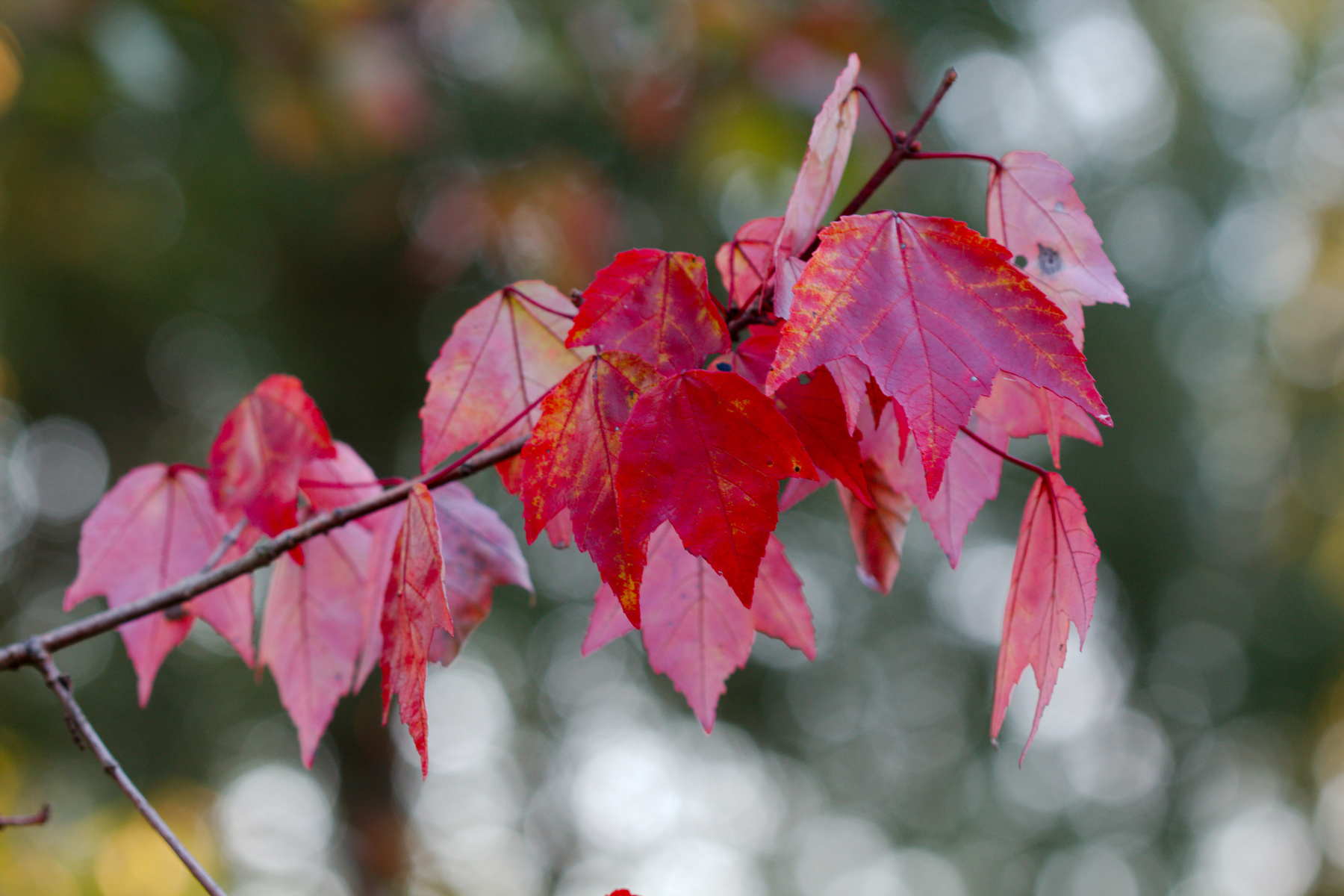
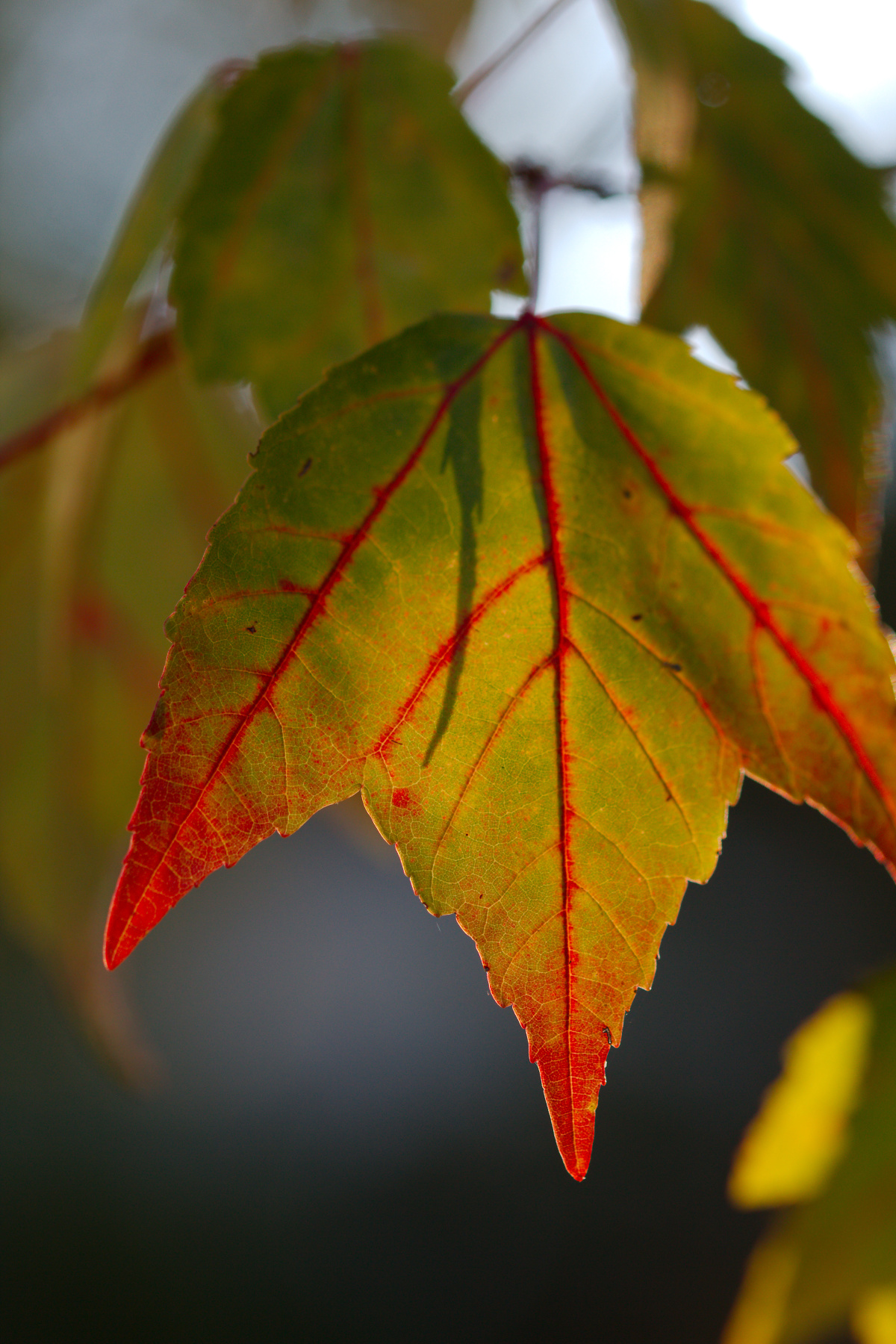
I walked back from the other building through the woods again late this afternoon and took a few pictures of the fall color. So far, while there are some spectacular trees about, the overall color scene isn’t as great as some years. It isn’t at peak yet, though, and I suspect it will be getting better over the next week or two. This maple is pretty nice so I’m sharing it with you. I hope you don’t mind that there will be a few more like this until they leaves are all down. I do love the fall. It’s cool, the trees are beautiful, bugs are less of a problem, and I love being outdoors. Of course, it also gets dark earlier, but that’s the price we pay.
Symphyotrichum racemosum (Smooth White Oldfield Aster)
This little wild aster, the smooth white oldfield aster (Symphyotrichum racemosum) is differentiated from the similar calico aster (Symphyotrichum laterifolium) by having its flowers all or mostly on one side of the stem. These are quite common in our area and are, according to the USDA, found throughout the east all the way to Texas, Missouri, and Wisconsin. I think the flowers are quite pretty individually but since they mostly form large clusters that’s how they are really seen.
Schlumbergera truncata (Thanksgiving cactus)
Dorothy had a two of these Thanksgiving cacti (cultivars of Schlumbergera truncata) at school with her but she didn’t have a place for them this year so they stayed here. We have had them in a westward facing window in our dining room and this one has started to bloom. In the week between when I took this and now, when I’m posting it, the other one has started to bloom, also. Thanksgiving cactus can be differentiated from Christmas cactus by its pointy teeth on the leaf-like stem segments and from the flowers, which are held more horizontally and which are less symmetrical on Thanksgiving cacti. On Christmas cactus, which are cultivars of S. russelliana, the stem segments are rounded and the flowers hang down more and are more symmetrical. Both come from a small area of the coastal mountains of south-eastern Brazil.
Parthenocissus quinquefolia (Virginia creeper)
Virginia creeper (Parthenocissus quinquefolia) turns a beautiful red in the autumn and that, along with the dark purple fruit make it a nice ornamental. I’m not sure if it’s because it is native and grows naturally all around the area but it doesn’t seem to be cultivated. Certainly not as much as it’s more upscale east Asian cousin, Parthenocissus tricuspidata, a.k.a. Boston ivy. They both give a wonderful fall display and perhaps the more maple like leaves of Boston ivy is in its favor. But Virginia creeper is a bit hardier (but they can both take significant cold). Anyway, it’s growing throughout the woods around my office and giving me some nice color to see out my window.
Cleome ‘Señorita Rosalita’
Cathy bought this plant this spring and it’s been in constant bloom all summer and is still putting on a pretty good show out our kitchen door. We’ve had cleome before and sometimes it is tall and spindly but this one has a nice, bushy habit, just the right height (it’s growing in a large pot, which adds to its apparent height), and with stems sturdy enough that they haven’t blown over even in the storms we had on occasion. I highly recommend this variety, if you can find it.
Tiny Mushrooms
Fall is well and truly here now and the weather has been beautiful. We were spared any significant rain from Hurricane Matthew and today was clear, breezy, and cool. In the mid afternoon Cathy and I took a walk along the north side of Lake Frank. I carried my camera but only a single lens, the 70-300mm zoom. That, unfortunately, is not ideal for macro shots because it doesn’t have a very close minimum focus. Still, I was able to get this picture of some tiny mushrooms growing out of a root crossing the path. If I had brought the macro lens, I’m sure I could have come back with a better version of this.