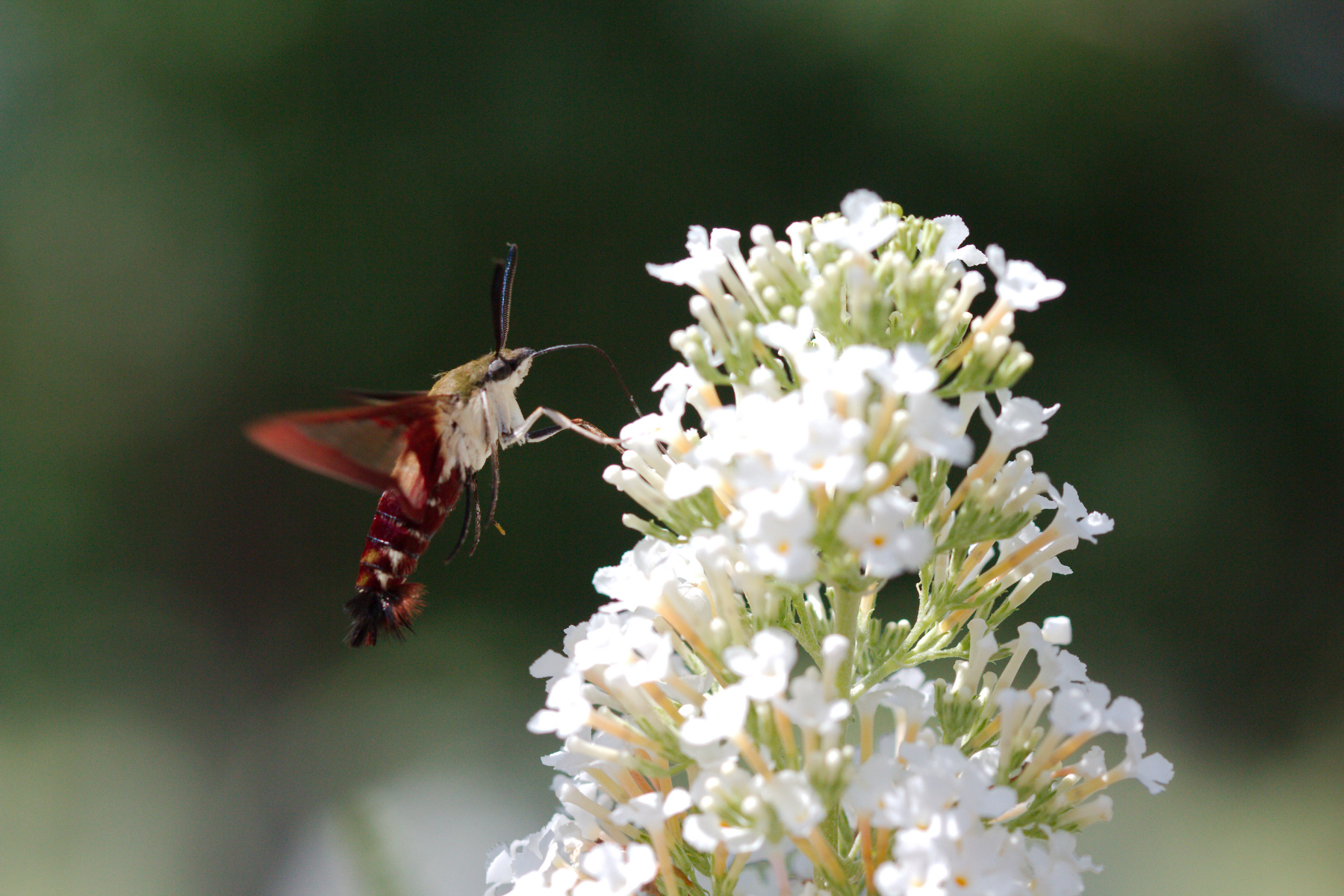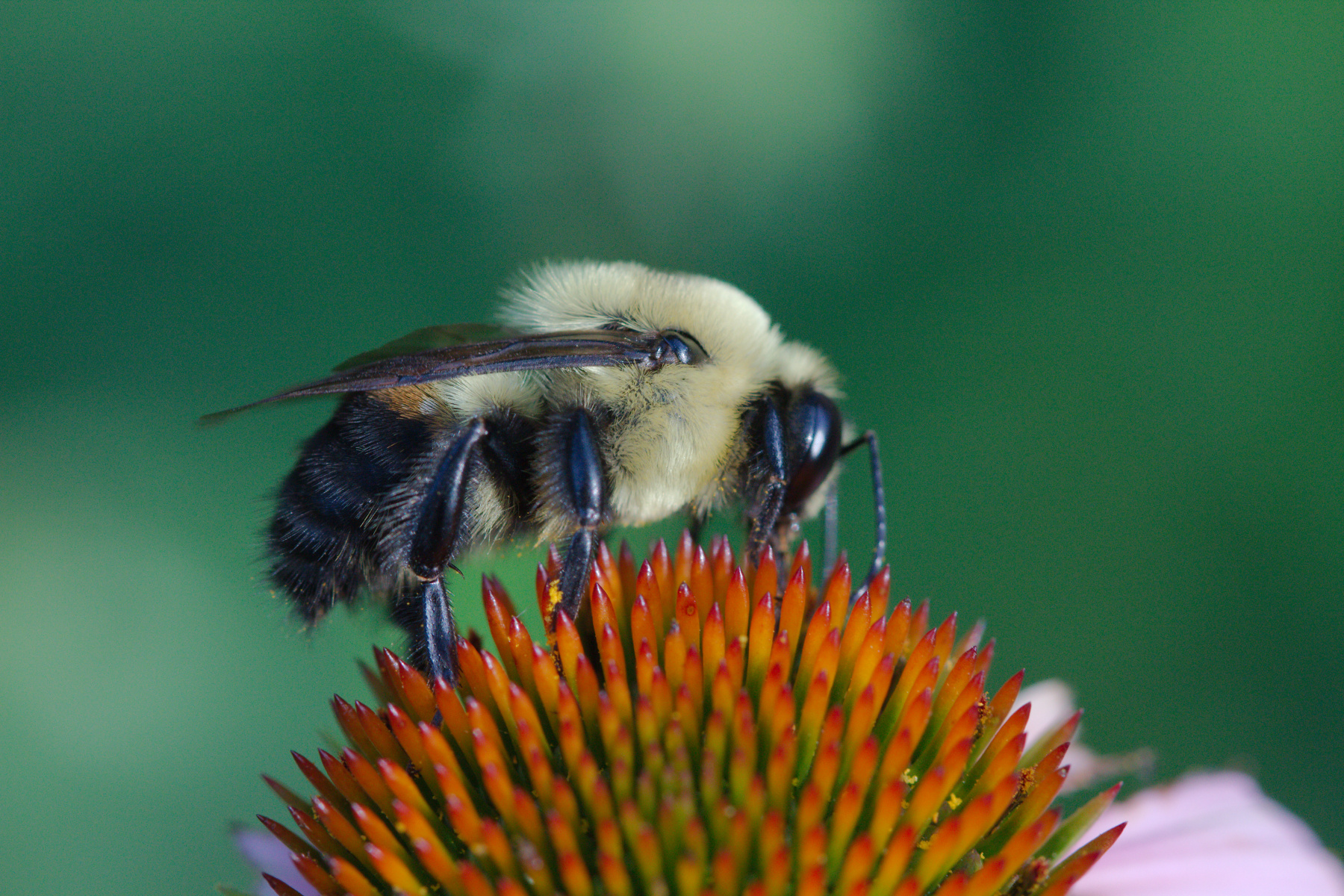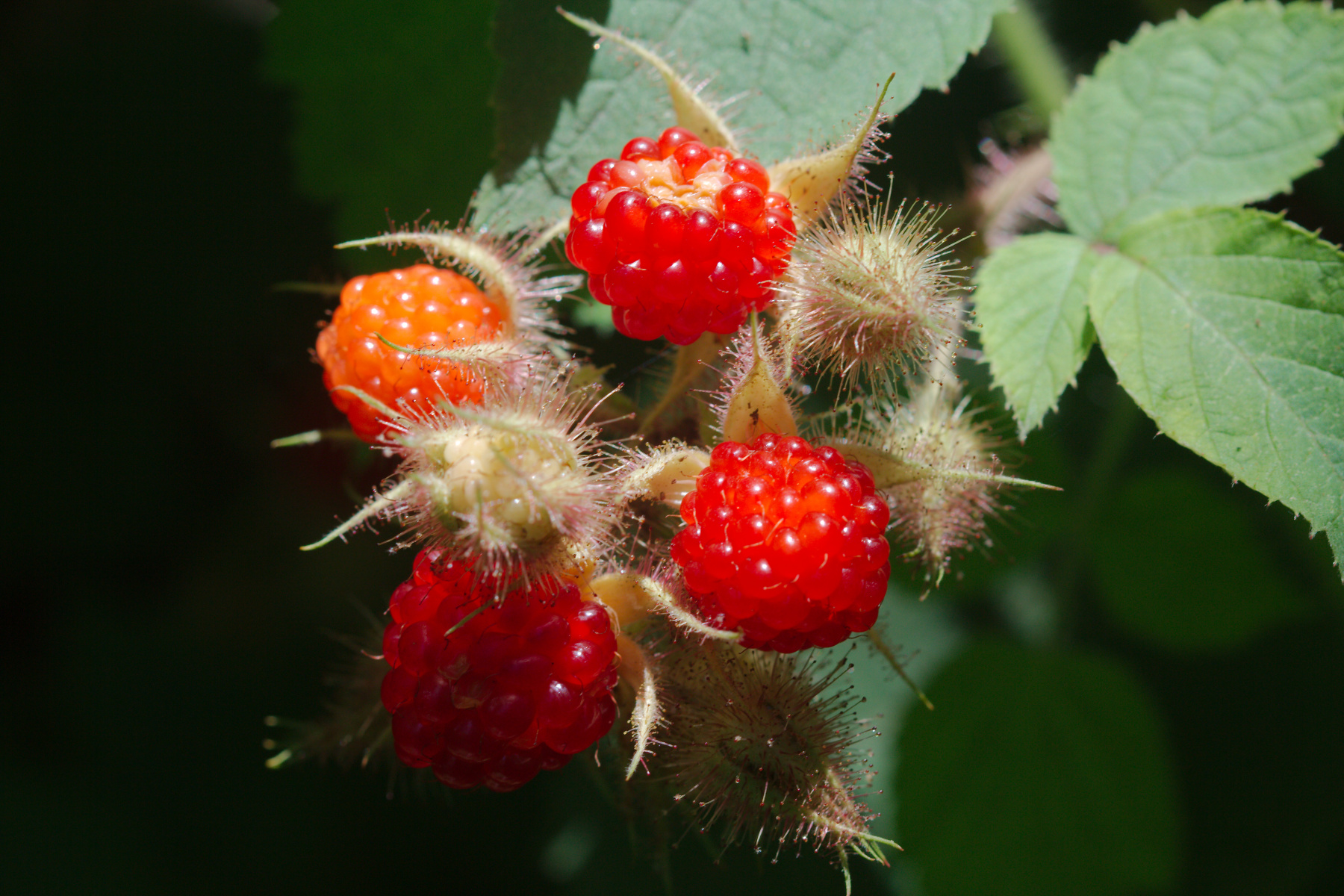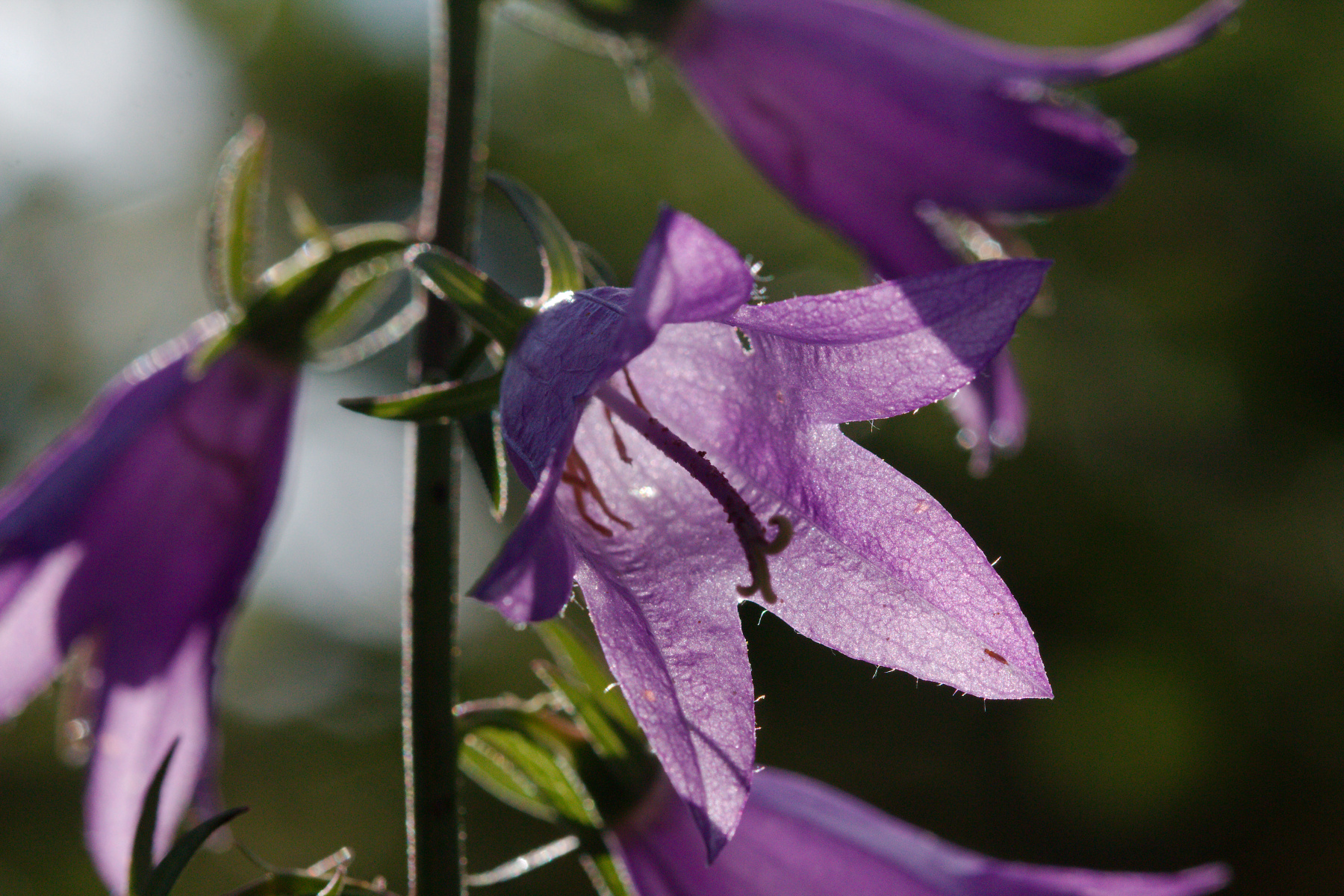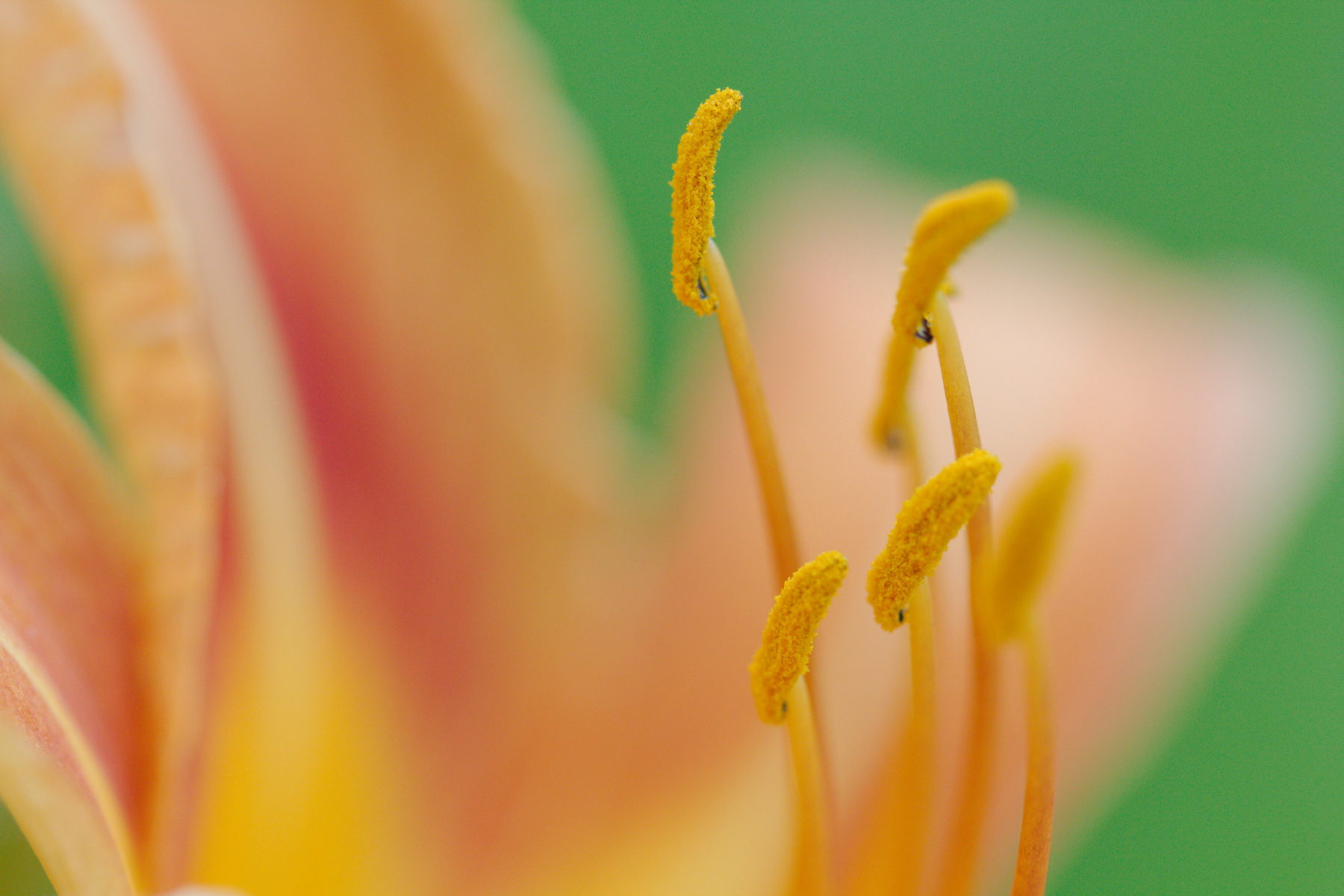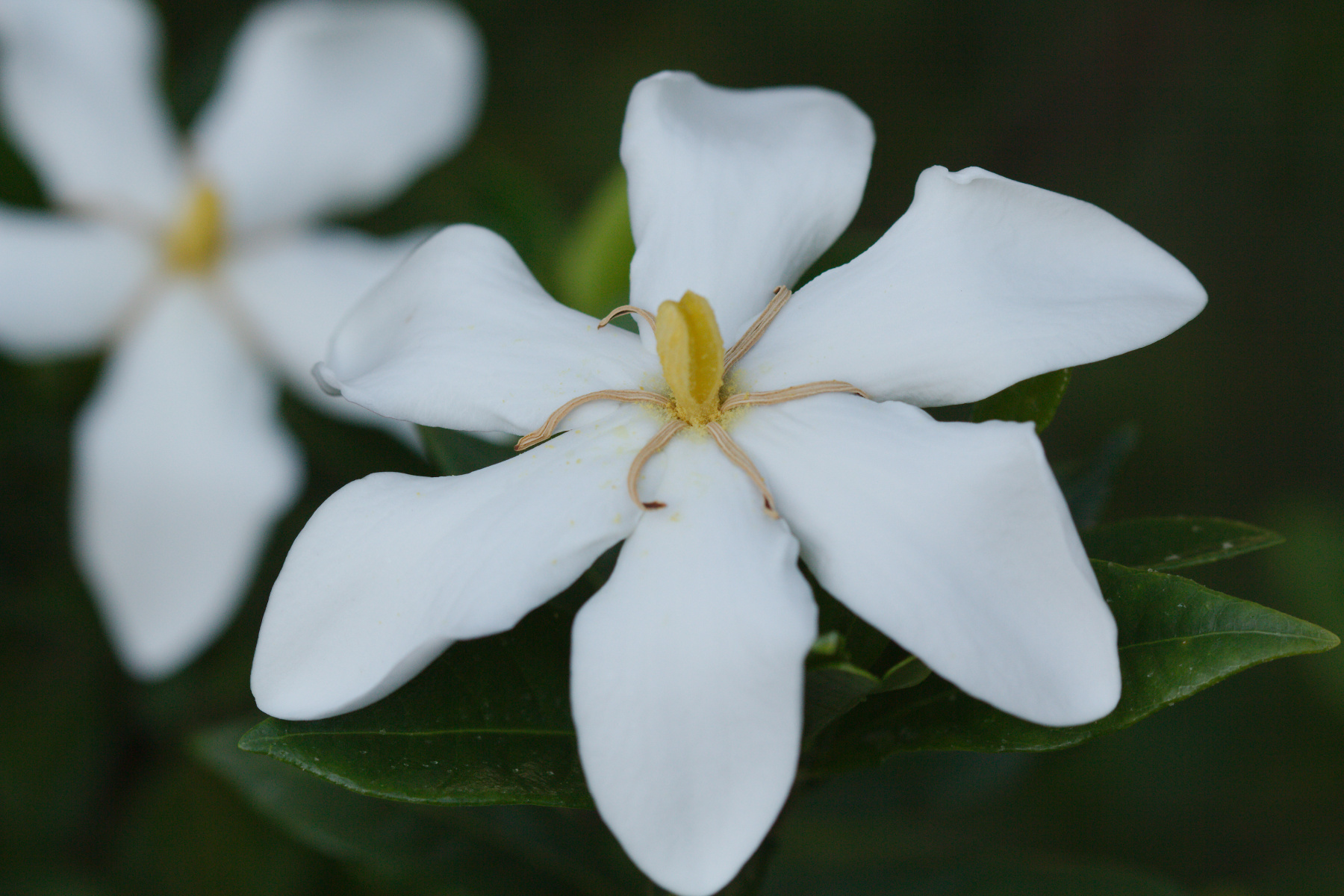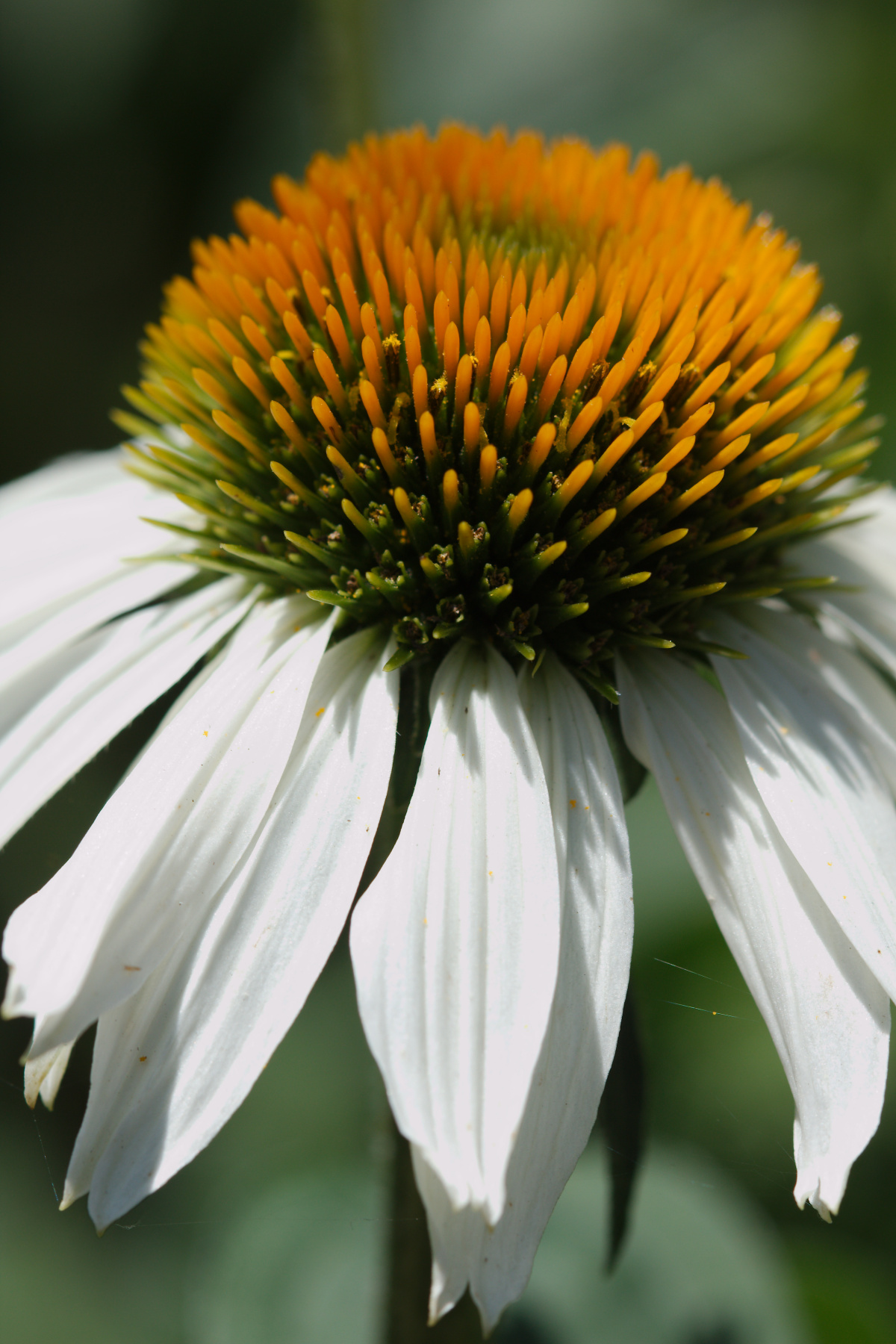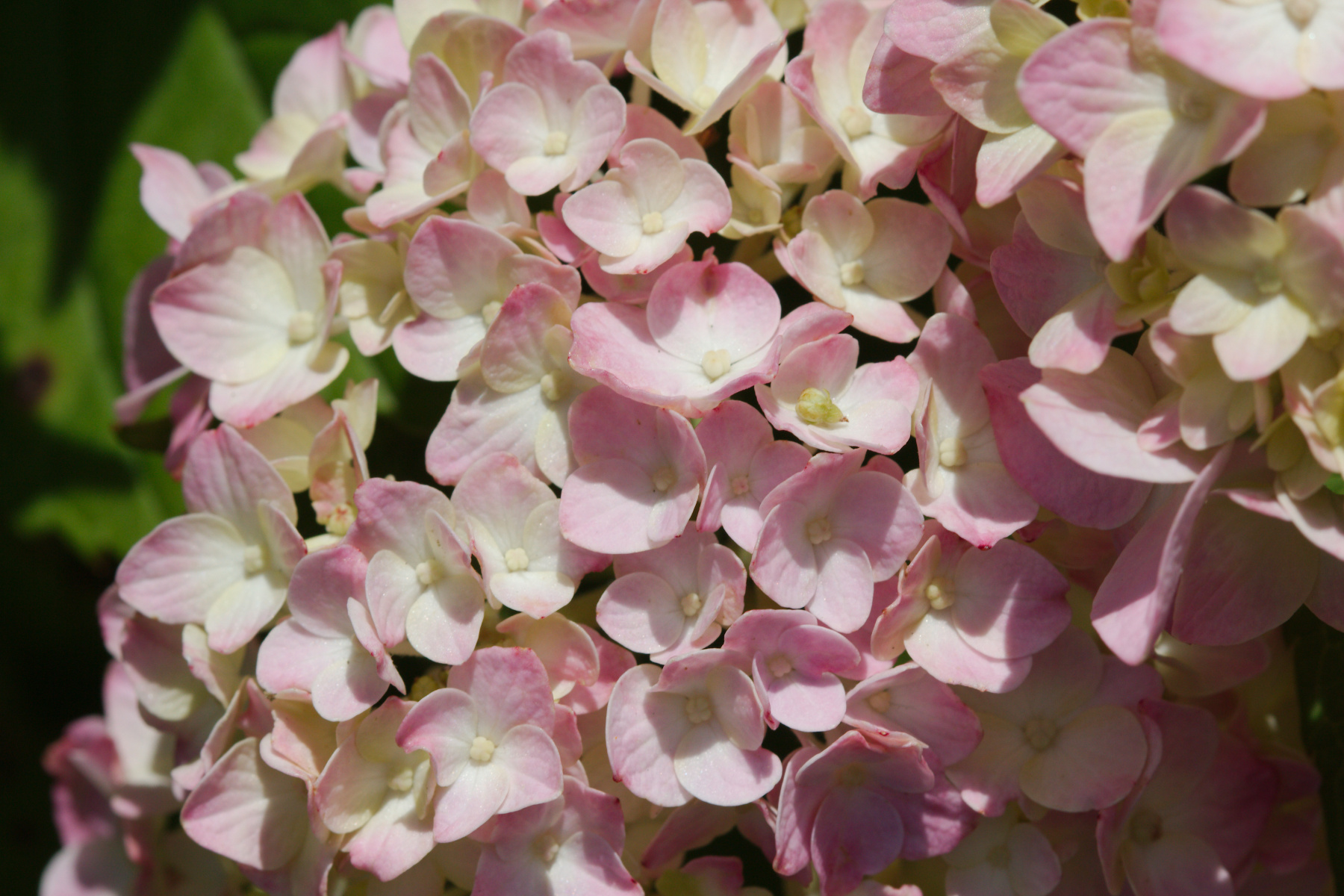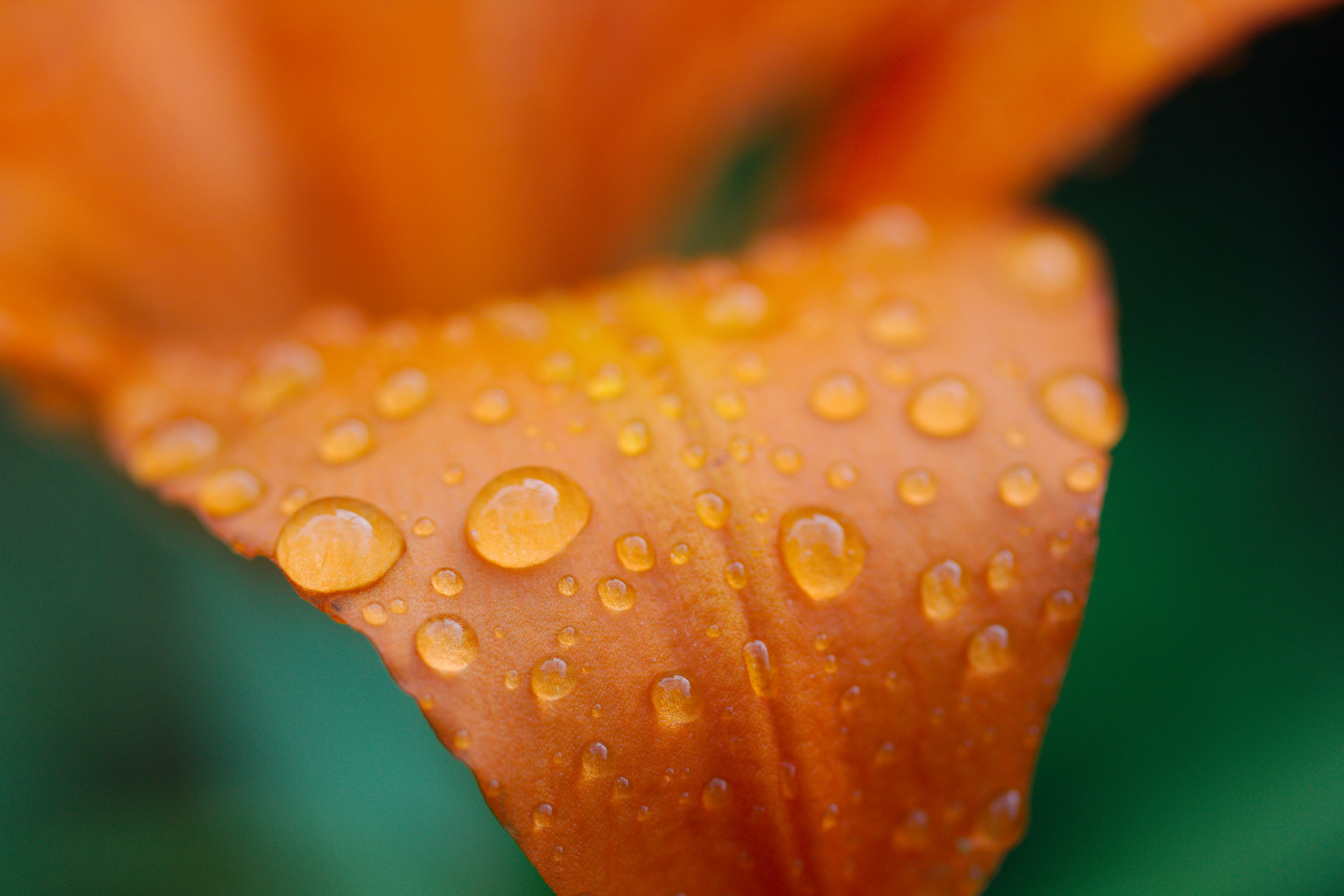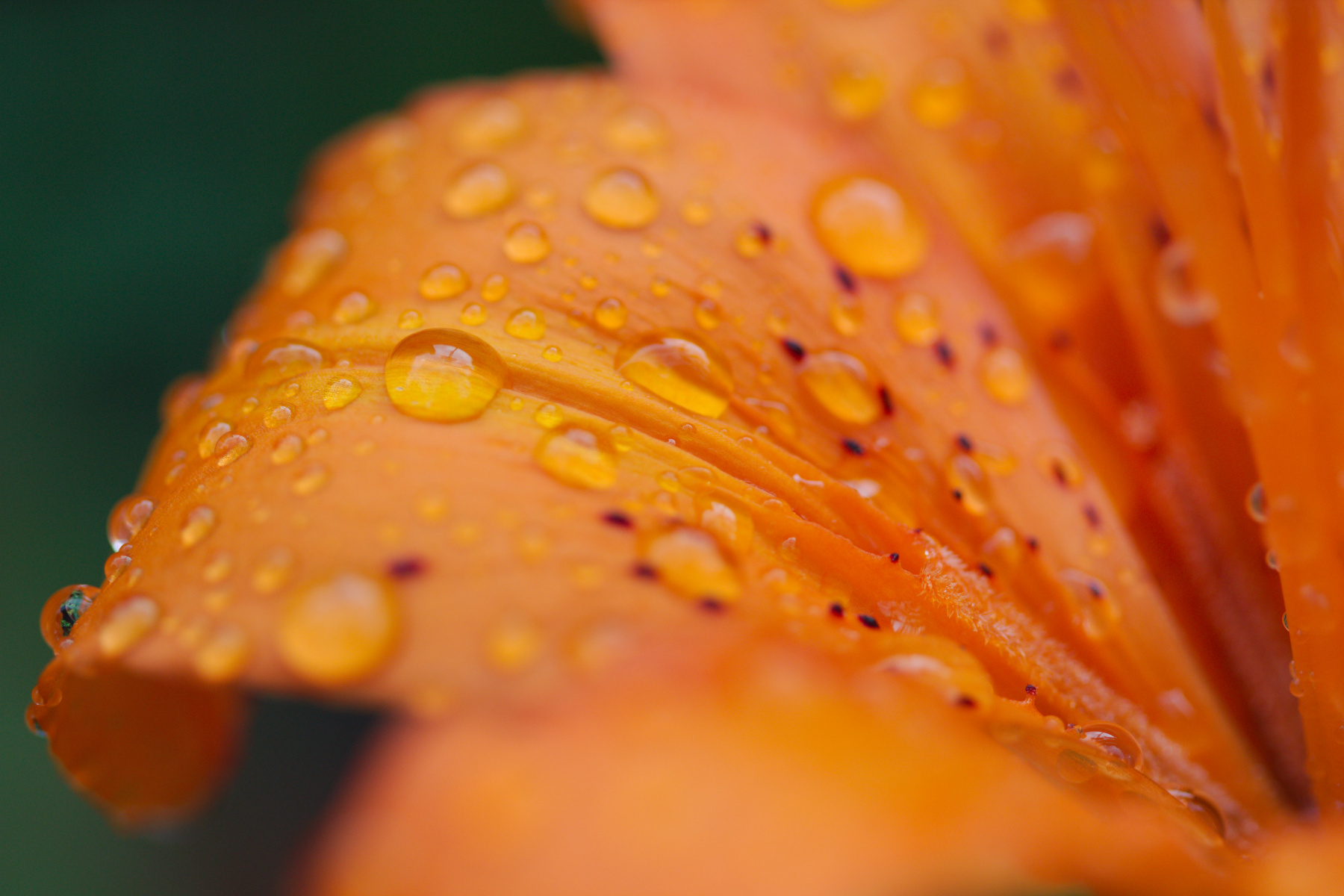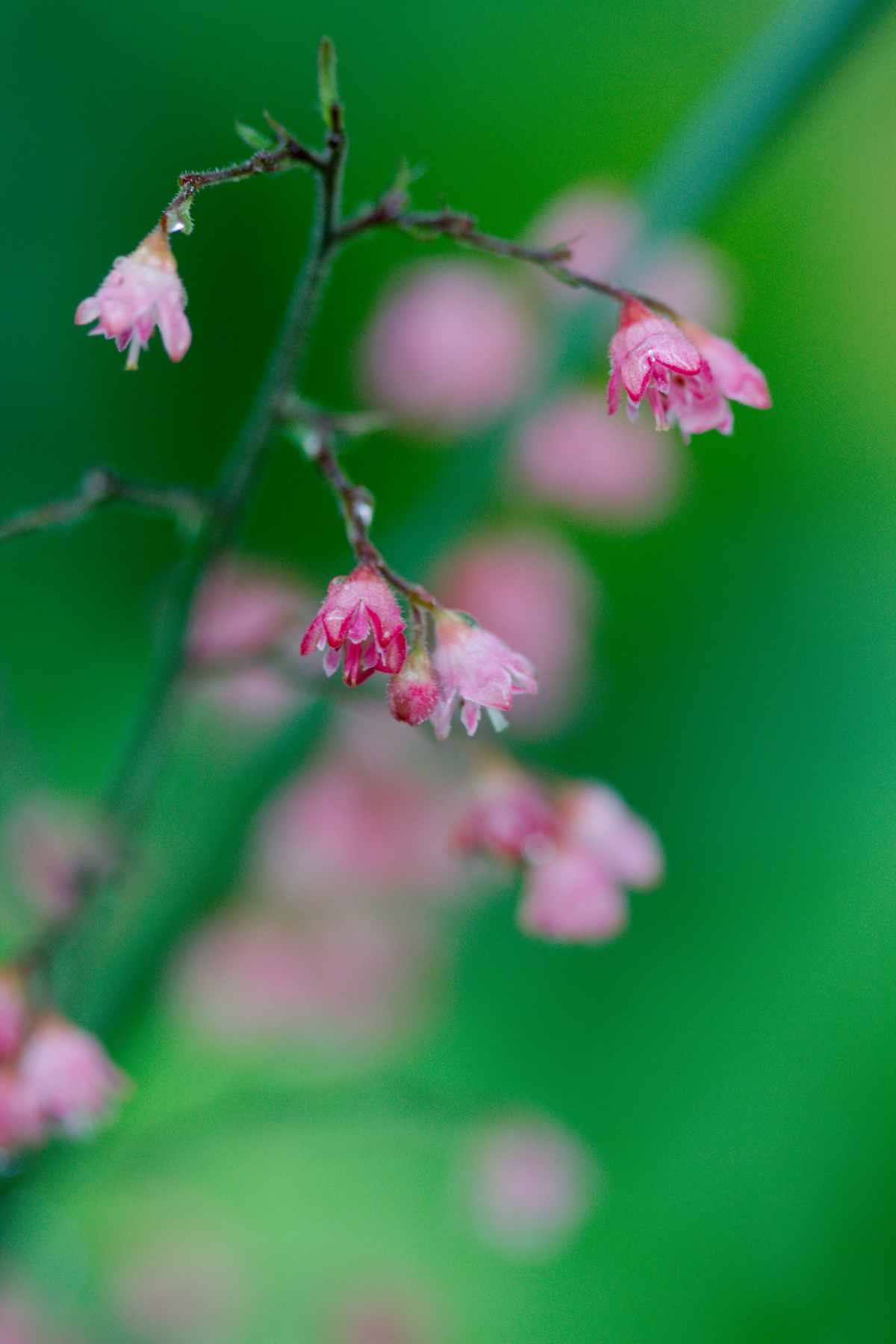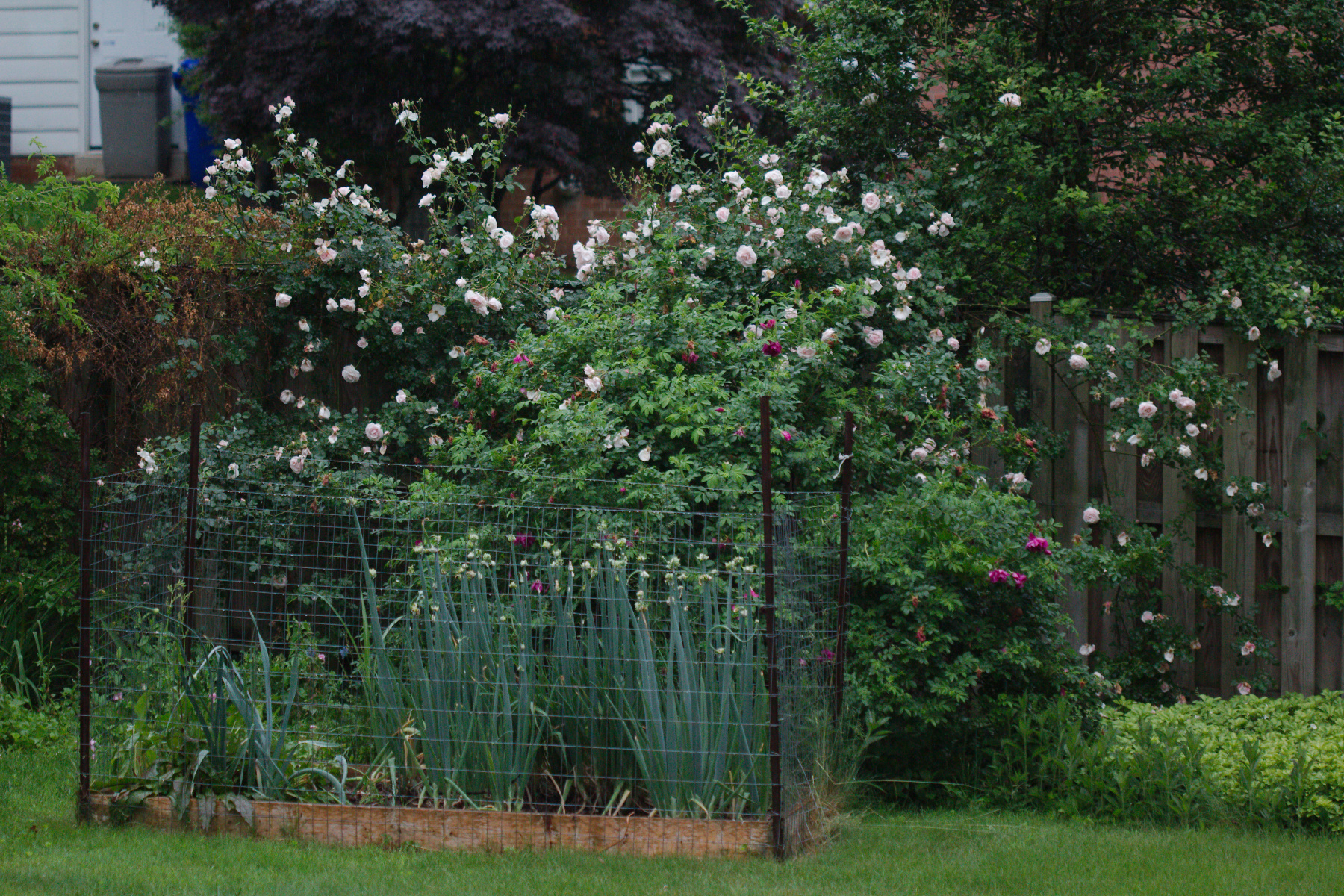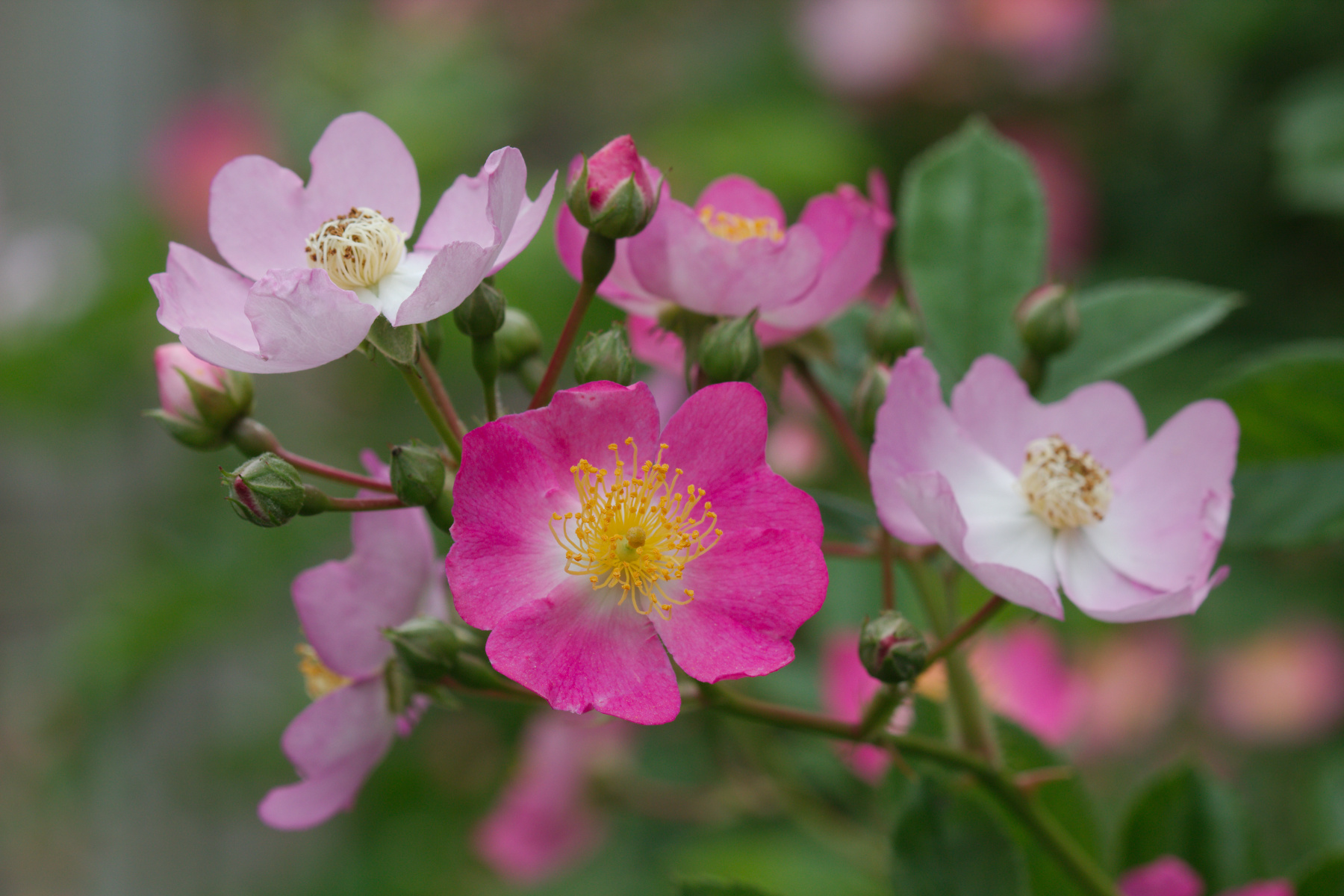
I wandered around the yard this evening looking for things to photograph. I took some pictures of ferns in the shade garden at the north corner of our yard but I decided they were not all that interesting. Perhaps that’s nothing new around here. Perhaps. But I try, I really do. I sat on the front walk looking at the pink flowers on the hardy begonia that’s been blooming there all summer. It’s very happy and the flowers, while not individually showy, are pretty and in mass, particularly when seen against the bright green leaves, are very nice. Here is a close up, showing the unusual, yellow stigma this flower has.
Flowers and Plants
Beetle on a Mushroom
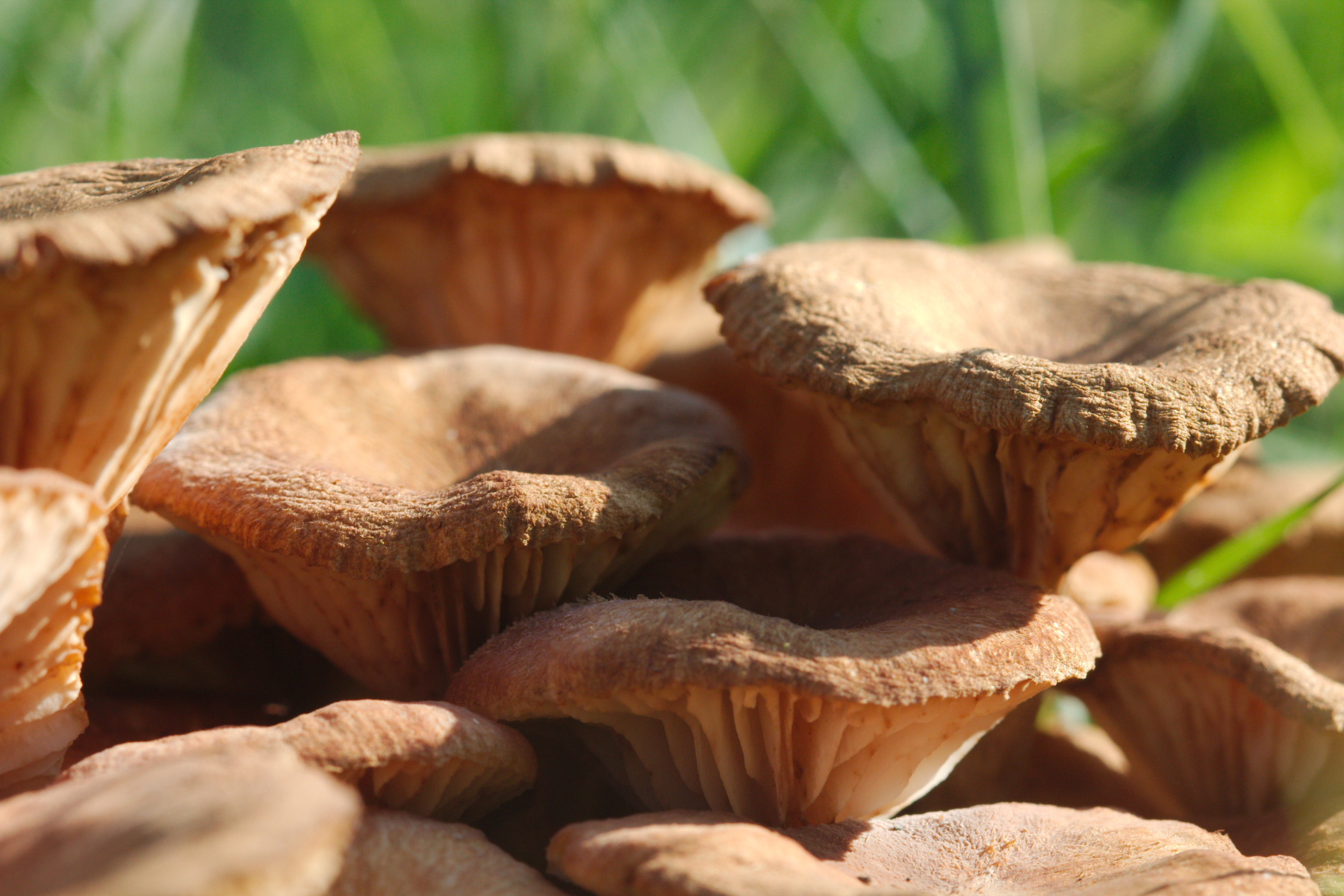
We had some trees taken out a few years ago and their roots are rotting. They are underground and out of site but the mushrooms are a pretty good sign that the wood is being broken down. The mushrooms are quite happy and are scattered through the area around where the trees were growing. I got down on the ground to take some pictures of them and after a while I noticed this spotted cucumber beetle (Diabrotica undecimpunctata) on the underside of one of the mushrooms. Getting a picture looking up at the underside of the mushroom was a bit tricky, but I managed it and I’m pretty happy with how it turned out.
Grass
We have weeds in our yard and garden. Boy do we ever. This is nothing new, of course, it’s been going on since God said to Adam, “cursed is the ground because of you; in pain you shall eat of it all the days of your life; thorns and thistles it shall bring forth for you; and you shall eat the plants of the field.” (Gen. 3:17b-18) So, in keeping with the curse, we have both thorns and thistles. We also have pokeweed, bindweed, wild violets, and all sorts of weed grasses. Just because a plant is a weed, that doesn’t mean it cannot be beautiful, of course, and I think this seed head from one of the grasses in our garden is quite lovely. It still needs to be pulled up, but it’s lovely.
Atteva aurea (Ailanthus Webworm Moth)
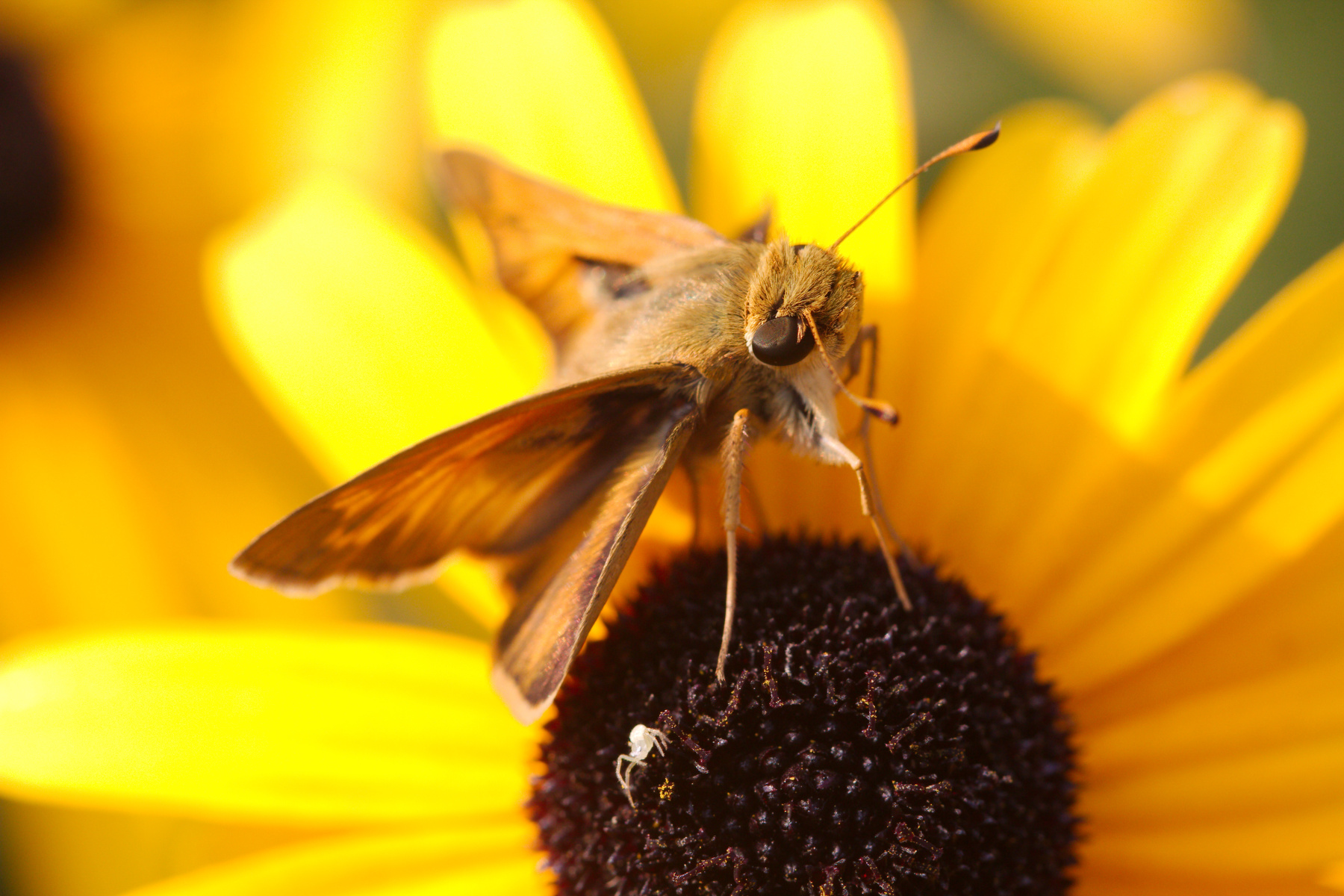
It was a beautiful fall day today and I went up to the farm with Ralph, Tsai-Hong, Iris, and Seth. We had a great time just hanging out and enjoying the cool day and a nice fire where we cooked lunch. I took some pictures, of course, and this is one of them. Actually, when I saw the goldenrod (Solidago sp.) and noticed lots of small creatures on the flowers, I assumed they would be goldenrod soldier beetles (goldenrod soldier beetle). They were not. There were dozens of these pretty little moths, the ailanthus webworm (Atteva aurea).
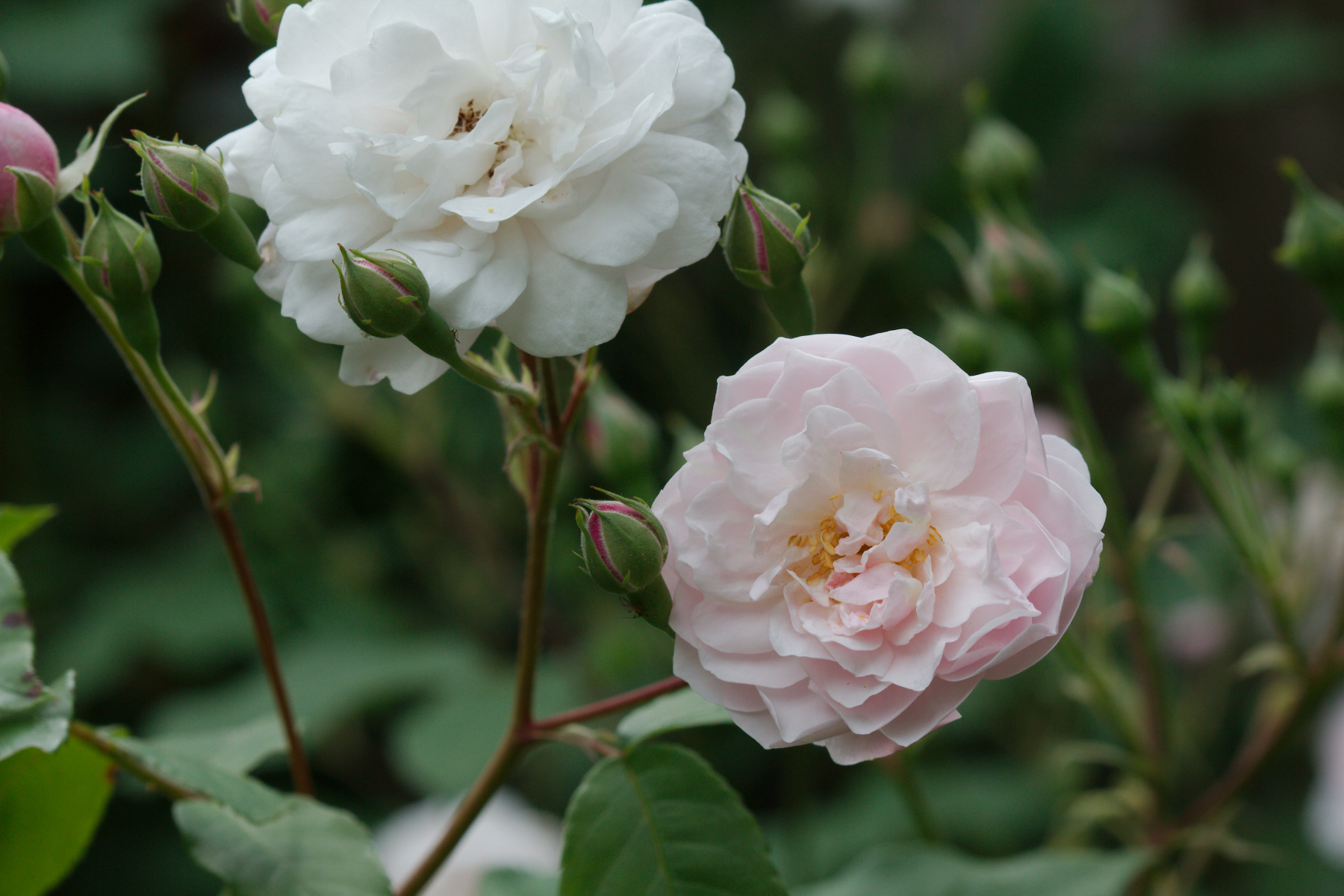
Dried Rosebuds
These dried rosebuds are in a mug on a shelf in our family room. As you can see, they are a little dusty. Rosebuds are not the easiest thing in the world to dust, of course, and add to that our slightly slovenly lifestyle (we are not overly fastidious in terms of dust here and there, I must admit) and you’ll understand that they have been mostly untouched for a significant period. In fact, neither Cathy nor I know what occasion they commemorate. We both assume it was a wedding anniversary, but beyond that, we don’t know. We’ve had 32 of them, and off the top of my head I know where we were for a few of them. I know that on our 10th I got Cathy ten dozen roses, but I’m pretty sure these are not from that year. I don’t suppose it really matters.
Canada Thistle
I’m anything but a fan of Canada thistle (Cirsium arvense) in terms of its growth in our garden. That’s not, however, to say that it cannot be quite beautiful. I just wish it would be beautiful somewhere else. Its flowers are not nearly as showy as bull thistle (C. vulgare) and it’s quite hard to eradicate from a garden, once it’s gotten a hold there (which it does with relative ease). We pull a huge number of these every year and every year there seem to be more than the year before. There was a small pile of pulled thistle in the grass and I decided the seeds with their fluffy tufts of thistledown would be good for a picture or two. This is my favorite, not so much of the seeds and thistledown, but of the remains of the flowerhead and related structure. I think it’s quite lovely. Now get off my lawn!
Hardy Begonia
A few years ago, Cathy had a pot with begonias in it, sitting on the corner of our front walk, just outside our front door. Now, the pot and its begonia are long gone, but the plant lives on, having moved itself out of the pot and into the ground around our front porch. It’s quite healthy and happy, with small, pink flowers and bright green leaves. I love both the texture and the shape of the leaves, as well as their color, which I think I mentioned is bright green. This spot seems perfectly suited to the plant, just the right amount of sun, protection, and the occasional watering, both natural and manual.
Thistle (and Friend)
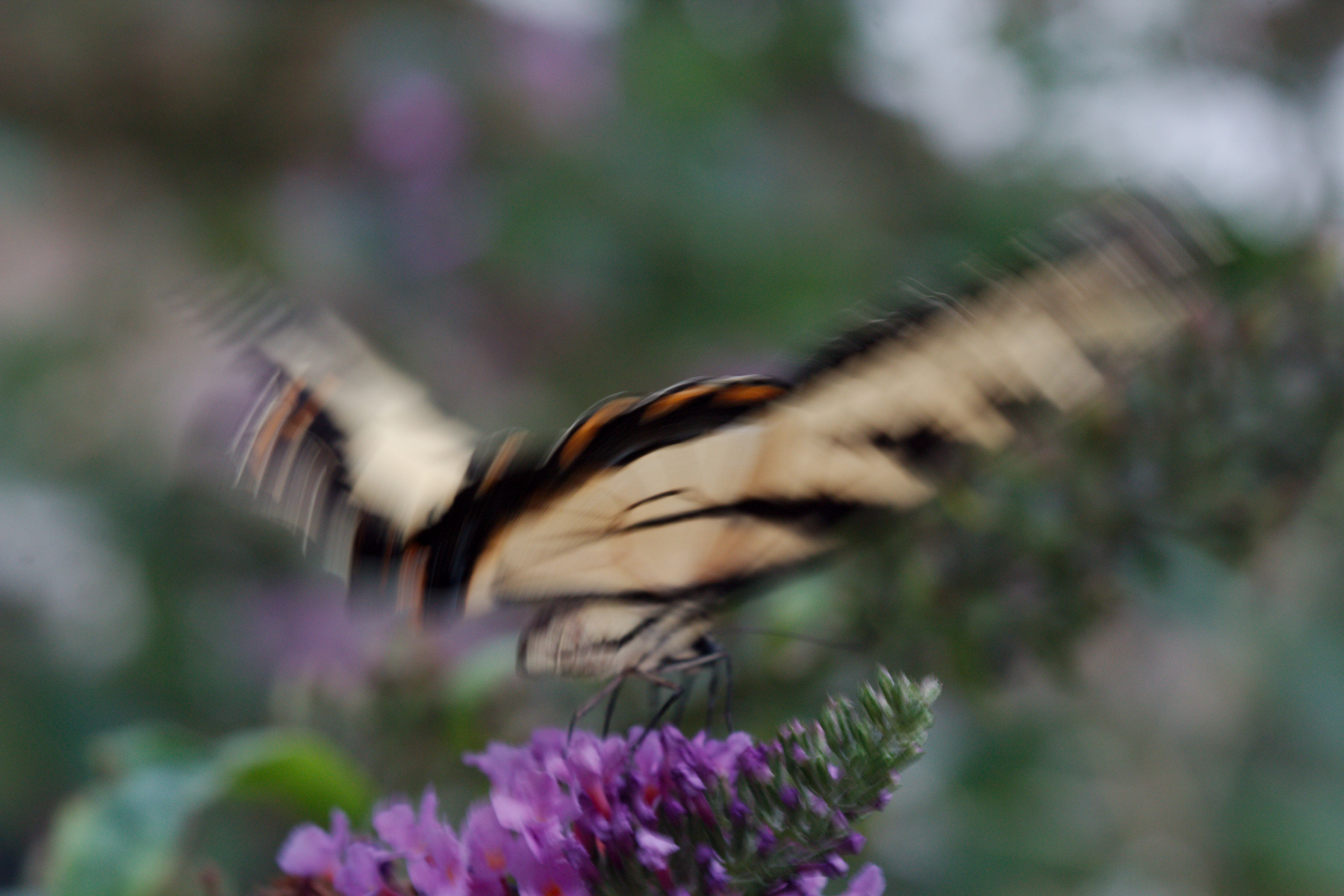
Due to a workstation crash (from which I’m still recovering backed up data) I’m a week behind in posting here. This is the psot from last Thursday, September 1. It was a beautiful day and finally has cooled off considerably. The high today was in the mid 80s and it was wonderful. After work, Cathy and I took a walk in the woods near Lake Frank. I didn’t get a lot of pictures, but by the abandoned parking lot overlooking the lake, there were lots of thistles blooming. I like this picture and like it all the more for the moth that I didn’t see while I was taking the picture. It is an ailanthus webworm moth (Atteva aurea), and even out of focus as it is, it is quite distinctive with its pattern of orange, black, and white.
Liriope Flowers
Liriope is a genus of grass-like, flowering plants from East Asia. It makes a nice ground cover when grown in quantity, although it’s fairly slow to fill in, so you’ll need to plant quite a few plants to really cover the ground. It’s also enjoyed by rabbits. We have some growing along the edge of a bed under a Colorado spruce and it gets eaten back fairly regularly. It generally recovers but who knows how it would look if it didn’t have to deal with that? The name comes from Greek mythology. To quote from Wikipedia, “Liriope is a Boeotian naiad, who was probably the daughter of one of the Boeotian or Phocian river Gods. Liriope was loved by the river-god Cephissus, who was himself the son of Oceanus and Tethys, and bore his son Narcissus.”
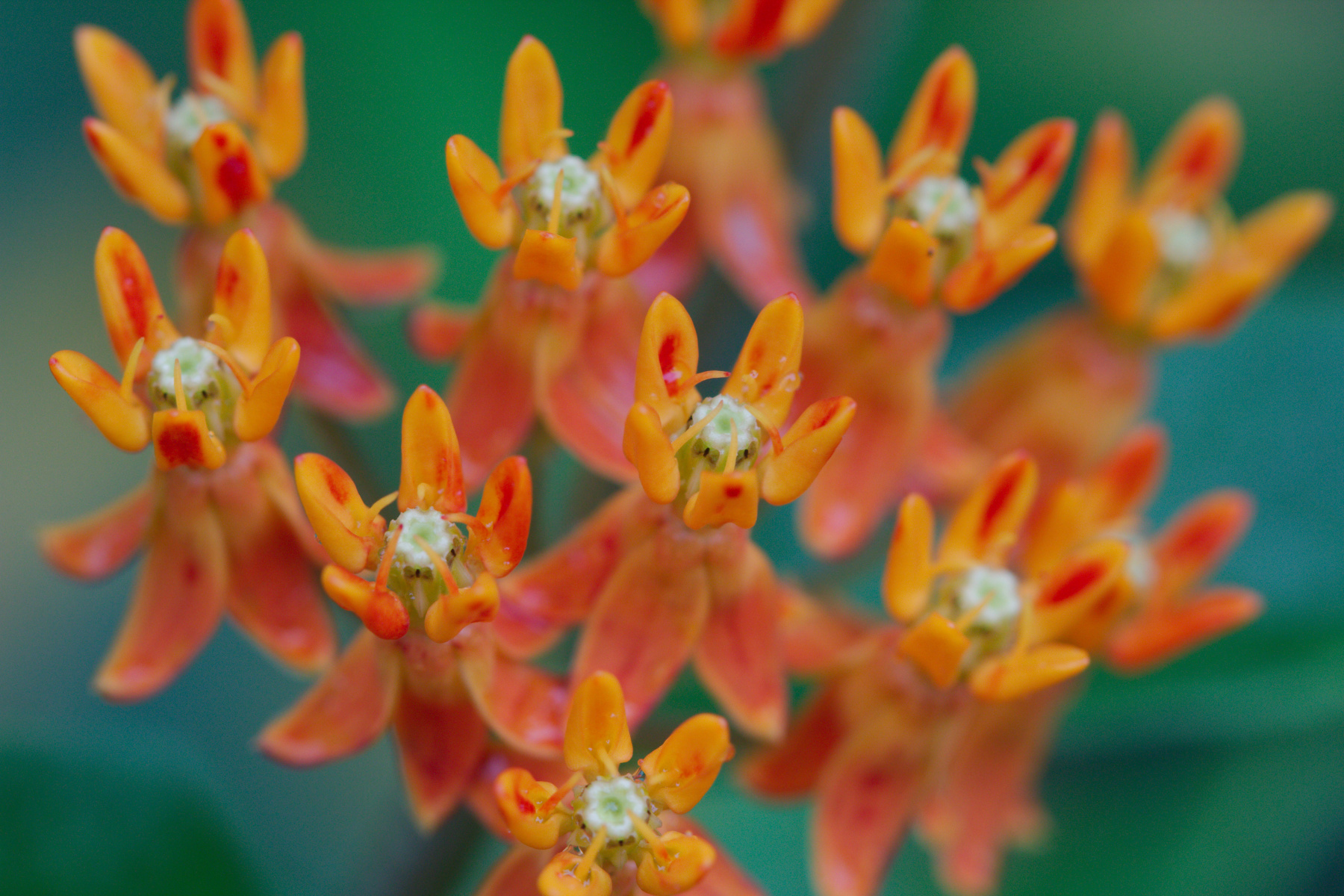
Asclepias Seeds
It’s still summer here, but some things have finished blooming and moved into autumn mode. The various species of Asclepias in the yard is a good example, with its flowers having faded and with seed pods bursting with the characteristic silky, filament-like coma or pappus. As the seed pod opens and the coma dry out, they are borne by the wind and the seeds deposited far and wide (to grow as weeds in someone else’s yard. Actually, we’ve had some come up in our yard, which we consider a good thing. But you have to either recognize what a small Asclepias looks like or let your weeds grow a bit before you pull them.
Our Backyard
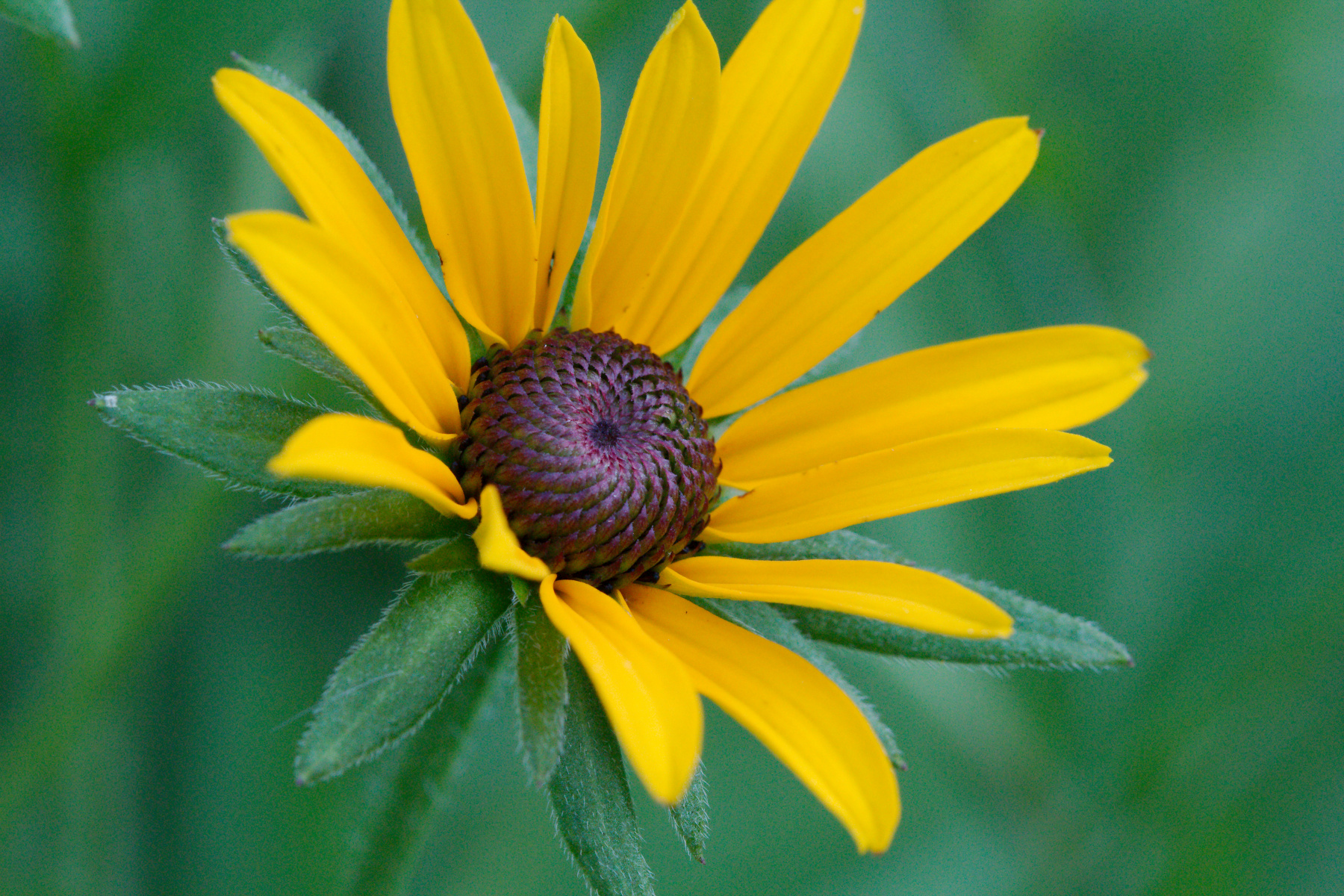
The pictures from out yard which I post here are often close up shots of flowers of things found in the yard. Today I thought I’d give a wider view. I know I’ve done this before and our yard isn’t anything special but that’s what I thought I’d do. Cathy was cutting the grass in the back today so I included her in the picture. It’s been quite warm recently and fairly humid, or to put it another way, typical summer weather here in Maryland, hot and steamy, but we haven’t had anything approaching the drought conditions we get some years. That means the grass has kept growing through the summer, which looks nice but it means it needs to be cut. Anyway, the black-eyed Susans are nice.
Clivia Bloomtime
Late each spring, when the danger of frost is past, we move our large clivia out into the shade of a viburnum bush. As forest undergrowth plants from South Africa and Swaziland, clivia can’t take full sun but very much likes the fresh air humidity of a Maryland summer. Apparently they can be brought into bloom in the winter if treated properly but ours seems to bloom in the summer or early fall without any special treatment. It’s a lovely plant and I find it a bit surprising it isn’t grown more. It’s quite easy to care for and even when not blooming has lovely, green, strap-like leaves to brighten up a room. You really should get yourself one. As for flowers, there are yellow, orange, and red varieties, so pick what suits you best.
More Black-eyed Susans
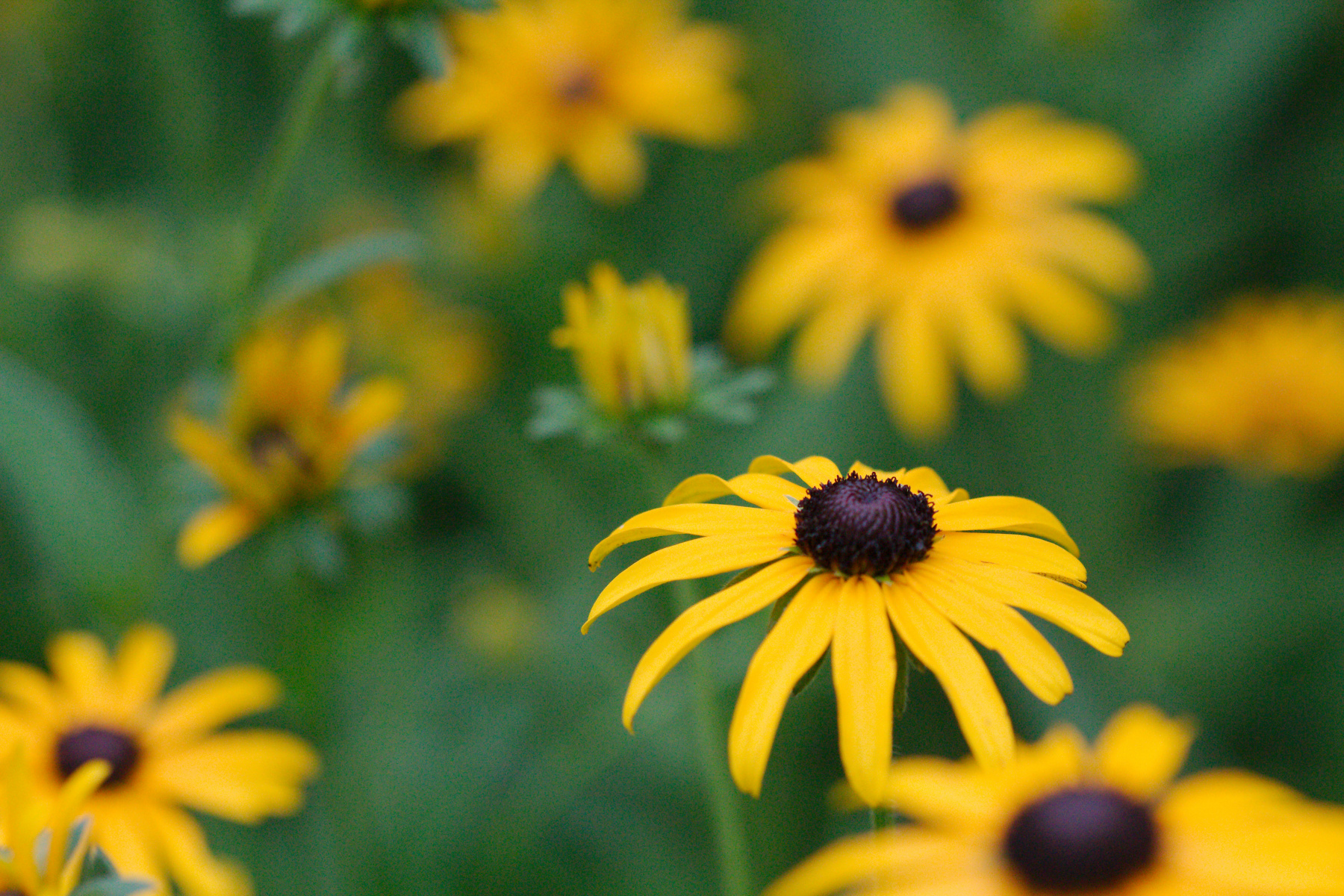
I didn’t take very many pictures today and most of those I took didn’t turn out too well, but because I did take some and because I’m doing my best to keep up this one picture a day thing for a bit longer (I’m at 2050 consecutive days at this point, a little over five and a half years), this is what you get. It isn’t a bad picture, but that’s about it. If you like yellow or if you are particularly fond of black-eyed Susans you might even think it’s a nice picture. But it’s a picture. I promise to have better pictures from time to time. Of course, I can probably also promise to have worse pictures now and then. Most of them, I guess, are closer to average.
Black-eyed Susans and Verbena bonariensis
We’re back from the beach and the black-eyed Susans are in full bloom all around our yard. There were some blooming when we left but there is no question they are at their peak now. They bloom along with and complement the Verbena bonariensis, sometimes known as tall verbena or purpletop vervain (although we don’t happen to use those names).
My camera has a hard time when I take pictures with a lot of yellow in them. The auto-white balance doesn’t know that it’s supposed to be yellow and tries to ‘fix’ it. The result is quite blue outside the yellow parts and I have to adjust for it after the fact. Not a bit deal, but interesting that yellow is the color most likely to confuse the camera.
Origanum ‘Kent Beauty’
Per the Missouri Botanical Garden, Origanum ‘Kent Beauty’ “is a hybrid ornamental oregano (O. rotundifolium x O. scabrum) that is grown primarily for its attractive flowers and foliage.” Cathy has had some growing in our garden off and on for many years and we love its delicate, pink flowers, as well as the pale leaves. It’s not completely hardy here but makes it through all but the worst winters and grows quickly enough to be treated as an annual. We don’t use it for cooking for two main reasons: the leaves are not pungent enough for that and we have regular oregano growing in our little fenced herb garden.
Flowers In The Rain
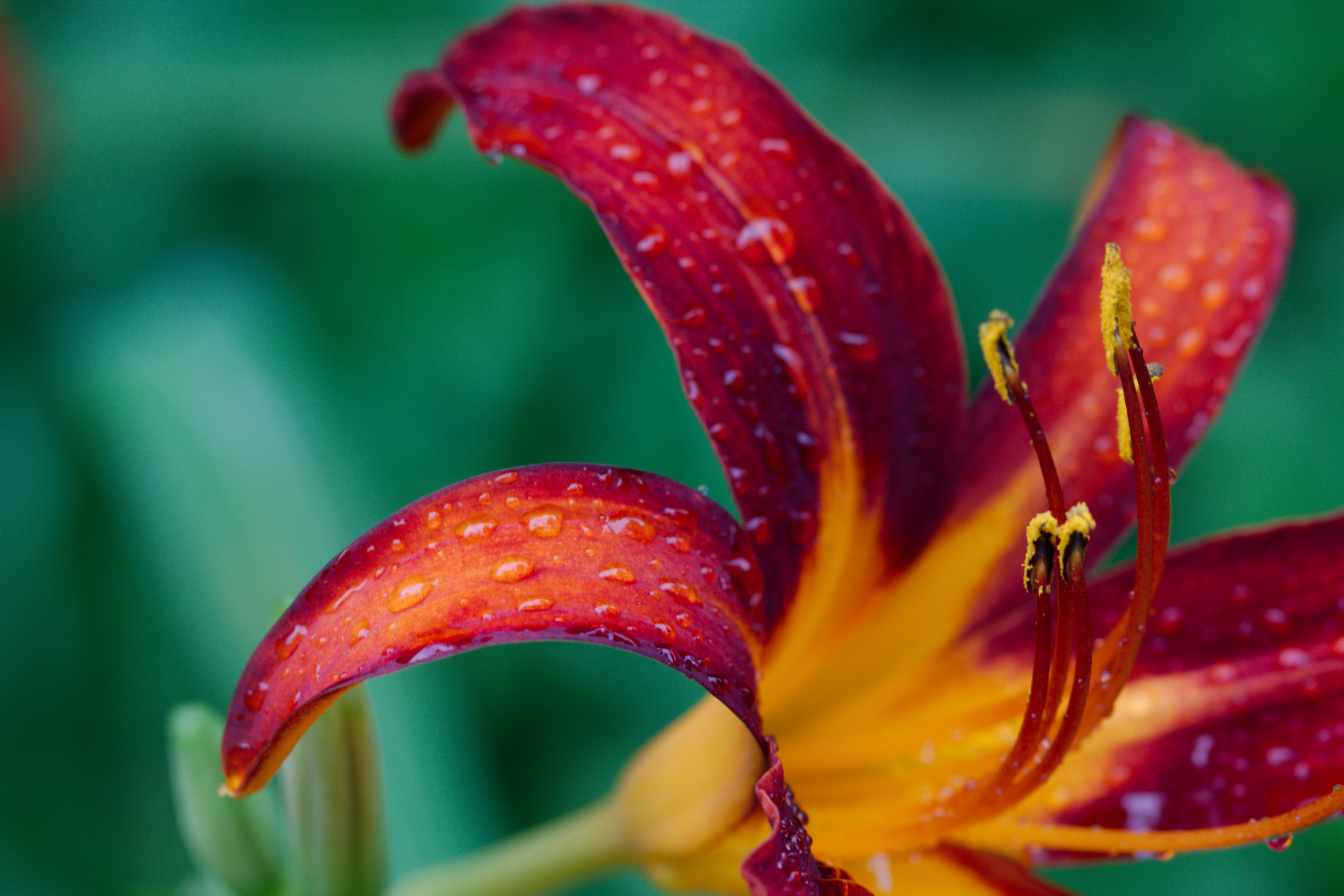
Some weeks I expect to have things to take pictures of but it works out that I don’t and I have to work to keep this thing going. Other weeks I somehow know ahead of time that it’s going to be busy and it’s going to be a struggle. This is one of those weeks. I don’t have a lot extra happening and in fact a couple days I don’t have anything after work, but I just have a feeling it’s going to be a dry week. This evening it rained, actually, so not dry in the literal sense. I love the colors of the garden in the rain. They are more intense when the sun isn’t so bright on them. This picture really doesn’t do it justice, but the yard looks nice right now. Unfortunately, the forecast is for hotter each day this week and approaching 100°F by the weekend. Not looking forward to that.
Zinnia
I was over at Laurie and David’s house this evening and, as always, I stopped to smell the roses, metaphorically speaking. In particular, I got down on the ground to spend a little time up close with a few zinnias. Most people who know me well have found my lying on the ground in a garden at one time or another, or at least know it’s something I do. Paul and Janet got there while I was thus and commented on it. They weren’t particularly surprised to find me like that, though.
United States Botanic Garden
With David, Maggie, and Laura in town for a few days, we had one day to do a significant outing and because Laura was only going to be here through this afternoon, that meant it would be today. We started off at the National Arboretum, where we enjoyed the capital columns, the bonsai and Penjing collection, the herb garden, and the Morrison shade garden.
From there, we drove downtown to the United States Botanic Garden, located at the east end of Maryland Avenue just below the US Capitol building. This is easily one of my favorite places in Washington. The Institute’s garden was established by Congress in 1820 and it moved to its present location in 1933. The Garden includes the conservatory, the National Garden, and Bartholdi Park. This is a view of the capital building from the garden in front of the conservatory.
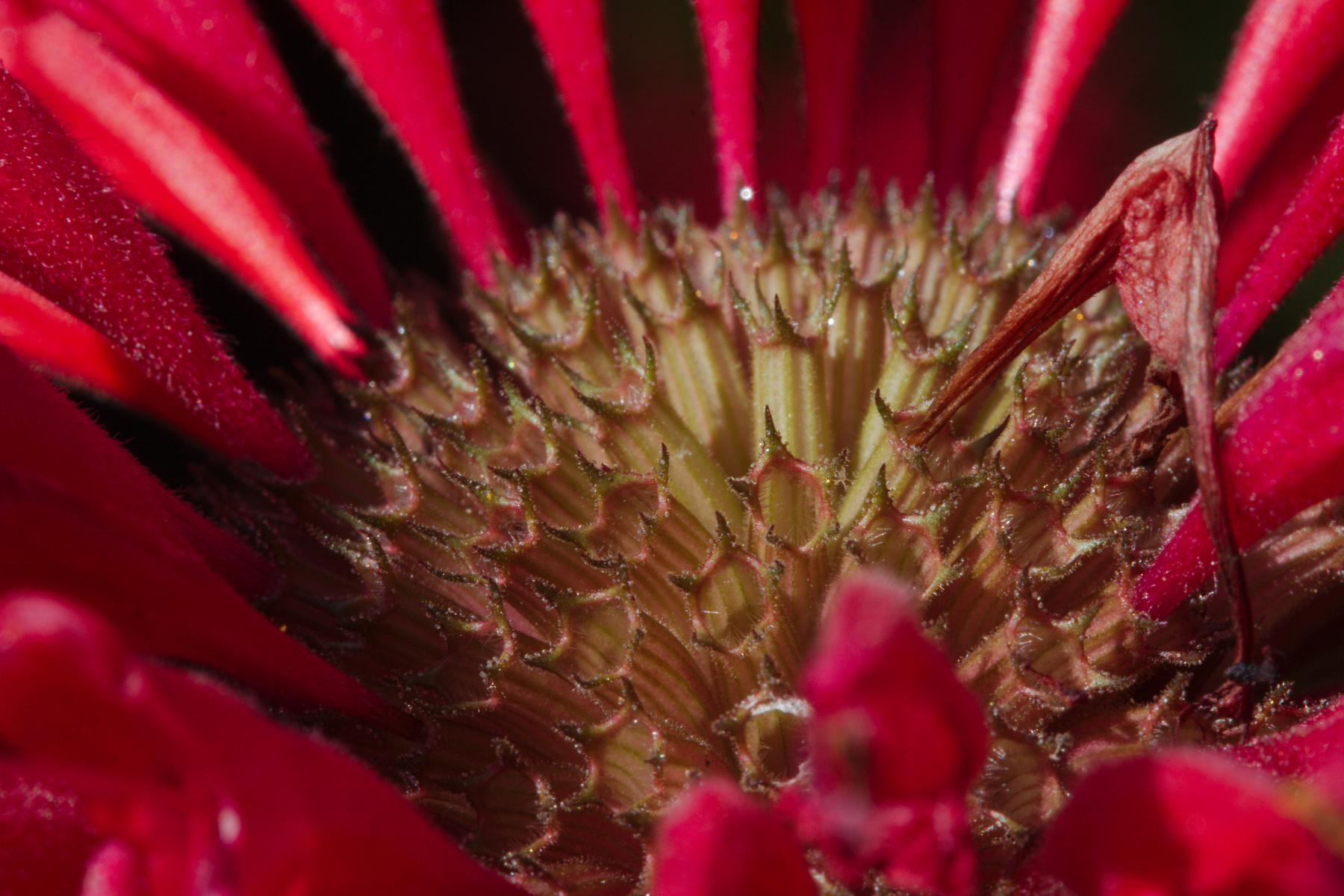
Monarda Up Close
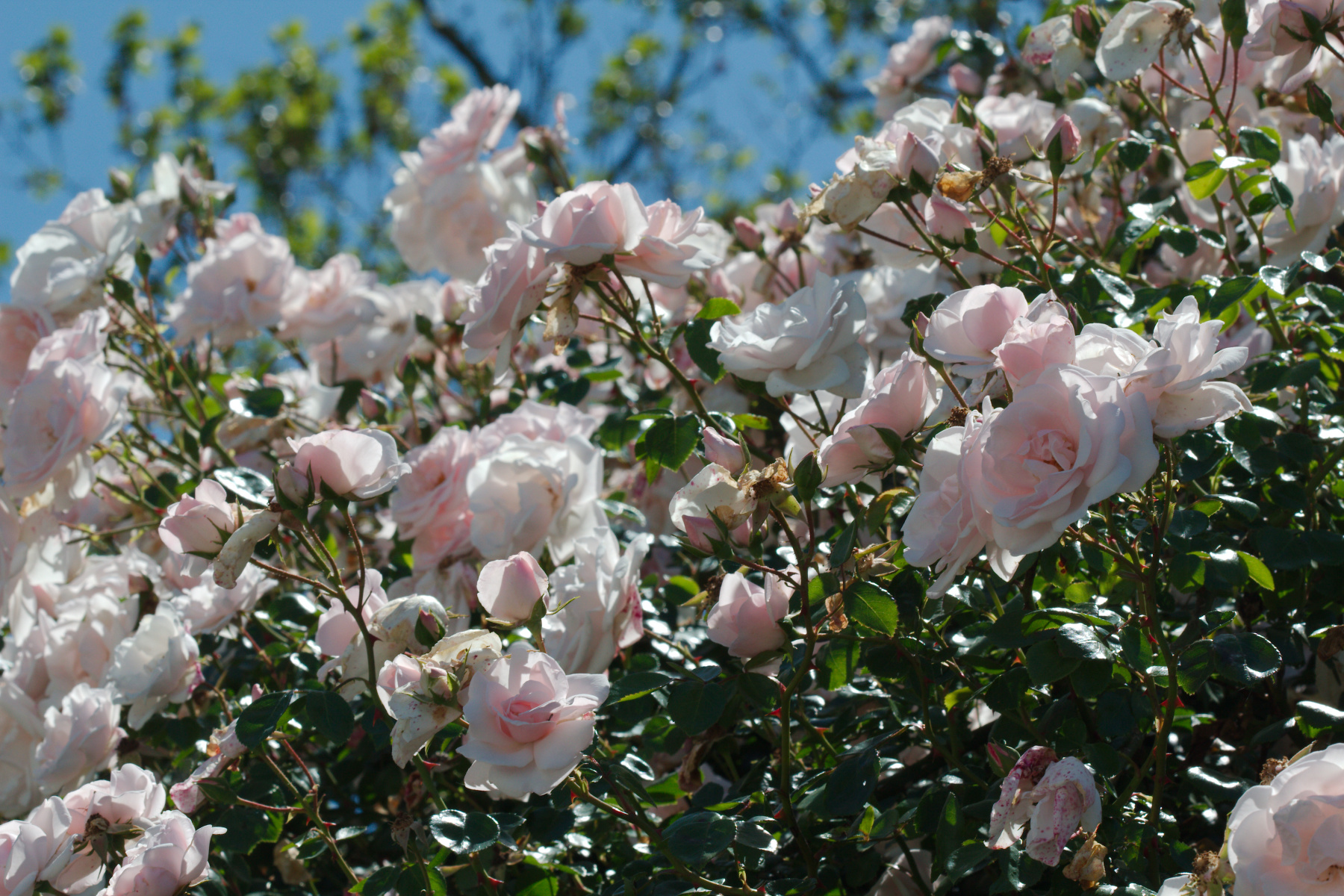
Cathy and I did a bit of work in the garden today. She was mostly weeding and I was working on the roses along the back fence. I have (or had, actually) one rose that has become infected with rose rosette disease, which is caused by a virus (Emaravirus sp.) that is spread by a very small, eriophyid mite. There is no cure and in order to protect other roses, the infected plant must be removed and destroyed. So, I fought with rose branches, scratching my arms up a little. I also cut back another rose that is growing quite vigorously.
In the process I pulled off a few flowers from the Monarda growing next to the rose. This is a rather close view of a Monarda flower, taken with both the flower and the camera resting on the ground so I could use a longish exposure (1/3 second at f/32).
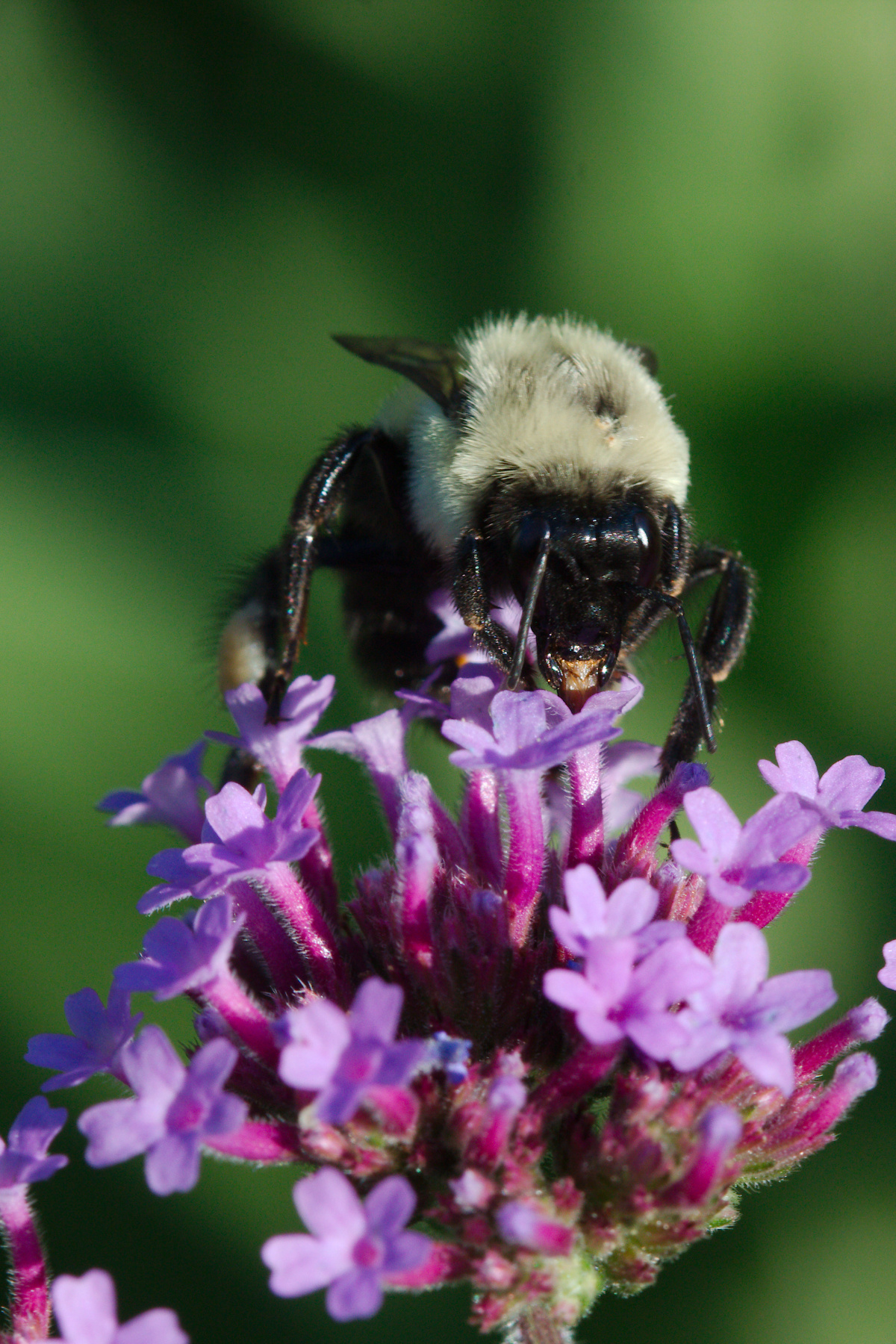
Bumble Bee on Nandina
We were over at Cathy’s mom’s this evening, doing a few things. Cathy planted some annuals in the pots on her driveway and I replaced the two buttons for her doorbell, neither of which was working. While Cathy finished up with the plants and before we went out for dinner, I took some pictures. While I was near the Nandina domestica (sometimes called heavenly bamboo for reasons that seem a bit tenuous to me) a bumble bee (Bombus impatiens, a common eastern bumble bee) came around, testing the flowers. This isn’t the sharpest picture of a bumble bee I’ve gotten but it’s the best of what I got on this occasion. I suspect there will be more bee and wasp pictures coming here in the weeks ahead. It’s that time of year.