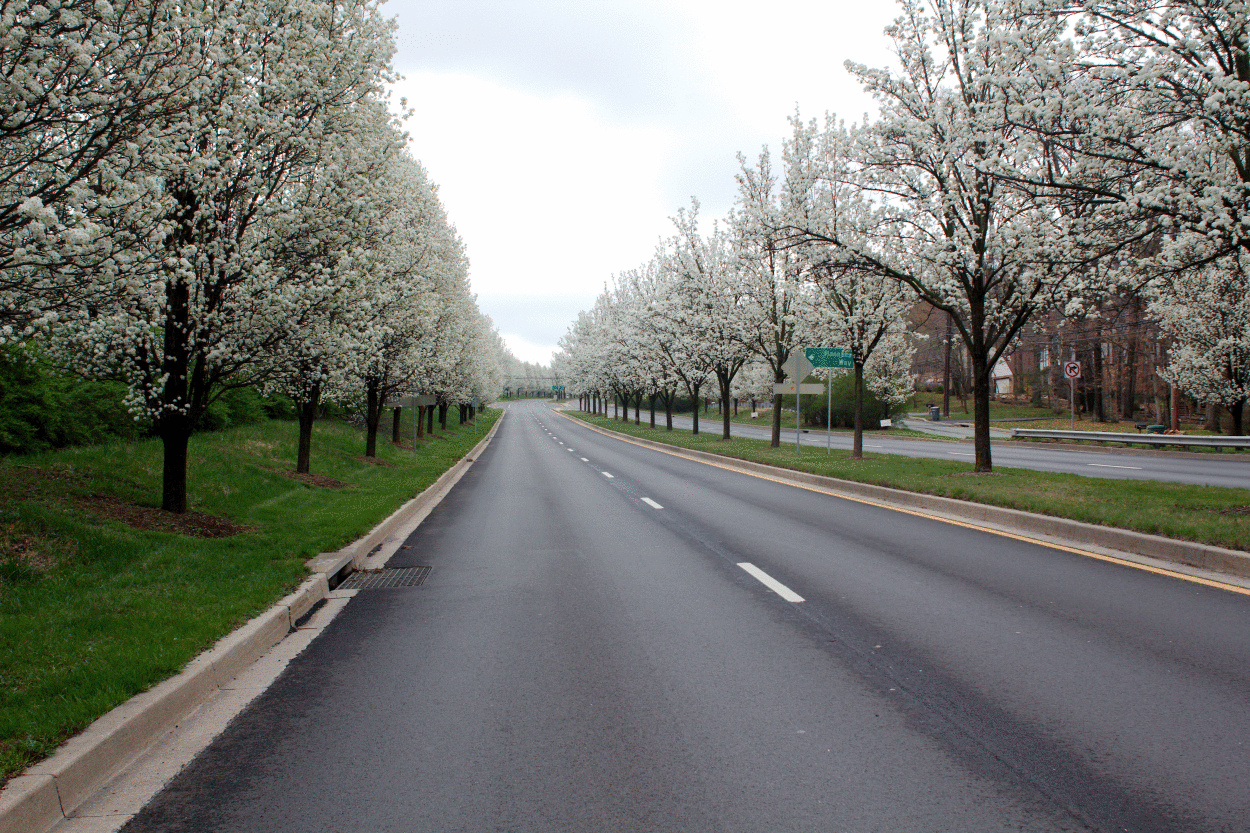
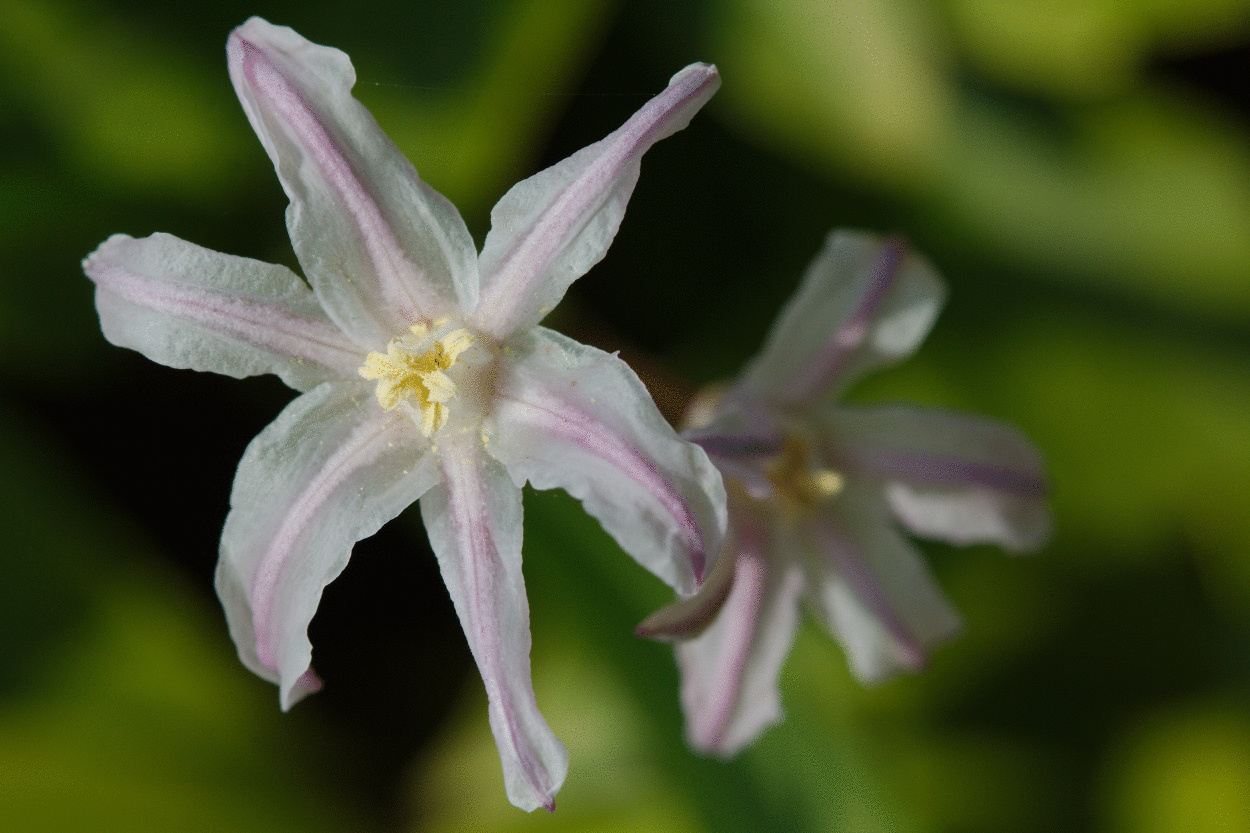
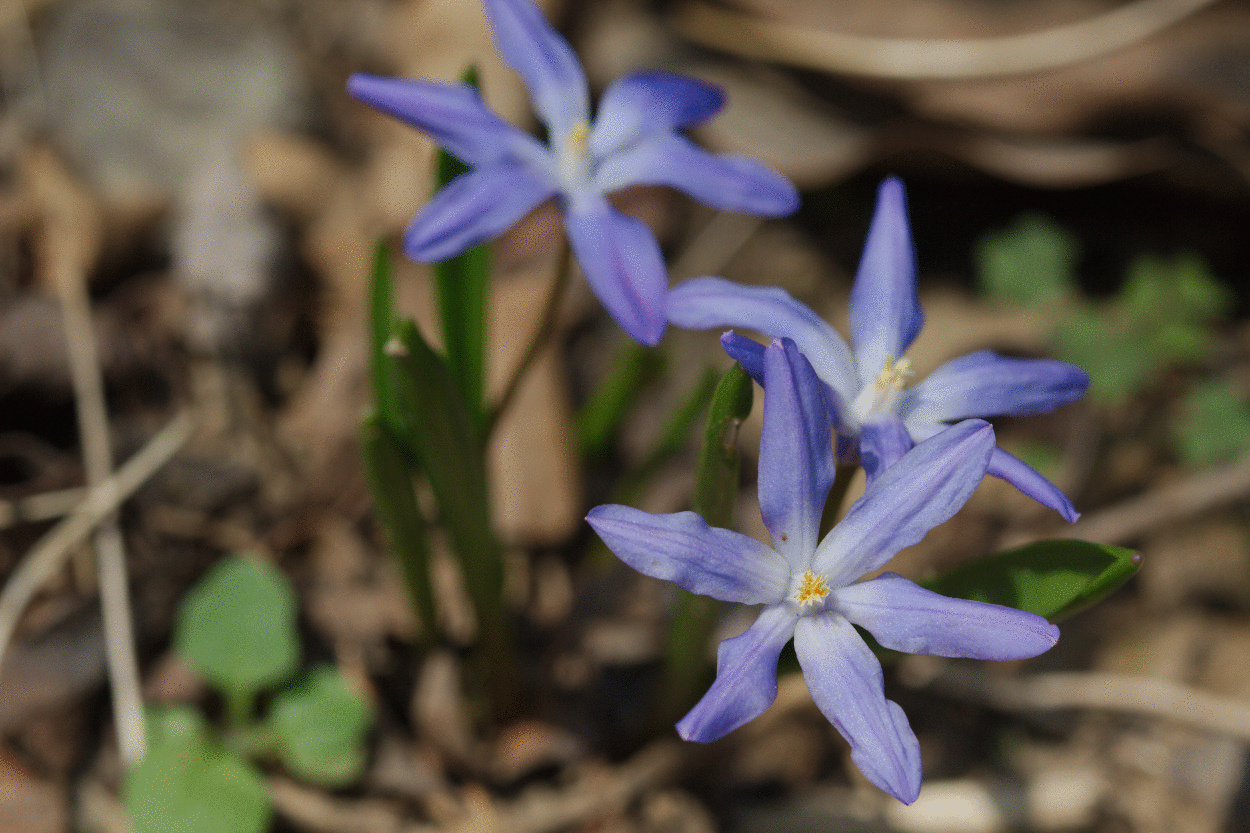
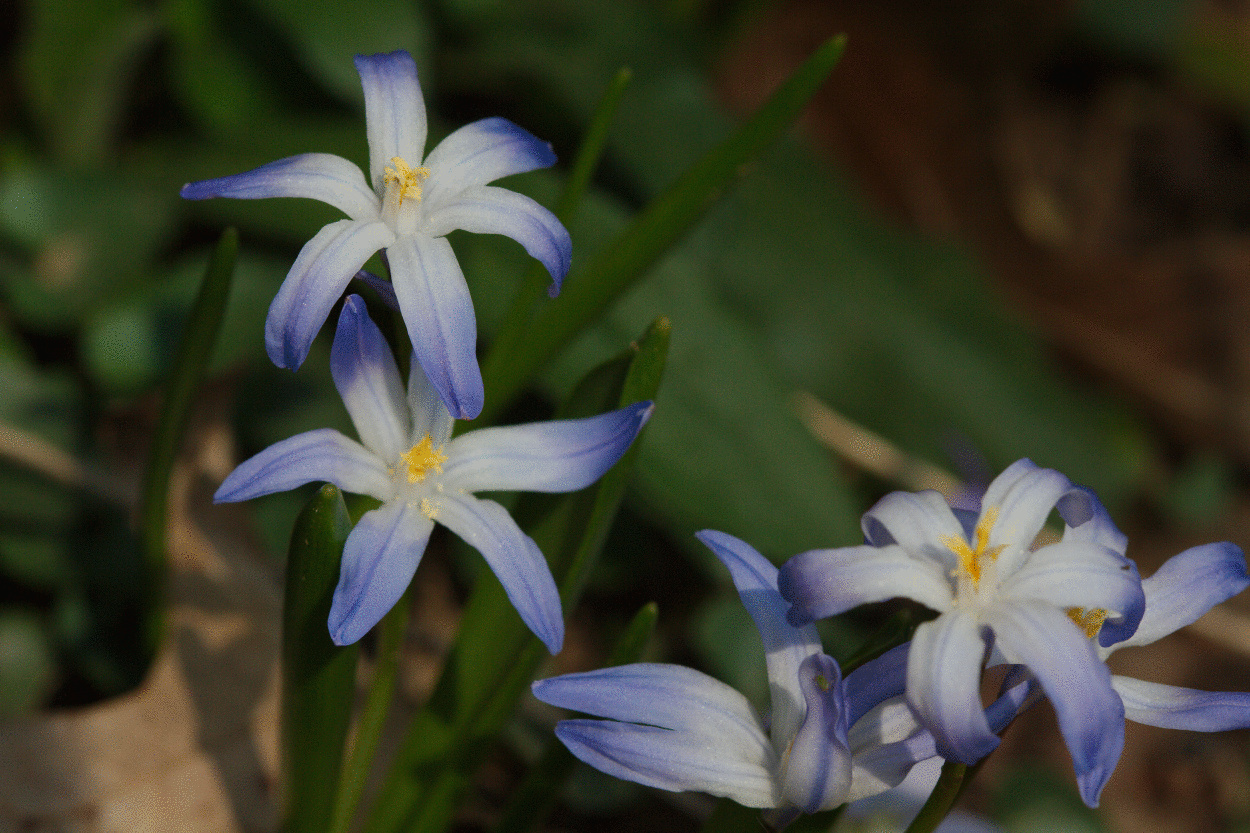
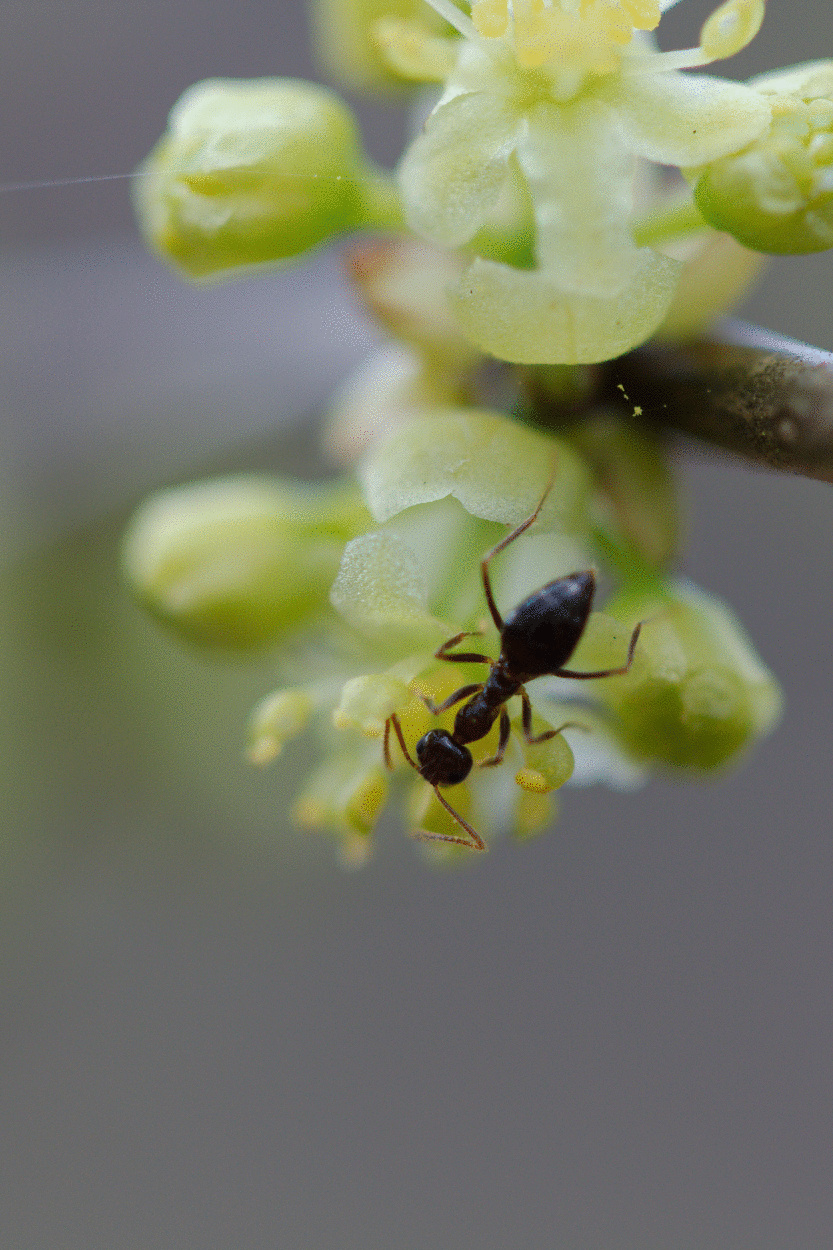
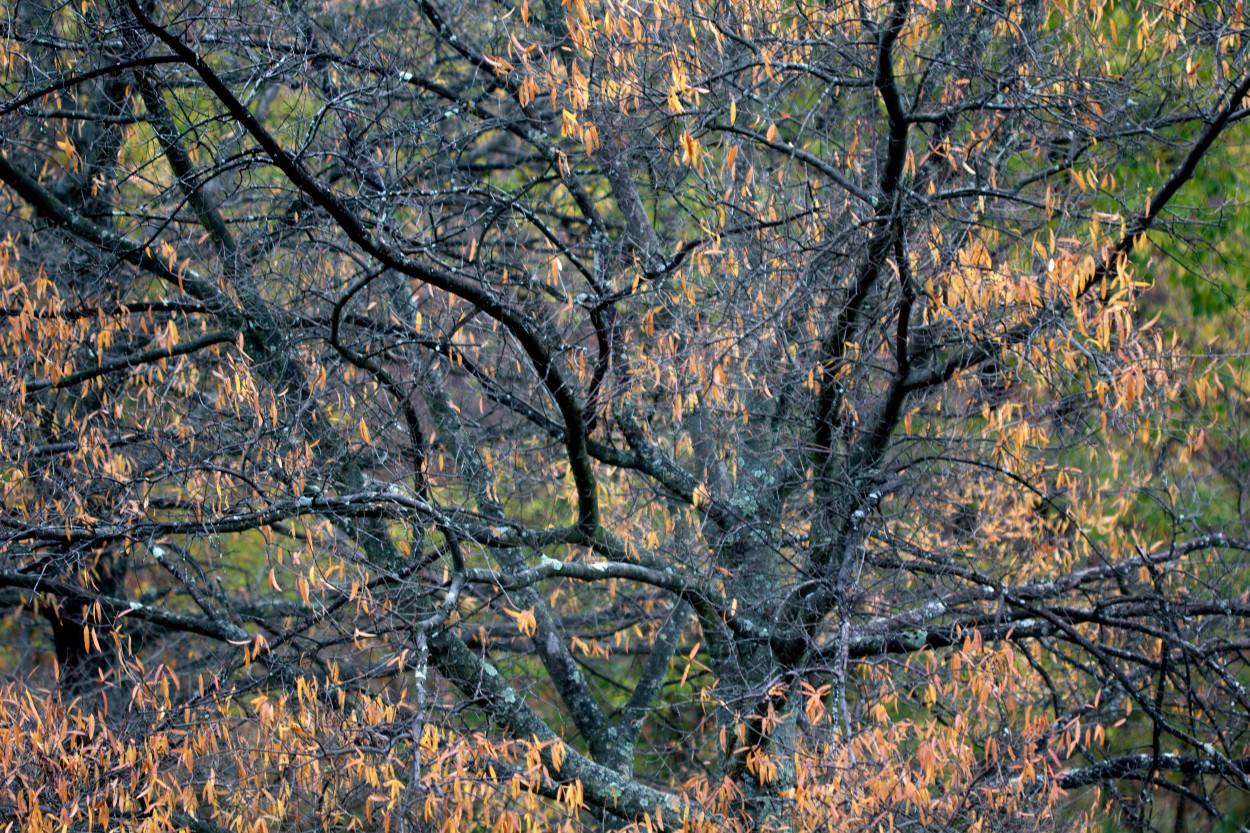
I’ve been meaning to do this for a while now and needed to make it soon. The sun is setting as I come home from work and lighting the Zelkova serrata trees that are planted on either side and down the middle of Norbeck Road. They have turned from their summer green to a bright rusty orange that’s really quite amazing. With the end of daylight saving time this weekend, I’ll be coming home an hour too late next week, it will already be dark, so I stopped this evening and carefully made my way to the median, where I took a few pictures.
Flowers and Plants
Two Versions of Fall Color
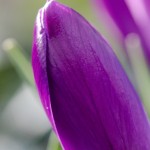
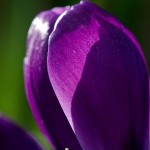
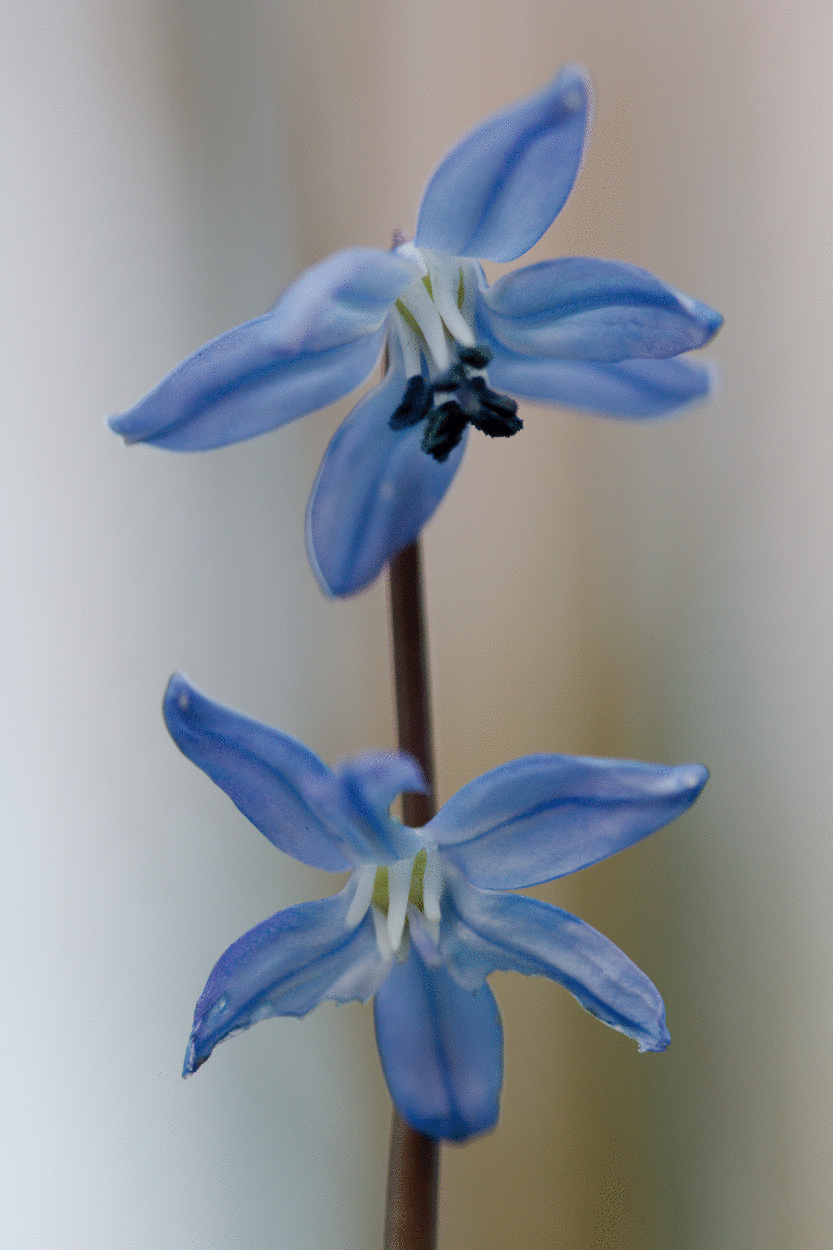
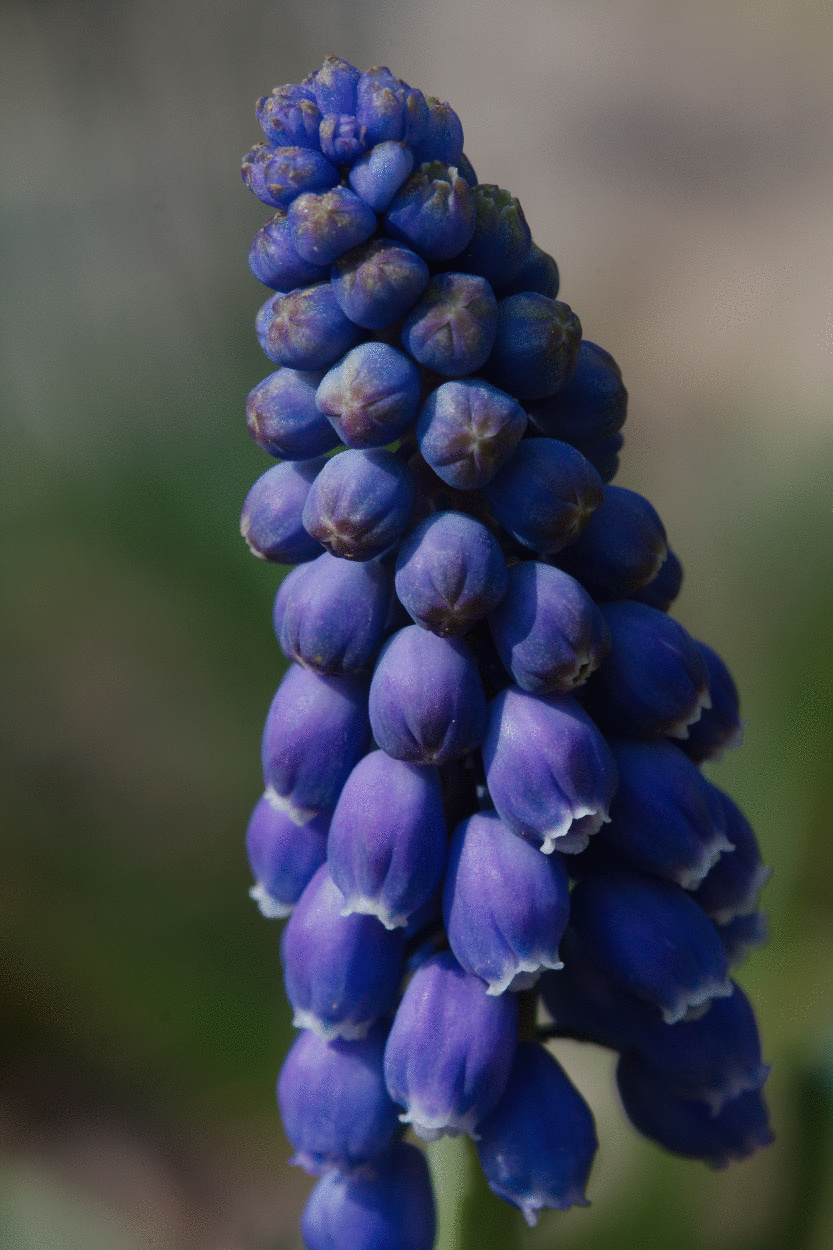
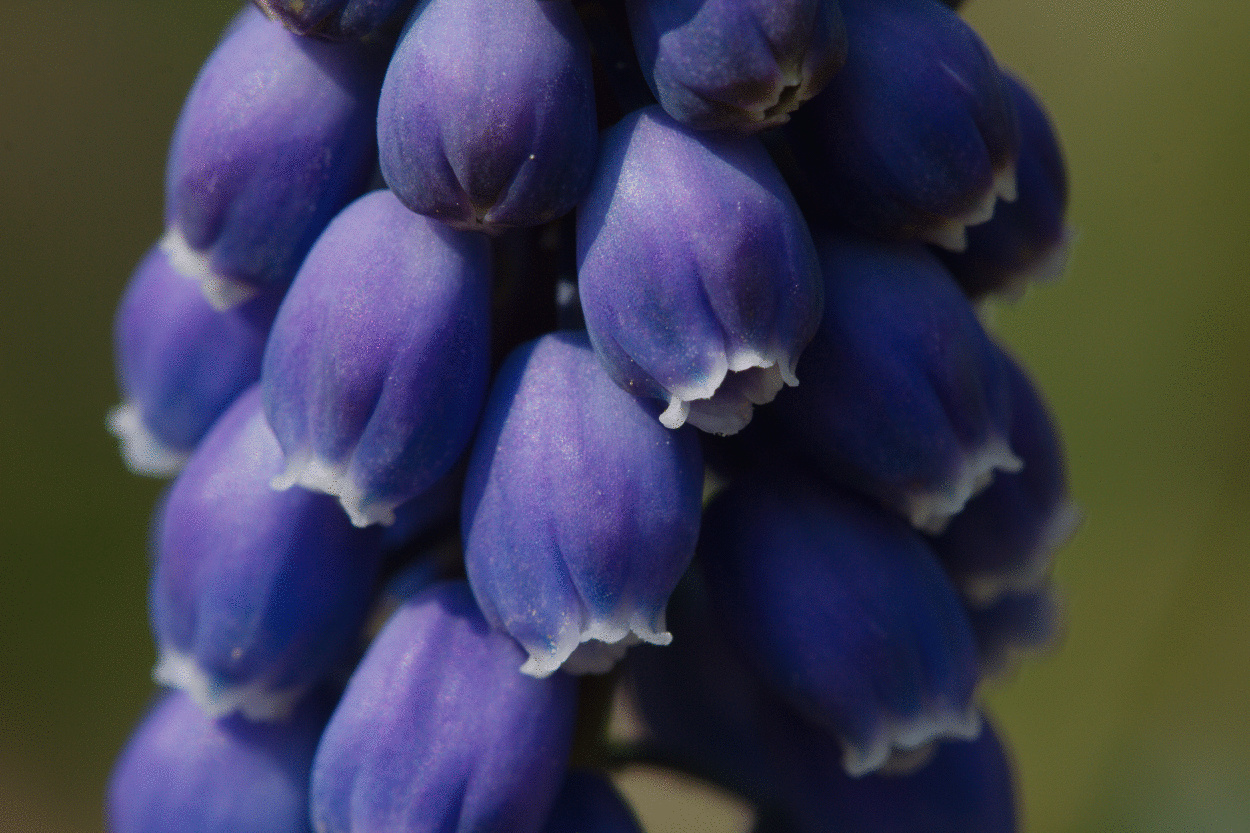
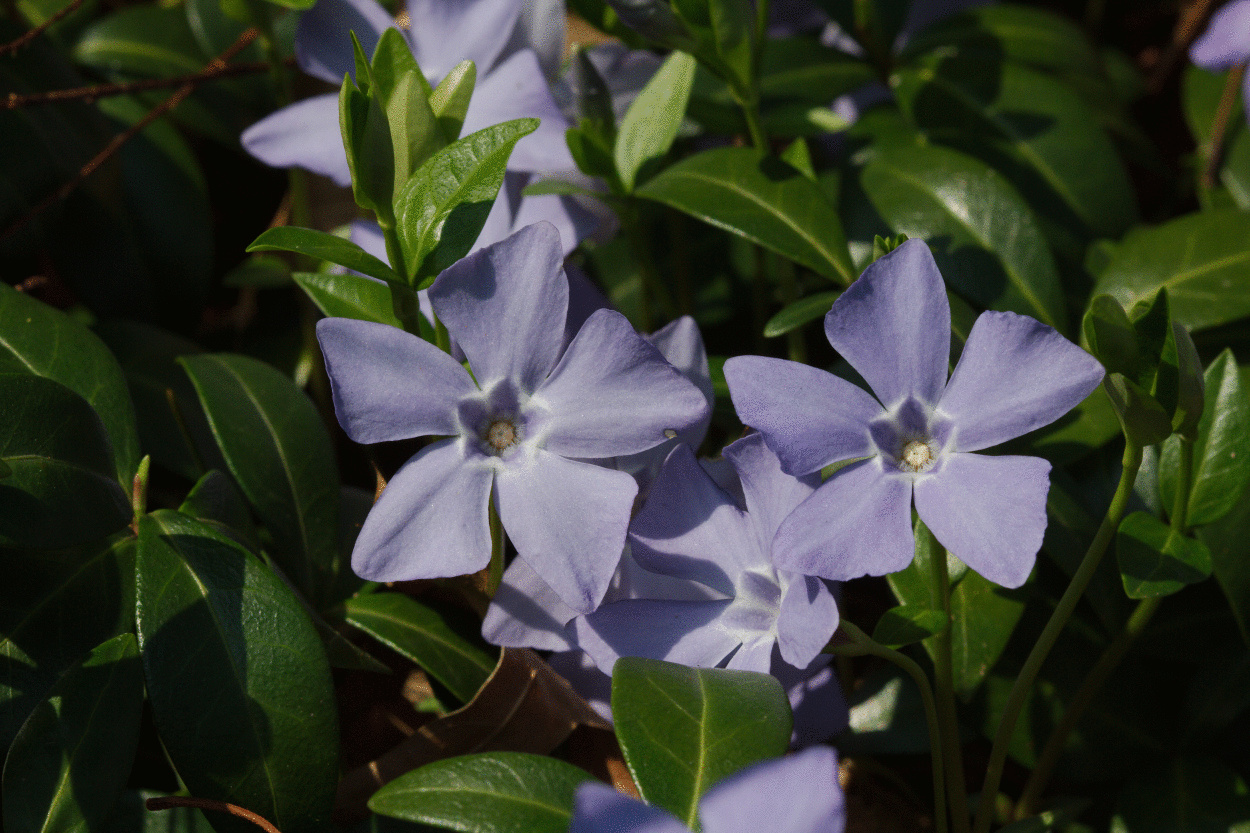
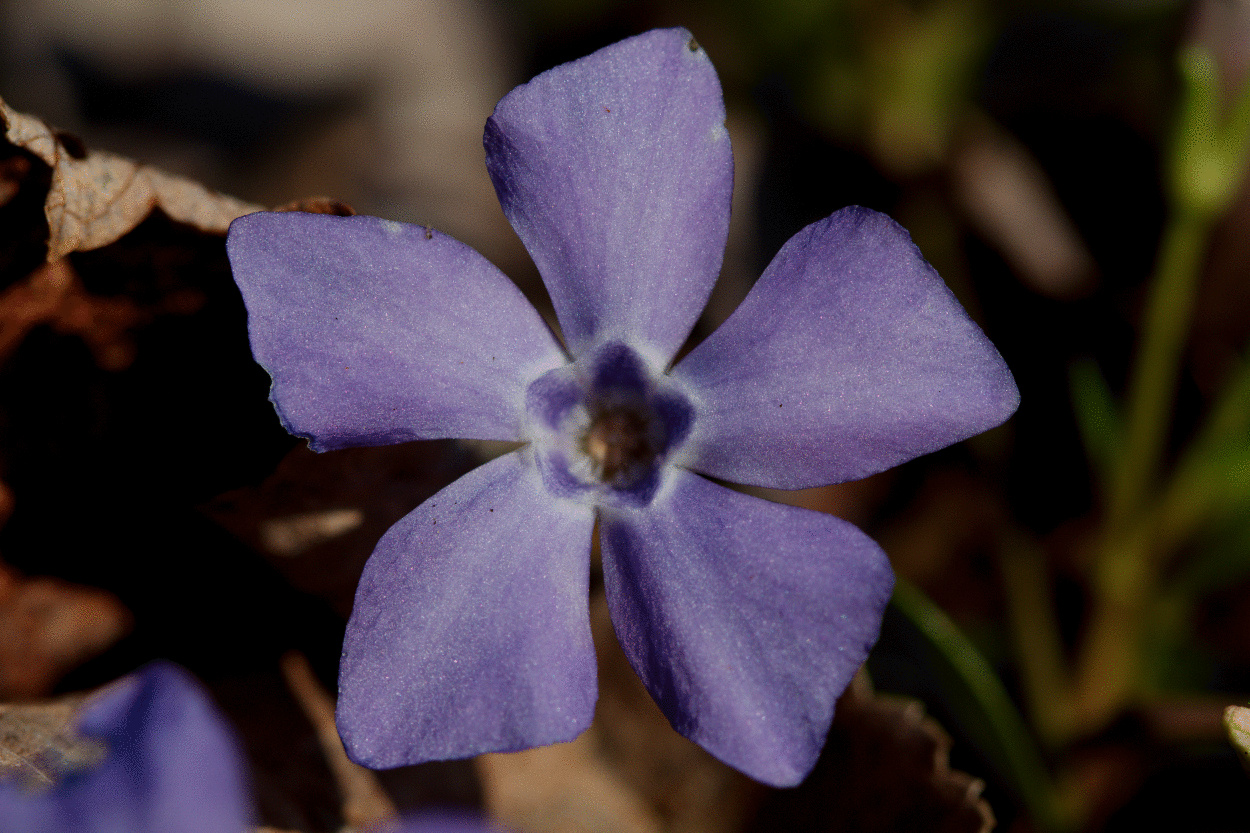
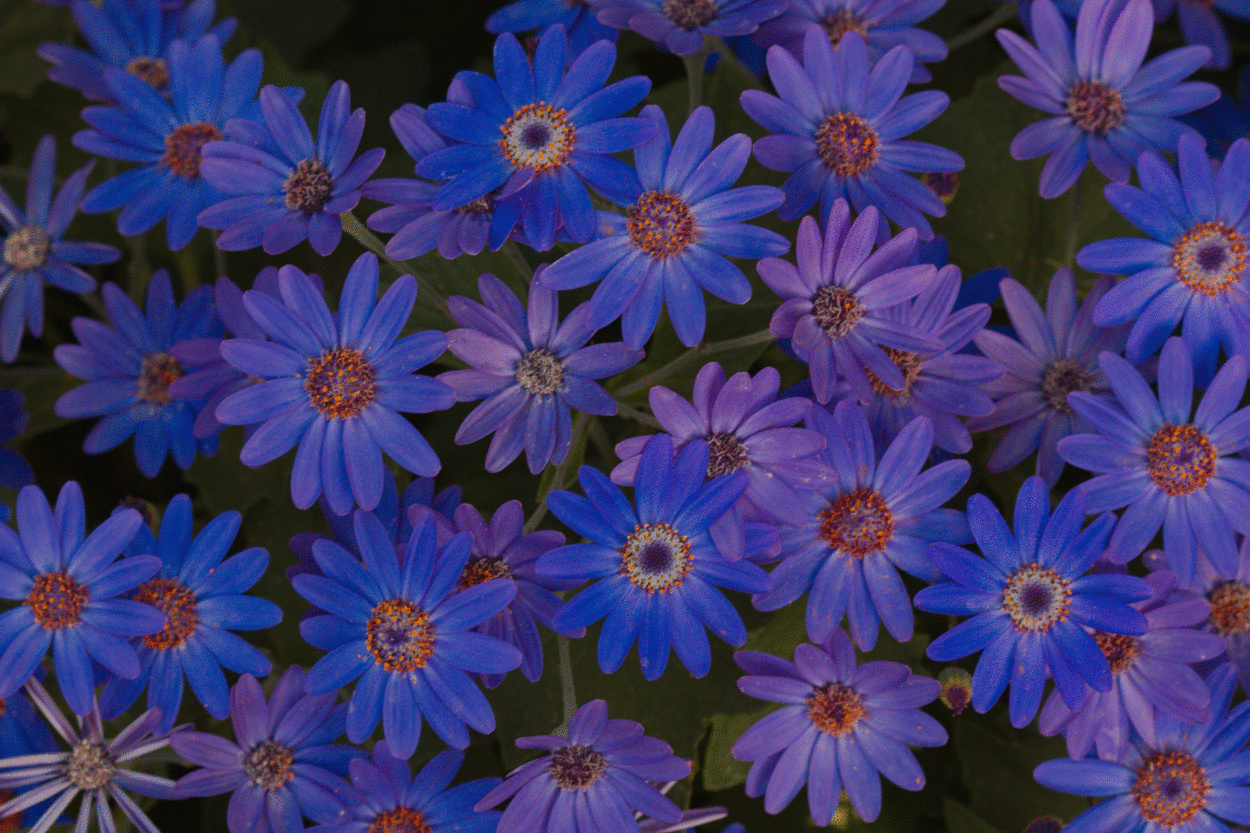
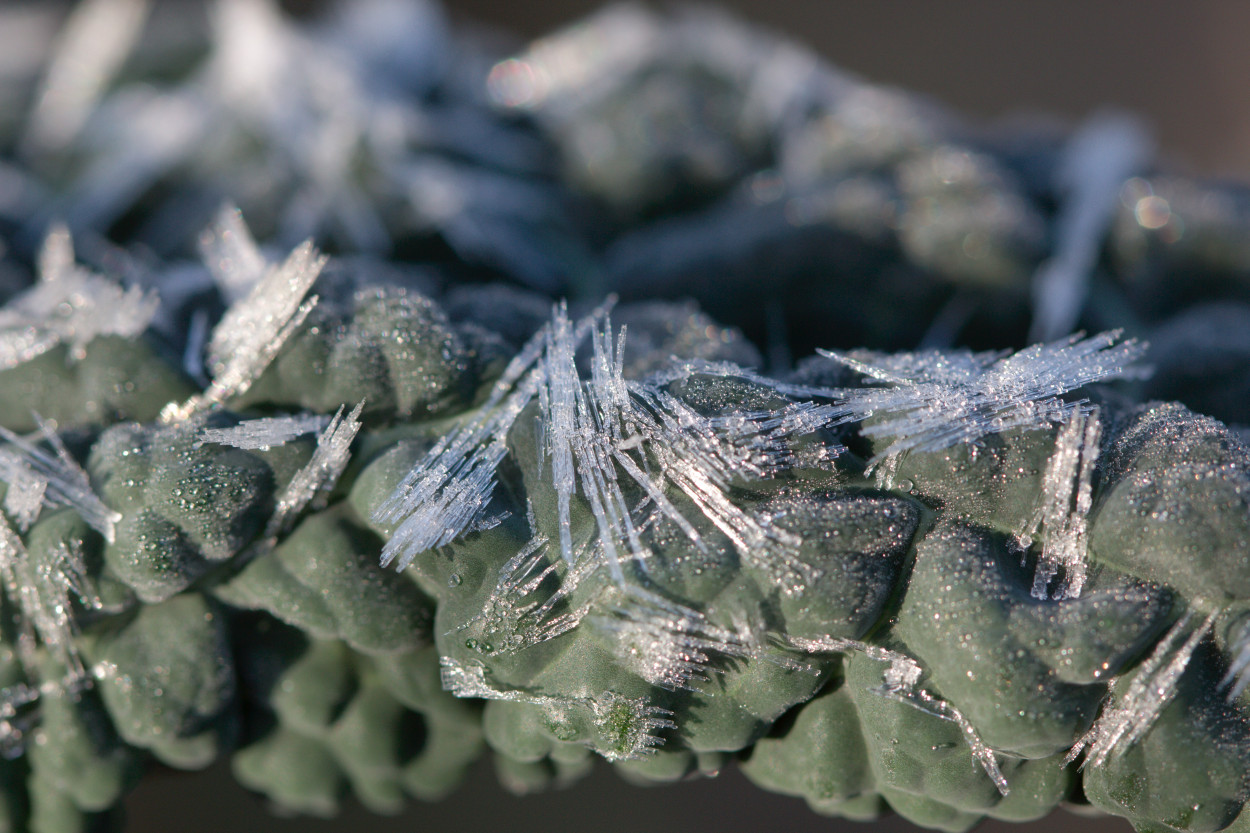
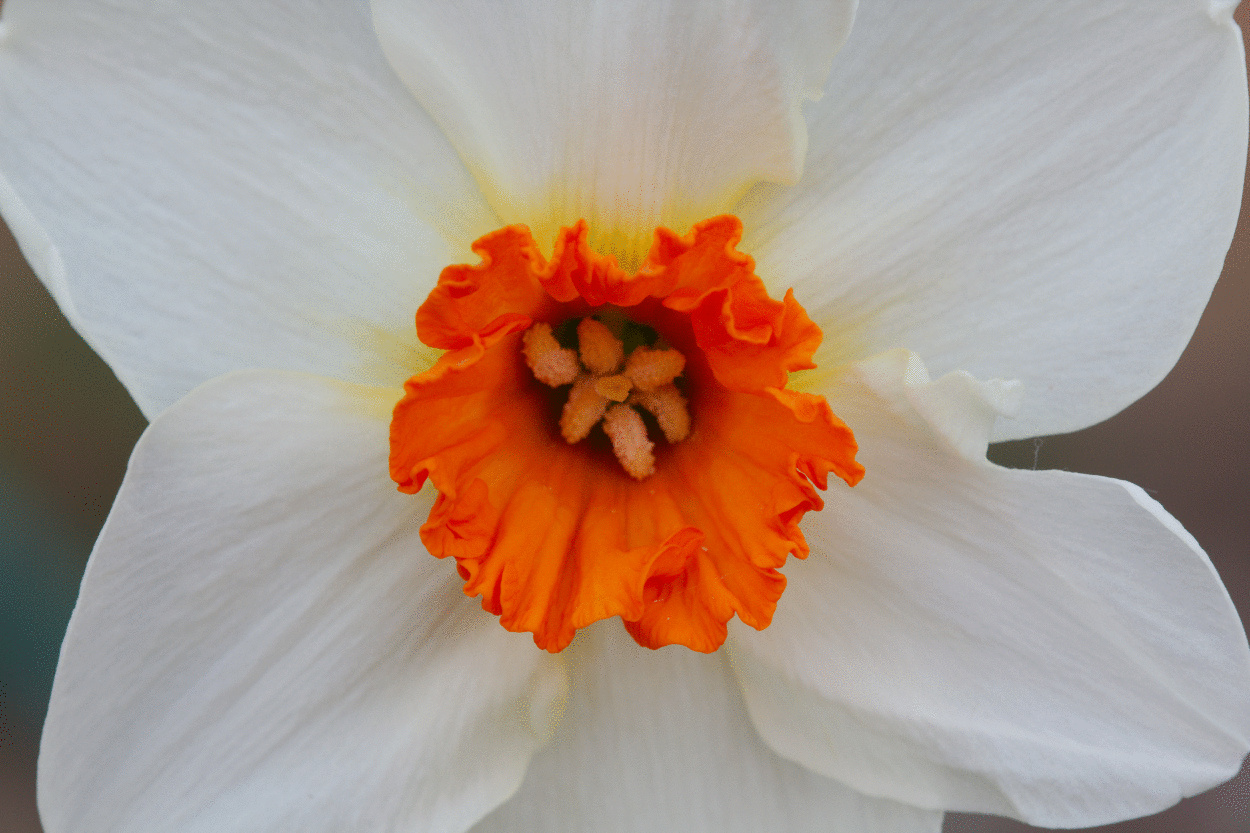
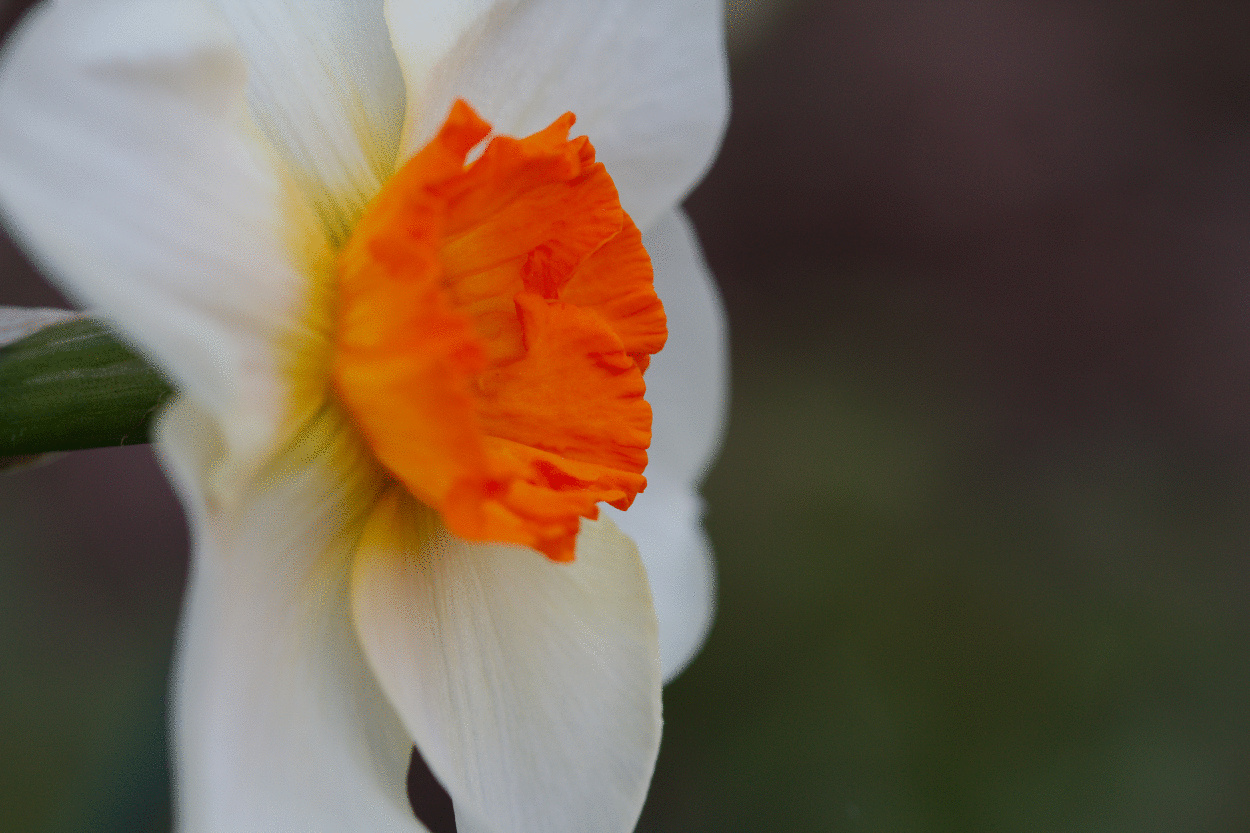
I went for a walk early this afternoon, walking around the top half of the block my building is on. It’s a fairly large block so even my abbreviated walk was nearly a mile. I stopped fairly often and took pictures, mostly pictures of details rather than overall views. They were predominately pictures of colors that we think of as fall colors, but this first image is an exception. These are fall colors, of course, but they are not the colors we think of that way. Blues, purples, and bright greens are the colors of spring or possibly early summer. Fall is for hot colors, not these cool colors.
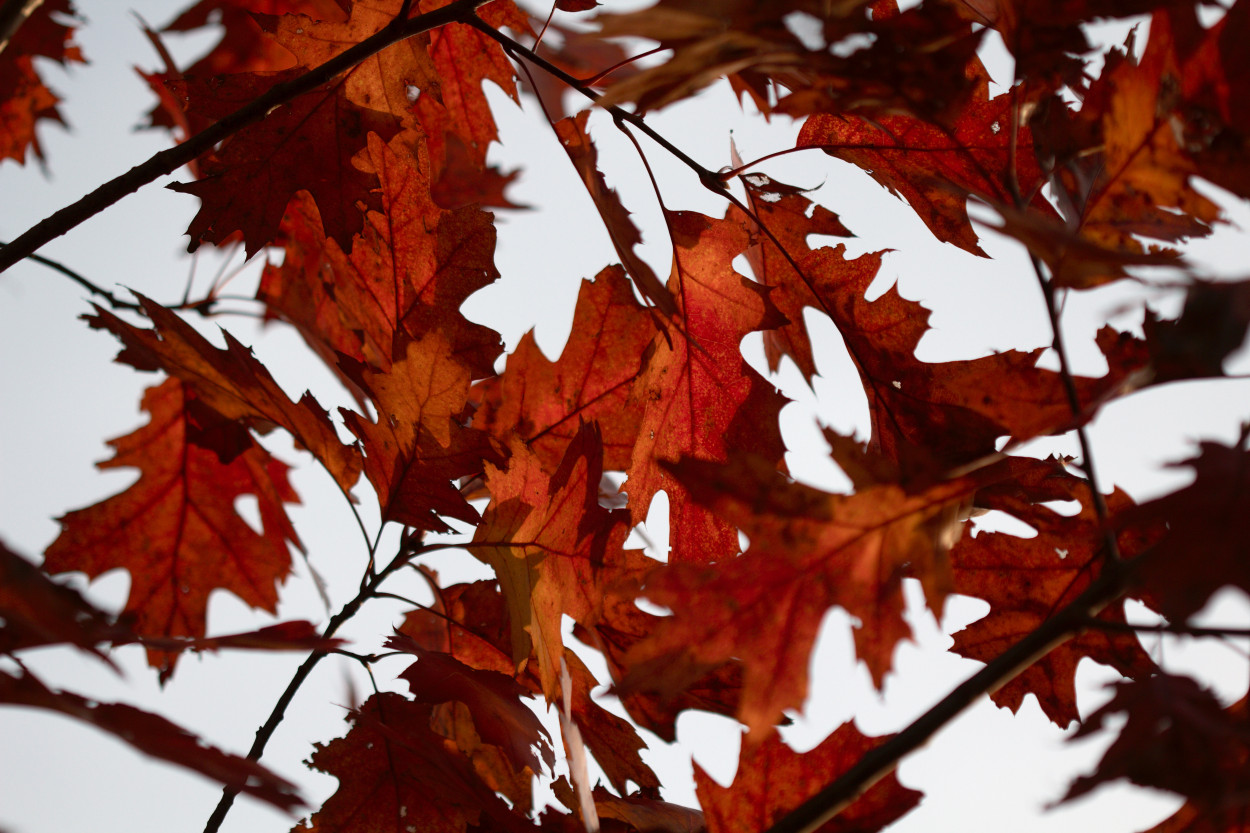
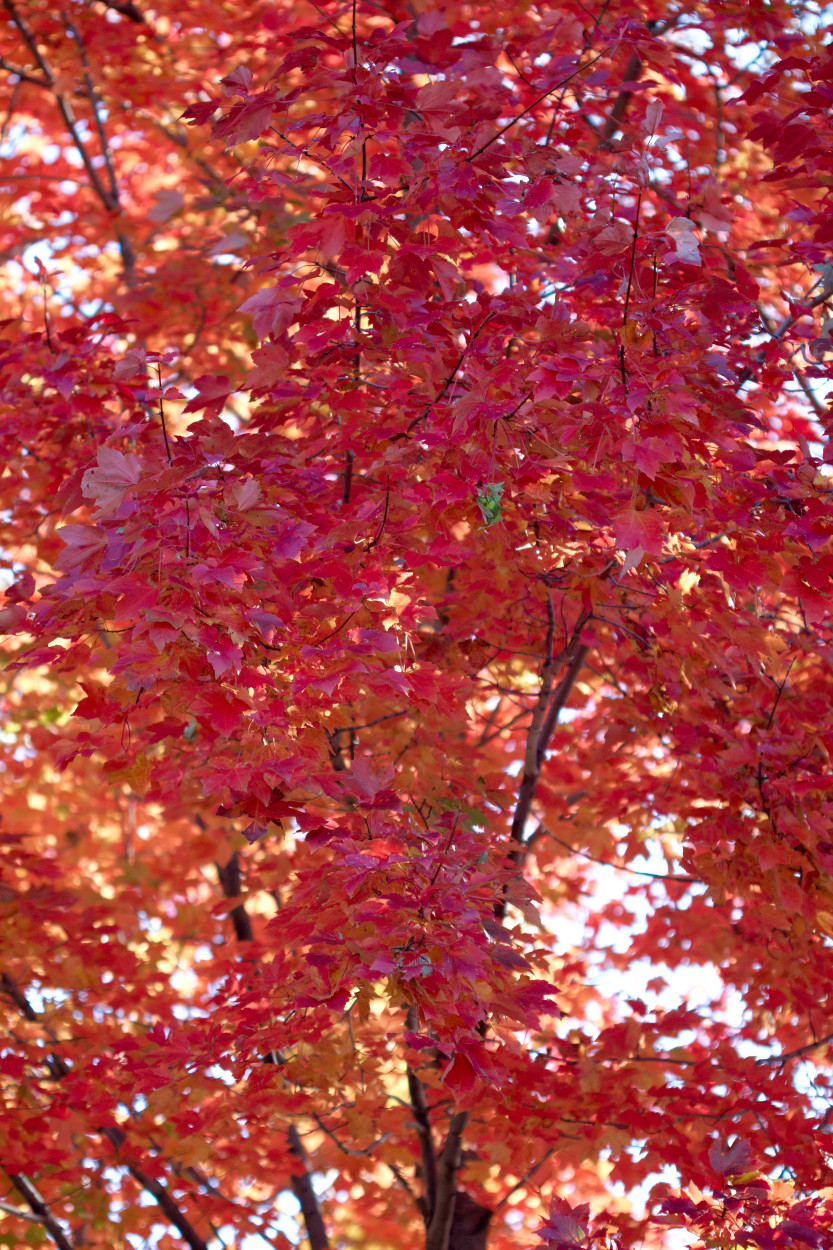
The second picture, of maple leaves, is much more traditionally fall-colored. The reds and oranges of maples are a big part of what we look forward to in the autumn in the mid-Atlantic states. The bright and sometimes deep reds of red maple (Acer rubrum, the bright orange of the sugar maple (Acer saccharum), the deep, almost black reds of some Japanese maples (Acer palmatum) are all wonderful parts of our fall festivities.
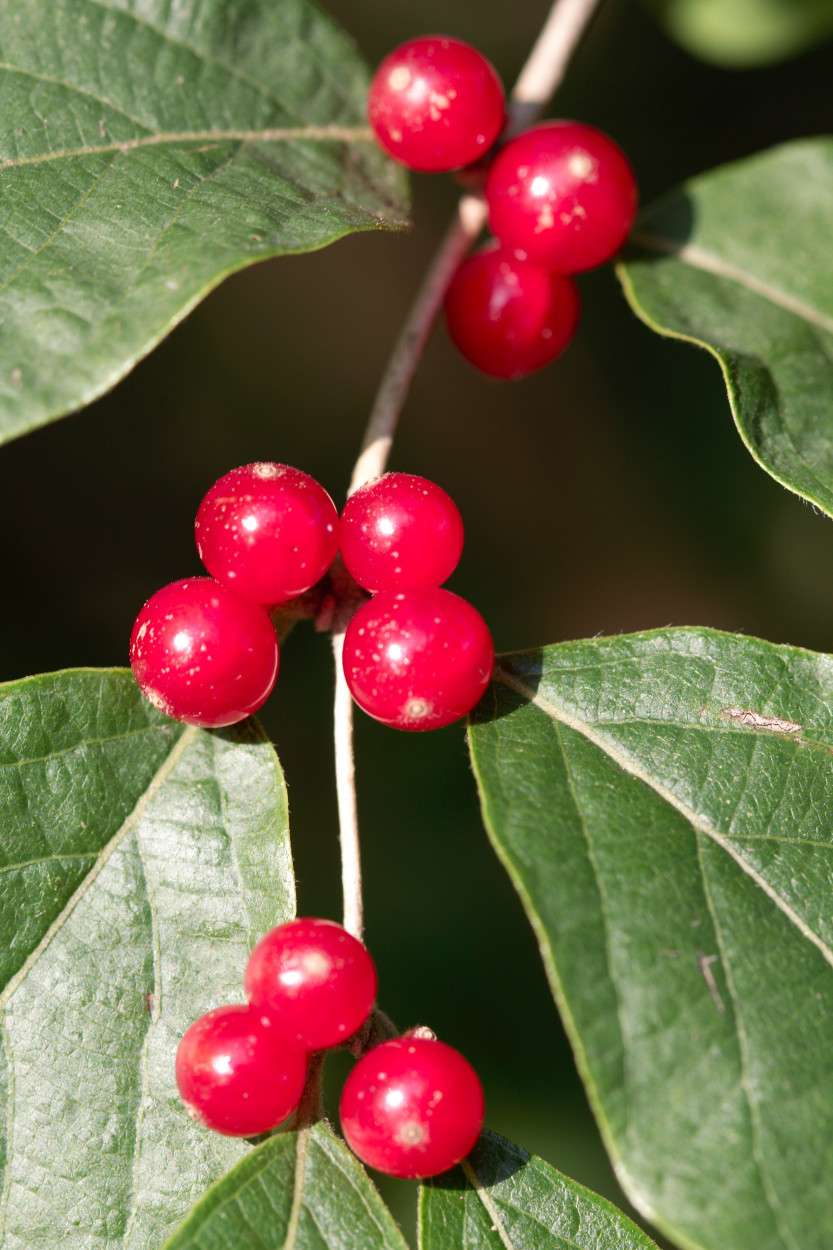
In addition to this picture of two maple trees, I took pictures of the deeper, rusty reds and oranges of oaks, the scarlet of sumac, the fiery orange of brambles (blackberries and raspberries), and yellow and orange crab apples. There were small, red rose hips on the multiflora roses. There were also red berries against green (but occasionally maroon) leaves of Amur honeysuckle (Lonicera maackii). There were even the deep purple-blue berries of wild grapes in a few places.
Cornus florida (Flowering Dogwood)
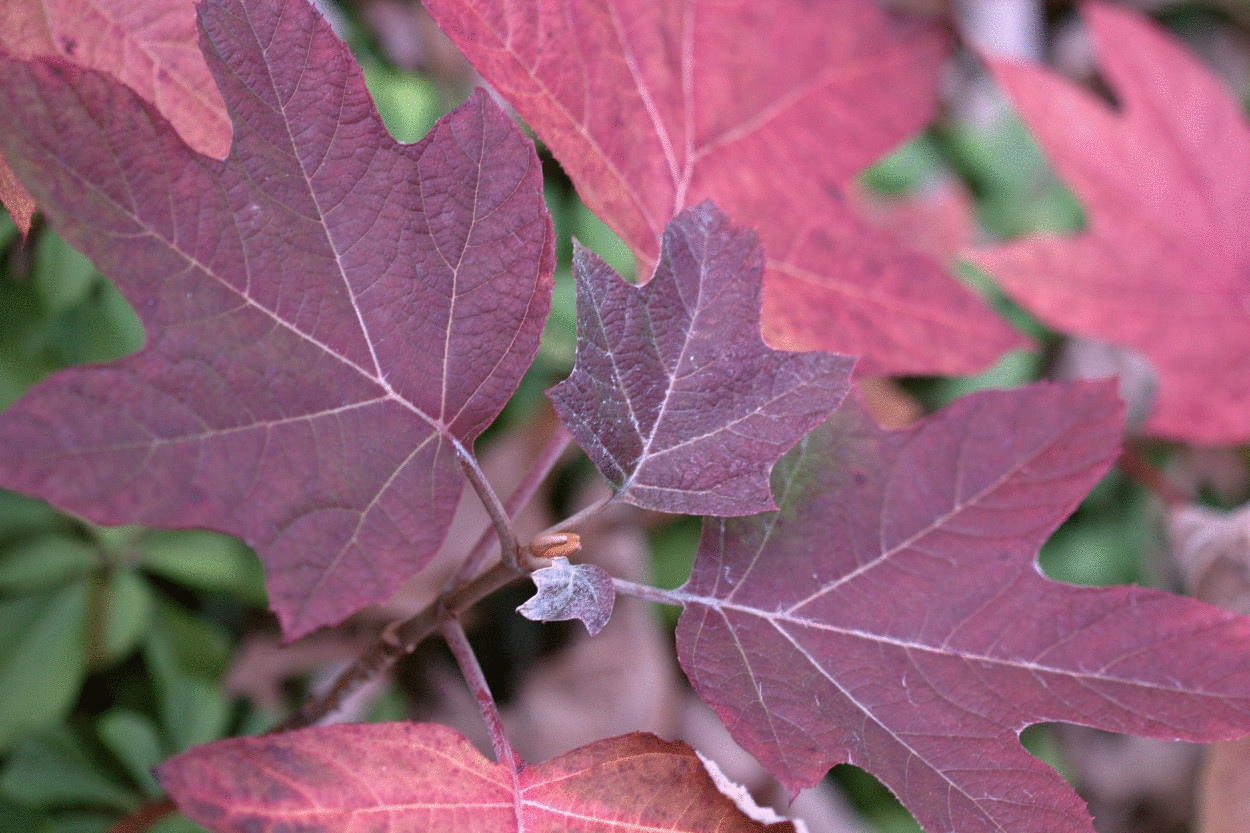
What a beautiful weekend. After some cold weather last week, it’s returned to 70°F temperatures and blue skies. We did some work in the yard early this afternoon, pulling up weeds that have managed to thrive in the dry months of August and September. We also cut back some of the things that we have planted but that are spreading faster than we’d like. I took a little time to take pictures, as well. I tried to get pictures of leaves falling from the trees in the back yard but they didn’t turn out as well as I’d have liked. This picture is of a few dogwood leaves and berries, turning their traditional fall colors.
An Enchanted Wood
I took a bit of a hike today. Well, a walk, really. Possibly a stroll. Anyway, I went to Little Bennett State Park and parked where Clarksburg Road crosses Little Bennett Creek and walked along Hyattstown Mill Road to Kingsley Schoolhouse. From there the road turns up a very steep hill and then levels off, leading to a camping area for the park. I passed a couple on horseback heading the other direction. Beyond the camping area is a path that leads into an enchanted wood.
I don’t actually know that the wood is enchanted. This is a picture of the path, leading off into the woods. I didn’t actually see any elves. I’m not sure that I heard any, even. But then, I’m one of the clumsy folk that they tend to avoid. So, even if they were there, they would have stayed out of sight. SO, maybe this wood isn’t enchanted, but it sure looks like it might be. It was enchanting, anyway.
Lake Needwood
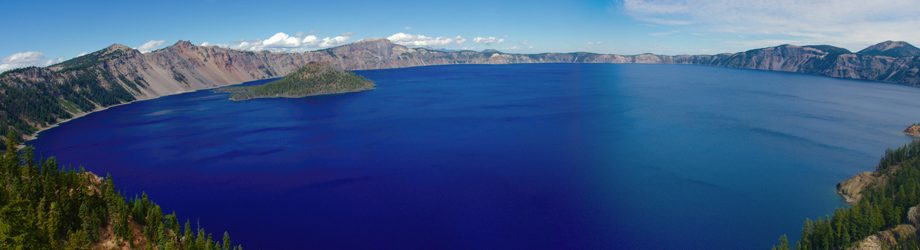
I took the long way home today, stopping where Needwood Road crosses Lake Needwood and spending a little time taking pictures. The sky was a remarkable blue and although there may have been years with better fall color, the trees were quite lovely today, lit by the afternoon sun. The water was mostly calm, reflecting the colors beautifully. I’d love it if the growth on the causeway leading to the short bridge over the lake was cut so there was an unobstructed view of the lake, but by standing on the guardrail, I could get a reasonable picture.
A Cathedral of Wood
I had jury duty today, which was interesting. I can’t remember how long its been since I did that but it’s been a long time, 20 years, at least. I didn’t end up being selected for the jury but of course if I had been I would have served as best I could. I was dismissed after the one jury was seated and after stopping briefly at home I decided to go out into the woods.
The woods around here are not as thick and dense as some I’ve been in. They are not particularly ancient with most trees being less than 100 years old and only here and there a really old oak or beech tree. They also are not as impressively tall as some I’ve seen. There is not much that can compare to the Douglas fir or the coast redwoods of the northern California. Still, the eastern forest, when allowed to grow relatively unimpeded for a while, can be very pretty in its own way.
The tallest and straightest trees here are the tulip poplars (Liriodendron tulipifera). They tend to yellow and brown in autumn. That’s what most of the trees are in this picture. Of course, they are not alone. The woods here are quite varied, with oaks and maples of many types, which take much longer to get really massive, but which provide deep rusty reds and bright orange-red colors in fall. There are also many beech, sycamore, cherry, locust, walnut, sweet gum, tupelo, sassafras, elm, willow, ash, catalpa, hornbeam, hickory, alder, poplar, dogwood, and occasional stands of white pine and red cedar (to say nothing of introduced species, such as various spruce and fir, paulownia, and ailanthus. What our woods lack in size, they make up for in variety.
Fall Color, Maple Edition
The autumn hasn’t been as colorful so far as some years. I think that’s mostly because of the relatively dry August and September we had. One of the two remaining maple trees in our back yard has turned red, though, and it’s quite beautiful. It isn’t a very shapely tree and I would have a hard time taking a picture of all of it, in any case, but here is a small piece of a branch against the trunk, showing the leaves to good advantage. Here’s to more color yet to come.
Our First Frost
We had our first frost overnight. It wasn’t a particularly hard freeze, although any very tender plant not near a house or under some sort of cover was probably killed or severely damaged. We moved most of our indoor plants back indoors yesterday, so they were alright. Cathy put sheets over others and that protected them well enough. In the lawn, especially in open areas, there was a good bit of ice riming the blades of grass. This little wild strawberry (Fragaria vesca) still had some buds on it and one little red fruit, which was frozen, I’m afraid. So, fall has arrived.
She’s Made Her Bed…
Cathy planted this bed where there used to be a large northern red oak (Quercus rubra) in the front of our front yard. There is a freeze warning for this evening and although it may not be cold enough for long enough to kill these plants, Cathy wanted a photo of it today, just in case. As it turned out (I’m posting this on Monday), the frost would have done significant damage but would probably not have killed everything. As it was, though, Cathy put a sheet down over the plants both Saturday and Sunday nights and there was no frost under the sheet. So, in this case, Cathy not only made her bed, but she used a bed sheet. She did not, however, sleep in it.
Conoclinium coelestinum (Blue Mistflower)
I didn’t have a lot of time for photography today. I did manage to get out into the back yard for about ten minutes between work and somewhere I needed to be. I got some more good spider pictures but once again I’m going to hold back. It’s hard but I like to safe that for really good pictures, new spiders, or when I really have nothing else to show you. This is blue mistflower (Conoclinium coelestinum). It doesn’t look very blue, at this point, though. It has gone to seed, and close up, the seeds are pretty little helicopters the are actually all over our back yard now, especially in the spider webs that I’m not showing you today.
Burning Bush (a.k.a. Winged Euonymus)
Because of the semi-drought we had over the latter part of the summer, the fall colors may not be as spectacular this year as in some years. There will be exceptions, of course. Some plants can be counted on to provide good color in almost any conditions. In this case, the drought had less effect that it might have done because this is growing in a pot at the top of our driveway and was watered somewhat regularly. The winged euonymus (Euonymus alatus, also known as burning bush), is one of the more reliable plant for fall color. It is considered an invasive weed and its use is discouraged in many and even banned in some jurisdictions.
Leaves of Grass
I went out with the macro lens this evening and took pictures of small things. The insects that were so prevalent throughout the summer are starting to be a little more scarce. I took some fairly extreme close-up pictures of leaves and flowers but decided to post this one. It is a single blade of grass (fescue, to be more precise). It has the evening sun shining through it, highlighting the veins in the leaf.
As the fall progresses, I find that I have to look a bit harder for subjects for photography. The insects that are in such great abundance in the summer are gone and that makes it more work. Plants are interesting but photographing them in an interesting way. I guess I need to get a bit farther out, away from the yard and into the woods. But, with how busy we’ve been, it hasn’t been easy.
Colchicum autumnale (Autumn Crocus)
I have planted quite a few bulbs since we moved to this house about nine years ago. I do that every few years, adding to what I have, replacing those that have stopped blooming, etc. Early on I planted some autumn crocuses (Colchicum autumnale) along the edge of the pachysandra outside our front door. The pachysandra has expanded a bit and surrounded them, but they are still blooming. This one has a little bee on it, as well, adding to the interest, to me, at any rate.
Once In A Blue Mood
I typically pull up bindweed (a.k.a. morning glory) wherever it is to be found, but the one exception is this purple variety growing outside our front door. The generic bindweed has white flowers and is a serious pest all around. This one, which has been self-seeding for a few years now, has wonderful, dark purple flowers that go well with the blue enamel of the cup and bowl that Cathy has put on the concrete bench (a.k.a. the Stone Table) in front of our front porch. It’s especially pretty in the morning light, which is handy, because by afternoon the morning glory has faded. The blue thing on the left is the remains of a ceramic hand, the thumb, I believe.
Clivia miniata (Natal Lily)
Every summer we move our fairly large clivia outside. In years past we put it under a large viburnum where it could get watered by the rain and where it was out of the direct sun that seems to burn the leaves quite badly. This year we put it on the back stoop, still out of the hot afternoon sun but also where it needed to be watered regularly. Actually, it doesn’t seem to mind getting fairly dry between waterings, which makes it an ideal house plant. It bloomed quite profusely this summer and is still going strong.
Hardy Begonia
A few years ago, Cathy bought a hardy begonia and had it in a planter outside our front door. For a while now, it’s been growing in the ground along the front of the front steps. This year, they are growing like gangbusters and look really good.
The leaves have red veins when looked at from behind, which is what we see in the morning as we come out the door. Also, in the morning, the sun is shining on the leaves, which really lights them up. This picture was taken in the evening, though. The leaves are still pretty, although perhaps not quite so much as in the morning.
Of course, the flowers add considerably and it’s been in bloom pretty much all summer. The pale pink flowers are not particularly spectacular on their own but they are lovely hovering above the green of the leaves.
A Walk In The Woods
Cathy and I took a walk this evening, heading from our neighborhood park down Manor Run (the creek that runs through) to Sunfish Pond and eventually to North Branch Rock Creek. It was a pleasant evening, quite warm but nice out. There is quite a bit of yellow ironweed (Verbesina alternifolia) all through the woods and it seems quite happy, although even that is starting to notice the lack of rain. August was fairly dry, even for August and we haven’t had any rain in September so far. We really could use a nice, long, soaking rain.
We looped around and came up to Sunfish Pond via a different route. As we looked over the pond, a pair of green herons (Butorides virescens) took off and flew in a big loop around the pond, finally coming to rest at the far end. This one was on a fallen tree and the other was on a branch, a bit further away. I only had my 100mm lens, unfortunately, so this is cropped from the best picture I was able to get. A handsome bird.
Pokeweed Berries
American Pokeweed (Phytolacca americana) is a pretty common weed in our garden. It’s very large leaves are unmistakable even when the plants are very small. We try to pull it up as soon as we see it but sometimes, we miss one or two. Back in the middle of our hedge, which is about eight feet tall, three pokeweed plants were growing. We didn’t notice them until the started to show out of the top of the hedge and of course, by that time they were pretty well established. I managed to get most of the roots of one of them but the other two were too close to the fence to dig properly and I’m afraid they will come up again next year. But I’ll be watching, this time.
A Beautiful Fall Morning
I know it’s still summer but it seemed like fall this morning. Outside it was cooler than inside for the first time in a while. They sky was a beautiful blue, with puffy clouds scattered about. The black-eyed Susans and other flowers are feeling the dryness and heat of summer but that doesn’t mean they have all disappeared. It’s actually quite nice in our back yard right now. Not it’s best, perhaps, but still, pretty nice.
Fading Black-eyed Susan
It’s been fairly dry lately. Not as dry, certainly, as in some years when we’ve had an actual drought. But the ‘normal’ dryness that we usually get in late August. The black-eyed Susans are starting to be affected, which is the sign that we could really use some rain. I actually think they are quite pretty when they start to wilt, so I took some pictures this evening after work.