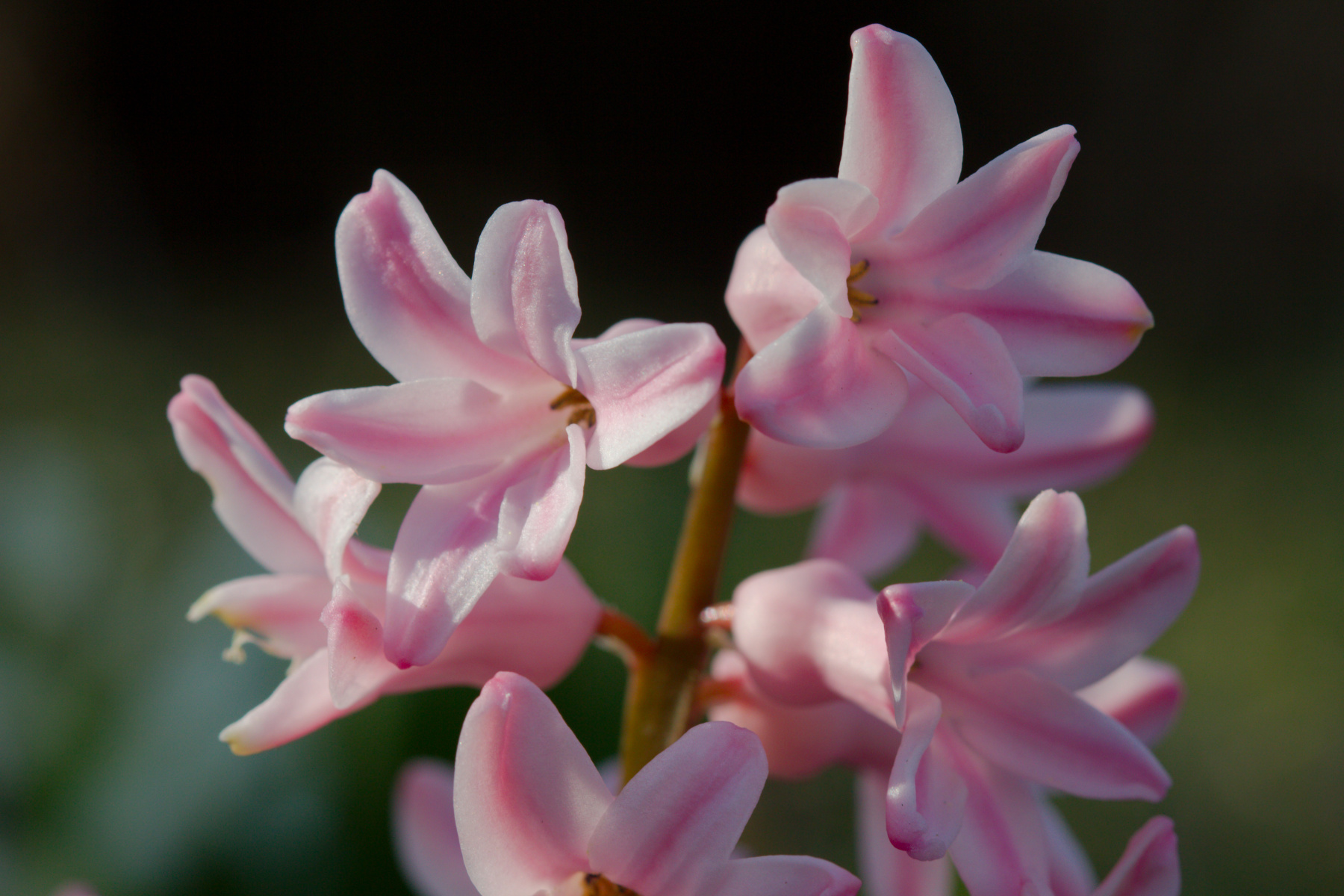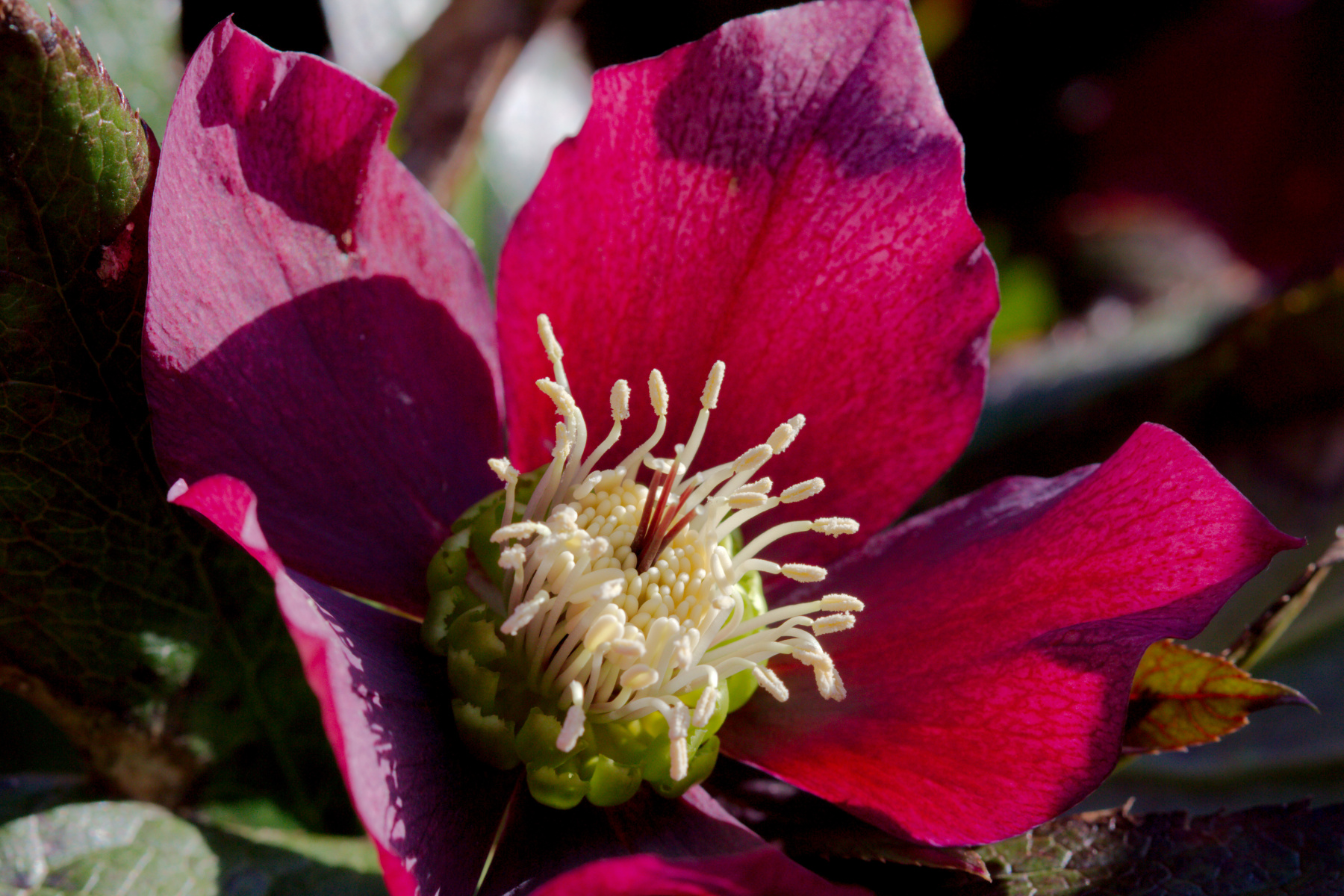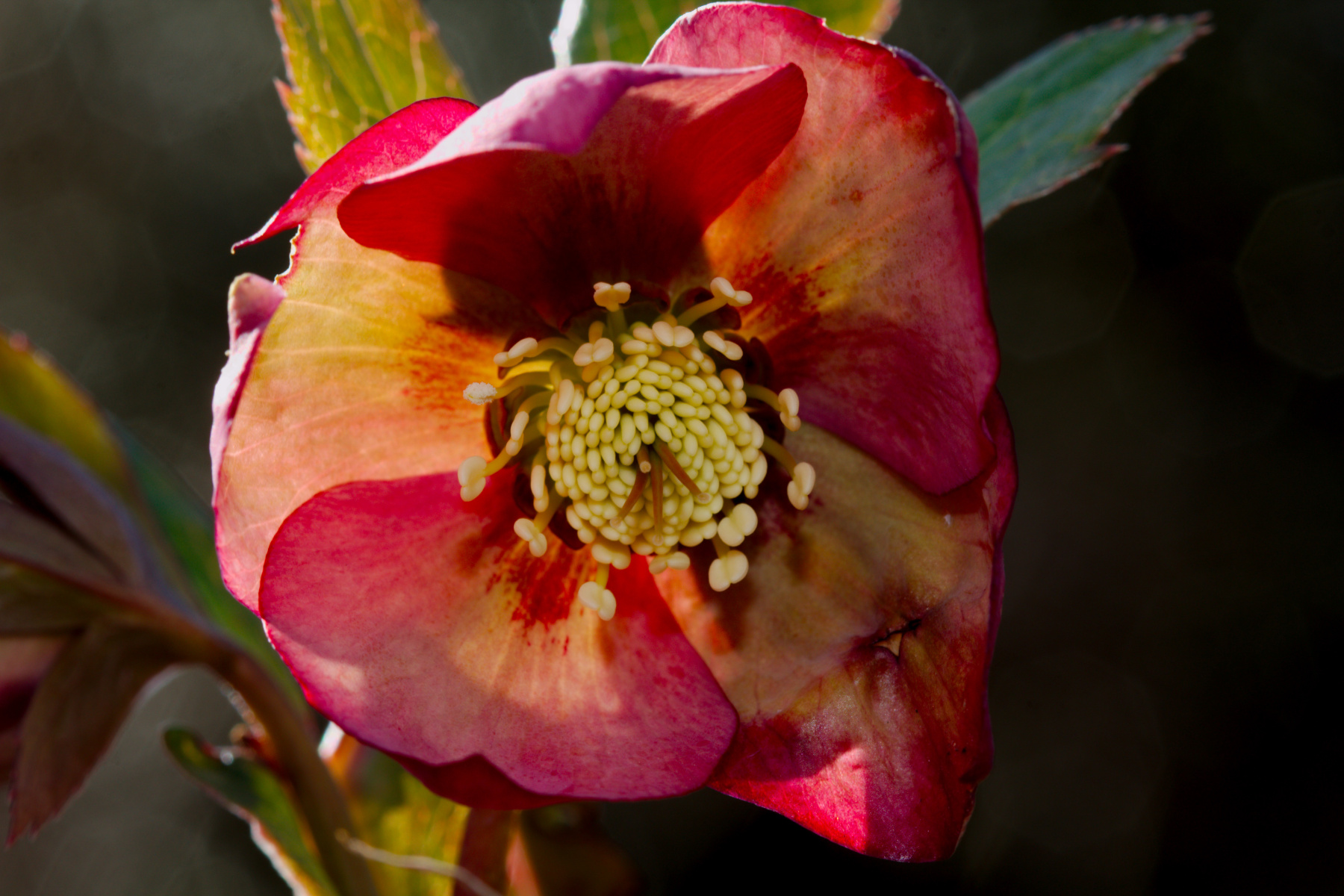
We drove back from Richmond this morning, having a much better time of it than the drive down yesterday. In the afternoon I went out back and took some pictures of a couple Lenten rose plants. This is one we put in when we first moved in and it’s doing really well (and probably needs to be dug up and divided). Lent is over and this plant has only just started blooming late this week, but we had snow later than is usual and that slowed it up a bit. In 2012 I have photos of this same plant blooming on February 19. Anyway, it’s blooming now and it’s lovely.
Flowers and Plants
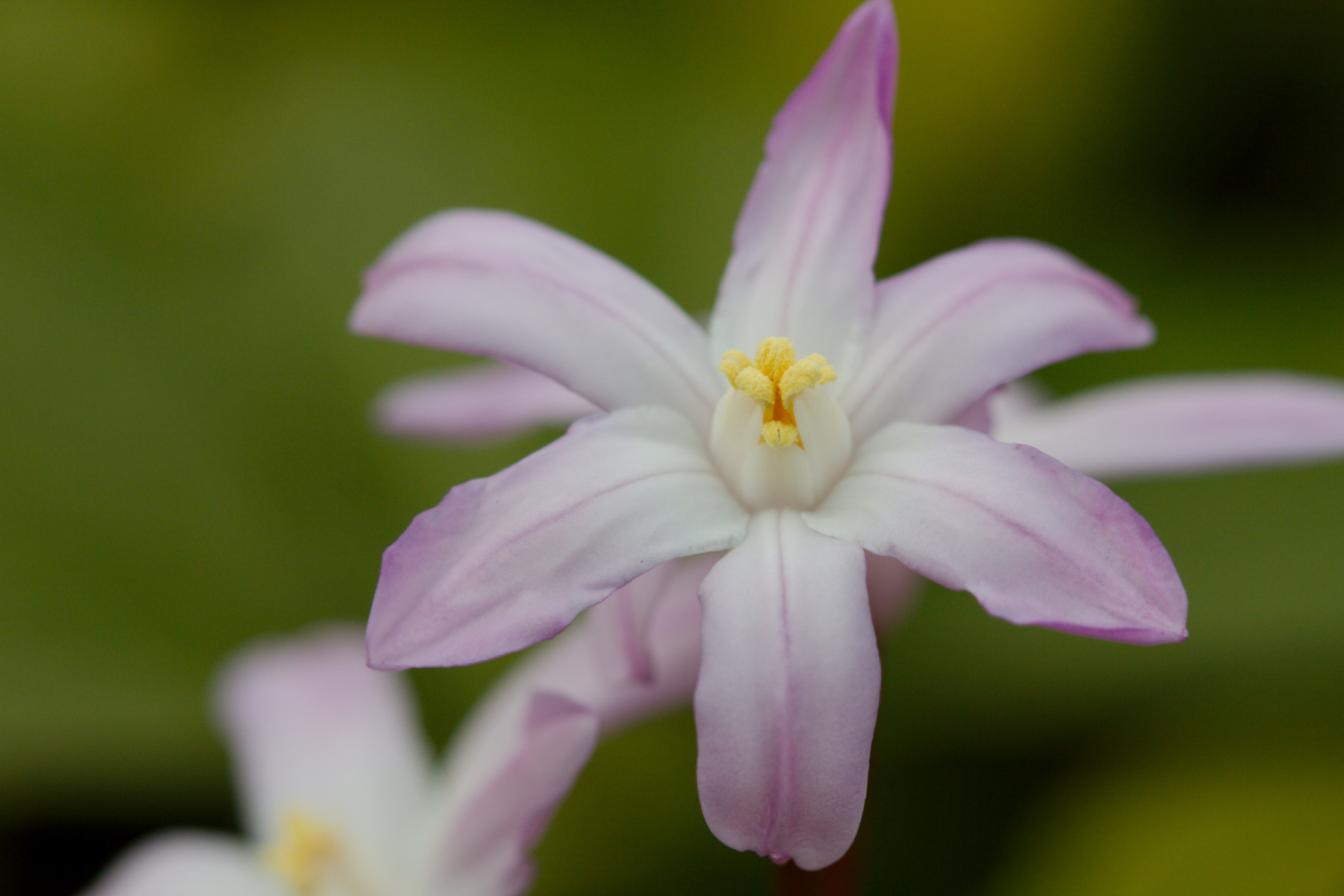
Chionodoxa forbesii ‘Pink Giant’
Today the ‘Pink Giant’ Glory of the Snow (Chionodoxa forbesii) started blooming. This is a pale pink variety that I have growing amidst the pachysandra in the northeast corner of our front yard. In addition to being pink, as the name suggest ‘Pink Giant’ suggests, it is fairly tall for a Chionodoxa and holds its blooms above the pachysandra. Otherwise, it is similar to the blue flowers I posted a photo of for yesterday.
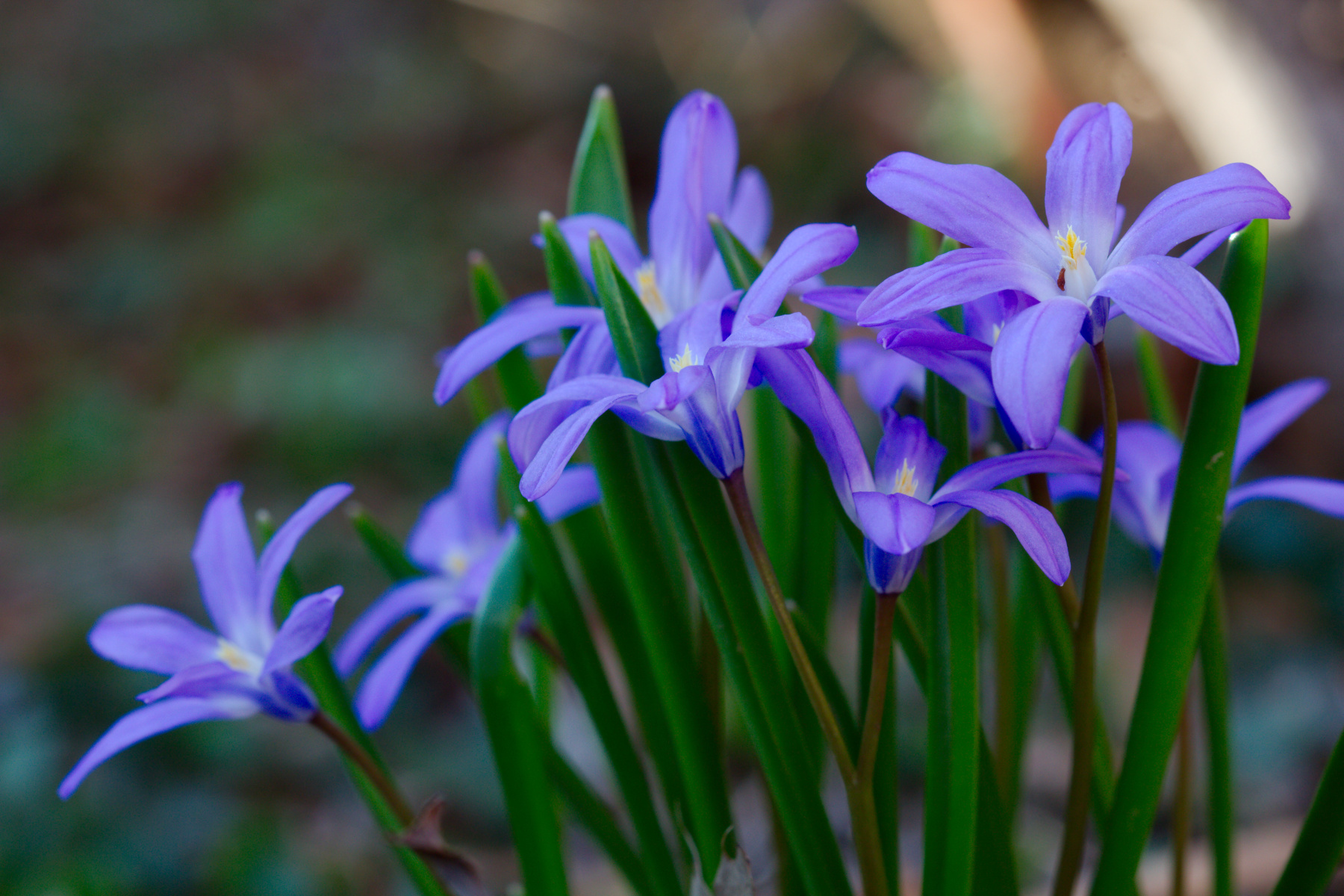
Chionodoxa luciliae (Glory-of-the-Snow)
Next up, after the early daffodils, are the glory of the snow (Chionodoxa luciliae), this little bulb native to western Turkey. I have a pretty nice little bunch of them growing on the south end of the house, which warms up before other areas, which helps get them up early, as well. As you may know, I’m partial to blue flowers and these, although early and ephemeral, are some of my favorites. They are such a lovely color and in quantity are quite striking.
Our First Daffodils
Are you ready for flowers? I hope so, because they are coming up relatively fast and furious now and I think I’ll most likely be posting them fairly frequently. If you’ve been following me a while, then they may look like photos you have seen before. If her are new, well, they will be flowers. You’ll see.
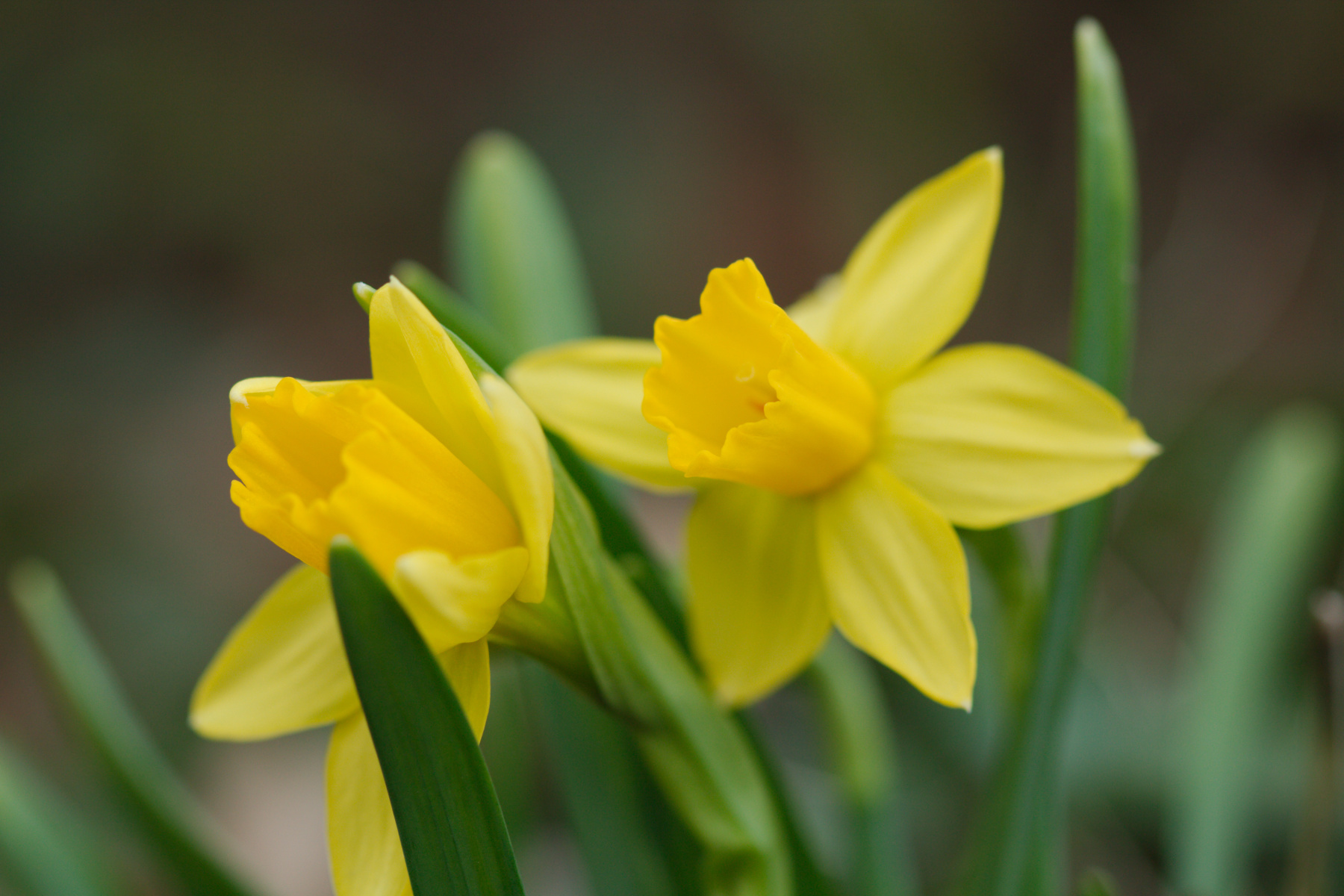
Today the first daffodils in our yard came out. They are called Tete-A-Tete and are small but growing in large clumps and are quite cheering.
Shadowy Papyrus
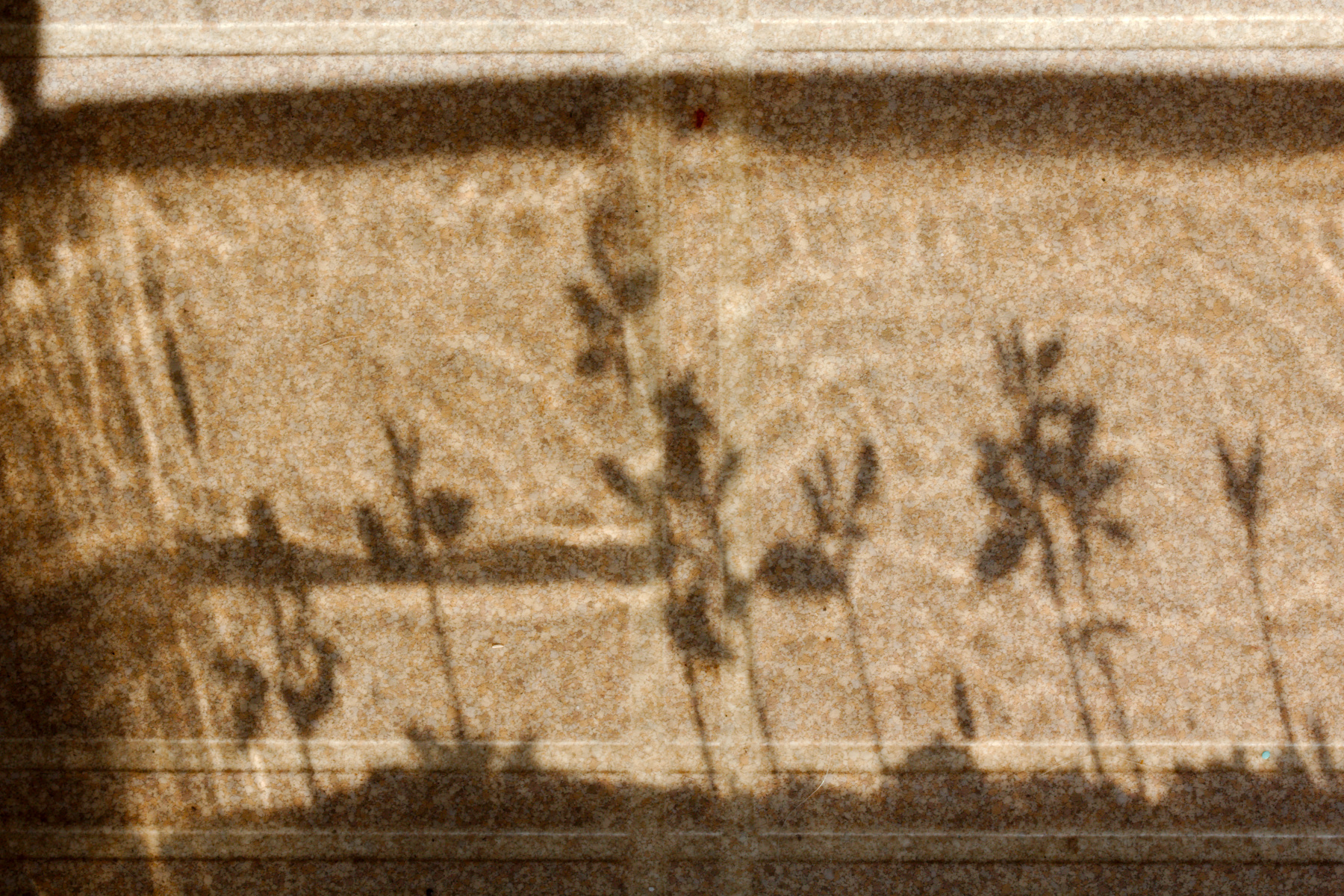
Earlier this month I posted a photo of a trifoliate orange (Poncirus trifoliata) that I am growing from seed in a plastic bin in my kitchen (see “Poncirus trifoliata (Trifoliate Orange)” on Wednesday, March 18, 2015). Today’s picture is (sort of) of the same subject. The afternoon sun coming in the kitchen door was shining on the tub of little orange plants (there are at least four dozen of them) and casting what I thought was an interesting shadow. To me it looks a little like some ancient artwork drawn with faded ink on a sheet of papyrus. Okay, maybe it takes a bit of imagination to see that, but if we don’t look at the world imaginatively once in a while, what a dull place it can become.
White Crocus
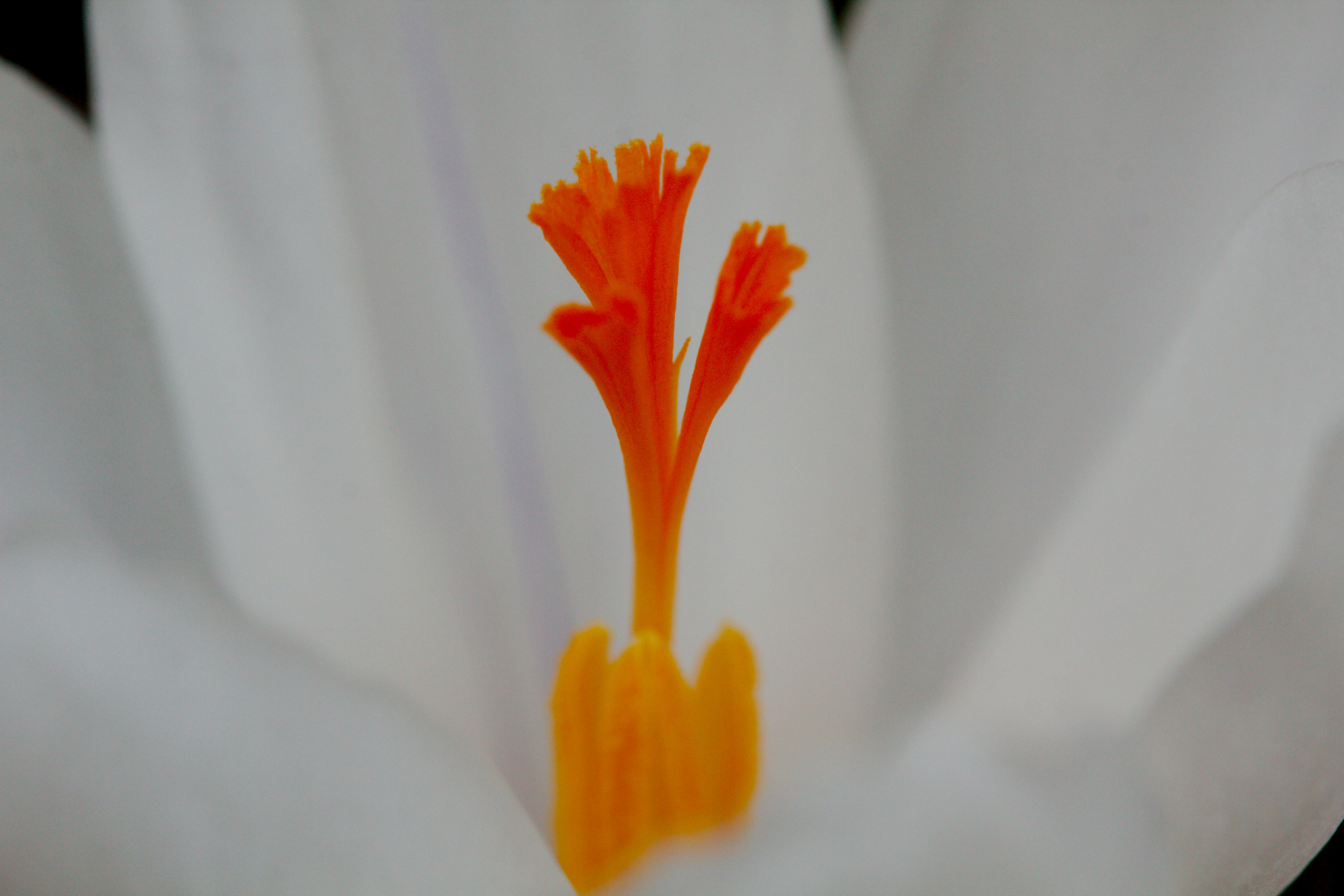
It’s certainly starting to look a bit like spring. The trees are still bare and there are not a lot of flowers around yet, but they are starting. The snow drops (Galanthus) have been blooming a while. I had a single flower on the new Lenten rose and there were a few purple crocuses in the back yard last week. Today a few white crocuses have opened up in the front.
Spring is accelerating.
Galanthus nivalis (Common snowdrop)
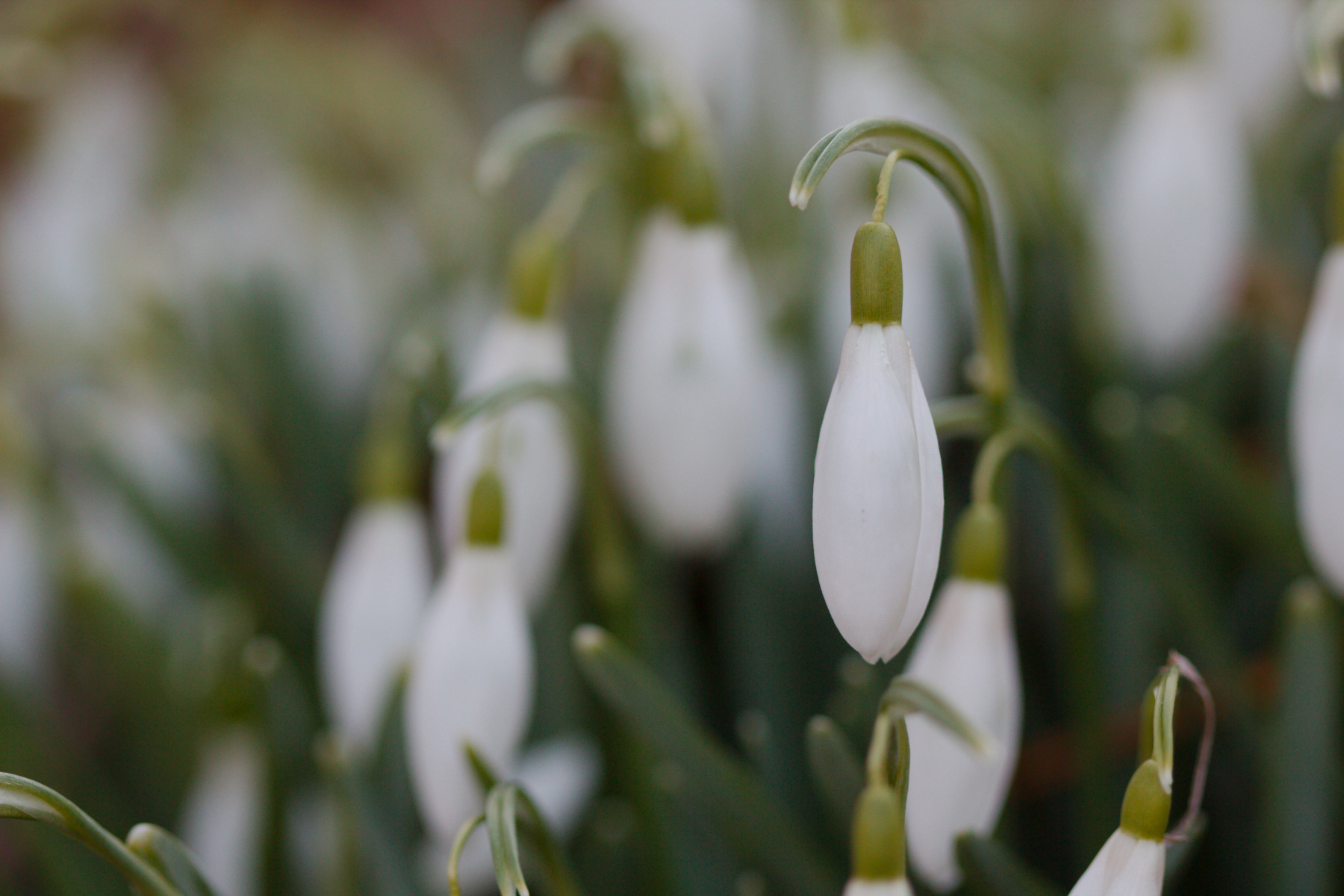
The snow drops (Galanthus nivalis) have been out in our yard for a few weeks now but I haven’t posted any pictures of them this year. This afternoon I went out into the back yard and took a few pictures of a clump of snow drops growing in our back bed. They are pretty little things and their appearance so early in the year is their chief attraction. The flowers open during the day and then close up in the evening, as seen in this photo.
Spring it upon us.
Helleborus ‘Mango Magic’
It was another beautiful day today, cool but sunny. We went to church this morning and then to our other church in the afternoon. We got home at about 4:45 p.m. and it was so nice that we sat out in the back yard in the sun until the sun went down and it got too cool. While we were out back, I took some pictures of this Lenten rose called ‘Mango Magic’ that I planted in the fall. It is the first to bloom of the twelve things (mostly bulbs) that I planted for Cathy’s birthday. It isn’t a perfect flower but it’s the first, so I thought it worth recording.
A Few Farm Photos
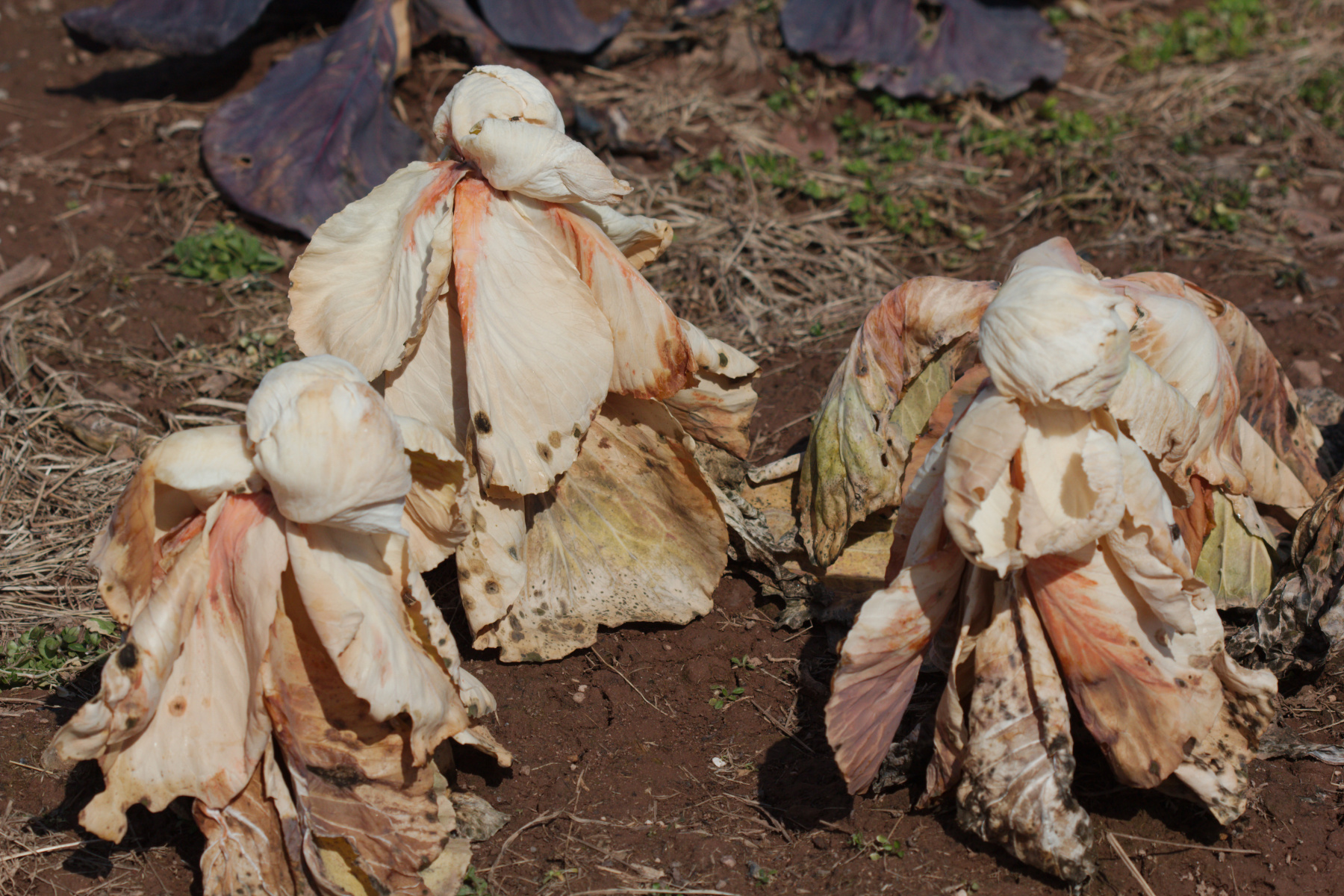
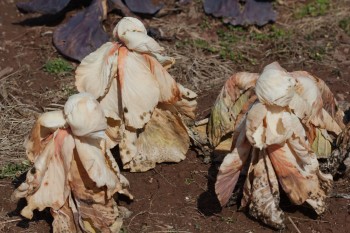
Our good friends Brian and Lisa (and their two dogs, Goldie and Kippen, see Thursday, November 20, 2014) came for another short stay, spending all day Saturday and Sunday with us. It started out looking a bit gloomy this morning but cleared up and ended up being quite lovely out. We drove to our friends’ farm. We visited a little while with Greg and Anna and then wandered around a while. My first photo is of some cabbage plants that we all thought looked a bit like overdressed, Victorian ladies.
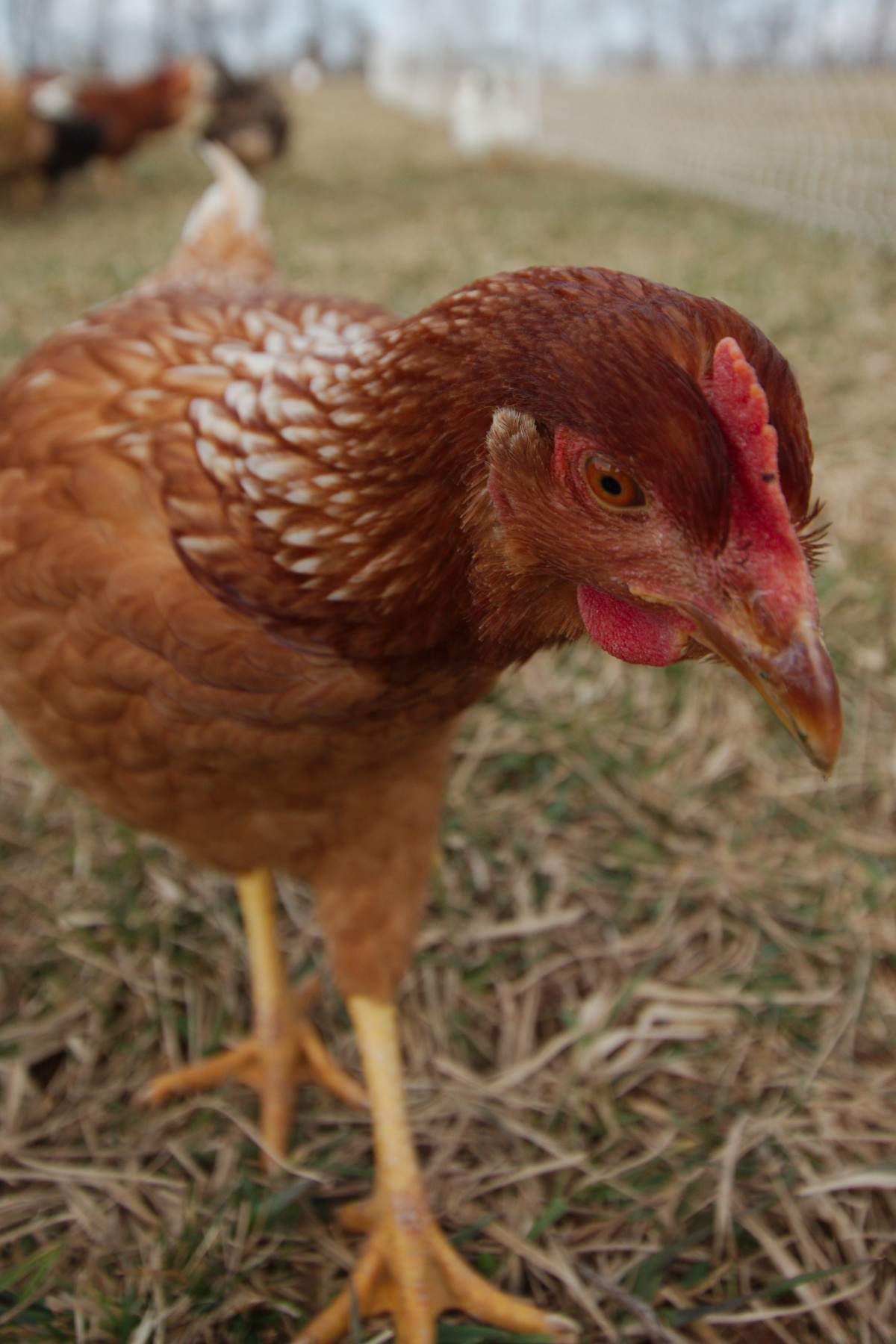
From the cabbage patch, we wandered up to the barn where the pigs are kept. We enjoyed watching the very young piglets, of which there were quite a few. From there we walked out to the area in the field where the chickens are. I got into their fenced enclosure and took quite a few photos.
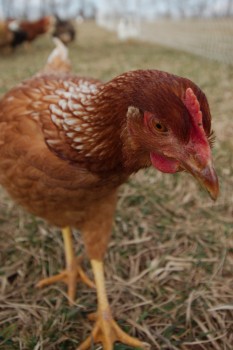
The chickens were quite interested in me but getting them from very close range was tricky. The would turn away just as I took the picture, or would bend down and I’d just get the top of their head. This one turned out pretty well, I think.
After this, we walked to where the larger pigs are, out in the field and then down to the garden shed. When we came home, we rested up a bit and then capped off the day with a wonderful dinner at Bombay Bistro. It doesn’t get much better than that. What a beautiful day it turned out to be.
Eranthis hyemalis (Winter Aconite)
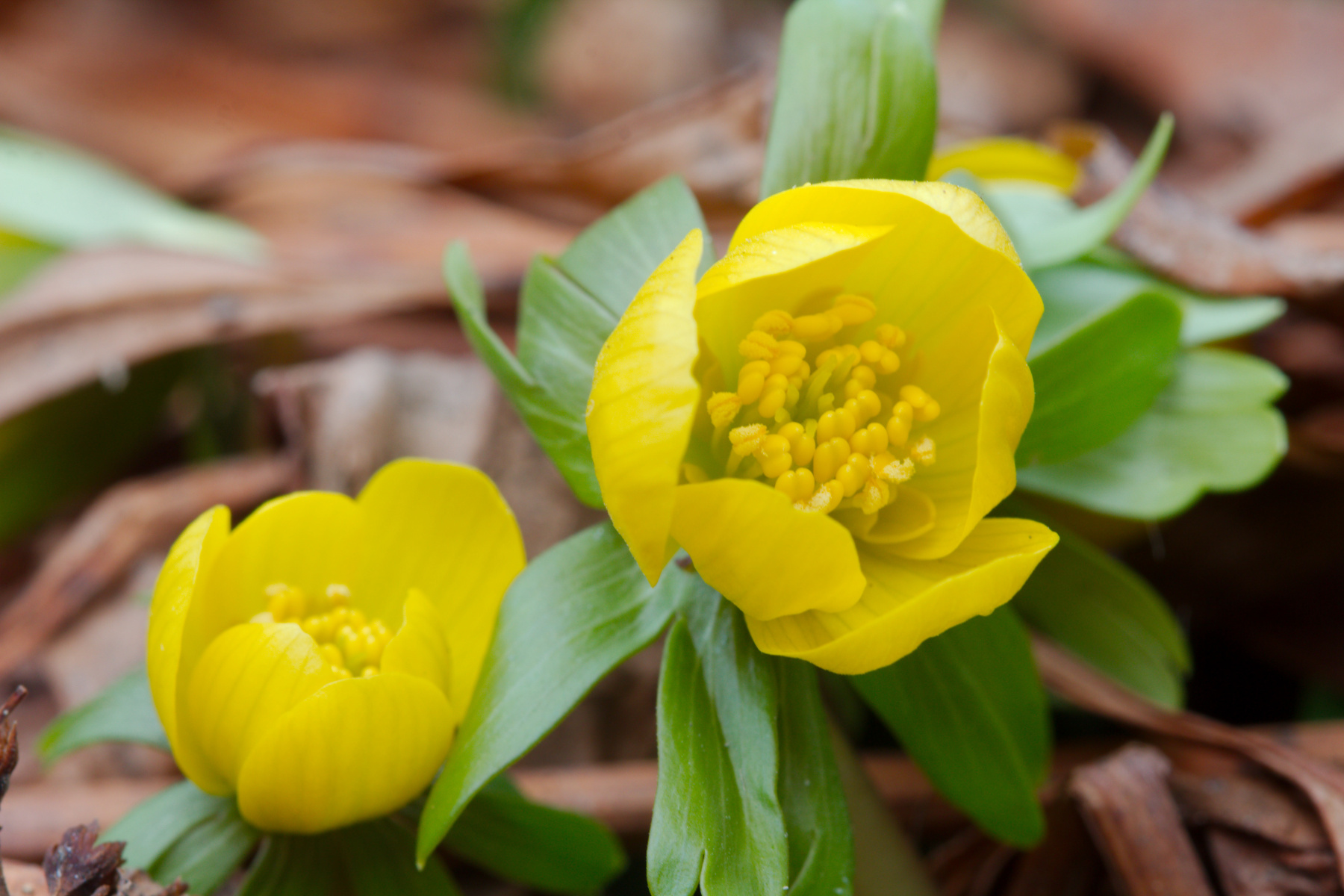
These are not the first flowers we have had this year. The snow drops (Galanthus nivalis) were blooming as the snow melted off of them last week. But these are still quite welcome. They are fairly small and there are only the two little flowers so far, but they are so bright and cheerful that they make up in quality what they lack in quantity. I’m looking forward to the spring because I planted quite a few new bulbs last fall. Newly planted bulbs tend to come up a little later than those that have been in the ground a bit longer, which builds the anticipation a bit, but that’s all to the good. Spring has certainly arrived.
Poncirus trifoliata (Trifoliate Orange)
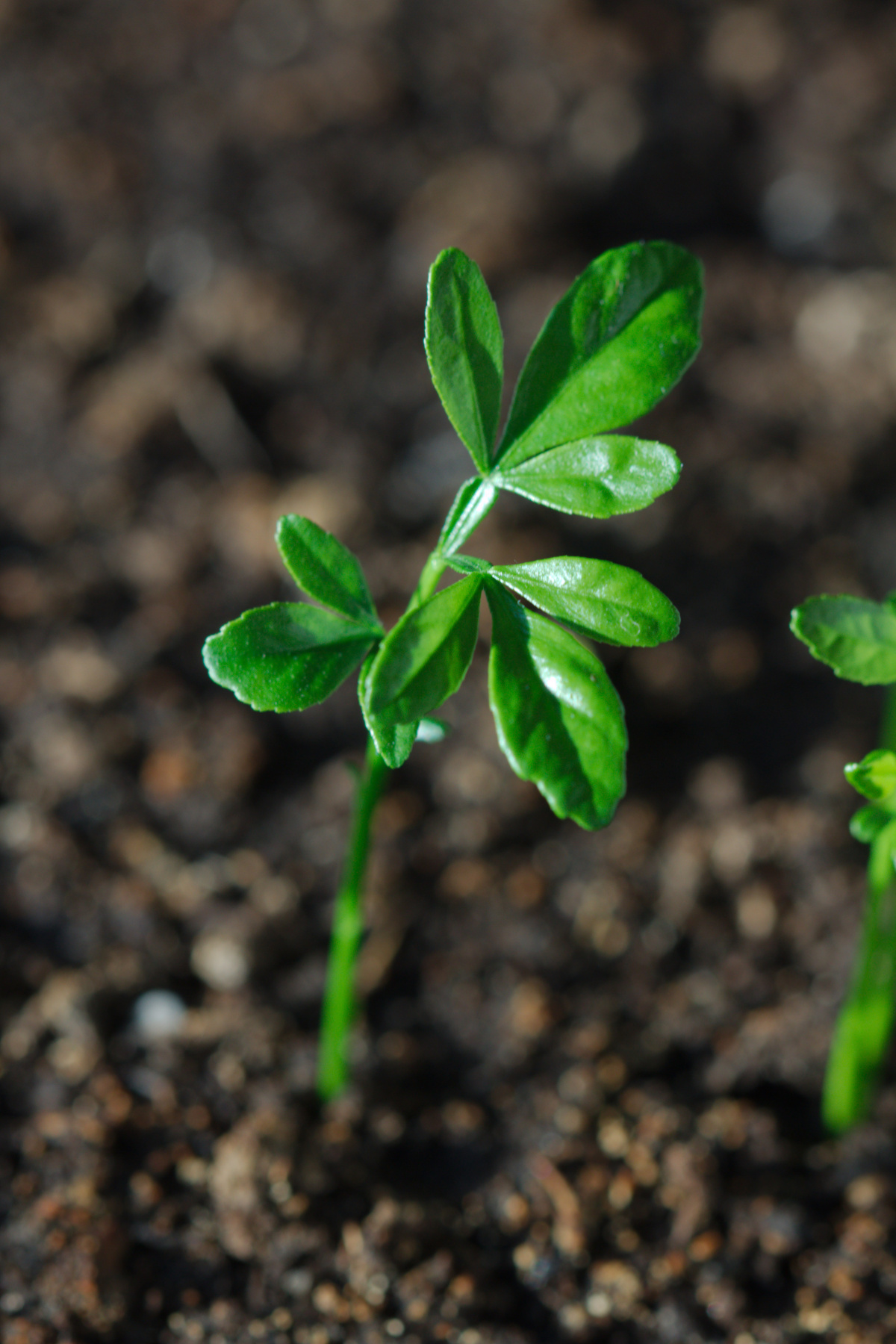
On the morning of February 3 I planted about four dozen seeds of Trifoliate Orange (Poncirus trifoliata) that Ralph and I had collected from the plant out the farm in Pennsylvania. When I got them in December, I took the seeds from the fruit and put them in a plastic bag and put them in a drawer in our refrigerator. They were there for nearly two months, pretending that it was winter. That’s necessary to their germination.
About a week ago they started coming up and this one was the first to break through the soil. It is currently the largest of about 18 that are up so far (and quite a few more have come up between when I took the picture and when I’m posting it, on March 21).
I’m not really sure what I’m going to do with them all, so if you want a hardy orange plant, let me know.
Oak Branches
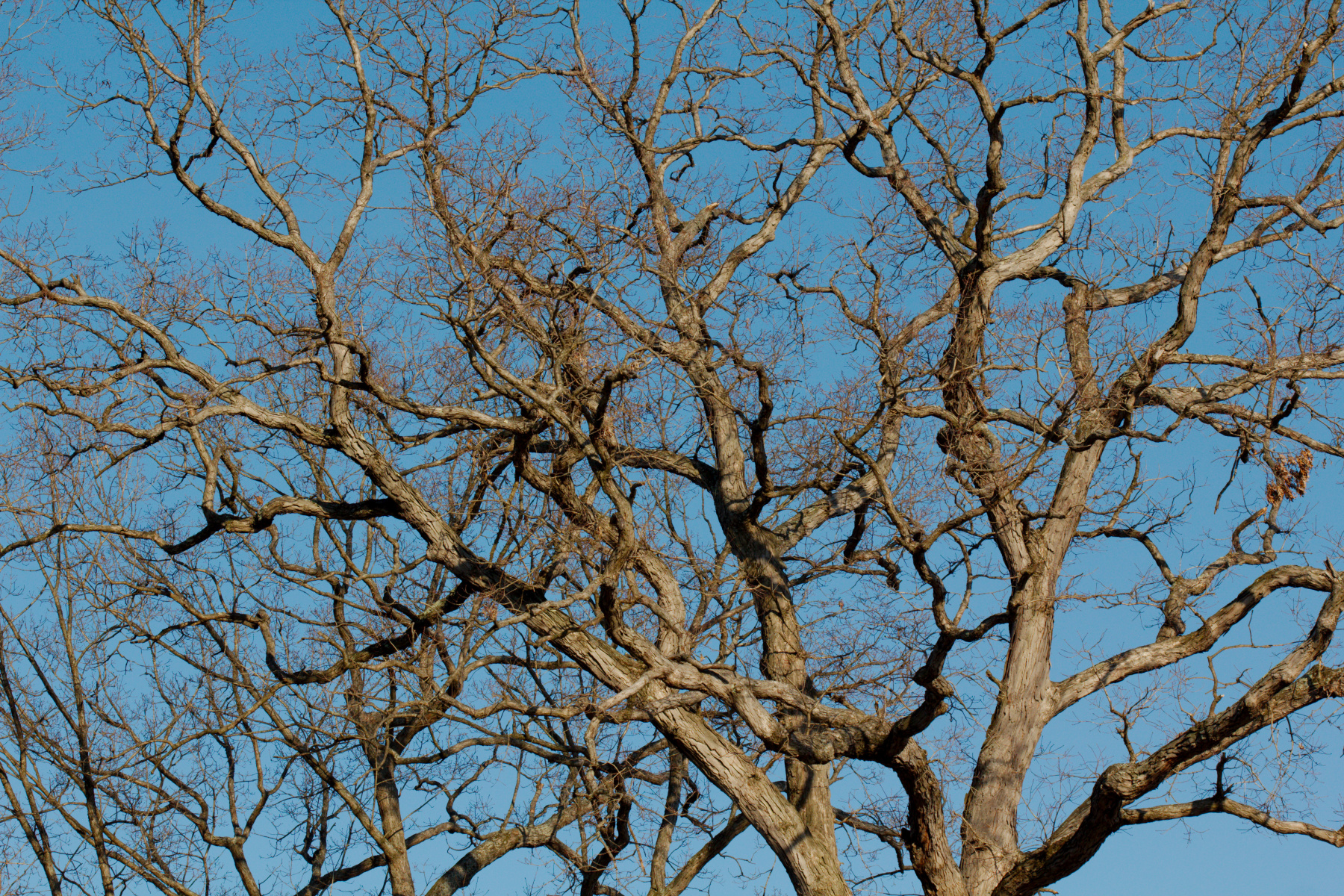
I have two pictures for today but I’m going to post them separately. Sometimes I do that because they are unrelated. This time, they are somewhat related but different enough that I’m still going to separate them. They were both taken on a walk that Cathy and I took in the neighborhood early this evening. With the sun staying up an hour longer (relative to the clocks), we had a good chance to do that. The sky was a beautiful blue and the snow was melting about as fast as it possibly could. The trees, as you can see in this photograph, are still in their winter form, but the lines of the branches of these oaks are still lovely.
Fog Amid The Trees
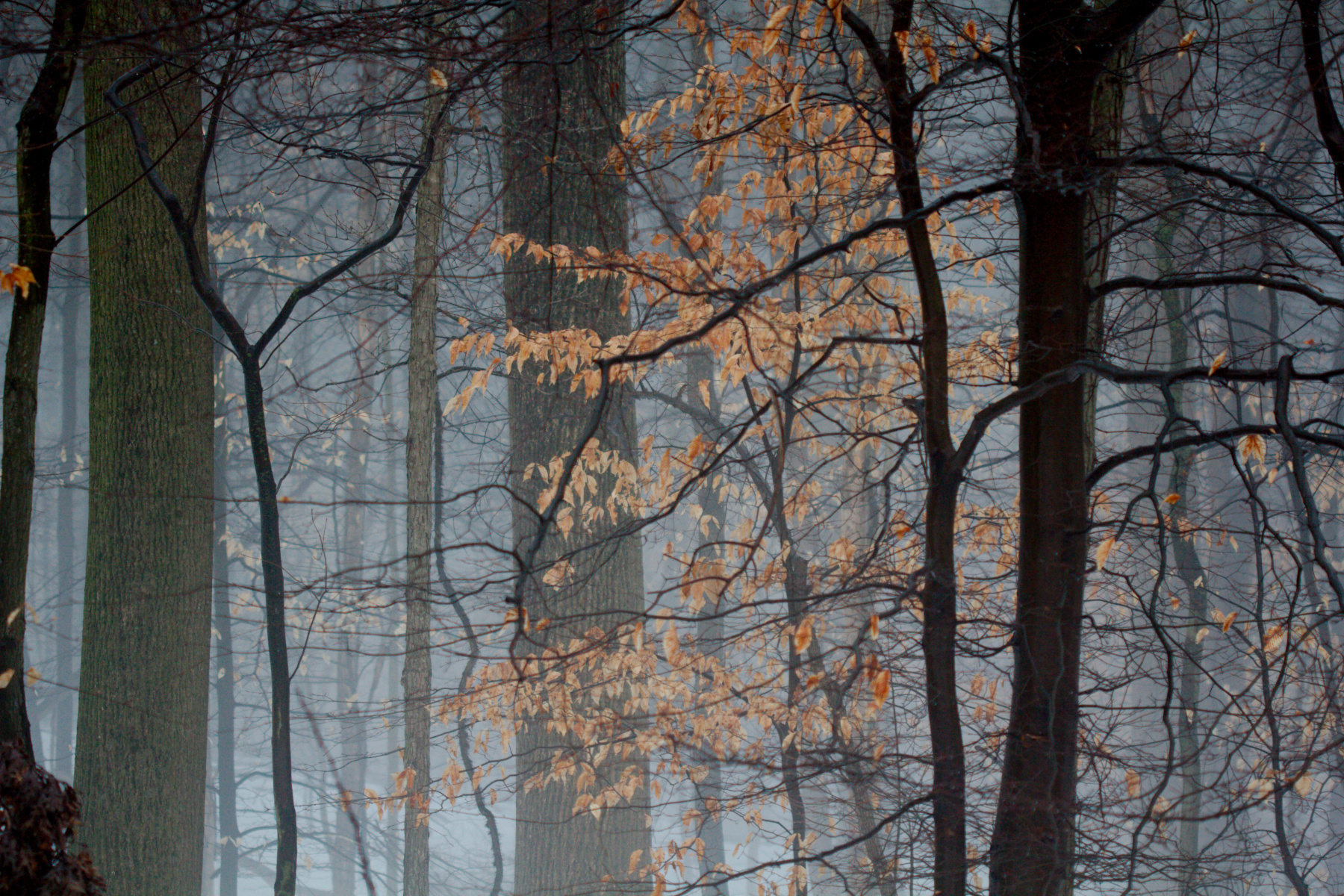
Driving home today there was a disabled vehicle with a police cruiser blocking one lane of Norbeck Road. That slowed things down considerably, as you might imagine. It did give me more time to enjoy the foggy woods above Rock Creek. Because I was stopped a fair amount, I was able to take a few pictures. They don’t perfectly capture the mood, but I think this one is pretty good, especially with the added color of the beech tree in the foreground.
Glass Azalea Leaves
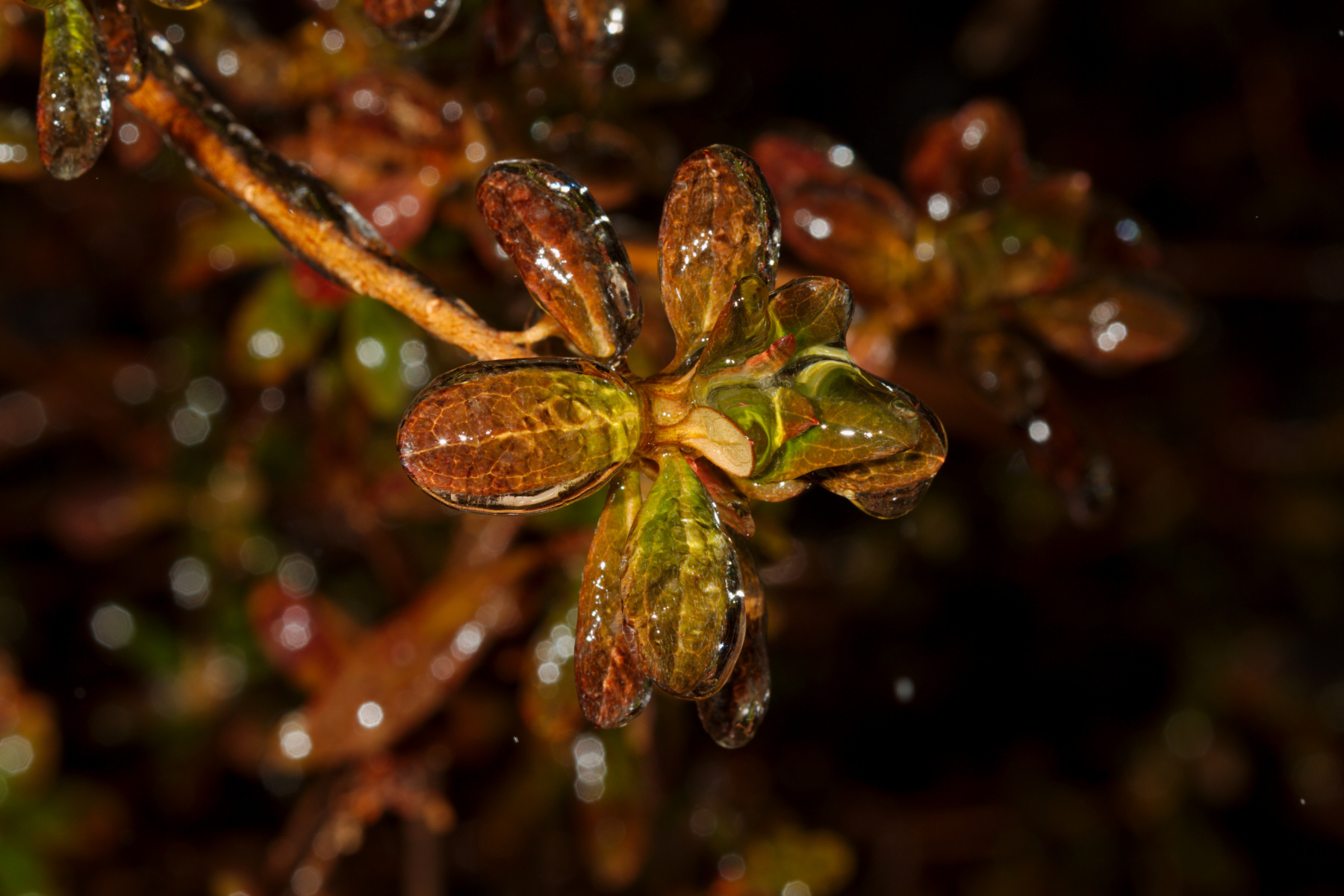
As I mentioned in my previous post, there was a bit of weather today. That is to say, there was frozen water falling from the sky, accumulating on whatever it struck. When it came to pavement, particularly sidewalks not treated with salt, that made for quite treacherous conditions. When it came to branches and leaves, though, it made for some lovely, ice coated, plants. These are the leaves of an azalea in our front yard, which turn various shades of orange and red for the winter, coated with a fairly thick layer of ice. It was too dark out for natural light, so this was taken with a flash, which actually enhances the colors, I think
Lentinula edodes (Shiitake Mushrooms)
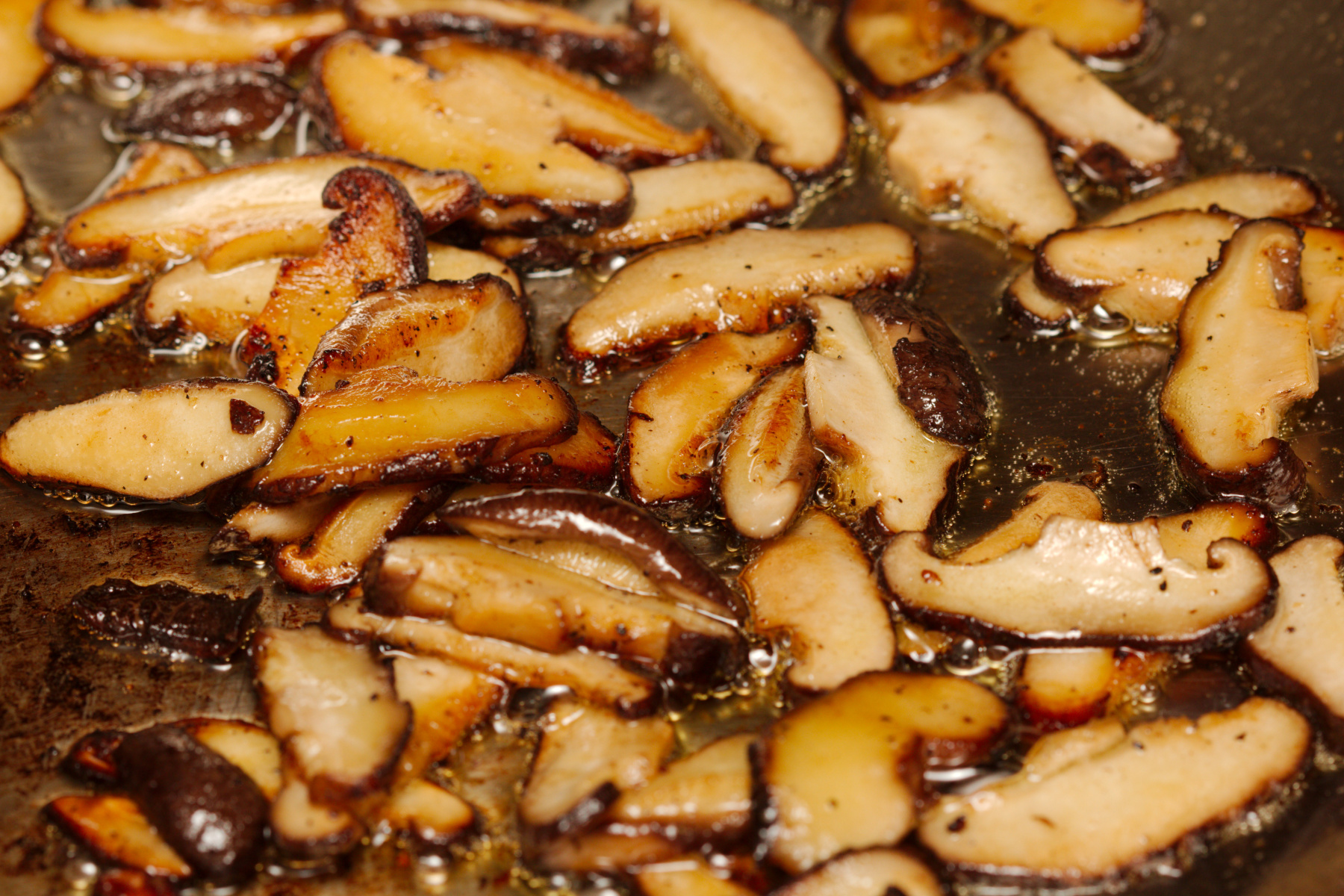
Usually when I post a picture of a plant of any kind, it’s in the garden or at least growing in a pot. I haven’t grown mushrooms in a while but we have them in the house quite often, nevertheless. I bought a pack of fresh shiitake mushrooms (Lentinula edodes) today and sauteed them in olive oil, seasoned only with a bit of black pepper. They were then piled on burgers and topped with cheddar cheese. I really should have taken a picture of the finished product but at the time I was more interested in eating it. So, you get the mushrooms nearing the “just right” stage.
Euonymus japonicus (Japanese spindle)
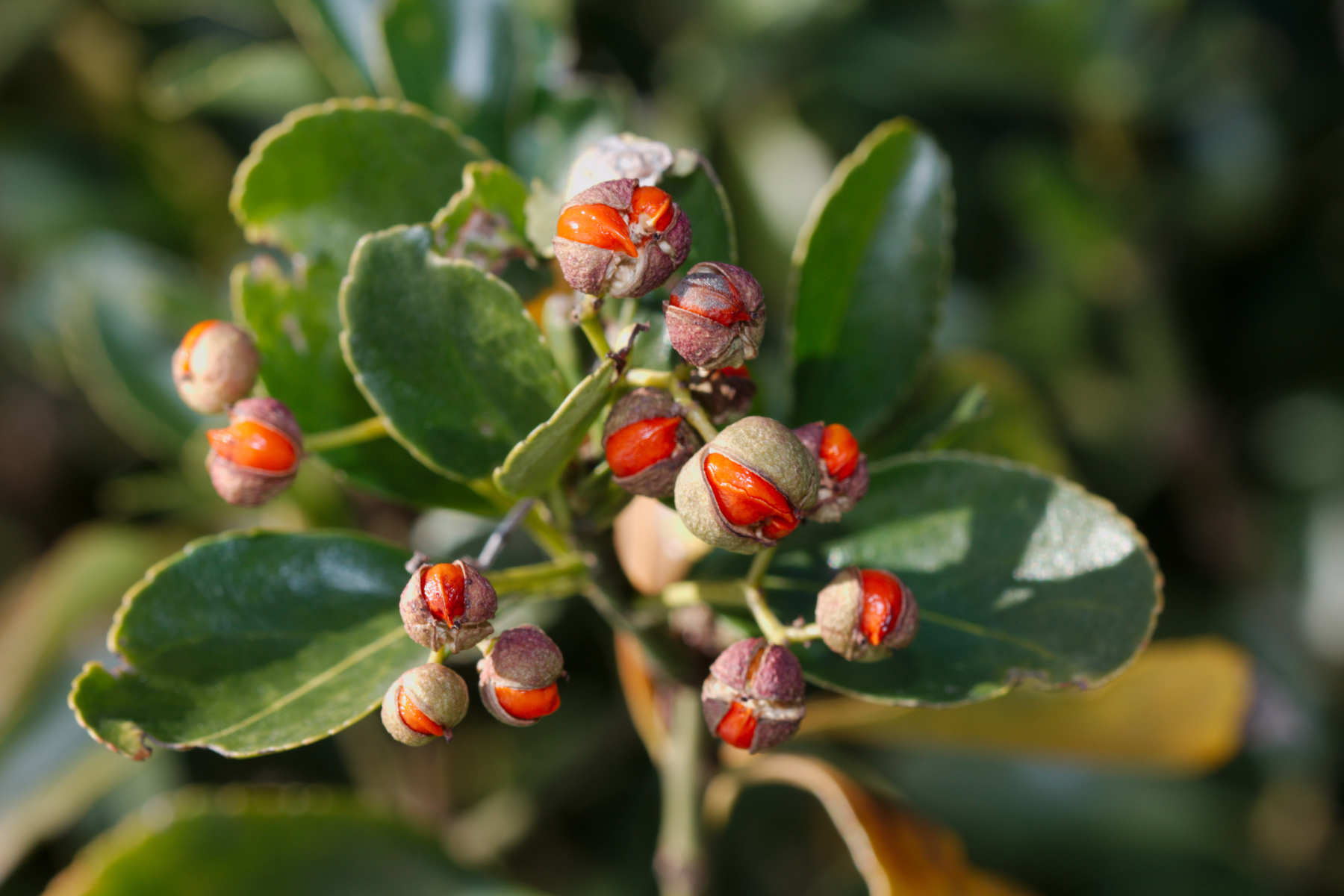
I went out into the yard this afternoon to take pictures but for the most part they are nothing to speak of. Mostly they were simple “stiff covered in snow” from our recent snowfall. This one is a bit different. These are the fruits on a Japanese spindle (Euonymus japonicus) hedge along the side of our back yard. The deer are quite fond of this plant and the lower half or so is currently stripped of leaves. It’s a vigorous plant and well enough established that it grows back in the spring, but we could do without the deer for a little while.
Macro Flash
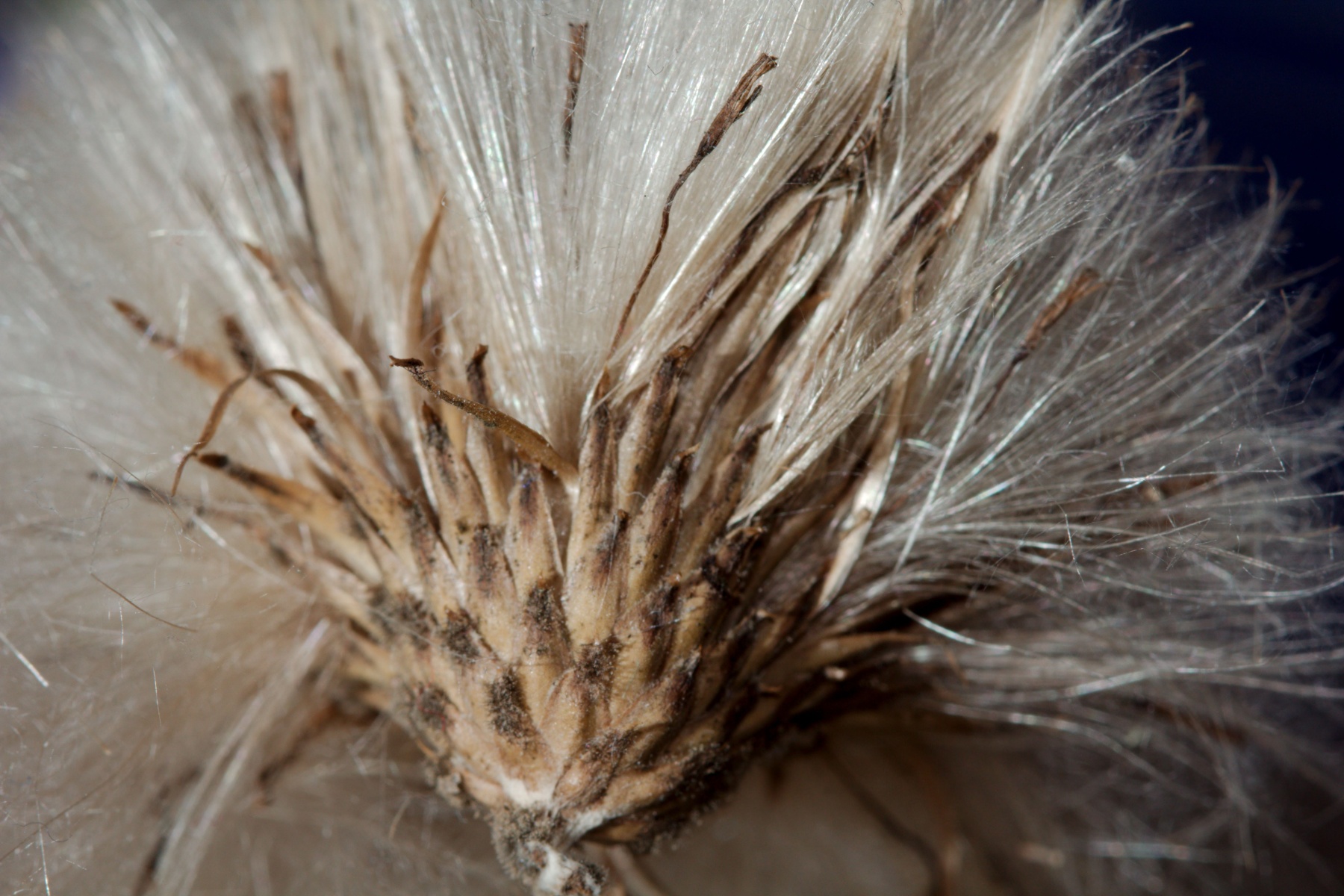
One of the things I asked for this year for Christmas was a small bracket that holds two flash heads out to the right and left of the camera. I also asked for a flash that will go in one of those two sides and which my camera can fire wirelessly. With this attached to my camera, I will have an easier time getting good lighting on small things when I’m focused very close. With the normal flash on top of my camrea, if I’m too close and if I don’t add an extra reflective surface, the lower portion of the photo is quite dark. With this new rig, it’s not a problem, as you can see in this closeup image of a thistle seed head that’s on our kitchen table. Those of you who are not fans of my insect close-ups may not appreciate this, but I’m chuffed.
Crape Myrtle Seed Pods
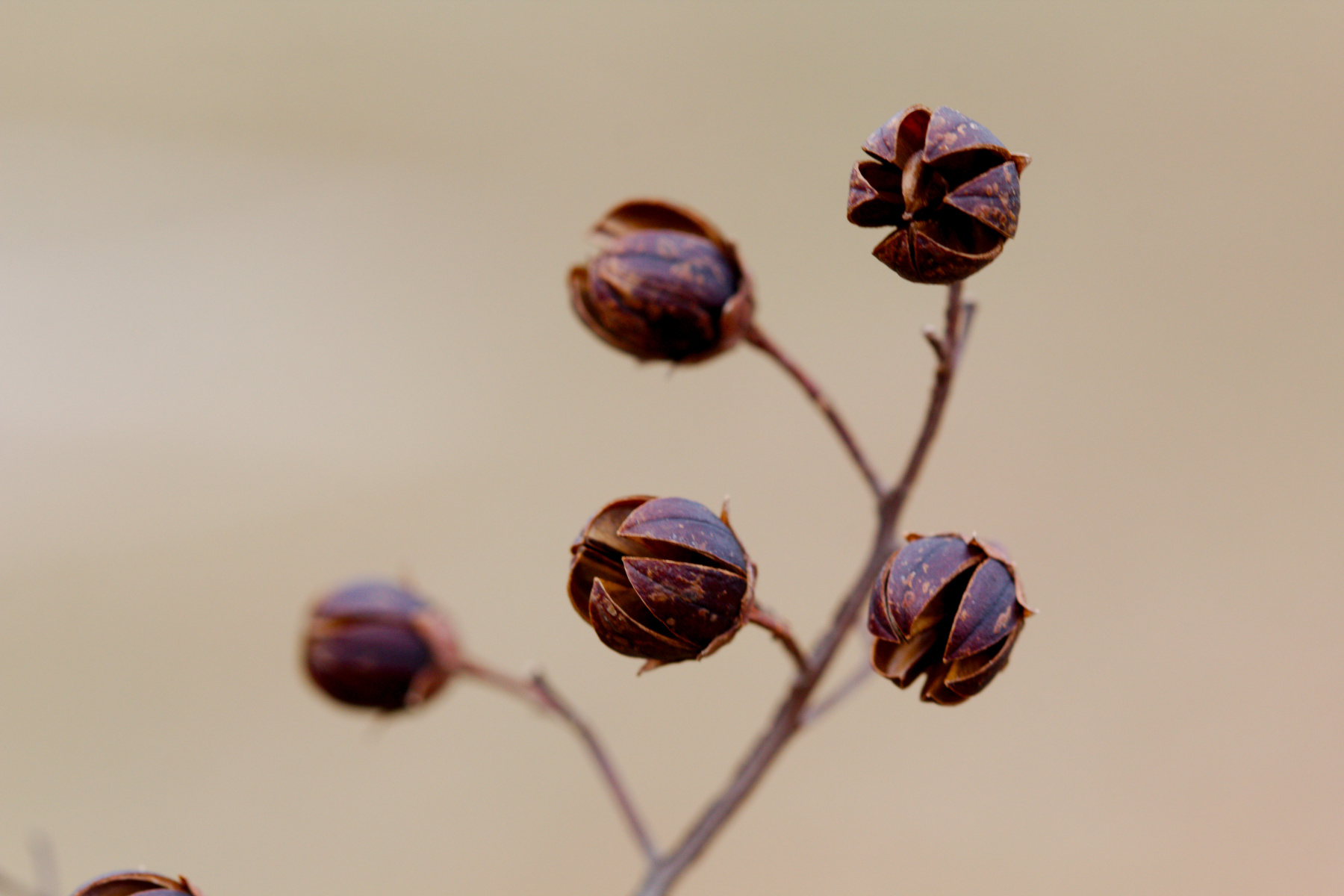
It feels wintery today and I went out to take some pictures of ice on a small pond at a park nearby. I also saw a few small crape myrtle (Lagerstroemia indica) trees and took a few pictures of them, as well. I like the little, empty seed pods. The exfoliating bark is also very nice, but those pictures were less interesting, I think. We don’t have any crape myrtle in our yard and I think with the size yard we have, it’s not something we’re going to have, but they make a nice show, with beautiful blooms but also with nice fall color and the peeling bark in the winter.
Trifoliate Orange (Citrus trifoliata)
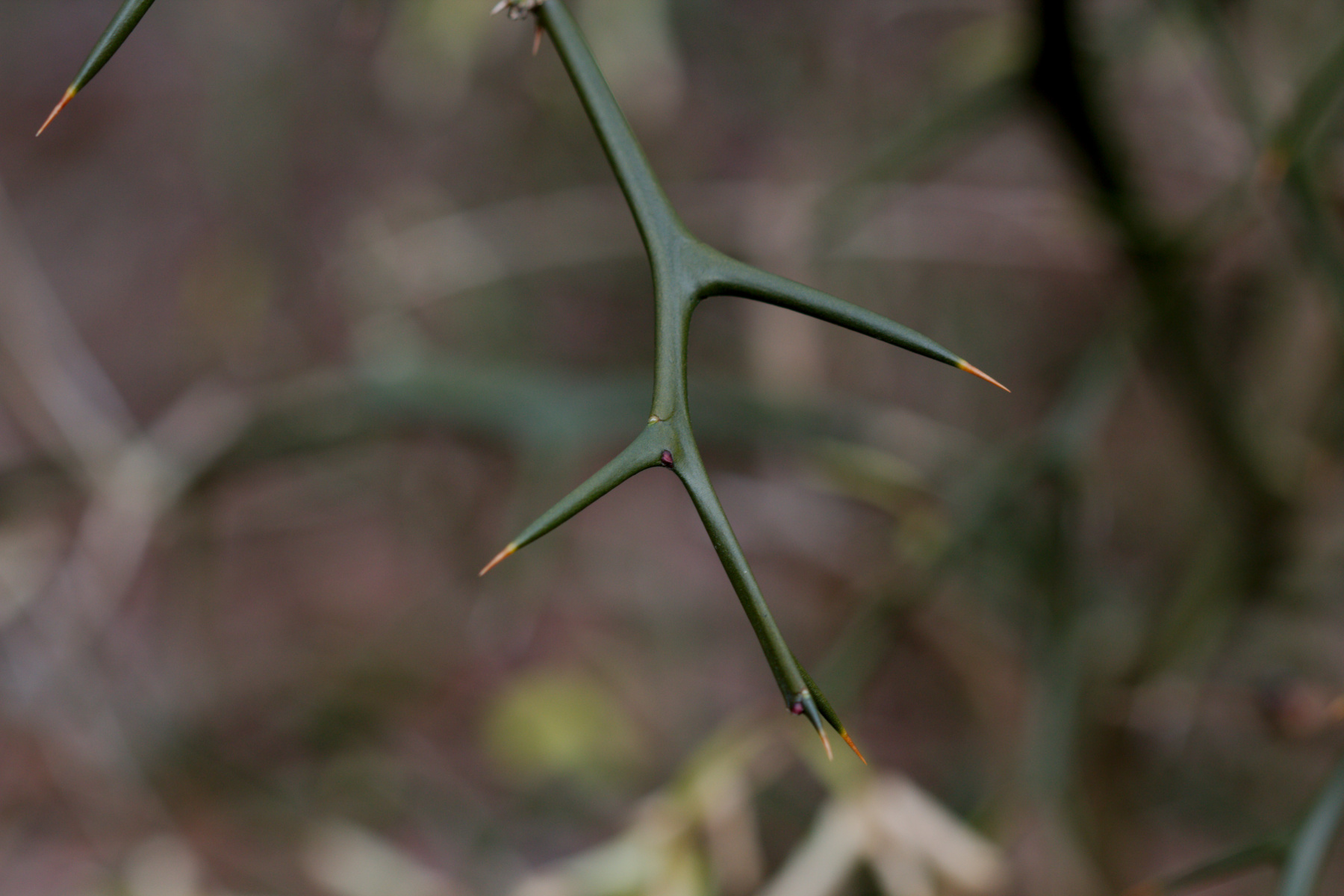
We had our annual outing to cut Christmas trees today but this picture isn’t of our Christmas tree or even of the Christmas tree farm. As per usual, we went to the family farm first, not to look at the Christmas trees there, they have all grown much too large. Still, we go there. Ralph and I collected some fruit of this plant, a trifoliate orange, otherwise known as hardy orange, and depending on who you ask, either Poncirus trifoliata or Citrus trifoliata. The former is more widely used but DNA evidence suggests the latter.
From five small fruits, small pubescent (covered with fine soft short hairs) oranges, I collected 269 seeds. They will get one month cold stratification and then I’ll plant them. Obviously I won’t need 269 plants, so if you are interested in a very thorny shrub with inedible fruit, you will be more than welcome to a few. They would make a great hedge.
Wet Weeds
Merriam-Webster defines a weed as “a plant that is not valued where it is growing and is usually of vigorous growth.” That sounds about right. It’s easier to define what you mean by the word “weed” than it is to decide what qualifies as a weed. Some plants are easy—most of us consider dandelions to be weeds. Crabgrass and nutsedge are another pair that won’t get much argument. What about when it’s something you planted? If it gets out of hand, you might consider it a weed. We have a few things like that and this might qualify. Where we had two trees cut down we have a pretty vigorous growth of black-eyed Susans (Rudbeckia), purple vervain (Verbena bonariensis), and Virginia knotweed (a.k.a. painter’s palette, Persicaria virginiana var. filiformis). This picture is of knotweed, and we might need to start treating it as a weed. It is pretty, though, and more so with beads of water on the stems.