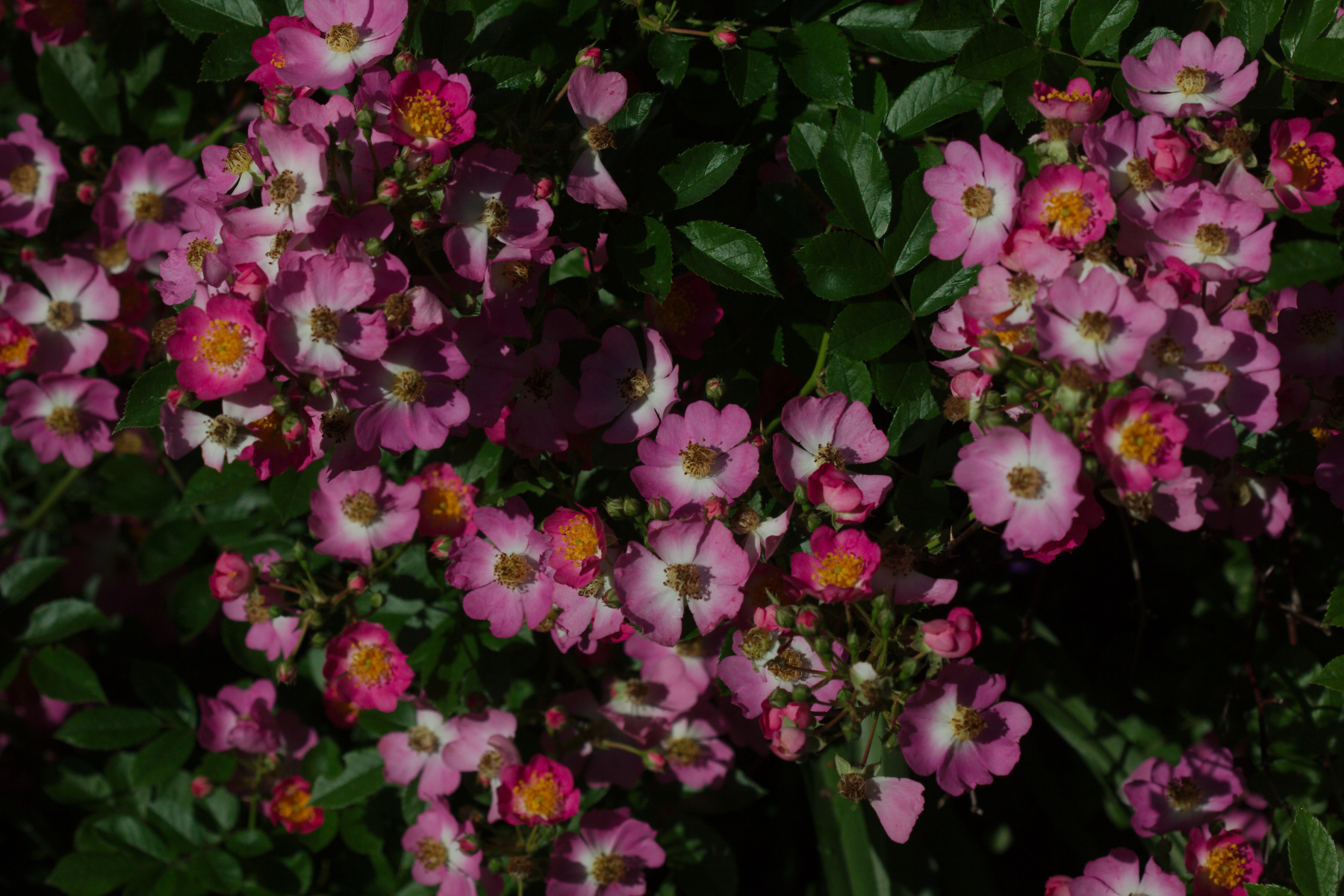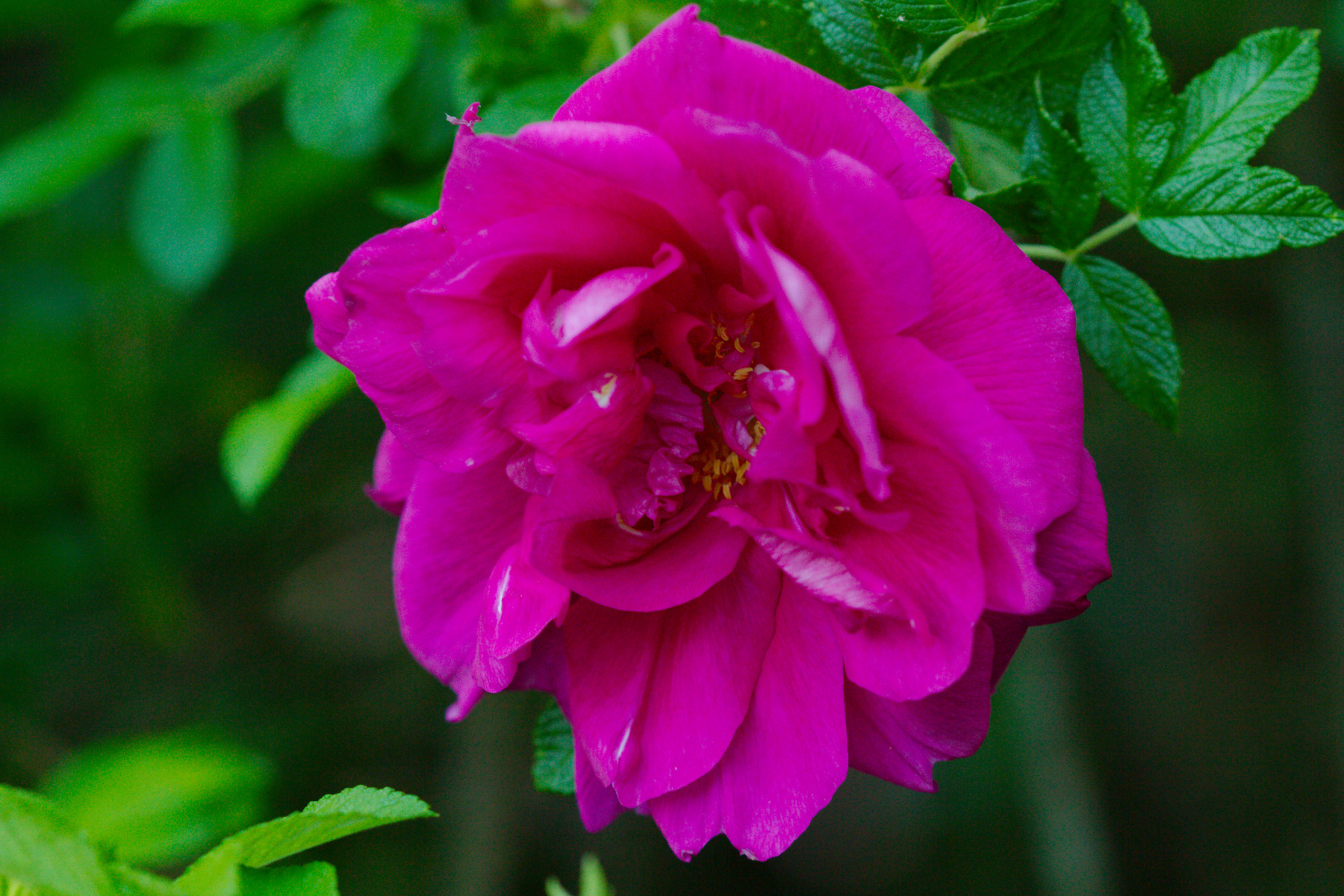
The roses are really starting to bloom, finally. This is one that only blooms once during the year but it’s beautiful when it does. It also have very healthy, disease resistant foliage, so it looks pretty good the rest of the year, although it’s just green, of course. This is a found rose and seems to me to be mostly R. multiflora. The wonderful pink flowers, however, speak of some other genes in the mix. I think this rose might contribute to some interesting breeding work and for years I’ve considered it, but so far, haven’t actually done anything.
Flowers and Plants
Pink Multiflora Hybrid
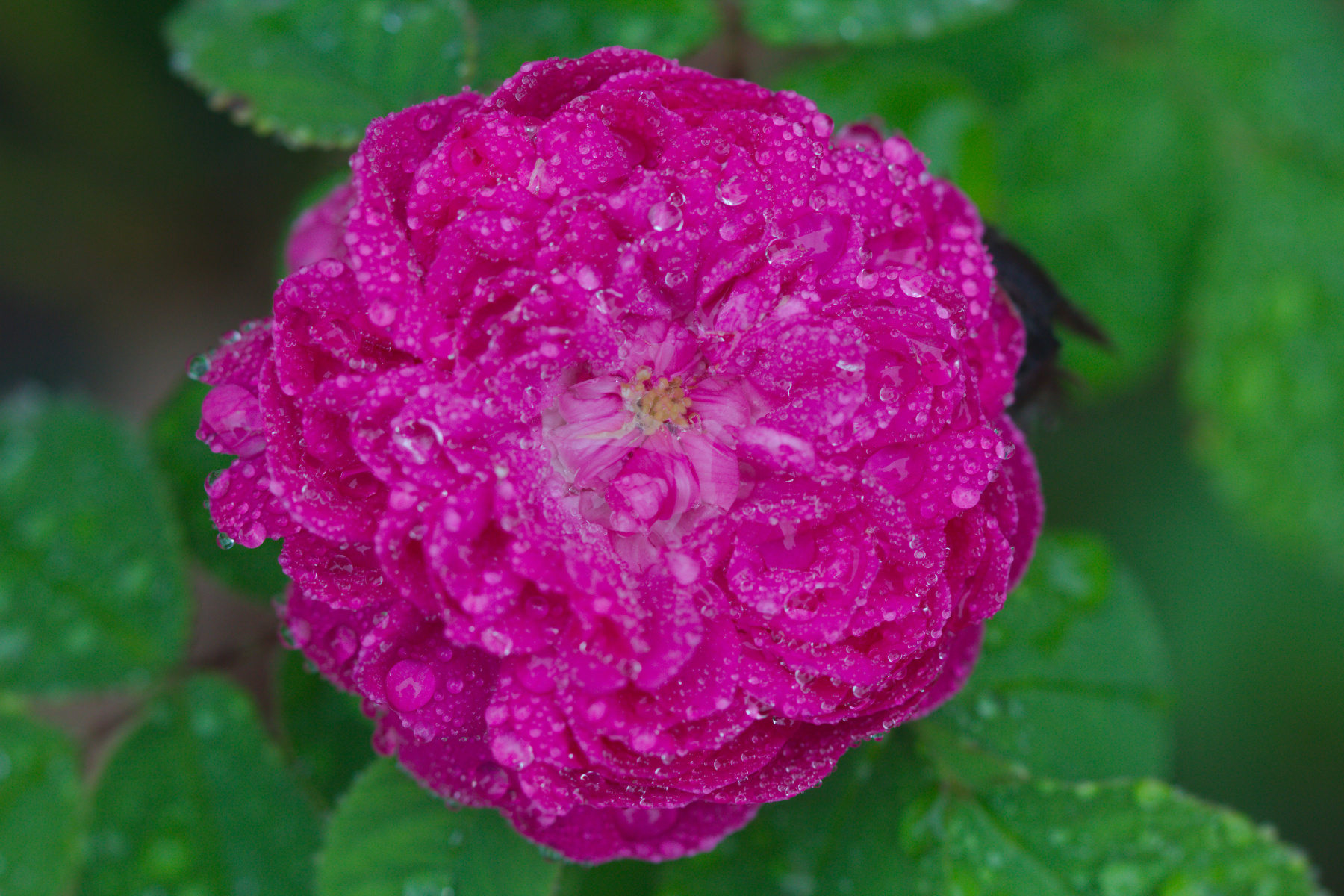
Rose de Rescht
This is a smallish rose on the smallest of my rose bushes. It’s actually growing in a container, which probably isn’t the best thing I could do for it, but up until now I haven’t really had a place to put it. We have a bit more sun now, with the biggest trees in the backyard being removed, so I have more options. Anyway, it’s a Portland Rose with a somewhat uncertain history. It is named for the city of Rasht, often spelt Recht in French, which is the capital city of Gilan Province, Iran. The rose appears to have been brought from there to England in the late 1800s and then rediscovered after World War 2. It’s a pretty little thing with an intense fragrance that cannot be beat.
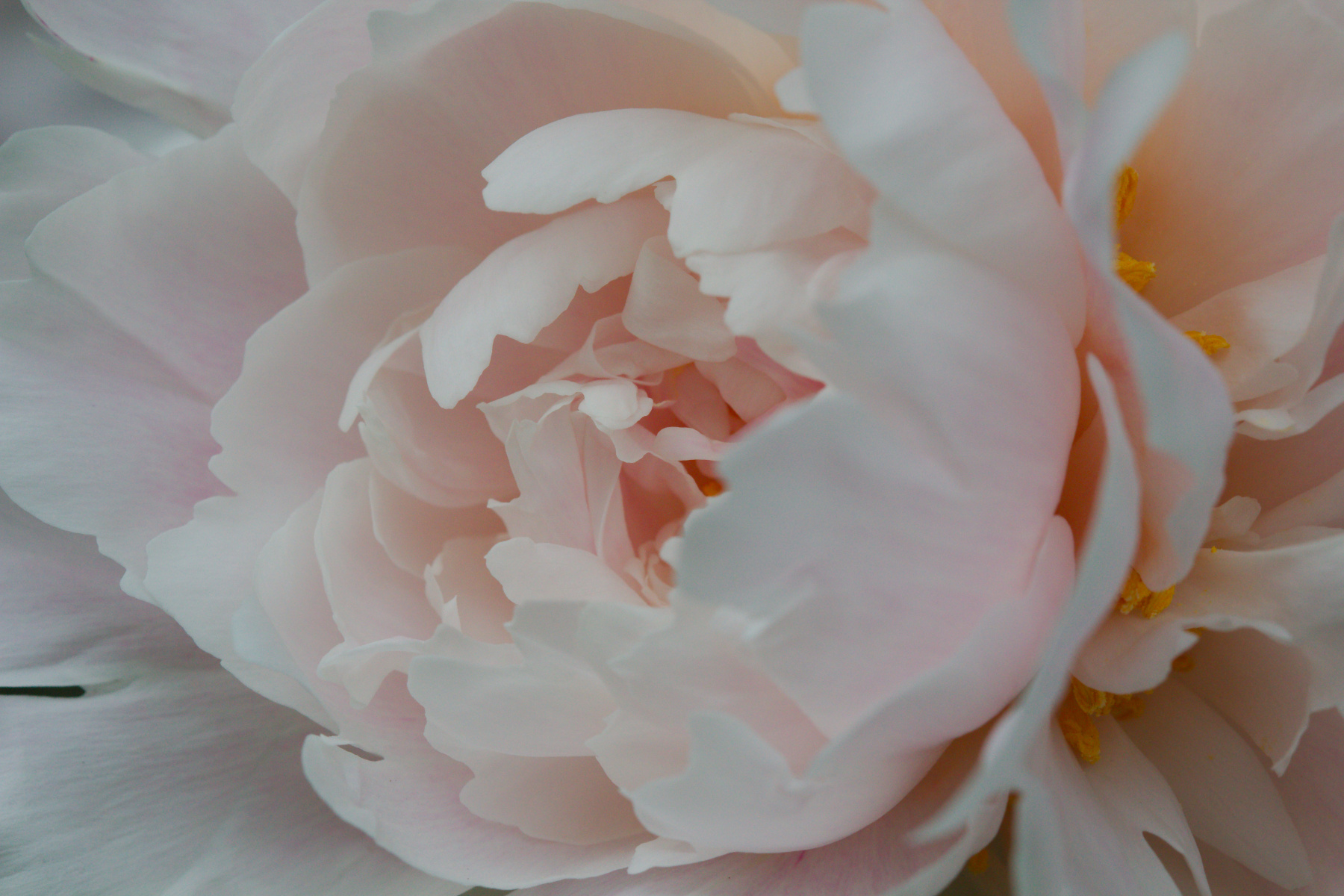
Pale Pink Peony
We only have one peony in our garden and that was here when we moved in. We really need to get a few more. Their bloom lasts far too short a span but while they are in bloom, they are glorious. The one we have is a very pale pink that I almost manage to capture in this photograph. The petals are as smooth as porcelain and delicate, with just a touch of color that is nearly hidden in the center of the flower. I also love the yellow of the stamens that you can only see from certain angles.
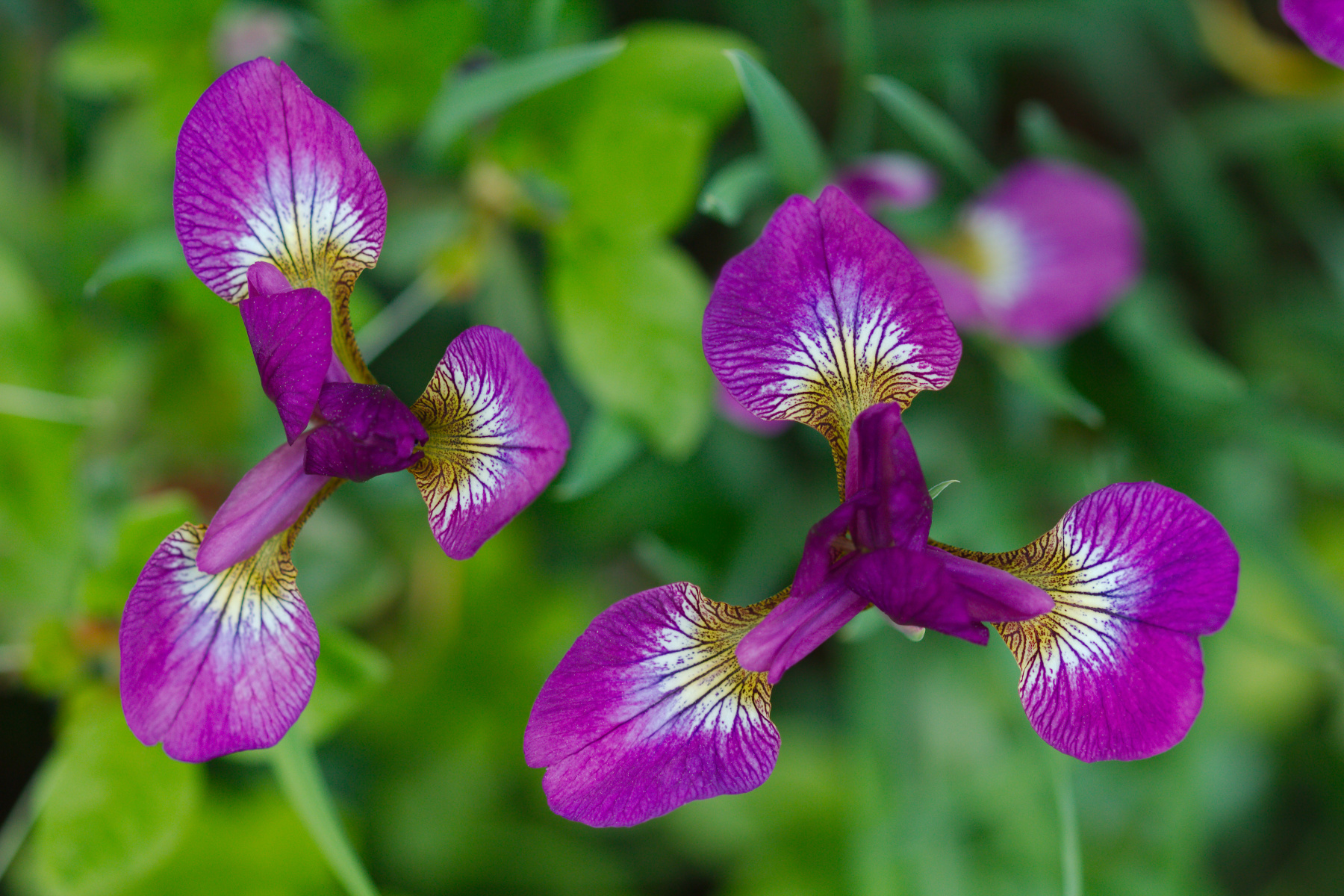
Iris ‘Eric the Red’
This is a Siberian iris called ‘Eric the Red’ and it’s growing along the sidewalk in front of our house. I’ve had it for many years, getting it for our garden at the house we lived in until 2005. When we moved from there, I dug up a bit and brought it with us, and it’s doing quite well here. Each year the clump gets a little larger. I should probably dig it up, divide it, and replant the pieces, but it never seems like the right time to do that.
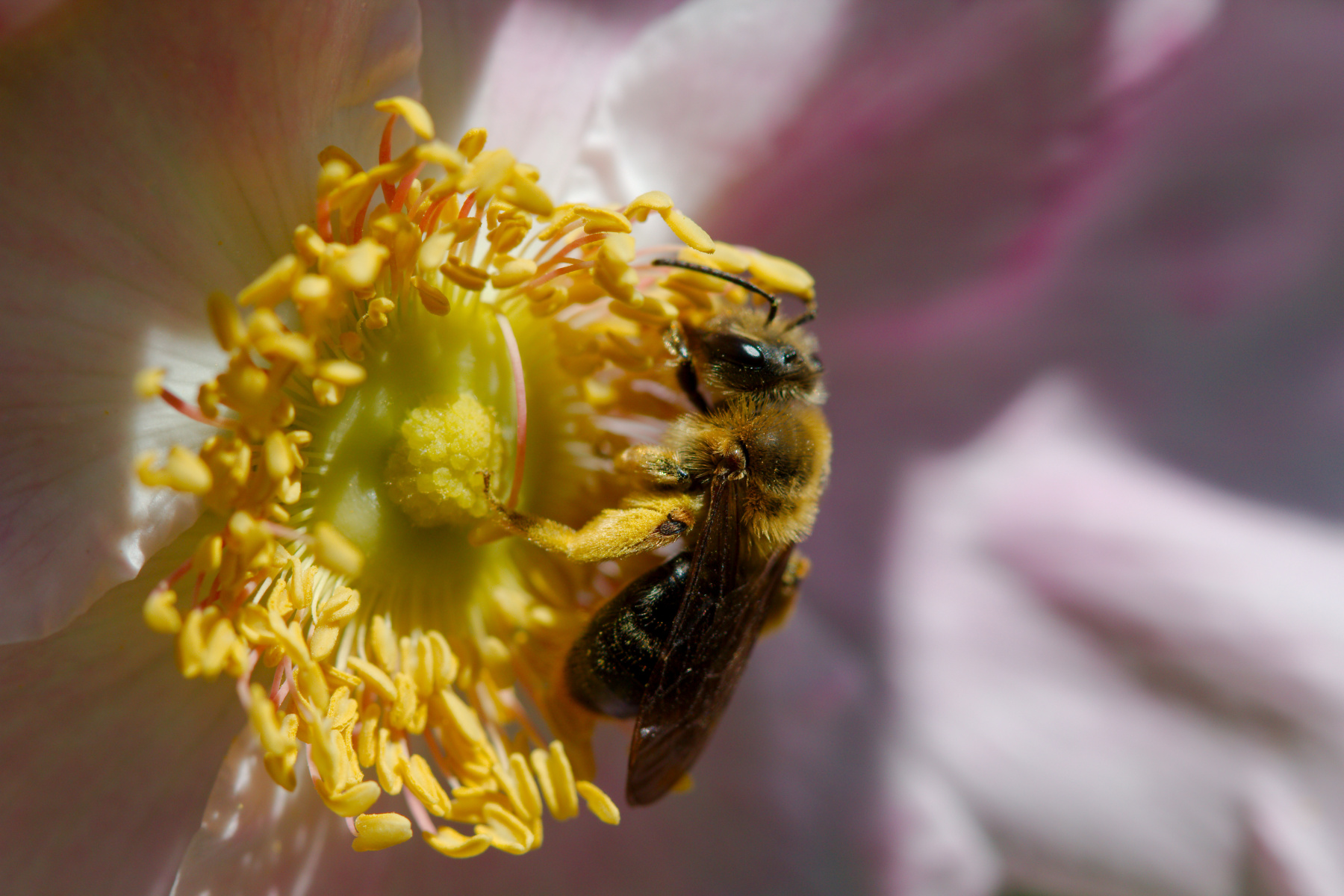
Honey Bee on Rosa micrugosa
We had a late spring this year in the mid-Atlantic region with snow and sleet up to the end of March and cooler than normal well into April. Most plants have been about two weeks behind normal in terms of blooming and the roses are no exception. I have one bush in bloom (and it’s glorious) with the others just about ready to start. I visited Nick Weber’s rose garden this morning knowing ahead of time that there wouldn’t be a lot to see. Of course, 2% or 3% of Nick’s roses is still more than most people have, but the best is definitely yet to come. I got to see a few early bloomers, which was a treat, and I enjoyed this honey bee on a R. micrugosa bloom.
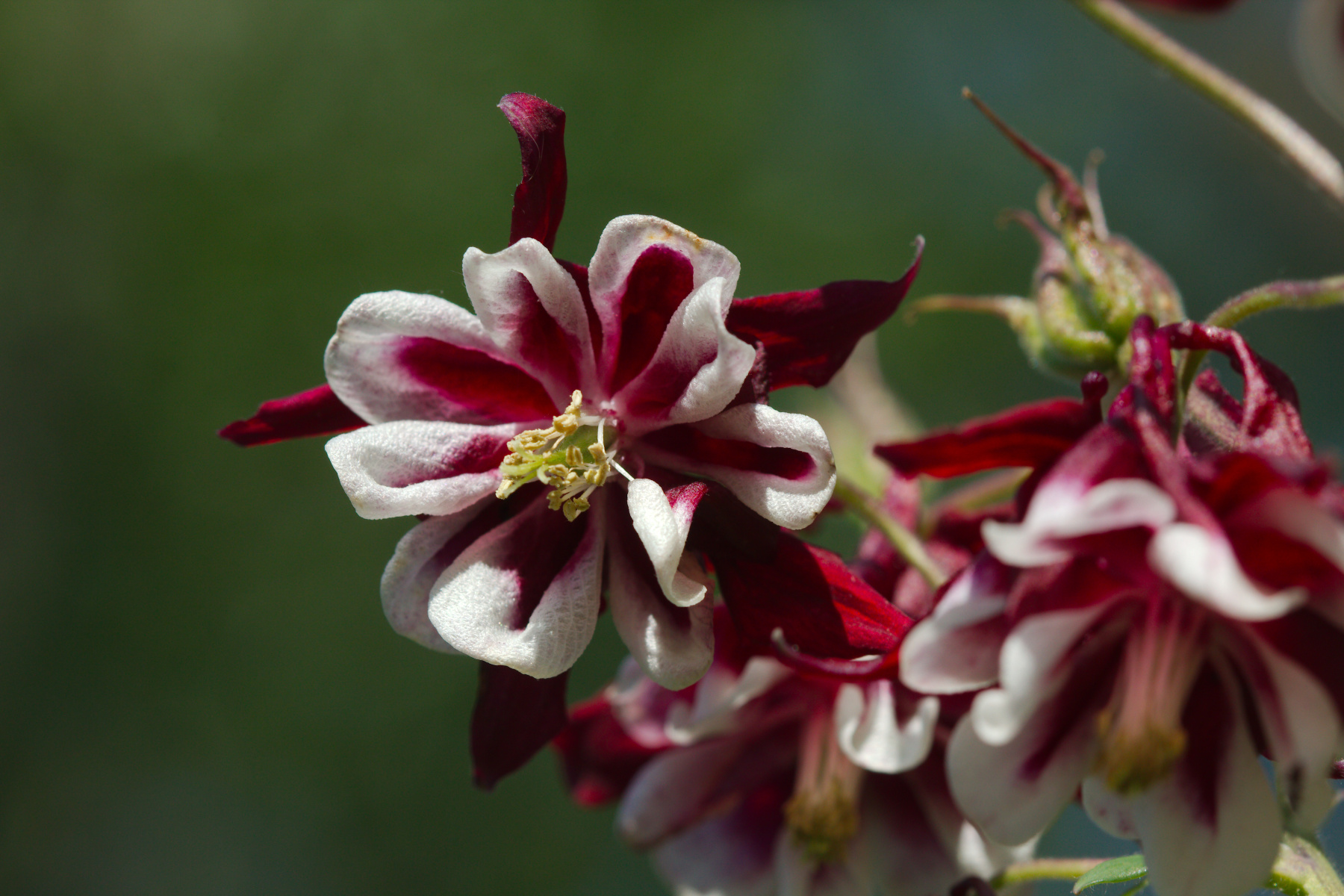
Aquilegia (Columbine)
We have a fair amount of columbine in our garden, scattered around in various places and even in containers. Most of it looks like this, dark red tending ever so slightly towards purple, with white around the edges. We have on that is pink and one that is almost blue and I’m quite happy for the variety. We really do need to get more colors, since they are available.
This is growing in the back corner of the yard, near the Lenten rose and epimedium.
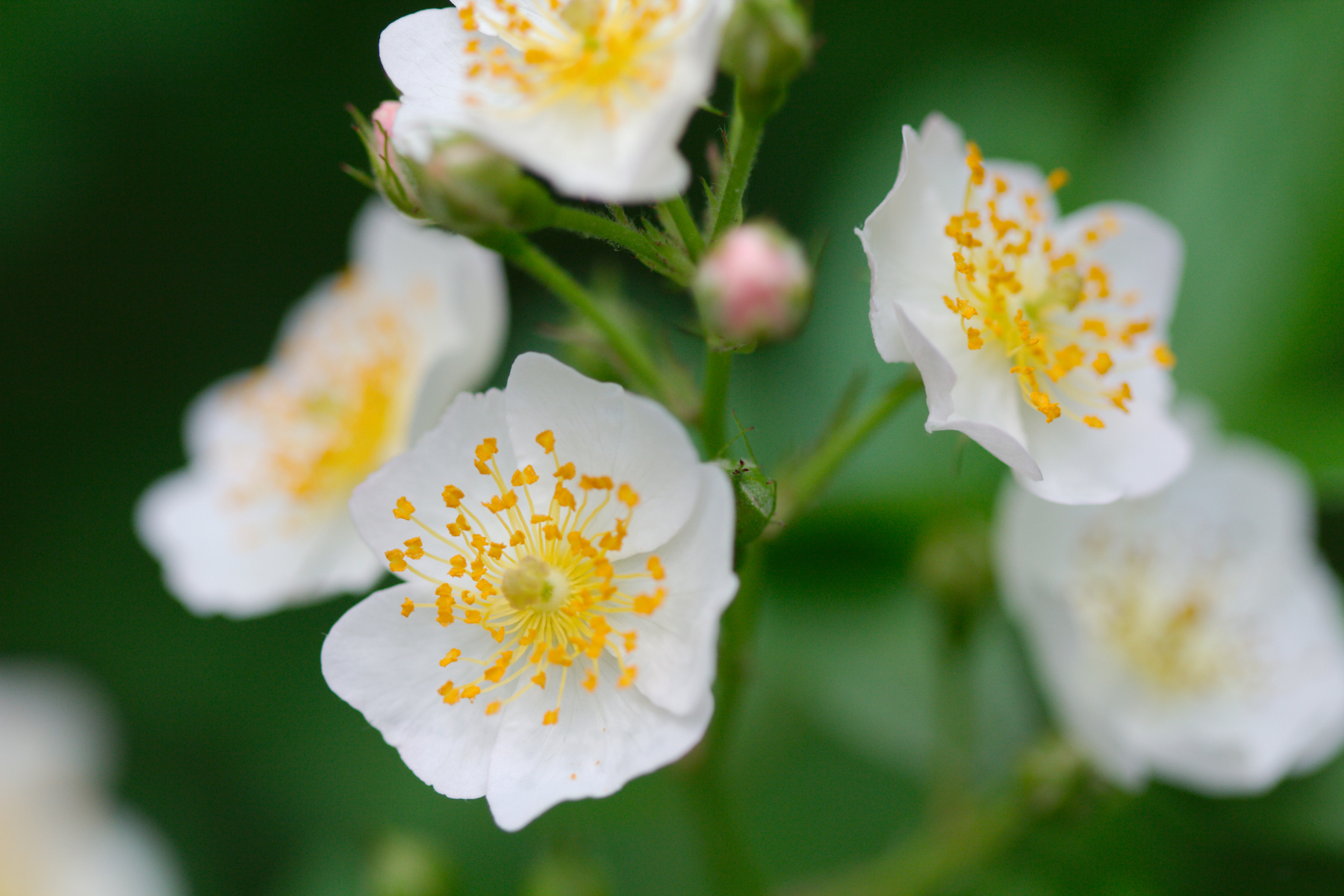
Rosa multiflora
Cathy and I took a walk early this afternoon. The multiflora roses are starting to bloom, so I took a few pictures (sorry, it’s that or a disgusting deer skull, I’m afraid). As most of my friends know, I’m a fan of roses, but R. multiflora can certainly be a pest. It is a strong, vigorous grower and doesn’t seem to be bothered by many of the ailments that are so much trouble in the garden — blackspot and rust, to name a couple. The flowers are also very small and generally pure white, and of course, they only bloom once a season. But they are still quite pretty little things, when they aren’t your responsibility to get rid of.
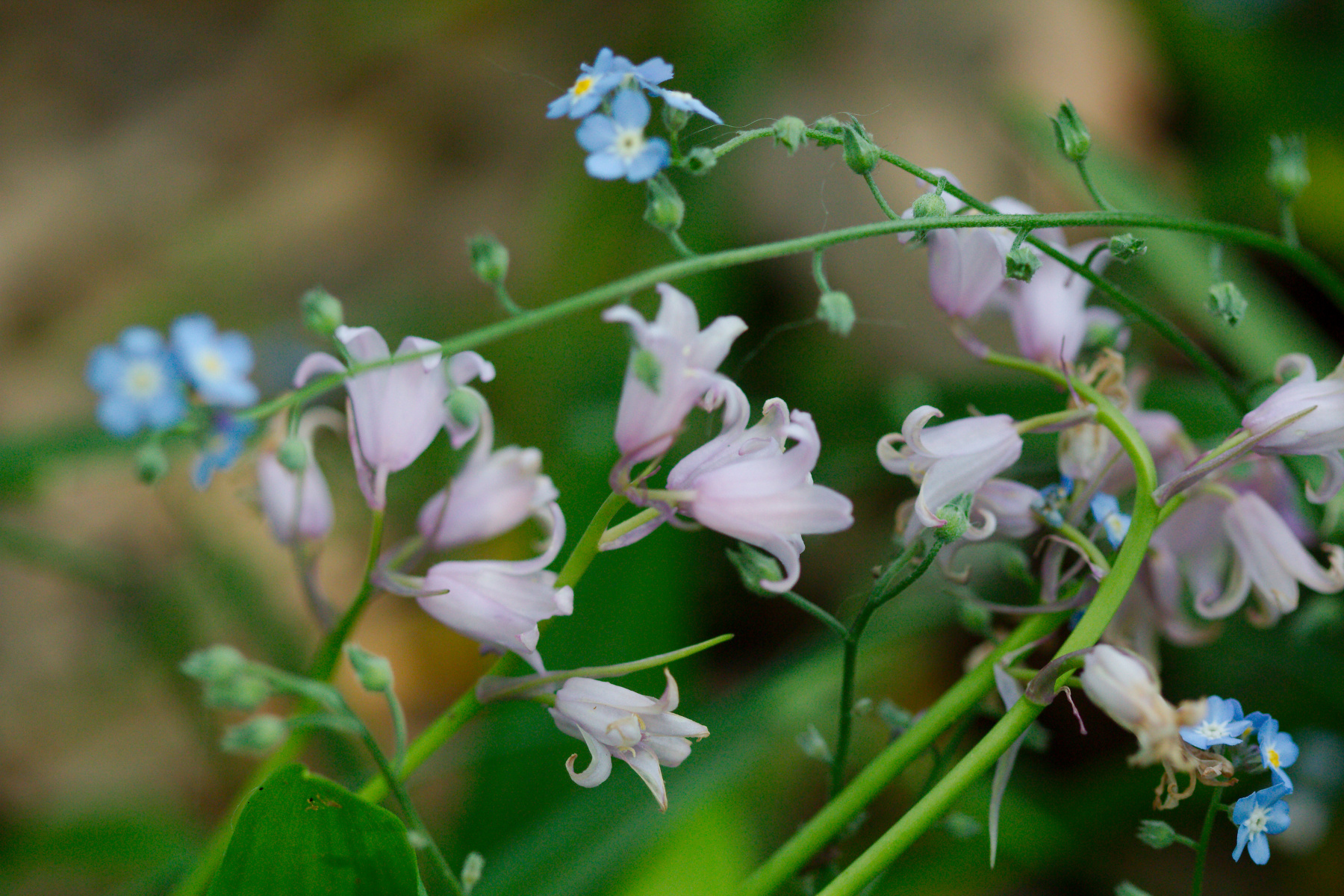
Spanish Bluebells and Forget-Me-Nots
I didn’t exactly promise that I’d post a picture of the Spanish bluebells (Hyacinthoides hispanica) the other day, when I put up a picture of Lily of the Valley and Forget-Me-Not, but I sort of mentioned it. They are almost finished now, but there are a few holding on still and I took some pictures today. So, here are the Spanish bluebells, which are actually more closely related to hyacinths than to our native Virginia bluebells, along with the Forget-Me-Nots. These are growing in our shade garden, under a dying cherry tree on the north end of our front yard. I’ve planted an apple tree near this, so hopefully by the time the cherry finishes dying, there will be something big enough to replace it.
Chives
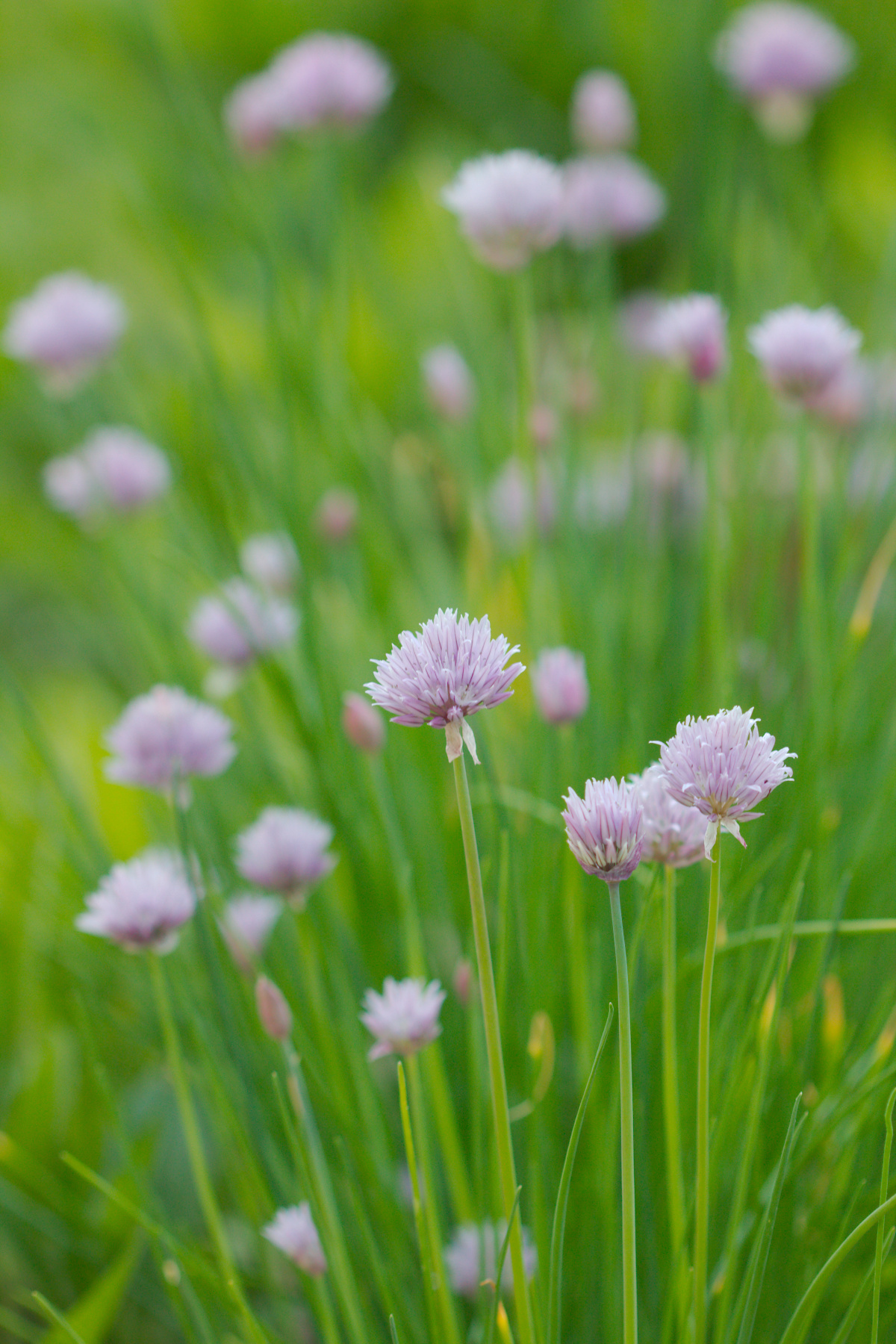
I have a small, rectangular container filled with chives and it comes up each year, happy as ever. Every year I take pictures of the chive flowers but try to get something new, but they really don’t vary very much. So, this year I tried to make it look more like a small section of a field of chives.
One nice thing about having a container of chives is going out with a pair of scissors and cutting a small bunch to add to dinner. I also like cutting a flower head and chopping that up as a garnish. It adds both flavour and colour to a dish. We have a friend who is a little unnerved by flowers in food, but in this case, it really is a good thing. Little pale, purple, and slightly oniony bits floating on soup, sprinkled over a juicy piece of grilled steak, or on a fresh salad adds a wonderful touch.
Try it, you may like it.
Red Rhododendron
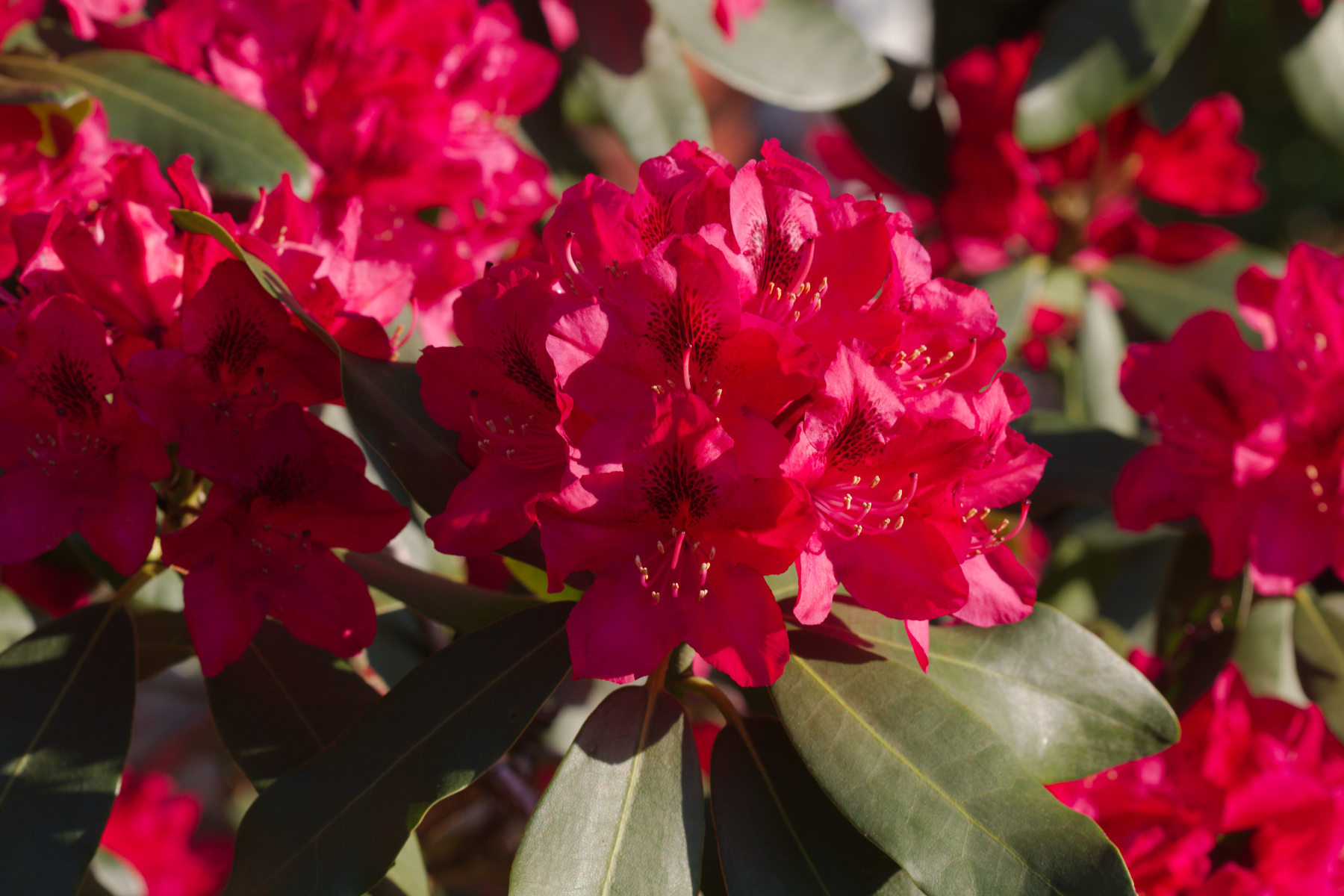
We don’t have any rhododendrons in our yard. Well, we have azaleas, which are in the same genus, but we don’t have any proper rhododendrons. This one, though, is next to our neighbor’s house, on the side facing ours, so we get the benefit of it.
One reason I don’t have any is because I cannot decide what color to get. I do love these red flowers, but some of the paler colors are nice, also. There are even a few with yellow flowers and that might be nice. I know I don’t have enough room for more than a few, so I need to decide.
Rose ‘Roseraie De l’Hay’
Most of my roses are a long way from blooming at this point. Like with the bulbs earlier in the spring, we’re at least two weeks behind last year in that regard. One rose, however, the rugosa ‘Roseraie De l’Hay’ is starting to open up. This rose has gotten quite large, about seven feet tall and just about as much across. The flowers, as you can see, are a crimson purple mix. They are very large, about five inches across, and have that wonderful, strong scent so typical of rugosa roses. It’s also a great shrub for birds, because it is so thorny that pretty much nothing of any size can get to them when they are in its branches.
Lily of the Valley and Forget Me Not
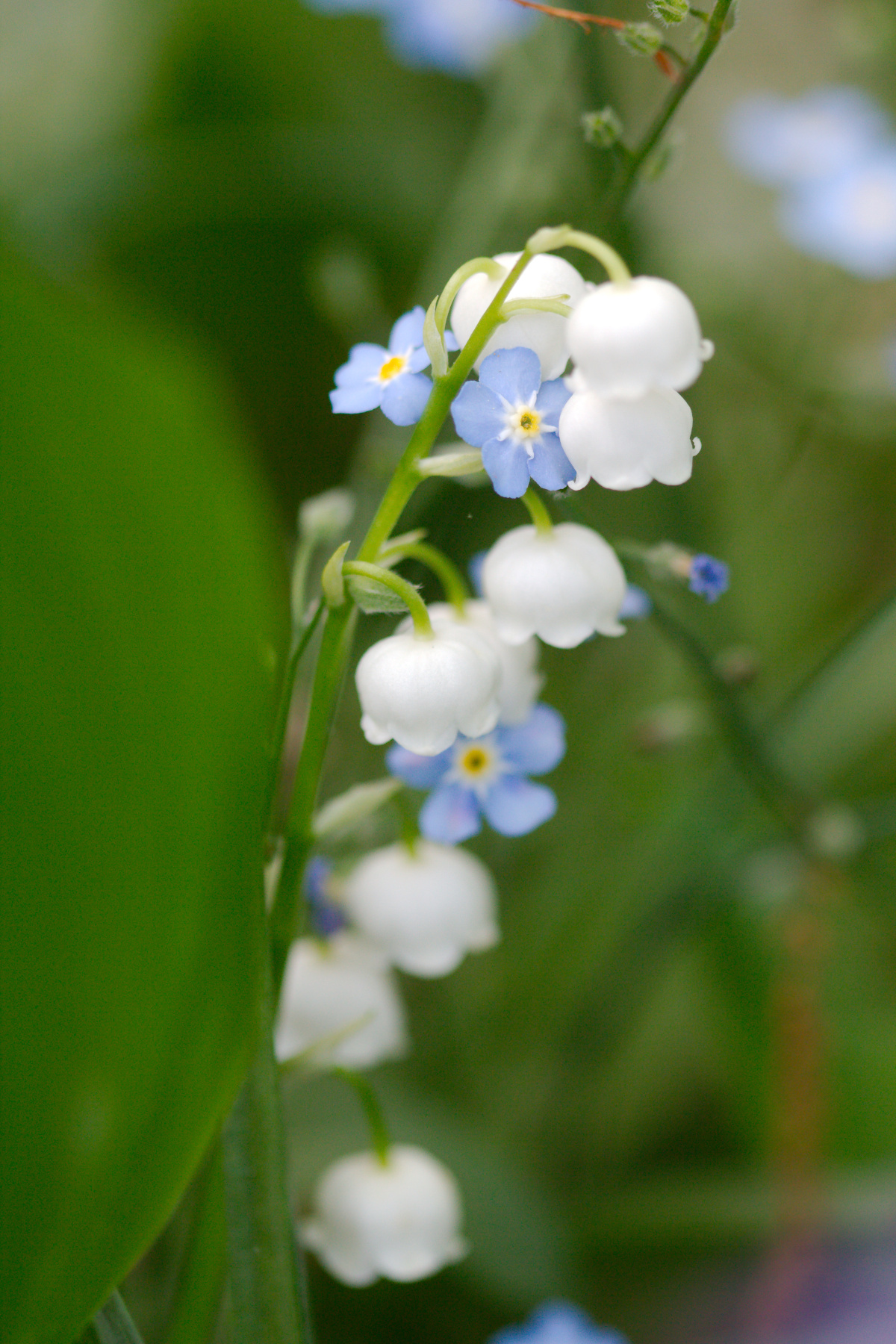
I try not to post similar pictures on consecutive days. In fact, I try not to post similar pictures even within a week or two. Sometime, though, I’ll take a picture that I like and then take a similar picture in the next day or two that I like enough more (or enough, anyway) that I decide to post it regardless. This is such a post.
Yesterday’s picture was of a few lily of the valley flowers, looking up at them from a very low angle. This afternoon I decided to take some pictures of the Spanish bluebells (Hyacinthoides hispanica) in the shade garden on the north side of your yard. mixed in with them, however, are some lily of the valley and some forget me nots. I think they go well together. Don’t you?
For those who want a picture of Spanish bluebells, I’ll see what I can do, but not today.
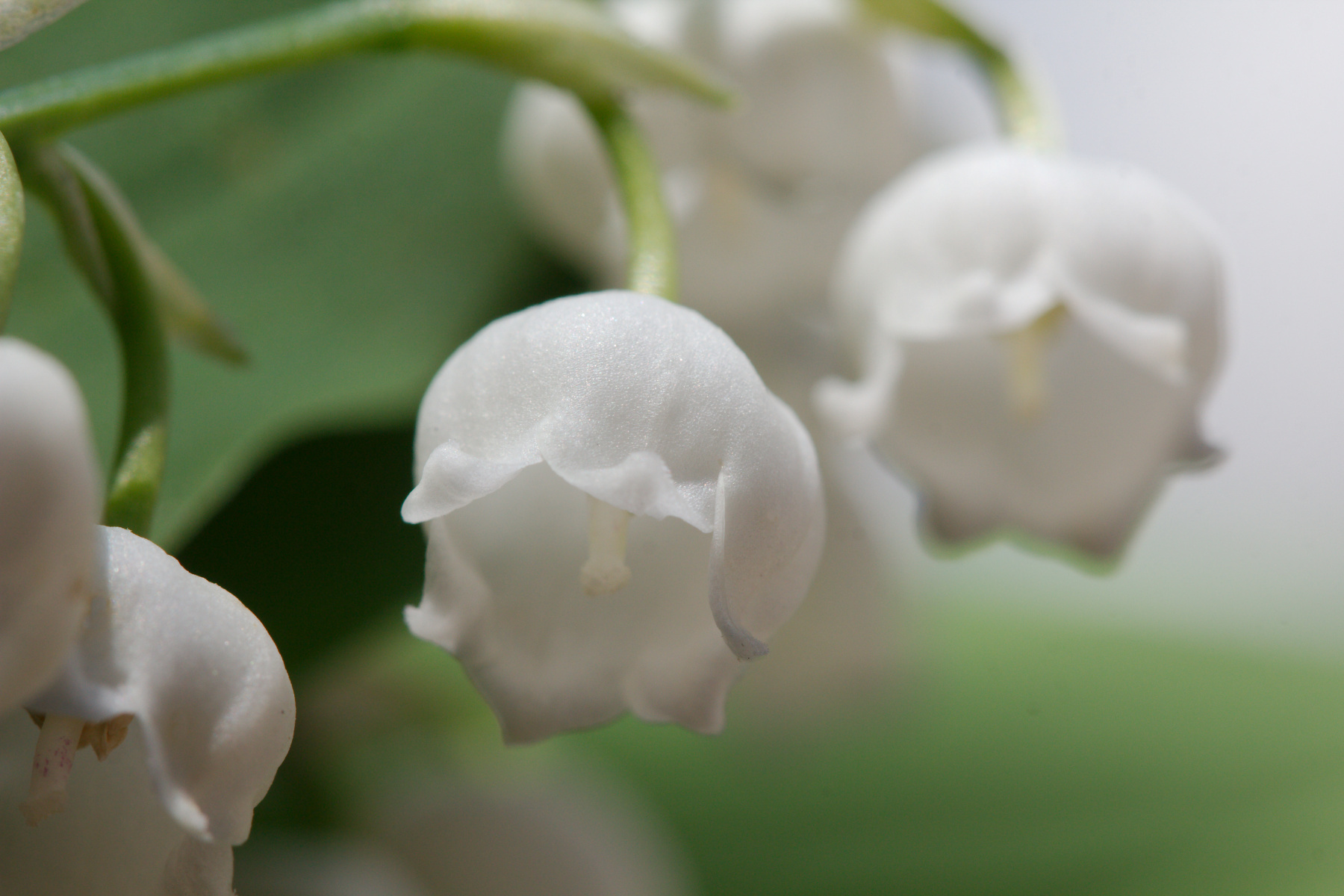
Lily of the Valley (Convallaria majalis)
It’s lily of the valley time, which is certainly a pretty time of year. Buying this pretty little plant can be quite expensive, and while a little will spread and go a long way, it takes a while to get established. We were fortunate in two ways. First, we knew of a house that had been condemned and was to be torn down for a road widening project. We got permission from the owner to take whatever we wanted from her garden, before it was gone. That included a huge amount of lily of the valley. Then, when we moved to our new house a few years later, we found a reasonably large patch already established in one area of the back yard.
One difficulty in taking pictures of lily of the valley (Convallaria majalis) is getting them from a different angle. Most of you know that getting down on the ground doesn’t bother me in the least. But I wanted to get lower still, down far enough that I could look up at the blooms of this little beauty. With a macro lens on the camera, getting down far enough to still have room to focus was the real trick, but I think I’ve accomplished it here. So, an mole’s eye view of lily of the valley flowers.
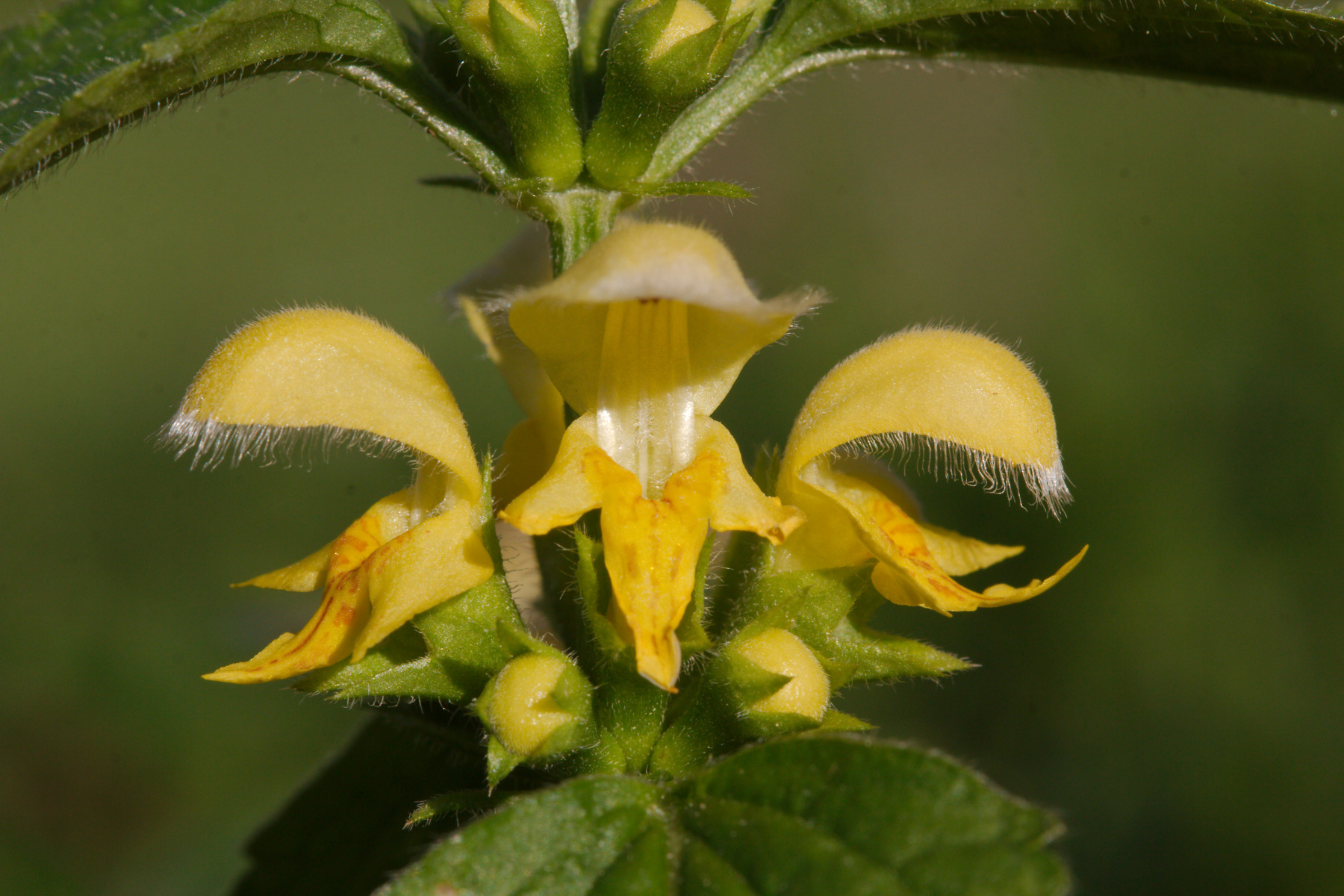
Yellow Archangel (Lamium galeobdolon)
In the area that used to be under the big tree in our back yard there are a few things growing. The tree is gone and we’ll probably change some of the plants, moving them to shadier spots if necessary. I also plan to put a few roses there, now that it’s got a good bit of sun. One of the more successful plants there is yellow archangel (Lamium galeobdolon), a member of the mint family (Lamiaceae). It is considered by some to be an invasive species, although we haven’t found it nearly so problematic as a few other things in our yard. It makes a nice ground cover, although it isn’t evergreen, so it doesn’t do the job year round. It is under a foot tall and, as you can see, has yellow flowers right about now.
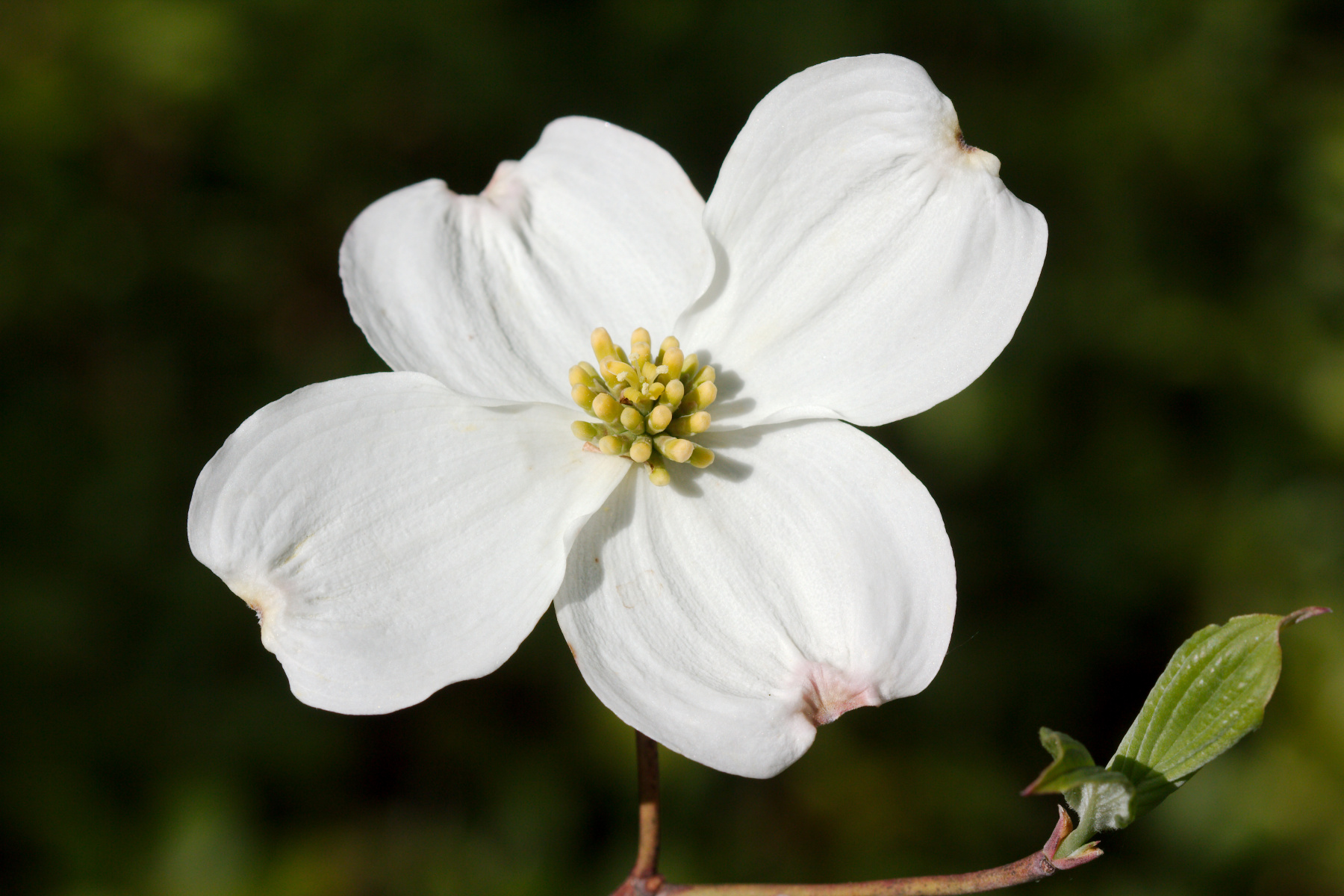
White Flowering Dogwood
This is a white flowering dogwood (Cornus florida) that’s growing in the northeast corner of our yard. I’m pretty sure it just happened to grow there rather than having been planted. While the one up against the house is eventually going to go, I don’t see any reason not to keep this one. It’s well sited, not in the way of anything else, and of course, it’s lovely when in bloom.
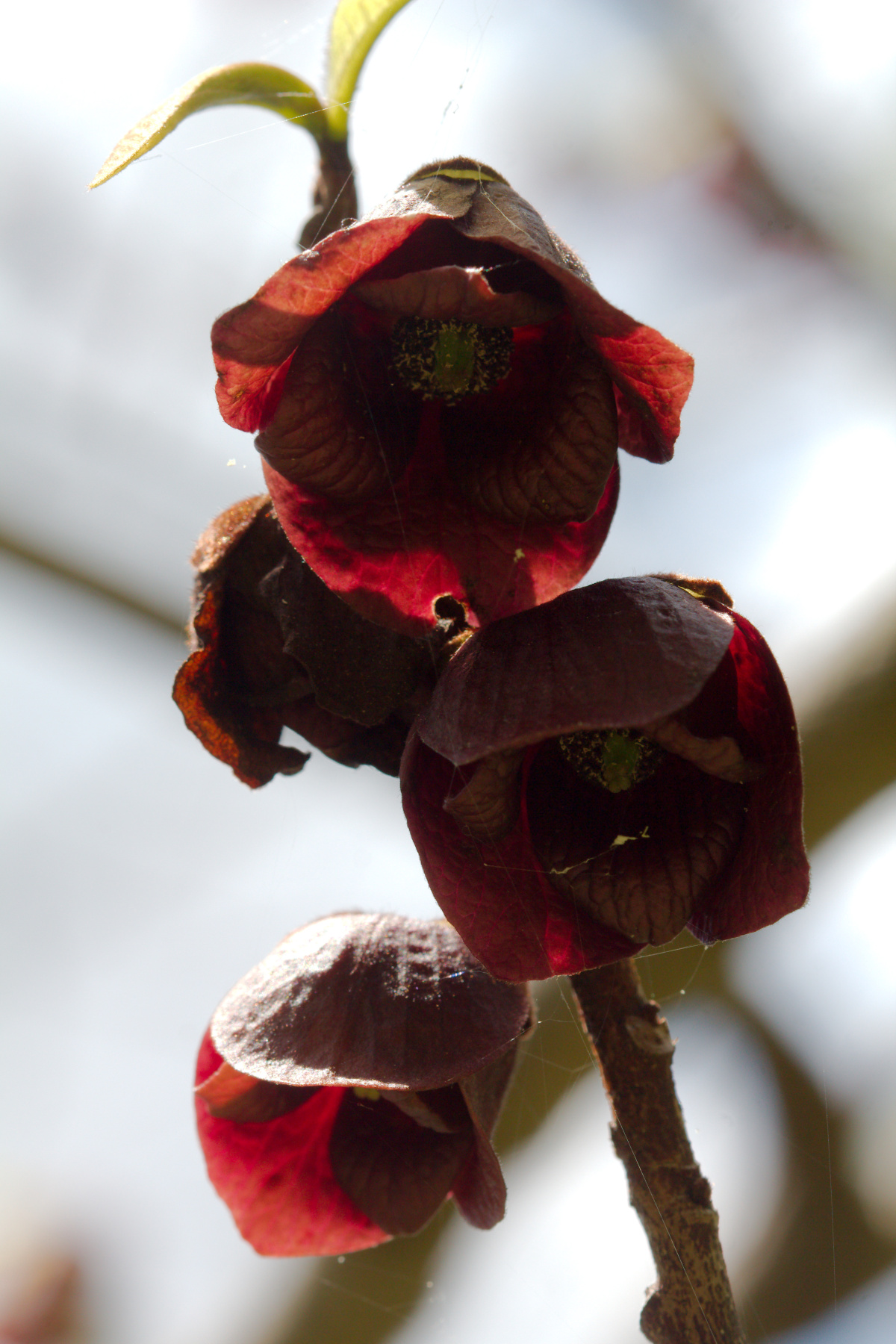
Pawpaw Flowers
We went for a hike on Billy Goat Trail C today, after a walk out to the overlook at Great Falls (and because Trail A was closed because of flooding). It was a lovely day, not too hot but warm enough. There are a lot of pawpaws along this trail and I was able to get one decent picture that shows their flowers as flowers. They are quite dark and almost brown, but have a little bit of red in them, which you can see in the right light, as in this picture.
The pawpaw (Asimina triloba) is an native tree with a very interesting fruit which, according to Wikipedia, is the largest indigenous to the United States. The fruit has yellow, custard-like flesh that is quite sweet and luscious and I’m a big fan. Dad planted quite a few in Pennsylvania and a couple in the yard. One drawback is that the flowers smell a bit like rotting meat. Dad would actually hang small bags of meat scraps to attract blowflies or carrion beetles for pollination. Yes, it’s as gross as it sounds. But the fruit is worth it.
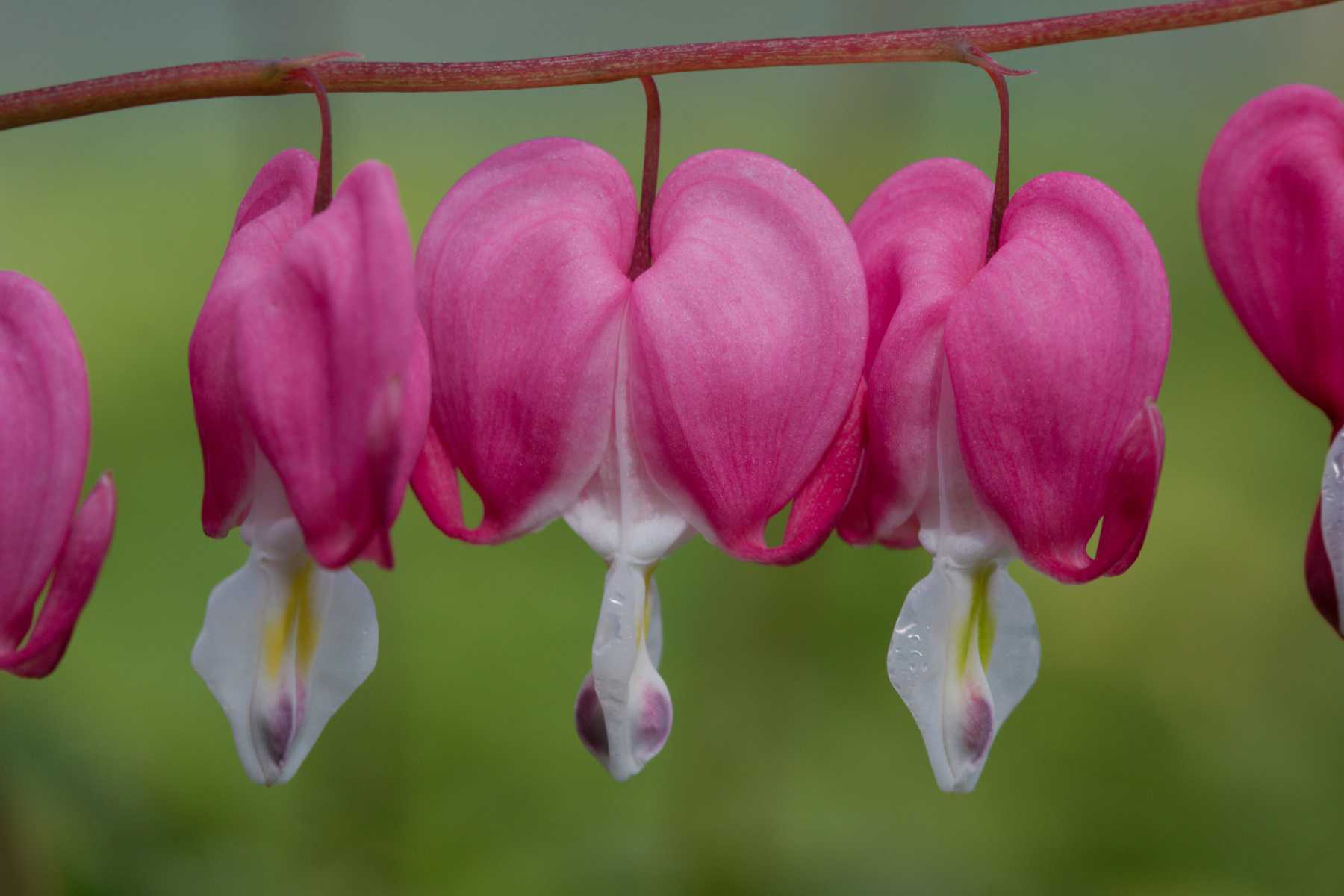
Bleeding Heart
The flowers are coming fast and furiously now, so we’ll be seeing a few more of them before the summer heat sends them all away and we move on to different subjects (like bees and wasps). The bleeding heart (Lamprocapnos spectabilis, formerly Dicentra spectabilis) is a pretty thing and a nice addition to a shady, woodland garden like we have at the north end of our front yard. Like many of the early bloomers, it will die back to the ground when it gets hot.
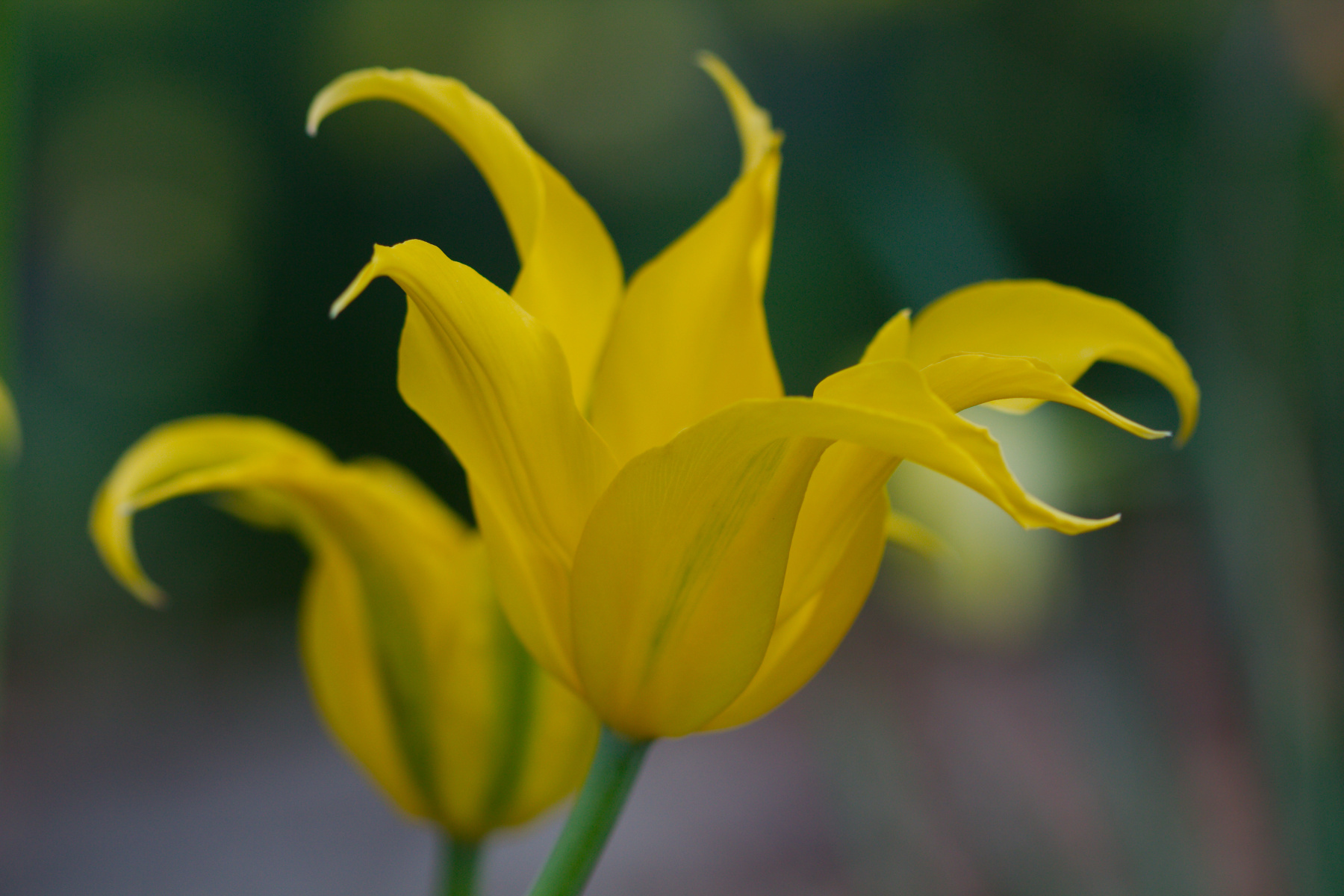
Fireflame Tulip
Tulips are beautiful but of all the bulbs, they are probably my least favorite. I’m not entirely sure why but I think it’s because they don’t live forever, like so many others seem to do. Daffodils seem to have more flowers each year and grow into massive clumps over time. Tulips dwindle. Actually, I had some species tulips at our last house that did really well, and perhaps I should get some of those. They are actually pretty hardy and quite beautiful, although not as showy as the large, hybrid tulips we usually see. This is a fireflame tulip (Tulipa acuminata), and I like that it’s different to the standard, simple tulip.
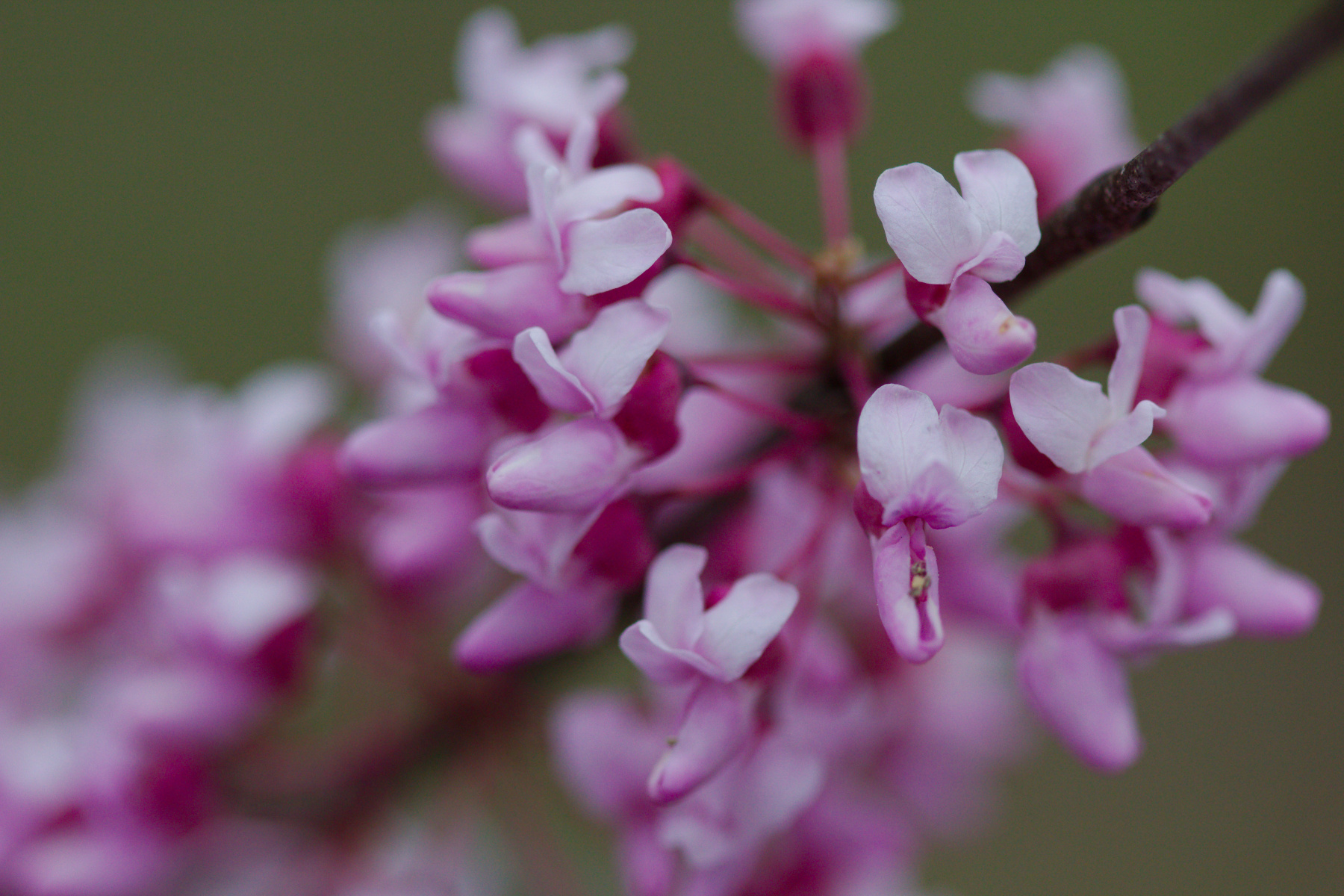
Redbud (Cercis)
I assume this is an eastern redbud (Cercis canadensis) rather than a Chinese or European redbud (C. chinensis or C. siliquastrum) but I don’t actually know the differences between them, so I won’t say for certain. They certainly do make a fine show this time of year, adding a bit of pale purple to the beautiful tapestry of greens that the woods become in spring. The flowers are mostly seen from a distance and their best effect is as a mass of color, but they are interesting little things individually, as well.
Forget-Me-Nots
I’m always forgetting what these are called.
Well, not really. They are members of the genus Myosotis and are very pretty little flowers, most effective in large drifts. I don’t know which species these are (there are about 300) but I believe they may be Myosotis sylvatica, a European variety commonly known as the wood forget-me-not. They are short-lived herbaceous perennials and where they are growing in our garden sort of shifts from year to year, as new seedlings grow and old plants die, but we still have a little area where they seem to be happy.