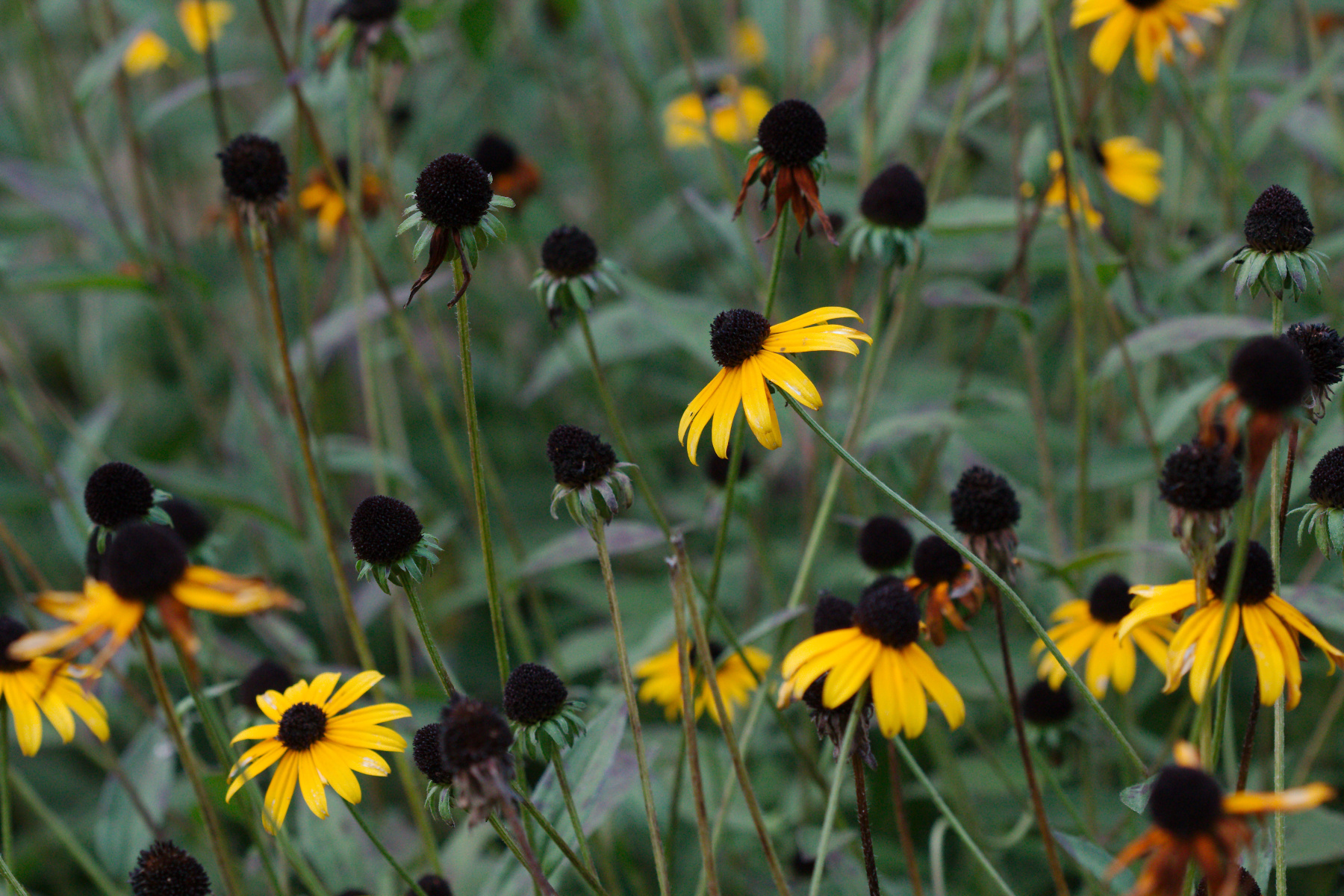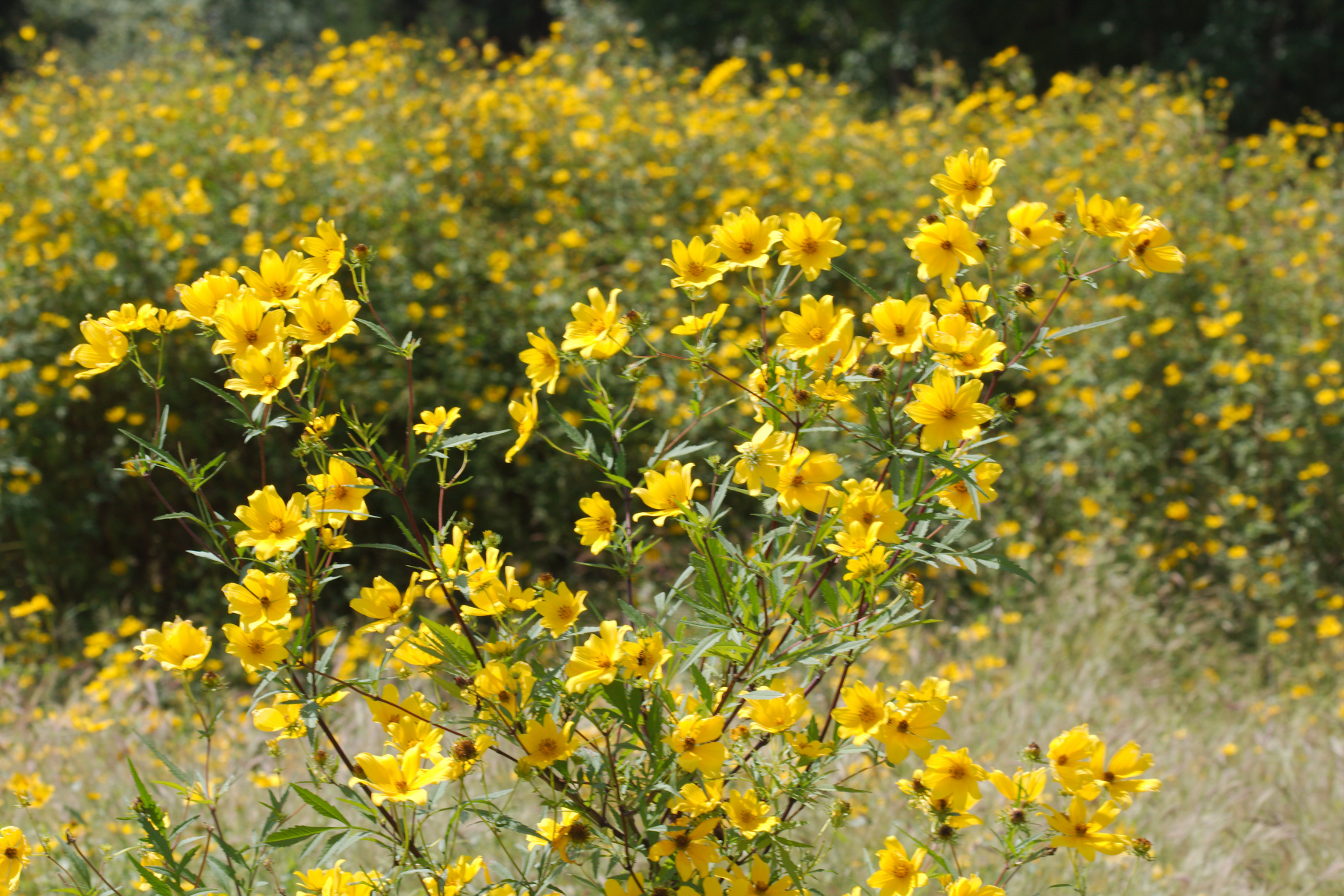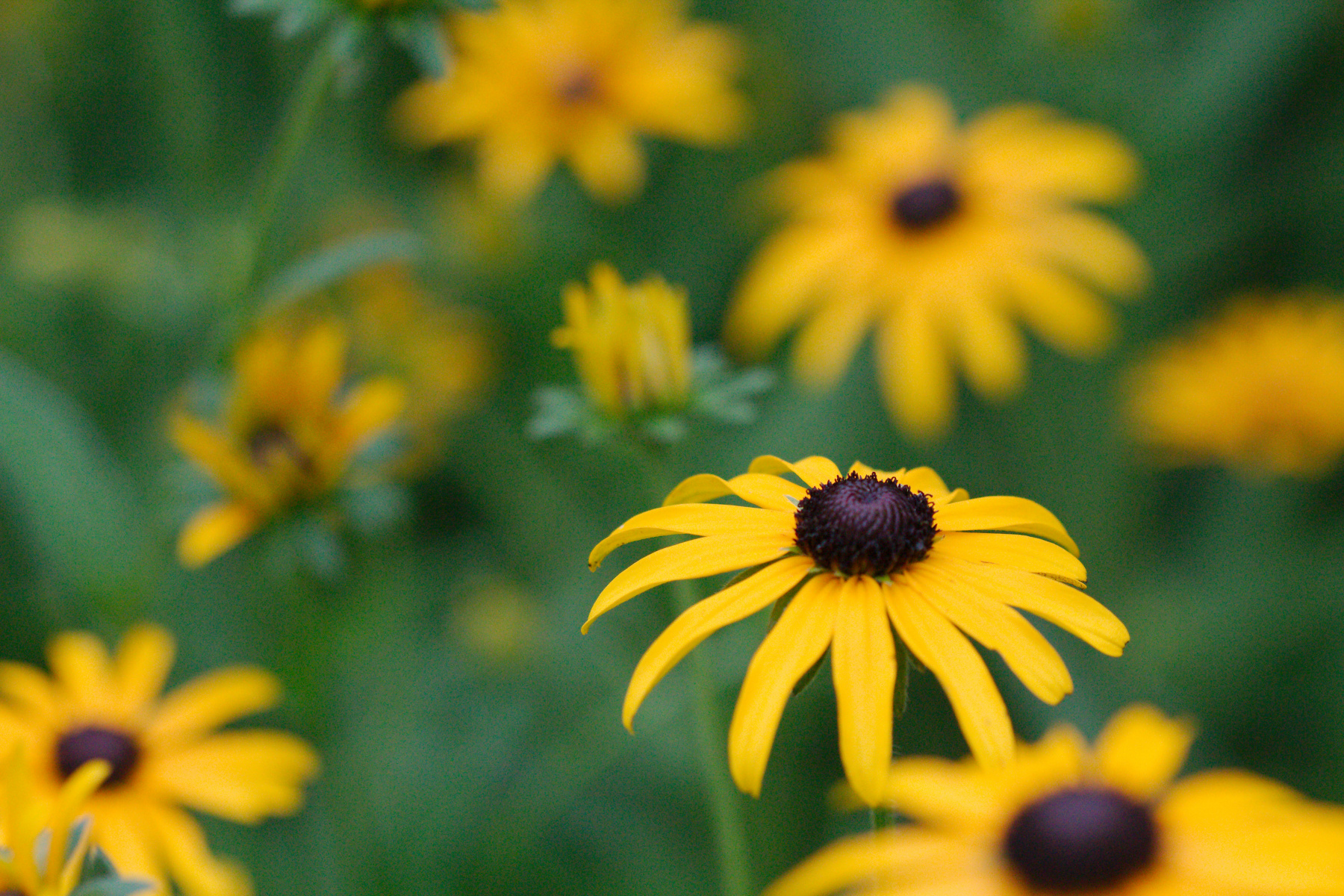
On Muncaster Mill Road, between Magruder High School and where it crosses the ICC and between those two roads there is a field of yellow flowers. I assume someone planted them but it isn’t clear who would have done so. I’ve driven past it many times over the years and finally decided to stop today and take some pictures. I’m not sure what sort of flowers they are but they are quite pretty, particularly en masse. Getting a photograph that conveys that was a bit difficult because once you are out in them, they are tall enough that you cannot see them all. Also, I tried to keep the highway out of the picture.
Flowers and Plants
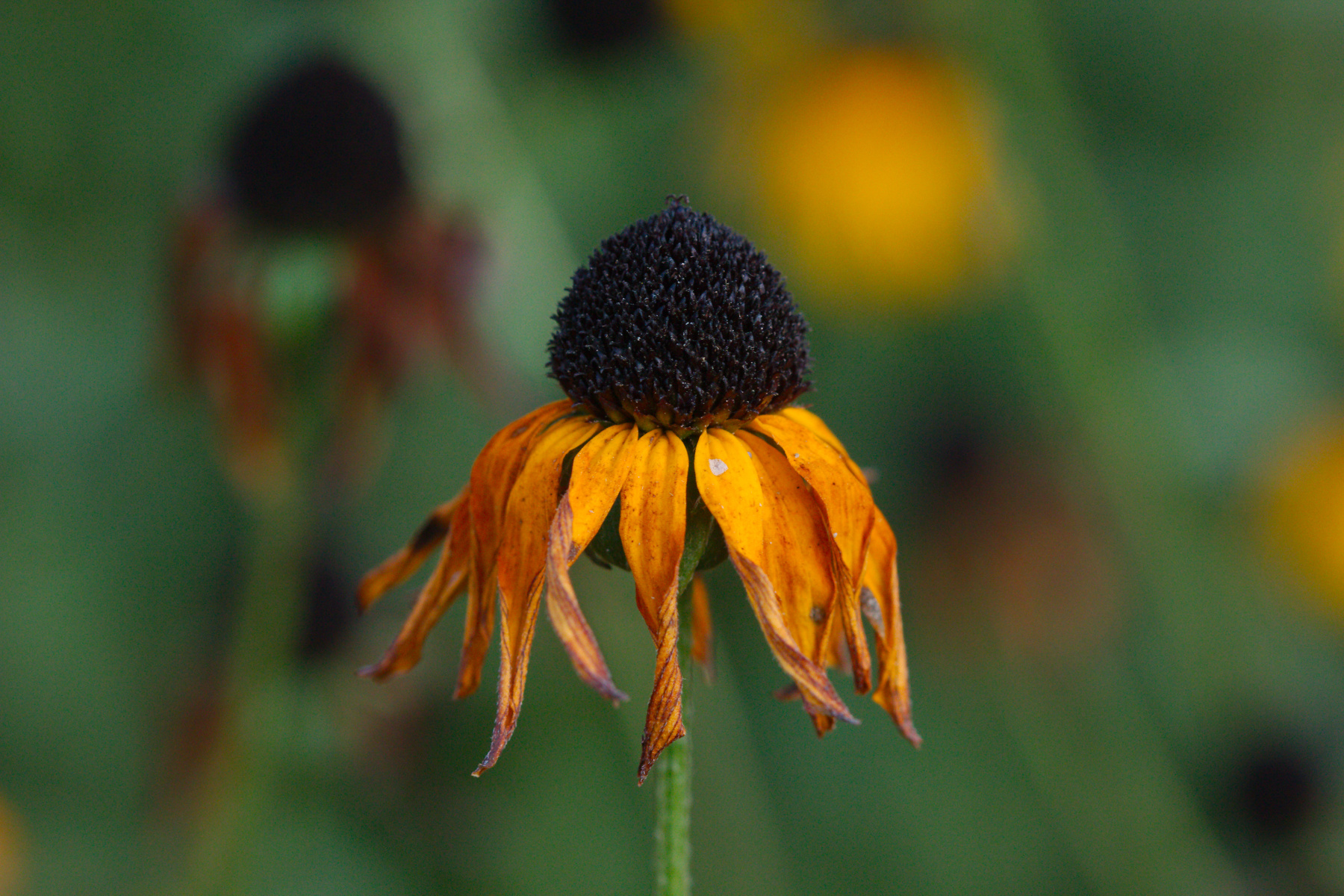
Drying Black-eyed Susan
The black-eyed Susans are fading, as I mentioned two weeks ago. They still have a fair amount of color but are starting to dry up. Personally, I think they still look pretty nice in their semi-dried out state. This is one in a large patch growing in the middle of our back yard. There was a small patch here last year but with the two trees that used to shade it now gone, the patch has become very vigorous. I’m not sure what we’ll do there next year, but it seems like a good spot for some sun-loving things. More roses, perhaps.
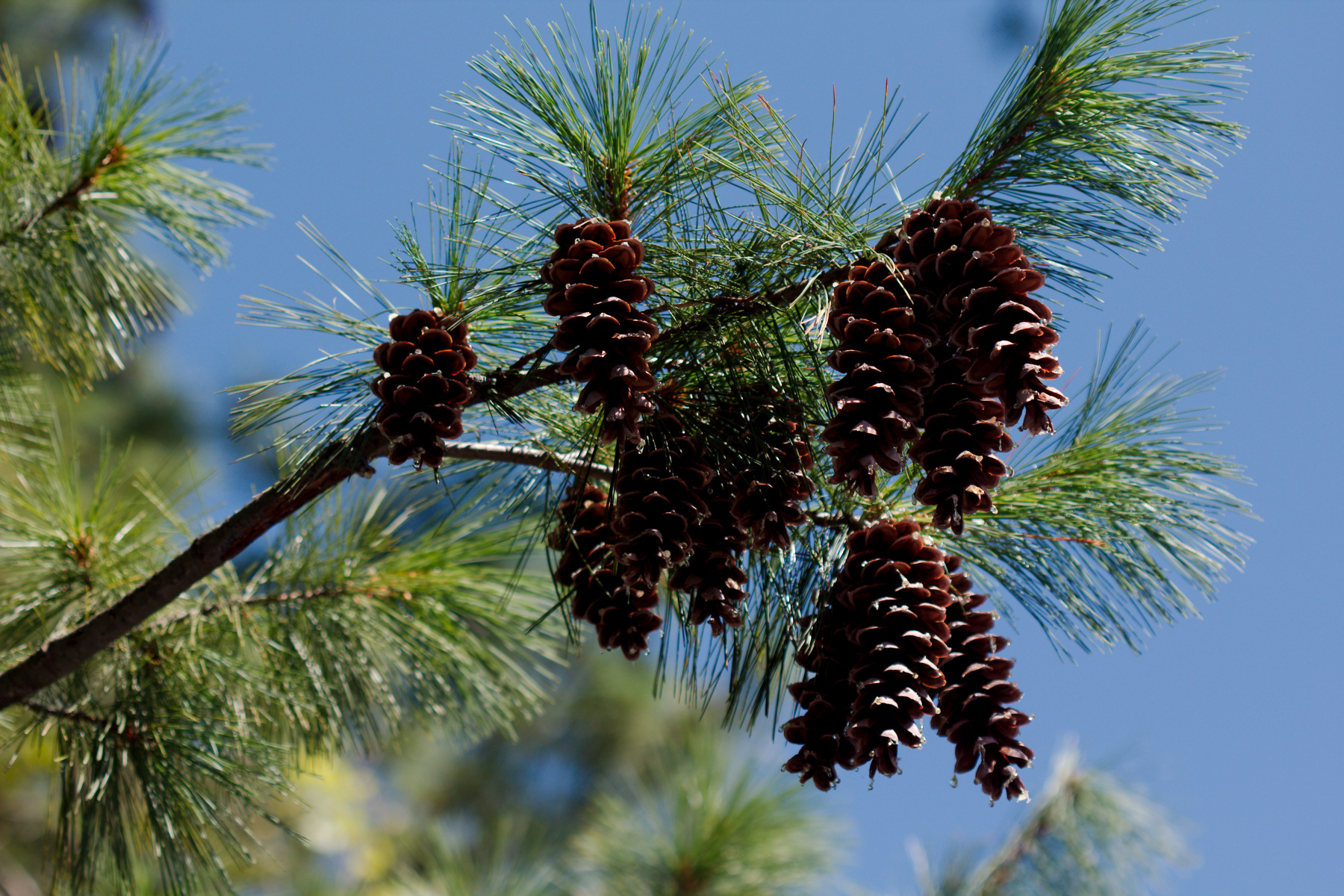
Pine Cones
Cathy and I went for a short walk this afternoon, walking around my office building a few times. It was a pretty day, on the border between warm and hot. The sky was a rare, deep blue and very clear. As we walked I had my camera with me (like you do) and was looking for things to photograph. These pine needles and cones against the blue sky caught my eye, so that’s what you get for today. I like this photograph, but mostly for the green of the needles against the blue of the sky.
Dead Flowers
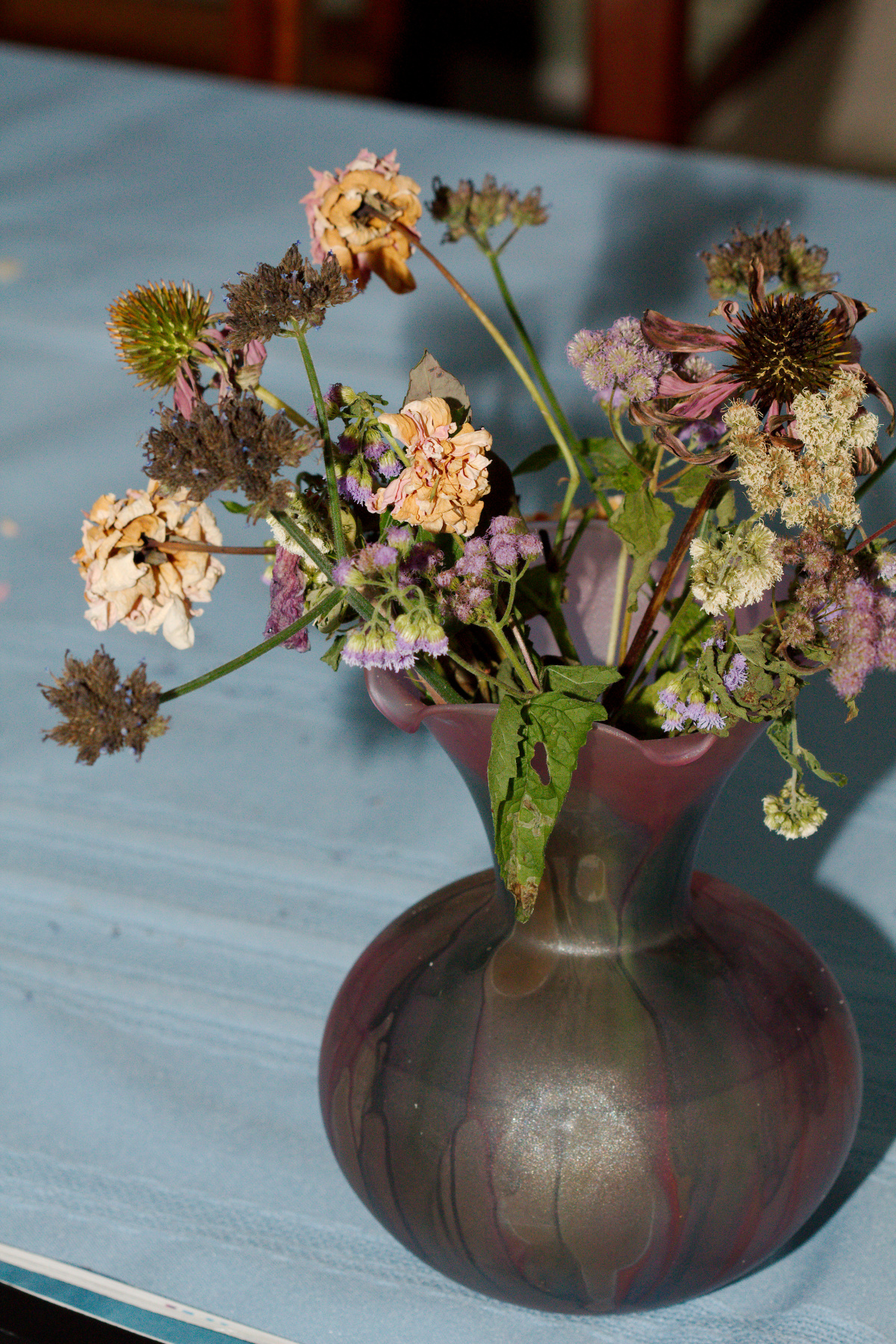
I’ve posted plenty of flower pictures here. Flowers are one of my favorite subjects, along with the critters that crawl on and fly around them. In 2010 I took a picture of some roses and other flowers in this vase that turned out to be one of the nicer pictures I’ve ever taken. It is certainly my favorite still life out of all that I’ve taken.
Today’s picture is of flowers that have been sitting a little too long. They looked very nice when they were put in this vase, but that was ten days ago. They still have a bit of color but have faded a bit. I probably should have worked harder to get a uniform background instead of having the far edge of the table in the frame. Still, I kind of like the composition and the blue tablecloth background with the faded pastels of the flowers. There are roses (the larger pink flowers), Verbina bonariensis (which have turned pretty completely brown), both white and purple Conoclinium coelestinum (which are mostly still white and purple), and two coneflowers (with their large, cone-like seed heads.
Eastern Tiger Swallowtail
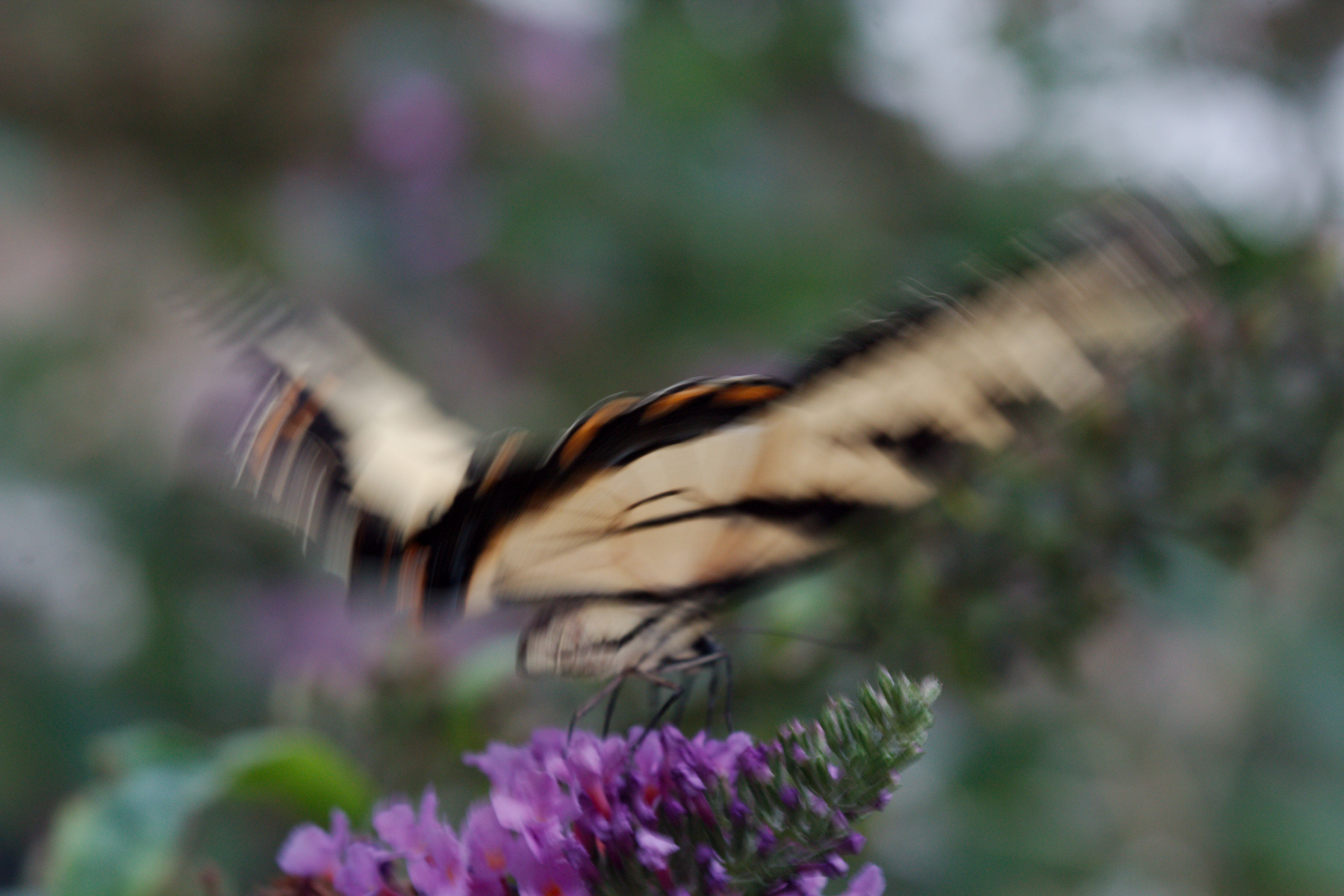
Mostly when I’m photographing insects, or animals of any kind, I’m mostly interested in getting a sharp image, in focus, without blurring from movement, with plenty of depth of field, etc. I don’t always achieve it, but that’s what I’m aiming for. Sort of the field-guide-type photograph. Something that will show you all the distinguishing features of the creature.
This time, though, I was trying to capture the essence of butterfly-ness and I think I’ve done a halfway decent job of it. If you’ve ever followed a butterfly from bush to bush, trying to get close enough for a picture, trying to get it at the right angle, with the sun behind you, without a lot of hard, man-made objects in the picture, you know how mobile they are. Their wings are often a blur, as they move around on an individual flower, to say nothing of when the take off and flit to another flower, just around the back of the bush and out of sight. This, I believe, is a lot of what it is to be a butterfly.
Mushrooms and Cabbage Whites
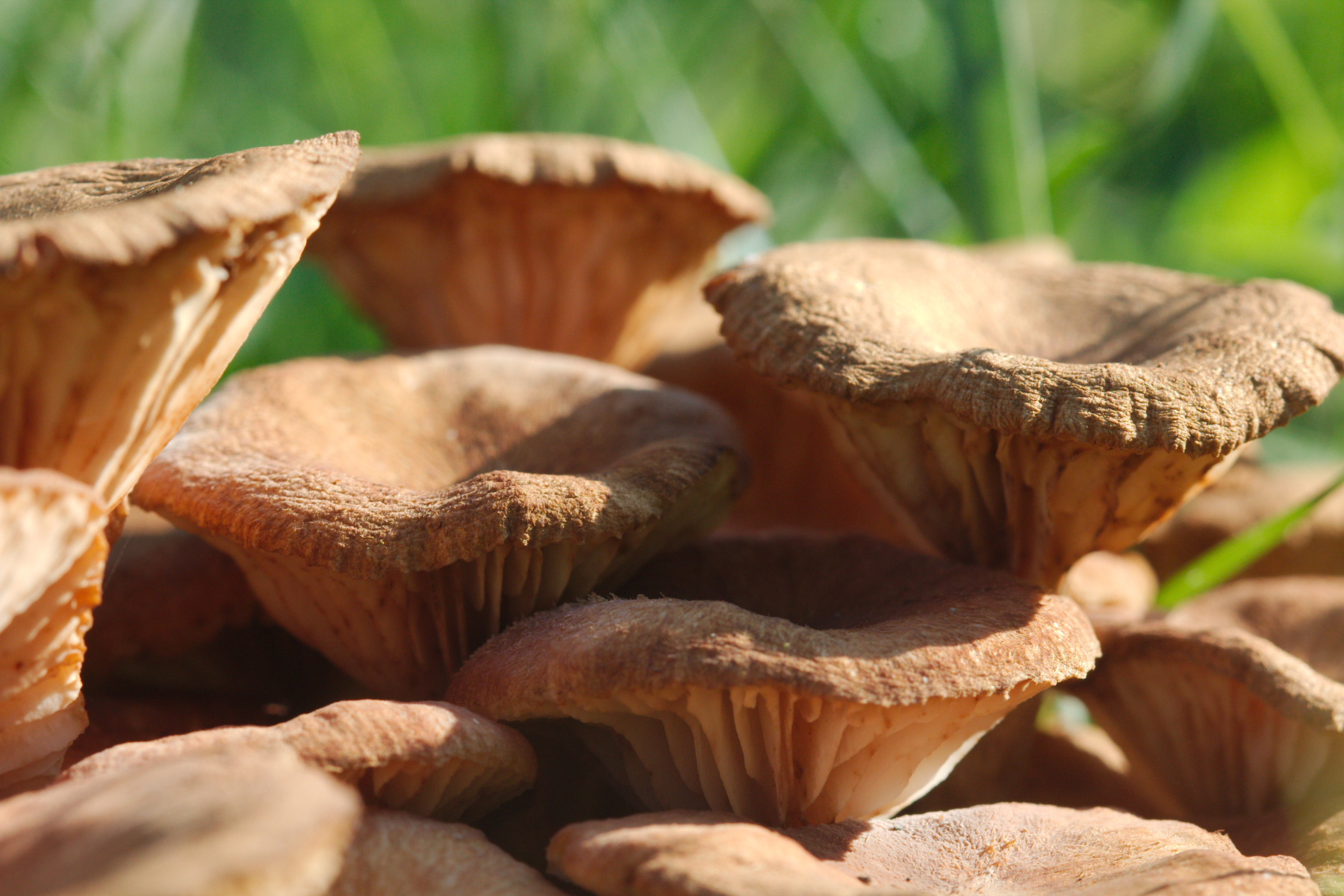
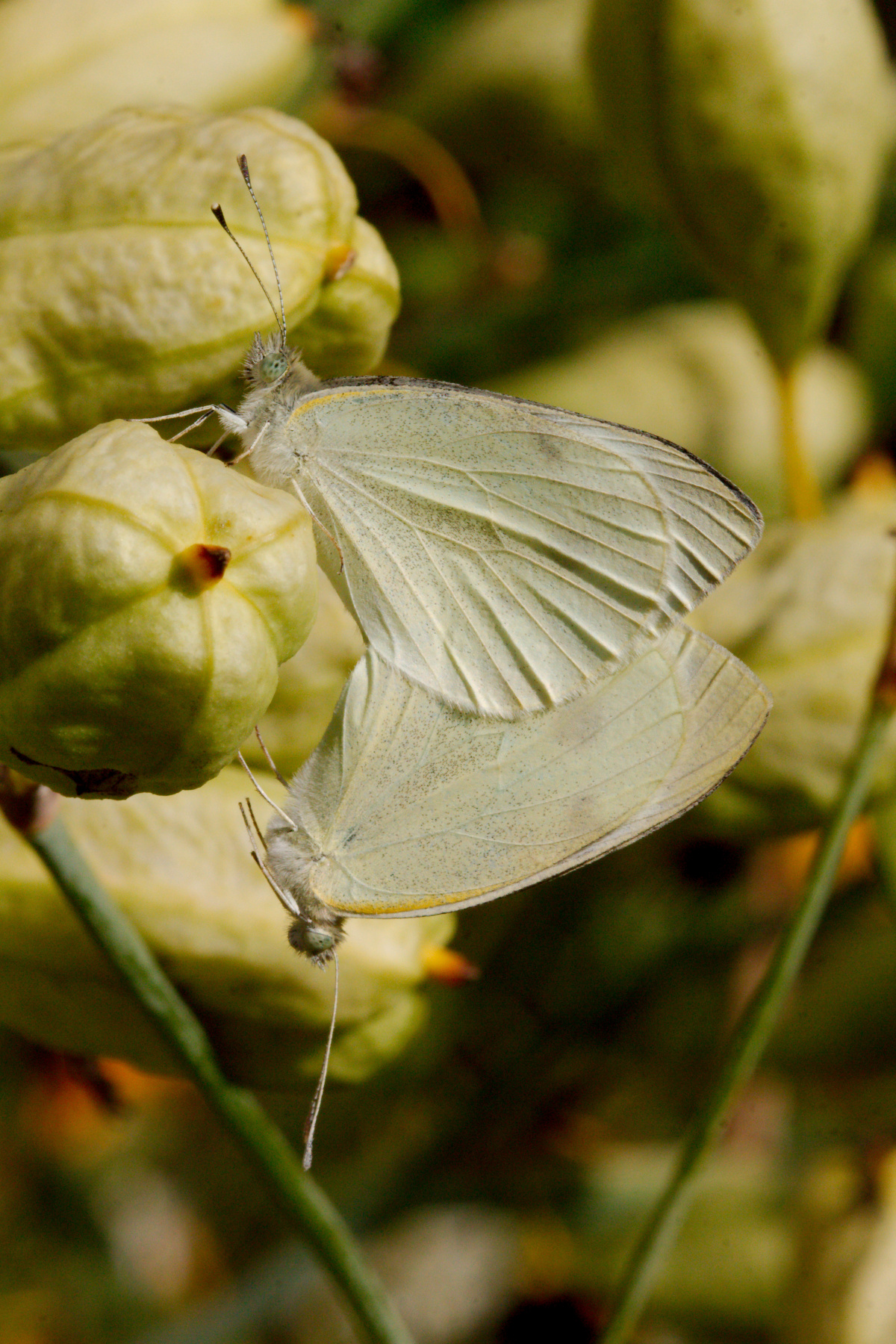
Two pictures today, unrelated except for the fact that they were both taken in our back yard. The first is of some mushrooms. We’ve had these for the last few summers and I assume they are growing on the rotting roots of the trees we’ve had in the back yard. We lost a pretty big tree in July of 2010, right in the middle of the back yard. That would have had roots spreading throughout the back yard and I’m pretty sure the mushrooms started to appear after that died. We’ve take out two more big trees, so I’m guessing we’ll have even more of these mushrooms over the next few years.
They come up overnight in little bunches and last a day or two at the most. Then they turn to a rotting mush, all filled with maggots, which is really quite disgusting. All part of the cycle though.
The second picture os of two cabbage white butterflies mating. What I find most interesting about this is that they can fly around, still connected tail to tail. I’m not sure if only one of them does the flying and the other just hangs on, or if they both contribute to the flying effort. This is a family blog, so I won’t ask any more questions or make any more comments.
Skipper on Black-eyed Susan
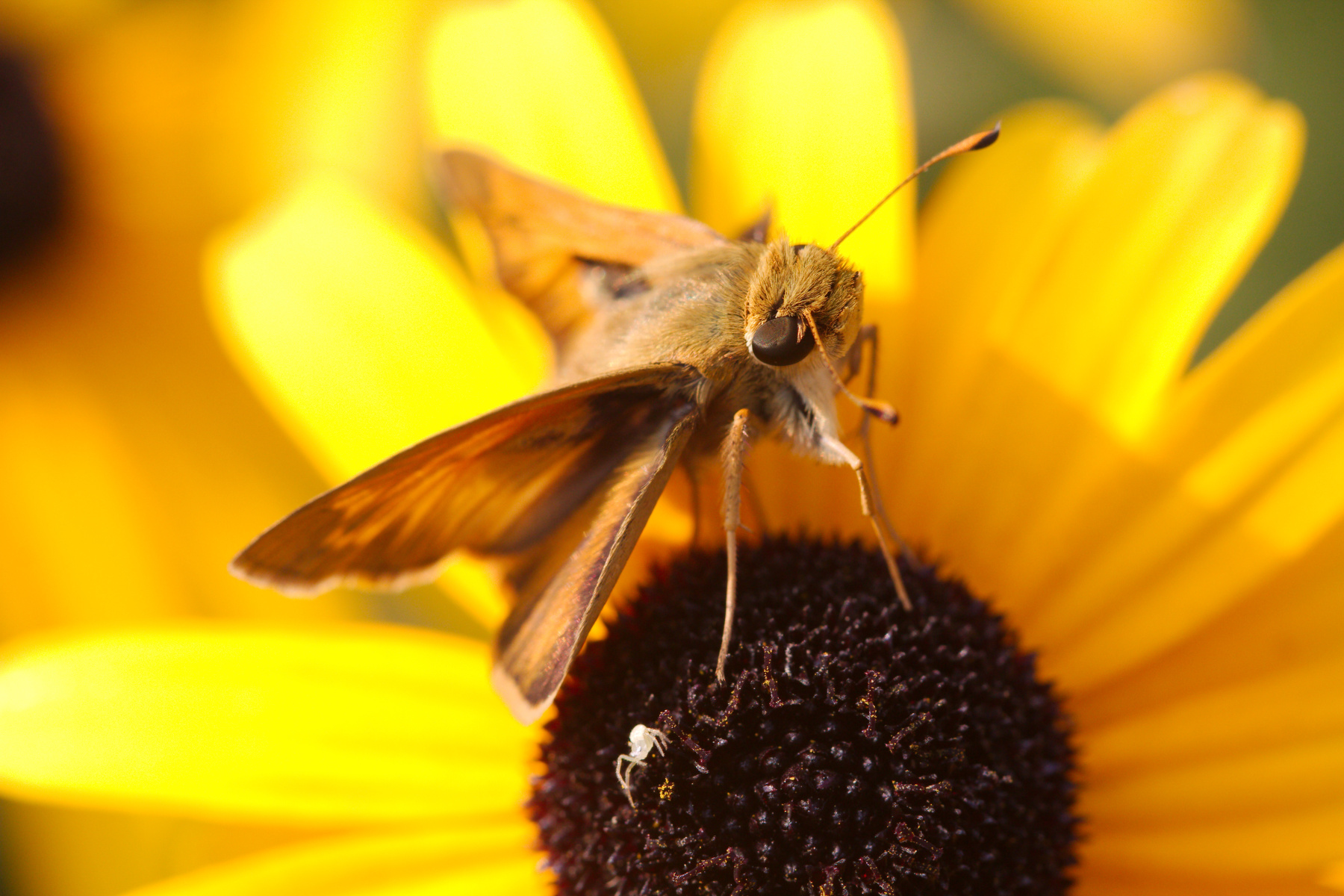
The black-eyed Susans in the back yard are past their prime but are still providing a good splash of color. They continue to be magnets for the skippers and the whites. I haven’t looked closely at this one to decide which skipper it is, of the many varieties that seem to be in such abundance. I like the hairy head and half folded wings as it perches lightly on the black-eyed Susan, basking in the late afternoon sun.
Nightshade Berries
Now that I’ve finished posting pictures from our two back to back vacations at the beach and England, I’ll be returning to the more mundane pictures taken in our back yard, etc. As you have long since learned, I’m sure, our lives are not particularly exciting. If you’re willing to stop by from time to time, I’m happy to have you.
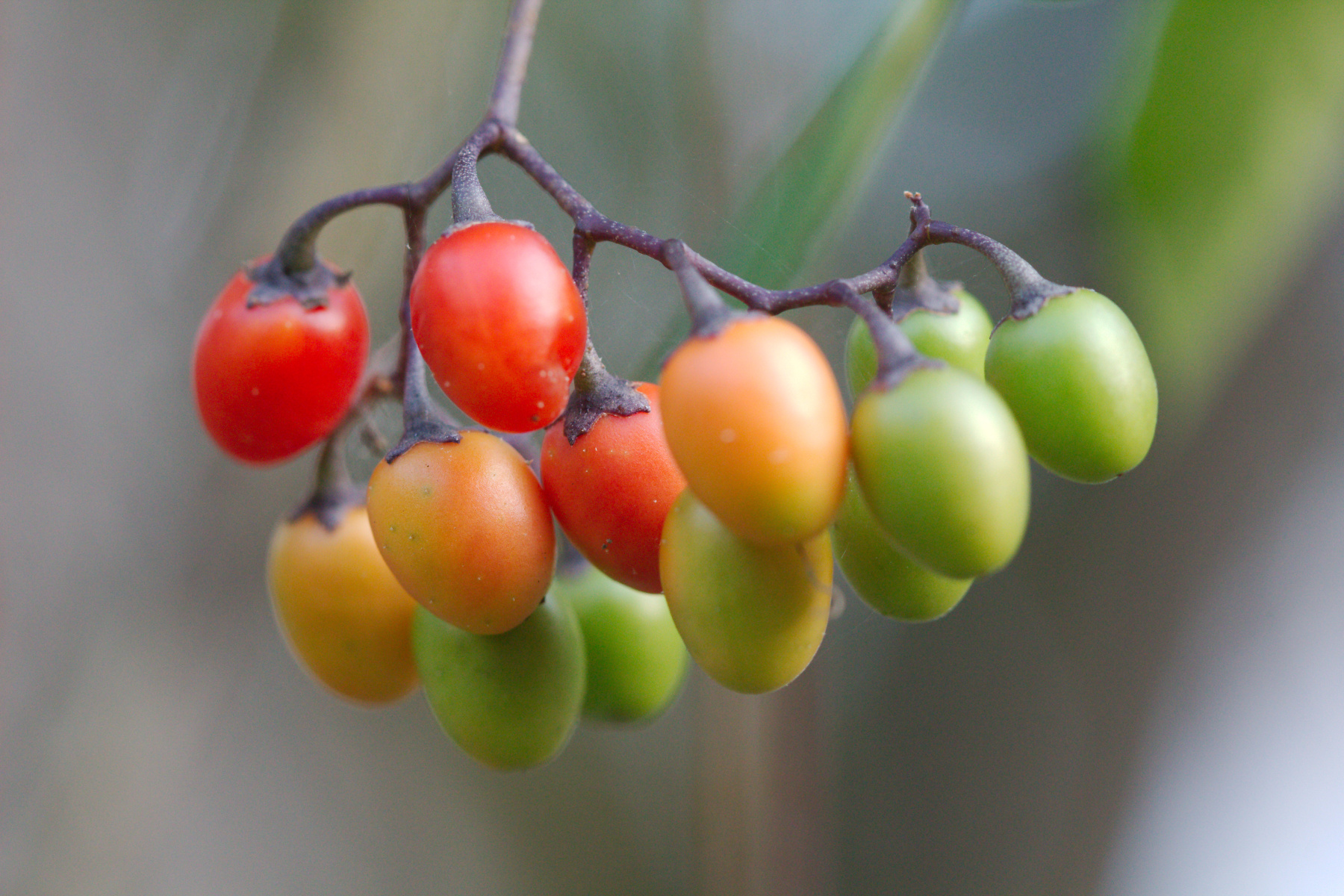
The picture today is of the berries of the bittersweet nightshade, Solanum dulcamara. If they look like little tomatoes, well they are in the same genus and fairly closely related to both tomatoes and potatoes.
Dionaea muscipula (Venus Flytrap)
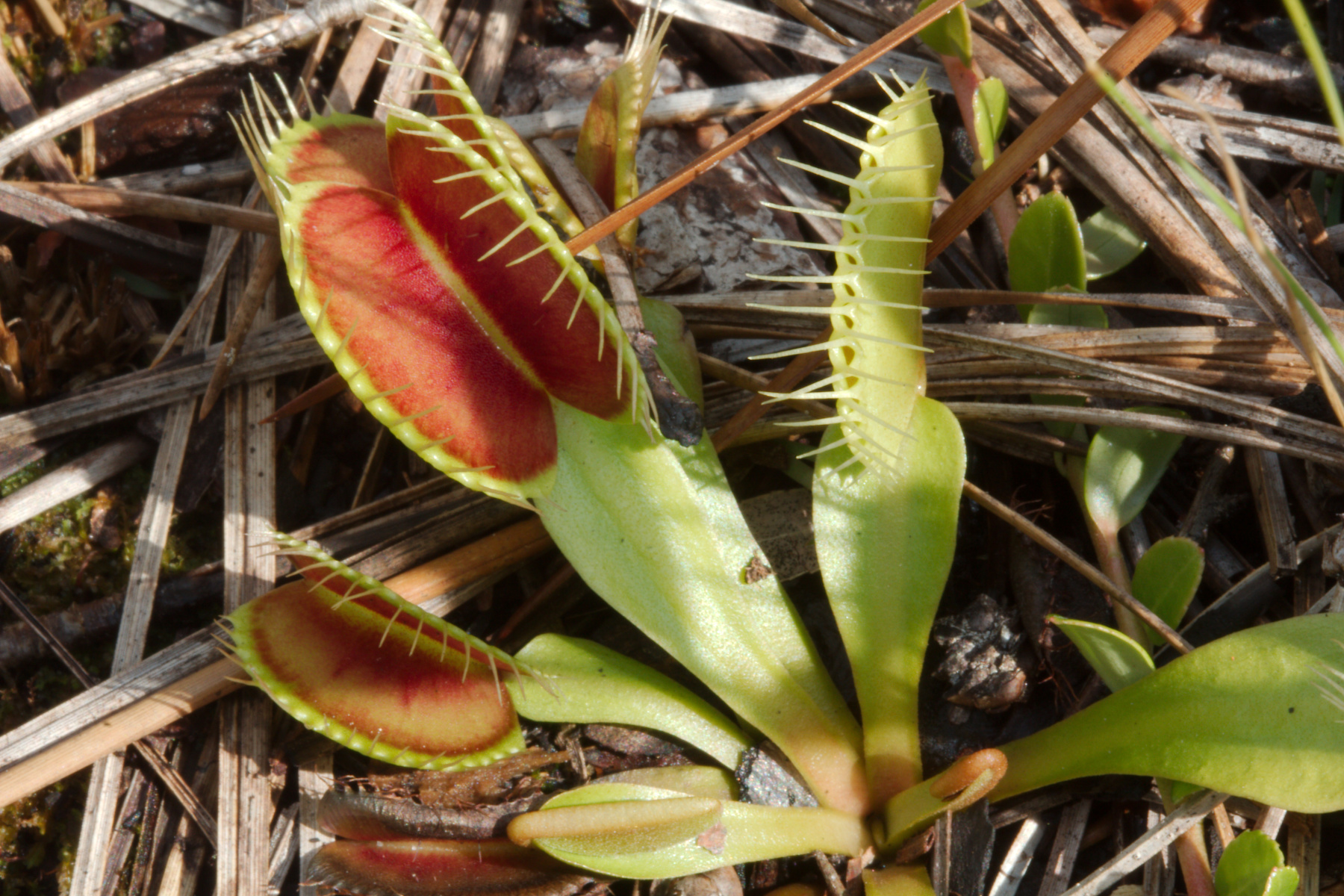
Here’s a second picture from July 30, again from the Green Swamp in southern North Carolina. The first year we visited we saw a lot of Venus flytraps. The second year it was very dry and we didn’t see any at all. Last year and this they were back in large numbers and we stopped to get a few new pictures. They are a bit hard to photograph, partly because they are so small.
Here you can see a few open “traps” as well as one that has closed, presumably on some prey.
Lilium catesbaei (Pine Lily)
For the last few years we’ve been making a trek to the Green Swamp when we’ve come to the beach. In the past it’s been very hot, usually in the upper 90s and very humid. This year was a bit different. It was still very humid but the temperature was somewhere in the mid 80s. Still hot and sticky but not nearly so oppressive. On the other hand, the mosquitoes were much worse this year than in the past.
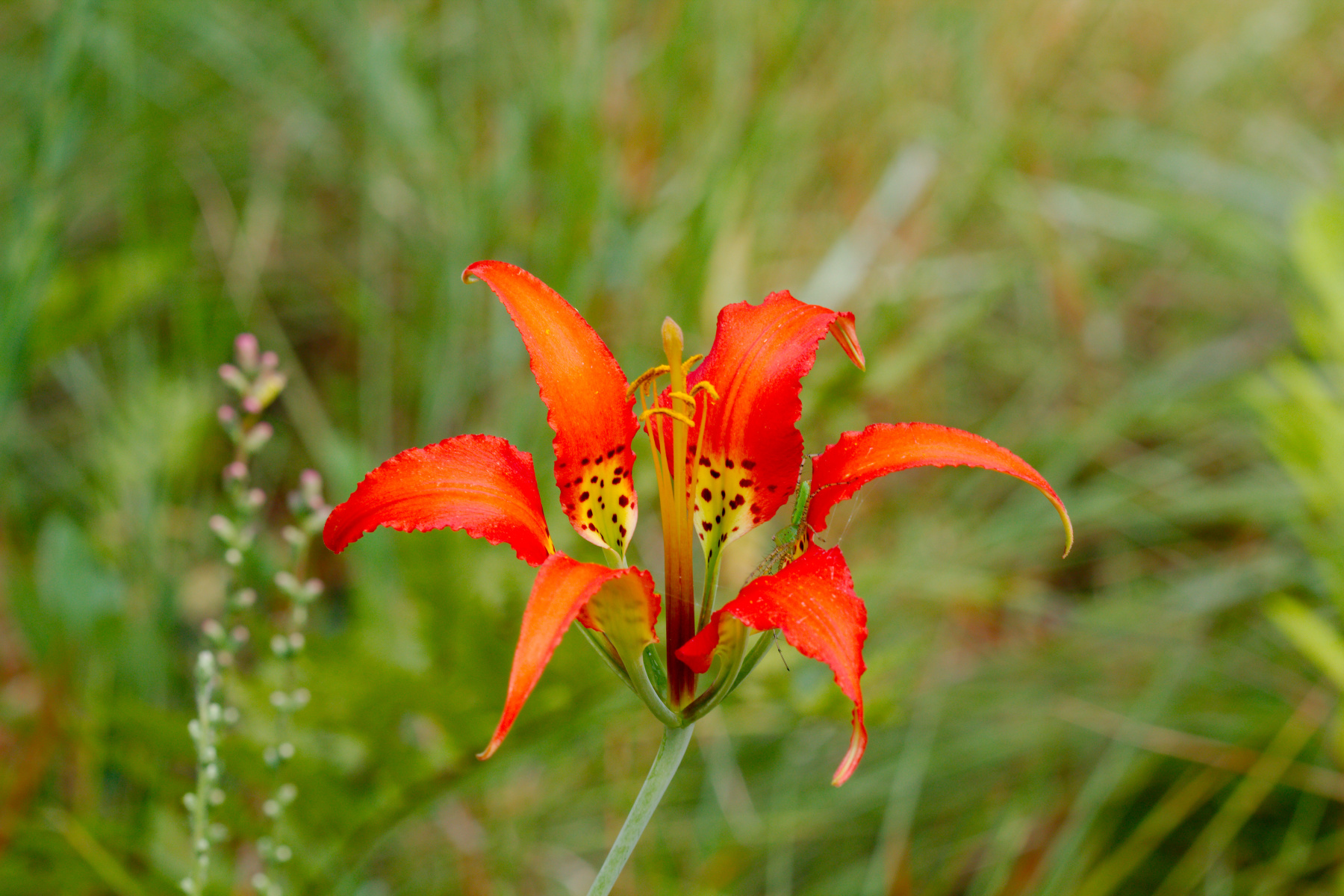
One flower we haven’t seen on prior visits is the pine lily, Lilium catesbaei. There were a few of them out, mostly finishing up their blooming period. This one still looked quite nice, though. They are very striking in a place where green is such a dominant color.
Bonus points for the spider in the picture. I didn’t see him when I took it.
Black-eyed Susans
Here’s another black-eyed Susan picture. They sure do well in our yard, and we might need to cut them back a bit after they finish blooming, so that they don’t take over completely. The black-eyed Susan is the state flower of Maryland, by the way and in case you didn’t know. A good choice, I think. There are a couple dozen Rudbeckia species and they are named after Olof Rudbeck the Younger (1660-1740) and his father, Olof Rudbeck the Elder (1630-1702), both professors of botany at Uppsala University. The name was given by Carolus Linnaeus, who was their student.
Tiger Swallowtail on Tiger Lily
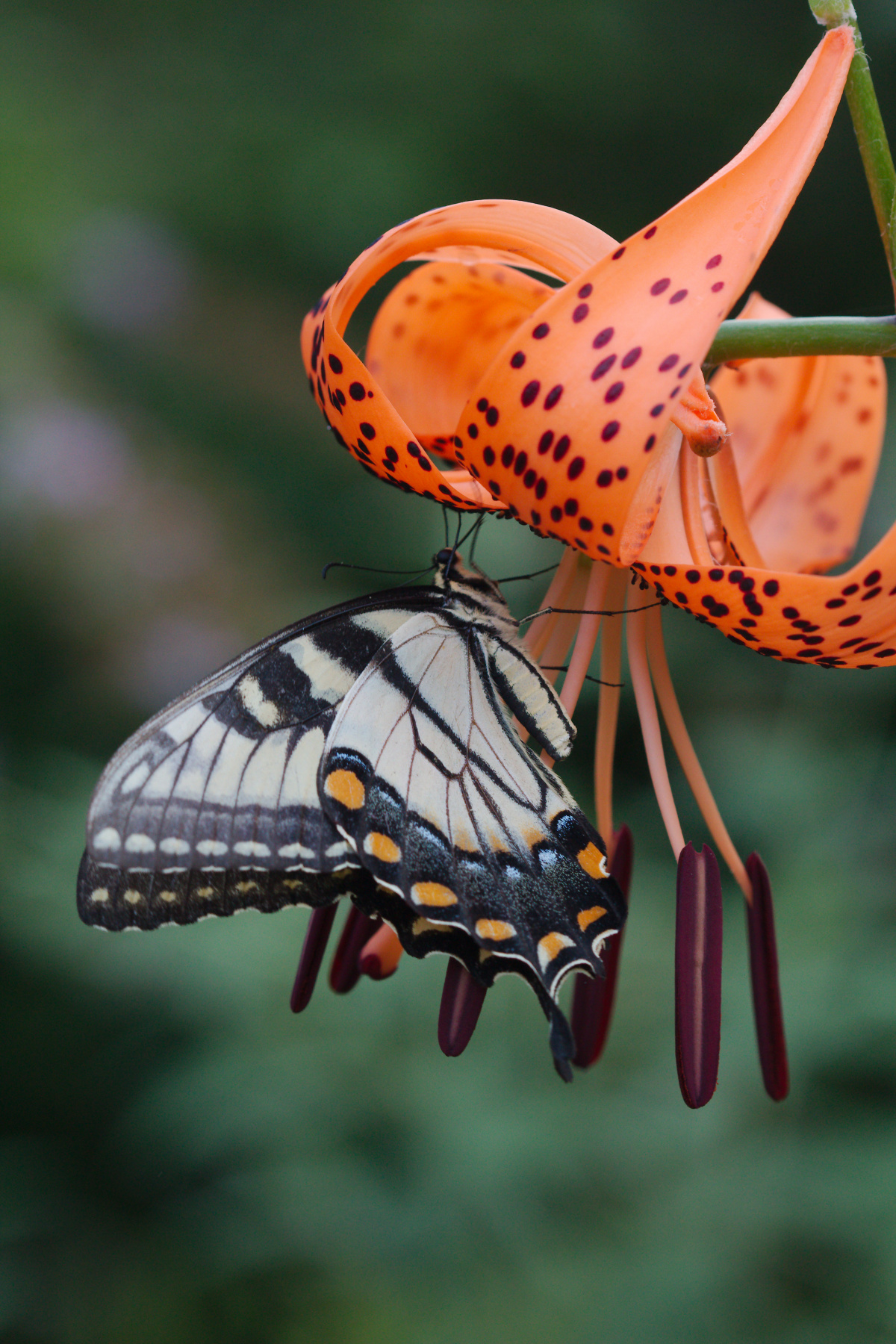
As I left for work this morning I saw this tiger swallowtail butterfly (Papilio glaucus) on a tiger lily (Lilium lancifolium). I didn’t think I could let that opportunity pass without at least trying to get a picture. I took quite a few, starting relatively far away and working in a bit closer as she didn’t fly off. I am pretty happy with a good number of the images.
She kept circling the flower and would occasionally open her wings, but most of the good pictures show her in profile, like this. I did get a couple that are mostly of the butterfly and don’t show the entire flower, but I thought I’d use this one here. A few were closer still and in them you can see the individual scales on the butterfly’s wing.
It’s turned quite hot the last day or three and I was glad to get my photo-taking out of the way in the morning. That way I didn’t have to do it later in the day or even when I got home. My car said it was 101°F at 5:30 PM.
Black-eyed Susan (Rudbeckia hirta)
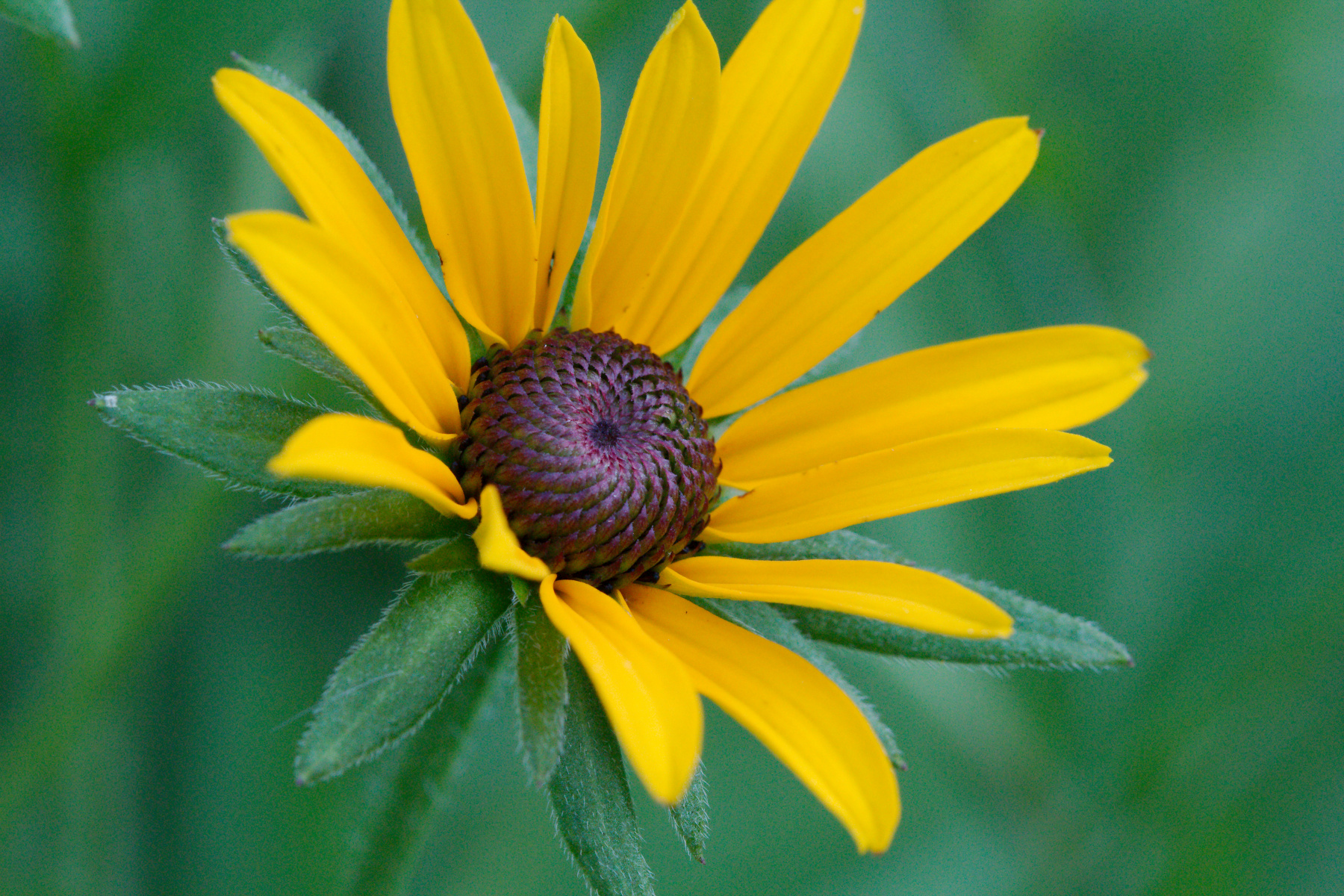
It was a long but somehow beautiful day to end a long week. We celebrated a life and we welcomed our Daughter home from her first foreign trip without us (a little tired but not too much the worse for wear). I took a few pictures in the yard, including a few of the black-eyed Susans (Rudbeckia hirta) which are coming into their own, blooming profusely.
My camera doesn’t handle white balance very well in a picture like this, with so much bright yellow. I really need to find my neutral grey card so I can take a reading and set the white balance properly. This looks about right, though.
Lilium ‘Stargazer’ (The Stargazer Lily)
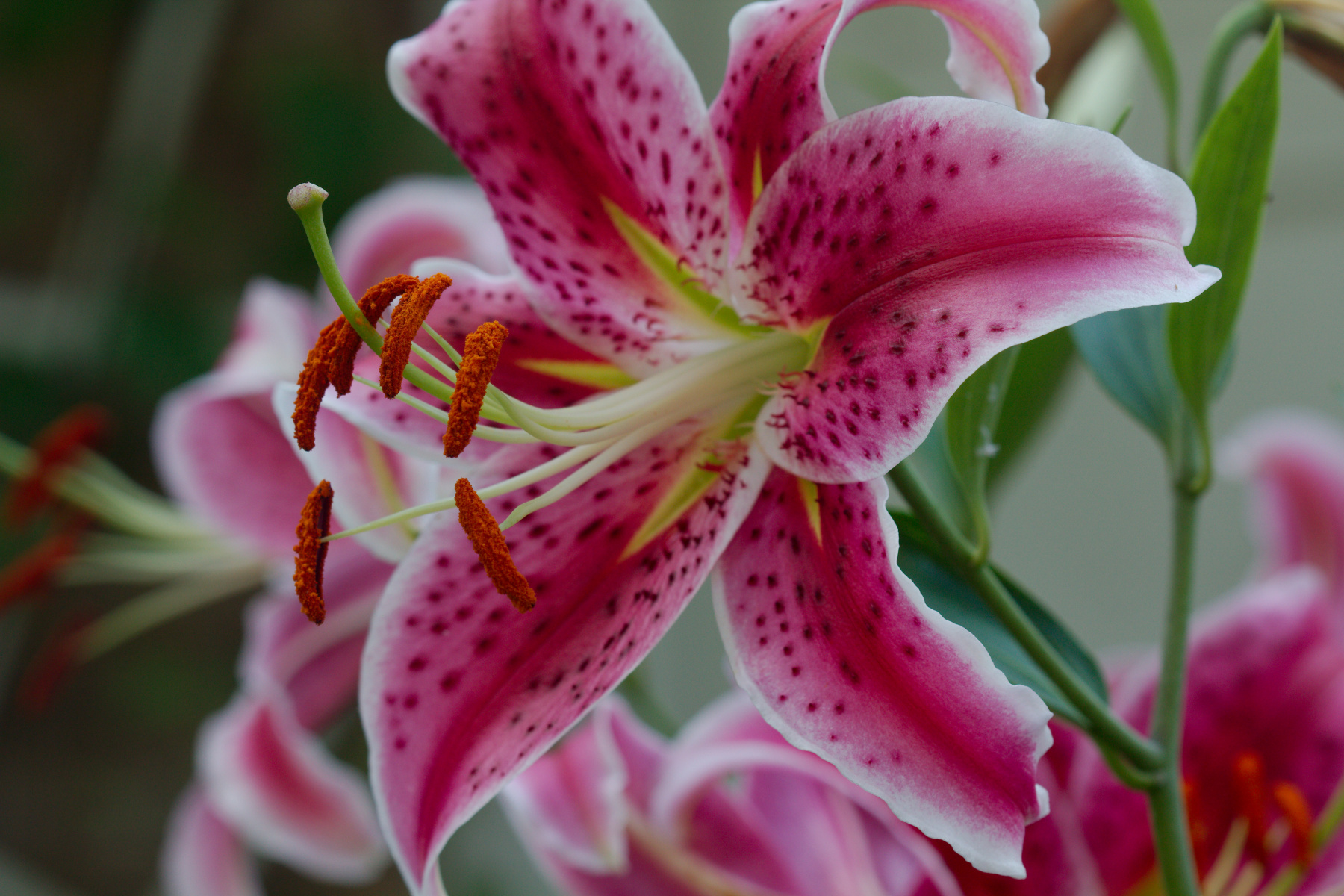
We have day lilies (Hemerocallis), tiger lilies (Lilium lancifolium), and a few Asiatic lilies in our yard and they are all beautiful in their way. They are mostly orange, although we have a few yellow day lilies. Although they were formerly considered to be in the same family as lilies, day lilies are not even in the same order any more. Anyway, I group them together in my mind, because they have somewhat similar flowers and of course the names are a link.
This flower, though, stands alone (in our yard, anyway). It is so different in terms of color that it seems less like the other true lilies than do the day lilies. It’s currently growing in a pot but we’ll be planting it when we get a chance. At least that’s the theory. We really need a small patch of these, not just one, but one thing at a time.
Dark Orange Day Lily
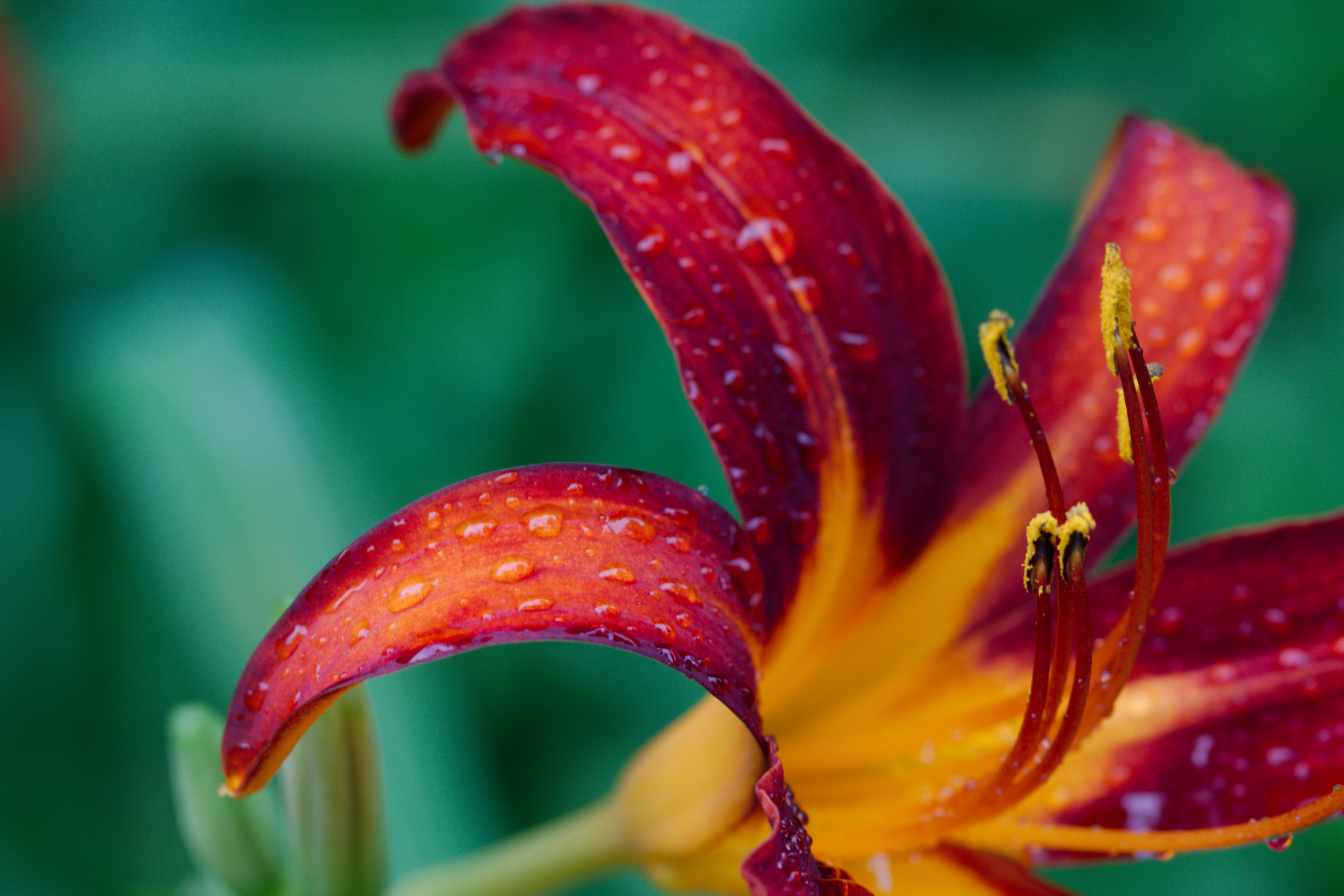
It was a beautiful rainy day today, considerably cooler although still fairly muggy. I was sort of busy at work so I didn’t get out. When I got home I took a picture I’ve been meaning to take for a while. I like day lilies in all their forms but I think this is one of my very favorites. I really love the deep orange, which is much more striking then the plain bright orange of the “standard” variety. The droplets of water on the petals are a small bonus.
Thelesperma Flowers
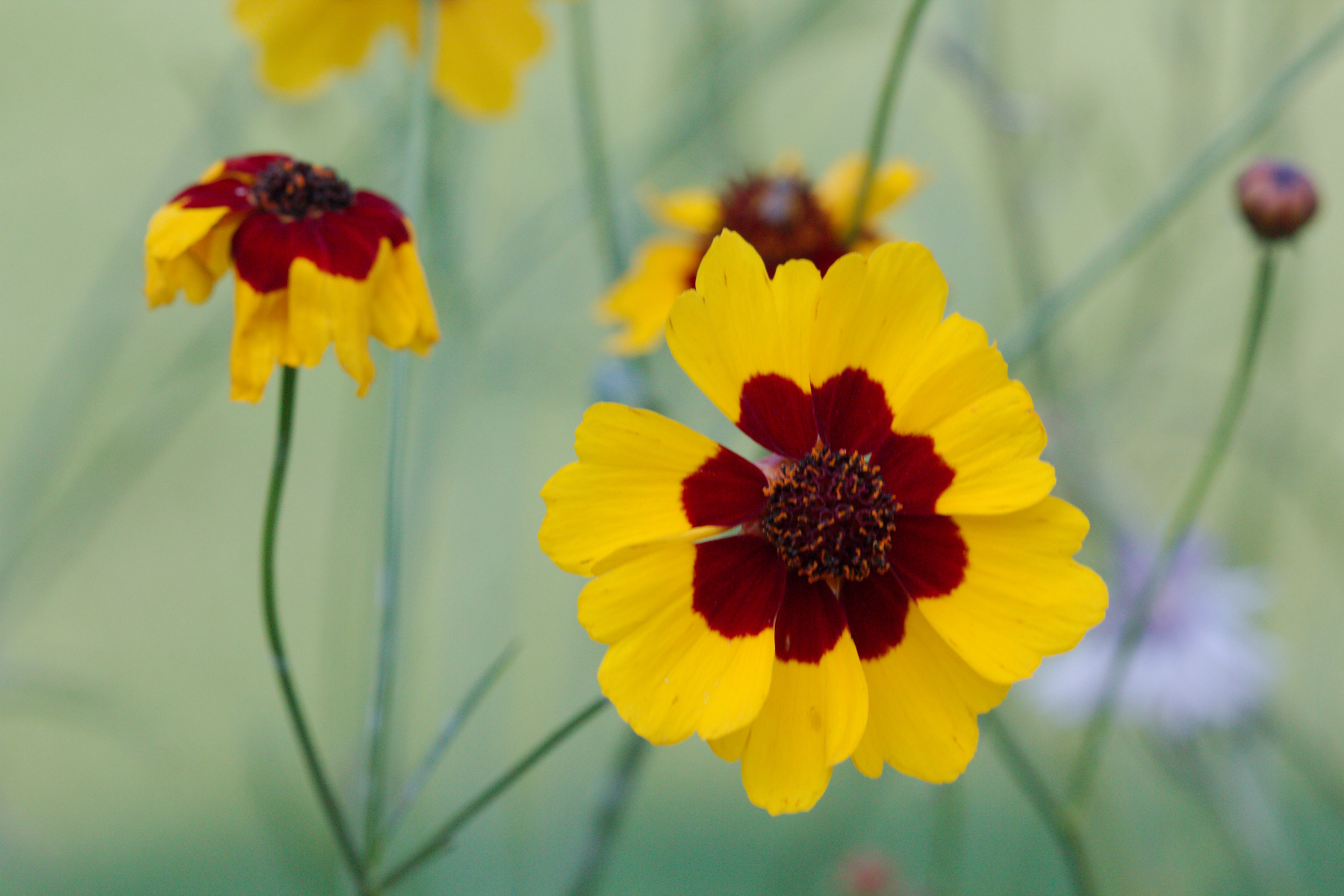
I didn’t take a lot of pictures today but did get out into the back garden of some friends. This is a Thelesperma, probably T. filifolium (stiff greenthread) growing there. It is a close relative to Coreopsis. In fact, until recently it was considered to be part of that genus. To be honest (hey, why not), I’m not completely sure this isn’t a Coreopsis, but I think I have it labeled right. Anyway, it is a nice bi-colored hybrid and I like the airiness of the photograph.
Sphinx Moth
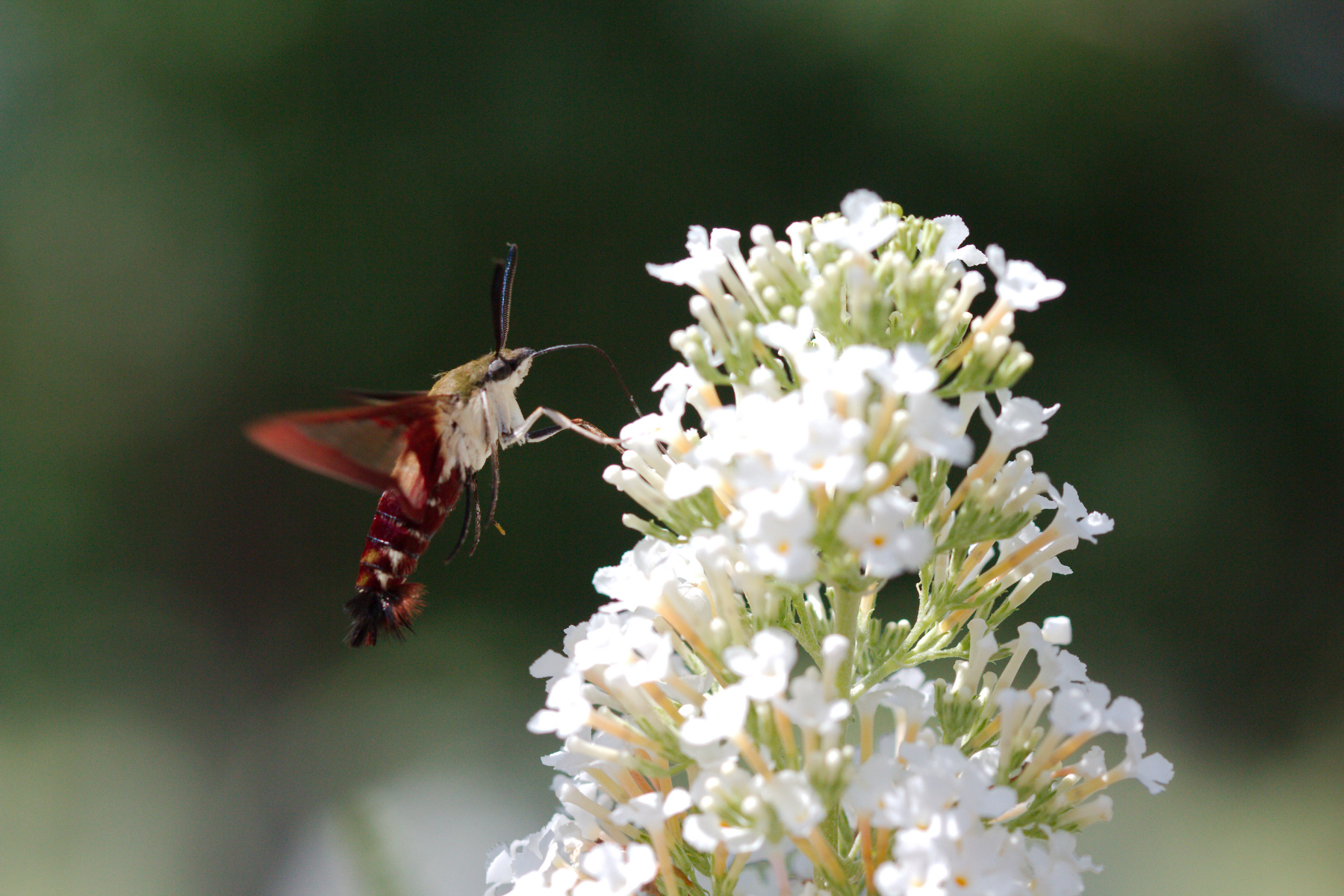
Cathy and I went to Stadler Nursery after church today. While she shopped for a few things, I browsed with my camera, taking pictures of a few flowers that I liked. At the end of one of the tables was this white buddleia and flying around the flowers sipping their nectar, was a sphinx moth. Of the 124 described species found in America north of Mexico, I believe this is Hemaris diffinis, the snowberry clearwing.
I took quite a few blurry pictures but did get a few that are pretty decent, of which this one is the best. While I was watching, the moth never landed once. Taking a photo of a flying insect is a real challenge and you have to be prepared to end up with a lot more wasted shots than anything else.
Bumble Bee on Coneflower
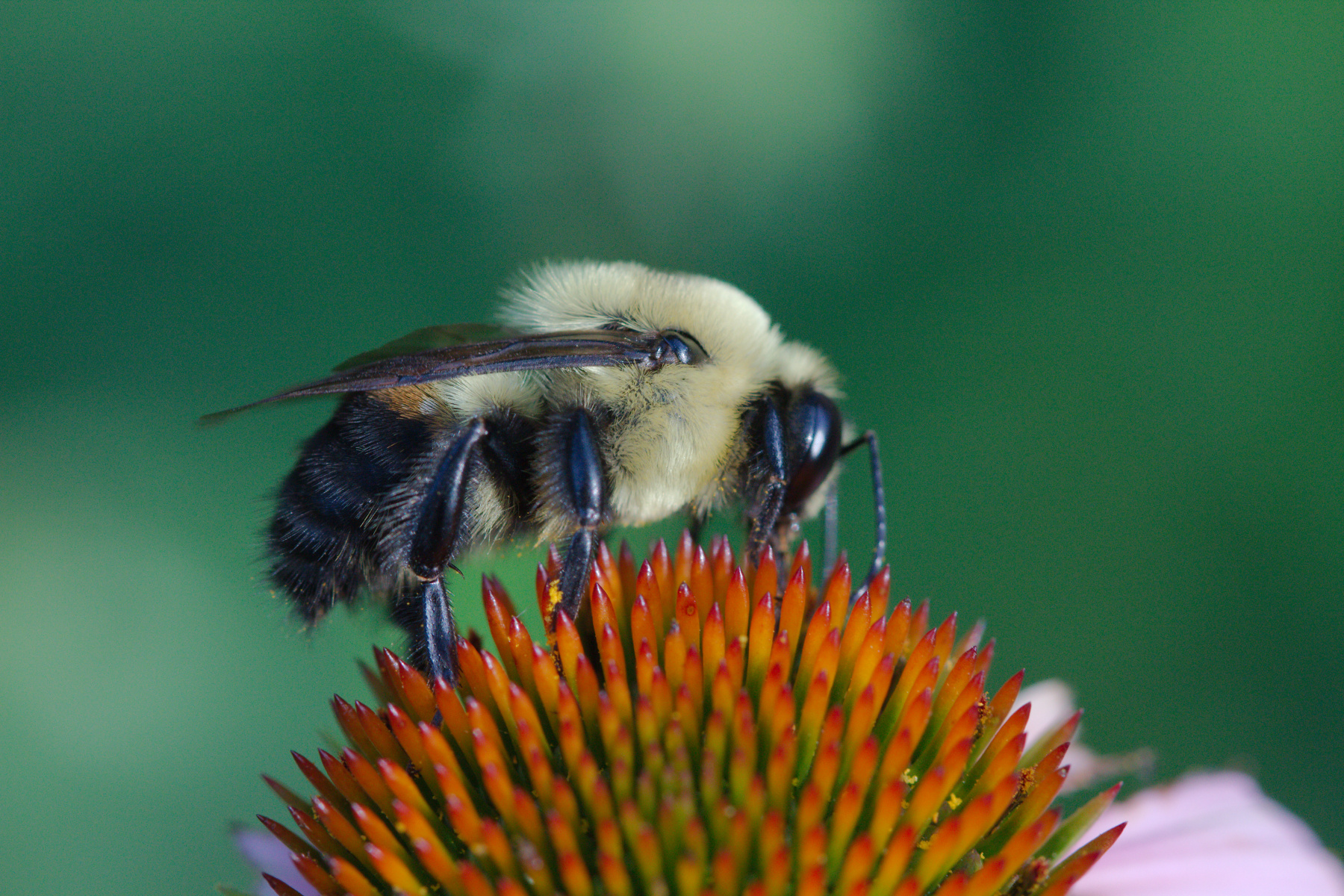
Three days out of four with more than one photo posted. Don’t you feel privileged? Okay, perhaps not. In any case, here is a third picture for today. In addition to going out for a late lunch of raspberries and photographing a tiny fly, I went into the back yard when I got home and photographed bumble bees. They are going crazy on the gooseneck loosestrife (Lysimachia clethroides) and the purple coneflower (Echinacea purpurea). I’m pretty happy with this picture, although I think a smaller aperture would be better. The depth of field is just short of what I would like. This was taken with the ISO set to 800 with an exposure of 1/125 sec. at f/5.7.
Wild Raspberries
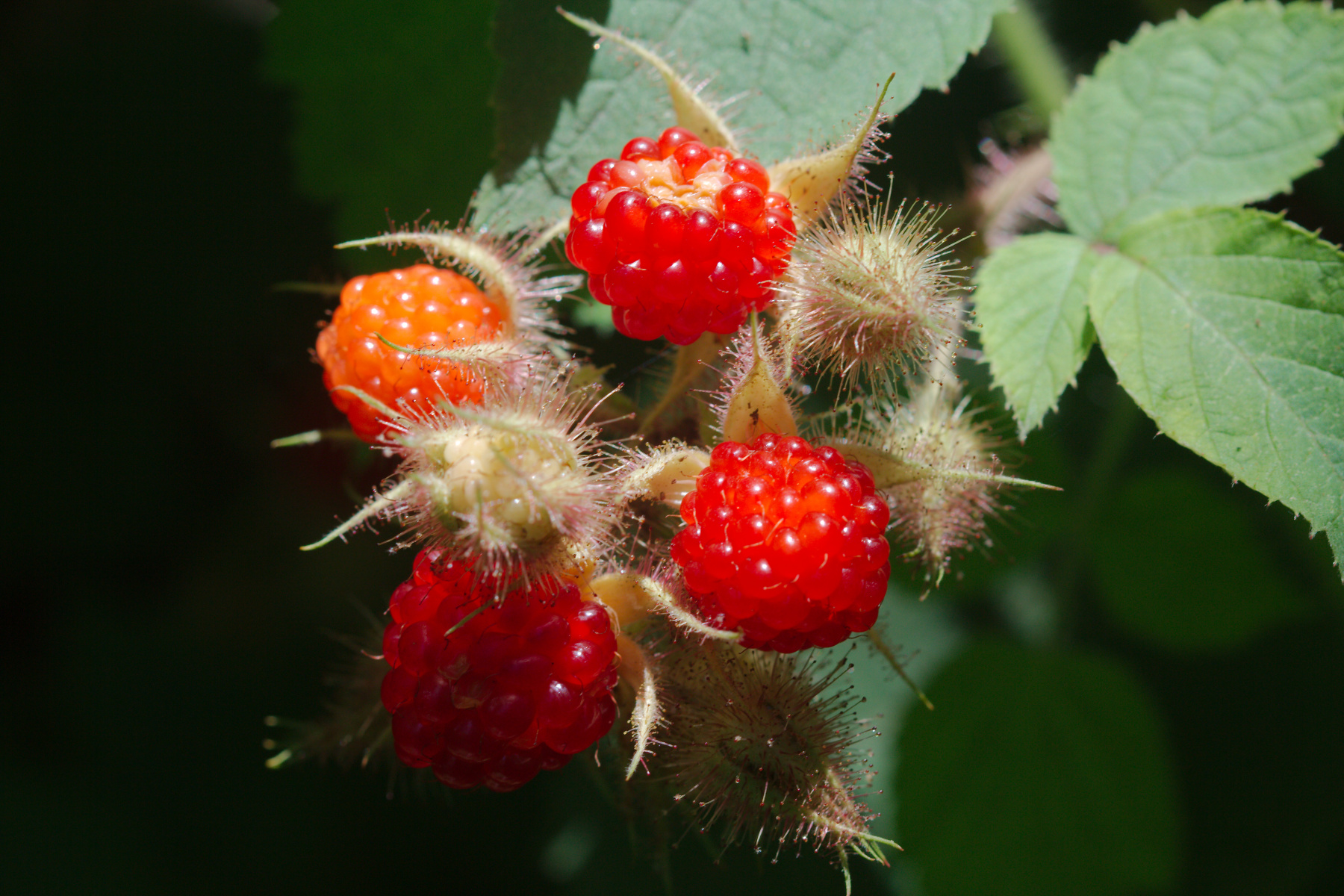
I found a great patch of wild raspberries today and enjoyed about a pint of them before moving on. It’s all I had for lunch today, but it was a pretty sweet lunch. I think I’ll come back with a container and collect more in the next couple of days.
You’ll forgive me if I don’t mention where this patch happens to be located. There are a lot of berries but not enough, I’m sorry to say, to share with too many others. I’ll be watching to see if I’m followed.
Monarda (Bergamot)
The bergamot flowers in our back garden provide a nice splash of red that’s quite obvious from the house. As you get closer you might notice a small swarm of tiny flies around them. The flies land on the flowers occasionally but are easier to see when they land on the leaves. Even then, it’s hard to get close enough to capture them very well. In addition to insect pictures, I also took a few of the flower parts. The cluster of flowers in the bergamot (Monarda) head blooms over time. In this picture, the flowers in the center are finished and the flowers around the rim, with their bright red petals, are in bloom.