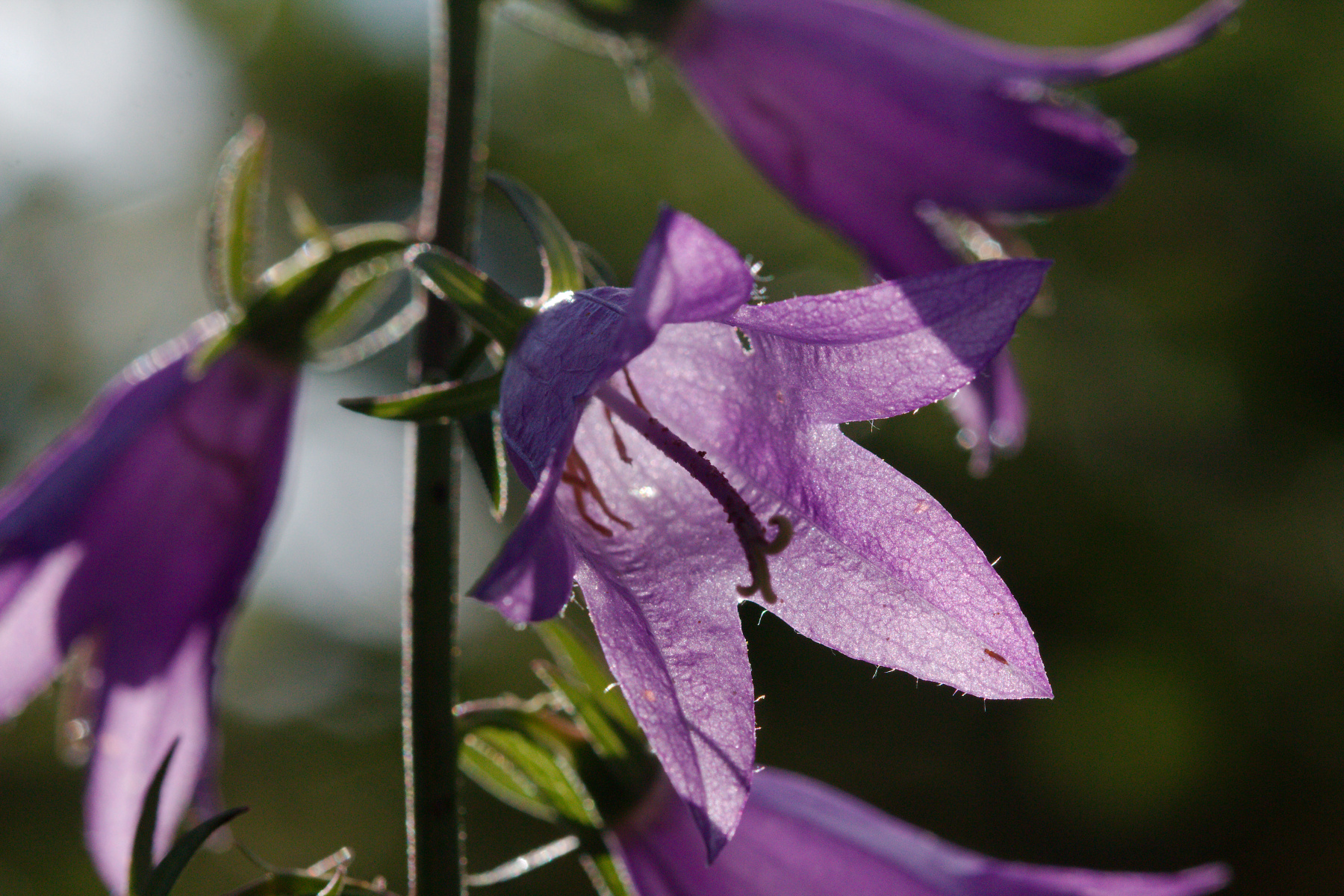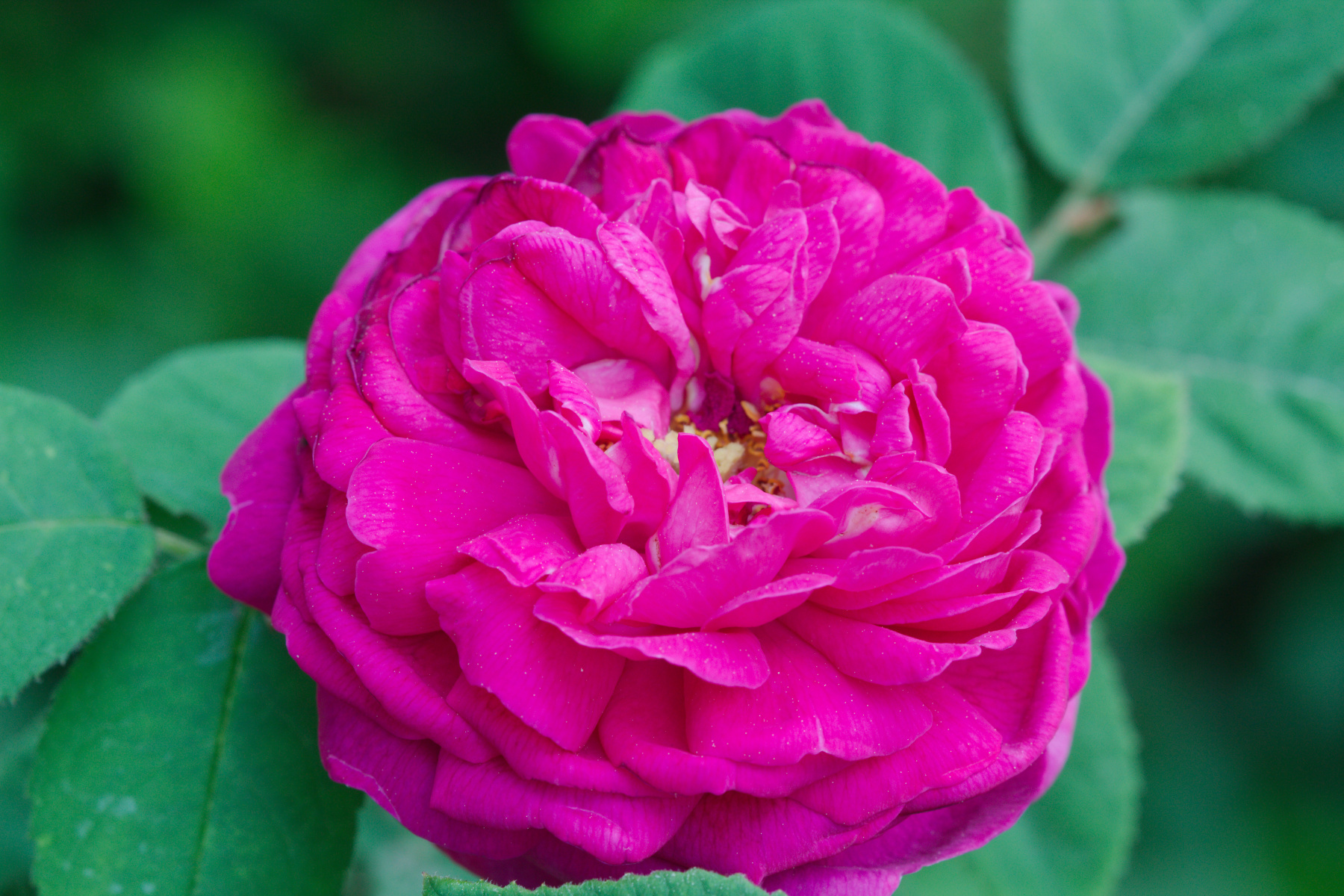
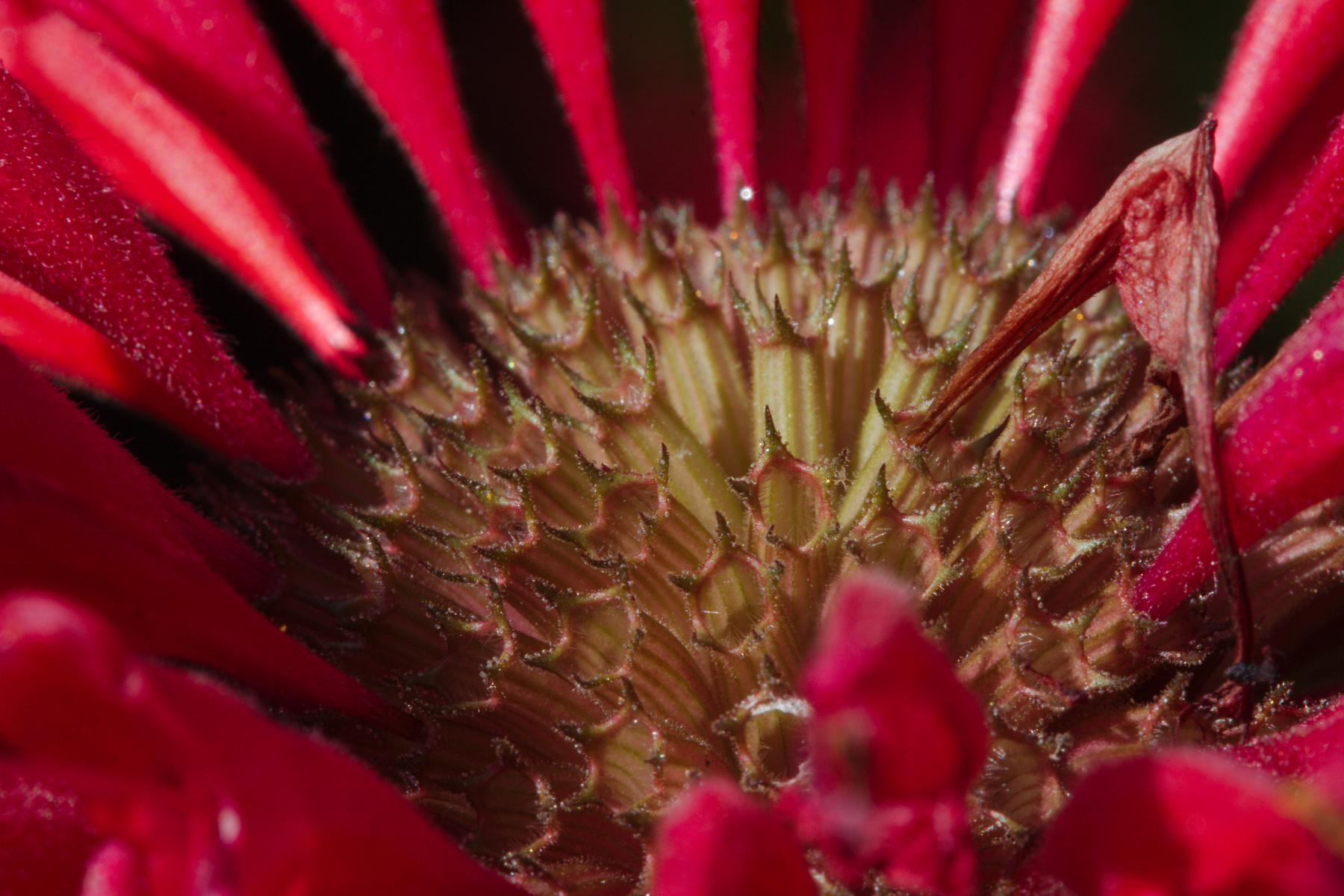
More insect pictures today, but I think this one of Campanula flowers is nicer and we haven’t had as many flowers lately. I got more pictures of the green blow fly but nothing significantly better than what I’ve already posted. I also took some pictures of a small spider of unknown type. I think it might be a lynx spider of the species Oxyopes aglossus, but the picture wasn’t really good enough to be sure. Anyway, this is a nice picture of a pretty little flower, don’t you think?
Flowers and Plants
Hemerocallis
It was quite warm today, around 95°F (35°C) but thanks to modern technology, specifically air conditioning, we can remain in cool comfort when needed. When I got home, however, I went out back to see what critters were about. I’ll post an insect photo separately.
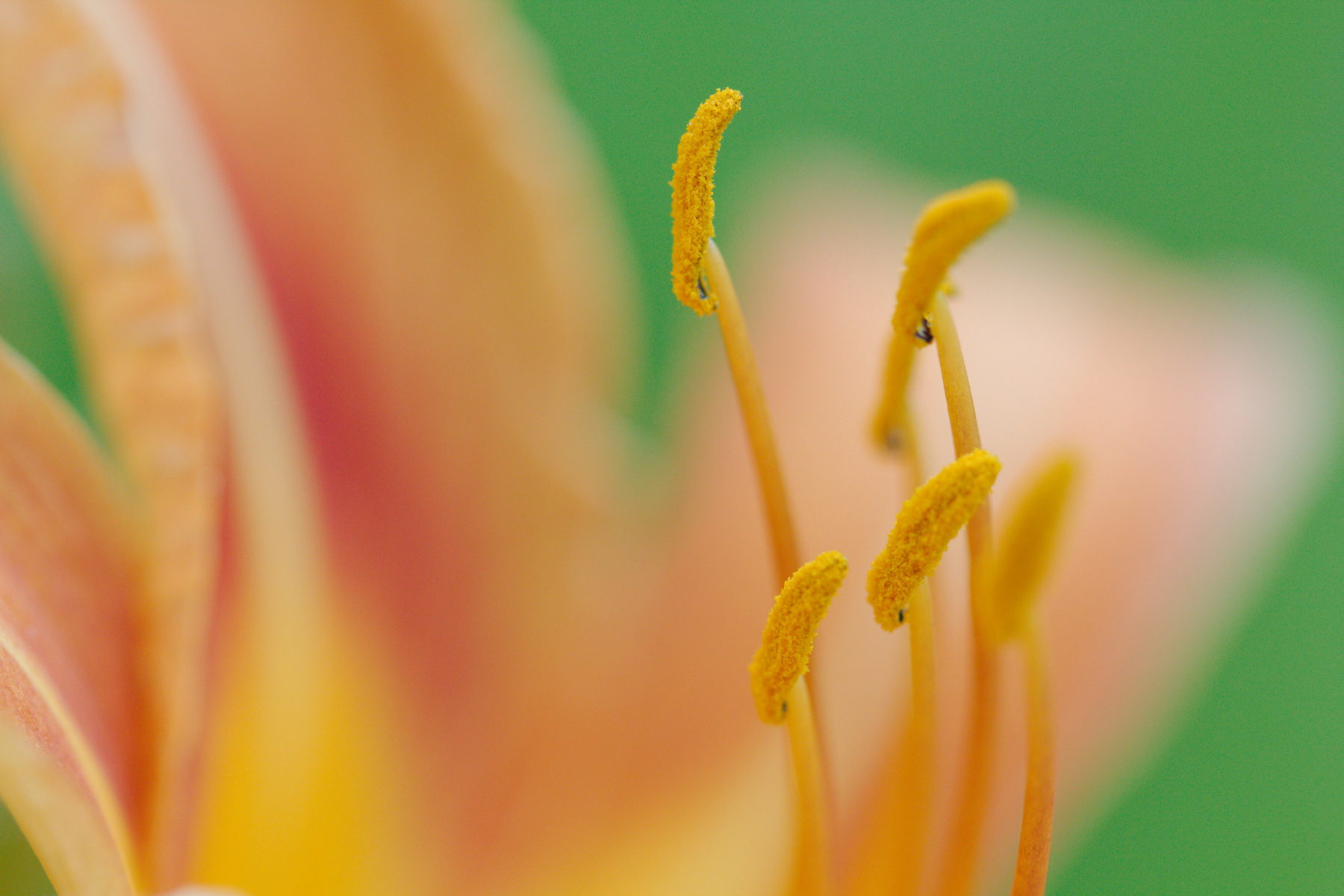
The smaller day lilies have been blooming for some little while now but the larger varieties are just getting started. This is a semi-abstract image of one of them. Hemerocallis combines two Greek words which mean “day” and “beautiful” alluding to the fact that the flowers, which are quite beautiful, last but a single day.
Hardy Gardenia
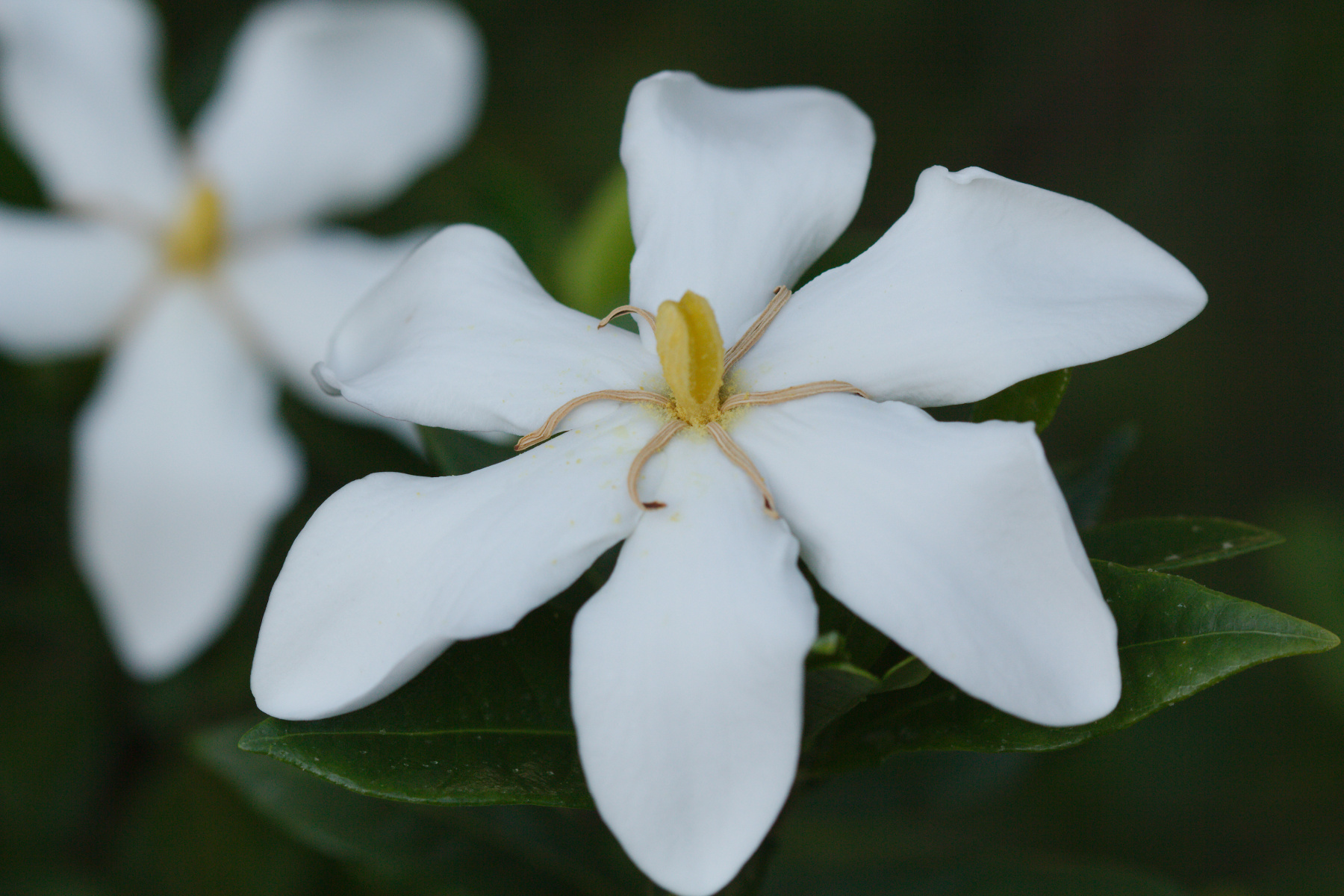
Dorothy spent the afternoon at her grandma’s house today, doing some of her summer reading (Brave New World) and getting some rest after a week at camp. When I went to pick her up in the evening I took a few pictures of the hardy gardenia growing in mom’s front yard. I wish I could have recorded the fragrance for you. It can be almost overpowering but it’s such a lovely smell that it’s hard to care. I brought a few home and put them in the kitchen and we’ve been enjoying them here.
Echinacea purpurea ‘PowWow White’
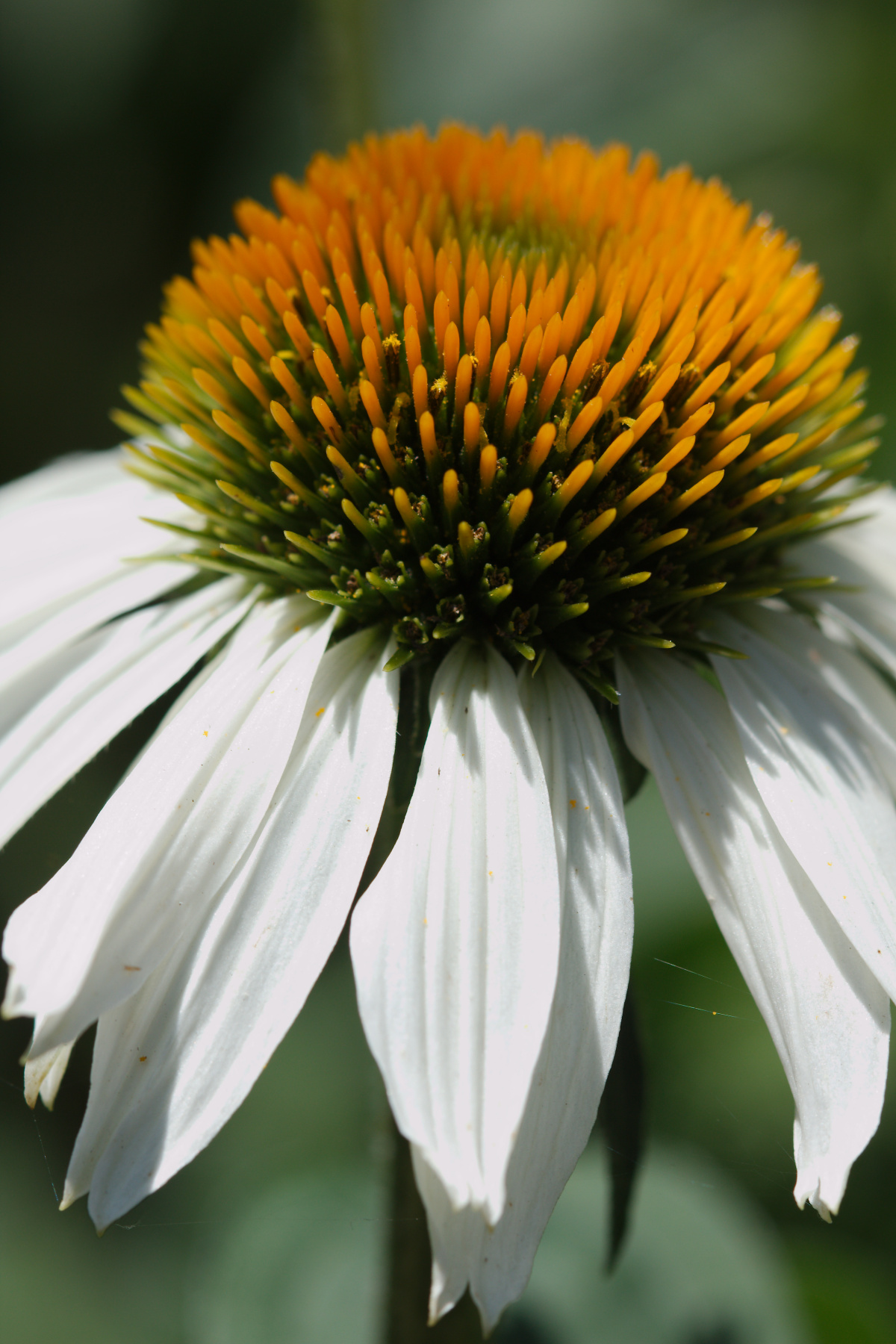
I did take some more pictures of bees today but they are enough like yesterday’s picture that I won’t bore you with them. We happened to stop at the American Plant Food garden center on River Road today. While Cathy shopped, I took a few pictures, both of bees and of flowers (and sometimes both, obviously). This is a coneflower that, despite it’s specific name, is not purple. At the variety name indicates, it’s white. I do like coneflowers.
Their generic name, Echinacea comes from the Greek word meaning “sea urchin,” from the appearance of the center of the flower. What you might consider to be their petals are actually bracts surrounding the compound flower or inflorescence. The bracts tend to get chewed up a bit by insects so it’s sometimes hard to find particularly photogenic examples. This one, however, is quite nice and I very much like the pure white bracts.
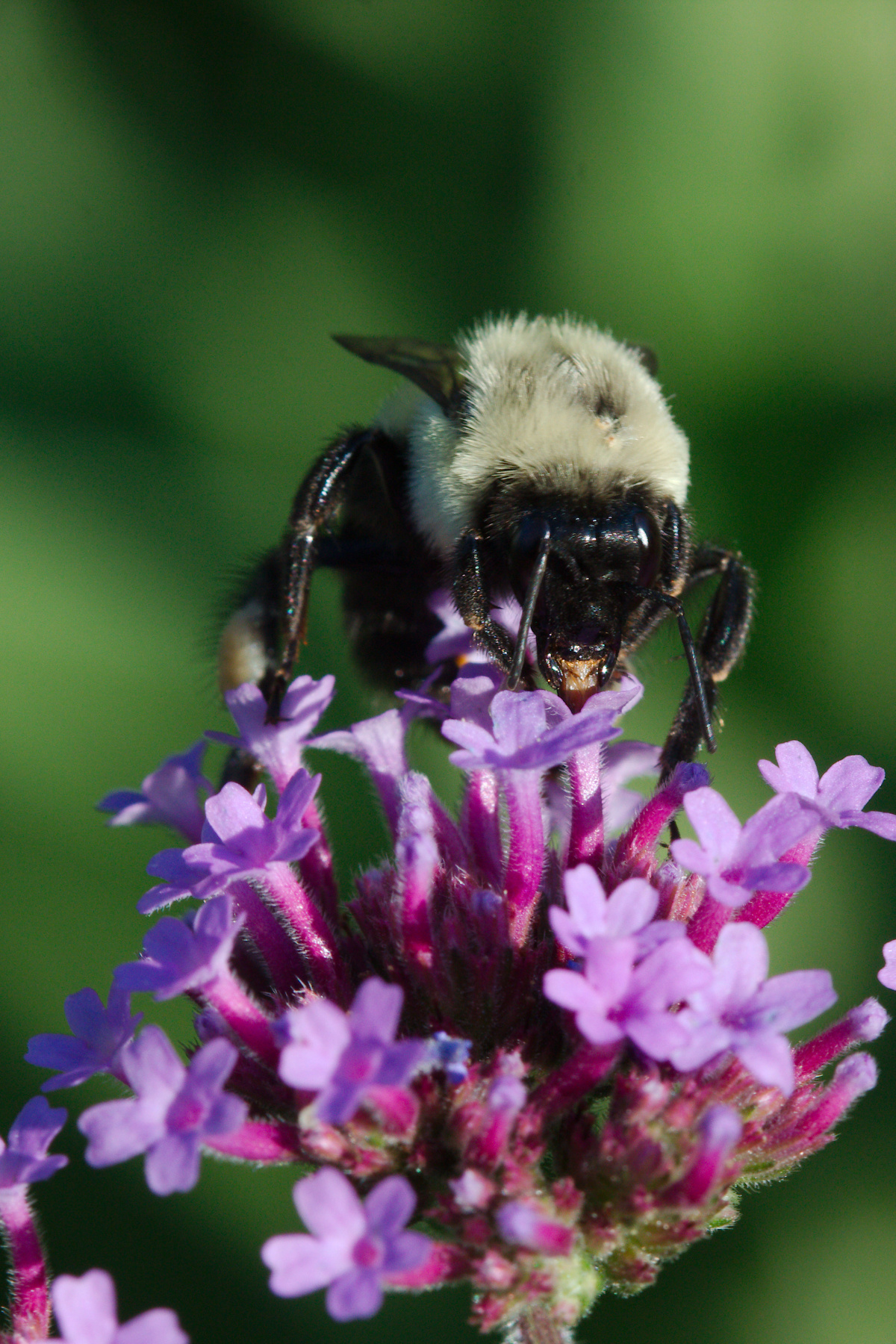
Bumble Bee on Purple-top Vervain
More insect pictures today. It’s starting to be bug time. Most of the bees I’ve been seeing are bumble bees (Bombus sp.). There are a lot of them on the gooseneck loosestrife (Lysimachia clethroides) but this photo is of one on the purple-top vervain (Verbena bonariensis), growing in the middle of our back yard. It used to be in the bed around two trees but the trees are gone now and we’ll see how it does with the extra sun.
Actually, as I look out back now, I see the curved outlines of that bed and think it might be just about the right shape and size for a significant water feature — part pond and part bog garden. That’s not going to happen before fall, but it might happen eventually. I’ll probably want to wait a year for the major roots to rot out a bit, then it should be a lot easier to dig there. I have at least one other design, though, and I’m not sure which I like better. So, we’ll have to see what happens.
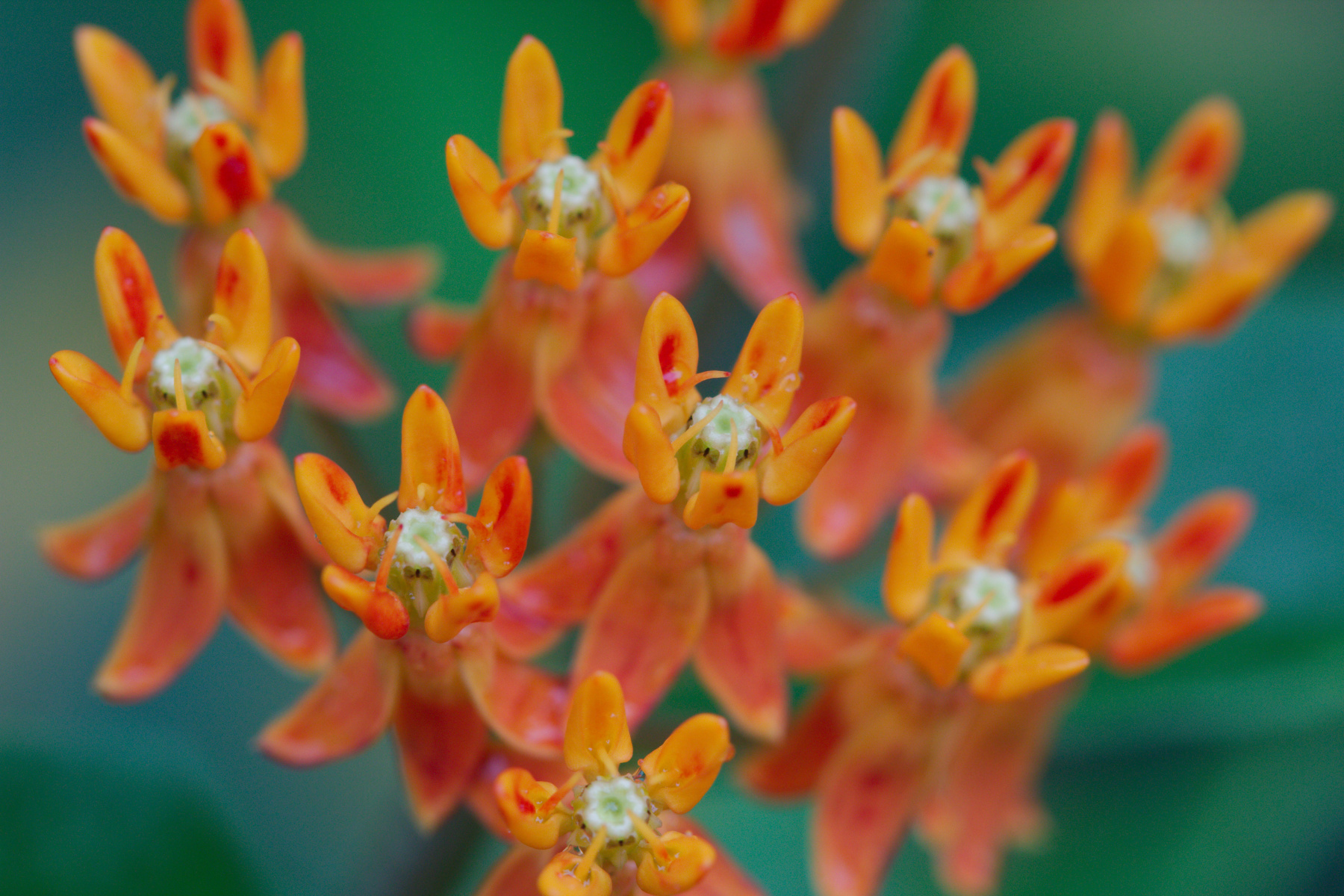
Asclepias tuberosa
It was a rainy day today and I didn’t get out to take pictures. Also, I’m still trying to take things a bit easy. When I got home it was a little dark out but I took a few pictures of the Asclepias tuberosa (butterfly weed) flowers, which are just starting to open up. We have this orange variety and another that is pure yellow. I think the flowers are pretty cool and perhaps a little alien. I expect to be revisiting these again as they continue to open up. They are also a good place to get bee pictures.
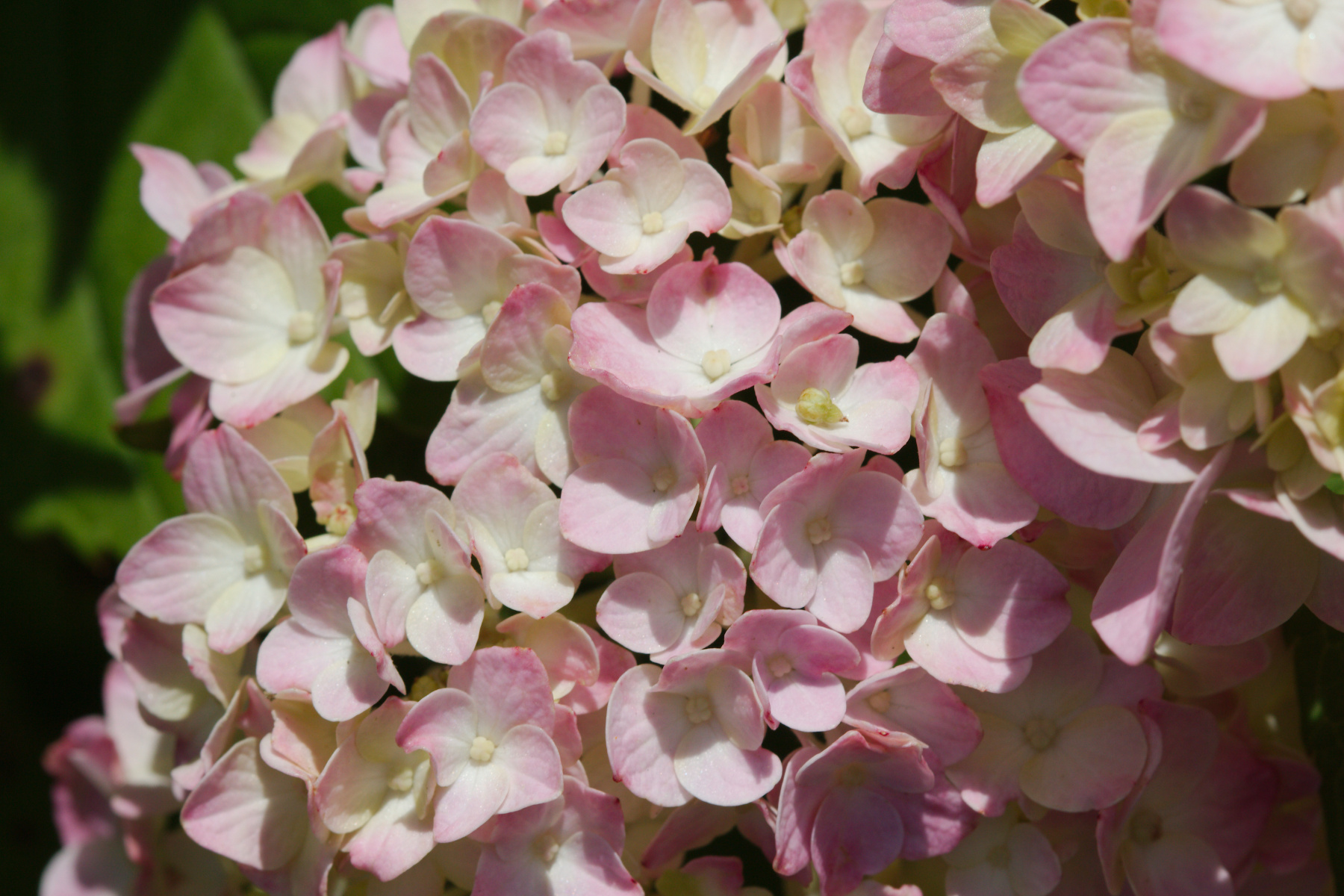
Pink Hydrangea
We had a lovely time and Ralph and Tsai-Hong’s this afternoon, visiting with family, enjoying a beautiful, reasonably cool day, celebrating two family birthdays, and generally just relaxing. Their garden is in a bit of a lull after the amazing flush from the roses. The hydrangeas are just starting to come out and will be nice and pink soon. Right now they only have a touch of color and that’s sort of nice, as well.
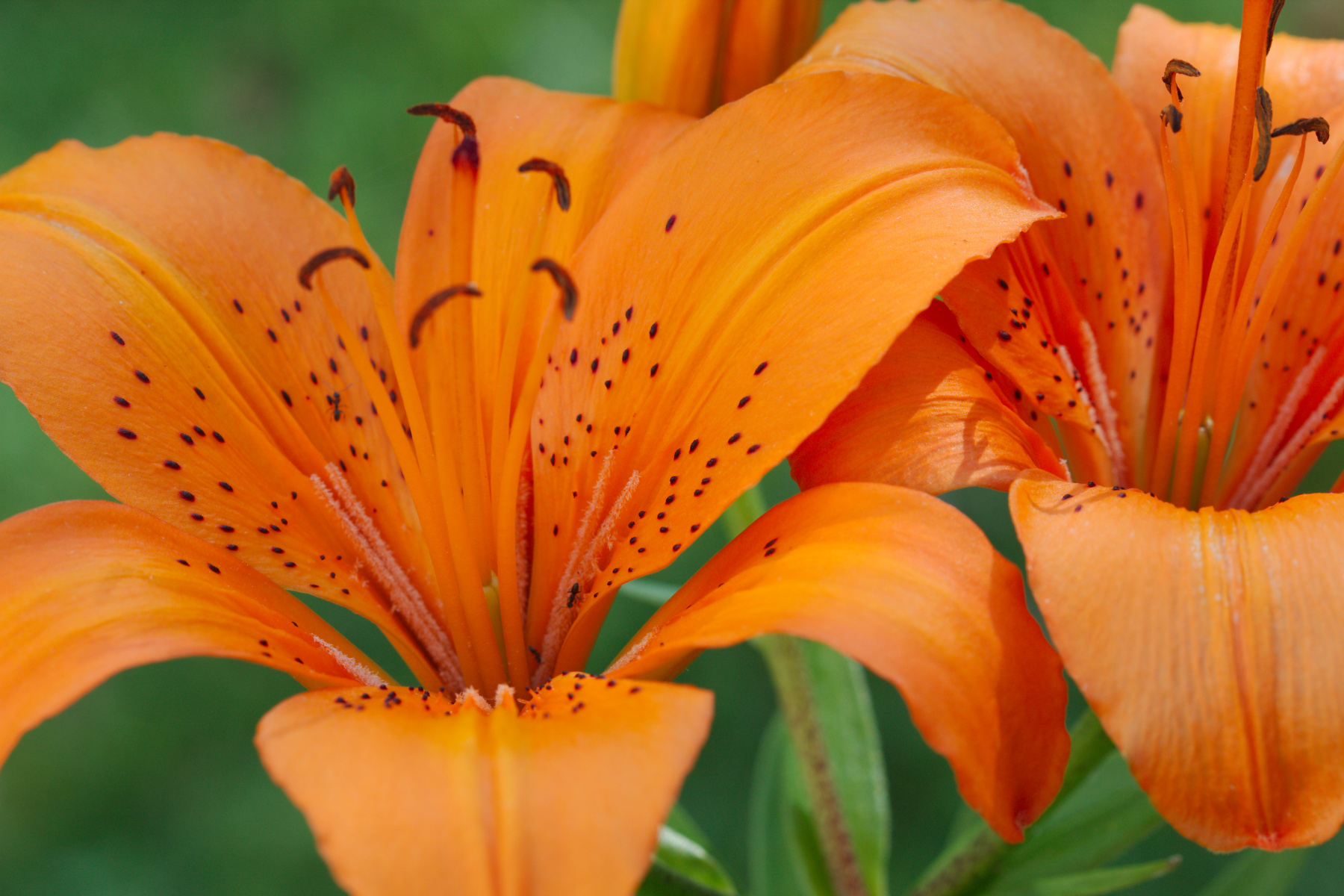
Asiatic Lily
I took a few more pictures of the Asiatic lilies this afternoon. We have them in containers as well as a few spots in our garden. Most of them and all the bright orange ones, came from my dad’s garden. They produce little bulbils or bulblets in the axils of the leaves. These bulbils can be planted and will grow into new plants identical to their parent. Cathy collected these from my dad’s lilies and put them in pots and now we have quite a few. I’m not sure you could have too many of them, they are so bright and cheerful.
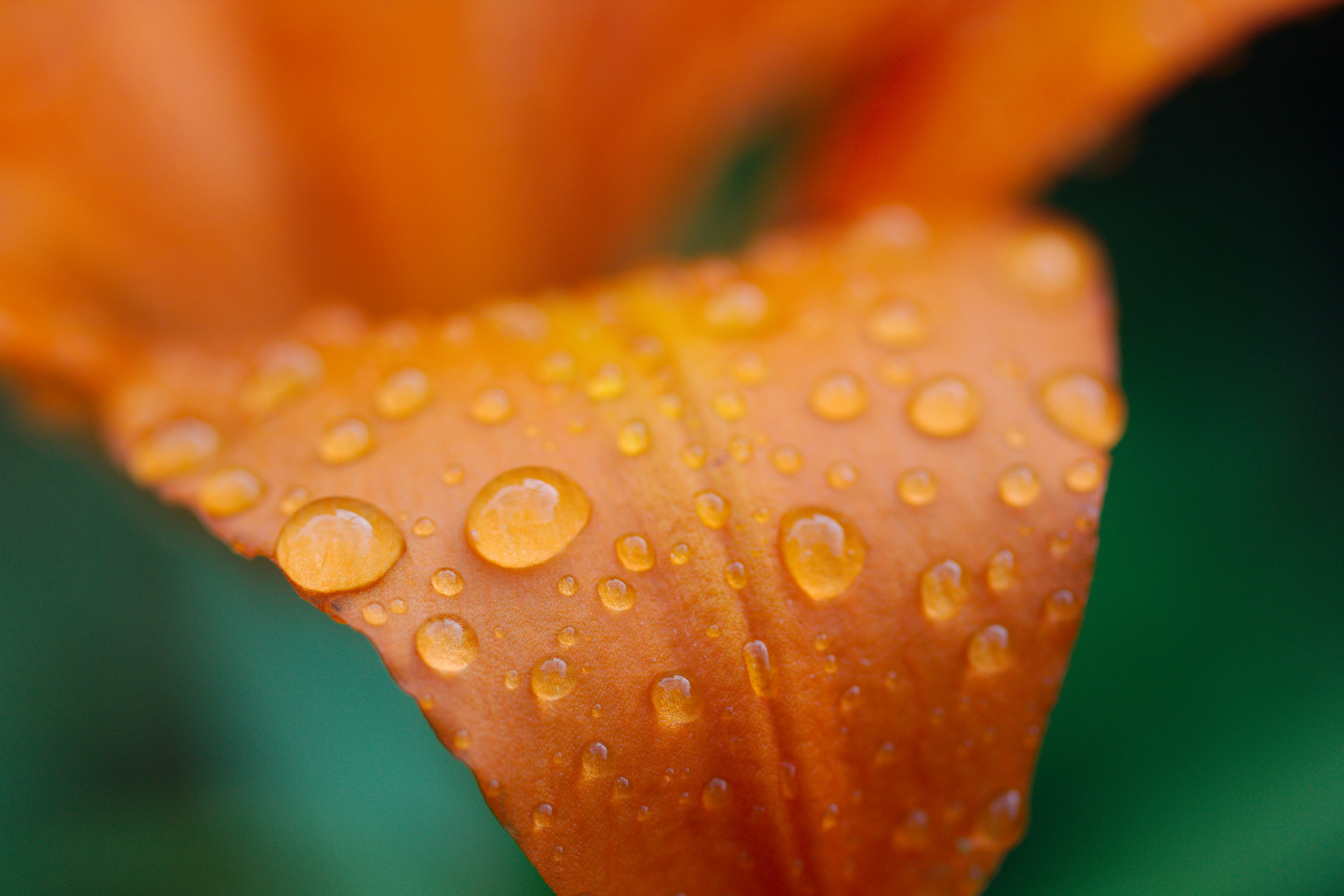
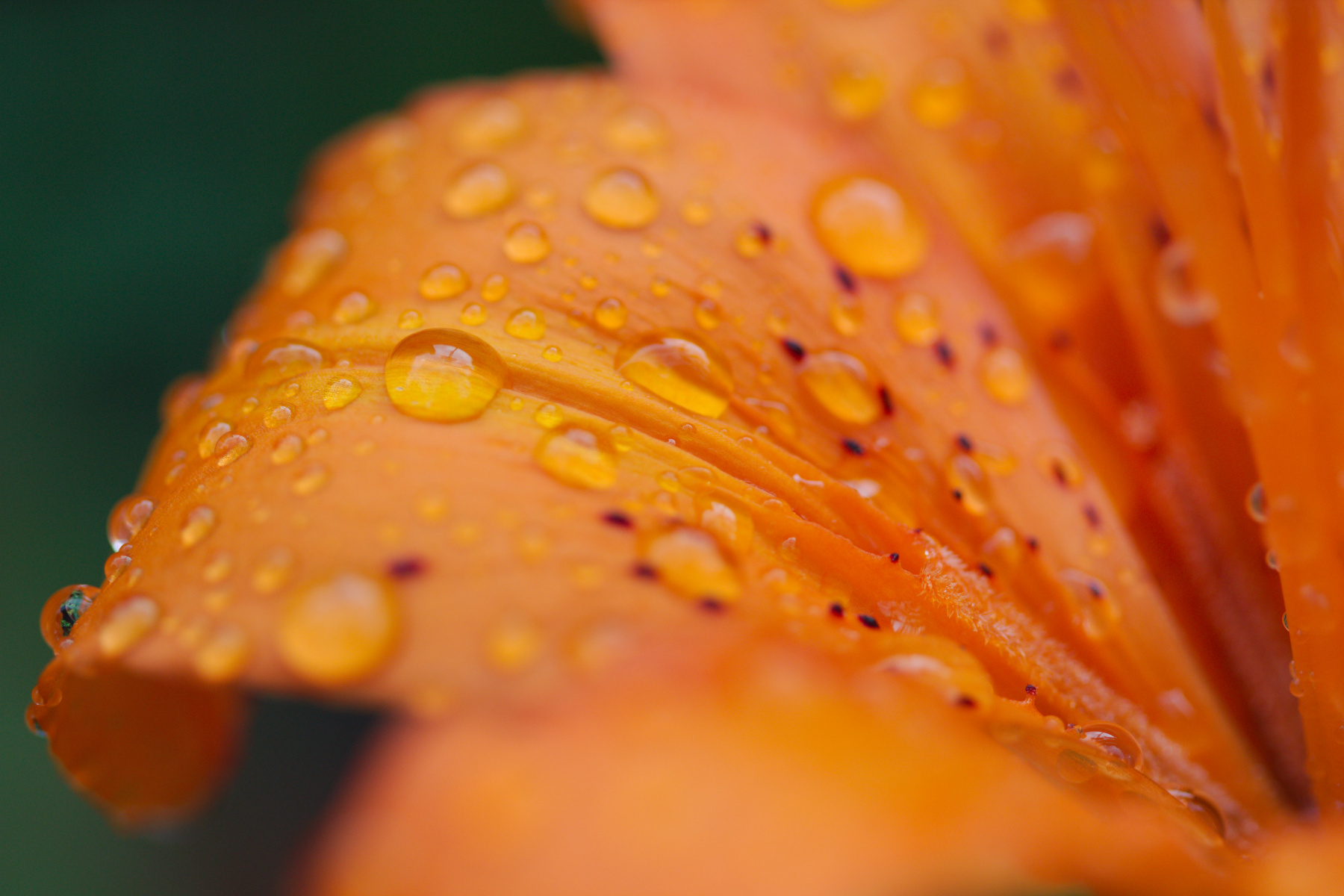
Water On Lily Petals
I already posted a photo for June 10 but Dorothy didn’t like the one I selected, saying I should post this one instead. I’ve decided to post both, so there. I know I’ve said before that I like water droplets on flowers and plant leaves. Well, that’s what we’ve got here, obviously.
This is a little Asiatic lily that has water droplets on it. Pretty much orange, too. I do like the intense colors.
Update: Apparently I posted the wrong picture.
Dorothy thanked me for posting the picture of the water droplets on the petals of the Asiatic lily but said that wasn’t the picture she liked the most. So, I’ve added the photo that she liked best. I’m ambivalent, sometimes liking one and sometimes the other, so I’ll leave it at that. They are both quite intense, in terms of the orange color. Feel free to like whichever one best.
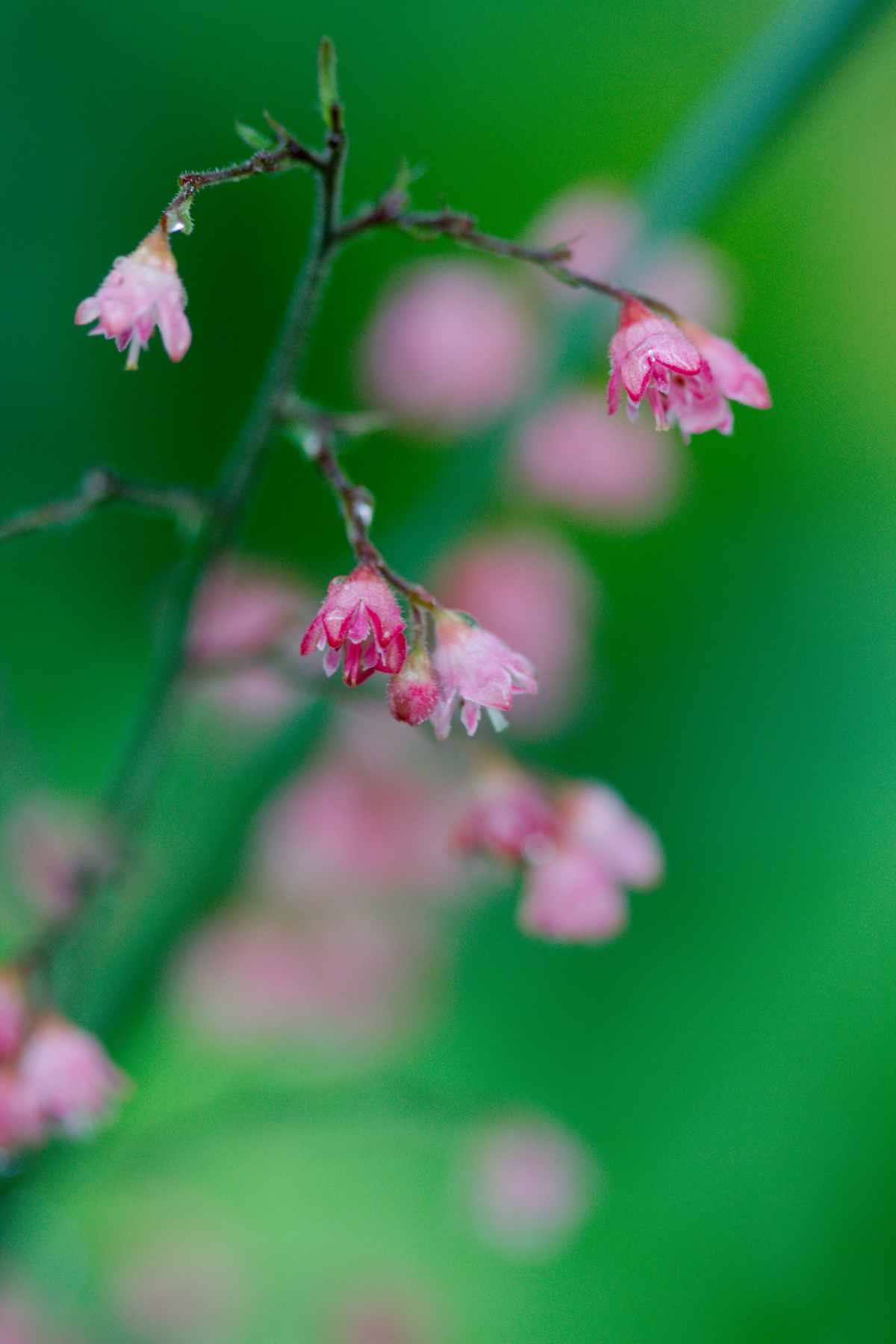
Coral Bells
These are tiny little flowers that you normally don’t look at individually. In general they are seen as a small amount of color above a mound of foliage. If there are a lot of Heuchera (coral bells) planted together then the flowers can create a sort of pink mist above the leaves, which is particularly nice.
I know a neighborhood entrance not too far from here where that’s been done and it’s quite lovely right now. This particular plant is by itself, so there are just a few stems of tiny pink flowers. Still, it’s nice.
This part of our garden has come a long way in not quite seven years. It was entirely filled with pachysandra and there’s still plenty of that, but there are a half dozen nice ferns of different sorts coming up through it, some lily of the valley, a few astilbe and spiderwort, and various other things that add up to significant variety. I think more ferns wouldn’t go amiss, but it’s nice to have a little color besides green, now and then.
Rose Bushes
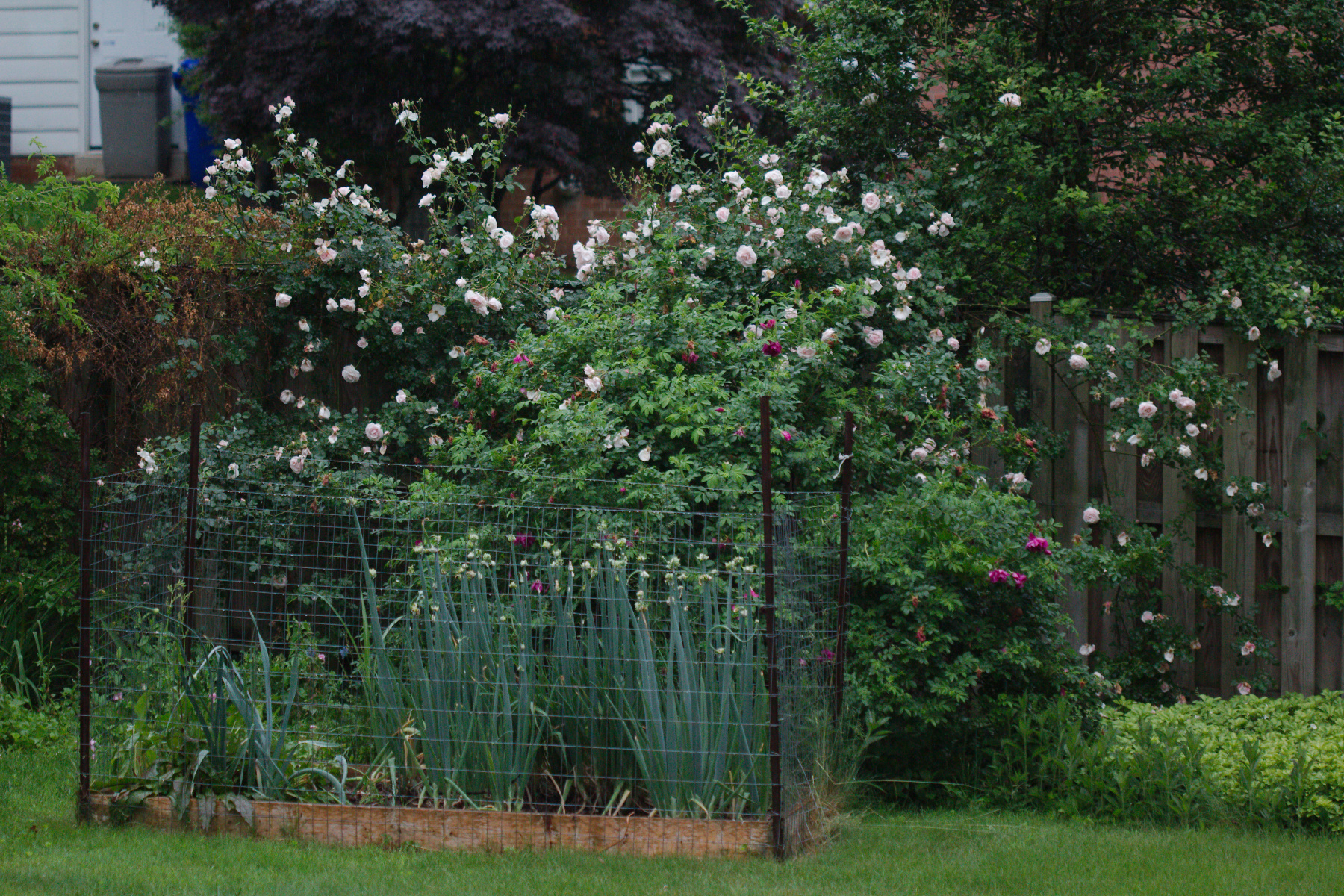
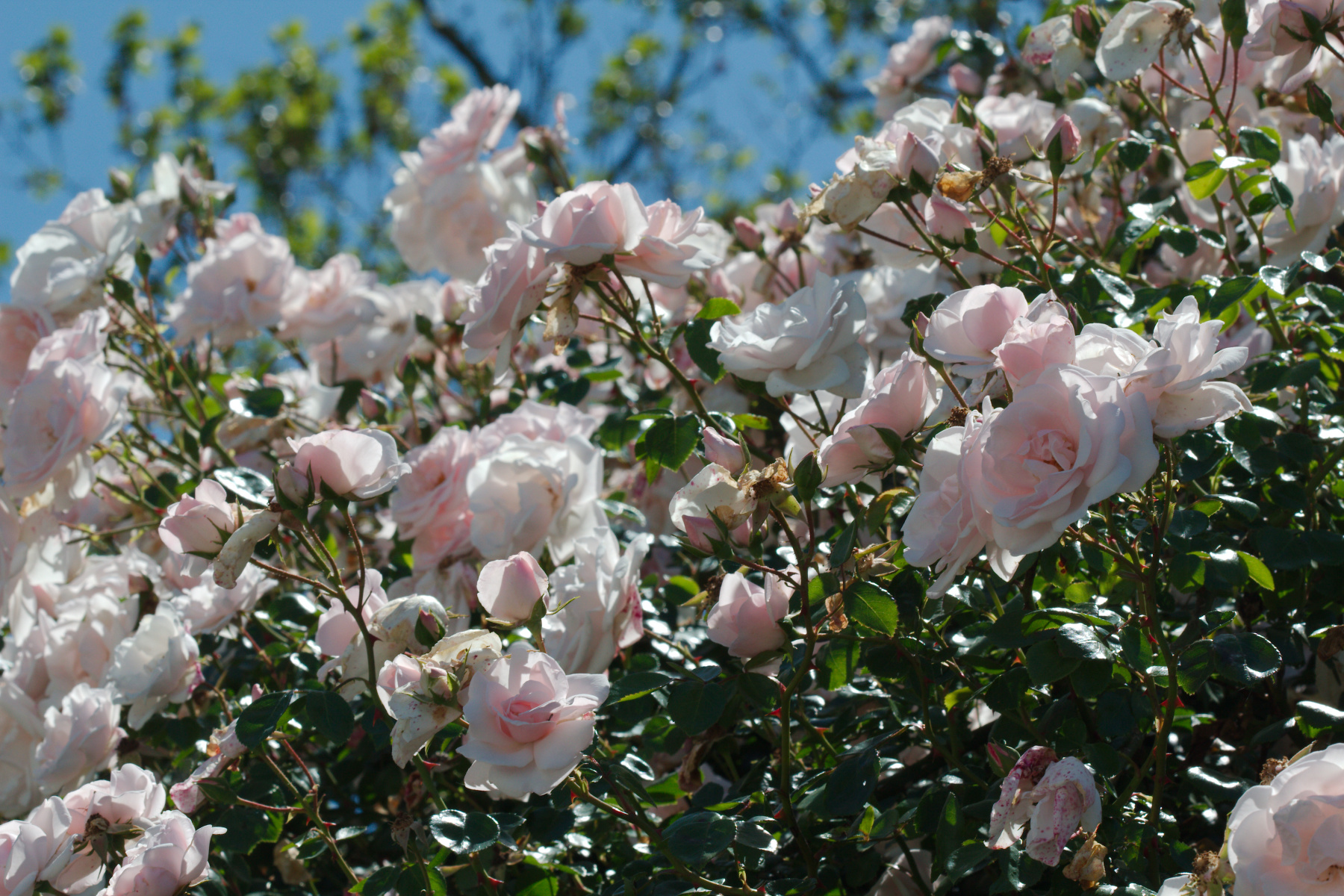
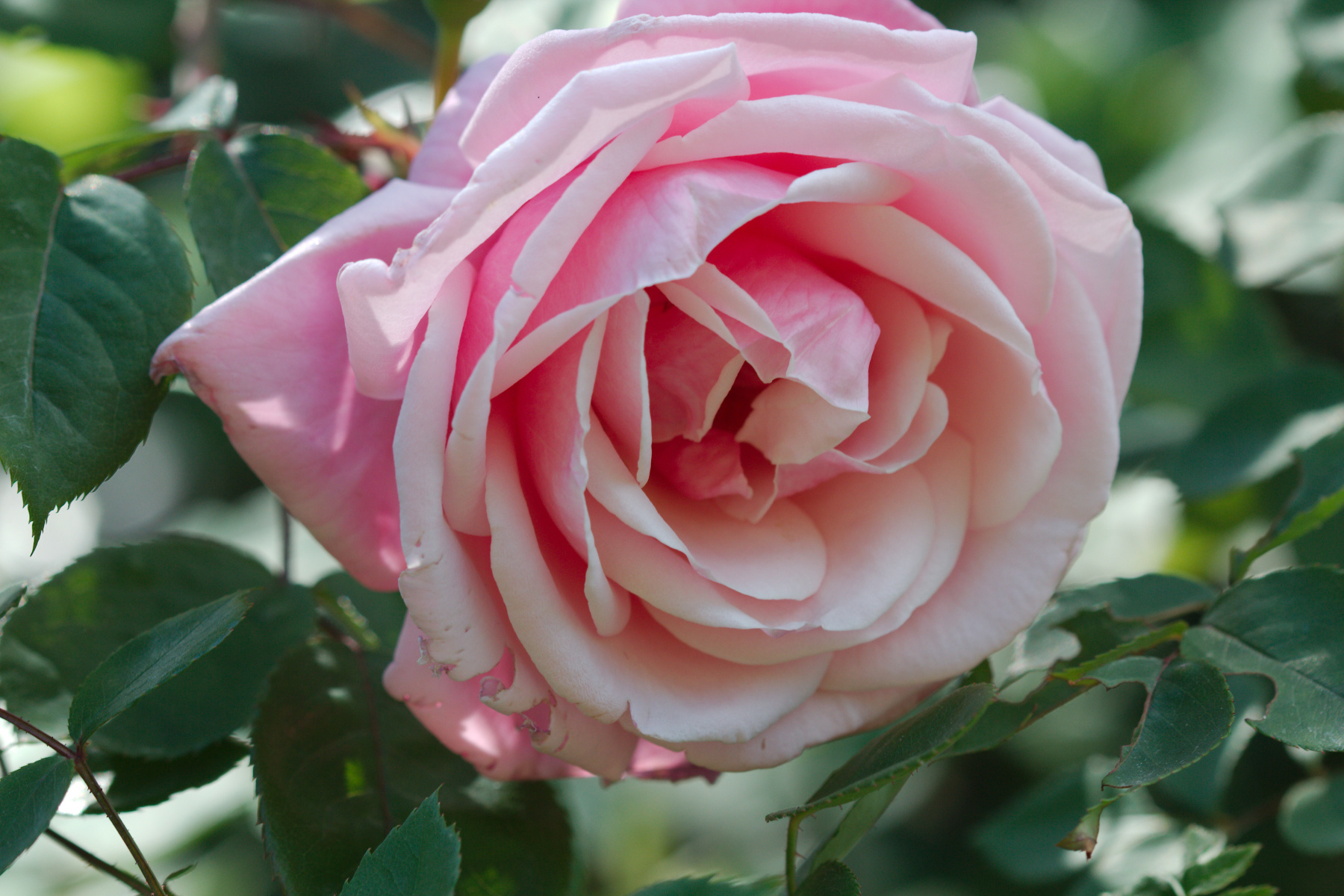
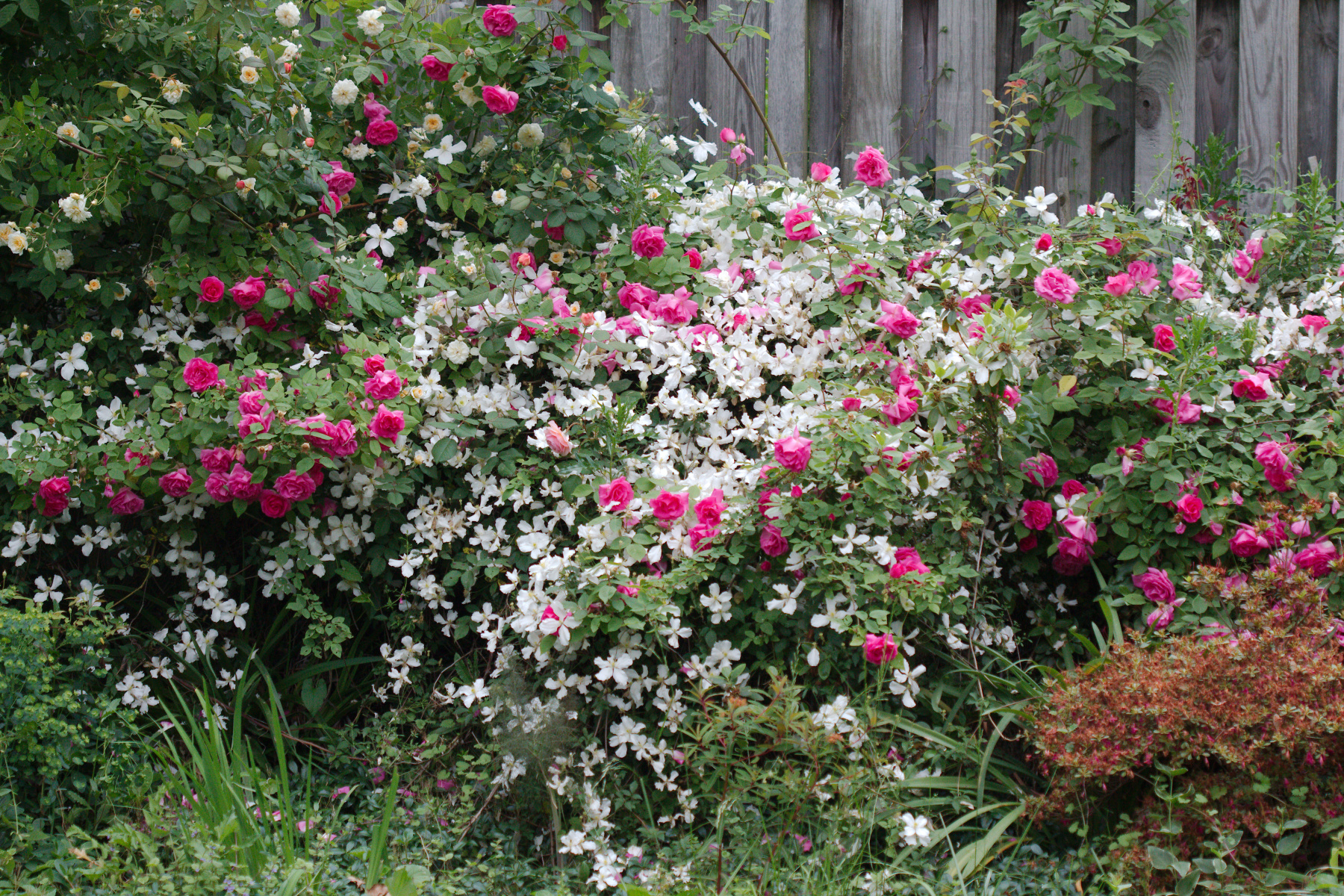
Most of our roses have finished their first big bloom of the year. There will be roses on many of them off and on throughout the summer but never anything to compare with this first flush of flowers. The exception is ‘New Dawn’, which is just coming into full bloom. It’s on the back fence behind a big rugosa (‘Roseraie de l’Hay’) and to the right of the pink flowering multiflora, which is done for the year. It’s also behind my vegetable garden, which only has sorrel and onions in it right now.
Pink Rosa multiflora
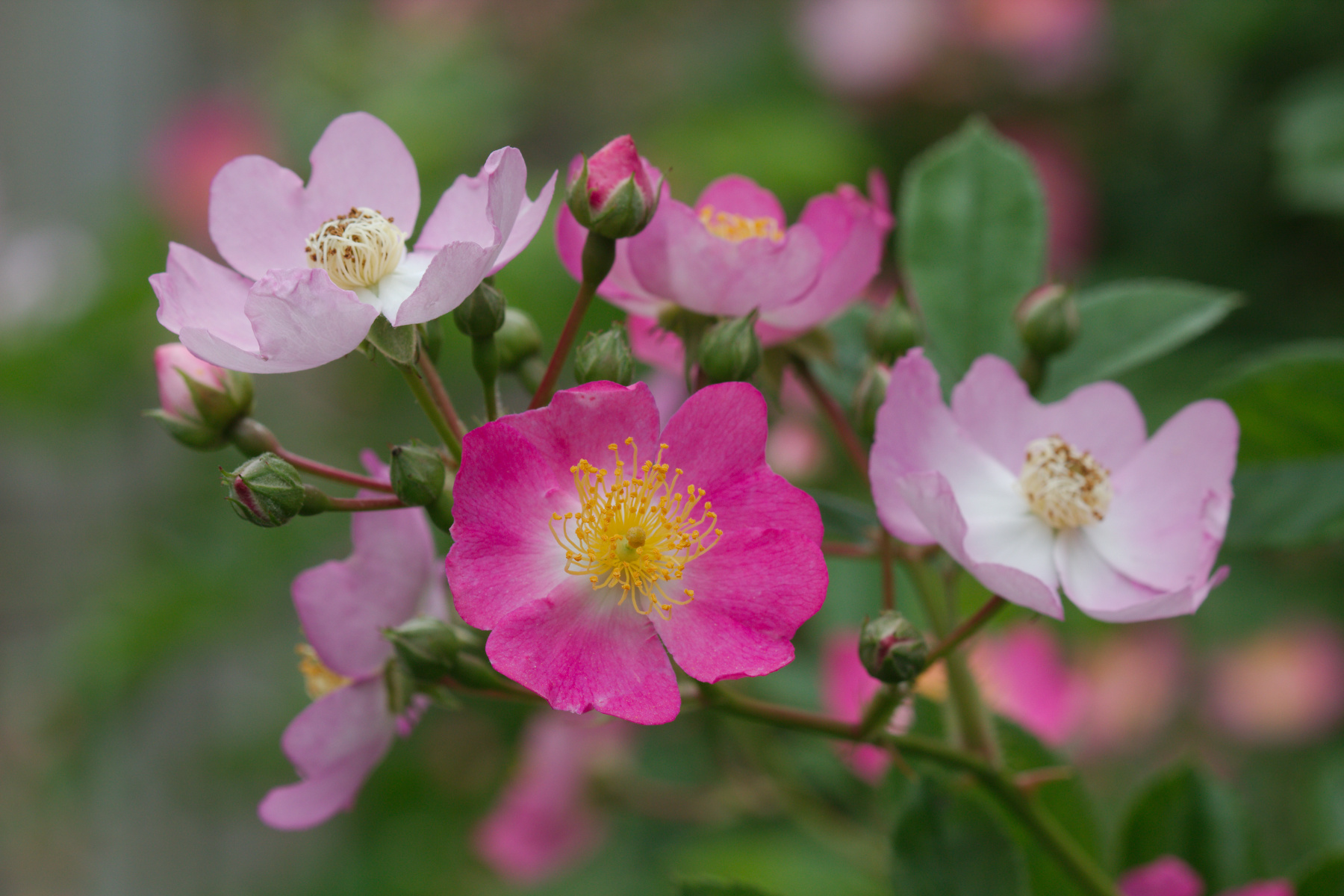
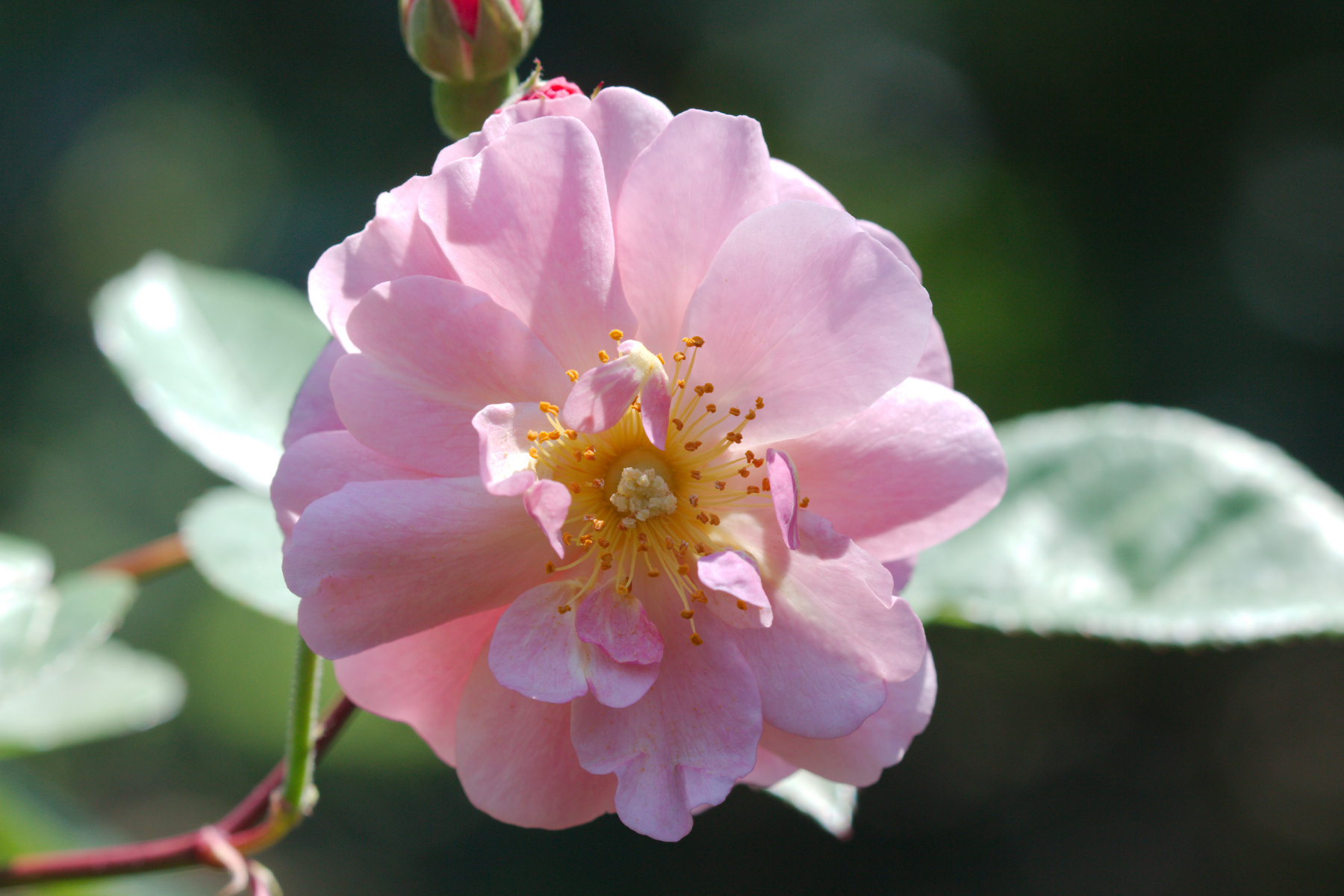
Another rose photo taken on Monday. Don’t worry, I’m almost out of roses. I posted a few pictures of this rose on May 12 last year along with a fairly lengthy description of R. multiflora. That should be enough of a description to keep anyone from planting this in their garden, but then, this pink version is a little special. Wouldn’t it be nice to get this pink color, along with the well known multiflora resistance to blackspot and incredible vigor, into a repeat flowering rose? That’s my ultimate goal. Not sure what to cross it with, at this point, but I’m thinking. I’d also like to try my hand at creating a tetraploid version of this rose and see what that looks like. Of course, I’ve been meaning to work on that for quite a few years. Some day…
Rose ‘Blush Noisette’
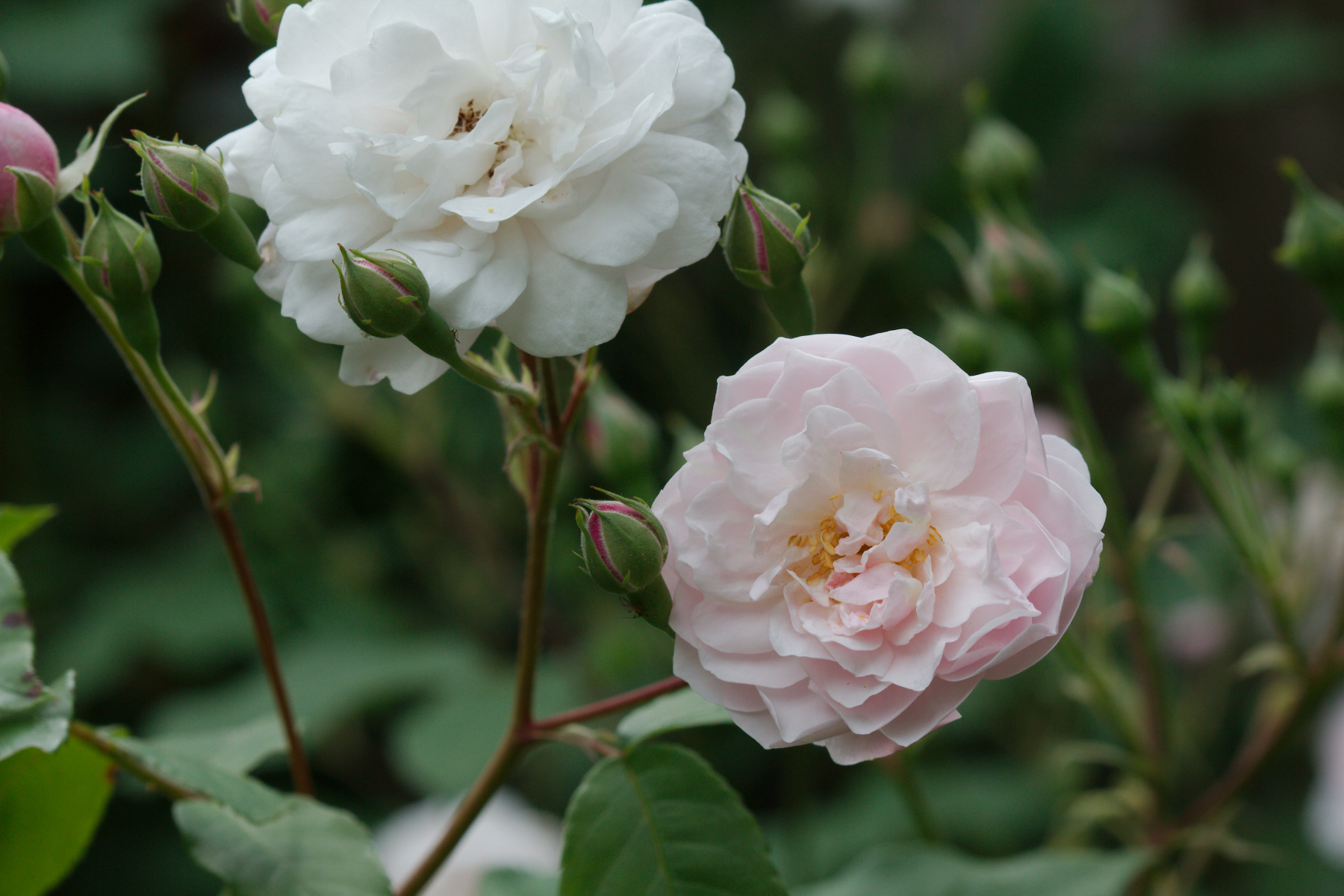
Are you tired of roses yet? If you are tired of roses, you are tired of life, I always say. Well, I don’t always say it but perhaps I should. Over the few weeks I have posted pictures of some of my roses including two Noisette roses (and mentioning a third). This is the last of my four Noisette roses, called ‘Blush Noisette’ bred by Philippe Noisette (United States, 1814). It is a smallish rose, only growing to about six feet against my back fence and doesn’t have the huge climbing canes of ‘Crépuscule’ or ‘Jaune Desprez’. It isn’t really in full bloom yet, but is covered with buds so I have more to look forward to.
Rose ‘Dr. W. Van Fleet’
I didn’t really expect to have another rose for you today. My mom and I drove to North Carolina for the funeral of a cousin and to be with family. We stopped at cousin Lyn’s house to change and enjoyed looking at the roses he has growing. He believes that they were grown from a cutting that his grandmother took from her cousin Archie when she lived in the house he now owns.
I thought it was probably ‘New Dawn’ but Lyn said it doesn’t repeat bloom, which means it’s ‘Dr. W. Van Fleet’, the once blooming sport parent of ‘New Dawn’. It is a hybrid wichurana bred by Dr. Walter Van Fleet (United States, 1910). The repeat blooming ‘New Dawn’ was discovered by Somerset Rose Nursery in 1930 and has the distinction of having been the first plant to receive a U.S. Plant Patent (that is, it was awarded patent #1) on 18 Aug 1931. Lyn has three or four plants of ‘Dr. W. Van Fleet’, which are all absolutely covered with flowers. Very impressive.
A Rose of My Own
Not that my garden comes anywhere near Nick Weber’s garden, but as I think I’ve mentioned, I have a rose or two growing here. This one is a fairly large climber, growing on a trellis on the south end of our house.
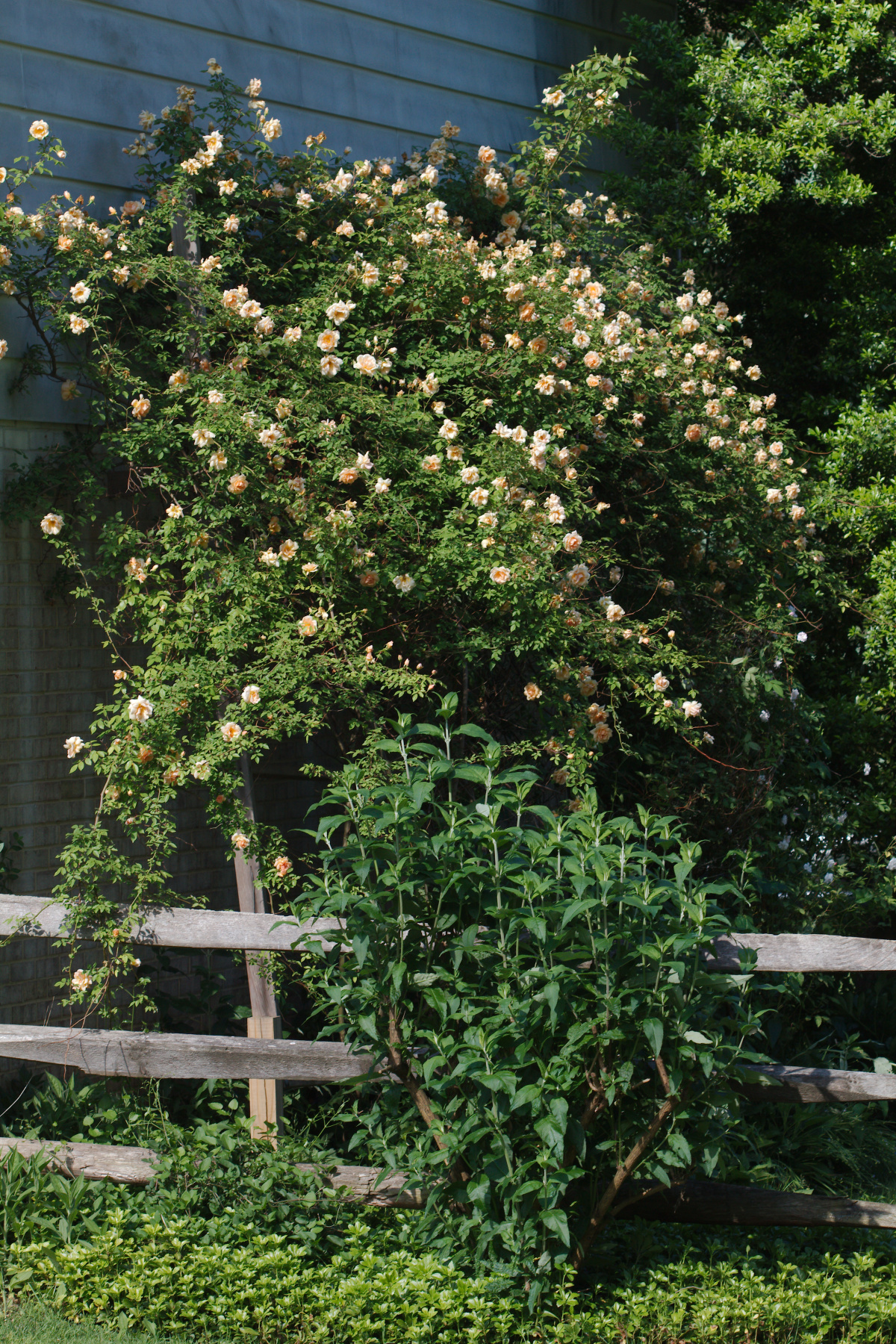
Rose ‘Crépuscule’ is a Noisette rose bred by Francis Dubreuil (France, 1904). The frame it’s growing on, which you can see the base of through the fence to the left of the buddleia, is twelve feet wide and ten feet high, not counting the two feet below it. As you can see, the rose is growing above the top of the frame and I have a feeling I could get it to cover a twenty foot frame.
The fragrance is strong and it will have flowers on it off and on all summer. The individual flowers are not perfect but in mass they are quite beautiful. There is another rose on this trellis, ‘Champneys’ Pink Cluster’, another Noisette rose, bred by Champneys (United States, circa 1811). That one isn’t nearly so impressive but it’s still a pretty little thing.
Nick Weber’s Roses
As hinted at in yesterday’s post, I spent some time with roses today. Last year on the Saturday of Memorial Day weekend I posted a photo of a rose from Nick’s annual open garden and mentioned that the roses had bloomed quite early so we were treated to the later blooming varieties. This year we got the other end of the spectrum. Many roses had not really fully opened yet and there were thousands of buds yet to open on many plants.
That’s not to say I was even slightly disappointed. The garden was wonderful and the weather was perfect. Most years we seem to have a heat wave around Memorial Day weekend but this year it was quite cool. When we arrived at 10:30 I didn’t even have my sleeves rolled up and some people were wearing jackets. Once the sun got a little higher in the sky it warmed up and was quite pleasant.
I took quite a few pictures and present two of them here. The first is a large-flowered climbing rose called ‘Blossomtime’, bred by Conrad C. O’Neal (United States, 1951). The second is a hybrid musk called ‘Cornelia’ bred by Rev. Joseph Hardwick Pemberton (United Kingdom, 1925). Two very different roses but both beautiful. Thanks again, Nick and Rosanne.
Rose ‘Zephirine Drouhin’
If all goes according to plan, this should be a pretty rosy weekend. Since I’m actually writing this on Monday, I know how it turned out, but I won’t spoil it for you. For now, just enjoy this rose growing in my brother and sister-in-law’s back garden. The rose is a Bourbon rose called ‘Zephirine Drouhin’ and it is growing here with a white Clematis, which suits it quite well. The name Bourbon in this case refers to Île Bourbon (now called Réunion) off the coast of Madagascar. This rose is thornless and has a wonderful scent and color. By fall it is pretty much defoliated by black spot around here but is such a vigorous grower that it never seems to mind.
Rosa Multiflora
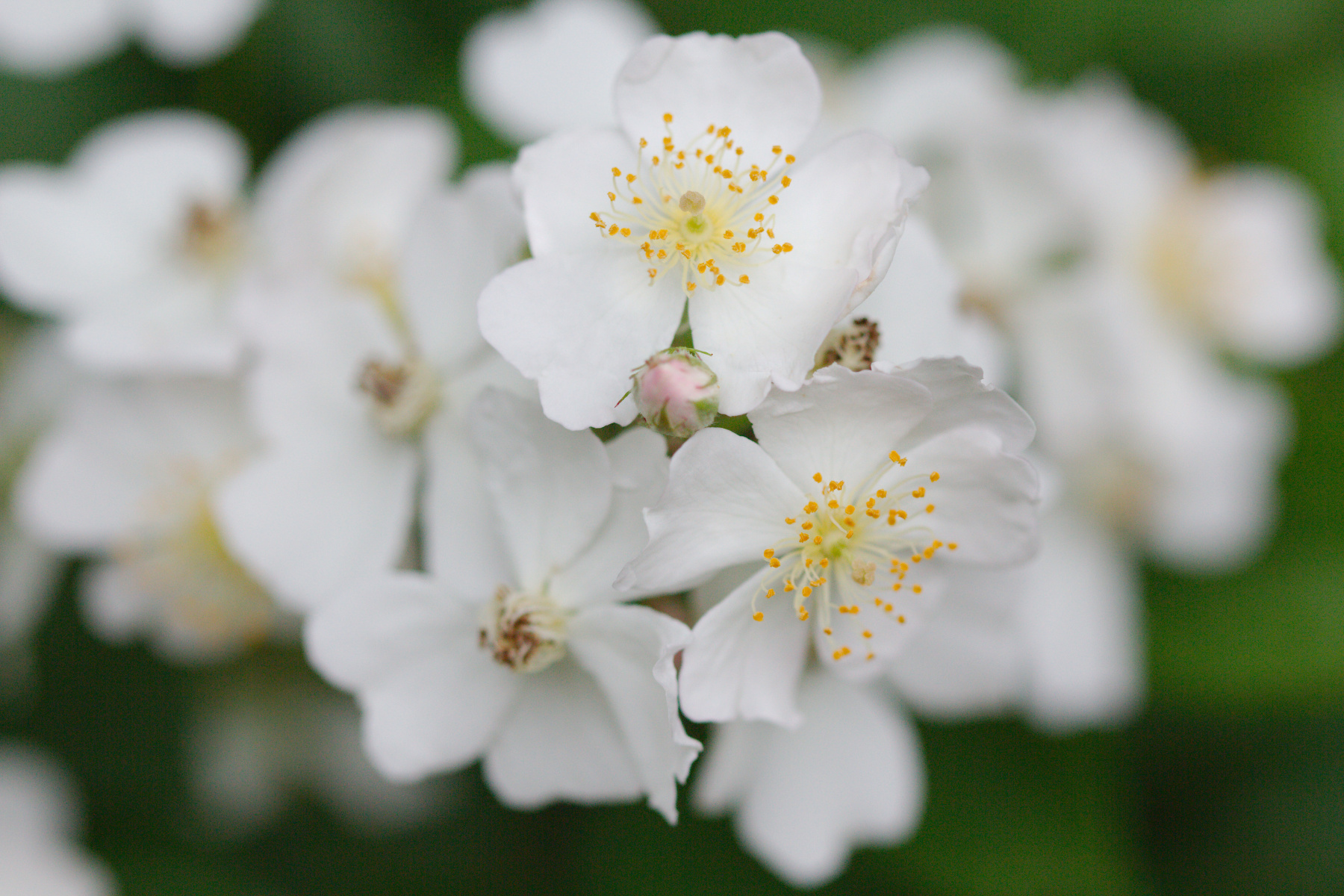
These are everywhere and they can be something of a nuisance. They are often planted in highway medians and can become so impenetrable that they can stop cars. On May 12 of last year I posted a picture of a pink multiflora rose (well, it probably isn’t pure multiflora) that I have growing in my yard. Anyone who knows roses will tell you that’s daft, but there it is. This picture is of a regular multiflora rose growing along the edge of the woods behind my office. A nuisance but it’s still pretty.
‘Rose de Rescht’
This is a wonderful little rose. I’ve had it growing in a container for quite a few years now and really should get it into the ground. ‘Rose de Rescht’ is a bit of an enigma in terms of its origin and has been classified as a Damask Perpetual and as a Portland rose, a group named after the 2nd Duchess of Portland, Margaret Cavendish Bentinck (11 February 1715 – 17 July 1785). Either way, it seems likely that it has both Rosa × damascena and Rosa gallica in its ancestry.
It’s a relatively small rose bush and when well cared for in a good location should give you at least a second flush of blooms later in the year and possibly an occasional flower at other times. Mine is a bit weak because it’s in a pot but the blooms are worth it. They are very strongly scented and quite lovely.
Iris ‘Eric the Red’
This is a little Siberian iris called ‘Eric the Red’ and it’s a lovely little thing. I brought this from our house in Gaithersburg when we moved seven years ago and it’s doing quite well in our front garden. It’s a little patch of purple that appears each spring.
If you are looking for a tough little survivor, this might be a good choice. It tolerates both drought and wet soil, which is pretty hand here. I’m thinking of putting in a small pool and bog garden and Siberian iris will definitely have a place in that.