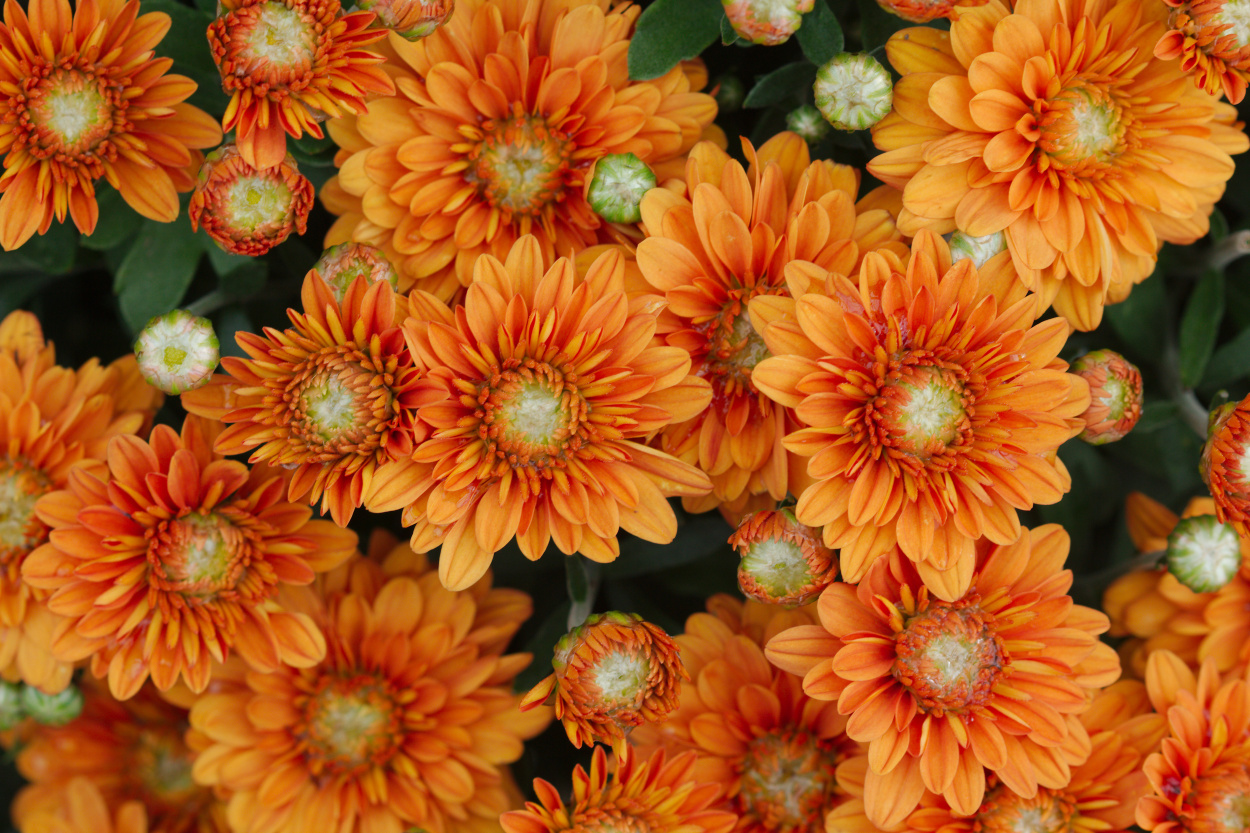
Cathy and I went to Johnson’s Garden Center west of Olney early this afternoon. Cathy wanted to buy a few more asters for her mom’s front garden. There were a lot of asters (polyaster?) and mums, as is normal this time of year and I carried my camera around and took a few pictures. I like this orange mum, which is a nice autumnal orange. We also looked at hydrangeas but didn’t actually buy any.
Flowers and Plants
Iris domestica (Blackberry Lily)
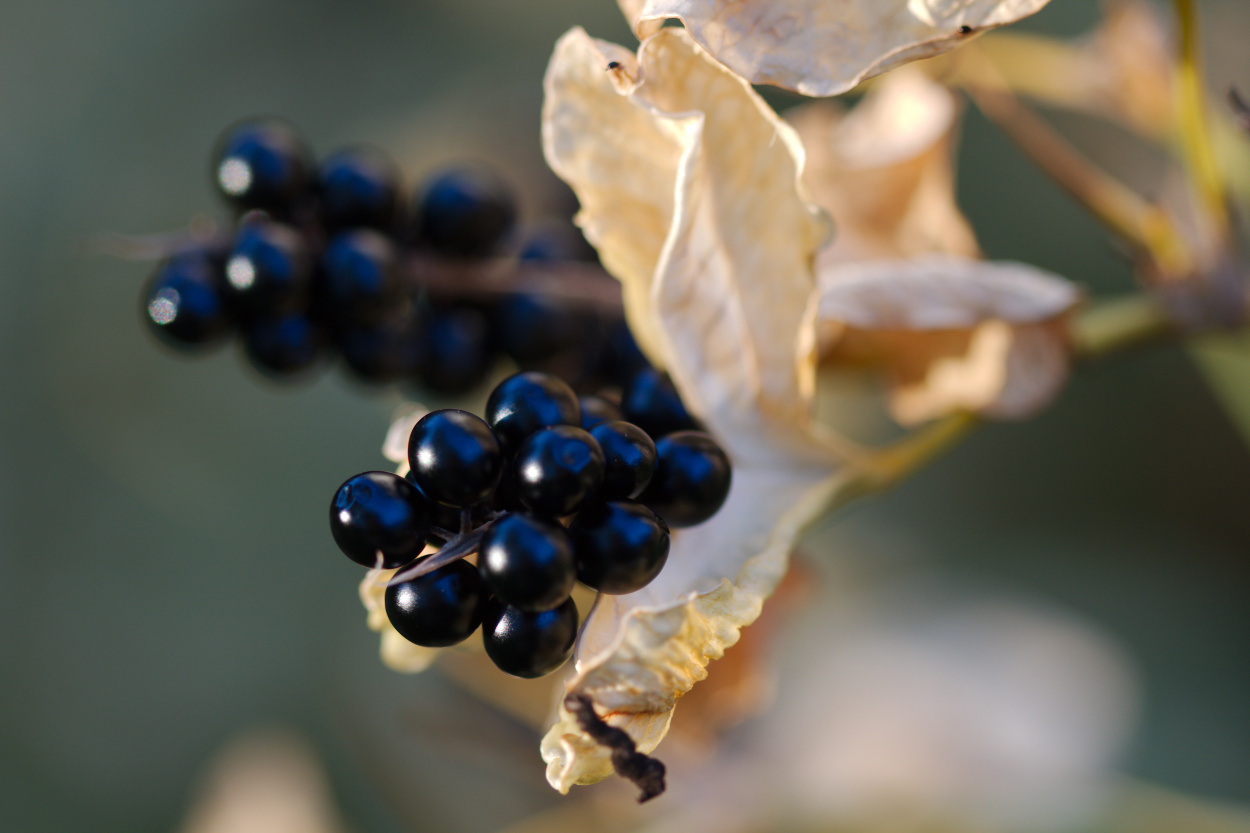
Back on July 5 of this year I posted a photo of Iris domestica in bloom. This is the same plant after it’s gone to seed. The seeds look (if you don’t look to carefully) like huge blackberries, which gives the plant its common name, blackberry lily. I think they’re as pretty, if not as colorful, as the flowers. In a few weeks I’ll pull these off and spread them around the garden in the hope that I’ll have more in years to come.
Mushroom
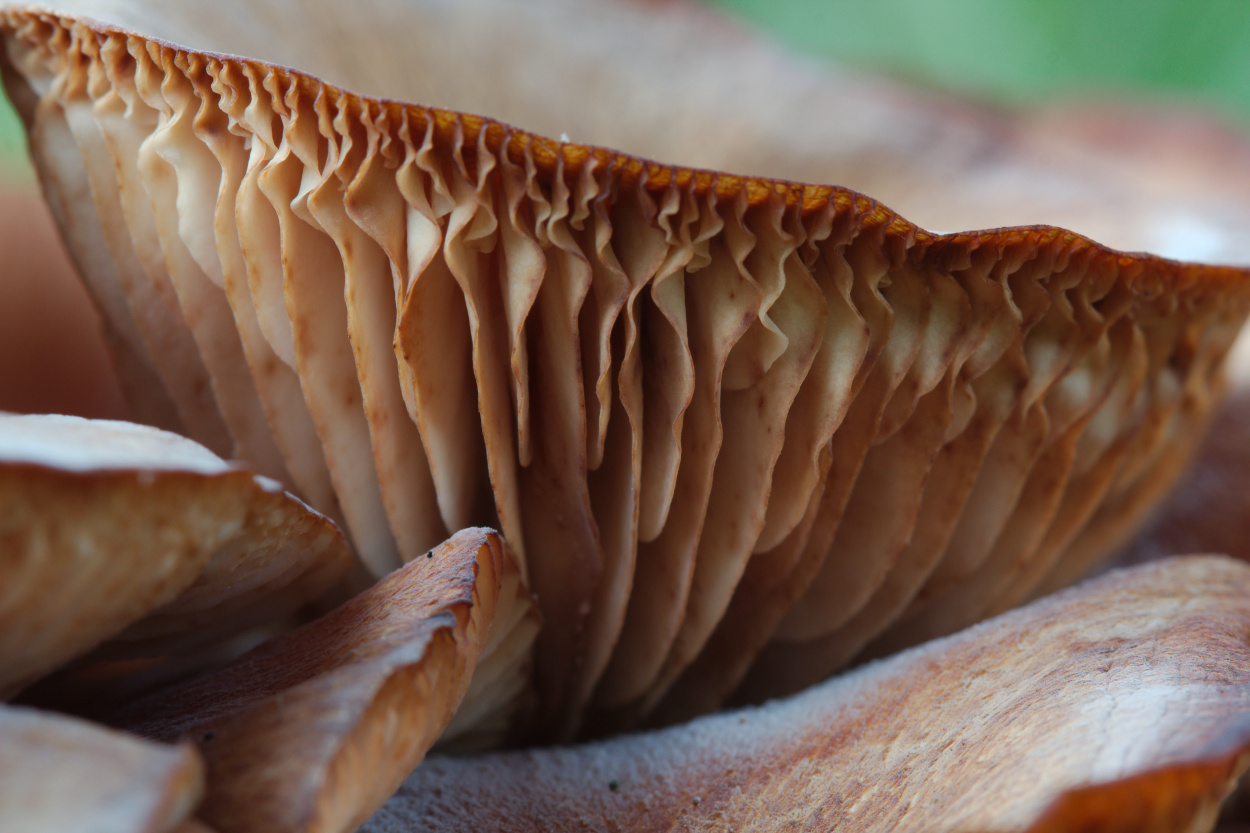
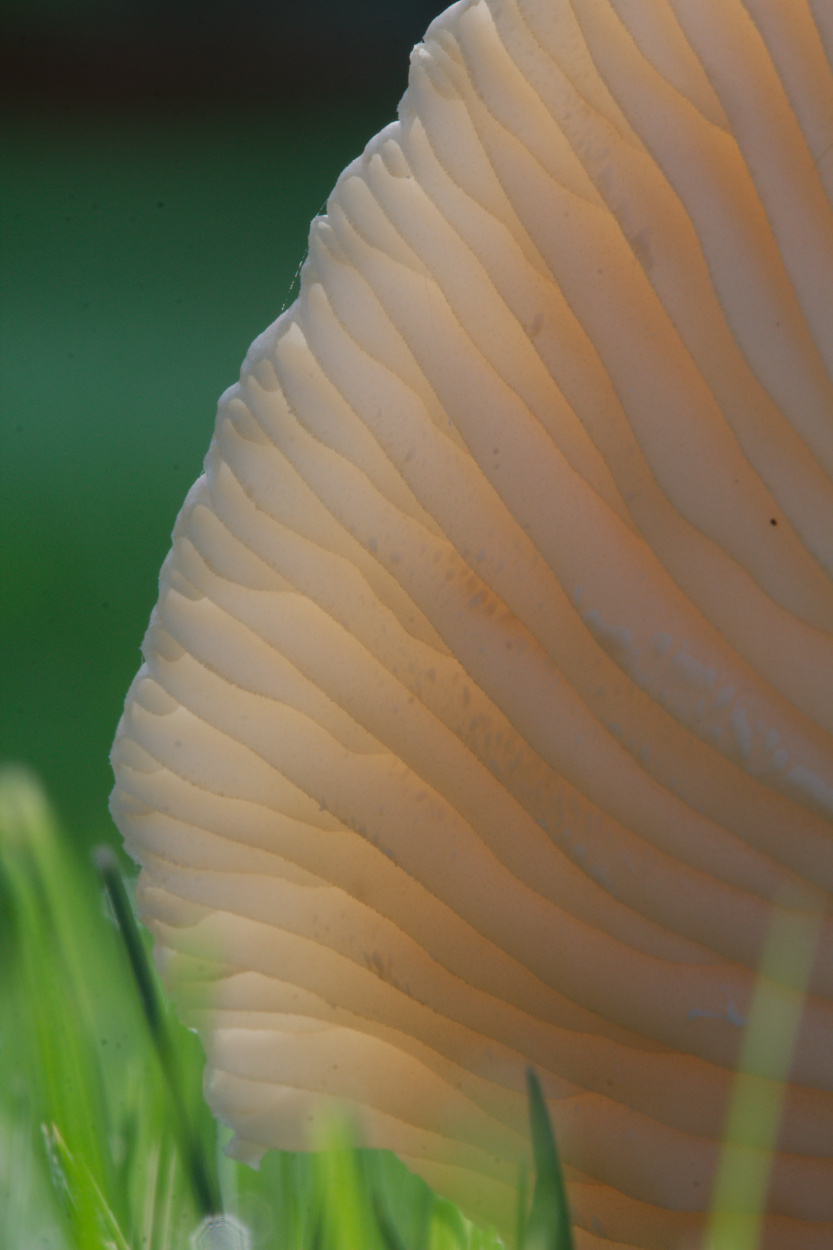
As promised in my last post, here is another photo of the mushroom in my back yard, without any flying menace distracting from the fungal beauty. The mushroom appeared a few days ago and this morning it was lying on its side, exposing the gills on the underside.
Cornus kousa (Kousa Dogwood)
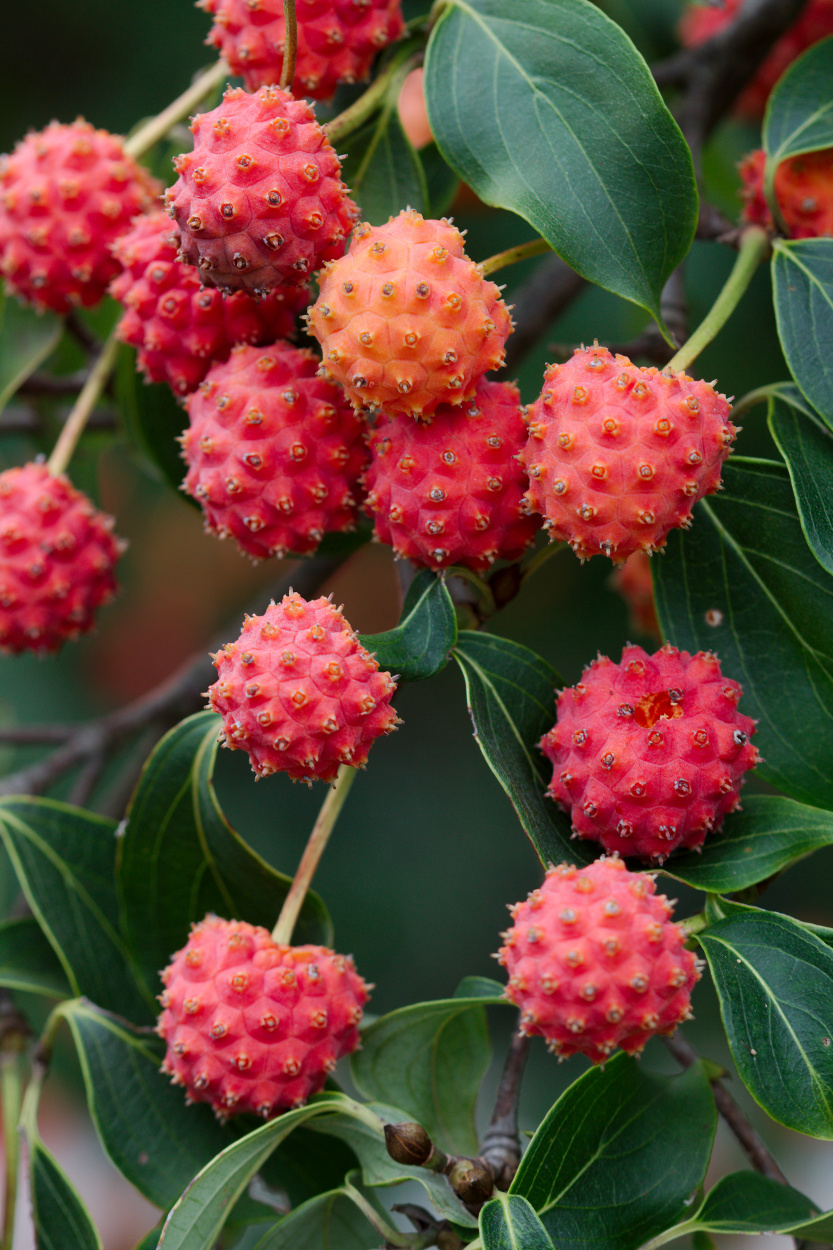
The kousa dogwood is a nice alternative to our native flowering dogwood (Cornus florida) for a number of reasons. One is that it is less susceptible to dogwood anthracnose (Discula destructiva). On the other hand, it flowers later and there are not as many good pink flowered varieties. When it comes to fruit, I think the kousa wins, though. This is a tree in our neighborhood and it is absolutely covered with fruit. I marvel at it every time I drive by. The fruit are edible, by the way, in case you are in the woods and need something nutritious and don’t care if it has no real flavour.
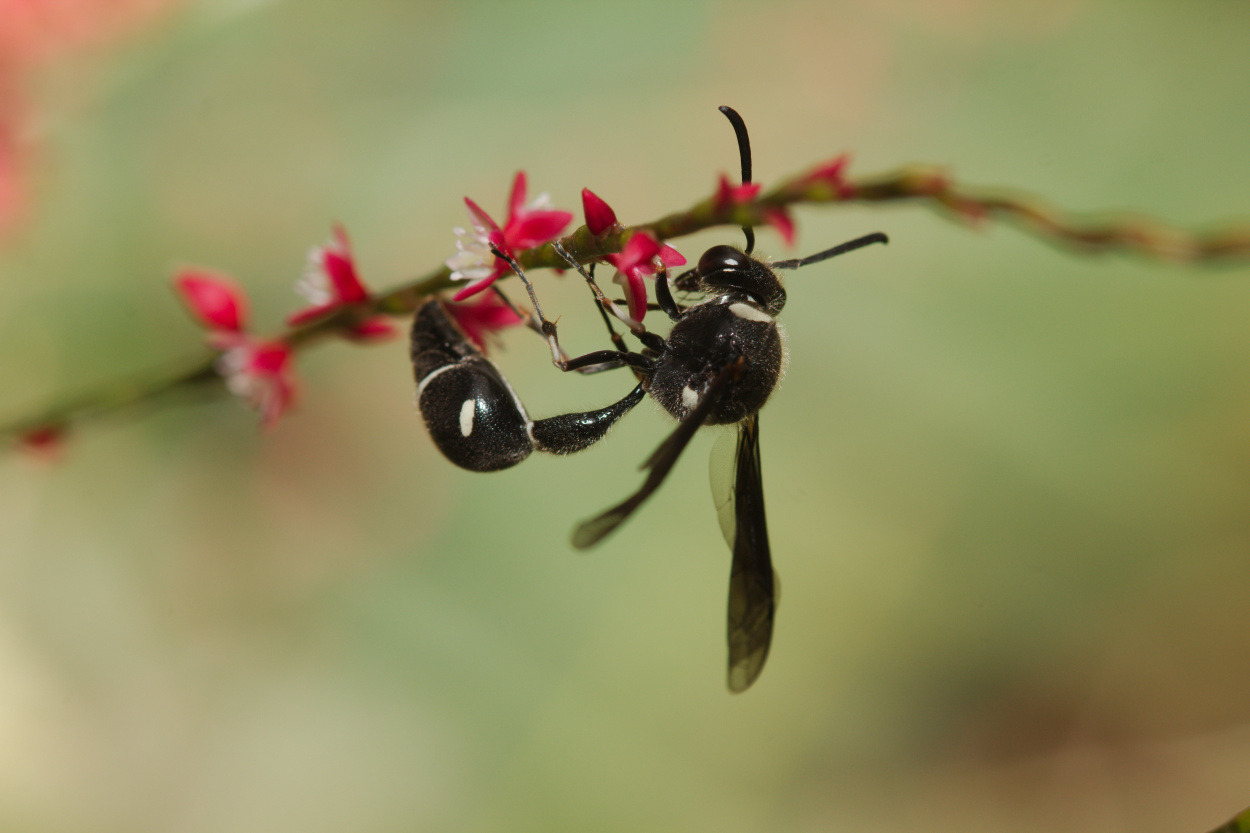
Eumenes fraternus (Potter Wasp)
I see these fairly often but this is the first time I’ve gotten a decent picture of one. This is on the tiny red flowers of painter’s palette (Persicaria virginiana) in our back yard. it’s also one of the first good pictures I’ve taken of these little flowers, now that I think about it. They really are small but add a red haze over the variegated foliage.
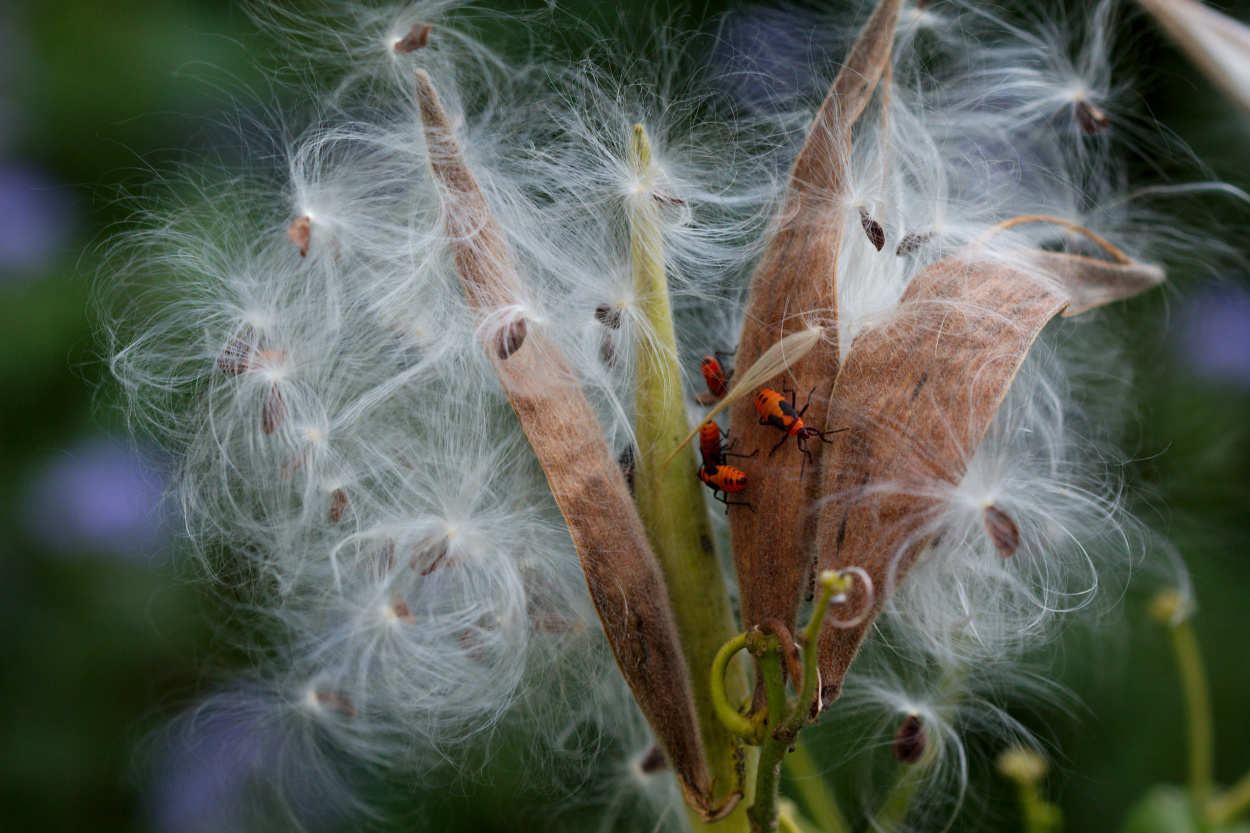
More Milkweed Bugs
On August 16 I posted a picture of large milkweed bug nymphs (Oncopeltus fasciatus) on a milkweed seed pod. I was out in the garden again this afternoon and see that they are still there, although the seed pods have opened up and are spilling their seeds.
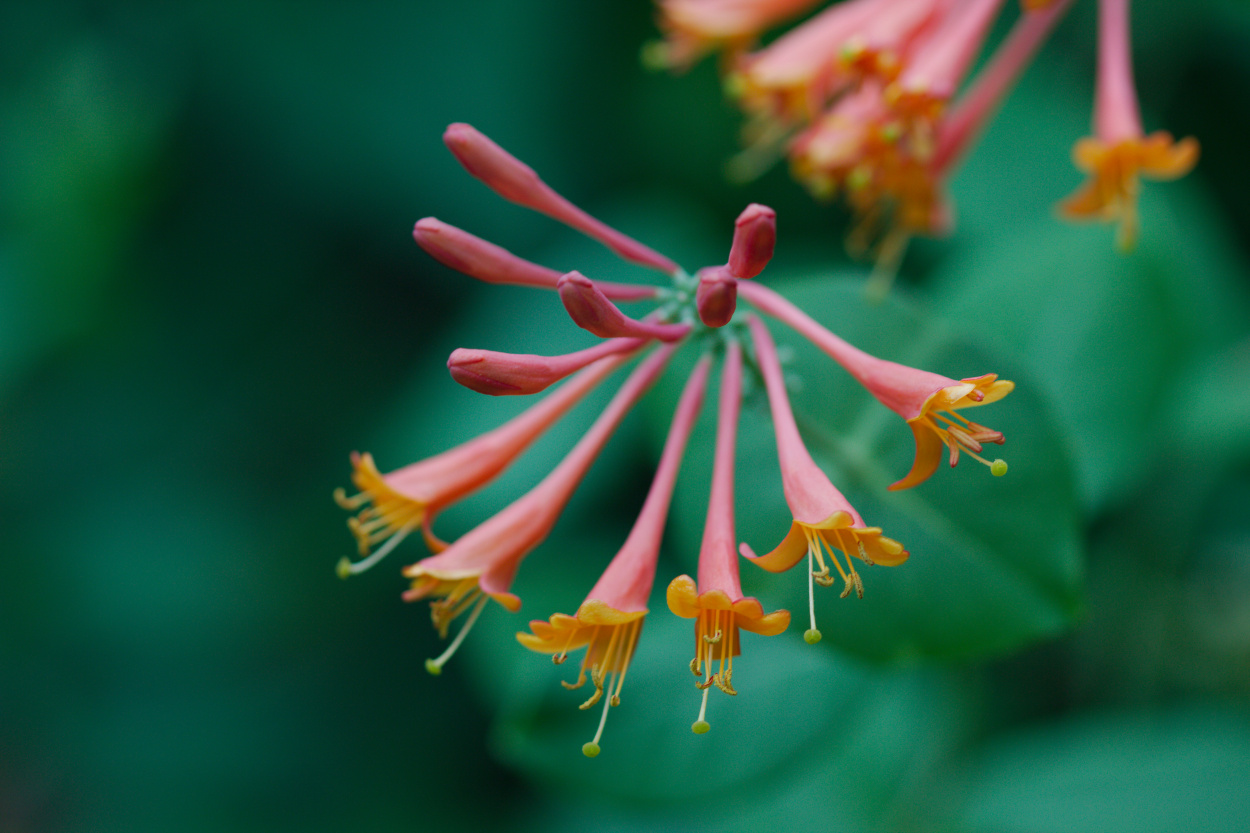
Honeysuckle
Flowers of one of the prettier ornamental honeysuckle vines. This one is growing in my brother’s back yard and, I suspect, drawing hummingbirds.
Brookgreen Gardens
Ralph and I drove down to South Carolina to visit Brookgreen Gardens today. Brookgreen is the legacy of Archer and Anna Hyatt Huntington. It was originally a rice plantation but was bought in the early twentieth century by the Huntingtons. They turned it into a sculpture garden which their web site describes as having “the most extensive collection of figurative sculpture in an outdoor setting by American artists in the world.”
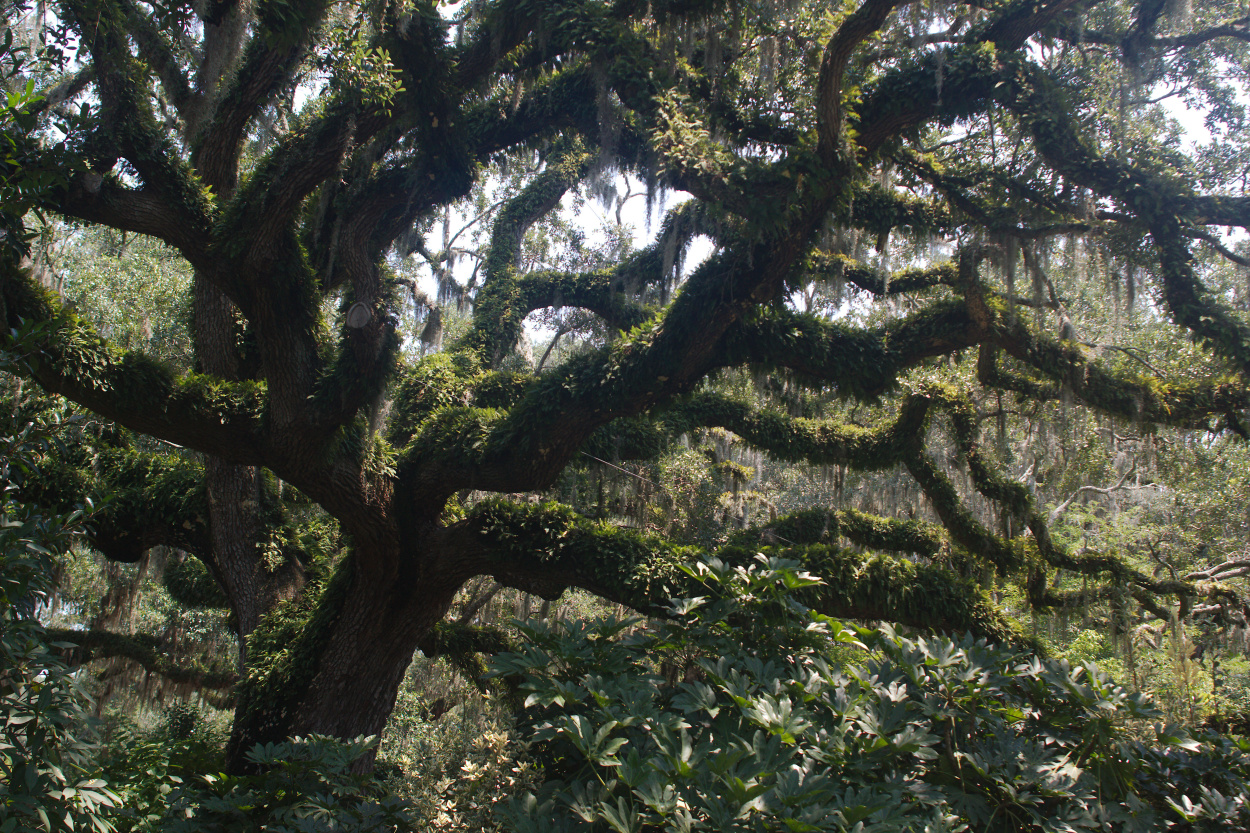
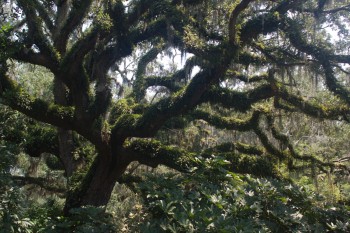
The old plantation house is gone but the grounds contain an extensive garden with sculpture throughout — some large, some small, some whimsical, and some classical. There is a pavilion with sculpture covered and protected a bit from the elements as well as a pair of indoor exhibits (which are also air conditioned!). There is a wonderful allee (a walkway lined with trees) featuring old live oaks (Quercus virginiana) pictured here and many and varying garden “rooms.”
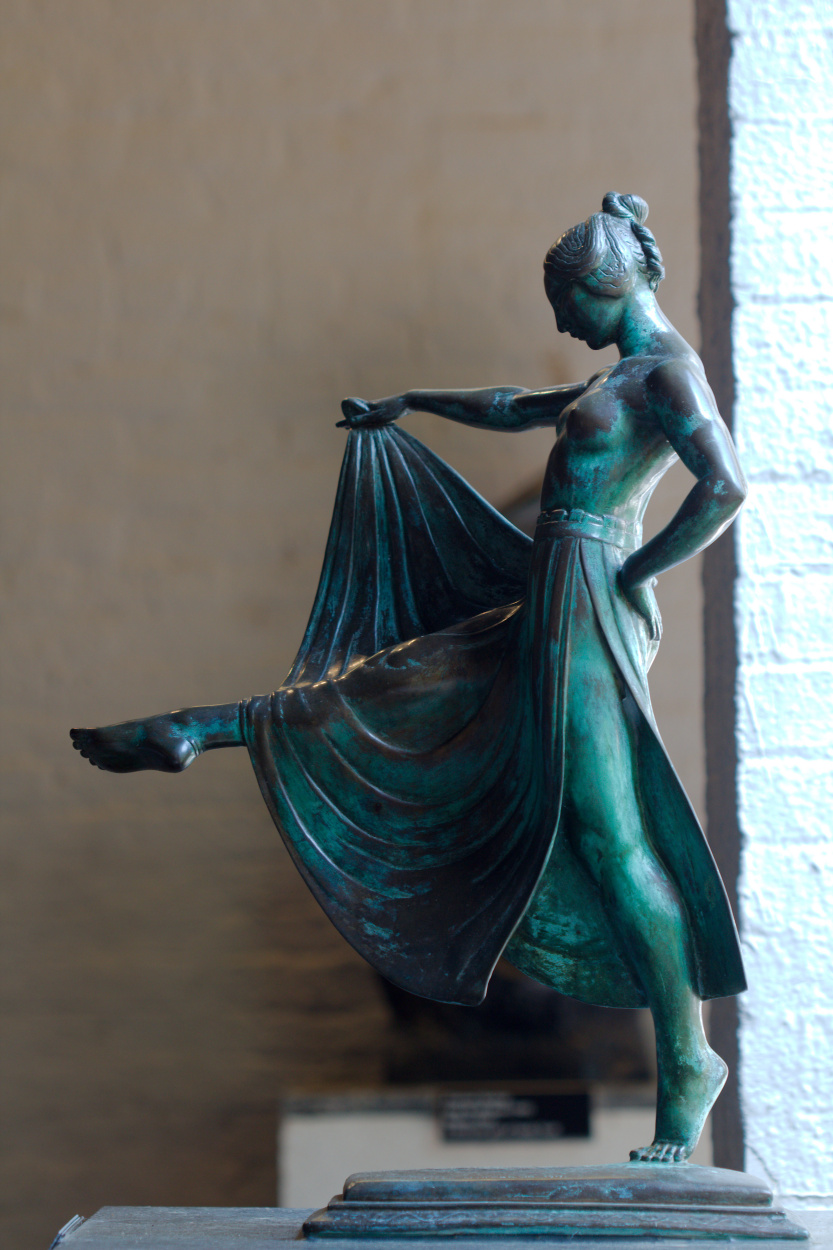
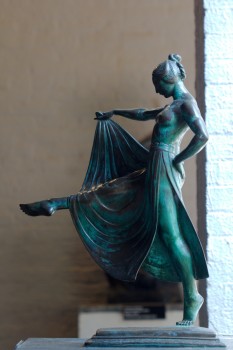
I can’t possibly show you everything, or even everything I photographed so I’ll limit myself to a brief selection. One of my favorite sculptures is simply called “Dancer” and is a bronze by Edward Field Sanford, Jr. (1886-1951) from 1917. This is in the Brown Sculpture Court so photographing it is a bit more difficult (lower light). As someone or other said (and I have no idea who said it first), “I don’t know much about art, but I know what I like.” This is one that I like. There are actually quite a few at Brookgreen that I like.
Let me pause here to interject an interesting fact about the Huntingtons. They shared a birthday, March 10, with Archer being born in 1870 and Anna in 1876. Then, they got married on March 10, 1923. From then on, March 10 was known by them at their “three-in-one-day.”
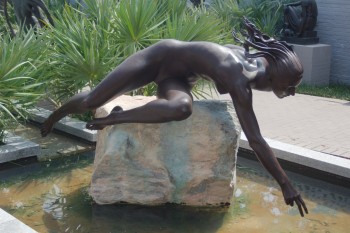
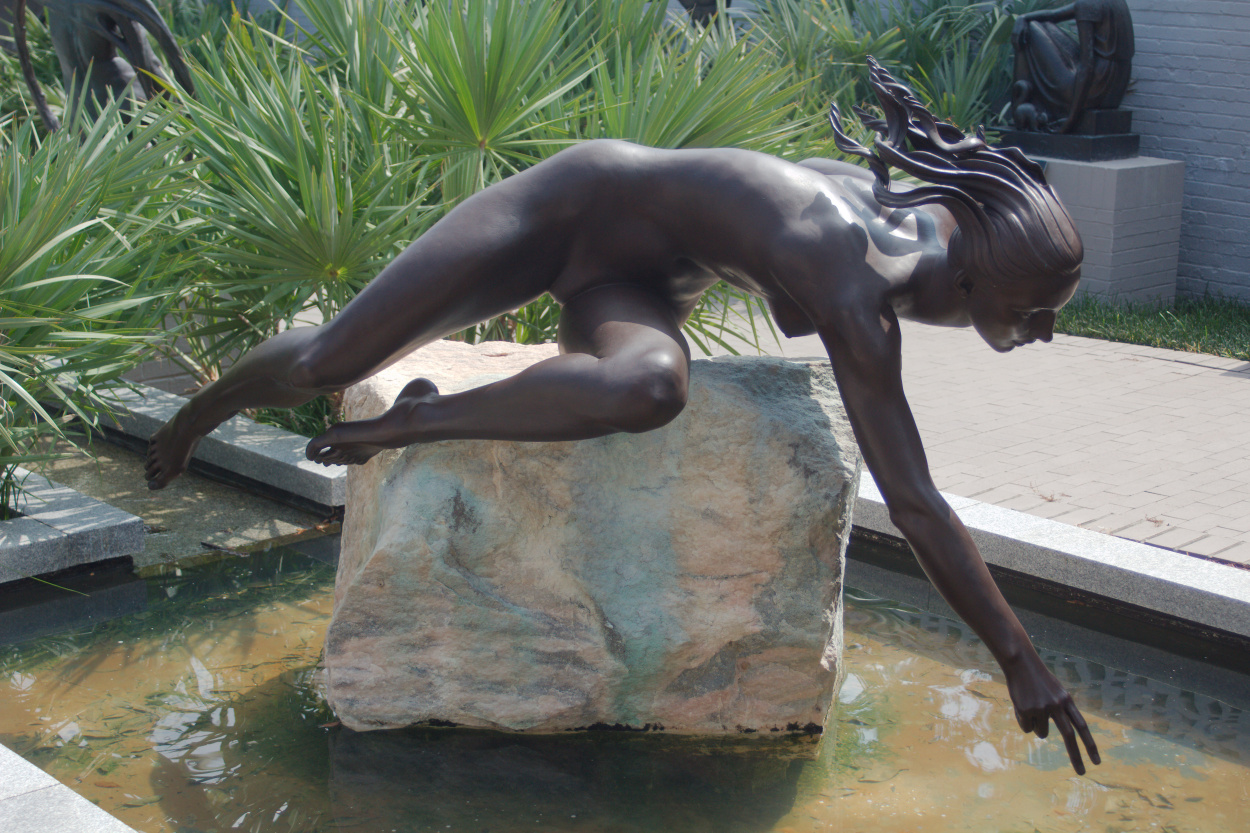
Another work that I like (and this one happens to be in the Brown Sculpture Court, as well, is called “Reaching” by EvAngelow William Frudakis (born 1921). This bronze from 1996 was a gift to Brookgreen from Dr. Pierre Rioux.
The first time we came to Brookgreen, Cathy took a picture of this sculpture and there was a water lily on the surface of the pool. She lined it up perfectly so that her picture made it look like the woman was reaching for the lily. I had no such fortune this year. Still, one that I like.
In addition to the sculpture there are plaques with short poems carved on them. Reading one of them made me sort of chuckle to myself and as I write this on a public blog, I continue to chuckle. Here’s a slightly modified version, with apologies to Emily Dickinson:
I’m nobody! Who are you?
Are you nobody, too?
Then there’s a pair of us — Don’t tell!
They’d banish us, you know.How dreary to be somebody!
How public, like a frog
To tell your name the livelong day
And brag about your blog!*
Cathy asked me if the garden had changed any since last time. There were a few things that have changed since we first came ten years ago. I didn’t recognize this sculpture, called “The Diver” by Stephen H. Smith (born 1958). Since it was new in 2007 (the gift of John Sanders in honor of Ann Beal Sanders) I guess that explains it.
There is also a walk now out to the creek that runs behind the gardens. The creek is actually a branch of the Pee Dee River. Our favorite thing about that was the signs that said, “Swimming and wading are prohibited. It is illegal to feed the alligators.” Enough said.
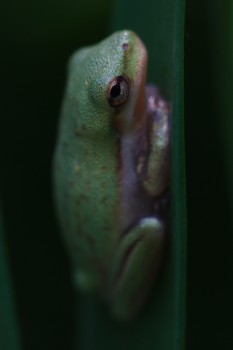
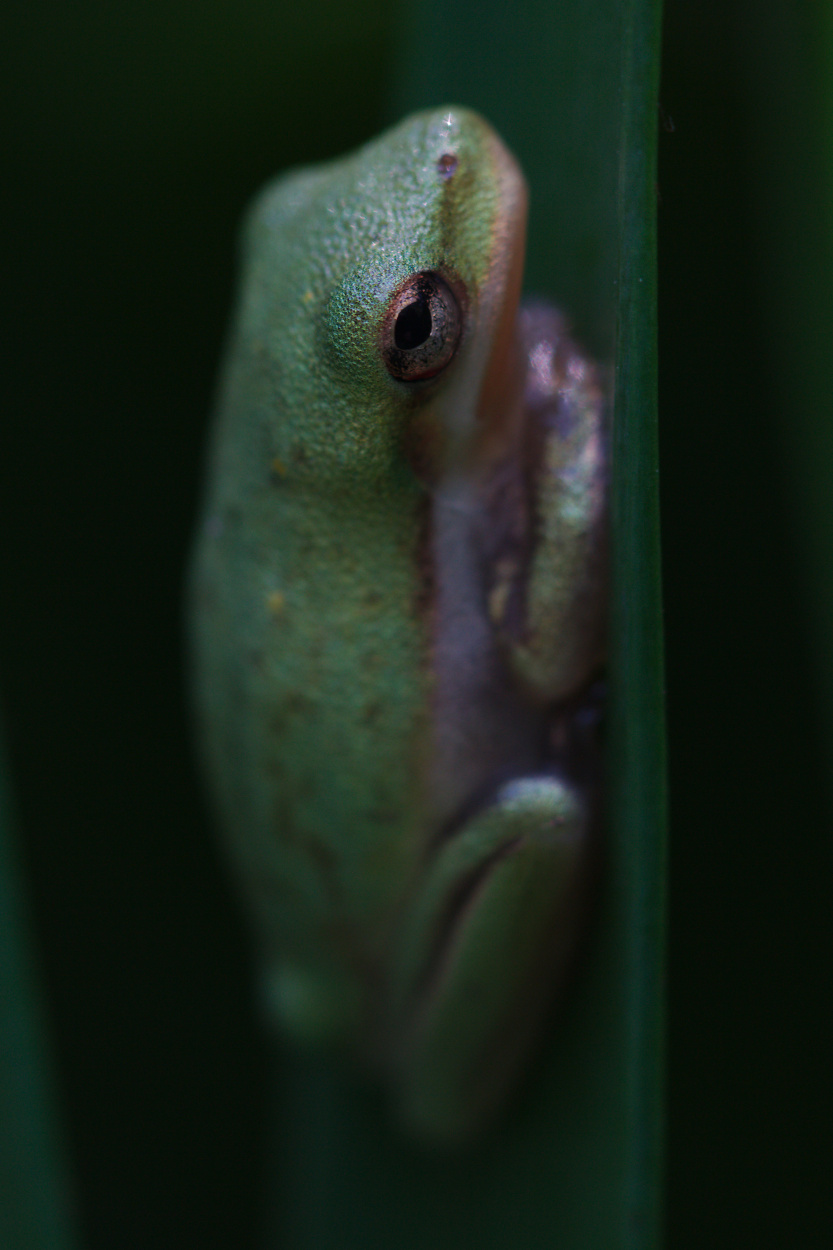
There is small wildlife throughout the garden. We saw a snake (a little black snake lying on top of a trimmed shrub), lizards, lots of huge grasshoppers, birds, and I saw this tiny green tree frog on a leaf. It’s only about an inch long.
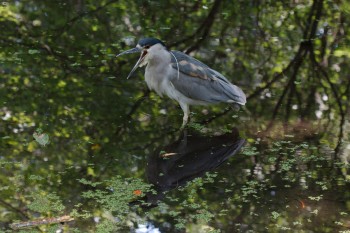
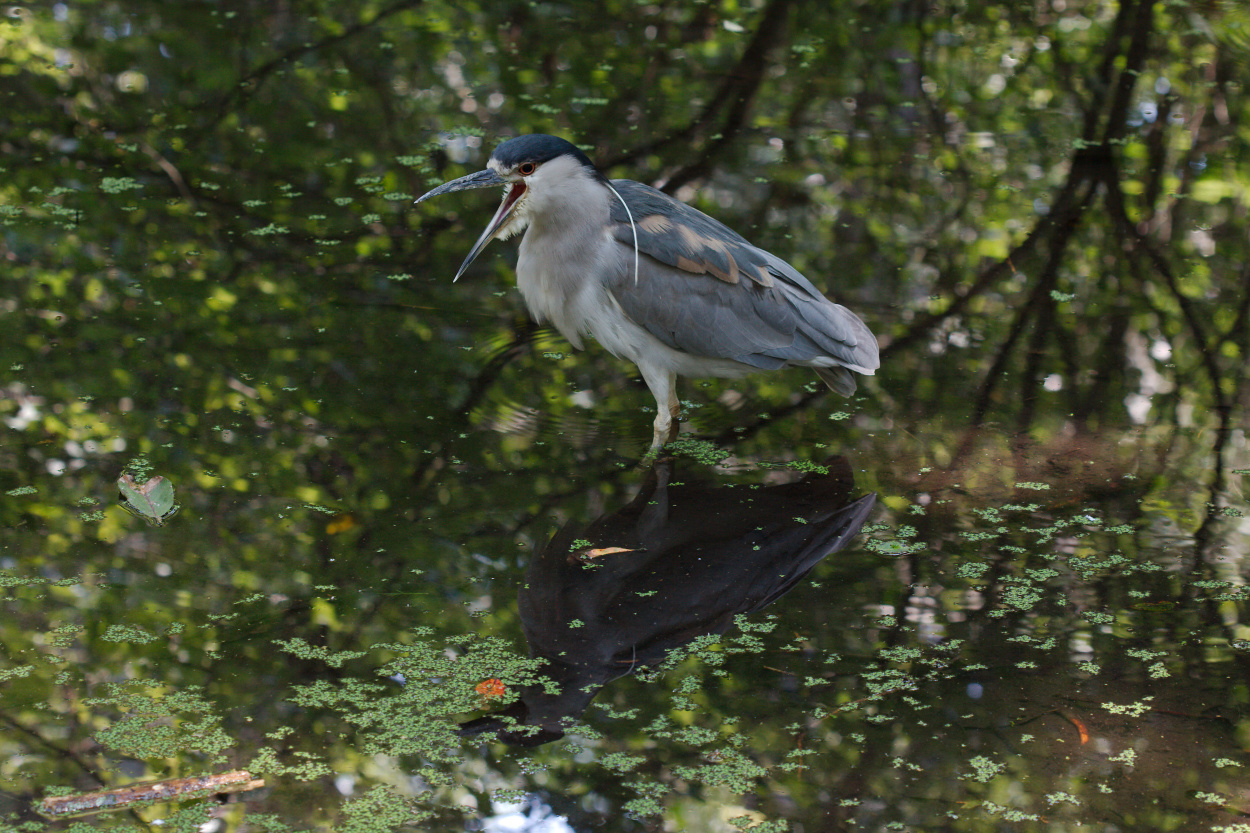
In addition to the gardens there is a Low Country Center (which we skipped this time) and a small zoo which has, among other things, a cypress swamp aviary. That’s where I took the photo here of a black-crowned night heron (Nycticorax nycticorax). There are also ibises and a few other birds. We saw otters and alligators, as well as a few owls and hawks and two bald eagles.
It was quite warm but all in all, I’d say I had a enjoyable time at Brookgreen. I’d come again (and plan to).
* The original last line is, “To an admiring bog!”
Green Swamp
A few years ago I happened to read and article in Smithsonian magazine about Venus flytraps. It mentioned the Green Swamp in southeastern North Carolina as one of the best places to go to see them in their native habitat. In fact, the area around Wilmington, North Carolina (and into South Carolina) is the only place the plants natively grow.
This year was our third visit to the Green Swamp, managed by The Nature Conservancy. Last year it had been very hot and very dry and was not as rich an experience as the year before. This year was another good one. It has been a very warm summer but it has also rained enough that there was a lot to see.
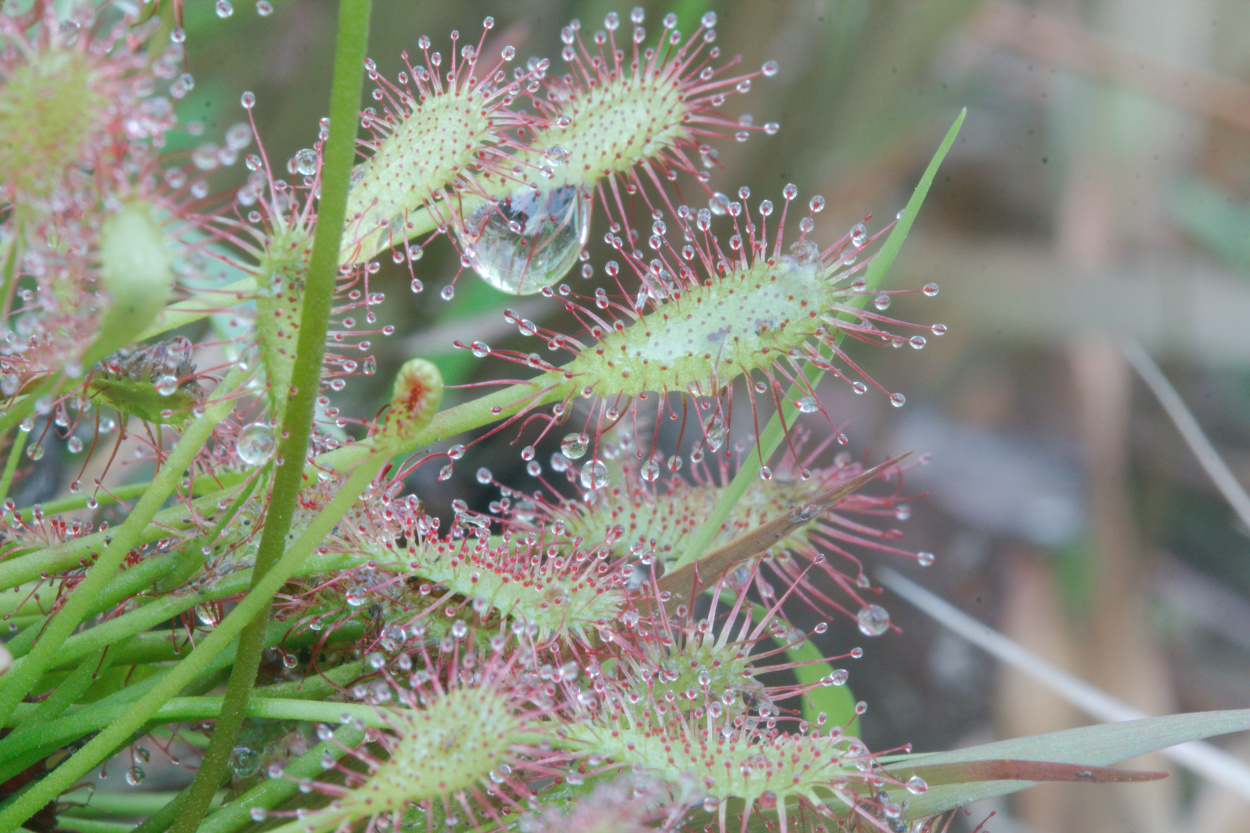
I’ll start with the sundews. There are a number of Drosera species and those we found were just off the parking area beside the partially dried pond. They are small and if you were not looking for them, you might not notice them at all. An entire plant is only a few inches across and tall and the red hairs that hold the drops of mucilage are not obvious against the dark earth. Once you know what to look for and where to look, however, they are easily found. Getting a good picture isn’t all that easy and basically means lying on the damp ground. Still, I’m please with what I got.
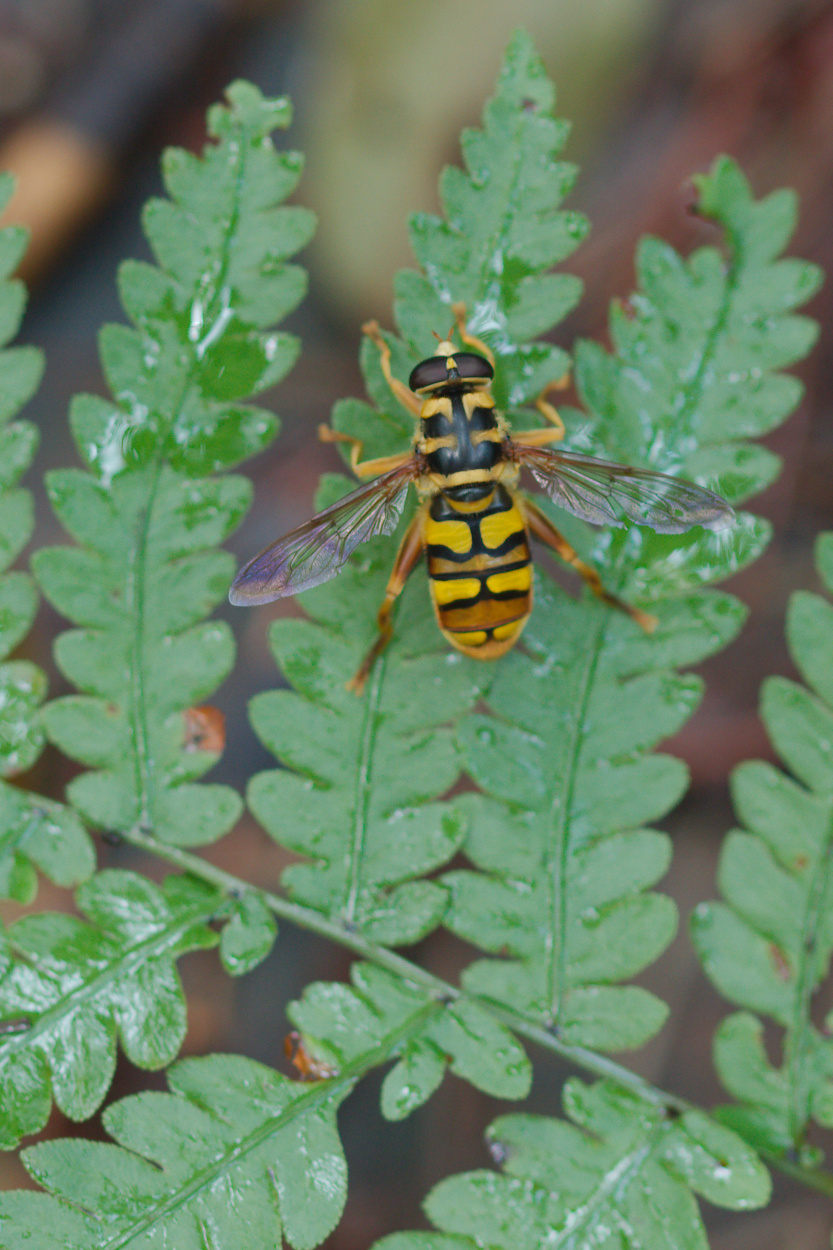
My next image is a yellowjacket hover fly (Milesia virginiensis). Between areas of long-leaf pine savanna are pocosins, or shrub bogs. In one of these we came upon this fly, which I mistook for a wasp of some sort at first, until I realized it only had two wings (order Diptera, the flies, literally means “two wings”). In fact, this fly mimics the southern yellowjacket (Vespula squamosa). It was fairly dark under the trees so this isn’t as sharp a picture as I’d like.
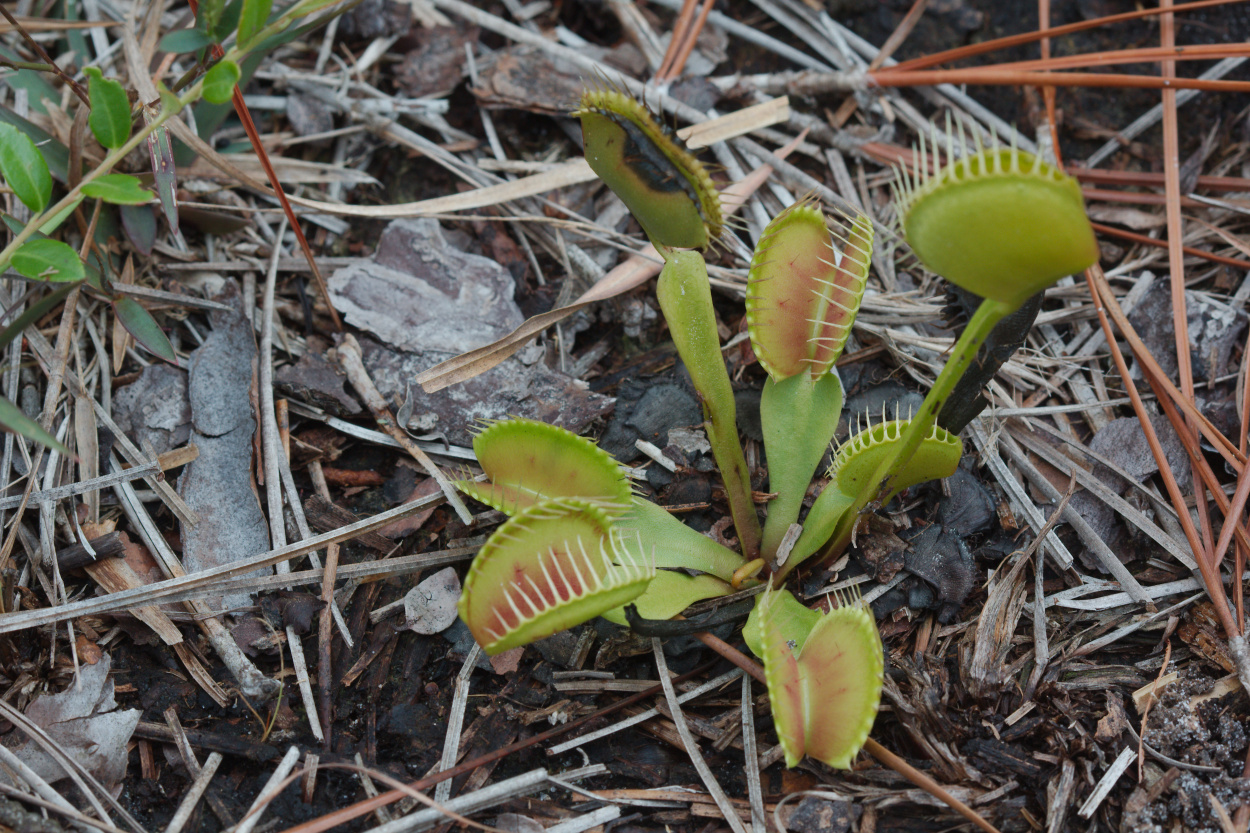
The third picture is what brought us to the Green Swamp in the first place. We didn’t see Venus Flytrap (Dionaea muscipula) at all last year. I assume they were still here but with the drought, they were not nearly as obvious. Also we walked a different route, which may have been the reason. In any case, these are pretty hard to spot until you know what to look for. They are small, only a couple inches across, and blend in well with the other vegetation. Just after we found these, we met another couple who were walking back out and who hadn’t seen any. We pointed them out and they were glad to have met us.
In the open traps on this plant you can see reddish spots, which is where the tiny trigger hairs are located. Two trigger hairs must be touched in succession or one hair touched twice in rapid succession before the trap will close. Once it closes on an insect, the insect is digested, which provides nitrogen for the plant growing in this nitrogen- and phosphorus-poor environment.
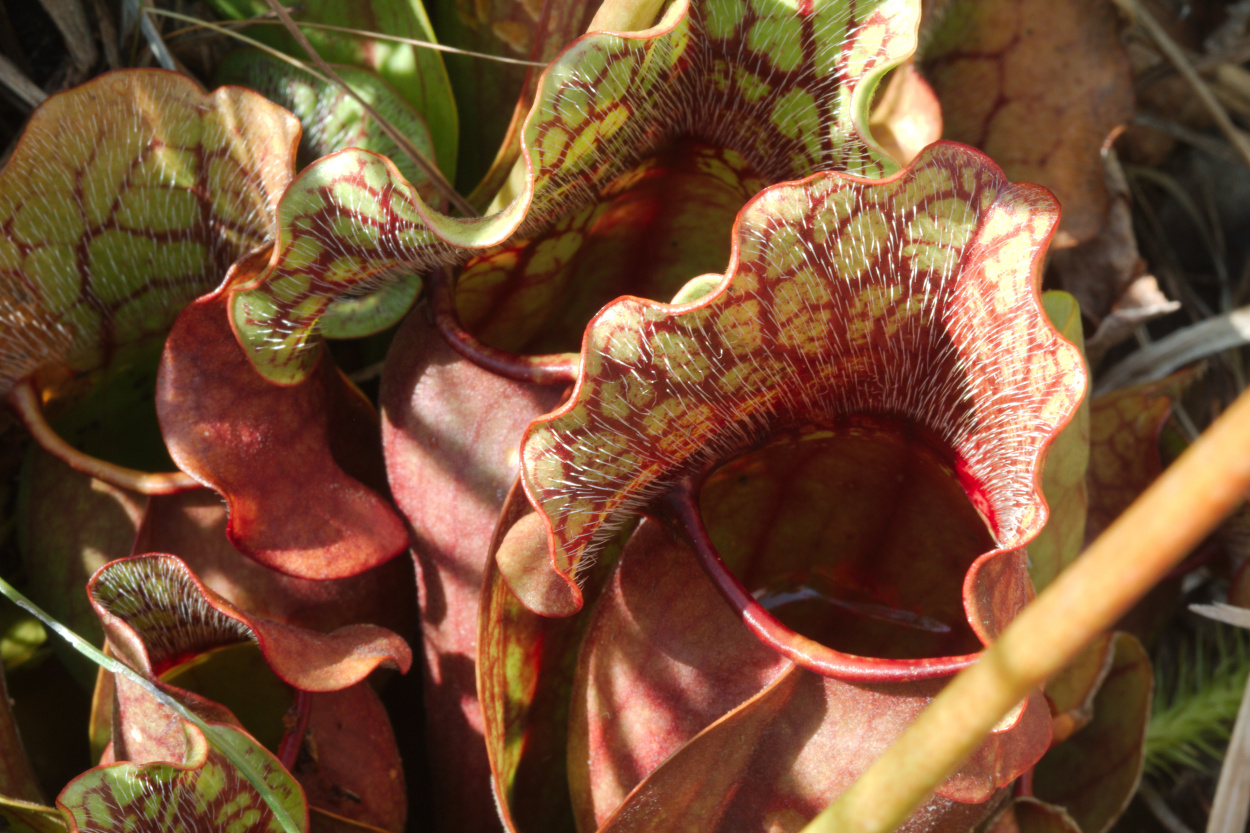
I really like the pitcher plants in the Green Swamp. There are at least two species here. This photo is of the purple pitcher plant (Sarracenia purpurea). This plant has short pitchers, only about four inches tall, but their dark color makes them fairly easy to spot. They also have flower stalks that are about a foot and a half tall. In this photo you can see the water that has collected in the pitcher on the right as well as the hairs on the upper portion to “guide” insects downward into the trap. Since these are so happy here in the hot south, I find it interesting that the other place we have seen pitcher plants growing is in Newfoundland.
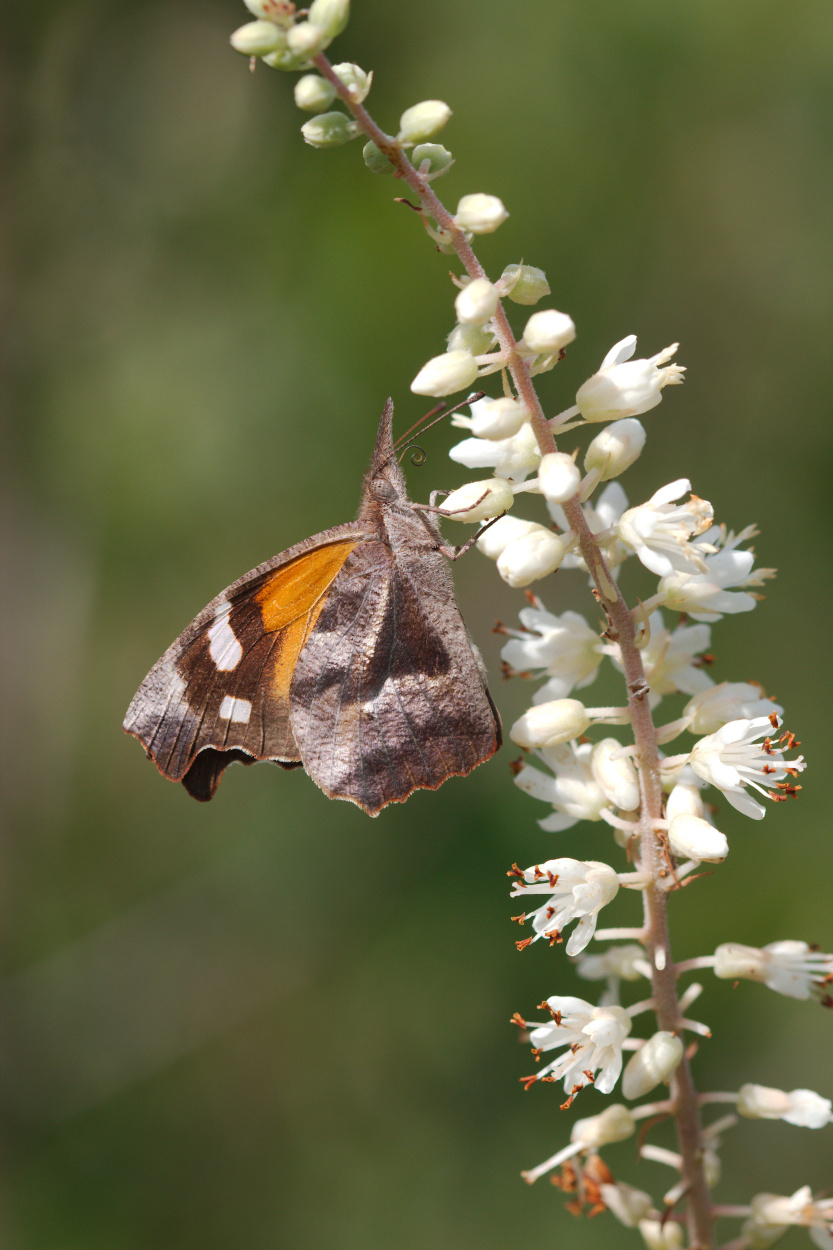
I’ll finish with a couple insects. First is an American snout butterfly (Libytheana carinenta, one of the brushfooted butterflies, Nymphalidae). It perched nicely for me on the panicle of a small shrub. I actually got some closer images but its snout was hidden behind one of the flowers. In this image you can see, if you look carefully, the coiled proboscis.
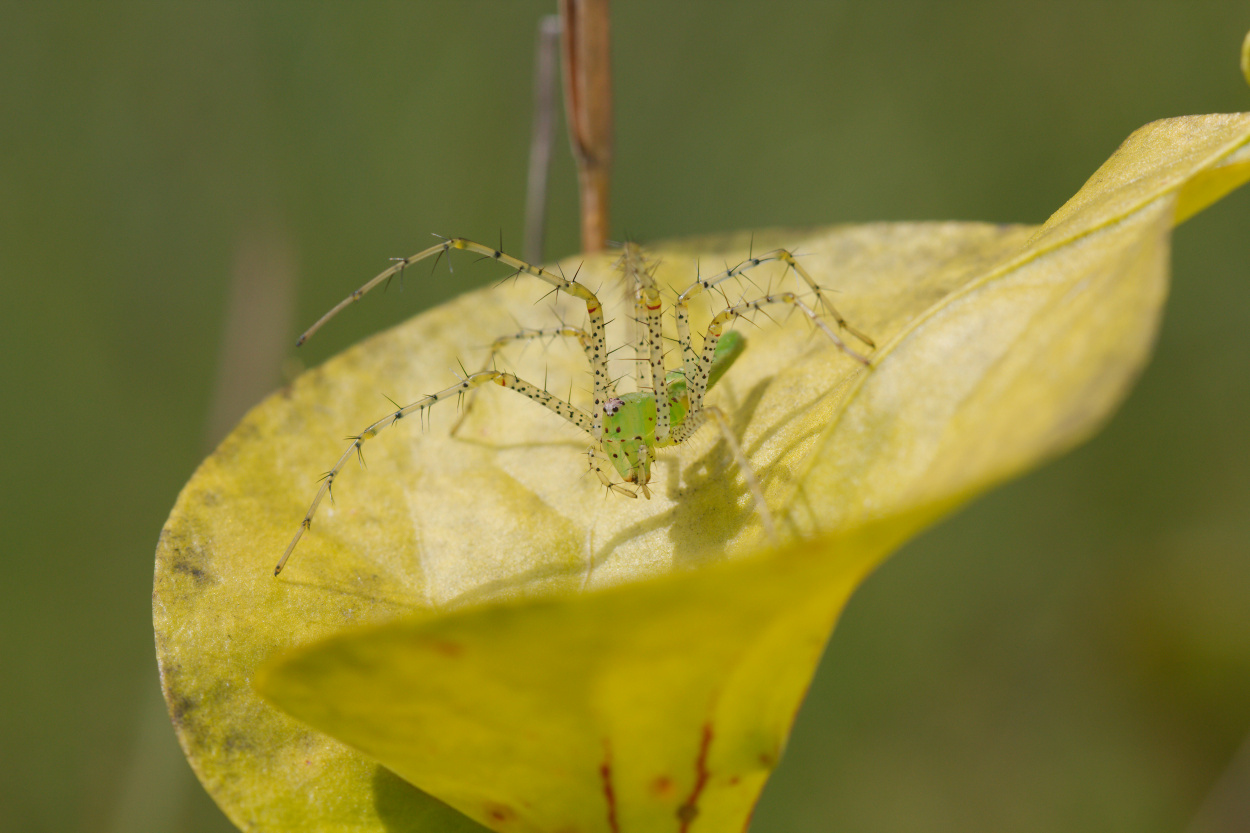
Finally, but not least by any means, is the Green Lynx Spider (Peucetia viridans). They are fairly easy to find in the Green Swamp. All you have to do is look for a yellow pitcher plant (Sarracenia flava) and there is a good chance one of these beauties will be waiting atop the operculum (the cap over the pitcher).
They are a little shy so if you touch the pitcher they are liable to run away, but they will generally come back fairly quickly. Also, there are enough of them that if you want a good picture you shouldn’t have too much trouble. These pitcher plants are a foot or 18 inches tall, making them perfect for photographing the spiders.
I did actually get some pictures that are a bit closer than this, including some where the spider didn’t quite fit in the frame, but I thought this image was more illustrative. They are such a beautiful green color and so fierce looking with their spiny legs. The lynx spider doesn’t spin a web but is a hunting spider, catching insects that are drawn to the pitcher plant on which it lives. They are not only found on pitcher plants, but live in lots of other areas but this is the only place I have seen them. They are certainly well suited to it.
Cathy and Black-eyed Susans
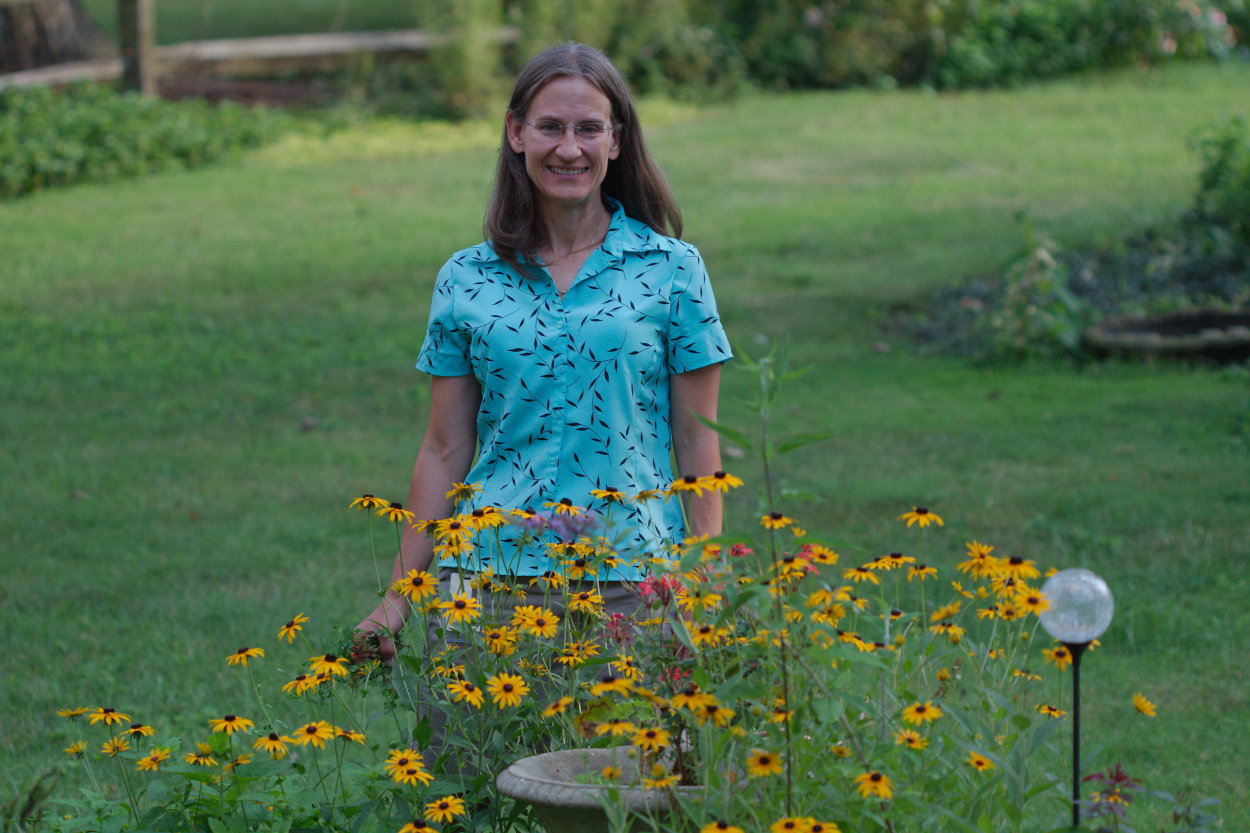
I know I’m a bit behind posting these but I’m trying to catch up from being away for a week. Anyway, I didn’t take many pictures on the 24th of July but Cathy posed behind some black-eyed Susans for me so that’s what you get.
Another Turk’s Cap
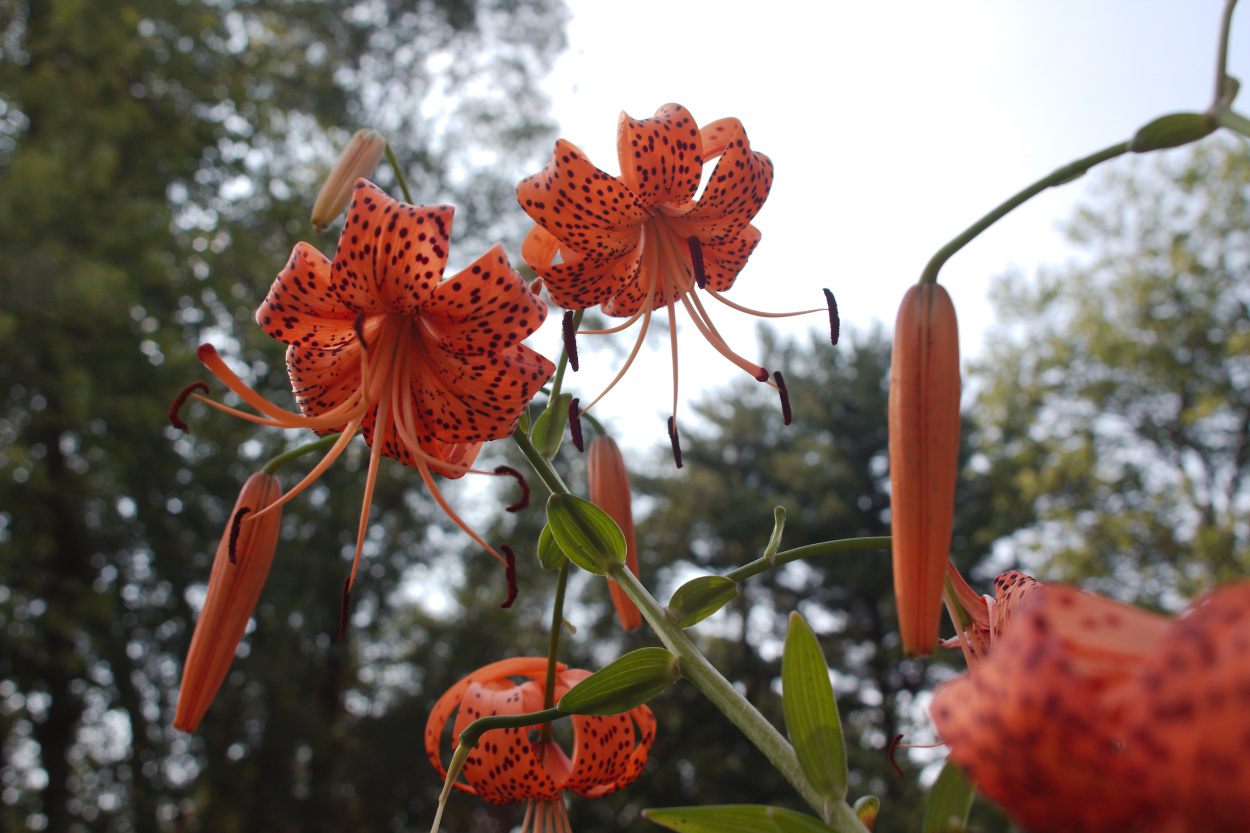
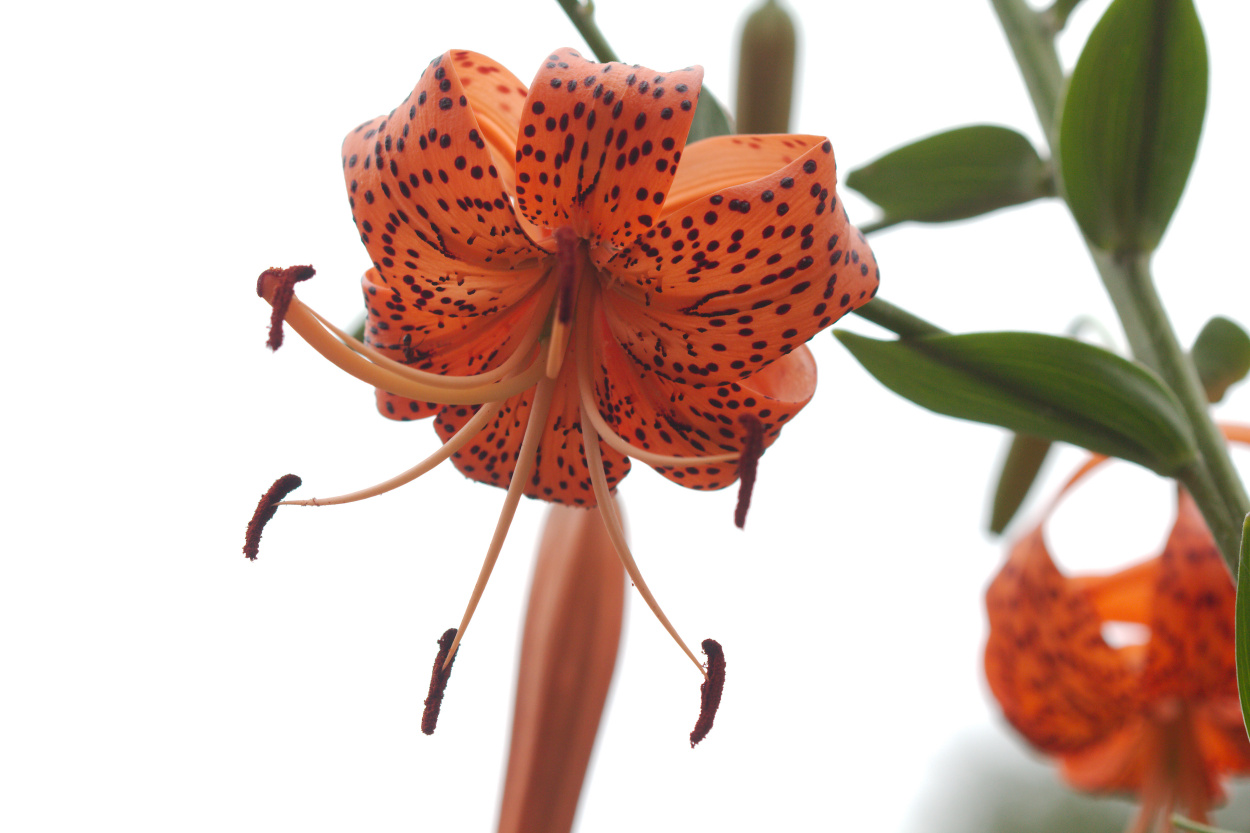
Yes, I know, I posted a picture of a Turk’s cap lily (Lilium superbum) only eight days ago (Sunday, July 08, 2012) but they are so pretty and I decided to post another. At least this is a different plant in a different part of the yard.
Butterfly Weed Seeds
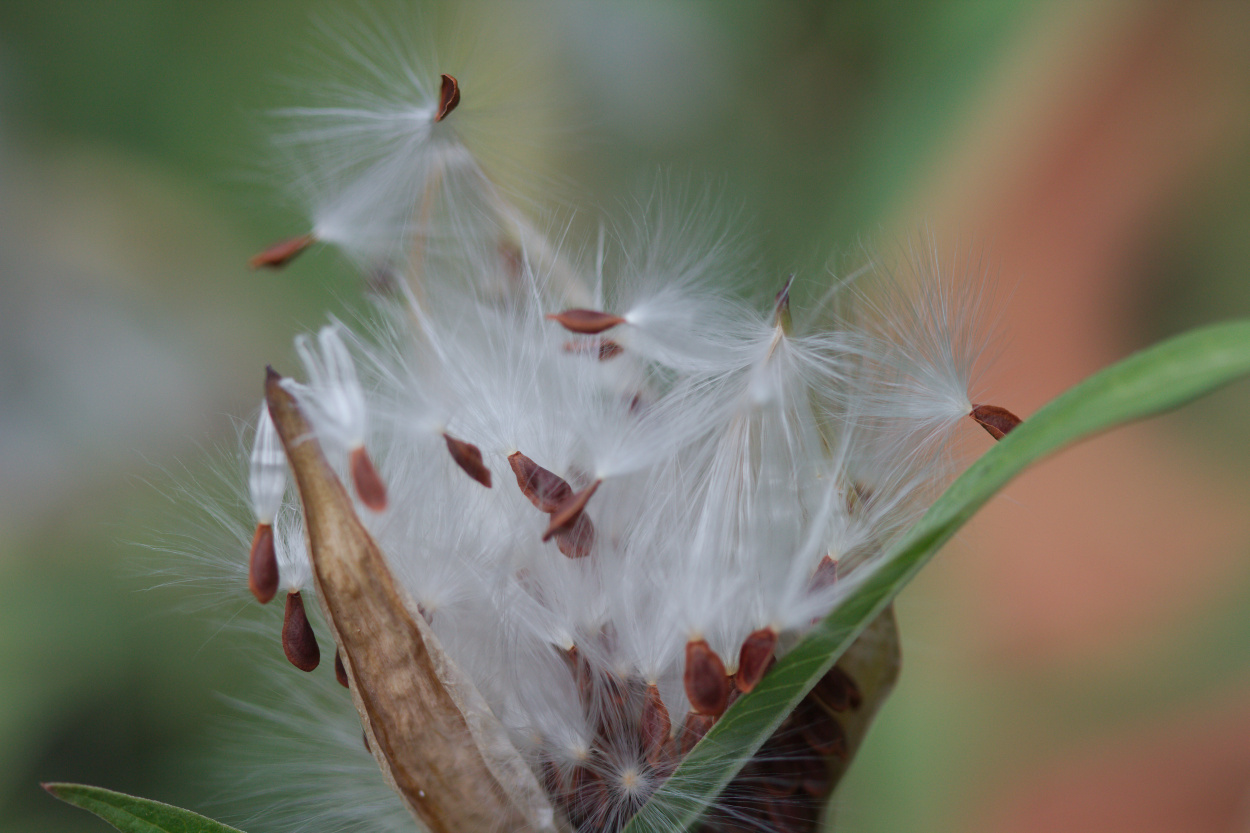
I generally think of this as a winter type picture. Back on May 22 I posted a picture of Asclepias curassavica (Mexican Butterfly Weed) flowers. Now, seven weeks later, it has gone to seed. This isn’t a particularly good picture but I think the seeds themselves, with their fine tufts of gossamer, are very pretty.
Turk’s Cap Lily
One interesting thing about Turk’s cap lily (Lilium superbum) is that they form little mini-bulbs called bulbils in their leaf axils. These can be taken off and planted and will grow into new bulbs. That makes them one of the easiest of perennials to divide and spread throughout your garden. Cathy collected bulbils from lilies my dad planted in his garden and planted them here. Now they are large enough to have their own bulbils and are doing very well, growing about six feet tall with lots of flowers. Oh, and the flowers are quite lovely.
Iris domestica
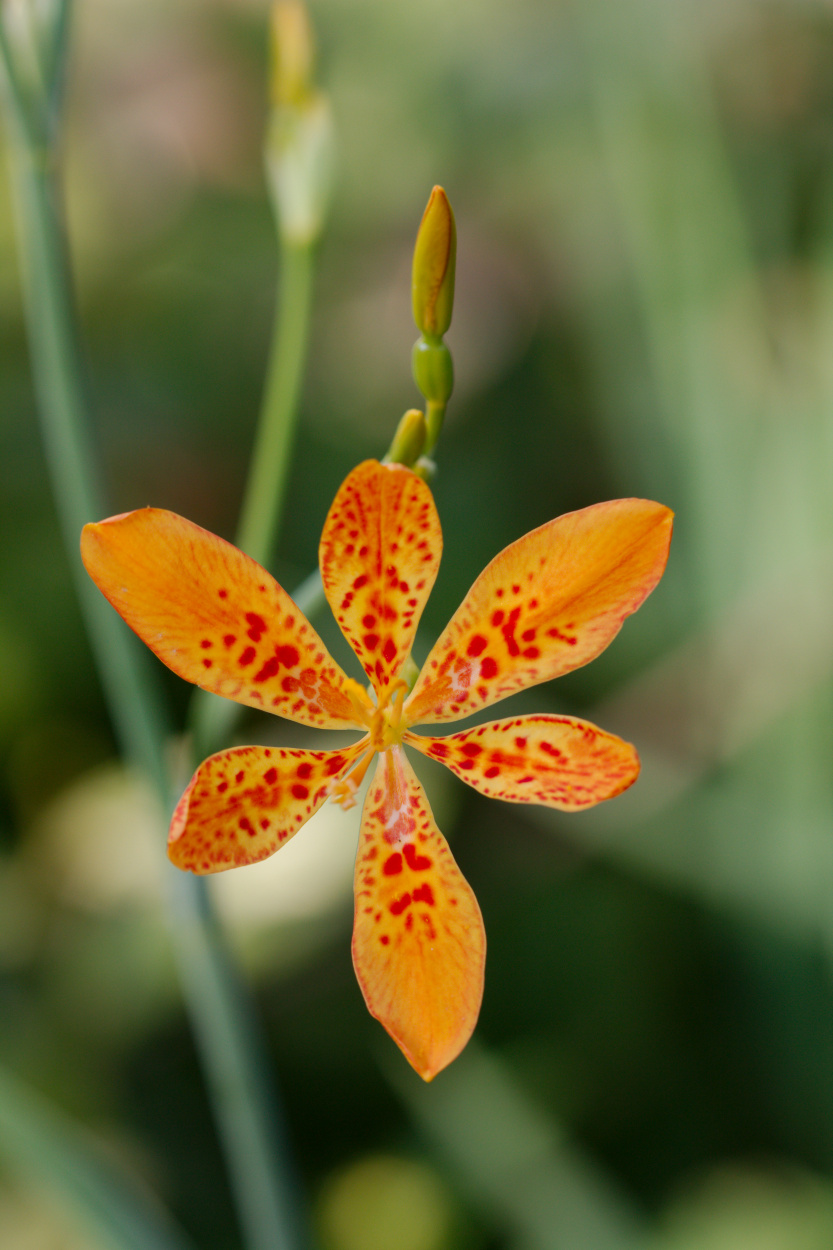
I still think of this as Belamcanda chinensis, as it was called until 2005 when DNA evidence proved it to be an iris. In any case, the common name, blackberry lily, while less accurate, is still fairly allowed. I brought some seeds of this home about ten years ago and have had it in the garden ever since. We brought it to this house in 2006 and this particular plant is a seedling from that one. It’s doing very well and is certainly cheerful this time of year. The blooms are very interesting in that when they are finished, the petals curl up into little spirals before they drop off. The seeds are large and black and form in fruits that (not surprisingly) look like the seed pods of other irises.
Echinacea’s Bumble
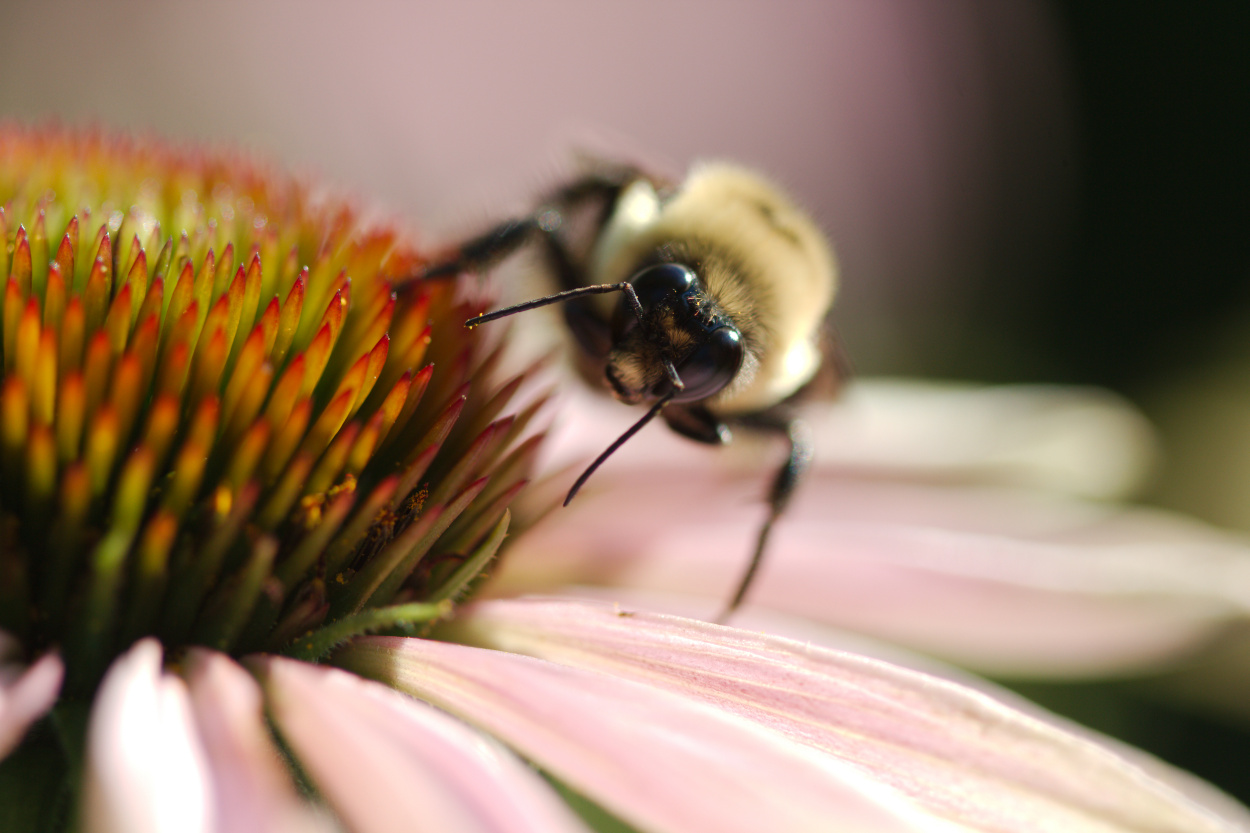
If there was a bit more light I might be able to get this with a little more depth of field. I may try to get a better shot of a bumble bee on the coneflowers in our back yard. For now, this will have to do.
Onions
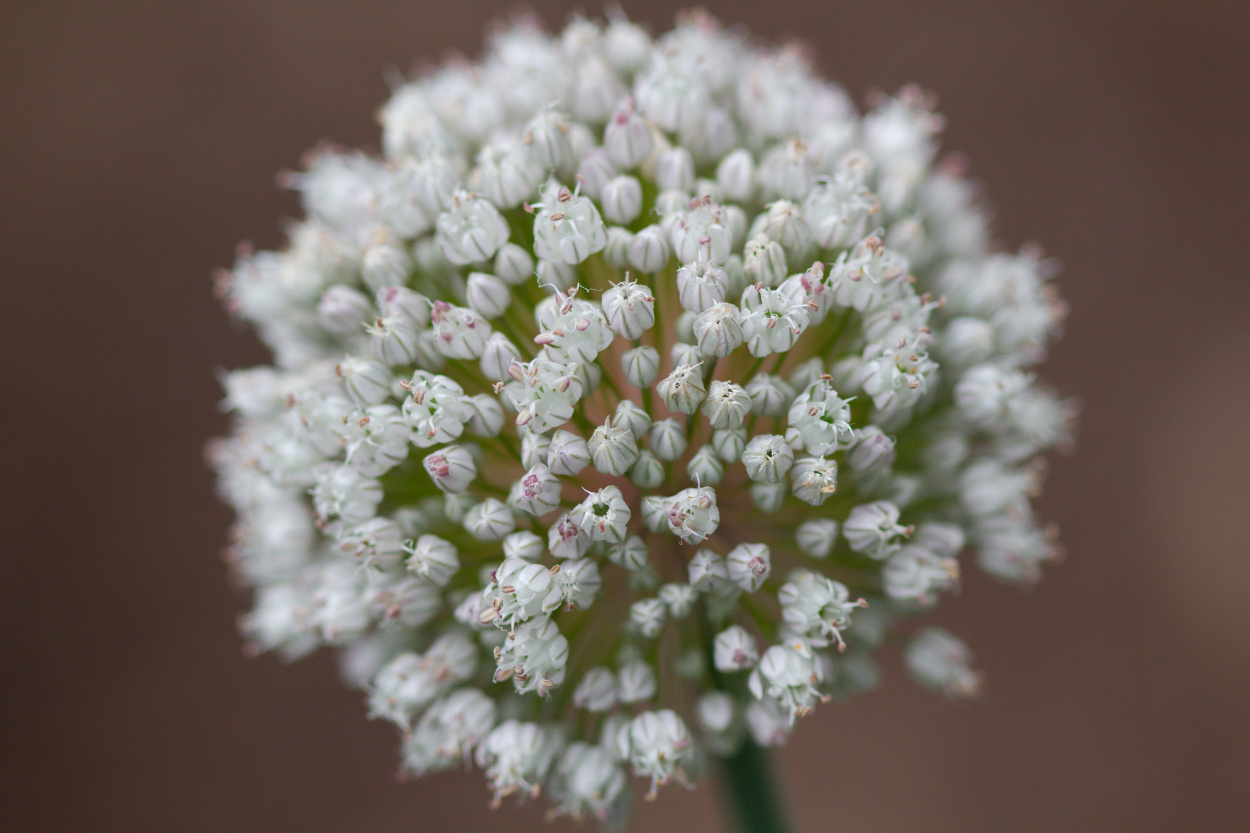
I grow a number of different allium species in my garden and their flowers vary, ranging from purple through blue to yellow and dark pink. These white flowers, though, are from a red onion being grown for eating. I planted a bunch of seeds last year but dealing with sun chokes (Helianthus tuberosus) from the previous year made it practically impossible to grow anything else. There are still a few chokes coming up this year but not so many that it’s a huge problem. This is one of a few onions that survived last year.
More Greens
I’ve said before that I love all the various shades of green in spring and summer tree leaves. Although it was pretty hot, I decided I would go out and take a few pictures early this afternoon. I had hoped for pictures of raspberries which are coming on to ripeness. Actually, I was a bit surprised that there were not more. There were nearly ripe berries last week but I think birds are eating them as fast as they are ripening.
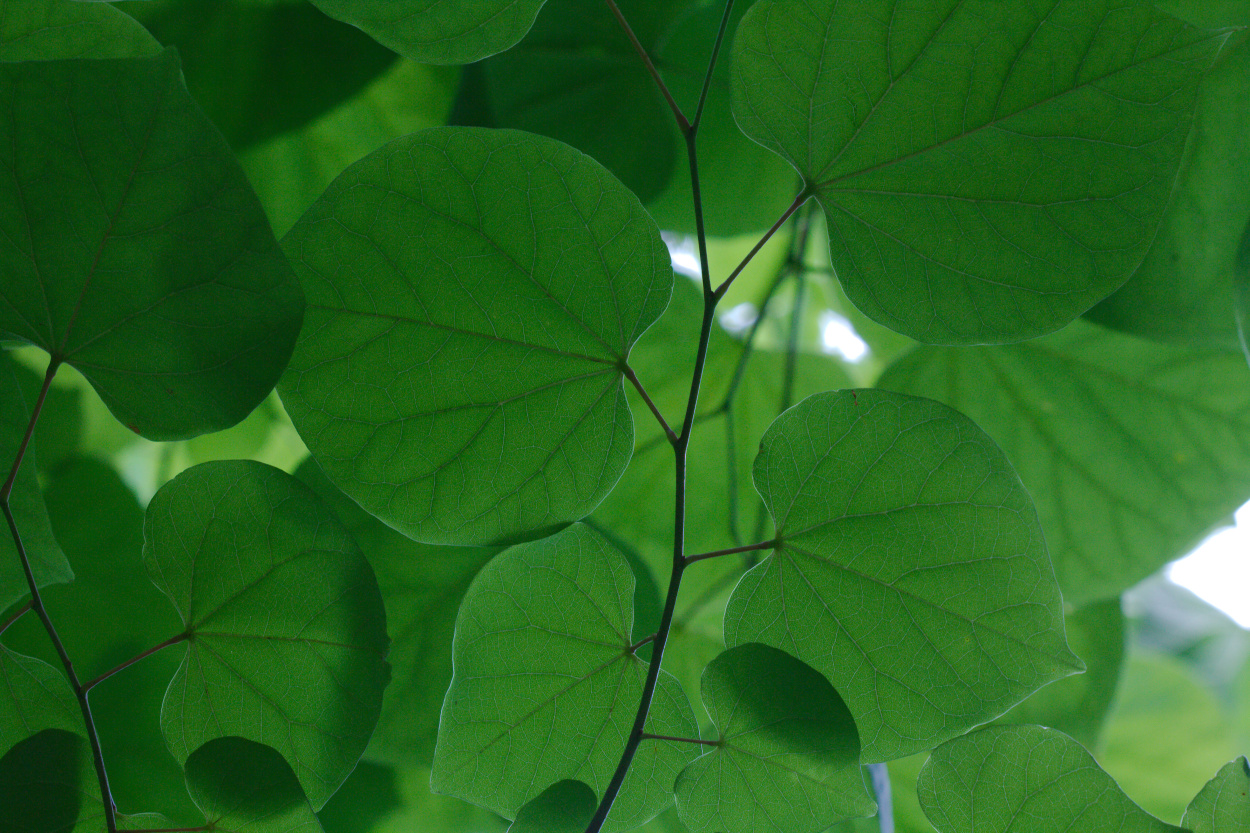
This picture was taken looking up into the leaves of a redbud tree.
Redbud Green
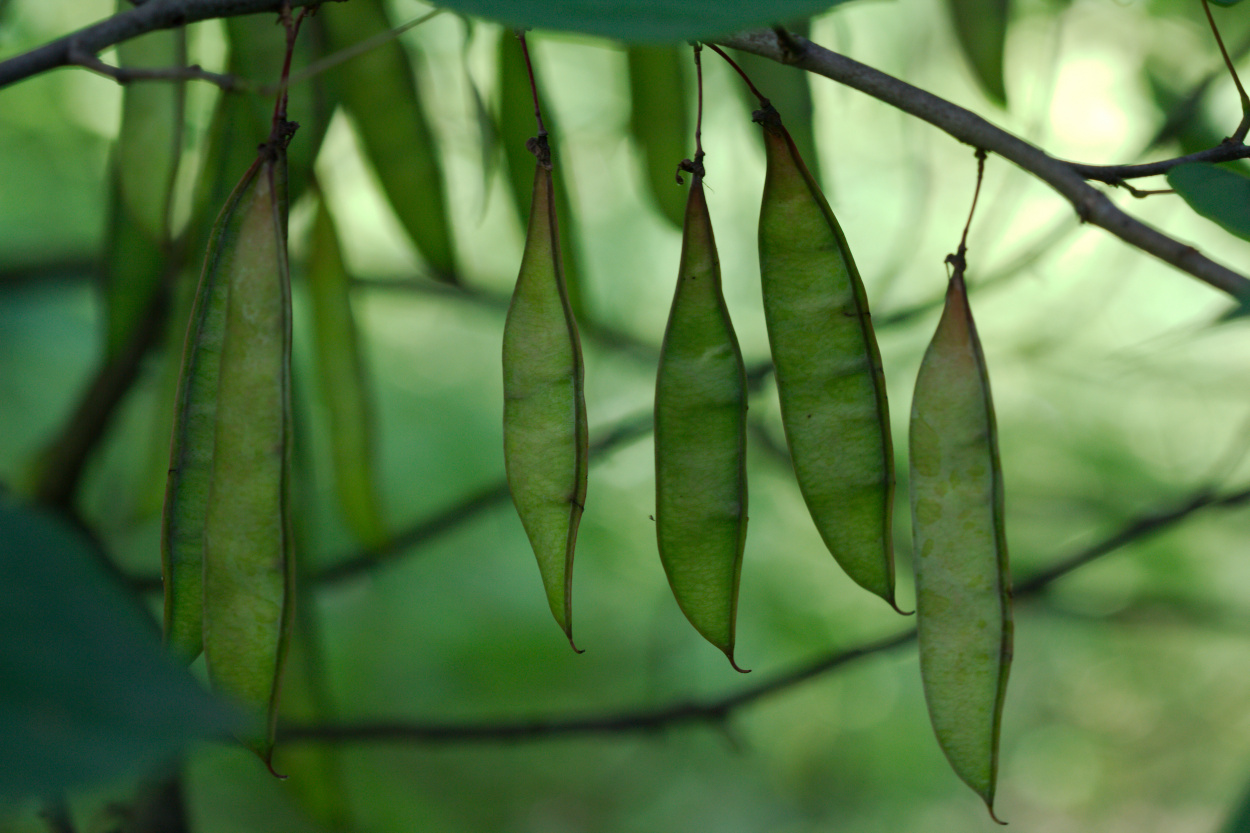
Although it’s continued to be busy at work I decided to take the time to go out and take a few pictures early this afternoon. In the empty lot beside my office are a bunch of redbud trees and they are now covered with seed pods, which make for a pretty, green picture. I also noticed the raspberries are nearly ripe (I found a couple that were ready to be eaten, so I ate them). I’ll definitely need to go out next week, as there should be a lot of them.
Hello Yellow
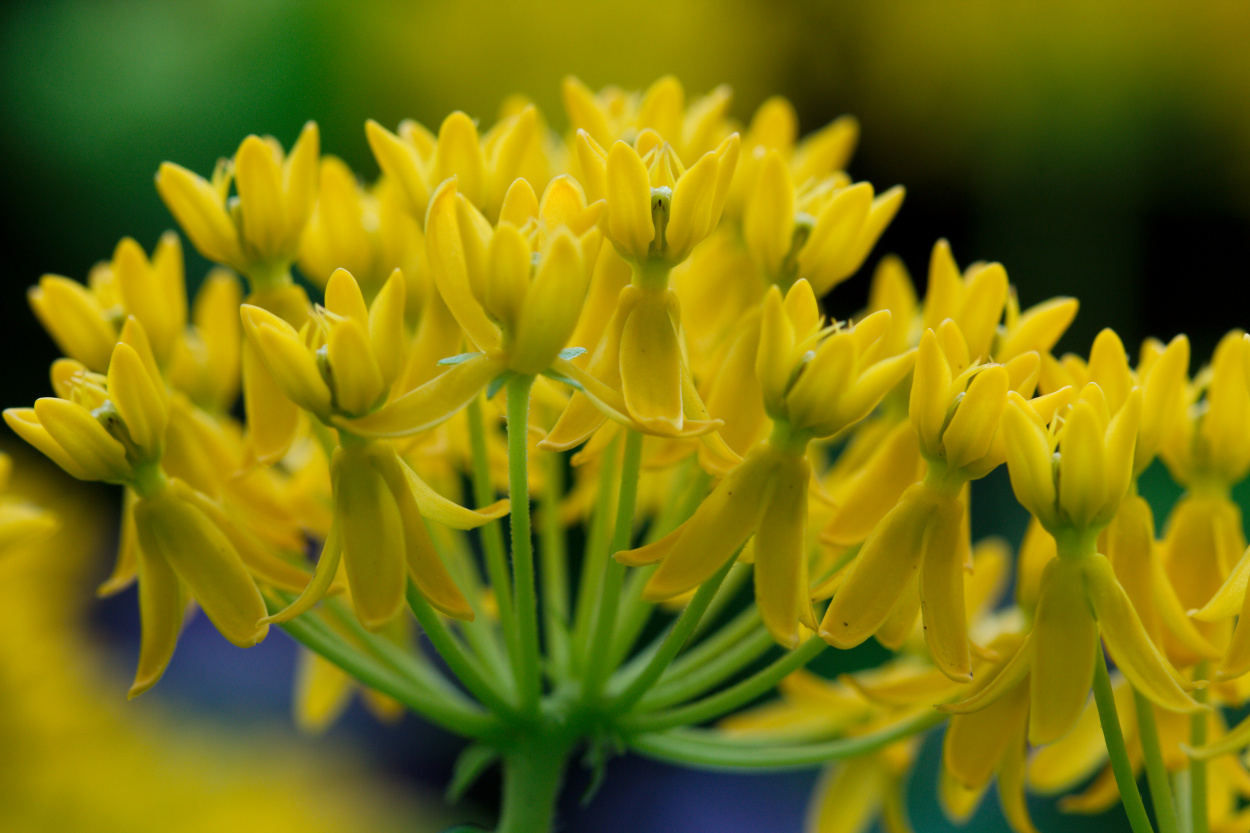
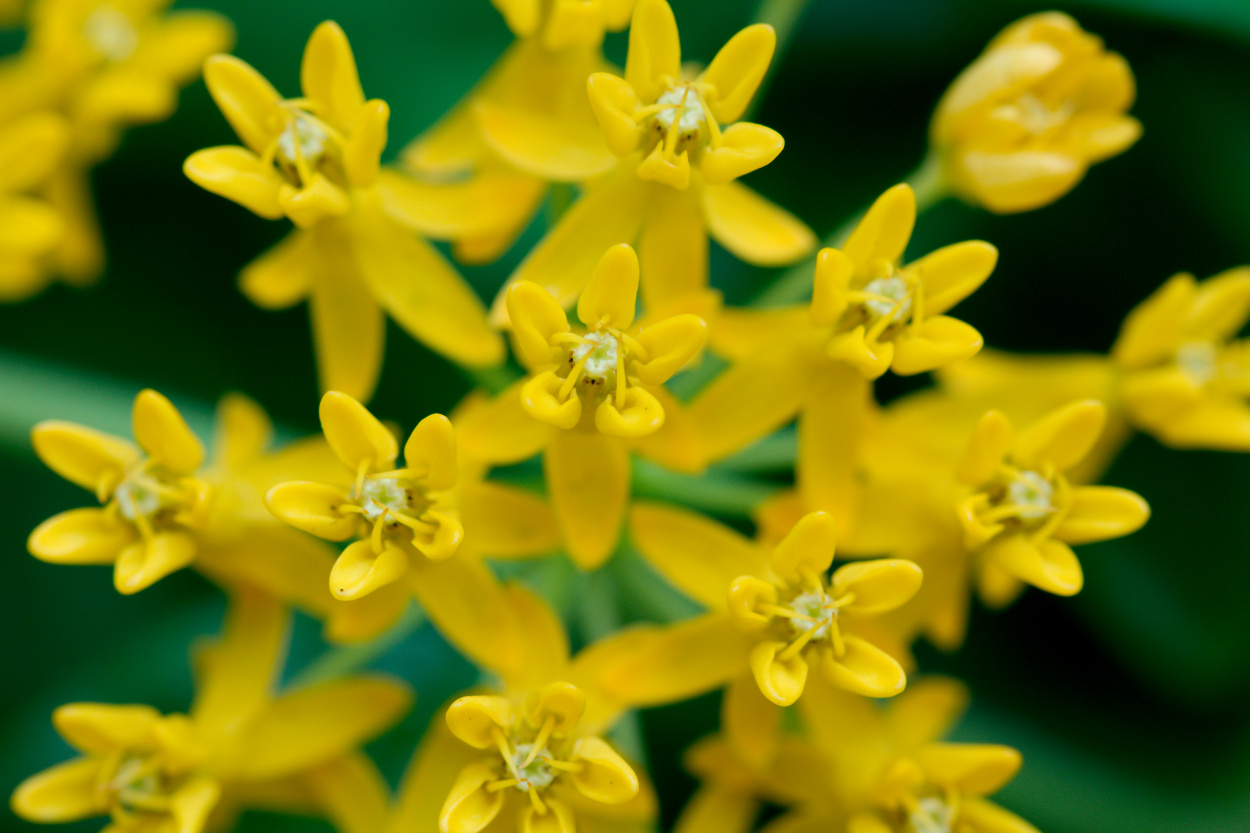
On Tuesday, May 22, 2012 I posted a photo of Asclepias curassavica (Mexican Butterfly Weed) which I initially labeled incorrectly as Asclepias tuberosa. It has a beautiful bi-color flower with orange corollas and yellow corona lobes. It is really something beautiful. That’s not to say that Asclepias tuberosa isn’t worth having, as well.
In general it’s flowers are a sort of mottled orange with the same color on both corollas and corona lobes. This variety is called ‘Hello Yellow’ and as you can see, is a bright yellow version.
We have both this and the standard orange version in our back border and they are doing very well. I particularly like this yellow version, though.
I think at some point I’ll get very close and take a few pictures of individual flowers or parts of flowers. The problem with doing that outside is that the slightest breeze makes it nearly impossible to get it into focus long enough for a good picture.
Also, I need to figure out how to get the color temperature set right when I take pictures of predominately one, bright color. Pictures of a blue sky with only sky and clouds tend to come out an unnaturally intense blue. Pictures of bright yellow flowers also shift the auto-white balance unnaturally.
Gooseneck Loosestrife
Lysimachia clethroides, better known as gooseneck loosestrife, is described in one plant catalog as “vigorous to the point of invasiveness.” That’s actually a little bit of an understatement. At our old house we had this and St. John’s wort growing together just outside our front gate. Cathy thought it would be interesting to see which would do better. I was constantly pulling this up to give good old St. John a fighting chance. We have it in a few places in out new yard. Cathy actually dug some up this year, not to replant it but to make room for something else. It doesn’t like to share its space and will basically choke out anything and everything else. But it does have these elegant little flower spikes.