Creatures

Bald Eagles (Haliaeetus leucocephalus)

Bald Eagles On Their Nest

Bald Eagles On Their Nest

Cathy and I went for a walk late this morning (and into the early afternoon) and really enjoyed the warmer weather. It was quite pleasant out, although very humid. The ground was pretty muddy and I admit I wore the wrong shoes for a walk in the woods. Early on we saw a small herd of white-tailed deer (Odocoileus virginianus) and I got a few pictures of them.

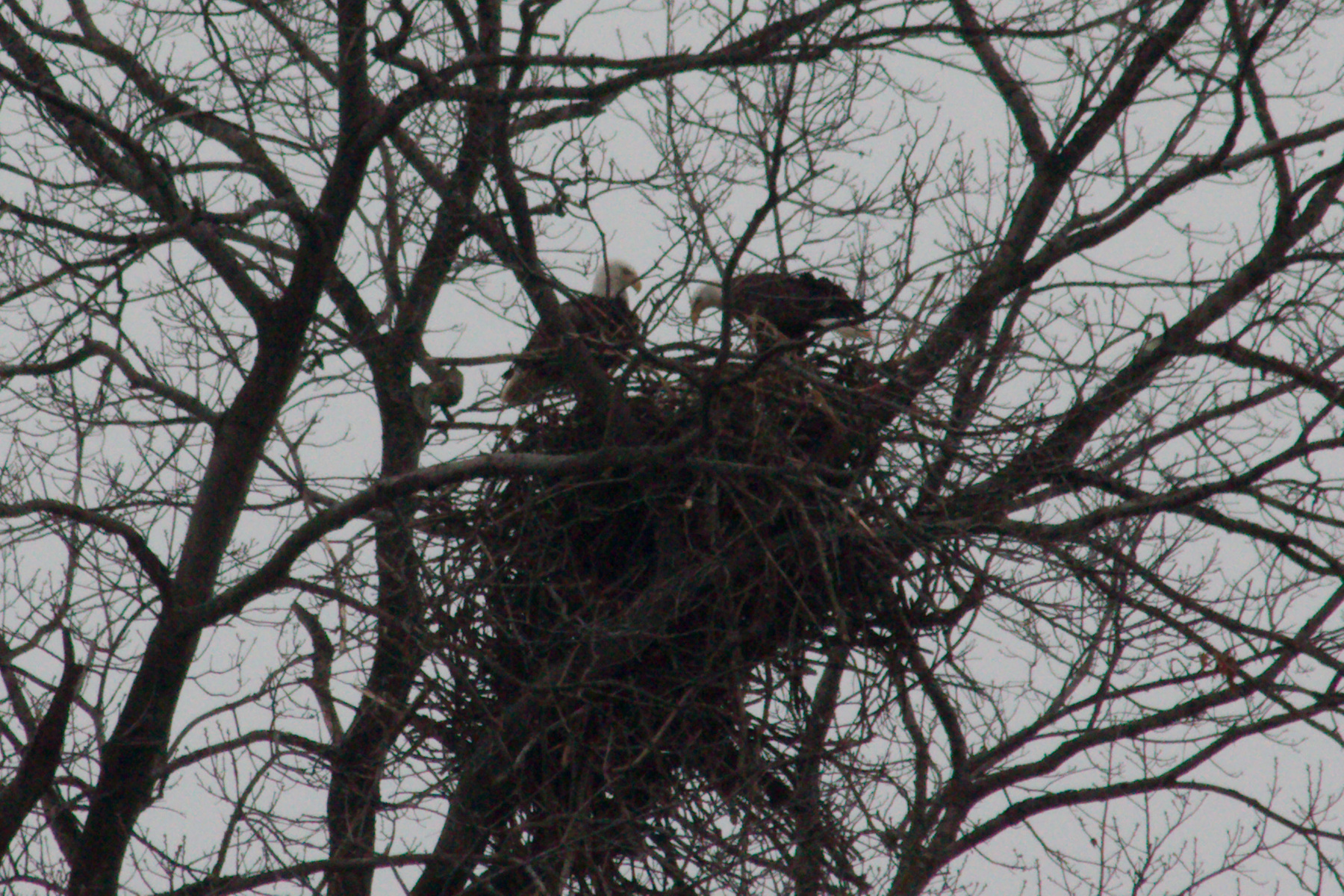
A little later Cathy said she had heard that there was an eagle nest nearby so we walked to the lake and found it. At first we could see the nest but not any birds. After a while, however, they stood up and we could see both adult bald eagles (Haliaeetus leucocephalus).
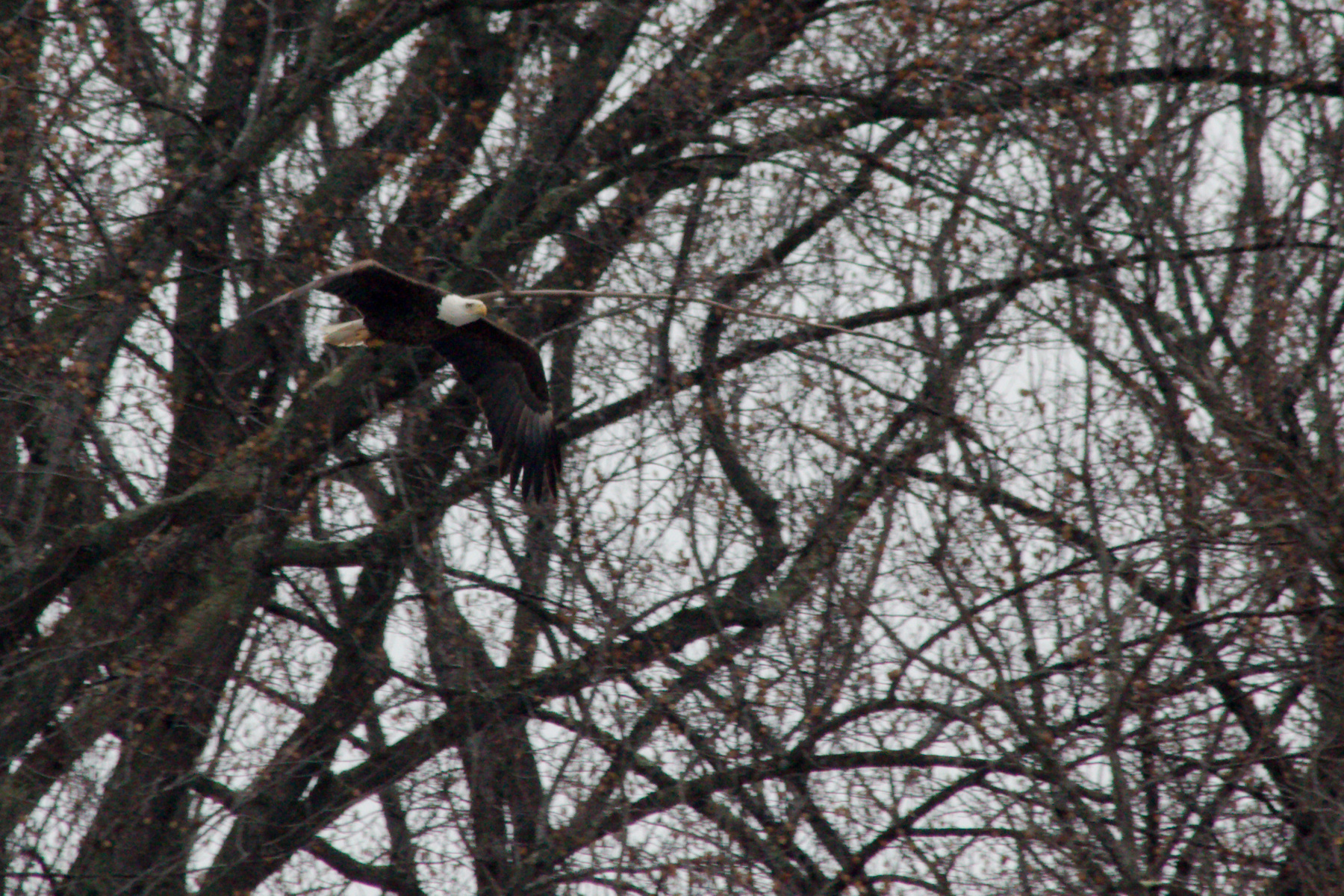
Bald Eagle in Flight

Bald Eagle in Flight

at about 150 yards, even with my 70-300mm zoom lens all the way out, I had to crop these to help you see the birds. In consequence, the pictures are fairly grainy (or more precisely noisy). But they are plenty clear enough to be able to identify the eagles. Naturally we were fairly excited. When one of the two birds took off, I was able to get a few pictures of it flying, although I had to pan across some intervening trees, which made it a bit harder. The bird is moving along the opposite shore, which angled toward us slightly, so he was not quite so far away now.
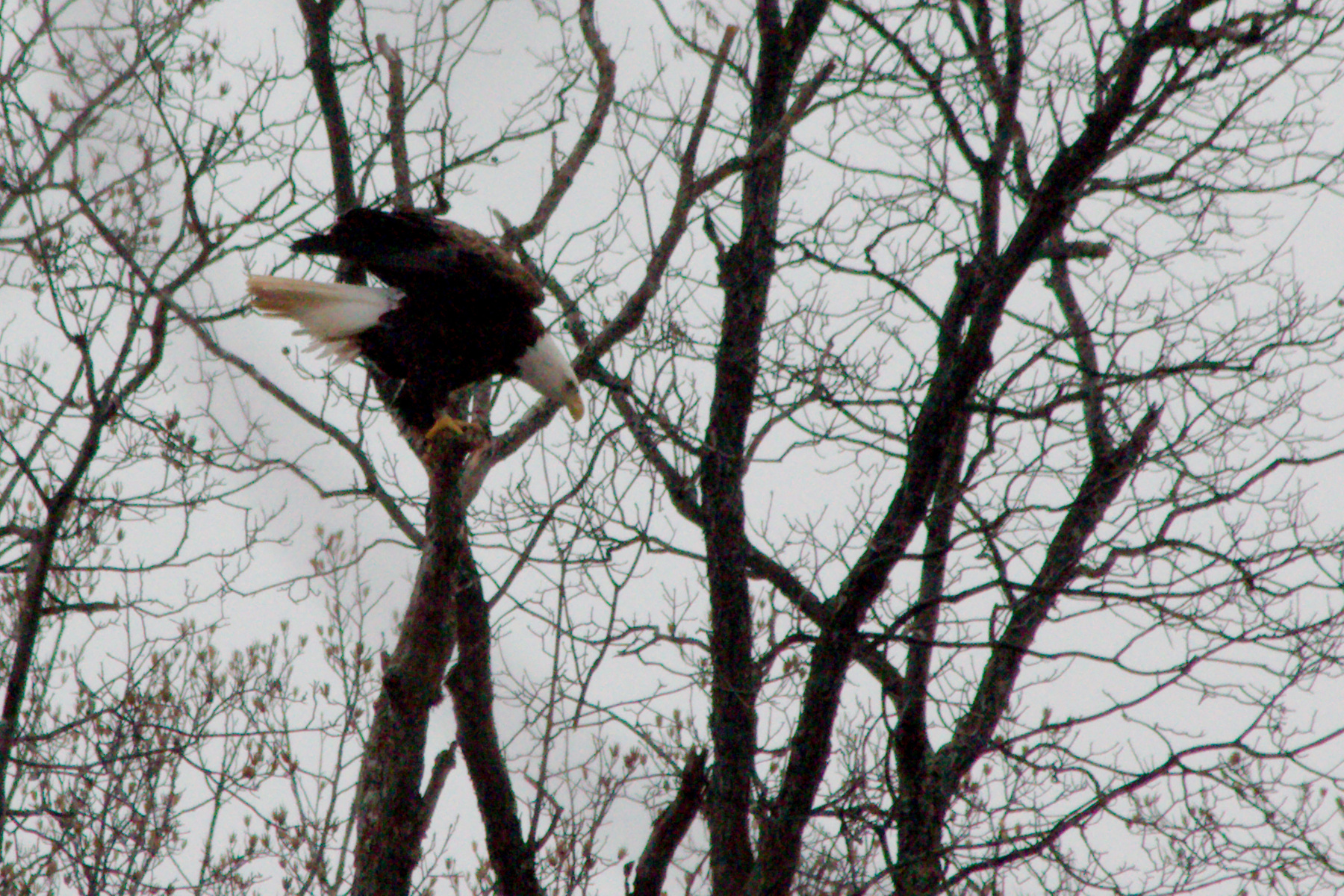
Bald Eagle

Bald Eagle

By the time the eagle landed it was just over 100 yards away. That’s still a long way for a 300mm lens, but the third picture here, of the adult bald eagle on a branch, is pretty nice, I think. I suppose we could have hoped for more, like a brilliant blue sky in the background, but we actually liked seeing the mist on the water, caused by the humid air condensing over the still frozen lake. It was quite beautiful. So, I was especially blessed today, to see both a red fox in our yard and two nesting bald eagles.

Note: This post was originally posted with the date set to February 22. These photos were taken on Sunday the 21st.
Categories: Creatures | Comments Off on Bald Eagles (Haliaeetus leucocephalus)

Red Fox (Vulpes vulpes)

Red Fox (Vulpes vulpes)

Red Fox (Vulpes vulpes)

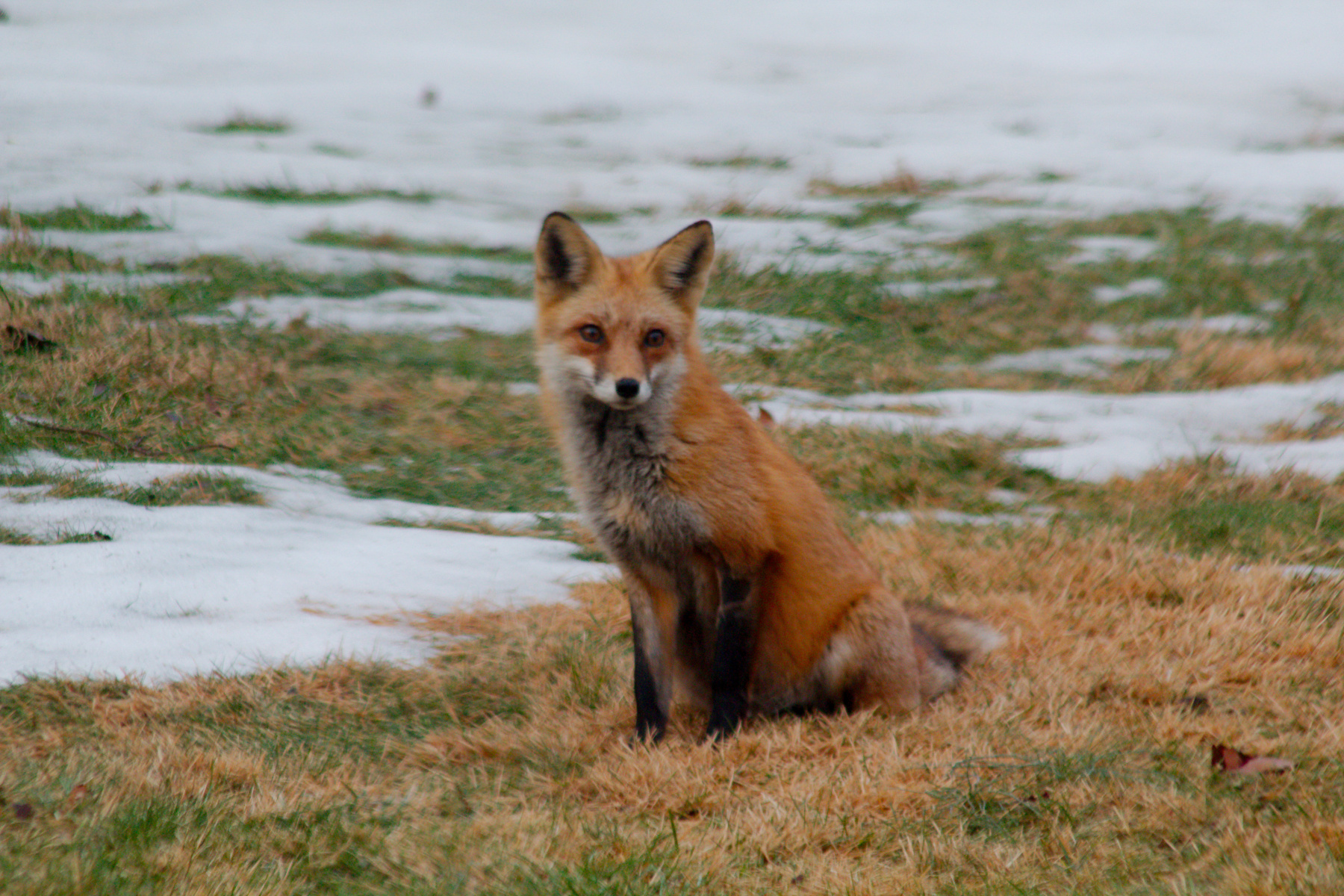
I mentioned a few days ago that we saw the fox in our yard again. Well, she was back this morning and I was able to get a few pictures of her before she wandered off. The pictures were taken through two panes of glass (regular window and storm window) so it’s a bit fuzzy but it isn’t terrible. Cathy saw a mangy fox in our yard a few years ago but this fox looks quite healthy, which is encouraging. Except for the big snow and a few cool days, it has been a reasonably mild winter so far, which I suppose makes life a little easier on the foxes and other woodland creatures.

Categories: Creatures | Comments Off on Red Fox (Vulpes vulpes)

Sharp Shinned Hawk

Sharp-shinned Hawk (Accipiter striatus)

Sharp-shinned Hawk (Accipiter striatus)

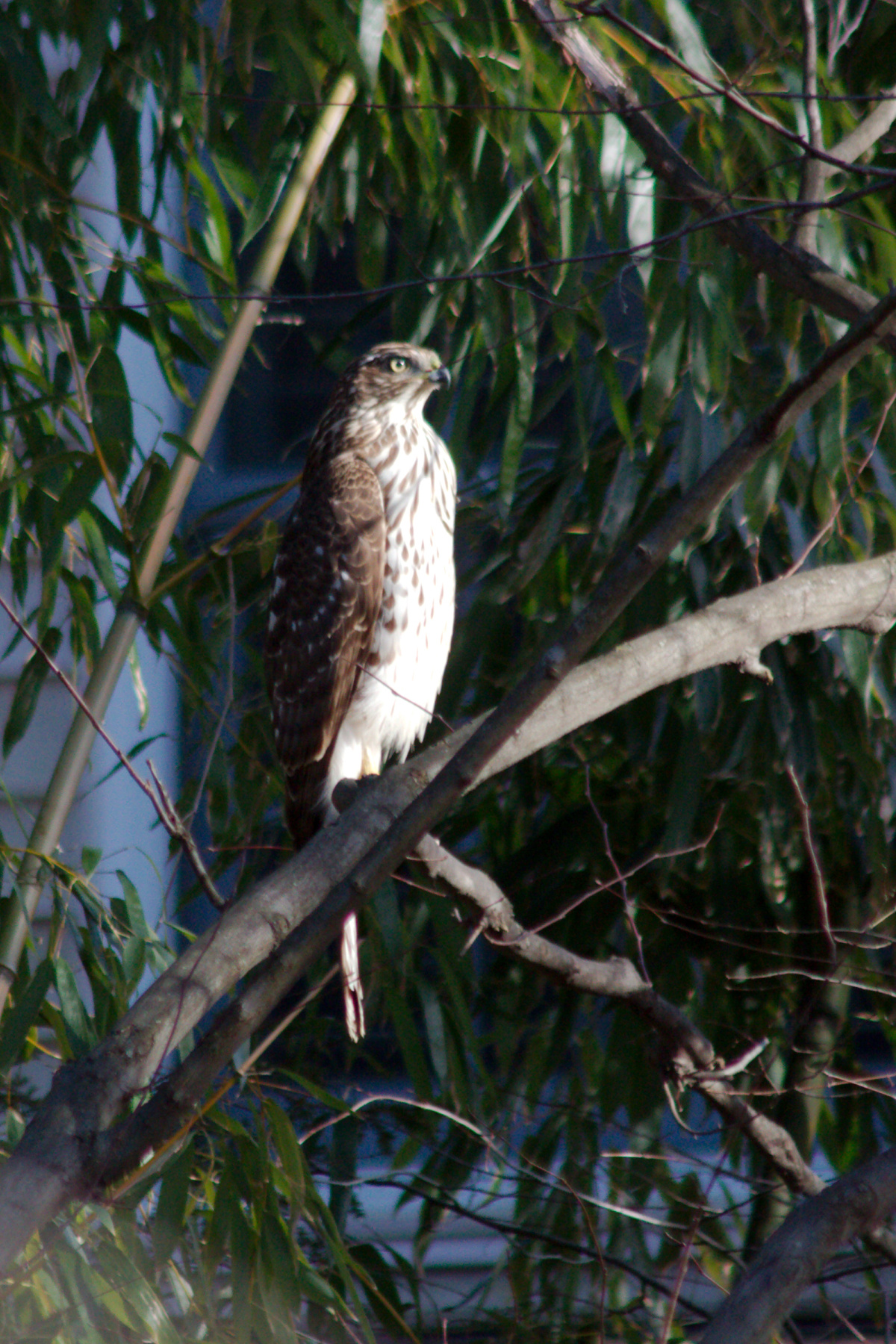
Cathy and I were at her mom’s house today, doing various things around the house and in the yard. One thing was to cut up a largish branch that had come down in the minor snow storm we had on Monday. While I was out in the yard, I heard a hawk cry as it circled overhead.

When it landed in a tree in the back yard, I hurried to the car, put my 70-300mm zoom lens on my camera and managed to get five images before it took off again. The full frame images were horizontally oriented and this image is cropped from that, so it’s considerably less than the full frame, which accounts for softness of the image.

Brother George confirmed my identification of this as a sharp-shinned hawk (Accipiter striatus) and went on to say that it was a first-year juvenile. For those of you who make comments to me about my labeling of plants and animals, I want you to know that in general I get expert advice before labeling any bird picture (with a few easy exceptions). In the past that often meant dad and Albert. Now that all falls to George.

Categories: Creatures | Comments Off on Sharp Shinned Hawk

Northern Flicker (Colaptes auratus)

Northern Flicker (Colaptes auratus)

Northern Flicker (Colaptes auratus)

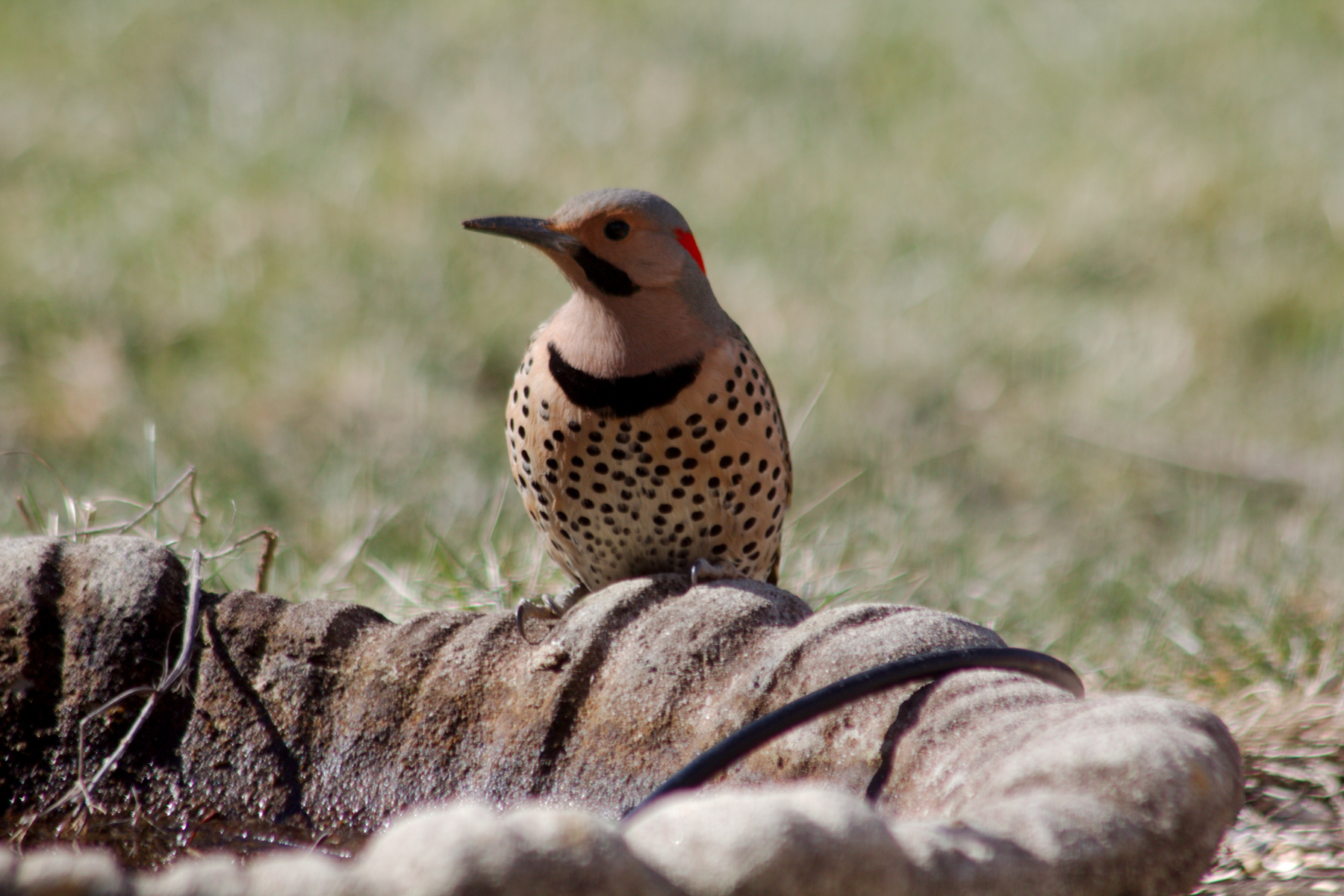
We continue to have a wide variety of birds (and small mammals) at our birdbath. They are also being drawn by the seed that we put out. Early this afternoon I photographed a white-throated sparrow (Zonotrichia albicollis), an American robin (Turdus migratorius), a few house finches (Haemorhous mexicanus), an eastern chipmunk (Tamias striatus), mourning doves (Zenaida macroura), and two northern flickers (Colaptes auratus). Present in the yard but not photographed were at least three blue jays (Cyanocitta cristata), a lot of dark-eyed juncos (Junco hyemalis), and the ubiquitous house sparrow (Passer domesticus). I decided to post this picture of a flicker, because they are the species I see at the bird bath the least often.

Categories: Creatures | Comments Off on Northern Flicker (Colaptes auratus)

Female Cardinal

Female Cardinal (<em>Cardinalis cardinalis</em>)

Female Cardinal (Cardinalis cardinalis)

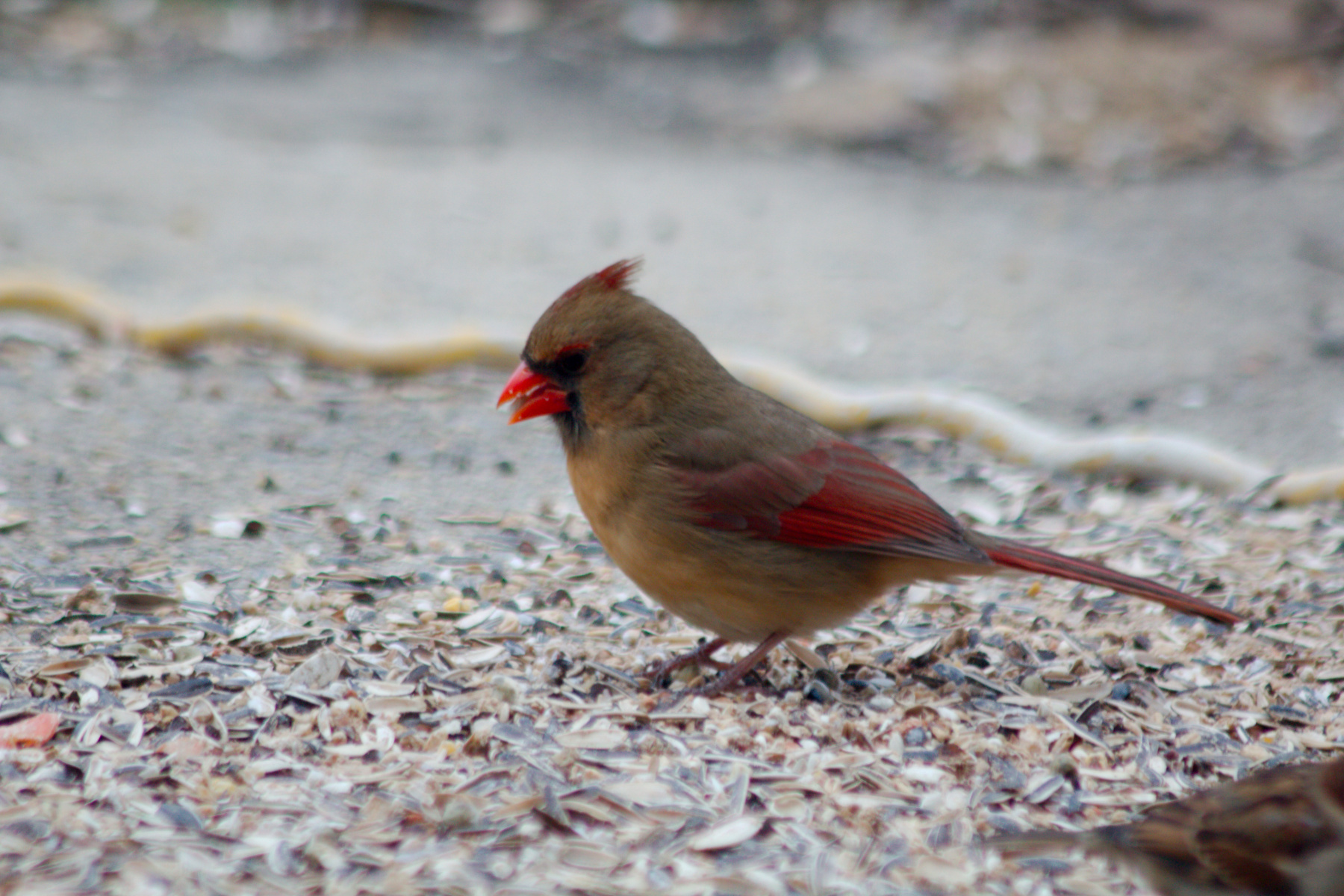
Last week I posted a picture of a junco in this same spot. Before that I posted a picture of a song sparrow on the bird bath, which is just out of this picture to the left. As I mentioned when I posted the junco picture, I put some leftover seed out on the patio and that’s been attracting the birds and squirrels. This morning, in addition to the juncos and sparrows (both song and house), there were cardinals, blue jays, mourning doves, and in the tree just into the yard, a downy woodpecker. Quite a little circus. I wasn’t able to get a picture of the more brightly colored male cardinal, but this is a pretty little thing, too.

Categories: Creatures | Comments Off on Female Cardinal

Dark-eyed Junco (Junco hyemalis)

Dark-eyed Junco (Junco hyemalis)

Dark-eyed Junco (Junco hyemalis)

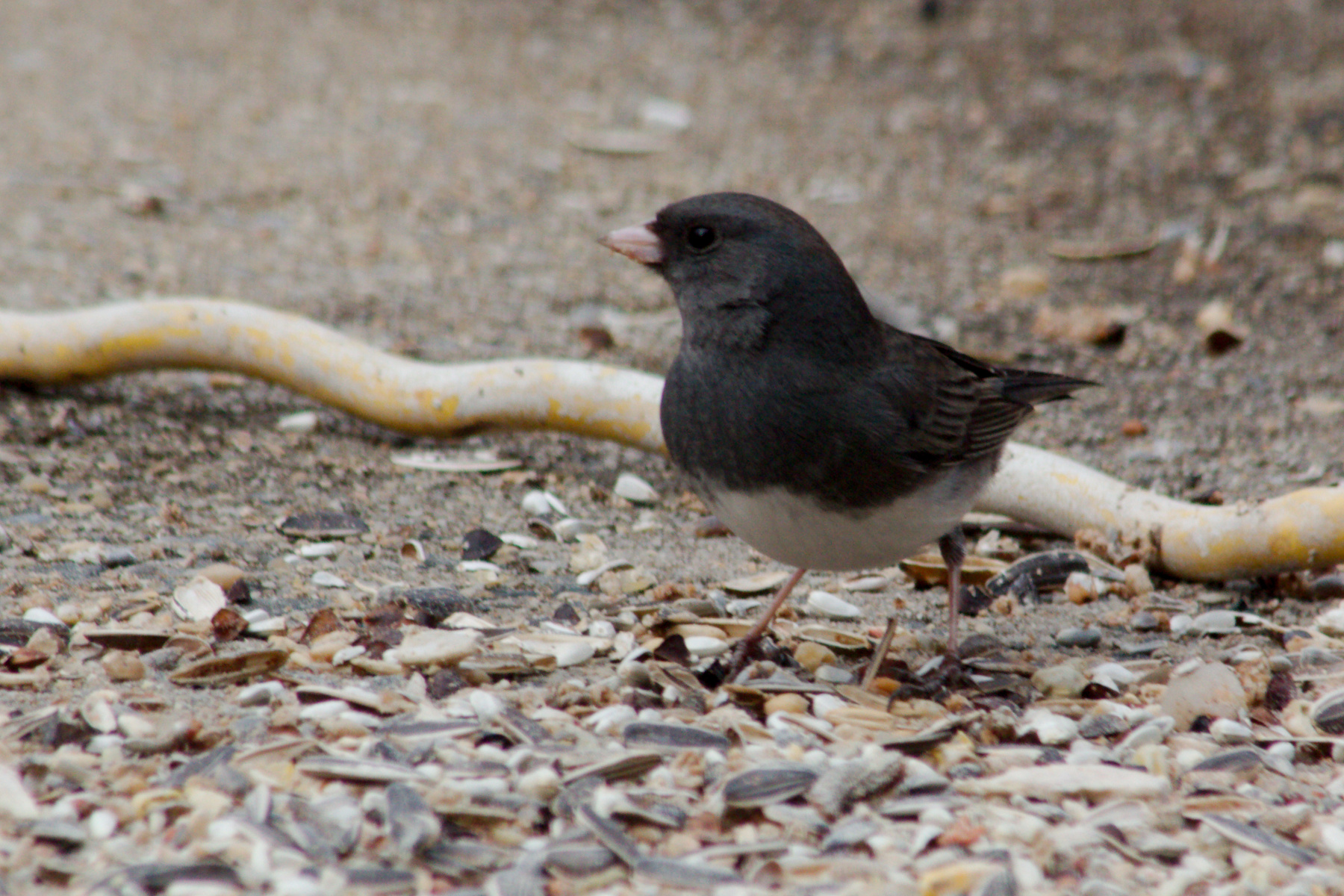
We had some extra bird seed for Solomon that was starting to go bad. I ordered another bag and when it arrived, I put the old seed out back for whatever birds and squirrels wanted to eat it. Mostly the squirrels came but this morning there were a few dark-eyed juncos on the patio. They are cute little birds and quite common here this time of year. The large power cord behind the bird in this picture is the power to the bird bath de-icer.

Categories: Creatures | Comments Off on Dark-eyed Junco (Junco hyemalis)

D’Argo

D'Argo

D’Argo

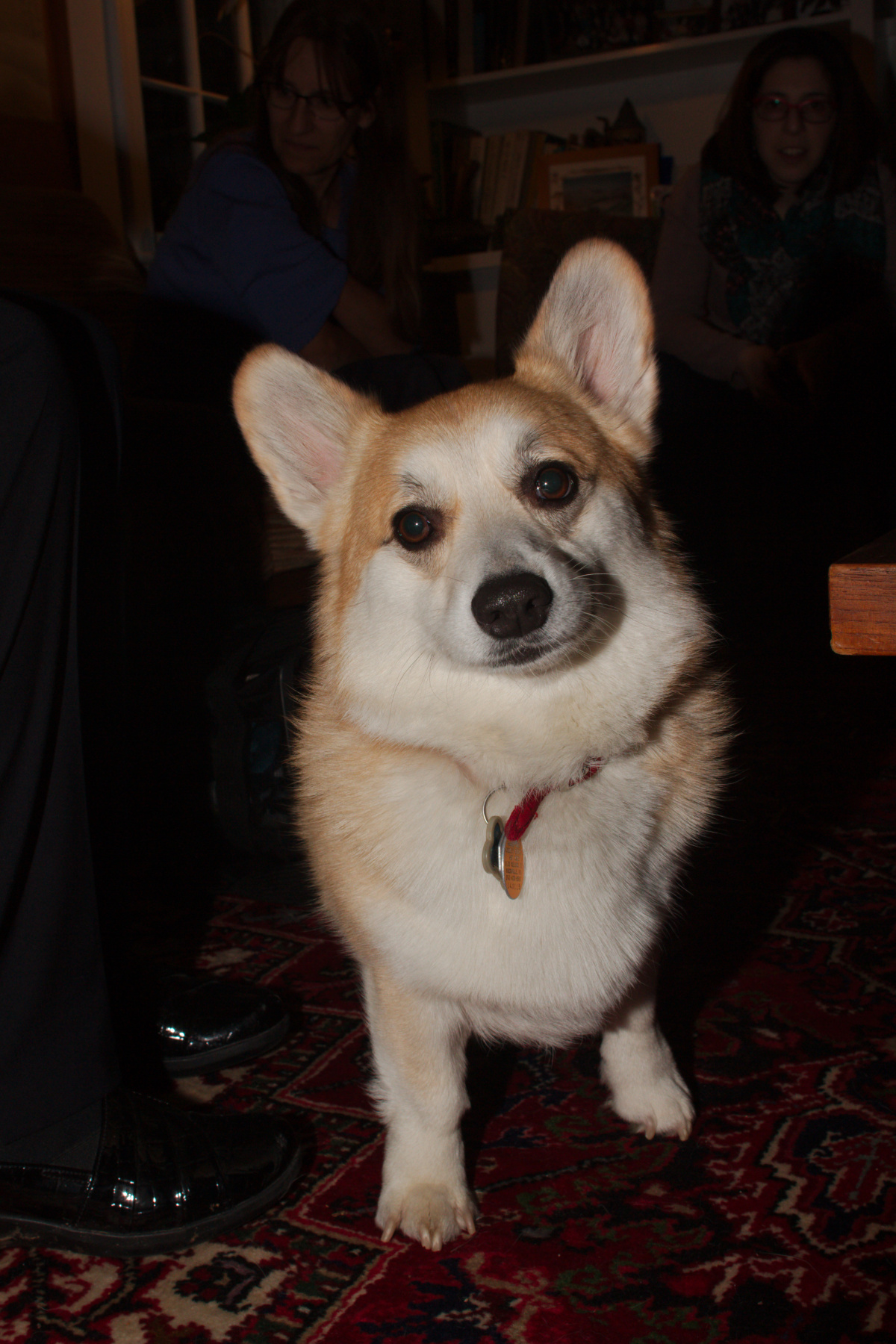
We had one of our family birthday evenings today and it was very good to see everyone, have dinner, and then just hang out together. There were two dogs there, D’Argo and Bean. Luna didn’t come because she’d have had the other two for dinner, but these two get along well enough. I took a few pictures of everyone, as I usually do, but I thought I’d post this one of D’Argo, Steve and Maya’s corgi.

He’s been featured here before, back on September 01, 2013. This one was taken with the camera held down at my side while sitting on a chair, but it turned out reasonably well.

Categories: Creatures | Comments Off on D’Argo

Wasp Nest

Wasp Nest

Wasp Nest

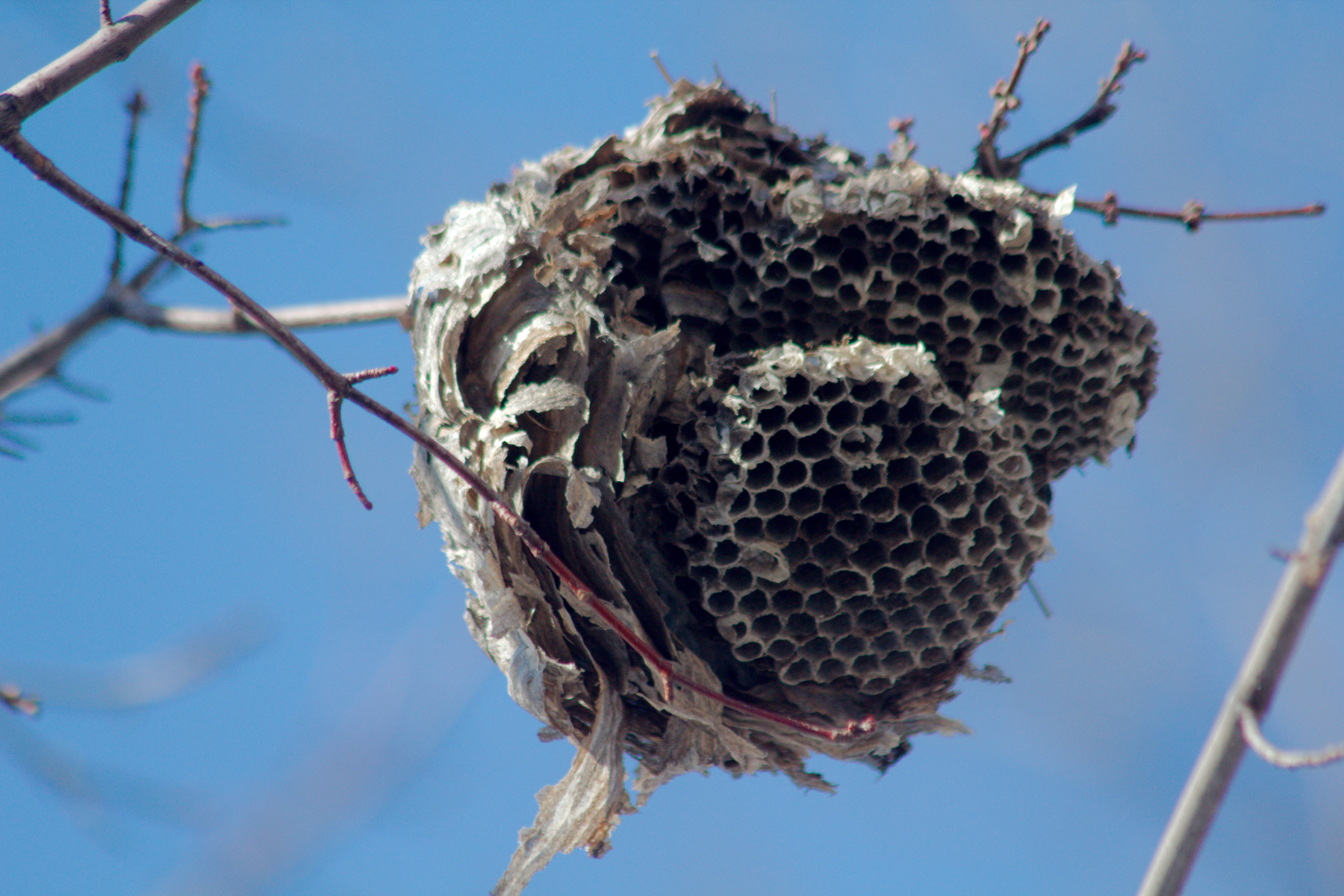
I walked over to the next building early this afternoon for a meeting that turned out to have been cancelled. That’s life. It did give me a chance to be outside, though, and that’s usually not a bad thing. It was quite chilly today with a fairly strong wind coming out of the northwest. As I walked back to my building, though, I noticed this wasp nest up in a tree. It’s coming apart, as you can see, but still quite interesting.

Categories: Creatures | Comments Off on Wasp Nest

Solomon Edward Parrot

Solomon Edward Parrot

Solomon Edward Parrot

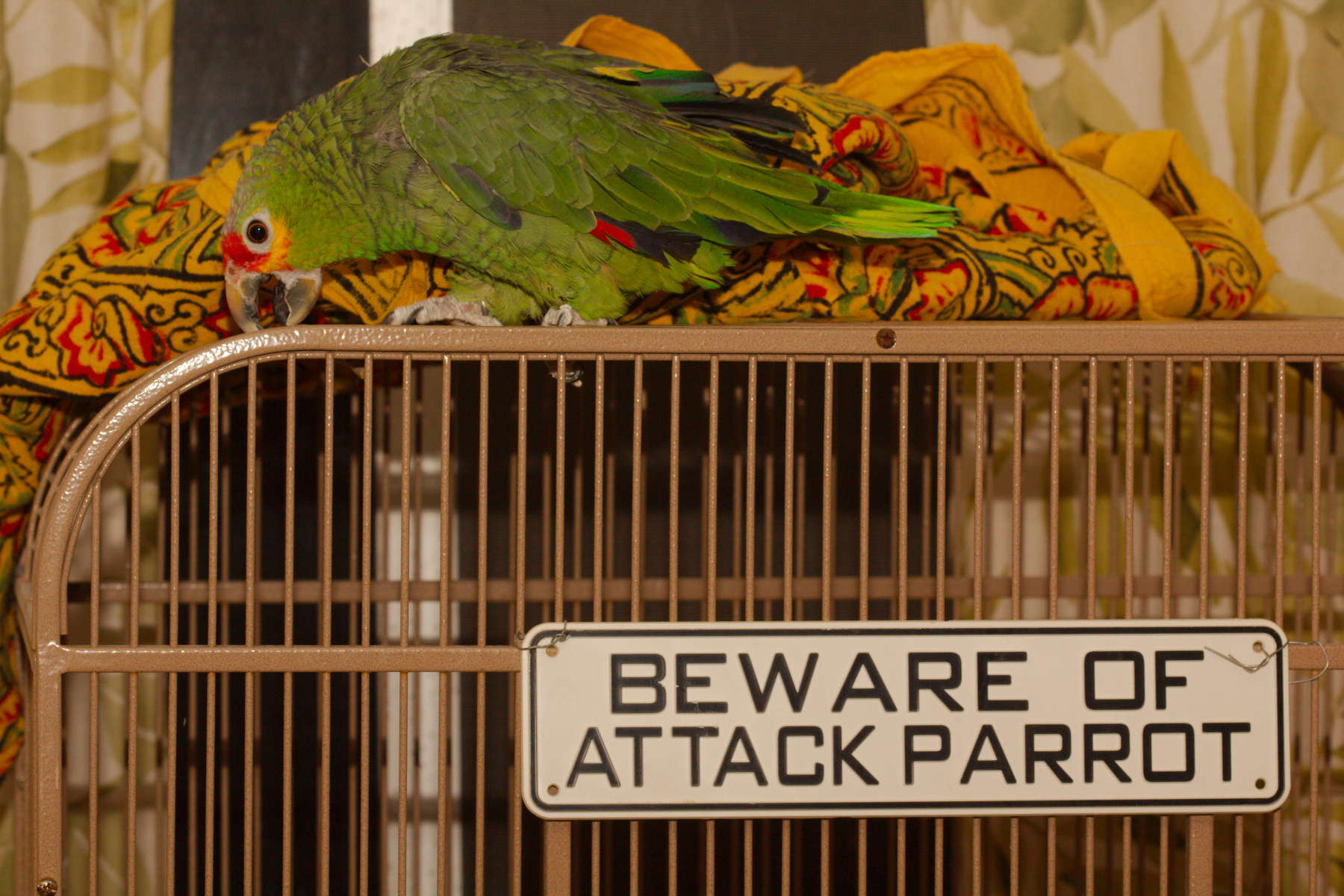
Better known simply as Solomon, our pet parrot turns 30 this month (more or less). We’ve had him since October, 1986, when he was something like nine months old so we consider his birthday sometime in January or that year. Hard to believe so many years have gone by. Solomon was born in California, lived with us in Alaska for about a year, then flew to Chicago to live with Cathy’s brother for a few years (and boy, where his wings tired). Sometime after our trip around the world in 1988, he came to live with us in Maryland and he’s been here ever since, first in our apartment in Gaithersburg, then in our first house and now in this house in Rockville. Happy birthday, you old bird, you.

Categories: Creatures | Tags: | Comments Off on Solomon Edward Parrot

Geese Aloft

Geese Aloft

Geese Aloft

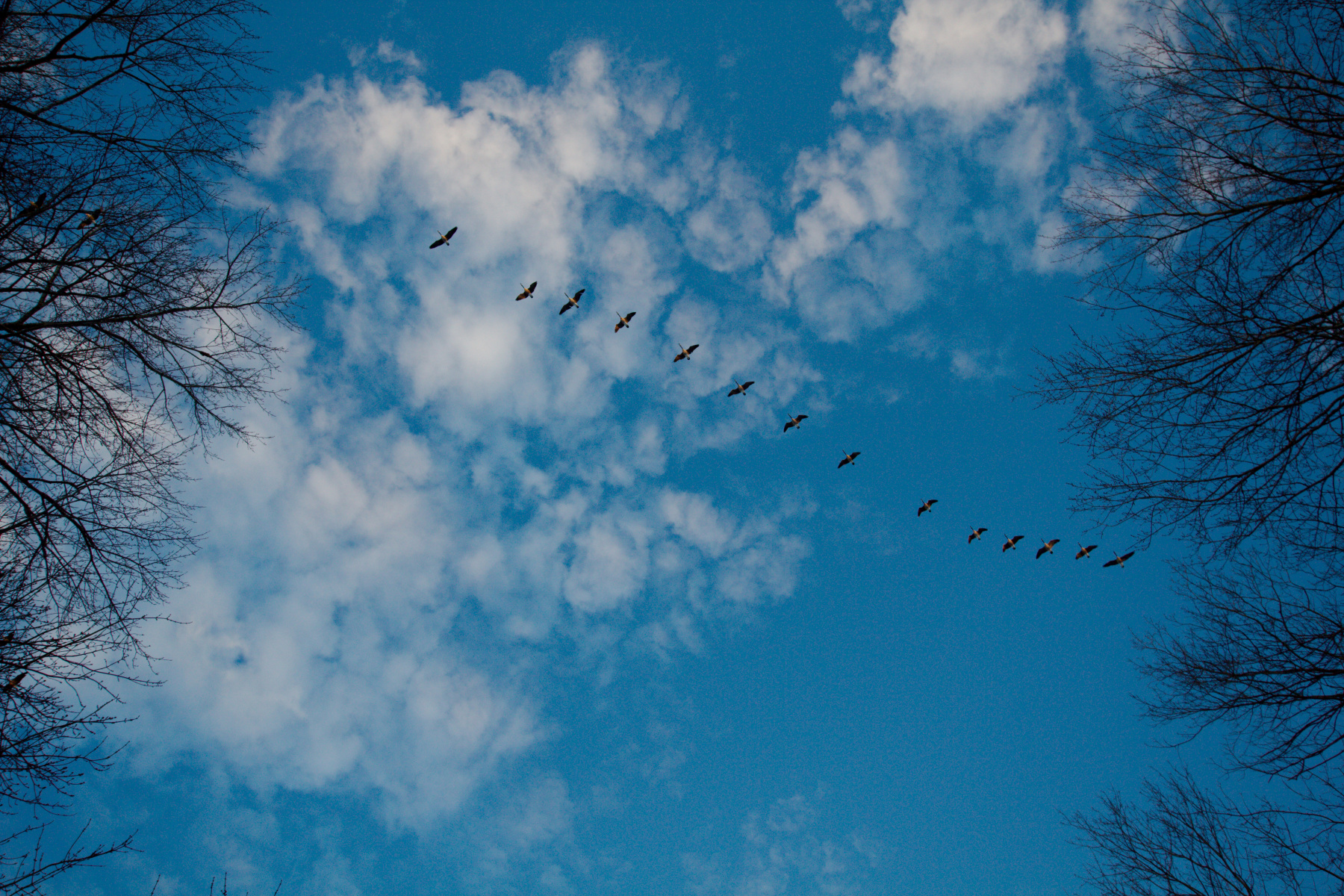
After the snow we had Friday evening through late last night, you were probably expecting me to post another snow picture for today. The snow was 25 or 26 inches deeps in our yard (depending on where we measured and avoiding obvious drifts). That’s a pretty good snowfall for here and I’m getting old enough that a snow blower is starting to look very attractive. Still, we got dug out and went for a walk (well, we went for a walk yesterday while it was snowing, so, what would you expect?). On the way back, I hear this flock of geese calling as they flew overhead. The sky was beautiful all day today, an intense blue with occasional (but friendly) clouds.

Categories: Creatures, Sunrise/Sunset/Sky | Comments Off on Geese Aloft

Great Blue Heron (Ardea herodias)

Great Blue Heron (Ardea herodias)

Great Blue Heron (Ardea herodias)

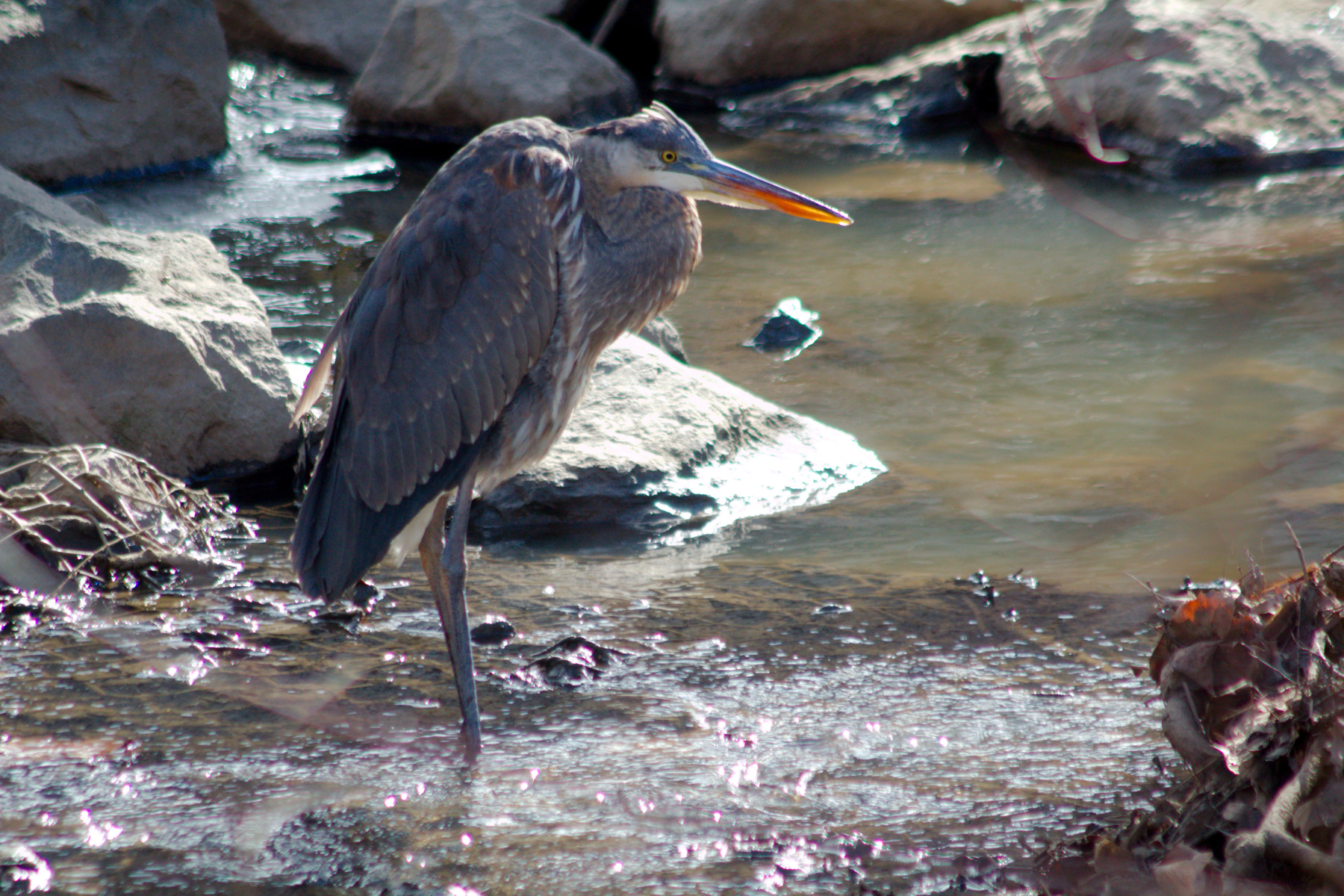
I had occasion to walk over to the other building about midday today. On the way back to my office I noticed a heron down in the stream below the path. I had my camera bag with me so I was able to get some pictures. I set my bag down, switched to my longer lens and headed into the woods below the path. As I was taking them I heard an exasperated voice from the path, which said, “where in the world is your jacket?” It was a bit cool out today and if I had known I’d be stopping to take pictures I would have preferred to have a sweater on, or at least gloves, but I survived. I think this picture was worth it.

Categories: Creatures | Comments Off on Great Blue Heron (Ardea herodias)

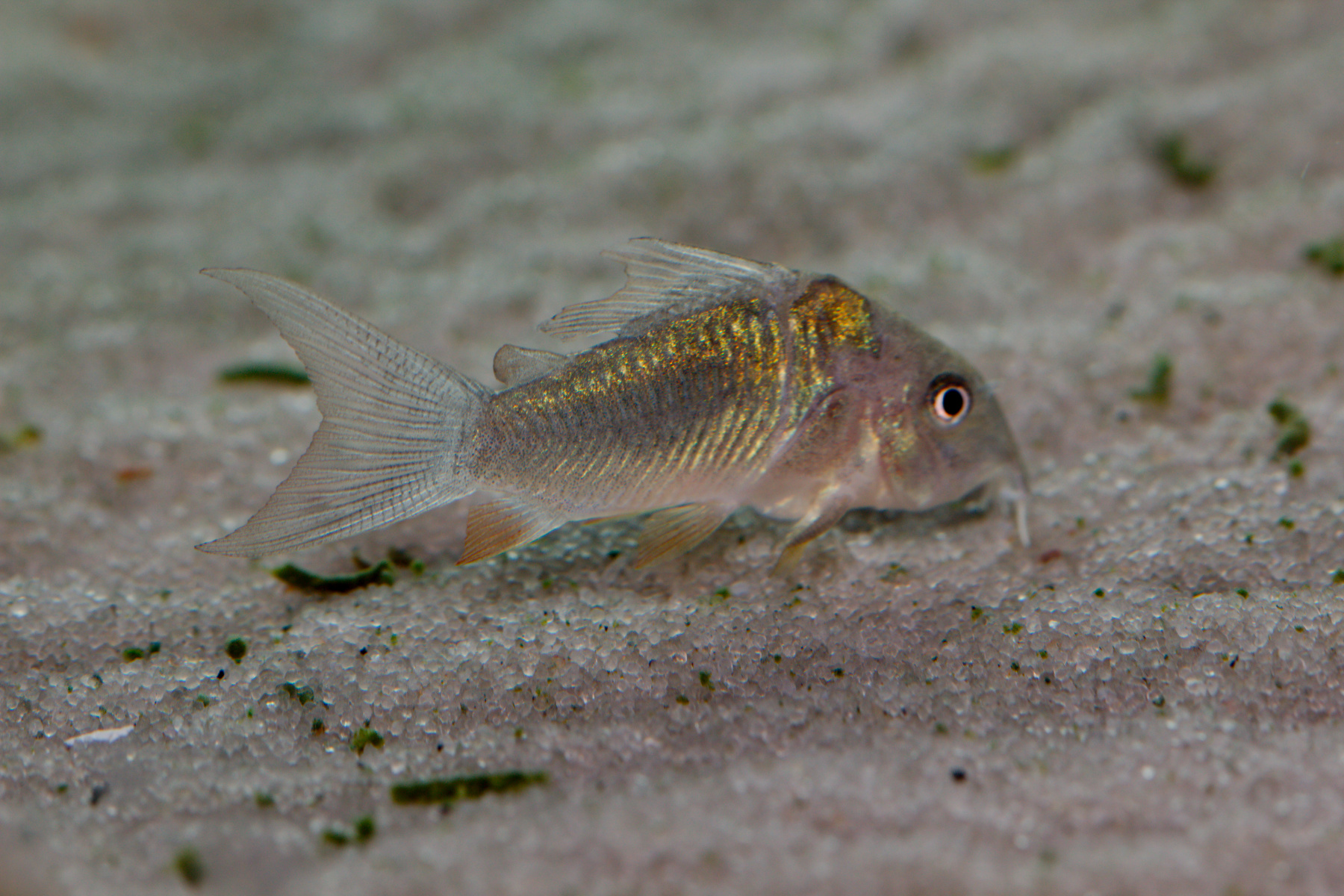
Green and Gold Cory Cat (Corydoras melanotaenia)

Green and Gold Cory Cat (Corydoras melanotaenia)

Green and Gold Cory Cat (Corydoras melanotaenia)

Last week I posted a picture of one of the new fish I got for a tank that’s in our breakfast room. That was a red dwarf gourami (Trichogaster lalius). Today’s picture is another fish, bought at the same time and for the same tank. This is one of three green and gold corydoras catfish (Corydoras melanotaenia) that I bought. The cory cats, as they are called, are in the Corydoradinae subfamily, the armored catfish, and are native to South America. They quickly ate the algae that had accumulated in the tank as I was getting it ready for the fish. Now I feed them algae wafers. They are peaceful little things and a bit shy, but a nice addition to the tank.

Categories: Creatures | Comments Off on Green and Gold Cory Cat (Corydoras melanotaenia)

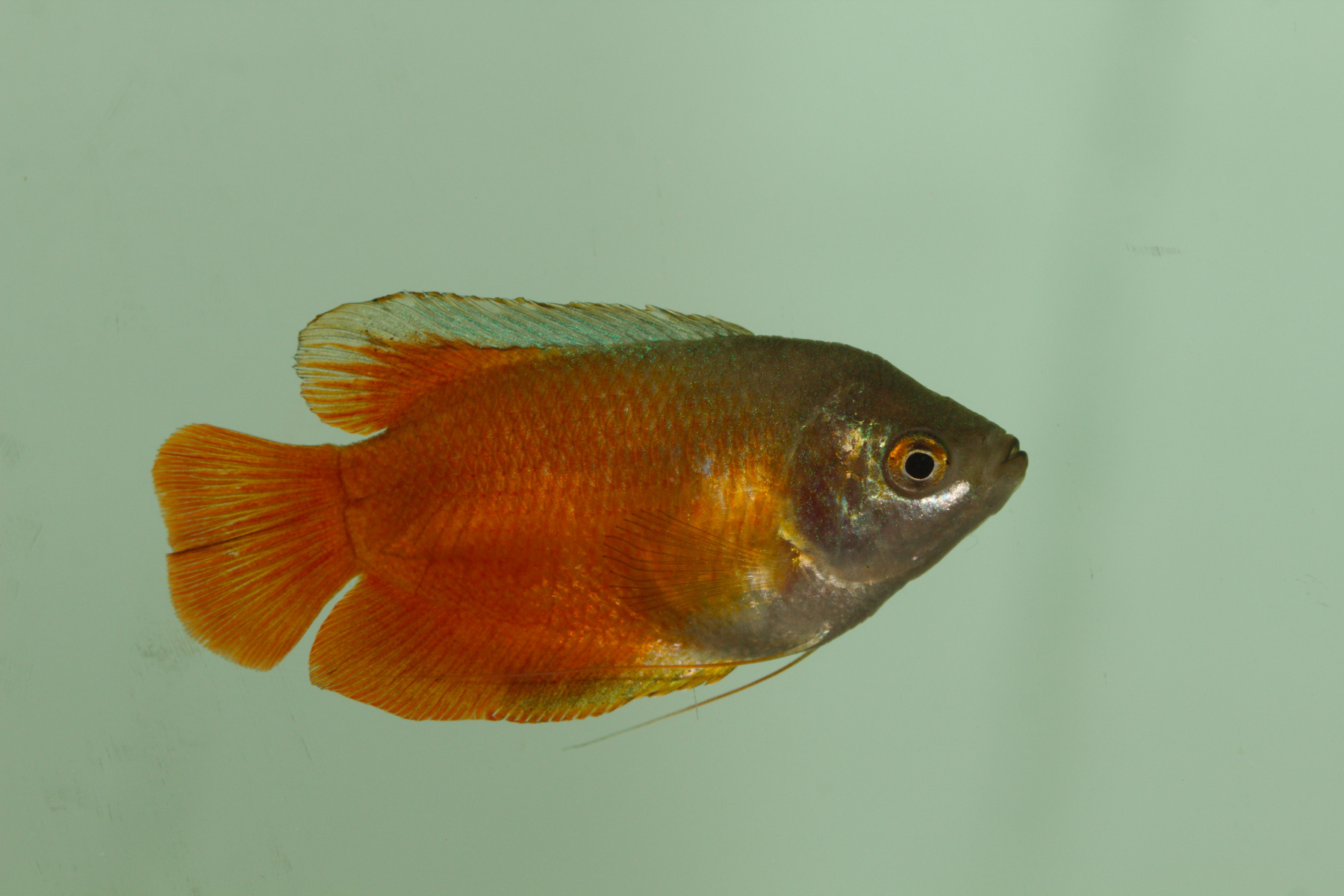
Red Dwarf Gourami (Trichogaster lalius)

Red Dwarf Gourami (Trichogaster lalius)

Red Dwarf Gourami (Trichogaster lalius)

I got a few new fish this week, including this red dwarf gourami (Trichogaster lalius). The dwarf gourami is native to Pakistan, India and Bangladesh but are quite common aquarium fish. I’m pretty sure I remember dad saying that he bred them, back in the day. In addition to this fish (actually, I got two of them), I have three green and gold cory cats (Corydoras melanotaenia), white fin rosy tetras (Hyphessobrycon rosaceus), brilliant rasboras (Rasbora einthovenii), and a Koi Angel (Pterophyllum scalare).

Categories: Creatures | Comments Off on Red Dwarf Gourami (Trichogaster lalius)

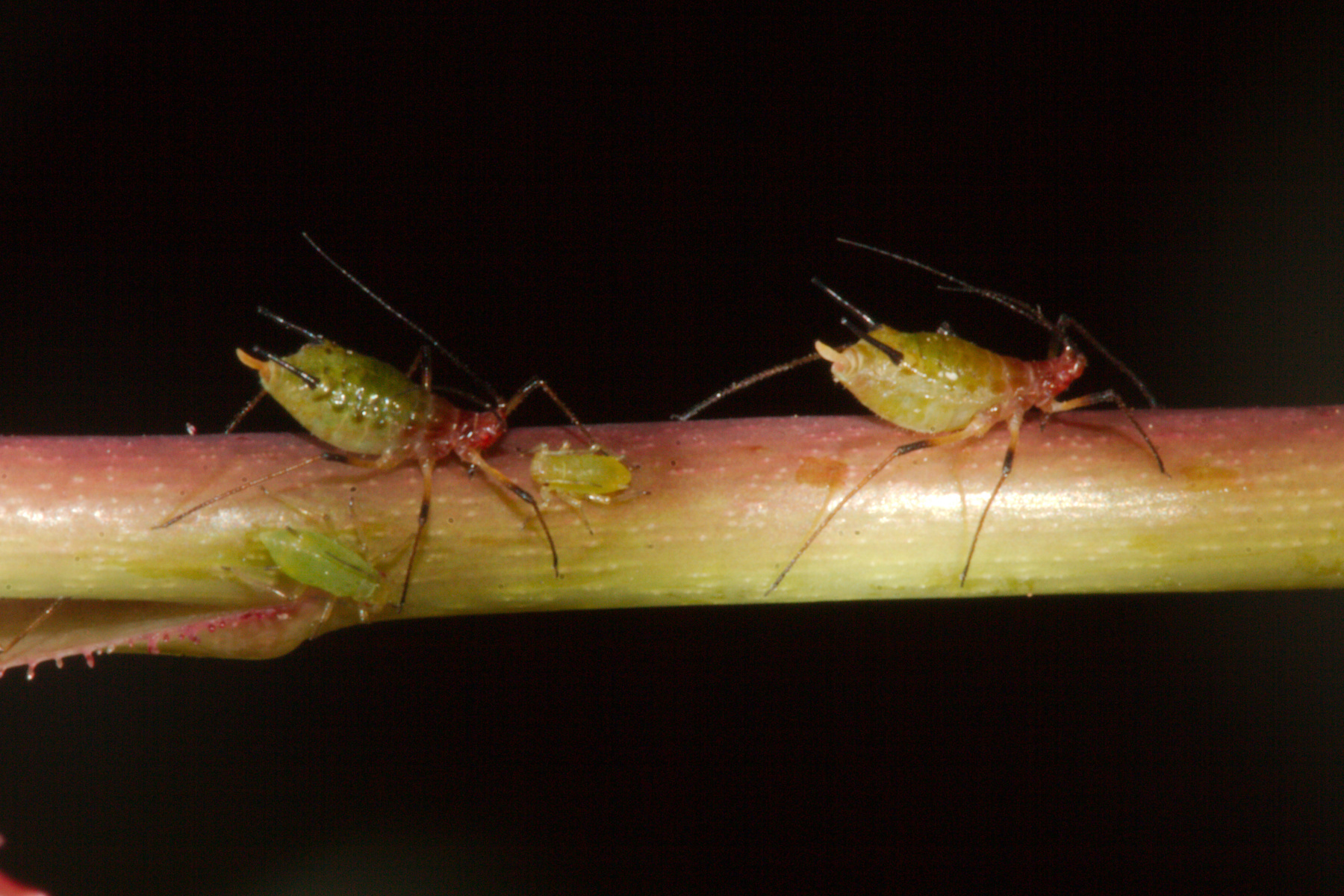
Aphids (Family Aphididae)

Aphids (Family Aphididae)

Aphids (Family Aphididae)

Today we get a photo of some of our less desirable creature friends. These things suck. I mean, literally, they suck the juice out of plant stems, sometimes causing serious damage to the plant. In this case, there are few enough of them and it’s late enough in the year that they are not going to cause serious problems for this rose. It’s a large and very robust rose that was nearly killed by the last two winters, which were very hard on roses generally. But it’s coming back and unless this winter is equally bad, should be in reasonable shape by the end of next year. It is growing on a trellis on the south end of the house and the rose can cover the entire thing (which is pretty substantial).

Categories: Creatures | Comments Off on Aphids (Family Aphididae)

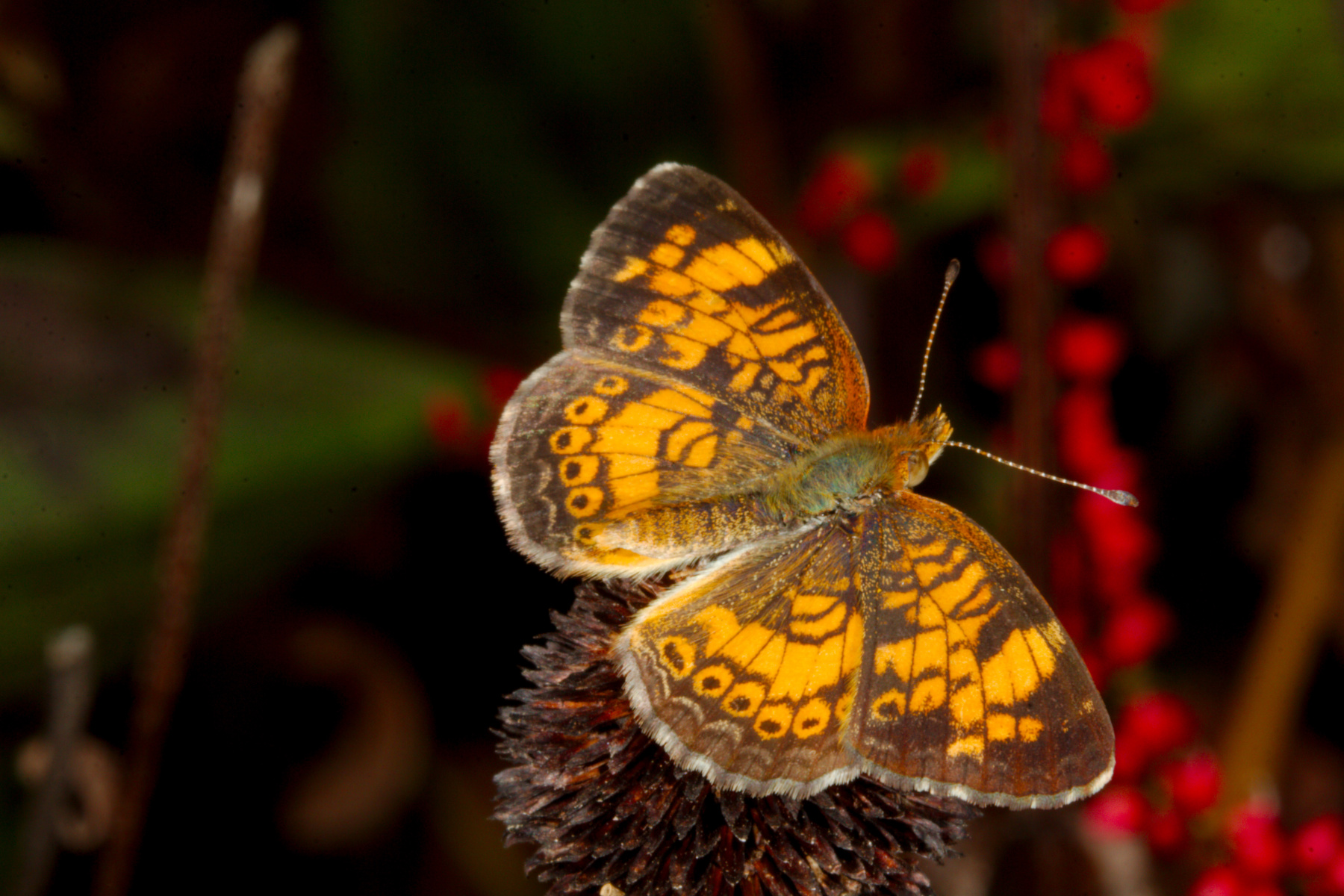
Phyciodes tharos (Pearl Crescent)

Phyciodes tharos (Pearl Crescent)

Phyciodes tharos (Pearl Crescent)

I went out into the back yard again after work today and at first was thinking I wouldn’t see anything interesting to photograph. Then I noticed this little pearl crescent butterfly sitting on the seed head of a black-eyed Susan under our dining room window. He allowed me to get quite close and I took a lot of pictures but only a few where his wings were open. He would open his wings but as soon as my camera got very close, they would close up again. This is one of only three that I got showing the tops of his wings.

Categories: Creatures | Comments Off on Phyciodes tharos (Pearl Crescent)

Vulpes vulpes (Red Fox)

Vulpes vulpes (Red Fox)

Vulpes vulpes (Red Fox)

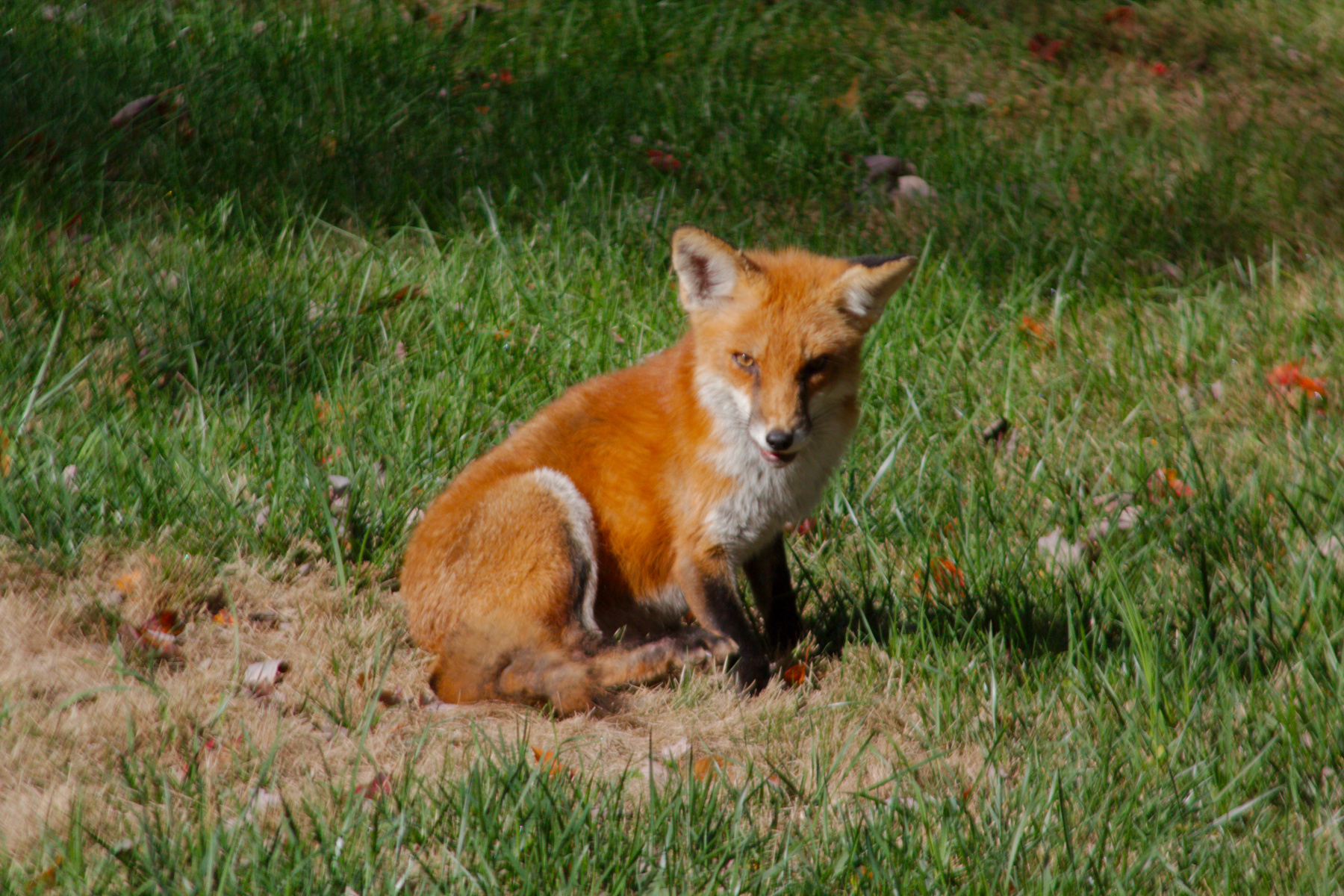
I happened to walk into the kitchen late this morning and look out the back door. Right in front of me, smack dab in the middle of the yard, was this young fox. I don’t know that it’s young, actually, but it was definitely smaller than the two we had in the yard February, March, and June of 2014. Mostly it was just sitting there scratching itself. Twice it stopped and looked right at me and both times I felt like it was saying, are you going to chase me off, or not? Both times it decided I was not and went back to scratching. Even in this picture, you can see its hind leg is slightly raised, about to start up again.

Categories: Creatures | Comments Off on Vulpes vulpes (Red Fox)

Aeshna umbrosa (Shadow Darner)

Aeshna umbrosa (Shadow Darner)

Aeshna umbrosa (Shadow Darner)

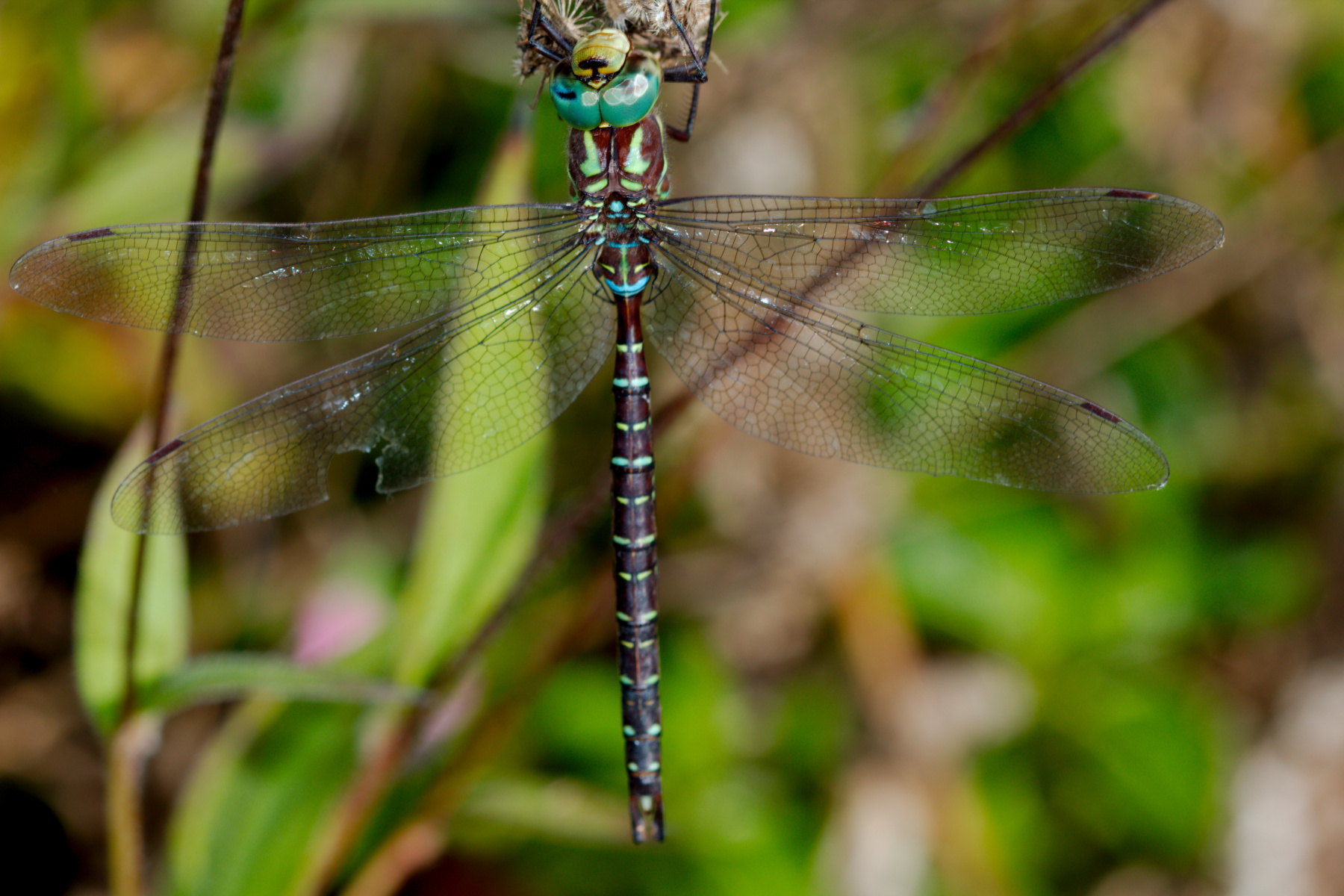
I had just returned from the grocery store and Cathy was in the front yard weeding. She called in to say that there was a largish dragonfly on the Queen Anne’s lace (Daucus carota) by the driveway. I grabbed my camera, slapped on the macro lens and was able to get a half dozen photographs before he flew away. This is a male shadow darner (Aeshna umbrosa), identified by my sister-in-law with that confirmed later by bugguide.net.

Categories: Creatures | Comments Off on Aeshna umbrosa (Shadow Darner)

Grasshopper, Family Acrididae

Grasshopper, Family Acrididae

Grasshopper, Family Acrididae

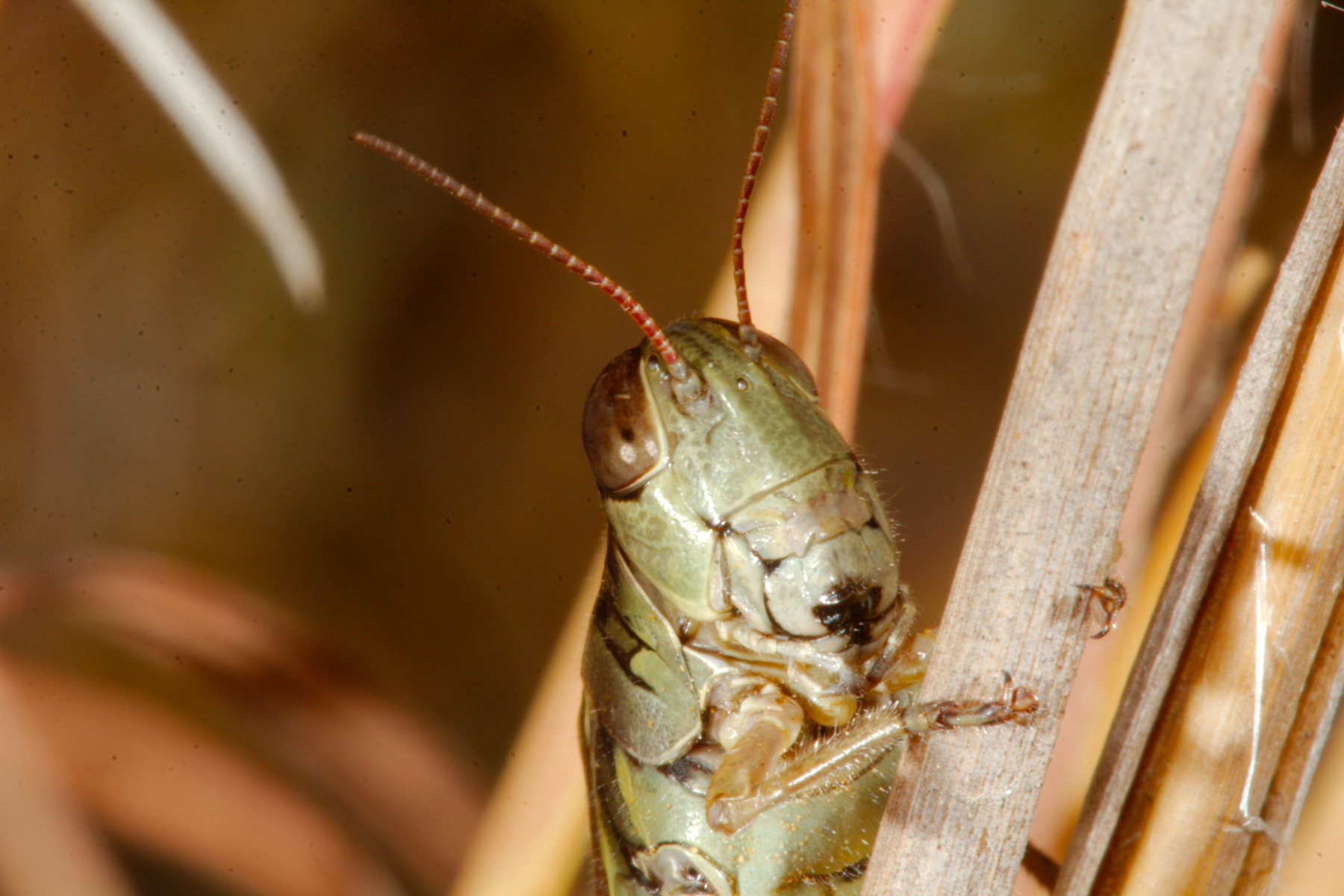
I went out into the empty lot next to my building today. It’s getting fairly deeply overgrown and it’s harder to make my way through it. I did find a few pathways, probably made by deer, and that helped a bit. I came across this little grasshopper and was able to get close enough for a few photographs. I cannot say more than that I believe it is in family Acrididae. That narrows it down to about 620 species in North America (and 8,000 worldwide) and I’m not even 100% sure of that. So, we’ll just call it a grasshopper, shall we?

Categories: Creatures | Comments Off on Grasshopper, Family Acrididae

Bombus impatiens (Common Eastern Bumblebee)

Bombus impatiens (Common Eastern Bumblebee)

Bombus impatiens (Common Eastern Bumblebee)

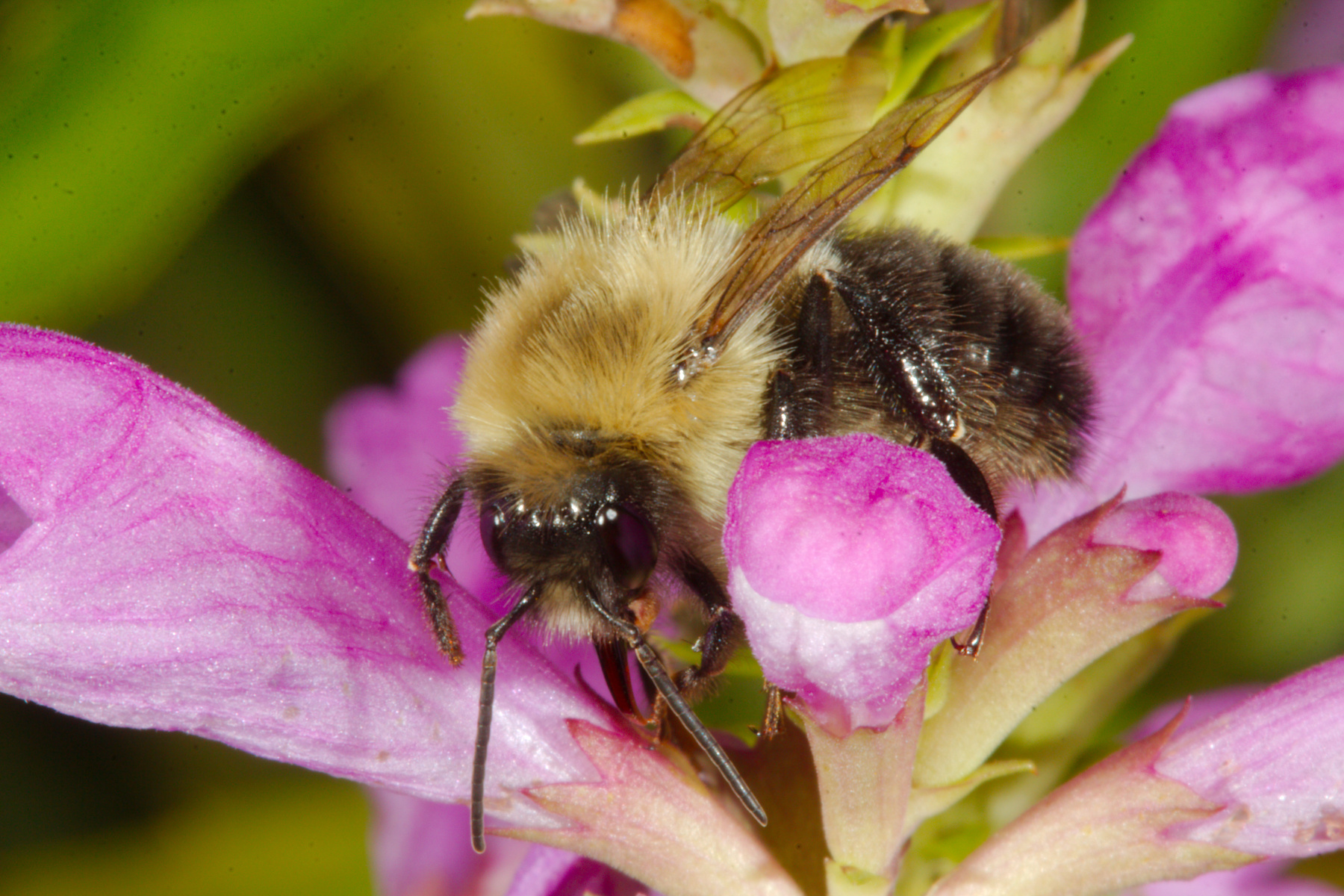
I took pictures today of a bumble bee, a carpenter bee, and a spider. I’ve posted pictures of all three this summer, so whatever I post, it’s going to be a repeat. While some like my spider pictures, they tend to be a little less popular for some reason, so I decided to go with the bumble bee. One of the characteristics that allows you to distinguish the bumble bee from the carpenter bee is the presence or absence of hairs on the abdomen. You can see them fairly clearly in this picture. A bald or nearly bald abdomen (the rear-most section of an insect—head, thorax, and abdomen) mean carpenter bee. Harry means bumble bee. They are actually quite different in terms of their eyes, as well, and the male carpenter bee has a big white patch on his face.

Categories: Creatures | Comments Off on Bombus impatiens (Common Eastern Bumblebee)

Philoscia muscorum (Common Striped Woodlouse)

<em>Philoscia muscorum</em> (Common Striped Woodlouse)

Philoscia muscorum (Common Striped Woodlouse)

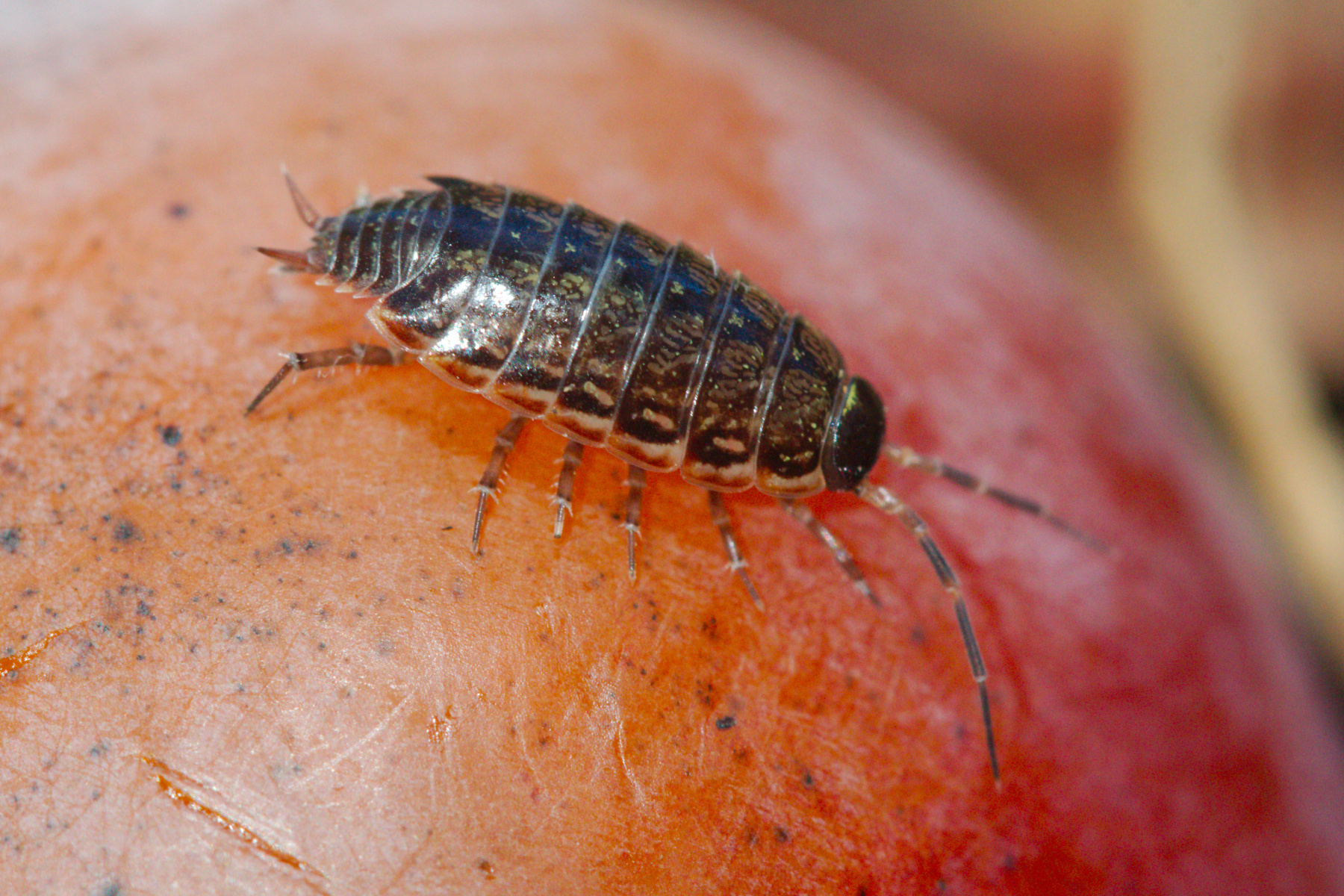
As a kid we knew anything that looked at all like one of these as roly-poly bugs or potato bugs. The more proper roly-poly, the pillbugs in family Armadillidiidae, are also known colloquially as armadillo bugs. They are mostly not native to North America but are fairly common, now. This is a common striped woodlouse, Philoscia muscorum, a genus and species also introduced from Europe. I was actually on the ground photographing a persimmon (Diospyros virginiana) that had fallen from a tree, when this little fellow started crawling up onto the fruit. Compared to other woodlice, this is a speedy little thing and I kept having to turn him around so he wouldn’t get away. I didn’t bother him for long, though, and he went on his merry way.

Categories: Creatures | Comments Off on Philoscia muscorum (Common Striped Woodlouse)

Agelenidaea (Funnel Weaver)

Agelenidaea (Funnel Weaver)

Agelenidaea (Funnel Weaver)

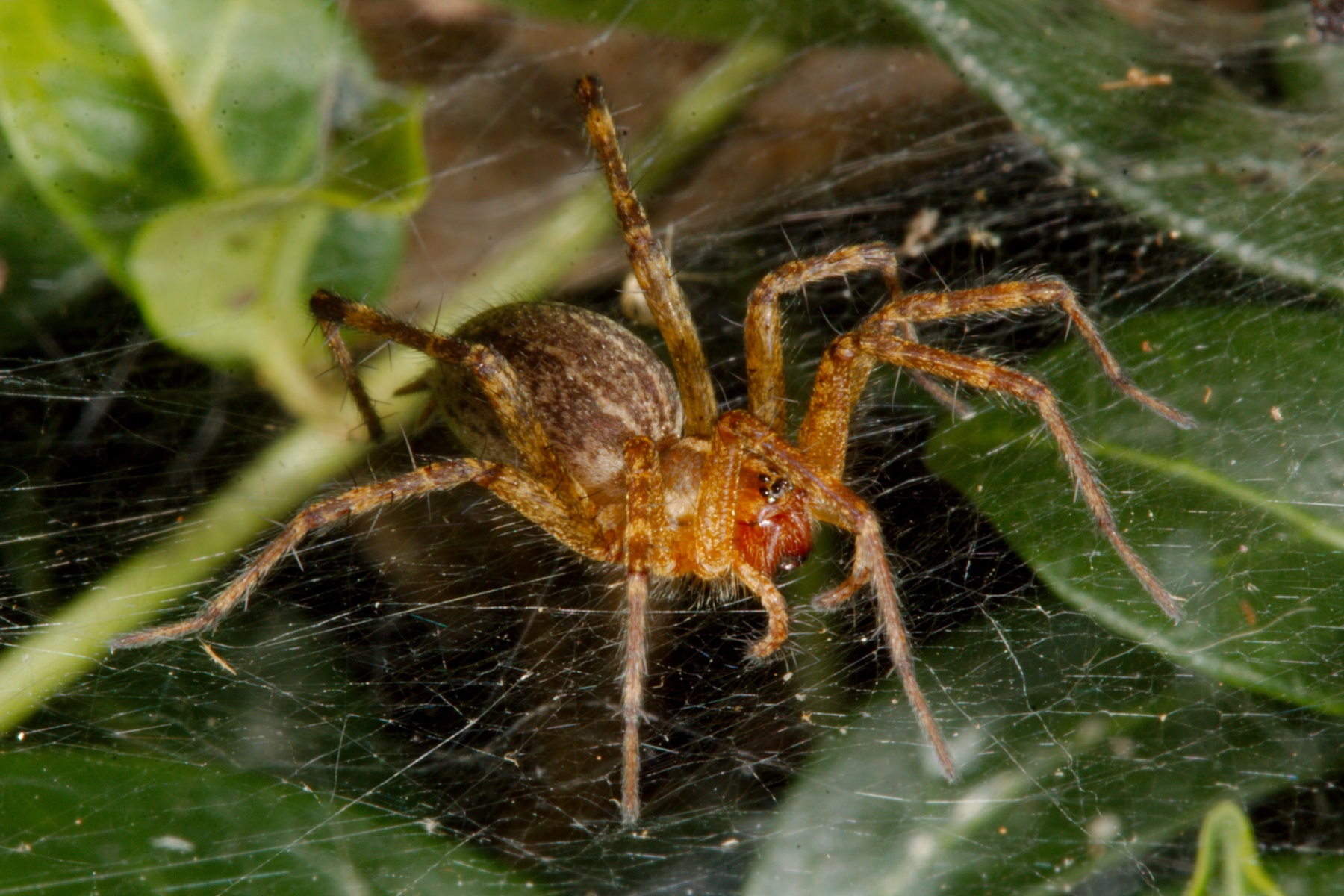
Late in the summer, spider webs start to appear in pretty great numbers in the ground cover throughout our yard. For the most part, the spiders themselves are not seen, but once in a while, if you are patient, they will come out. This appears to be one of the funnel weavers or possibly a grass spider from the family Agelenidaea. It’s a largish spider and fairly menacing looking from the front. Their webs are horizontal and have a small funnel-like tube off to one side. They retreat into this ‘den’ when startled.

Categories: Creatures | Comments Off on Agelenidaea (Funnel Weaver)

Genus Ammophila (Thread-waisted Wasp)

Genus Ammophila (Thread-waisted Wasp)

Genus Ammophila (Thread-waisted Wasp)

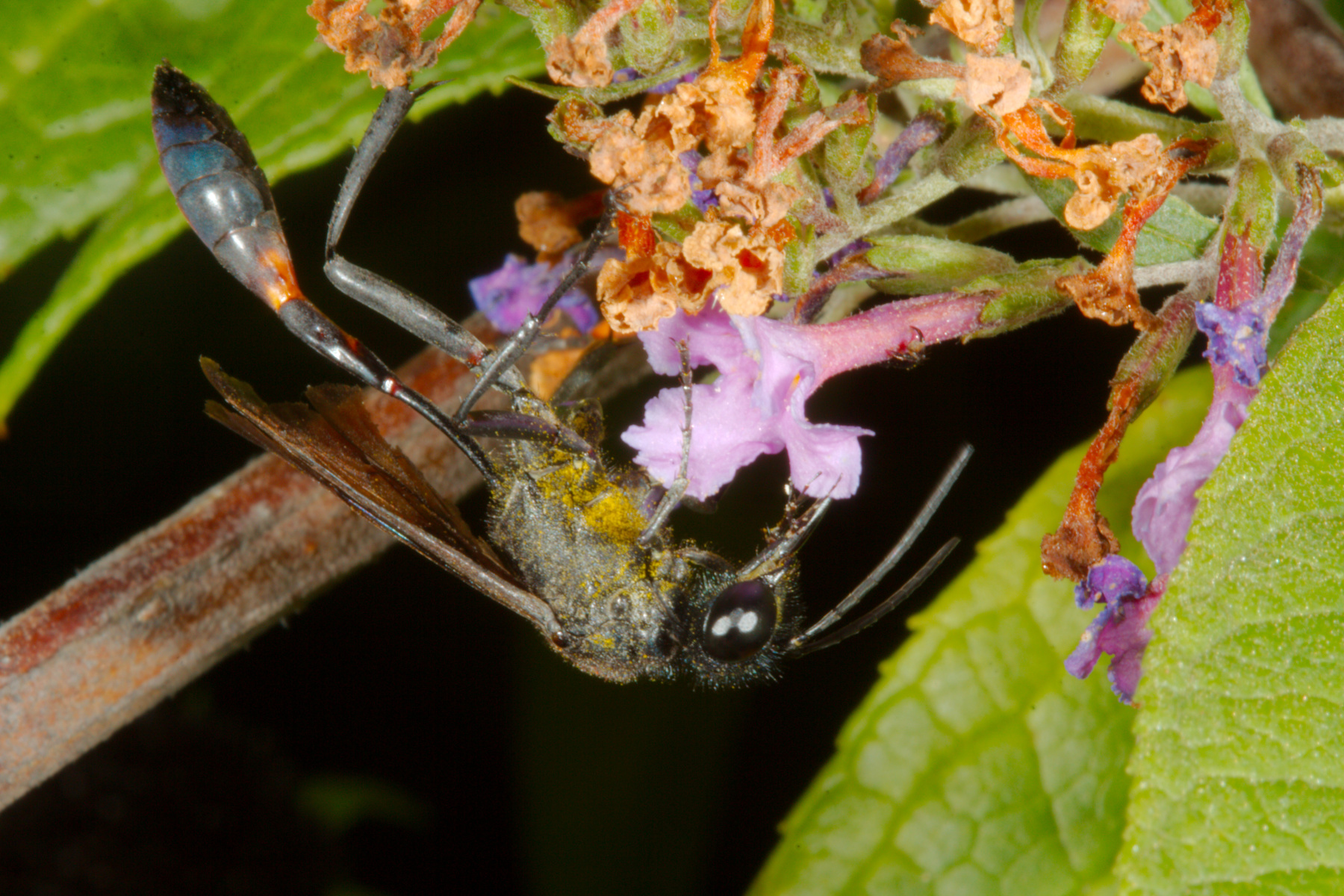
It was only last week, on September 11, 2015, that I posted a picture of a thread-waisted wasp in the genus Ammophila. Generally I try to avoid pictures of the same type of animal or plant in the same year. Sometimes they are different enough, like the nymphs and adult large milkweed bug pictures, posted on August 29, 2015 and earlier today. Nevertheless, I’m posting this because I think it’s a cool picture and it lets you see this wasp from a different angle. Besides, this is my blog and I can do what I want. If you don’t like it, no one is forcing you to come here and see my pictures. One of my favorite things about this picture is the pollen that is all over the wasps thorax.

Categories: Creatures | Comments Off on Genus Ammophila (Thread-waisted Wasp)

Oncopeltus fasciatus (Large Milkweed Bug)

Oncopeltus fasciatus (Large Milkweed Bug)

Oncopeltus fasciatus (Large Milkweed Bug)

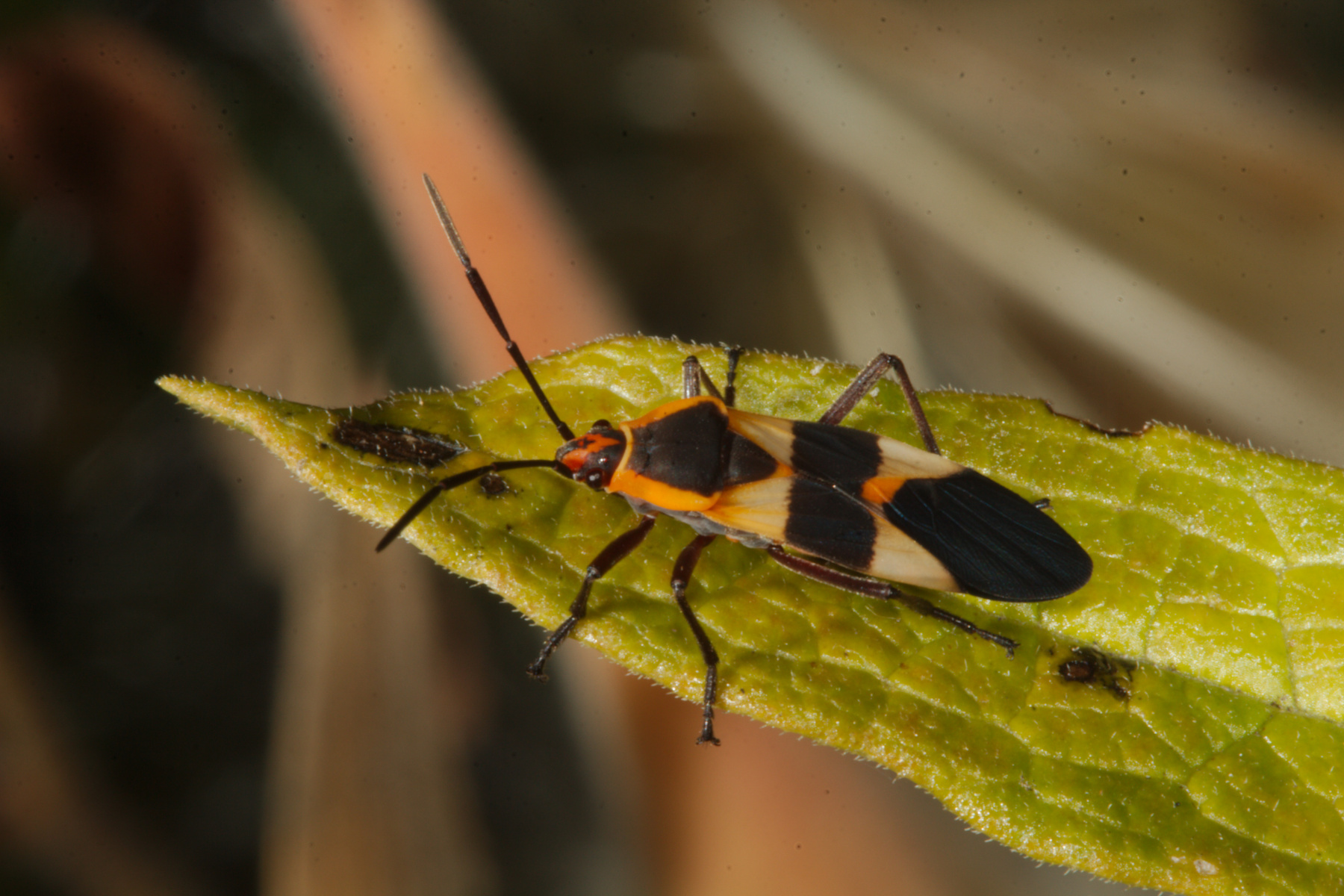
On August 29, 2015 I posted a picture of nymphs of large milkweed bugs (Oncopeltus fasciatus). They quickly grow into adults, like this one. They are mostly gone now, off to wherever adult milkweed bugs go. I think they are really cool looking. I especially like that you can see one of its three simple eyes (the red dot above the larger, compound eye). Many insects have them, but usually we don’t get close enough to see them very well.

Categories: Creatures | Comments Off on Oncopeltus fasciatus (Large Milkweed Bug)

A Jaunty Catbird

A Jaunty Catbird (Dumetella carolinensis)

A Jaunty Catbird (Dumetella carolinensis)

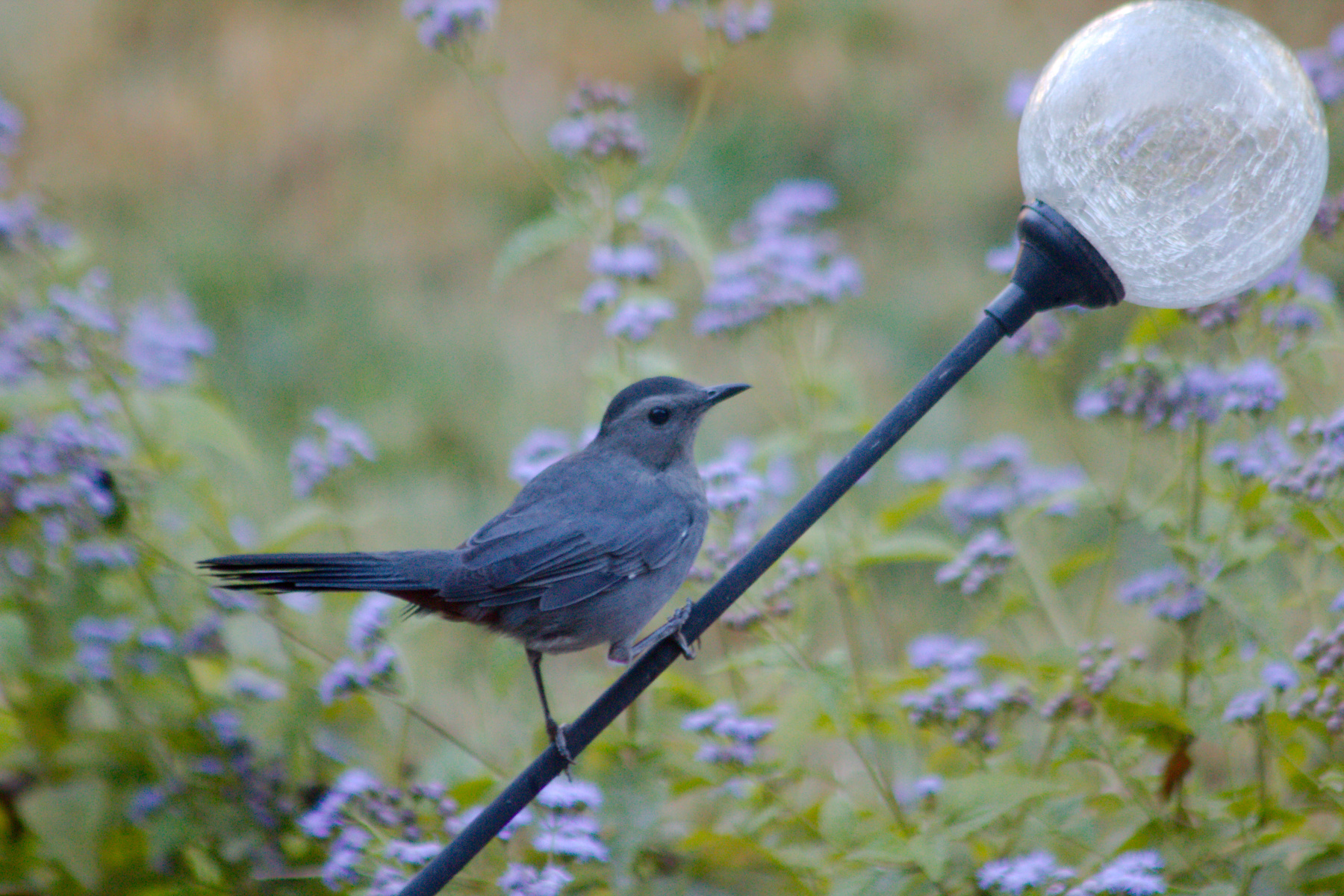
There were a lot of birds in the back yard this morning, coming down to the bird bath on the edge of our patio. They often fly to the lower branches of the nearest maple tree first, and then fly down to the edge of the bath. The goldfinches often land on a metal pole, even closer. Then there are the catbirds (grey catbirds, to be precise, Dumetella carolinensis). They land in and around the potted plants and often perch on this leaning garden ornament (which doesn’t light up any more, but we haven’t gotten around to removing it). I especially like watching the way birds stand on sloping and moving objects, with a sophisticated auto-balancing system that works wonderfully to keep them upright with little or no effort.

Categories: Creatures | Comments Off on A Jaunty Catbird

Cupido comyntas Eastern Tailed-Blue

Cupido comyntas Eastern Tailed-Blue

Cupido comyntas Eastern Tailed-Blue

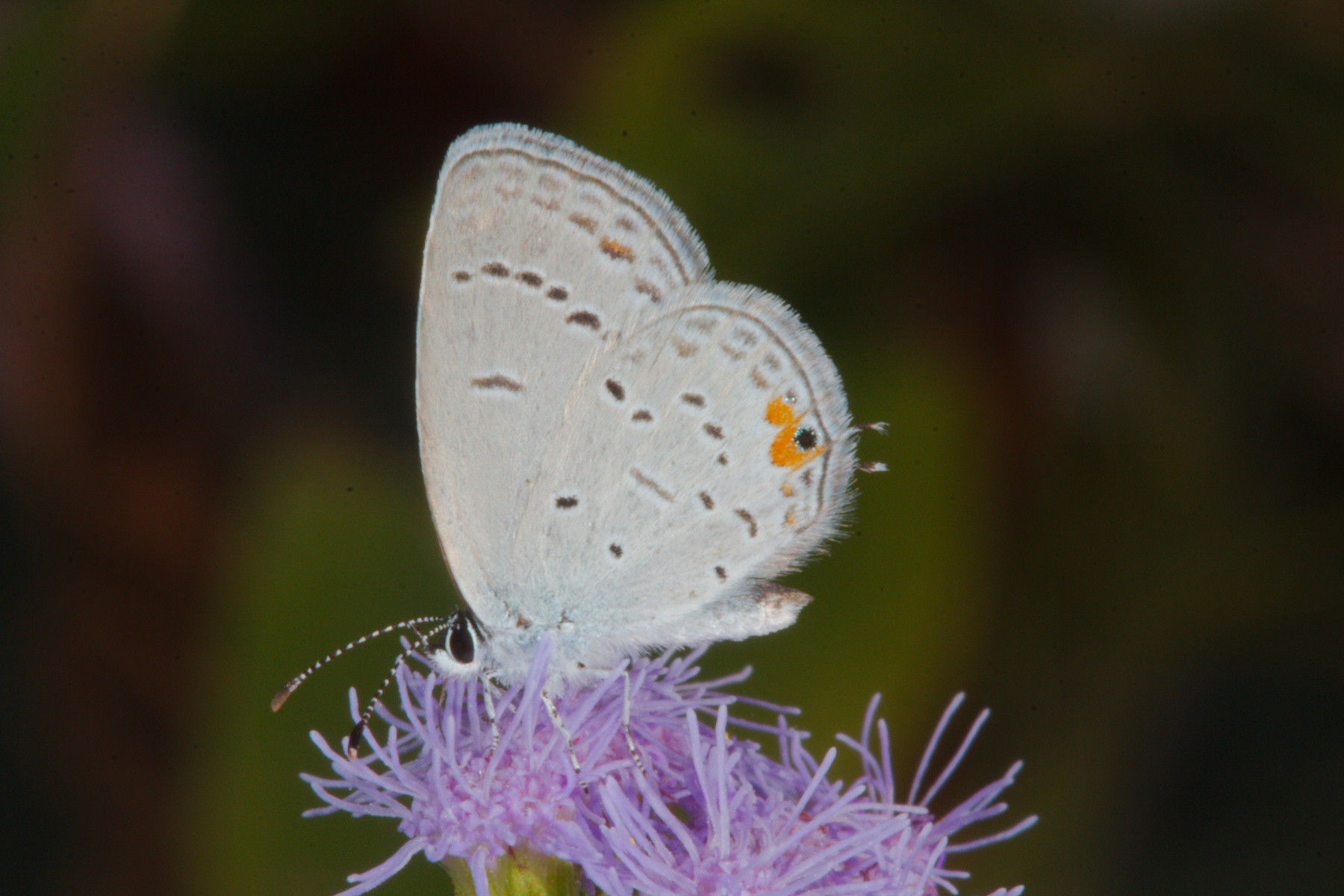
I’ve found a way to get a bit closer in. This photo of an eastern tailed-blue turned out nicely. It was bopping from flower to flower and let me get quite near, which was unusual, and I got a couple pretty clear shots. It’s a pretty little thing and the upper side of its wings are a lovely, metallic blue with the same orange spots, which are quite striking against that blue. But I wasn’t able to get any pictures with its wings open. Maybe next time.

Categories: Creatures | Comments Off on Cupido comyntas Eastern Tailed-Blue

Genus Ammophila (Thread-waisted Wasp)

Genus Ammophila (Thread-waisted Wasp)

Genus Ammophila (Thread-waisted Wasp)

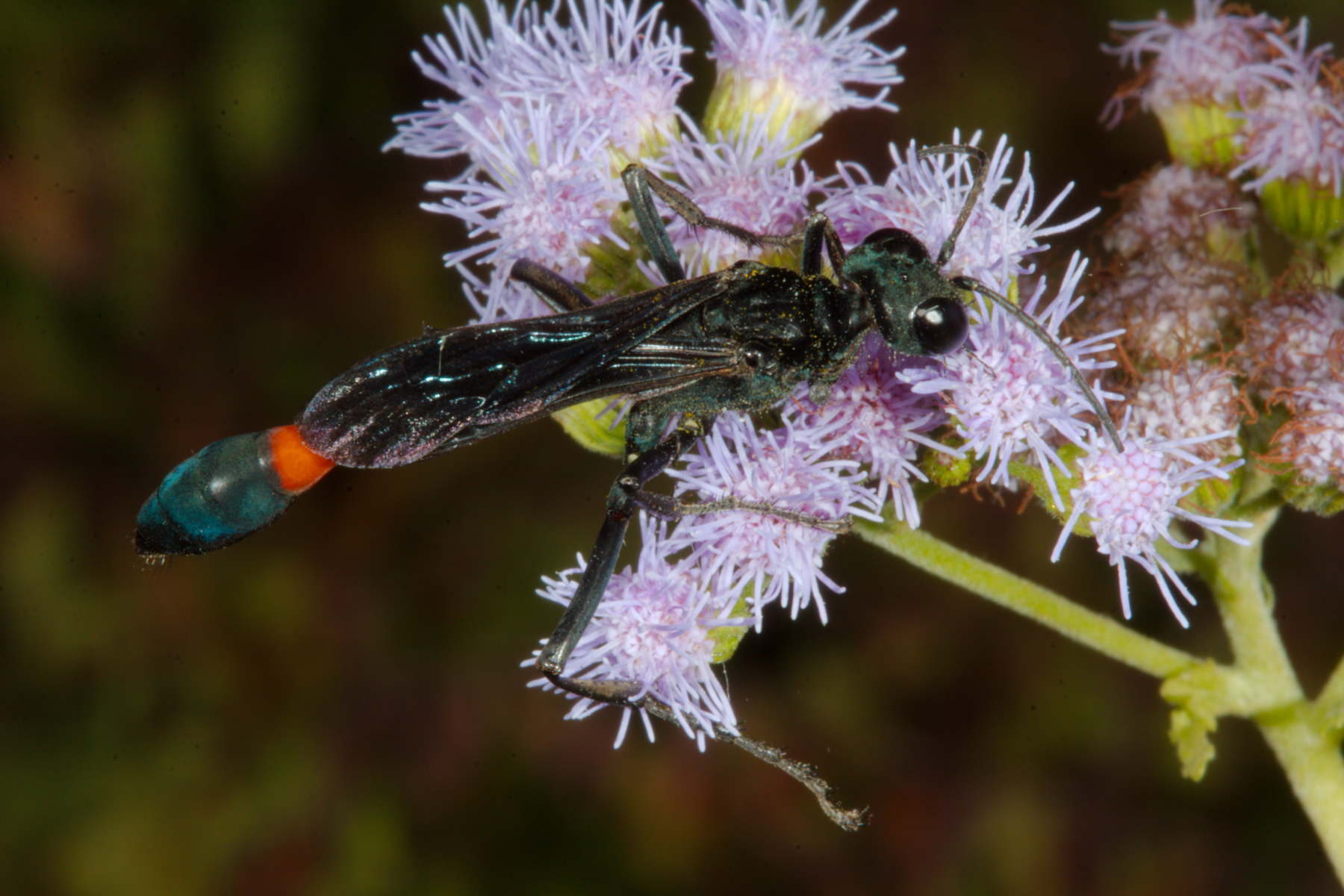
This is one of a few species of Ammophila (the thread-waisted wasps), probably (but by no means certainly) Ammophila nigricans or Ammophila procera. They are difficult to identify, particularly from photographs and in this case, my photographs don’t show some of the distinguishing characteristics. In any case, this is one of only a few I’ve seen this summer. The wings are hiding the long, thread-like petiole, but it’s quite distinctive. I managed to get three decent pictures of this one before she flew away (I’m guessing on the sex—the orange is paler on the males but without them being side by side, it’s not always easy to tell).

Categories: Creatures | Comments Off on Genus Ammophila (Thread-waisted Wasp)

Lucilia sericata (Common Green Bottle Fly)

Lucilia sericata (Common Green Bottle Fly)

Lucilia sericata (Common Green Bottle Fly)

I hope you aren’t too tired of insect photographs. It won’t be long and they will be a lot harder to find, so my photography will shift into autumnal mode, with colored leaves and such. For now, the insects are still going string. We were supposed to have heavy rain today and in Annapolis they got nearly 3¾″. We got enough to make the ground wet, but not under trees.

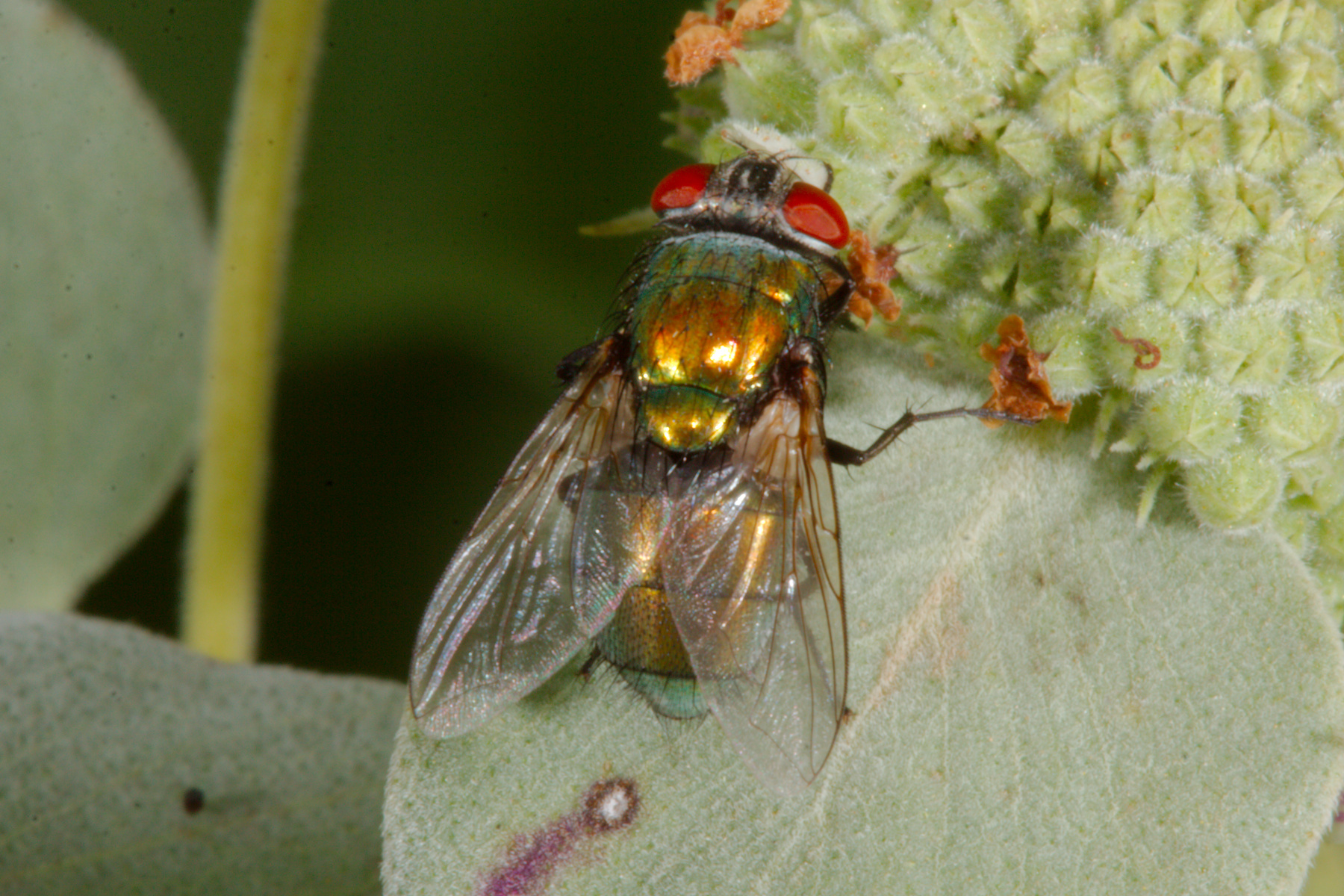
This is a common green bottle fly (Lucilia sericata), also known as a sheep blow fly. While the larvae feed on flesh, they only eat partially decomposed tissue. They have actually been used to clean wounds, eating the necrotic tissue and leaving healthy tissue alone.

Categories: Creatures | Comments Off on Lucilia sericata (Common Green Bottle Fly)

Euschistus Species (Stink Bug)

<em>Euschistus</em> Species (Stink Bug)

Euschistus Species (Stink Bug)

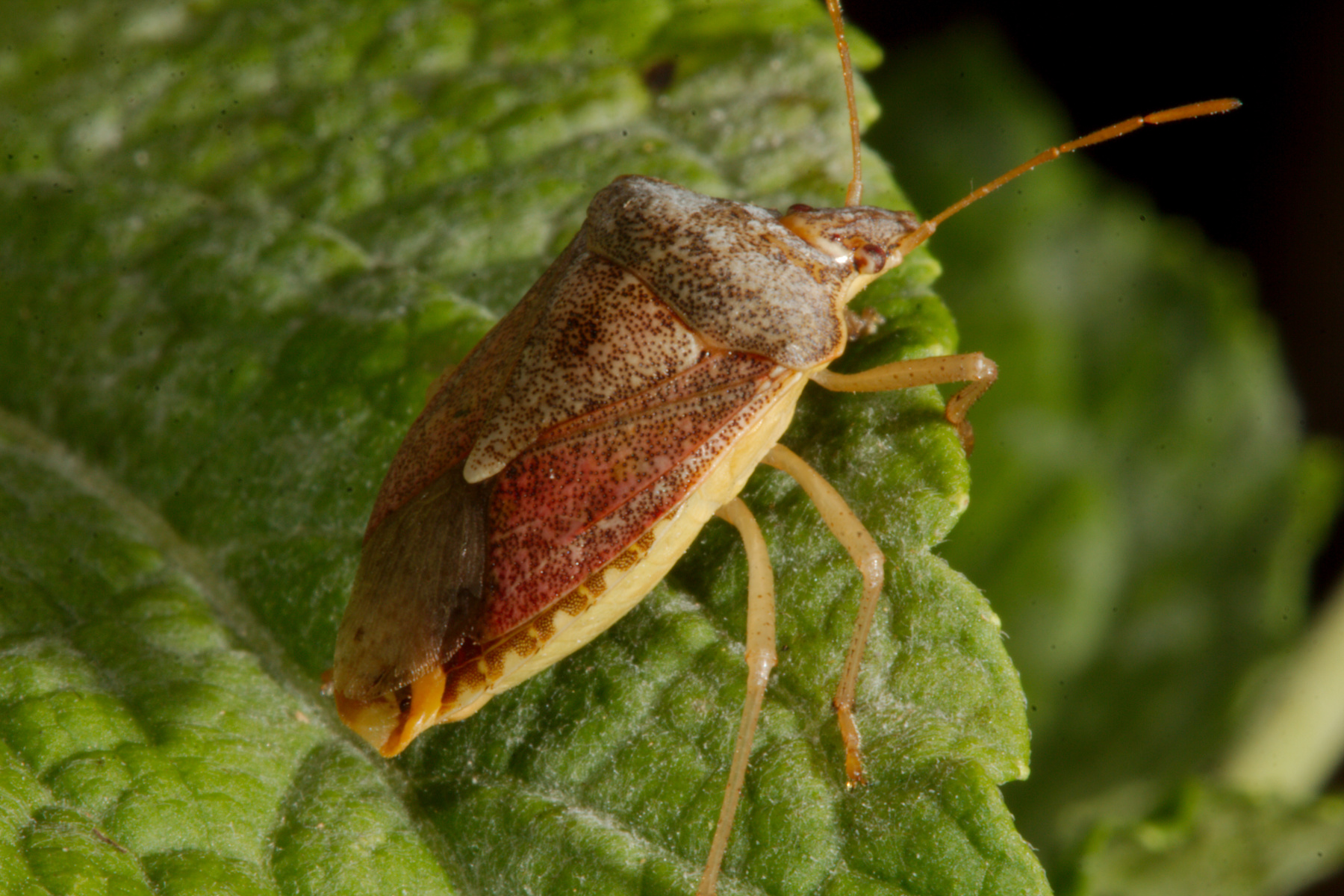
I came across a little stink bug this evening. It isn’t the “dreaded” brown marmorated stink bug (Halyomorpha halys) that made such a stink the last few years (if you’ll pardon the expression). The genus consists of about 20 species in our area and the darkish spot at the center of the scutellum (the triangular bit in the center of its back) and less obvious dark patches on the wings (not really visible in this angle) are distinguishing to the genus. It’s a little fellow and it was climbing around close to the ground on the leaves of blue mistflower (Conoclinium coelestinum).

Categories: Creatures | Comments Off on Euschistus Species (Stink Bug)

Augochlorella Species

Augochlorella Species

Augochlorella Species

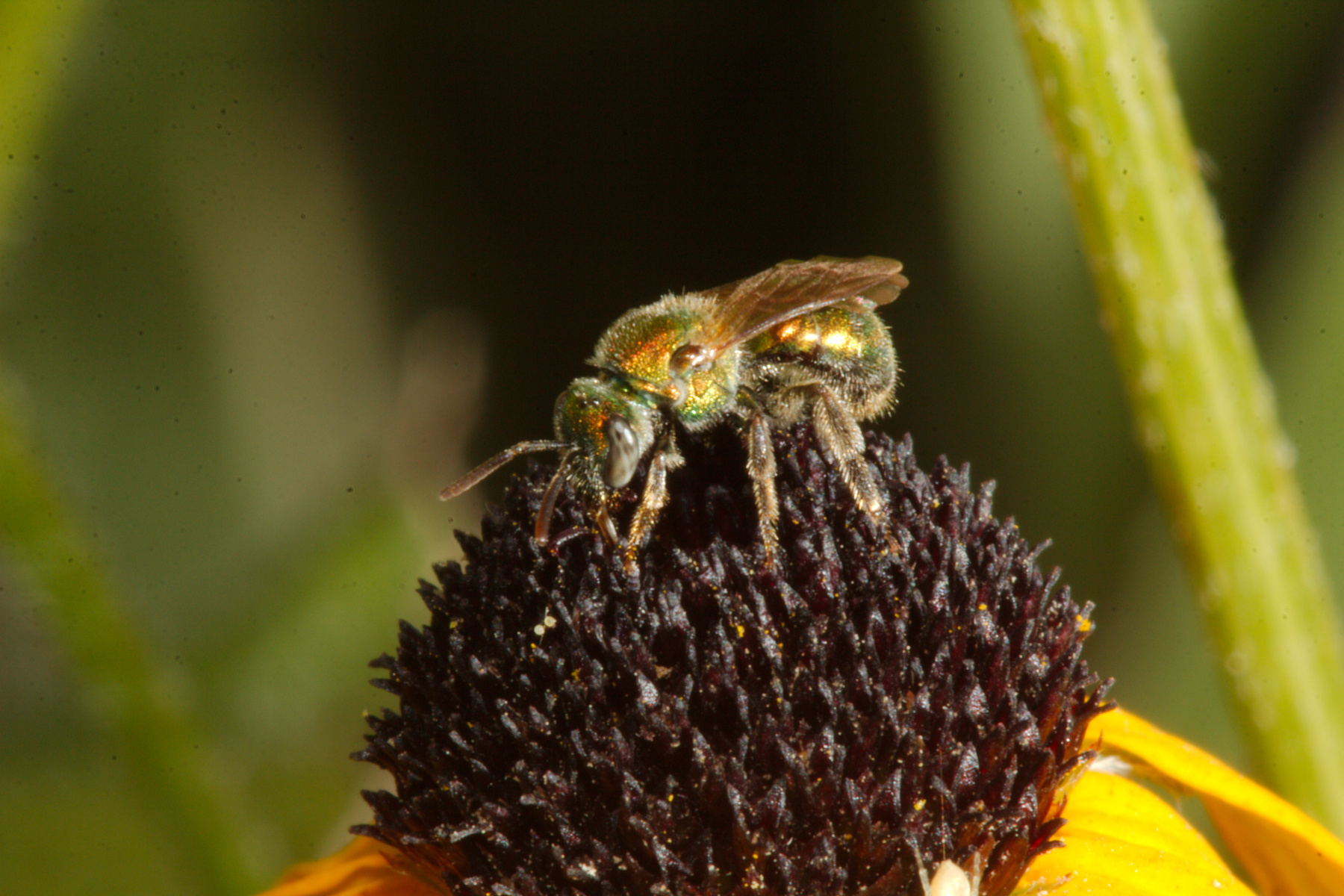
I took some wasp pictures this evening. I didn’t get anything spectacular, but since I don’t want to miss posting a picture for today, I have to post a less than perfect one. This is one of a few species of Augochlorella, a genus of sweat bees (family Halictidae). It’s a fairly small bee, as you can see by comparing its size to the central part of the black-eyed Susan on which it is feeding. I was only able to get two shots of it before it flew off and neither is really as sharp as I’d have liked.

Categories: Creatures | Comments Off on Augochlorella Species

Euptoieta claudia (Variegated Fritillary)

Euptoieta claudia (Variegated Fritillary)

Euptoieta claudia (Variegated Fritillary)

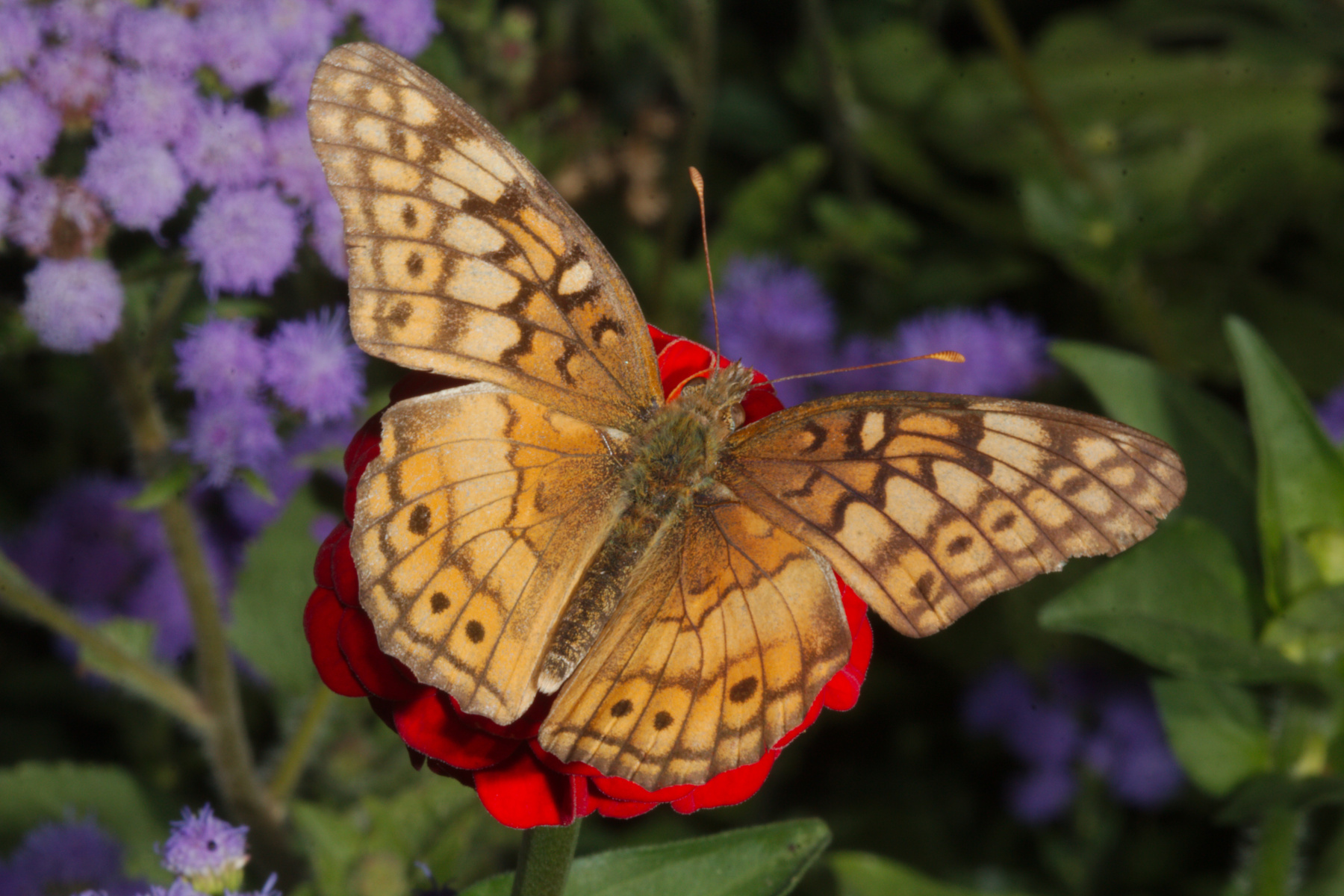
It was a beautiful, if somewhat hot day. Summer has not really abated at all and it continues to be very dry. We thought it would be a nice day to visit the demonstration garden at the county’s agricultural farm park, so that’s what we did. It won’t come as any great surprise that I brought my camera and spent much of my time photographing both flowers and insects. The first of two images that I’m posting is of a variegated fritillary (Euptoieta claudia), a smallish fritillary and one that is difficult to get close to, but I managed to get two pretty good shots of it with wings spread.

Categories: Creatures | Comments Off on Euptoieta claudia (Variegated Fritillary)