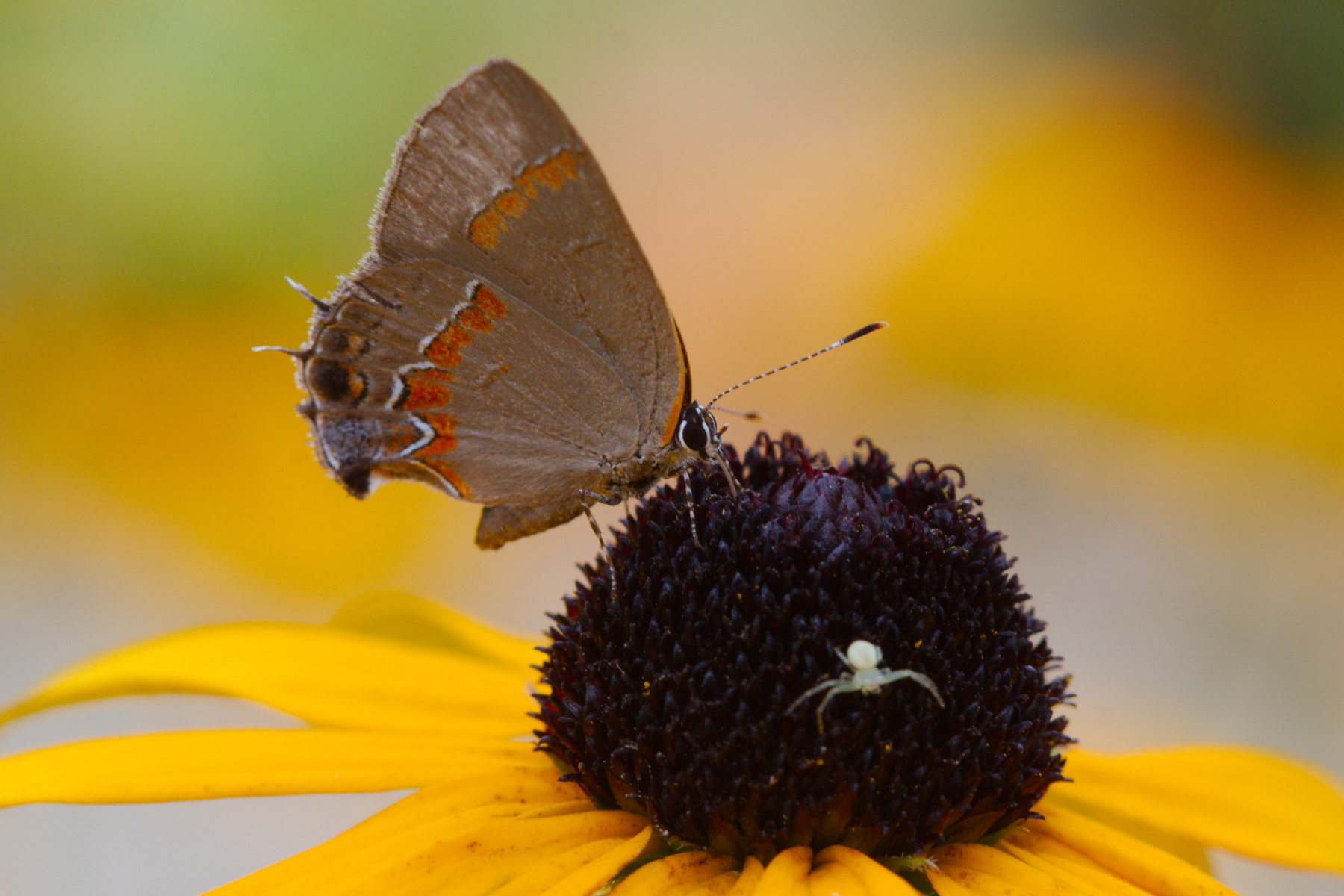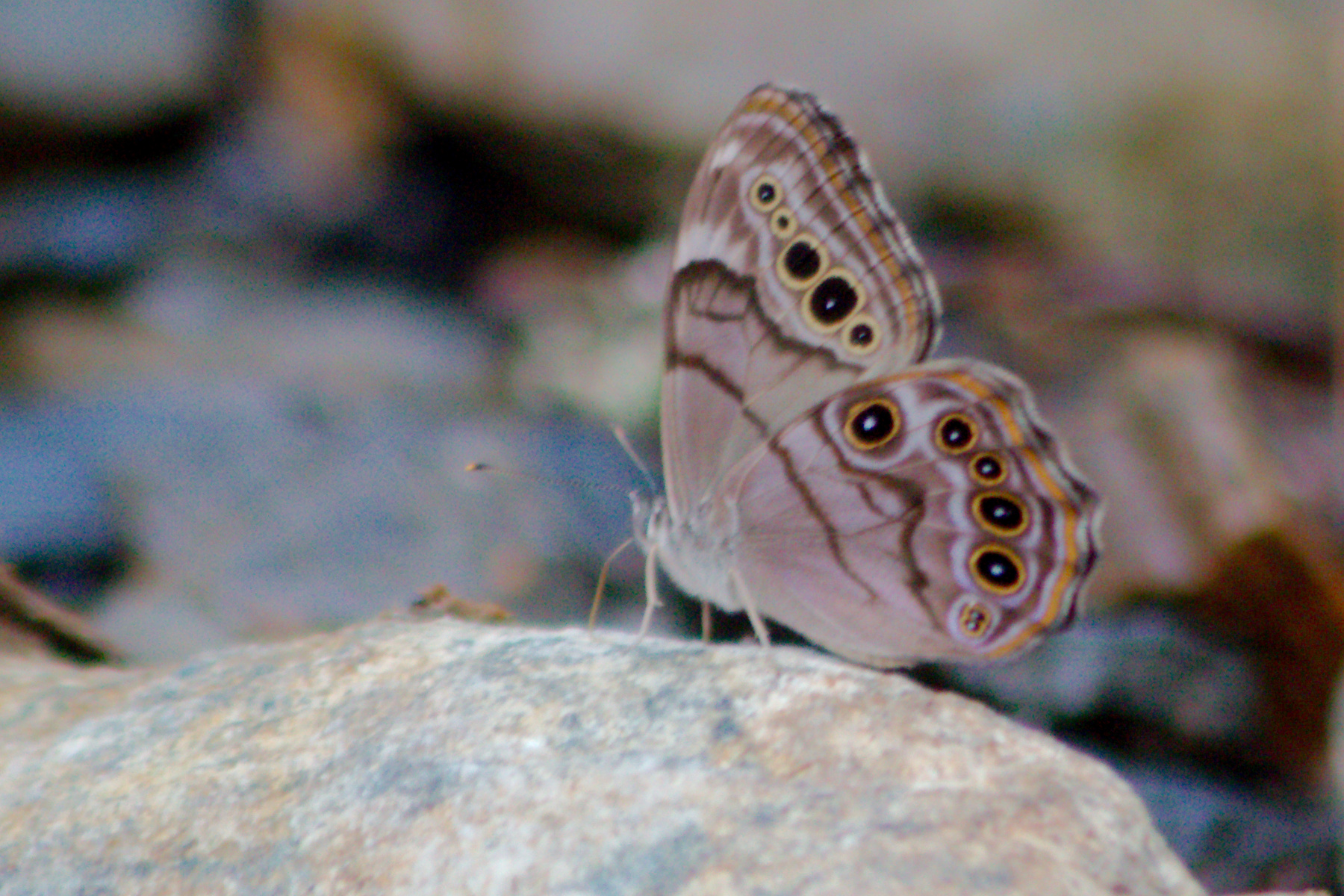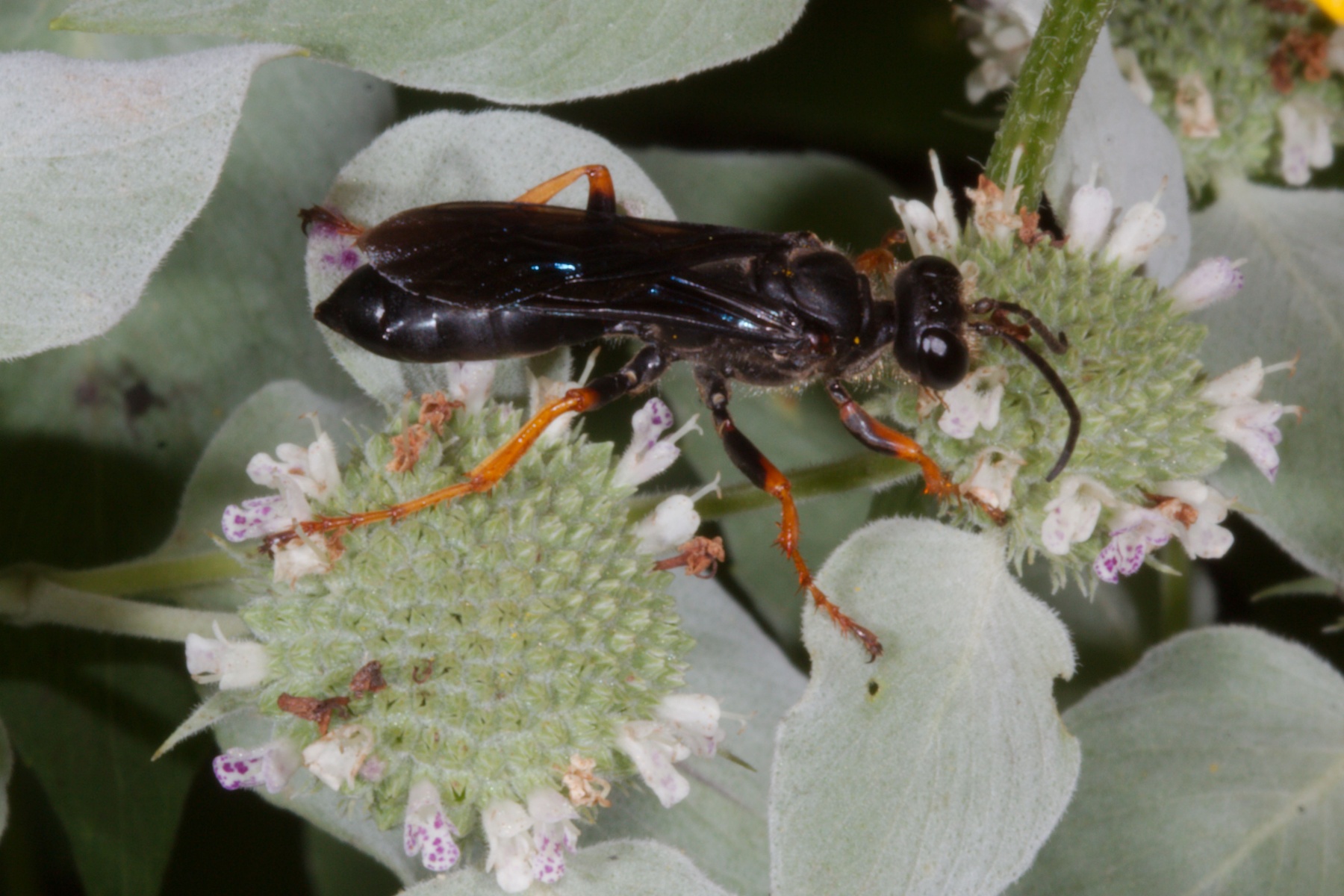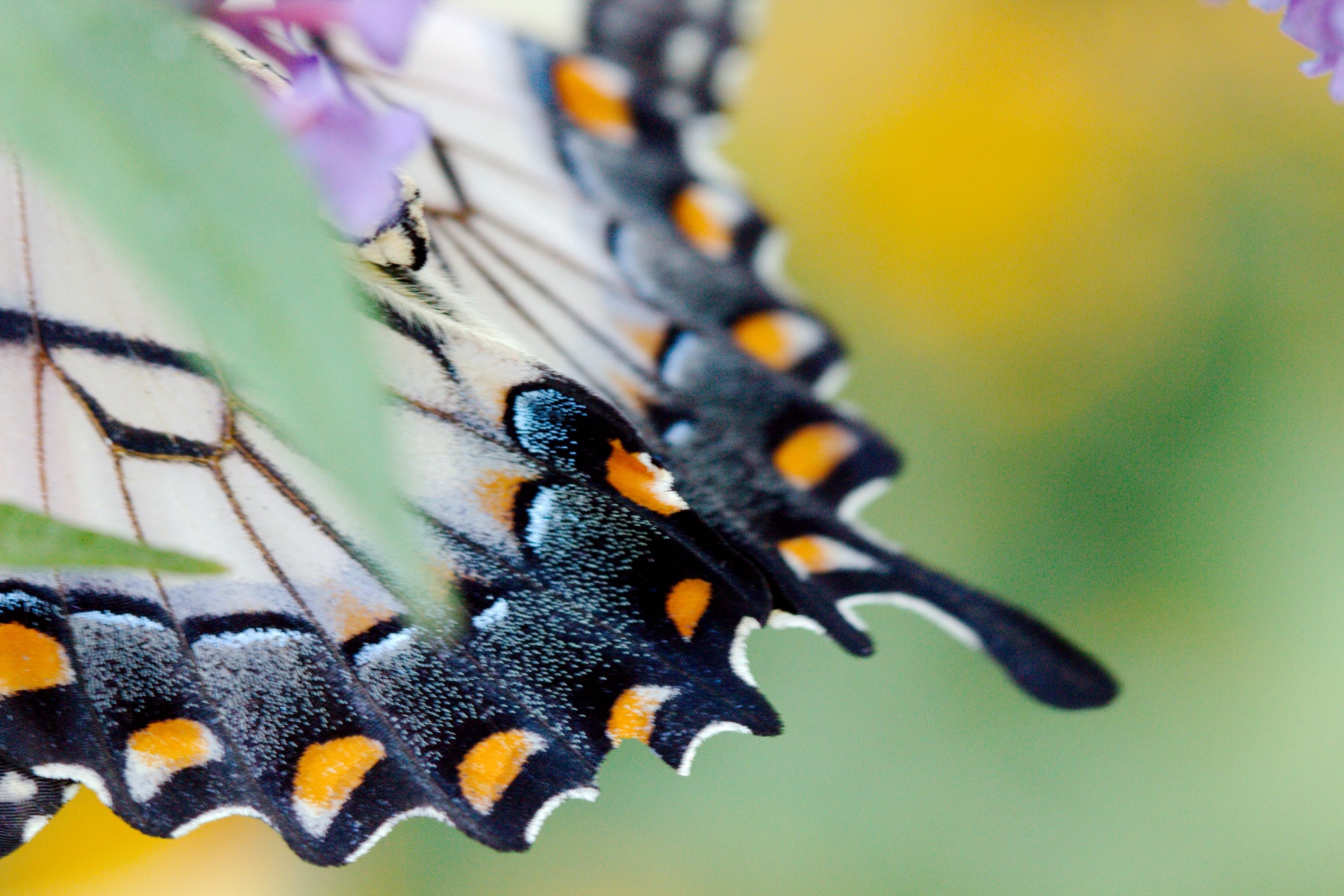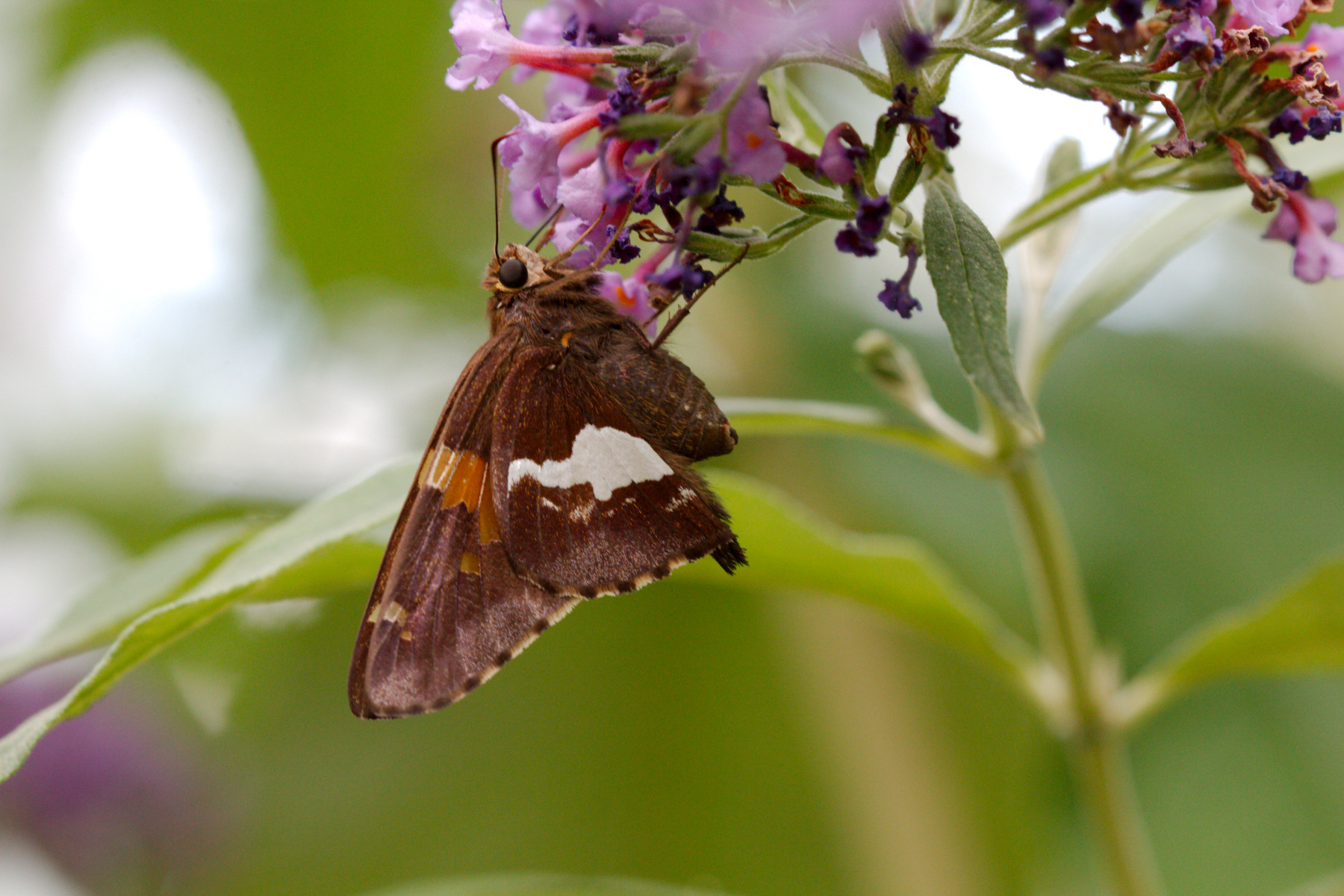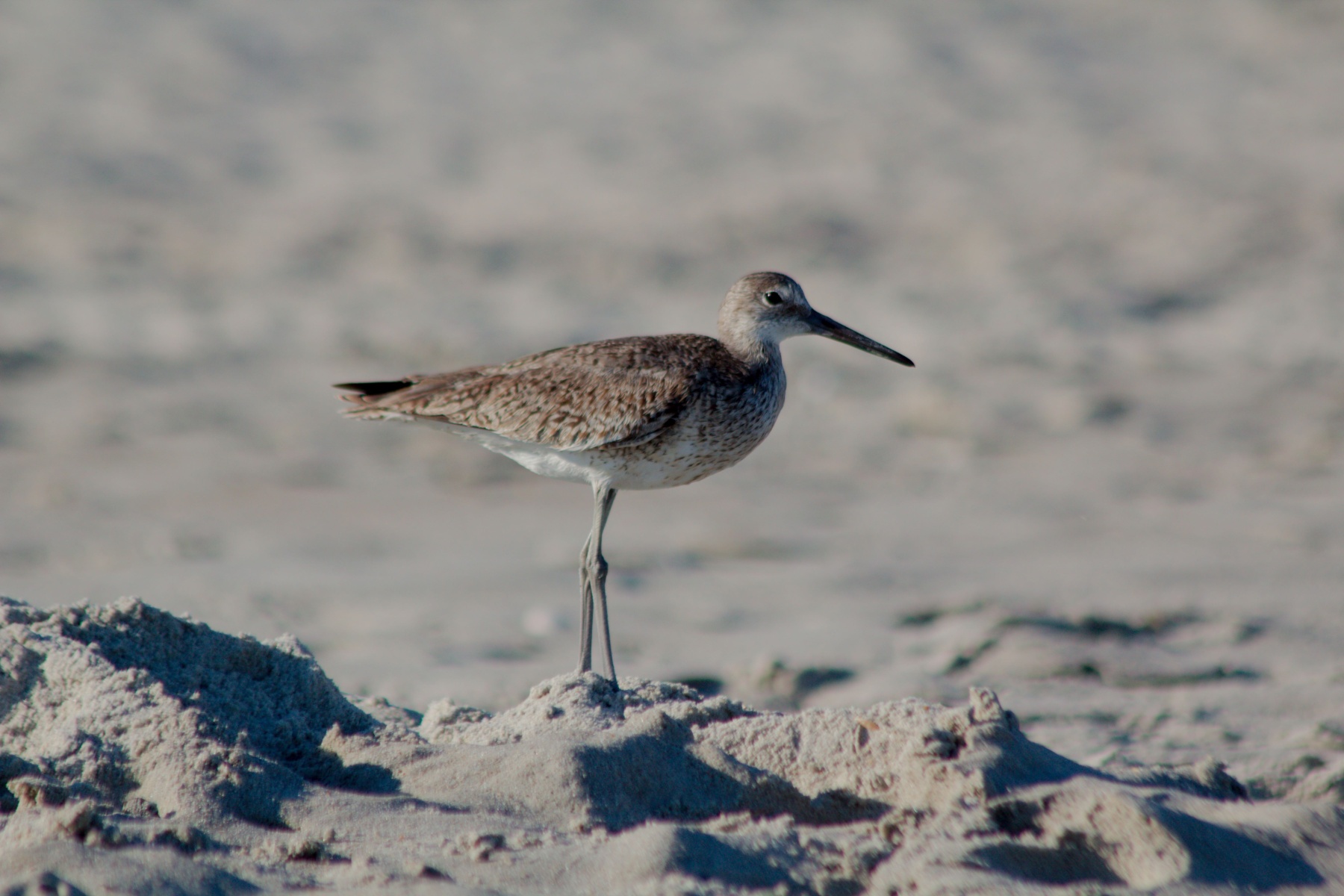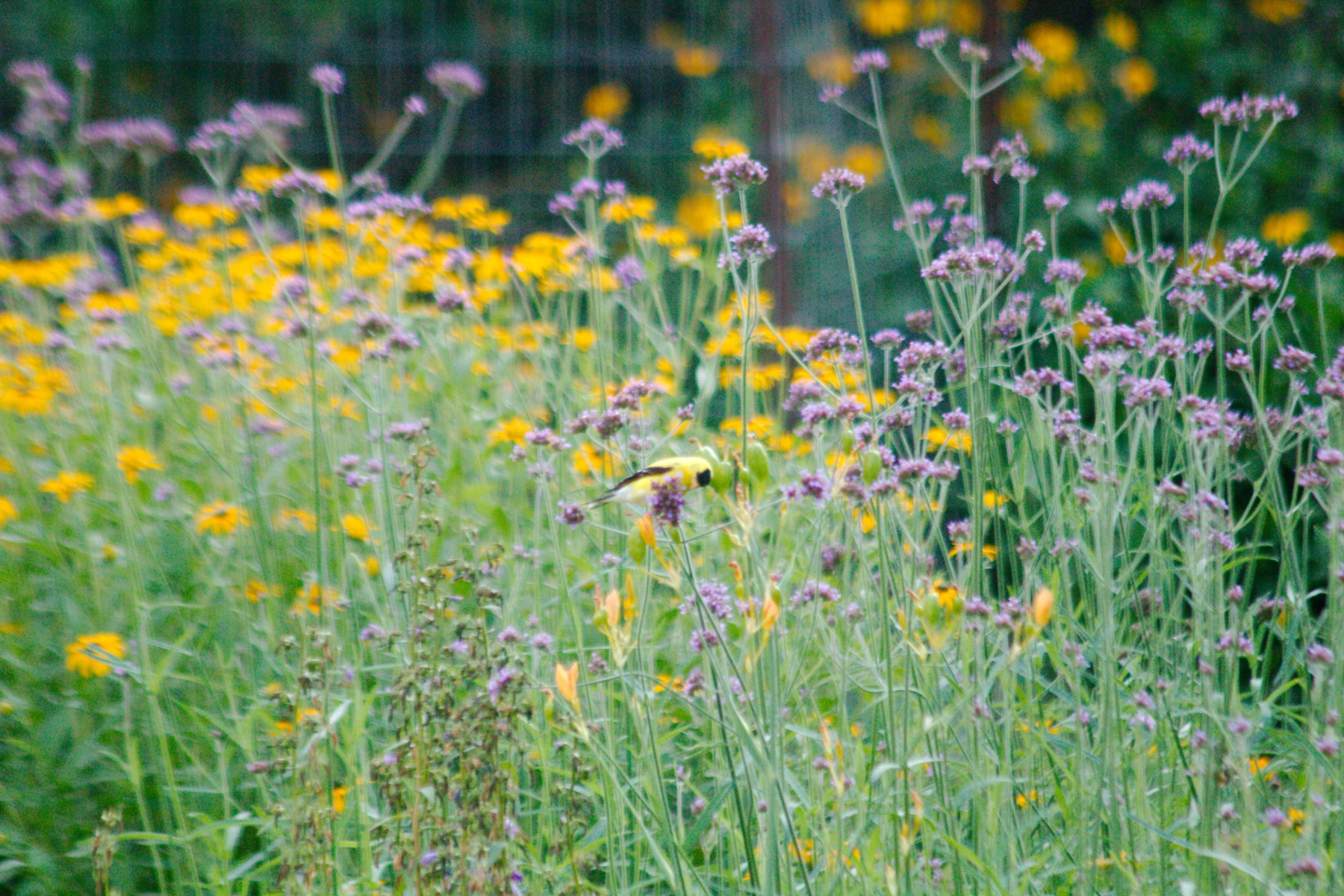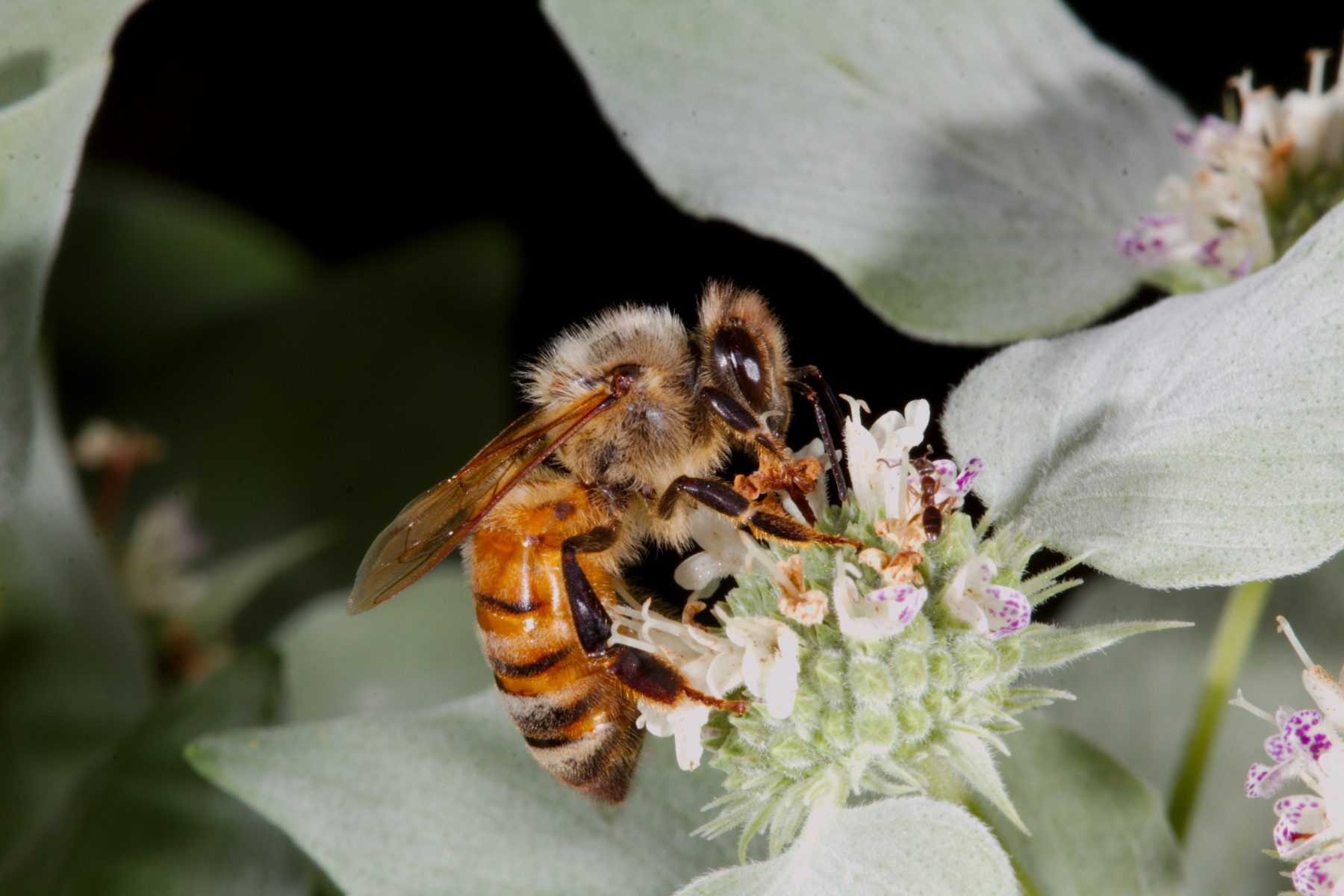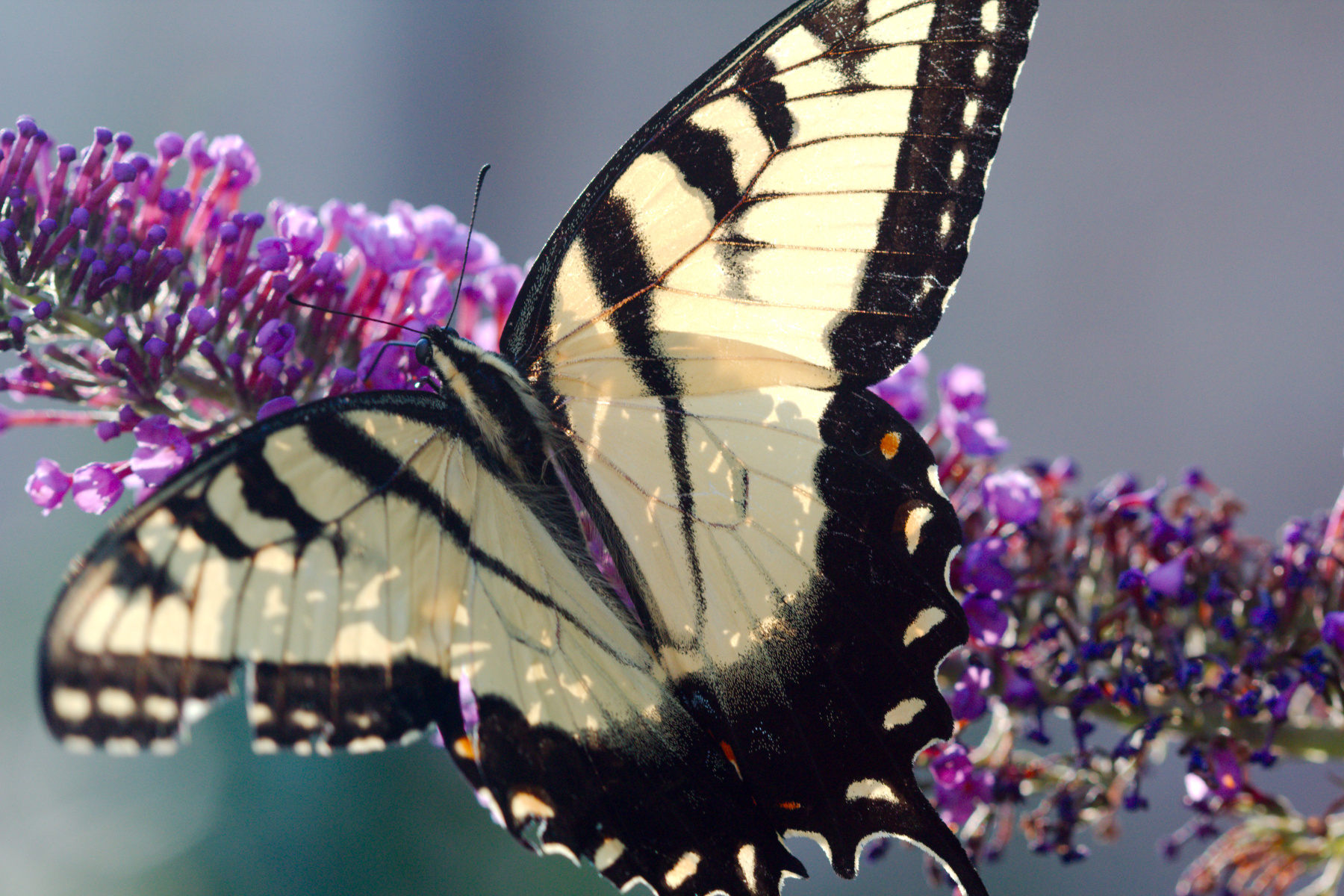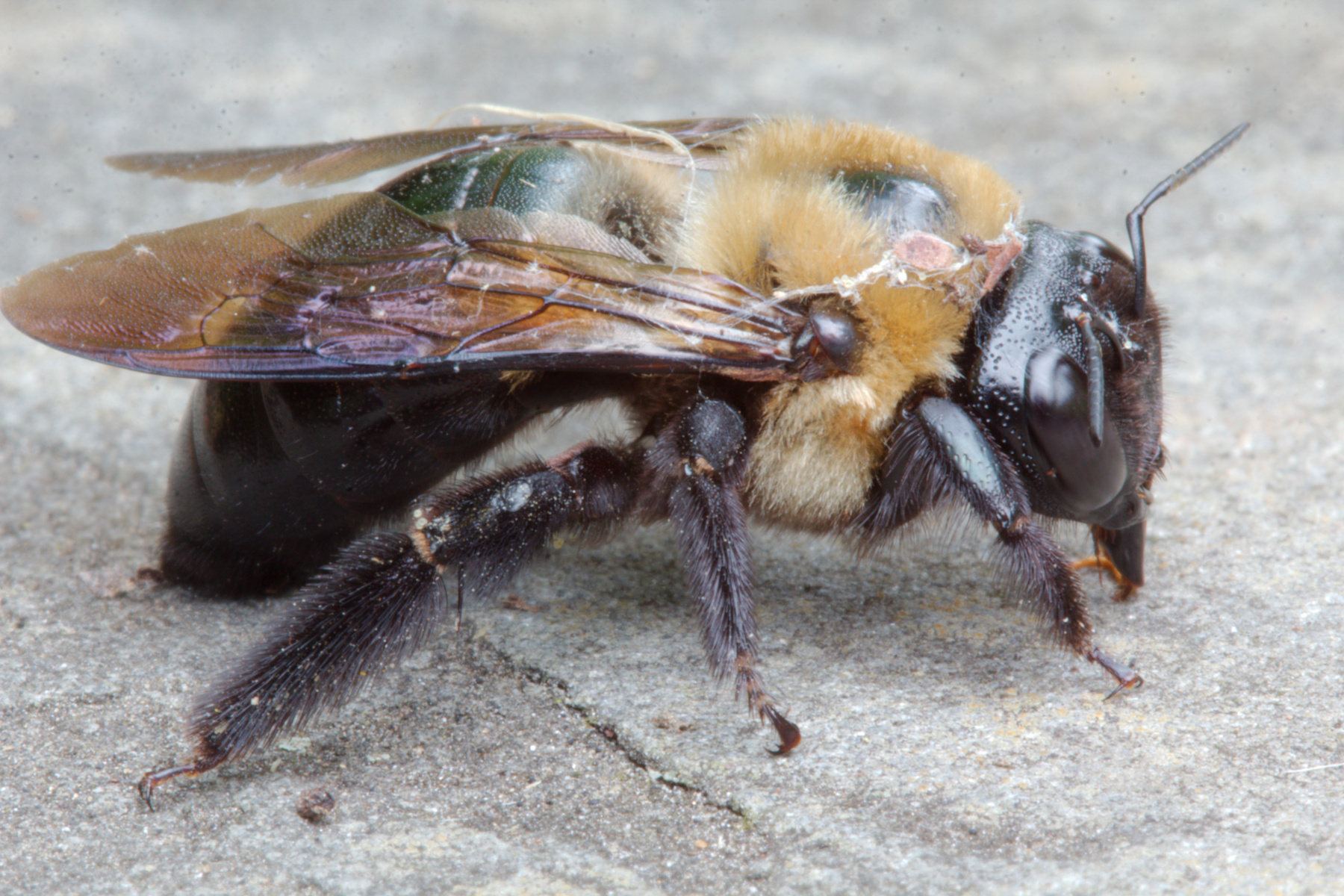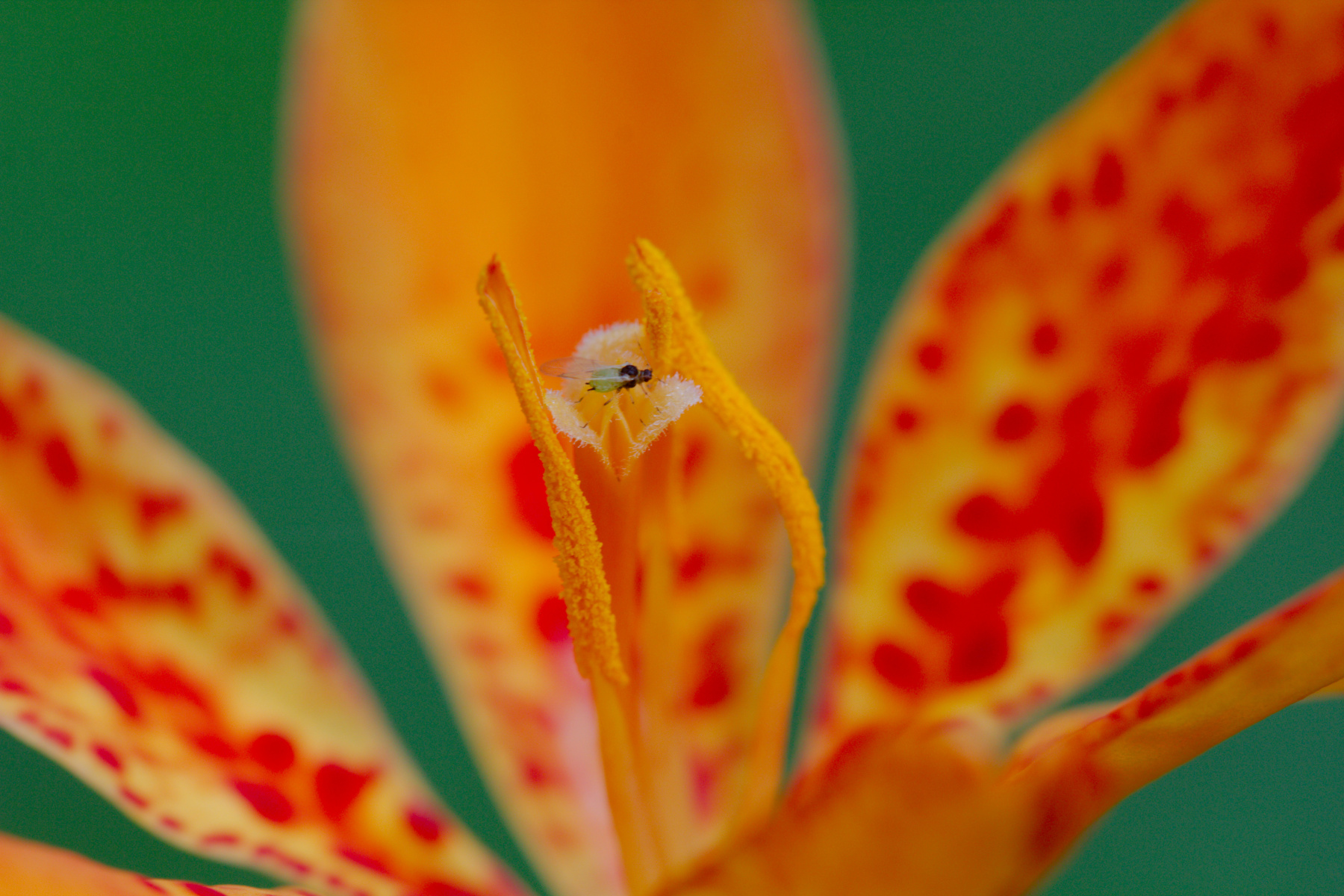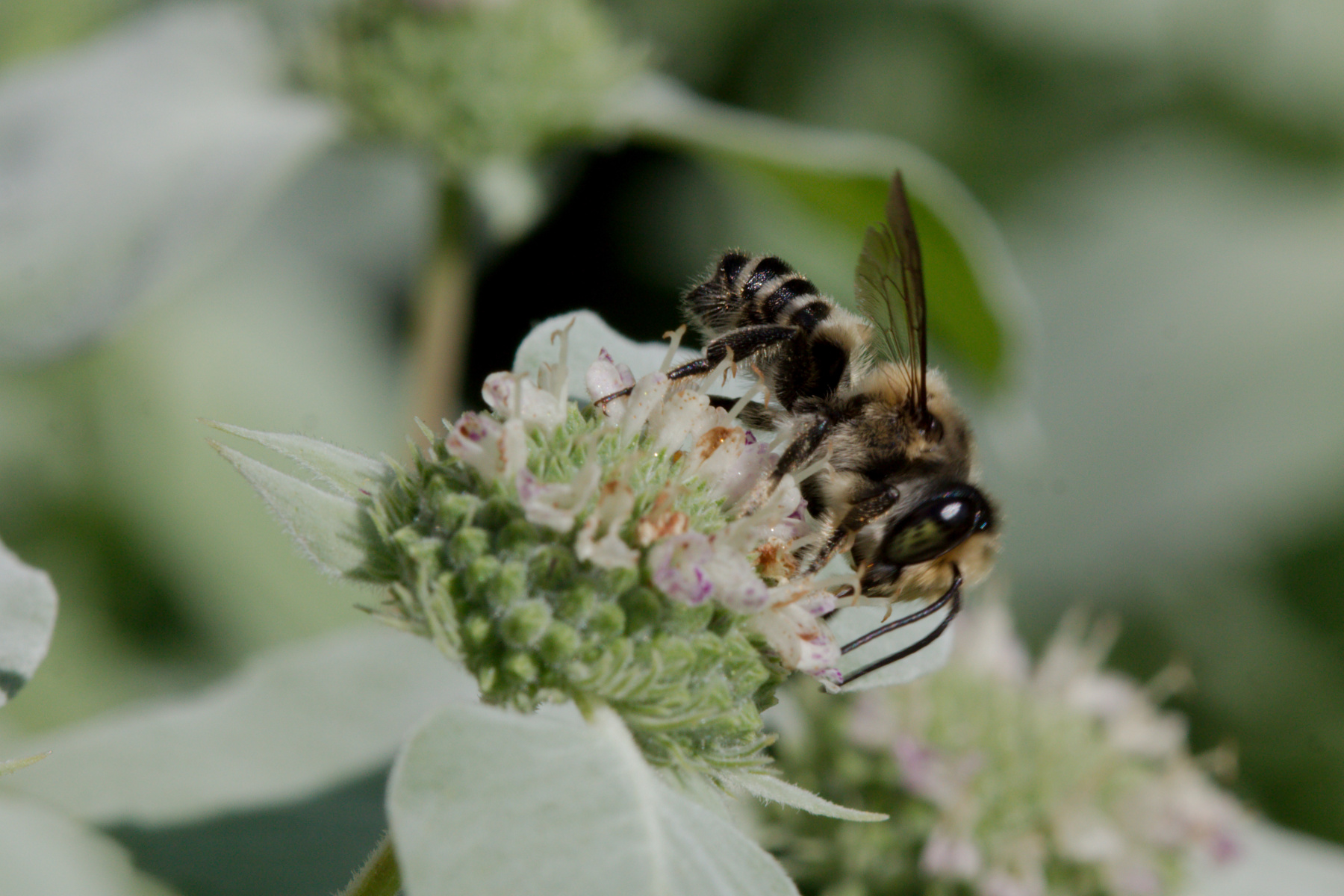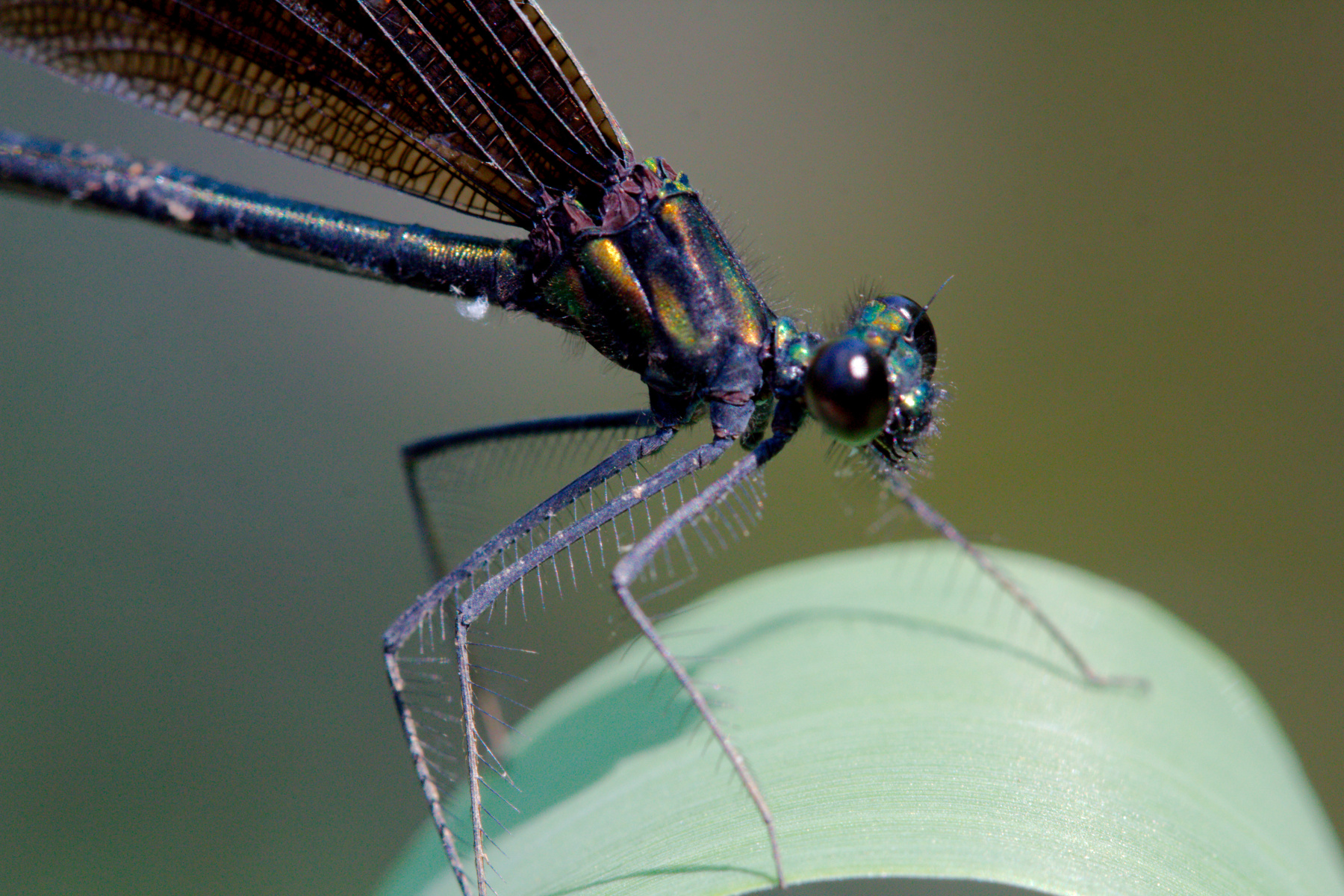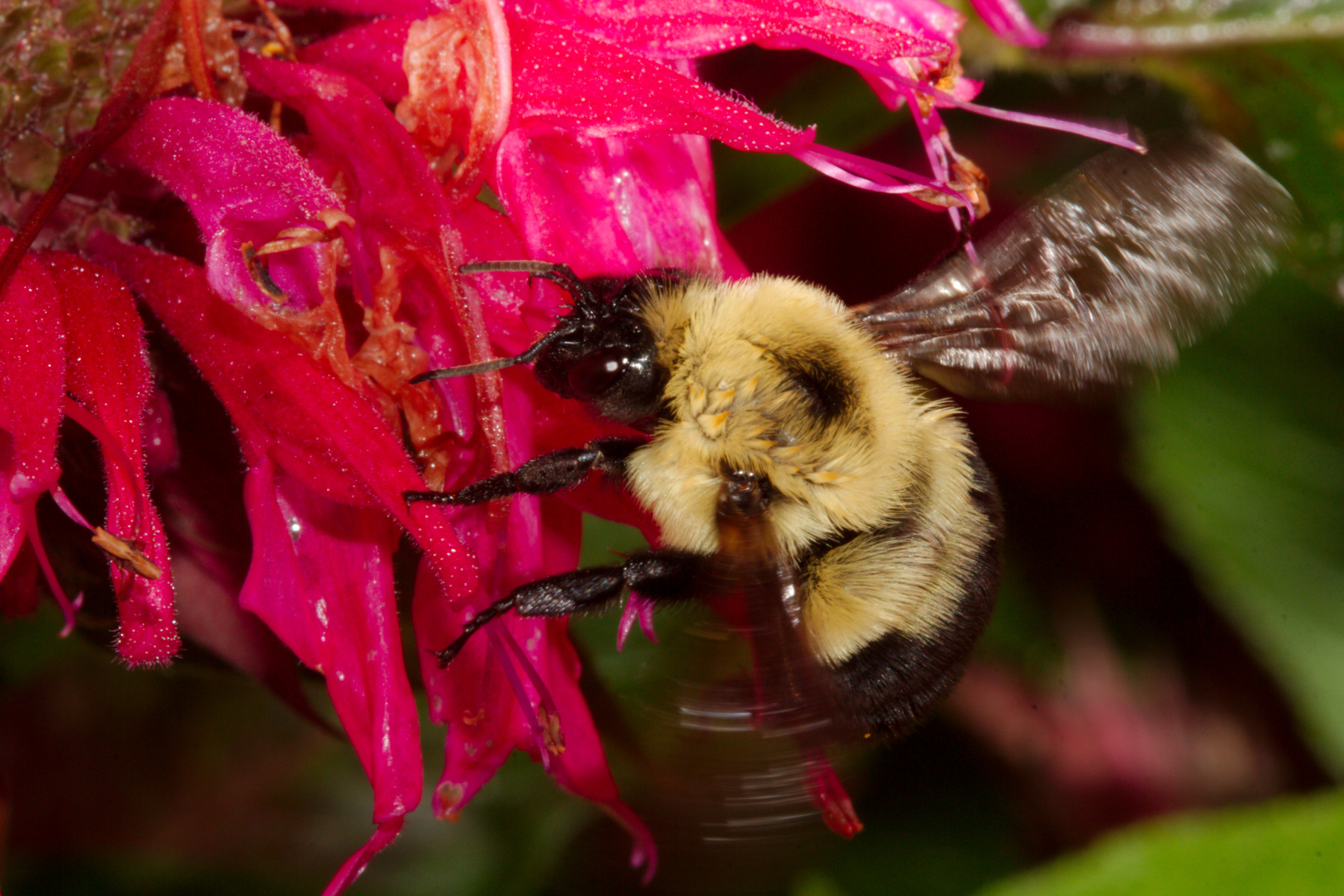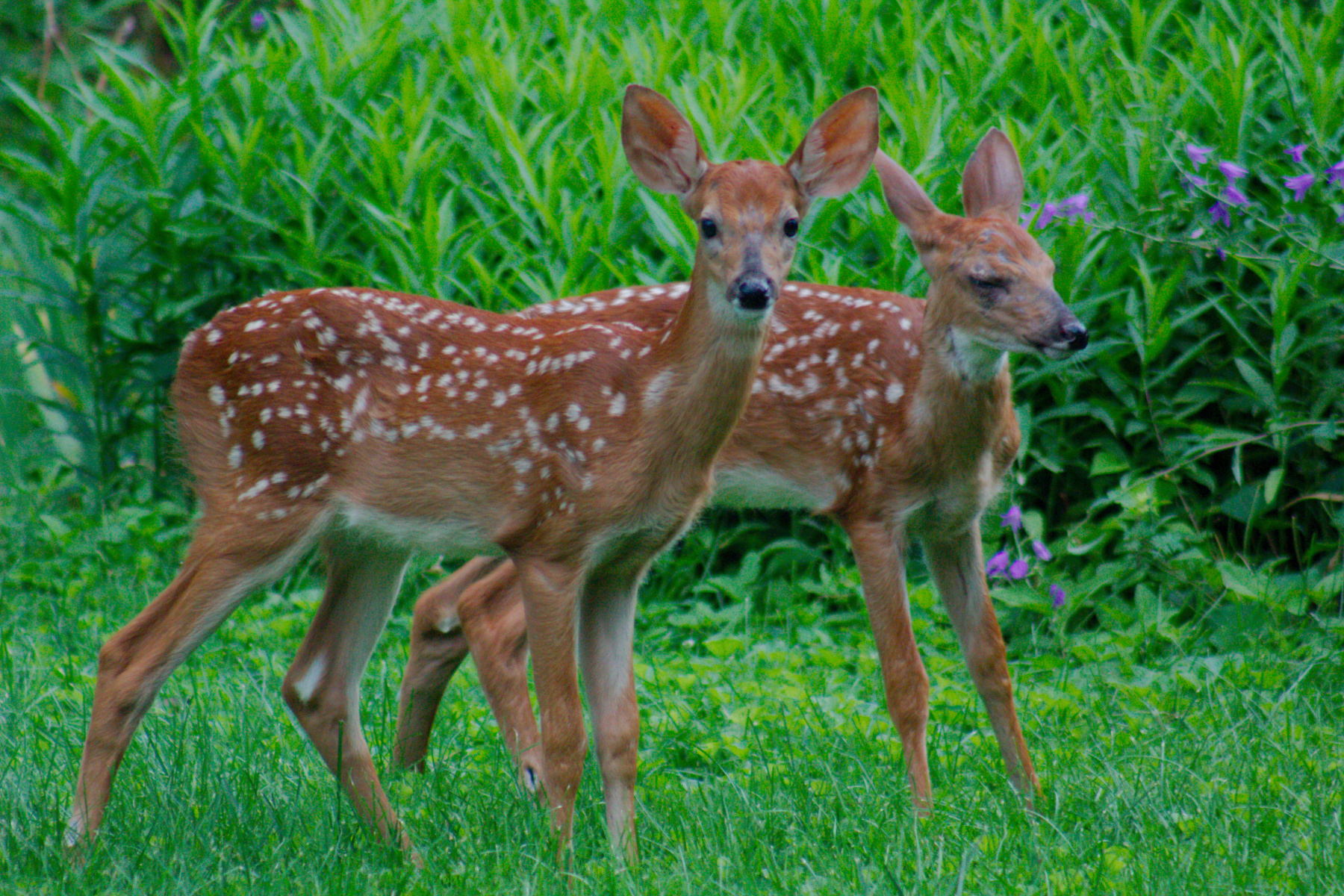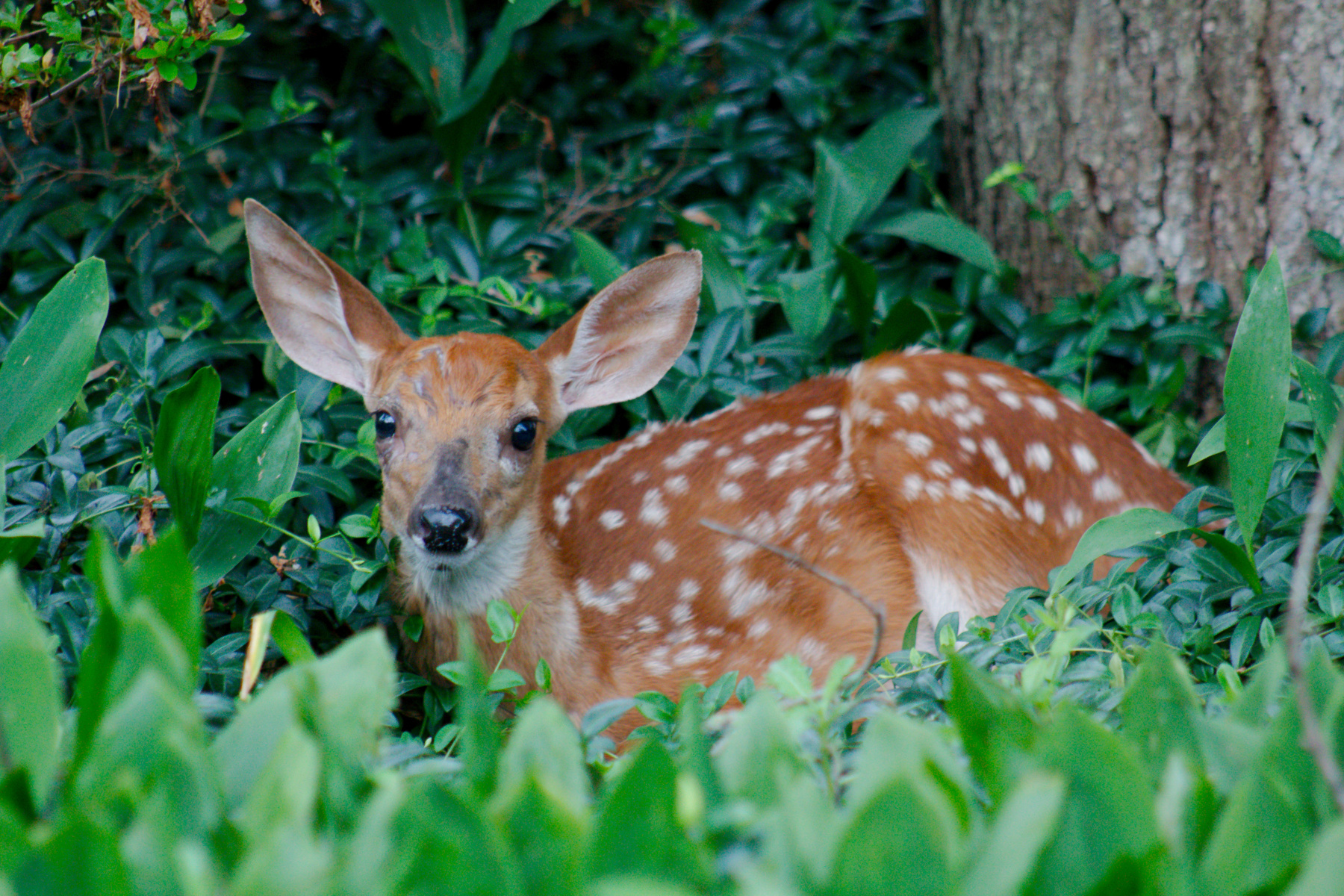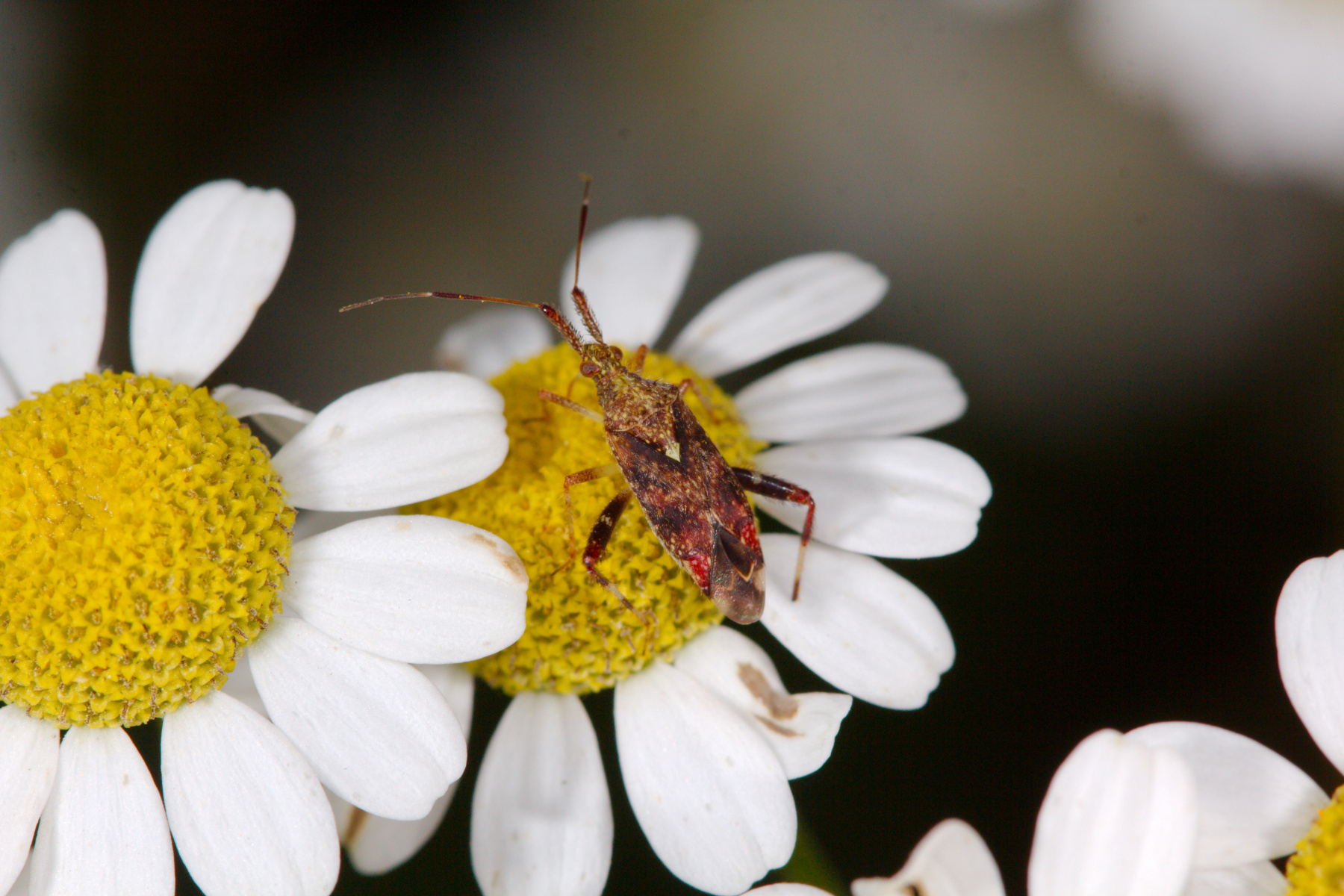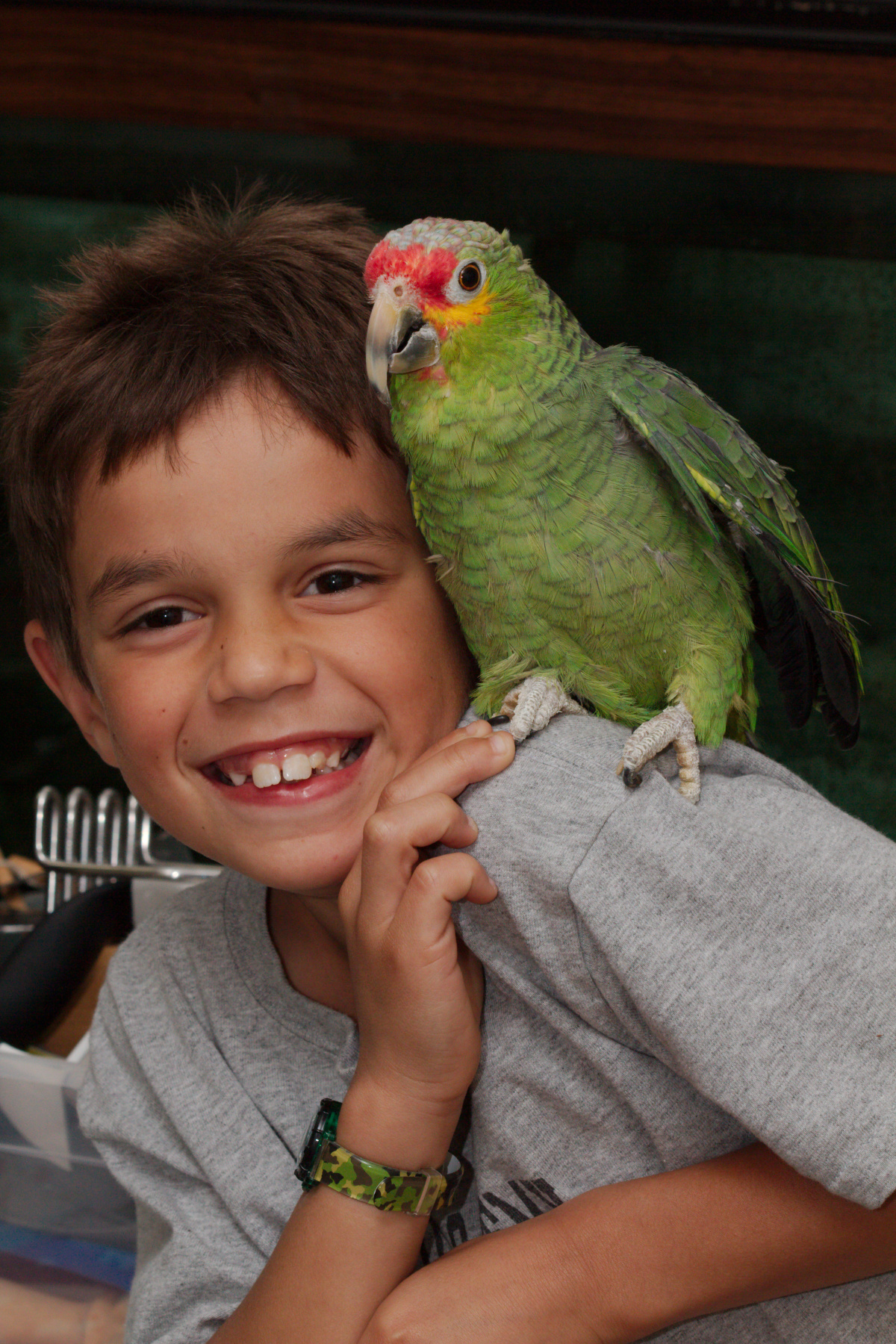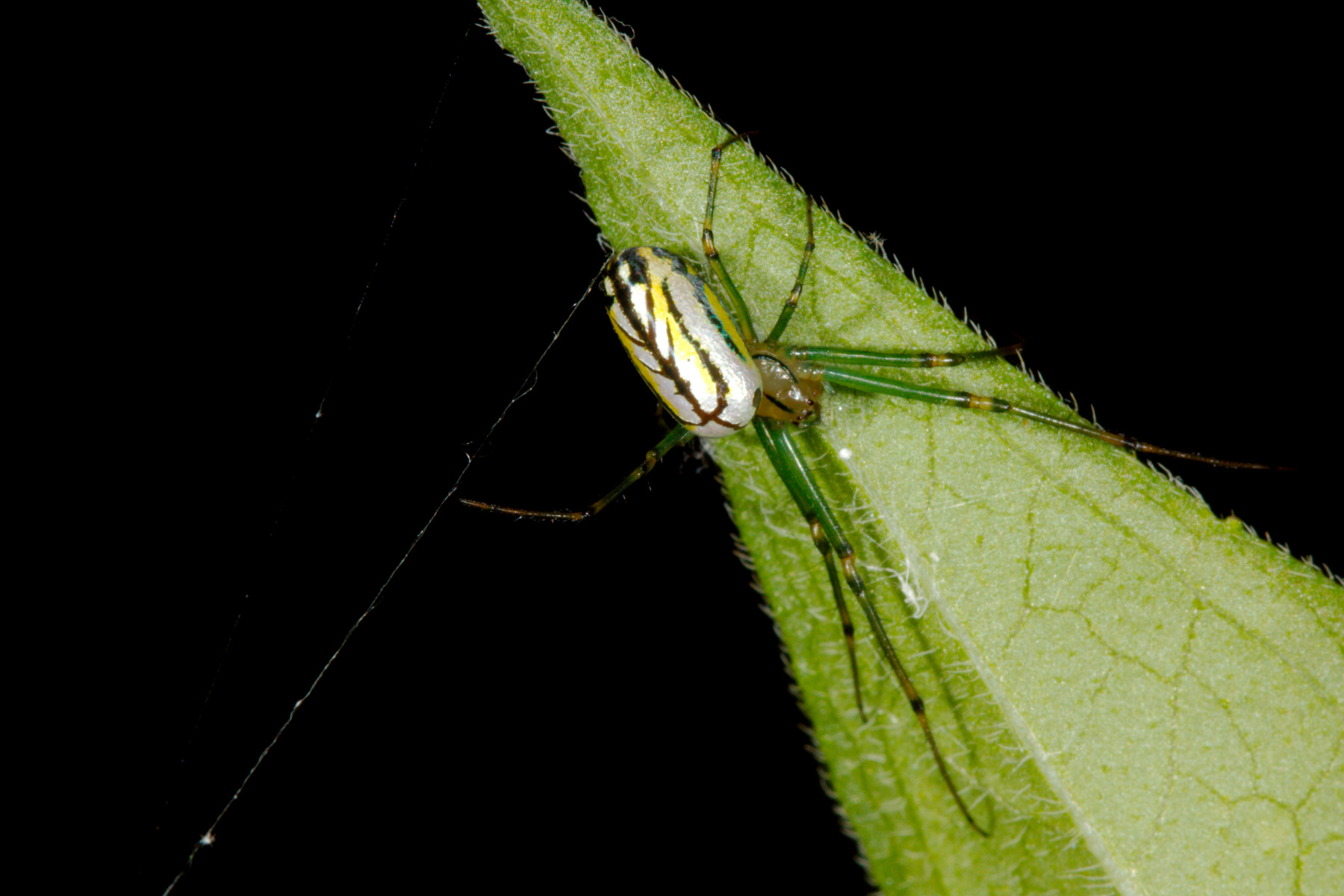
It was a hot but beautiful day and I went out into the lot next to my office this afternoon. I saw and photographed a young white-tailed deer (Odocoileus virginianus), an eastern tailed-blue (Cupido comyntas), an eastern bumble bee (Bombus impatiens), and an eastern carpenter bee (Xylocopa virginica). As I sat next to a dried up drainage pond I watched grasshoppers moving around. I was able to get close enough to this one to get a pretty good photograph. This is one of over 260 Melanoplus species, which are spur-throated grasshoppers, subfamily Melanoplinae of the short-horned grasshoppers, family Acrididae. After I came back to my parking lot, I walked down to the pond and saw a pair of belted kingfishers (Megaceryle alcyon) and got a pictures of one that’s good enough to confirm the sighting but not much better than that.
Creatures
Blow Fly on Monarda
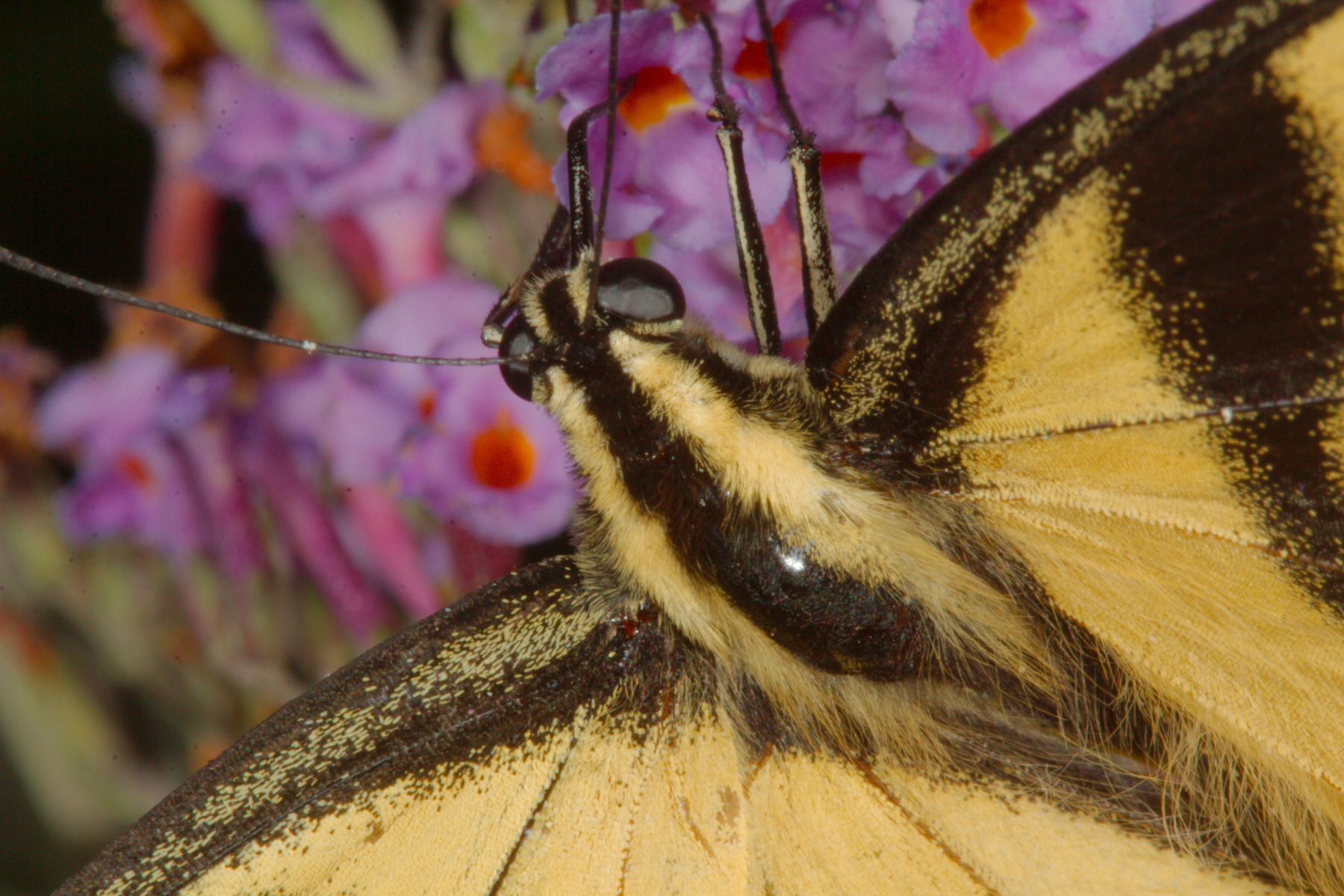
I got a few insect photos today, including a few of large milkweed bugs (Oncopeltus fasciatus) on milkweed (Asclepias tuberosa), an eastern tiger swallowtail (Papilio glaucus) on buddleia flowers, an eastern bumble bee (Bombus impatiens) on a coneflower (Echinacea purpurea), and some sort of longlegged fly (family Dolichopodidae). Finally, I got some of this blow fly (family Calliphoridae) on scarlet beebalm (Monarda didyma). It’s not my favorite insect. In fact, I’d have to rank it in the bottom half rather than the top. I don’t mind wasps and bees in general but flies and particular what I consider to be the ‘annoying flies’ are in the negative side of the scale, along with mosquitoes and horse and deer flies. But their metallic green bodies are pretty cool, in spite of that.
Cycnia tenera (Delicate Cycnia)
I went out to the empty lot next to my building this afternoon. I started by going through the woods on the lower part but then crossed the stream on a tree that conveniently fell across it. That saves me a bit of underbrush getting to the open, higher ground of the northeastern part of the lot. This part has only a few trees, so far, and is mostly filled with a thick covering of ragweed with milkweed and goldenrod scattered throughout. I happened to see this little moth, mostly white with a little orange on the leading edge of its wings. It is a delicate cycnia (Cycnia tenera) and is fairly shy. In the other two Cycnia species found in North America the orange or yellow on the wings is either absent (C. oregonensis) or is darker but doesnot extend to apex (C. collaris).
Deer and Heron
I went out to the woods next to my building this afternoon, towards the end of the day. After wandering around there a while without finding much of interest, I went down towards the tiny pond on the other side of the building and came across this white-tailed deer (Odocoileus virginianus) and great blue heron (Ardea herodias) sharing the watering hole together. The picture isn’t great but I’m happy I was able to get a picture of both of them before the both decided I had ruined the party and they left.
Skipper
The skippers are out in force these days. I got one picture with three of them on a single bunch of flowers. They move around a lot, making it a little harder to get a good picture but there are so many of them you can almost pick a flower and wait for one to land on it. They are somewhat plain as butterflies go. The butterflies and skippers are grouped together in the superfamily Papilionoidea under the order Lepidoptera. The other superfamilies (there are quite a few) are all moths.
Eristalis tranversa (Transverse Flower Fly)
I was off work yesterday and today, getting ready for the gathering coming up tomorrow. I still took a break each day to get pictures. Before I had gotten very far into the backyard this afternoon I spotted this transverse flower fly (Eristalis tranversa) on a black-eyed Susan Rudbekia sp.). It’s a pretty little fly and the color pattern on its abdomen is quite distinctive. They especially seem to like the black-eyed Susans with which they match quite well. I didn’t have very good lighting for most of the pictures I took but managed to get a few (including this one) with a single on-camera flash that turned out a bit better.
Melittia cucurbitae (Squash Vine Borer)
I went out to take pictures of a carpenter bee this afternoon but before I got to where she was, I saw this moth, a squash vine borer (Melittia cucurbitae), on the Herrenhausen oregano (Origanum laevigatum ‘Herrenhausen’). It’s not a terribly good specimen. Much of the orange on its abdomen has been rubbed off, but it’s a pretty distinctive little clearwing moth (family Sesiidae). I got some good photos of the carpenter bee, as well, but since I’m almost certain to have more photos of those I decided to post this one instead.
Oncopeltus fasciatus (Large Milkweed Bug)
The butterfly weed (Asclepias tuberosa) is in bloom and it’s a lovely, orange accent in the back of the garden. I’d be happy to have more of this, either the standard orange or the lovely, yellow variety. I’d also like to get some Asclepias curassavica, known as blood flower, although that’s not winter hardy anywhere near this far north. It can, apparently, be grown easily as an annual from seed. I might also try to get some Asclepias purpurascens, commonly called purple milkweed. It’s a native and I am pretty sure I’ve seen it at the farm, so I could dig some up there or get some seeds.
The large milkweed bug (Oncopeltus fasciatus) is a common visitor to butterfly weed (one of the milkweed family) and is particularly well suited for hiding among the flowers of A. tuberosa.
Cupido comyntas (Eastern Tailed-Blue)
This little butterfly, an eastern tailed-blue (Cupido comyntas) is a fairly common visitor to our garden and can be seen throughout the region. It’s not the easiest butterfly to photograph, partly because of it’s diminutive size (it’s small) and partly because it’s a fairly shy critter and doesn’t like being approached. But this one let me get close enough for a pretty good shot. It was late enough in the day that the light wasn’t as good as I’d have liked and this was taken with the aid of the camera’s on-board flash. It isn’t the best lighting for small subjects but in this case it worked out reasonably well.
Tiger Swallowtail (Papilio glaucus) on Buddleia
Once the buddleia comes into bloom, which has happened in the last week or so, it’s a rare day when there isn’t at least one tiger swallowtail (Papilio glaucus) fluttering around the yard. They aren’t anywhere as near as common and the many skippers (family Hesperiidae) that we have by the dozens or even as the cabbage whites (Pieris rapae), but pretty common. And of course they are much more striking. I particularly like then when the sun is on them or even shining through them and they are against a clear, blue afternoon sky, as this one is. The color on the upper side of the hindwings identifies this as a female, just in the act of taking off from the flower.
Cerceris fumipennis
After taking the picture of the lady beetle larva in the woods, I crossed the stream on a fallen tree trunk. I worked my way from there through a fairly dense area of brambles and small trees to the slope that leads to what I call the uplands part of the empty lot. This is about 30 feet higher than the lowlands across the stream and it is mostly clear of trees. It is filled with ragweed and milkweed with a few empty spots that are almost barren, with just bare clay which sometimes holds standing water and other times is baked into a cracked, hard surface. In one of those empty spots, I followed this wasp, which is Cerceris fumipennis, an apoid wasp (Apoidea) in the family Crabronidae. It landed and disappeared into this little hole in the ground. I figured it would eventually come out again so I got down and waited. I was rewarded for my patience when he appeared at the entrance and was able to get a half dozen shots off before he flew off into the distance.
Lady Beetle Larva
It was a beautiful, if somewhat hot afternoon today and I went out into the woods next to my building. As I walked through the underbrush under the sycamore, tulip poplar, redbud, walnut, and black cherry trees, I noticed this little creature on a leaf. This is the larva of a lady beetle. The family Coccinellidae, the lady beetles, has about 6,000 species in 360 genera worldwide and nearly 500 in eastern North America. I have no idea to which of those this larva belongs and I’m not even going to try to figure it out. The adults are generally easier to narrow down but to me, anyway, the larva are just too much alike. I found a key to the larva of North American lady beetles but it starts out as follows. Tell me how helpful this is to you:
Mandible with digitiform teeth, retinaculum absent; terga with scoli, sometimes with parascoli; frontoclypeal suture complete; antenna long, 3 or more times as long as wide, of nearly uniform diameter.
Bumblebee on Coneflower
I didn’t get out of the office today to go take pictures. Most of the day it was raining and then I just didn’t have time in the afternoon. I was a little busy but actually more frustrated than anything else, so going out would have been nice. Nevertheless, when I got home I took some pictures of a common eastern bumblebee (Bombus impatiens) on one of the purple coneflowers (Echinacea purpurea) outside our dining room window. I like bumble bees and they are out in pretty good numbers right now. In prior years it seemed that they were outnumbered by carpenter bees (Xylocopa virginica). This year I’m seeing a lot more bumblebees. That’s just anecdotal evidence, of course but that’s the way it seems to me.
Japanese Beetle (Popillia japonica)
It was a slightly less warm but every bit as humid day today. I went to eat my lunch in the empty lot next to my building, sitting on the edge of a now-dry drainage pond. This pond rarely has more than a few inches of water in it but the water is gone and the mud has cracked and is only damp. I had expected to see more insects there but I suppose it’s dry enough that even they have moved to somewhere with a bit more water. I took some pictures of the flowers of some softstem bulrush (Schoenoplectus tabernaemontani) and this Japanese beetle (Popillia japonica) came and landed right in front of me. I was able to get four quick shots before it flew away. In this, the last of the four, its wings are just starting to open.
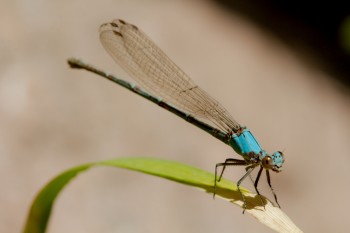
Eastern Pondhawk (Erythemis simplicicollis)
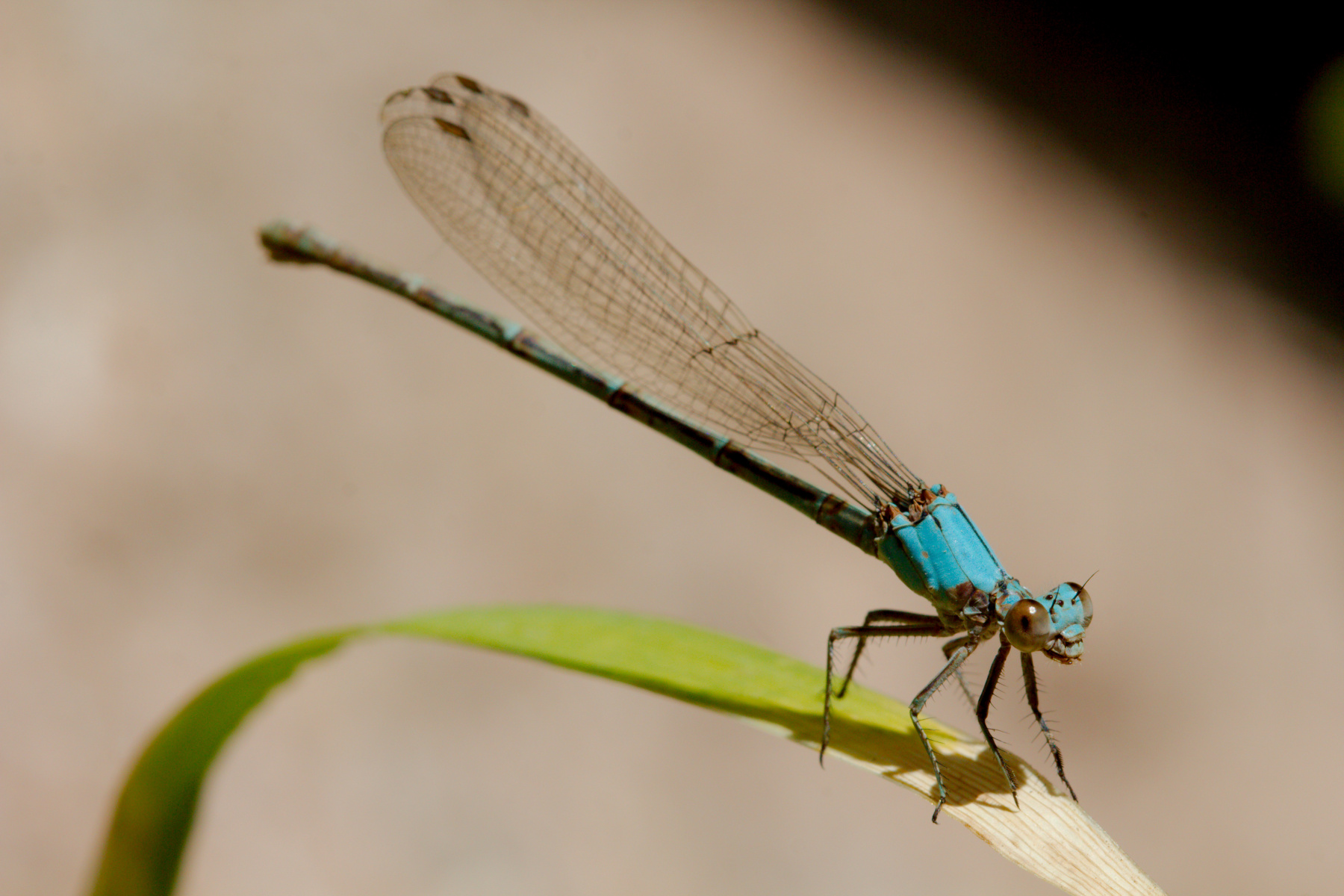
It was a fairly quiet day at work, with a lot of people off for a four day weekend. I went into the woods next to my building, across the streem and up to the higher and more open area, filled mostly with ragweed and milkweed. There were a few butterflies and I tried to get some pictures of them. Then I saw this female eastern pondhawk (Erythemis simplicicollis) and I slowly move it to get a good picture. She would fly away but then would come back to the same perch, so I would move a little closer each time until I was able to get this one.
Leaf Beetle (Family Chrysomelidae)
I was out taking pictures in the yard again this afternoon and happened to look at the same flower on which I took the picture of the Scudderia nymph two days ago (see: Friday, June 30, 2017 ). The outer ray florets, the ‘petals’ of the coneflower, were all tattered and eaten into. The culprit was this little beetle (well, a bunch of them, actually). It is a leaf beetle (family Chrysomelidae), probably in the subfamily Eumolpinae. If I get a more definitive identification, I’ll update this post. It’s a little beetle, less than 5mm long so I wasn’t able to get a close as necessary to really get a good picture, but this one turned out well enough to use.
Scudderia Nymph
I went out to take some pictures of flowers this afternoon and that’s what I did at first. Well, first I got a few pictures of a rabbit (an eastern cottontail, Sylvilagus floridanus). Then I took a few flower pictures but I noticed this little fellow on a coneflower (Echinacea purpurea). It is the nymph of a Scudderia, a genus of eight species in our area comprising the bush katydids. This is just a small portion of the larger group of all katydids, of which there are nearly 250 species in 49 genera in eastern North America. Anyway, I think this is a cute little guy and I took quite a few pictures. Enjoy.
Bumble Bee Balm
I’ve been able to get a fair number of flower pictures so far this year but the insects are not out in all their force yet. I’ve seen many around but haven’t been able to photograph many of them. This is my first bumble bee of the summer. It isn’t the best bumble bee picture I’ve ever taken but it makes me happy, with the brightness of the bee balm (Monarda didyma) contrasting with the black of the common eastern bumble bee (Bombus impatiens). I’m sure there will be many more to come. As for the title of this post, it’s the sort of thing that shows up in crossword puzzles fairly often, two words or phrases that overlap in the middle. Bumble Bee and Bee Balm.
Jumping Spider
I know many of my followers are less than thrilled with my spider photos. Nevertheless, at the risk of chasing off either of them (my followers, that is), I’m going to post another. I went for a short walk early this afternoon. There is a section of the road behind my building that has a well along the sidewalk, above a stream. Growing on that wall are Virginia creeper (Parthenocissus quinquefolia), wild grape (Vitis species), porcelain berry (Ampelopsis glandulosa), and of course, the ever present poison ivy, (Toxicodendron radicans). I stopped to take a few pictures of bumble bees on the Virginia creeper flowers and then noticed this little jumping spider on the underside a leaf. Kind of cute, I think.
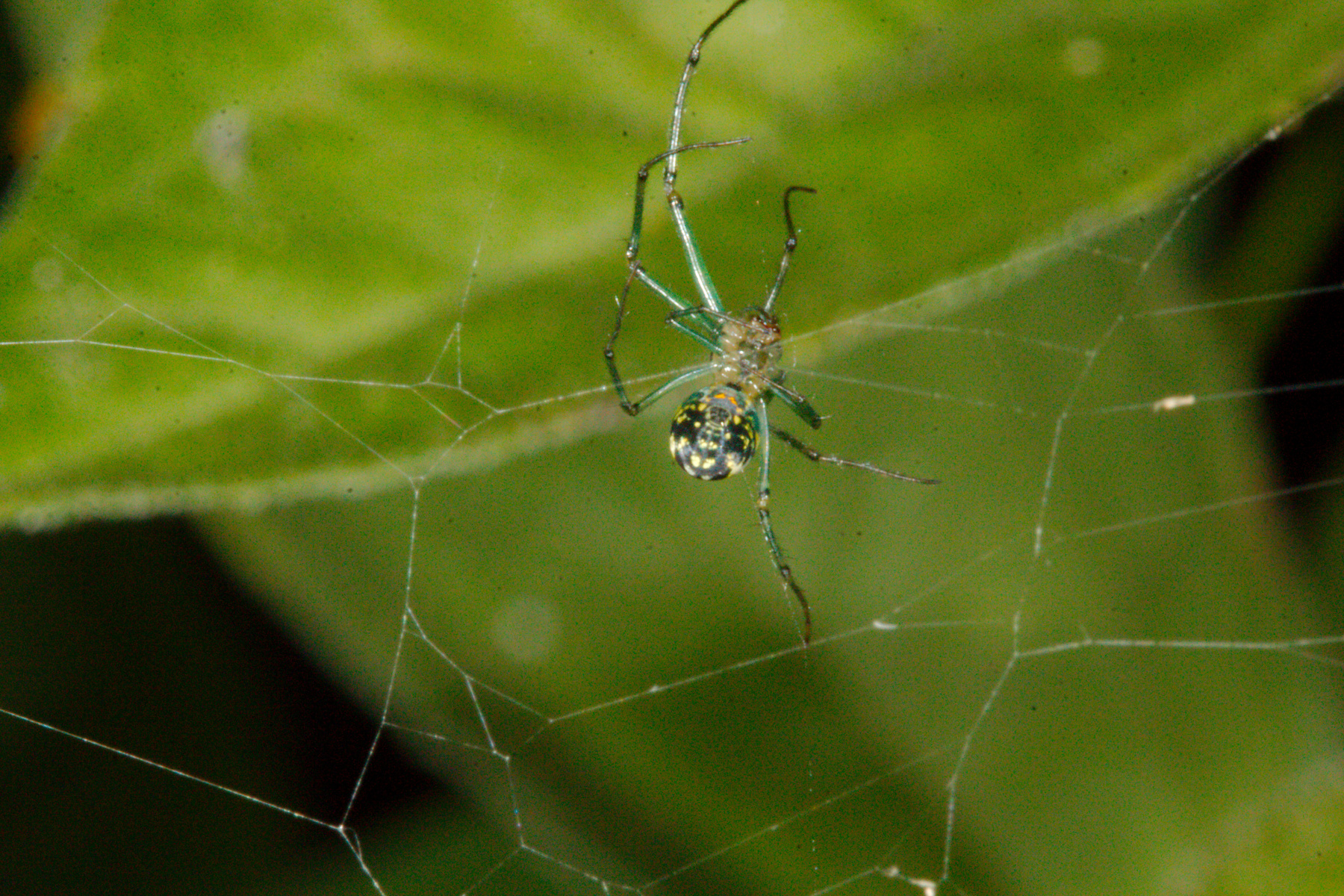
Gea heptagon
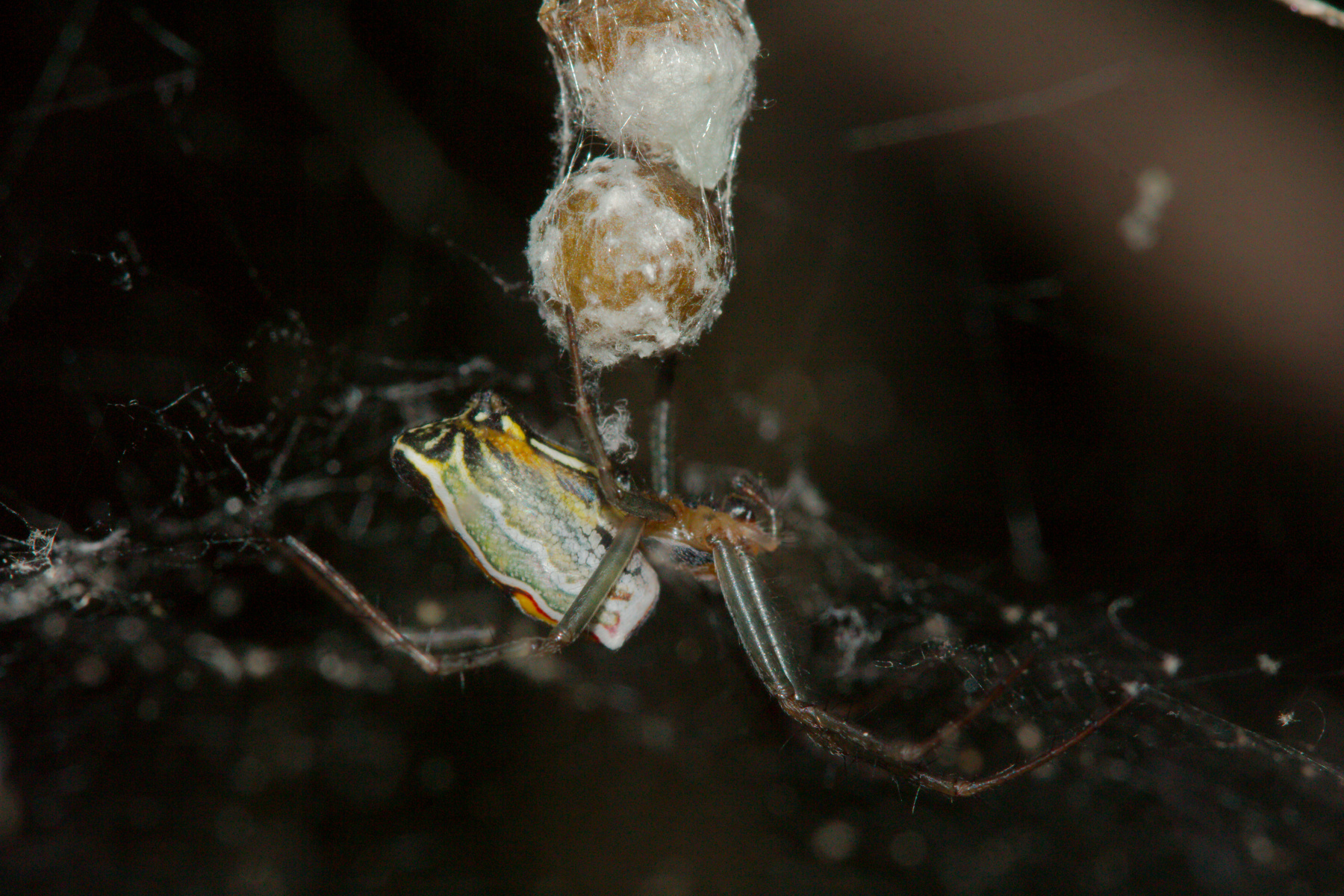
Cathy did a bunch of work in a small garden this morning, clearing out the overgrown sedum and making room for annuals that have been waiting to be planted. She said I should come out with my camera to take some pictures of this little spider that was doing really well gathering the small insects that are present in our lawn by the thousands. It is a Gea heptagon, one of the orb weavers (family Araneidae) and I think it’s a really cool little spider. The abdomen is painted with red, yellow, and pale spots that are quite pretty, especially in the sun. I’ve photographed this species before, with posts on Monday, September 05, 2016 and Saturday, August 20, 2016.