Creatures

Poecilocapsus lineatus (Four-lined Plant Bug) Nymph

<em>Poecilocapsus lineatus</em> (Four-lined Plant Bug) Nymph

Poecilocapsus lineatus (Four-lined Plant Bug) Nymph

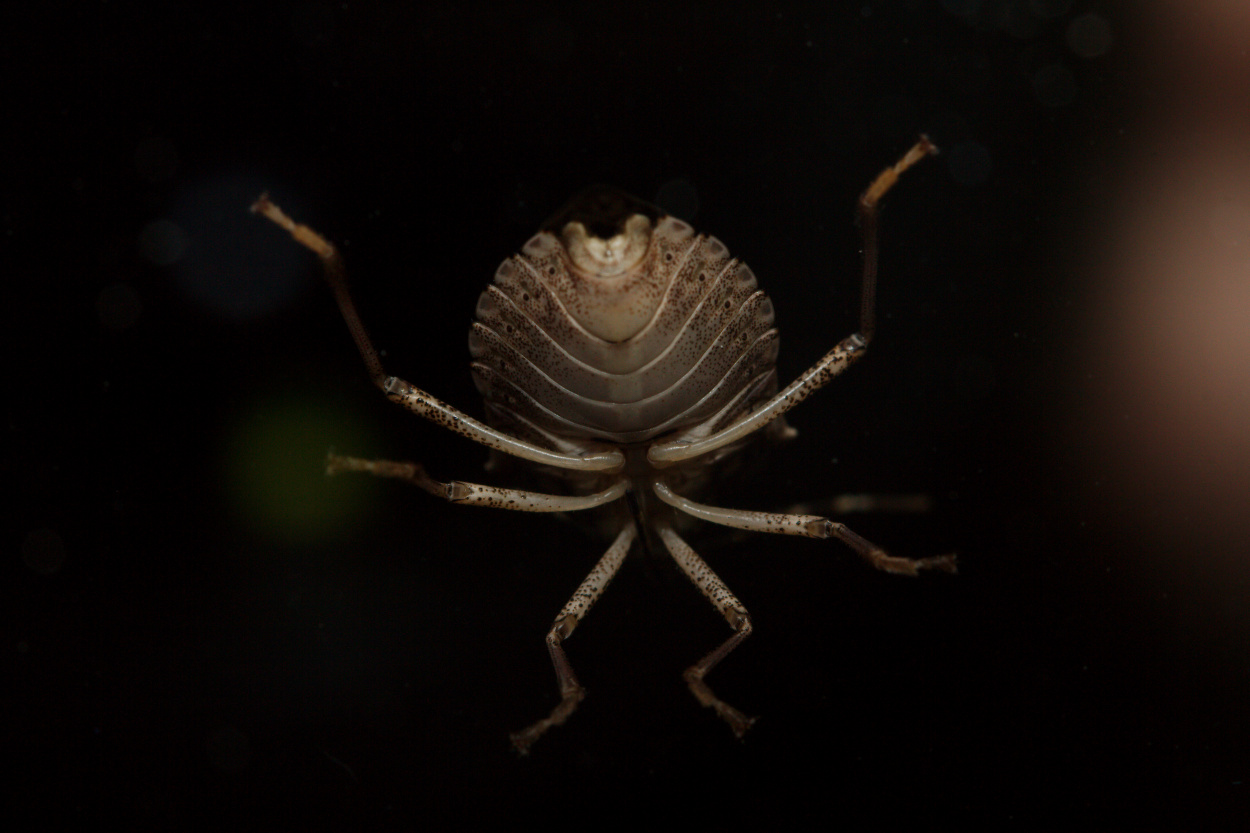
On Thursday, May 24, 2012 I posted a picture of a four-lined plant bug (Poecilocapsus lineatus). That was an adult of the species. This is the same thing (not the same one) but in its nymphal (i.e. immature) stage. The four-lined plant bug is a pest of both ornamental and crop plants, especially preferring members of the mint family. In our yard, they seem to be most attracted to the black-eyed Susans (Rudbeckia sp.) but will feed on many other things, as well. They don’t do terrible harm but they disfigure the plants fairly severely and I will probably spray for them when the weather clears up a bit.

I’m pretty pleased with this picture, as these things are on the small side. This was taken with a 100mm macro lens focused as close as it would go and with an additional 25mm of extension added. It was lit by two small slave flashes that were sitting on the ground on either side of the camera and controlled by the on-camera flash, allowing the photograph to be taken at 1/160 of a second at f/16.

Categories: Creatures | Comments Off on Poecilocapsus lineatus (Four-lined Plant Bug) Nymph

American Robin (Turdus migratorius)

American Robin (Turdus migratorius)

American Robin (Turdus migratorius)

This morning I took some pictures of a gray catbird (Dumetella carolinensis) at the birdbath. This evening, when I got home from work, there was an American robin (Turdus migratorius) there and I took its picture, as well. In both cases, the picture is through our kitchen door, with its two panes of glass, so it isn’t nearly as sharp as I’d like. Still, it’s not a bad portrait of this fairly gregarious little fellow. The robins are our companions through the winter in these parts and we are happy to have them looking for worms, eating berries off the holly trees, and washing in the birdbath throughout the year.

Categories: Creatures | Comments Off on American Robin (Turdus migratorius)

Gnat Wings

Gnat Wings

Gnat Wings

I was working outdoors early this evening and happened to swat a gnat. Generally gnats are a minor pest, annoying but not really a serious problem. This evening when I swatted it, I thought, hey, I could look at this under the microscope. That might be interesting. Of course, this is a transmitted light microscope rather than a reflected or incident light microscope, so it’s really only useful for looking at transparent or partially transparent items (or silhouettes). So, I decided to look at the wings. This is one of the two pairs of wings from the gnat, somewhat damaged by being disconnected from the body. The antennae were also kind of interesting, but I decided to go with the wings here.

Categories: Creatures | Comments Off on Gnat Wings

Red Fox (Vulpes vulpes)

Red Fox (Vulpes vulpes)

Red Fox (Vulpes vulpes)

Cathy called me this morning and said I should get my camera and come upstairs. The fox was back in our yard and was sitting in a spot of sunlight next to an azalea bush. By the time I got there, the fox had moved into the shade, into a hole where a tree used to be (when the tree roots rotted out, it left the hole and we’ve never bothered to fill it in. Shortly after I got there, the fox got up, walked through the sunlit spot again and back into the bushes at the back of the yard. I was able to get two quick shots through the somewhat dirty upstairs window before he was gone. So, it isn’t a great picture but it’s all I could get. Also, I think most folks who didn’t appreciate the deer tick picture yesterday will be more pleased with this one, even if it isn’t so sharp.

Categories: Creatures | Comments Off on Red Fox (Vulpes vulpes)

Ixodes scapularis (Deer Tick)

Ixodes scapularis (Deer Tick)

Ixodes scapularis (Deer Tick)

I know there are some of you who will not like this picture in the least. It is the head of the dreaded deer tick (Ixodes scapularis, the only known vector of Lyme disease. Cathy found this one in the back of her neck this morning and asked me to get it off. The tick came out cleanly but you can see here why they can be a little tough to get out. The proboscis (the tubular, sucking mouth) is not a smooth straw-like structure, but is quite well designed to stay in the skin when pulled upon. It had only been in her neck since yesterday, so there was no real chance of her getting Lyme from this one. Anyway, I put it under the microscope and took a look. Nasty.

Categories: Creatures | Comments Off on Ixodes scapularis (Deer Tick)

White On A Daffodil

White On A Daffodil

White On A Daffodil

Considering how often I’m complemented on identification of insects and flowers, I really should learn to identify these a bit better. This is a white, but I really don’t know for sure which one. It’s possible that it’s a cabbage white (Pieris rapae) with the black spot on the forewing hidden by the hindwing. My guess, though, is that it’s a West Virginia white (P. virginiensis). But that’s a guess. We’ll see if the experts at BugGuide.net can tell me for sure. The daffodil I’m sure of, however. It is a variety called ‘Actaea’, a poeticus daffodil (division 9), planted in the late fall of 2009.

Categories: Creatures, Flowers and Plants | Comments Off on White On A Daffodil

Another Bald Eagle Sighting

Bald Eagles (Haliaeetus leucocephalus)

Bald Eagles (Haliaeetus leucocephalus)

It was another beautiful day today, cool but quite nice out. So, Cathy and I went for a walk hoping to see one or both of the bald eagles nesting not too far from our house. We had a nice walk and were rewarded with a pretty nice view of them. First we saw one flying towards us and landing in a tree just ahead. I was able to get some pictures of that one through the branches of the intervening trees. Then it flew back to the nest. I watched for a while and then saw both eagles on the nest. Finally, the other eagle got up and left, flying fairly close, landing on a dead tree about 50 yards away from us. This picture of the eagle slowing for its landing is still a little less sharp than I’d like but I’m fairly pleased with it, nonetheless.

Categories: Creatures | Comments Off on Another Bald Eagle Sighting

Scutigera coleoptrata (House Centipede)

Scutigera coleoptrata (House Centipede)

Scutigera coleoptrata (House Centipede)

This was in our powder room sink this morning and so naturally I took it’s picture. I posted a picture of one of these back on Wednesday, April 09, 2014 but I was able to get quite a bit closer this time. This is the head end and you can see the two black, compound eyes and the bases of the two antennae. As I mentioned last time, as much as most people would probably not be glad for these things around their house, they feed on cockroach nymphs, flies, moths, bedbugs, crickets, silverfish, earwigs, and small spiders. So, on balance, not bad house guests, really.

Categories: Creatures | Comments Off on Scutigera coleoptrata (House Centipede)

White-breasted Nuthatch (Sitta carolinensis)

White-breasted Nuthatch (Sitta carolinensis)

White-breasted Nuthatch (Sitta carolinensis)

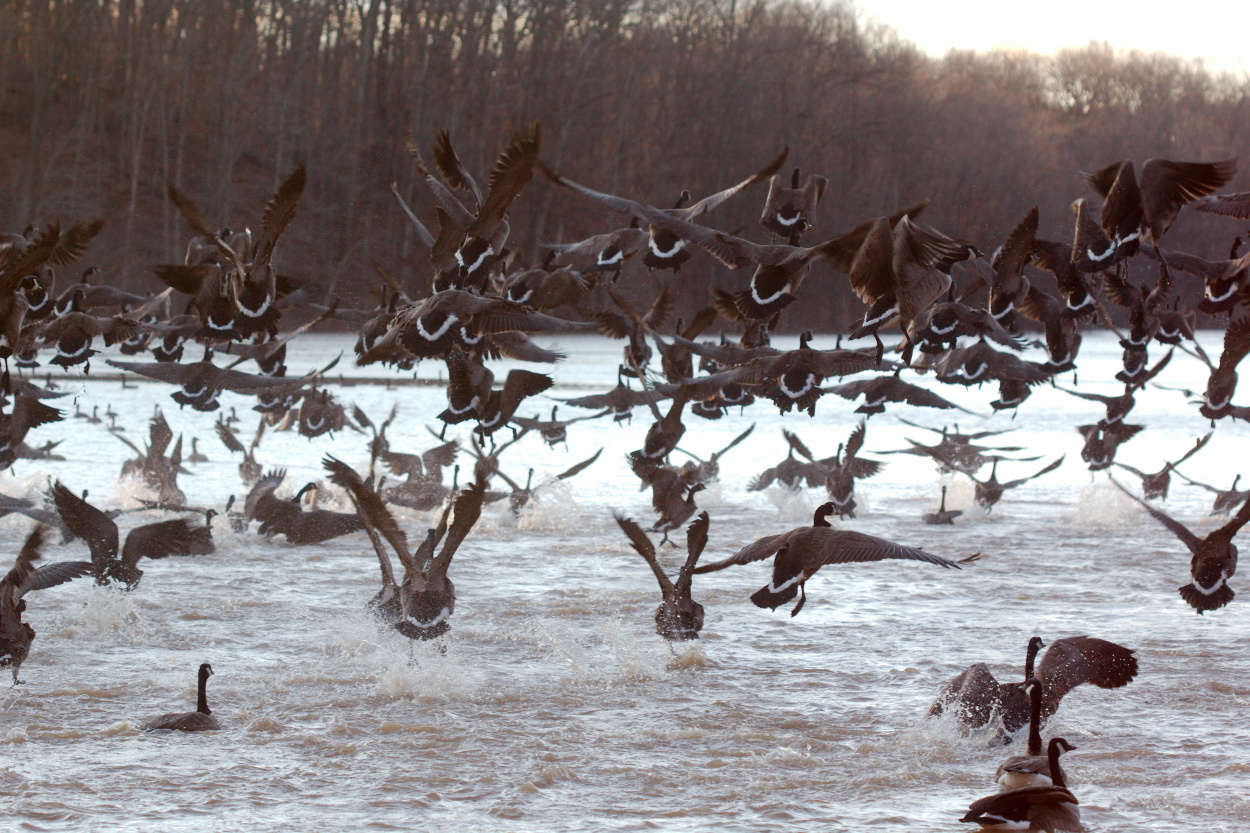
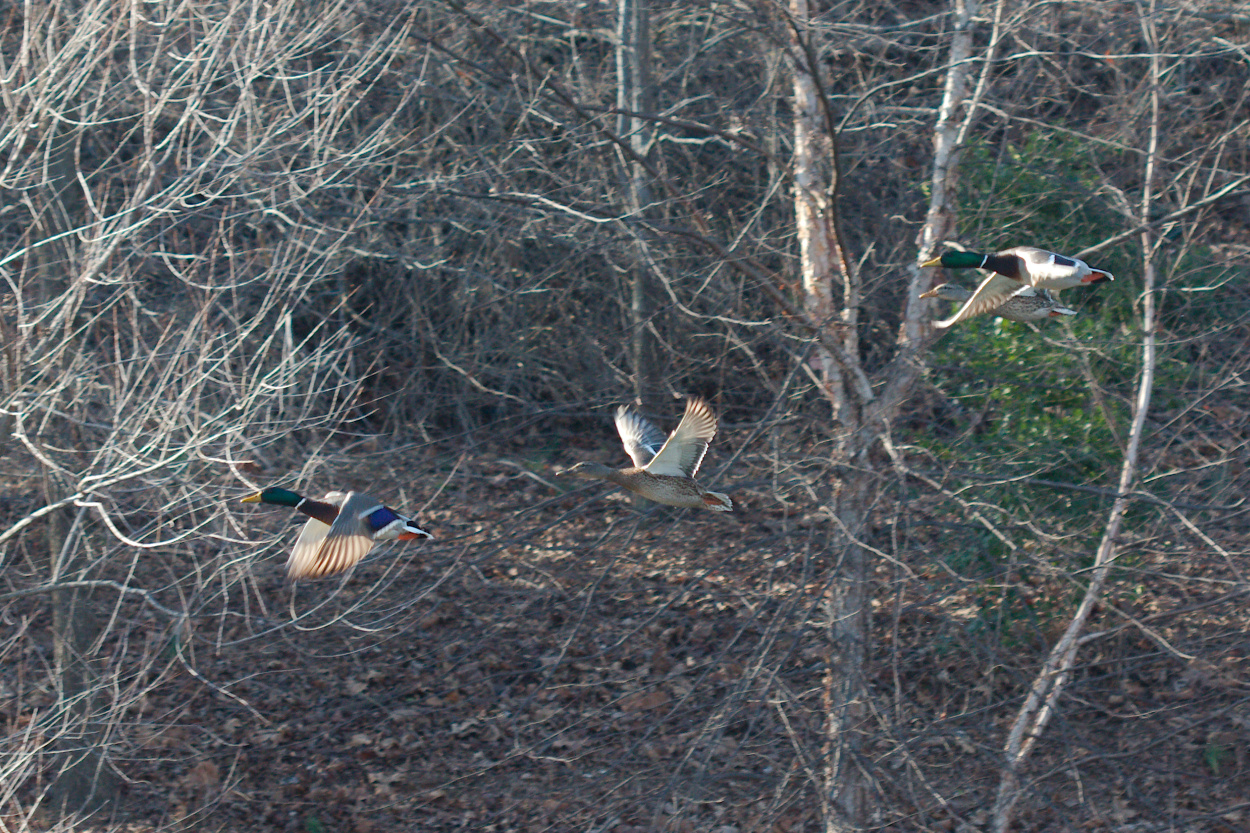
We went for a walk in the park around Lake Frank today. The ground is still quite wet and the trails are very muddy so we stuck to the paved sections, going from the abandoned parking lot to the dam and back. We saw quite a few birds, including Canada geese (Branta canadensis), mallards (Anas platyrhynchos), Carolina chickadees (Poecile carolinensis), tufted titmice (Baeolophus bicolor), an eastern bluebird (Sialia sialis) and a belted kingfisher (Megaceryle alcyon). I got some very poor pictures of most of them and two pictures, slightly better than the rest, of this white-breasted nuthatch (Sitta carolinensis).

Categories: Creatures | Comments Off on White-breasted Nuthatch (Sitta carolinensis)

Parrot Feather

Parrot Feather

Parrot Feather

Our parrot, Solomon, has had his picture posted here a number of times. He is a red-lored amazon (Amazona autumnalis autumnalis), born in captivity in southern California. His ancestors came from the tropical forests of eastern Mexico. This is a close up of one of his flight feathers (technically known as remiges, from the Latin for “oarsman”). You can see the tiny barbules which interlock with each other to hold the barbs together. This photo, which covers an area about 4.5 by 3 millimeters, shows the region where the red fades into a small amount of green before transitioning again to black.

Categories: Creatures | Tags: | Comments Off on Parrot Feather

Koi Angel (Pterophyllum scalare)

Koi Angel (Pterophyllum scalare)

Koi Angel (Pterophyllum scalare)

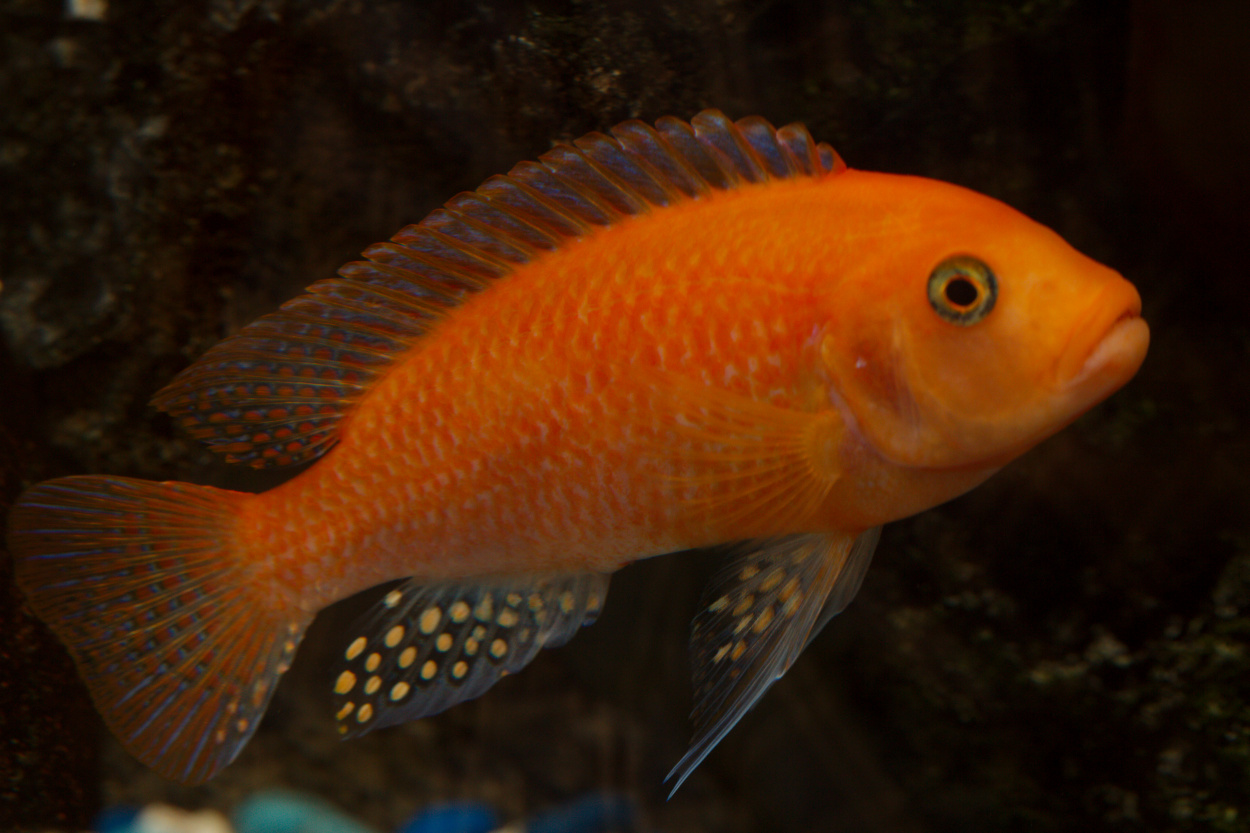
In mid-November I bought some fish for a 70 gallon take that we have in our breakfast room. I posted pictures of a Red Dwarf Gourami (Trichogaster lalius, Monday, November 23, 2015) and of a Green and Gold Cory Cat (Corydoras melanotaenia, Monday, November 30, 2015). Here is another fish that I got at the same time. This is a Koi Angel. There are three recognized species of freshwater angelfish. In the aquarium trade, Pterophyllum scalare is the most common and most of the varieties that are available are derived from that species. I think it’s pretty obvious where the common name for this variety comes from, having been bred to have the sort of markings usually associated with koi, ornamental varieties of the common carp (Cyprinus carpio).

Categories: Creatures | Comments Off on Koi Angel (Pterophyllum scalare)

Bald Eagles (Haliaeetus leucocephalus)

Bald Eagles On Their Nest

Bald Eagles On Their Nest

Cathy and I went for a walk late this morning (and into the early afternoon) and really enjoyed the warmer weather. It was quite pleasant out, although very humid. The ground was pretty muddy and I admit I wore the wrong shoes for a walk in the woods. Early on we saw a small herd of white-tailed deer (Odocoileus virginianus) and I got a few pictures of them.

A little later Cathy said she had heard that there was an eagle nest nearby so we walked to the lake and found it. At first we could see the nest but not any birds. After a while, however, they stood up and we could see both adult bald eagles (Haliaeetus leucocephalus).

Bald Eagle in Flight

Bald Eagle in Flight

at about 150 yards, even with my 70-300mm zoom lens all the way out, I had to crop these to help you see the birds. In consequence, the pictures are fairly grainy (or more precisely noisy). But they are plenty clear enough to be able to identify the eagles. Naturally we were fairly excited. When one of the two birds took off, I was able to get a few pictures of it flying, although I had to pan across some intervening trees, which made it a bit harder. The bird is moving along the opposite shore, which angled toward us slightly, so he was not quite so far away now.

Bald Eagle

Bald Eagle

By the time the eagle landed it was just over 100 yards away. That’s still a long way for a 300mm lens, but the third picture here, of the adult bald eagle on a branch, is pretty nice, I think. I suppose we could have hoped for more, like a brilliant blue sky in the background, but we actually liked seeing the mist on the water, caused by the humid air condensing over the still frozen lake. It was quite beautiful. So, I was especially blessed today, to see both a red fox in our yard and two nesting bald eagles.

Note: This post was originally posted with the date set to February 22. These photos were taken on Sunday the 21st.

Categories: Creatures | Comments Off on Bald Eagles (Haliaeetus leucocephalus)

Red Fox (Vulpes vulpes)

Red Fox (Vulpes vulpes)

Red Fox (Vulpes vulpes)

I mentioned a few days ago that we saw the fox in our yard again. Well, she was back this morning and I was able to get a few pictures of her before she wandered off. The pictures were taken through two panes of glass (regular window and storm window) so it’s a bit fuzzy but it isn’t terrible. Cathy saw a mangy fox in our yard a few years ago but this fox looks quite healthy, which is encouraging. Except for the big snow and a few cool days, it has been a reasonably mild winter so far, which I suppose makes life a little easier on the foxes and other woodland creatures.

Categories: Creatures | Comments Off on Red Fox (Vulpes vulpes)

Sharp Shinned Hawk

Sharp-shinned Hawk (Accipiter striatus)

Sharp-shinned Hawk (Accipiter striatus)

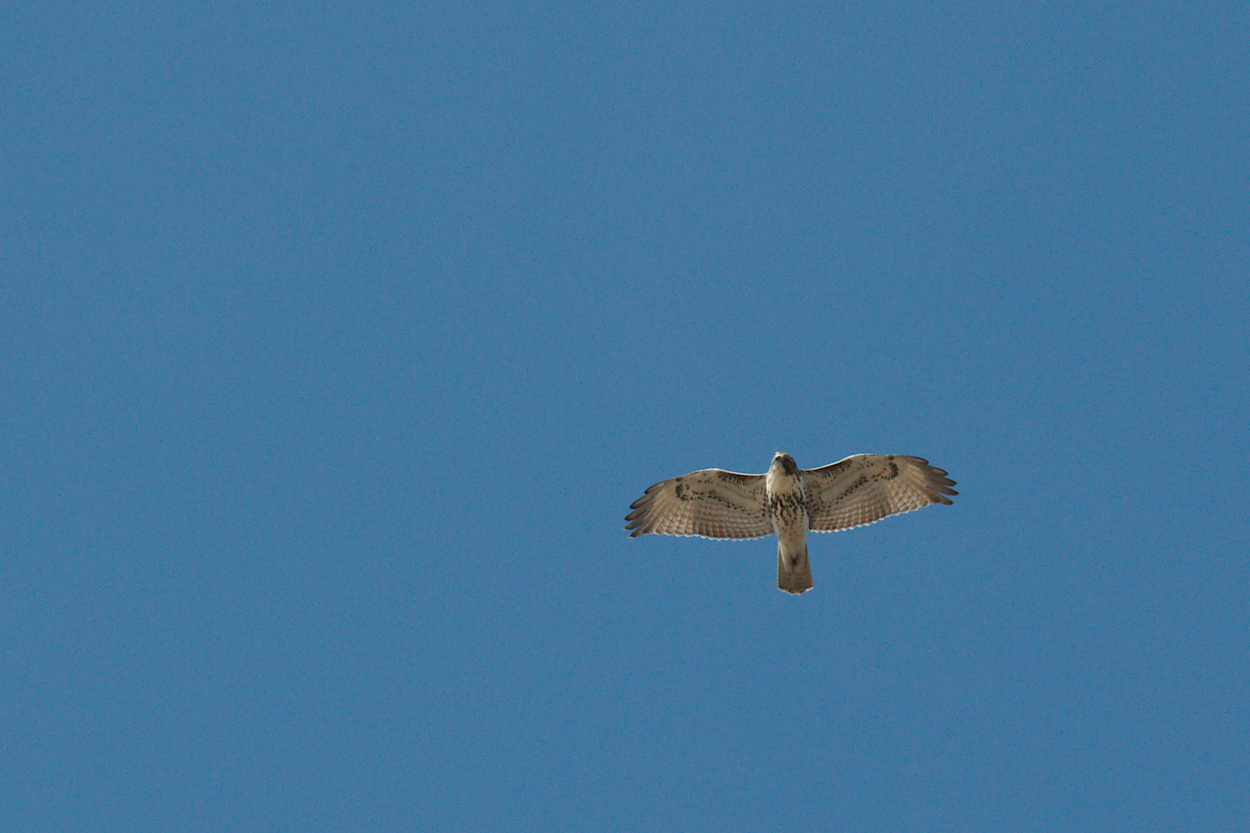
Cathy and I were at her mom’s house today, doing various things around the house and in the yard. One thing was to cut up a largish branch that had come down in the minor snow storm we had on Monday. While I was out in the yard, I heard a hawk cry as it circled overhead.

When it landed in a tree in the back yard, I hurried to the car, put my 70-300mm zoom lens on my camera and managed to get five images before it took off again. The full frame images were horizontally oriented and this image is cropped from that, so it’s considerably less than the full frame, which accounts for softness of the image.

Brother George confirmed my identification of this as a sharp-shinned hawk (Accipiter striatus) and went on to say that it was a first-year juvenile. For those of you who make comments to me about my labeling of plants and animals, I want you to know that in general I get expert advice before labeling any bird picture (with a few easy exceptions). In the past that often meant dad and Albert. Now that all falls to George.

Categories: Creatures | Comments Off on Sharp Shinned Hawk

Northern Flicker (Colaptes auratus)

Northern Flicker (Colaptes auratus)

Northern Flicker (Colaptes auratus)

We continue to have a wide variety of birds (and small mammals) at our birdbath. They are also being drawn by the seed that we put out. Early this afternoon I photographed a white-throated sparrow (Zonotrichia albicollis), an American robin (Turdus migratorius), a few house finches (Haemorhous mexicanus), an eastern chipmunk (Tamias striatus), mourning doves (Zenaida macroura), and two northern flickers (Colaptes auratus). Present in the yard but not photographed were at least three blue jays (Cyanocitta cristata), a lot of dark-eyed juncos (Junco hyemalis), and the ubiquitous house sparrow (Passer domesticus). I decided to post this picture of a flicker, because they are the species I see at the bird bath the least often.

Categories: Creatures | Comments Off on Northern Flicker (Colaptes auratus)

Female Cardinal

Female Cardinal (<em>Cardinalis cardinalis</em>)

Female Cardinal (Cardinalis cardinalis)

Last week I posted a picture of a junco in this same spot. Before that I posted a picture of a song sparrow on the bird bath, which is just out of this picture to the left. As I mentioned when I posted the junco picture, I put some leftover seed out on the patio and that’s been attracting the birds and squirrels. This morning, in addition to the juncos and sparrows (both song and house), there were cardinals, blue jays, mourning doves, and in the tree just into the yard, a downy woodpecker. Quite a little circus. I wasn’t able to get a picture of the more brightly colored male cardinal, but this is a pretty little thing, too.

Categories: Creatures | Comments Off on Female Cardinal

Dark-eyed Junco (Junco hyemalis)

Dark-eyed Junco (Junco hyemalis)

Dark-eyed Junco (Junco hyemalis)

We had some extra bird seed for Solomon that was starting to go bad. I ordered another bag and when it arrived, I put the old seed out back for whatever birds and squirrels wanted to eat it. Mostly the squirrels came but this morning there were a few dark-eyed juncos on the patio. They are cute little birds and quite common here this time of year. The large power cord behind the bird in this picture is the power to the bird bath de-icer.

Categories: Creatures | Comments Off on Dark-eyed Junco (Junco hyemalis)

D’Argo

D'Argo

D’Argo

We had one of our family birthday evenings today and it was very good to see everyone, have dinner, and then just hang out together. There were two dogs there, D’Argo and Bean. Luna didn’t come because she’d have had the other two for dinner, but these two get along well enough. I took a few pictures of everyone, as I usually do, but I thought I’d post this one of D’Argo, Steve and Maya’s corgi.

He’s been featured here before, back on September 01, 2013. This one was taken with the camera held down at my side while sitting on a chair, but it turned out reasonably well.

Categories: Creatures | Comments Off on D’Argo

Wasp Nest

Wasp Nest

Wasp Nest

I walked over to the next building early this afternoon for a meeting that turned out to have been cancelled. That’s life. It did give me a chance to be outside, though, and that’s usually not a bad thing. It was quite chilly today with a fairly strong wind coming out of the northwest. As I walked back to my building, though, I noticed this wasp nest up in a tree. It’s coming apart, as you can see, but still quite interesting.

Categories: Creatures | Comments Off on Wasp Nest

Solomon Edward Parrot

Solomon Edward Parrot

Solomon Edward Parrot

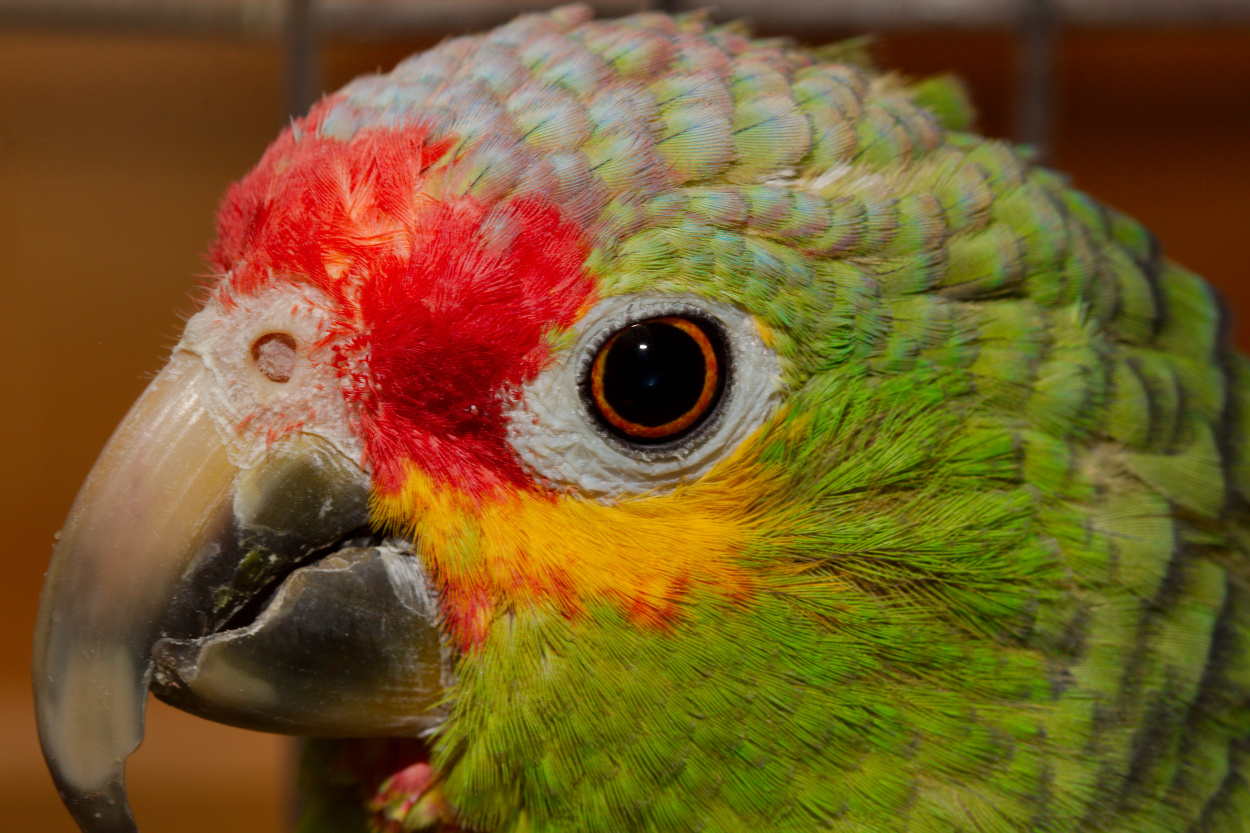
Better known simply as Solomon, our pet parrot turns 30 this month (more or less). We’ve had him since October, 1986, when he was something like nine months old so we consider his birthday sometime in January or that year. Hard to believe so many years have gone by. Solomon was born in California, lived with us in Alaska for about a year, then flew to Chicago to live with Cathy’s brother for a few years (and boy, where his wings tired). Sometime after our trip around the world in 1988, he came to live with us in Maryland and he’s been here ever since, first in our apartment in Gaithersburg, then in our first house and now in this house in Rockville. Happy birthday, you old bird, you.

Categories: Creatures | Tags: | Comments Off on Solomon Edward Parrot