Creatures

Monarch

Monarch on Buddleia

Monarch on Buddleia

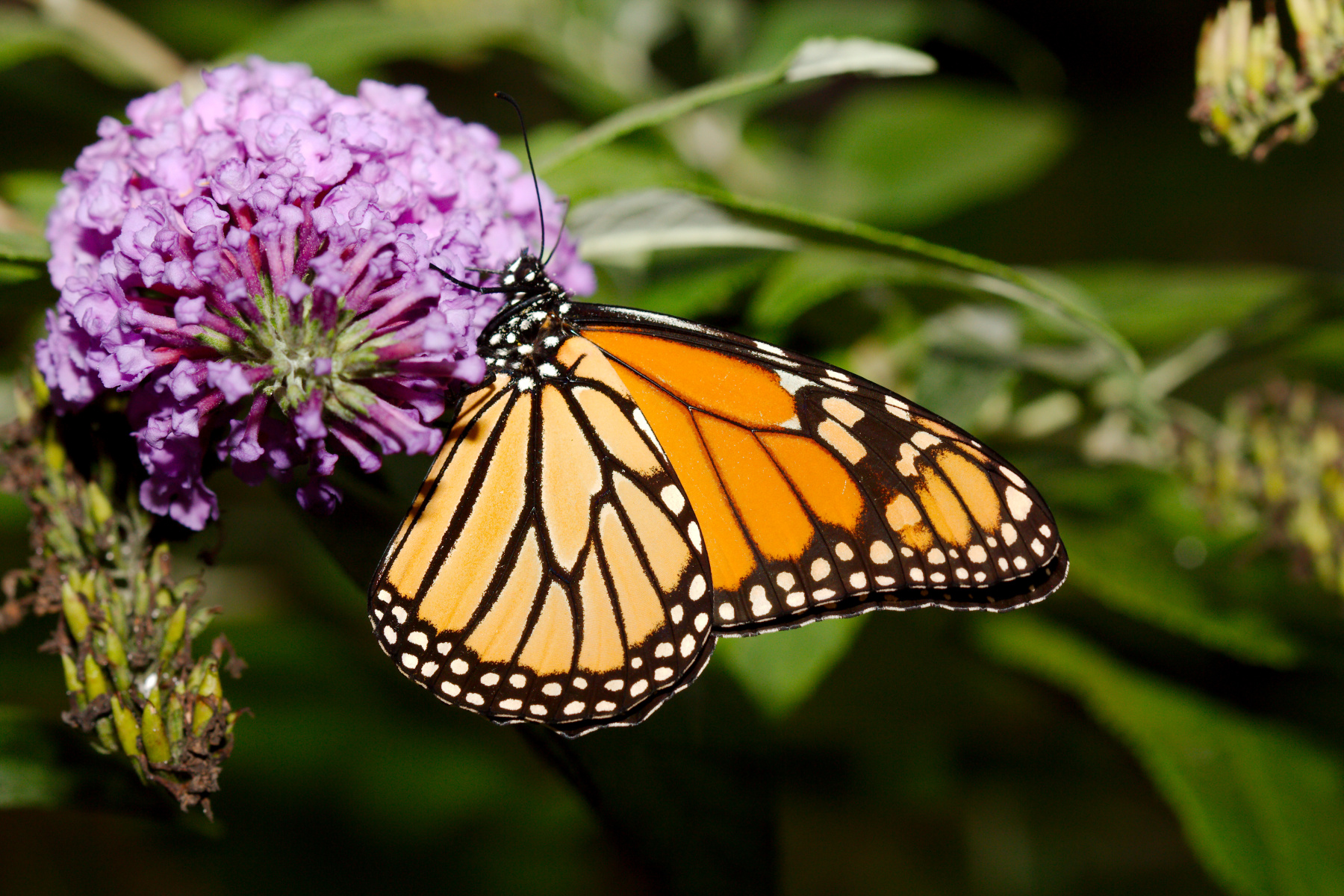
This monarch butterfly (Danaus plexippus, female) was flitting around our buddleia for a while this afternoon and I was able to get close enough for a few good pictures before she left. This late in the summer any butterflies we see are often a bit battered but this one is in remarkably good condition, with no bare patches on her wings.

I’m still a bit behind in posting photographs here, but I have just taken 10 days worth off the camera and will continue adding them as I can. Thanks for sticking around.

Categories: Creatures, Flowers and Plants | Comments Off on Monarch

Leucauge venusta (Orchard Orbweaver)

Leucauge venusta (Orchard Orbweaver)

Leucauge venusta (Orchard Orbweaver)

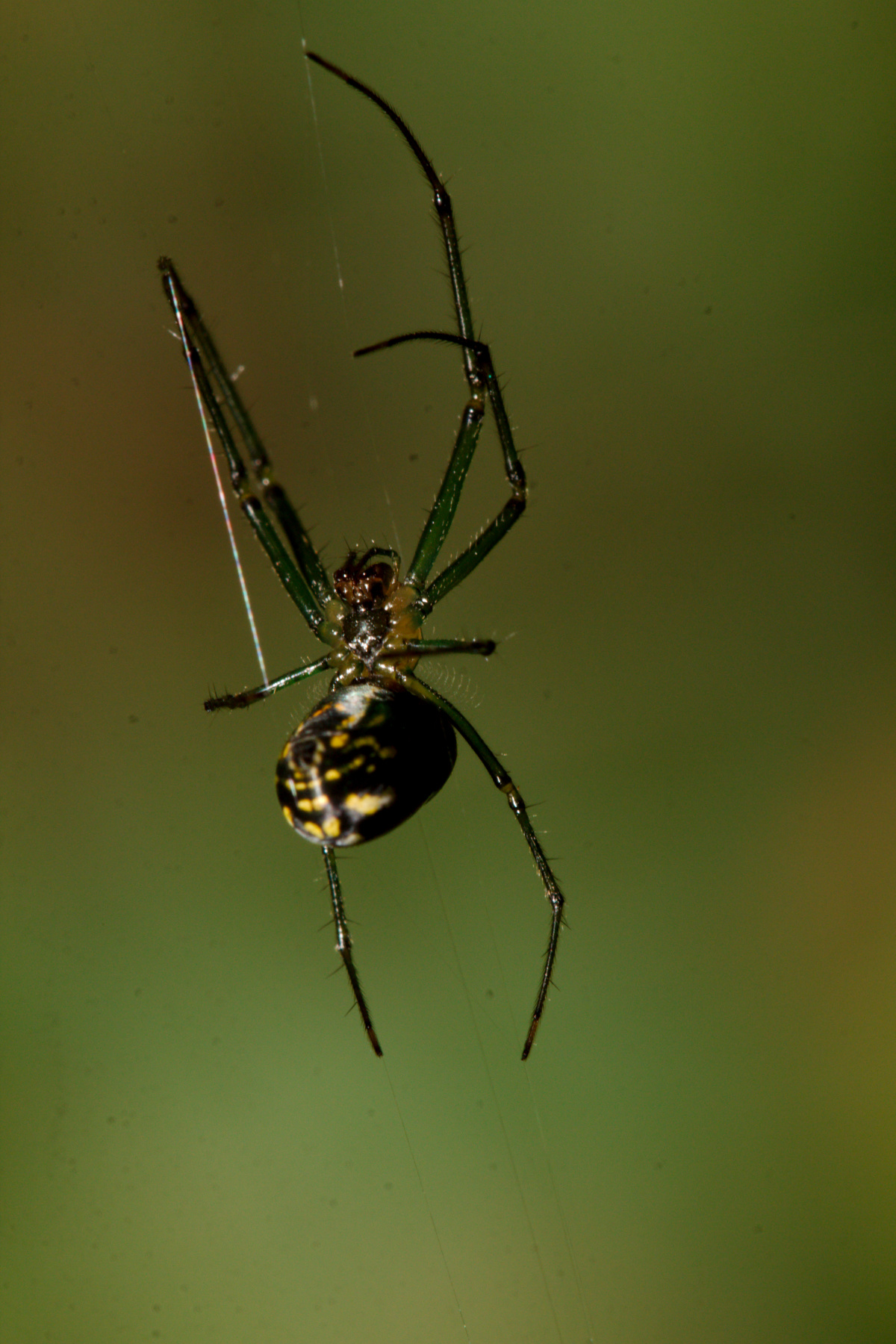
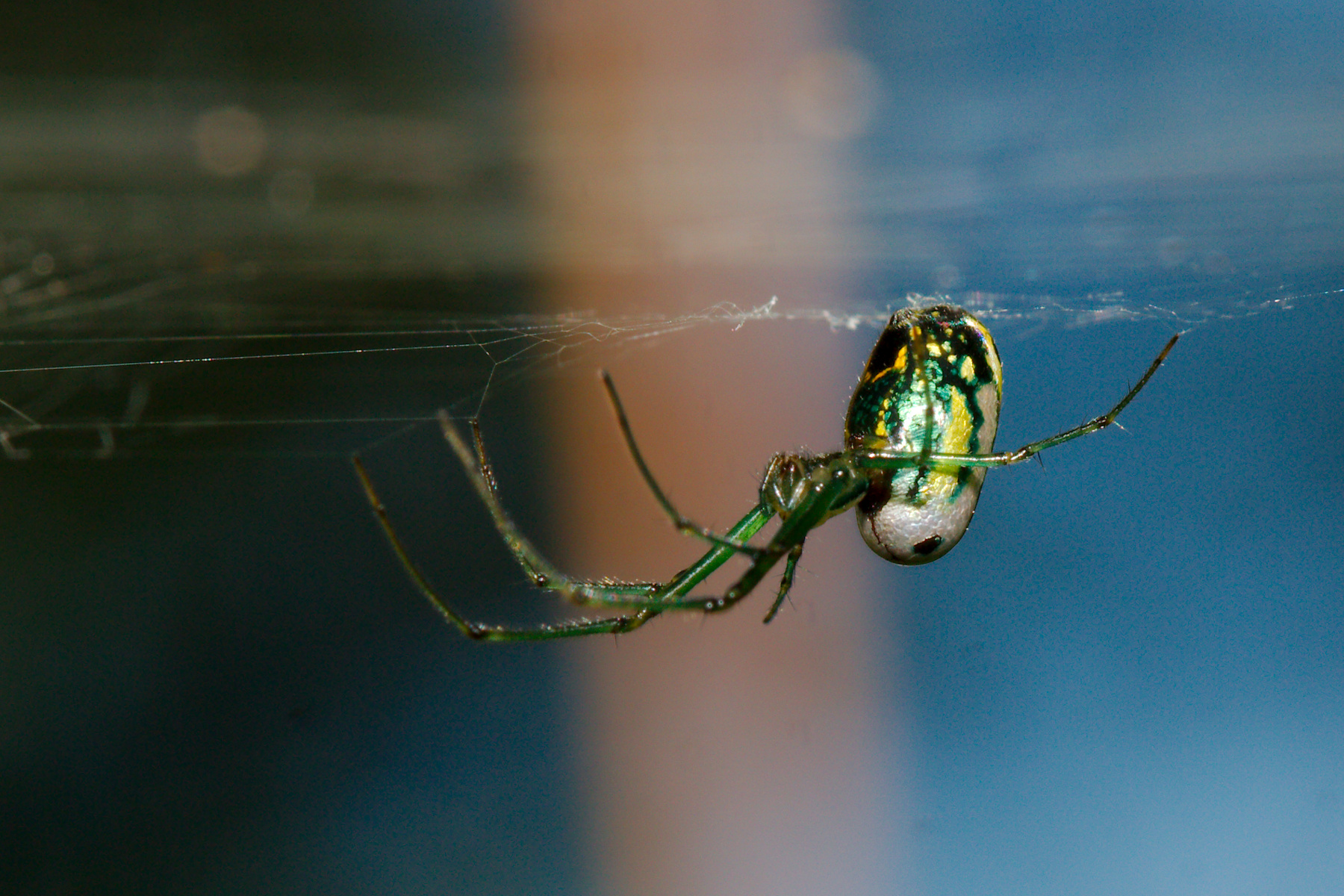
I’ve posted photographs of the orchard orbweaver (Leucauge venusta) a few times before. This one was taken just outside our front door, but her web, fortunately, is not stretched across the walk. I noticed the web two days ago but was not home when there was enough light for a photo. Actually, that was true today, as well, but I took this with flash.

As spiders go, the orchard orbweaver is quite colorful and, to my way of thinking, beautiful. I love the green color and they have a great pattern on their abdomen, although it doesn’t really show up in this photograph. The fact that they eat all manner of small insects also helps endear them to me. And this is one spider that I see quite a lot but have never seen indoors.

Categories: Creatures | Comments Off on Leucauge venusta (Orchard Orbweaver)

Trachelas tranquillus (Broad-Faced Sac Spider)

Trachelas tranquillus (Broad-Faced Sac Spider)

Trachelas tranquillus (Broad-Faced Sac Spider)

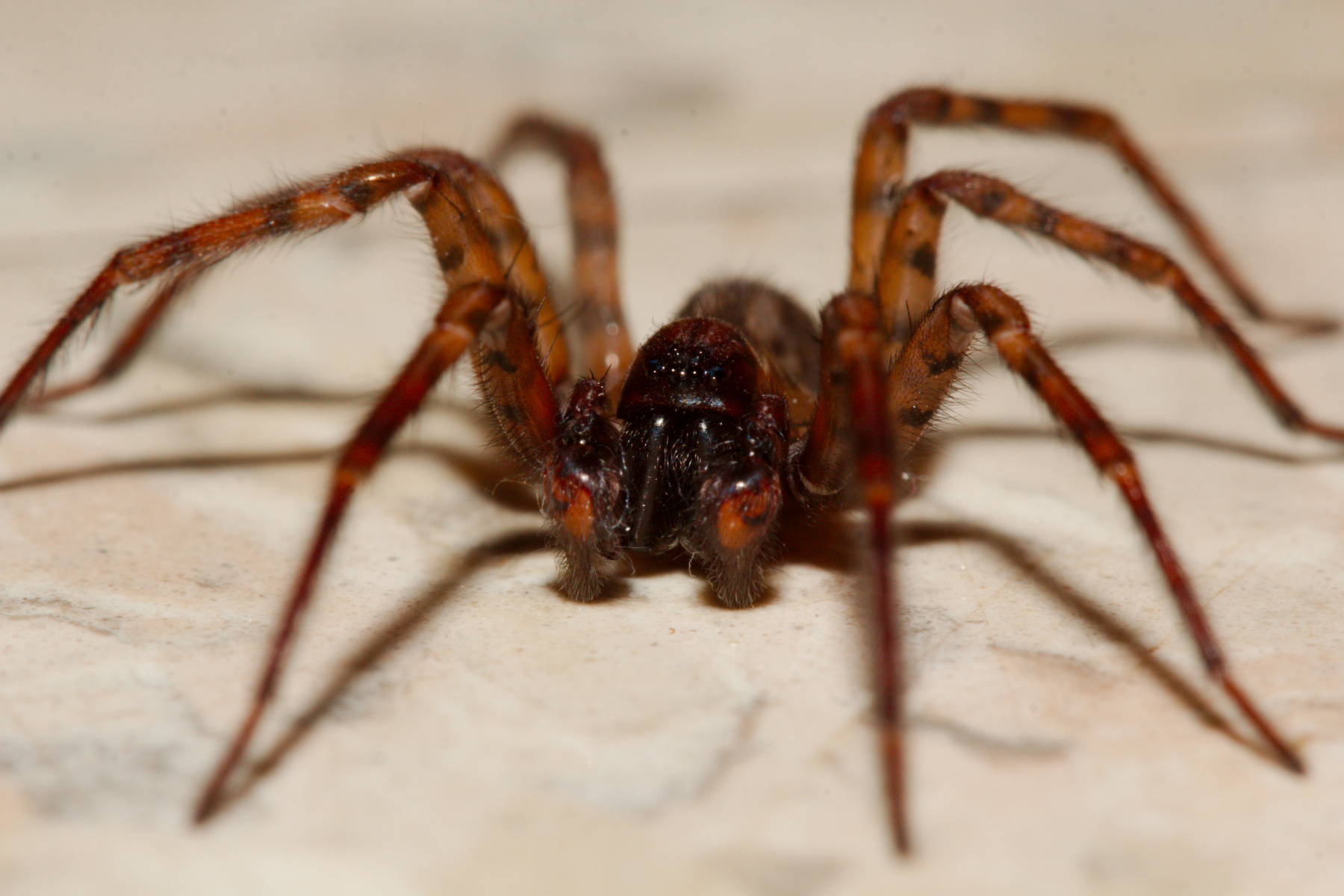
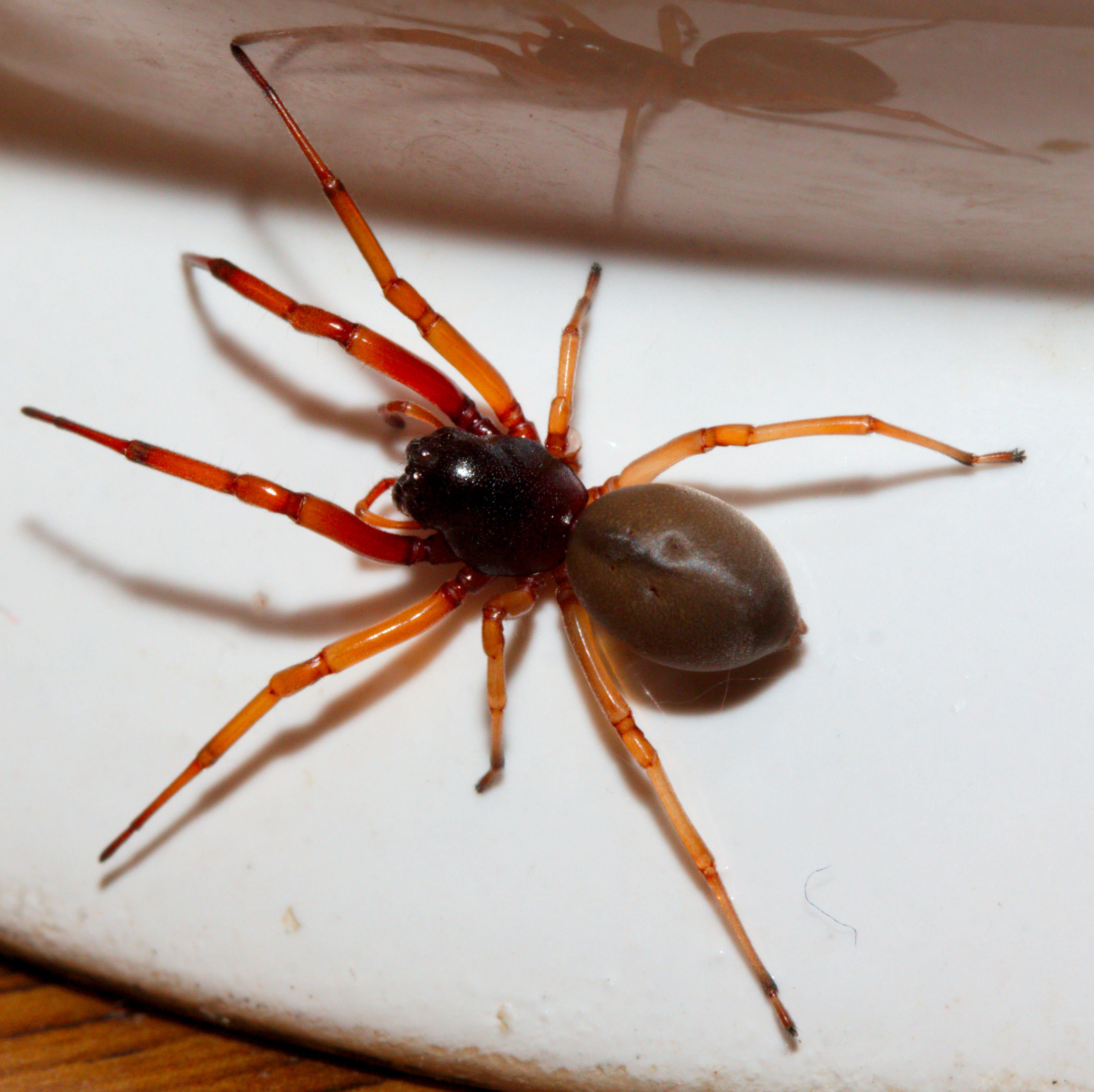
It’s time for another spider. This is a bit of a creepy looking spider, too. It’s about the right size and build for a brown recluse (Loxosceles reclusa) but I’m happy to report that it is meerly a broad-faced sac spider (Trachelas tranquillus). This is a fairly common spider along the central east coast and as far west as Kansas and Minnesota. While most spiders are venomous, the bite of this spider will cause pain similar to a bee or wasp sting. They only bite when provoked, however, so live and let live.

Categories: Creatures | Comments Off on Trachelas tranquillus (Broad-Faced Sac Spider)

Phidippus audax (Bold Jumper)

Phidippus audax (Bold Jumper)

Phidippus audax (Bold Jumper)

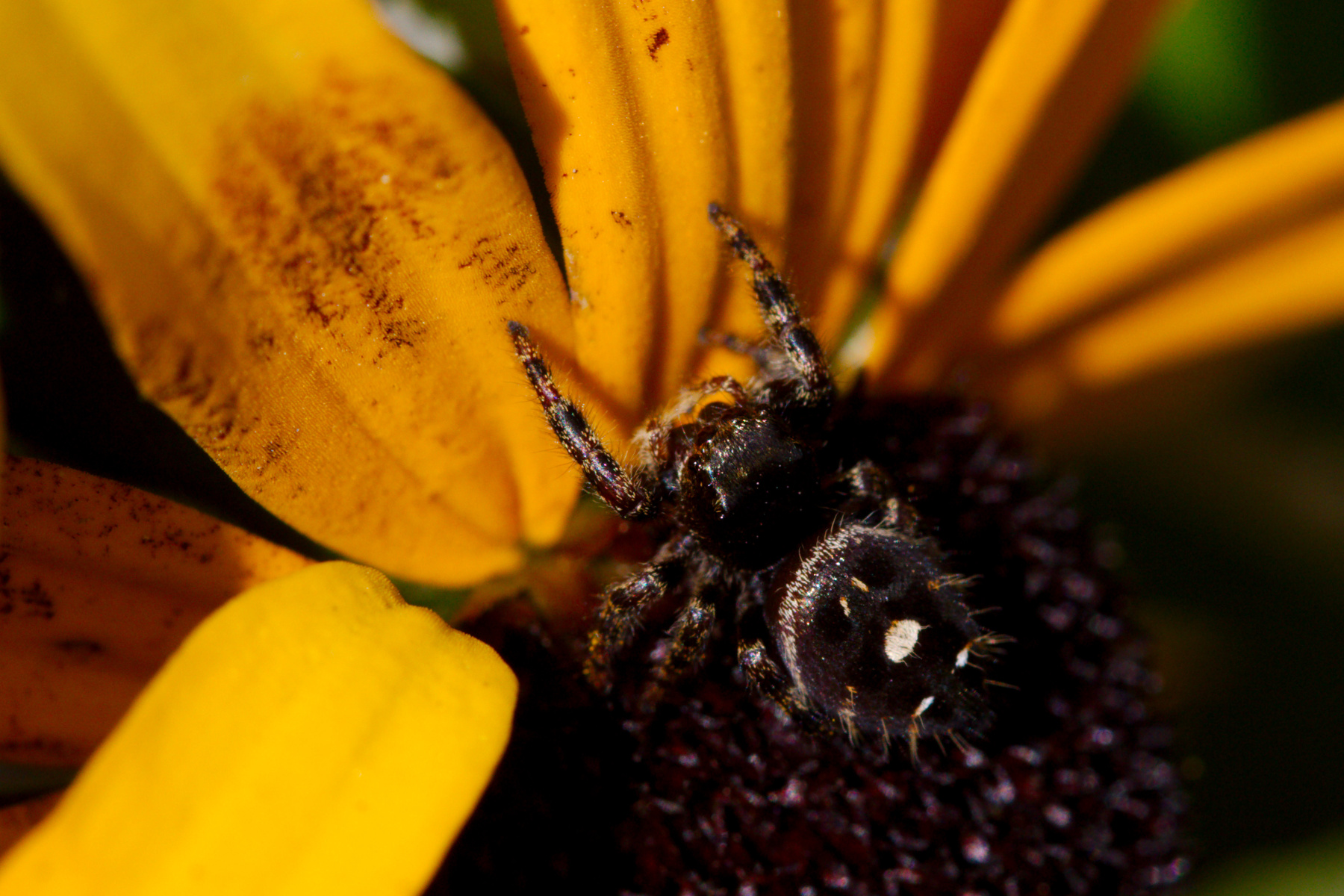
I was out photographing things in the yard early this afternoon. There were some very small flies on buddleia leaves and I was trying to get pictures of them. Then I noticed this fellow, down on a black-eyed Susan flower. It was a bit dark and it’s a dark spider on a dark background, but still not too bad. It is a bold jumper (Phidippus audax), one of the many jumping spiders, family Salticidae.

Categories: Creatures | Comments Off on Phidippus audax (Bold Jumper)

Alobates pensylvanica (False Mealworm Beetle)

Alobates pensylvanica (False Mealworm Beetle)

Alobates pensylvanica (False Mealworm Beetle)

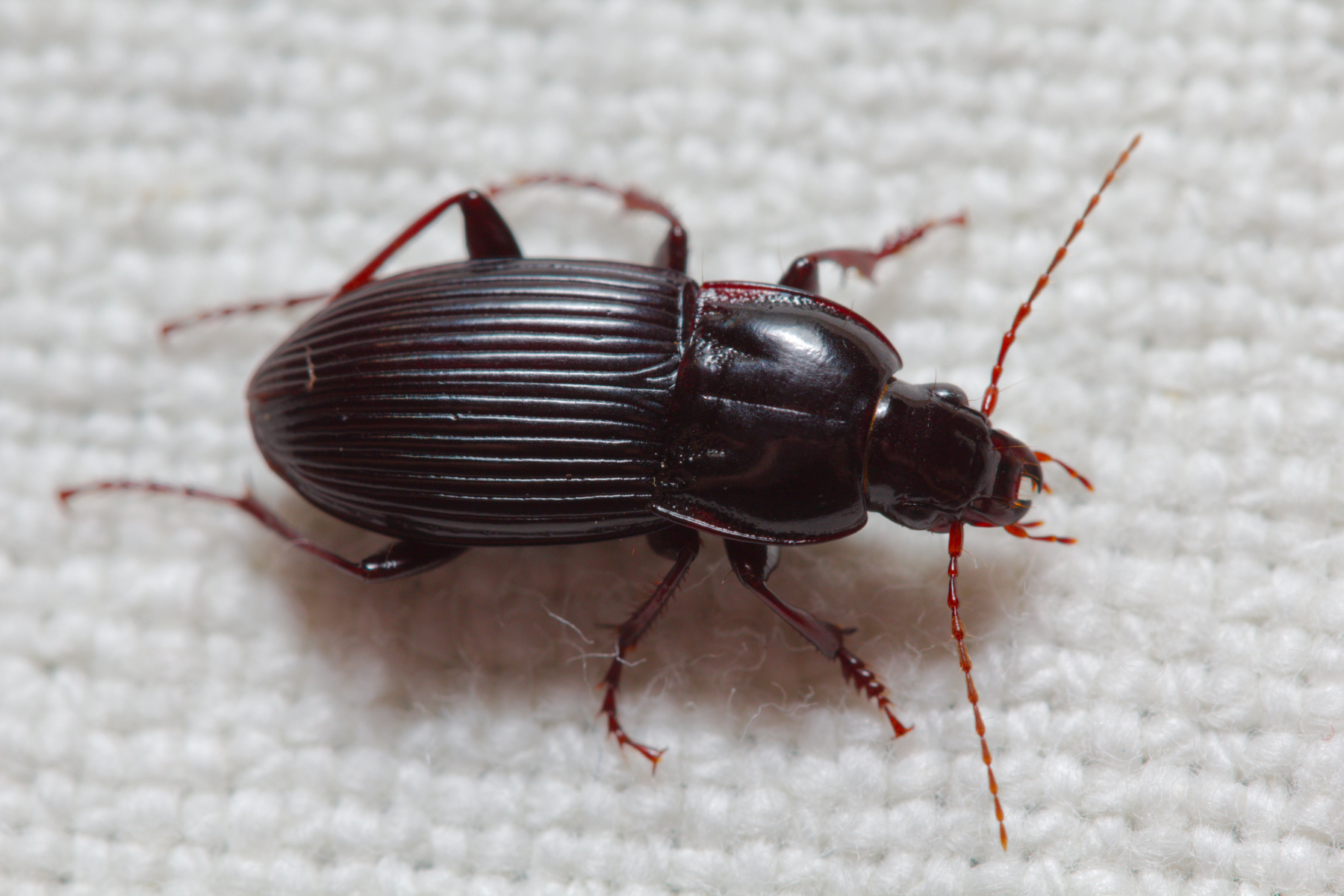
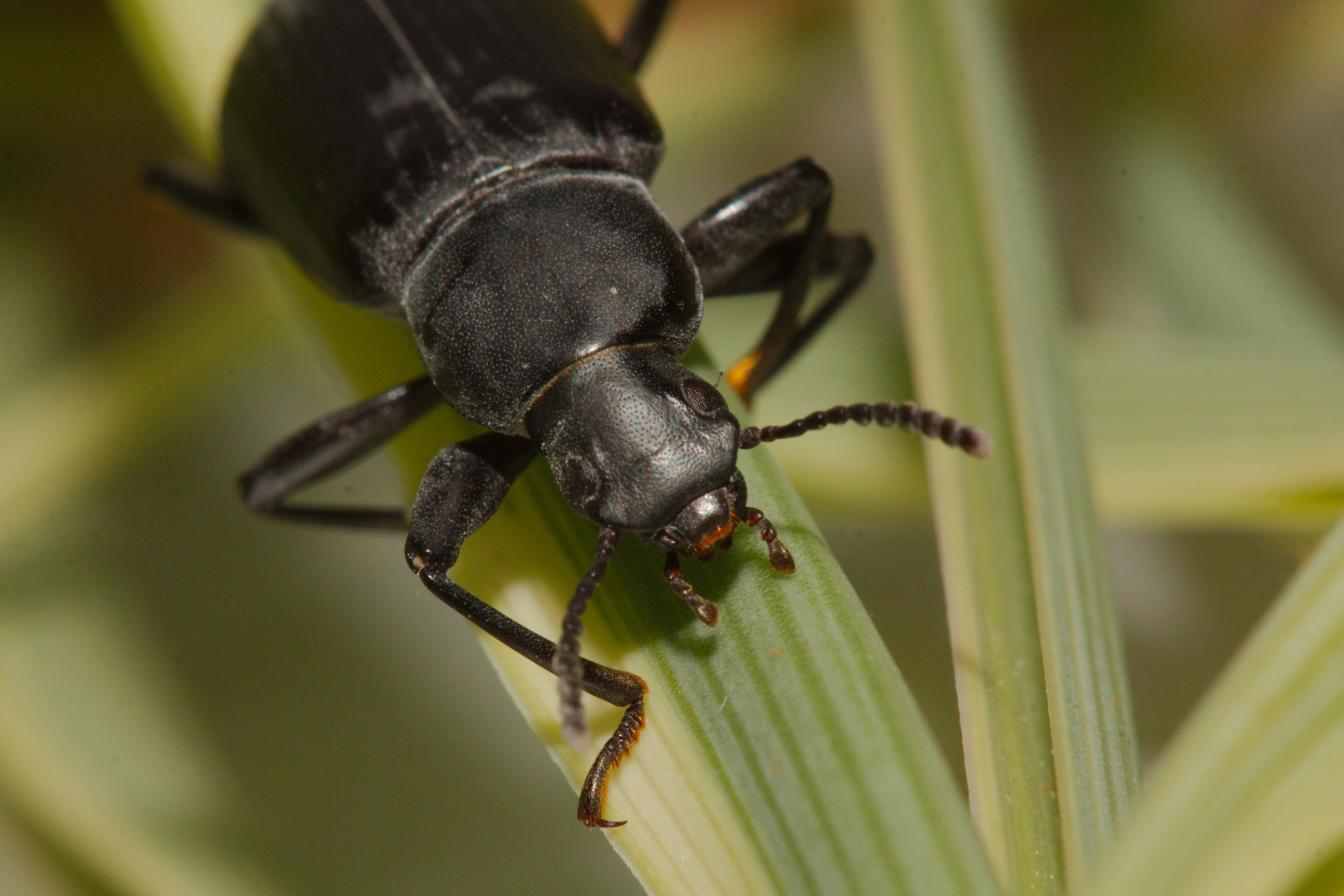
I went out to get some coffee this morning and when I came back I found this fairly large beetle on the floor of my office. I took a few pictures of it on the floor before moving it up to the spider plant on my window ledge, where I took some more photos.

I like beetles. The beetles are the largest order in the animal kingdom, with more than 350,000 described species worldwide, representing about 40% of known insects (per http://bugguide.net/node/view/60).

Categories: Creatures | Comments Off on Alobates pensylvanica (False Mealworm Beetle)

Leucauge venusta (Orchard Orbweaver)

Leucauge venusta (Orchard Orbweaver)

Leucauge venusta (Orchard Orbweaver)

I know that not everyone is particularly fond of spiders, so I apologize if this creeps you out. I actually don’t mind them in their place. Mind you, when walking through the woods, my face is decidedly not their place. But outdoors, eating other insects, they are good friends. They can also be quite beautiful and surprisingly colorful, to say nothing of the fabulous webs they often spin.

This is an orchard orbweaver (Leucauge venusta, with venusta being the Latin for beautiful), and they are quite common in our area (and I’ve never actually seen on indoors, which is just as well). This one is only about 8 inches off the ground, which made getting down under it for a photograph a bit of a challenge, but I think it’s turned out pretty well.

Categories: Creatures | Comments Off on Leucauge venusta (Orchard Orbweaver)

Green Frog (Lithobates clamitans)

Green Frog (Lithobates clamitans)

Green Frog (Lithobates clamitans)

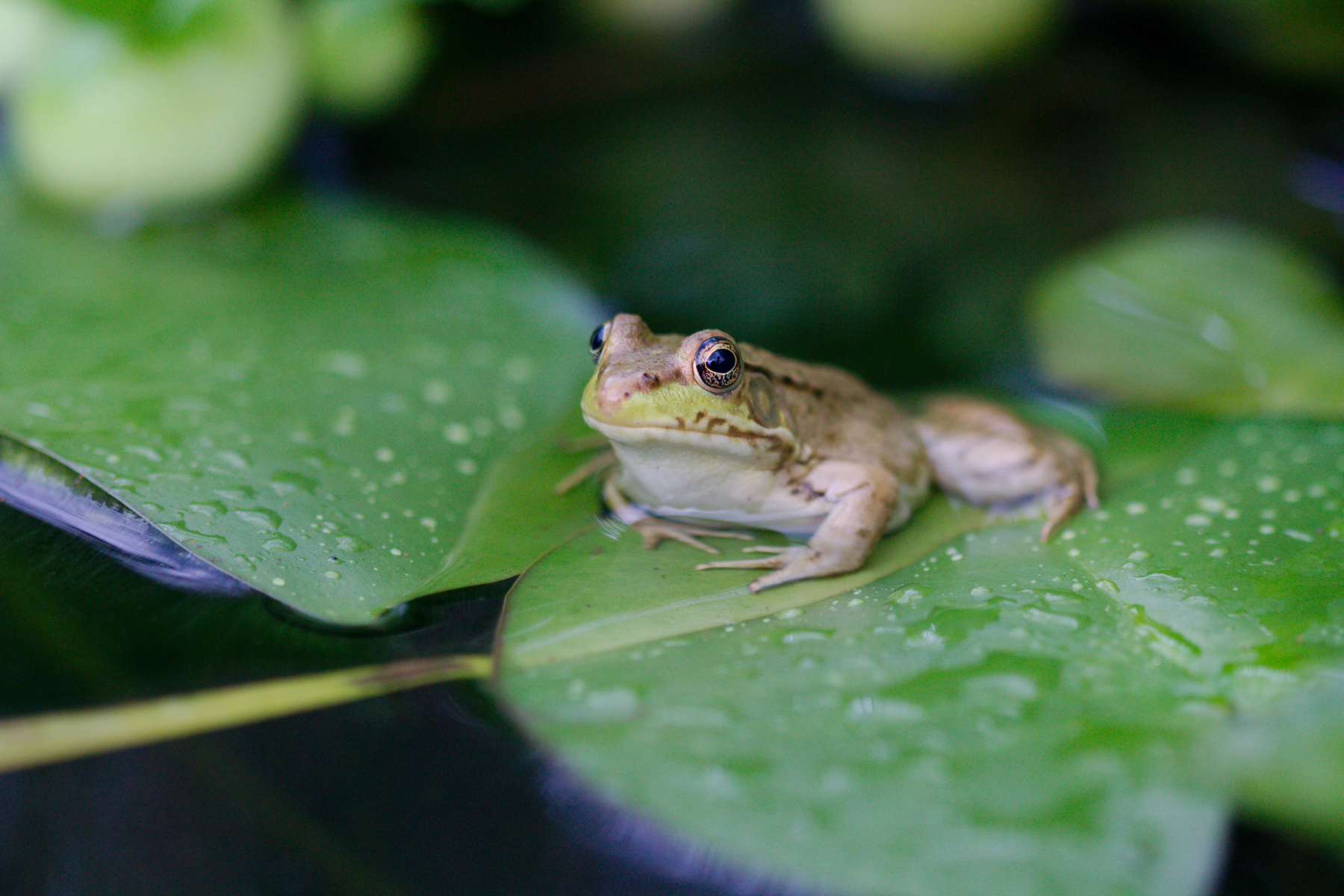
It was another sweltering day today. Summer seems to have arrived at last and at one point the thermometer out back read 98°F. In the afternoon we took a short outing to the Agricultural Farm Park to enjoy their garden. This little fellow, which I believe is a green frog (Lithobates clamitans) was in a little pond in the garden. While we were there, it started to rain lightly and shortly came down quite hard for a while. The temperature dropped more than 20°F, though, so the rain was more than welcome.

Categories: Creatures | Comments Off on Green Frog (Lithobates clamitans)

Skipper on Russian Sage

Skipper on Caryopteris

Skipper on Caryopteris

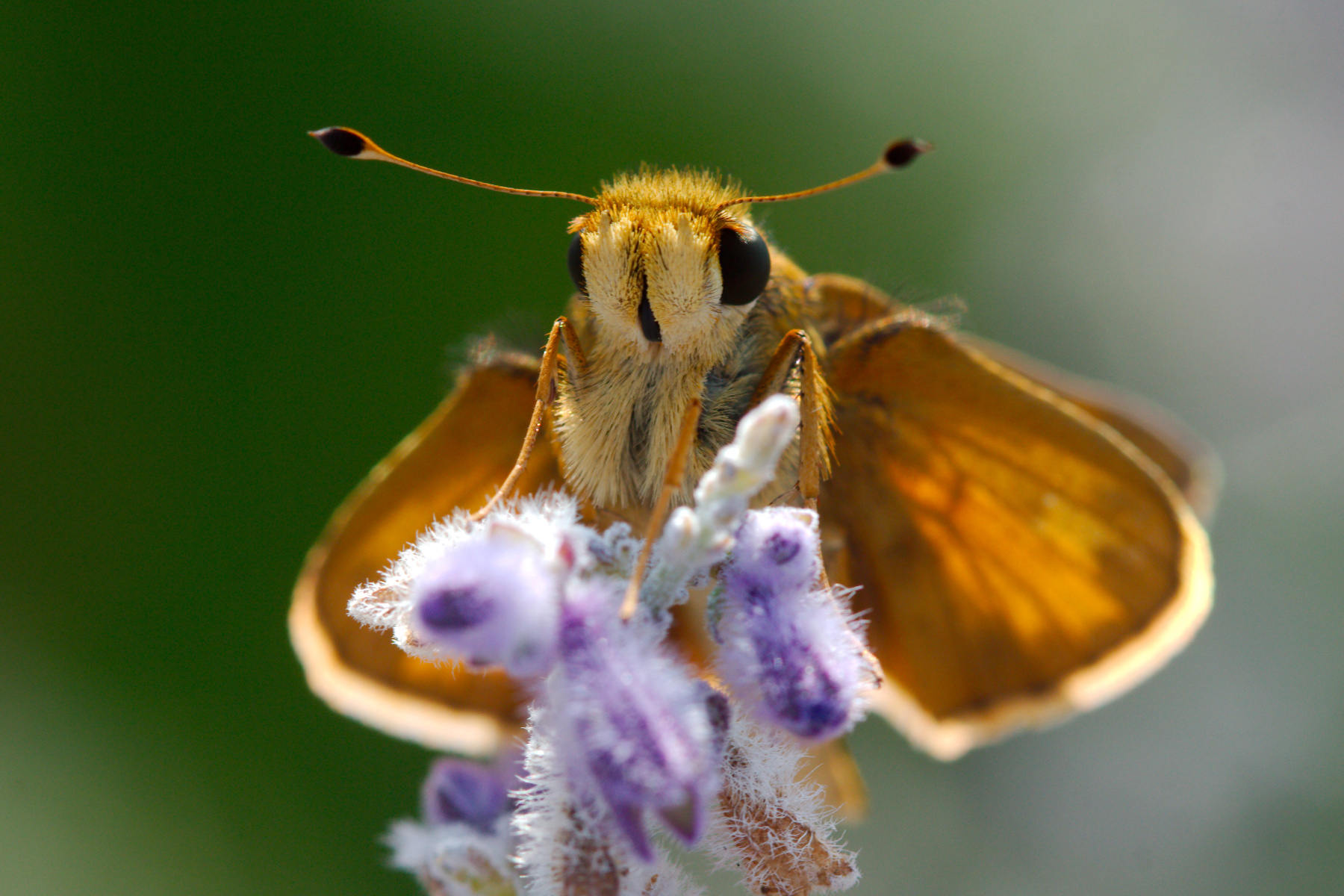
Dorothy and I went in to church early this morning because she was singing and needed to be there for practice. I forgot to bring my book, so I had some free time. There are two small islands in the parking lot planted with caryopteris, which is quite happy there and blooming quite profusely. That’s another good insect magnet and I decided to go see what I could find. I like the head-on pictures I took of a small skipper on the top of a caryopteris stem. It’s a little thing, only about 1.5cm across.

Update: I originally labeled the flower this skipper is on as Caryopteris. It’s not. Instead, it is Russian Sage (Perovskia atriplicifolia). I often get those mixed up in my head, but fortunately, Cathy keeps them straight.

Categories: Creatures, Flowers and Plants | Comments Off on Skipper on Russian Sage

Hemaris diffinis (Snowberry Clearwing)

Hemaris diffinis (Snowberry Clearwing)

Hemaris diffinis (Snowberry Clearwing)

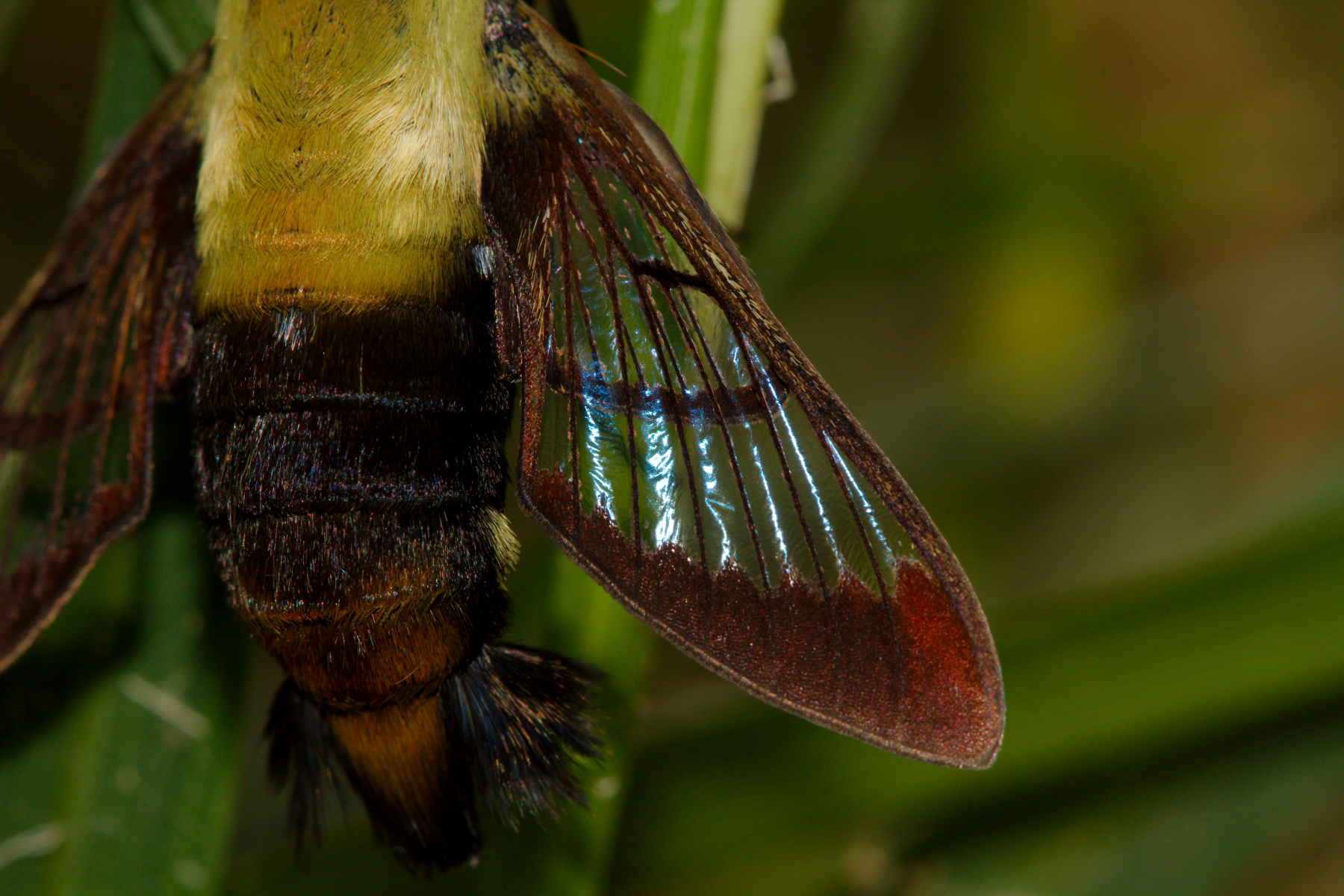
Dorothy and I went out the Rocklands Farm this afternoon. We were mostly there to pick up a few things from Janis, but as usual, I took the opportunity to take a few pictures. The first of them is this sphinx moth, a Snowberry Clearwing (Hemaris diffinis). I’ve seen them many times, usually hovering around flowers and posted a picture of one back on July 07, 2013. This one was down in the grass on the edge of a field and I’m not sure how I even spotted it. I’m glad I did though, because I was able to get quite close. I took some of the entire moth but I like this close-up, that shows the details of the wing.

Categories: Creatures | Comments Off on Hemaris diffinis (Snowberry Clearwing)

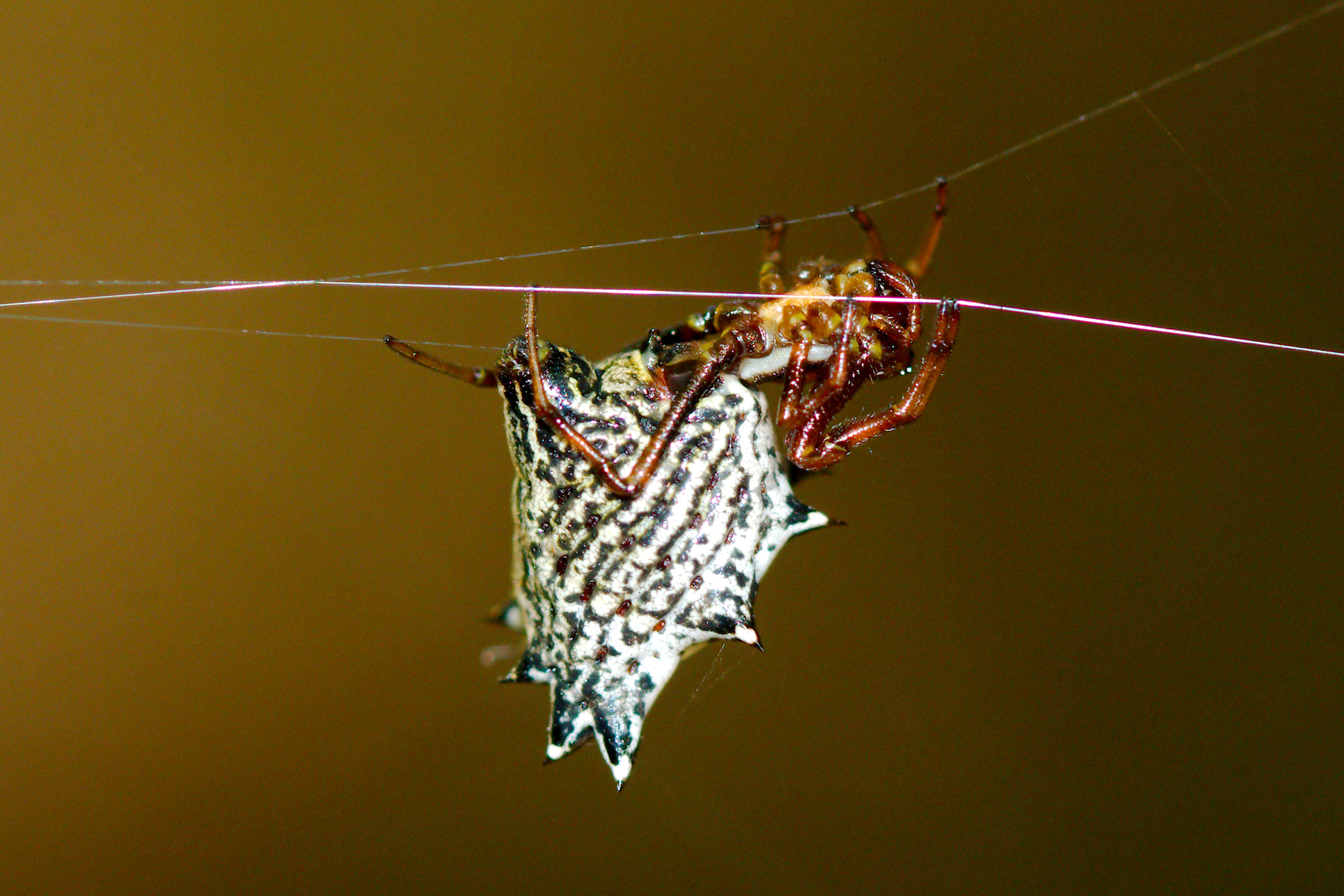
Micrathena gracilis (Spined Micrathena)

Micrathena gracilis (Spined Micrathena)

Micrathena gracilis (Spined Micrathena)

I had to go the the next building over this afternoon so I took my camera with me. Then, on the way back to my office I walked through the woods for a little while. I nearly walked into a spider web, which I don’t particularly enjoy, but stopped in time. Then I got some pictures of the little lady minding the web. Actually, I took about one and a half dozen pictures, but all of them are blurry or out of focus except two. First, it was fairly dark in the woods. Then, the web was moving back and forth a little in the breeze. Finally, I was standing on a fairly steep hillside, trying to avoid falling into the spider’s web. When I went around so that the sun was behind me and when the spider moved into a very small shaft of sunlight, I was able to get this picture, which I’m pretty pleased with.

Categories: Creatures | Comments Off on Micrathena gracilis (Spined Micrathena)

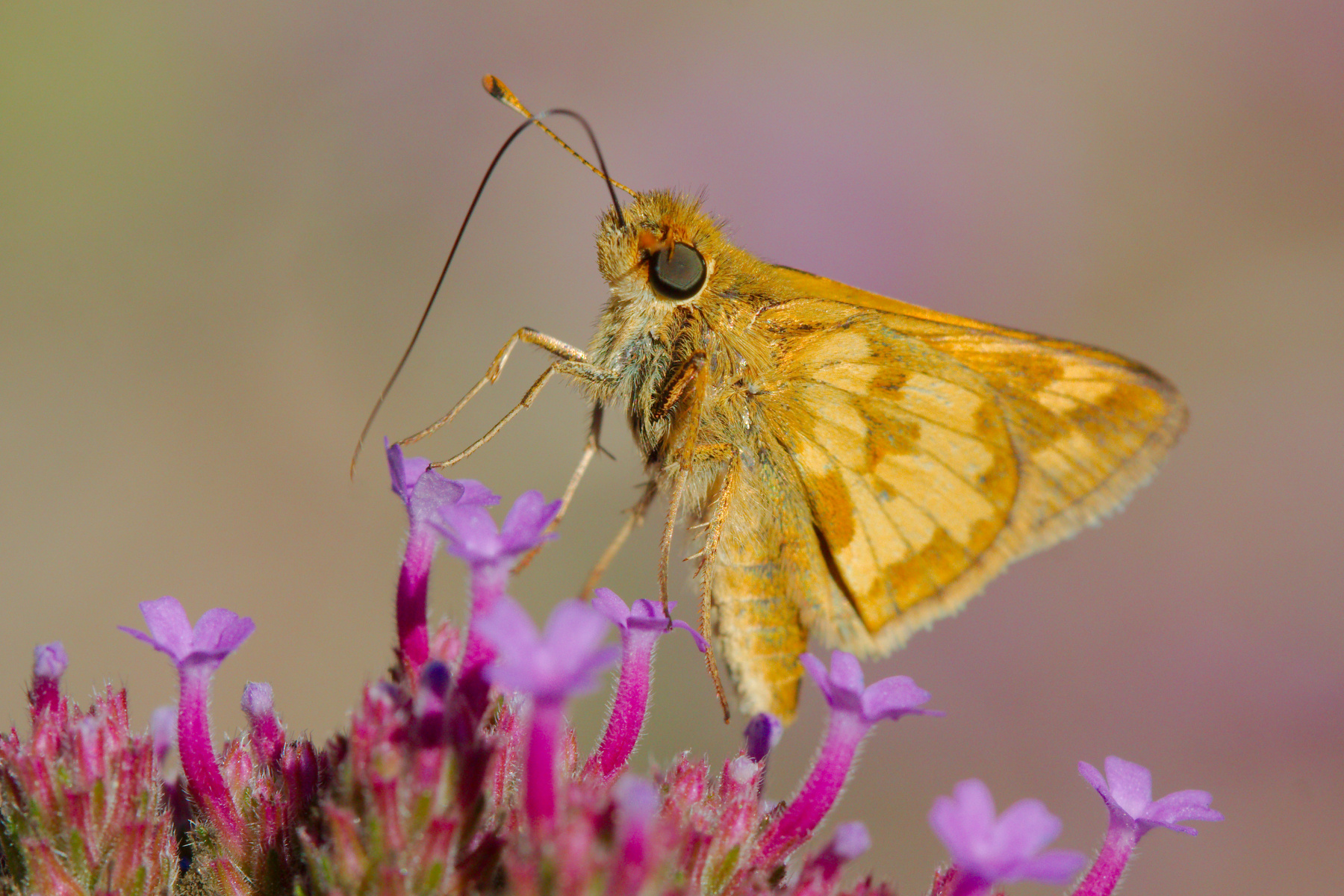
Polites peckius (Peck’s Skipper)

<em>Polites peckius</em> (Peck's Skipper)

Polites peckius (Peck’s Skipper)

The sun was hot today and the insect activity out back was intense. On the mountain mint (Pycnanthemum muticum) there were bees and wasps of all descriptions. Out in the middle of the yard, on the patch of purple vervain (Verbena bonariensis) there were dozens, if not hundreds of skippers and a handful of cabbage whites (Pieris rapae). This is a Peck’s skipper (Polites peckius) that let me get close enough for a pretty good portrait.

Categories: Creatures, Flowers and Plants | Comments Off on Polites peckius (Peck’s Skipper)

Monarch and Resin Bee

Danaus plexippus (Monarch)

Danaus plexippus (Monarch)

It was another beautiful day, a bit warmer than it’s been, but then it is August. I worked in the yard quite a bit this afternoon, doing a lot of weeding. It was mostly thistles and fleabane, ignoring the smaller weeds. I also cut a fair amount of dead wood out of a few of the roses. The pink multiflora rose was an absolute thicket of canes and my arms are a bit worse for the work, but the rose will be happier for it. When I had filled two barrels with yard waste (packed down quite a bit), I took a break and sat in the shade with a good book and a cold drink. I didn’t get very far in my reading, though.

Megachile sculpturalis (Sculptured Resin Bee)

Megachile sculpturalis (Sculptured Resin Bee)

I noticed a monarch butterfly (Danaus plexippus) on the Verbena bonariensis growing in the middle of our back yard. I was able to get pretty close and picked this one as the best, partly because of the bright background of black-eyed Susans. While I was taking pictures of him (it’s a male) I noticed a fairly large bee. It’s about an inch long and is a Sculptured Resin Bee (Megachile sculpturalis). They were recently introduced to eastern north America from their native Japan and eastern China, having first been seen in North Carolina in 1994.

Categories: Creatures, Flowers and Plants | Comments Off on Monarch and Resin Bee

Oncopeltus fasciatus nymphs (Large Milkweed Bug)

Oncopeltus fasciatus nymphs (Large Milkweed Bug)

Oncopeltus fasciatus nymphs (Large Milkweed Bug)

A week ago (August 11, 2014) I posted a photo of a large milkweed bug (Oncopeltus fasciatus). These are nymphs of the same thing, also on the Asclepias tuberosa in our backyard. They feed on the seeds of the milkweed but don’t seem to do any harm to the plants, so I don’t mind them. Also, they are quite pretty, in a creepy, crawly sort of way. The adult bug is fairly large, more than 2cm long. These nymphs are quite small, though, 3 or 4mm long.

Categories: Creatures | Comments Off on Oncopeltus fasciatus nymphs (Large Milkweed Bug)

Cupido comyntas (Eastern Tailed-Blue)

Cupido comyntas (Eastern Tailed-Blue)

Cupido comyntas (Eastern Tailed-Blue)

The youth group had a pool party this afternoon and we couldn’t have had better weather. It was warm but not too hot, the sky was a beautiful blue with a few clouds, and the water was cool and refreshing. I took a lot of pictures but the one I’m going to share with you all is a butterfly. There was a little cloud of these, four or five, fluttering around an shady spot where water had been splashed onto the concrete around the pool. They are quite small, not much more than about one centimeter tall (about 3/8 of an inch).

Categories: Creatures | Comments Off on Cupido comyntas (Eastern Tailed-Blue)

Eastern Cottontail Rabbit (Sylvilagus floridanus)

Eastern Cottontail Rabbit (<em>Sylvilagus floridanus</em>)

Eastern Cottontail Rabbit (Sylvilagus floridanus)

With the fox that we had in our yard over the winter, I had hoped that we’d have fewer rabbits this summer. Cathy saw the fox this week, so it’s still around, but we’ve had as many rabbits as ever. Of course, for all I know, we’d have twice as many if the fox were not around. Anyway, this fellow (or lady, I don’t know) was sitting out in our back yard, happy as you please, this afternoon when I came home. The grass is lush this summer and they haven’t done as much damage to our garden as in some years, because of that, but I still wouldn’t mind having fewer of them.

They are cute, though. That’s something in their favor.

Categories: Creatures | Comments Off on Eastern Cottontail Rabbit (Sylvilagus floridanus)

Oncopeltus fasciatus (Large Milkweed Bug)

Oncopeltus fasciatus (Large Milkweed Bug)

Oncopeltus fasciatus (Large Milkweed Bug)

This is a large bug (using the term “bug” in its technical sense—this is one of the “true bugs,” order Hemiptera, suborder Heteroptera—and a hansome one, at that. Not surprisingly, I found this one on the Asclepias tuberosa, butterfly weed, one of the milkweeds. From BugGuide.net, “In the course of feeding these bugs accumulate toxins from the milkweed, which can potentially sicken any predators foolish enough to ignore the bright colors which warn of their toxicity.&x201d;

There is a fair amount of variation in their color intensity. This one is a fairly pale orange, but I’ve seen them much brighter and pictures of them that are more red than orange. This photo was taken with flash, which I should do more often when taking insect pictures, because it allows a smaller aperture and shorter exposure, giving a sharper image with greater depth of field.

Categories: Creatures | Comments Off on Oncopeltus fasciatus (Large Milkweed Bug)

Celastrina neglecta (Summer Azure)

Celastrina neglecta (Summer Azure)

Celastrina neglecta (Summer Azure)

When I took this, I assumed it was a cabbage white (Pieris rapae) but when I went to check just to be sure, I realized that it doesn’t have the tell-tale black spot. The wings are not as pure white, either, with all those brown marks and squiggles. So I had to look it up. It’s an azure and I’m pretty sure it’s a summer azure (Celastrina neglecta), which is one of the blues in the family Lycaenidae (the blues, coppers, hairstreaks, and harvesters). The cabbage white is in family Pieridae (the whites, sulphurs, and yellows). Pretty little thing, even if it isn’t as showy as the monarch or swallowtails.

Categories: Creatures | Comments Off on Celastrina neglecta (Summer Azure)

Macrosiagon limbata (Wedge-shaped Beetle)

Macrosiagon limbata (Wedge-shaped Beetle)

Macrosiagon limbata (Wedge-shaped Beetle)

I hope you aren’t getting tired of insect photographs. When I get home from work, going out back and watching the wasps is something I’ve come to enjoy, so I hope you don’t mind. I’ve seen this one, a wedge-shaped beetle (Macrosiagon limbata) once before and posted a picture on June 28, 2012. The feathery antennae on this one mean it’s a male. The female, as in the picture from 2012, has much simpler antennae.

Categories: Creatures | Comments Off on Macrosiagon limbata (Wedge-shaped Beetle)

Synanthedon acerrubri (Red Maple Borer)

<em>Synanthedon acerrubri</em> (Red Maple Borer)

Synanthedon acerrubri (Red Maple Borer)

Back on August 21, 2012 I took and posted a photo of a dogwood borer (Synanthedon scitula). This is an closely related species, the red maple borer (S. acerrubri). I found it feeding on the black-eyed Susans (obviously) and managed to get a few pretty good pictures of it. This one isn’t actually the best in terms of identification, but I like it the best as a photograph. The most obvious difference between the two species is that this one has a bright orange tuft at the end of it’s abdomen. It’s the larvae which damage maples, boring into branches. Apparently they prefer red and and sugar maples.

Categories: Creatures | Comments Off on Synanthedon acerrubri (Red Maple Borer)

Papilio glaucus (Eastern Tiger Swallowtail)

<em>Papilio glaucus</em> (Eastern Tiger Swallowtail)

Papilio glaucus (Eastern Tiger Swallowtail)

More butterfly pictures today. There were a couple eastern tiger swallowtails on the Verbena bonariensis although I had a bit of work to get close to them. Eventually I managed to do it, though, and I think the results were worth the effort. This butterfly was moving from one flower head to the next, sucking nectar through its long proboscis. Here you can see the “drinking straw” as it’s moved from one flower to another.

Categories: Creatures | Comments Off on Papilio glaucus (Eastern Tiger Swallowtail)