Creatures

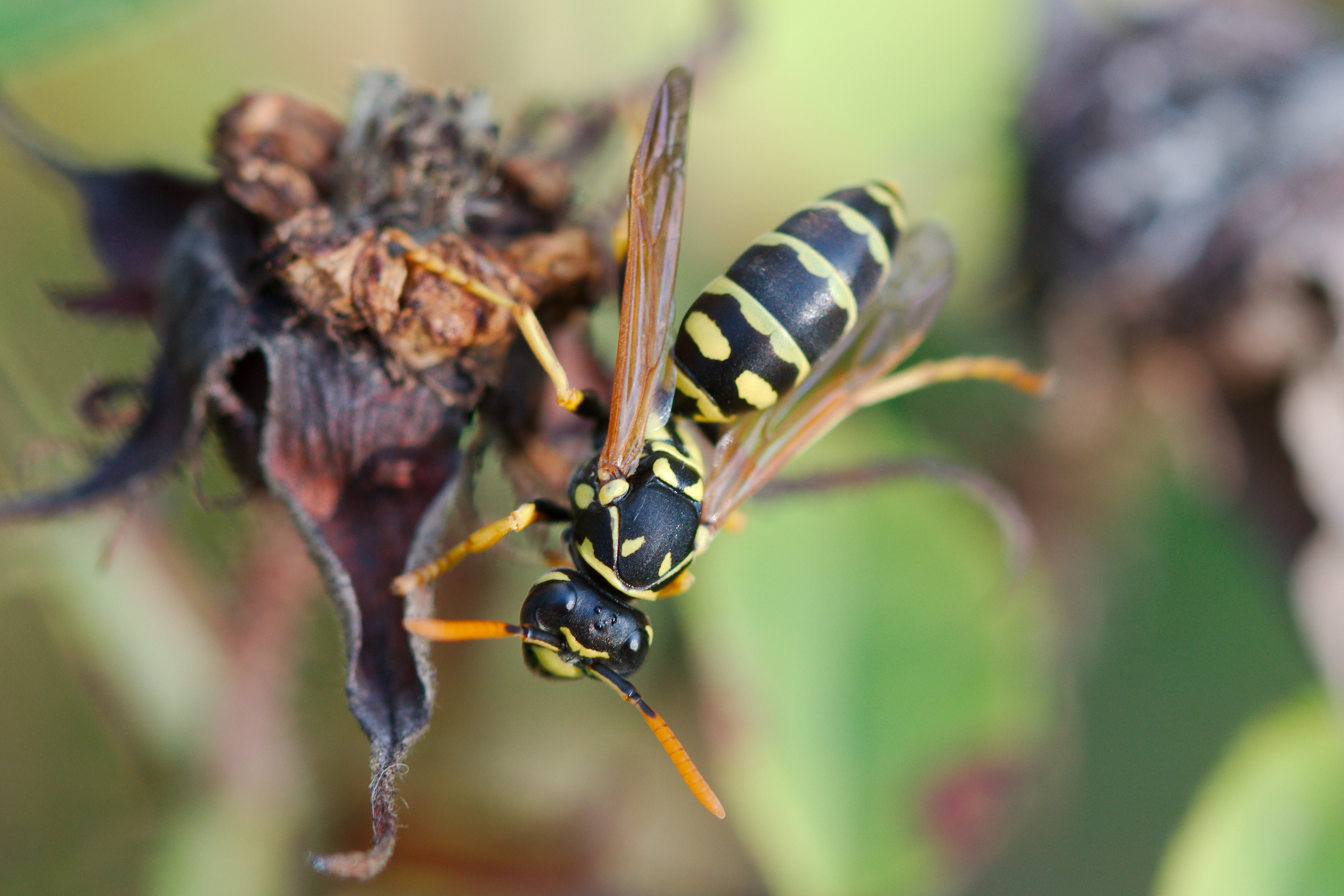
Zethus spinipes (Potter Wasp)

<em>Zethus spinipes</em> (Potter Wasp)

Zethus spinipes (Potter Wasp)

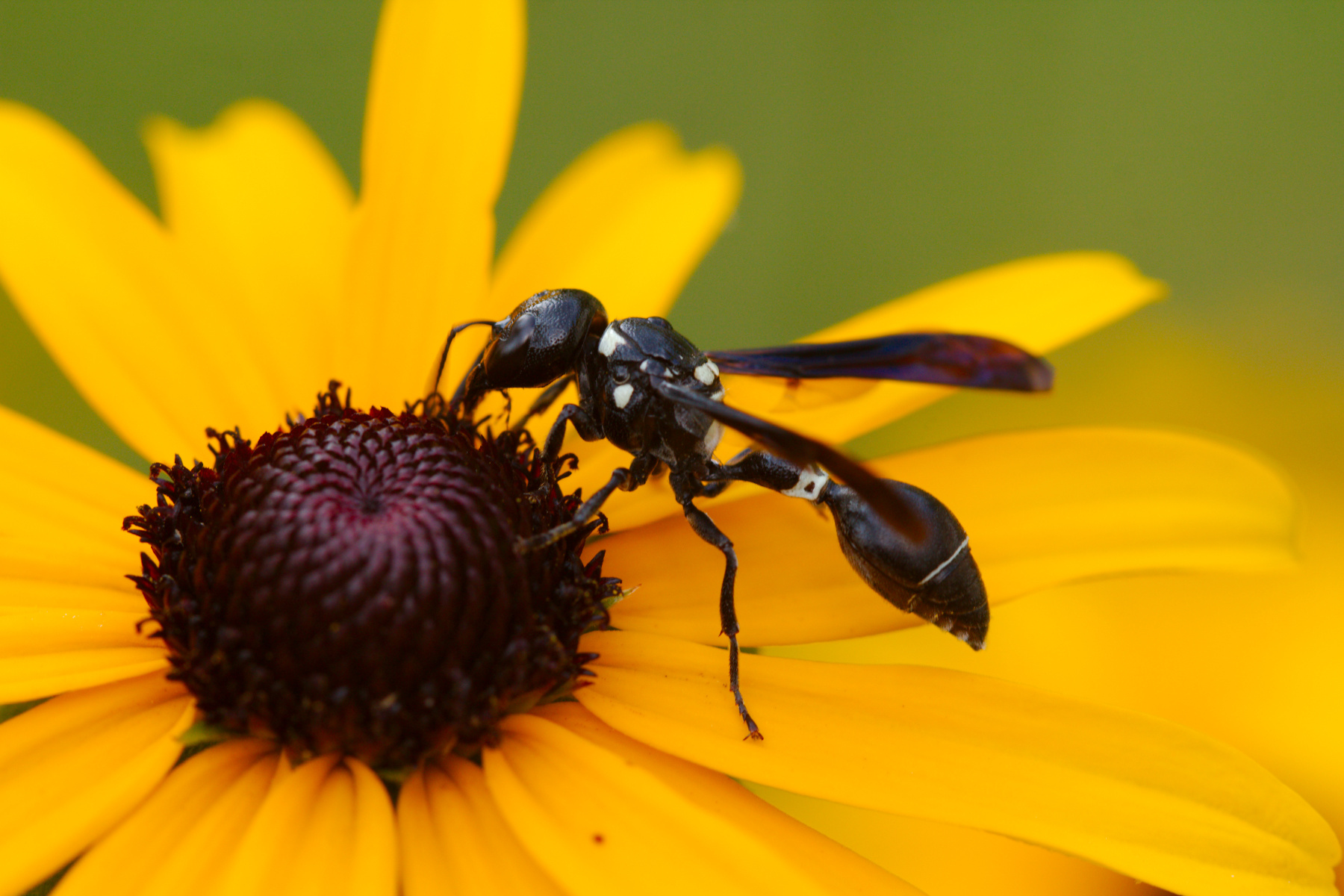
Cathy and I were out in the back yard late this afternoon. Normally, when I want to find wasps to photograph, I head for the mountain mint. Today, I was sitting at the table on the patio and noticed a few things on the black-eyed Susans on the other side of the gas grill. I put the camera on the lid of the grill and was able to get reasonably steady shots of this potter wasp. In 2012 and again in 2013 I took pictures of a potter wasp named Eumenes fraternus but this is the first time I’ve taken any of Zethus spinipes. It’s quite a beautiful little wasp, I think.

Categories: Creatures | Comments Off on Zethus spinipes (Potter Wasp)

Danaus plexippus (Monarch)

Danaus plexippus (Monarch)

Danaus plexippus (Monarch)

Well, we drove home from the beach today. Days mostly spent driving, especially when you’re more interested in trying to get home than see the scenery, are tough days photographically. It rained quite heavily as we left the beach and until about the time we got onto I-95. Then traffic was characteristically heavy all the way home, particularly on the stretch between Richmond and Washington. One of the worst routes in the country, I suspect.

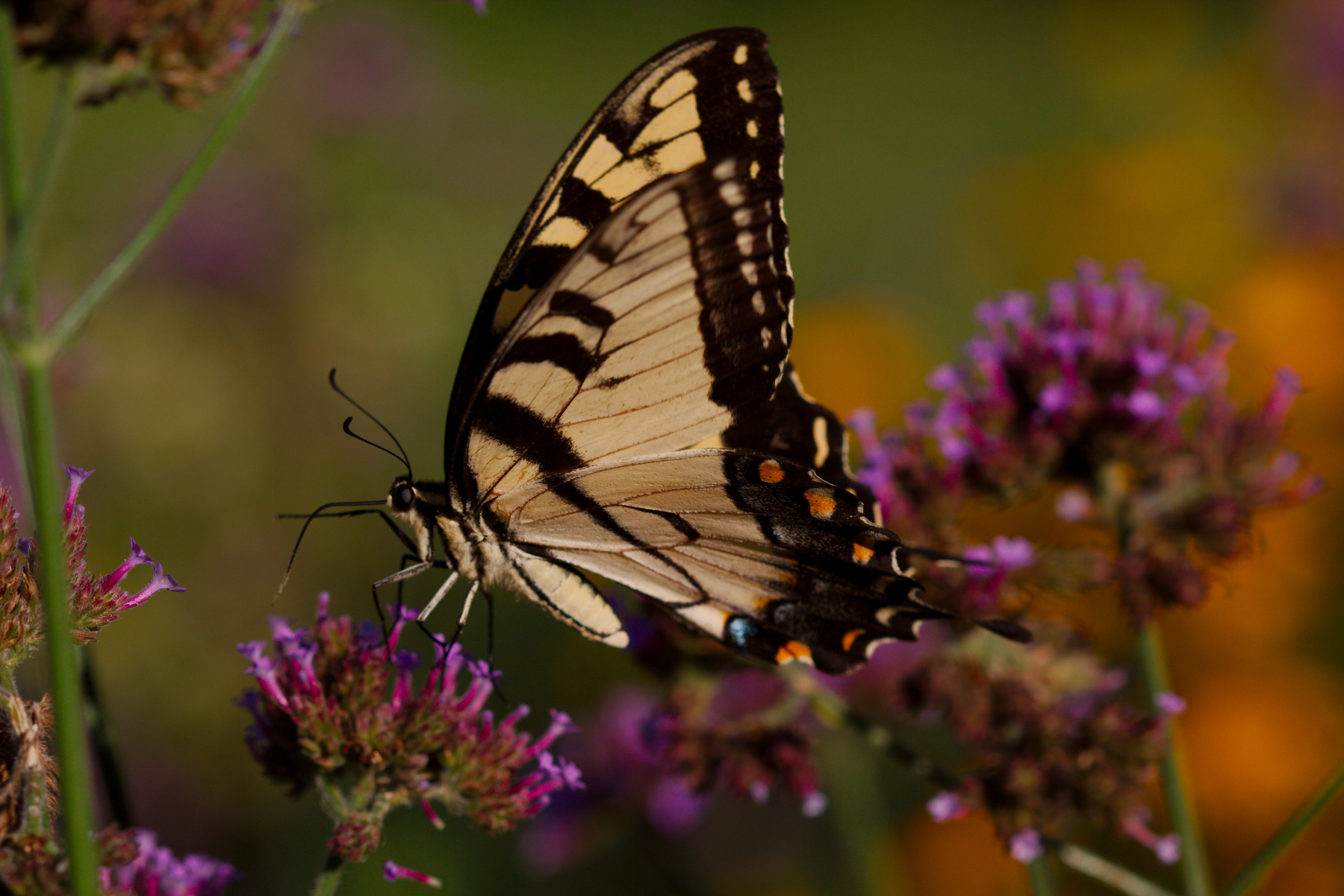
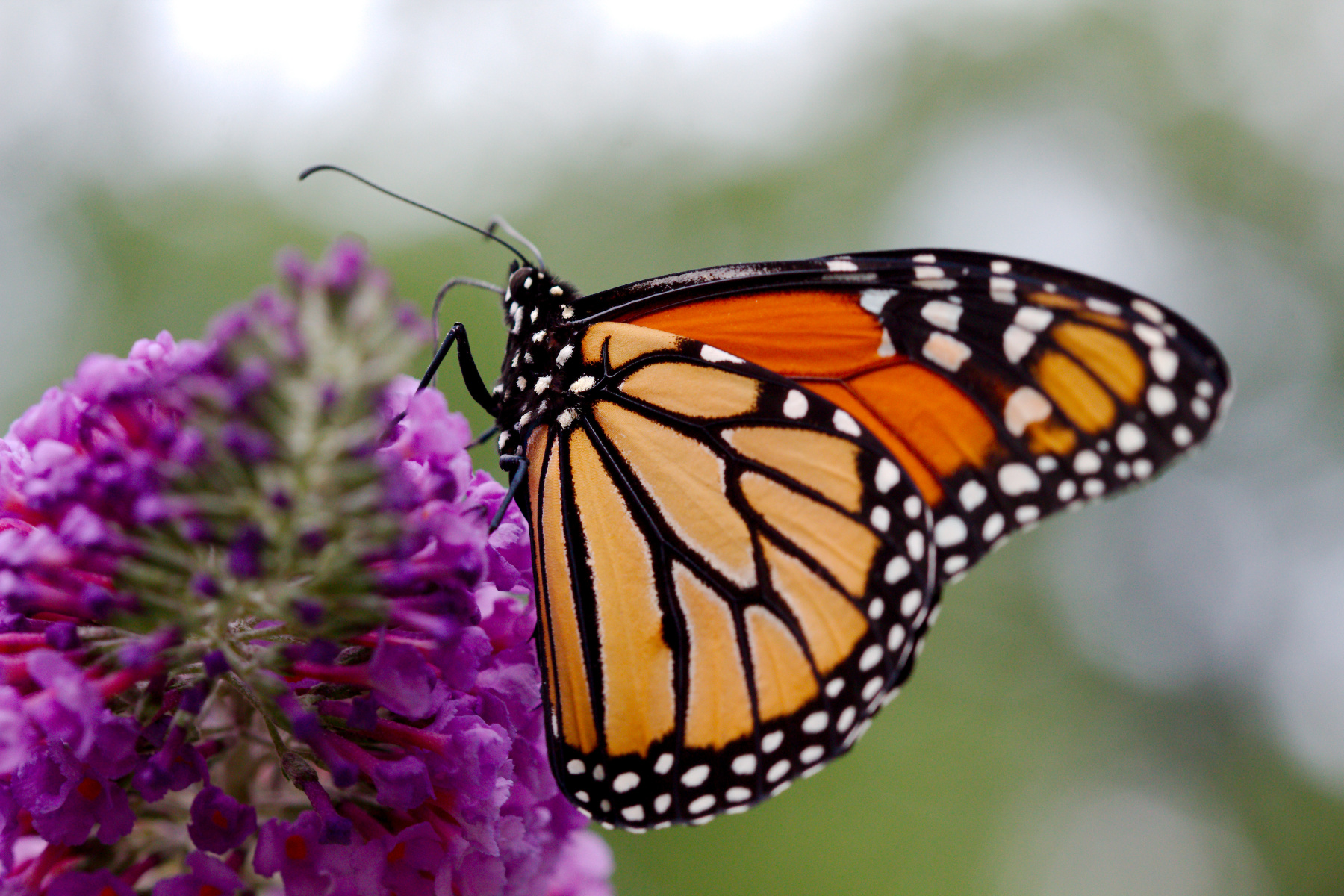
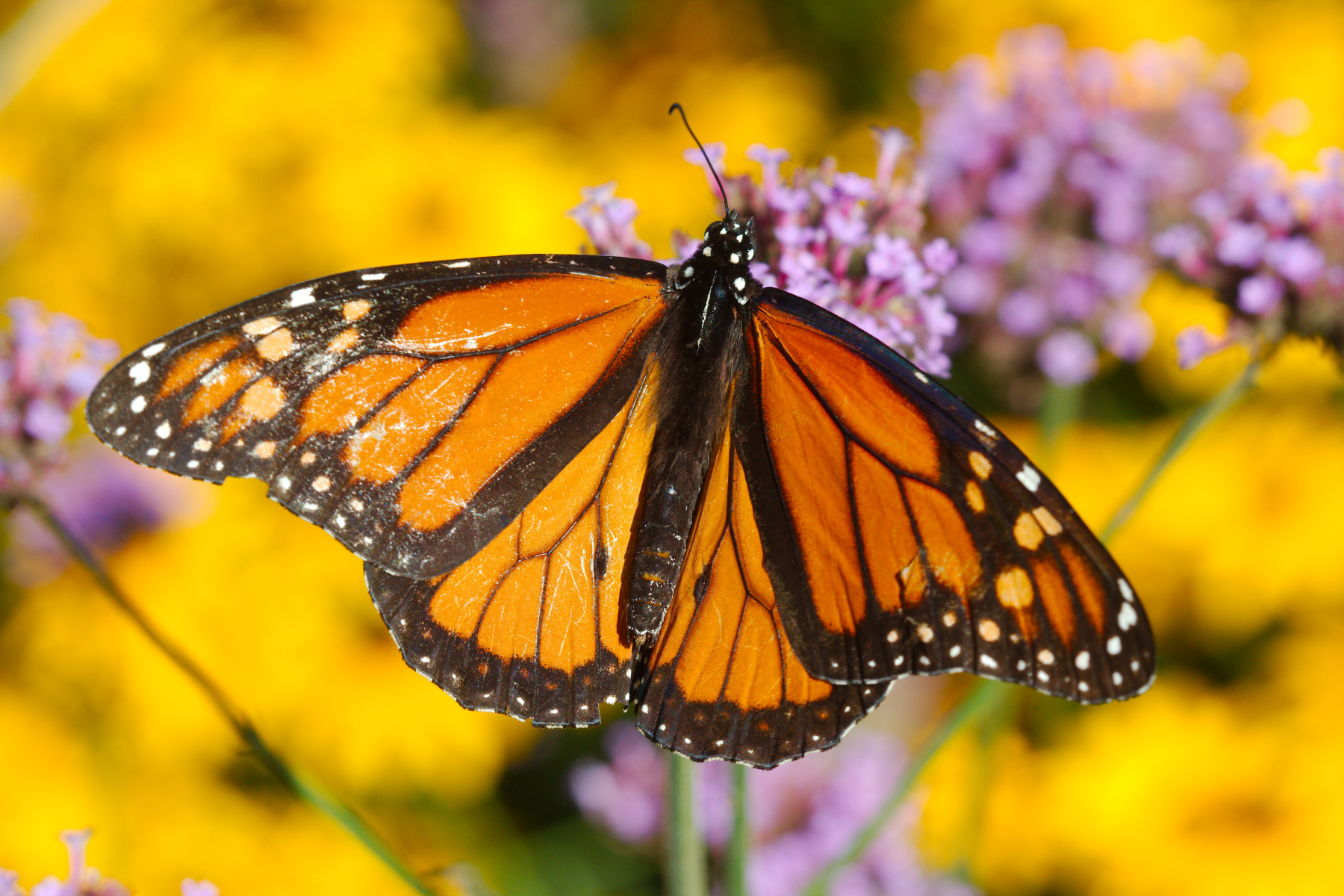
Anyway, I did go out back when we got home, because the butterflies have appeared. I’ve seen a few before now this summer but this afternoon there were a couple swallowtails (Papilio glaucus) and a monarch (Danaus plexippus). They are surprisingly hard to photograph well, for a number of reasons. They don’t like to be approached too closely. Also, they are often overhead in the buddleia, putting them against a bright sky background. Finally, they hide on the other side of flowers and turn so that their wings are seen from the edge, instead of nicely displayed. This picture does a pretty good job of showing the pattern on the underside of the wings of this male monarch.

Categories: Creatures | Comments Off on Danaus plexippus (Monarch)

Cow Killer (Dasymutilla occidentalis, a Velvet Ant)

Cow Killer (<em>Dasymutilla occidentalis</em>, a Velvet Ant)

Cow Killer (Dasymutilla occidentalis, a Velvet Ant)

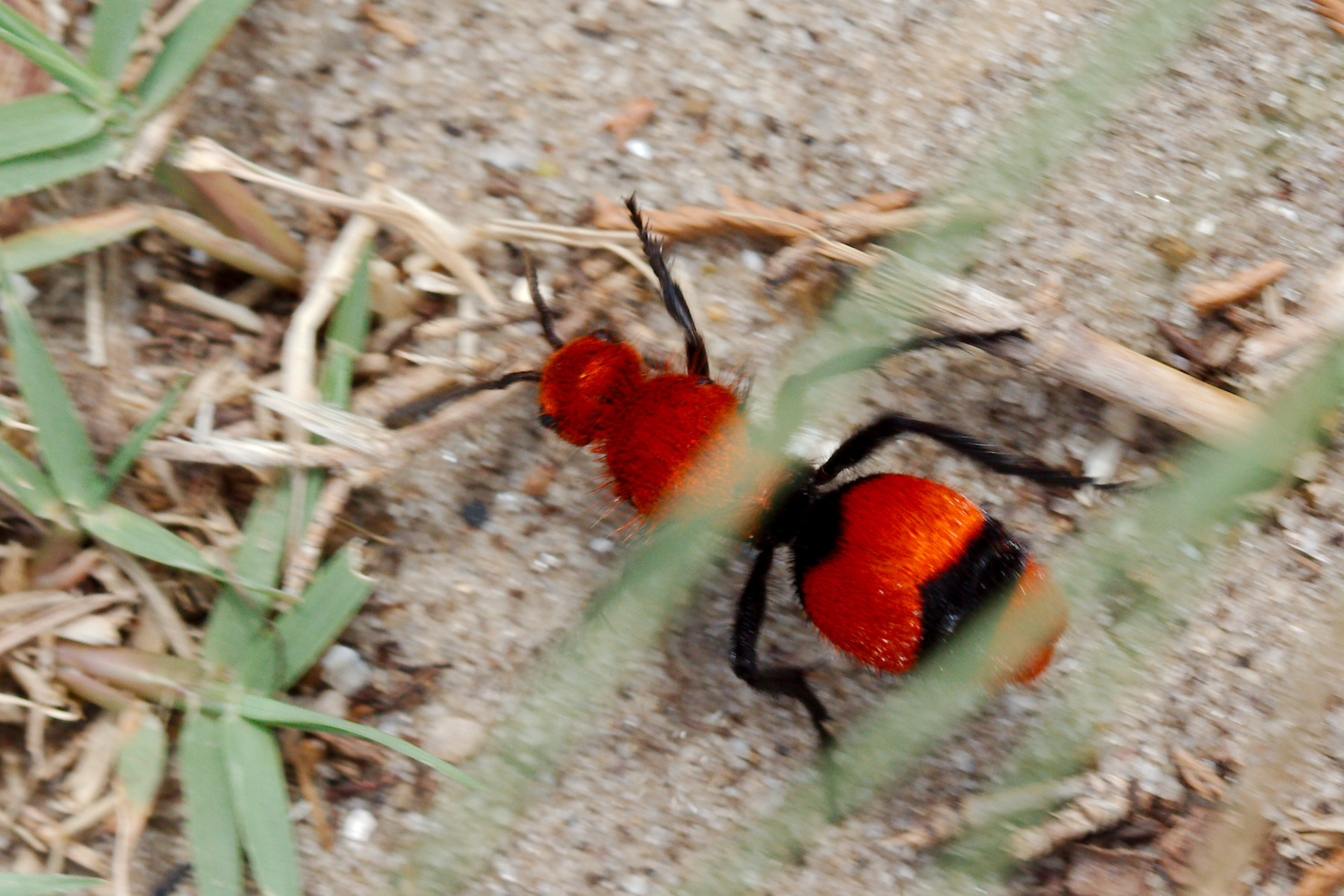
This isn’t a great picture, but I wanted to post it because I had never seen one of these before and I think it’s pretty cool looking. It’s a species of velvet ant (Family Mutillidae) called a cow killer (Dasymutilla occidentalis). They are called this because of the very painful sting they can give. They are technically wasps, but since they are seen on the ground and in many ways look more like ants, the are commonly called ants. They are quite large, almost 2cm long, bright orange and black, and hairy. This one was on the move and I had a hard time getting the image in focus as it moved along. This one, with it partially blocked by a blade of grass, was the best of a blurry lot.

Categories: Creatures | Comments Off on Cow Killer (Dasymutilla occidentalis, a Velvet Ant)

Green Swamp

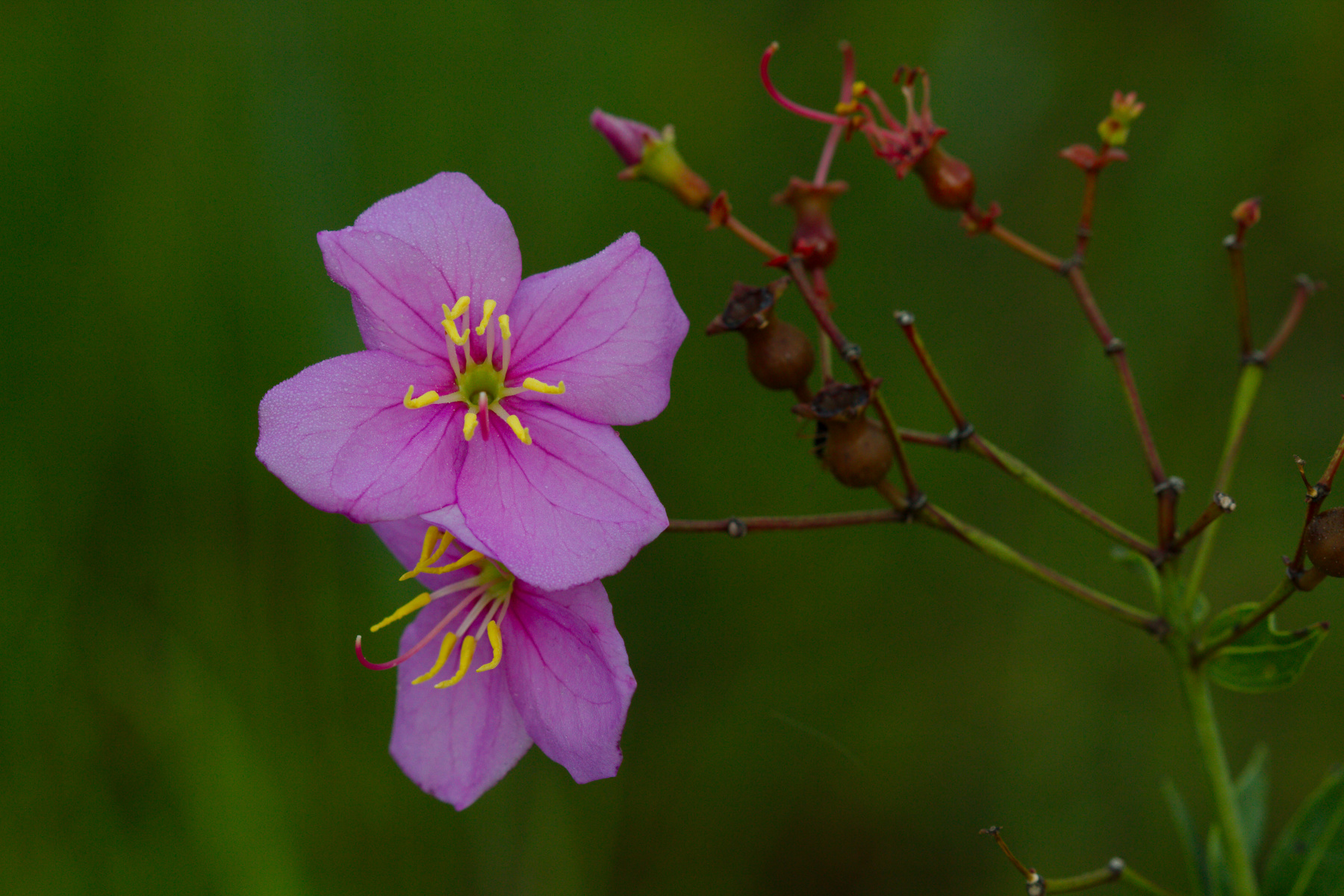
Rhexia virginica (Meadow Beauty)

Rhexia virginica (Meadow Beauty)

I have a largish collection of pictures to post for today but I’m putting them in a single post, because they were all taken at the same place. When we were at the beach few years ago we went to the Green Swamp, north of Supply, North Carolina, because of an article I happened to see in Smithsonian magazine. The article was about Venus flytraps and this is one of the places to which they are native. We had a mostly good experience on that first visit, although we learned a few important lessons, not the least of which is that there are significant biting insects there. Hey, it’s a swamp, it’s going to have bugs.
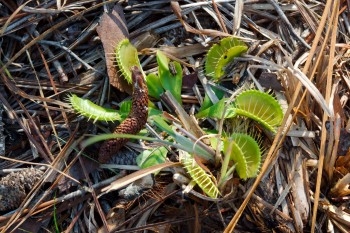
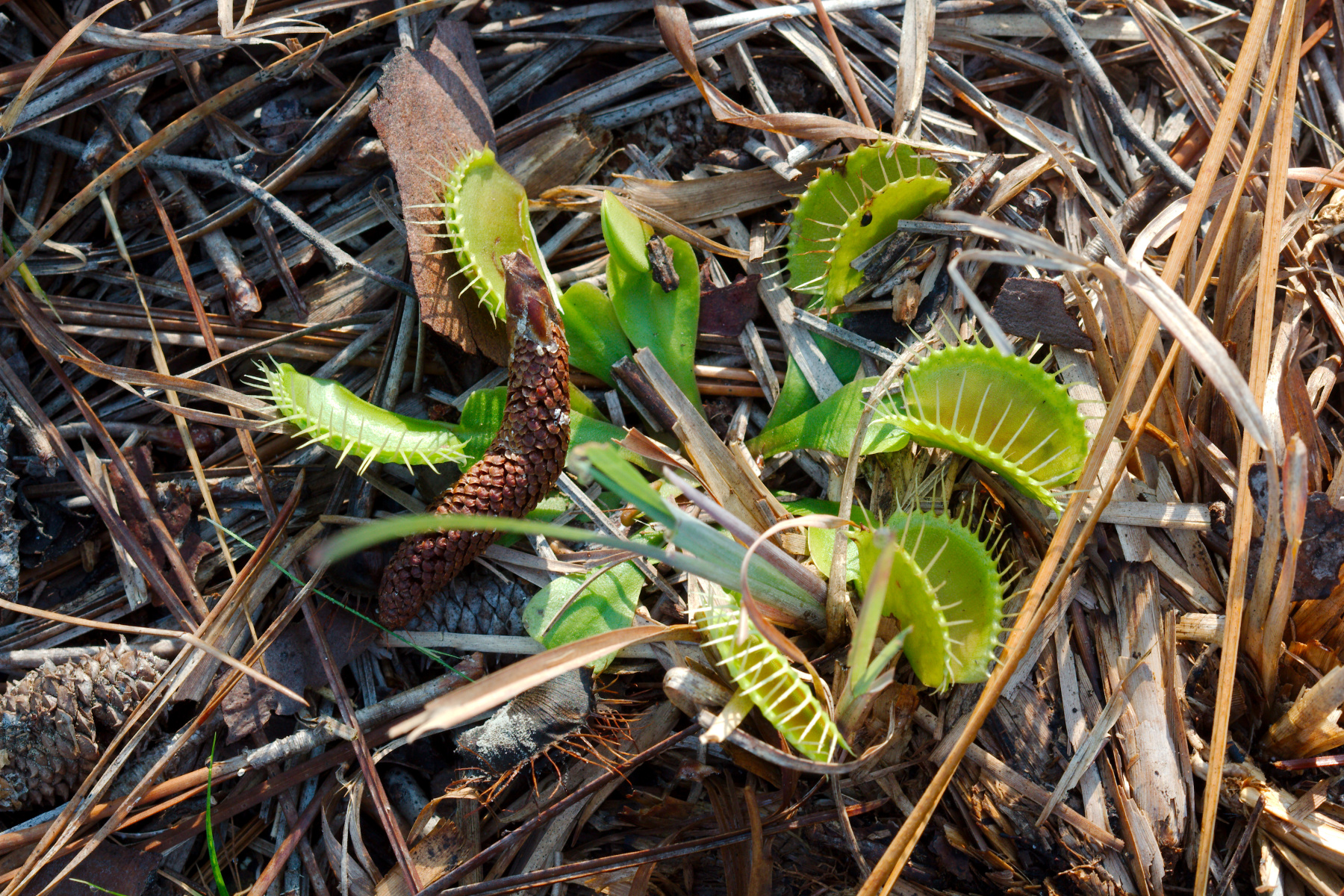
Dionaea muscipula (Venus Flytrap)

Dionaea muscipula (Venus Flytrap)

Mostly we go for the plant life. The main attraction is the collection of carnivorous plants, including but no limited to the Venus flytrap (Dionaea muscipula). My first picture above is a meadow beauty (Rhexia virginica) and they are scattered around the swamp, particularly the first areas you walk through when leaving the small parking area on NC 211. After walking on a boardwalk through the first pocosin, a heavily wooded wetland area, into the next area of (higher and dryer) long-leaf pine savanna, there are Venus flytraps. The are a little hard to find until you’re found a couple and really know what to look for. Then you start to see them everywhere.
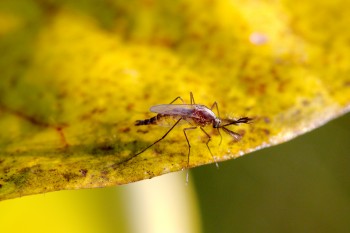
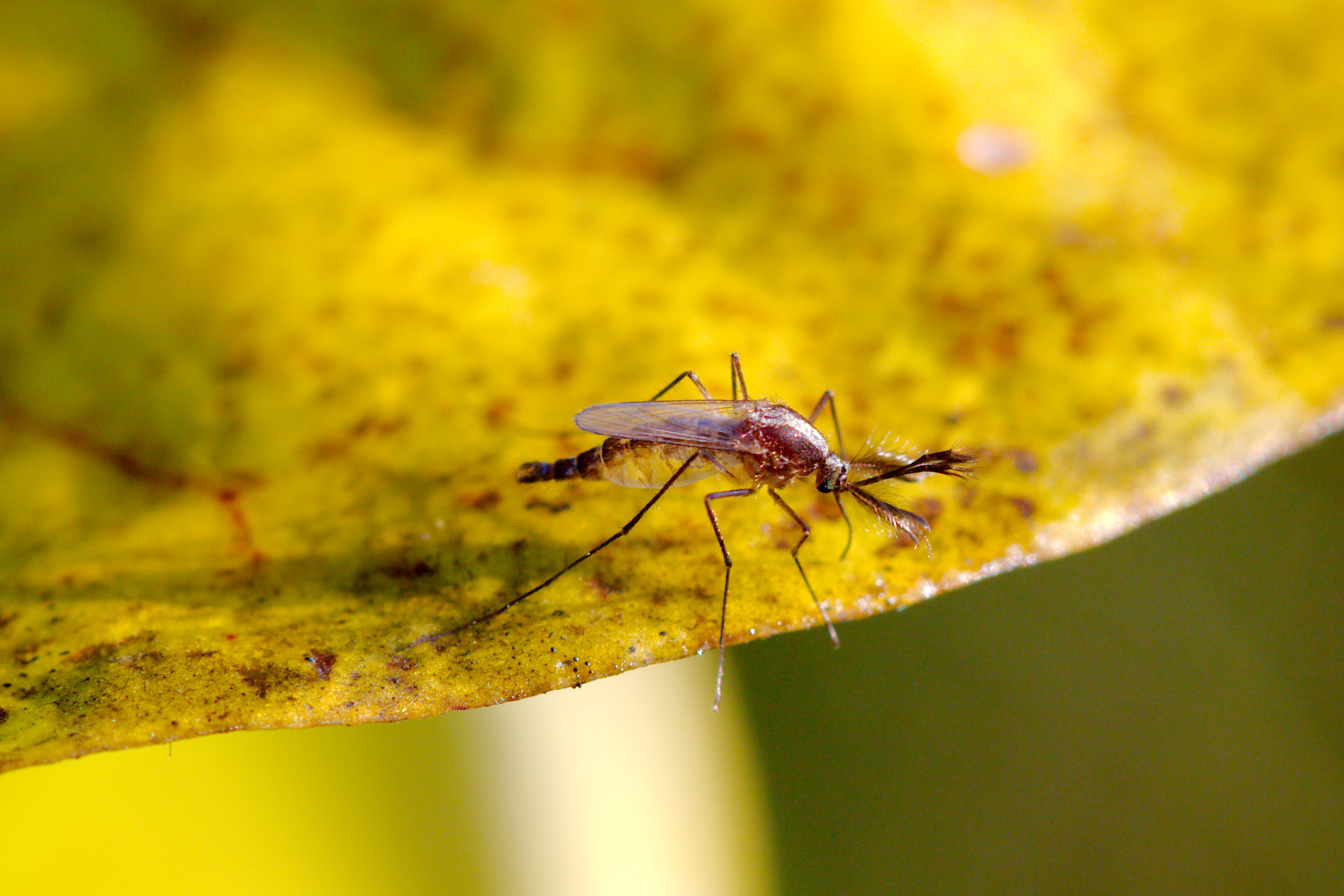
Mosquito (Ochlerotatus atlanticus)

Mosquito (Ochlerotatus atlanticus)

Back to the biting insects a bit. Many of the pitcher plants have a green lynx spider (Peucetia viridans) living on or around them. Because the plants attract insects, it’s a particularly good place for a spider to live, especially one that doesn’t spin a web and hunts for insects “the old fashioned way.” This is the top of a pitcher plant, there is a piece of leaf called an operculum which acts as a hood to the pitcher. Apparently there isn’t a lynx spider on this one, or this mosquito would probably not have lasted so long. Usually I don’t let mosquitoes hang around without being swatted but this one posed for me very nicely. As long as it didn’t land on me, I decided I would let it live. (UPDATE—2014/08/14: This has been identified as a male Ochlerotatus atlanticus. I know you’ve all been waiting with baited breath to learn that.)
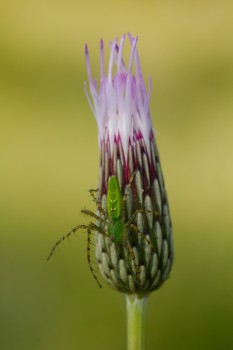
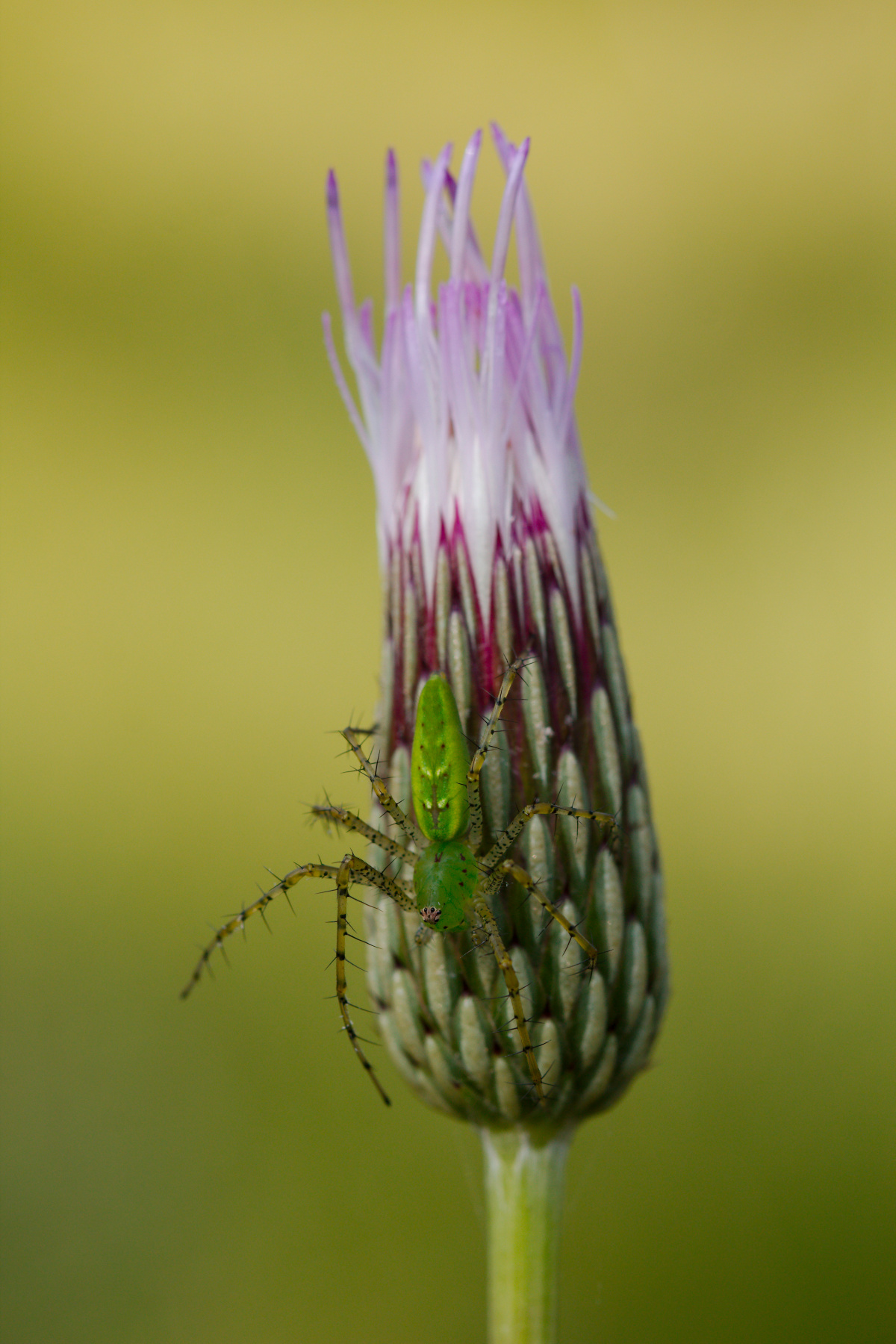
Peucetia viridans (Green Lynx Spider)

Peucetia viridans (Green Lynx Spider)

I did see lynx spiders, though. Both on pitcher plants and on this thistle bud. I like this picture for it’s color and simplicity. These spiders are quite ferocious looking up close, with spines all over their legs and their bright green color, which makes them a bit difficult to see sometimes, as they blend in with their leafy surroundings.

When I got my camera set up, this one moved around to the far side of the thistle bud. I few gentle movements with my finger convinced her to move around to the camera side, however. I did take a few closer pictures that show more detail of the spider but I thought I’d go with this longer view, showing the whole flower. We also saw them on pitcher plants and I took some pictures of that, as well, but they didn’t turn out as nicely as this one, I think.
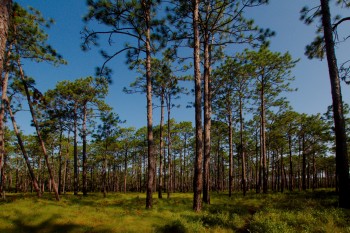
Long-leaf Pine Savanna

Long-leaf Pine Savanna

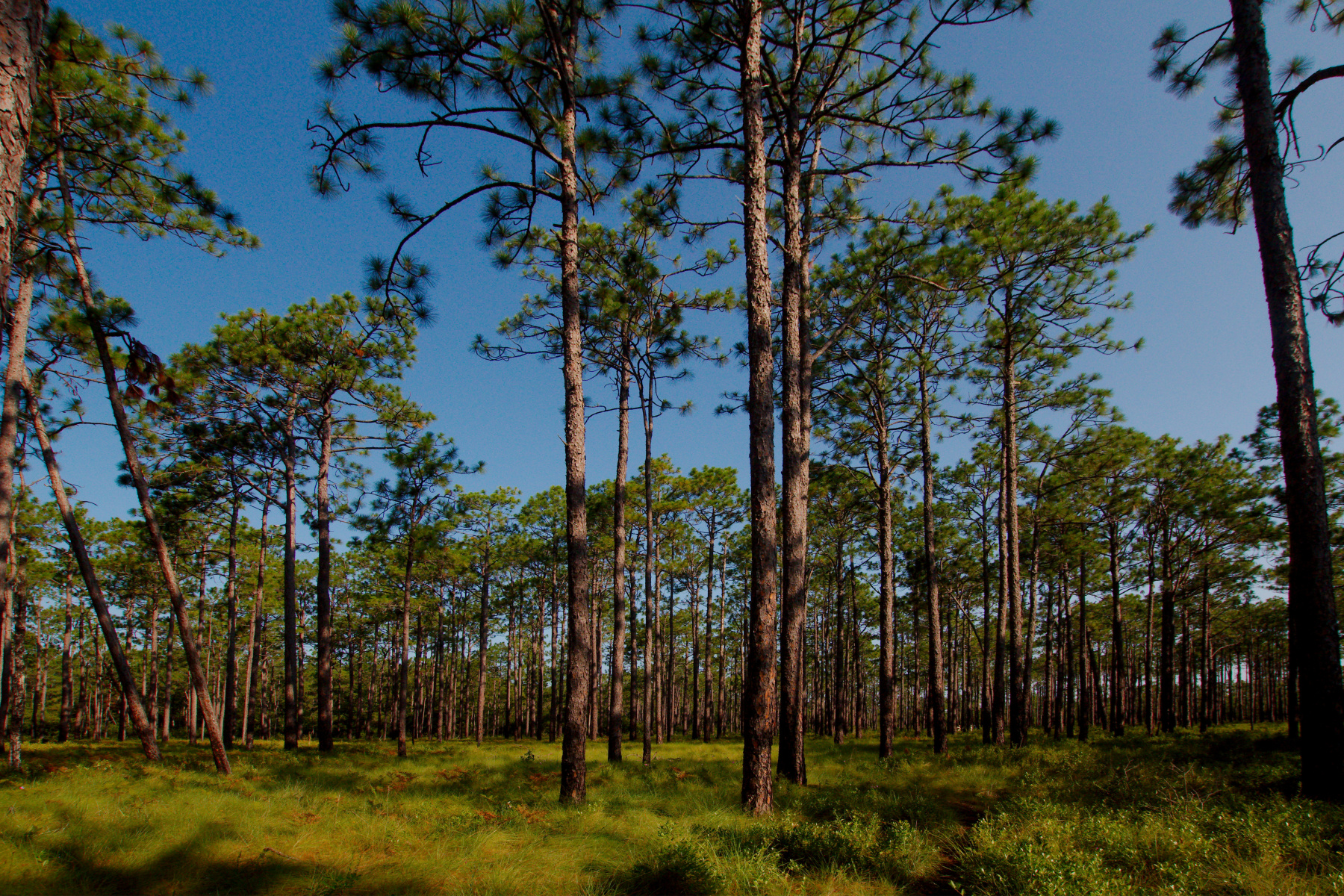
Here’s a wide angle view of the long-leaf pine savanna we were walking through. In this area are the eponymous long-leaf pines, of course. The most common plant is grass and since we came early this year, it was still quite wet with dew. Our pant legs were soaked long before we got this far into the swamp. You cannot really see them well in this picture but the yellow pitcher plants are scattered through the grass, reaching up through it. The smaller purple pitcher plants are harder to find, because they only grow about six inches tall, at most. Their flower stalk is usually the first thing you see, being much taller than the pitchers.
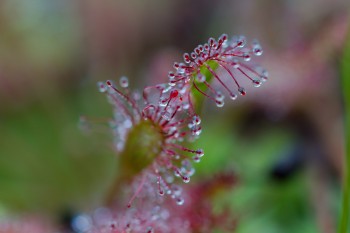
Drosera intermedia (Spoonleaf Sundew)

Drosera intermedia (Spoonleaf Sundew)

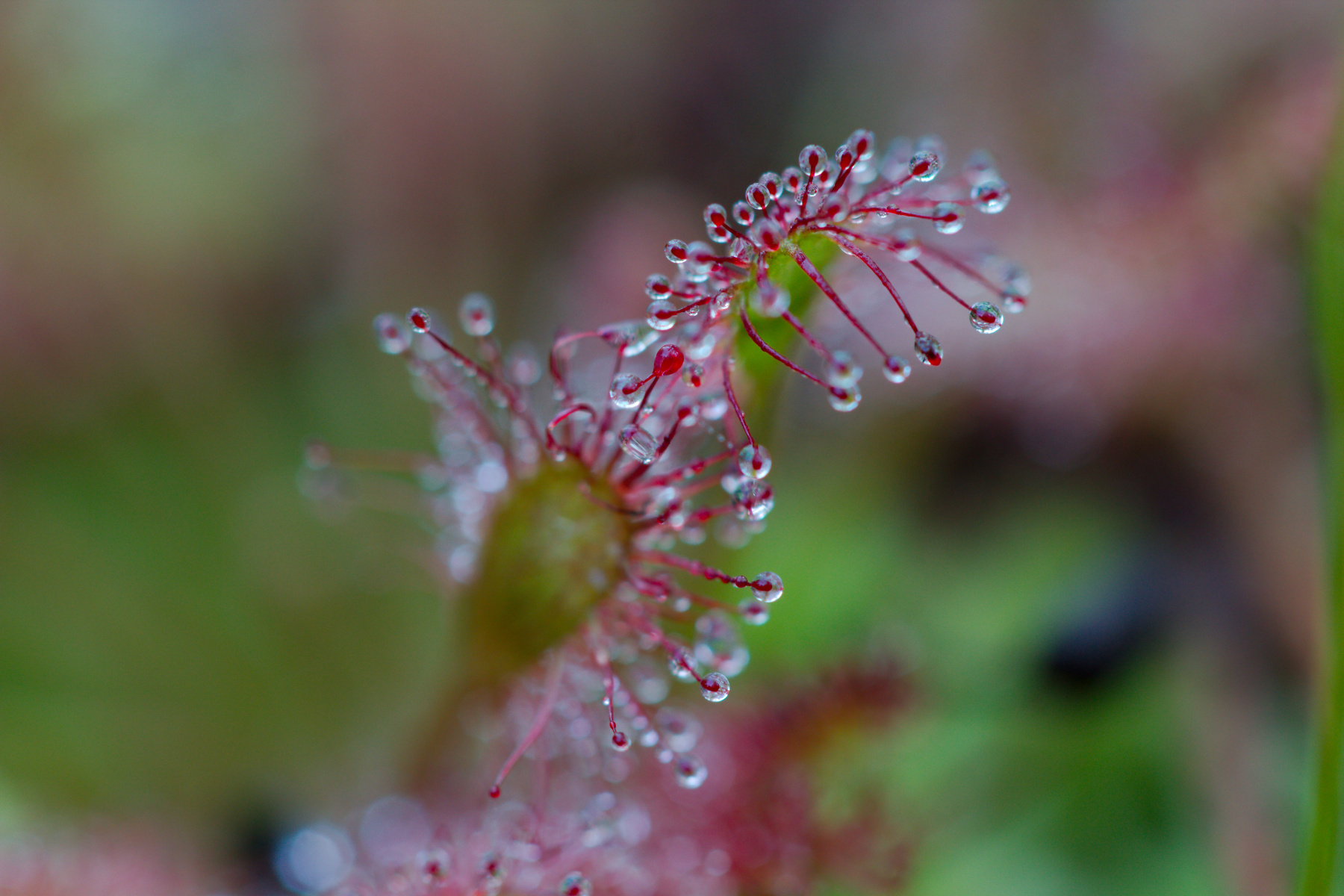
On the way out of the swamp we stopped by the pond near the parking area to take pictures of pitcher plants. They grow in the very wet area right on the edge of the pond. They may grow in other areas of the swamp but this is the only place we’ve seen them. They are quite small and it really helps to know what you’re looking for. The leaves of this spoonleaf sundew (Drosera intermedia) are only about 5mm across and the whole plant not much more than 4cm. They have very small, white flower, as well, but I didn’t get any pictures of them this year.
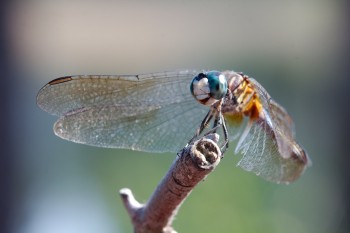
Pachydiplax longipennis (Blue Dasher)

Pachydiplax longipennis (Blue Dasher)

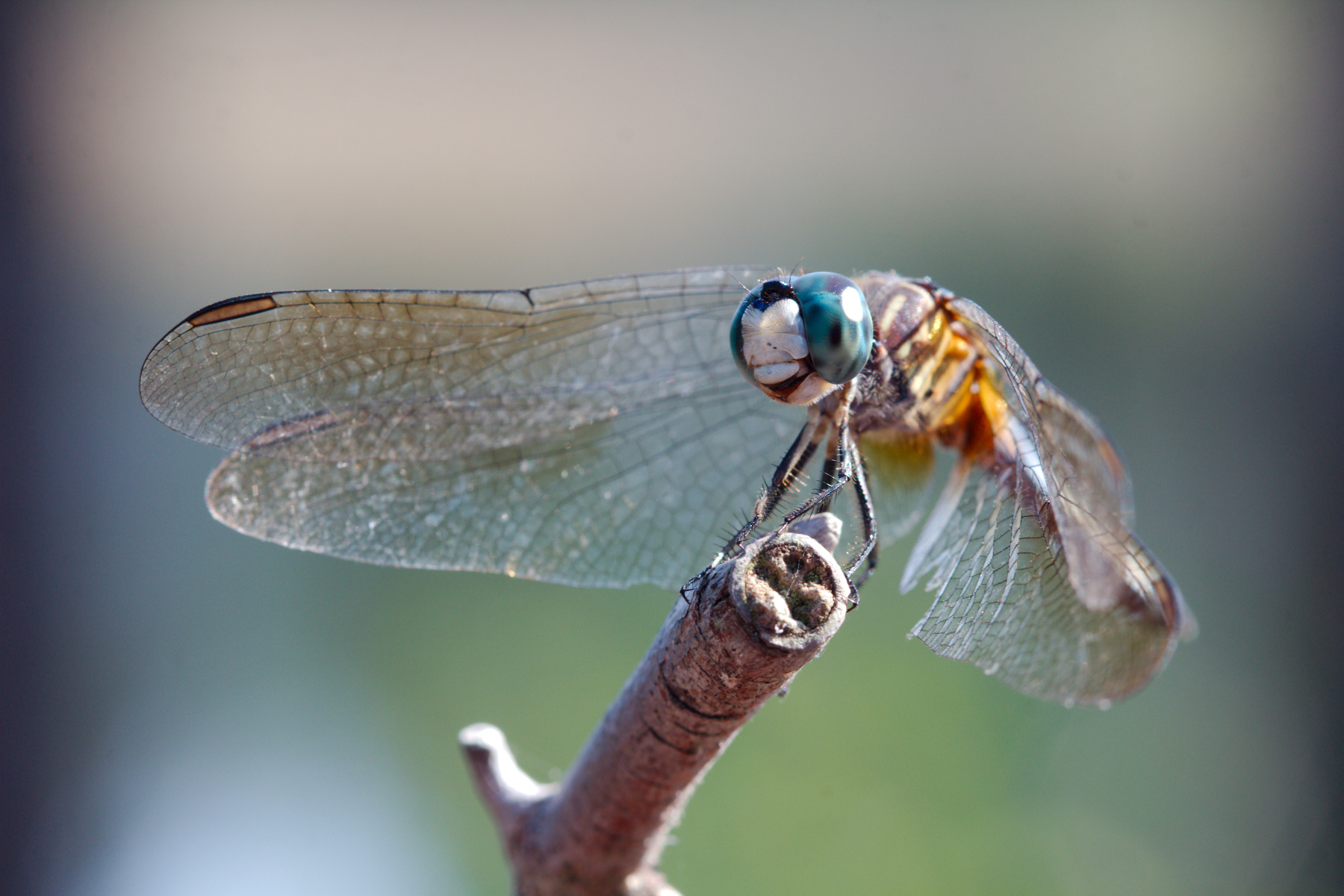
While I was taking pictures of the sundew, the others were enjoying a blue dasher dragonfly (Pachydiplax longipennis) who kept landing on the same twig, making it fairly easy to get close enough for a good picture. After they all had their pictures, they let me have a turn and I got this one, which I like pretty well.

So, another trip to the Green Swamp of North Carolina. If you go, try to pick a cool day and go early, before the sun gets too hot (we were done by 9:30 and it was starting to heat up by then). Put on a lot of deet-based bug repellent and be ready to swat those that ignore it. I prefer long trousers and sleeves, even though it’s hot, because of the bug protection. But be sure to bring a camera, because there’s lots to see.

Categories: Creatures, Flowers and Plants, Travel | 1 Comment

Sanderling (Calidris alba)

Sanderling (Calidris alba)

Sanderling (Calidris alba)

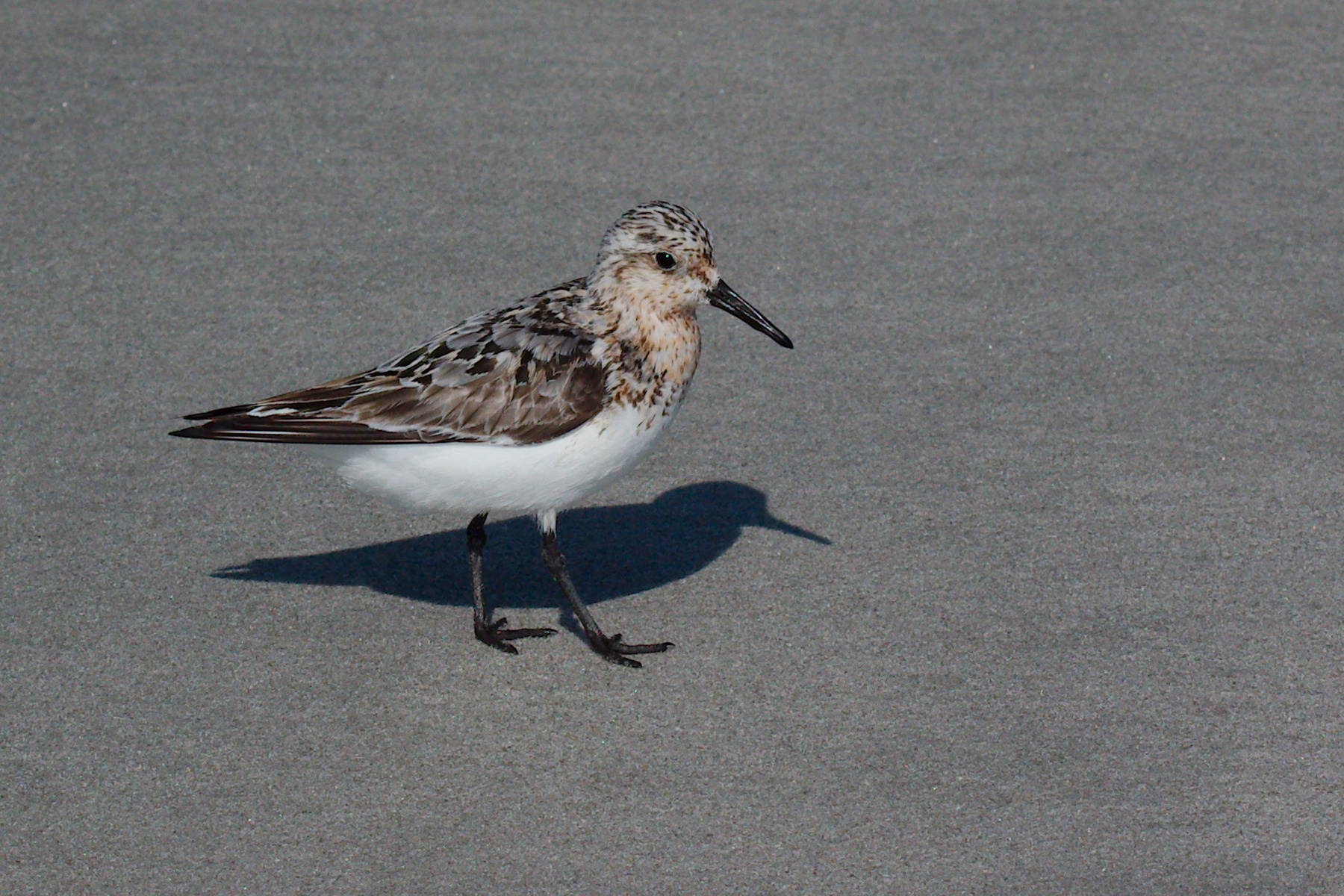
Here’s another bird photo. I’m not sure but I think this is an immature sanderling (Calidris alba). There are quite a few little sandpipers and they all look very much alike. When you throw in variations, it’s quite hard to tell them apart. Anyway, this is one of them. I love to watch them run around, avoiding the incoming waves, and then running back down where the sand is wet and soft, looking for things to eat.

Categories: Creatures | Comments Off on Sanderling (Calidris alba)

Willet (Tringa semipalmata)

Willet (Tringa semipalmata)

Willet (Tringa semipalmata)

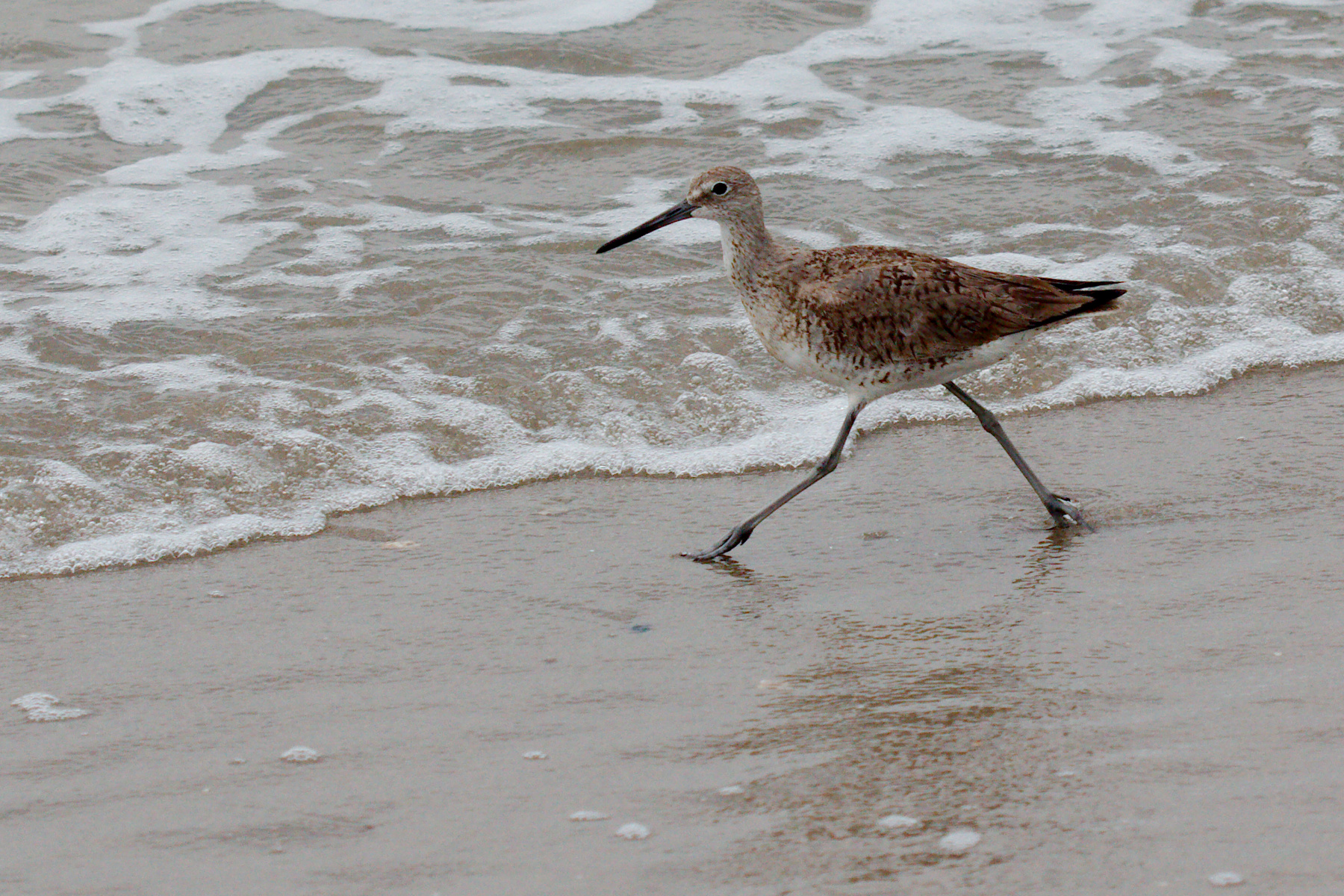
I have a few pictures to post today and thought I’d spread them out a bit rather than putting them into one long post. They are someone disconnected, in any case. The first picture was of a sunrise, this next one, taken a bit after 2:00 PM, is of a willet (Tringa semipalmata), a fairly common shore bird in these parts. They can be seen pretty much anywhere along the beach and seem to be after the little sand crabs (in the genus Emerita). They aren’t the shyest birds on the beach but it’s hard to get very close to them, as they are always on the move and quite willing to fly away or around you if you get too close.

Categories: Creatures | Comments Off on Willet (Tringa semipalmata)

Alligator

Alligator

Alligator

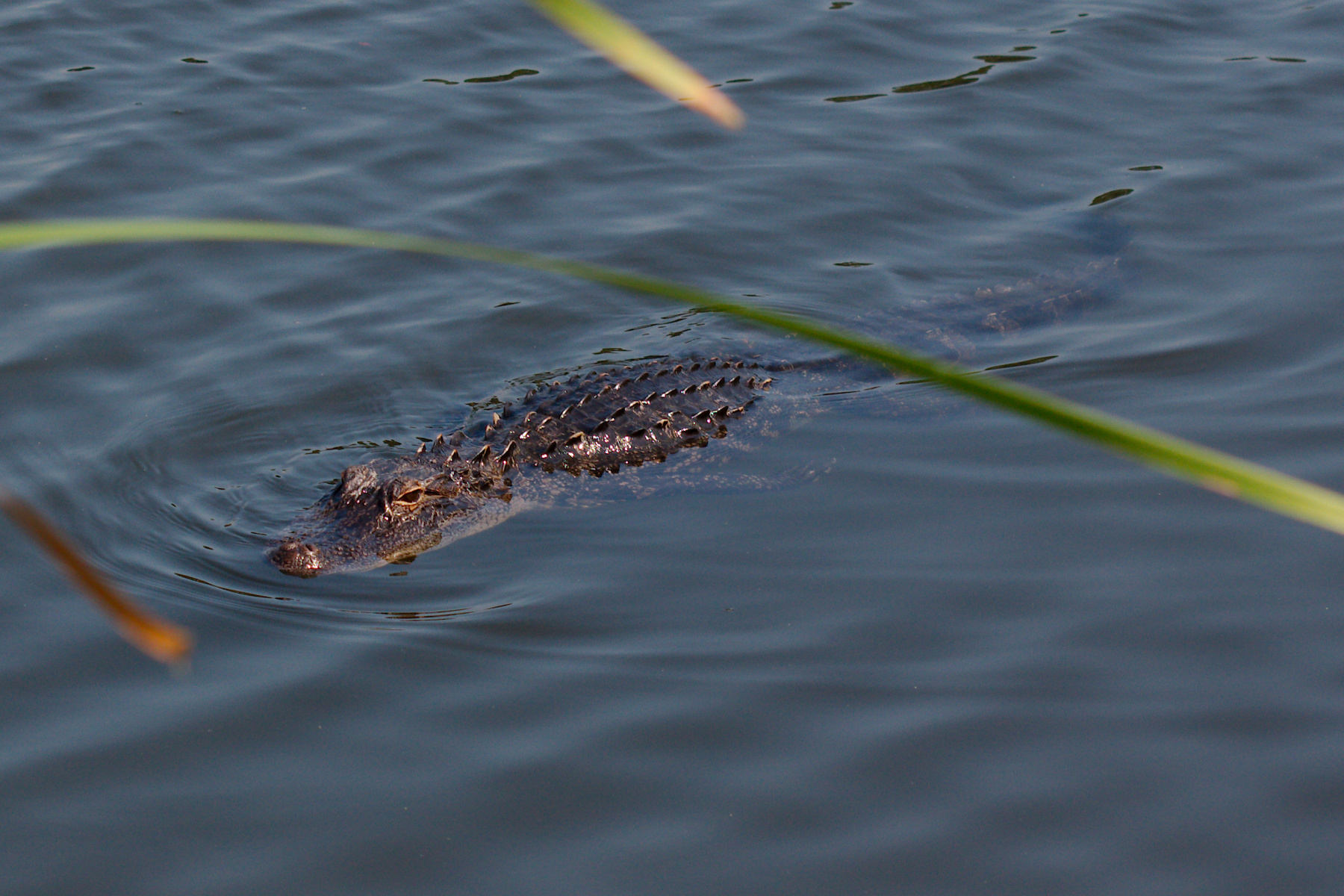
We went for a drive this morning, giving Dorothy a little driving time. We went a little way into South Carolina before turning around. On the way back we stopped at a pond between a golf course and the road. There is a wildlife viewing platform built there, although the bushes between it and the pond make it difficult to see much of anything. Just past the end of the platform there is an opening in the bushes and we saw a pair of American alligators (Alligator mississippiensis).

Categories: Creatures | Comments Off on Alligator

Tenodera sinensis (Chinese Mantis)

<em>Tenodera sinensis</em> (Chinese Mantis)

Tenodera sinensis (Chinese Mantis)

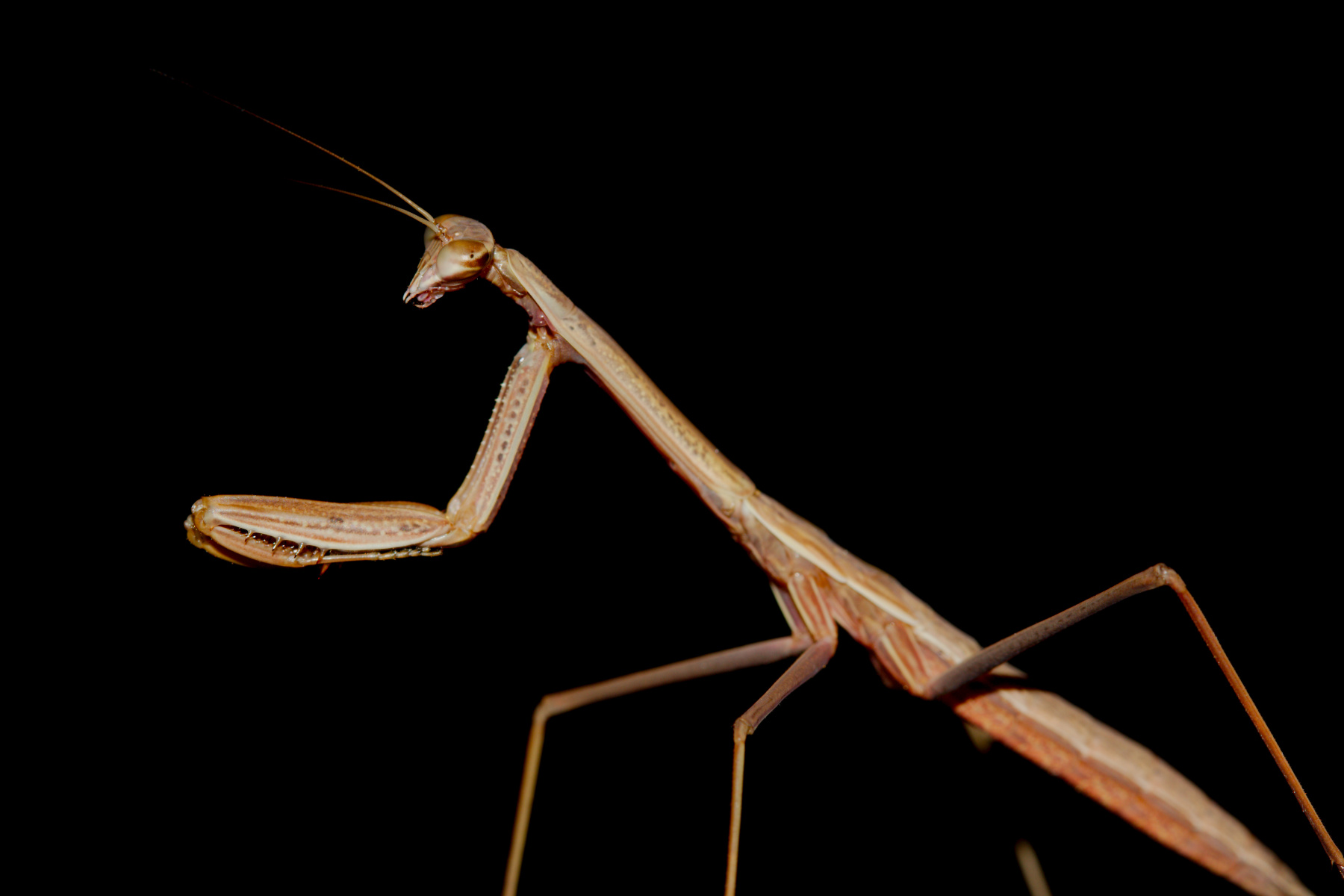
Cathy and I were out back this evening and she spotted this mantis on one of the chairs on our patio. I think (but I’m by no means sure) that it is a Chinese mantis (Tenodera sinensis), which were introduced here from China in 1896 to combat pests. This is a smallish one, only about two and a half inches long. It was getting a bit dark and the pictures I took by available light were not very good, so I turned on the flash and got a few pictures that are reasonably good, with the mantis standing out well against the dark background.

Categories: Creatures | Comments Off on Tenodera sinensis (Chinese Mantis)

Gray Catbird (Dumetella carolinensis)

Gray Catbird (<em>Dumetella carolinensis</em>)

Gray Catbird (Dumetella carolinensis)

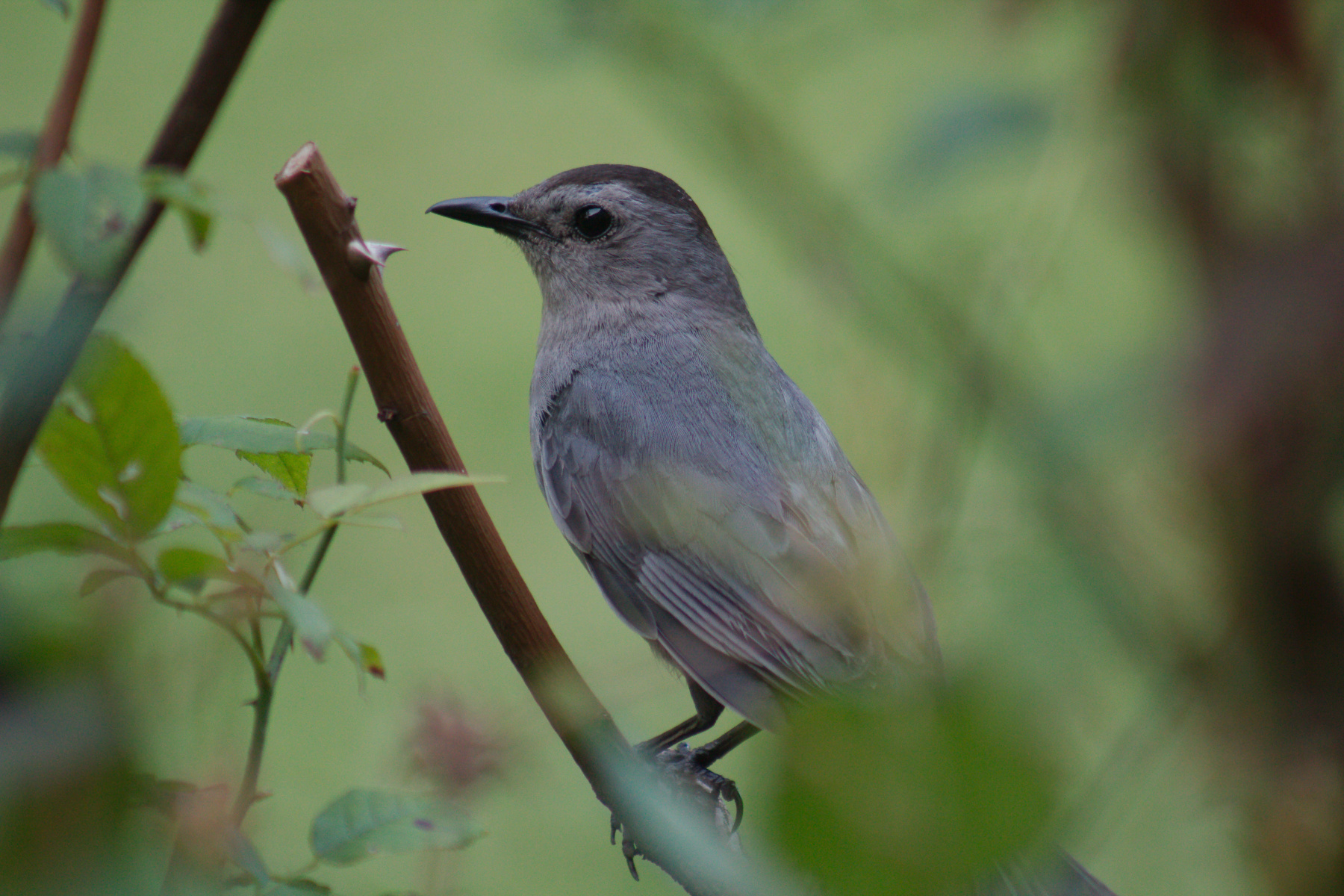
I had sautéd octopus for breakfast this morning and took pictures of that, but if history tells me anything, pictures of cooking octopus aren’t as popular as some others that I take. In the early evening I was going out to take pictures and there was a catbird in the rose bush just outside our front door. I took a few pictures before he (or she) flew away, and thought that might be more acceptable.

Categories: Creatures | Comments Off on Gray Catbird (Dumetella carolinensis)

Polistes dominula (European Paper Wasp)

Polistes dominula (European Paper Wasp)

Polistes dominula (European Paper Wasp)

I only took a few photographs in the back yard today, including a few of black-eyed Susans and then some of this European paper wasp (Polistes dominula). They aren’t the friendliest of wasps and I have to admit to being a little nervous of him. In general, the bees at the mountain mint (Pycnanthemum muticum) are unmindful of me but there are a few that I take with are, regardless. I think if you’ve ever been stung by one of these, you’d feel the same way.

Categories: Creatures | Comments Off on Polistes dominula (European Paper Wasp)

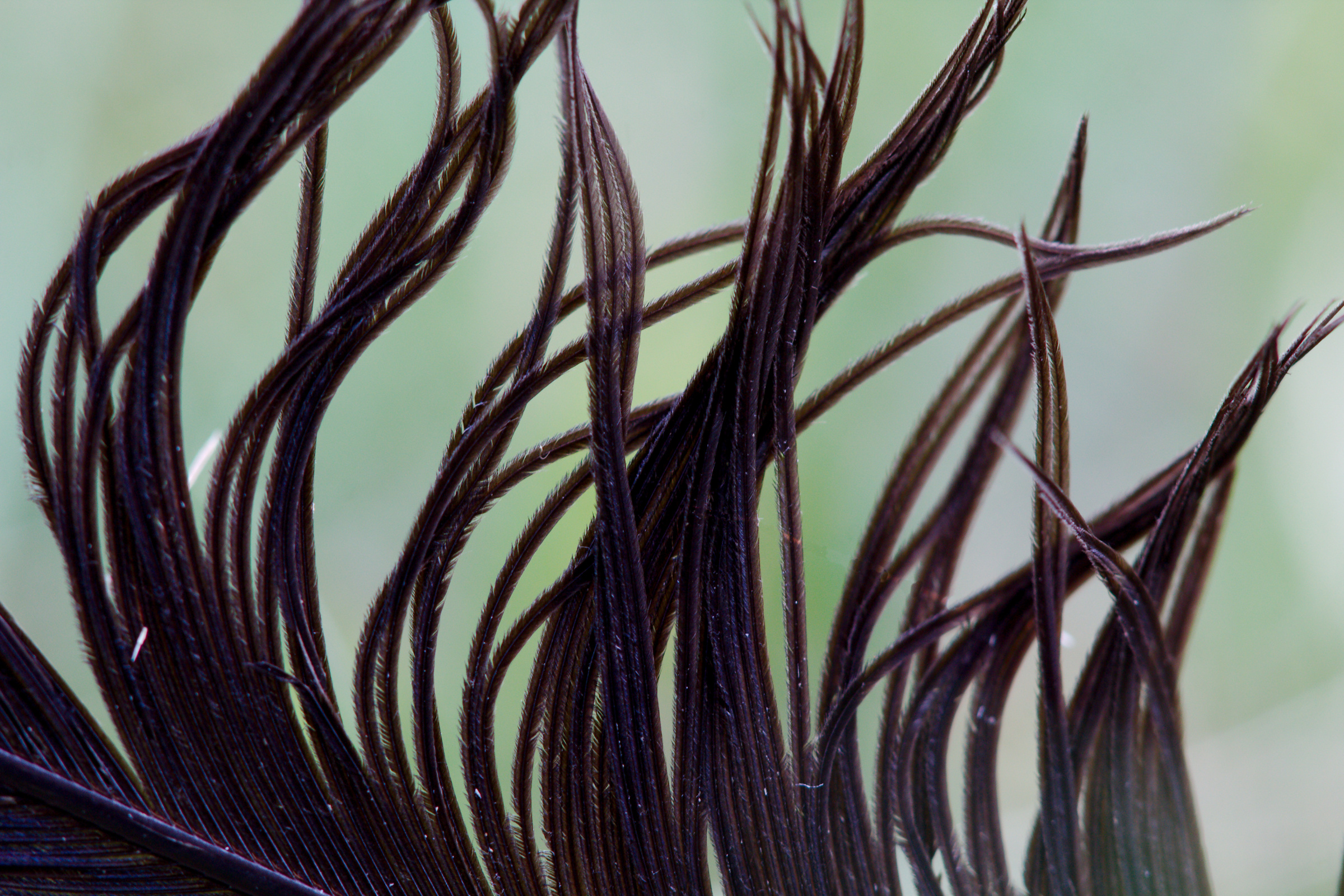
Feather

Feather

Feather

Did you know that since the Migratory Bird Treaty Act of 1918 (16U.S.C. 703-712) it has been illegal for most people to collect most feathers. Unless you want to be a criminal, just let it lie. It’s a bit stupid, of course, and many people collect feathers without being indicted. It’s a good example of a “well meaning government” making life against the law and making criminals of all its citizens, in this case including (and especially) children.

Anyway, this is a feather. I think it’s pretty.

Categories: Creatures | Comments Off on Feather

Strymon melinus (Gray Hairstreak)

<em>Strymon melinus</em> (Gray Hairstreak)

Strymon melinus (Gray Hairstreak)

I went out to photograph bees on the mountain mint (Pycnanthemum muticum) and did get some, but the best pictures I got were of this male gray hairstreak (Strymon melinus). The light wasn’t perfect, but it was pretty good and with my camera on a tripod I was able to get as close as my macro lens will allow. I’ve posted a picture of a gray hairstreak once before (on Saturday, August 11, 2012) but I think this picture is a bit better. I hope you enjoy it as much as I enjoyed watching it move about on the flowers.

Categories: Creatures | Comments Off on Strymon melinus (Gray Hairstreak)

American Goldfinch (Carduelis tristis)

American Goldfinch (<em>Carduelis tristis</em>)

American Goldfinch (Carduelis tristis)

We often see goldfinches (Carduelis tristis) on the purpletop vervain (Verbena bonariensis) in our back yard. This morning he stayed long enough for me to get some pictures. Not terribly good pictures, but pictures, anyway. This was taken hand held with a not-very-sharp zoom lens at 300mm through a pane of ordinary glass in the back door. I guess this is all I could hope for. I’d really like to get something just a little longer and considerably sharper, but that’s going to have to just be on my wish list for now.

Categories: Creatures, Flowers and Plants | Comments Off on American Goldfinch (Carduelis tristis)

(Mostly) Dead Cicada

(Mostly) Dead Cicada

(Mostly) Dead Cicada

What a beautiful day. It’s the middle of July and it’s in the mid 60s in the morning, getting up only to about 80°F in the afternoon. For my money, it doesn’t get any nicer than this. I could take a little cooler, but it’s July, for crying out loud. The sky was blue with cottony, white clouds. After the heavy rain on Tuesday and the heavy hearts yesterday, this is what I needed.

I went to the car to drive to work and this is what I found on the roof. This is one of the Magicicada species, the 17-year periodical cicadas. It was actually only mostly dead. For the record, it doesn’t taste like chicken.

Update: Albert rightly pointed out that the periodical cicadas all have red eyes, so this is probably one of the many annual cicadas in the family Cicadidae but not in the genus Magicicada.

Categories: Creatures | Comments Off on (Mostly) Dead Cicada

Macrosiagon flavipennis (Wedge-shaped Beetle)

Macrosiagon flavipennis (Wedge-shaped Beetle)

Macrosiagon flavipennis (Wedge-shaped Beetle)

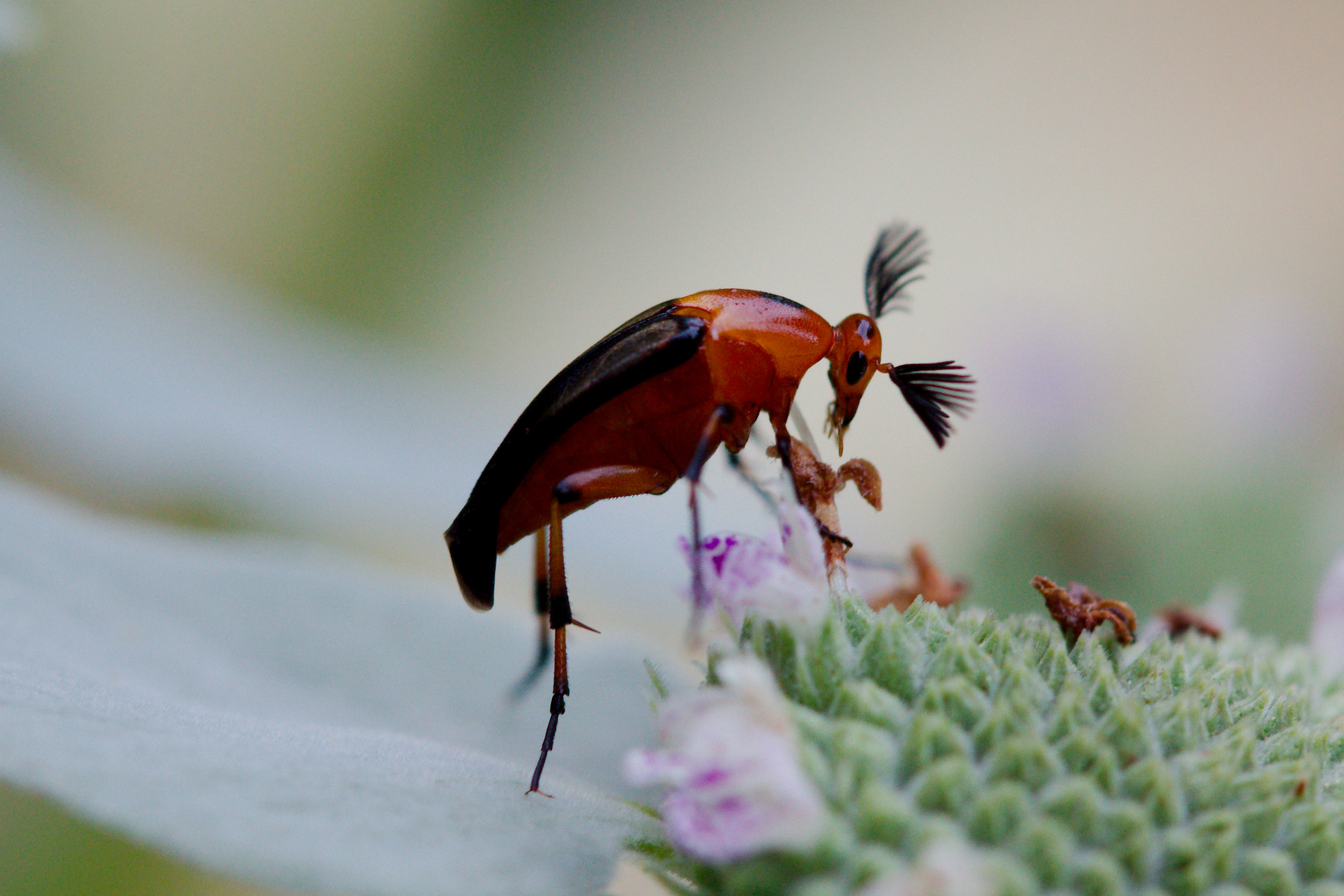
This is one of the wedge-shaped beetles (Family Ripiphoridae) but one without a particular common name. It’s Latin binomial Macrosiagon flavipennis comes from the Greek word for large jaw bone and the Latin for yellow wings. These beetles parasitize wasps and bees, by laying eggs on flowers. When the eggs hatch, the larva attach themselves to a visiting bee or wasp. It is then carried back to wasp nest where it burrows into a host larva.

There is a closely related and very similar species, M. dimidiata, but the “fin or cup-shaped tubercle on the posterior of the pronotum” (the plate between the head and the yellow of the wings), is indicative of this species.

Categories: Creatures | Comments Off on Macrosiagon flavipennis (Wedge-shaped Beetle)

Tradescantia virginiana (Virginia Spiderwort)

Tradescantia virginiana (Virginia Spiderwort)

Tradescantia virginiana (Virginia Spiderwort)

Two pictures today for the price of one and hopefully worth the price of admission. I really like Tradescantia virginiana (Virginia spiderwort). It’s a very vigorous grower but it doesn’t take over the garden. It’s very happy in our climate, not needing much in the way of special attention or soil conditions. And it blooms over a long period with deep, dark, slightly purple blue flowers. They open in the morning and in the evening are all closed up, only to be open again the next morning. I also love the the blue stamen hairs with the bright yellow anthers.

Honey Bee on Tradescantia Flowers

Honey Bee on Tradescantia Flowers

I went out to take pictures this morning and thought I’d get a view across the flowers, as in the first picture here. I think it turned out quite well and really shows the feathery stamen hairs well. They are unique, as far as I know, in that they change color to pink when when exposed to radiation. I don’t know how sensitive they are, so don’t know if they can act as a canary in a coal mine, but I think it’s a cool fact.

I also enjoyed watching a honey bee going from flower to flower, so figured I better get some pictures of that, as well, and I’m please with the results.

Categories: Creatures, Flowers and Plants | Comments Off on Tradescantia virginiana (Virginia Spiderwort)

American Robin (Turdus migratorius)

American Robin (Turdus migratorius)

American Robin (Turdus migratorius)

The other day I posted a picture of a catbird in my mom’s bird bath. Since then I’ve been enjoying birds in ours, which is in the back yard, just outside our kitchen door. When I got home this evening there were some grackles in it but they flew off when I came into the kitchen. A little while later there was a catbird there. I went and got my camera and took some pictures but waited a while. I got a female cardinal picking up seeds off the patio as well as this American robin who came for a drink.

Categories: Creatures | Comments Off on American Robin (Turdus migratorius)

Eastern Grey Squirrel (Sciurus carolinensis)

Eastern Grey Squirrel (Sciurus carolinensis)

Eastern Grey Squirrel (Sciurus carolinensis)

This squirrel was eating seeds off of the back patio this morning and didn’t run away when I came up to the glass door, so I was able to get a few pictures. Unfortunately I had the camera set wrong so these pictures are a bit grainy, but I’m still reasonably happy with them. I’m not a huge fan of squirrels, which are basically furry tailed rats, but they can be fun to watch. This is the melanistic form of the grey squirrel, which is very common in our area.

Categories: Creatures | Comments Off on Eastern Grey Squirrel (Sciurus carolinensis)

Grey Catbird (Dumetella carolinensis)

Grey Catbird (Dumetella carolinensis)

Grey Catbird (Dumetella carolinensis)

Dorothy spent much of the day at my mom’s house today and I went there to get her after work. I took a few pictures around the yard, including some of a clematis that looks very much like the one I have here (and which I posted a picture of recently). There was a grey catbird in the birdbath in the back yard and I was able to get close enough for a few good pictures before it flew up into the camellia bushes.

Categories: Creatures | Comments Off on Grey Catbird (Dumetella carolinensis)

Syrphid Fly

Syrphid Fly

Syrphid Fly

These little flies are all around but are very easy to go unnoticed. They are quite small and don’t bother people much. I think they’re pretty cool looking. In particular, I like the pattern on the abdomen. I don’t know how much variation there is in that pattern, or if it is reliable for identification of the species. There are over species 800 in eastern North America, so making a reliable ID takes more knowledge than I have.

Categories: Creatures | Comments Off on Syrphid Fly