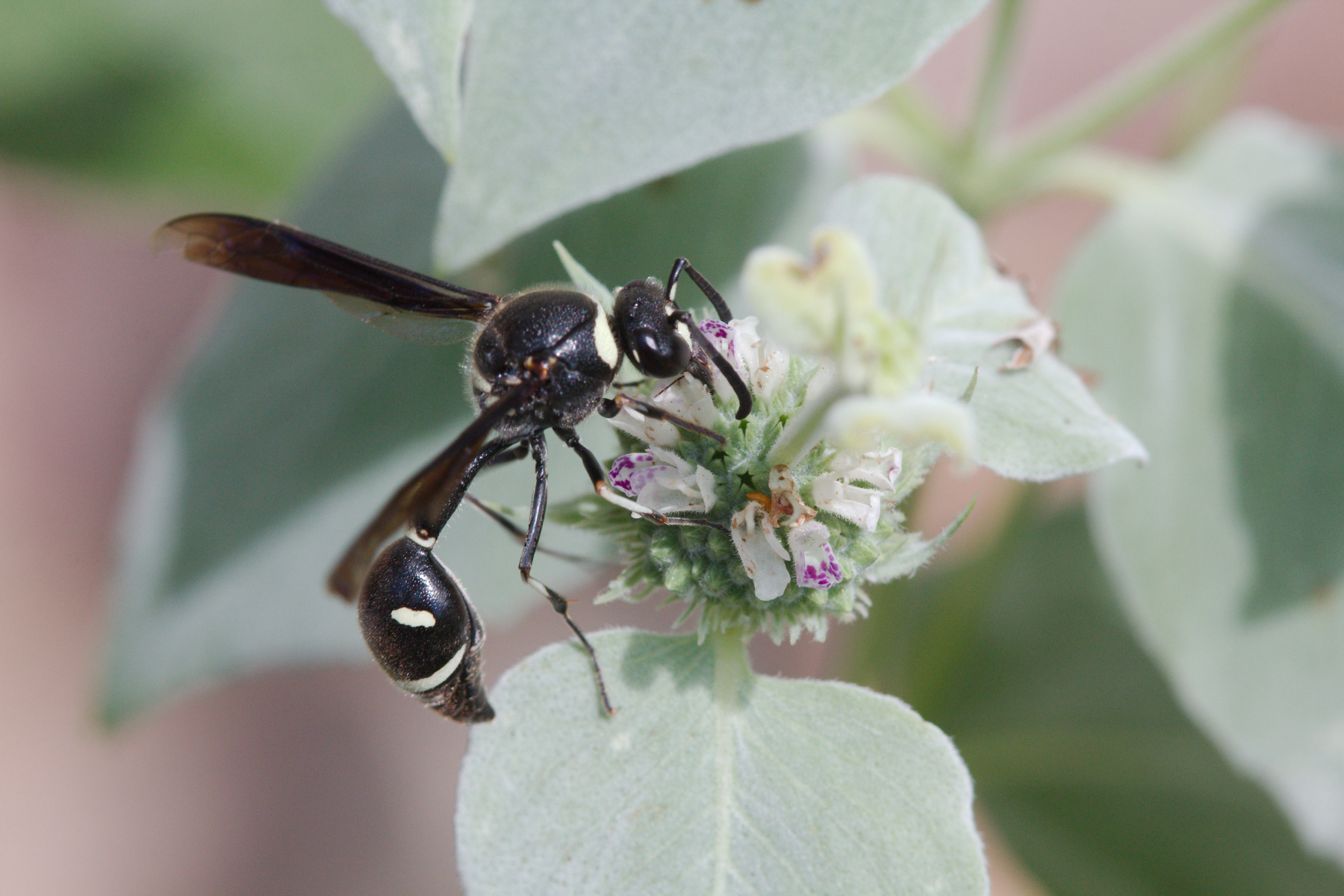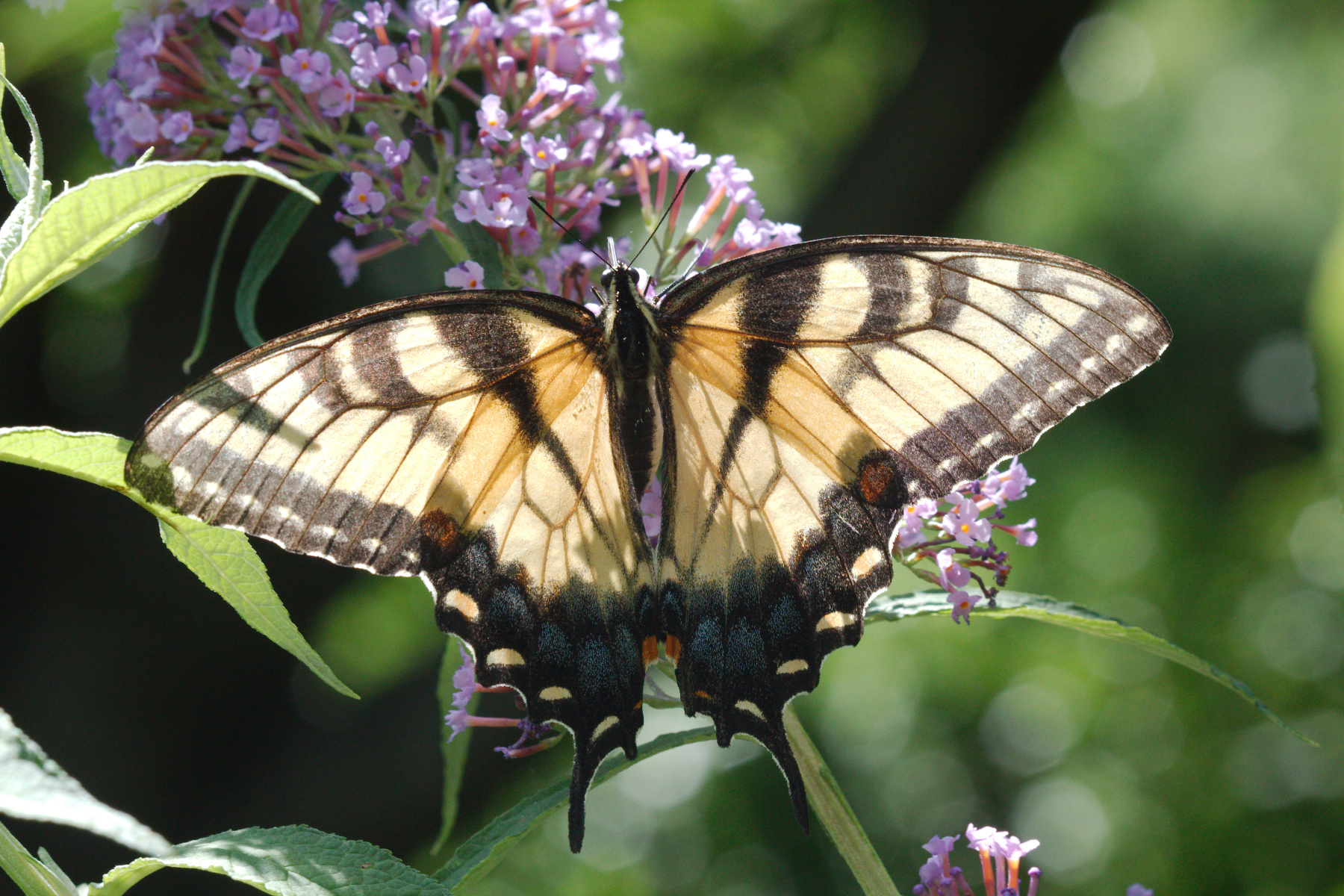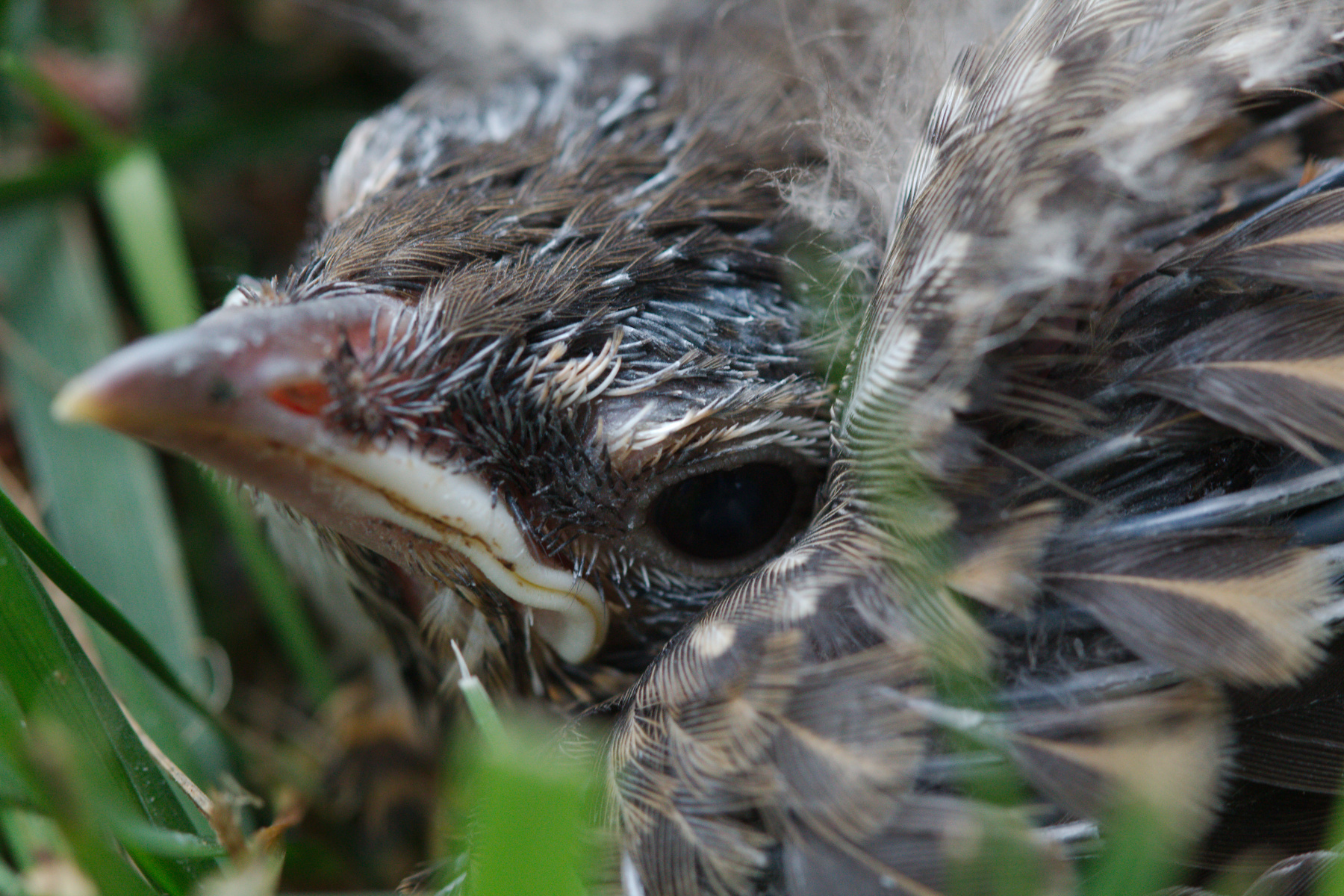
When I picked Dorothy up from her friend’s house this evening, I got out of the car to chat for a bit before we left. As we were talking I noticed this bird in the grass of the front yard. I’m not sure what sort of bird it is and to be honest, I didn’t pay that close attention. I did get my camera and took a few pictures of it, though. Poor thing probably came out of a next in the tree overhead. It must have been there for some little while, as it was nestled down into the grass quite comfortably. Still, I don’t give too much for its chances. A bird that cannot fly is easy prey for a neighborhood cat.
Creatures
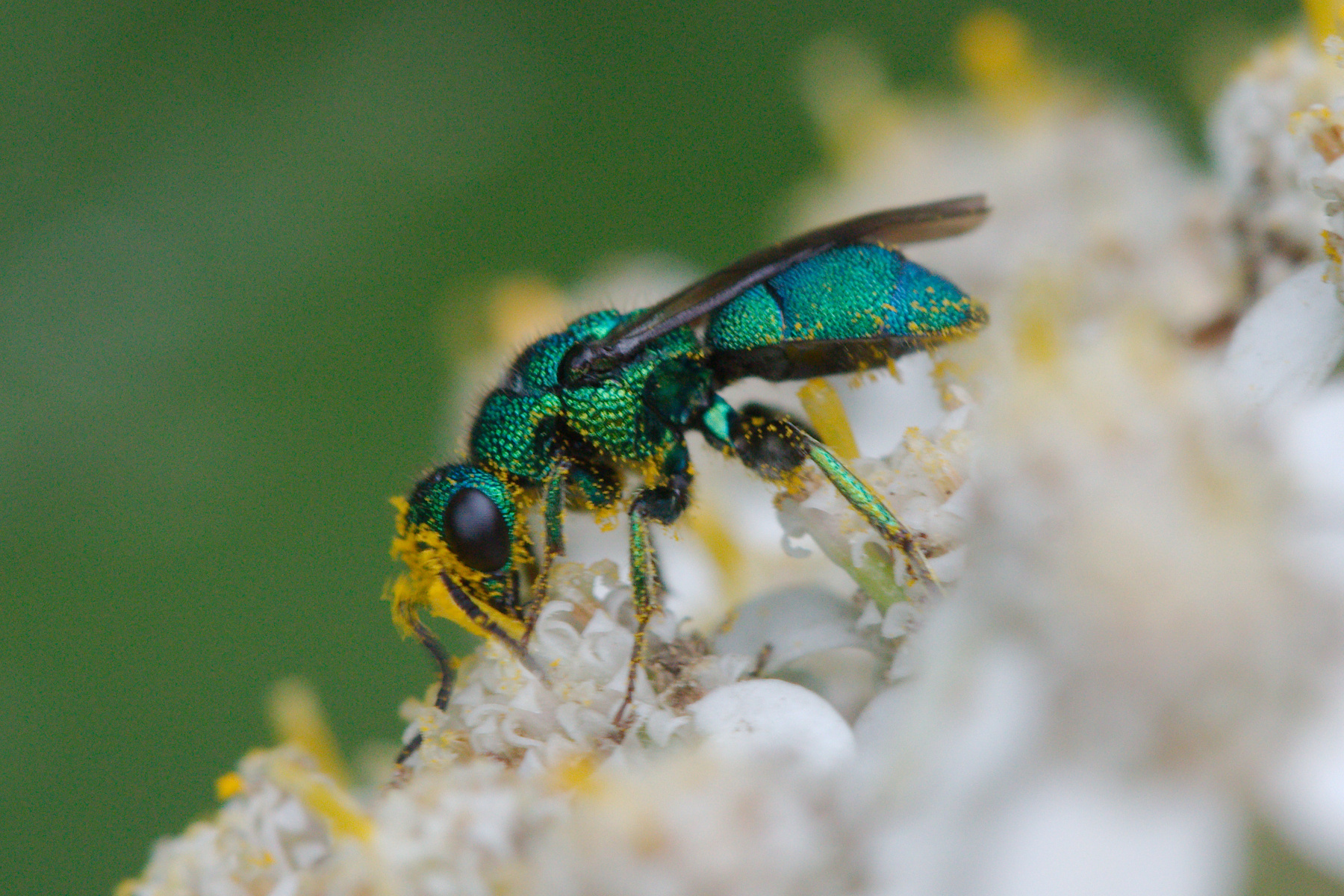
Genus Lucilia
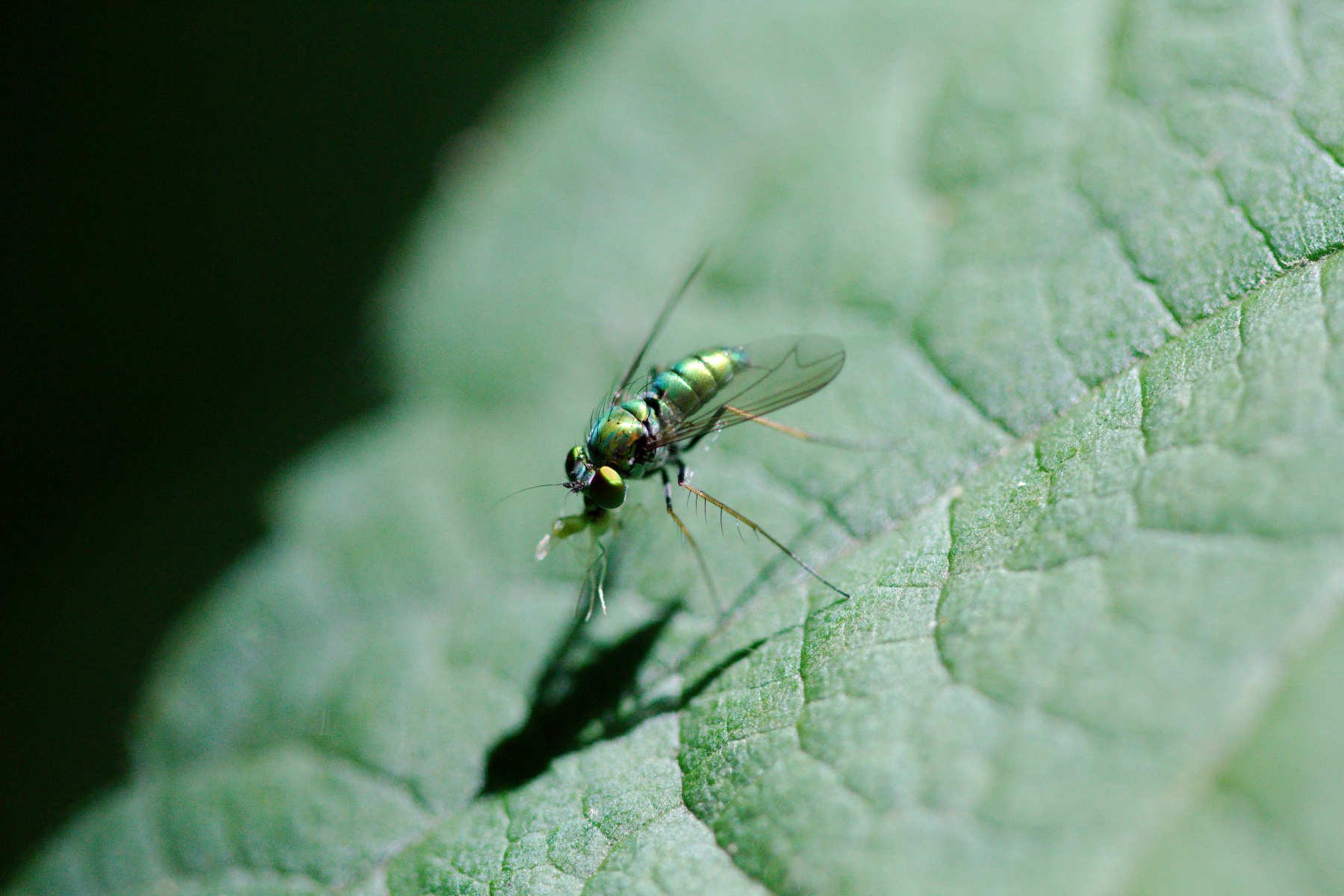
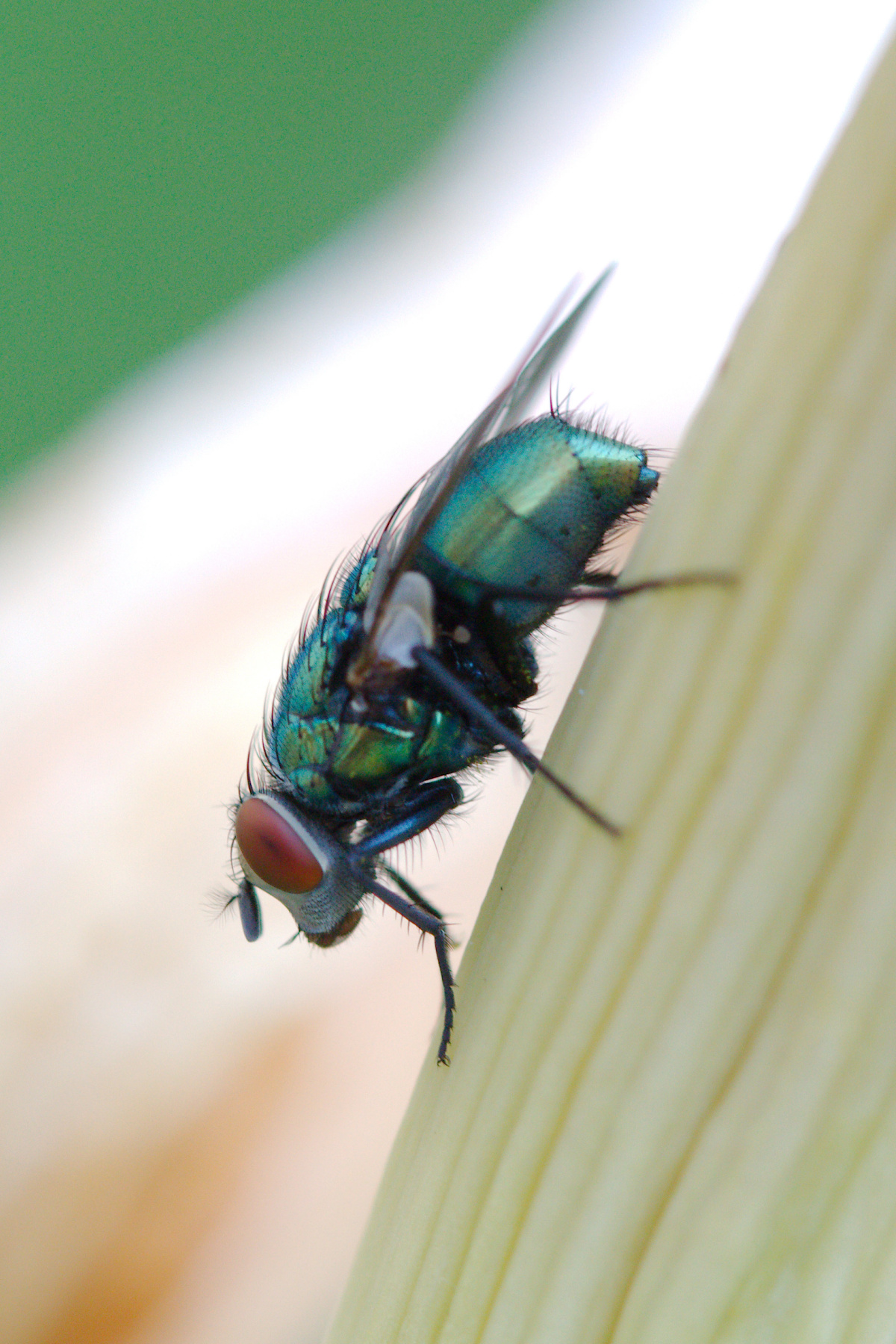
The mountain mint (Pycnanthemum muticum) is just starting to bloom and there was a wasp or a fly or two flitting about. This is some species of blow fly (Family Calliphoridae) and I think it’s in the genus Lucilia. Most people don’t like flies much and I suppose they have good reason.
Still, many of them are beneficial in one way or another, even if that way happens to be helping recently dead things get broken down into a less offensive form. Blow flies are scavengers and lay their eggs in carrion, which sounds nasty but it’s better than having smelly carcases lying around for days.
On the other hand, blow flies are also one of the main families of flies causing myiasis in livestock and occasionally in humans. If you think laying eggs in carrion is gross, you don’t want to know what myiasis is.
Bumble Bee on Purple-top Vervain
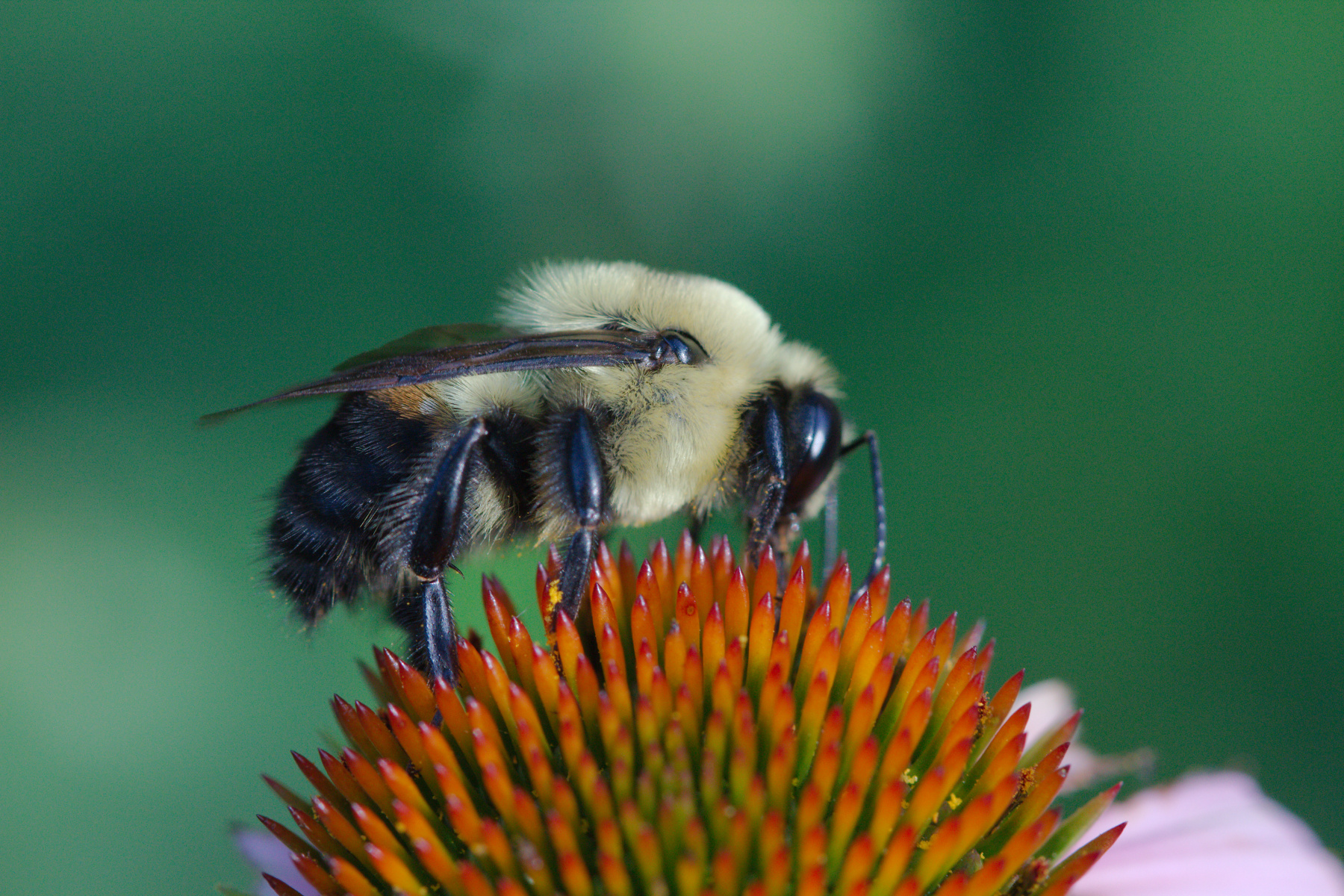
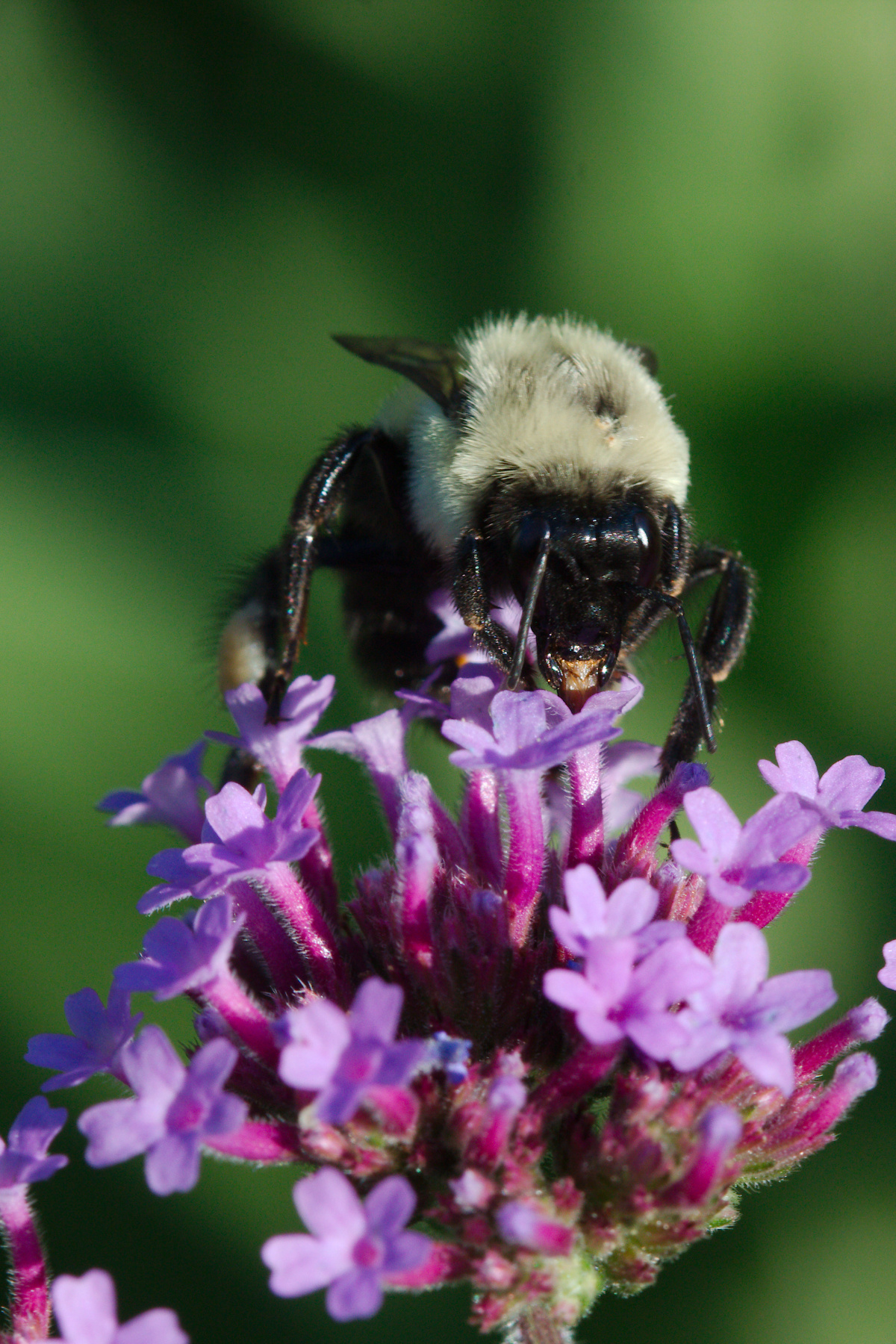
More insect pictures today. It’s starting to be bug time. Most of the bees I’ve been seeing are bumble bees (Bombus sp.). There are a lot of them on the gooseneck loosestrife (Lysimachia clethroides) but this photo is of one on the purple-top vervain (Verbena bonariensis), growing in the middle of our back yard. It used to be in the bed around two trees but the trees are gone now and we’ll see how it does with the extra sun.
Actually, as I look out back now, I see the curved outlines of that bed and think it might be just about the right shape and size for a significant water feature — part pond and part bog garden. That’s not going to happen before fall, but it might happen eventually. I’ll probably want to wait a year for the major roots to rot out a bit, then it should be a lot easier to dig there. I have at least one other design, though, and I’m not sure which I like better. So, we’ll have to see what happens.
Trichopoda pennipes (Feather-legged Fly)
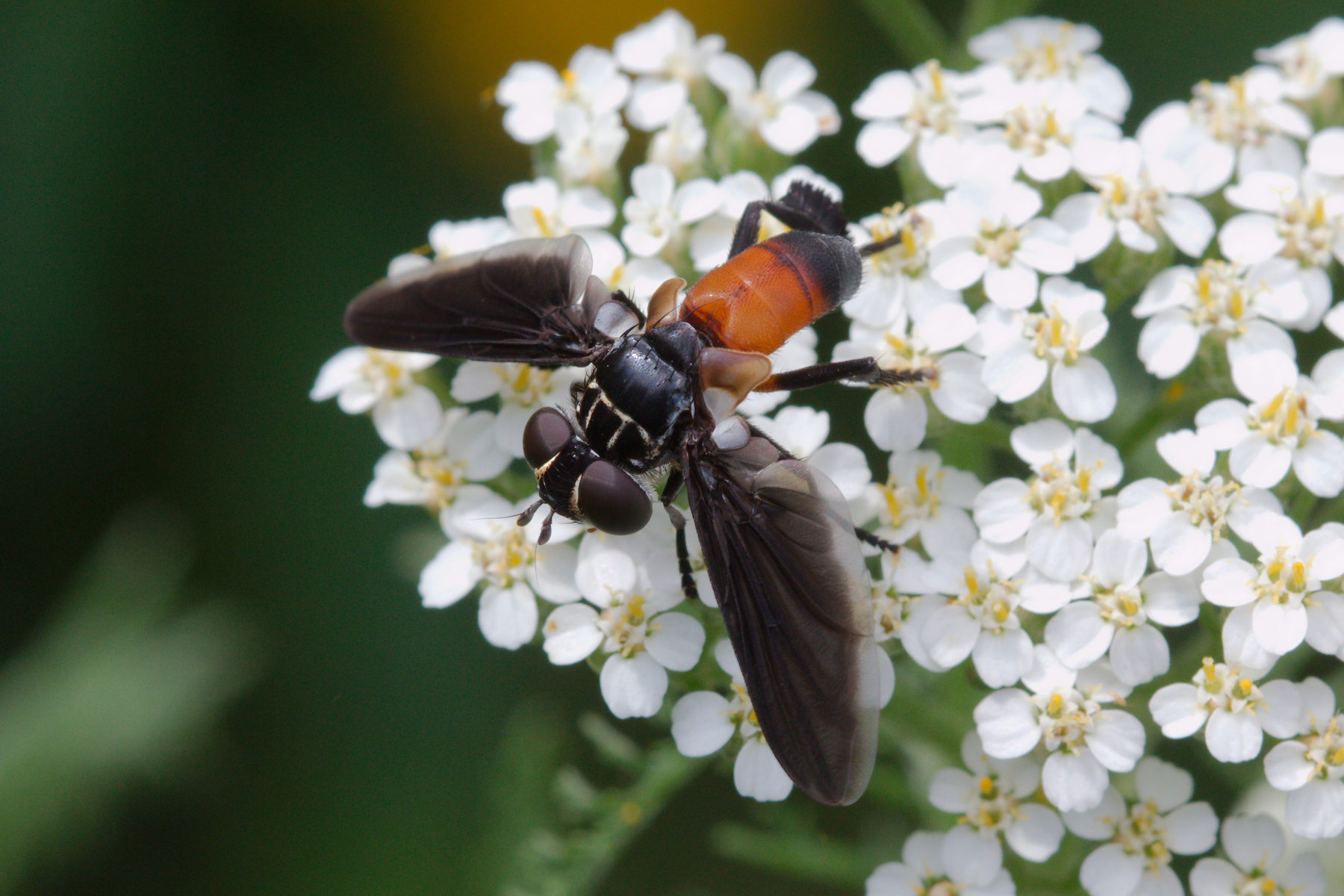
I went out again today, hoping to get a better picture of a snipe file like the one I bagged yesterday. I did see both snipe and syrphid flies and got some pictures but nothing significantly better than yesterday’s. This is a feather-legged fly, Trichopoda pennipes and I’m pretty happy with the picture.
This is another friendly insect and they are actually used in the control of stink and squash bugs. Considering how many stink bugs we have had the last few years, this is someone I’m very happy to have around.
Snipe Fly
I took some pictures of rabbits in our yard this evening after work. They are plentiful, fat, and happy. I’m tempted to do something about them. Our neighbors on both sides have dogs so our yard is something of a safe haven for them.
I also took some pictures of the onions growing in my vegetable garden. I didn’t actually plant any vegetables this spring but there are onions that came up from seed last year, which are getting quite large now.
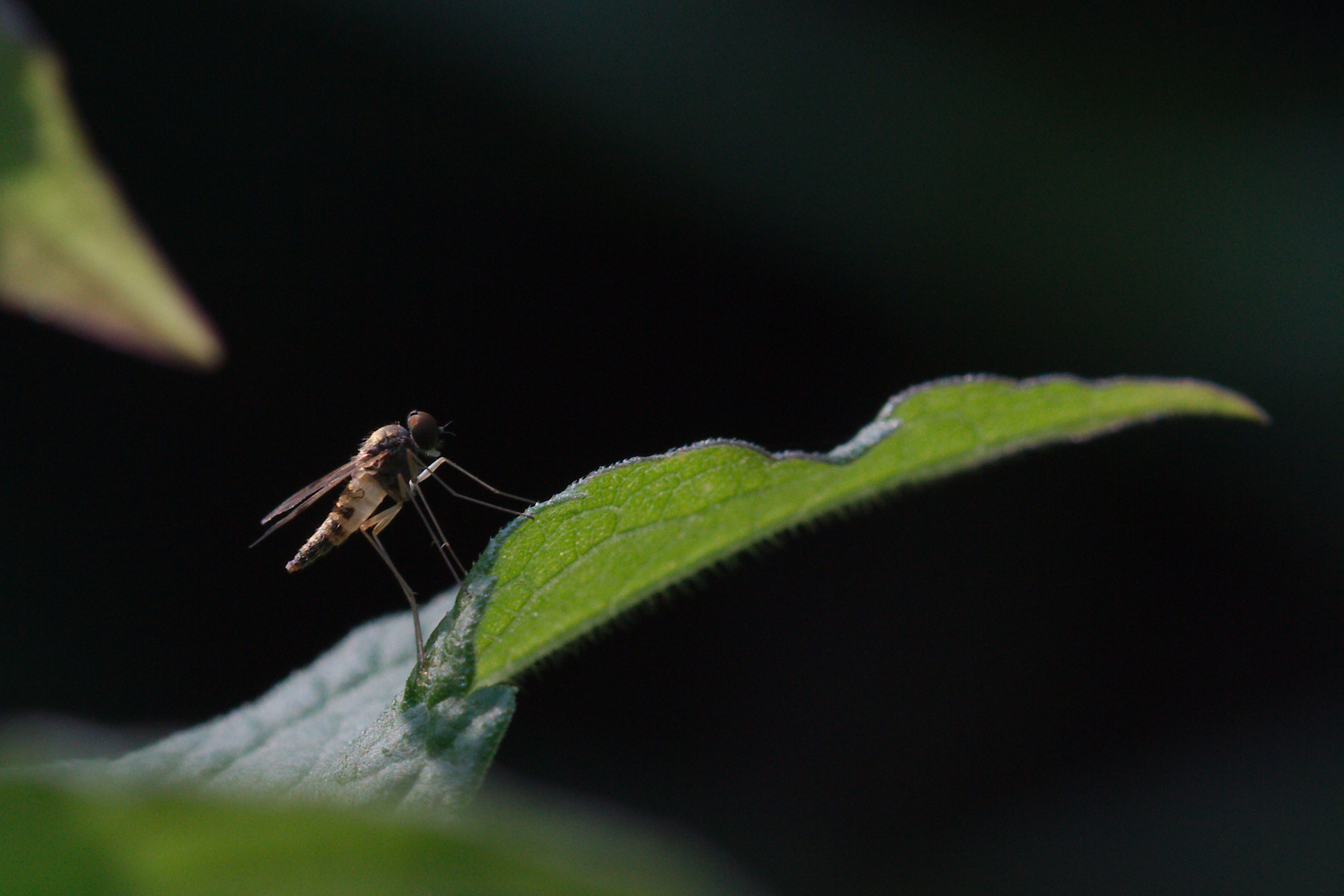
Finally, I took some pictures of this little fellow (or lady). There was a little swarm of them but I only had a chance to get a photograph of this one, when it landed for a moment. I’m pretty sure it is one of the many snipe flies (there are about 700 species worldwide). My first guess is that it is either Rhagio hirtus or Chrysopilus tomentosus. This photo was hand held, so not as sharp as I’d like. I’ll try to hunt this little creature again, and with a tripod.
As flies go, these are our friends. Few of them bite and they are all predaceous on a variety of other small insects.
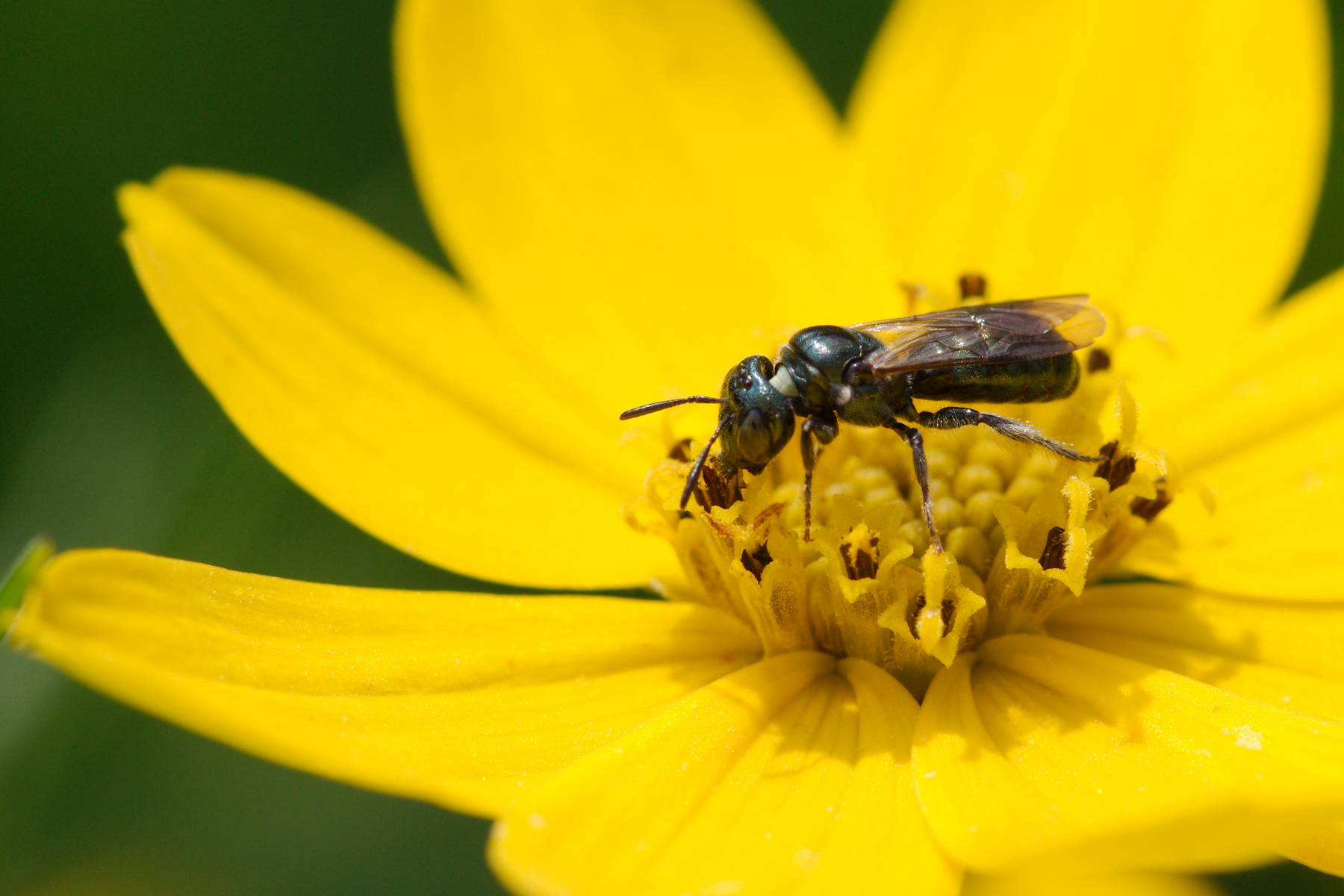
Small Bee
I’m not sure what sort of bee this is. They seem to be fairly common. It’s hard to tell scale from this picture but the bee is not more than 10mm long and possibly a little less than that. It moved from flower to flower fairly quickly so it was a fair job keeping up with it but I managed to get a few that are probably good enough for someone who knows these things to identify it. If I get a name, I’ll update the post.
Update: The good folks at BugGuide.net have identified this as being in the genus Ceratina, the small carpenter bees.
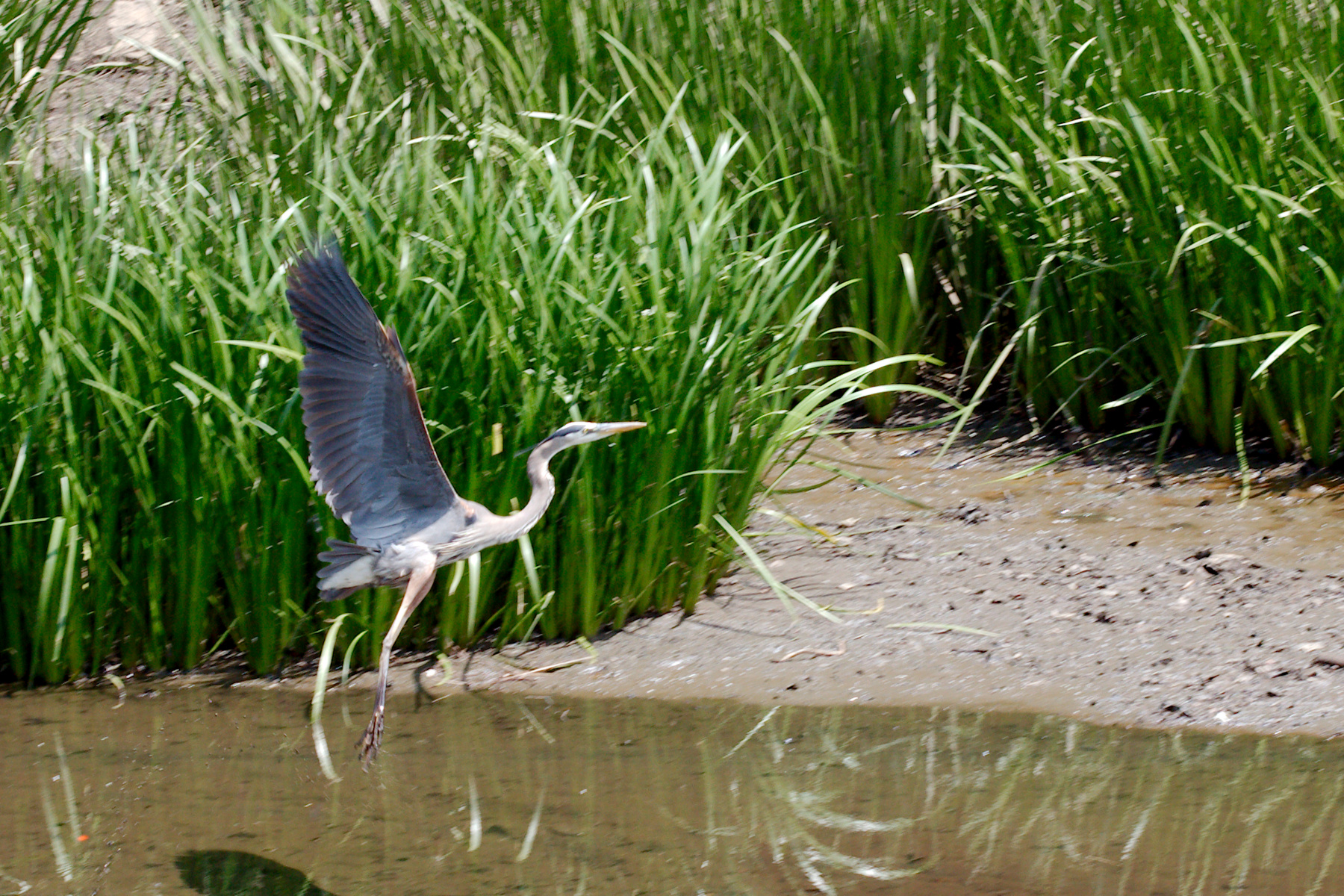
Cleared For Takeoff
Cathy and I went for a walk this afternoon and as I was waiting for her I noticed there was a great blue heron in the pond between our buildings. I took a few pictures of it standing in the water but knew that as soon as I tried to get any closer it would take off. So, instead of trying to get closer, I got ready for its take off and asked Cathy to walk a little towards the water. I’m often unhappy with pictures i get of herons taking off, usually because I don’t get them at the right moment. This one turned out pretty well.
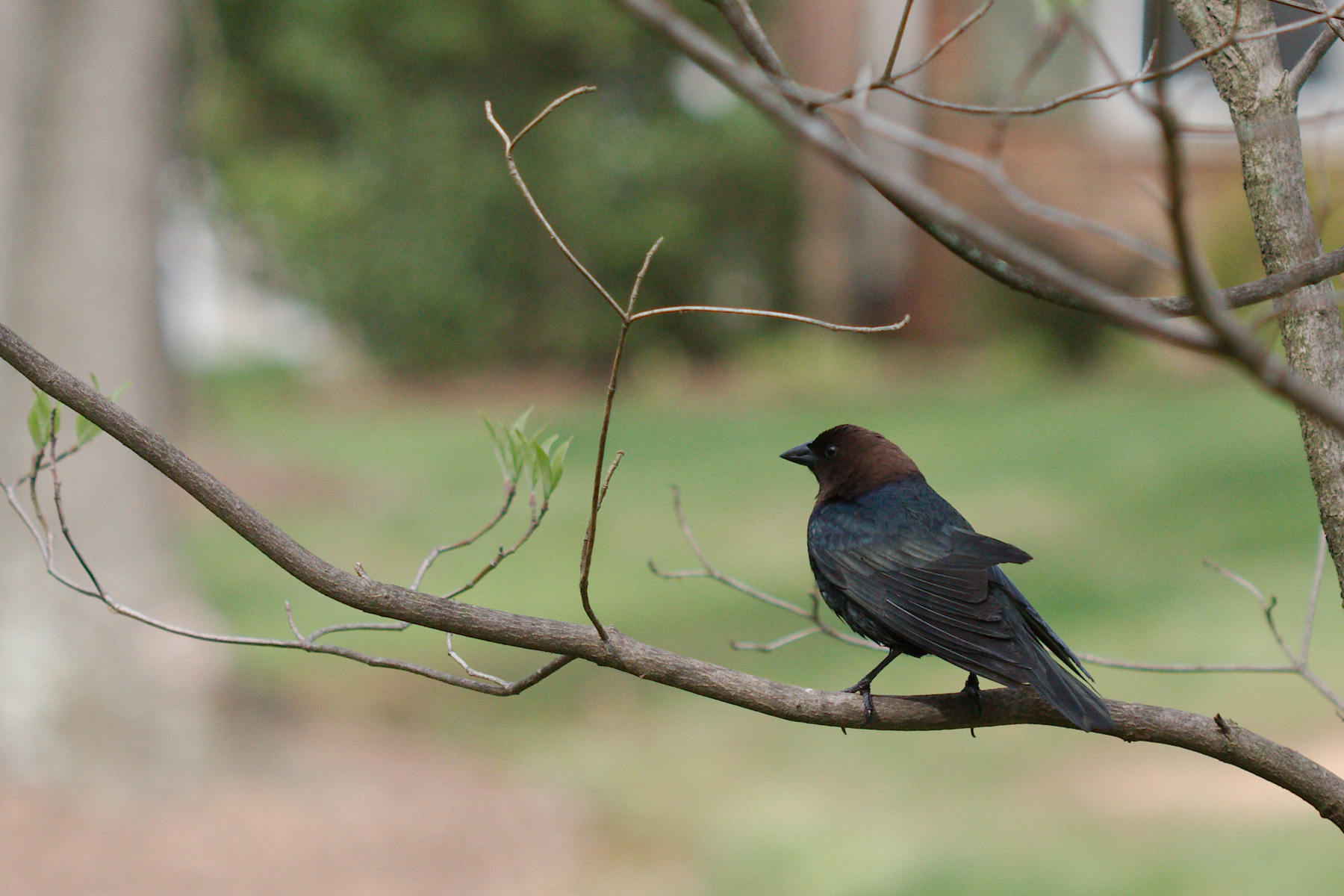
Brown-headed Cowbird
After our busy Thursday, Friday, and Saturday at the Olney Theatre (and longer than that for the cast and crew of the play), it was nice to have an afternoon at home. When I got home from church I changed into my gardening clothes and planted two apple trees. The first is ‘Arkansas Black’, a dark red apple that is a late maturing variety. The second, which matures even later than ‘Arkansas Black’, is called ‘Goldrush’, a golden apple with a red blush.
As I was working on the deer protection for Goldrush, a brown-headed cowbird came to the bird bath not eight feet away from me. I stood quietly and watched until it flew up into a tree. Then I went and got my camera. When I came back out the bird wasn’t quite so bold as before but did perch in a nearby dogwood tree, close enough that I got a few good pictures.
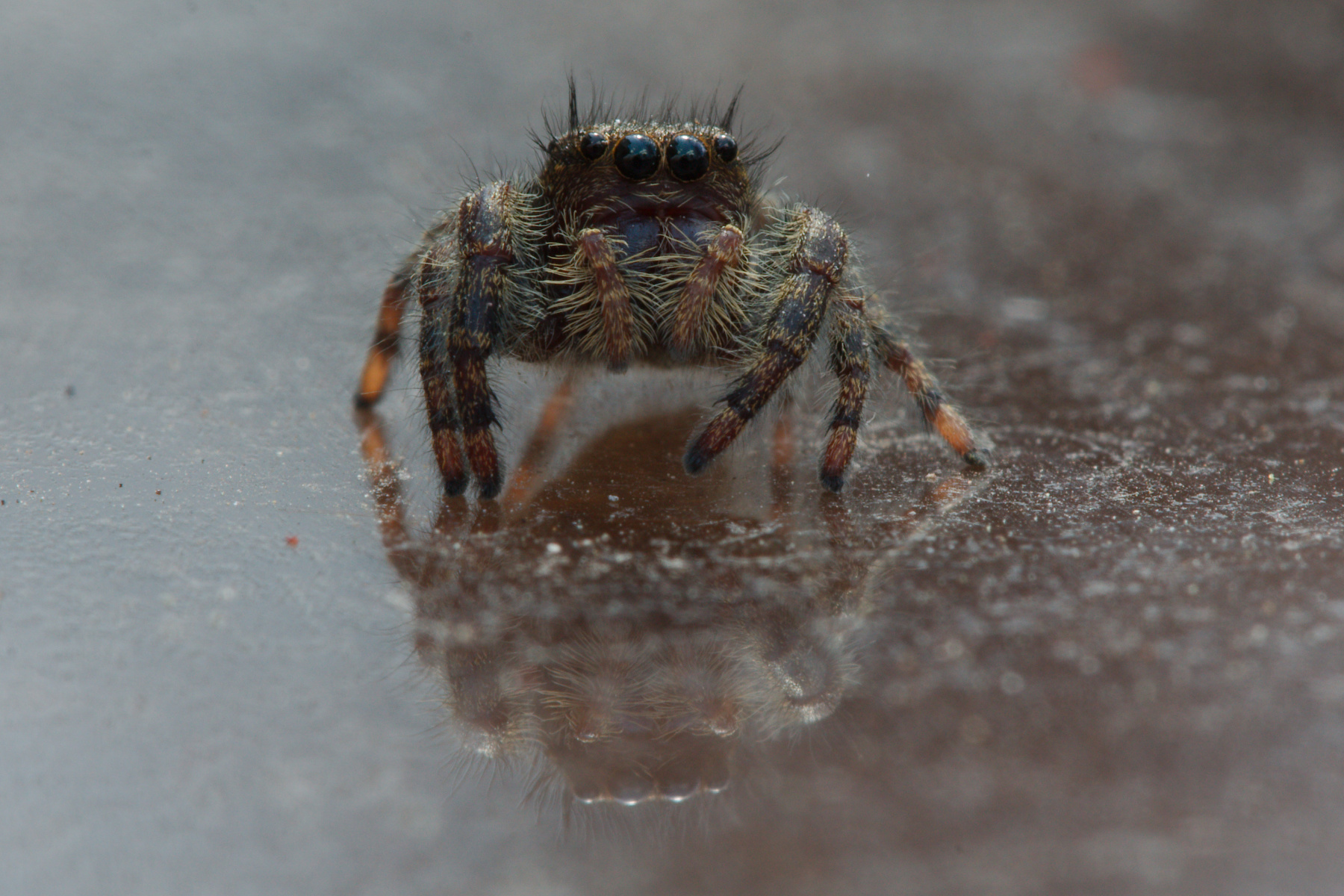
Little Spider
I know it looks sort of big in this picture but that’s only because I was pretty close to it. This spider is only about a half to three quarters of a centimeter long. I had been working in the yard and took a break to photograph some flowers (I may post one of those later on). I had set my camera on the glass table on the patio and when I came back to pick it up, this little spider was nearby. I was able to get a few good pictures from the front and behind (as it turned to run away) so I’m hoping I’ll be able to get an identification before too long. I think it may be some sort of jumping spider (Family Salticidae) but I’m really not too sure. I’ll update the post if I get it figured out (or more precisely, if I find someone who can figure it out for me).
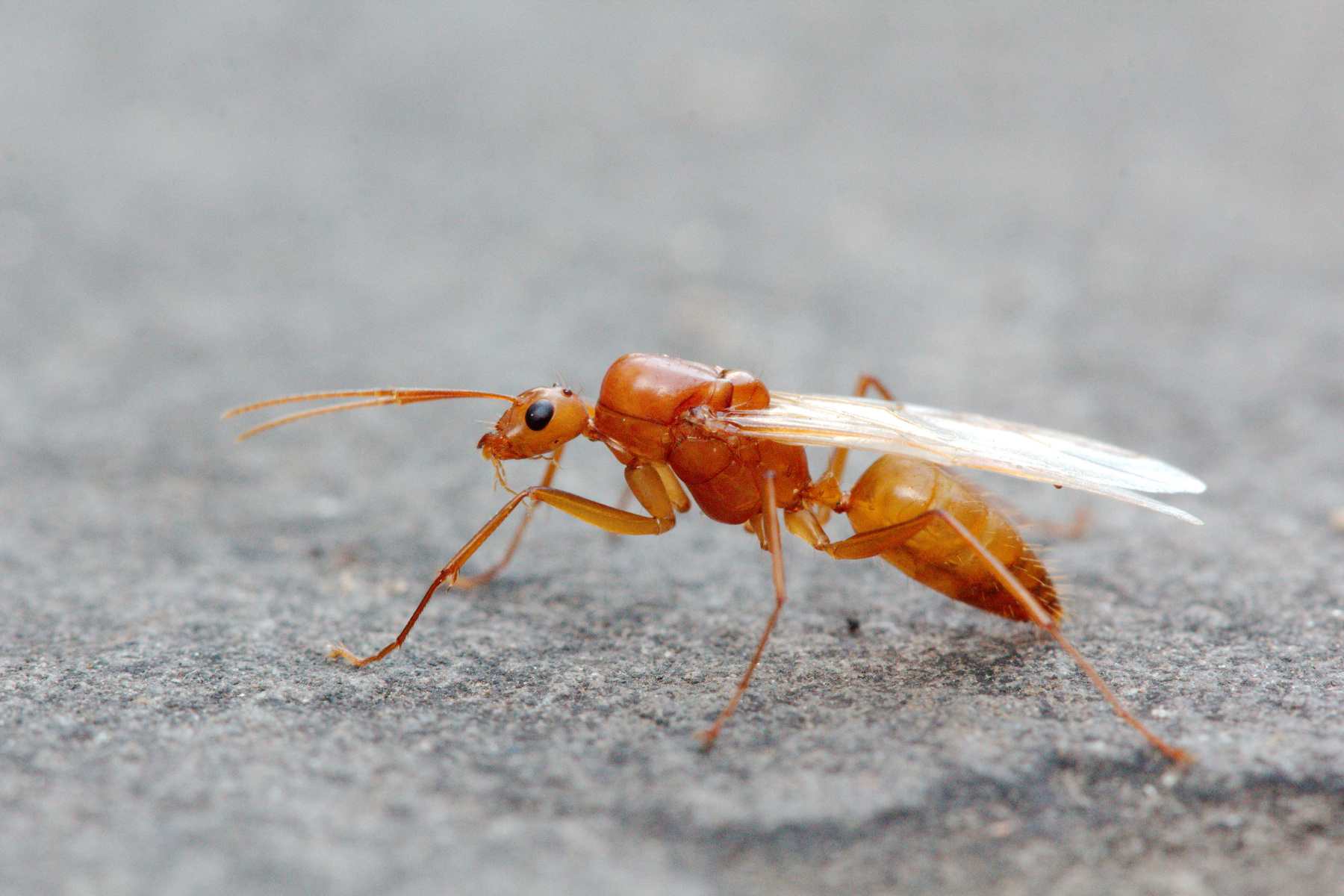
Large Ant
When I got home today I noticed this ant on the flagstone walk leading to my front door. It was quite cool out and he was moving pretty slowly on the cold stone. I got my bean bag and took a few photos. I’m not going to pretend to know which of an estimated 22,000 species this is. I imaging with a little work I could narrow it down to under 1,000 but for now, I’ve simply identified it as a drone (male) ant, e.g., a member of the Formicidae family.
Update: I posted two pictures of the ant on BugGuide.net (here and here) and James Trager identified it as being Camponotus castaneus, also known as the reddish carpenter ant.
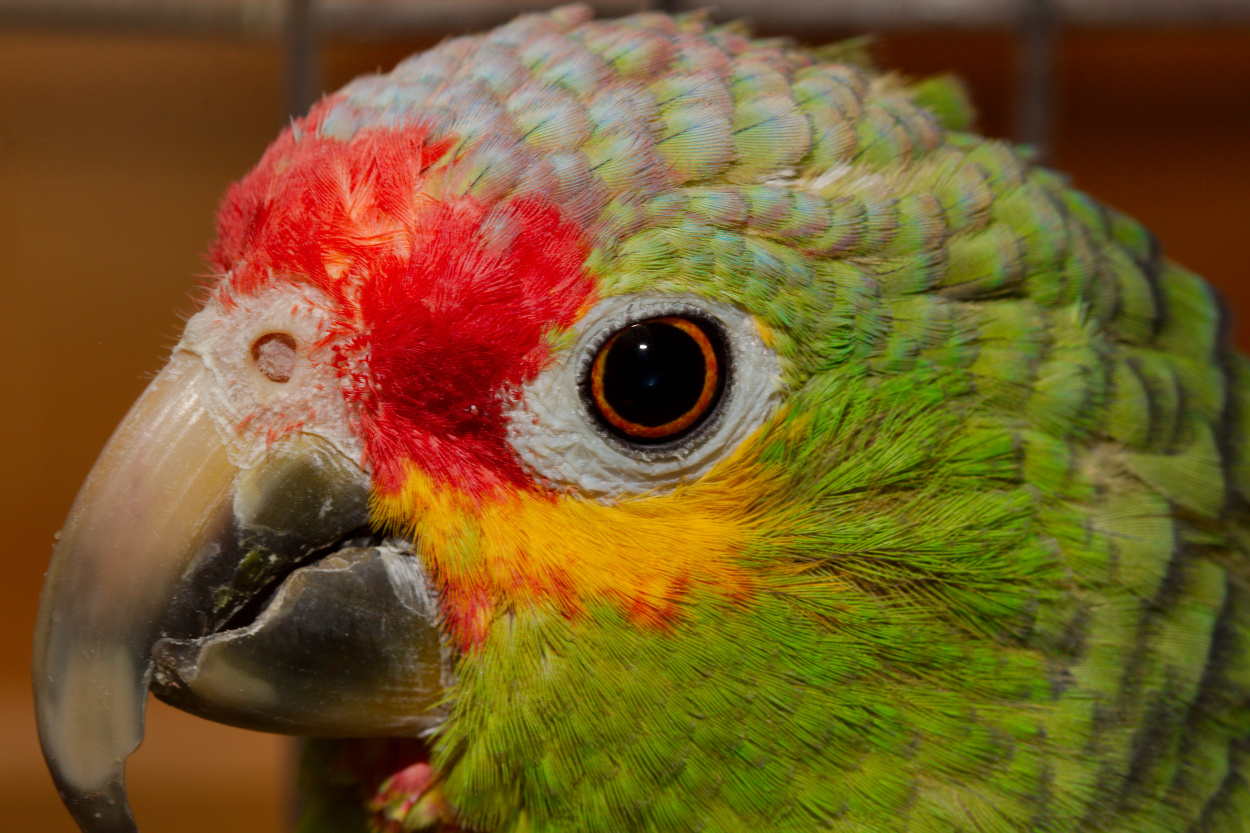
Solomon
Solomon is a red-lored Amazon parrot (Amazona autumnalis). They are native from eastern Mexico south to Ecuador but Solomon is a California bird. From there, he flew up to Alaska (and boy were his wings tired). That’s where we got him, at the tender age of about 10 months. In January he turned 27. He’s not the friendliest bird you’ll ever meet but he can be nice if he chooses to. He wasn’t really very happy with my flash going off, though, so he’s looking a bit nervous in this picture. Pretty colors, though.
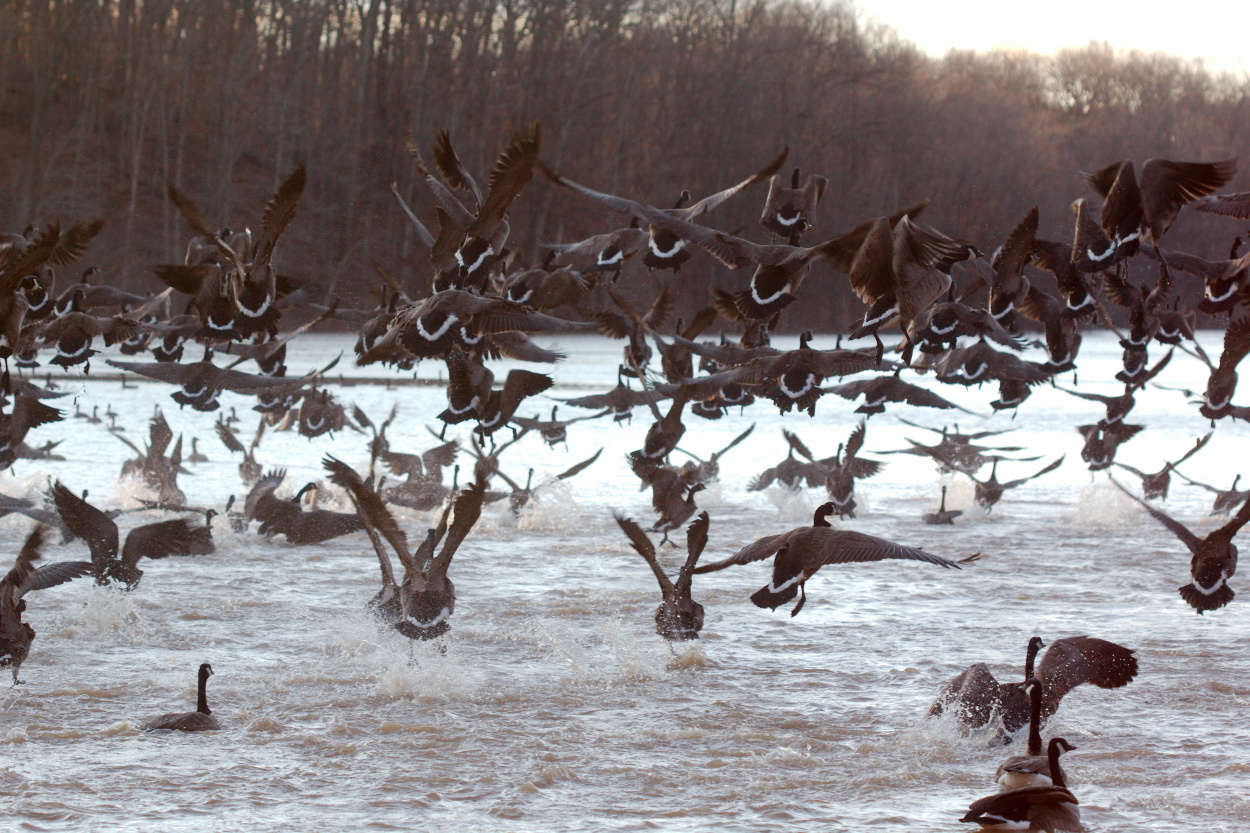
Geese Taking Flight
As I came down and crossed Lake Needwood this morning I saw that there was a large flock of geese on the near end. I pulled over and got my camera out to take a few pictures. Of course, the geese moved away from me as I walked down to the water’s edge. I ran the last fifteen yards or so to startle them and managed to get them to take off all at once. It’s not as good a picture as I’d like but I do like it, anyway.
Ducks In Flight
I love watching birds fly. It doesn’t matter to me if it’s an eagle, hawk, or vulture soaring high in the sky, a sparrow, finch, or wren flitting between bushes, or a duck, goose, or heron taking off from a pond. Their flights are different but they share a beauty found no where else.
Seeing birds in flight, particularly ducks and geese, for some reason, makes me think of Psalm 139:9–10, “If I take the wings of the morning, and dwell in the uttermost parts of the sea; even there shall thy hand lead me, and thy right hand shall hold me.”
The Black Menace
It wasn’t too many years ago that the crow population around here was seriously diminished by West Nile virus. They seem to have made a pretty decent recovery since then and I see great flocks of them now. Recently there has been a flock moving around in our neighborhood, sometimes in our yard. When they come they are impossible to ignore completely, making such a racket.
On the way home today I saw them at the local elementary school. I pulled into the parking lot and took a few pictures, including this one of “The Black Menace.” If you’ve seen the 1948 movie, Bill and Coo you should get the reference.
Here Be Dragons (and Dinosaurs)
We all know that the map makers of old used to write “Here Be Dragons” in the uncharted areas of their maps. Except of course we’re all wrong. The Lenox Globe (ca. 1510) is only one known instance of a map which actually has that phrase (in Latin — hic sunt dracones). Map makers did, sometimes, fill empty areas with drawings of beasts including dragons and sea serpents, but that’s
Anyway, here we have a picture of not just a dragon but a dinosaur and a dragon! They seem amazingly healthy for extinct or mythical creatures. I found them dancing in my living room and was able to photograph them a few times before they went back into hiding. It pays to carry a camera all the time, even when walking through your own house. You never know what you will come upon.
Chrysaora fuscescens (Pacific Sea Nettle)
Dorothy and I went to the Baltimore Aquarium today with her friend, Julia. I took quite a few pictures including this one of a Pacific Sea Nettle (Chrysaora fuscescens). Many of them suffered from the thick acrylic I was shooting through or the low light levels but this one turned out pretty nicely. I got a few other good pictures but more importantly we had a good time. It was a nice unwinding sort of outing and except for the drive to and from in the snow and rain respectively, it was quite relaxing.
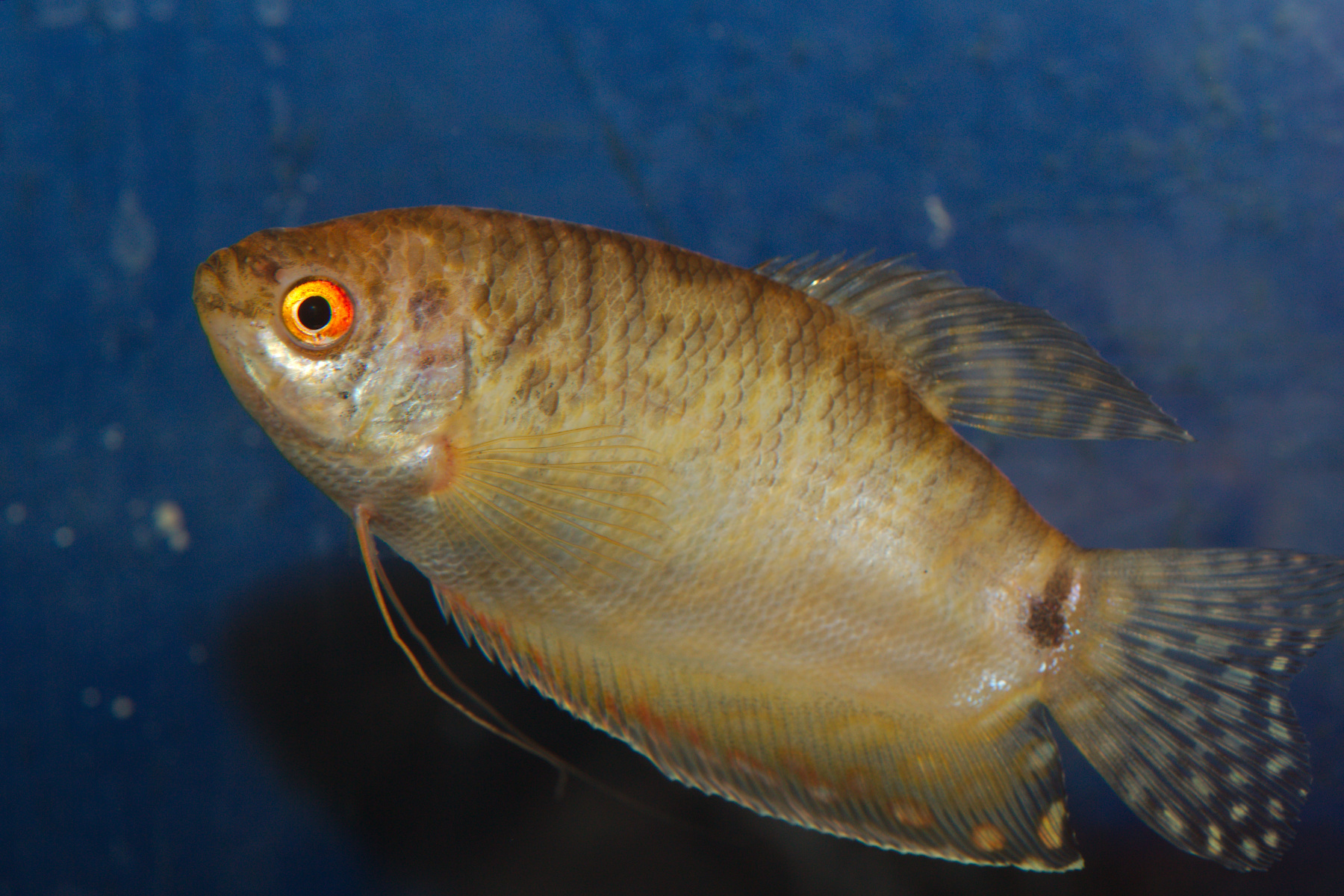
Maylandia estherae (Red Zebra)
I picked up Dorothy at her friend Julia’s house this evening and stayed long enough to take a few pictures. Julia’s mom, Maureen, has a tank with African cichlids and this, I believe, if a red zebra (Maylandia estherae). It certainly looks right and it’s from the right lake (Malawi). The picture is a bit soft because it is by necessity photographed through the aquarium glass. Still, it’s a pretty fish and shows up pretty well.
Ducks
There is a small pond near my office and there are usually ducks on it so I walked over there today. I love watching ducks take off and land. They start by running along the surface of the water while madly beating their wings. Once they are in the air they seem graceful enough but then their landing is a bit heavy. I also saw a great blue heron. Now, there is a bird that is majestic on take-off and landing. Sort of the VTOL of the animal world. Ducks and geese are more like the C5 Galaxy of birds, even though the heron is considerably bigger. I guess it’s the relative size of the wings that makes the difference.
Buteo jamaicensis (Red-tailed Hawk)
Well, I initially identified this as a sharp-shinned hawk. I’m not terribly good with the hawks (as anyone who is will tell you). I do know the general shapes and because of that I incorrectly correlated the narrow tail here with the Accipiters and went with the most common of those around here. As I was quickly told by my birder brother, this is a red-tailed hawk, which usually flares its tail. Looking at pictures (which I probably should have done first) I can see he is right. All the patterns on the wings say red-tail, to those who know. So, now I know. At least until I forget, which probably won’t be long.
Anyway, I’ve completely rewritten the text for this post. Purists would say I should have left the old and just added my correction to it. You can do that on your blog. I admitted my mistake. That’s enough.
Starlings
Are you a fan of starlings? Or do you see them as a curse, a thorn in the farmers’ side? Randy Stonehill, one of my favorite singers, used them as a metaphor for those we prefer not to see. “She was sitting on a curb by the Seven Eleven.” There are songs that make me laugh. There are songs that make me sing. This is a song that can make me cry. Not a comfortable song, but very beautiful, somewhat like the starlings.
Say a prayer for the starlings
A hot, dry wind beats their ragged wings
Have a thought for the starlings
No one ever listens to the songs they sing
Say a prayer for the starlings
There’s no welcome for them anywhere
Leave some crumbs for the starlings
They say that Winter will be cold this year