Creatures

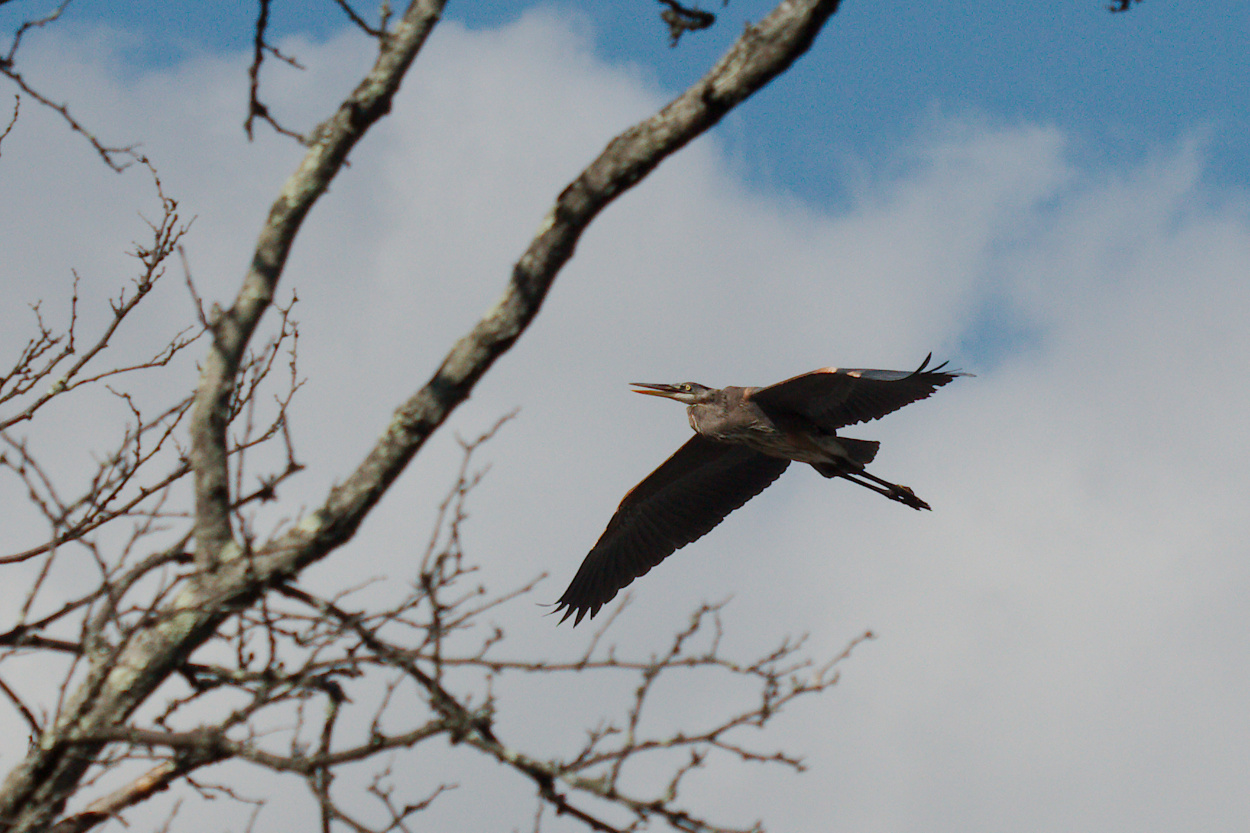
Ardea herodias (Great Blue Heron)

Ardea herodias (Great Blue Heron)

Ardea herodias (Great Blue Heron)

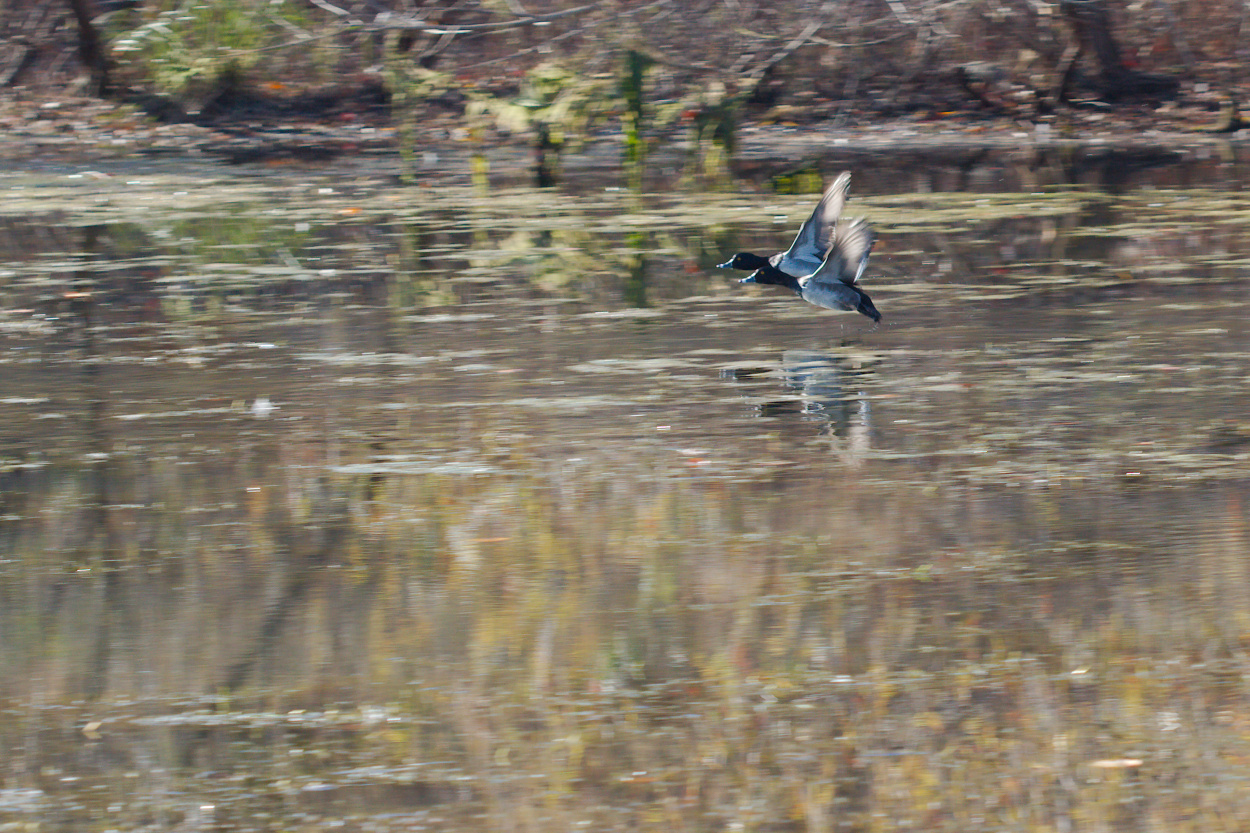
In addition to the various berries and leaves that I photographed on our walk around the block today, we happened to see a heron fly overhead. I barely had time to get my camera up and snap off a shot before it went behind a tree and then over my office building and out of sight. It’s not a great picture because I needed to crop it down a bit, but it’s better than nothing. I love to see these huge birds wading in the shallows but I think my favorite thing is to see them take off and fly.

Categories: Creatures | Comments Off on Ardea herodias (Great Blue Heron)

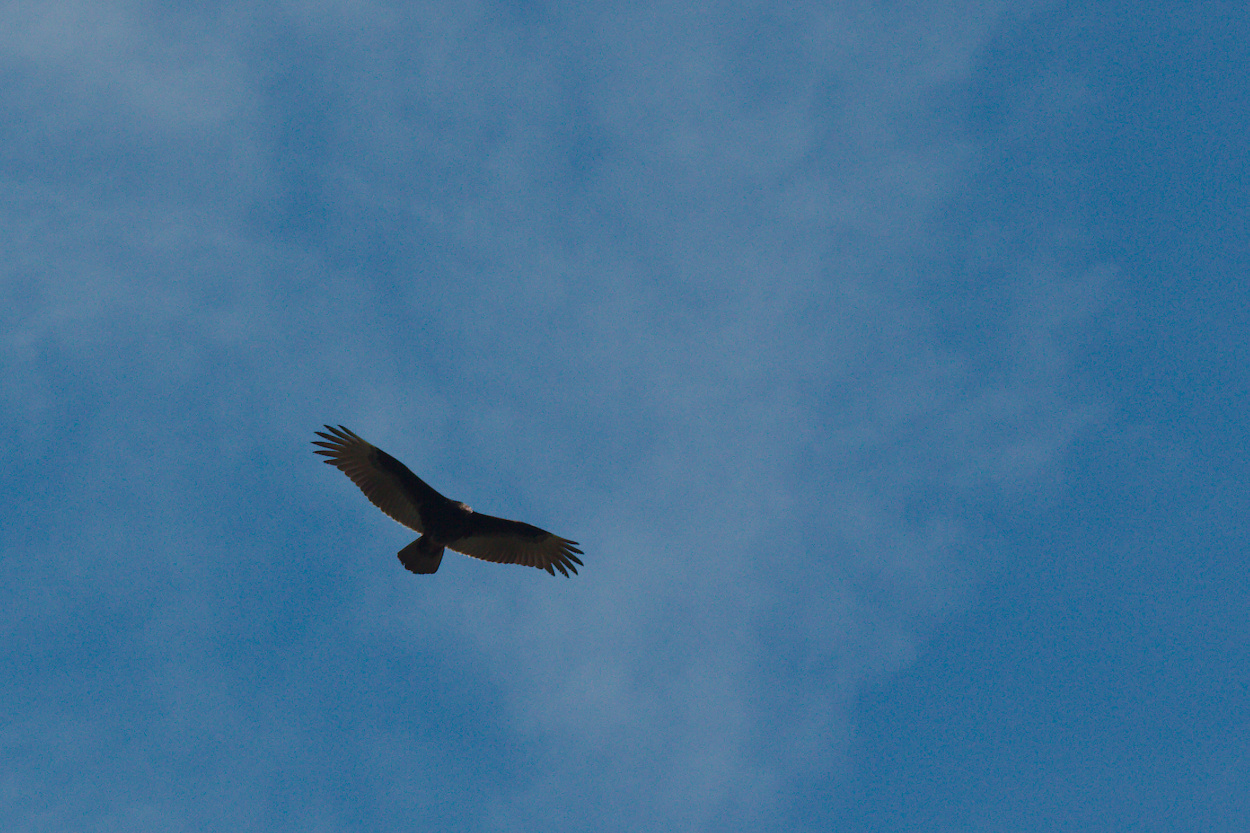
Cathartes aura (Turkey Vulture)

Cathartes aura (Turkey Vulture)

Cathartes aura (Turkey Vulture)

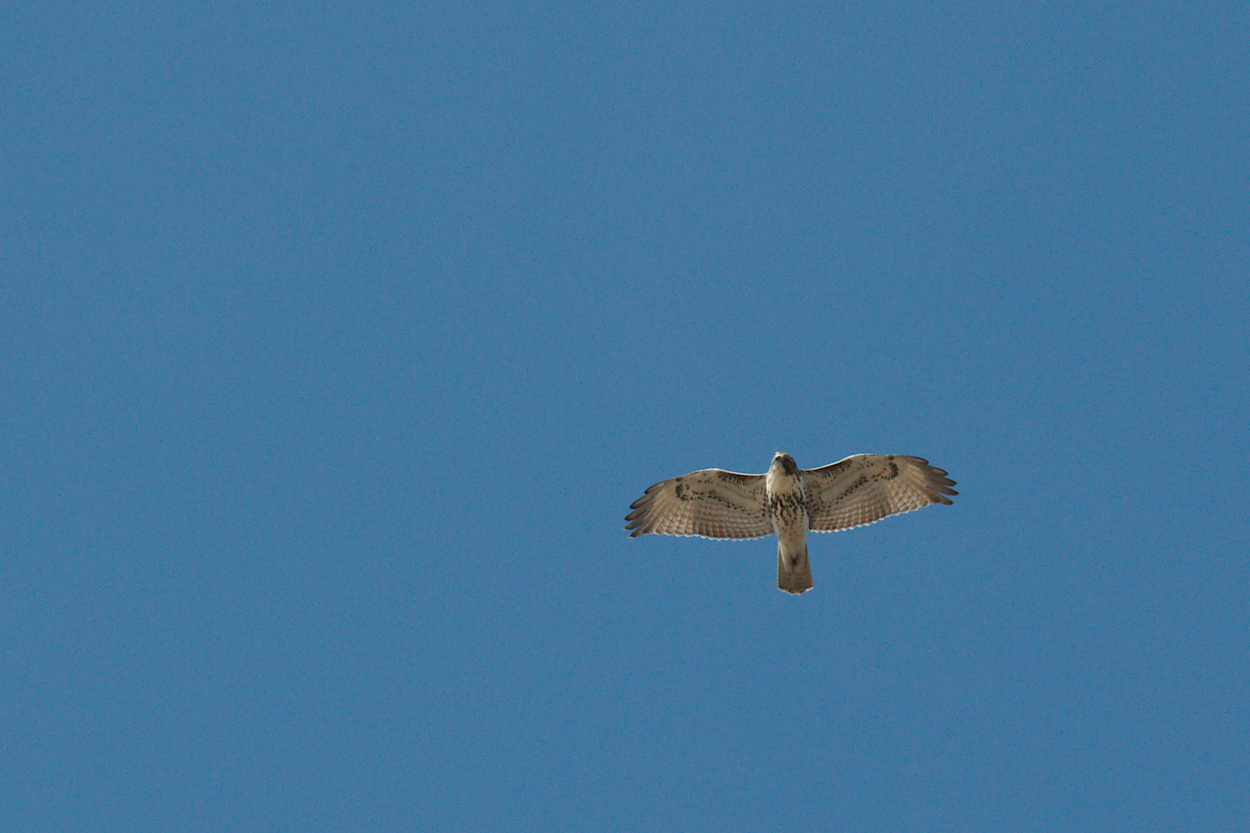
After church this morning I was outside enjoying the beautiful fall weather. The sky was blue, the clouds were puffy and white, and there were turkey vultures all around. They aren’t the most attractive of birds, I know, but I like them anyway. Their huge wings and the way they soar give them a bit of majesty that their bald, red head cannot quite take away.

Categories: Creatures | 1 Comment

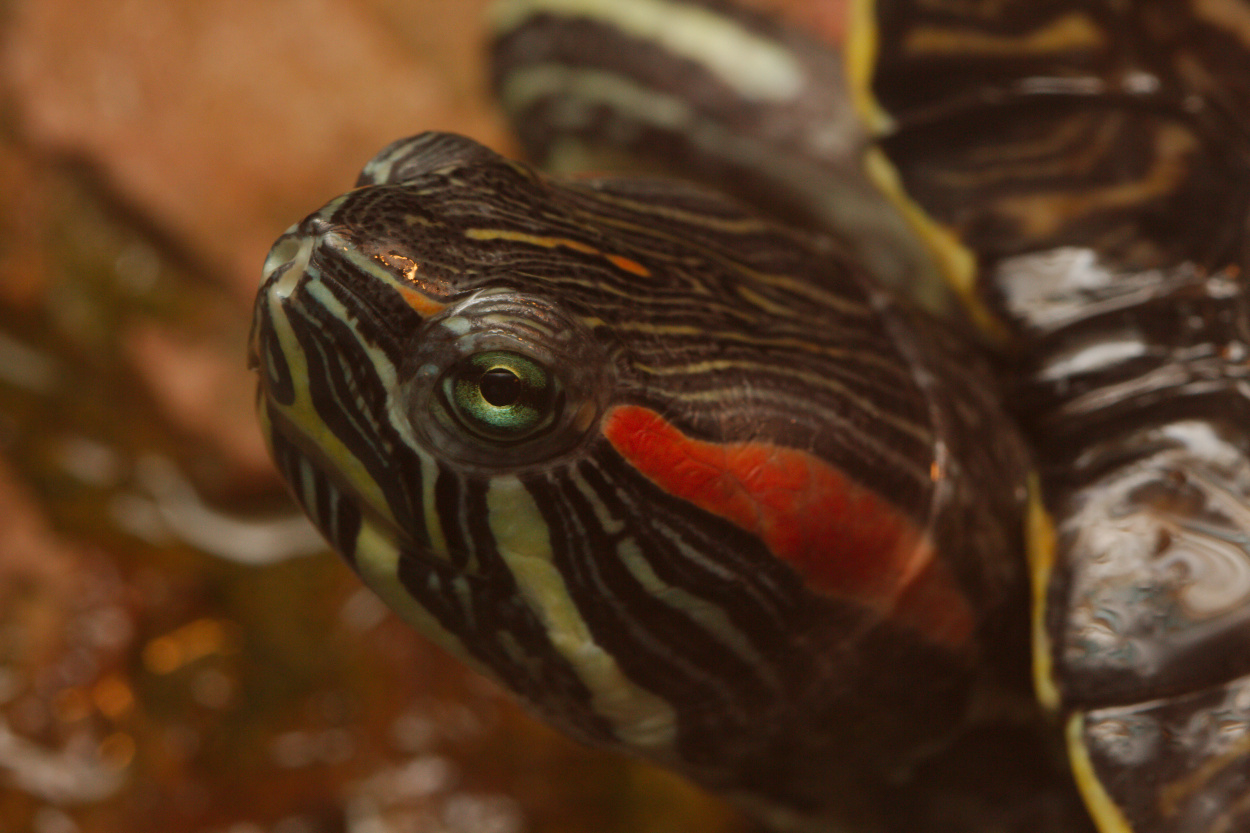
Cuddles

Cuddles

Cuddles

This is Cuddles. Cuddles is a red-eared slider (Trachemys scripta elegans) and he’s happy this evening because a new heat lamp was bought for him. Now he’s nice and warm. Nothing says “let’s cuddle” like a warm, semi-aquatic turtle, don’t you think?

Categories: Creatures | Comments Off on Cuddles

Stink Bum

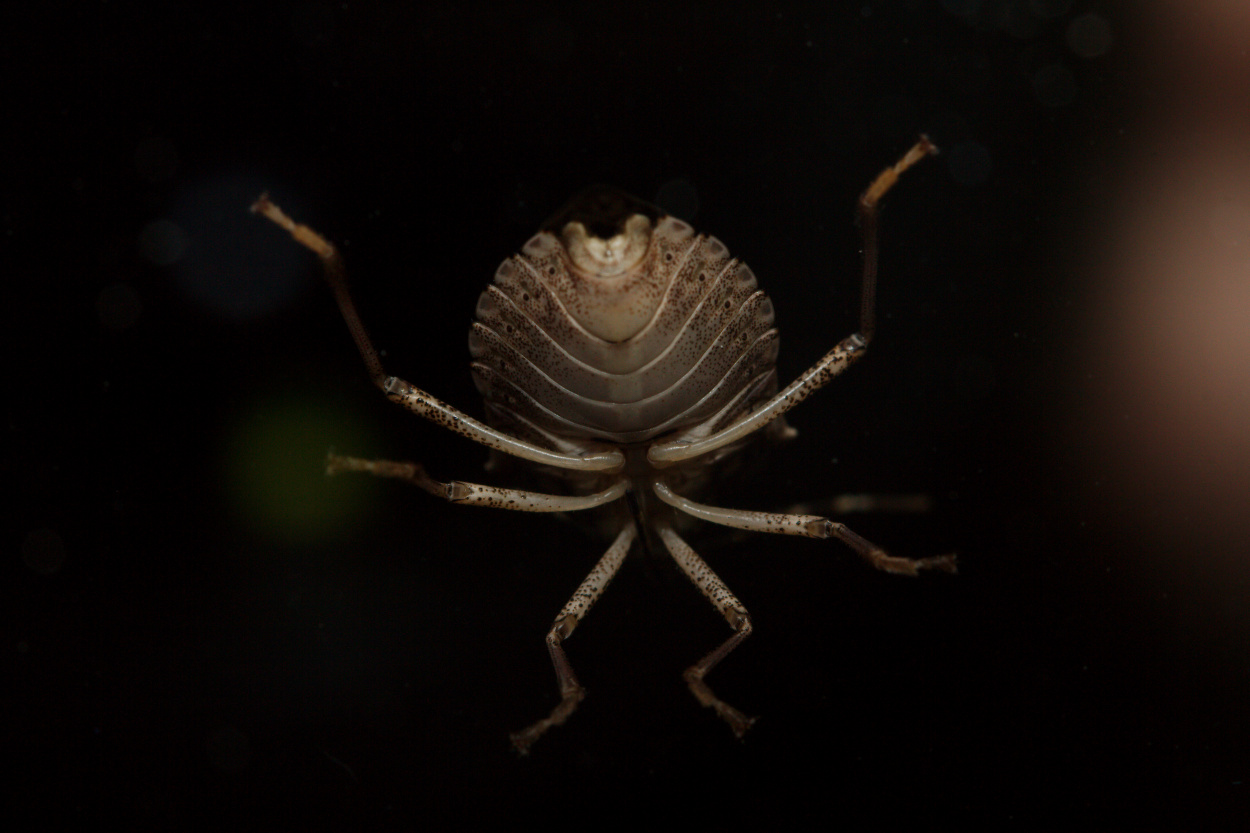
Halyomorpha halys (Brown Marmorated Stink Bug)

Halyomorpha halys (Brown Marmorated Stink Bug)

Over the last several years this has to have become everyone’s least favorite insect around here. The brown marmorated stink bug (Halyomorpha halys) is a serious pest, even for those of us not trying to grow crops. This is the direction most of want to see them going (i.e. away from us) but mostly we like to see them dead.

Today is the 50th anniversary of the publication of Rachel Carson’s pernicious book, Silent Spring, which was in large part responsible for bans on use of DDT. As we now know, her book was very poor science and the benefits from responsible use of DDT far outweigh the costs. We can only hope that restrictions on its use can be eased and the poorest countries of the world, those that need it most, can benefit from it’s wonderful bug killing and disease preventing properties.

Categories: Creatures | Comments Off on Stink Bum

Bombus impatiens (Common Eastern Bumble Bee)

Bombus impatiens (Common Eastern Bumble Bee)

Bombus impatiens (Common Eastern Bumble Bee)

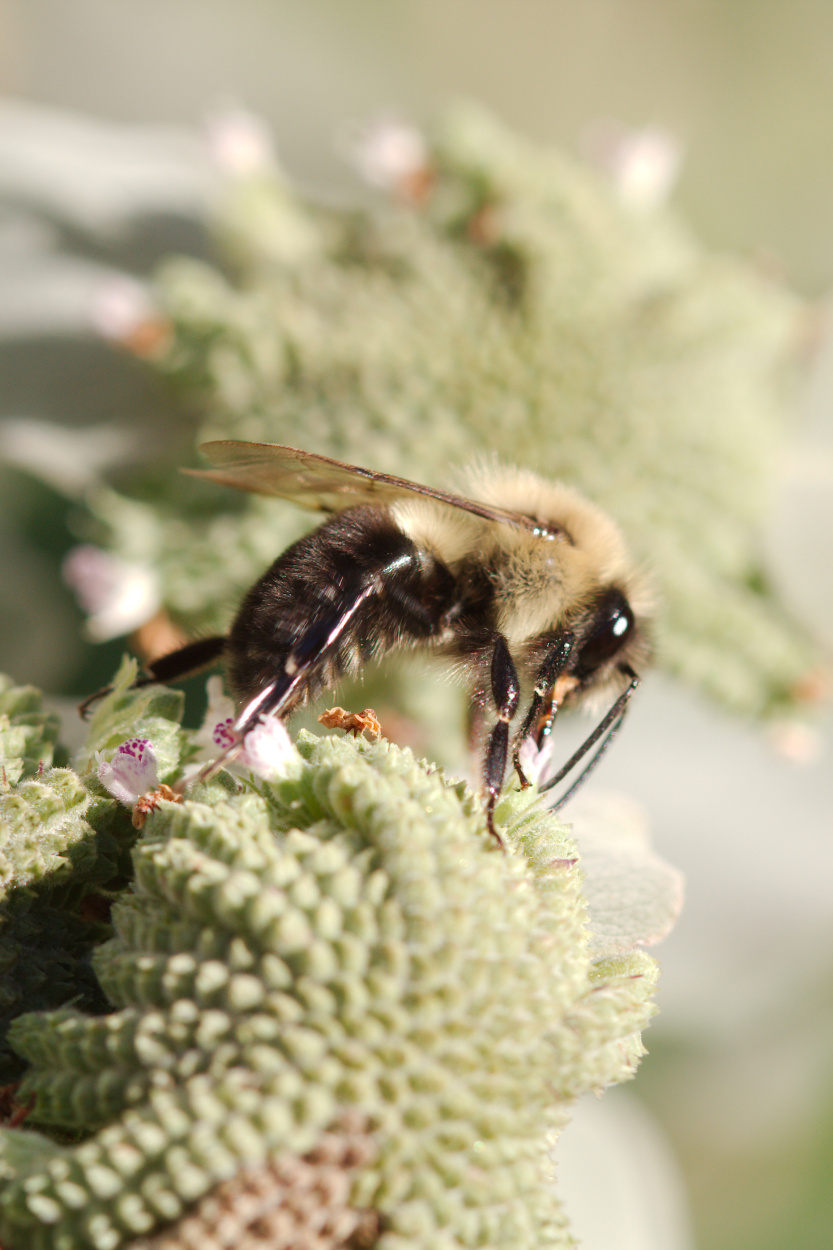
When I see a big black bee with a blond, hairy thorax, I tend to call it a bumble bee whether that’s really what it is or not. There are plenty of bees of this general size and look, but I think this actually is a common eastern bumble bee (Bombus impatiens). They are actually quite hard to photograph on my mountain mint because they don’t stop moving. Some bees actually stop for short while not and then but not these chaps. Busy as a bee applies to them. This is as good a photo as I was able to get but it’s a bit blurry. Sorry.

Categories: Creatures | Comments Off on Bombus impatiens (Common Eastern Bumble Bee)

Piglets

Two Piglets

Two Piglets

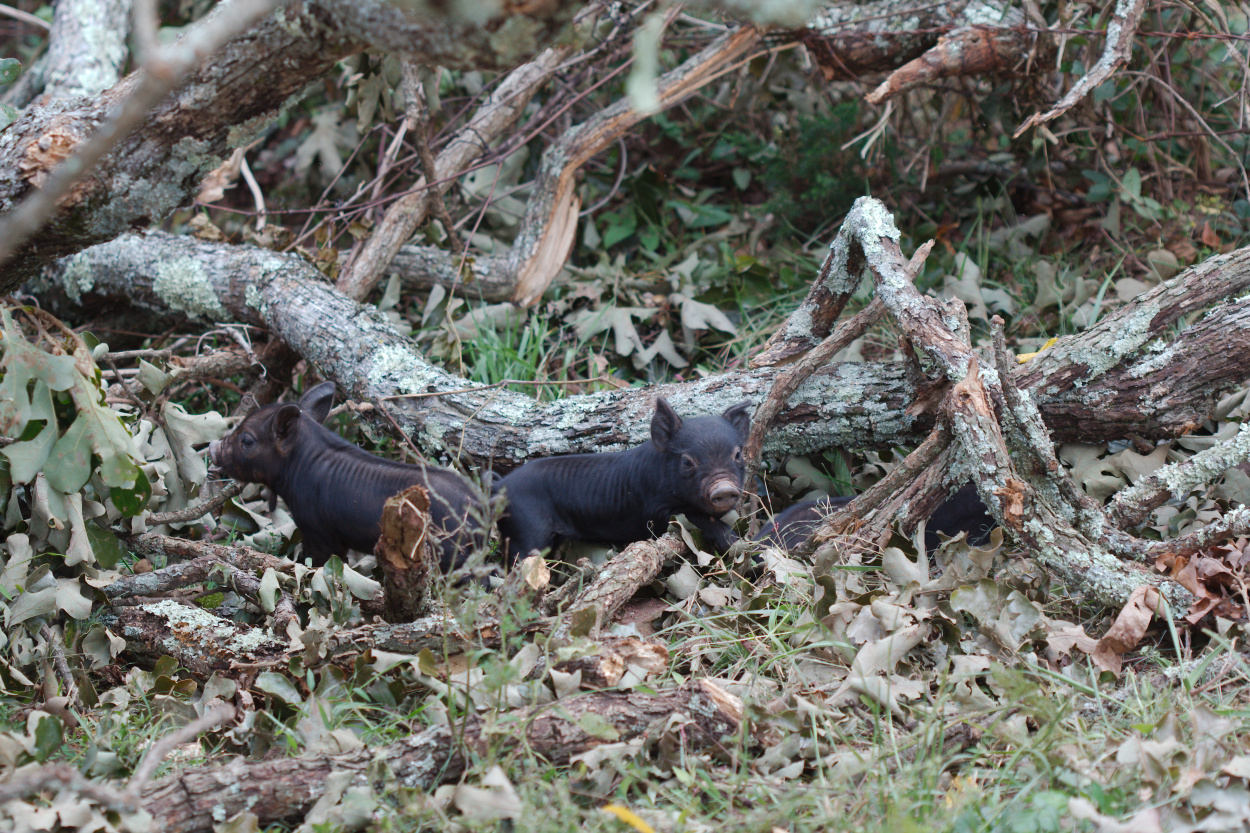
We went out to Rocklands Farm today and, among other things, enjoyed seeing three very young piglets. They were with there mother eating acorns on a large oak tree that came down in the last few days. This picture shows two of them and you can see how small they are. Cute little things, destined to be turned into bacon, sausage, chops, and ribs. If that bothers you, then you probably don’t want to know what’s in my freezer now.

Categories: Creatures | 1 Comment

Nemoria bistriaria (Red-fringed Emerald)

Nemoria bistriaria (Red-fringed Emerald)

Nemoria bistriaria (Red-fringed Emerald)

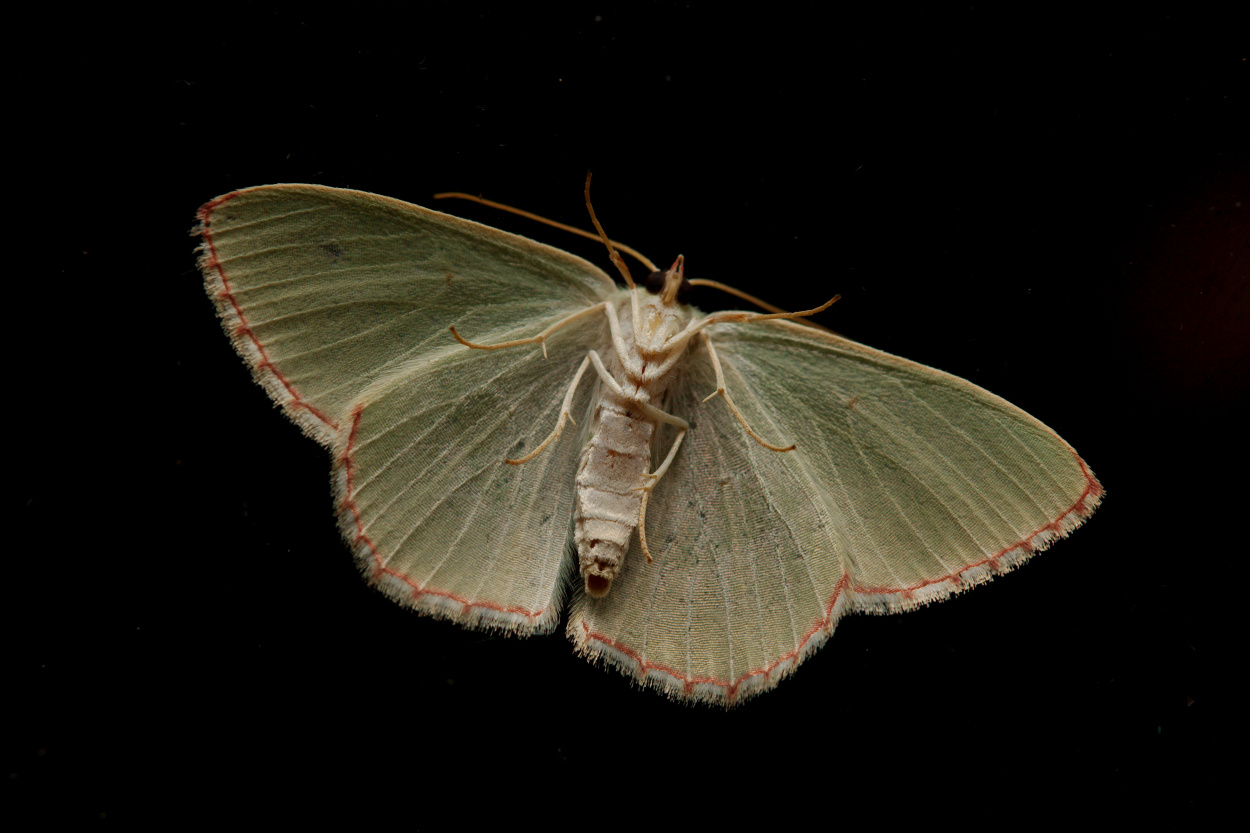
Dorothy called me into the kitchen this evening saying there was something for me to photograph. On the sliding glass door from our kitchen into the back yard was this little moth. It’s only about 2 cm across. I got the tripod and put the flash on the camera and was able to get a pretty good shot or two. I also got some extreme close-up pictures that show the hairy scales on the wings, which are pretty cool.

I’m not 100% certain of the identification. There are more than 20 species and they all look fairly similar. Since identification photos tend to be from above (dorsal) and this photograph is from below (ventral) I’m at a disadvantage. Still, that looks right and we’re in the right part of the country for that species.

Categories: Creatures | Comments Off on Nemoria bistriaria (Red-fringed Emerald)

Archytas apicifer

Archytas apicifer

Archytas apicifer

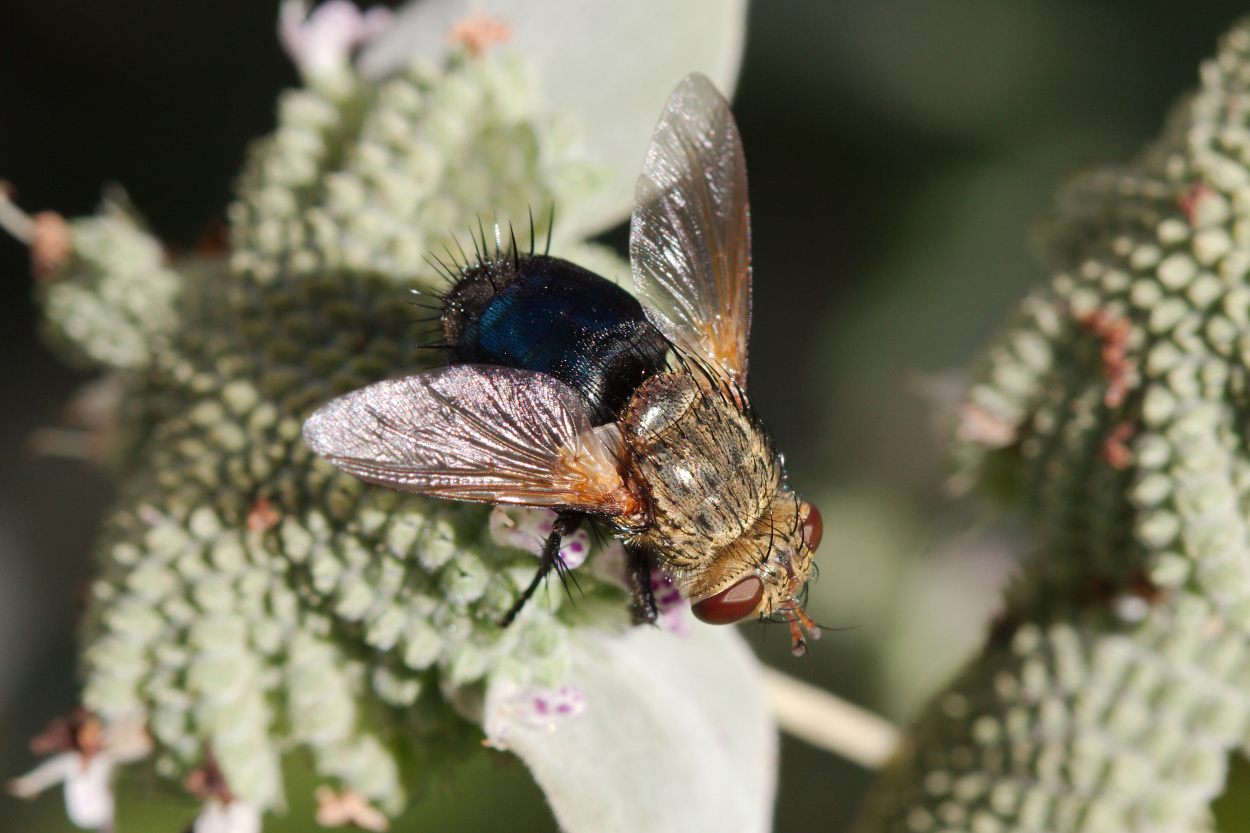
In general I’m not a fan of flies. Some of them are quite pretty, I know and of course they have their part to play in the natural order of things. Still, it’s hard to think of the common house fly and similar critters as anything other than disease carrying vermin. Close up, I guess, they are beautiful in a sinister sort of way. This is actually a fairly distant cousin of the house fly (Musca domestica) which is in a different superfamily of the Calyptratae. Yes, I know, whatever.

Categories: Creatures | Comments Off on Archytas apicifer

Scolia dubia Blue-winged Wasp

Scolia dubia Blue-winged Wasp

Scolia dubia Blue-winged Wasp

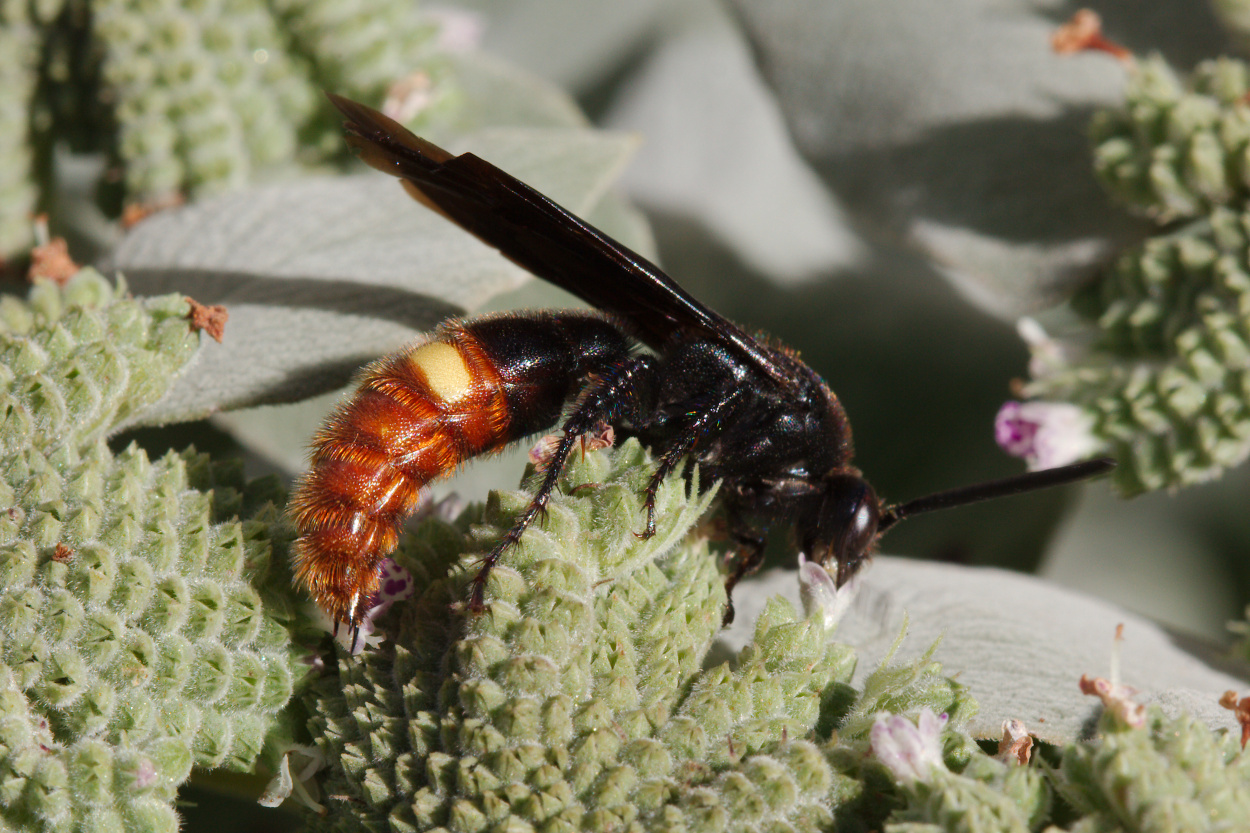
I know everyone is going to be shocked when the learn that I took insect pictures today. Me and insects? Really? Well, I think this is one of the coolest wasps I’ve seen in a while. It’s wearing woolies on its tail end. It is a blue-winged wasp (Scolia dubia) and it’s a big one, over two centimeters long. Males have longer antennae and though I don’t have anything to compare them to, I’m guessing this is a female.

Categories: Creatures | Comments Off on Scolia dubia Blue-winged Wasp

More Insects

Trichopoda pennipes

Trichopoda pennipes

After the heavy rain yesterday the weather has turned beautiful. It’s clear and cool and the humidity is much lower than it’s been. I went out twice to take pictures of the varied insects in the back yard and was able to work in the sun without being uncomfortable for the first time in months.

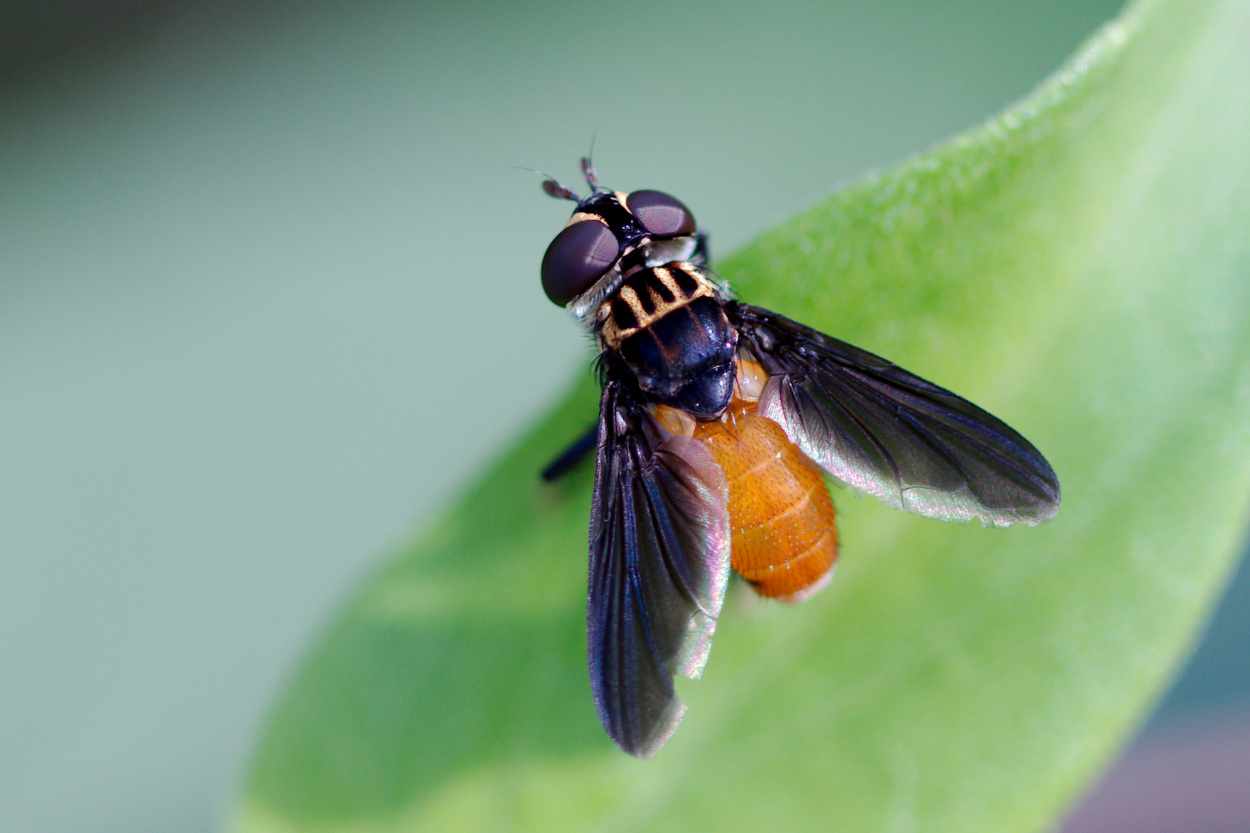
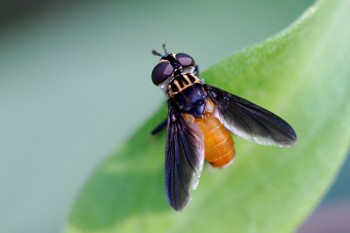
I was also rewarded with some new insect photos. First, there were two species of flies in the genus Trichopoda. The one shown here is Trichopoda pennipes and the other is Trichopoda plumipes, which has more black with a yellow pattern on its abdomen. The genus Trichopoda are known as the feather-legged flies because they have feather like brushes on their rear pair of legs. You can’t see them in this photograph but I got a few other views from behind where they show up quite nicely.
Condylostylus sp.

Condylostylus sp.

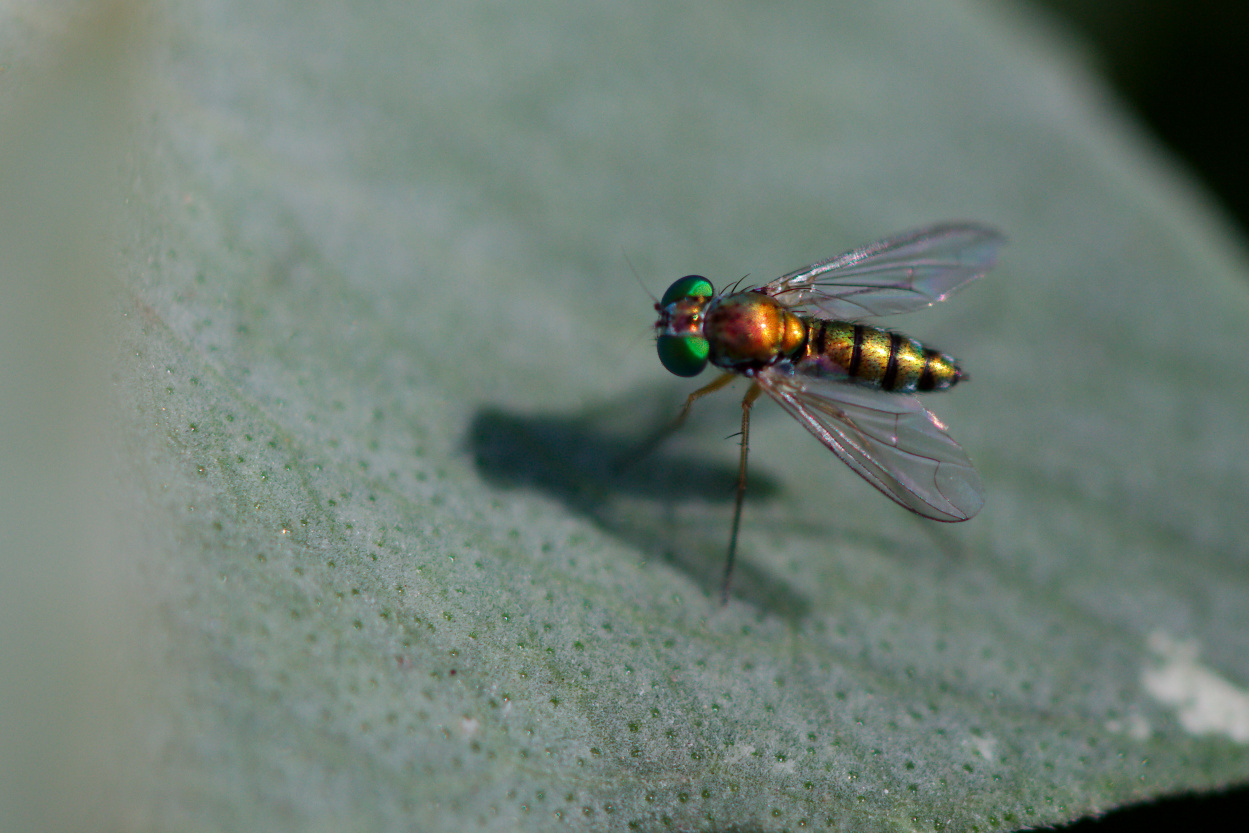
Back in June I posted a picture titled A Little Green Fly. At the time I identified that fly as Condylostylus sipho. The one pictured here may be the same species or it may be one of the other very similar species in the genus Condylostylus. Either way, it’s a pretty little thing.

P Brown commented that she wanted to write a poem to that one and on Facebook she did but I never got around to posting it here. So, in memory of that last little green fly and in honor of this new one, here is P Brown’s poem:

Ode To A Little Green Fly —
Have you come to snare the dancing honey bee,
You clothed in shimmering green among the Asclepias tuberosa?
Vascular threads forming a highway for thee,
And there long-legged on a leaf, you did pose.
Do I see you waving to a passing fly,
Displaying spindly legs, yet firmly built?
Perhaps to entice sipha for a brilliant mate,
Your short life to defy.
And now Henry has without any guilt,
Captured on facebook, your eternal fate.
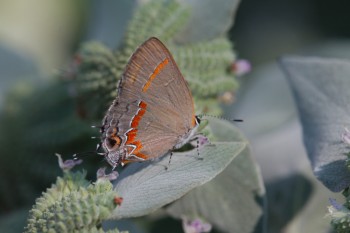
Calycopis cecrops (Red-banded Hairstreak)

Calycopis cecrops (Red-banded Hairstreak)

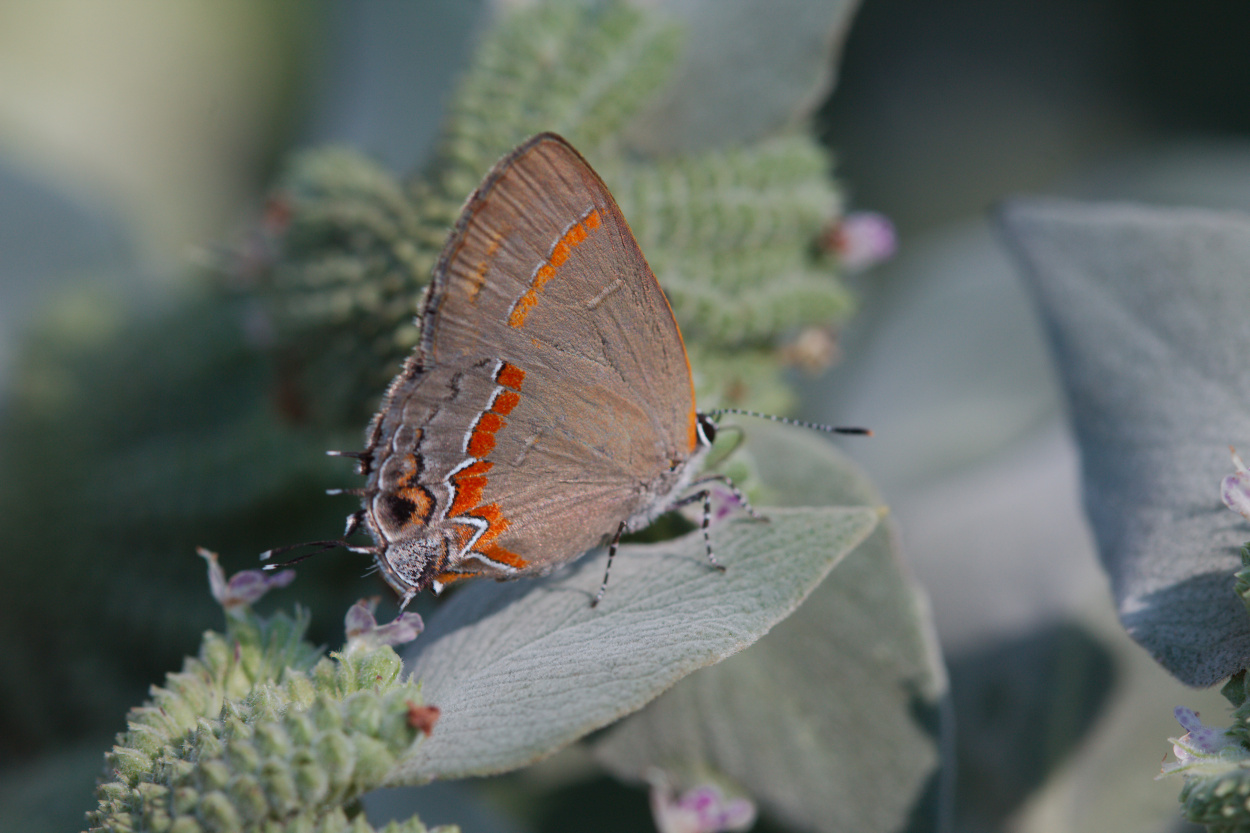
Next we have a fairly common butterfly but one I haven’t got a good picture of, as far as I know. It is the red-banded hairstreak (Calycopis cecrops). It didn’t fly off when I got close, as they often do, but it was not making itself easy to photograph. For the most part it would turn away from me so all I could see was the trailing edges of its wings. I finally got a few from the side that I was reasonably happy with.
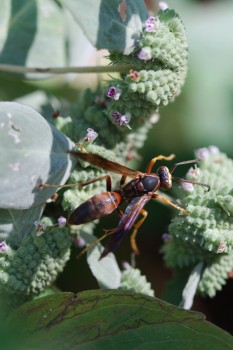
Polistes fuscatus (Northern Paper Wasp)

Polistes fuscatus (Northern Paper Wasp)

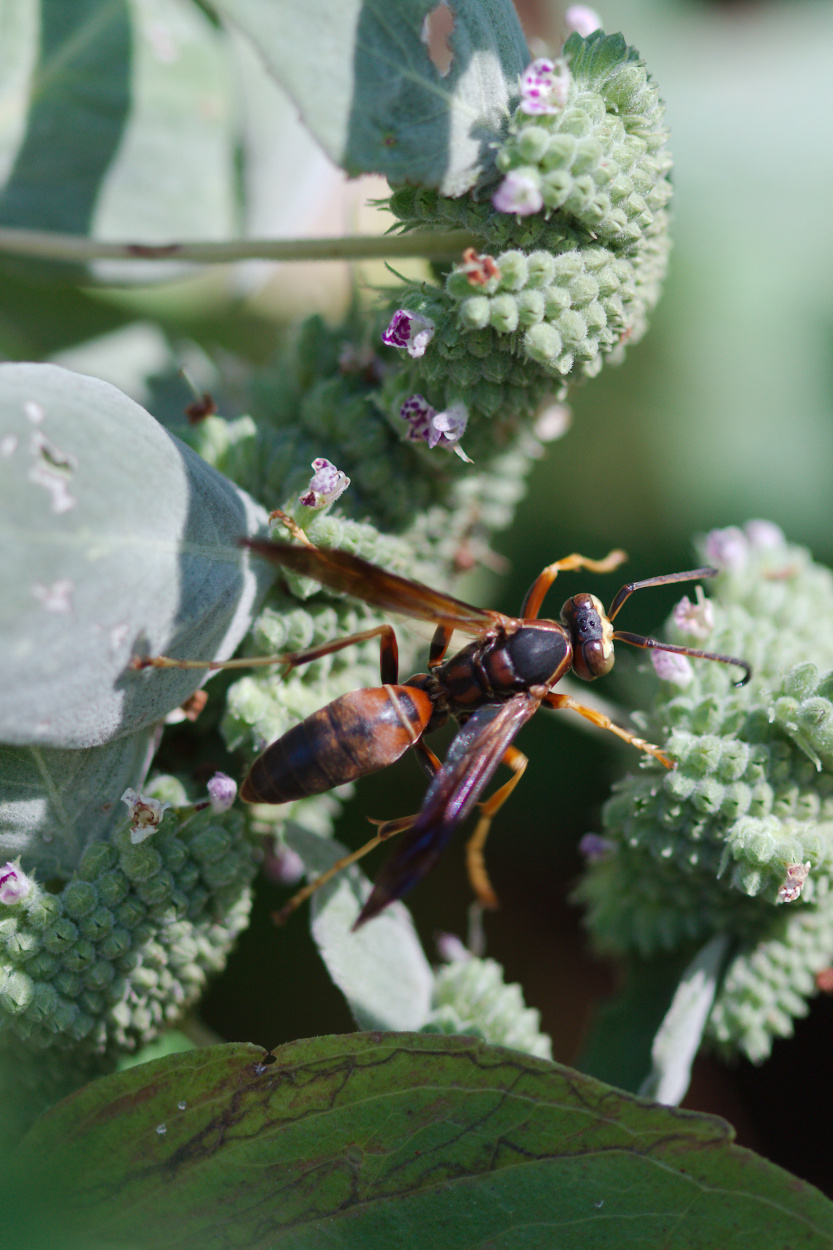
Finally, we have a northern paper wasp (Polistes fuscatus). In general I wouldn’t consider these to be particularly friendly creatures but this one was pretty oblivious to my presence. I aimed the camera straight down on the tripod and got a pretty descent view of it from above. The light kept coming and going as the taller plants were blowing in the wind but otherwise, this one was easy to photograph.

I also got pictures of a yellow-collared scape moth (Cisseps fulvicollis), a wasp called Isodontia apicalis, and a few assorted and only tenuously identified flies. All in all, an enjoyable little time out back.

Categories: Creatures | Comments Off on More Insects

Mosquito On A Mushroom

Mosquito on a Mushroom

Mosquito on a Mushroom

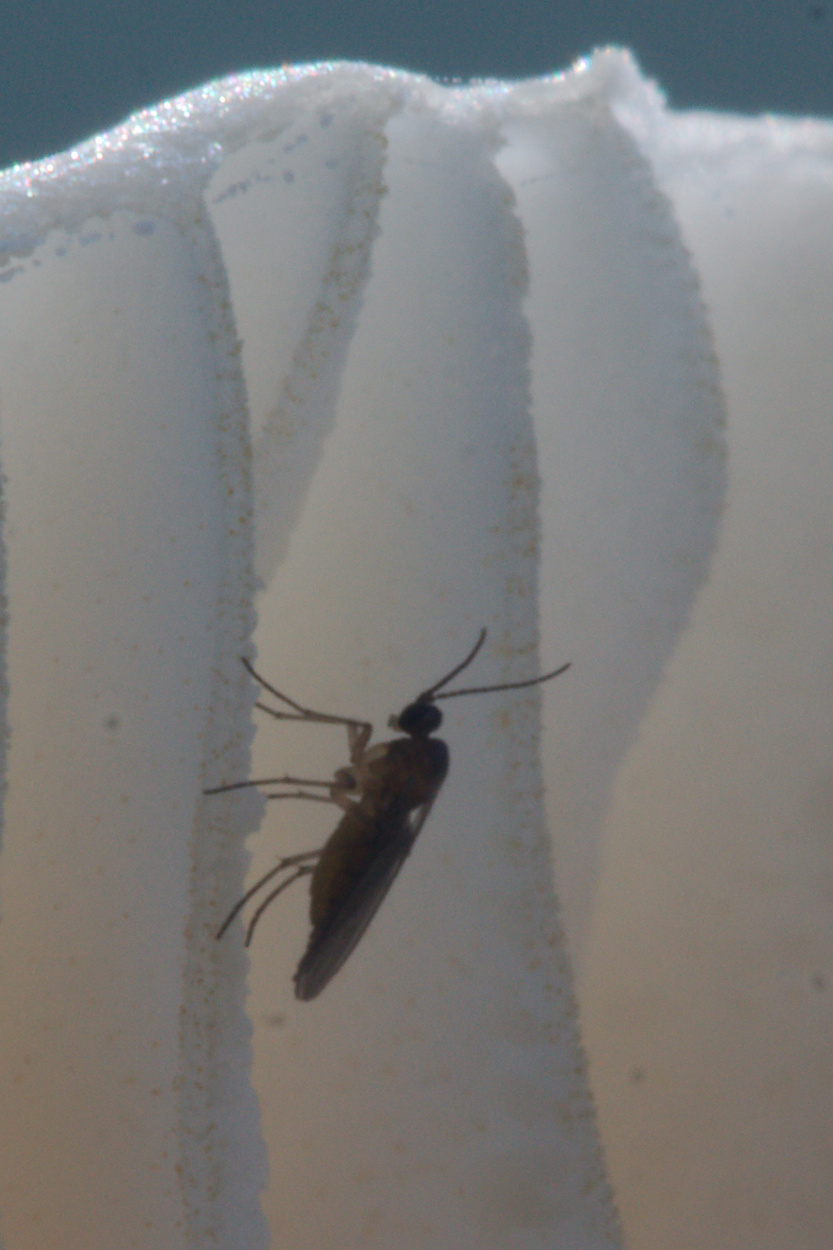
I went out this morning to take some pictures of a mushroom in my back yard. It had fallen over and that gave me a nice easy view of the gills on the underside of the cap. So, I’m lying in the wet grass with mosquitoes buzzing in my ears when I notice that one has landed on the mushroom. So, I took a few of that. Later I’ll post one of just the mushroom.

Did you know that there are some 3500 species of mosquito worldwide? Also, both male and female adults feed on nectar and plant juices but it is only the females that feed on blood because a blood meal is usually required for development of eggs. How about this: Carbon dioxide, expelled in the breath of animals, attracts female mosquitoes that are looking for a blood meal. They detect carbon dioxide in the air and travel upwind to the source. So, want to stop attracting mosquitoes? Then stop breathing. Mosquito facts taken from BugGuide.net.

Categories: Creatures | Comments Off on Mosquito On A Mushroom

Danaus plexippus (Monarch)

Danaus plexippus (Monarch)

Danaus plexippus (Monarch)

Across the street from the kousa dogwood in yesterday’s post there is a large buddleia hedge. I couldn’t resist stopping to take pictures. In addition to this female monarch (I guess that makes it a queen?), there were eastern tiger swallowtails (Papilio glaucus) and a huge number of Painted Ladies (Vanessa cardui. This monarch only flashed her wings at me once when I was ready. All the other pictures show the underside of her folded wings.

Categories: Creatures | Comments Off on Danaus plexippus (Monarch)

Chrysoperla (Lacewing) Larva

<em>Chrysoperla</em> (Lacewing) Larva

Chrysoperla (Lacewing) Larva

Cathy found this little thing (it is about 5.5 mm long) crawling on our kitchen counter. I didn’t recognize it so I figured I should take its picture. I convinced it to crawl up onto a piece of paper and then put it in the freezer. I sort of wish I had known what it was, though, and put it outside. This is the larva of a lacewing and one of the most voracious aphid eaters around. So, if you find a little think that looks like this, don’t freak out. Carefully move it to your garden and be glad.

Categories: Creatures | Comments Off on Chrysoperla (Lacewing) Larva

Eumenes fraternus (Potter Wasp)

Eumenes fraternus (Potter Wasp)

Eumenes fraternus (Potter Wasp)

I see these fairly often but this is the first time I’ve gotten a decent picture of one. This is on the tiny red flowers of painter’s palette (Persicaria virginiana) in our back yard. it’s also one of the first good pictures I’ve taken of these little flowers, now that I think about it. They really are small but add a red haze over the variegated foliage.

Categories: Creatures, Flowers and Plants | Comments Off on Eumenes fraternus (Potter Wasp)

Junonia coenia (Buckeye)

Junonia coenia (Buckeye)

Junonia coenia (Buckeye)

This is a buckeye butterfly. Seen with its wings open it is particularly beautiful. The underside of the wings are not nearly so nice but it’s still a pretty little thing. It fluttered away from me a few times and then landed here and let me get quite close, but only with its wings held together. This was taken in the late evening so I had to use flash to get enough light.

Categories: Creatures | Comments Off on Junonia coenia (Buckeye)

More Milkweed Bugs

Asclepias tuberosa

Asclepias tuberosa

On August 16 I posted a picture of large milkweed bug nymphs (Oncopeltus fasciatus) on a milkweed seed pod. I was out in the garden again this afternoon and see that they are still there, although the seed pods have opened up and are spilling their seeds.

Categories: Creatures, Flowers and Plants | Comments Off on More Milkweed Bugs

Papilio glaucus (Eastern Tiger Swallowtail)

Papilio glaucus (Eastern Tiger Swallowtail, male)

Papilio glaucus (Eastern Tiger Swallowtail, male)

It was a bit late in the day before I went out to take pictures so the light was a bit low. I didn’t take a tripod but the problem was more with the subject moving than anything else. Butterflies don’t often sit still when they are feeding. I managed to get reasonably close to this tiger swallowtail but his wings were fluttering and he was moving about the whole time. I also saw a sphinx moth (most likely genus Hemaris) but the pictures of that are too blurry to be worth much.

Categories: Creatures | Comments Off on Papilio glaucus (Eastern Tiger Swallowtail)

Butterfly Wing

Butterfly Wing

Butterfly Wing

When I got home this evening I noticed three butterfly wings on the sidewalk. No idea where the fourth was. Anyway, I propped one up on some plants and took a few pictures. If you look closely you can see the tiny scales that give the wing its color.

I haven’t looked it up but at a glance I’m thinking a fritillary, but that may be wrong.

Categories: Creatures | Comments Off on Butterfly Wing

Synanthedon scitula (Dogwood Borer)

Synanthedon scitula (Dogwood Borer)

Synanthedon scitula (Dogwood Borer)

Synanthedon scitula (Dogwood Borer)

Synanthedon scitula (Dogwood Borer)

I was taking pictures of wasps on the mountain mint again today and happened to see this little critter on the black-eyed Susans next to me. At first I thought it was some odd wasp but it didn’t really look right for that. The next thing I thought was that it looked more like a sphinx moth than anything but it was too small (about 1.5 cm long) and not really like any sphinx moth I’ve ever seen.

Armed with that impression I did some searching and discovered a fairly large family of moths called Sesiidae or clearwing moths (about 1370 species in 151 genera). If I’m right (and I’m waiting on confirmation by an expert), this is a dogwood borer (Synanthedon scitula). If not it’s something very like that. Their larvae bore into the bark of many ornamental, fruit, and nut trees. They do significant damage to dogwoods but are also a significant problem in apple orchards.

Anyway, I’d never seen one before so, despite their generally unwelcome nature, I was a bit excited to get a few pretty good pictures of one.

Categories: Creatures | Comments Off on Synanthedon scitula (Dogwood Borer)

Oncopeltus fasciatus (Large Milkweed Bug)

Oncopeltus fasciatus (Large Milkweed Bug) nymphs

Oncopeltus fasciatus (Large Milkweed Bug) nymphs

There are only a few fading flowers left on the Asclepias tuberosa (butterfly weed) in our yard and there are masses of gossamer bejeweled seeds. While taking the previous post’s picture of a butterfly I noticed masses of these nymphs of the large milkweed bug (Oncopeltus fasciatus). Like many insects that feed on milkweed, they are colored orange, telling would-be predators, “don’t eat me, I don’t taste very good.”

Categories: Creatures | 2 Comments