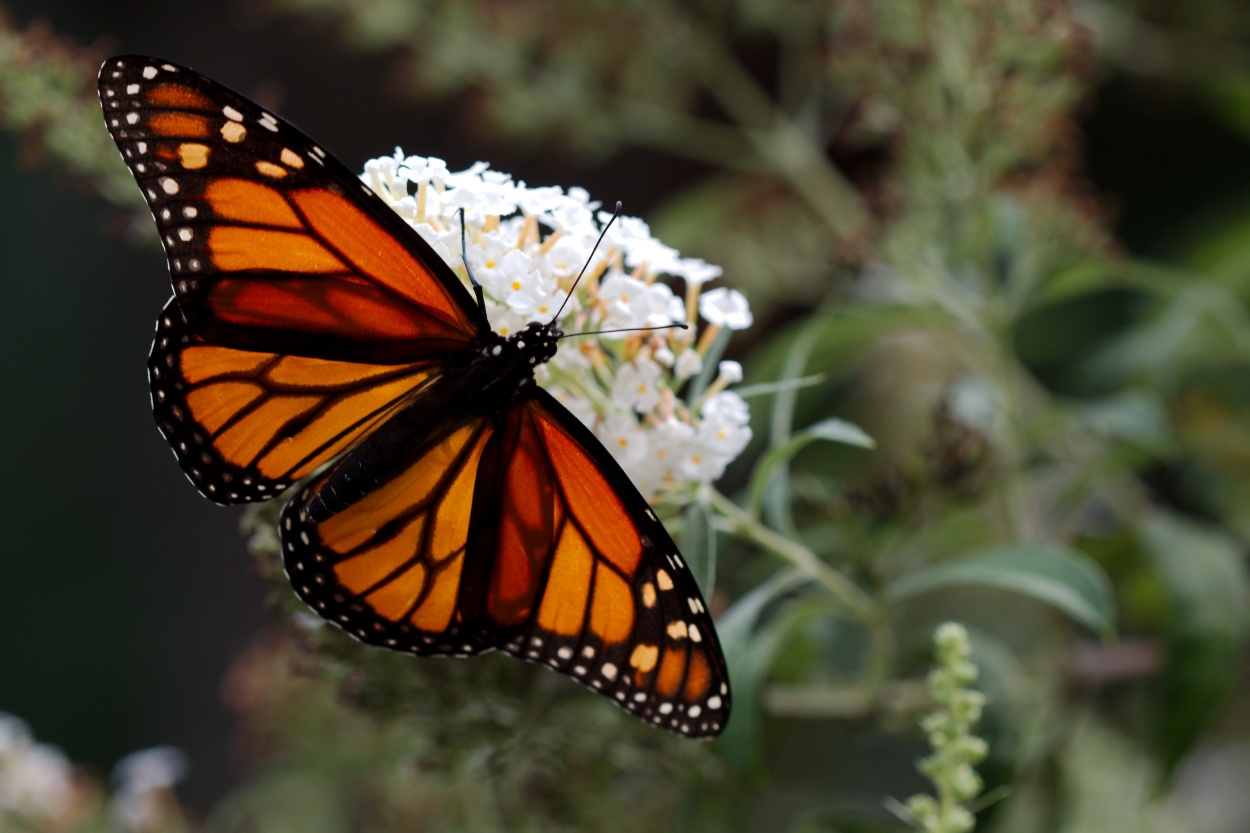
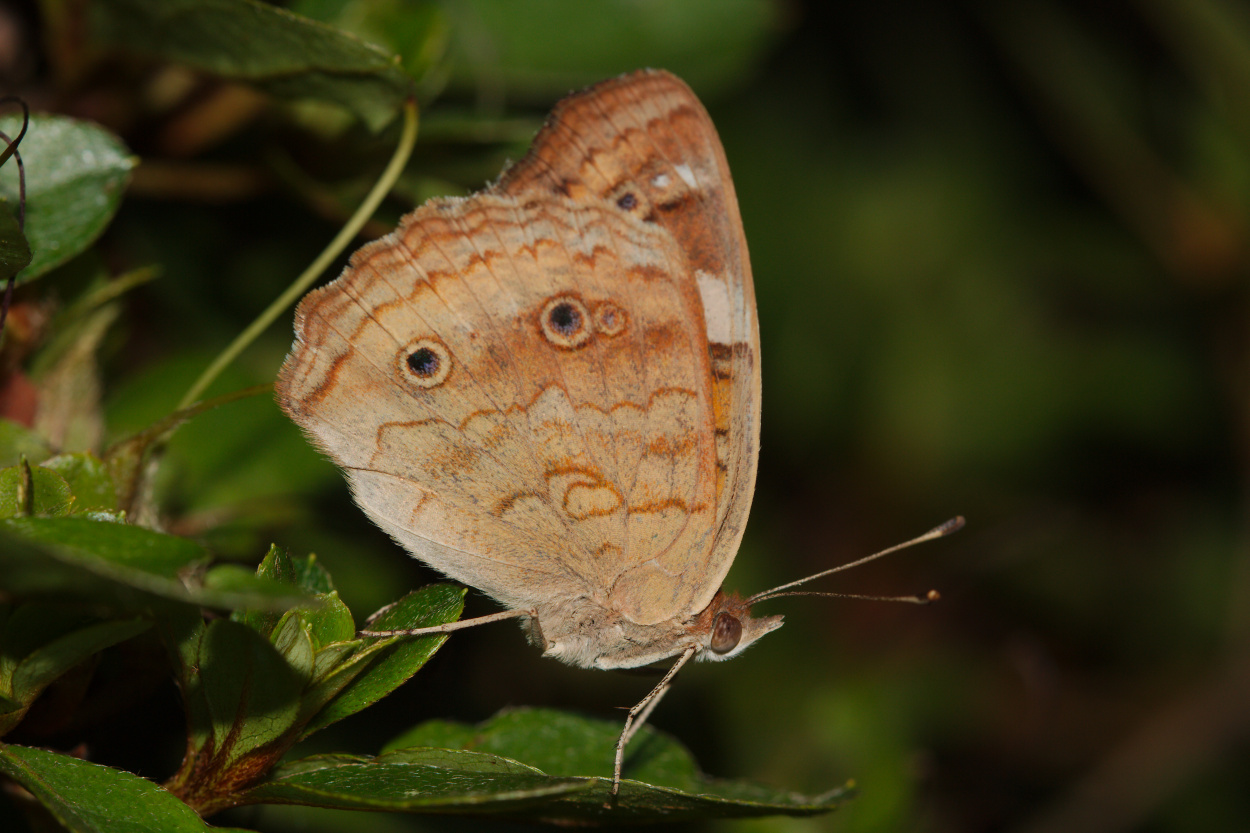
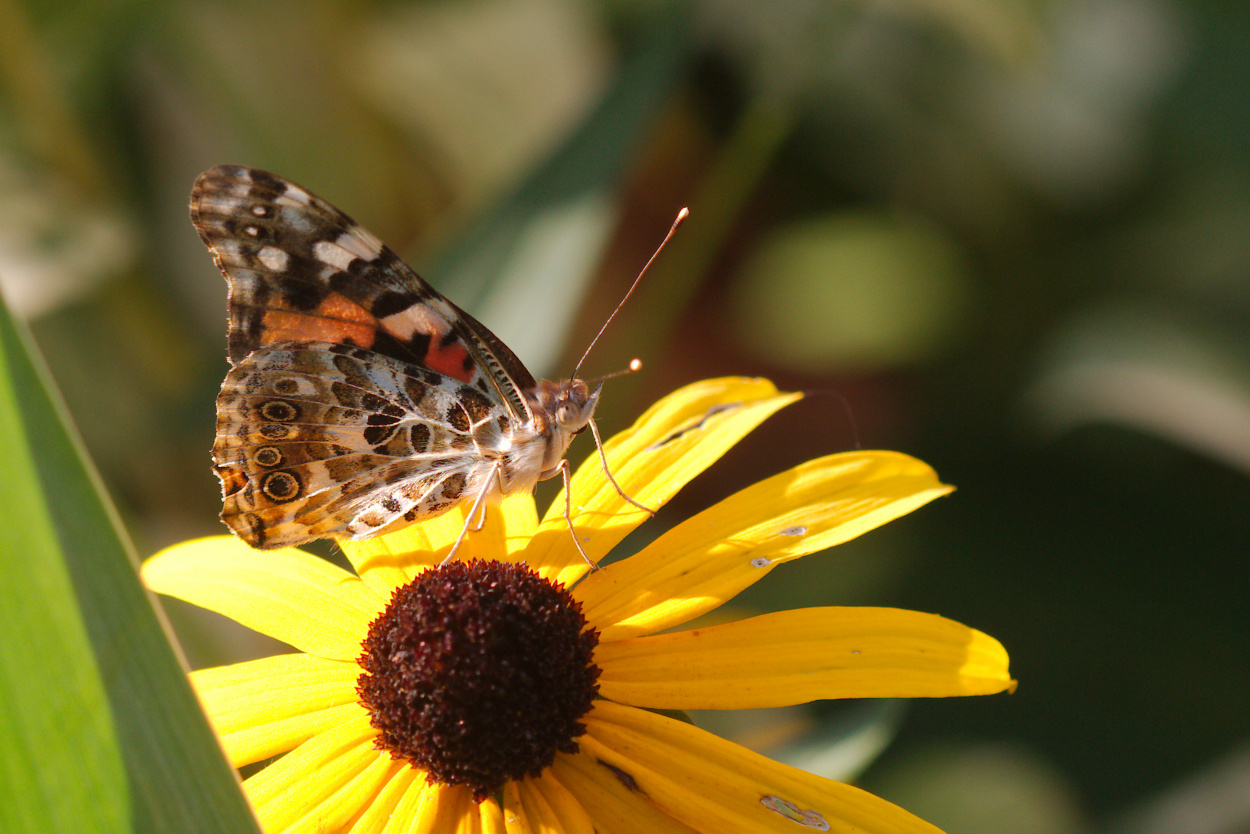
I went out to take pictures of skippers on the Verbena bonariensis but ended up with a pretty nice picture of a painted lady (Vanessa cardui) on a black-eyed Susan. It’s a pretty little butterfly, not particularly rare but I’ve found them difficult to get close to. This one let me get a few shots off before fluttering away.
Creatures
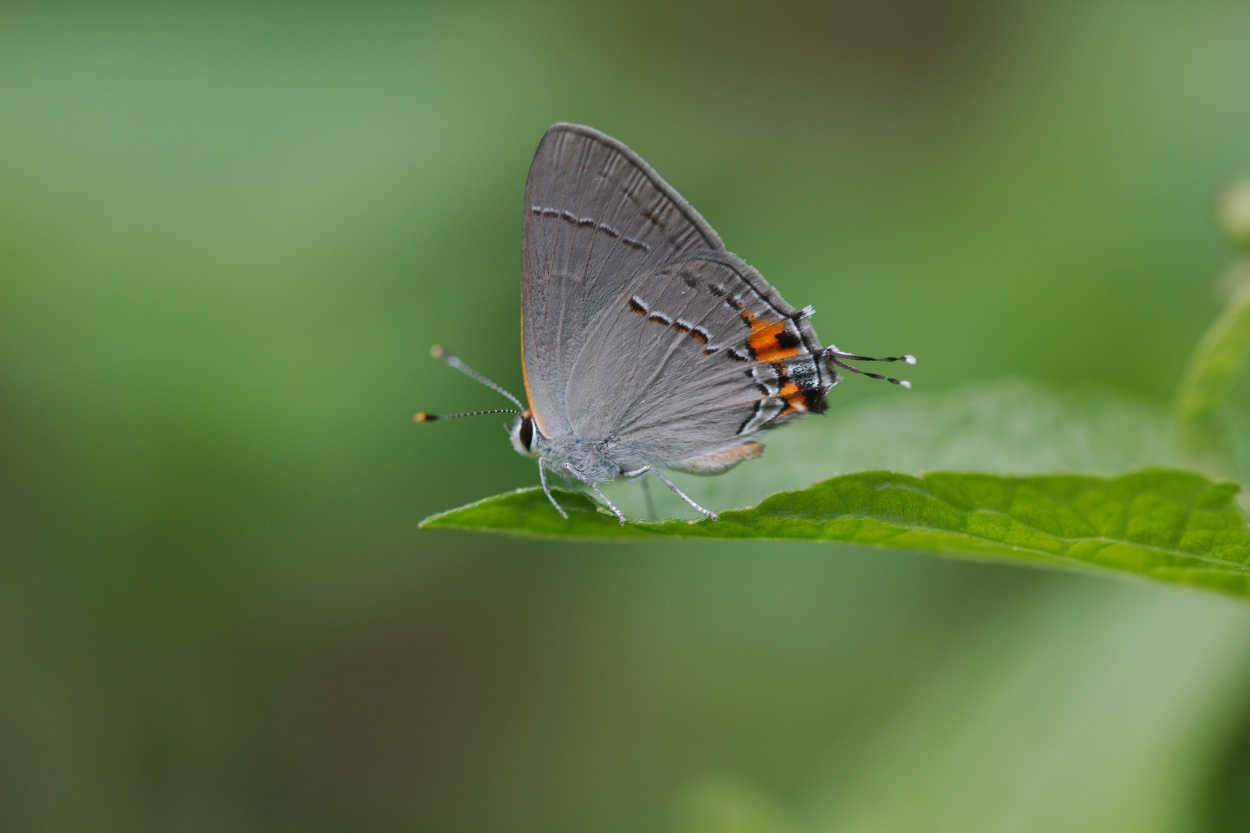
Strymon melinus (Gray Hairstreak)
I went out in the back yard today to take some pictures of a couple spicebush swallowtail butterflies (Papilio troilus). Those pictures didn’t turn out as well as I would have liked so I decided to post this one of a much smaller little butterfly, called a gray hairstreak (Strymon melinus). I was working without a tripod because the swallowtails were up too high in the buddleia, so even this one isn’t as sharp as it should be.
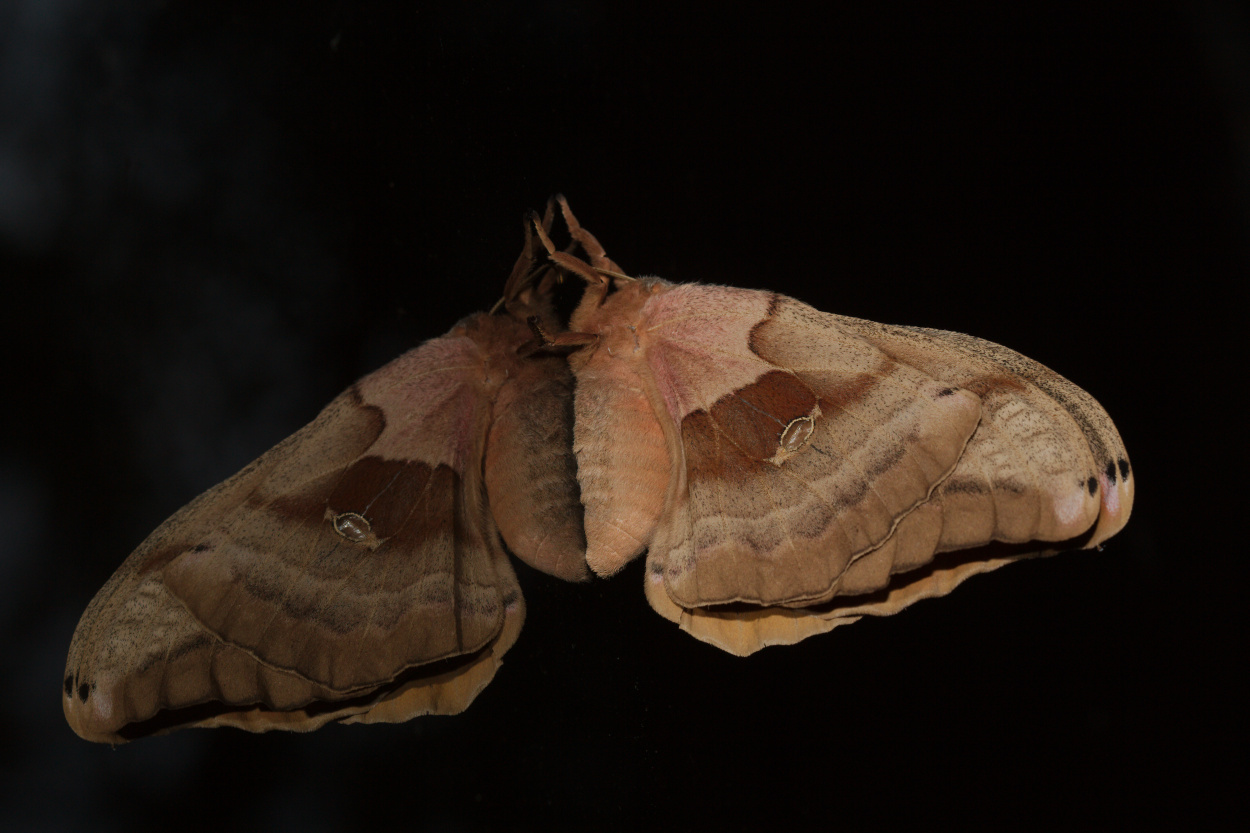
Antheraea polyphemus (Polyphemus Moth)
So, lots of moths lately. This is a Polyphemus Moth (Antheraea polyphemus) and is another that was on the side of my office building. A coworker came to my office and told me about it and I went down and took a few pictures. When I left for the day it was still there but had its wings folded which gave a nice reflection in the glass on the side of the building. This was taken with flash.
Polyphemus was a the cyclops that Odysseus ran into on his journey. He was the son of Poseidon and Thoosa. The moth is named after him because it has a single eye-spot on each wing. They don’t really show up well in this picture and are more obvious from above.
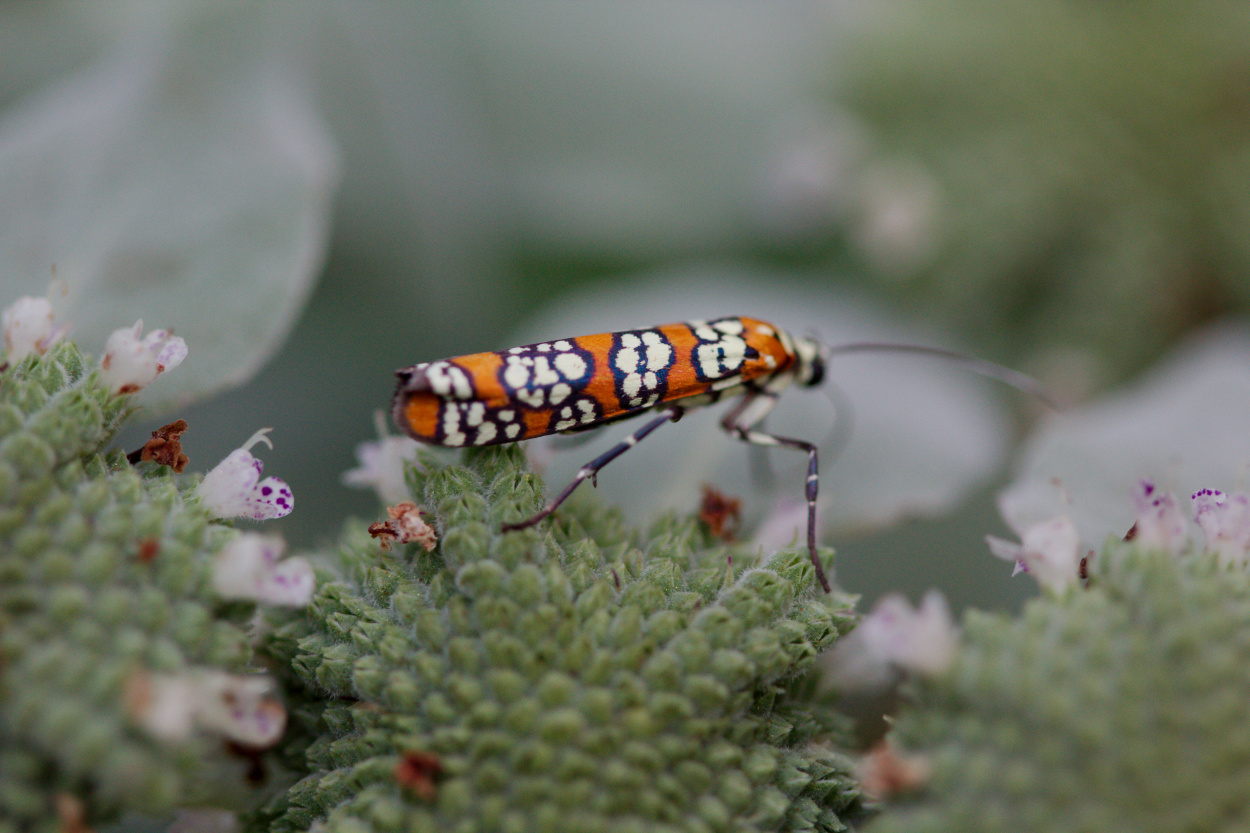
Atteva aurea (Ailanthus Webworm Moth)
With the proliferation of Ailanthus trees throughout our region, it isn’t too surprising that the Ailanthus webworm moth is also fairly common. They are quite distinct and fairly easy to spot, with their white, orange, and black wings. Unfortunately I wasn’t able to get both wings and head in focus in one shot. This was the best I could do without a tripod.
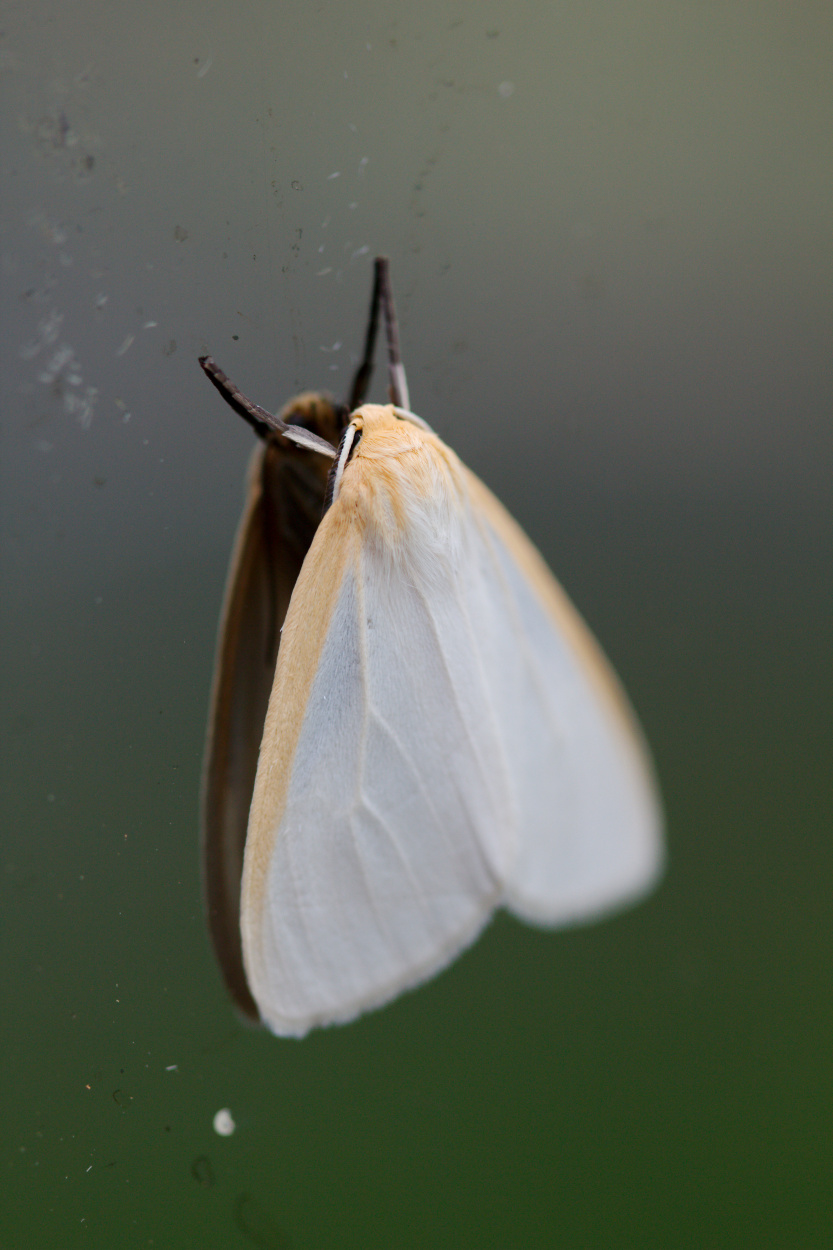
Cycnia tenera (Delicate Cycnia)
For those who were not happy with the first post from today, here’s one that should be less of a problem. This small moth was on the door to my office building when I arrived today. Very pretty little thing.
Green Swamp
A few years ago I happened to read and article in Smithsonian magazine about Venus flytraps. It mentioned the Green Swamp in southeastern North Carolina as one of the best places to go to see them in their native habitat. In fact, the area around Wilmington, North Carolina (and into South Carolina) is the only place the plants natively grow.
This year was our third visit to the Green Swamp, managed by The Nature Conservancy. Last year it had been very hot and very dry and was not as rich an experience as the year before. This year was another good one. It has been a very warm summer but it has also rained enough that there was a lot to see.
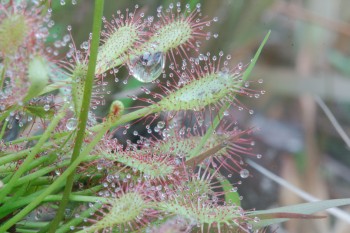
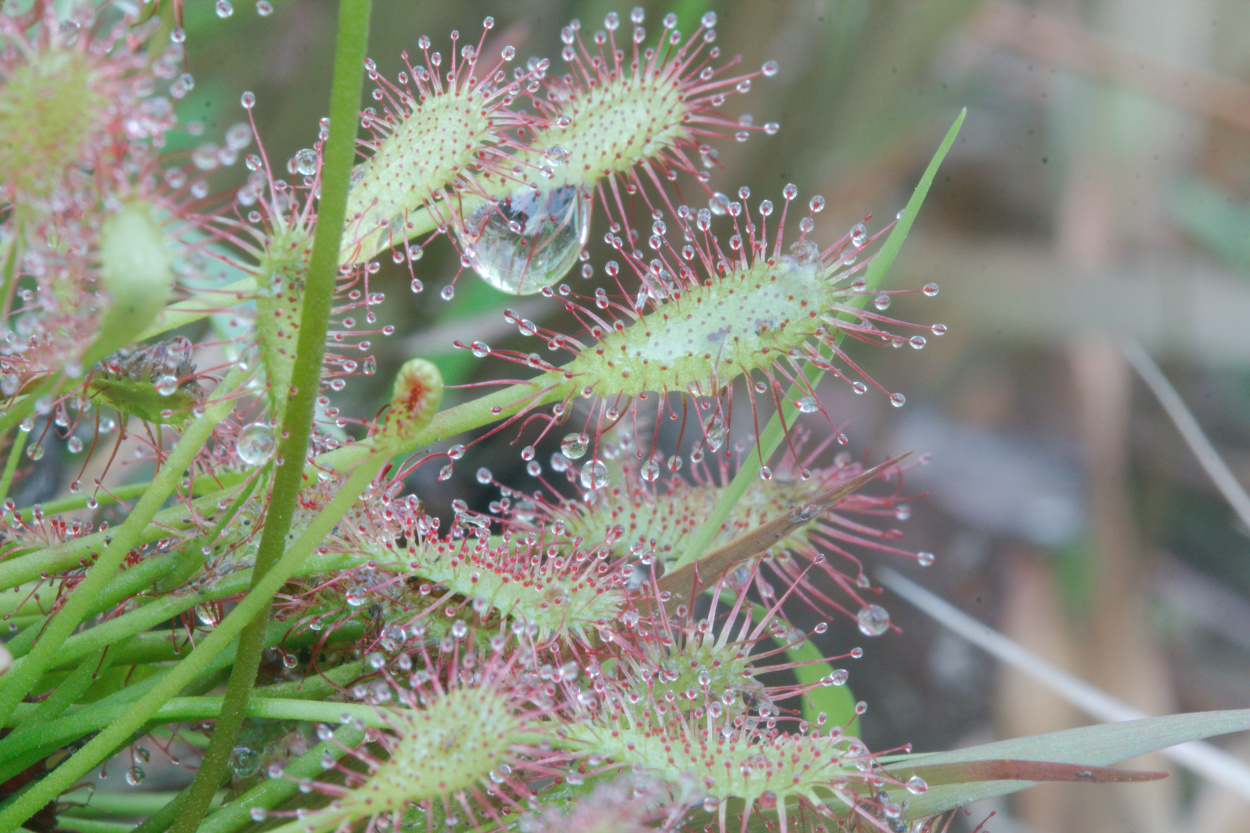
I’ll start with the sundews. There are a number of Drosera species and those we found were just off the parking area beside the partially dried pond. They are small and if you were not looking for them, you might not notice them at all. An entire plant is only a few inches across and tall and the red hairs that hold the drops of mucilage are not obvious against the dark earth. Once you know what to look for and where to look, however, they are easily found. Getting a good picture isn’t all that easy and basically means lying on the damp ground. Still, I’m please with what I got.
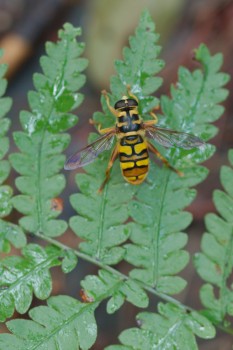
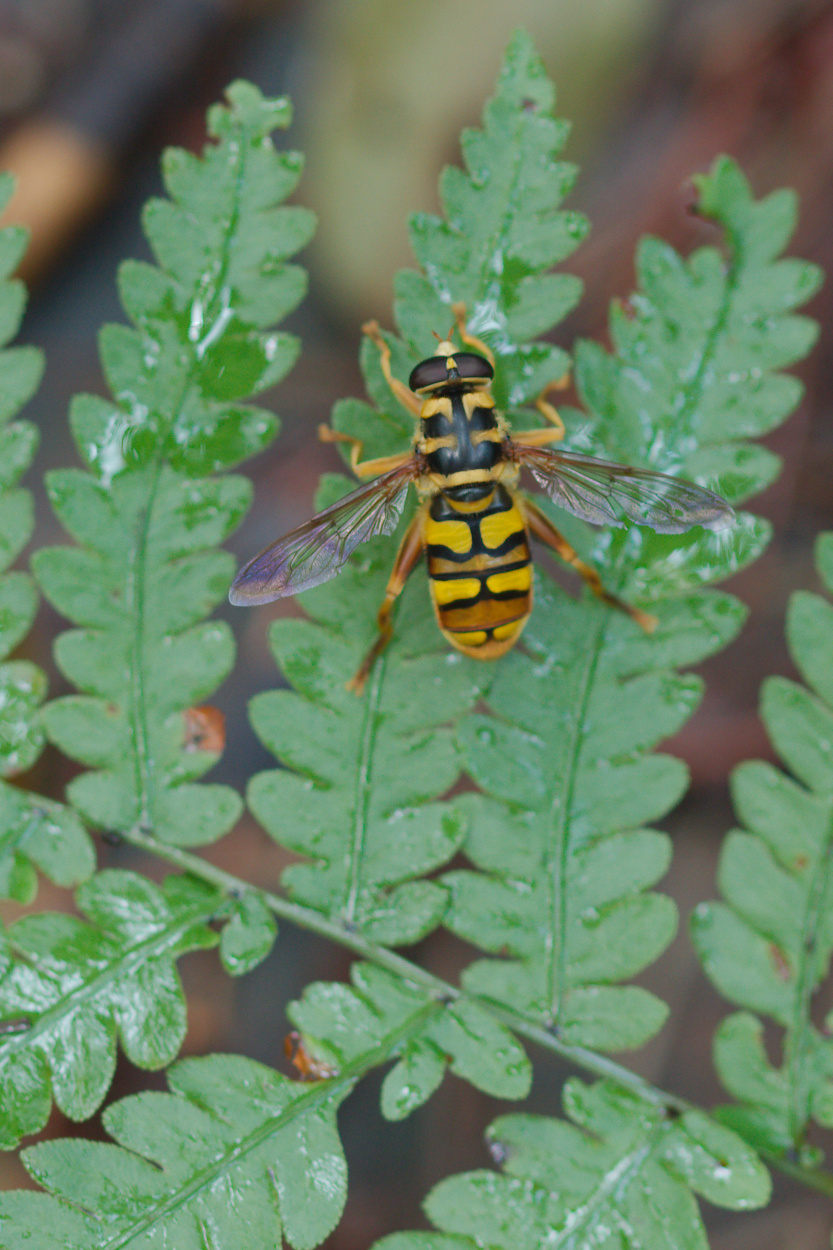
My next image is a yellowjacket hover fly (Milesia virginiensis). Between areas of long-leaf pine savanna are pocosins, or shrub bogs. In one of these we came upon this fly, which I mistook for a wasp of some sort at first, until I realized it only had two wings (order Diptera, the flies, literally means “two wings”). In fact, this fly mimics the southern yellowjacket (Vespula squamosa). It was fairly dark under the trees so this isn’t as sharp a picture as I’d like.
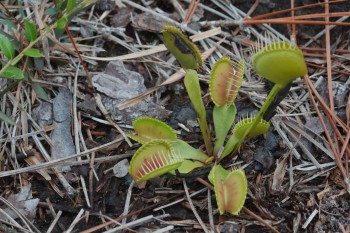
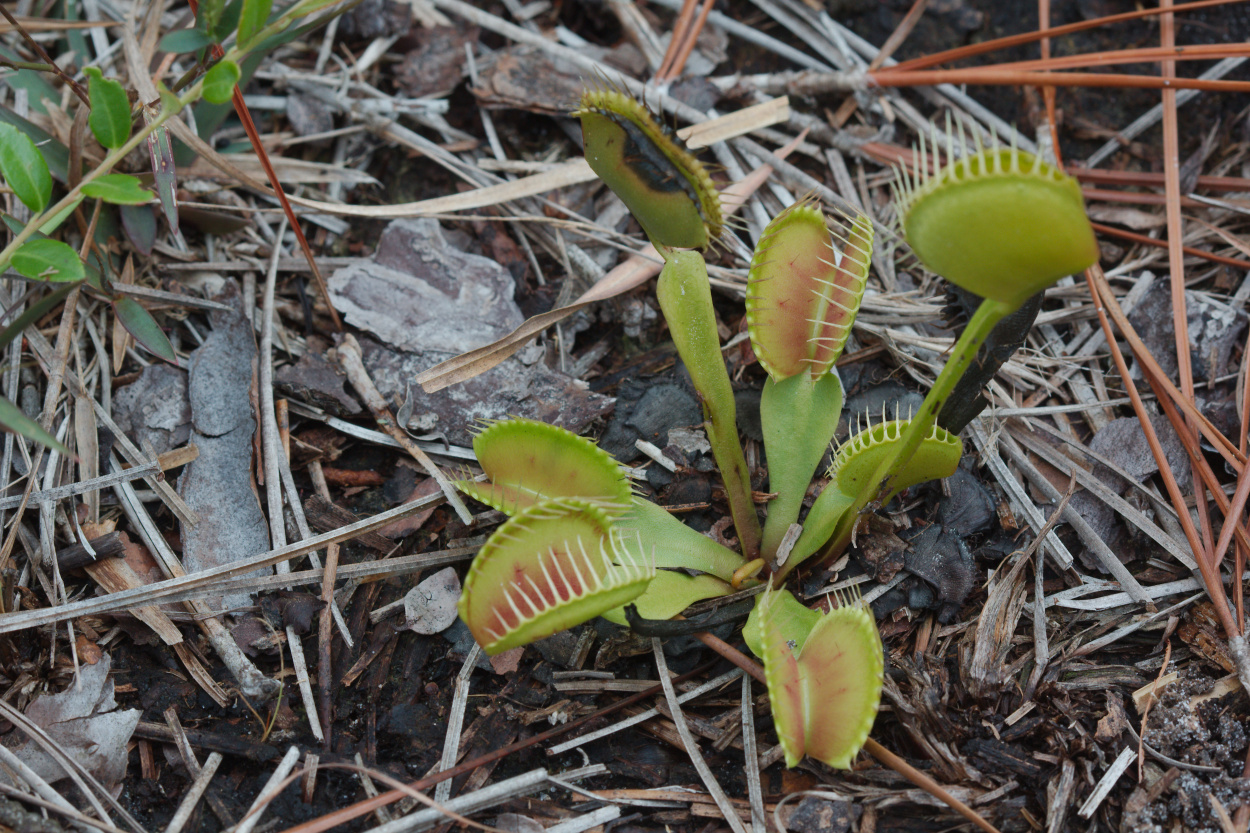
The third picture is what brought us to the Green Swamp in the first place. We didn’t see Venus Flytrap (Dionaea muscipula) at all last year. I assume they were still here but with the drought, they were not nearly as obvious. Also we walked a different route, which may have been the reason. In any case, these are pretty hard to spot until you know what to look for. They are small, only a couple inches across, and blend in well with the other vegetation. Just after we found these, we met another couple who were walking back out and who hadn’t seen any. We pointed them out and they were glad to have met us.
In the open traps on this plant you can see reddish spots, which is where the tiny trigger hairs are located. Two trigger hairs must be touched in succession or one hair touched twice in rapid succession before the trap will close. Once it closes on an insect, the insect is digested, which provides nitrogen for the plant growing in this nitrogen- and phosphorus-poor environment.
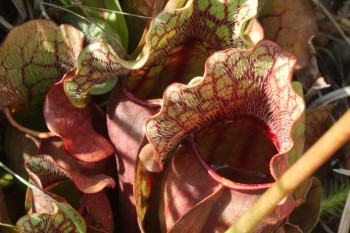
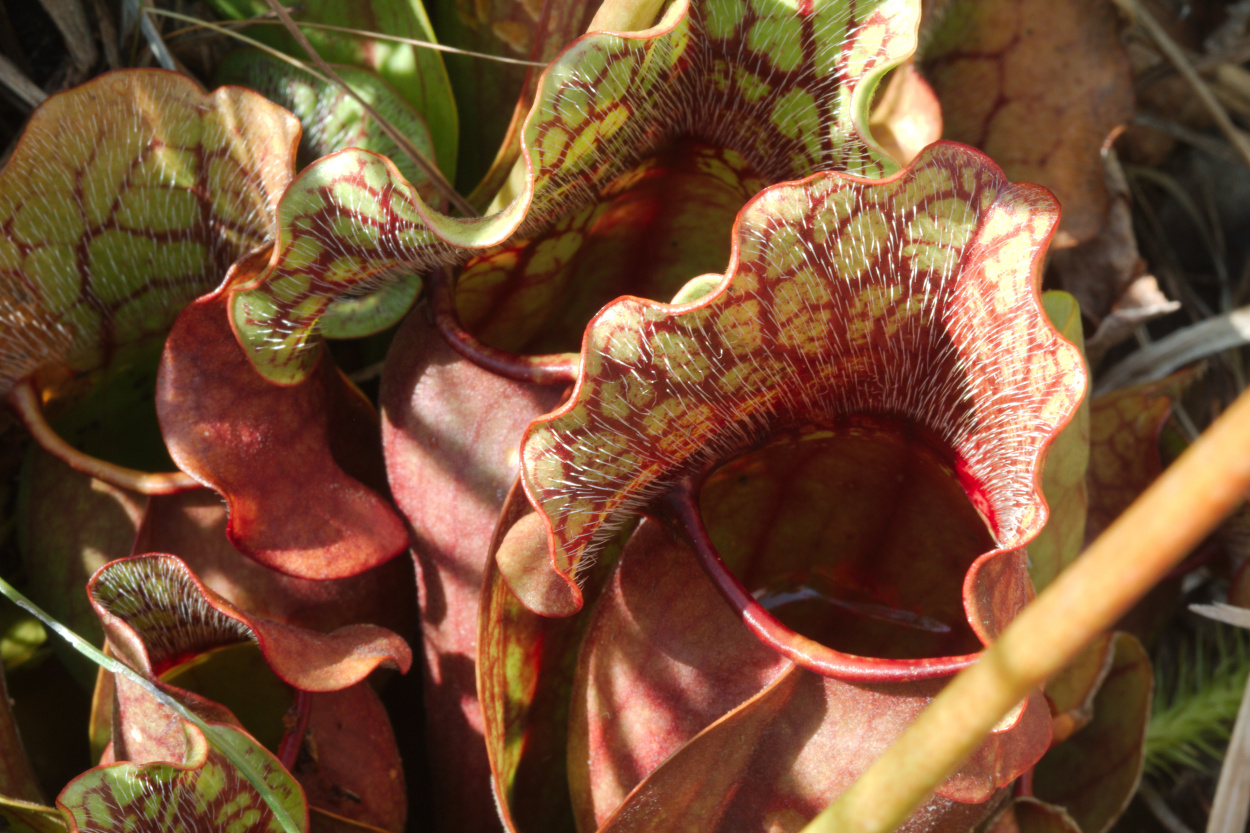
I really like the pitcher plants in the Green Swamp. There are at least two species here. This photo is of the purple pitcher plant (Sarracenia purpurea). This plant has short pitchers, only about four inches tall, but their dark color makes them fairly easy to spot. They also have flower stalks that are about a foot and a half tall. In this photo you can see the water that has collected in the pitcher on the right as well as the hairs on the upper portion to “guide” insects downward into the trap. Since these are so happy here in the hot south, I find it interesting that the other place we have seen pitcher plants growing is in Newfoundland.
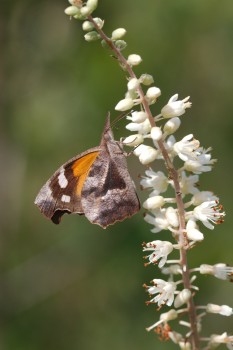
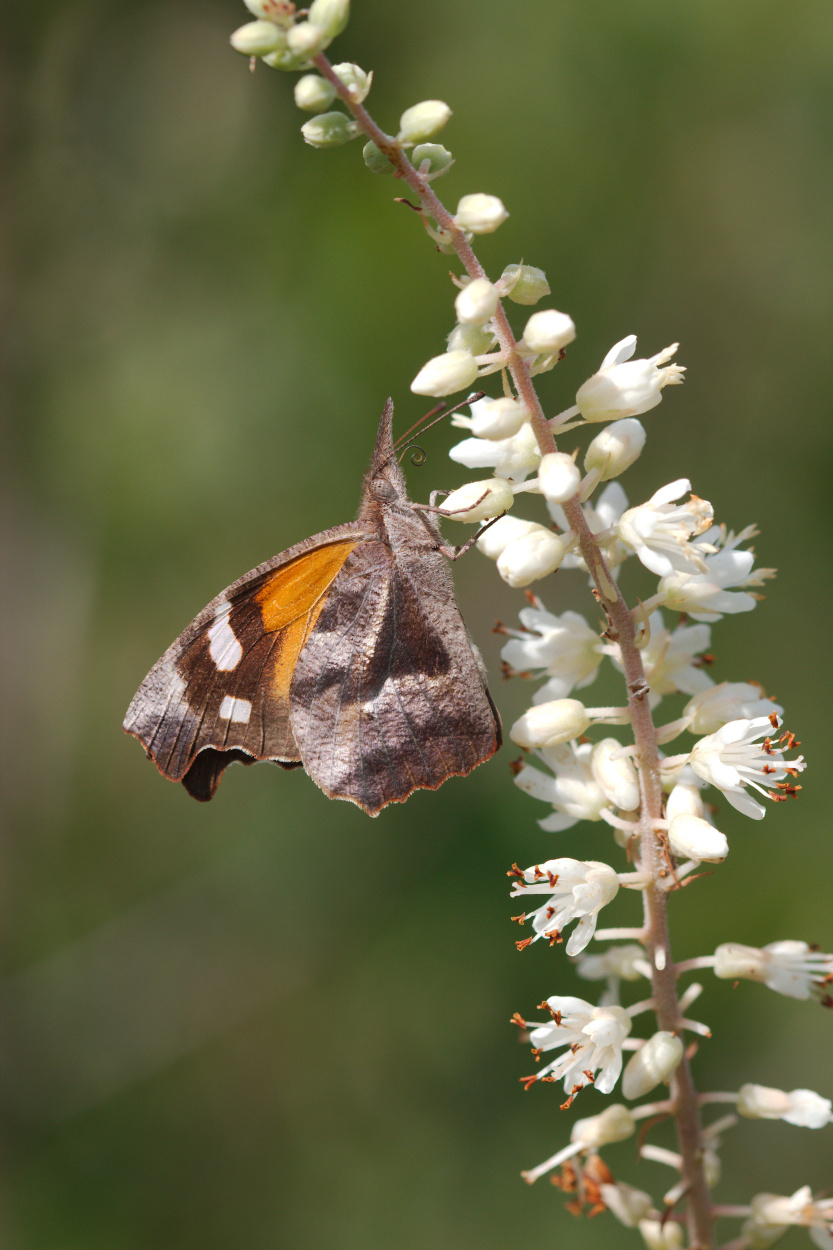
I’ll finish with a couple insects. First is an American snout butterfly (Libytheana carinenta, one of the brushfooted butterflies, Nymphalidae). It perched nicely for me on the panicle of a small shrub. I actually got some closer images but its snout was hidden behind one of the flowers. In this image you can see, if you look carefully, the coiled proboscis.
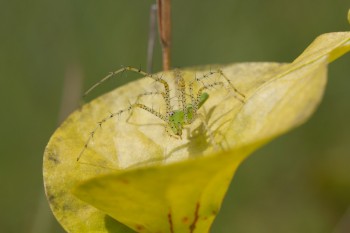
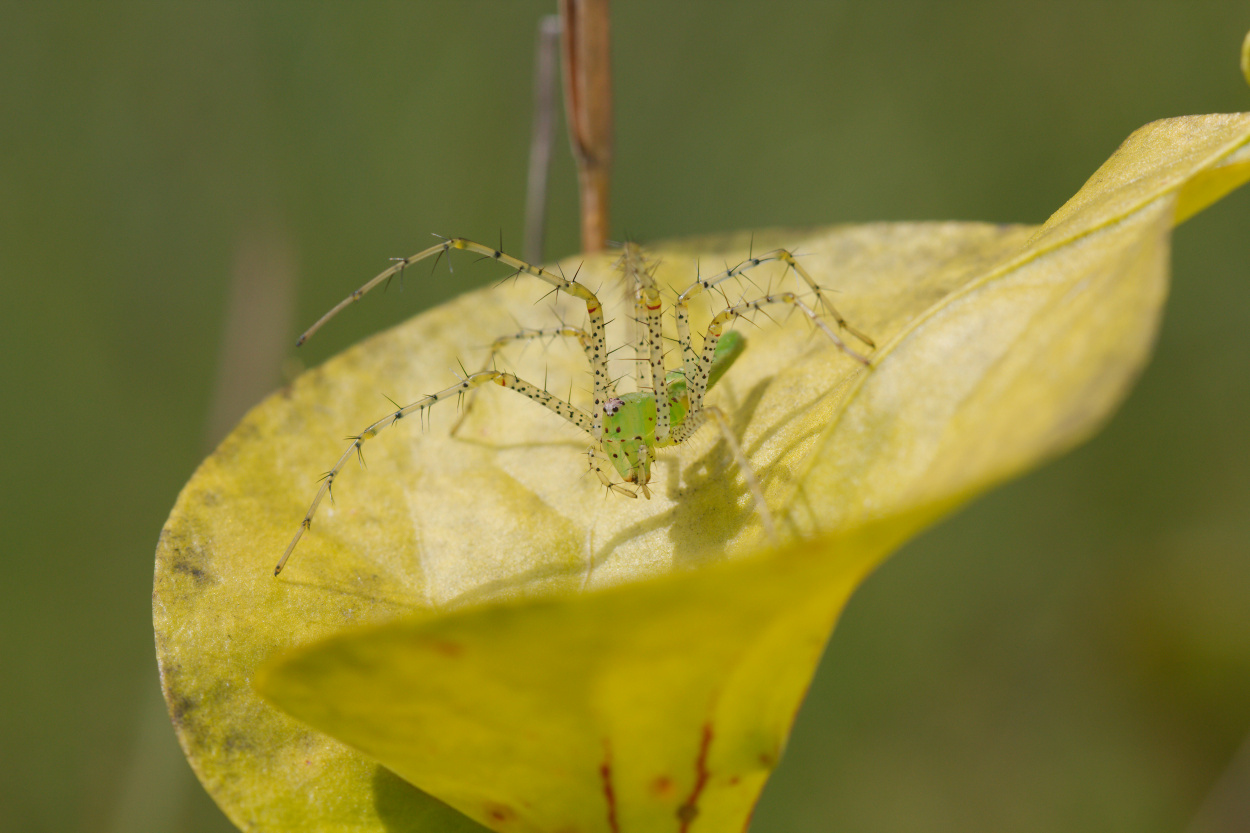
Finally, but not least by any means, is the Green Lynx Spider (Peucetia viridans). They are fairly easy to find in the Green Swamp. All you have to do is look for a yellow pitcher plant (Sarracenia flava) and there is a good chance one of these beauties will be waiting atop the operculum (the cap over the pitcher).
They are a little shy so if you touch the pitcher they are liable to run away, but they will generally come back fairly quickly. Also, there are enough of them that if you want a good picture you shouldn’t have too much trouble. These pitcher plants are a foot or 18 inches tall, making them perfect for photographing the spiders.
I did actually get some pictures that are a bit closer than this, including some where the spider didn’t quite fit in the frame, but I thought this image was more illustrative. They are such a beautiful green color and so fierce looking with their spiny legs. The lynx spider doesn’t spin a web but is a hunting spider, catching insects that are drawn to the pitcher plant on which it lives. They are not only found on pitcher plants, but live in lots of other areas but this is the only place I have seen them. They are certainly well suited to it.

Laughing Gulls and Royal Terns
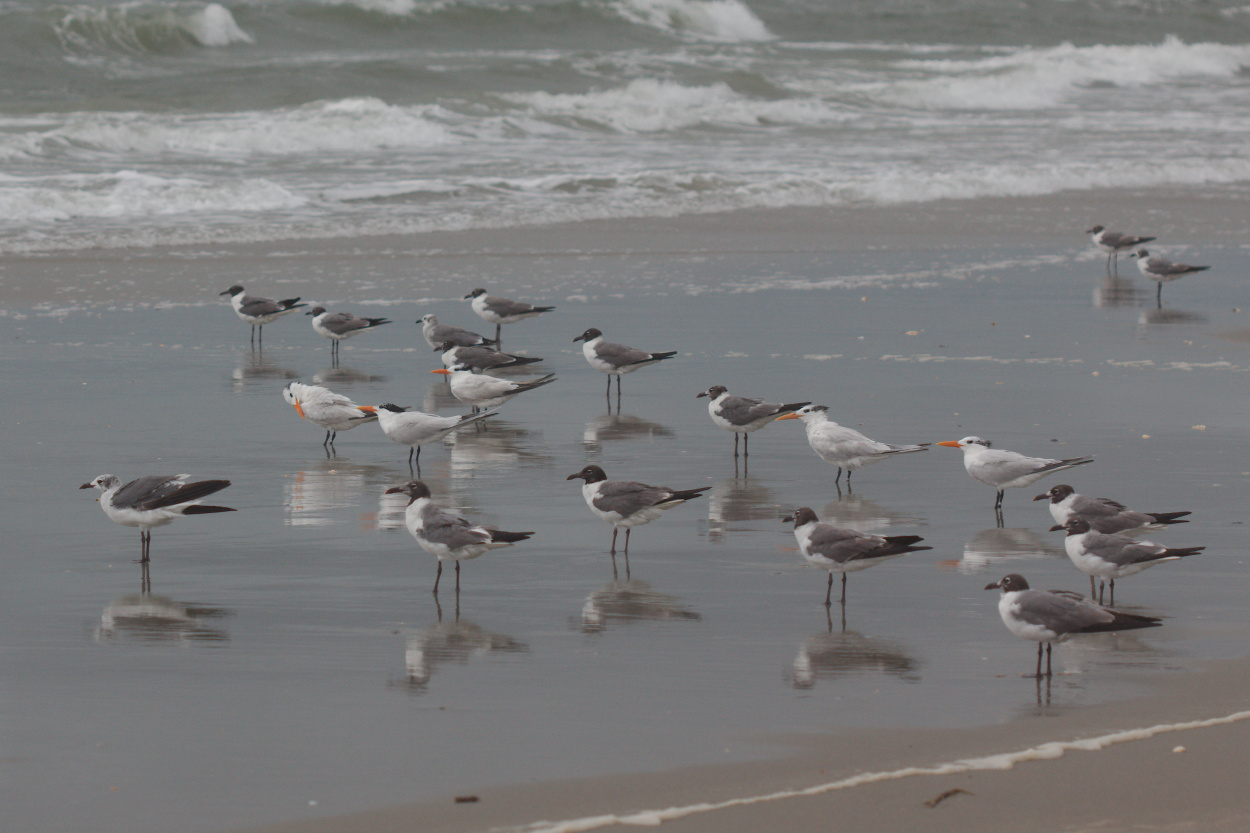
It was another mostly grey day at the beach today. We did go in swimming but of course I didn’t take my camera for that. We took a walk down the beach and I enjoyed watching the birds that were gathering on the sand bar. I didn’t spend a lot of time chasing birds this trip but these let me get reasonably close before they flew off.
Loggerhead Turtles
We arrived at the beach and got settled in. We had rain between Lumberton and the beach and some of that was very heavy and there were flashes of lightening all around. Not a lot of wind, though. At one point we saw a flash of lightening straight ahead of us, probably a mile or so away. Shortly after that we came upon a small fire on the edge of the woods, presumably lit by the lightening. I can’t say I’ve ever seen that before, although I know it’s fairly common. With the rain as heavy as it was, I don’t think the fire was a particular threat.
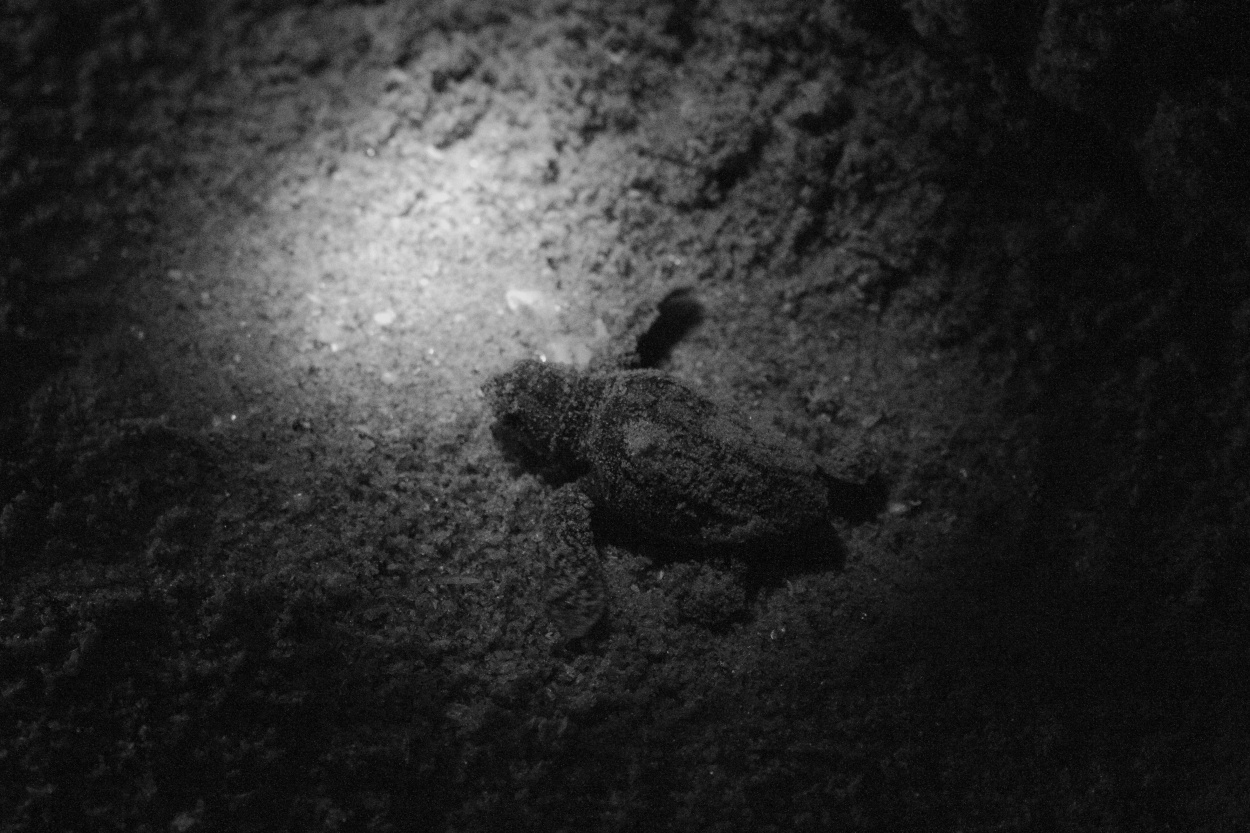
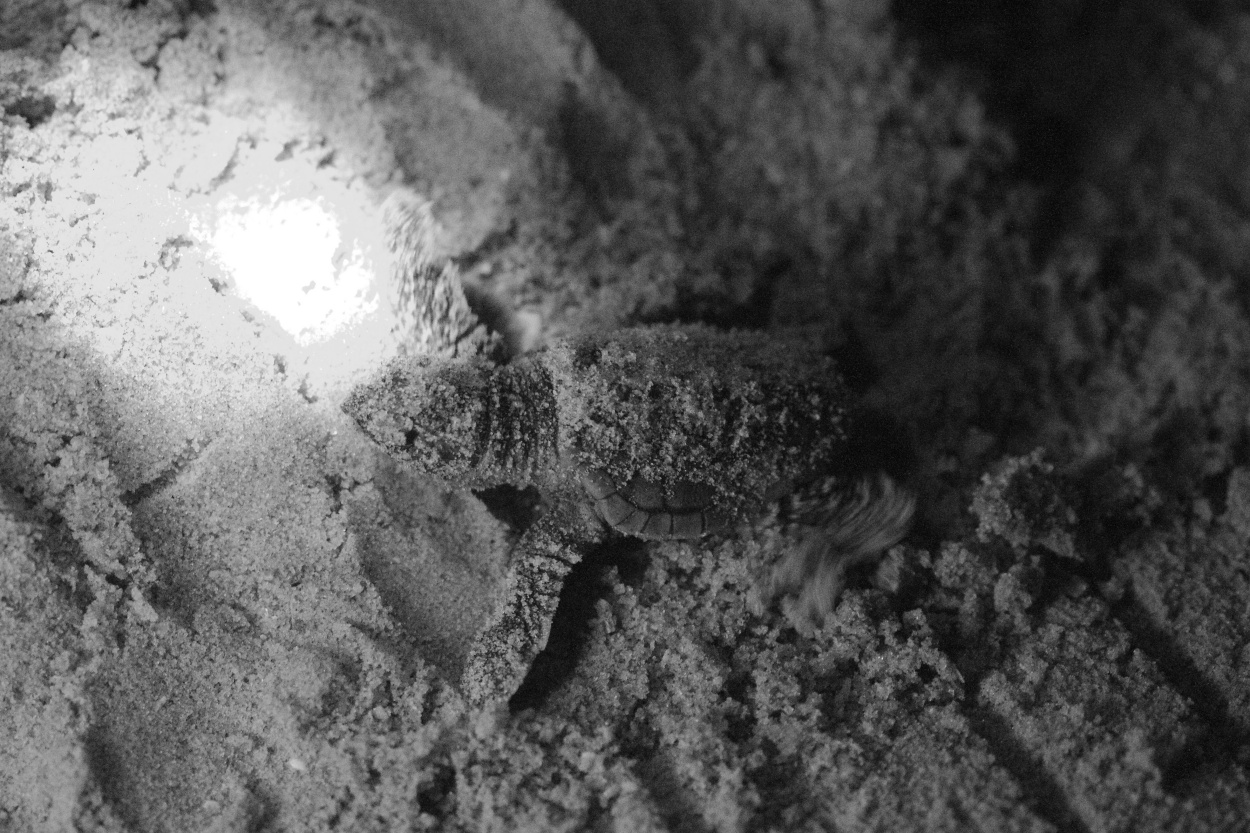
In any case, the real excitement of the day was a turtle next just a few houses up the beach from where we were. The bulk of the turtles had hatched and headed out to see the previous two nights but there were some unaccounted for and we were told that they would be dug up as it got dark. A half dozen or so loggerhead turtles were found and most of them were able to crawl to the surf. Volunteers used red lights to guide them down the sand. With my camera set to ISO 6,400 and with the lens wide open at f/2.8 I was able to get an exposure of 1/100 second. Because of the red lights they are much more natural after I converted them to black and white, so that’s what I am posting here.
These two images are of the same turtle, making its slow trek to the ocean. It’s only about three inches from head to tail and I have no idea what its actual chances of survival are. I can’t imagine they are particularly high, but it made it to the water, anyway.
Tachopteryx thoreyi (Gray Petaltail)
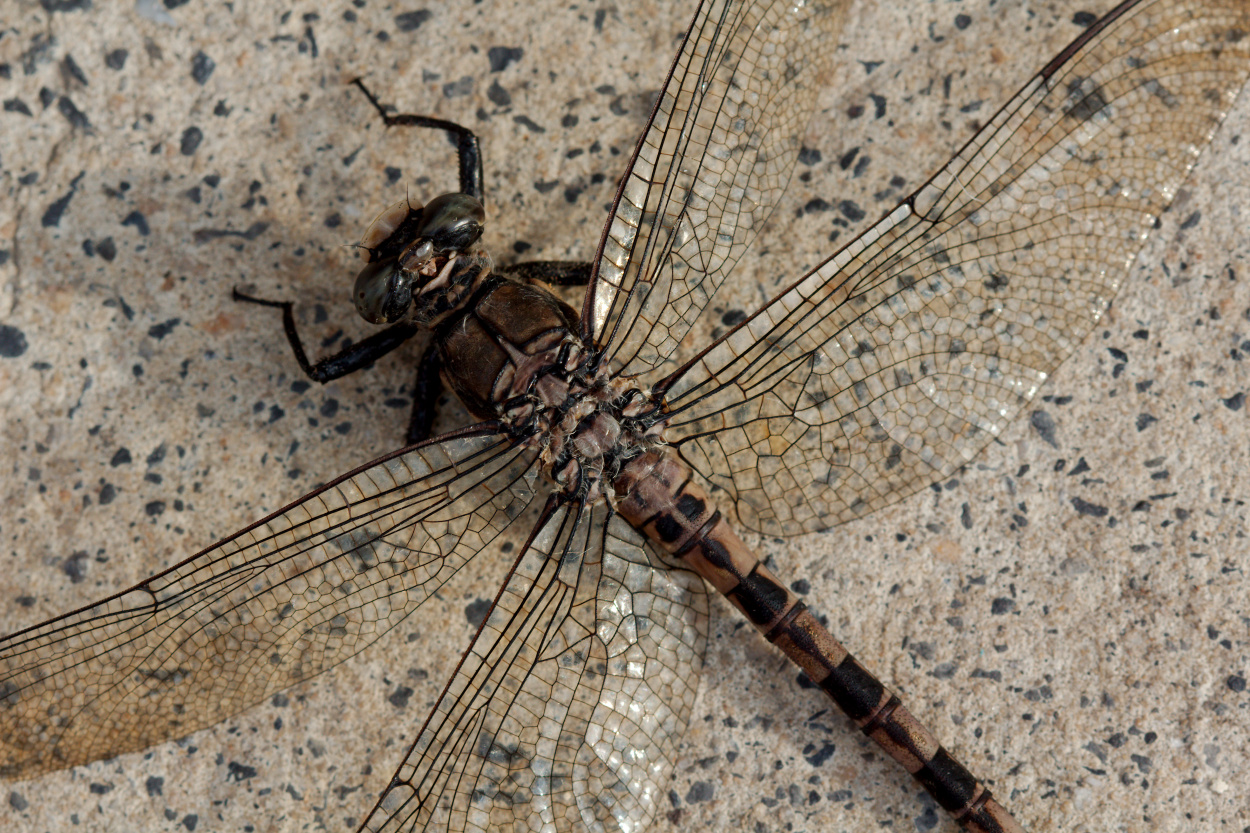
Driving home from Kentucky we stopped for gas just west of Hancock, Maryland. This huge dragonfly was sitting on the pavement and at first I wasn’t sure it was alive but it was moving and it flew away after I took a couple pictures.
Sphecius speciosus (Eastern Cicada Killer Wasp)
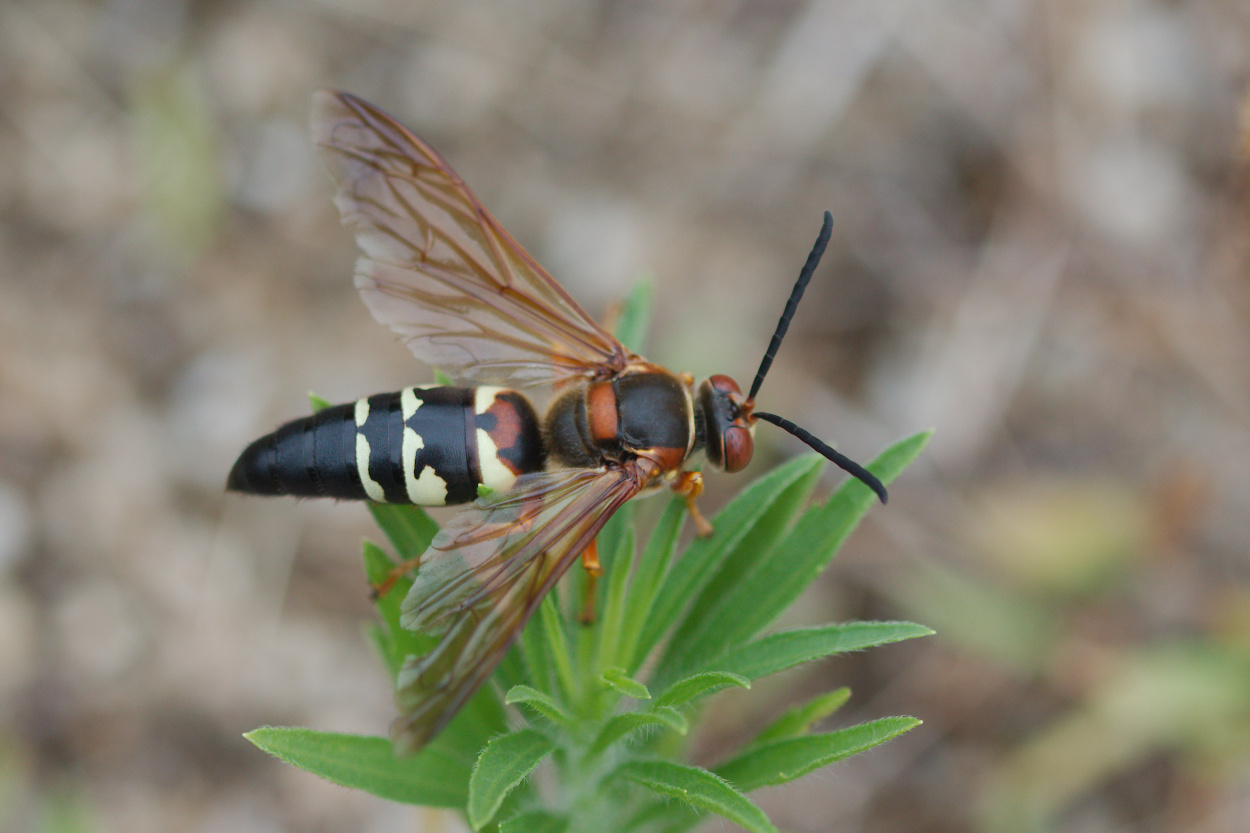
On the sandy shore of Pinchot Lake, where we camped last night, there was a sign warning campers that there were cicada killer wasps laying their eggs. As you may have figured out by now, I’m not particularly scared of wasps and I thought I’d see how close I could get for a picture. As you can see, I did reasonably well. This wasp is a good 3 to 4 cm long and pretty formidable looking but they didn’t bother me as I walked among them, being careful not to step on their burrows, of course.
As their name implies, they sting and paralyze cicadas, bury them in the sand, and lay an eggs on the last cicada. When the egg hatches, the larva has a nice source of food.
Bicyrtes quadrifasciatus
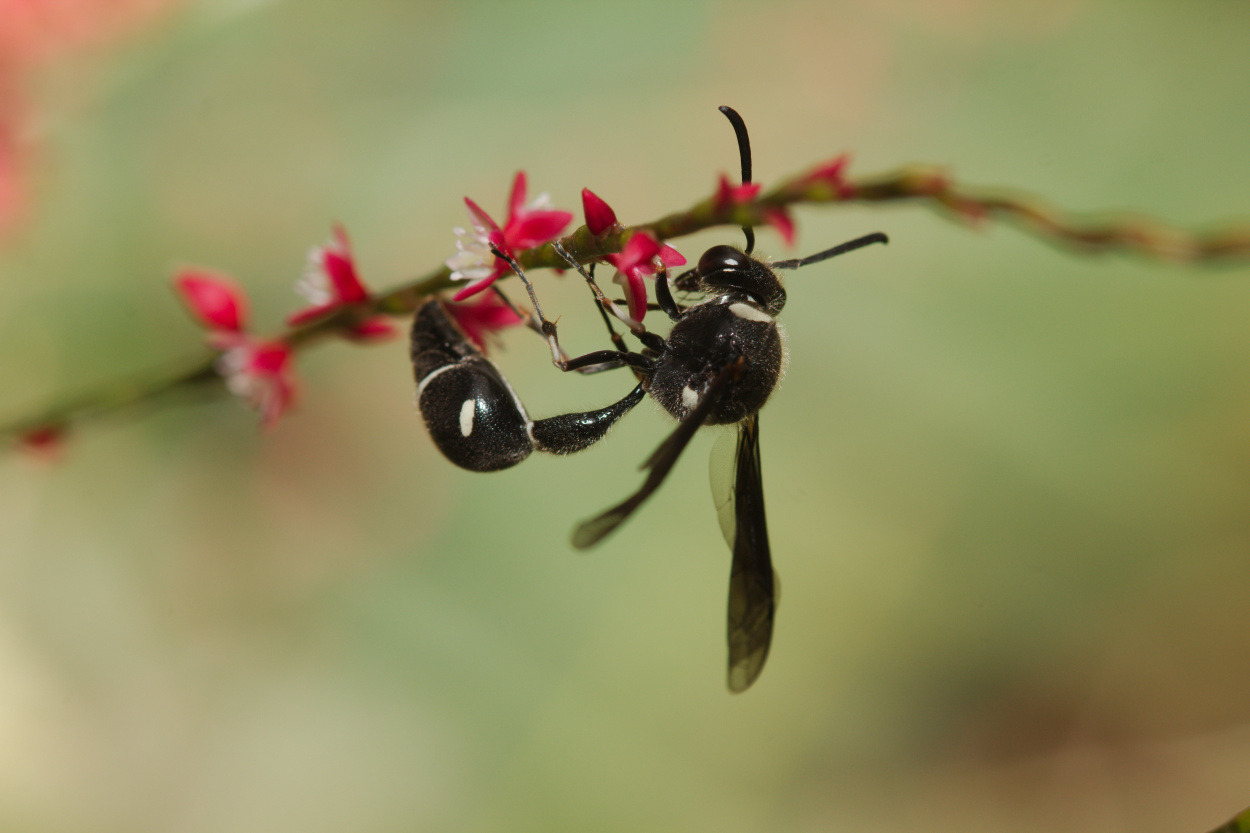
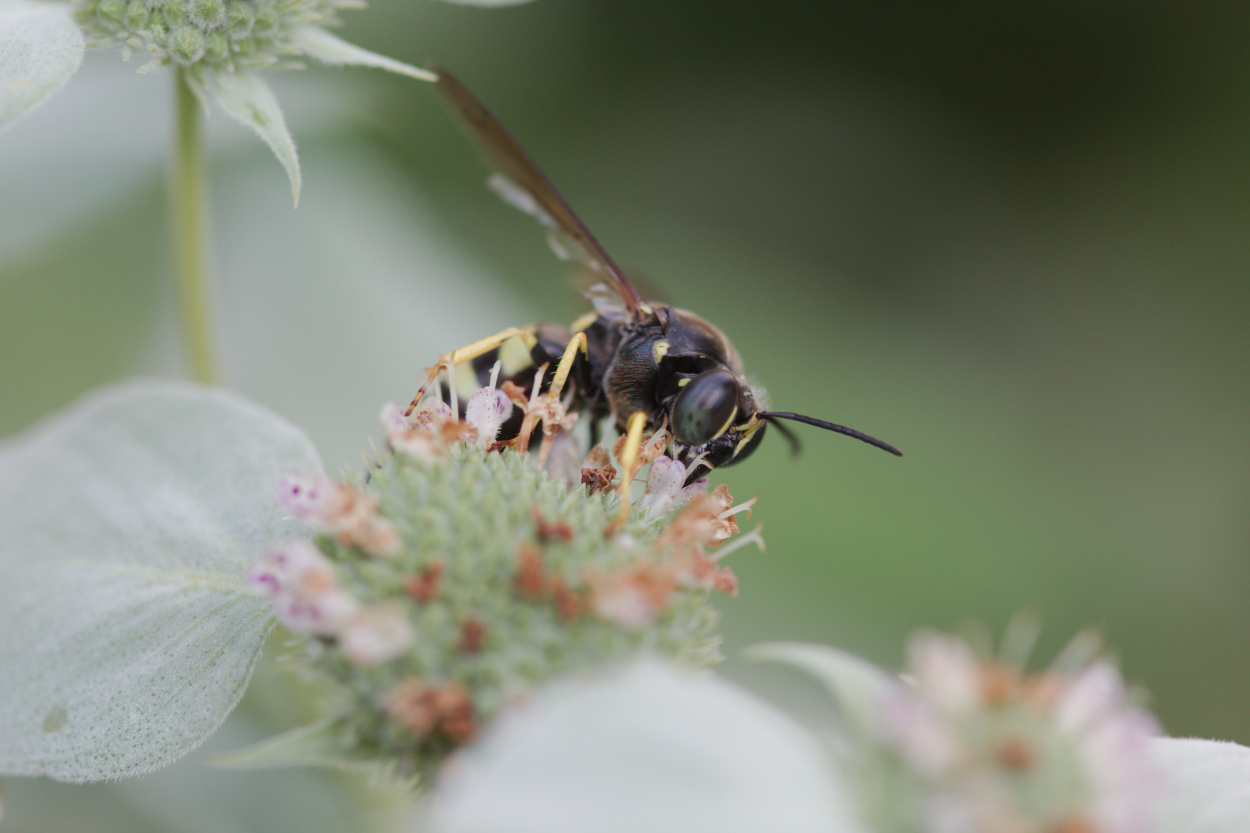
Another afternoon around the mountain mint. This is a fairly common visitor and a dangerous looking wasp. Actually, none of the wasps around the mountain mint seem particularly concerned by my presence. Some move away from whatever side I’m not but none bother me in the least. The bumble bees seem to be the least concerned, letting me get quite close without flying away. These are probably next in terms of boldness, coming right in close under my lens. This photo is full frame, not cropped at all, so you can see I’m pretty close. I took quite a few of this one and some of the others are better for identification but I like this one best as a photograph. It isn’t anywhere near as sharp as I’d like but this fellow is moving around quite quickly.
A Pair of Wasps
It was a much cooler day today. I woke up to 70° and a very light rain, which was wonderful. I opened doors and windows and enjoyed the freshness of the morning. It got much warmer as the day wore on but nothing like the 95+ degree temperatures we’ve been “enjoying” for the last eleven days (and four over 100°F). In the early evening I went out back and enjoyed all the bees and wasps that are gathering around the mountain mint (Pycnanthemum muticum). There were dozens upon dozens of them, far too many to count, and of course they are constantly on the move, flitting from one flower to the next. The flowers on mountain mint are quite small but they bloom over a very long period and they seem to be very popular with the Aculeata (bees, ants, and stinging wasps).
I have tentatively identified this first wasp as a great black wasp (Sphex pensylvanicus). It certainly fits the name as it’s about 2cm long and very black. The wings are a deep blue-black when it is viewed from the back and you can see a little of that in this picture.
The second wasp, also on the mountain mint, I believe is a katydid wasp (Sphex nudus). This wasp is about the same size as the first one but as you can see it has a bit of color on its legs. They are both fairly shy and don’t like to get too close to my camera. Others are much bolder or at least less concerned with my presence. Both wasps use katydids as food for their larvae, laying their eggs on one that they have killed and buried.
Macrosiagon limbata (Wedge-shaped Beetle)
I went out with my camera on a tripod to take some bee pictures around the mountain mint this afternoon. There were a lot of bumble bees and a few tarantula hawk wasps around. For all their size, the tarantula hawks are quite shy and are hard to get close enough to. I’ll get them eventually but didn’t today. I did find this little wedge-shaped beetle, a Macrosiagon limbata, on one of the flowers. It’s about a centimeter long. I don’t know about this species in particular but some members of the family Ripiphoridae are parasitic on bees and vespid wasps. So, waiting on the mountain mint was probably a good choice.
Apis mellifera (Honey Bee)
I have a feeling we’re going to be getting a lot of bee pictures over the next few weeks. The short-toothed mountain mint (Pycnanthemum muticum) is just starting to bloom and it’s about the best bee magnet I know of. Other plants may attract them as well but I don’t know any that attract a wider variety of bees. Expect to see them soon.
For now, we have one more picture of a honey bee (Apis mellifera) on the Asclepias flowers.
Echinacea’s Bumble
If there was a bit more light I might be able to get this with a little more depth of field. I may try to get a better shot of a bumble bee on the coneflowers in our back yard. For now, this will have to do.
A Little Green Fly
There were a lot of these flying around the Asclepias tuberosa flowers today, along with a lot of bees (both honey and bumble varieties). I believe that this is a female of the Condylostylus sipho species group. There are a lot of very similar flies and I’m not an expert, by any means so if you are reading this and know better, please leave me a comment. Anyway, it’s almost certainly a longlegged fly (Family Dolichopodidae) and quite pretty.
Papilio glaucus (Eastern Tiger Swallowtail)
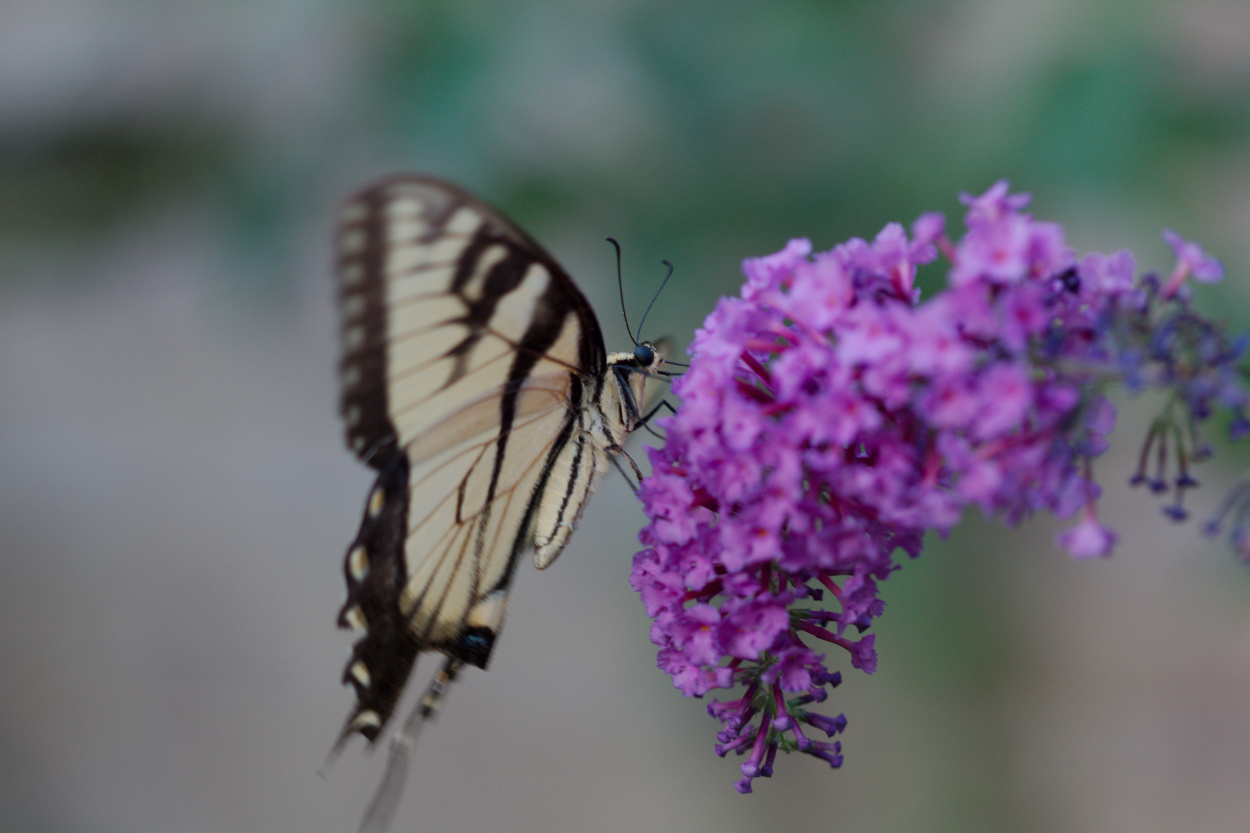
It was a beautiful day today and we spent some of it out in the yard. I pulled weeds for a while, doing battle with the Canada thistle (Cirsium arvense). To paraphrase Sonny Curtis, “pullin’ weeds in the hot sun, I fought the lawn and the lawn won.” Anyway, this swallowtail was fluttering around the various flowers and I was able to get a few reasonably good pictures as she landed on the aptly named butterfly weed (Asclepias tuberosa) in the back border. Much easier to get the picture here than later in the summer when they are on the buddleia, which puts them mostly overhead.
Another Syrphid Fly
I’ve posted a picture of one of these before (see Thursday, April 05, 2012) but I like them quite a lot. They are a little tricky to get a good picture of because they are so small. Even with my macro lens focused all the way in they don’t come close to filling the frame. This is an uncropped shot, though, and it’s about as close as I can get with that lens. It helped that there was not the least bit of wind because it means that the plant was not moving, which only adds to the level of difficulty. The fly in this picture is on the stamen of a campanula of some sort. They seem to like this plant quite a bit, as there were a bunch of them about. While the adults feed on nectar and pollen, the larvae are “voracious predators of aphids, thrips, small caterpillars.” Any predator of aphids, thrips, and small caterpillars is a friend of mine.
Yponomeuta multipunctella
Since I thought I had been denied the chance to see Venus silhouetted against the sun, I decided to take a few pictures in the yard when I got home. While I was doing that, Cathy came out and we chatted about this and that, going over our days. I sat in a lawn chair which happened to be near the driveway and while we were talking I noticed this little white moth on the side of our car (which, as you probably guessed, is red). At first I identified it as a Mimosa Webworm Moth, Homadaula anisocentra, which is native to Japan and China and was first found in the U.S. in Washington D.C. in 1943. After a little more research, though, I decided that it’s much more likely to be an American Ermine Moth (Yponomeuta multipunctella). As it turned out, I was able to get a picture of Venus, as well, even if it wasn’t a particularly great picture.
Poecilocapsus lineatus (Four-lined Plant Bug)
We’ve noticed that some of our plants are showing signs of attack. At least some of the damage is caused by a great many of these little critters. The four-lined plant bug has a fairly short life span and only produces one generation per year, so their damage is caused during a relatively short period. The plants seem to mostly recover and should be fine again before too long. Still, it’s a nuisance.