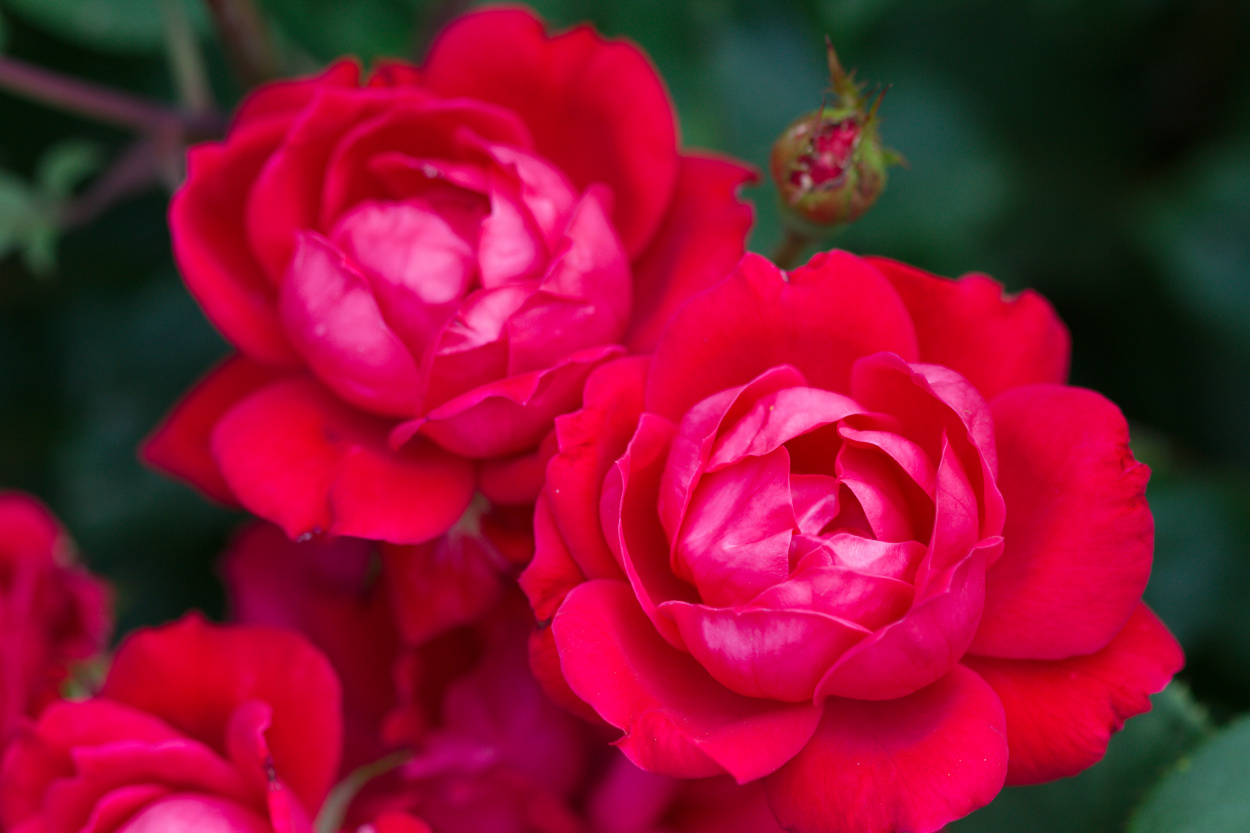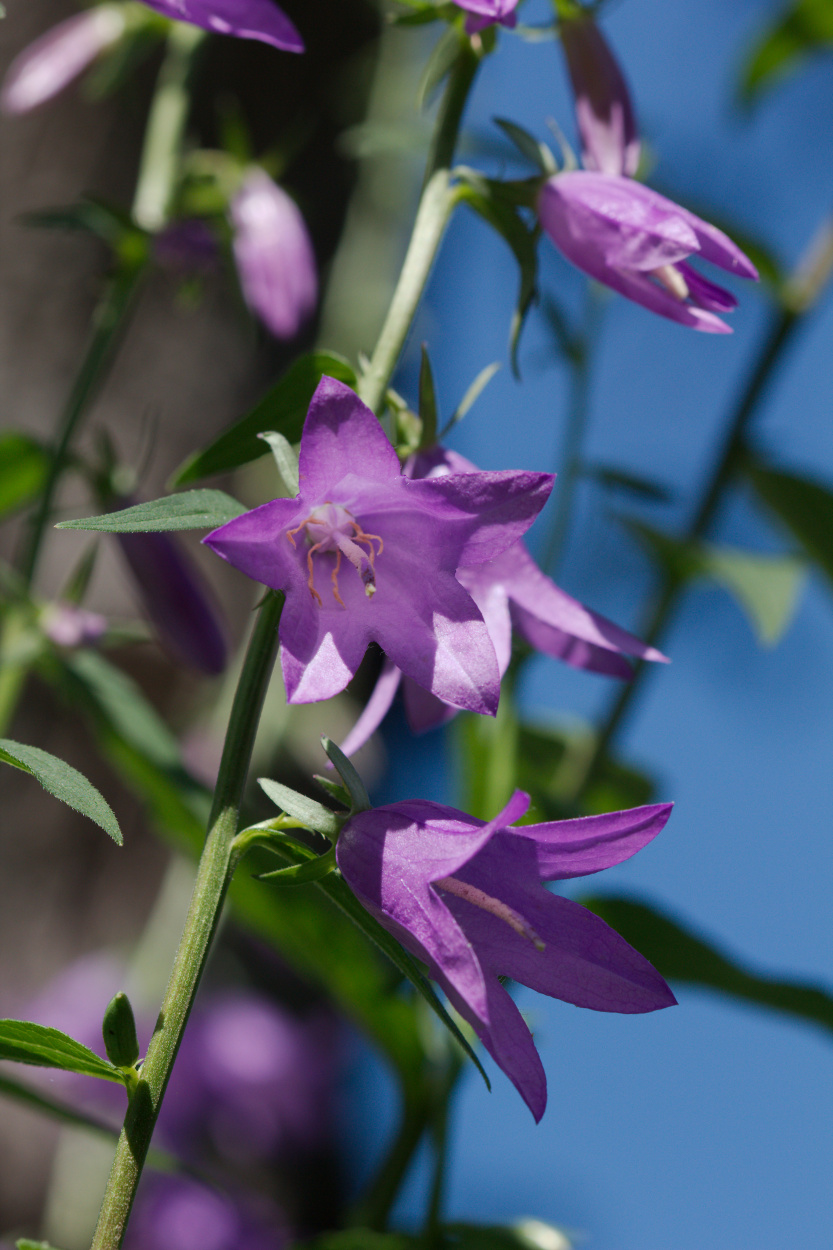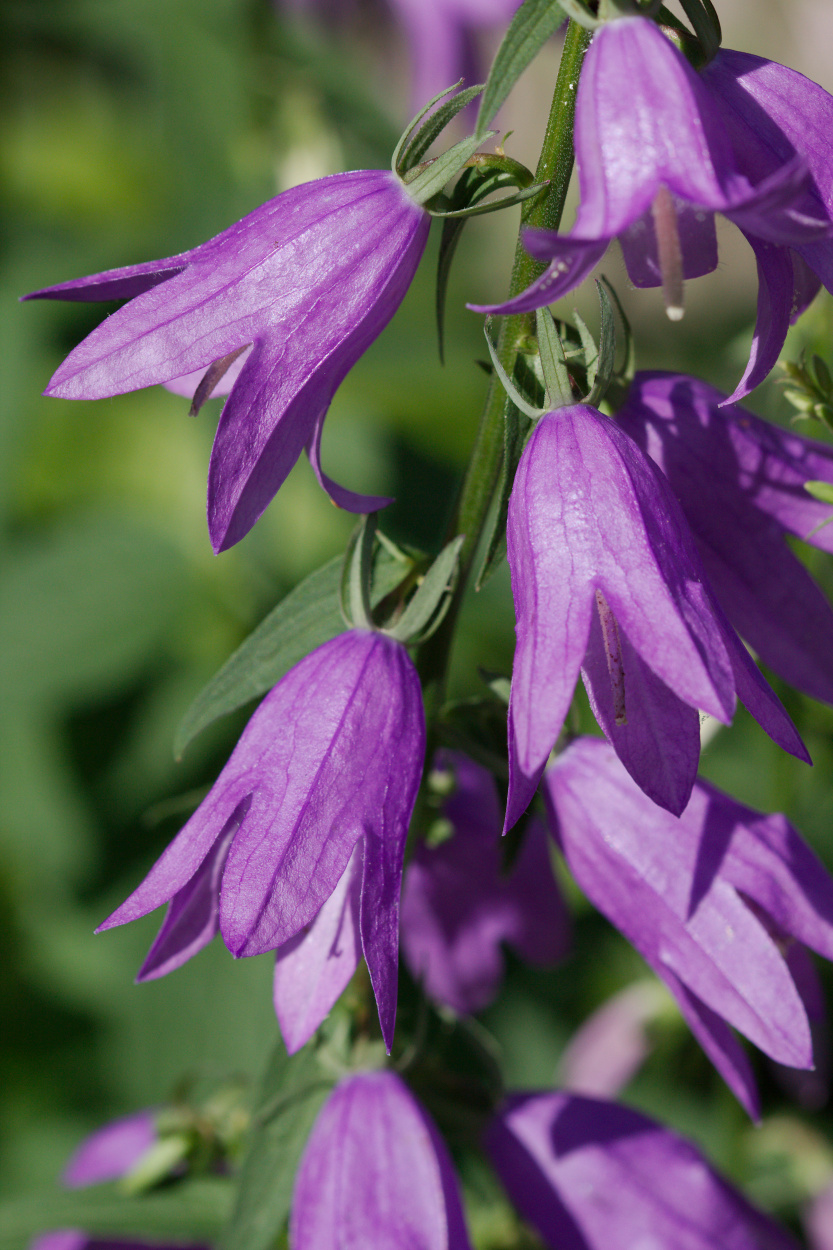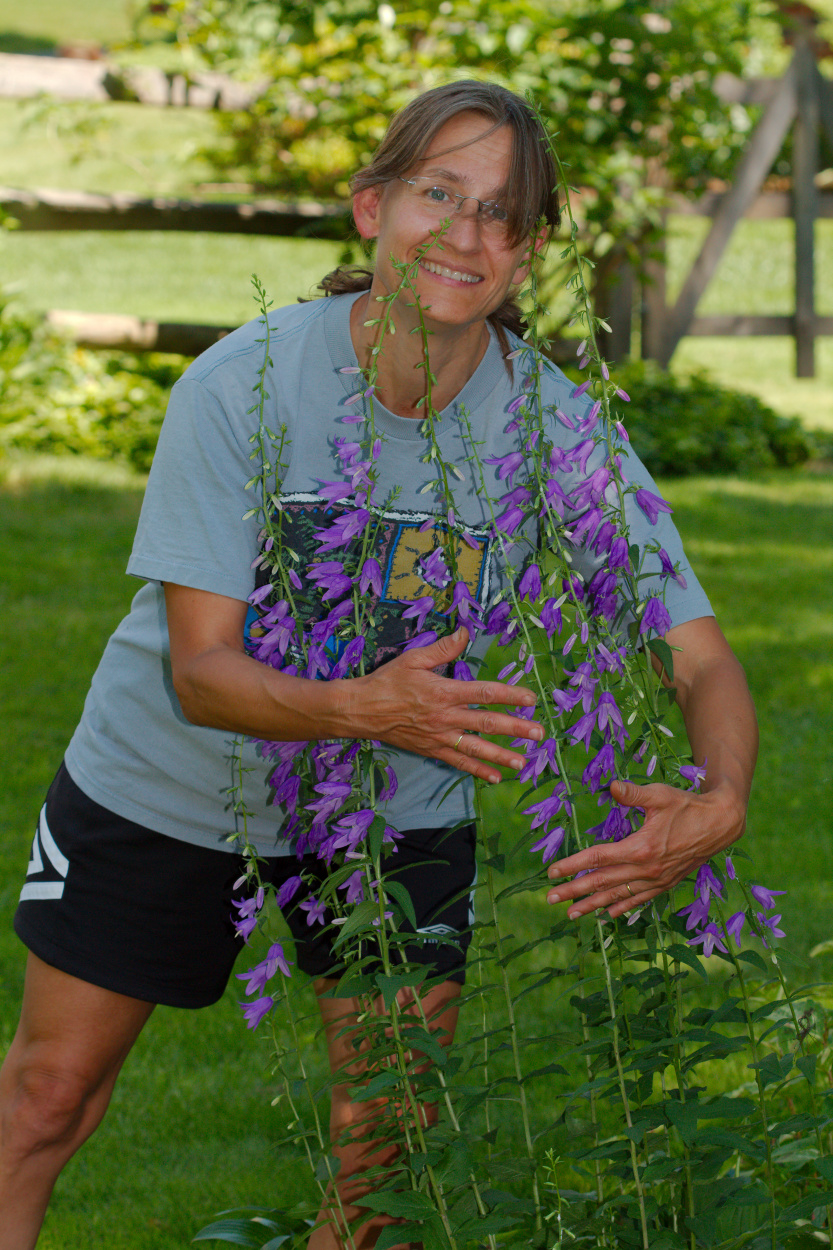
The forget-me-nots (Myosotis sp.)are in full bloom in our back and side yards and they are, as always, lovely. I went out to photograph them this afternoon and this picture turned out well, I think. They are very interesting little flowers with their little yellow circle at the center. I love the blue in the open flowers and the shades of violet in the buds. They are so delicate and fine.
Flowers and Plants
Dandelion Flower, Minus Seeds
I took some pictures of flowers in the yard this evening, including more of the Exbury Azalea that I posted a picture of last week. The buds have opened and it’s quite beautiful (if a little smaller than it was because of the deer). I also happened to notice this dandelion flower in the back yard. It caught my eye because it was so stark and white and to me, it doesn’t look like a dandelion. It does, of course, because that’s what it is, but if asked we generally would describe a dandelion flower as yellow or, when gone to seed, as a fluff ball. Once the seeds are gone but before what’s left has a chance to dry up, this is what they look like.
Hosta ‘Tick Tock’
It was still wet today and I only went out a little to take pictures. This hosta is called ‘Tick Tock’ and it’s a miniature that is quite happy in a container outside our front door. We like hosta a lot but the deer enjoy it in a different way (“mmmmm, hasta”from us and that’s a problem in our neighborhood (because we have deer). But right outside our front door seems to be a safe place for them and we have three different mini-hostas in three different containers and they are all doing well. This time of year, in particular, they are very happy. And that makes us happy.
White Azalea In The Rain
I was home from work today but didn’t really feel up to much. It had been raining all day and wasn’t really a good day to go out to take pictures, especially they way I was feeling. In the late afternoon I went out the front door and took a few pictures of the white azalea blossoms on the bushes in front of the house (without even going out from under the front porch). White azaleas are a little hard to photograph well because they are so low in contrast, but the water on them makes them a little more interesting. They are actually quite a bit prettier than this picture shows.
Lily of the Valley (Convallaria majalis)
The lily of the valley (Convallaria majalis) is blooming in our yard. It’s such a happy plant this time of year and I love the delicate, little, white flowers. They have a very pretty fragrance which (of course) is especially noticeable when you are lying on the ground about a foot from them with more flowers all around. The bright green leaves are also quite pretty. They are quite tough once established but they take a while to get settled in. Once they do, I’ve seen them come up through asphalt.
Phlox
It was supposed to rain today but I didn’t see any where I was. We could actually use some, as it’s starting to get a bit dry. Nothing like it will be in August, of course, but it’s April, after all, it’s supposed to rain. I took some pictures of a wild azalea this afternoon. It’s growing on the side of the road on my commute and I pulled off the road and took the pictures through the open passenger side window. Then, when I got home I took some pictures in the back yard. This is a phlox that Cathy picked up somewhere and which has just started to bloom. I kind of like this angle, looking at the flowers from the side.
Garlic Mustard (Alliaria petiolata)
Toward the end of my work day I went outside for a little while to take pictures. Lots of plants are growing and weeds, in particular, are coming up strongly. The woods beside my building is a good place for weeds, considering that’s most of what’s growing there. Garlic mustard, (Alliaria petiolata) is a biennial in the Mustard family, Brassicaceae. It is very common and invasive weed in our area, being native to Europe, Asia, and northwestern Africa. It’s a vigorous plant and quite successful here. The leaves and stems all exude an oniony or garlicy smell, which gives it the common name I know it by (there are others). Anyway, as annoying as it is as a weed, it’s still a pretty plant with pretty little white flowers.
Exbury Azalea Buds
The Exbury azalea that Cathy bought for me last year is getting ready to bloom. I planted it near the top of our driveway, to the right where there used to be an awful holly shrub. The deer did some damage to it late last summer but what’s left of it is beginning to come to life. The flower and leaf buds are swelling and there should be some blooms in a few days. The Exbury azaleas are among the deciduous azaleas. In fact, most azalea species are deciduous but since most of us are familiar with azaleas through the proliferation of the Glenn Dale cultivars (developed by Benjamin Morrison from 1935 through 1952), which are evergreen. The Exbury hybrids were made in the 1920s by Lionel de Rothschild and their genetic makeup contains some or all of the following: R. arborescens, R. calendulaceum, R. japonicum, R. luteum, R. molle, R. nudiflorum, R. occidentale, and R. viscosum.
Flowering Dogwood (Cornus florida)
The dogwood in our yard are starting to bloom. The flowers are still small and there are a lot more to come bit I got a few nice pictures of some this afternoon when I got home from work. This is the native and very common flowering dogwood (Cornus florida), of course. I’m hoping to have another of the dogwood species, the European cornel (Cornus mas), once I make room for it. I have a nearly dead Colorado blue spruce that I need to cut down and I’m hoping to get that done on Saturday. Then I’ll dig up a cornel tree that’s growing next to the driveway at my mom’s and plant it there. At least that’s the plan but we’ll have to see if it actually happens. It’s a busy time of year.
Frond of Maidenhair
I’m quite frond of ferns in general and of the northern maidenhair fern, Adiantum pedatum in particular. As I said less than a week ago, I think it is one of the prettiest of our native ferns. This is the same plant that I photographed then. I usually try not to post pictures of the same thing in the same season of the same year. That is, I might post pictures of daffodils each spring but I try not to repeat the same daffodil variety within one spring. But this photo is different enough that I think it’s justified. The fronds (that’s fern for leaves) are unrolling and the leaflets are starting to expand, opening out from the rachises. Quite dainty.
Maidenhair Fiddlehead
The northern maidenhair fern, Adiantum pedatum, is one of the prettiest of our native ferns. It is widely spread throughout the eastern half of the United States north of Florida, as well as Ontario and Quebec in Canada. In the spring, reddish brown fiddleheads emerge from the ground and unroll in typical ferny fashion. The stems turn a glossy black providing a dark background to the lush, bright green foliage. The plant I have has had an interesting journey and I enjoy it’s connection to my dad, who had it growing in he back yard. From there a piece made it into our garden at our previous house, then some of that lived in a pot while we rented for a year, and it’s become very well established since we moved here almost ten years ago.
Daffodil Pollen
I’ve been playing around with a microscope the last few days. Today I rubbed a little pollen from a daffodil onto a slide and looked at it under three different objective lenses: 10x, 40x, and 100x. The photograph here is with the highest magnification and although it isn’t the sharpest thing in the world, you can still see what the pollen looks like pretty well. I’m still learning about all the adjustments that can and should be made on this microscope and hope to have some better pictures for you in the days to come. They are about 45µm long, which isn’t particularly small when it comes to pollen, but still, small in a general sense. I’m hoping to get some oak pollen next.
Maple Samaras
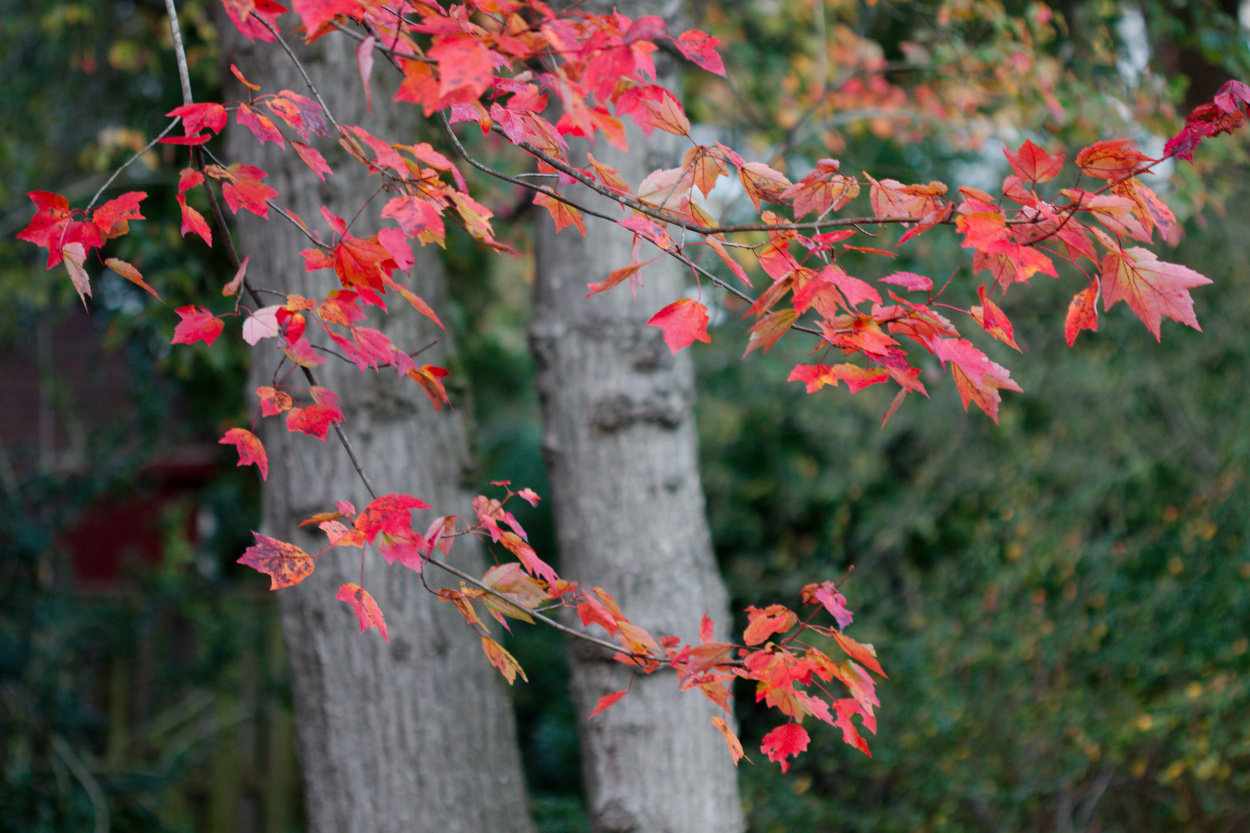
Spring is in the air. It was cool and wet yesterday, with heavy rain all morning and showers and wing in the afternoon. Today was cool and dry with a fair amount of breeze. The forecast is for a freeze overnight and the possibility of snow tomorrow. Not snow that accumulates on the ground, but snow or at the least freezing rain. But it’s spring and that’s what spring looks like in the mid-Atlantic region. One day it will be in the mid 70s, the next night we can have a hard frost. Some days the sky is a wonderful, cheerful blue, others it’s grey and dreary. But that’s spring. I love spring.
Daffodils After The Rain
This is a daffodil called ‘Falconet’ (division 8, Tazetta). I have a bunch of them growing around the eastern edge of the bed under our Colorado spruce (on the side towards the road). The spruce isn’t doing very well and probably needs to be taken out and replaced with something else. But the daffodils and other things growing under it are doing pretty well. We had a fair amount of rain today. That didn’t bother me too much but a bunch of my coworkers were heading to the National’s home opener and the weather could have been a lot better for them. But that’s the way it goes in early April.
Helleborus ‘Mango Magic’
The fall before last I planted five Lenten rose (Helleborus) plants in three different varieties. One of them is a variety called ‘Mango Magic’ and that’s what this flower is. The other two are called ‘Rose Quarts’, and ‘Red Racer’ and I planted two each of those two. This one is doing the best of them, though, having bloomed last year as well. It’s still small but these things are incredibly hardy and will eventually get themselves set for the long haul. They were bought as quite small plants from McClure and Zimmerman: http://www.mzbulb.com/.
Flowering Almond
We have this little shrub by the top of our driveway. It is a dwarf flowering almond, Prunus glandulosa and it blooms reliably and beautifully each spring. I sort of expected it to get larger but it dies back a bit in cold winters and we’ve had a couple of them lately. That’s a bit surprising, as it is listed as being hardy to zone 3, but there you are. This past winter wasn’t particularly cold, so maybe this will be its year. The flowers are small, only about a half inch across, but are jammed with petals of a lovely pink.
Muscari
I’ve planted quite a few little Muscari bulbs over the nine years we’ve lived in this house and many of them are in full bloom right now. This one, I’m pretty sure I didn’t plant. It’s growing in our lawn in the back yard, about eight feet from the nearest flower bed and at least 20 feet from the nearest Muscari that I planted.
Because I assume it’s a seedling and because even if a squirrel dug it up and replanted it, I don’t know which variety of Muscari it is. I’ve planted three, M. armeniacum, M. neglectum, and M. latifolium. So, it’s probably one of those or possibly a hybrid (I don’t know how easily they hybridize).
It isn’t in a very good place because the first time the grass is mown, it’s going down. I should dig it up and plant it somewhere safer before that, but the grass is getting long and I probably don’t have more than a week, if that.
White On A Daffodil
Considering how often I’m complemented on identification of insects and flowers, I really should learn to identify these a bit better. This is a white, but I really don’t know for sure which one. It’s possible that it’s a cabbage white (Pieris rapae) with the black spot on the forewing hidden by the hindwing. My guess, though, is that it’s a West Virginia white (P. virginiensis). But that’s a guess. We’ll see if the experts at BugGuide.net can tell me for sure. The daffodil I’m sure of, however. It is a variety called ‘Actaea’, a poeticus daffodil (division 9), planted in the late fall of 2009.
Magnolia × soulangeana
Magnolia × soulangeana, also known as the saucer magnolia, is a hybrid between M. denudata and M. liliiflora. The cross was first made in 1820 by Frenchman Étienne Soulange-Bodin (1774–1846), a retired cavalry officer in Napoleon’s army, at his château de Fromont near Paris. They are quite extensively used in our area and are quite beautiful. Their flowers range from nearly pure white to fairly dark pink, almost purple. There are very similar trees with yellow flowers but these are a somewhat different hybrid, between M. acuminata and M. liliflora, and called Magnolia x brooklynensis, first made by Mrs. Evamaria Sparber at the Brooklyn Botanic Garden. In any case, they are lovely flowers and bloom early, so are quite welcome after winter.
More Daffodils
Sorry for the delay in getting pictures up from the last few days. Rest assured they are coming (for the very few of you who actually come here to read this text). It’s been a busy weekend and I have some pictures for you. On Thursday (which is ‘today’ in terms of the posting date) we went to Laurie and David’s in the evening for a small Maundy Thursday gathering. We were a few minutes early so I took some pictures of the daffodils in their front yard. It was just getting dark and some of them didn’t turn out, because I didn’t have a tripod with me, but a few turned out alright, including this one of a nice two-color daffodil.