Today we drove to the Locust Grove Nature Center on Democracy Boulevard and walked down to Cabin John Creek, which we then followed north as far as where the creek crosses the power line cut south of Tuckerman Lane. We considered ourselves fortunate to see this belted kingfisher (Megaceryle alcyon) perched over the stream. I was able to get two acceptable photos before it flew off not to be seen again by us. It was pretty far away and this is cropped from the full size image, which is the main reason it’s not as sharp as I’d like. Still, it was a nice walk.
Monthly Archives: April 2026
Belted Kingfisher (Megaceryle alcyon)
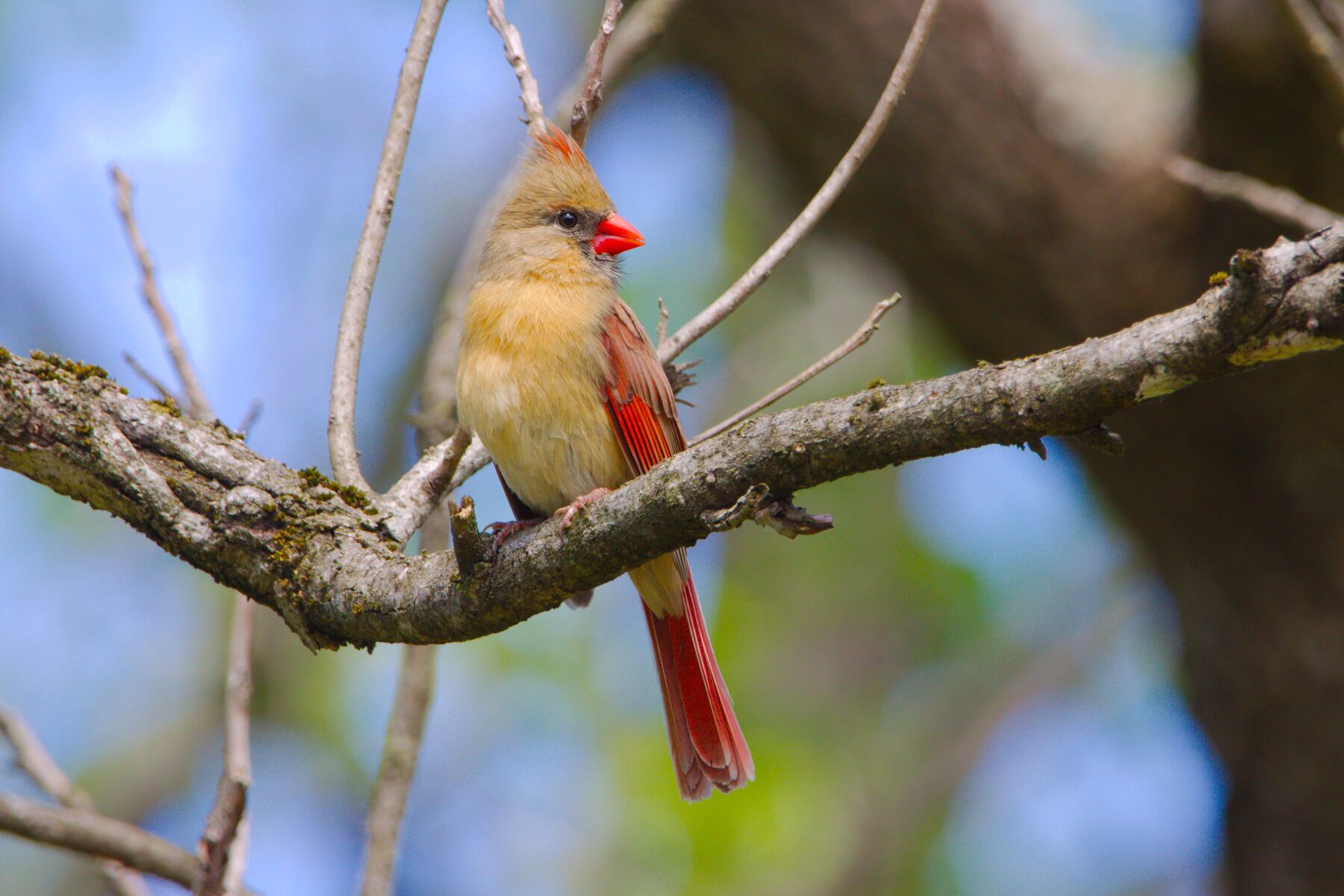
Northern Cardinal (Cardinalis cardinalis)
Cathy volunteers with the county park’s archaeology group one day a week and after she did that today, she took a walk in the woods nearby. When she came home she suggested I go with my camera. I heard three birds that I’d love to photograph but never caught even a glimpse of them. Those were the yellow-throated warblers (Setophaga dominica), pine warblers (Setophaga pinus), and northern parulas (Setophaga americana). I did see a few norther cardinals (Cardinalis cardinalis), which are among our most common and most easily seen birds. I also saw and photographed a few blue-gray gnatcatchers (Polioptila caerulea), which are easy to hear and often hard to find.
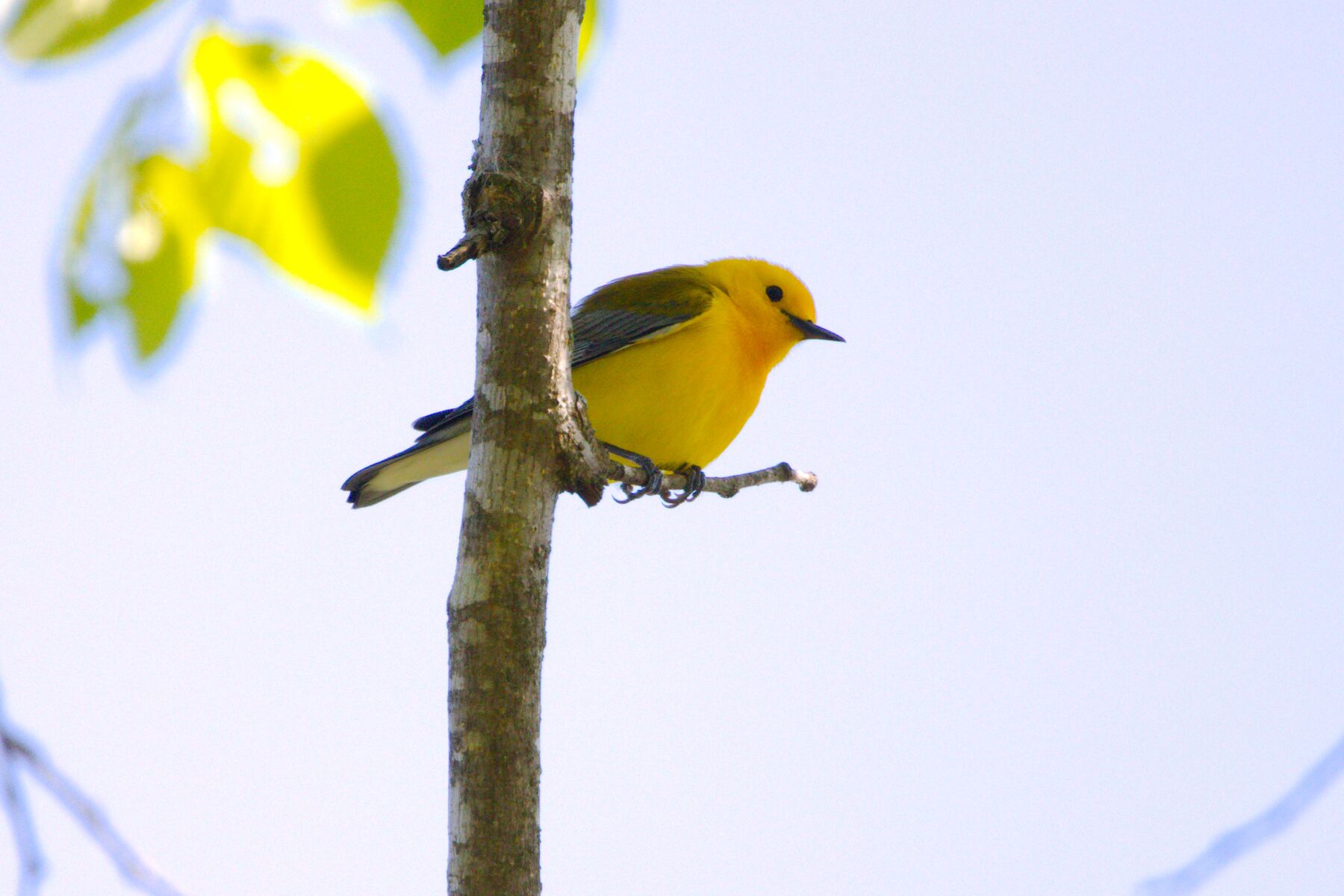
Prothonotary Warbler (Protonotaria citrea)
One of the best things about being retired is that we can go places during the day that we used to only visit on weekends. That’s what we did today, heading out to McKee-Beshers in Poolesville and parking at the furthest parking area on Hunting Quarter Road, near the dog training pond. There were a few others out with long lenses, as apparently a few notable birds had been spotted there recently. We aren’t monitoring those lists regularly so for us, it was just good luck that we happened to see this prothonotary warbler (Protonotaria citrea). We also saw (and I photographed) a greater yellowlegs (Tringa melanoleuca), an American coot (Fulica americana), and a solitary sandpiper (Tringa solitaria), birds we don’t generally see this far inland. The coot was sitting on a nest.
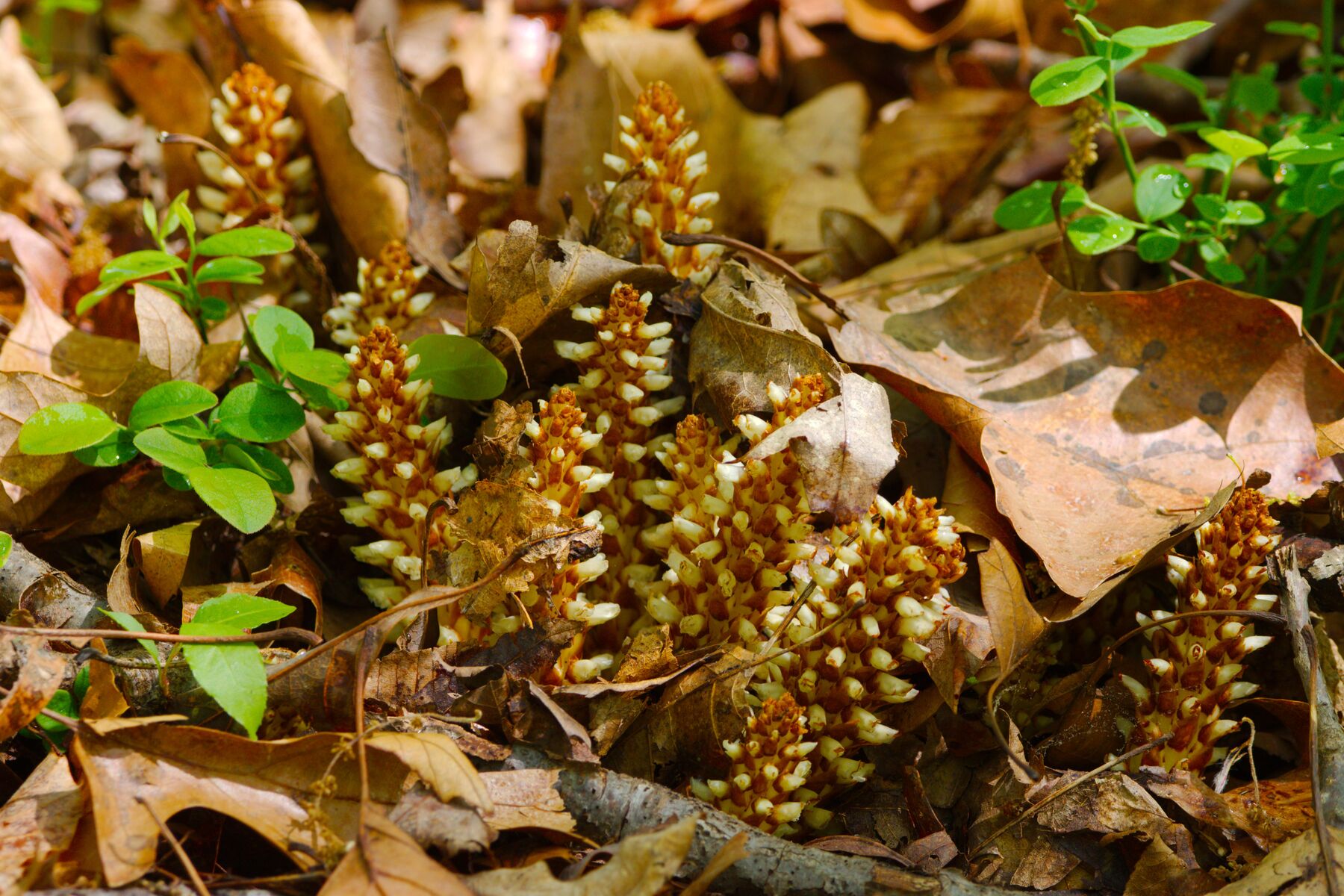
American Cancer-Root (Conopholis americana)
We took a walk at Meadowside this afternoon, starting at the nature center and walking down to and along the creek, going as far upstream as where it goes under Muncaster Mill Road. We heard (and Cathy glimpsed) a belted kingfisher Megaceryle alcyon but mostly we were looking at plants. There’s was a fair amount in bloom. The bloodroot are all finished but there were a few wild azaleas, which are always a treat. In the woods heading down to the creek a bunch of under-story plants had been labeled with signs but we saw these, which had not. American cancer-root (Conopholis americana) is a non-photosynthesizing, parasitic plant, feeding on the roots of oak and beech trees.
George Washington Puzzle
We finished this puzzle today. It’s the familiar painting of George Washington crossing the Delaware River, which happened during the American Revolutionary War on the night of December 25–26, 1776. The 1851 painting was done by German-born, American painter, Emanuel Leutze (May 24, 1816 – July 18, 1868). It was a fairly challenging painting, particularly the sky but also some of the areas of water.
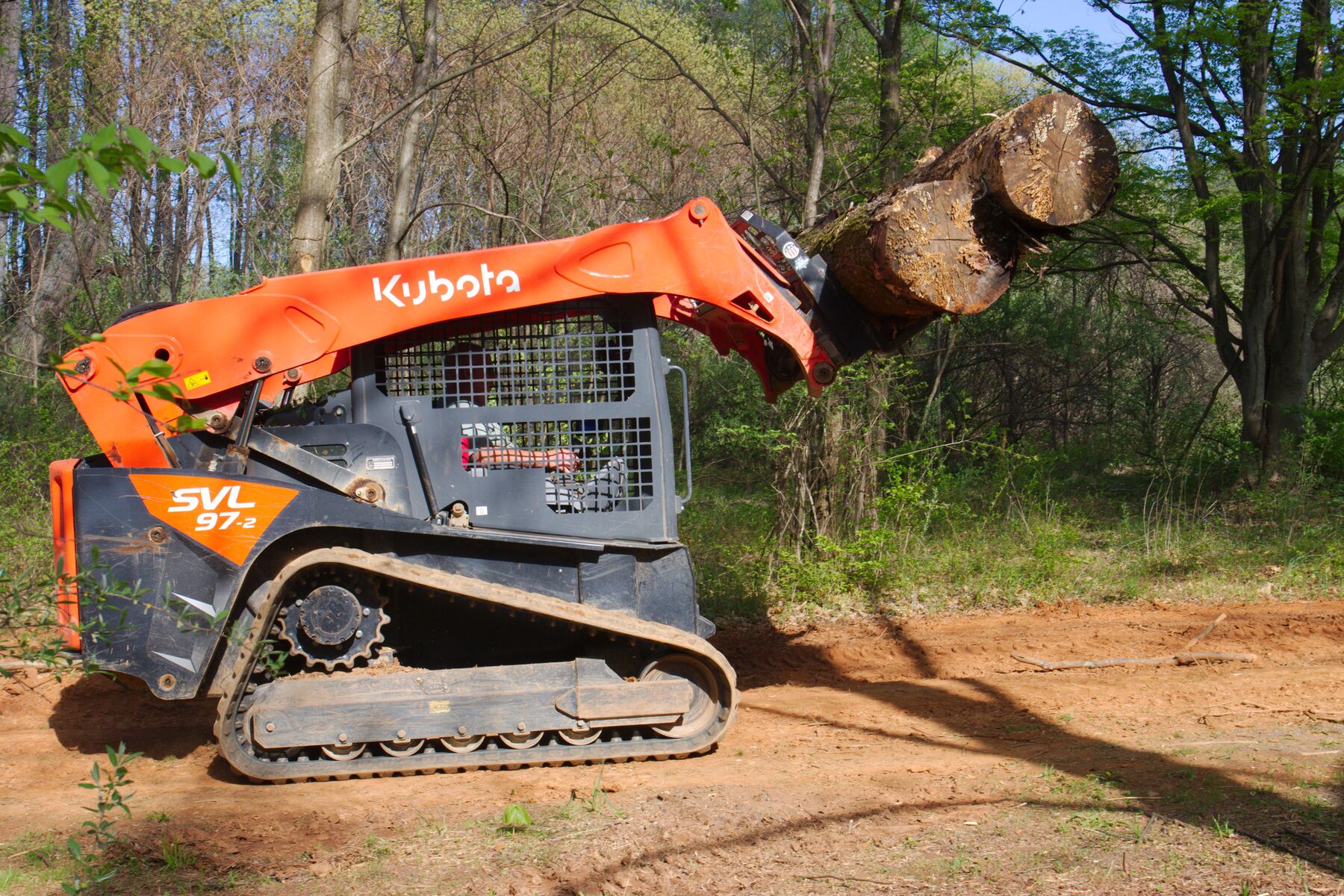
Mickey’s Front End Loader
Jeff’s cousin Mickey arrived late Wednesday evening and I met him Thursday morning. We spent the day working, mostly with him doing the heavy lifting using his front end loader. The first task, since he had the augur attached, was to dig a hole for the new mailbox post, which I cemented in. Then he cleared a bit of the orchard and cleared a lot of what we call the picnic field. There was a good size pile of tree and shrub debris in the middle of that field and he cleared it all away. Meanwhile I worked on removing the wire that dad had put around a few trees he planted. There are more that need to be done, but I made good progress.
In this photo, Mickey is moving some large logs that we never could have moved by hand.
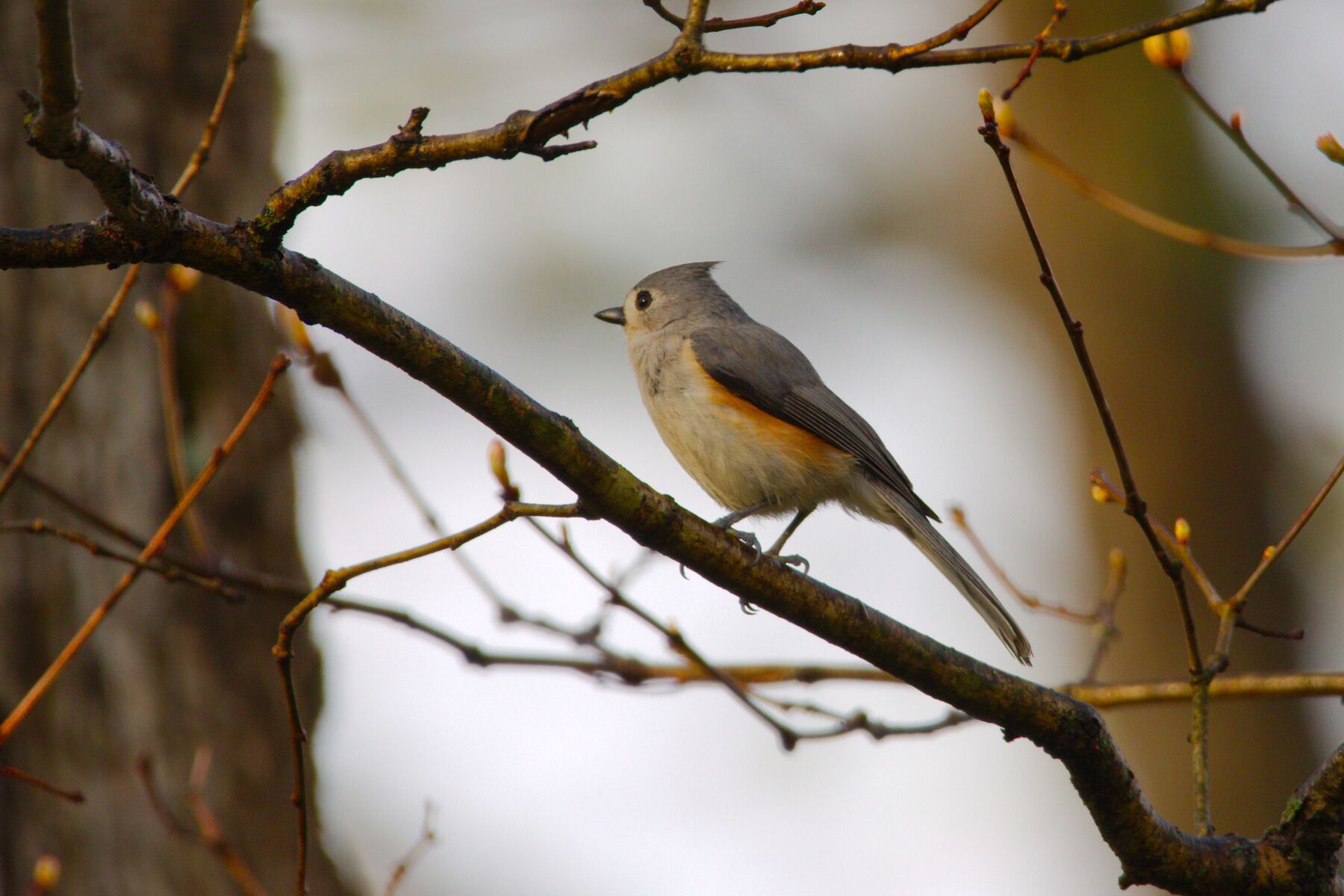
Tufted Titmouse (Baeolophus bicolor)
Just as I did yesterday, I sat outside to eat my breakfast this morning. I enjoyed the birds singing all around. There was a tiny blue-gray gnatcatcher (Polioptila caerulea) that landed pretty close to me but at that point I didn’t have my camera with me. Later, when I did this tufted titmouse (Baeolophus bicolor) moved around in the trees just into the woods. This isn’t as sharp as I’d like, but it’s certainly good enough to identify the bird, which is sort of the lowest level of bird photography. I have to admit that I have a lot more at this level than I do at what I might describe as the pretty good level and even fewer of the field-guide level photos.
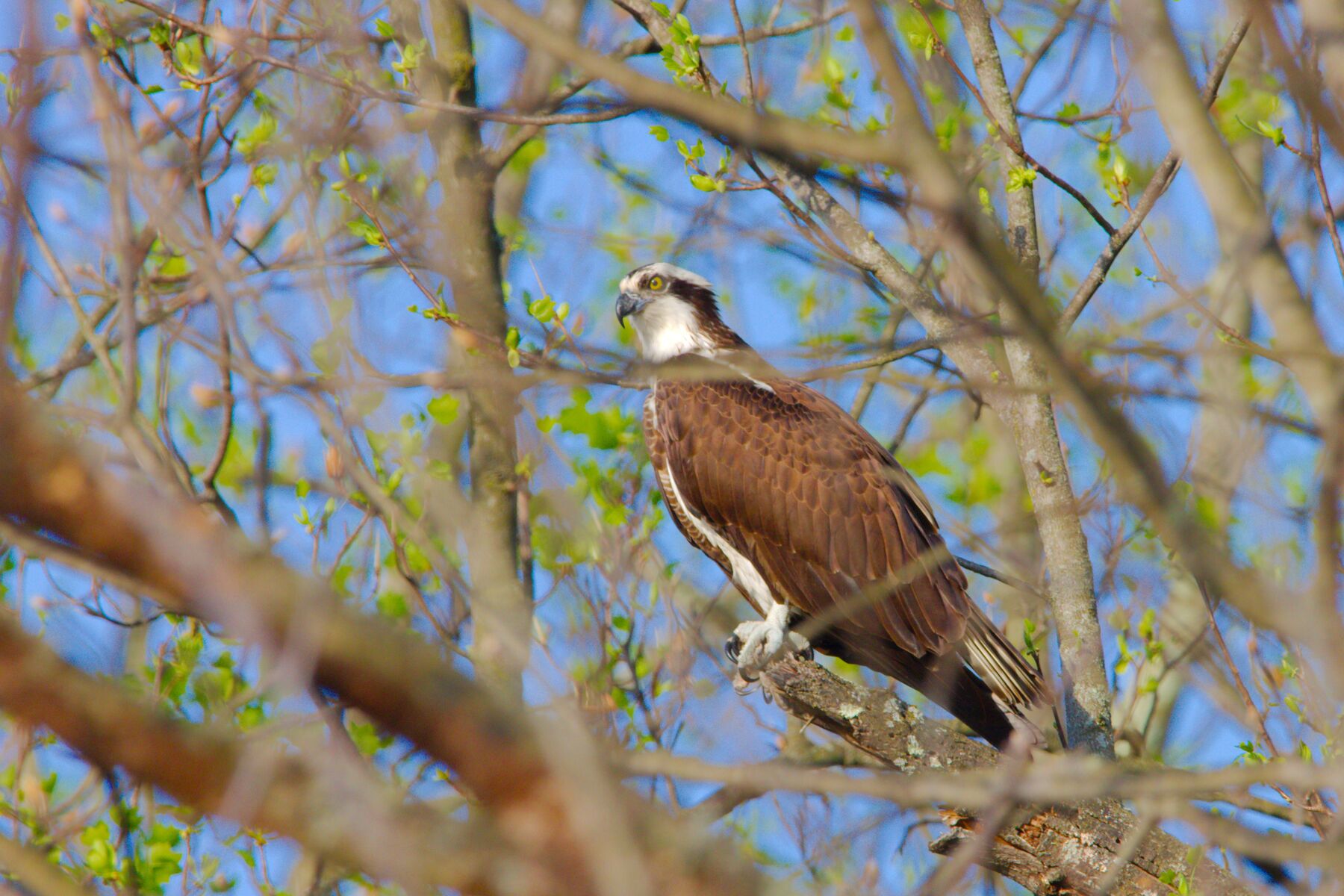
Osprey (Pandion haliaetus)
After having breakfast this morning, I was sitting outside, enjoying the morning bird songs. Glancing down across the pond I saw this osprey in a tree. I had my camera and took it down to the near side of the pond and got a few pictures. While I was there it flew, tried to catch a fish (but didn’t seem to get one), and returned to its perch. I walked around onto the dam and although this was taken through the branches of a nearer tree, I think it’s the best of my pictures before it flew off. I also heard quite a few turkeys in the woods this morning.
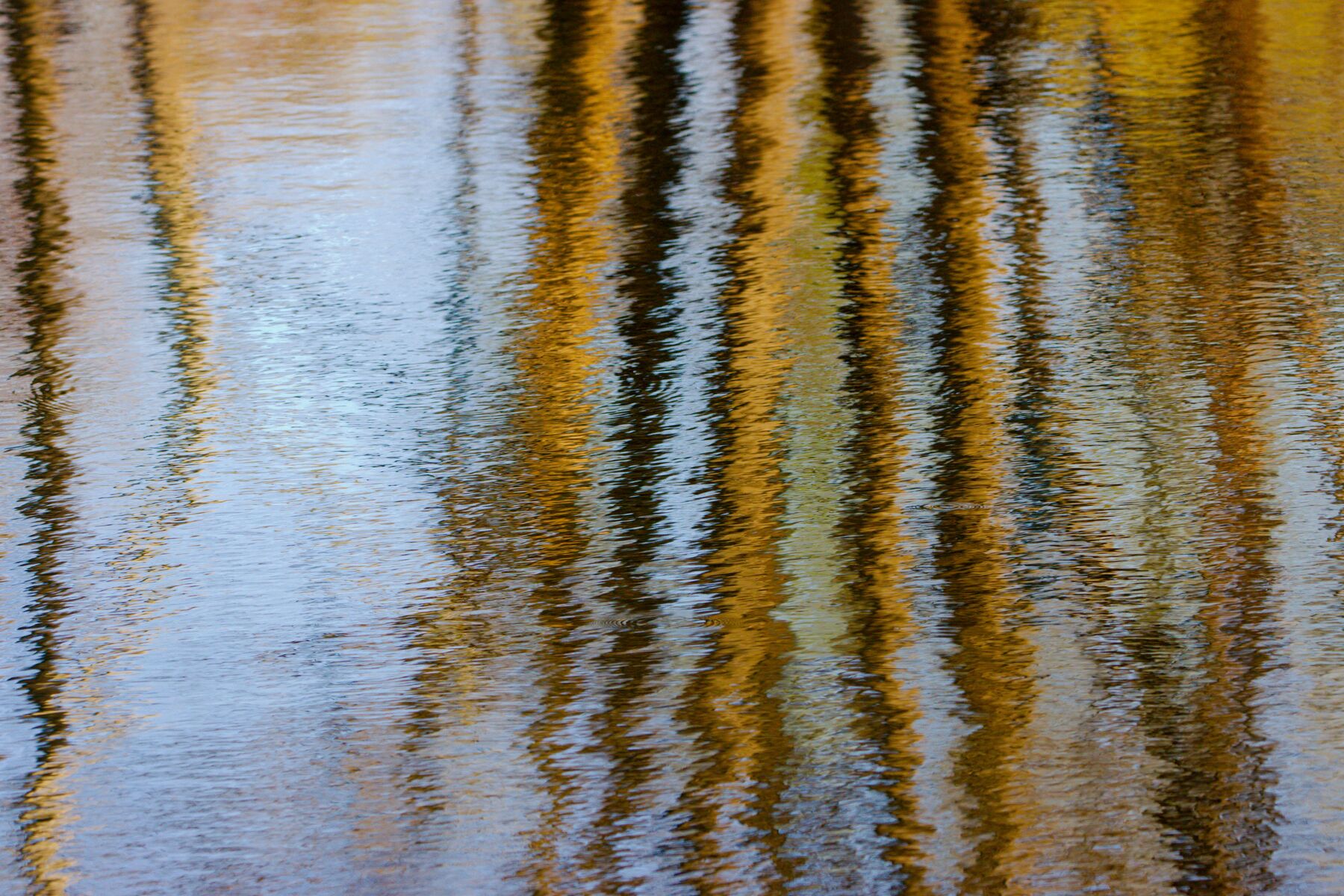
Reflections
Cathy and I went to the property in Pennsylvania today but drove up separately. I went by way of Rural King in Hanover, to pick up a 50 pound bag of red clover seed. We’re trying to get something growing quickly and it germinates faster than grass (which we’ll also plant). We had planned for Jeff’s cousin to be there today with some machinery but he was delayed so I worked with clippers and the chainsaw, clearing some underbrush in one of the fields. These are things that have grown up since dad died. Some were catalpa seedlings of a tree he planted, but they were all much too close together, so I left the large, central tree. Others were sweetgum trees and he may have planted all of them but I took out the two smallest to allow the mower to get in between them all. It was a hot and tiring day and after everyone else had left—Cathy had to drive home to take care of the dog—I took a few photos of reflections on the pond. I spent the night and enjoyed the frogs and even heard a great horned owl (Bubo virginianus).
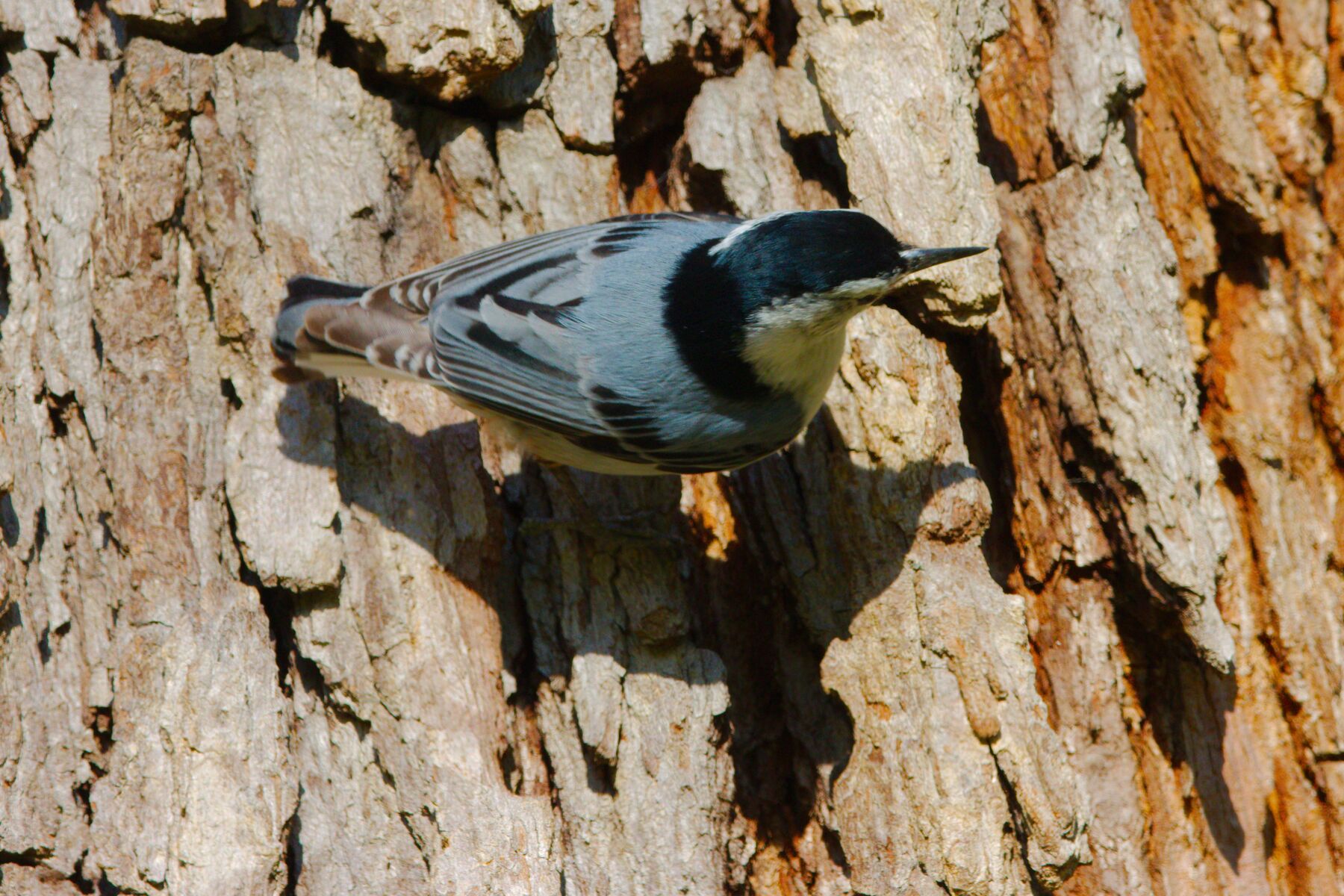
White-breasted Nuthatch (Sitta carolinensis)
Cathy and I took a walk on Cabin John Creek, walking upstream from where the creek is crossed by Bradley Blvd. We went as far as where the creek meets Seven Locks Road, near the Seven Locks Swimming Pool. We heard a few birds but didn’t see too many. I did get a few photos of this white-breasted nuthatch (Sitta carolinensis) that turned out well enough. I’d prefer to get it from the side, but you often see them from this angle, anyway. I got some pretty poor photos of a little brown bird that was working its way up a tree. They were not good enough to share but they were, thankfully, good enough to identify the bird as a brown creeper (Certhia americana), so that was fun.
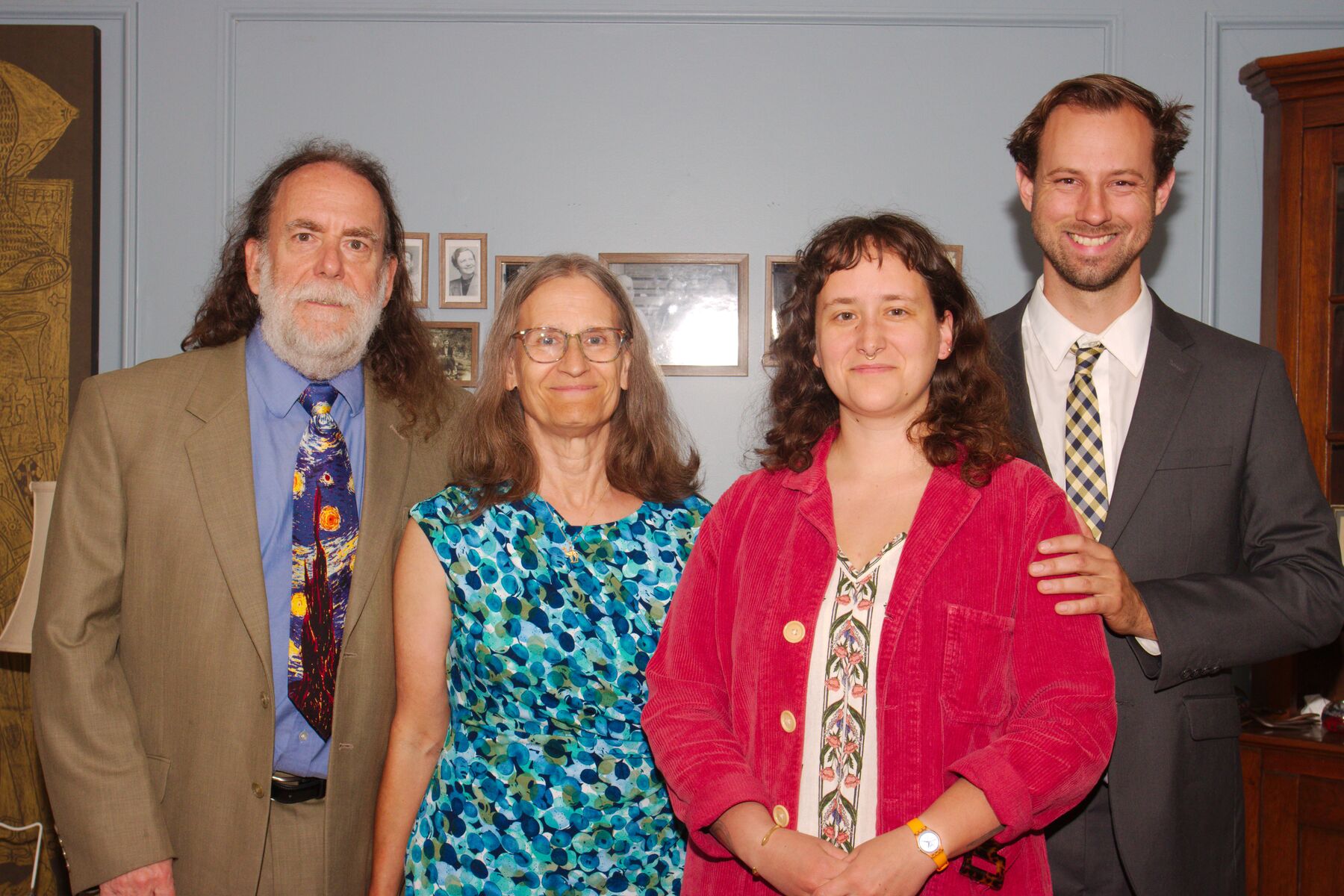
Easter Portrait
We went to the 6:00 AM sunrise service at Fourth Presbyterian this morning. The forecast was for rain but we were fortunate that the rain didn’t come until the afternoon. Instead we had a very pretty sunrise, along with a lovely service. As usual, we stayed for breakfast and then the 8:00 service in the sanctuary, where the music, as well as the message, was wonderful. We came home and then went to visit Cathy’s mom and though I took pictures there, the picture I’m sharing with you is of the four of us, back at home before we changed out of our Easter best and had our Easter feast.
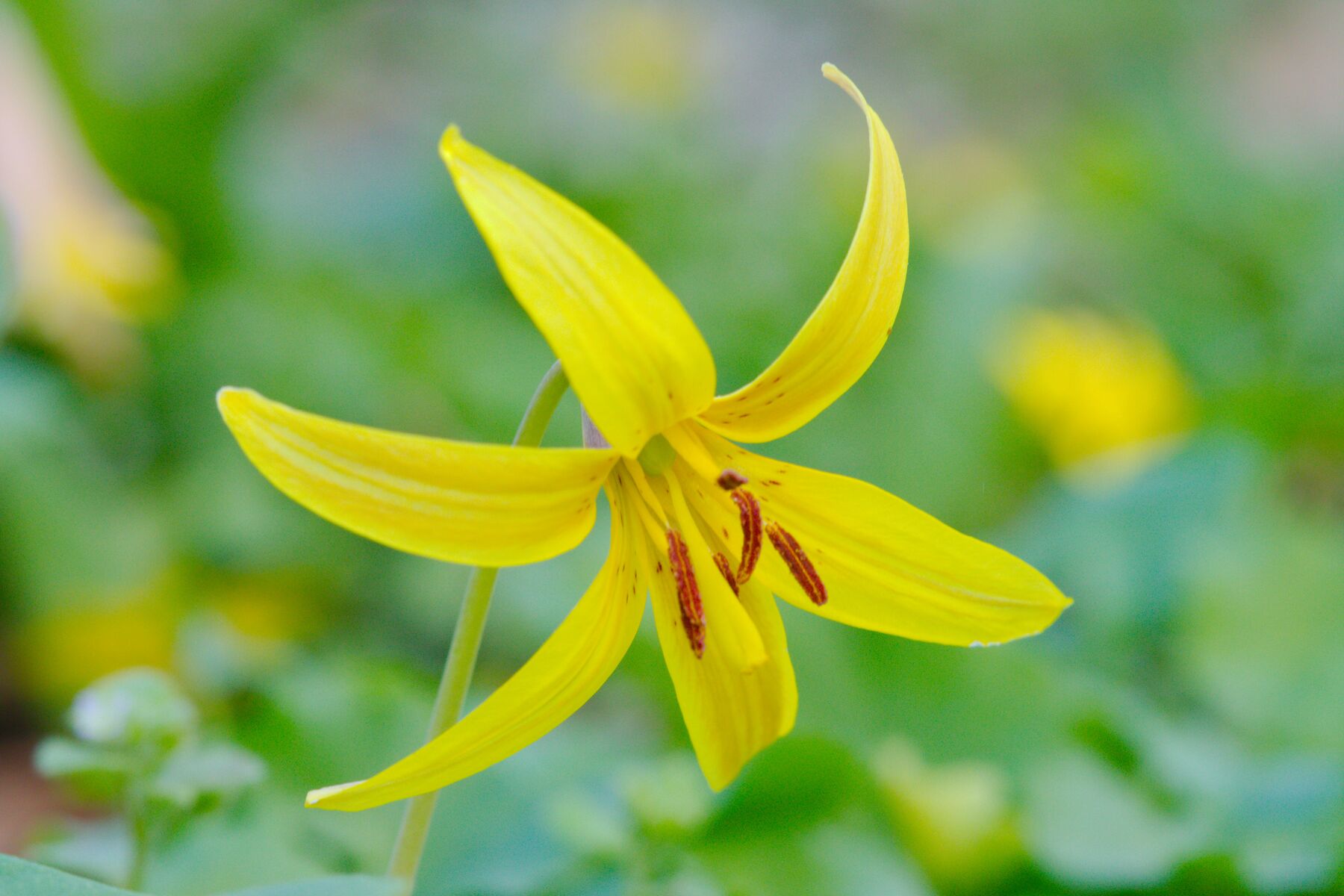
Erythronium americanum (Trout Lily)
As we like to do this time of year—and specifically on Easter weekend—we took a walk on Seneca Creek from where it meets Berryville Road. We call this the Bluebell Island Walk, although from this side, we aren’t actually on what we call Bluebell Island most of the time. We walk upstream on the east/north bank of Seneca Creek. One year we walked on the Seneca Bluffs Trail on the other bank, which is also a nice walk but there are more bluebells on this side. In addition to the Virginia bluebells (Mertensia virginica), there are trout lilies (Erythronium americanum), yellow violets (Viola hastata, more properly the halberd-leaf yellow violet), and, more and more, incised fumewort (Corydalis incisa), a non-native, invasive perennial.