Flowers and Plants

Cathy’s ‘Stump’ Garden

Cathy's 'Stump' Garden

Cathy’s ‘Stump’ Garden

Last year the county cut down one of the red oaks growing along the front of our property (but in the county’s right of way, so belonging to the county). Cathy put some planters on the stump and planted a few annuals around it. In the fall they came and ground the stump, giving Cathy fair warning so she could move the containers and so she knew the annuals would be destroyed in the process. Yesterday Cathy planted this year’s garden in the spot where the stump was, including two containers and quite a few plants in the ground. I took a few pictures yesterday but the morning light was on it as I was leaving for work, so I took a few more, including this one. I’ll try to get another picture of it later in the year, when everything has gotten established and filled in. In addition to what she planted, you can see in the lower right that there is a volunteer common mullein (Verbascum thapsus), an alien species introduced from Europe, Asia, and Africa. Cathy’s a big fan.

Categories: Flowers and Plants | Comments Off on Cathy’s ‘Stump’ Garden

Rosa multiflora

<em>Rosa multiflora</em>

Rosa multiflora

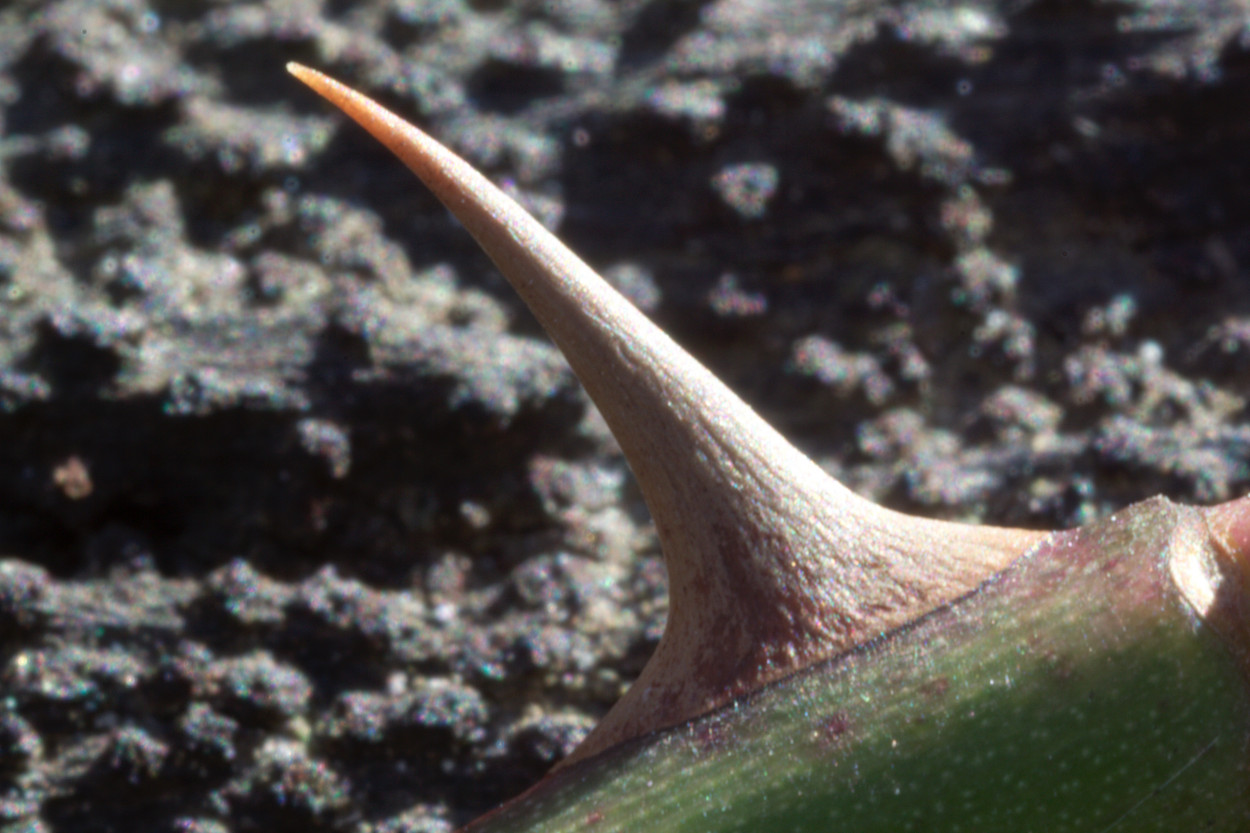
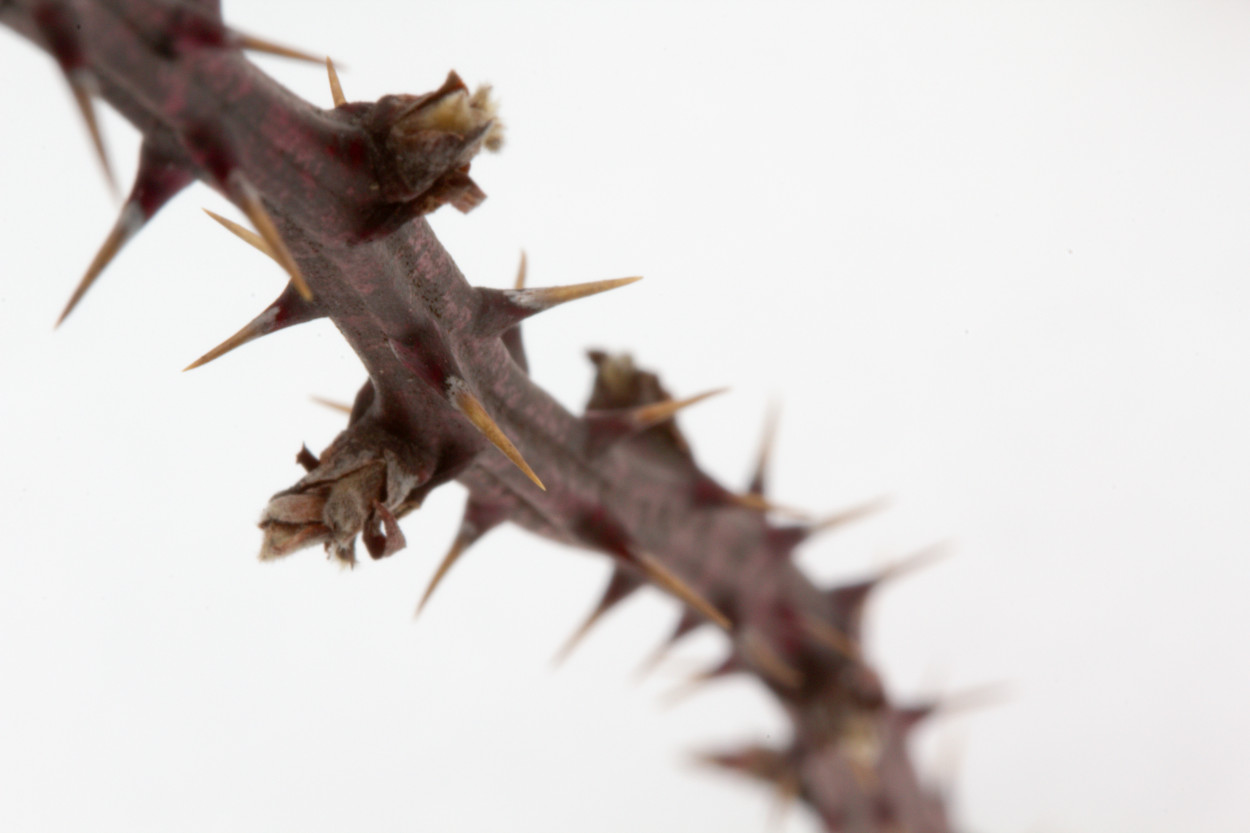
It’s time for my annual photo of the Rosa multiflora hybrid I have in our back garden. This is a natural hybrid, found growing in the woods near my office. The parent plant is no longer there, because about a month after I dug up a piece it was sprayed and killed. Normally that’s the right thing to do with R. multiflora but this one is special to me, because of the pink blooms that cover the plant this time of year for about a week. It’s quite lovely. It would be even better, of course, if it repeated but one cannot have everything. It’s a vigorous plant, as one would expect with a multiflora hybrid, and handsome as a large patch of green on the back fence, even when not in bloom. It takes a bit of extra care, pruning and cutting out dead wood every couple years, but it’s well worth the effort. That effort is made more difficult by the quantity (large) and quality (also large and very sharp) thorns that absolutely cover the canes. Still, worth it.

Categories: Flowers and Plants | Tags: , , , , , | Comments Off on Rosa multiflora

Sedum (Stonecrop)

Sedum (Stonecrop)

Sedum (Stonecrop)

We drove back from New York this morning and had no problems with traffic, thankfully. It has gotten pretty warm, although it’s still nice in the shade. I took some pictures in the yard this afternoon, including this photo of some Sedum (stonecrop) flowers. This is a fairly prolific perennial plant and has gotten established in the cracks and crevices around our front steps and walkway. It’s not so aggressive that it’s particularly invasive and it has a lot of these pretty (small) yellow flowers.

Categories: Flowers and Plants | Comments Off on Sedum (Stonecrop)

Tradescantia (Spiderwort)

<em>Tradescantia</em> (Spiderwort)

Tradescantia (Spiderwort)

Our spiderworts (Tradescantia) have begun to bloom. Ours mostly have very deep purple flowers, although we have a couple with pink flowers. This isn’t as good a photograph as I had hoped, but it does show two of my favorite features of the flowers, the blue stamen hairs and bright yellow anthers. Together, they combine to give the flowers an other-worldly look that I really like. I’ll try to get a better picture at some point, but this will have to do for now.

Categories: Flowers and Plants | Comments Off on Tradescantia (Spiderwort)

Iris ‘Eric the Red’

Iris ‘Eric the Red’

Iris ‘Eric the Red’

We have some large, bearded irises in bloom but this little one, a pretty, little Siberian iris called ‘Eric the Red’, may be my favorite.

Although it’s called ‘Eric the Red’ the petals are actually a purple color. One interesting thing about it, though, is that in photographs, the petals come out looking more red than they are in real life. In this image, I’ve corrected the color so it matches pretty well what the flowers look like.

Categories: Flowers and Plants | Comments Off on Iris ‘Eric the Red’

Oenothera speciosa (Pink Evening Primrose)

Oenothera speciosa (Pink Evening Primrose)

Oenothera speciosa (Pink Evening Primrose)

This is our first evening primrose (Oenothera speciosa) of the year. Soon we will have dozens of them, lighting up the garden in the evening (as their name suggests, their flowers open in the evening). Actually, this one is in a shady spot and it seems to be fooled by that into opening a bit early, which is actually quite nice. Oenothera speciosa is an herbaceous perennial native basically to the southern half of the contiguous United States.

Categories: Flowers and Plants | Comments Off on Oenothera speciosa (Pink Evening Primrose)

Adiantum pedatum (Northern Maidenhair Fern)

Adiantum pedatum (Northern Maidenhair Fern)

Adiantum pedatum (Northern Maidenhair Fern)

Ages ago my dad planted a maidenhair fern (Adiantum pedatum) in his back yard. I think he dug it up somewhere or other but I’m not 100% sure of that. It grew quite well there and when we had our house in Gaithersburg he let me dig up a piece of it and plant it in our yard. I’m glad we did that because when my parents finally got an air conditioner in their house the condenser unit went where the fern had been. I dug up a piece from our house in Gaithersburg and kept it in a pot until we bought our current house (a year later), when I planted it here. It is thriving in a fairly sunny spot outside our dining room window.

Categories: Flowers and Plants | Tags: , , , , , , , | Comments Off on Adiantum pedatum (Northern Maidenhair Fern)

Sisyrinchium angustifolium (Narrow-leaf Blue-eyed Grass)

Sisyrinchium angustifolium (Narrow-leaf Blue-eyed Grass)

Sisyrinchium angustifolium (Narrow-leaf Blue-eyed Grass)

We planted a few small plants of blue-eyed grass in our yard when we first moved here and it has proliferated. Among other things, it’s growing in the cracks between the flagstones of our front walk. It’s fairly well behaved and doesn’t go so crazy that it’s a problem, though, so I don’t mind having it about the place. The little blue flowers are quite nice, too, of course. I don’t know for a fact that this is narrow-leaf blue-eyed grass (Sisyrinchium angustifolium) but that’s the local native so it seems likely and it looks about right.

Categories: Flowers and Plants | Comments Off on Sisyrinchium angustifolium (Narrow-leaf Blue-eyed Grass)

Roseraie de L’Hay

Roseraie de L’Hay

Roseraie de L’Hay

One of our roses, a rugosa named Roseraie de L’Hay, has started to bloom. It’s a fairly large shrub, 8 or so feet tall and about as much across. It has blooms throughout the summer but in late spring (i.e., right about now) it has it’s best showing. The flowers are a rich, crimson-purple and are double, with a wonderful and very strong fragrance. The only downside to the plant is that it’s so big and many of the best flowers are way overhead and thus hard to see. I should probably give it a good pruning this year and see if I can tame it a bit, but it’s so happy the way it is, I hesitate. This, obviously, is a bud but gives a foretaste of the bloom to come. It also shows the wonderful rugose (wrinkled) texture of the leaves.

The rose is named after the rose garden of the same name in L’Haÿ-les-Roses, Val-de-Marne, France, started in 1892 by Jules Gravereaux.

Categories: Flowers and Plants | Comments Off on Roseraie de L’Hay

Lonicera maackii (Amur Honeysuckle)

Lonicera maackii (Amur Honeysuckle)

Lonicera maackii (Amur Honeysuckle)

Among local invasive species, this has to be near the top of the list. It is very prolific. It does have the redeeming feature of pretty flowers in the spring and later will be covered by red berries, but it’s something you want to keep out of your yard, if you can. This is along the side of the parking lot at work and there is a lot of it there, both around the drainage pond and in the woods. I’m sure the insects love it, of course it isn’t like it is consciously destructive. It simply lives where it is planted.

Note: I originally had this marked as Lonicera japonica, Japanese honeysuckle but I was just posting without thinking. This is Lonicera maackii, Amur or bush honeysuckle. The text about it being a pest didn’t need to be modified much.

Categories: Flowers and Plants | Comments Off on Lonicera maackii (Amur Honeysuckle)

Fading Dogwood Blossoms

Fading Dogwood Blossoms

Fading Dogwood Blossoms

We have a couple dogwood trees in our yard but I’m doubtful if any of them were actually planted by the previous owners. They all have the look and the positioning of trees that just happened to grow and were left alone. This one is actually in a convenient and suitable place so I’m happy to have it. The others are either dying or in a bad place and I’ll get rid of them once I have something appropriate with which to replace them. It’s gotten hot again and the dogwood is done blooming. The flowers are all gone on the pink dogwood up against the house and the flowers on this one are turning brown and the petals will drop in a day or two. But more things are coming into bloom every day. This is a busy time or year. Nevertheless, sometimes we have to look at what was and remember its beauty. There is a certain elegance to something beautiful that has passed its time. People are like that, as well. We crave youth and youthful beauty, but there is an elegance in some who grow old gracefully and lovingly. I wish I could be one of those people.

Categories: Flowers and Plants | Comments Off on Fading Dogwood Blossoms

Orchard Orbweaver on Columbine

Orchard Orbweaver on Columbine

Orchard Orbweaver on Columbine

I went out into the back garden to take a few pictures this afternoon. I started with some deep, orange Coreopsis that has just started to bloom. From there I moved to one of the many Columbine (Aquilegia) plants that have come up from seed from the few that we brought with us to this house in 2006. I was lying on my back, looking up into the flowers when I saw this spider, an orchard orbweaver (Leucauge venusta) one one of them. I got as close as my lens would take me and this is the result. Count me a big fan of spiders, particularly spiders in the garden, where they aren’t under foot and where they eat insects. This is one of my favorites.

Categories: Creatures, Flowers and Plants | Comments Off on Orchard Orbweaver on Columbine

Chive Flowers

Chives (Allium schoenoprasum)

Chives (Allium schoenoprasum)

The chives are in bloom on the back patio. I love chives and all things onion. One thing I like to do with chives, though, is pick the light purple flower heads off and chop them up to sprinkle over whatever I’m cooking. They give a very mild onion flavor but also add visual appeal. Of course, you can also chop up the leaves into tiny little wheels and the flavor is about the same but purple is more fun than green, when it comes to condiments on food.

Categories: Flowers and Plants | Comments Off on Chive Flowers

Lily of the Valley (Convallaria majalis)

Lily of the Valley (<em>Convallaria majalis</em>)

Lily of the Valley (Convallaria majalis)

One of my favorite little flowers are the pretty little bells on the lily of the valley (Convallaria majalis). We had a fair amount of this at our old house and brought a bunch with us in pots when we moved. Turns out there was quite a bit already growing in the back garden of our new house. We’ve planted most of what was in pots but this is a rectangular container that is still sitting on our patio. Getting pictures of lily of the valley means getting down on the ground because you generally need to look up at it to see it at its best. Being in a container actually helps here, because the plant’s “ground level” is a few inches higher than actual ground level. After I took this, I looked up to see Cathy and Dorothy at the kitchen door taking pictures of me lying on the patio taking this picture. Seems worth the effort to me. I hope you agree.

Categories: Flowers and Plants | Comments Off on Lily of the Valley (Convallaria majalis)

Exbury Azalea

Exbury Azalea

Exbury Azalea

Cathy called me today from Home Depot asking if I wanted her to buy this Exbury azalea. I’ve been meaning to get a few of these for the yard and this one was reasonably priced and it good shape, so I said yes. What is an Exbury azalea, you might ask? They have a fairly complicated makeup and many of the early records don’t exist. But in the late 18th century, hybrids were made between North American azalea species Rhododendron calendulaceum, nudiflorum, arborescens, and viscosum, and the bright yellow flowered, European R. luteum, producing what are generally referred to as Ghent azaleas. The addition of R. molle and japonicum took the azaleas to the next stage, the Mollis and then R. occidentale was added, giving us the Knaphill azaleas. Starting in the 1920s Lionel de Rothschild made hundreds of thousands of hybrids and brought us the Exbury azalea. Well, that’s a rather simplified history. You can read more here: http://scholar.lib.vt.edu/ejournals/JARS/v40n1/v40n1-cash1.htm.

Categories: Flowers and Plants | Tags: , , , , , , , | Comments Off on Exbury Azalea

Dogwood Against The Sky

Dogwood Against The Sky

Dogwood Against The Sky

It was a beautiful morning today and as I went out to head to work, I paused to appreciate the blooms on the pink dogwood against the front of our house. That tree is much too close to the house to be left alone for the long term and I’ve planted a camellia to take its place. But until the camellia gets a bit larger, I’ll leave the dogwood there. I to love pink dogwoods and will probably plant another to replace this one, somewhere more appropriate. This picture is brought to you by the notion that you need to look up and look down, not just straight ahead. The pink of the flowers, the bright green of the leaves and the beautiful cerulean sky make quite a picture, I think, easily missed if you are simply watching where you are going.

Categories: Flowers and Plants | Comments Off on Dogwood Against The Sky

Lamprocapnos spectabilis (Bleeding Heart)

Lamprocapnos spectabilis (Bleeding Heart)

Lamprocapnos spectabilis (Bleeding Heart)

It was a drizzly afternoon and the ground was pretty wet when I got home but I went out to take pictures anyway. I wanted to get pictures of the bleeding heart (Lamprocapnos spectabilis) before it finished blooming but that meant getting down close to the ground (and when I say close, I mean lying down). Well, I didn’t feel up to going out this evening so didn’t have anywhere to go, so it didn’t make much difference if my clothes got a bit dirty. I took a bunch of pictures of the bleeding heart as well as some fern fiddle heads coming up nearby.

Categories: Flowers and Plants | Comments Off on Lamprocapnos spectabilis (Bleeding Heart)

Azalea Flowers

Azalea Flowers

Azalea Flowers

Digital cameras are quite amazing in their ability to capture images electronically. Film was quite amazing in its day, as well, and it still pretty cool. But digital cameras have surpassed film in many ways, not the least of which is the amount of detail that can be recorded and the range of colors and brightness levels (the dynamic range) that can be captured. Nevertheless, they are not perfect. There are still colors that are so saturated that camera sensors cannot easily capture them in all their beauty. Usually such extremes of color are artificial, but flowers are a notable exception. These azalea flowers are such a bright, intense pink-red that my camera cannot easily handle them. The photograph does a reasonable job of capturing them, but the result is not as intense as the original.

Categories: Flowers and Plants | Comments Off on Azalea Flowers

Tulipa acuminata ‘Fireflame Tulip’

Tulipa acuminata ‘Fireflame Tulip’

Tulipa acuminata ‘Fireflame Tulip’

Most of the early spring bulbs are finished. The last of the daffodils, even those which bloomed later than normal, are finished and turning brown. Tulips used in roadside beds throughout the area are done and ready to be replaced. There are a few in our front garden, however, that are still blooming. This is Tulipa acuminata ‘Fireflame Tulip’. The description on McClure and Zimmerman (http://www.mzbulb.com, where I bought them) says they are “scarlet and yellow with long, curiously twisted petals.” As you can see, mine is pure yellow. I don’t mind, though. It is still quite striking. They also say that “although classified as a species, it’s not known in the wild and is probably an ancient hybrid of garden origin.” I don’t mind that, either. It blooms considerably later than the other tulips I have and I like that about it. They are planted among some later-blooming daffodils, which probably isn’t the best idea, because they are somewhat hidden because of that. But they come back year after year, which is somewhat unusual for tulips, which are generally quite short-lived.

Categories: Flowers and Plants | Comments Off on Tulipa acuminata ‘Fireflame Tulip’

One More Daffodil

Narcissus 'Limbo'

Narcissus ‘Limbo’

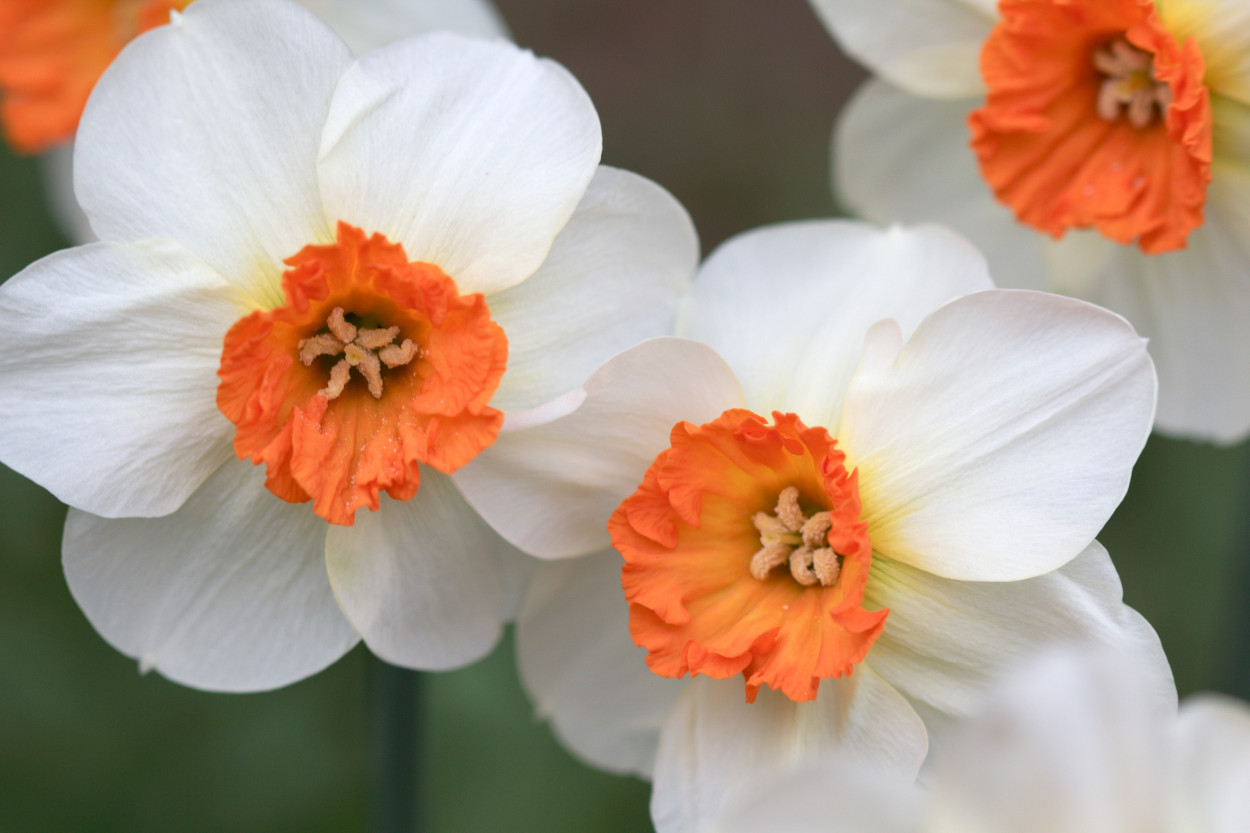
This is my last daffodil photo of the year, I promise. Well, I won’t actually promise but it’s pretty likely to be, anyway. Because they were planted only last fall, the new daffodils that I’ve photographed this spring have come up and bloomed a bit late. I expect them to be more “on schedule’ next year. This one, calle ‘Limbo’, was planted in two places in the back yard. I’m quite pleased with it. The petals are not as pure white as ‘Lemon Beauty’ that I photographed four days ago, but it’s a very pale yellow. It sets off the orange of the corona quite nicely, though, particularly when the sun is shining on it.

Categories: Flowers and Plants | Comments Off on One More Daffodil