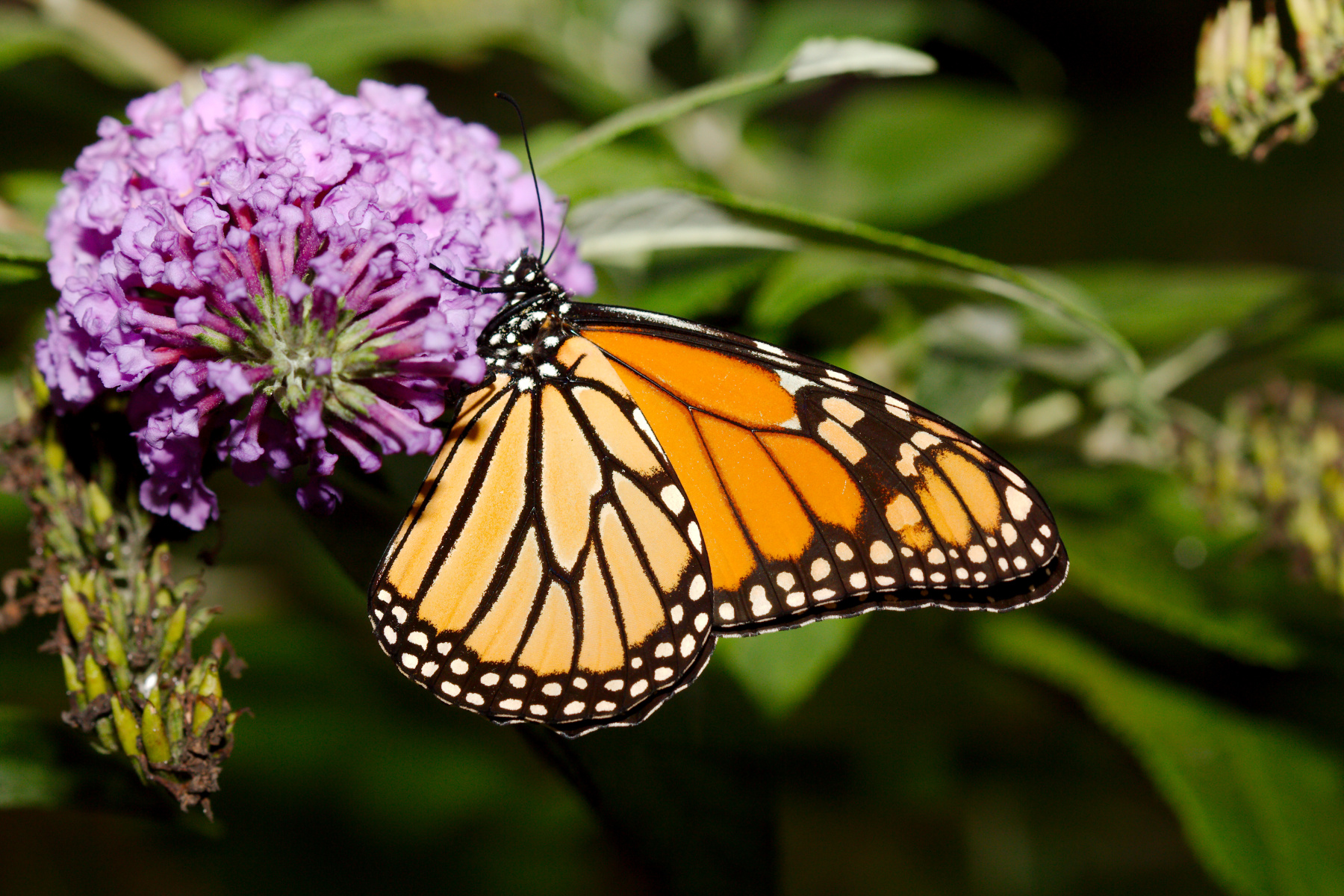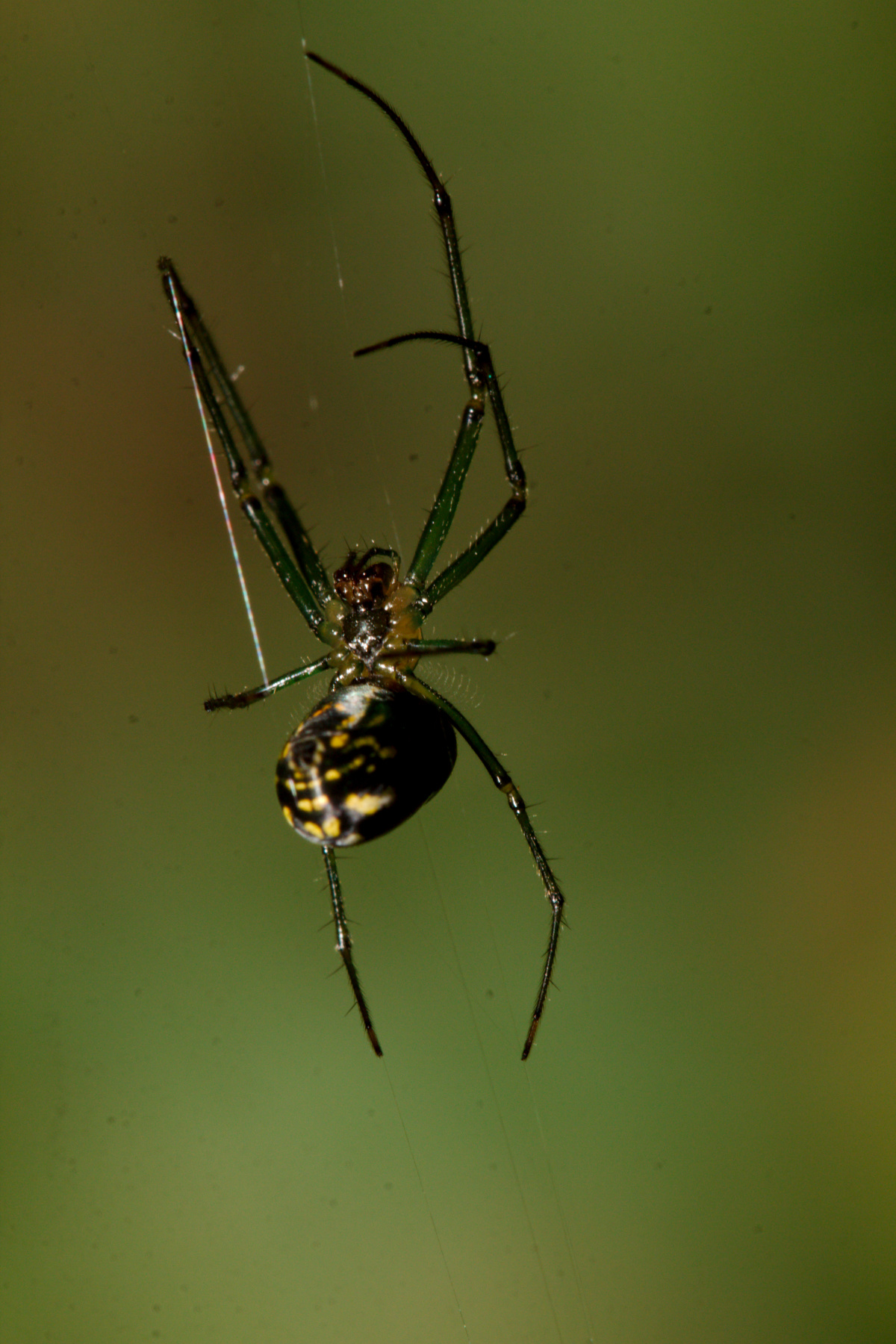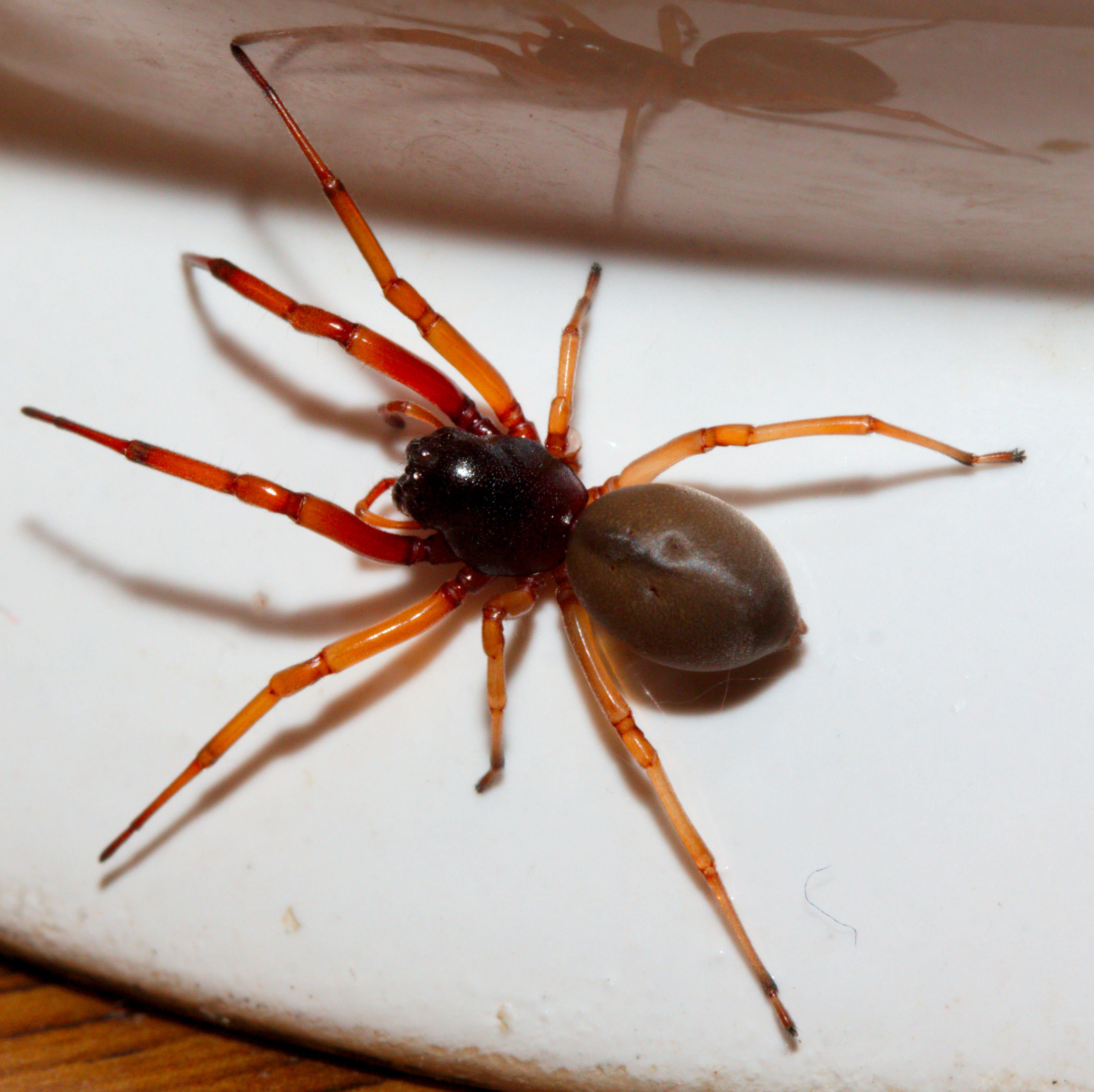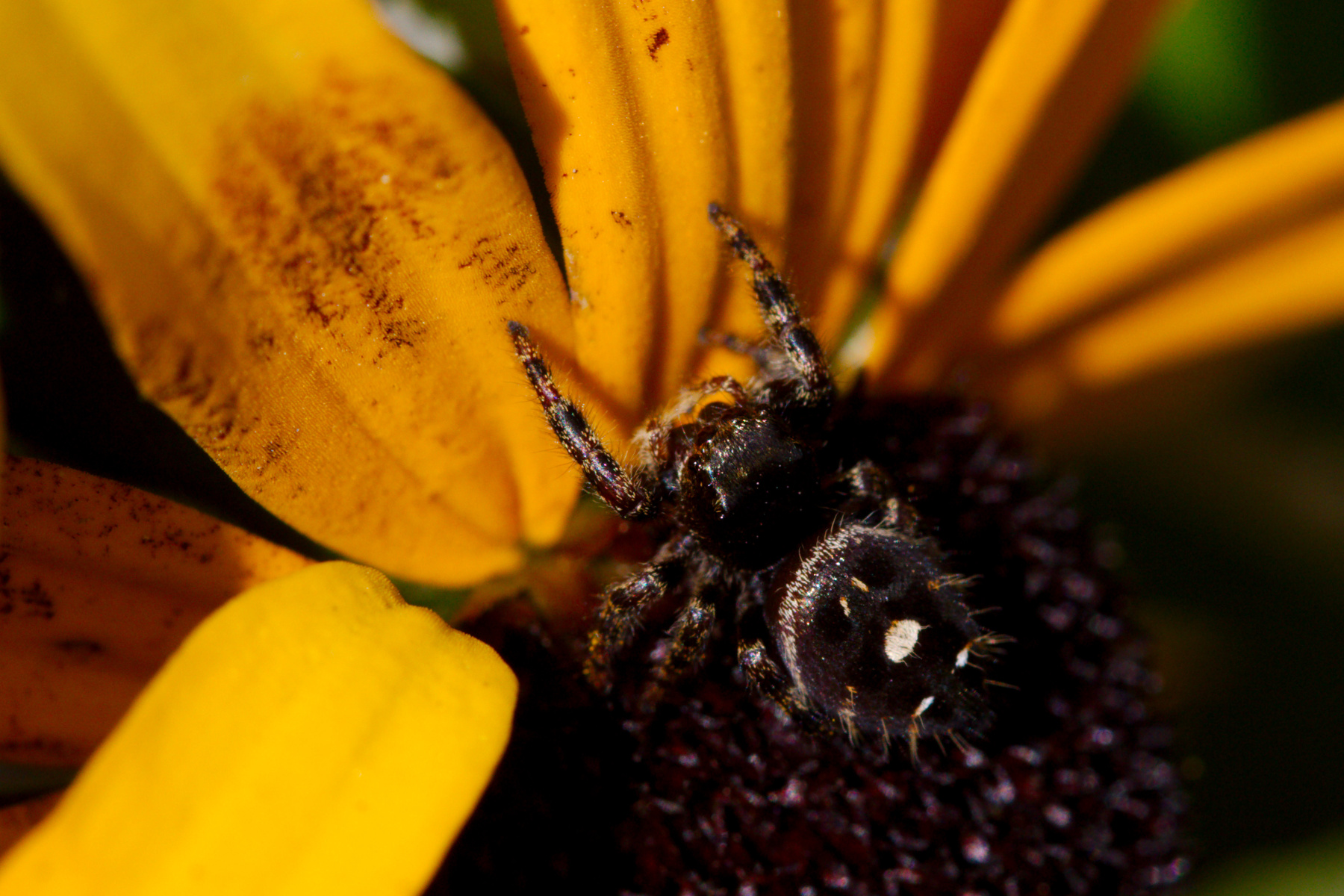
We have a fair amount of Verbena bonariensis growing around the yard. It’s somewhat of a weed but for the most part, we let it go, just keeping it barely within bounds. There are a few reasons for us letting it go. First, of course, is that it’s pretty on its own. I mean, the purple adds a bit of contrast to all the green in the early summer and it’s generally still in bloom when the black-eyed Susans really start to go crazy. But I think the main reason is that the American Goldfinches (Spinus tristis) really seem to like it. Usually I’ve been unable to get close enough to get even a poor photo of them before they fly away but this afternoon I got a reasonable picture showing three finches. They are such lovely birds and we enjoy watching them bounce around on the tall stems of the Verbina.
Creatures
American Goldfinches (Spinus tristis)
Speyeria cybele cybele (Great Spangled Fritillary)
I drove down to Lake Needwood on the way home today and stopped to take a few pictures. I followed a pair of fritillaries for a while and got a few half decent pictures. I also went after a great blue heron but wasn’t able to get anything worth while there. This is a great spangled fritillary and apparently there are at least 7 subspecies (and depending on who you ask, more than that). I naively assumed they were distinguished by variations in the patterns on their wings but apparently they are identified by distribution. Who knew? This was identified by the good people of BugGuide.net as subspecies S. c. cybele. Note: the red in the background is my car. I tried to get pictures without that but for this one, which turned out the best of the butterfly, it was unavoidable. Oh, well.
Great Blue Heron (Ardea herodias)
As I drove into the parking lot at work this morning I saw out of the corner of my eye that there was a heron on the pond between my building and the rest of the campus. Before I went inside, then, I decided to see if I could get a picture or two. I happened to have my 75-300mm lens this morning, so I was able to get a few reasonable shots. It let me take them, continuing to fish for a little while (I even got pictures of it with a fish in its beak). Then if flew away and I was able to snap one picture as it headed off. It is not as sharp as I’d like and I’d prefer a background that is more different to the color of the bird, but I’m fairly pleased with the composition overall.
Skipper on Coreopsis
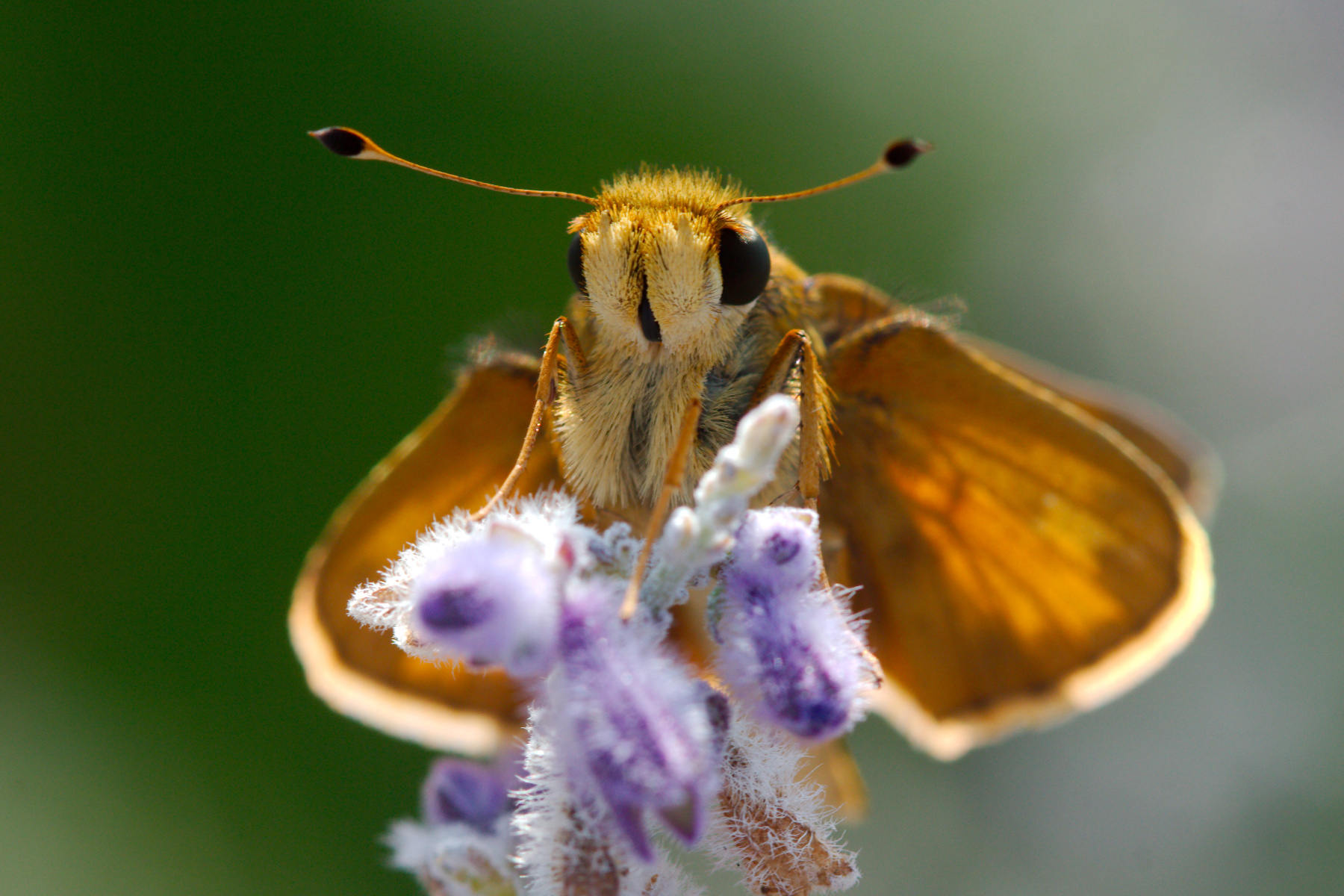
I sat on the patio for a while this afternoon, just enjoying being in the sun. It was actually a little hot for my taste, but still nice for all of that. Also, the light is better for macro photography in the sun, when you want as much depth of field and as fast a shutter speed as possible. I was watching the insects around the potted flowers on the patio and got a few pictures of this skipper (family Hesperiidae) on a coreopsis (a.k.a. tickseed) flower. The insects aren’t around it the huge numbers we’ll have in a few weeks, particularly when the mountain mint (Pycnanthemum muticum) starts to bloom, but they are certainly here and I really enjoy them.
Insect Exuviae
I was out in the yard taking pictures this evening and after taking a few of the rose I just posted, I noticed that there were a lot of little insects moving around in the grass. When I say little, I’m talking about insects in the 2 to 3mm range. As I walked around, they leapt away from me. I got down on the ground but when they were not moving, they were hard to find. What I did find, however, was this exuviae, the exoskeleton of some small insect that left it behind on a blade of grass. It’s about 5mm long and appears to be from some sort of grasshopper or cricket. The word exuviae is Latin and means ‘things stripped from a body.’
Cicada Wing
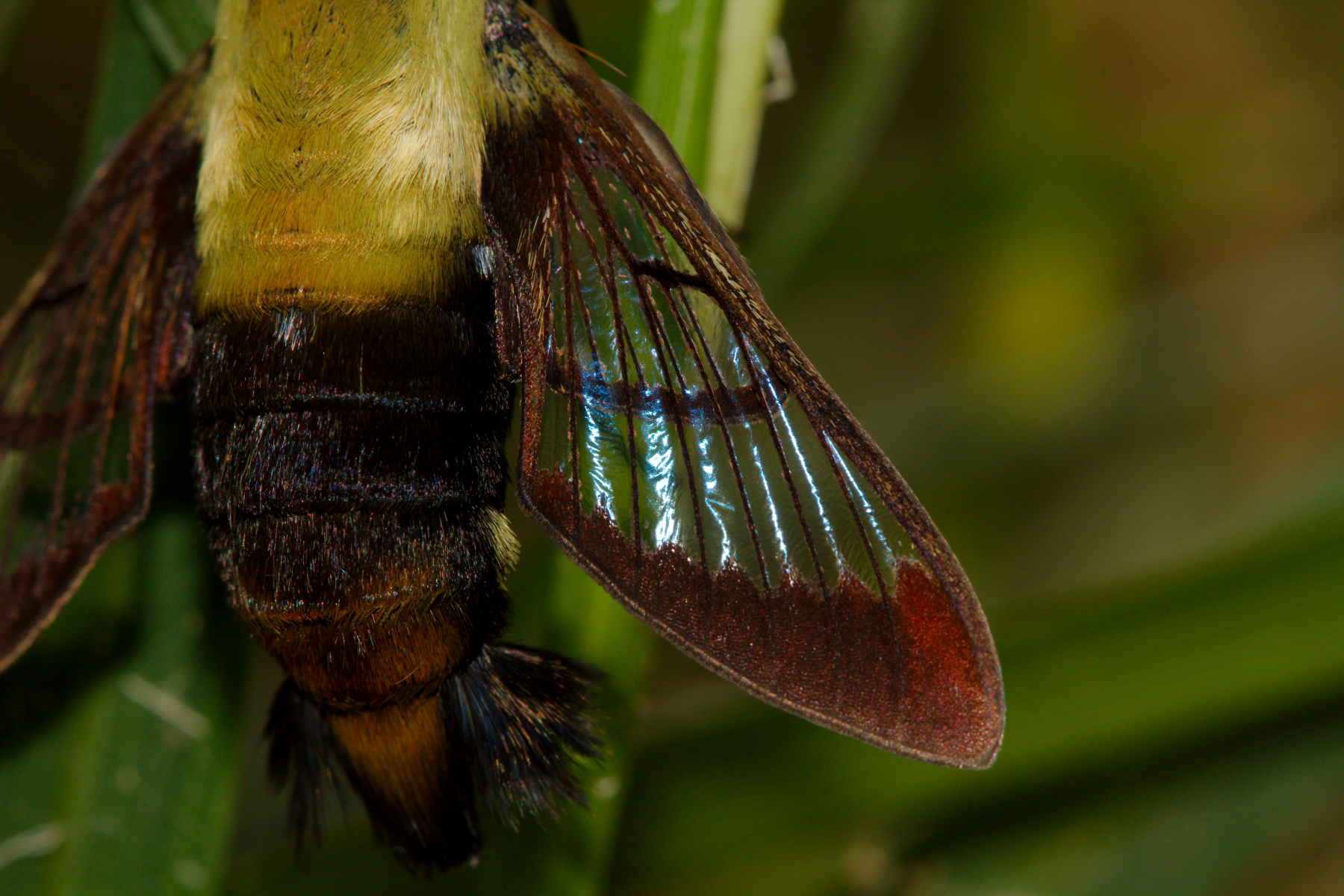
Because there are a lot of them about, I’m guessing that this is a wing from a Riley’s 13-year cicada (Magicicada tredecim) like the one whose picture I posted ten days ago (see: Saturday, May 20, 2017). I think it’s a beautiful thing. It’s also quite sturdy. This one was separated from its owner and has little droplets of water on it. Even handling it to get it into position for a photo didn’t dislodge them. Interestingly, the wings of the clanger cicada (Psaltoda claripennis, also known as the clear wing cicada), a species found in eastern Australia, has a physical structure of ‘nanopillars’ that kill bacteria that settle on them. Pretty cool.
Poecilocapsus lineatus (Four-lined Plant Bug)
I don’t know that I’d call this a serious pest but it certainly does make our garden look worse this time of year. This little bug has been here in pretty good numbers in recent years and they suck the juices out of some of our plants, making their leaves brown and desiccated. It generally doesn’t do the plant irreparable harm but it doesn’t do it much good, either. In past years I spray them and cut them off before they do their worst. This year I never got around to it and the damage is pretty well done at this point. They’re pretty, little things, I admit. But pests, nonetheless.
Eastern Cottontail (Sylvilagus floridanus)
Rabbits. We’ve got rabbits. Eastern cottontail rabbits, to be precise (Sylvilagus floridanus). Apparently they have been multiplying like, well, rabbits. It’s not uncommon this spring to see four or five in the back yard at once. And there will be others in the front yard, as well. Mostly they are eating clover and not causing too much trouble with our garden so we put up with them. This many of them, though, and I’m starting to wonder how the local fox population is doing. Either there aren’t enough foxes to take care of the rabbits or they are simply not keeping up.
Magicicada tredecim (Riley’s 13-year Cicada)
In yesterday’s post I mentioned that this is not the year for the huge brood of 17-year cicadas. I also said that there were, nevertheless, a noticeable number of cicadas about, mostly obvious from their exuviae (their shed exoskeletons) on small plants all around the yard. Well, I got a pretty good picture of an adult cicada today and I’m pretty sure this is a Riley’s 13-year cicada (Magicicada tredecim). It is identified as a periodical cicada by its red or orange eyes (the annual cicadas have black eyes). The orange patch between the eye and the wing identifies it as Magicicada tredecim.
The last time we had the huge brood of 17 year cicadas was in 2004. Well, that was 13 years ago. That means that this admittedly smaller brood of 13-year cicadas happened to coincide with that larger brood, making 2004 an especially huge event, more than either of them would be on their own. So, in four more years, the 17-year cicadas shouldn’t be as bad as they were in 2004. That’s good to know.
By the way, if you are of a mind to try one, they don’t taste like much. Just saying.
Small Spider Web
I went out into the yard after work today and took some pictures. I started with some yellow irises that have started to bloom. From there I moved on to take a few rose pictures, the multiflora rose, ‘Blush Noisette’, and my newest, ‘Cutie Pie’. The cicadas are out in significant numbers. This isn’t the year of the largest local brood, which isn’t due until 2021. But there are still quite a few of them. Finally, I took some pictures of this small spider web in the dying Colorado spruce in our front yard. It’s not as sharp as I would have liked, having been taken in somewhat dim light and without the aid of a tripod (and the branch was moving a bit int he breeze.
Great Blue Heron (Ardea herodias)
I went out into the woods next to my building late this morning. There wasn’t a lot that I found interesting but I took a few pictures. Before I went back inside, though, I thought I’d walk over to the pond on the other side of the building and see if the ducklings were still there. They were not but this great blue heron (Ardea herodias) was and I was able to get a few decent pictures before he flew off. I also watched a couple tiger swallowtails (Papilio glaucus) fluttering around and getting water from the mud at the pond’s edge. All in all, a nice, relaxing outing to break up an otherwise uneventful day at the office.
Dwarf Spider
I know, I know. There are those among you who would be happier if I would just stop taking pictures of spiders all together. I’m sorry, but I think they are fascinating and beautiful creatures and I don’t see myself stopping any time soon. This one, which I think is a dwarf spider (subfamily Erigoninae), is quite safe to be around. Her body is probably 3 to 4 mm long and her jaws are not likely strong enough even to break your skin. So, no problems here. And don’t forget what spiders eat. If you don’t like flying insects, then spiders are your friend. I get not wanting them all around in your house but in the garden, please let them be.
Castianeira Spider
Cathy and I went out for a later afternoon walk today. We just walked around my building a few times but I brought my camera, as I usually do. There were some ducks and ducklings on the pond but today’s picture is this spider, a Castianeira species of some sort. Castianeira is a genus of spiders with about 26 species in North America. They are members of the Corinnidae, the antmimics and ground sac spiders. This isn’t a particularly good picture, having been taken hand-held at 1/60 second in somewhat dim light in a parking lot. Still, it’s a new spider for me and one I’ll look for again when I have more time to get a good picture.
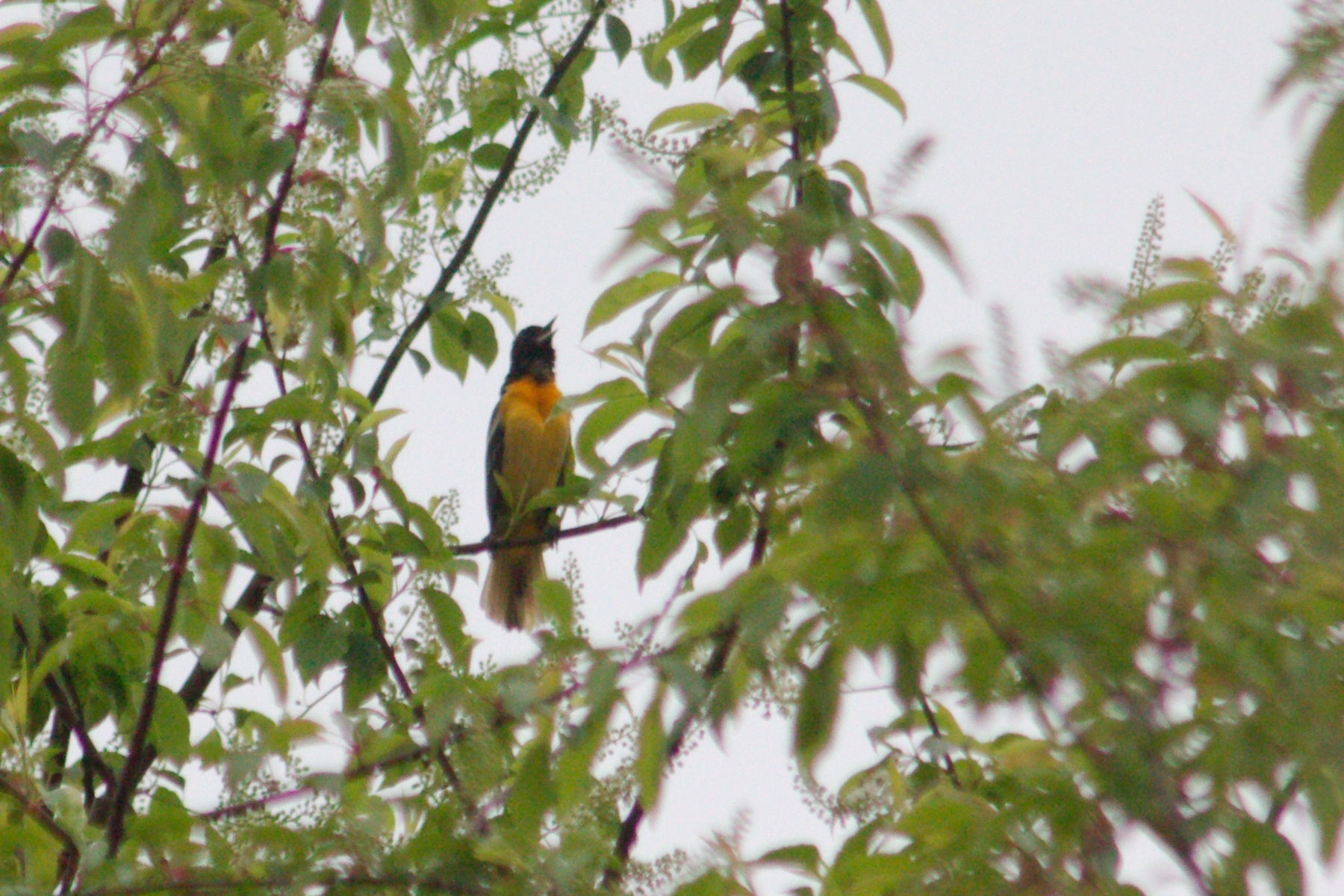
Baltimore Oriole
I follow a bunch of folks on Instagram who specialize in pictures of birds. These folks take amazing pictures and I’m a little embarrassed to post this picture which compared to theirs is pretty pathetic. To get good pictures of birds, the first requirement is a good telephoto lens, a tripod, and a significant commitment of time. Today I was in the woods next to my office with none of those things. I had a 100mm lens, hand held, and only a short time to grab a few pictures. I wasn’t thinking of bird pictures when I went out. But I wasn’t in the woods long when I noticed more than one Baltimore oriole flitting around among the trees. This is the best shot I was able to get and even this is only adequate to identify this as an oriole. Maybe one day I’ll get some of the fabulous photos of birds that I enjoy from others. But this is not that day.
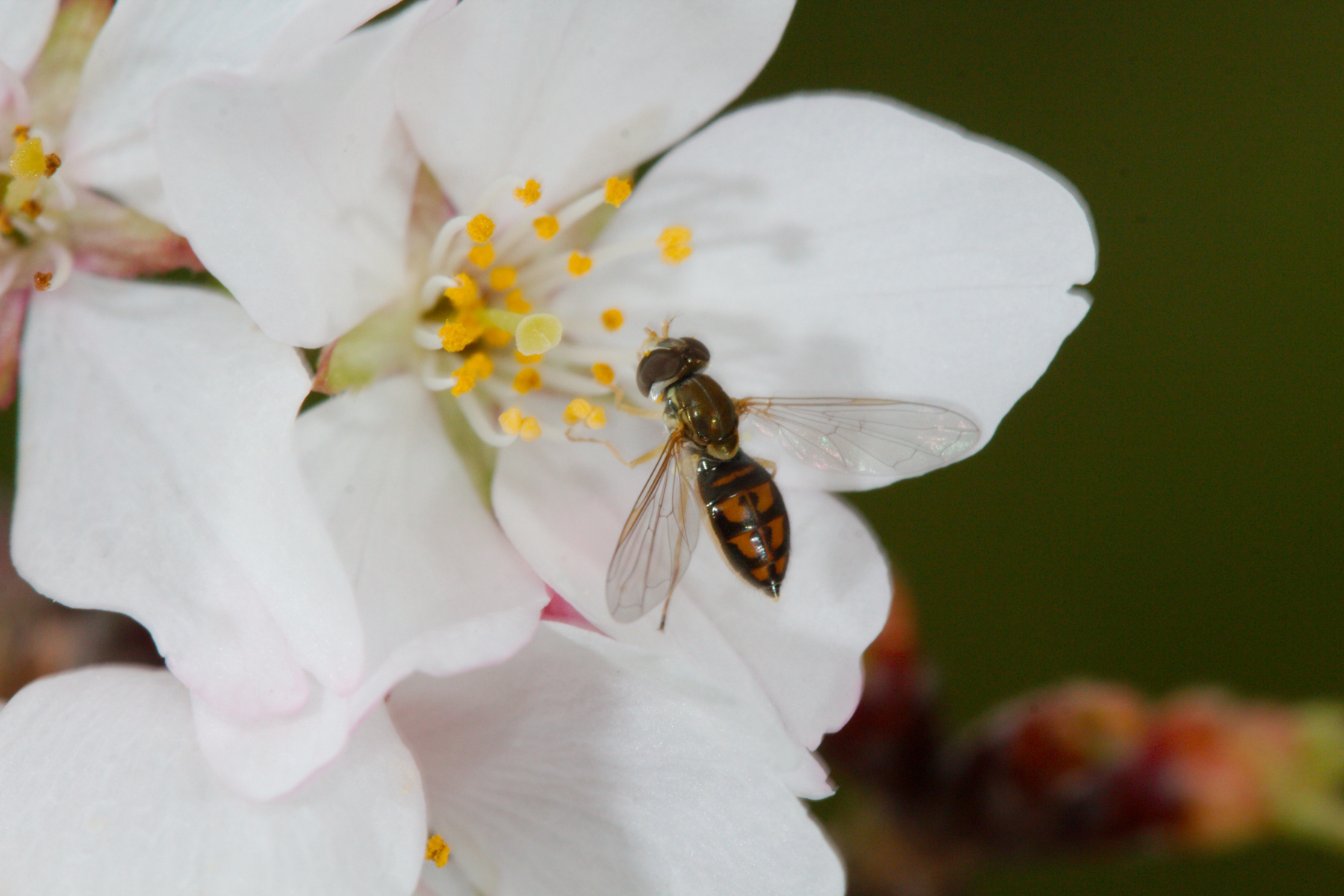
Blue-eyed Grass with Syrphid Fly
It was a beautiful, warm day today and after church and lunch we decided to go to Fehr’s Nursery in Burtonsville. They have a nice selection of plants including the annuals that Cathy’s been planting in a small area at the front of our yard the last few years. I bring my camera and spend most of my time taking pictures of flowers. This year I also bought a miniature rose called ‘Cutie Pie’ but that’s not what this photo is. This is a flower of Blue-eyed grass (Sisyrinchium species) with a syrphid fly (Toxomerus marginatus) perched on it. These are quite ubiquitous, little creatures in the area and they don’t cause any bother at all. I think they’re kind of pretty, as well.
Loon
We spent a fair amount of time with Dorothy today. We drove into Salem for a while but it was cold and wet so we didn’t stay out as long as we might have done. We did see this loon in the water next to Derby Wharf. I only had my 100mm lens so couldn’t get as close as I would have liked but at least you can tell what it is. Dorothy went to dinner with some friends so Cathy and I were on our own. We had a very nice meal in a place called Toscana Bar Italiano. The food was quite good and I think we were a bit lucky to get a table without waiting. It’s a smallish place so it can easily fill up. The rain probably helped us a bit this evening.
Canada Goose (Branta canadensis)
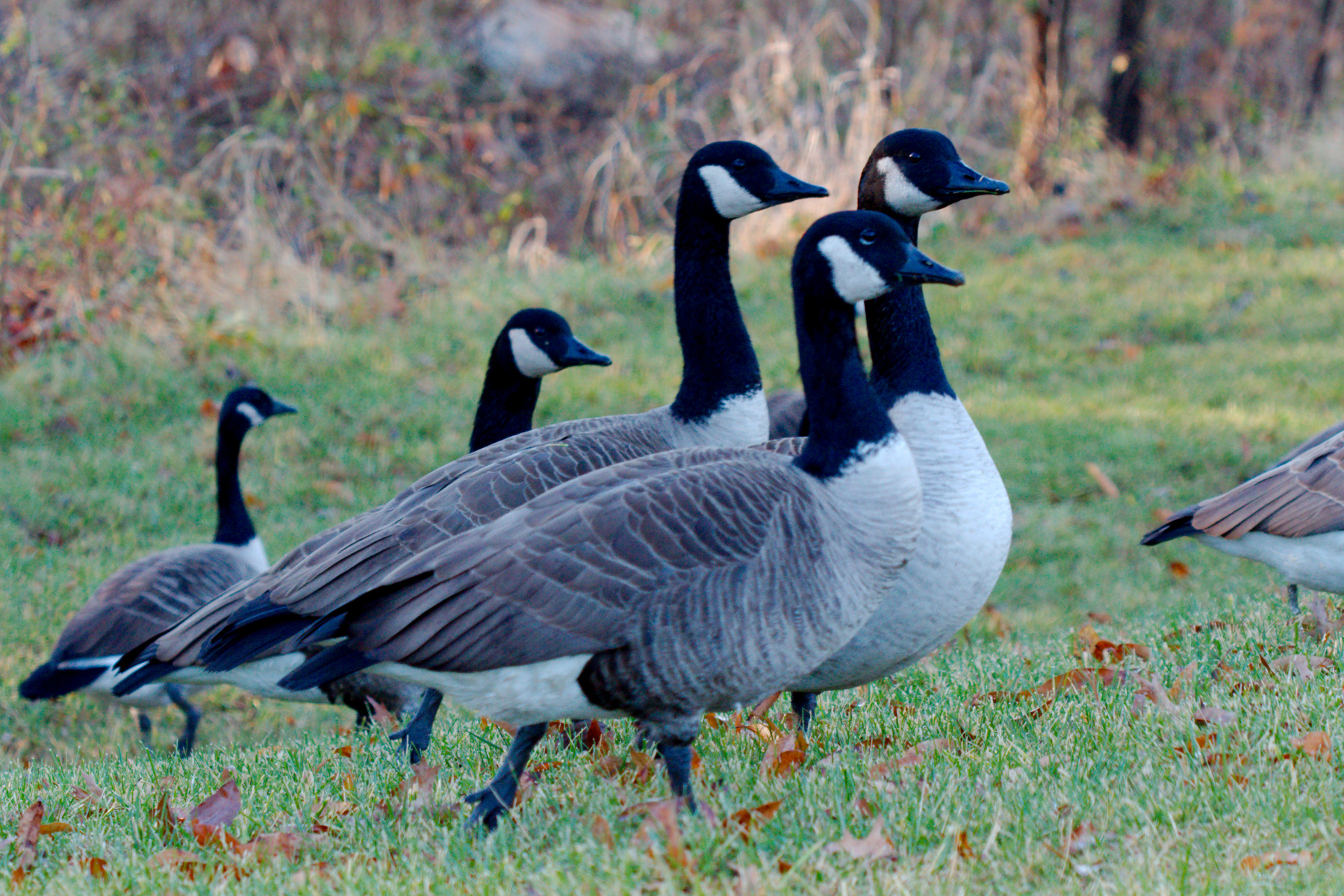
Cathy and I went for a walk in the early afternoon. You might think that working at the same company we’d see a lot of each other during the day but in fact, we don’t. We work in different buildings, for one thing, on a campus that isn’t exactly sprawling but which includes six buildings. Mine if on the north end of the campus, separated from the others by a pond. We walked across West Montgomery Avenue to a larger pond today and that’s where I took this photo, of a Canada goose (Branta canadensis).
Chicken and Eggs
As mentioned in yesterday’s post, Cathy’s niece Maggie is in town. We don’t see her nearly enough so we wanted to spend as much time with her as possible. She helped her grandma fold bulletins at church in the morning and then we left early and spent the afternoon with her. It was a wonderful, spring day with a beautiful, clear, blue sky, cool but not cold. We drove out to our friends’ farm and visited with our friends and some of their animals.
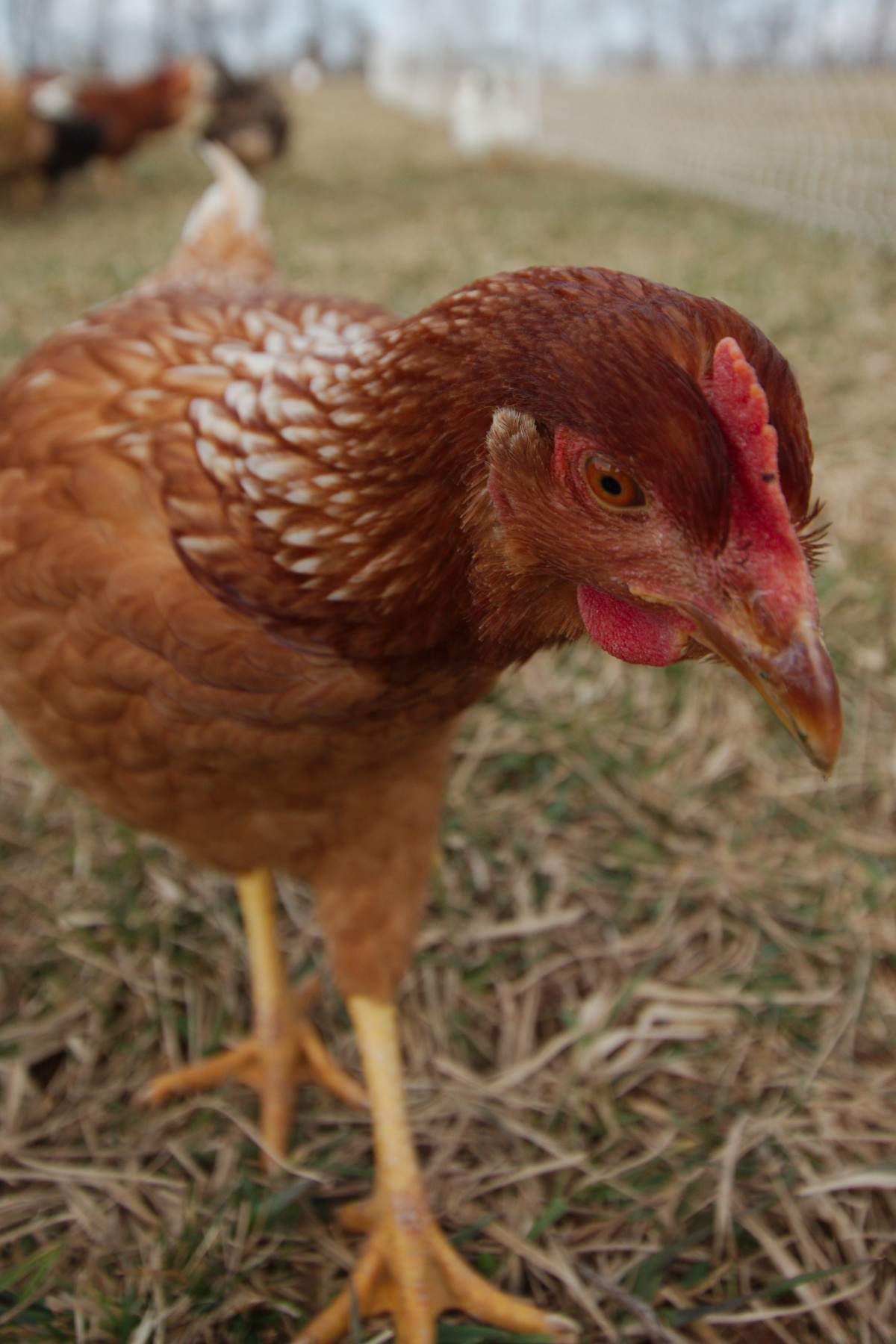
We spent the most time with the chickens (of which there are something on the order of 1,000). I sat for a while in the midst of them and got a few nice pictures, including this one from ground level. A little later Cathy and I helped Anna collect eggs from the laying boxes in the chicken-coop-bus. So, in this case, the chickens came before the eggs.
I made chicken panang curry for dinner. No relation to this chicken, as far as I know.
Blue Crab Sculpture
I went to BWI airport this afternoon to pick up Maggie, who was coming for a short visit during her spring break. As usual when I go to BWI, I bring my camera. It isn’t the most photogenic airport you’ll come across but it has some interesting spots. Of course most of the time I spend there is waiting around the baggage carousels, which is about the least interesting part of the whole place. Coming across the westernmost sky bridge from the top of the parking garage, which is the end of the terminal that Southwest uses, there is a large, stained glass, Atlantic blue crab sculpture in a case. It’s a bit tricky to get a picture of something like this and having it in a glass case certainly doesn’t help. It is what it is.
Other than that, my visit was fairly uneventful. Maggie arrive, we got her bag, and we left. We did go to G&M to buy crab cakes for those of us who eat such things. I fixed surf and turf for dinner, with two crab cakes and two large, very thick t-bone steaks. I’d say it was a success, at least in part thanks to the Tony Chachere’s Creole Seasoning.
Probably a Wolf Spider (Family Lycosidae)
It was a beautiful day today. It’s fairly warm and the snow is melting. I had a meeting across campus early this afternoon and on the way back I walked around my building and took a few pictures. The melting snow was raising the level of the pond next to my building and I walked down to it, over a thin layer of very soft, wet snow. This little spider was there, as well. I believe it is some sort of wolf spider (family Lycosidae) and will update the post if I figure out (or more likely am told) which one. I know spiders are not favorite subjects of many (or should I say either) of my followers. They come right ahead of deer ticks, I’d say. But they’re neat little things and I love to watch them. This is a small spider, not much more than one centimeter long including its legs.
UPDATE: Identified as being in the genus Pardosa, the thinlegged wolf spiders.