
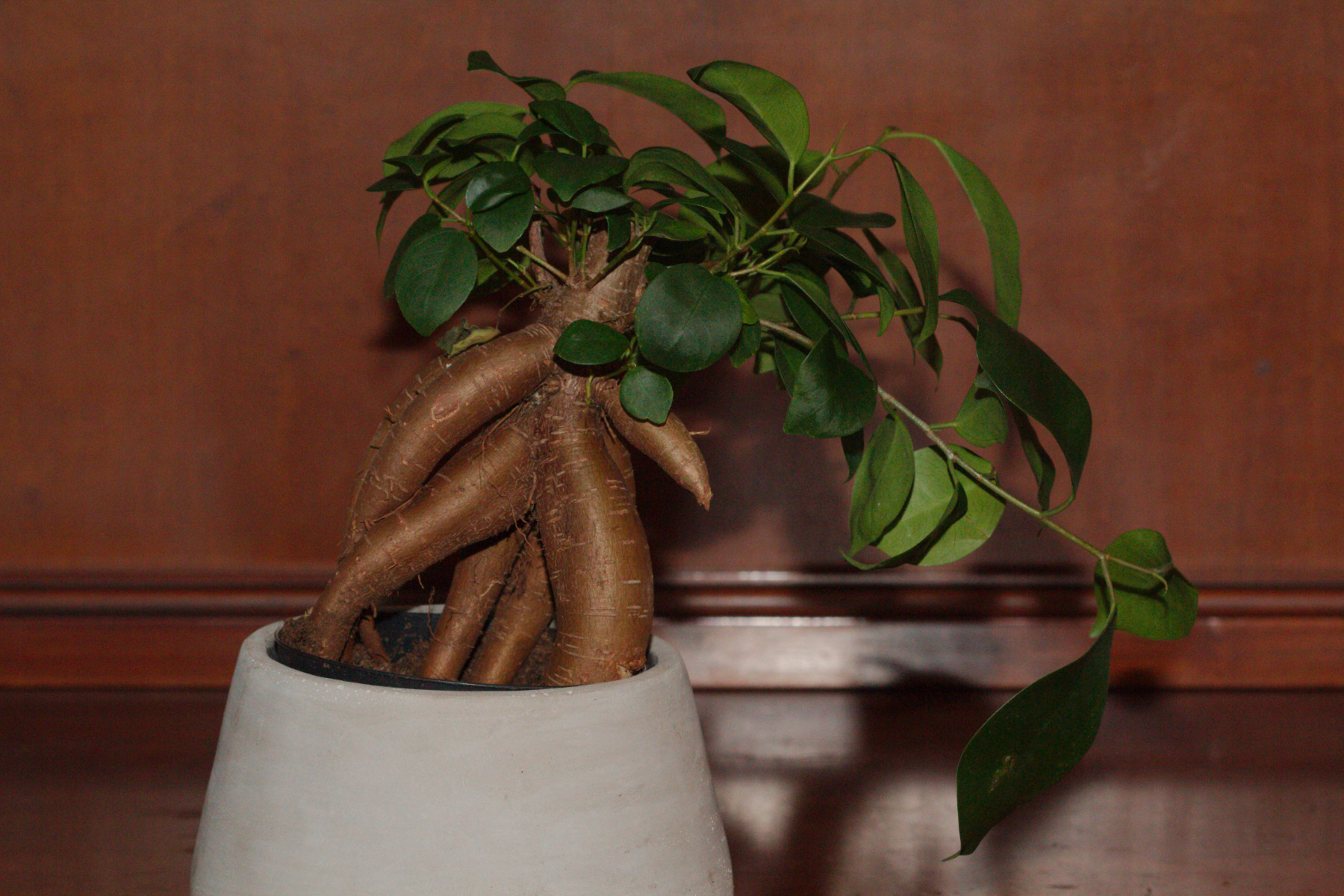
In the wild, this species of fig is a tree growing to over 100 feet in height and with a spread of 200 feet. This specimen is, obviously, a little smaller. The tree, variously known as the Chinese or Malayan banyan or the curtain fig, is native from China through tropical Asia and the Caroline Islands to Australia. As a houseplant it is a good choice for bonsai, taking training quite well. In the case of this plant, it is what is known in the trade as a ginseng ficus. The “stems” are actually roots. The plant is allowed to grow with these fleshy roots underground and then the plant it re-potted so that they are above ground, giving the appearance of ginseng roots. This was a gift to Dorothy from her friends, Rachel and Andrew.
Tagged With: Bonsai
Ficus microcarpa Bonsai
National Bonsai and Penjing Museum
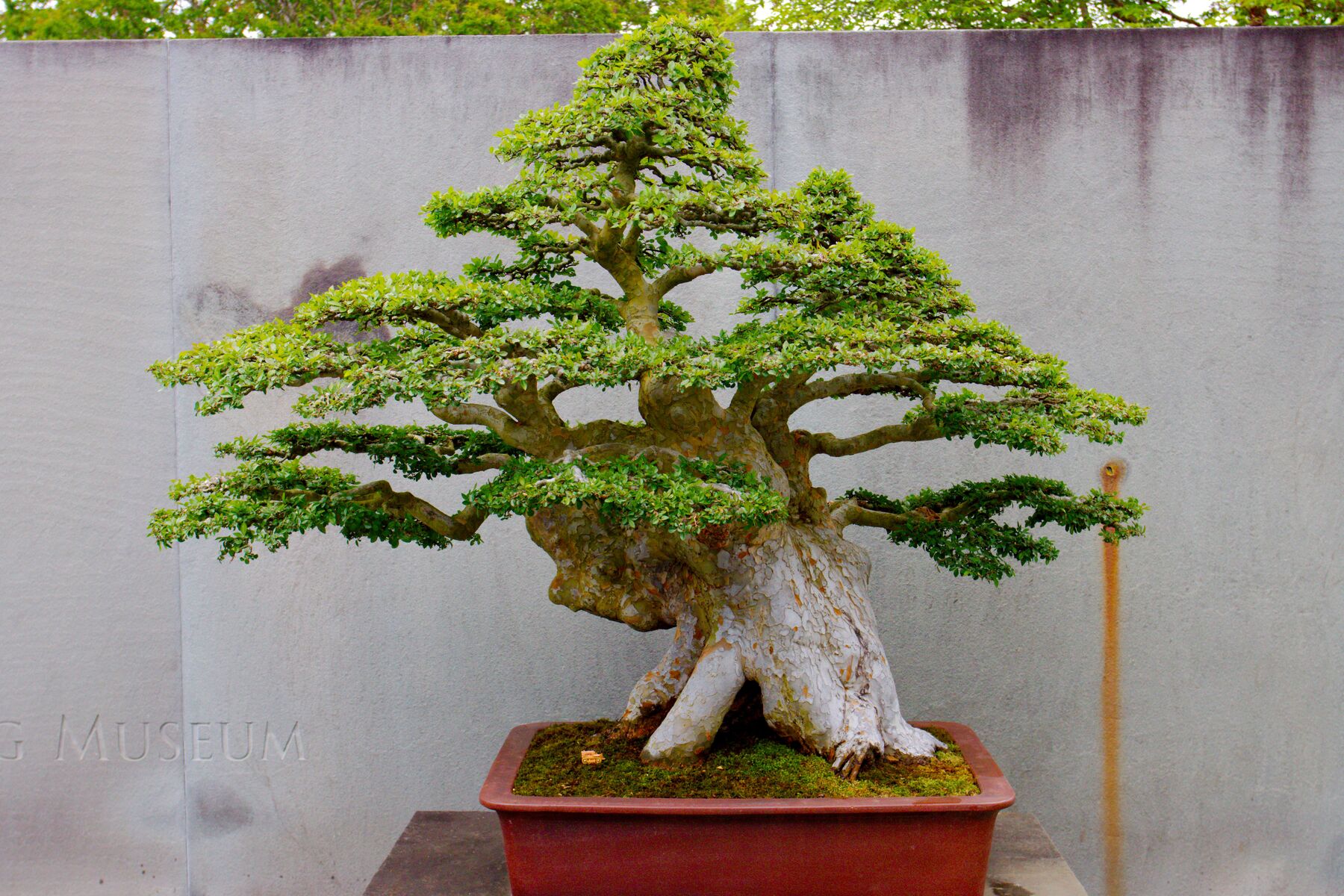
We’ve gone to the National Arboretum each May since 2022 and three of those times were on May 7, which is when we went this year. The roses were a bit later this year, so we got to see a few that are generally done when we’ve been in prior years. After the National Herb Garden, which includes the roses, we walked through the National Bonsai and Penjing Museum. This was first opened in 1976 when 53 bonsai trees were given to the United States by Japan to commemorate our bicentennial. It has grown over the years and has some really lovely miniature trees. The oldest, I believe, is the Yamaki Pine, which has been in training since 1625. In 1945, this tree, 320 years in training at the time, was about two miles from the epicenter of the Hiroshima blast. The tree pictured here is unlabeled, so I cannot tell you anything about it, but I think it’s lovely, as well.

