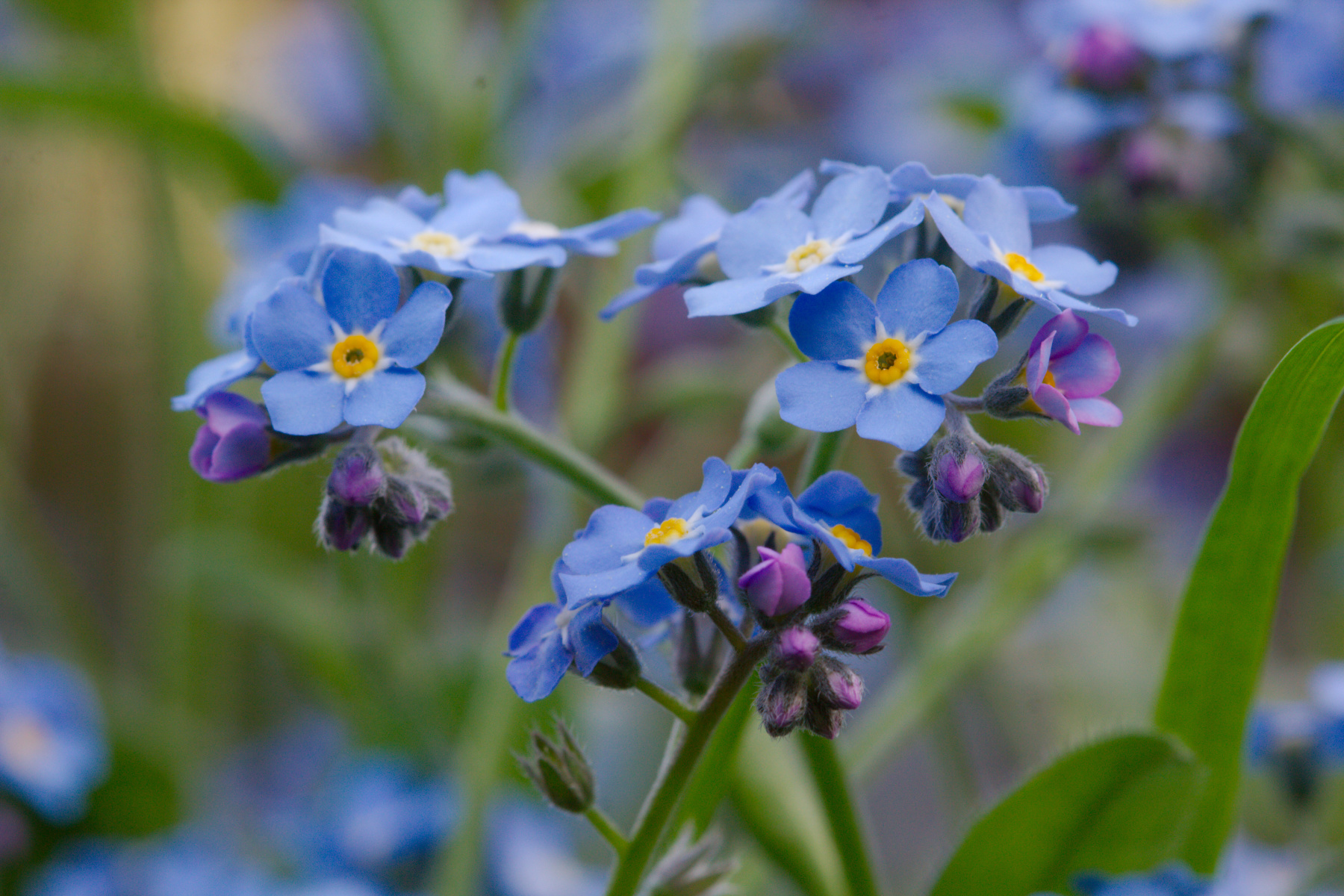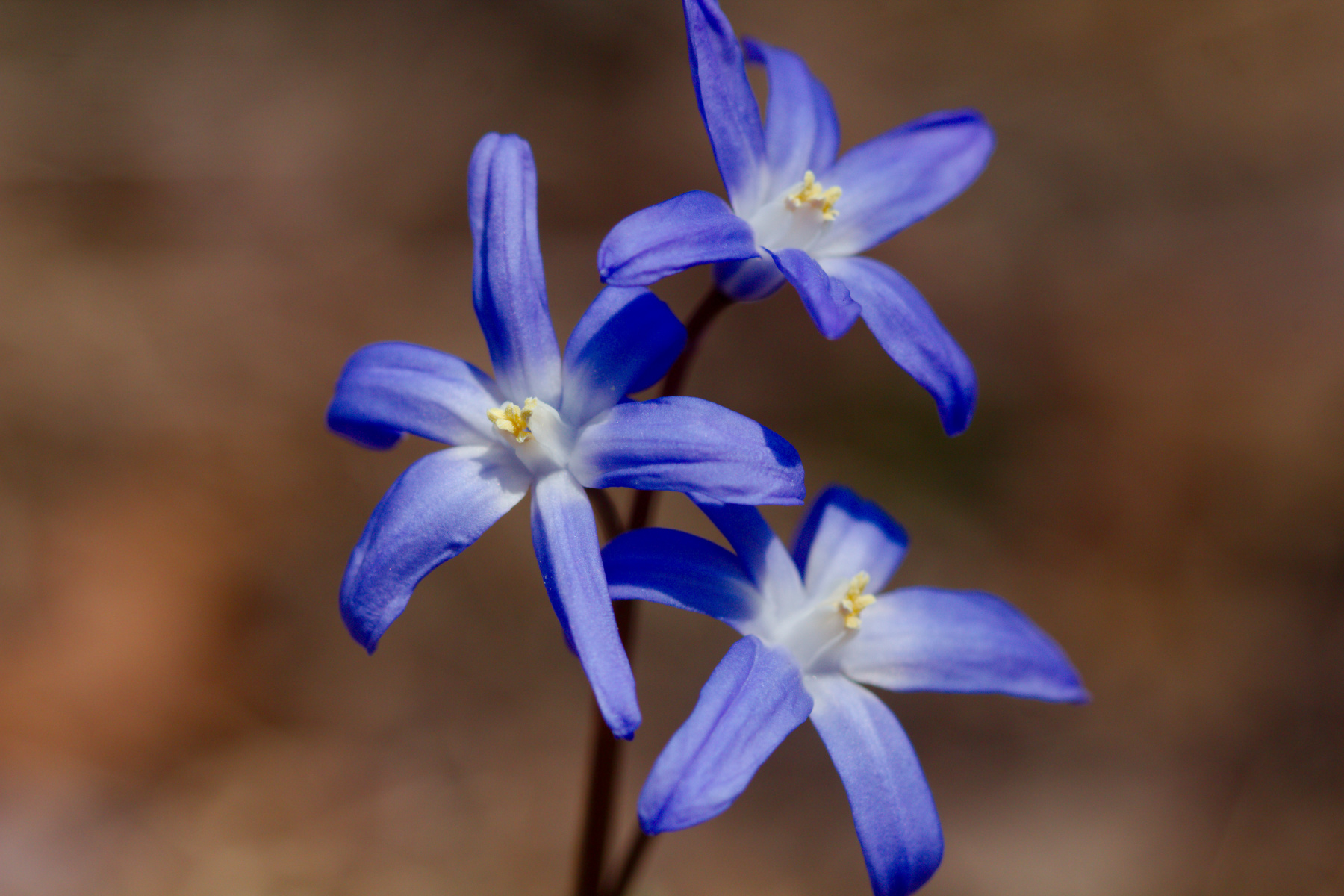
The forget-me-nots (Myosotis sylvatica) are in full bloom in our garden. They self-seed and many of them are growing out in the grass. Cathy has dug a few up to replant in the garden beds where they won’t get mowed over. We both really love the powder blue of the forget-me-nots and are happy when the start to bloom. The buds are purple and the flowers, as they start to open, turn from a pinkish purple to the pure blue of the fully-formed flowers. You can see one transitioning at the right in this photo. The yellow “eye” in the center of each bloom turns white as the flower ages.
Flowers and Plants
Myosotis sylvatica (Woodland Forget-me-not)
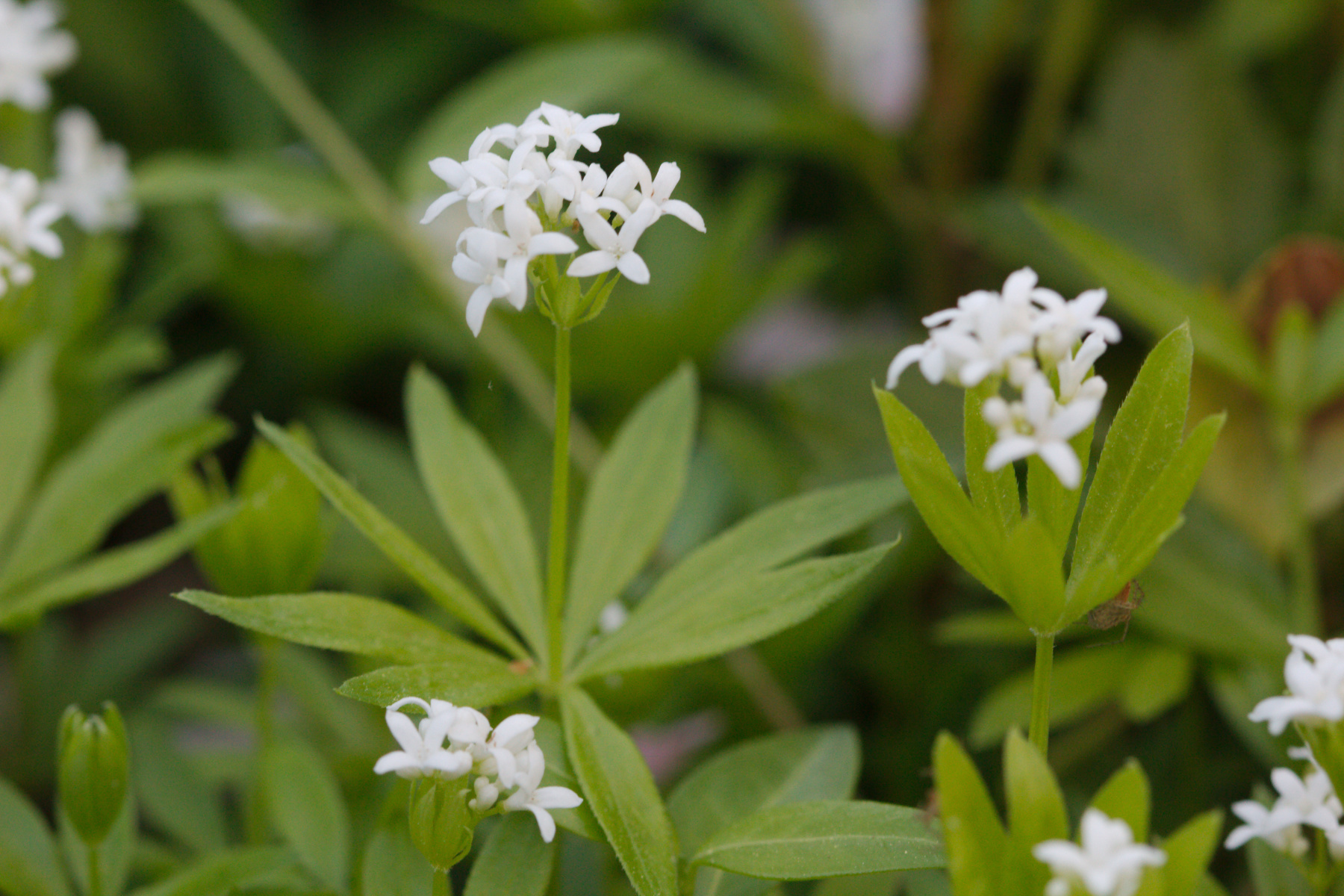
Galium odoratum
Galium odoratum, commonly known as Sweet Woodruff and Sweetscented Bedstraw, is a pretty, little perennial native to Europe, northern Africa, and northern Asia. It grows well in the shade and we have it under the cherry tree at the north end of our garden. It’s competing with Japanese pachysandra, which is a battle it won’t win, although it seems to hold its own. From the Missouri Botanical Garden’s Plant Finder web site:
Plants emit a strong odor of freshly mown hay when foliage is crushed or cut. Aromatic intensity of the foliage increases when dried, thus dried leaves are popularly used in sachets or potpourris. Plants have also been used commercially in perfumes. Leaves are sometimes used to flavor teas and cold fruit drinks. Leaves are also used to make May wine, a punch made from white wine flavored with woodruff, orange and pineapple. Woodruff comes from Old English meaning wood that unravels, in probable reference to the creeping rootstock of the plant.
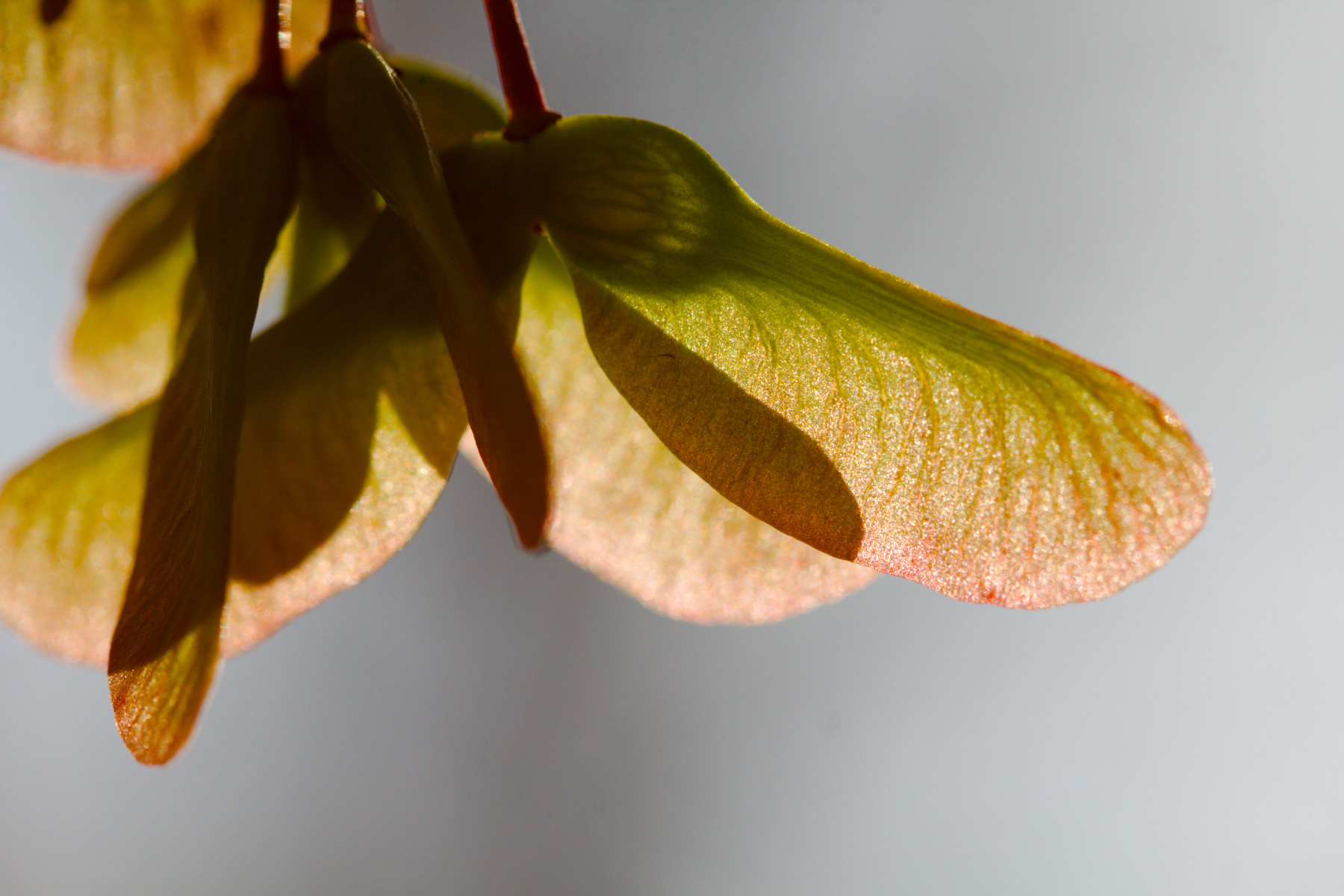
Maple Samaras
It’s that time of the year when the maple trees let loose thousands upon thousands of “helicopters” (a.k.a. samaras). They’ll be thick on the lawn and patio and front walk. Not as thick as they once were, because we have fewer maple trees than we did, but still quite a lot. Then they will start growing. In the lawn, the first time the grass is cut, they’ll be taken care of. In the garden beds they need to be pulled up.
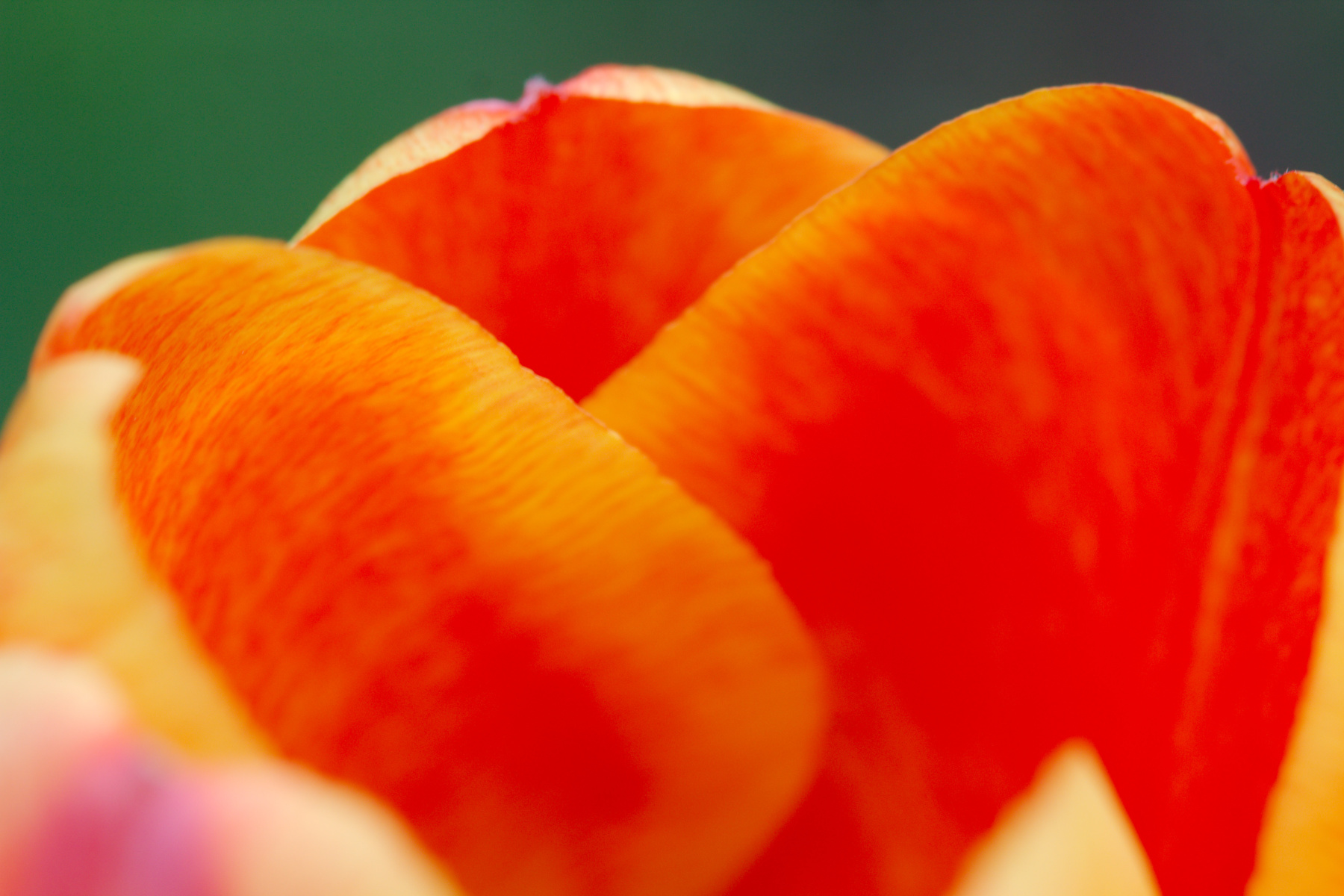
Tulips
In the front of my office building there are a few flower beds including one raised bed with a bunch of tulips growing in it. They are bright orange and red and really striking. I usually go into the building through the back door so I hadn’t noticed them but my friend, Corina, said I should take a look. I did and she was right. Naturally when she said take a look, she meant take some pictures, so I did that, too. It was late in the day and they were in the shade of the building, making it a little harder, exposure wise, but I really love their colors.
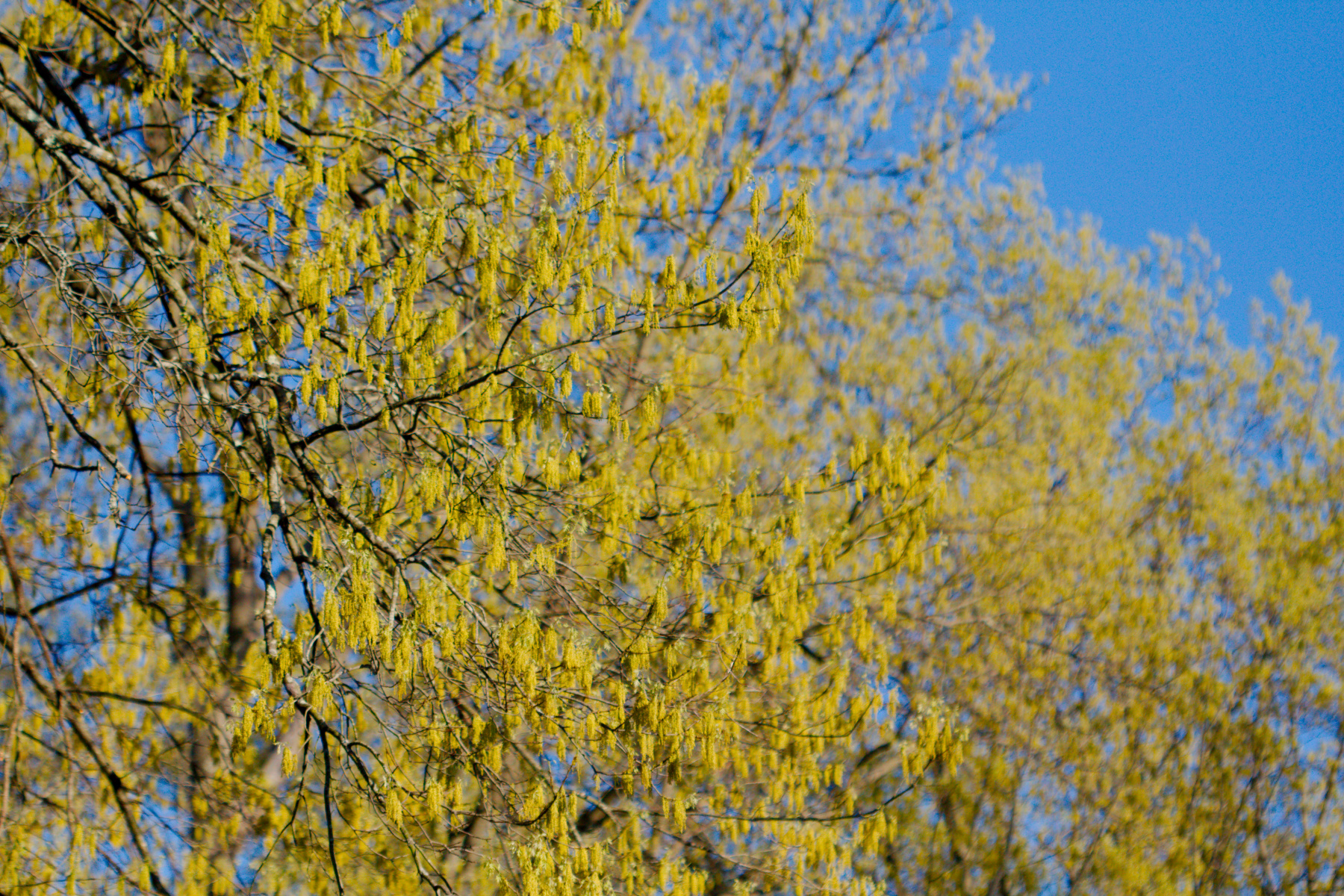
Flowering Oaks
There are trees we generally think of as flowering trees, such as dogwoods, cherries, and crab apples. But of course, most non-coniferous trees bloom, even if that’s not why we grow them. Out neighborhood has street trees planted pretty much throughout with different streets and different sections having different tree species but mostly planted with the neighborhood was developed in the late 1960s. Our area has mostly red oaks and at nearly 50 years old, they are generally pretty good size. Oaks are among those not usually grown for their showy flowers. Nevertheless, when they are in full bloom, particularly on a clear day in contrast with the blue sky, they are quite dramatic. Of course, the pollen is everywhere and if you have allergies, you aren’t enjoying this. But it can be beautiful.
Eastern Redbud (Cercis canadensis)
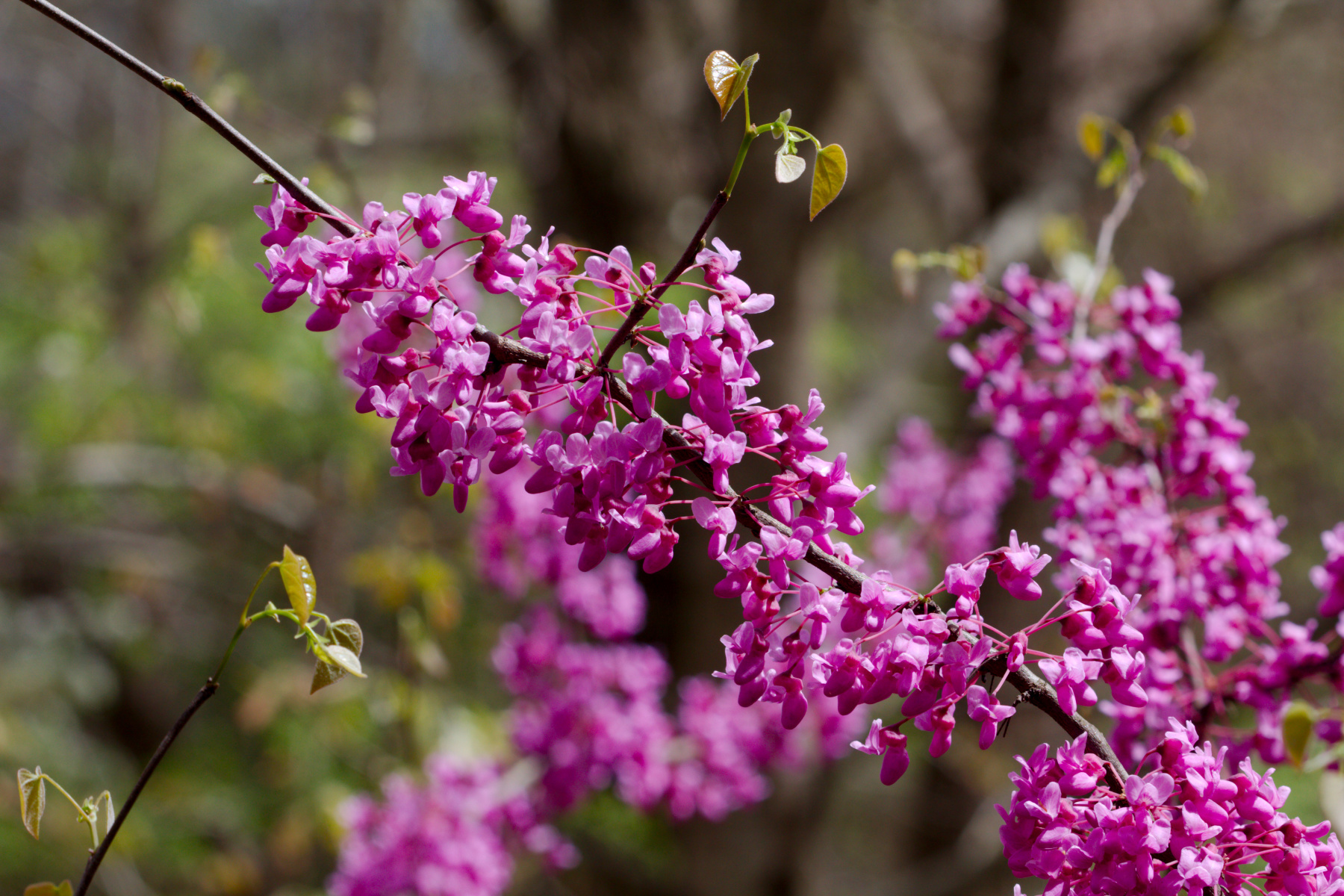
I took a break and went out into the woods today to take a few pictures. The eastern redbuds (Cercis canadensis) are blooming and they really are something. This is the native eastern redbud, which is similar to but distinct from the Judas tree or Mediterranean redbud (C. siliquastrum), native to the Eastern Mediterranean. They are both admired for their rose-purple flowers which are borne on bare branches in early spring (i.e. now) and before the foliage emerges.
Rhododendron Petals
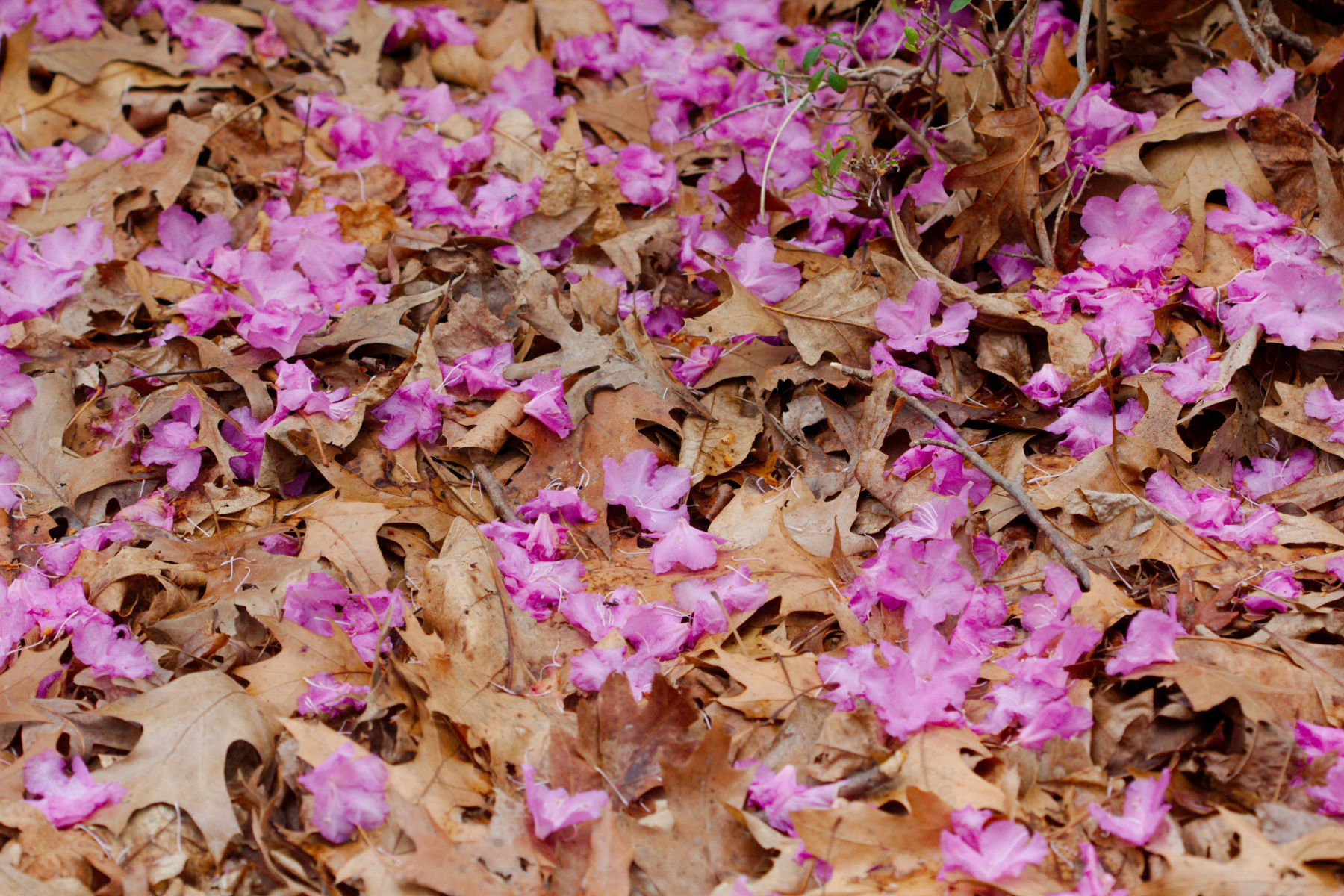
There are still a few daffodils blooming at the Stadtman Preserve but most of them are finished. The P.J.M. Rhododendrons are also a little past their peak and are dropping flowers on the ground around them, as you can see here. There are pink and white deciduous azaleas blooming now and there are spring beauties (Claytonia virginica) by the hundreds. There are some trillium coming up and a few with buds but none blooming yet. There are also ferns coming up in a few places. Spring always seems to go by too fast, but it’s sure nice while its here.
Tulip ‘Van Eijk’
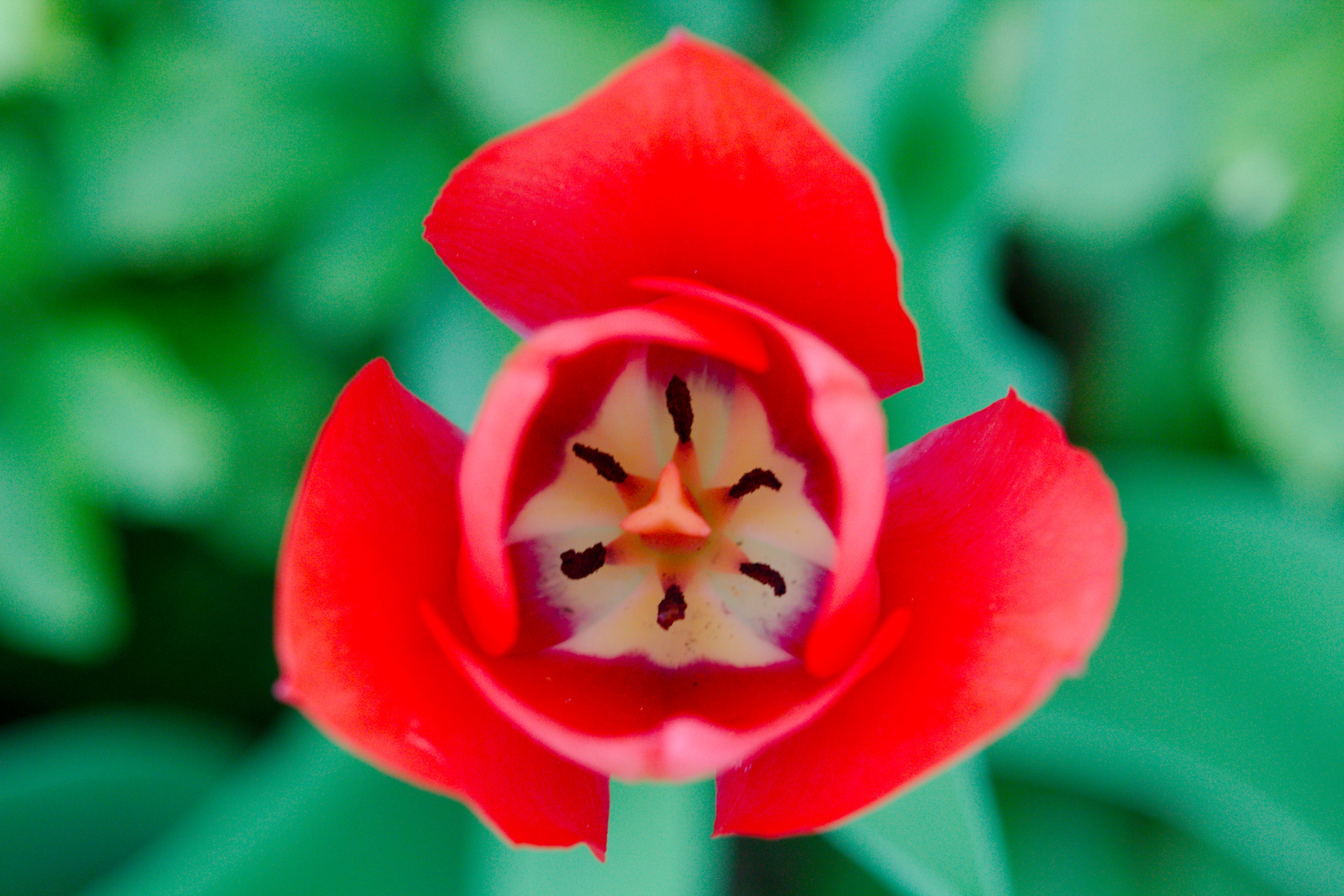
In the fall of 2009 and again in 2010 I bought a pretty good number of bulbs from McClure and Zimmerman (https://www.mzbulb.com/). In each of those orders they threw in five tulip of the variety ‘Van Eijk’. There are still ten plants growing where I planted them although we only have six blooms this year. Tulips are not terribly long-lived plants, certainly not in our area, anyway, so the fact that these are still blooming after 8 or nine years is pretty good. They’re quite bright and a sea of them would be more impressive than the six I have, of course. In general, though, I’m more a fan of daffodils, which seem to live forever and form large clumps over time.
Rain on Hosta
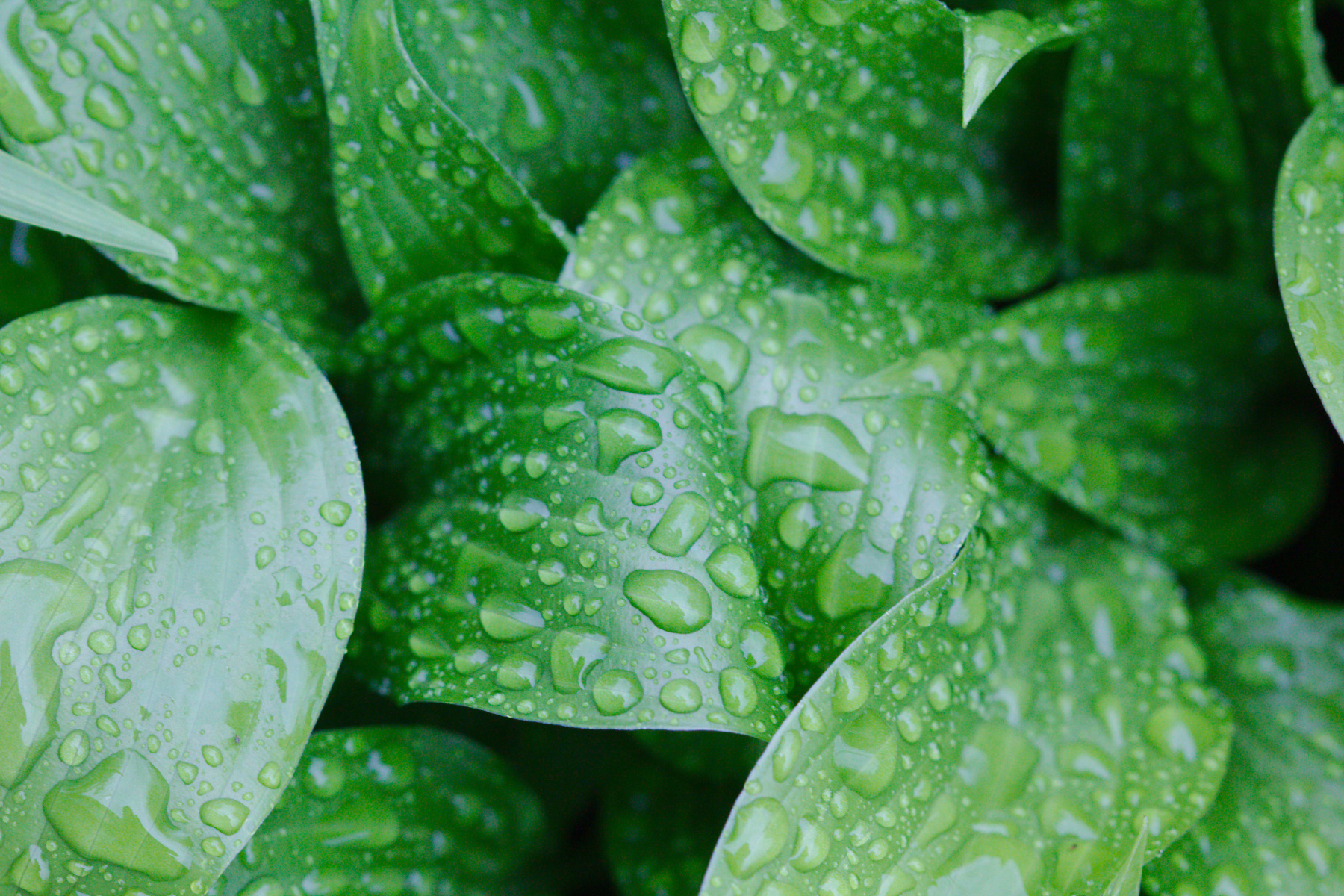
It rained today and there was water on the the plants in the yard. The forecast was for a chance of rain all through the weekend but (as I write this on Monday) it turned out to be fairly nice. I really love the pattern of water on plant leaves, in any case, and these fresh, young leaves of hosta in a pot on our patio are such a beautiful, vivid green I couldn’t resist them. I also took pictures of water on Columbine flowers and leave and on a really pretty bracket fungus that was growing on the decaying roots of an oak tree that the county removed a few years ago.
Narcissus ‘Lemon Beauty’
The daffodils are about at their peak right now and will soon begin to fade. We have a few that are still getting ready to bloom for for the most part, they are open. These ‘Lemon Beauty’ daffodils were planted in the fall of 2014 so this is their fifth spring and they are doing quite well. They were planted in the bed around the Colorado spruce and were somewhat shaded by that but now that it’s gone, they’ll get more early spring sun, which they will appreciate, I suspect. The stump of the spruce is still there and I need to finish getting that up and then decide what to plan in its place. I’ve narrowed it down to a half dozen flowering trees but making the final decision is hard.
Flowering Almond
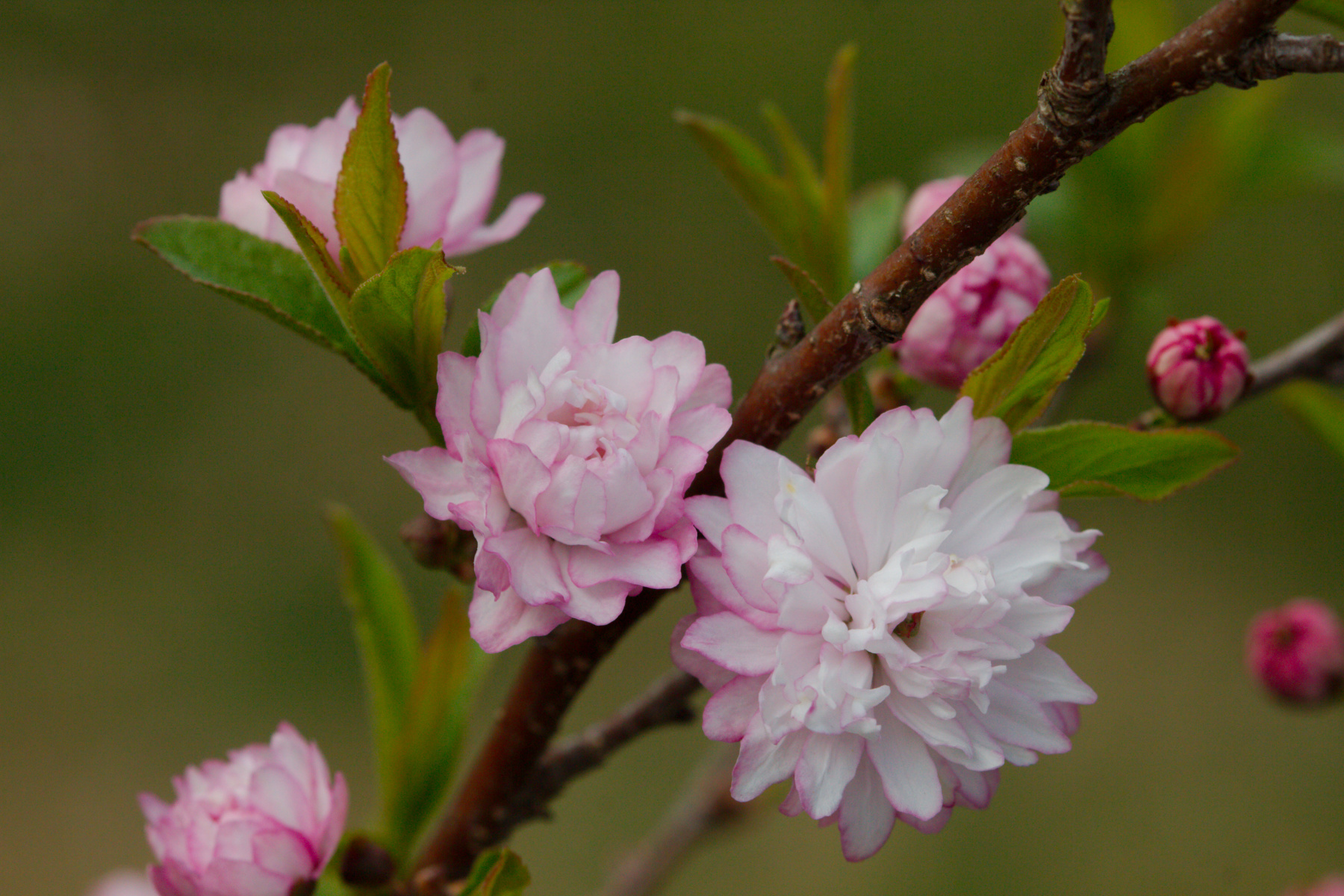
We have this little flowering almond shrub in our front garden near the corner of our garage. It never gets very big because it’s not entirely hardy here and every couple years it dies back pretty hard. We actually had a few days when the temperature was nearing 0°F (-18°C) but it seems to have come through it practically unscathed. The flowers, clustered around the stems, are fairly small, only a half inch or so across. Never the less, they are quite pretty, both individually and as a whole. It’s really a shame this doesn’t get bigger because it would be spectacular.
Saucer Magnolia
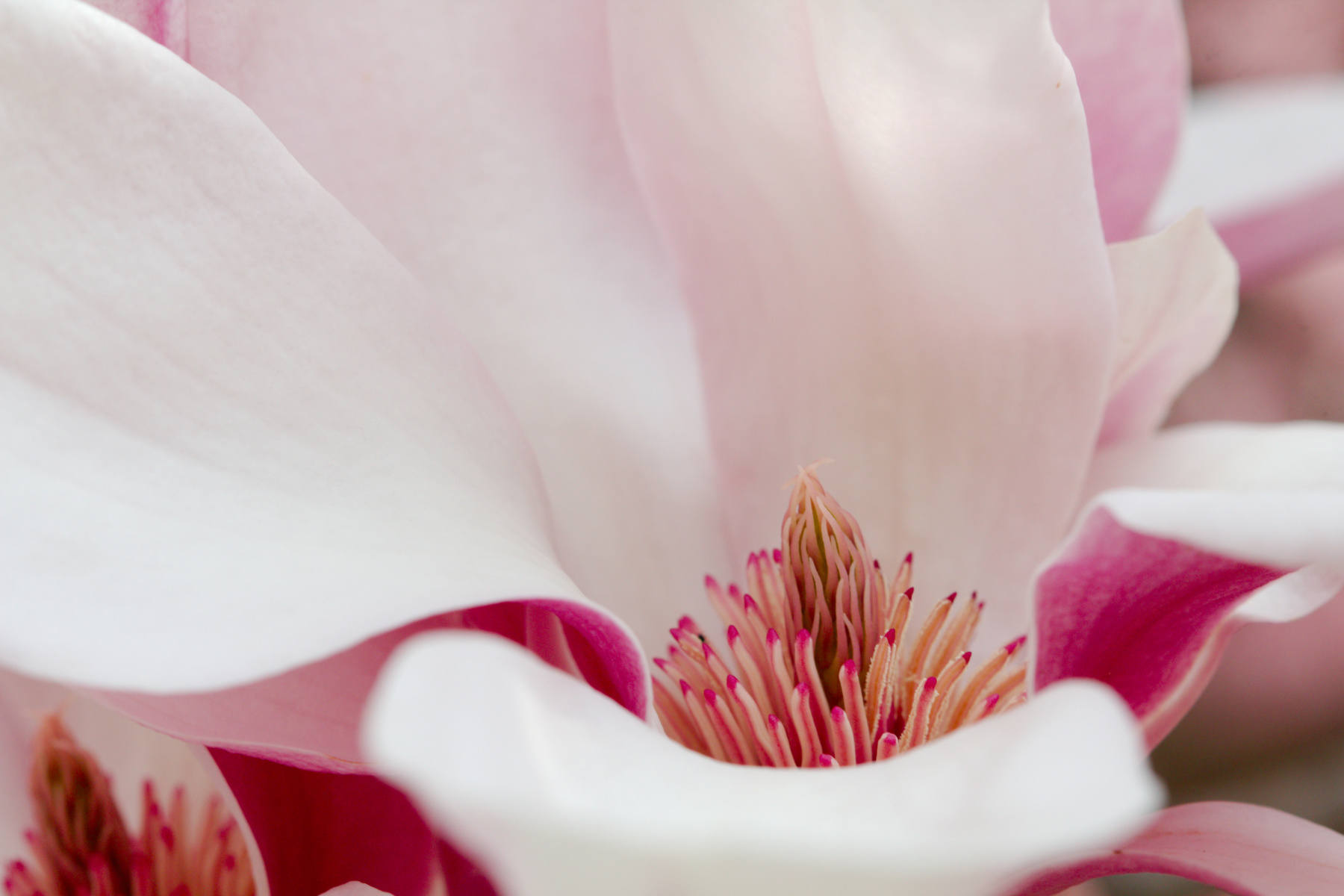
I’m posting this out of order but I was looking back at the pictures I took on Sunday and decided I should add this one. Remember, just because I say I’ll take at least one picture every day, I’m not limited to posting only one picture per day. After church and our visit to the Stadtman Preserve we went to my mom’s to get one more document with some numbers I needed for her tax return. Before we left Cathy and I walked over to a small grove of saucer magnolias growing near by. The saucer magnolia is a hybrid, known as Magnolia x soulangeana and is a cross between M. denudata and M. liliiflora. According to the Missouri Botanical Garden, the specific epithet “honors Chevalier Etienne Soulange-Bodin (1774-1846), Director of the French Royal Institute, who crossed this hybrid in the early 1800s.”
Cathy and Daffodils
This was our fourth Sunday in a row to enjoy the flowers at the Stadtman Preserve. Don’t be too surprised if we’re there again next week. Since daffodils only last so long, I’m going to continue to post pictures while the do. In addition to hundreds of daffodils of many sorts and shades of yellow and orange, the P.J.M. Rhododendrons are really starting to bloom. We also found one bloodroot plant (Sanguinaria canadensis) with a few blossoms. There were spring beauties (Claytonia virginica) and cut-leaved toothwort (Cardamine concatenata) and a few mayapples (Podophyllum peltatum).
More Cherry Blossoms
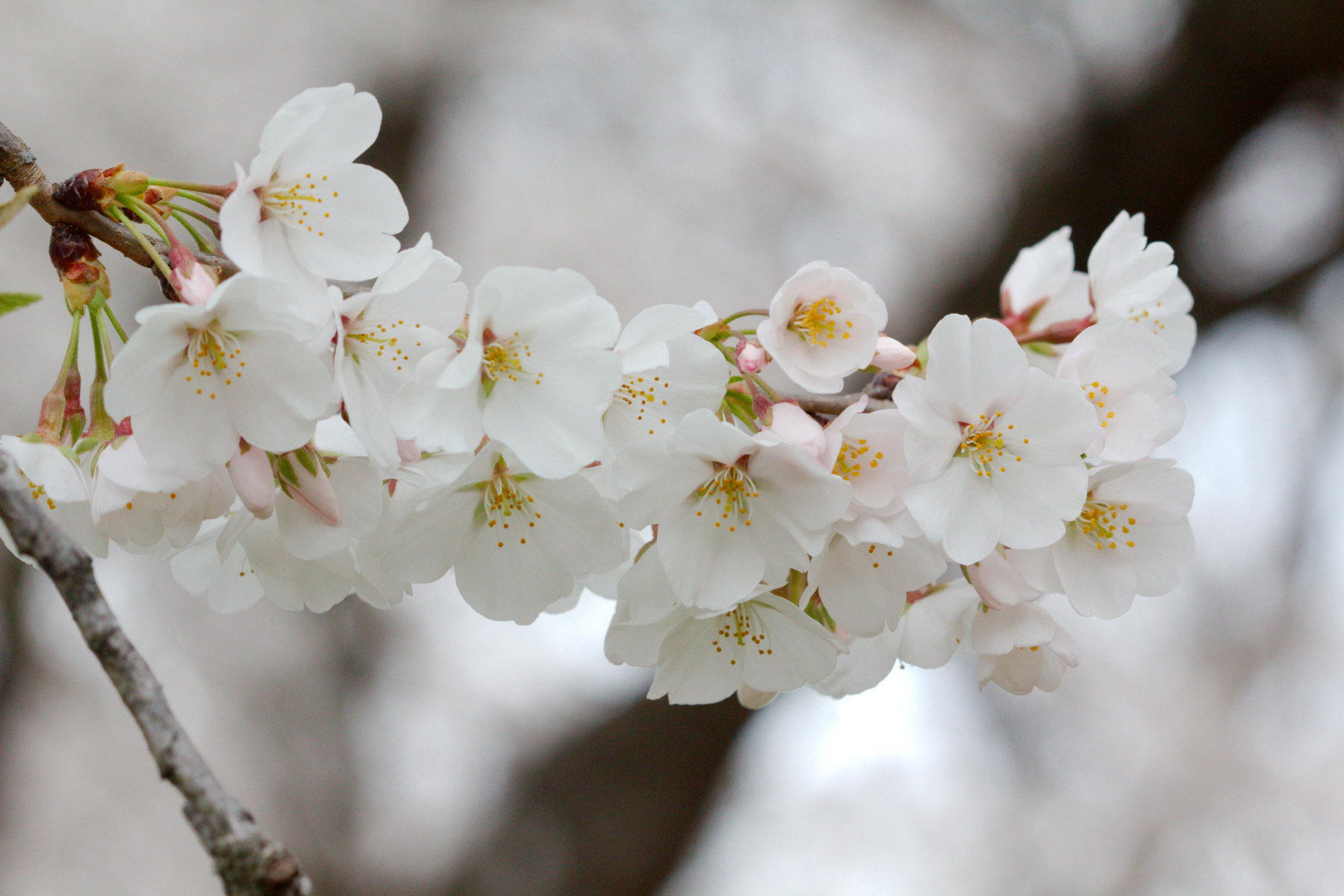
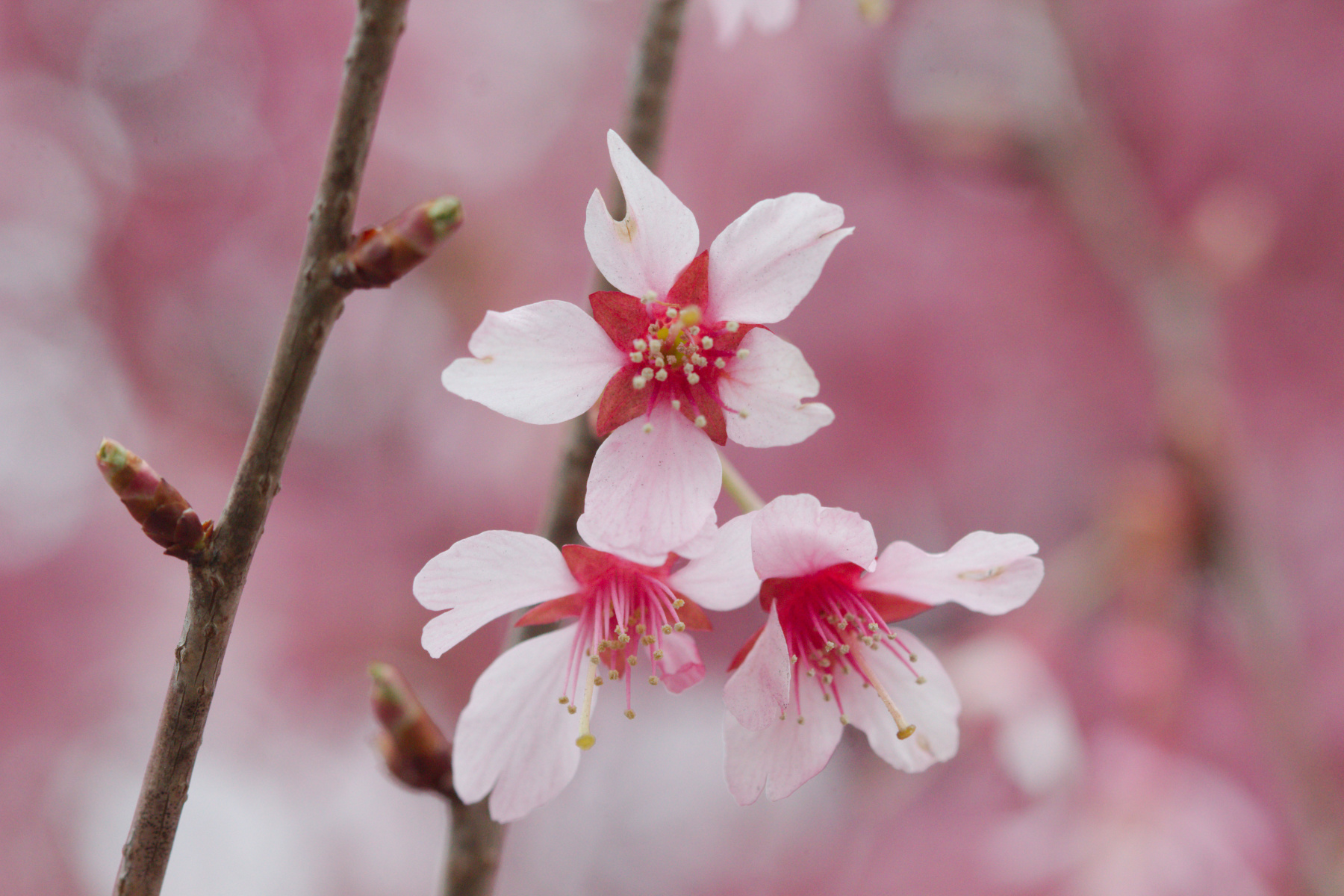
The cherry blossoms have really come out in force this week and my understanding is that the trees around the tidal basin downtown are in full bloom. They’re worth a visit but it can be quite an ordeal to get down there. Parking is generally impossible anywhere near the tidal basin so it’s much better to take the subway and just resign yourself to the fact that you’re going to do a bit of walking. They really are worth it. We haven’t been in quite a few years and this photo was taken beside one of the buildings on our company’s campus, rather than down town. As you can see, the flowers are white and there is only a hint of pink in the buds. Some have a little more pink than this but the cherries are not nearly as colorful as the crab apples, which I actually prefer by a wide margin.
Pink Columbine
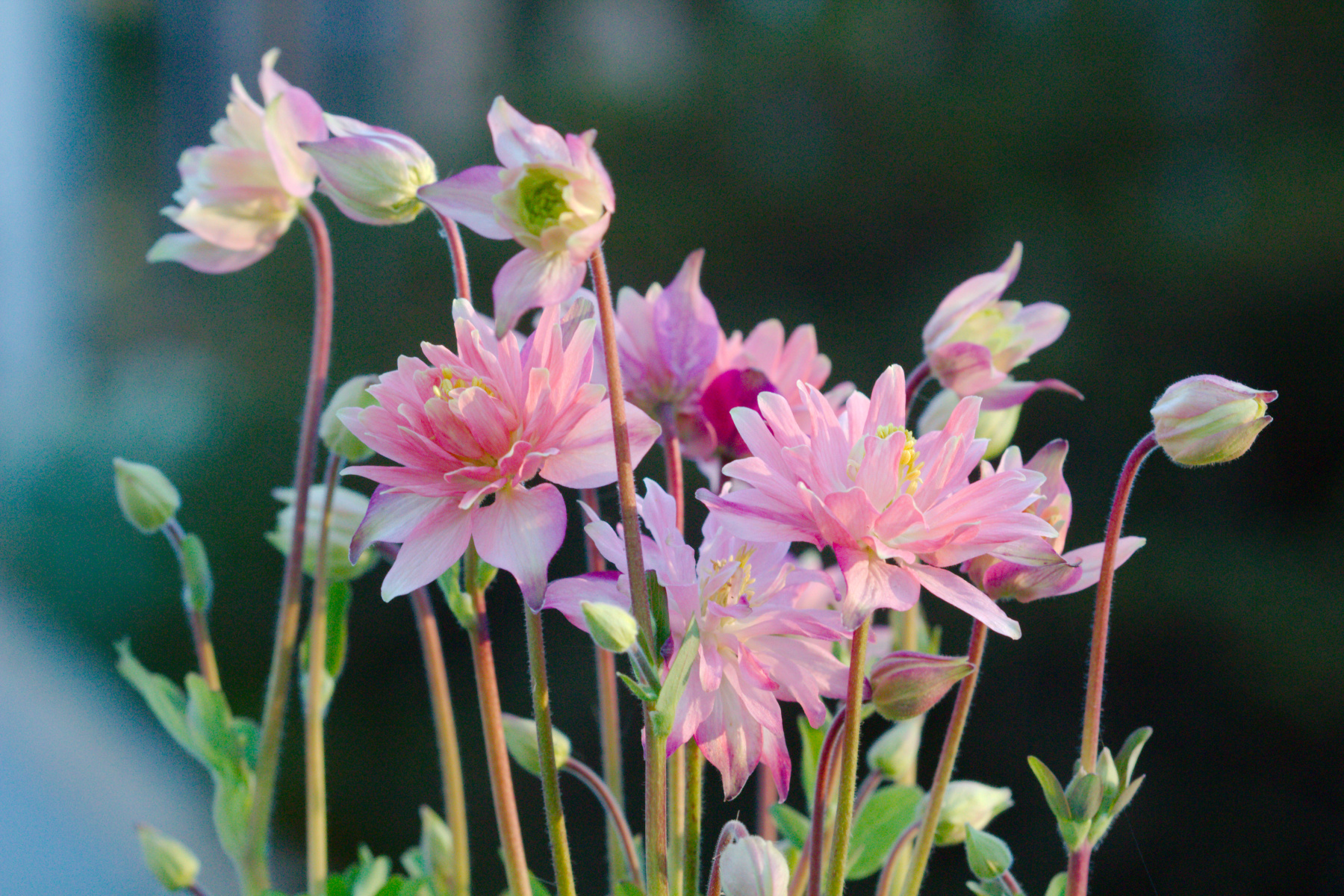
Cathy bought two columbine plants (Aquilegia) on Sunday and this is one of them. It’s not the standard, native Aquilegia canadensis with its drooping flowers and distinctive spurs. The label had no information on it beyond Aquilegia so I don’t know what the variety name is or anything. It’s quite pretty and I photographed it in the late afternoon sun, to help light up the delicate pink petals. We have a fair amount of columbine in the yard, although most of it is self-seeded volunteers and is a dark, maroon color. I doubt the seeds from this will be anything like it is, but you never know, maybe we’ll start getting some new varieties around the yard.
Scilla siberica
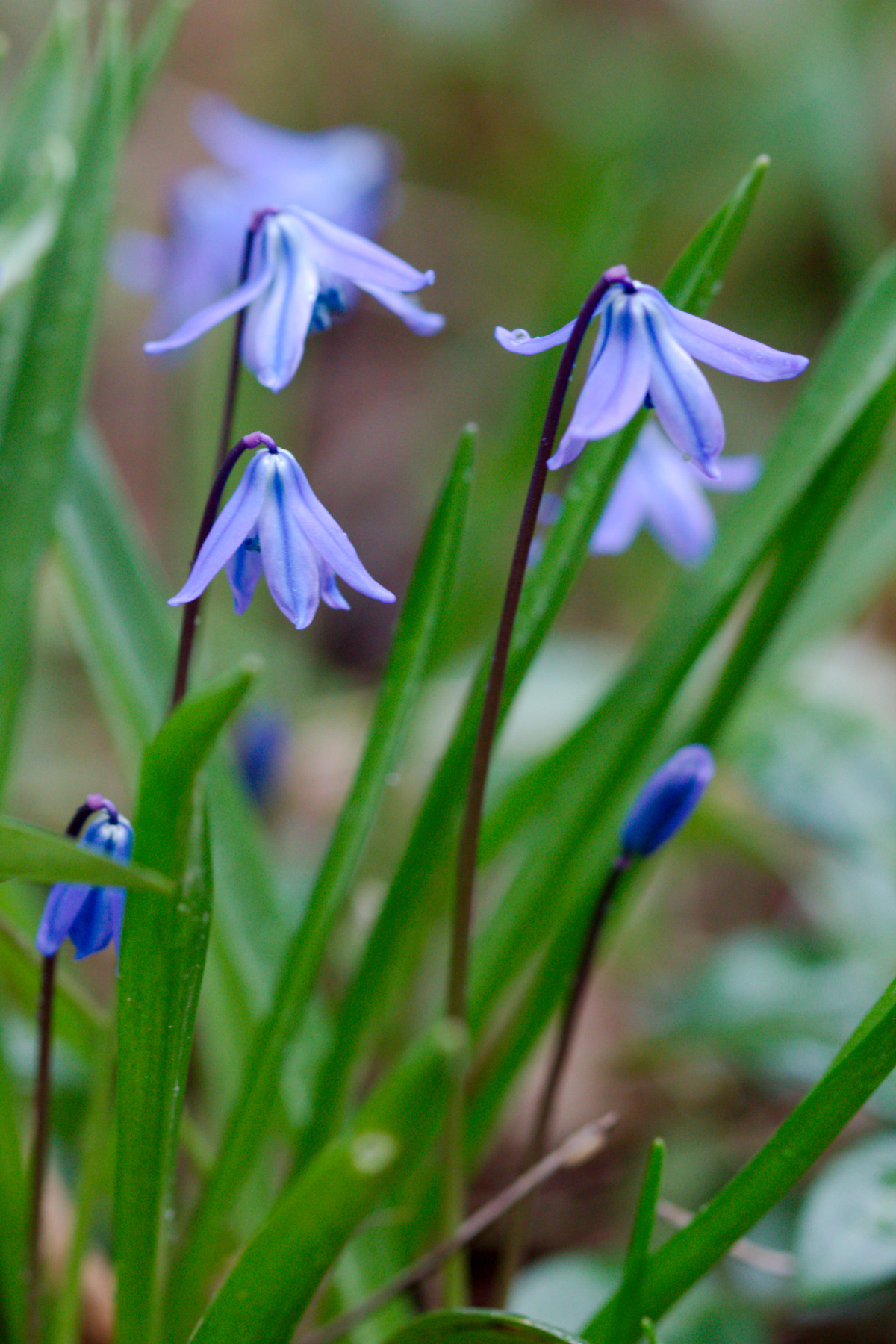
These little flowers, Scilla siberica (Siberian squill) are similar to the blue Chionodoxa forbesii (glory of the snow) that I photographed a few days ago but can be differentiated by their downward facing appearance. They are also deeper blue, in general. In my yard they bloom just a little later, but not much. These are in a bed right by the driveway so I get to see them every time I leave or get home, which is nice. S. siberica is native to southern Russia and is hardy up to USDA Zone 2.
I also have some Scilla mischtschenkoana, (commonly called simply squill) the flowers of which are almost white with just a hint of blue. They are native to northern Iran and the Caucasus and not quite as hardy as S. siberica but still plenty hardy for us here. I really should mark where all my spring ephemerals are and plant more around them this fall. I’m not sure I could ever have too many of them.
Pink Hyacinths
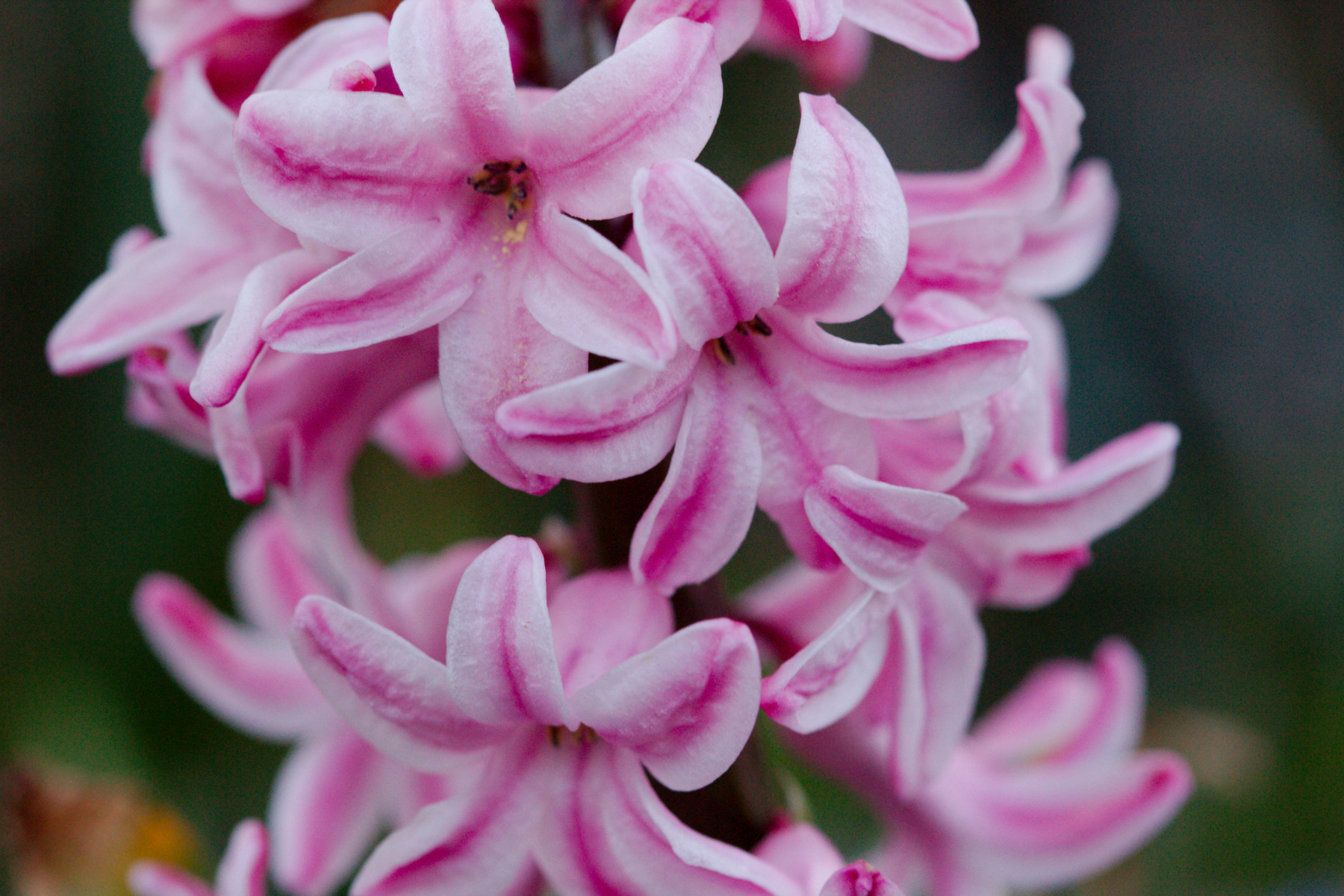
The hyacinths are in bloom. They aren’t as perfectly formed spikes of flowers as we’ve had some years, but they’re still pretty nice. I don’t care for the sickeningly sweet smell of hyacinths abut they look nice and as long as they’re out in the yard, I don’t mind. There are a few deep, rich, purple hyacinths just starting to bloom, as well, but those are even less full than the pink. Still, they make a nice contrast and look especially good with the yellow of daffodils. Sadly, the daffodils in the back yard are late enough they they won’t bloom at the same time, at least not this year.
Cathy and Daffodils
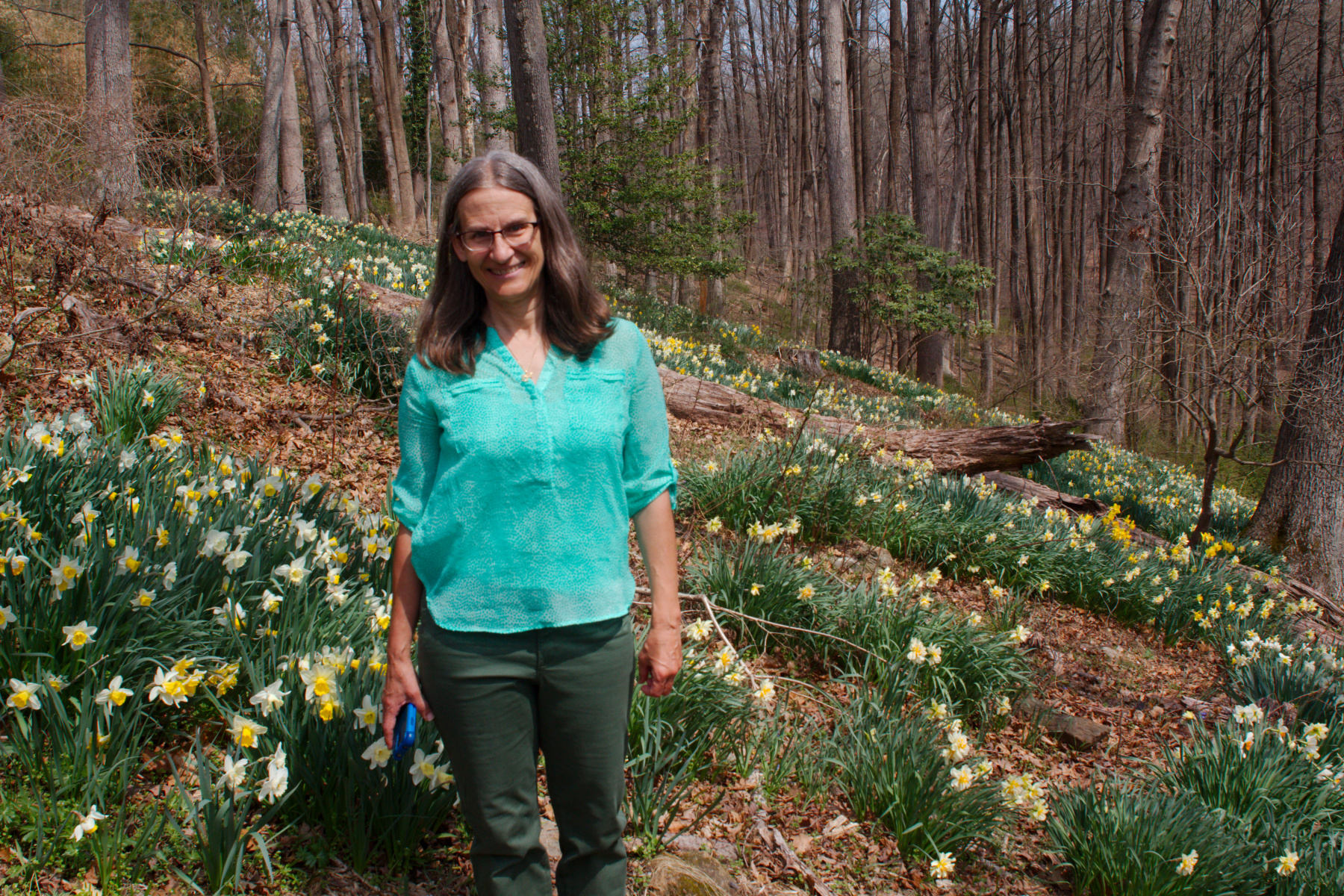
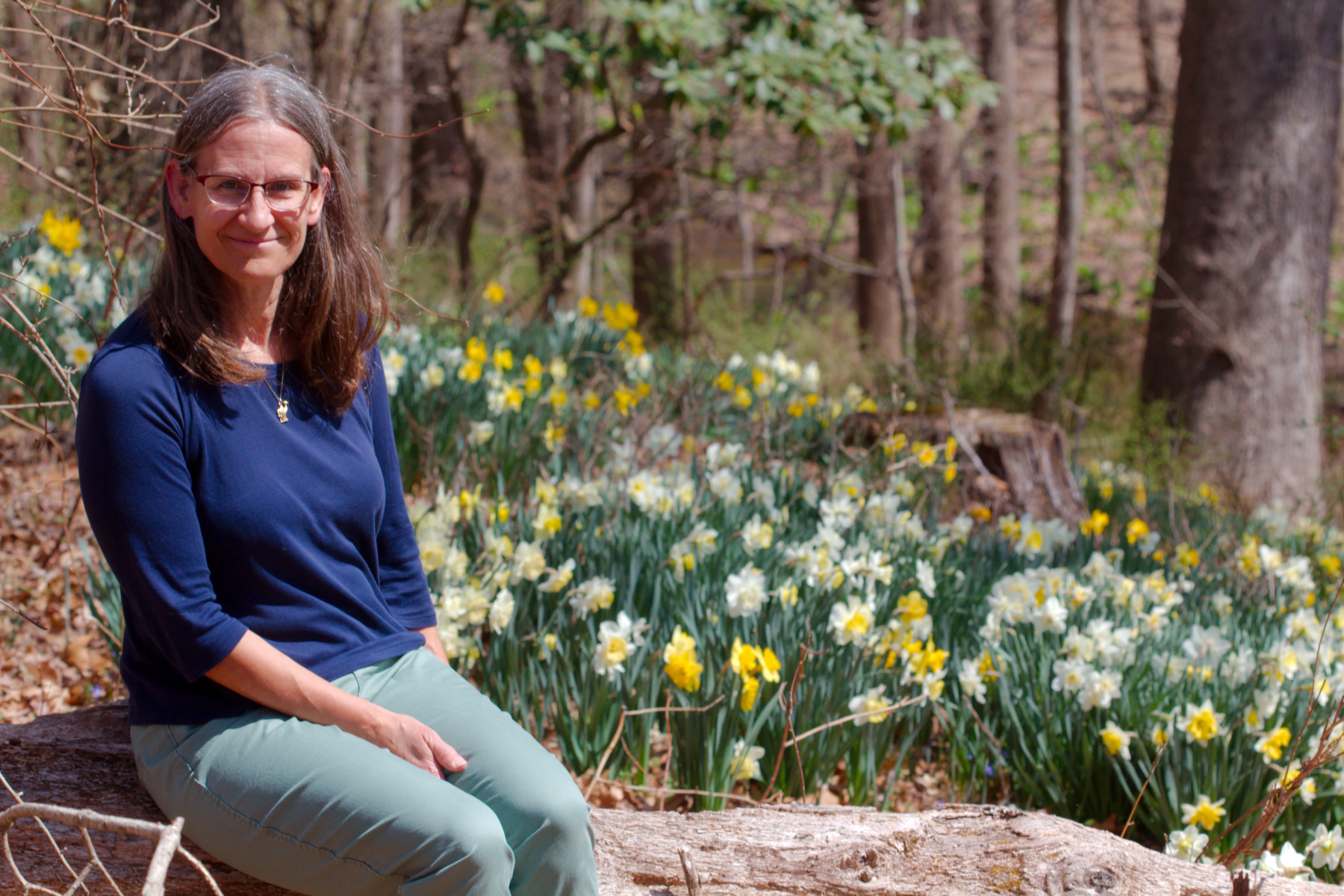
After church this week, for the third week in a row, we walked over to the Stadtman Preserve to see the bulbs. The daffodils are pretty spectacular and entire sections of hillside are yellow with them. The Chionodoxa is still in bloom and there are areas completely dotted with their pretty, blue flowers. I took pictures of Cathy in a few different spots but I had only brought one lens, the 100mm, which wasn’t really idea for that sort of portraiture. This one turned out pretty well, though. Spring it definitely here and we’re loving it.
Chionodoxa forbesii
I try not to repeat subject too often and too close together but sometimes I just have to. The Sunday before last I posted a pictures of three Chionodoxa forbesii (glory of the snow) blossoms, taken at the Stadtman Preserve on Mill Run, in Derwood (see Sunday, March 17, 2019). Two weeks later they are out in our garden and I couldn’t resist another picture. This little clump of flowers is at the south end of our house and it’s so lovely. I promise, I’m done with this flower for the year (although there’s a pink variety in another part of our garden).
Cherry Blossoms
I had some car trouble today. My van, which has just over 269,000 miles on it, started making a terrible grinding noise when I put on the breaks. I thought, I don’t care, bad breaks aren’t going to stop me! But seriously, there are car repairs you can put off and car repairs you can’t put off. Brakes are in the latter category. After having Cathy meet me at the mechanic’s we stopped at the commuter parking lot near the ICC and I took some pictures of the cherry blossoms.
Windflower (Anemone blanda)
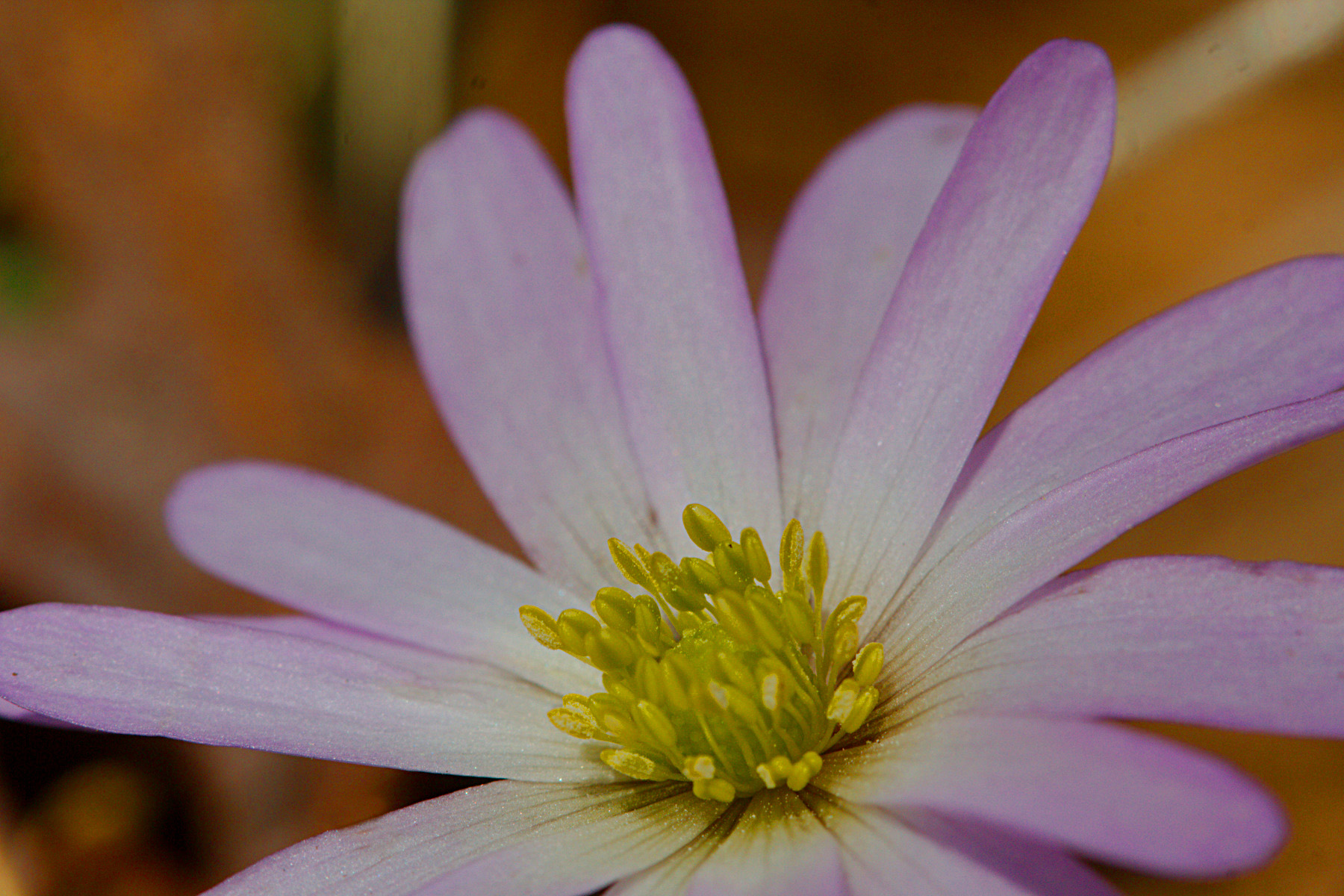
Last Sunday after church we walked to the Stadtman Preserve and I posted a picture of three little Chionodoxa forbesii blossoms. This week we went there again. The daffodils are starting to bloom and there are lots more Chionodoxa flowers opening up throughout the property. It was this little windflower (Anemone blanda) that really caught my eye. It’s such a pretty little thing. I’ve had a few of them in our garden but they never really amounted to much. I need to make a note to myself to buy a bunch of them and put them in. Interestingly, the flower is apetalous (it has no petals) and what look like petals are actually sepals.
Forsythia Buds
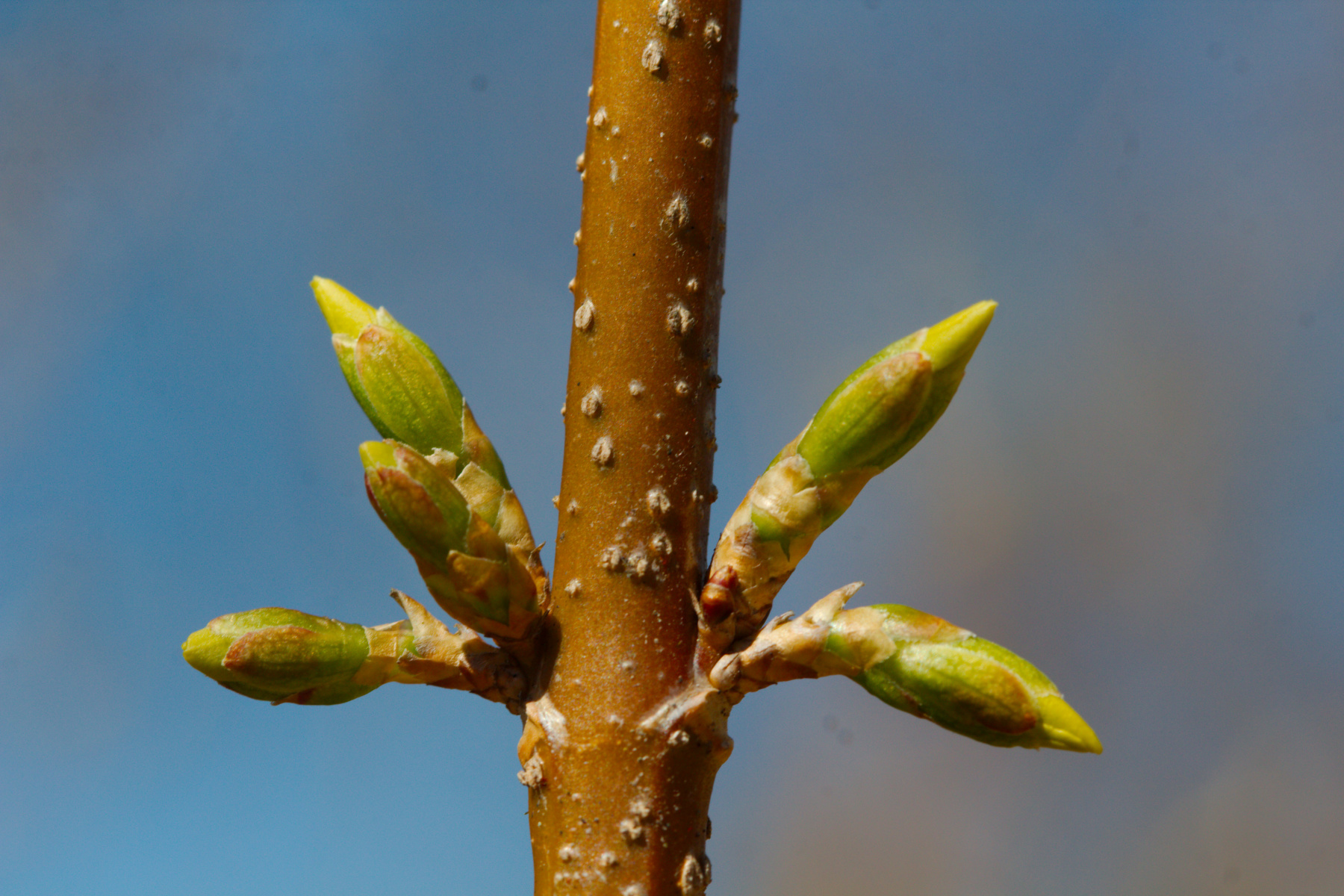
The forsythia is starting to bud. As I write this, a week after the photo was taken, the buds have opened and the flowers are out. Spring can move quickly at times and when we have a warm spell, as we do at some point most years, buds open quickly. We often then have a frost that can kill back some of the more tender plants a bit. The early flowering star magnolia, with its fleshy, succulent petals, is generally one of the hardest hit. Other plants, like most early bulbs, the Lenten rose, and the forsythia, are better able to cope with a little cold, and generally just stop briefly, only to continue once it warms back up.
Lenten Rose ‘Rose Quartz’
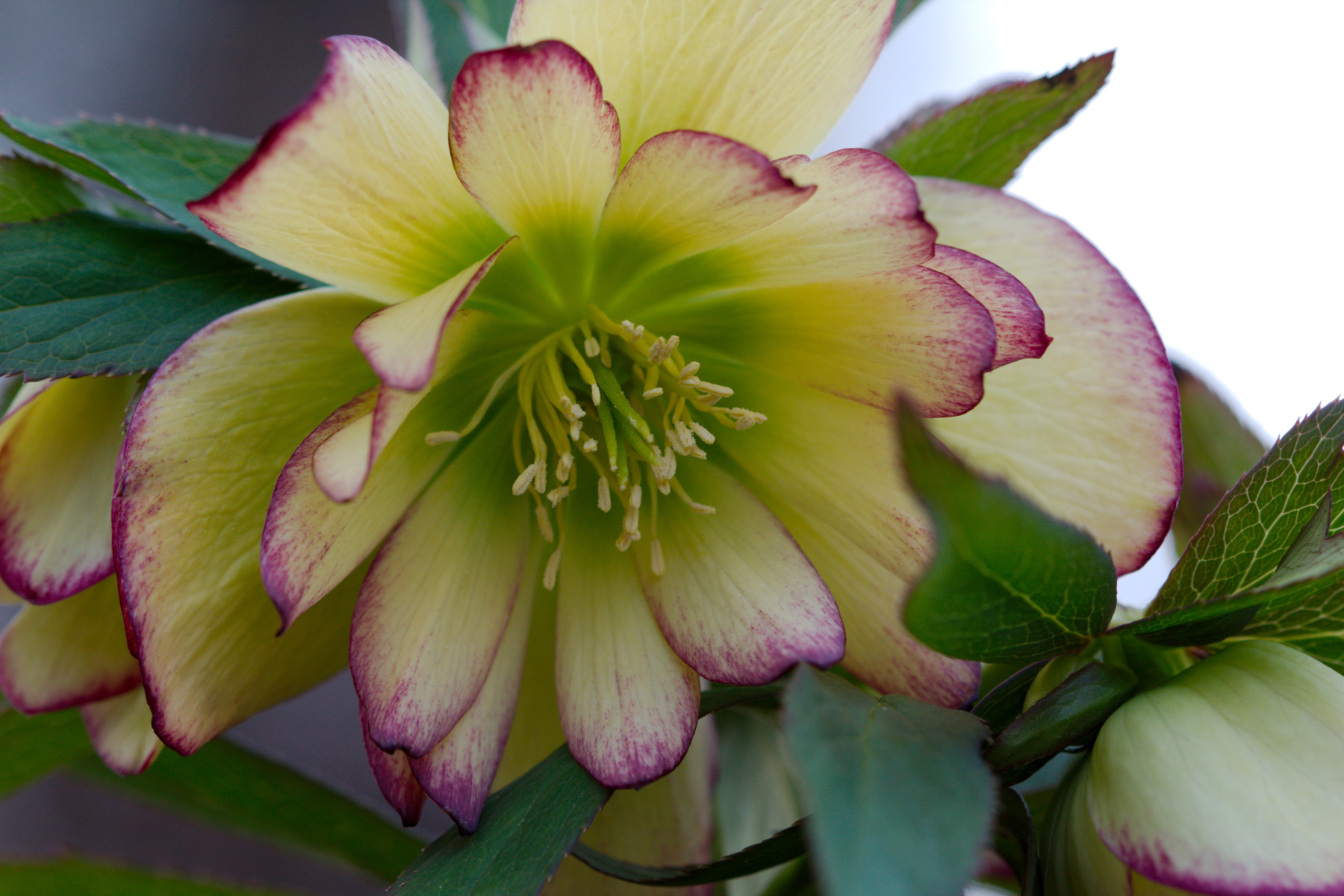
I hope you won’t mind one more Hellebore. This one is called ‘Rose Quartz’ and like the crocus pictured yesterday, it is in the bed out back with lily of the valley and Vinca minor. This is only its second year blooming and while there are more flowers this year, it’s still not a huge, robust plant yet. Lenten rose is a long-lived perennial and although they take a while to get established, they take very little care and are quite sturdy. The Latin name for the genus, Helleborus, comes from the Greek helein (ἑλεῖν), meaning “to injure”, and bora (βορά), meaning “food” because the leaves, stems, and roots are poisonous to humans.
Crocus
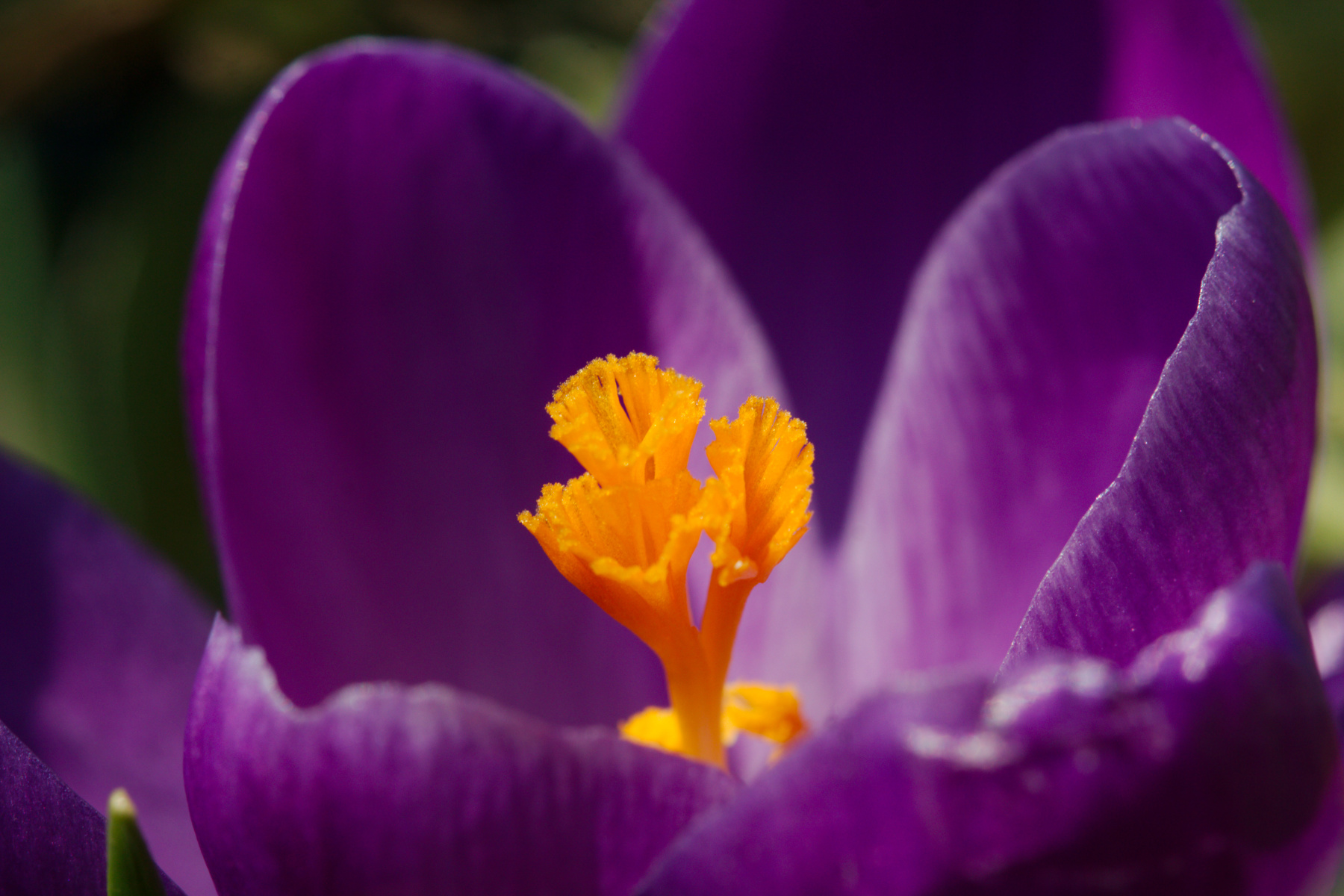
The so-called Dutch crocus (Crocus vernus and its cultivars) is native to the mountains of Europe, the Pyrenees, Alps and Carpathians. The name crocus comes from krokos (κρόκος) the ancient Greek name for saffron (Crocus sativus). While crocuses prefer gritty, well-drained soils they do amazingly well in our heavy, clay soil that is totally water logged all winter most years. This one is growing in a bed of lily of the valley (Convallaria majalis) and Vinca minor in our back yard. There are also some daffodils and hyacinths that are starting to come up bu those won’t be in bloom for a little while yet.
Helleborus ‘Red Racer’
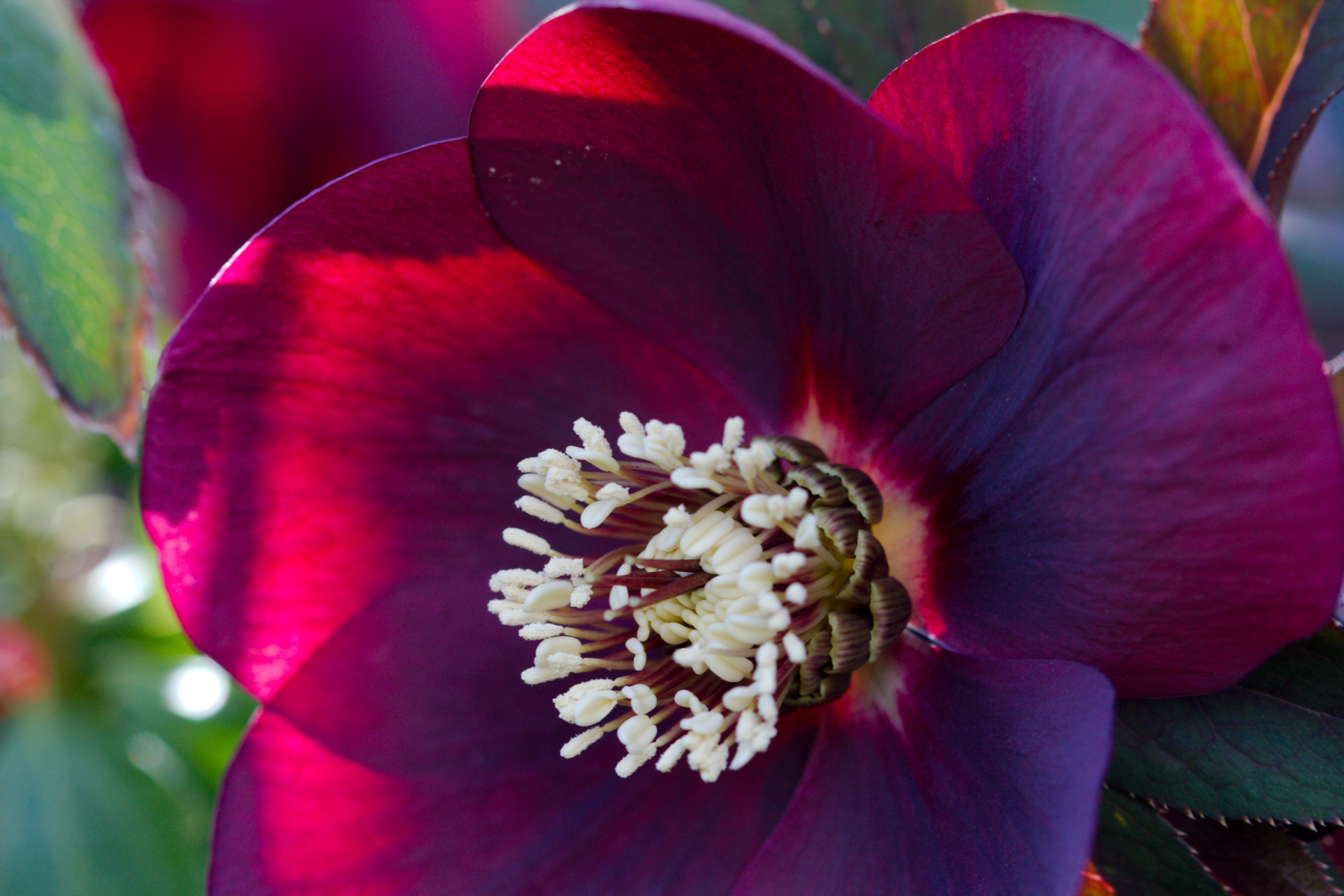
This is, I think, my new favorite Lenten rose. I have two of them, bought from McClure and Zimmerman in the fall of 2014 but this is the first year the blooms have been what I might describe as fully formed. They are a variety called Red Racer but they don’t seem to be listed on the mzbulb web site any longer. Other outlets seem to have them, though. I really love flowers (and leaves) of this sort of color, especially when back lit. These aren’t in the best location it terms of the sun shining on them from behind, but it was just filtering through the shrubbery behind them this evening.
Chionodoxa forbesii
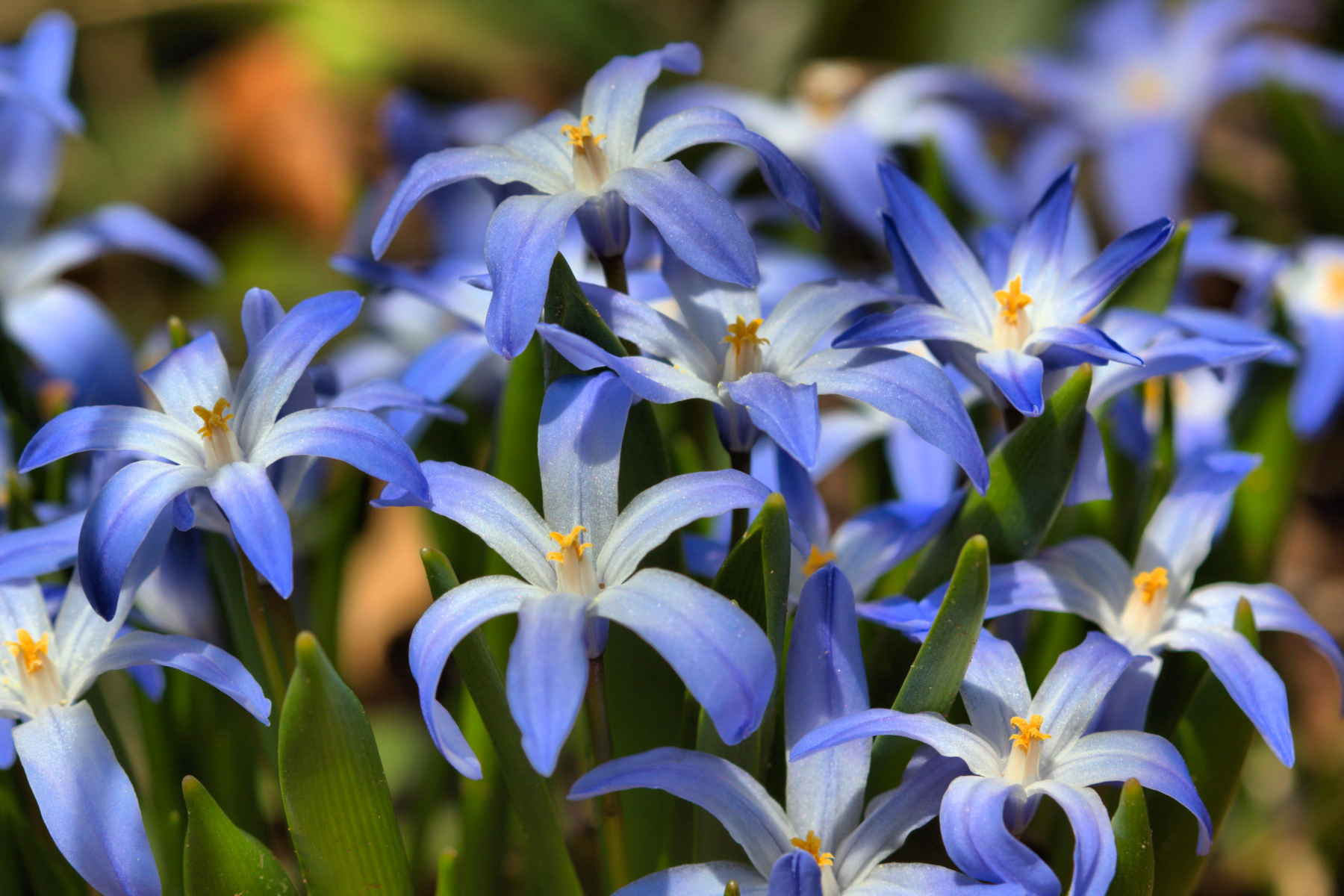
After church we walked over to the Stadtman Preserve, where hundreds of daffodils are coming up and a few blooming. There were also huge drifts of winter aconite (Eranthis hyemalis) although they were almost entirely past their bloom. There were also a very few of these Chionodoxa forbesii flowers. With the common name glory of the snow, it’s no surprise that they bloom early and they are definitely one of my favorite flowers, especially among the spring ephemerals. It is native to western Turkey and is hardy as far north as USDA zone 3. Those growing in my garden are considerably behind, but I’m looking forward to having them bloom in a few weeks.
Winter Aconite (Eranthis hyemalis)
As mentioned a few days ago, the winter aconite (Eranthis hyemalis) is coming into bloom. It’s a very hardy little plant, growing from a small, sort of misshapen tuber, native to the northern Mediterranean coast from southern France, across northern Italy, and down the eastern coast of the Adriatic and east to the western shores of the Black Sea. It’s very slow growing and the few that survived from my initial planting are only still only producing a handful of flowers. I should probably plant more, but last year was mostly a write-off in terms of gardening. We’re hoping to do quite a bit more this year.
Moss
It was a beautiful day today and I needed to get out of my office for a few minutes to clear my head. I’ve been working on two specific problems with one of the systems I’m working on. I’m pretty sure I managed to get one of them solved and settled. The other is proving to be a little trickier but I’ve managed to get it pretty close to working. Sometimes it’s useful to step away for a little bit and think about something else. Then when you come back, you can see it with somewhat fresher eyes. I find that I often come up with new ideas at that point. This is true in other realms than programming. When I’m working on a crossword puzzle and get about as much done as I can manage, putting it down and walking away and then picking it up later is generally all I need to find some new answers. Today’s foray out into the woods let me to a bunch of moss, and that’s what today’s photo features.
Snow Drops (Galanthus nivalis)
I know I posted a picture of snow drops (Galanthus nivalis) on Saturday, March 02, 2019 but the flowers were not really open then and they are now. Our yard is fairly shady and the spring blooms seem to be a week or so behind those that get full sun. We have a few clmps of snow drops in the yard. Those I photographed last time are by the sidewalk. These are in the back yard. They are certainly a welcome sign of spring, often blooming when there is still snow on the ground (thus the name, I assume). I love the little touch of green on the central part of the flower. Green is fairly uncommon as a flower color, I assume because it’s so common on the leaves themselves. But it makes a nice change.
The snow drops are generally followed by the winter aconite (Eranthis hyemalis) and the Lenten rose (Helleborus species). One Lenten rose is already blooming but the others are just starting to come out. I suspect I’ll have more pictures of them soon.
Lenten Rose ‘Mango Magic’
It’s Lenten rose time again. With the recent snow and heavy rain, they are looking decidedly unhappy, but the blooms are coming and should soon be out in full. This one, a Helleborus called ‘Mango Magic’, it the furthest along of those in the yard. There is a very large one with deep burgundy flowers that’s doing well, also and probably needs to be divided up into three or four plants. I do love the deep color of that one but the brightness of this one and a few others we have are quite nice, as well.