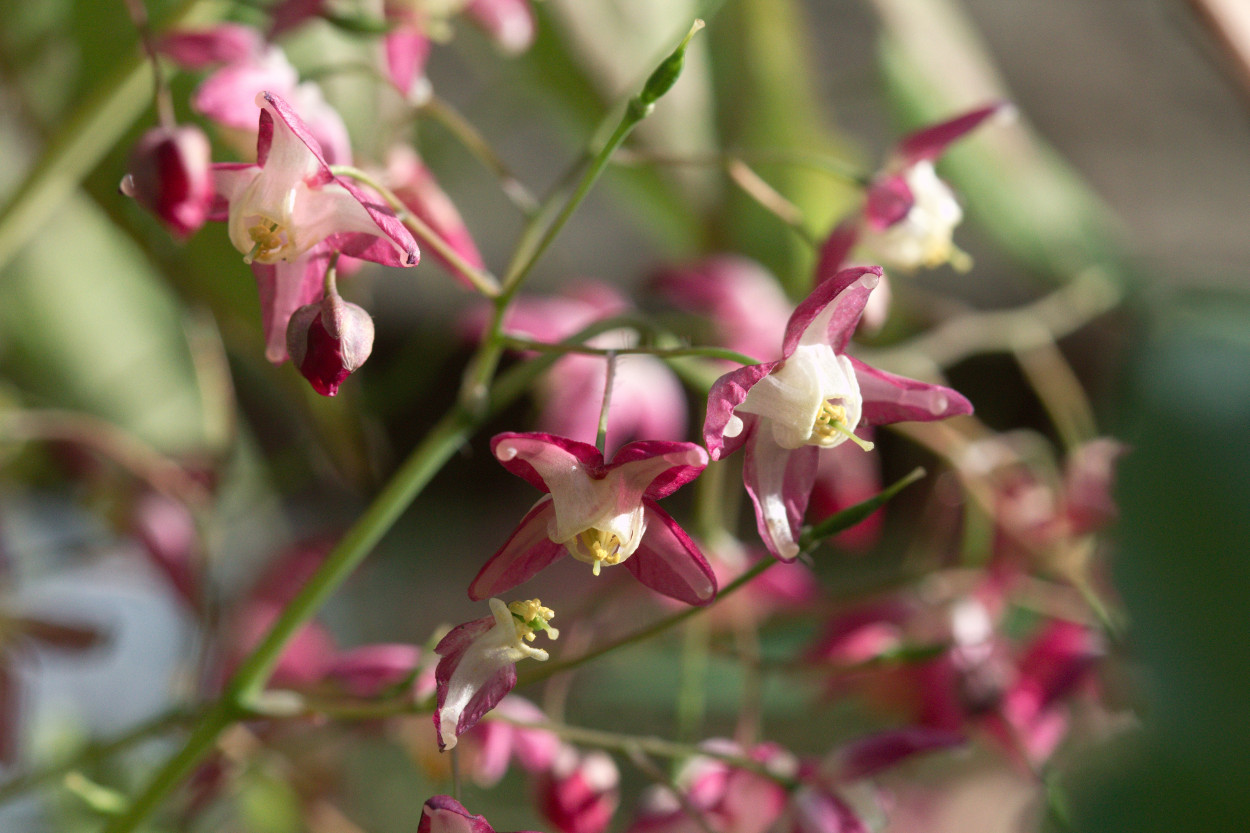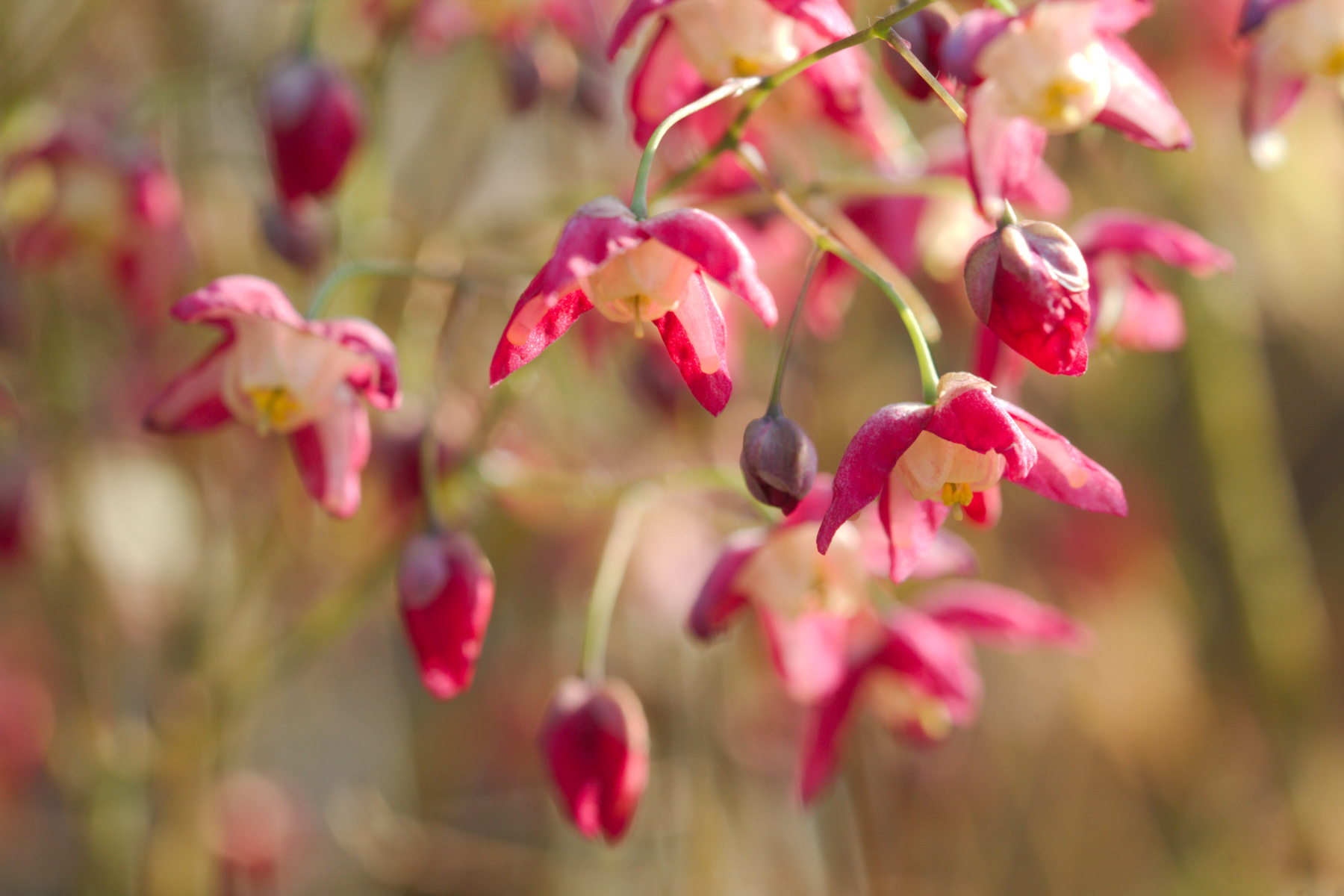
Since tomorrow is Easter, here’s a cross shaped flower — Epimedium x rubrum. If you’re looking for an interesting and different ground cover, this would be a good choice, although not really evergreen in our climate, it’s got beautiful leaves with red highlights and lovely flowers, although they are sometimes hidden by the foliage. There are also white and yellow varieties (see Extras for the white).
Tagged With: Perennial
Epimedium x rubrum
Lily of the Valley
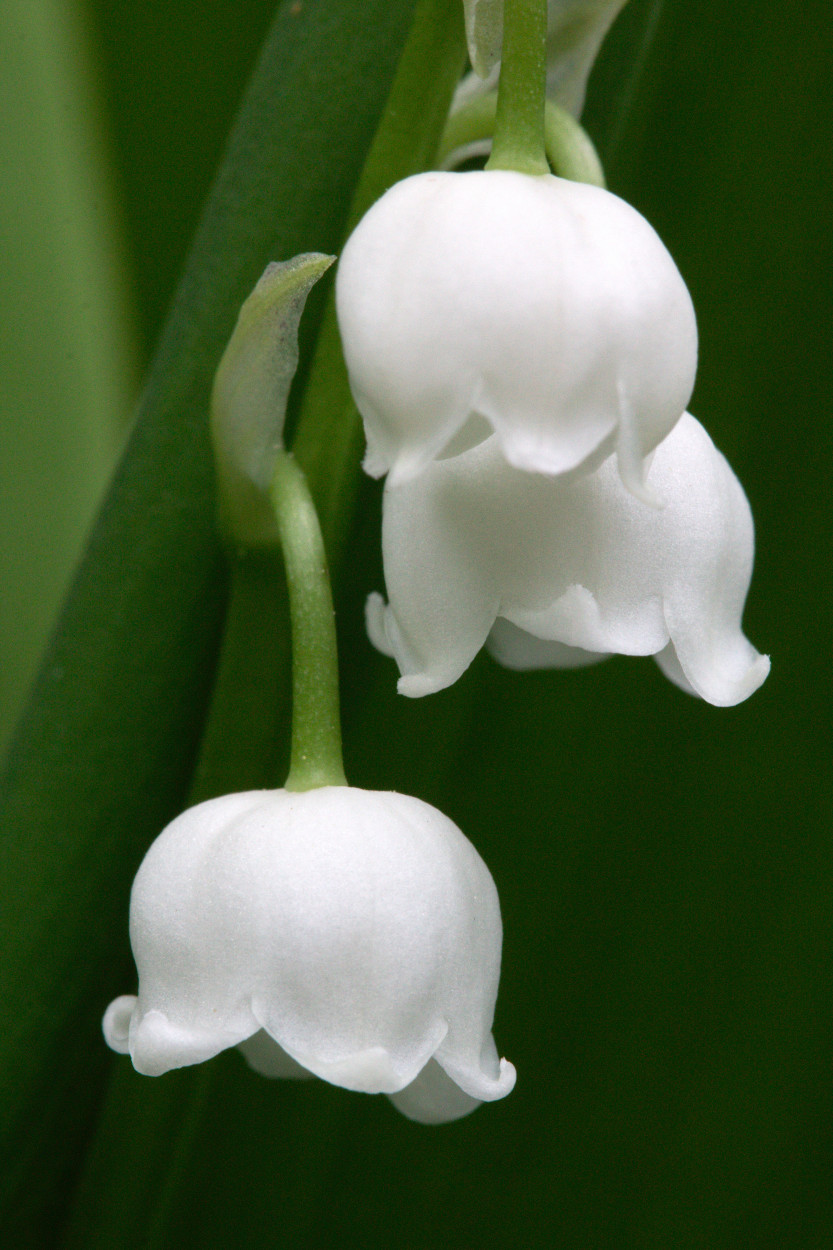
I love these little bells. We brought lily of the valley (Convallaria majalis) with us from George Street only to buy a house where there was a significant amount already planted. I’ve seen it forcing its way up through pavement, so it’s quite tenacious once it gets established. I could only wish the flowers lasted longer.
Spiderwort
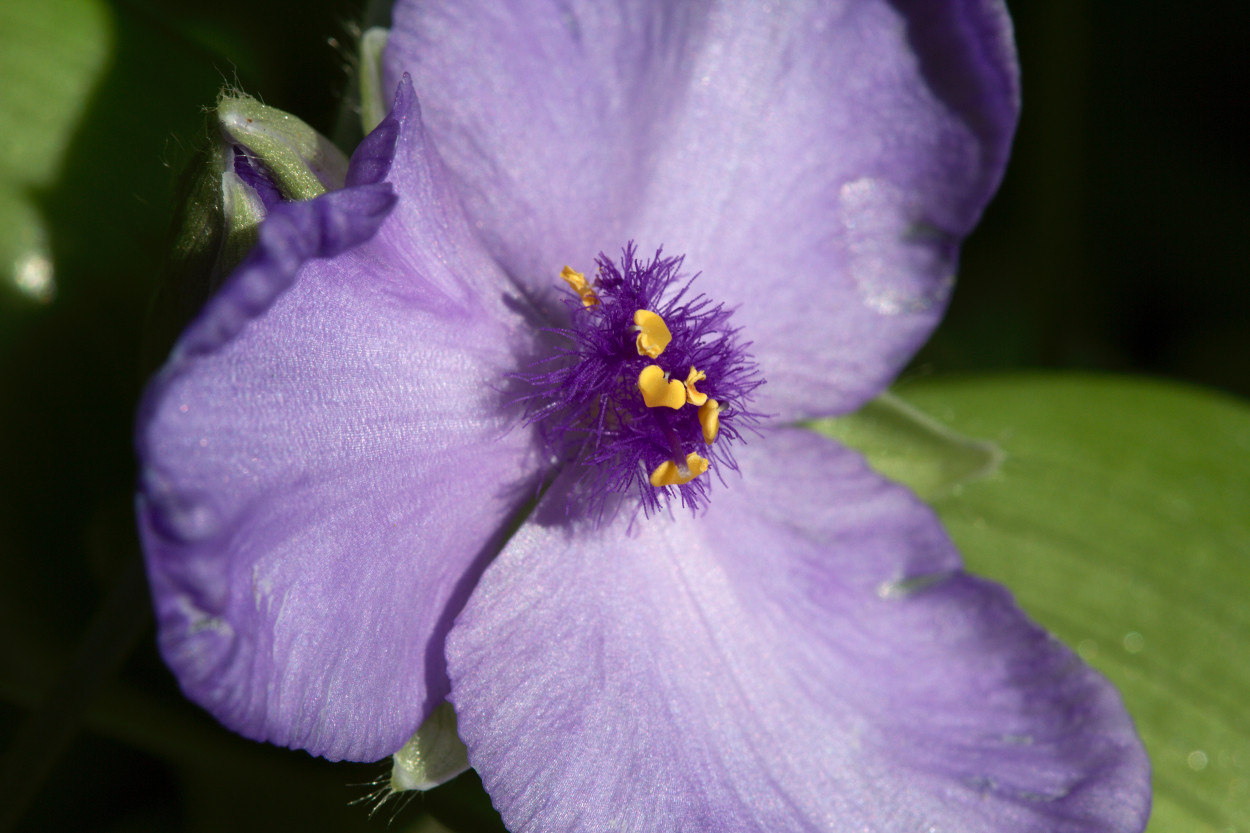
This is the first bloom on our Tradescantia (spiderwort) out front in the shade garden. This one is lighter purple than most but still quite pretty. I especially like the deep purple stamen hairs and the yellow anthers. Apparently, when the stamen hairs are exposed to ionizing radiation they turn pink. Looks like were safe, for now.
Bearded Iris
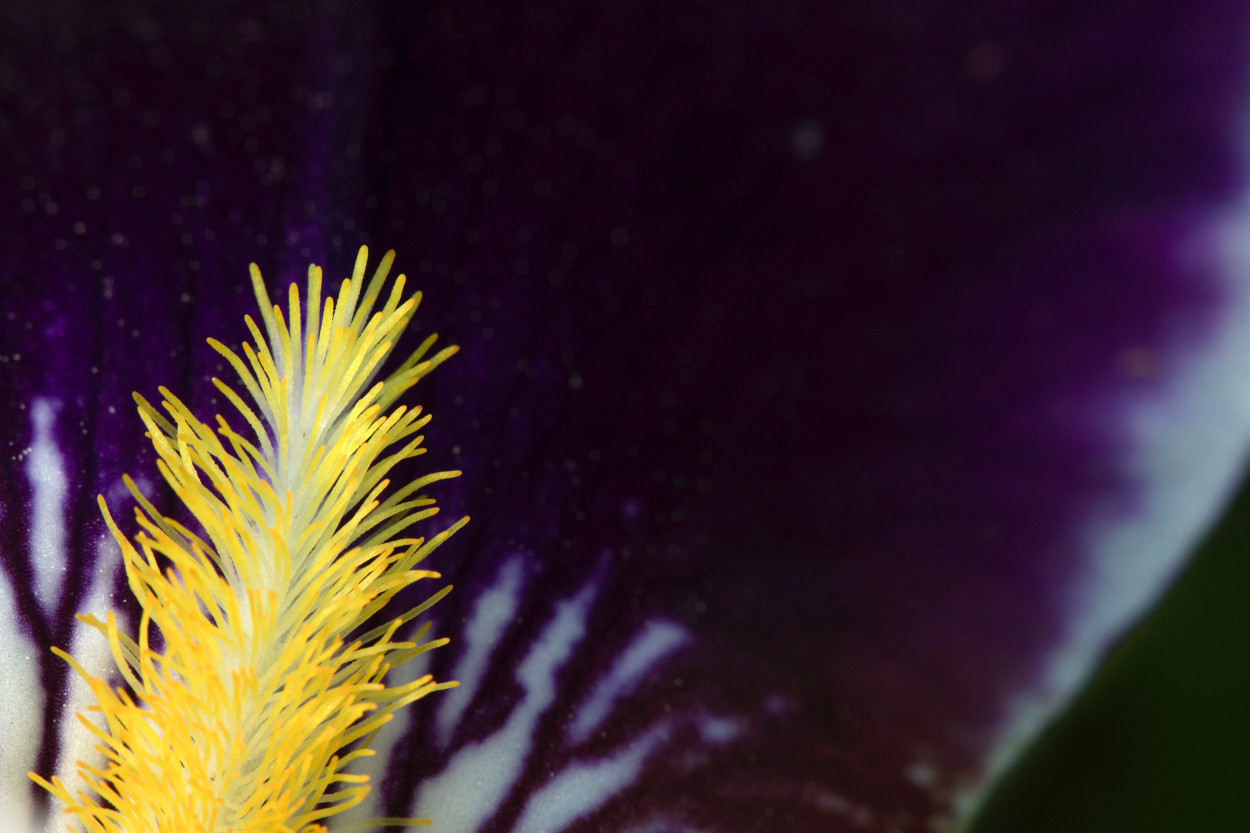
The irises are starting to bloom all over. This is a purple and yellow variety outside our dining room window. I think yellow and purple are a terrific color combination.
Butterfly Weed
Black-eyed Susans
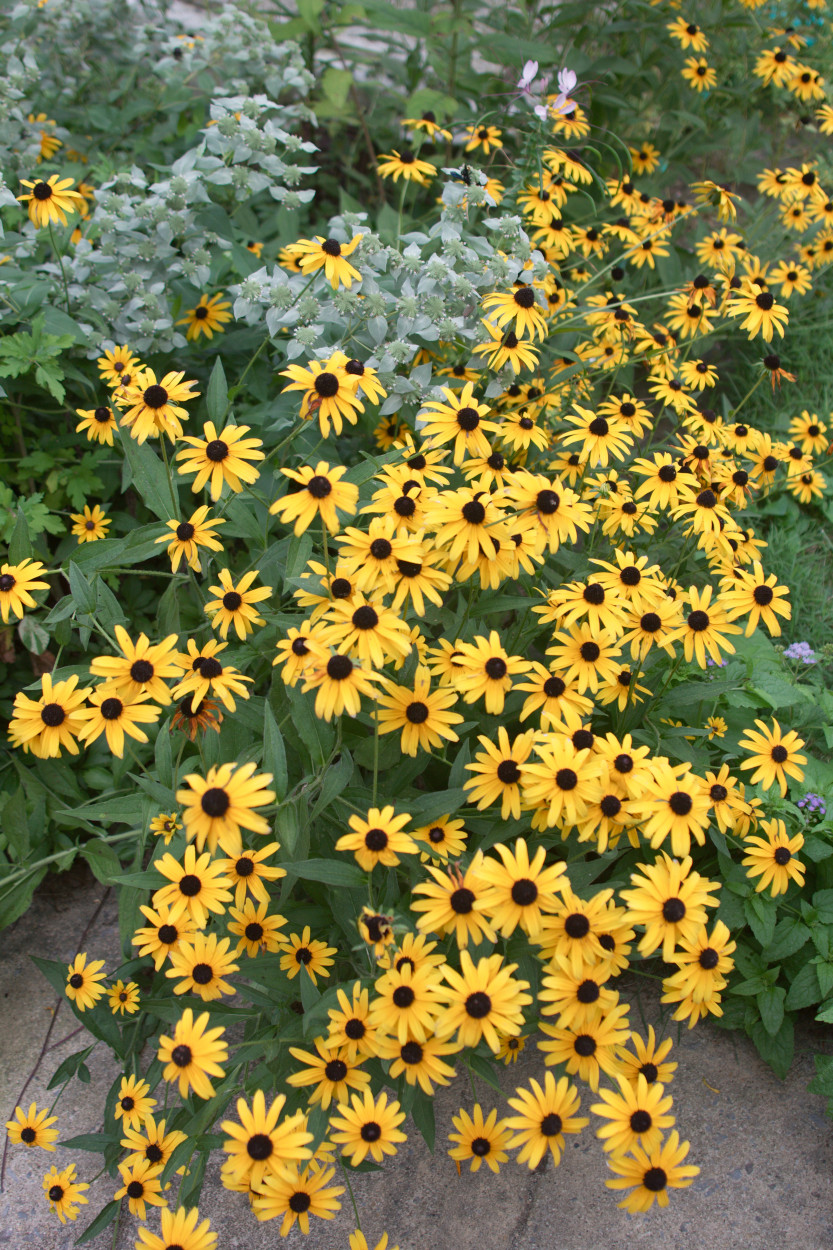
The black-eyed Susans are the predominant source of color (except for the color green, of course) in the garden right now. They are holding up their end marvelously, I might add.
Oh, and I passed the 20,000 mark on my camera today. This is photo number 20,004 (since Christmas).
Painter’s Palette
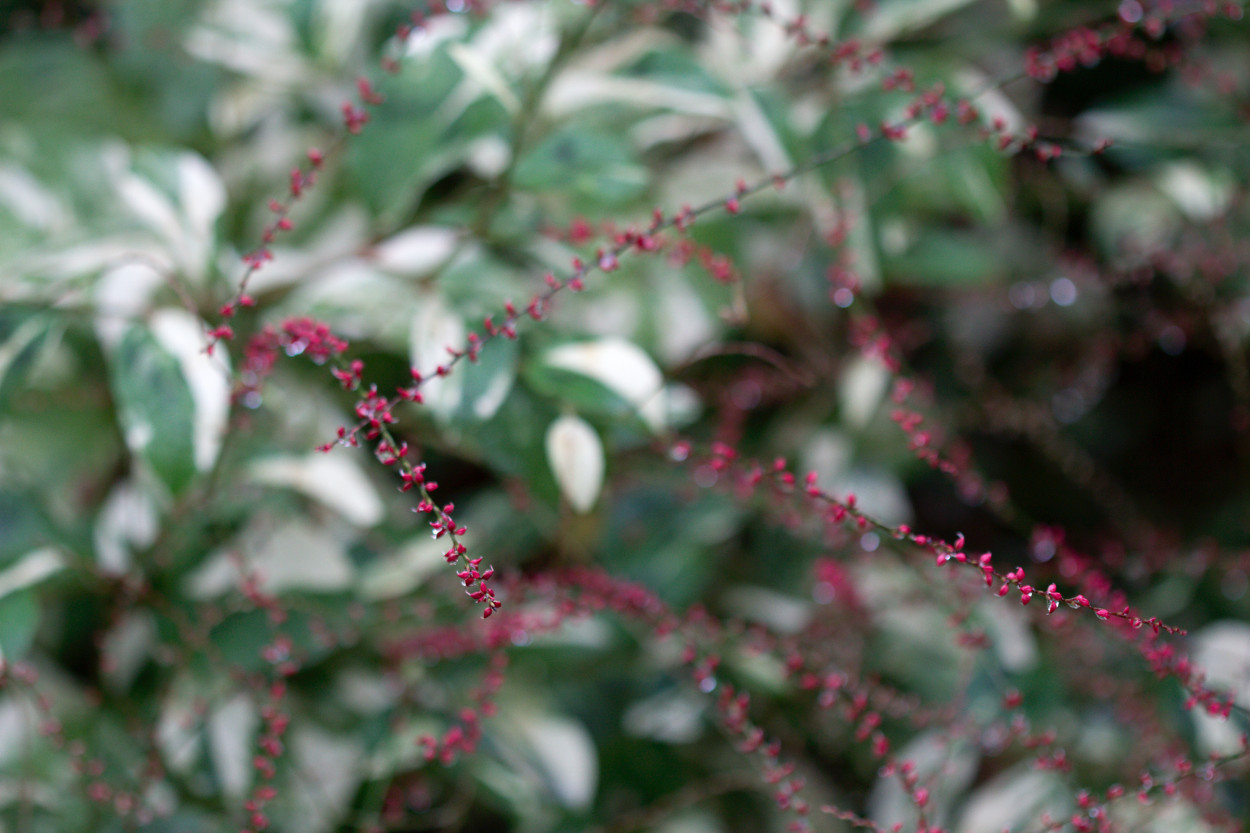
Persicaria virginiana ‘Painter’s Palette’ is a slightly invasive perennial but nothing like loosestrife so I don’t mind it so much. It has pretty, variegated foliage and tiny, bright pink (almost red) flowers on long stalks.
Hardy Begonia (Begonia grandis)
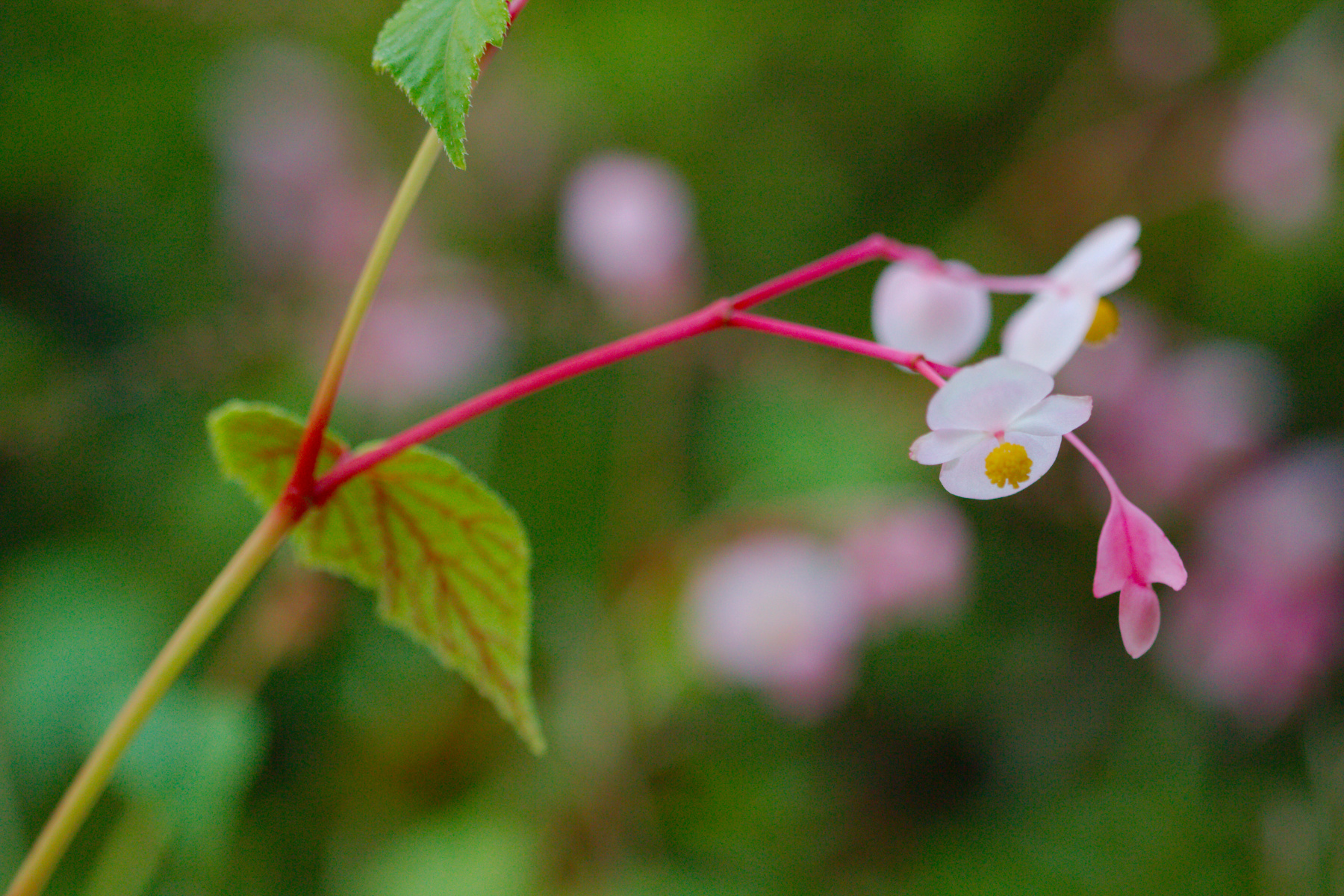
Originally planted in a pot outside our front door, this hardy begonia (Begonia grandis) has been coming up around the front step every year since and getting a little larger each year. It isn’t what I’d call invasive, but it’s certainly found a spot where it is very happy. The leaves have wonderful, red veins and the flowers are a delicate pink. The male flowers have bright yellow stamens and the female flowers are pendulous and pink with less obvious yellow stigmas. Overall it’s less than two feet tall and very welcoming as we come home. The relatively cool and protected spot is probably important to its doing so well.
As I was writing this I got to wondering where the name Begonia comes from. It is in honor of Michel Bégon (1638-1710), a French government official and avid plant collector.
Carpenter Bee on Stonecrop
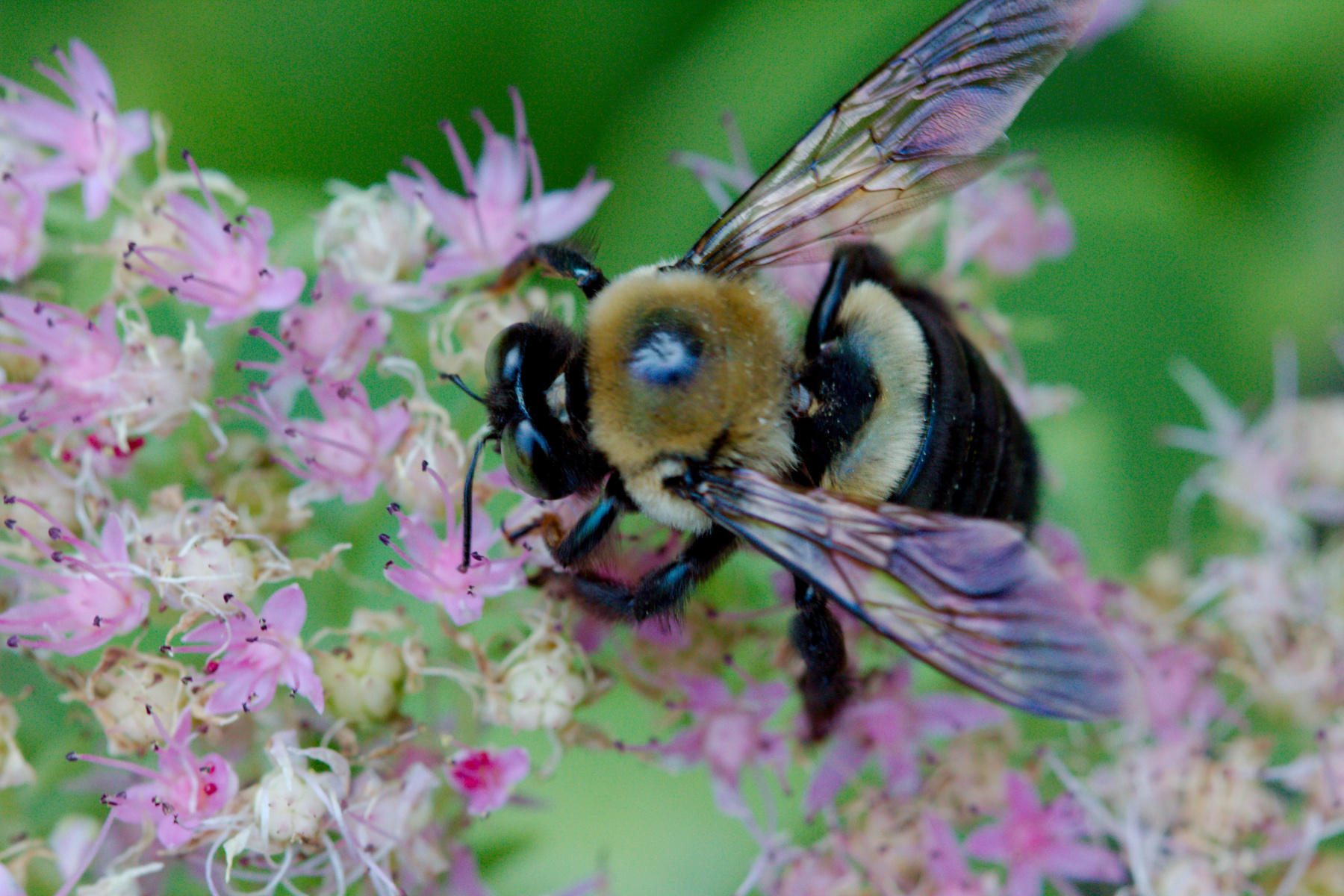
I decided to take some pictures of plants on the driveway this evening. One that I got pictures of is an elephant ear, otherwise known as taro and more precisely called Colocasia esculenta. After that I started taking some pictures of the pale pink flowers on an autumn flowering stonecrop, probably ‘Autumn Joy’, also known as ‘Herbstfreude’. Although these are often referred to as sedum, they have been reclassified as a Hylotelephium species. As I was taking the pictures, this eastern carpenter bee (Xylocopa virginica) came and gave me another point of interest.
Lenten Rose ‘Mango Magic’
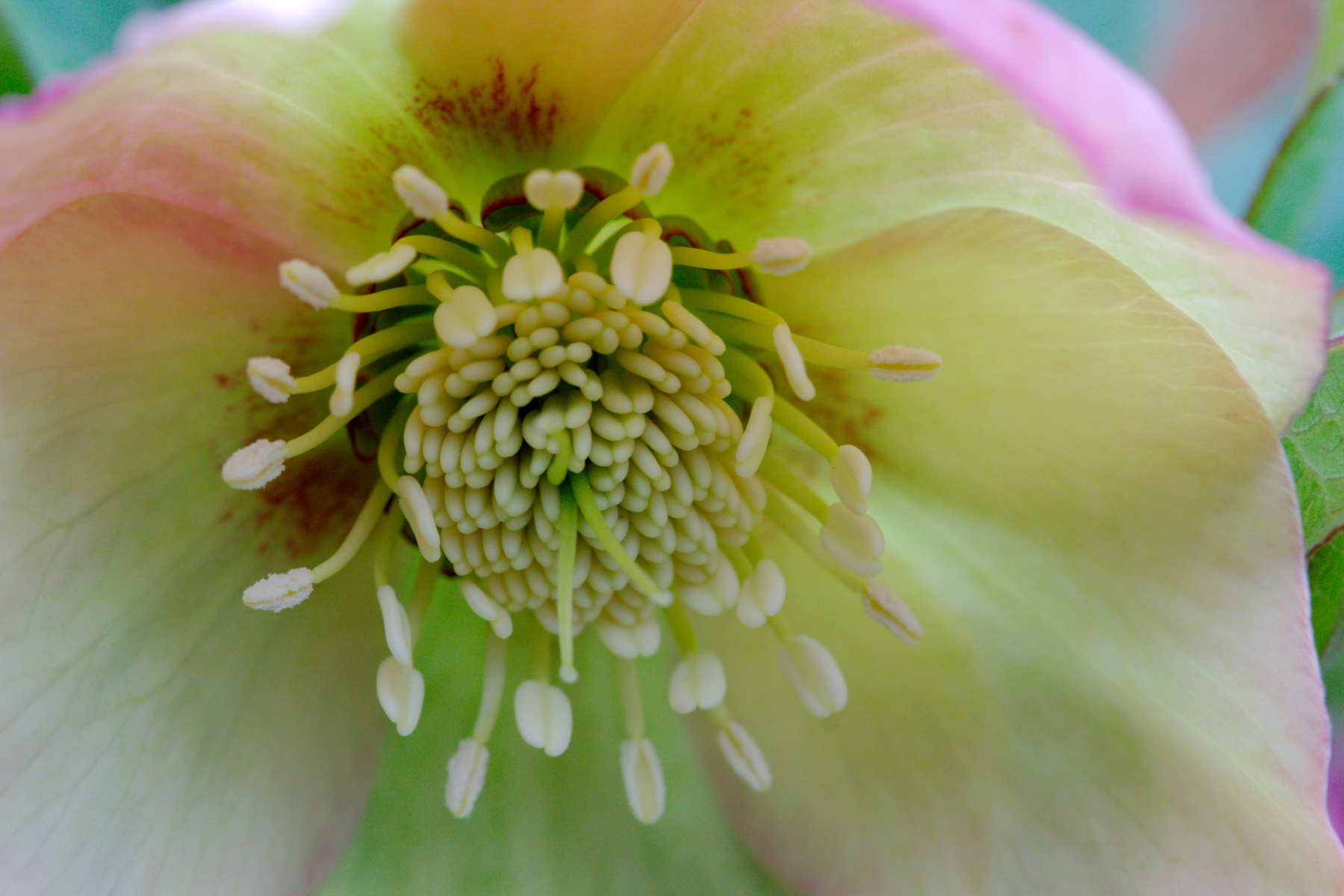
The Lenten roses are just starting to bloom. This one, called ‘Mango Magic’, is the earliest of them (this year, at any rate). This one was planted in the fall of 2014 and it doing quite well. Another planted at the same time is taking its time getting going but seems to be doing better than last year. I have a bunch that Brady gave me that were being thrown away after being thinned out when she worked at Brookside Gardens. Those are nearly white. The largest of the Hellebores that I have, the first to be planted shortly after we moved here, is quite massive and has deep, wine-colored flowers in great profusion. I particularly like that one with the sun is shining through the petals.
Helleborus orientalis
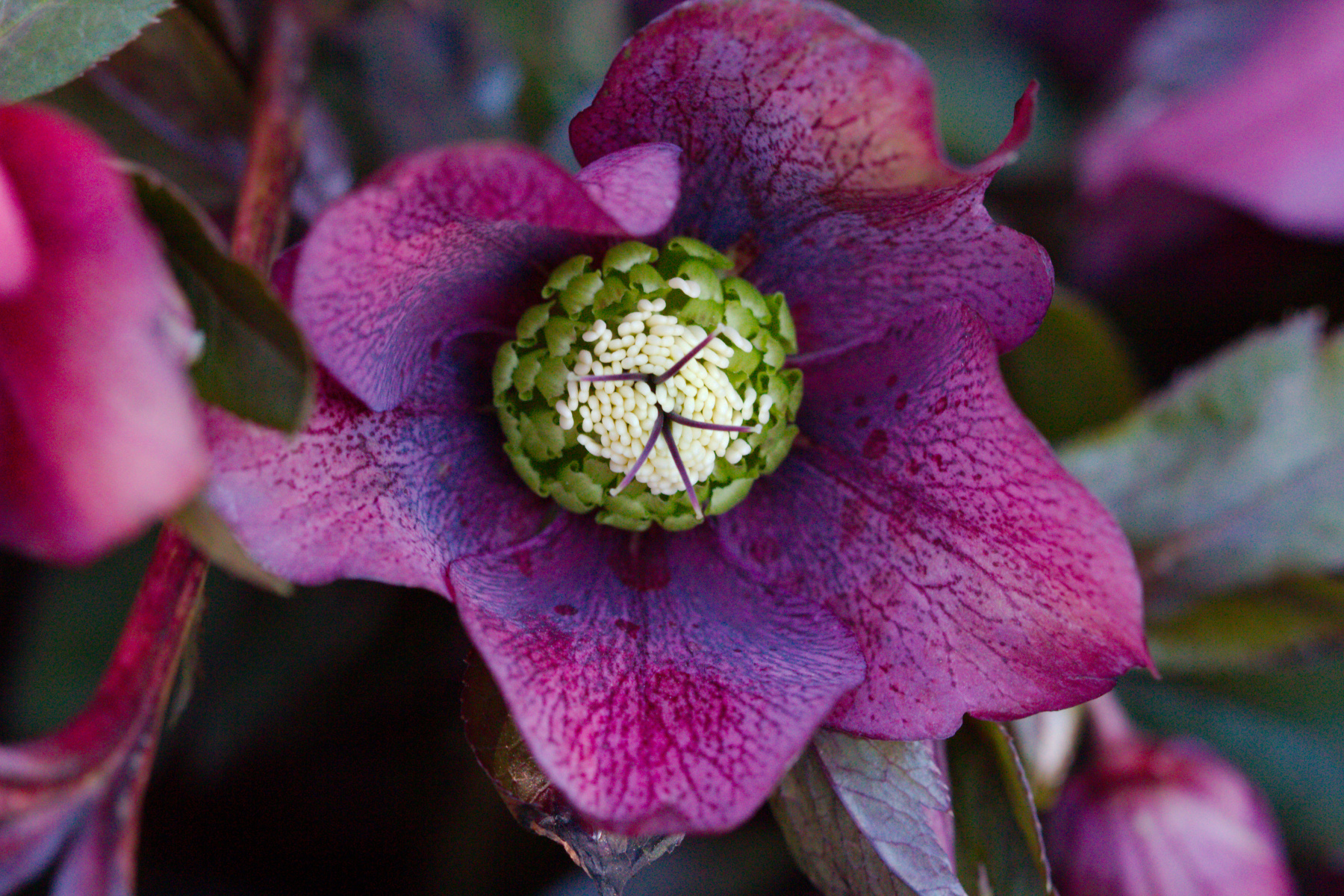
This is the older Lenten rose I mentioned the other day (see Thursday, March 1, 2018). It was brought in a pot from our yard in Gaithersburg and lived in that pot for a year while we rented and until we moved into our current house. It was one of the first things we planted when we moved here so it’s quite well established. There is some bloodroot (Sanguinaria canadensis) next to it that really needs to be moved so it doesn’t get smothered by this giant thing. This giant thing could also be split into three or four without doing it much harm. The hellebores are tough plants native to the Caucasus.
Columbine (Aquilegia)
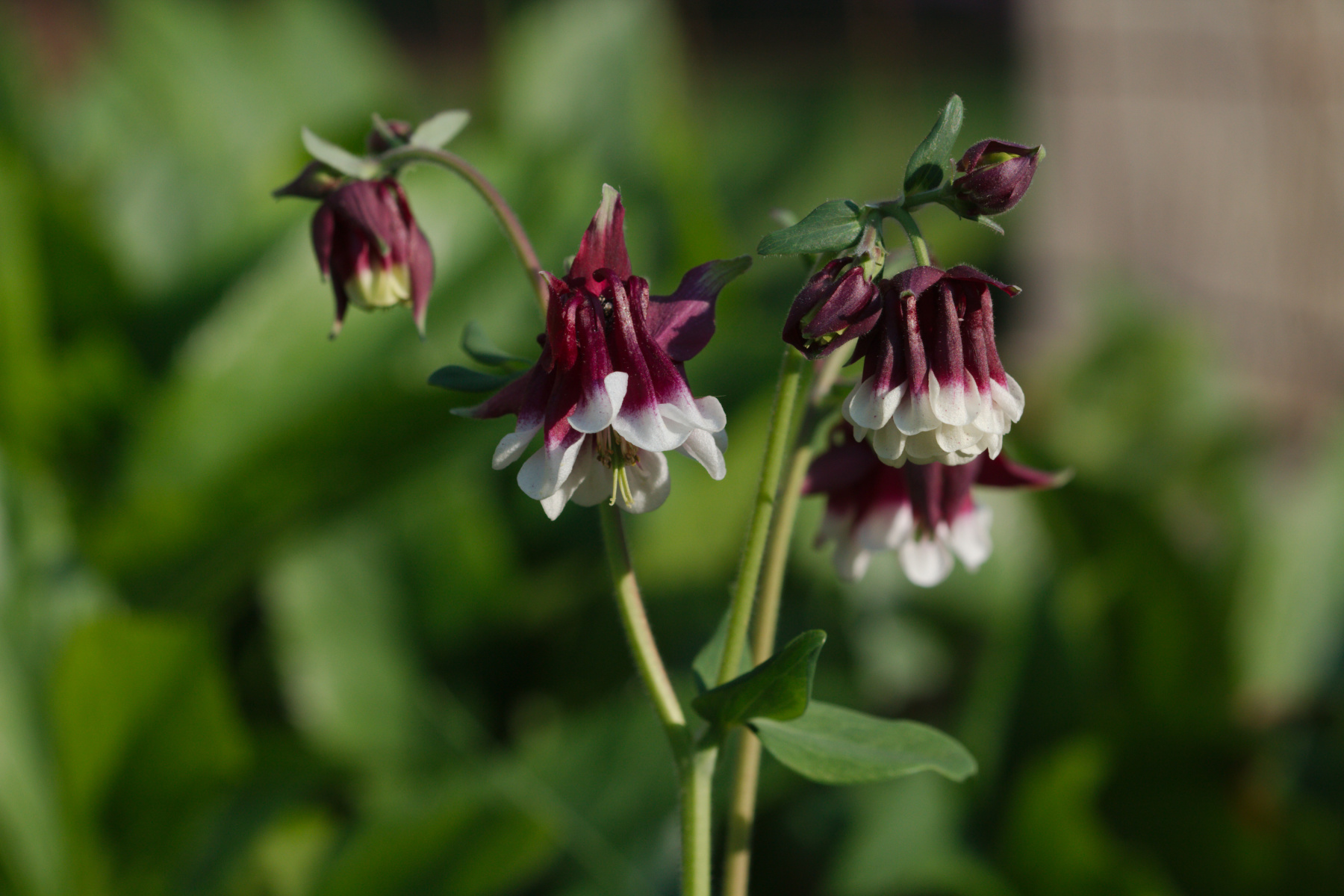
There are columbine (Aquilegia species) scattered around our yard. Most of them are self-seeded volunteers and most of them are this dark, rather compact-flowering variety that seems to come true from seed. I don’t know what its origin is, whether we brought it here or it’s a natural hybrid from some that we had, but it’s quite successful, coming up year after year. It isn’t the most colorful columbine you’ll find, but it’s nice enough and I’m not going to turn down a zero-effort, flowering perennial like this.
Cathy’s Driveway Garden
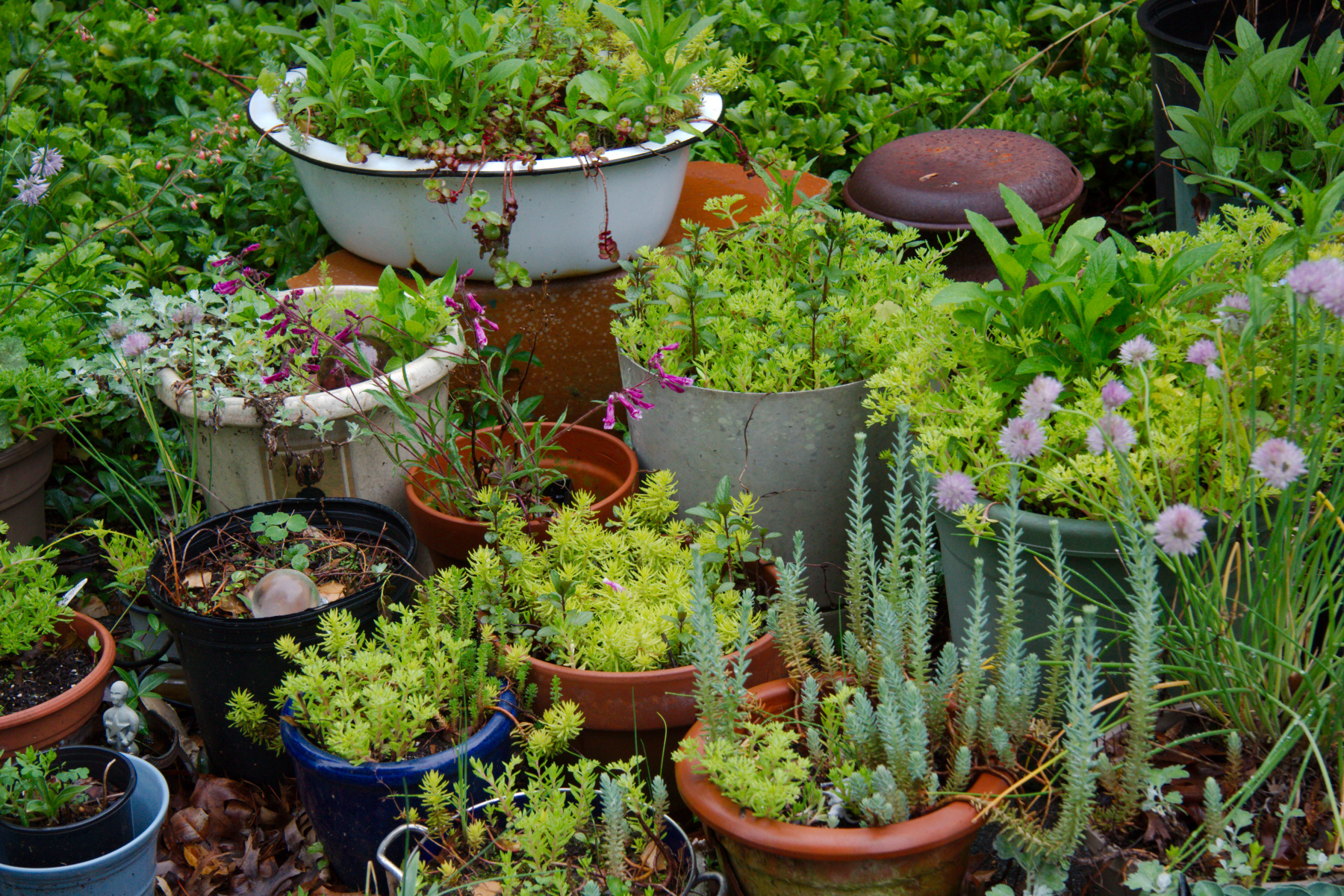
We don’t put our car in the garage. There are a few reasons for that, not least of which is that there it too much else in there for a car to fit. But even if a car would fit in the garage, you can’t get there from here. At the top of the driveway are potted plants. Not just one or two but a fairly extensive collection. Each year one or two new containers seems to get added. Some of them start with annuals but then perennials self-seed into them and they transition to permanent fixtures. I’m not saying that’s a bad thing, of course, and this time of year, especially when it’s raining and the colors are more intense, it’s really lovely.
Tradescantia virginiana (Spiderwort)
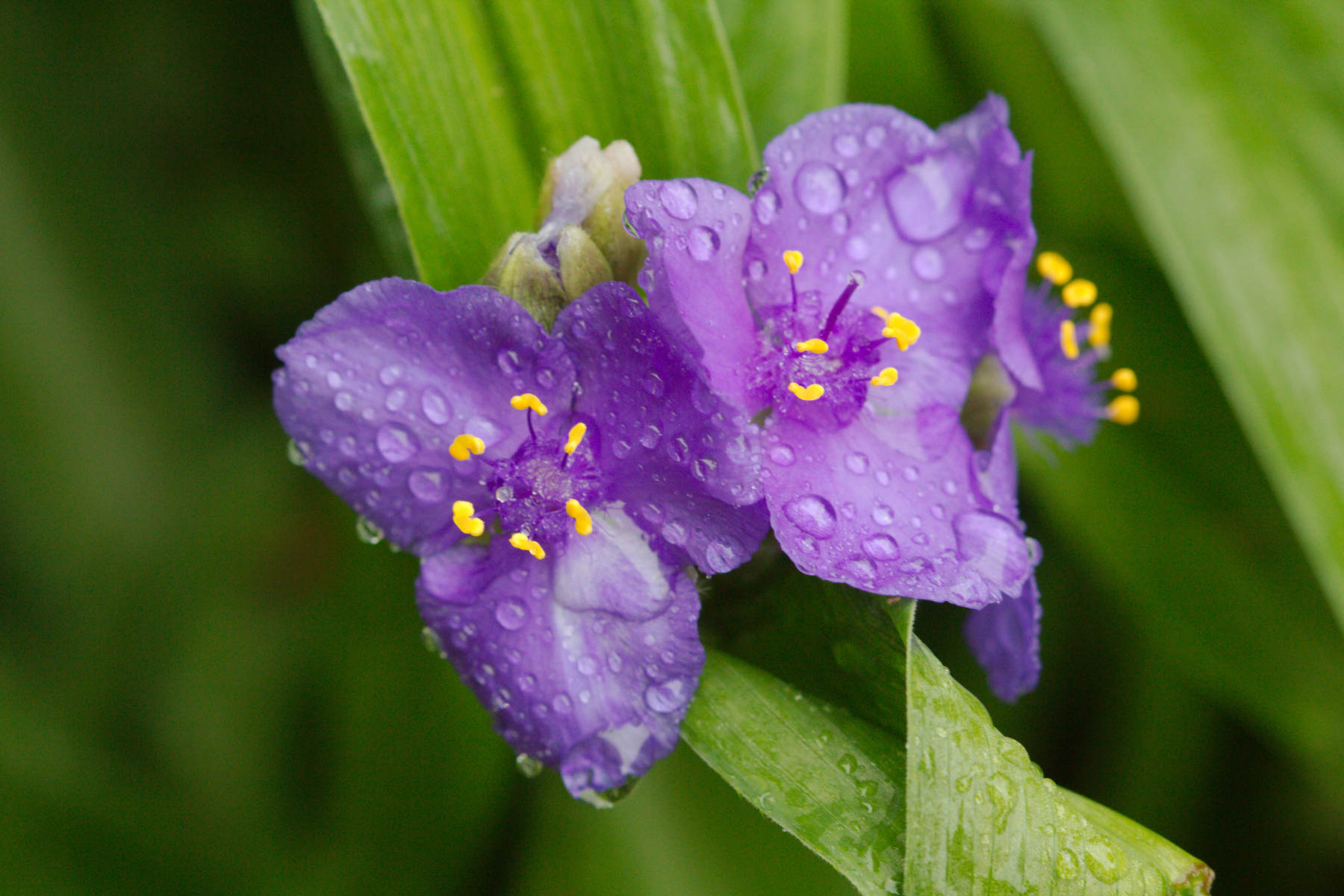
The spiderwort (Tradescantia virginiana) has begun blooming in our yard. Most of them look like this, with dark green leaves and dark blue/purple flowers. The flower color is difficult to catch and is actually a bit bluer than how they look here. We have one with chartreuse leaves, which is very pretty but needs a little shade. We also have one with pink flowers. I’ve read that their flowers change color to pink when when exposed to radiation but this one was bred to have pink flowers. If the others all suddenly turn pink, then I’ll worry.
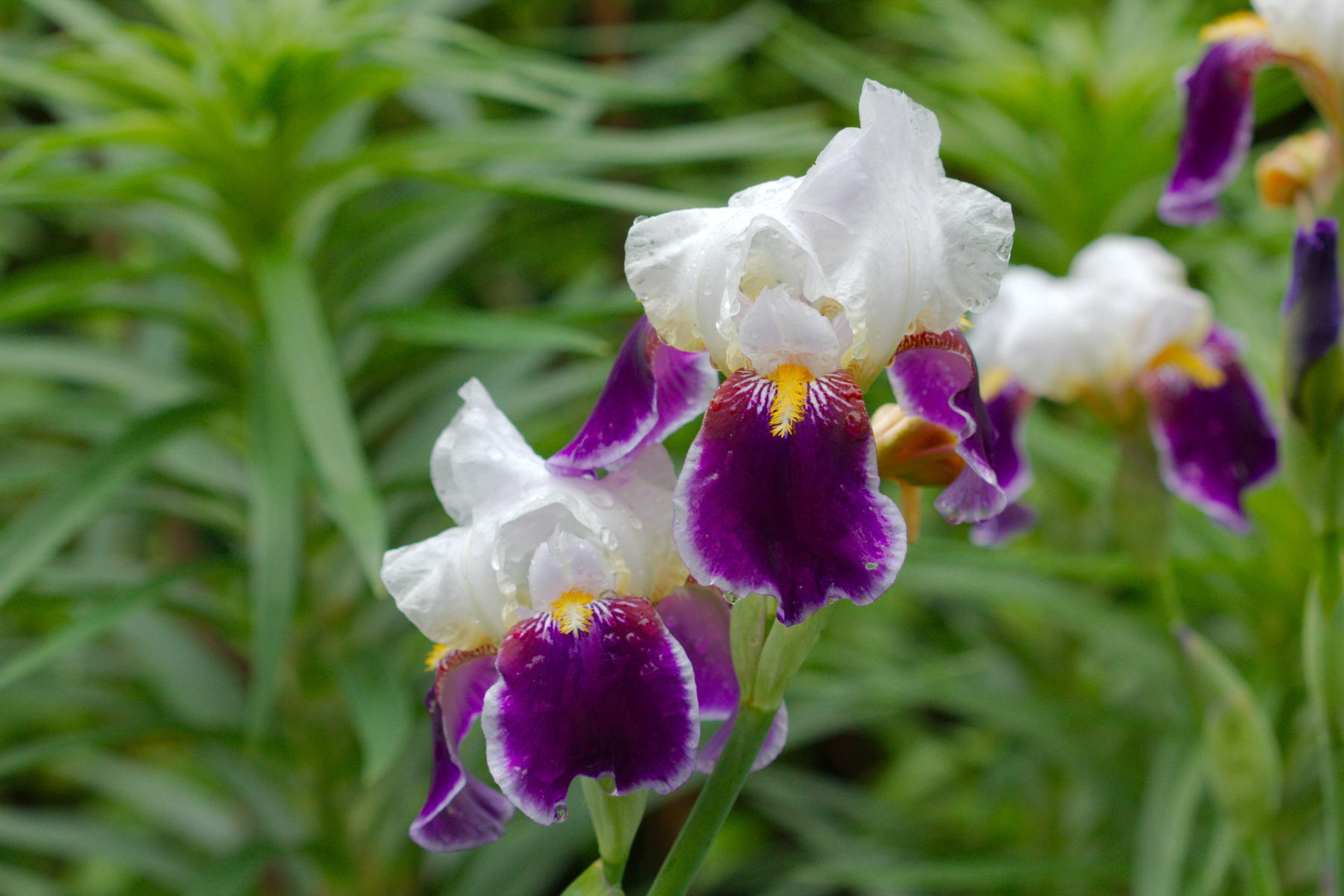
Bearded Iris
The irises have begun to bloom. We basically have two sets of tall, bearded iris. There are these purple and white type and another that are mostly yellow. They are both quite lovely and we could do worse than have them. That being said, we could do with a little more variety. We also have other types of iris, most notably Siberian iris (Iris sibirica) and English iris (Iris latifolia). Some of these bloom later and they are both much smaller, both in terms of overall height and in size of bloom, than the large, bearded varieties.
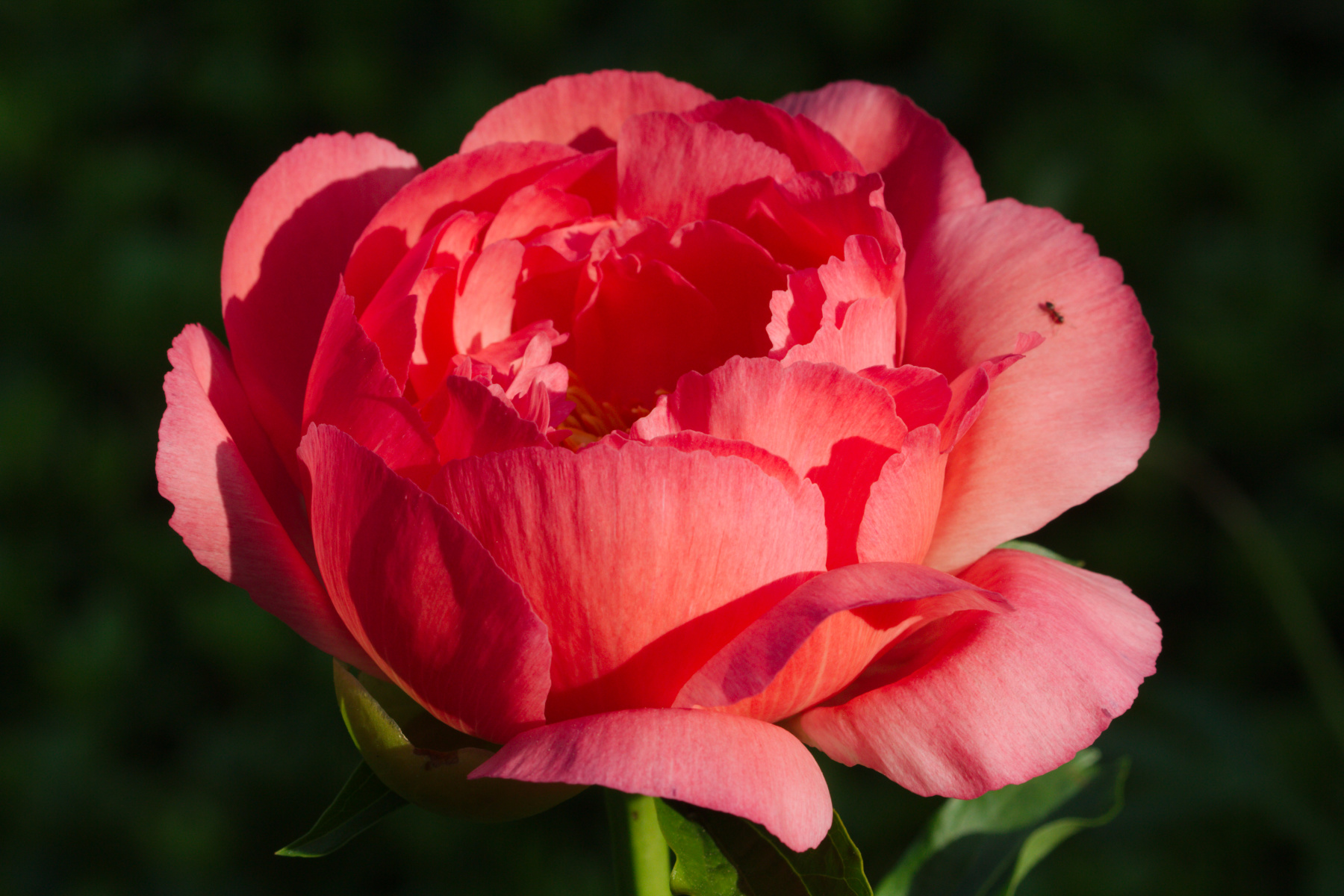
Peony ‘Coral Sunset’
In the fall of 2014 I bought three peonies called ‘Coral Sunset’ from John Scheepers (https://www.johnscheepers.com/). I planted them amidst the pachysandra along the back of my garden. The first spring there was only evidence of one of them. The next year, two. Now all three are coming up through the pachysandra and each of them bore a single bud. This is the largest and the first of them to bloom. I must say, they are worth the wait. One great thing about peonies is that they are long lived and they continue to grow into larger and larger clumps. These three should eventually grow together into one massive clump that will be wonderful in bloom. For now, I enjoy the solitary flower.
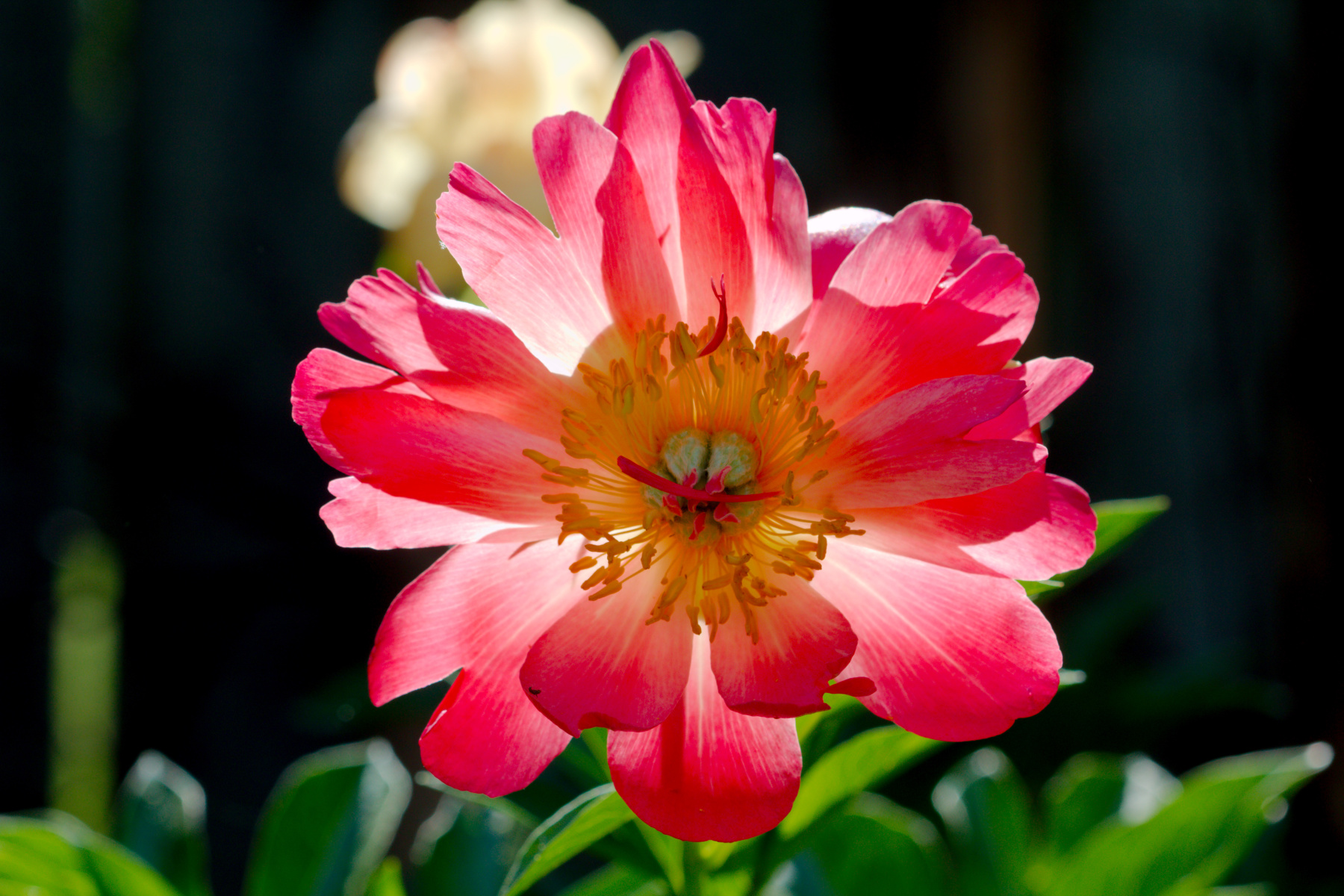
Peony ‘Coral Sunset’
I know I’ve already posted a picture of this plant this spring. In fact, it was only four days ago. Nevertheless, The second of the three peonies that I planted in 2014, named ‘Coral Sunset’, was blooming and had the late afternoon sun shining through it. I just couldn’t resist another picture of this wonderful flower. With one bloom per plant, we’re basically done for the year with these three. But they were worth it and I’m already looking forward to a total of four or five flowers on the three plants next year.
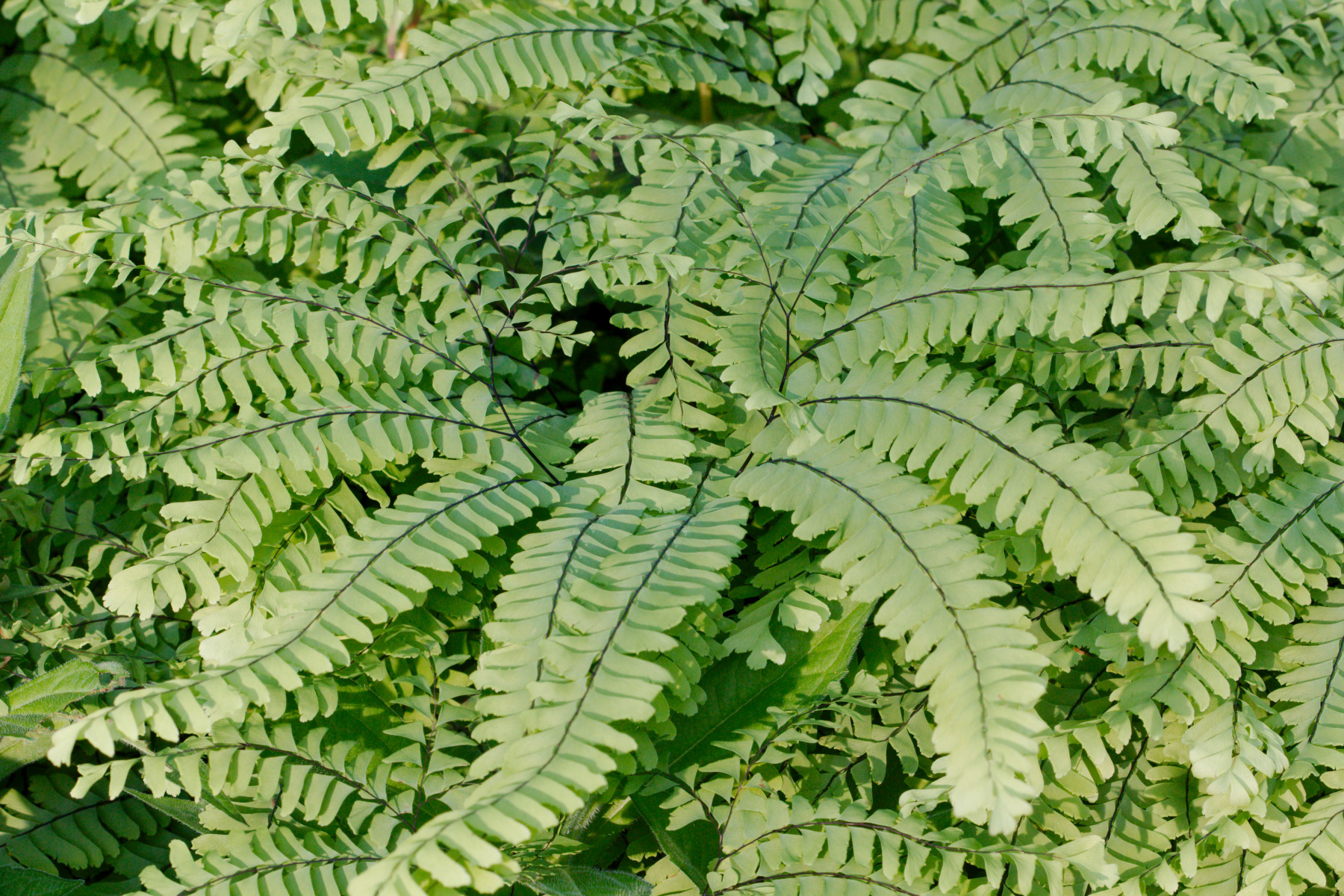
Adiantum pedatum (Northern Maidenhair Fern)
I have always had a bit of a thing for ferns. You might say I’m front of ferns. Or maybe not. Anyway, this is one of our nicest native ferns, the northern maidenhair fern (Adiantum pedatum). This one, a piece of one that I took from a clump that my dad had growing in his yard and then dug up again when we moved. It’s growing in full sun and tends to be a bit burned by the end of the summer. I really should get some growing in a shadier part of the yard, but this it happy enough that I don’t need to move the whole thing. The genus name Adiantum comes from the Greek word meaning unwetted, which refers to its water repellent foliage. The specific name pedatum means cut like a bird’s foot in reference to the fronds.
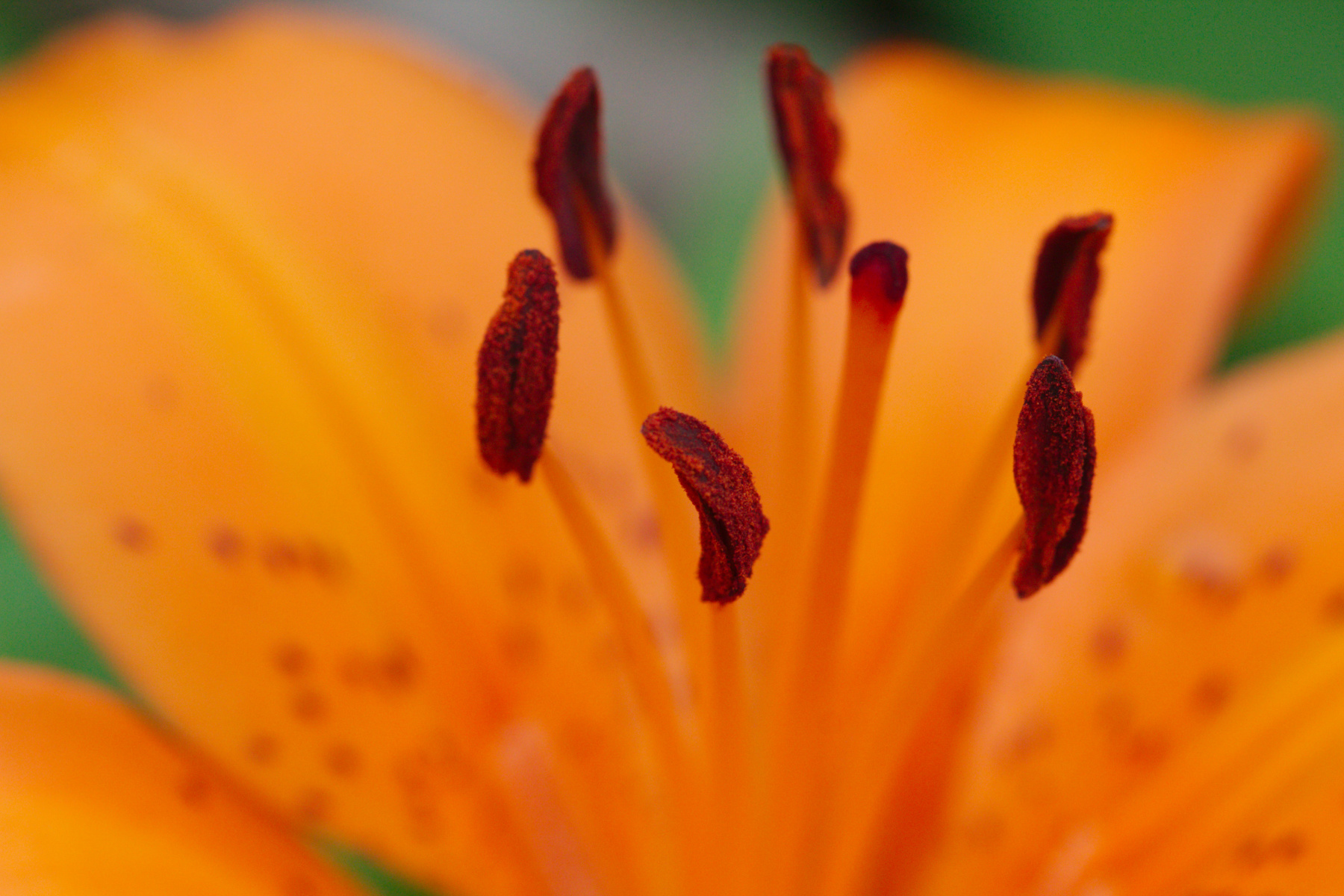
Asiatic Lily
The Asiatic lilies are in bloom around the yard. This one is in a container on the back patio but there are a bunch in the front garden, as well. We worry about them being eaten by rabbits or deer but this time of year, fortunately, there is a lot for them to eat and that means less chance of them finding these. We have a lot of rabbits this year. I’ve seen as many as four at once in our front or back yard. The seem to mostly be eating clover, though, and we have plenty of that to go around.
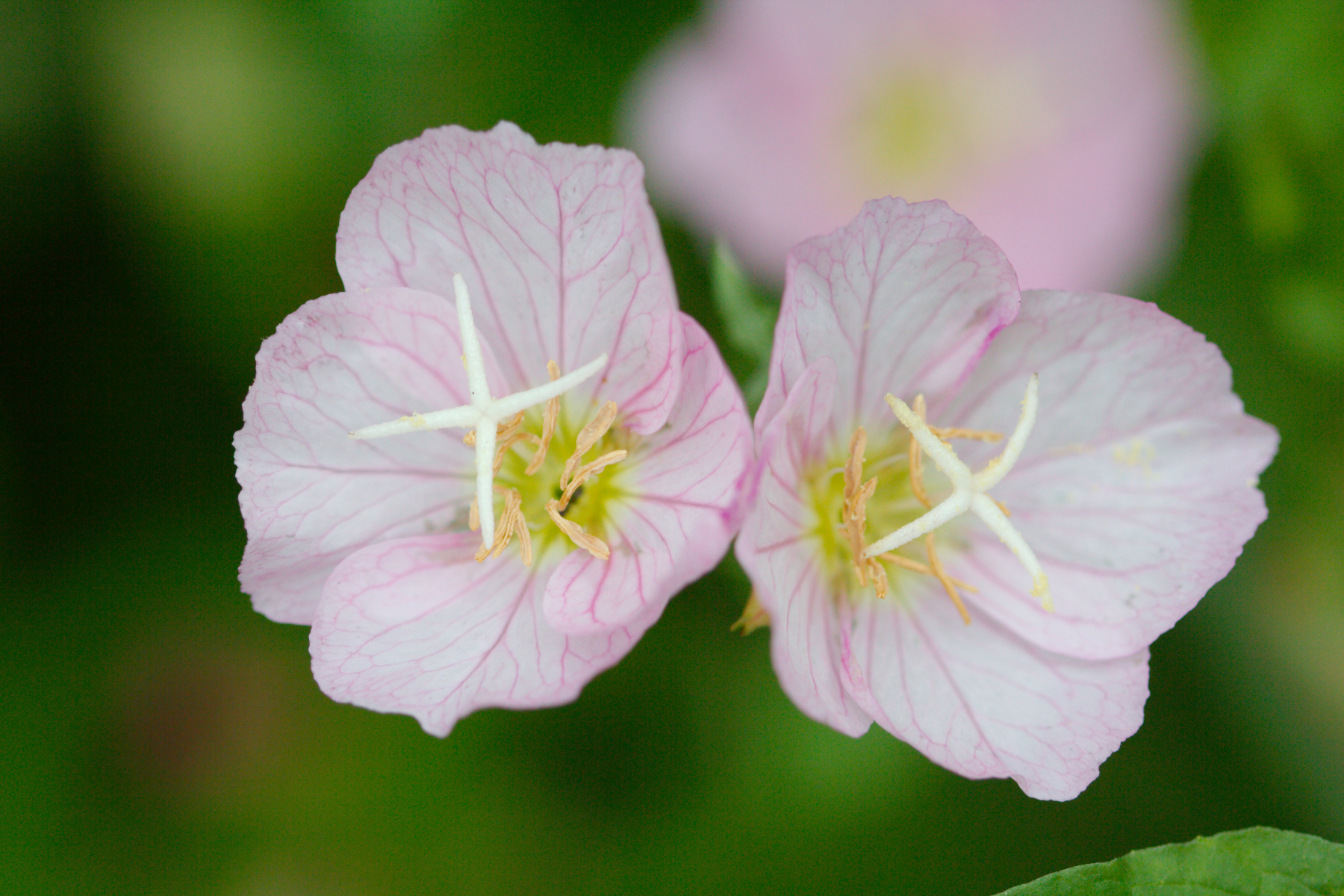
Oenothera speciosa (Pink Evening Primrose)
The evening primroses (Oenothera speciosa) are in bloom and they are quite lovely. They have spread through the garden but I wouldn’t call them an aggressive species, we don’t mind. We can easily pull them up if they show up where they aren’t wanted and generally, our garden isn’t so well organized that it matters. They are native to the southern half of the contiguous United States. They make a nice addition to any garden, blooming in the evening, their airy, pink blossoms particularly lovely in the dusk.
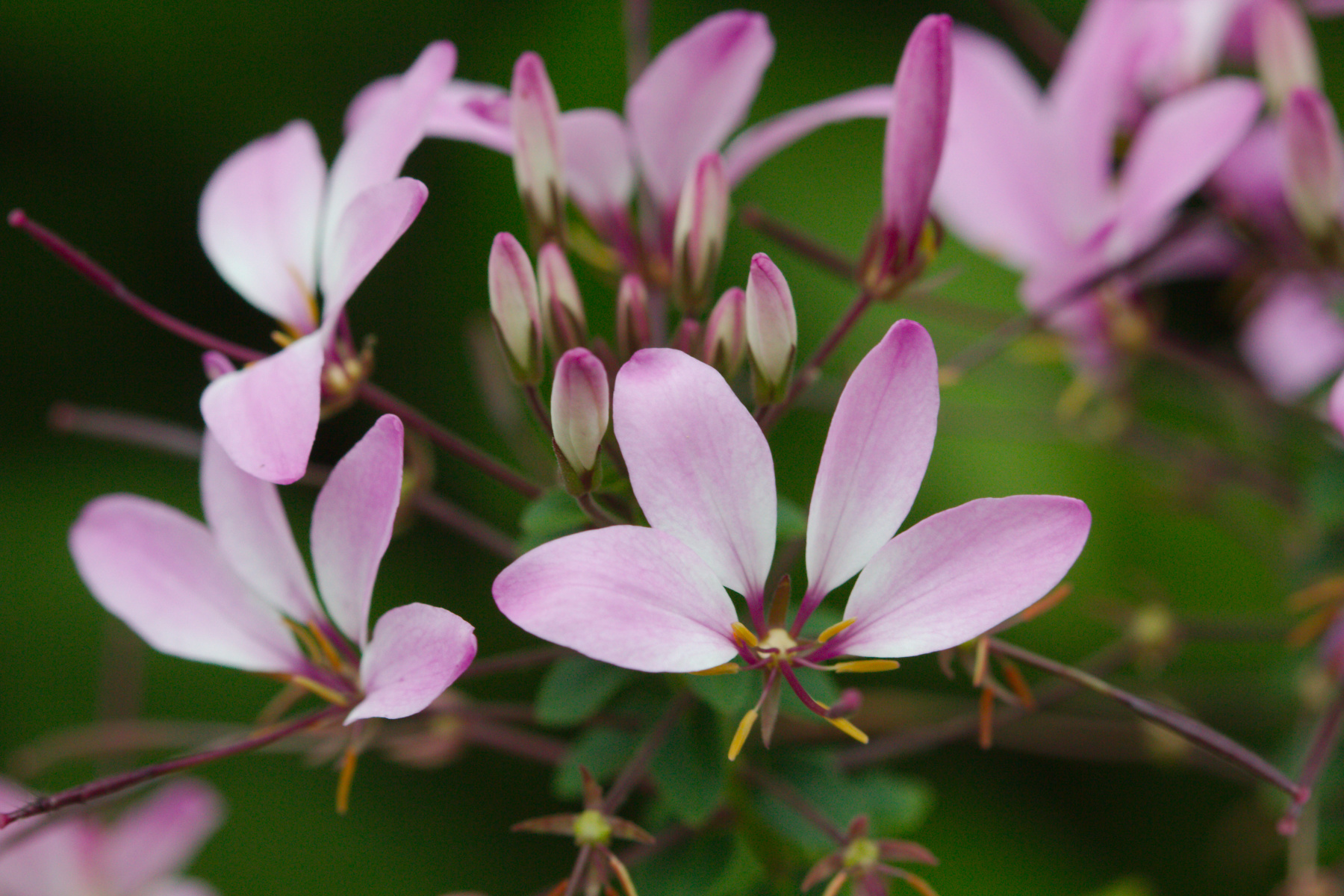
Cleome ‘Señorita Rosalita’
Commonly known as spider flower Cleome is a fast-growing, tender perennial grown here as an annual (it’s only hardy in USDA zones 9 and 10). This variety, ‘Señorita Rosalita’, is “noted for having no thorns, no unpleasant aroma, no sticky foliage, no seedpods and better disease resistance” (Missouri Botanical Garden Plant Finder). We love it and it’s been a regular feature in a container on out back patio. We really should plant more of them, as they always perform very well and bloom basically all summer from mid-June well into October or November.
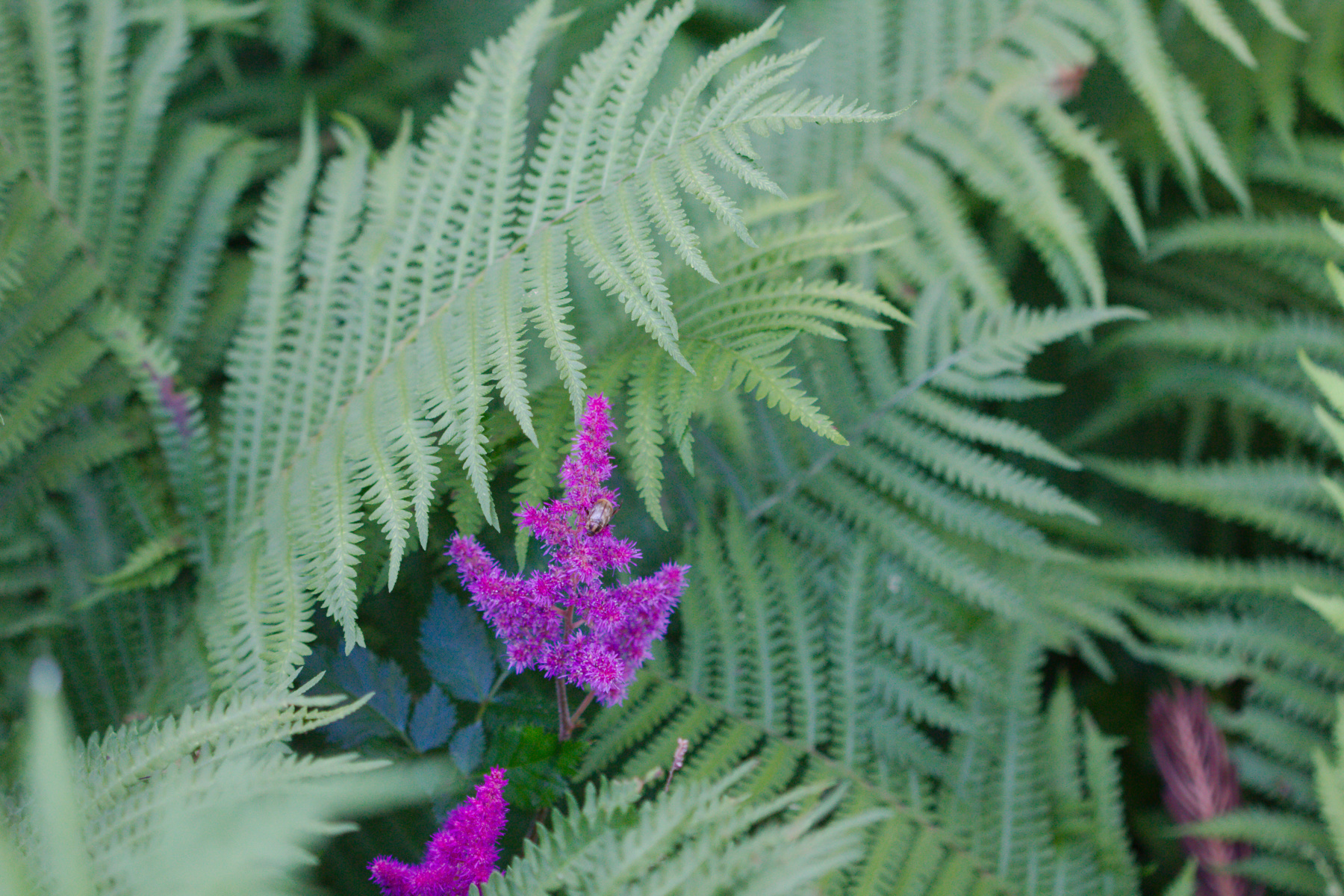
Astilbe and Dryopteris
In the shade garden at the north end of our yard, we have a few different ferns. This is the most prevalent and it is some sort of Dryopteris but I don’t remember which. Dryopteris species have various common names including wood, shield, and male fern. In with this is an ostrich fern (Matteuccia struthiopteris) and a Japanese painted fern (Athyrium niponicum) as well as a small patch of sensitive fern (Onoclea sensibilis) that was already here when we bought the house. There are two or three Astilbe plants scattered throughout and they compliment each other pretty well, although a slightly taller Astilbe might be a good idea, as these are almost covered by the fern. As a bonus, I got a bee of some sort on the Astilbe flowers, which I didn’t notice when I was taking the picture.
Hosta La Vista, Baby
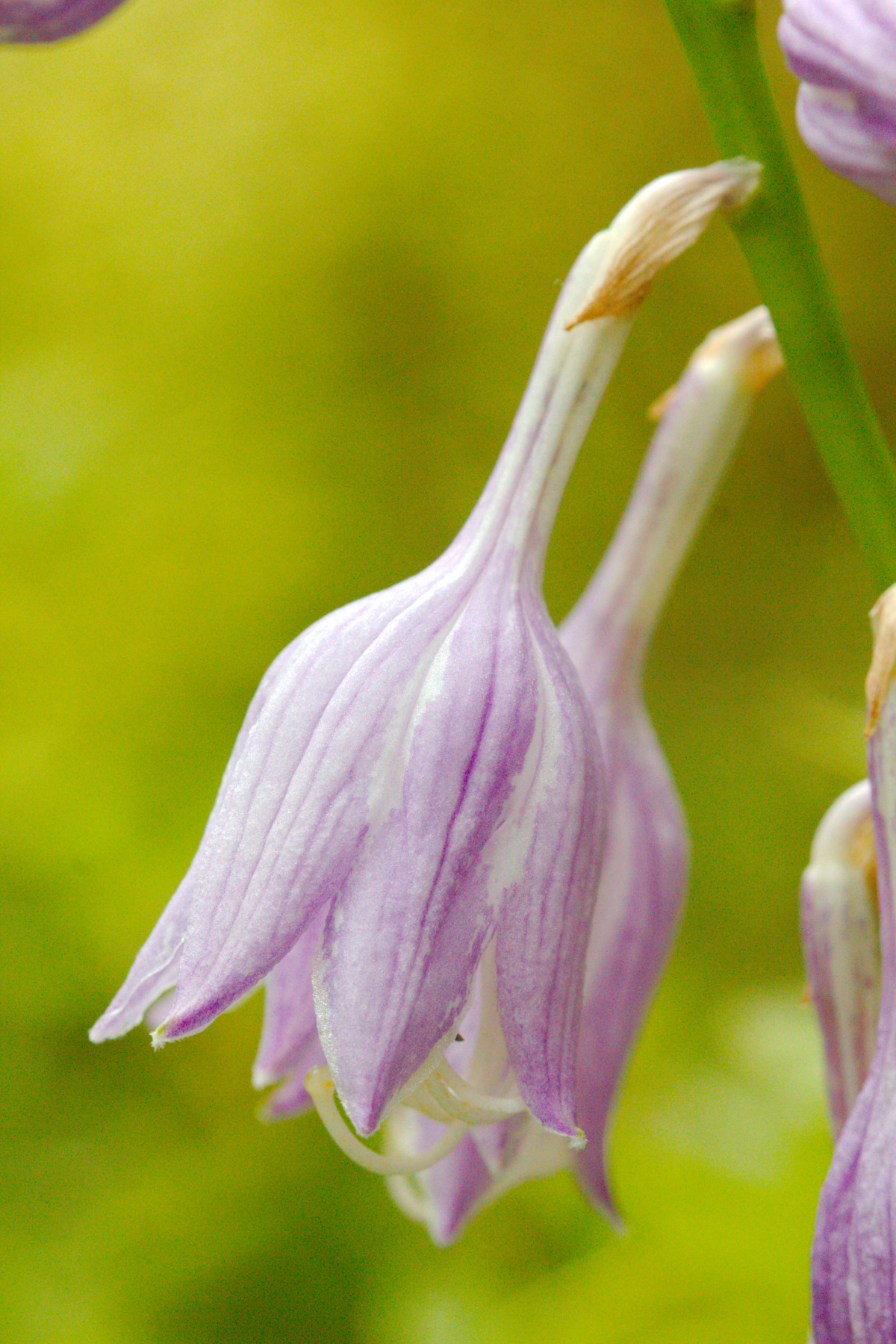
The genus Hosta has about 70 species native to Japan, Korea, China and eastern Russia. They are shade loving perennials grown mostly for their foliage but they have nice, if somewhat understated flowers, as well. The name Hosta is in honor of of Austrian botanist Nicholas Thomas Host (1761-1834). My parents had these in their garden and growing up I knew it as Funkia. That’s because the genus was renamed to that in 1817 “in honor of botanist Heinrich Christian Funk under the belief at that time that Hosta was an invalid name.” Early in the 20th century the name was switched back but the plants are still referred to as Funkia by some (including my parents, evidently).
This one is growing in a container just outside our front door. There are generally two pests that eat Hosta plants. Slugs can do significant damage to them, eating holes in the leaves. In our garden, that’s generally not so destructive that we worry about it, although it can make the leaves a little less attractive. The other culprit is deer, who really seem to love Hosta leaves. Although we see deer in our yard and often see signs of their presence, they don’t seem to come too close to the house. So, we keep the Hostas close and that seems to be enough. We also put up deer repellent although I don’t actually know how much help that is. It certainly doesn’t do any harm.

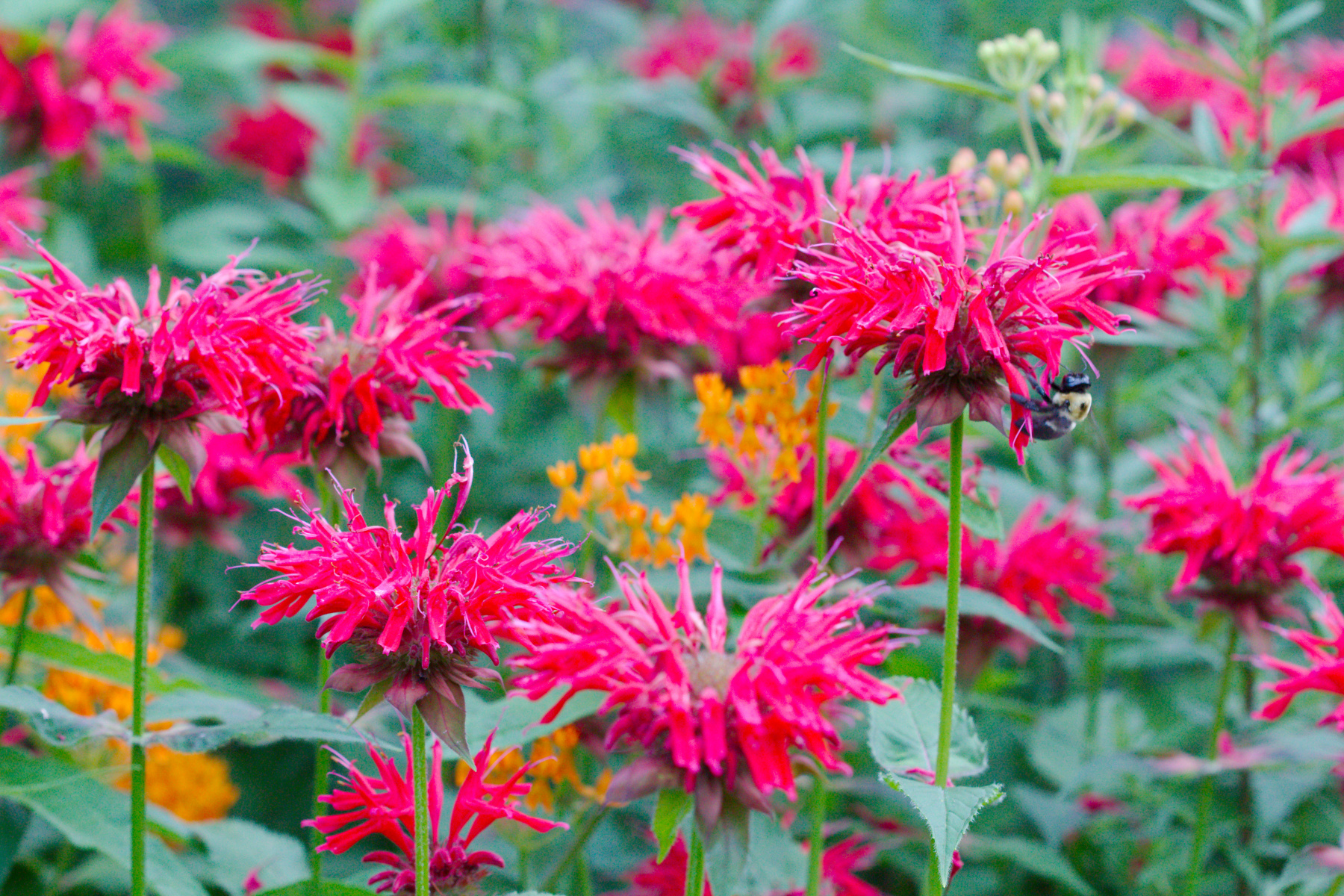
Monarda, Asclepias, and a Bombus
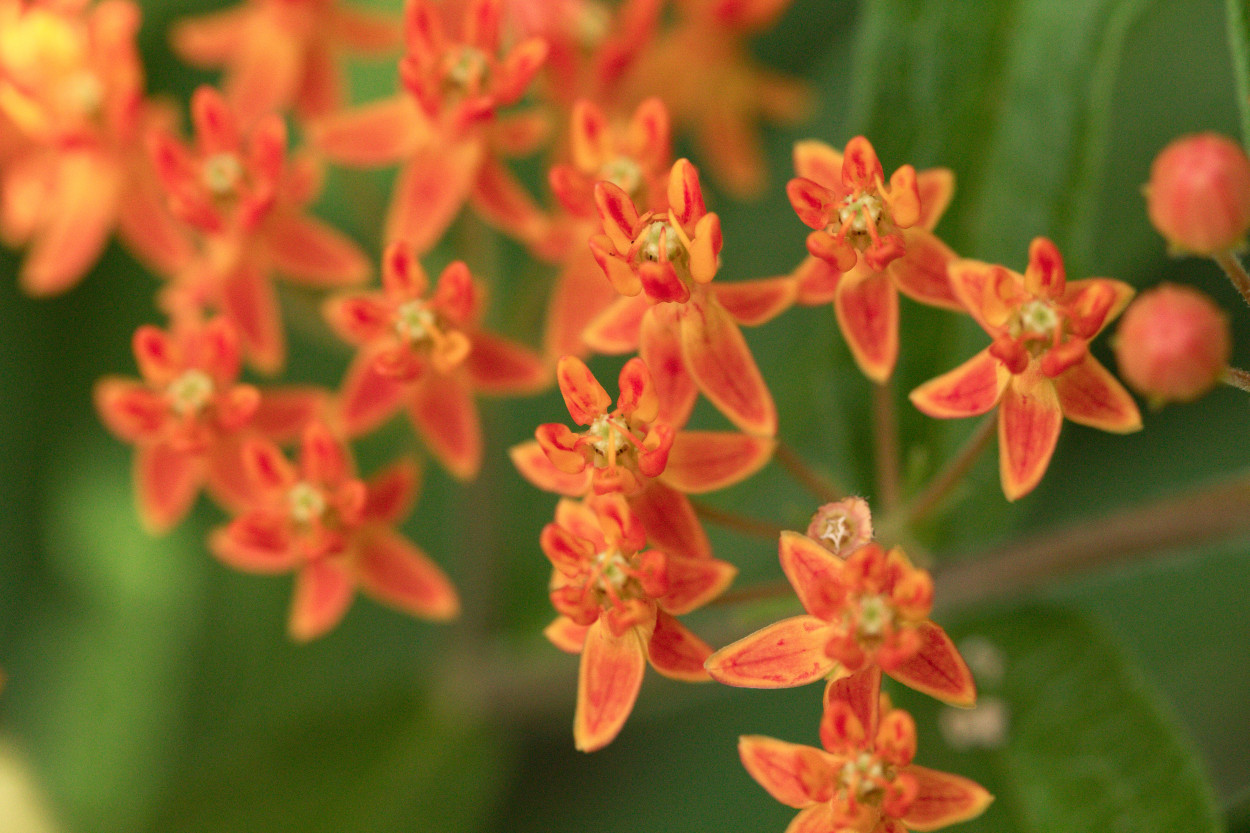
Along our back fence, the garden has really gotten out of control. With the work we’ve been doing on our mom’s houses, we haven’t really had time to give it half the attention it needs and deserves. Consequently, it’s got goldenrod, poke weed, and thistles growing in abundance. Three of our planted perennials are doing quite well, however, including the bee balm (Monarda didyma, also known as Oswego tea or bergamot) and the butterfly weed (Asclepias tuberosa) shown here. The other, not yet in bloom, is obedient plant (Physostegia virginiana). All three are native to the area and extremely tough. The bees love them and I followed this common eastern bumble bee (Bombus impatiens) for a while as he moved from flower to flower.
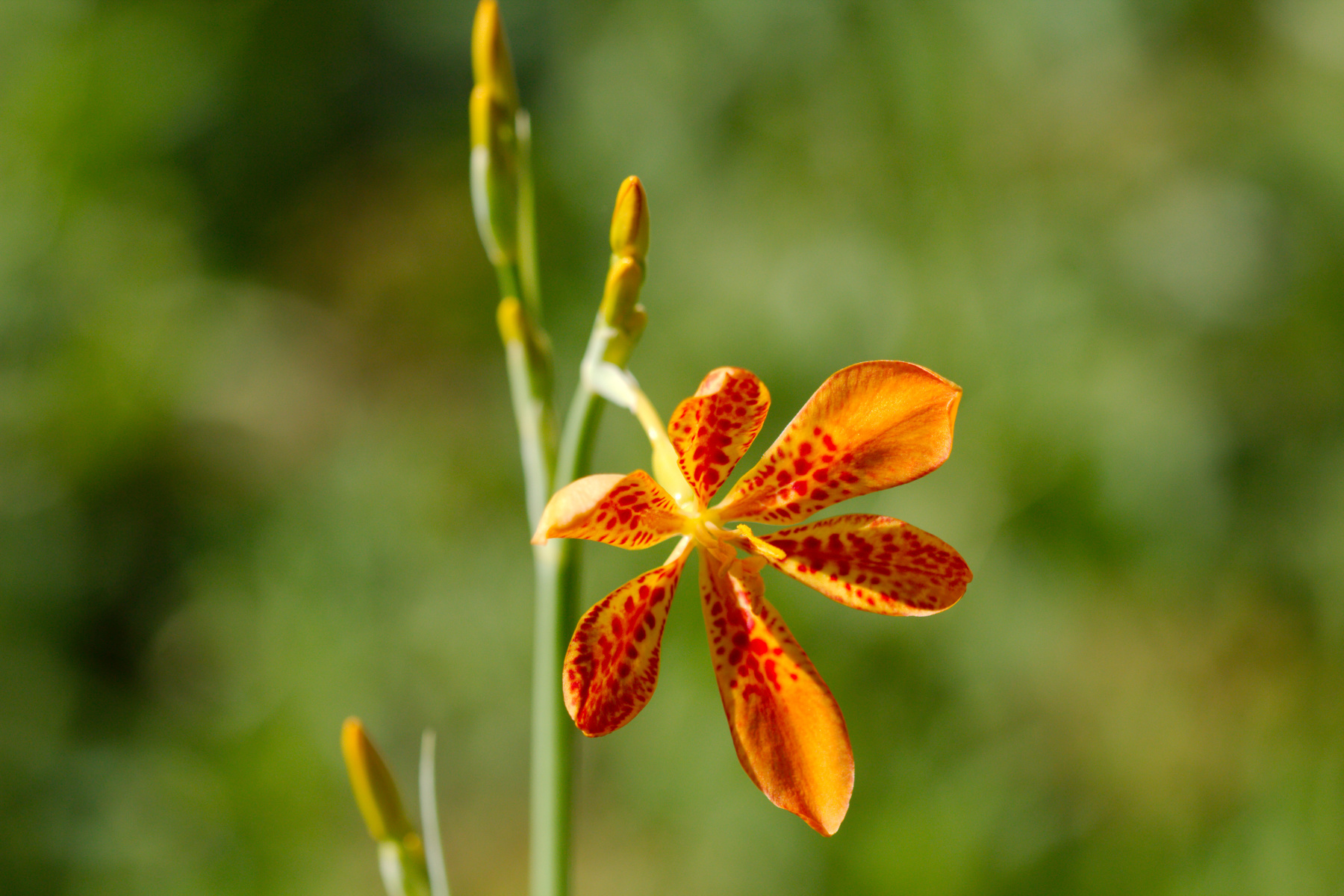
Iris domestica
This is Iris domestica, often called blackberry lily or leopard lily and formerly known as Belamcanda chinensis. It’s a perennial plant that we have in various places in our garden. We gather the seeds most years and spread them in areas we would like it to grow, although I don’t know if we’re doing as well as the birds when it comes to actually spreading it. As you can see, it has vaguely lily-like flowers and they are quite lovely. They each last a day but they are born in clusters, blooming one after the next for quite a while. In case you were wondering, the genus name Iris comes from the Greek goddess of the rainbow.
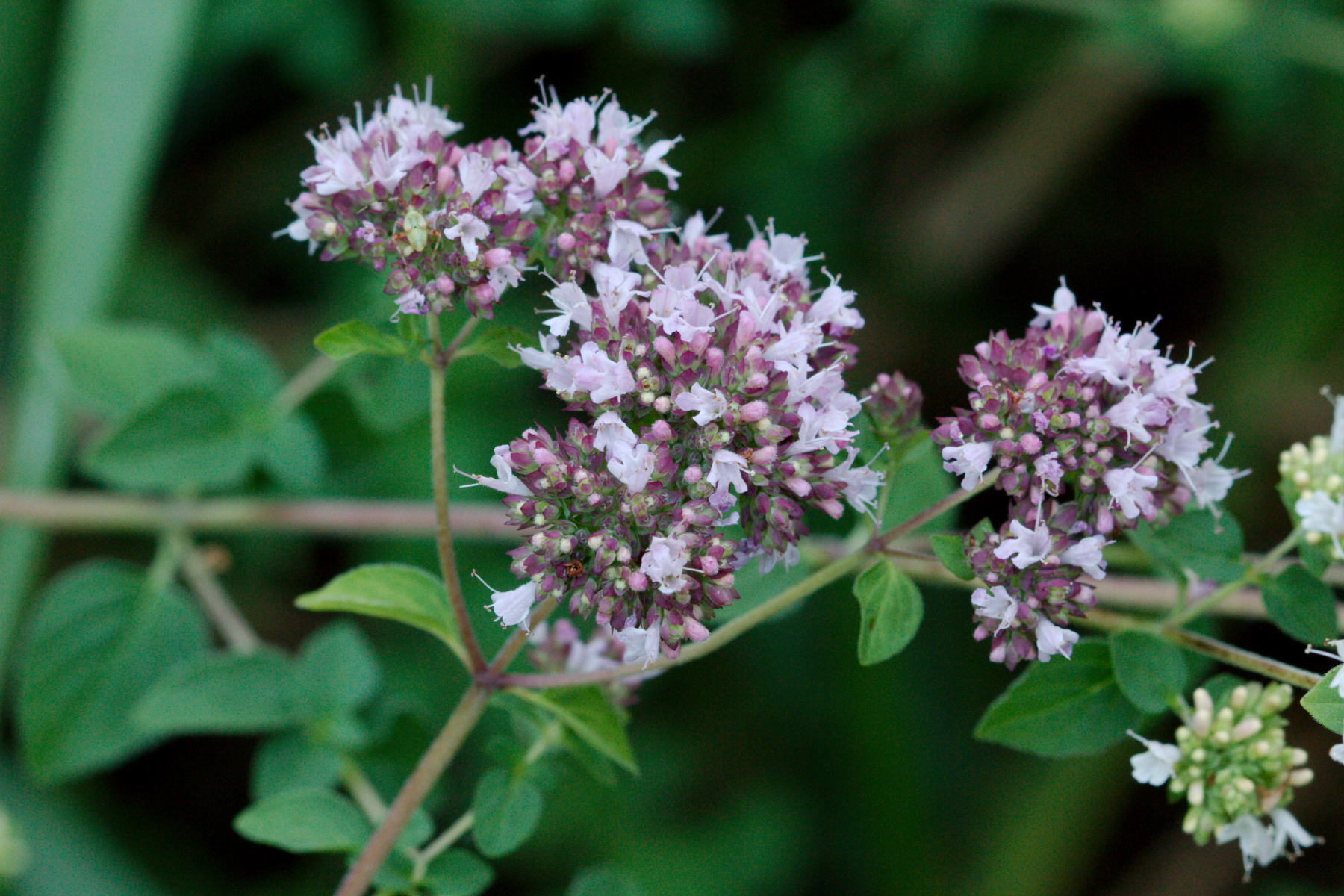
Oregano Flowers
I have a little plot with a fence around it where I grew a few vegetables when it was first put in. Summers have been quite busy and keeping up with vegetables has been tough. Also, it’s small enough that it really isn’t worth the trouble. So, I’ve planted a few herbs and don’t have to get out there nearly as often. Temperatures down to 0°F this last winter took care of the rosemary but the oregano (Origanum vulgare, a member of the mint family native to Europe through central Asia) is going strong. In fact, it’s practically taken over the entire plot.
Purple Coneflower
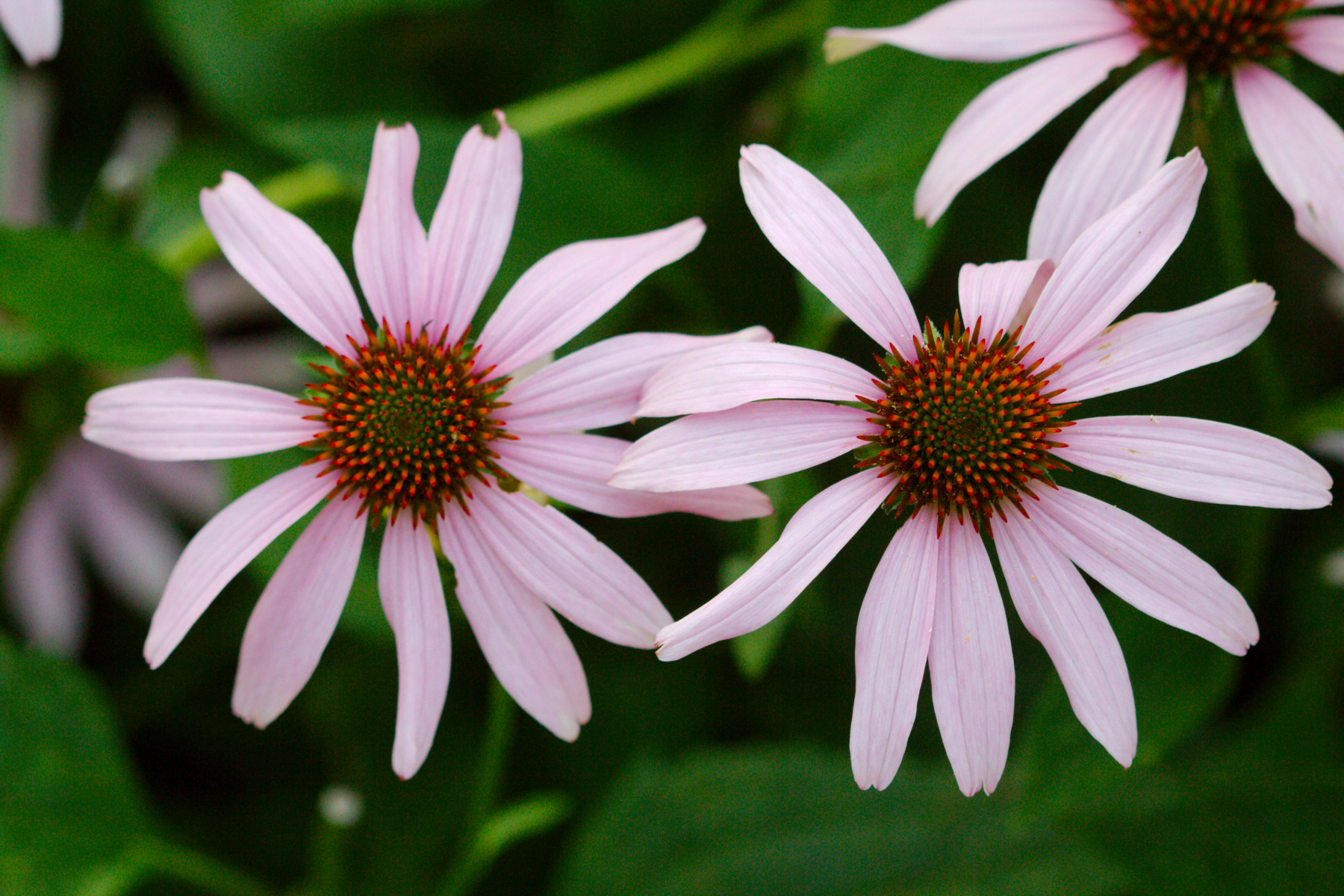
It’s been a good year for the purple coneflower (Echinacea purpurea) in our yard. Of course, it’s been an even better year for the weeds. With most weekends at least partly devoted to dealing with one or both of our mom’s houses, we’ve spent a lot less time in the garden this year. There is bindweed (Convolvulus species) everywhere and it’s running riot. In particular, along the back fence and the garden along the south end of the house are both totally out of control. There is significant pokeweed, goldenrod, various thistles, and even a few trees (zelkova, elm, maple, and ash). But there are some blooms that were intended, as well, including this coneflower.
Purple Coneflowers
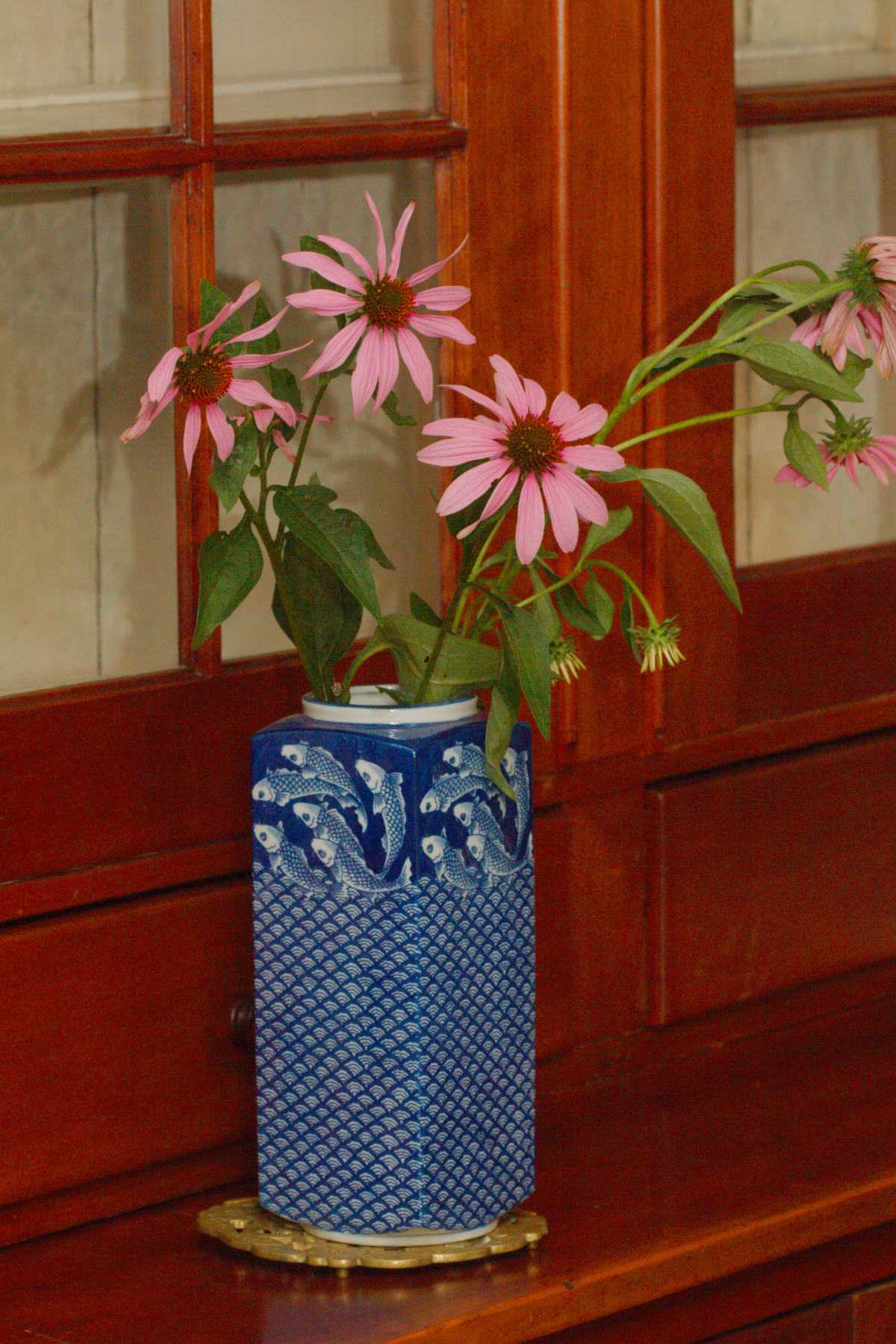
Cathy brought some coneflowers in this evening to put in a vase in or dining room. Actually, they got knocked over when she was cutting the grass so she figured we might as well enjoy them as they die. I think they look really nice against the rich brown of this china cabinet. As you might be able to tell, the china cabinet is empty. We’ll put things in it but we haven’t gotten around to it yet. For now, the things that could go in it are in boxes and taking up space that could be used in better ways. But finding them and figuring out what we want where is a bit too much for us right now.
We don’t bring flowers in very often but I’m always glad when we do. One of the nicest photos I’ve taken, actually, is a vase of flowers, mostly roses, that Cathy arranged. It was sitting on our kitchen table and the late afternoon sun was coming in and lighting it from the side so the background went fairly dark and the flowers glowed nicely. I’ve made a few prints of that one, taken in 2010, and it’s been fairly popular. I don’t think this one will win any awards but I do like the colors and it’s a relaxing picture, to me.