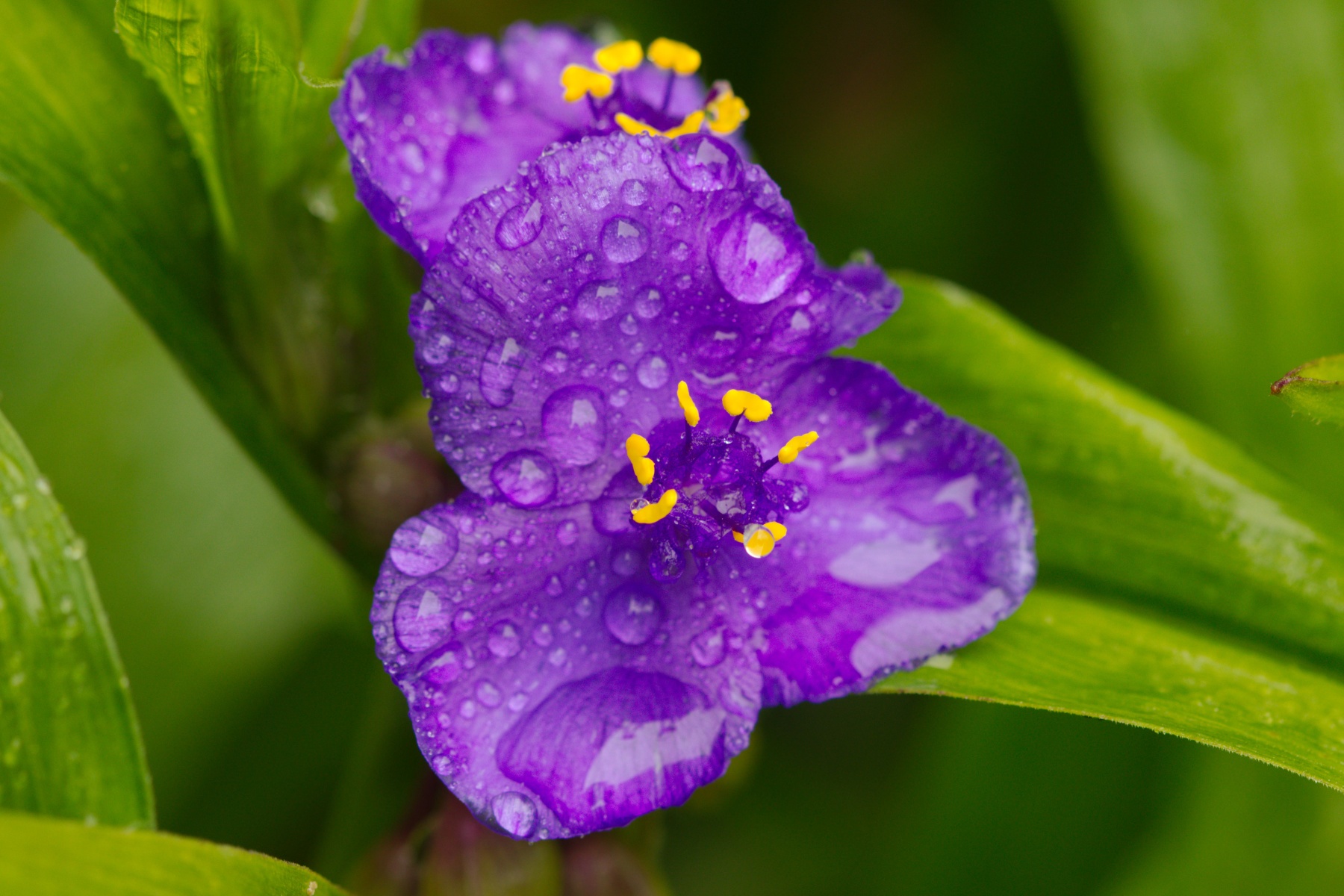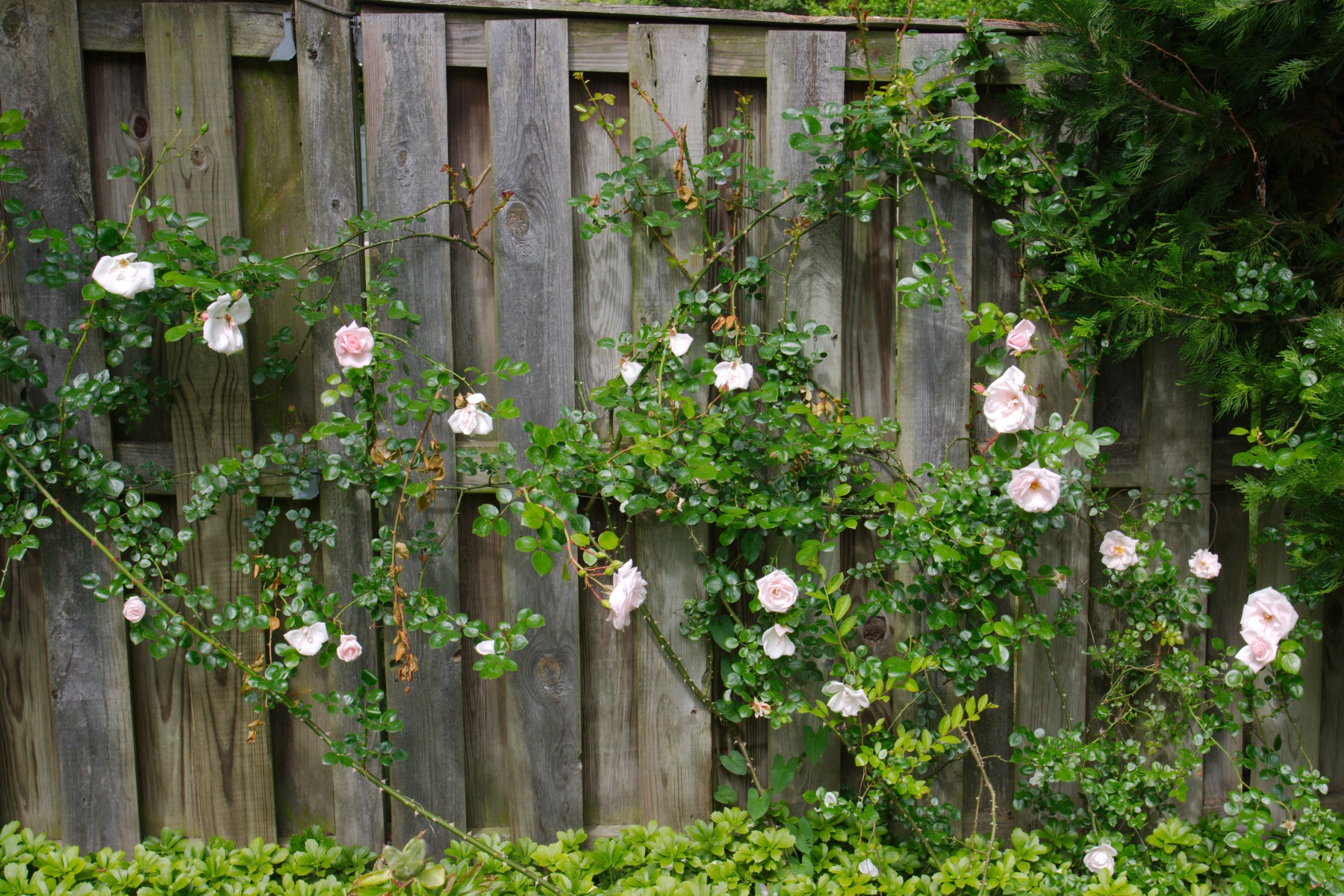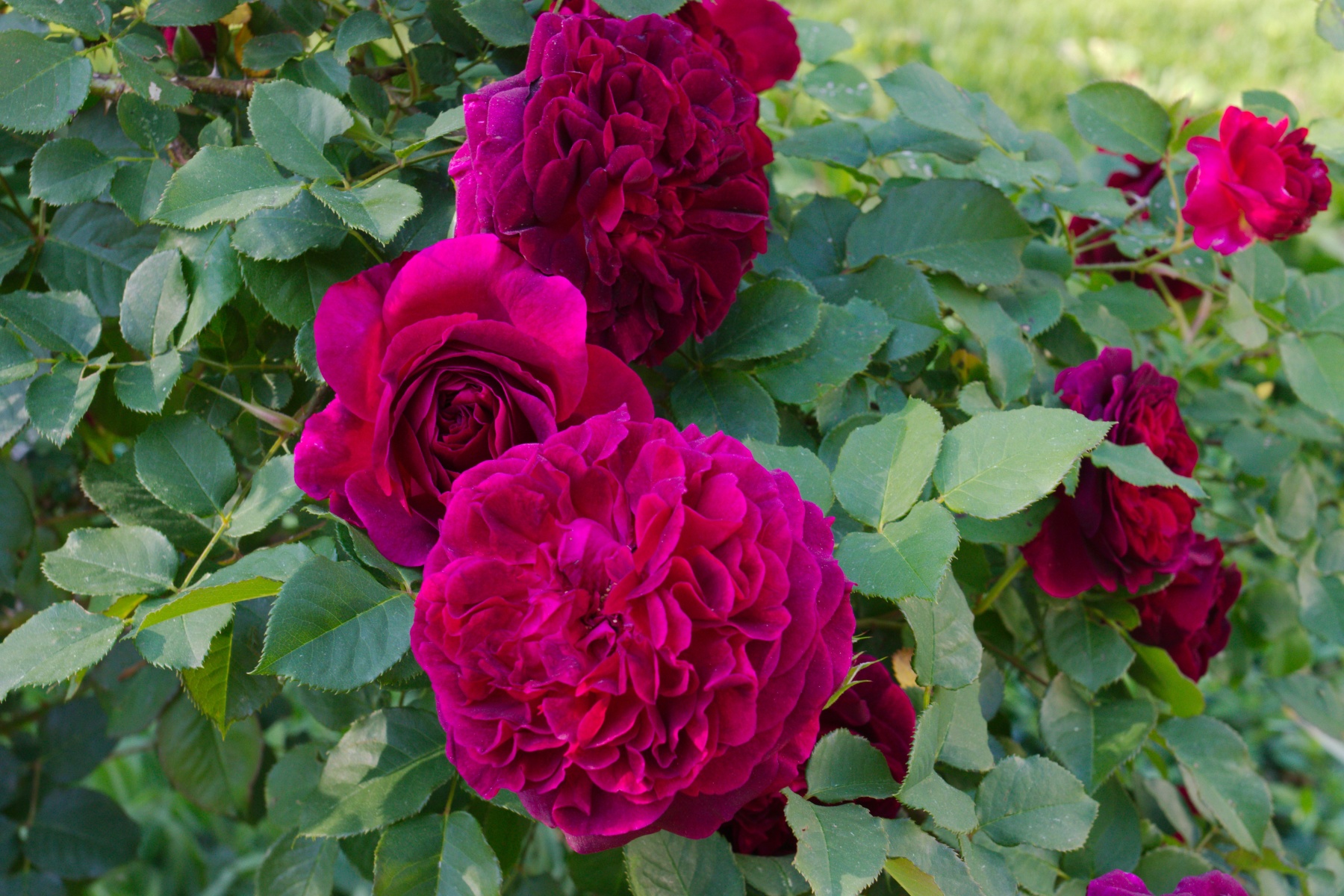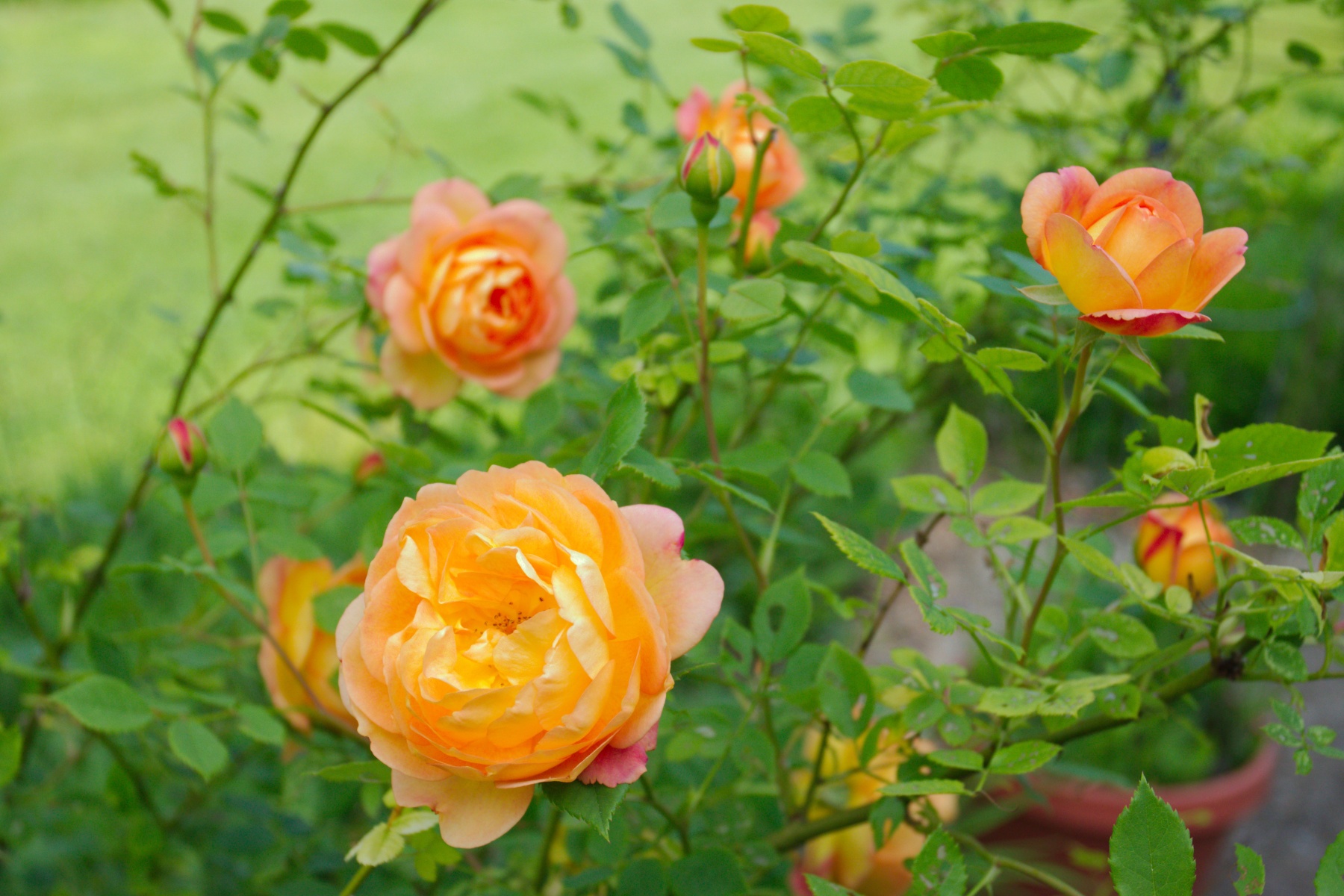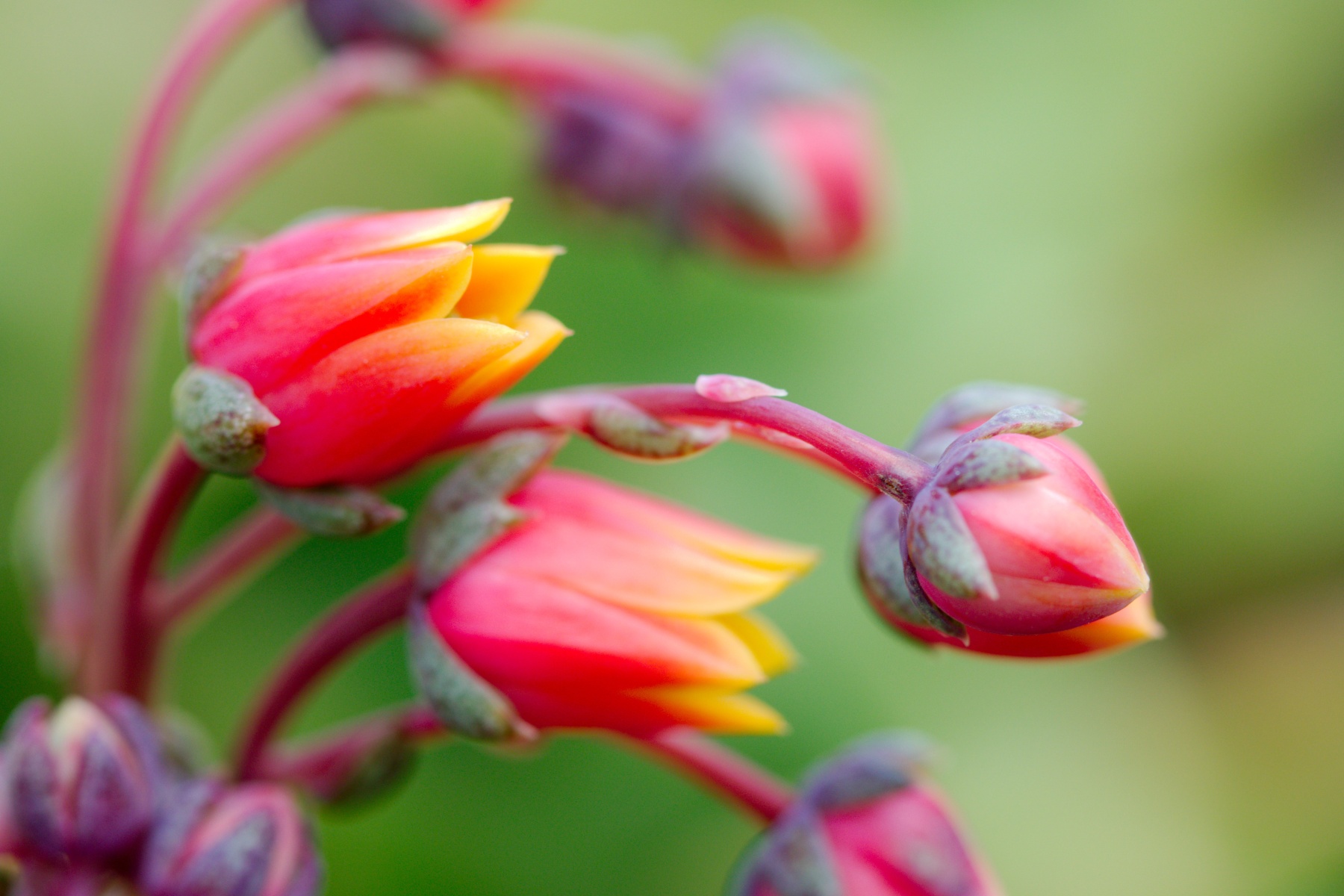
This is one of my favorite perennials. It’s commonly known as spiderwort and we have quite a few of them growing around the garden. There are varieties with lighter, more yellow leaves. There are varieties with pinker (less purple) flowers. I’ve even seen one with white flowers but so far haven’t found that one for sale anywhere. I’d definitely get one if I did. Each individual flower lasts only a short time but there are so many of them, the plant is constantly in bloom for a good while. This one is growing on our back patio and I’m not sure it’s even in a container. I think it was in a plastic grocery bag and got left there and now you’d think it was in the ground, it’s so happy. It probably should be moved into the ground, but I hat to mess with a good thing.
Flowers and Plants
Tradescantia virginiana (Spiderwort)
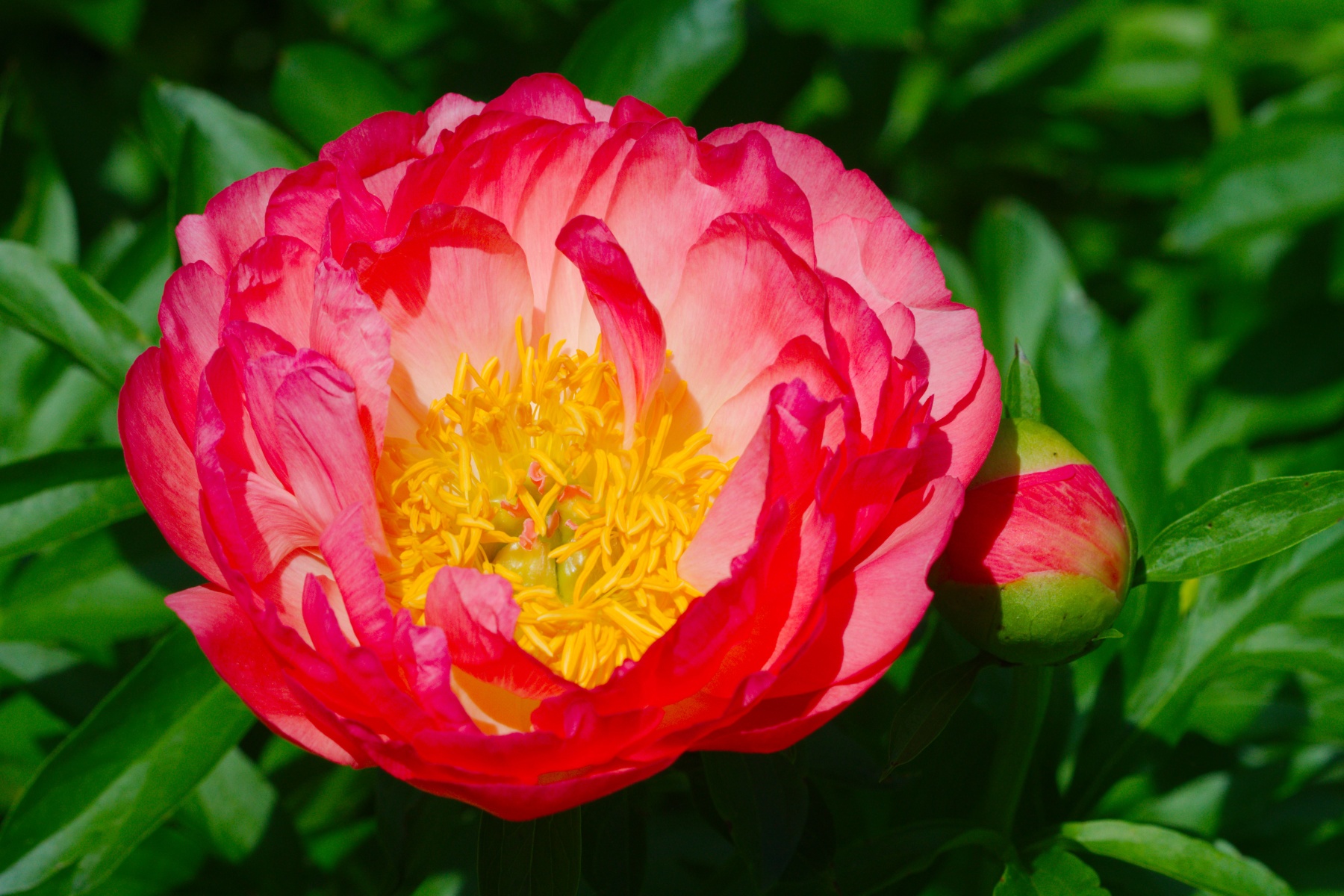
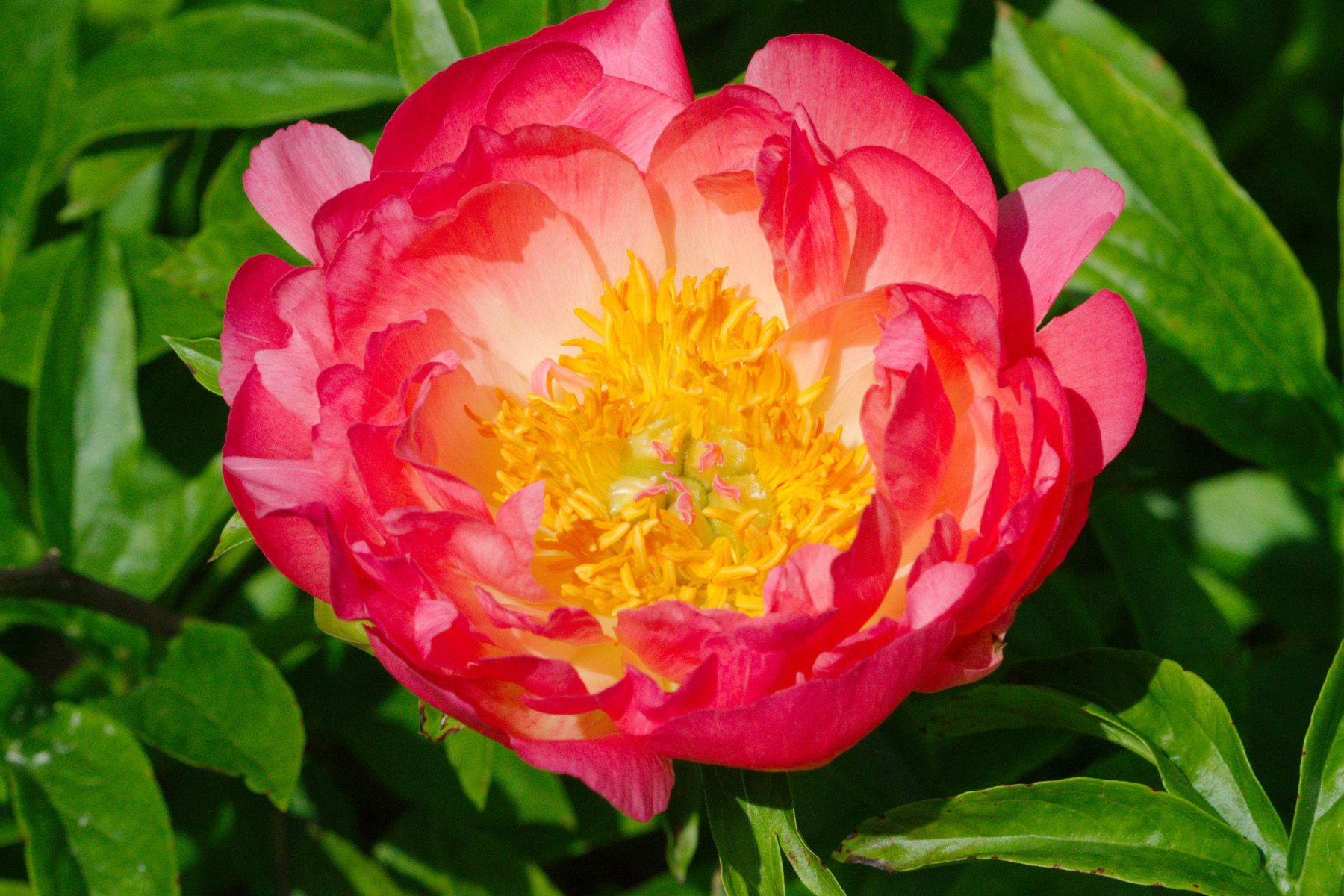
Peony ‘Coral Sunset’
Our peonies are in bloom and once again, I couldn’t be happier with these amazing flowers. They don’t have a particularly long blooming period and in general, they take longer to become really well established than some other plants but it’s hard to argue with even a few flowers like this. When I first planted them they sent up leaves and then a single bud on each of the three plants. Now I’m getting multiple flowers per plant and it should only get better as the years go by. These are especially wonderful in the morning when they are in full sun. What’s not to like?
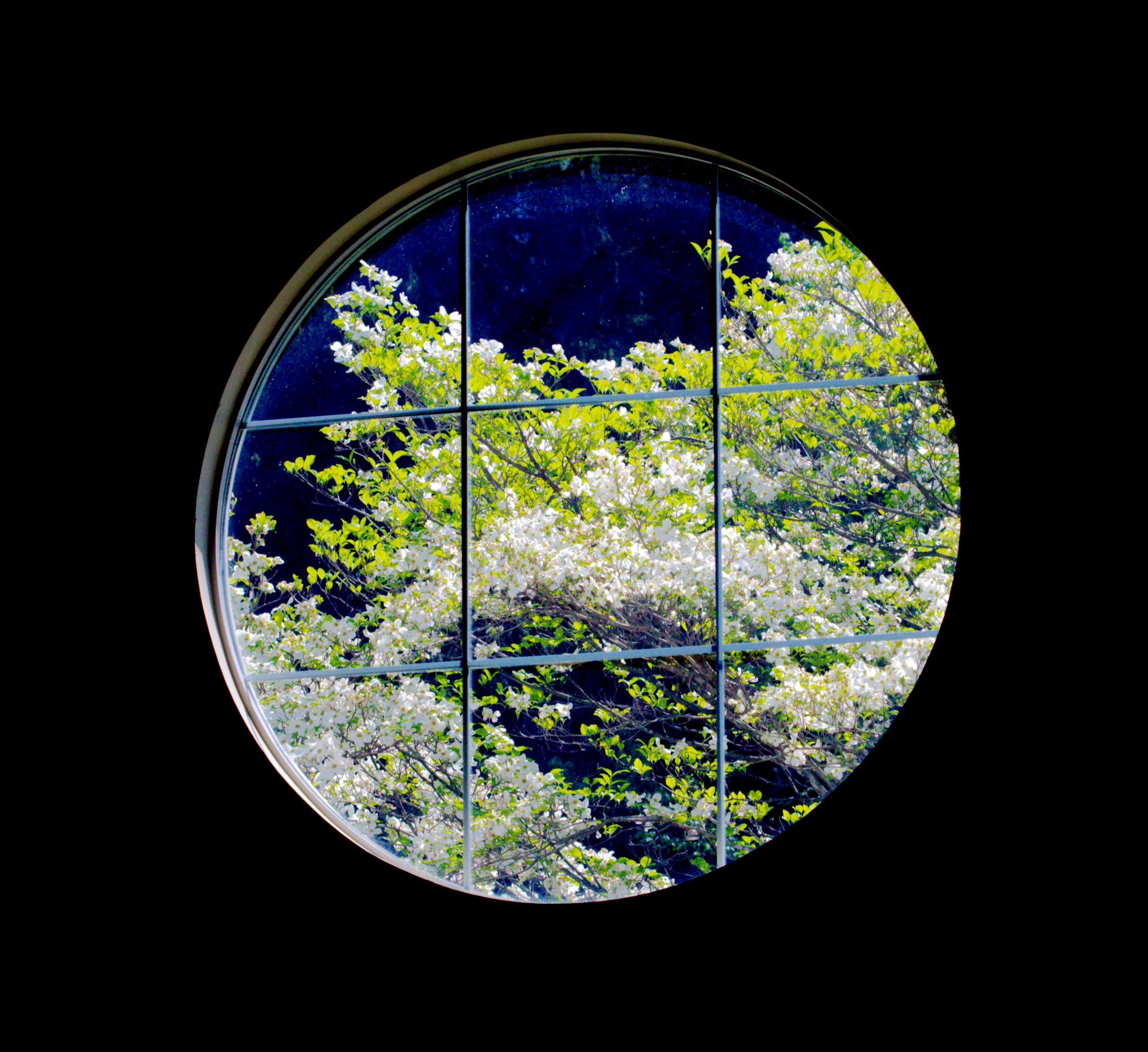
Dogwood Blossoms
This is the third year I’ve taken basically this same picture. This circular window is in the front of our church and for a week or two each year the dogwoods on the hill outside give us a show. They bloomed earlier last year and my picture was from April 16. In 2022 it was on April 24. So although the blooms this year seem earlier than previous years, the dogwoods, at least, are not. It reminded me that last year (on May 7) we went to the National Arboretum and really enjoyed their dogwood collection. I don’t know if we’ll be able to make it there in the next week or two, but that would be nice.
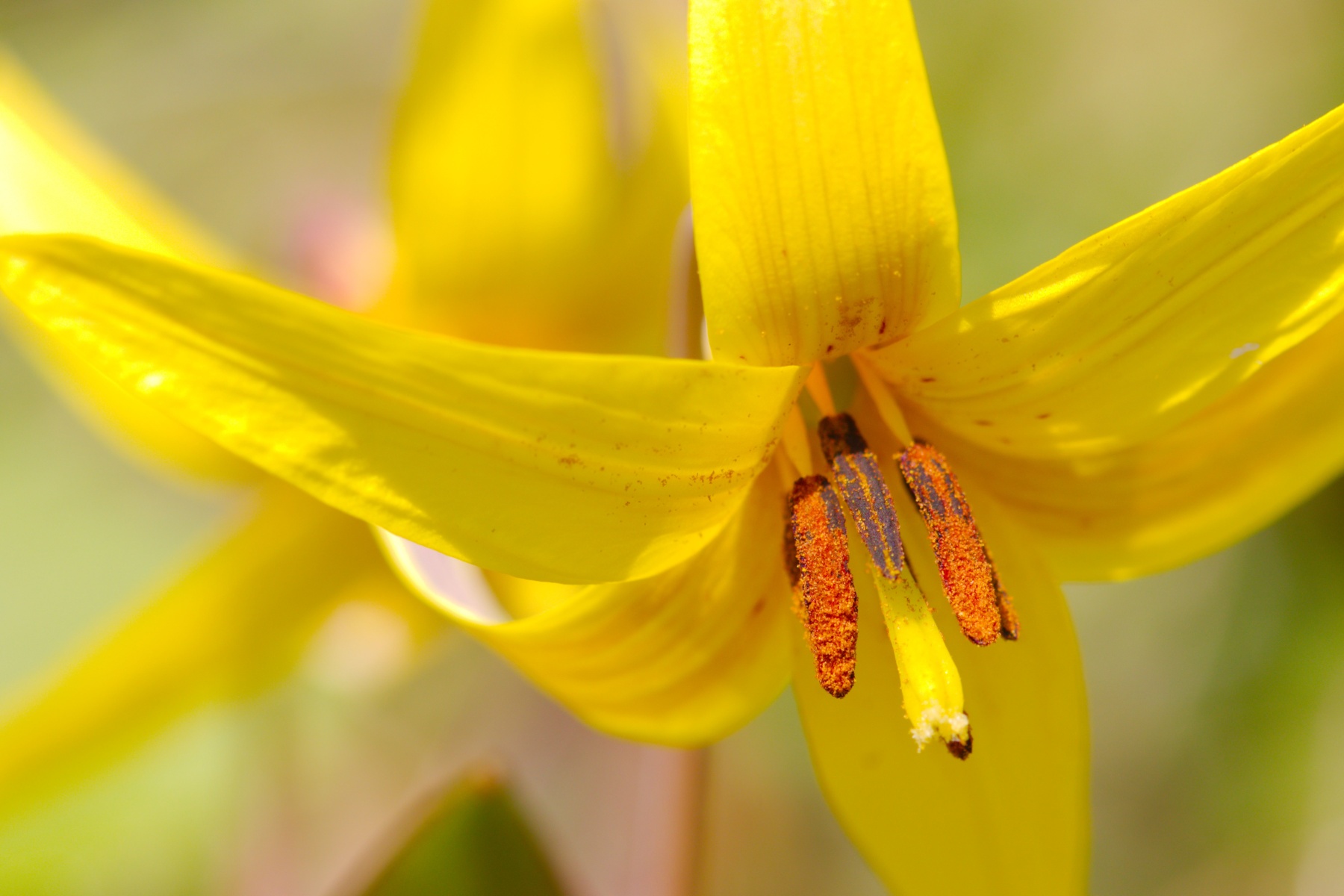
Erythronium americanum (Trout Lily)
After the sunrise and morning worship service, we stopped at home and then took brunch to Cathy’s mom. By ‘we’ I mean Cathy and Dorothy. Dorothy came down for the weekend and we were glad to have her here. Brunch was relatively simple, with quiche Lorraine, fruit salad, Kings Hawaiian rolls, orange juice, and sparkling cider. We also brought a lamb cake that Cathy made yesterday and Dorothy decorated this morning.
From there we went to Berryville Road where it touches Seneca Creek. We walked upstream along the creek and enjoyed the Virginia bluebells (Mertensia virginica) and yellow trout-lilies (Erythronium americanum). It was perhaps a week or two before the real peak but it was still pretty amazing.
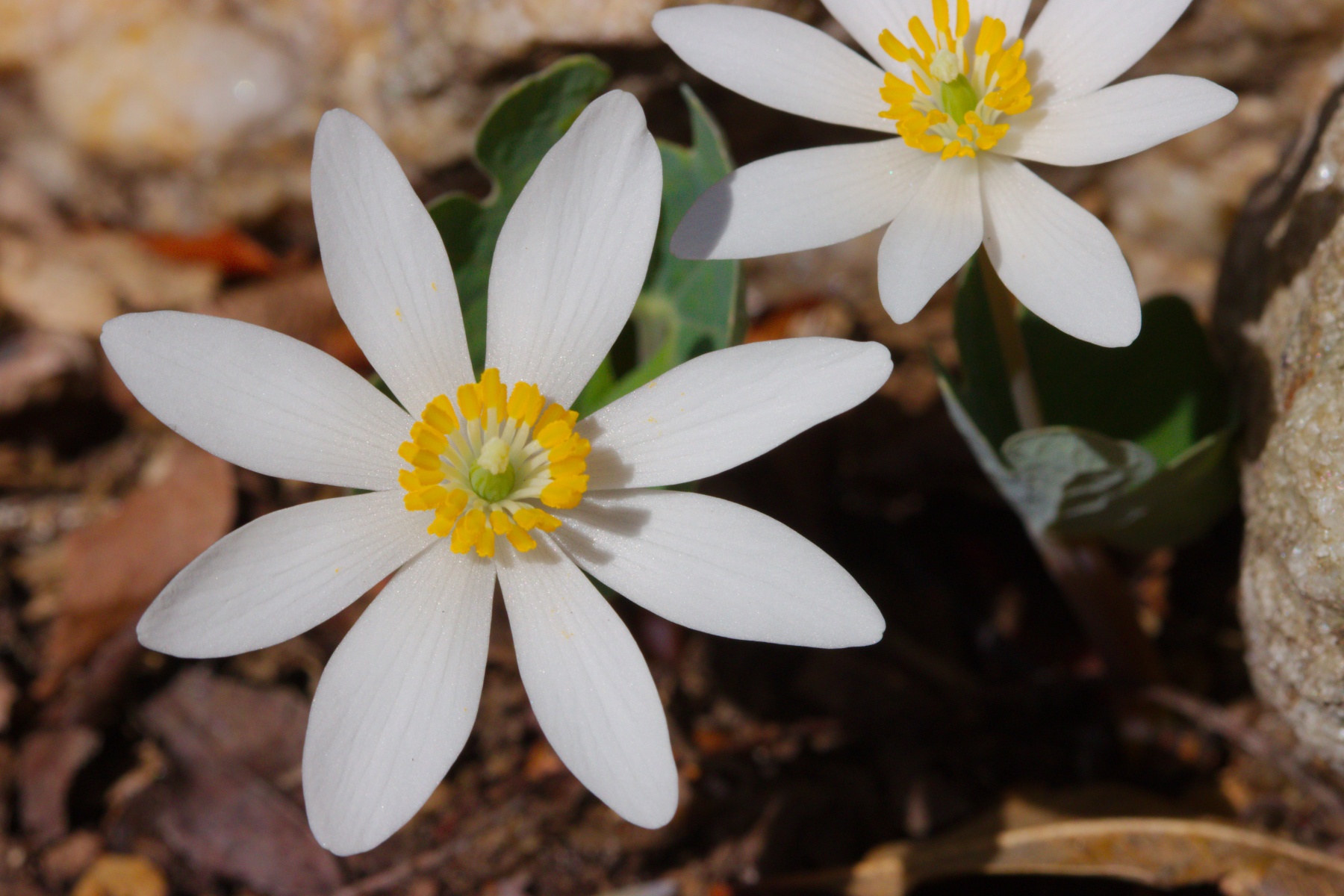
Sanguinaria canadensis (Bloodroot)
We stoped at the Agriculteral History Farm Park today and especially enjoyed their shade garden. The bloodroot (Sanguinaria canadensis) was in bloom, along with other early spring ephemerals. The Master Gardener’s demonstration garden has only just started to come alive so there wasn’t much to see there, except a large frog on the stones by the little pool.
Wa walked over to see the chickens and I stipped a few times to get pictures of a phoebe (Sayornis phoebe) and another bird I’m not sure about. It was a lovely day and, as usual, we enjoyed being outdoors.
Saucer Magnolia
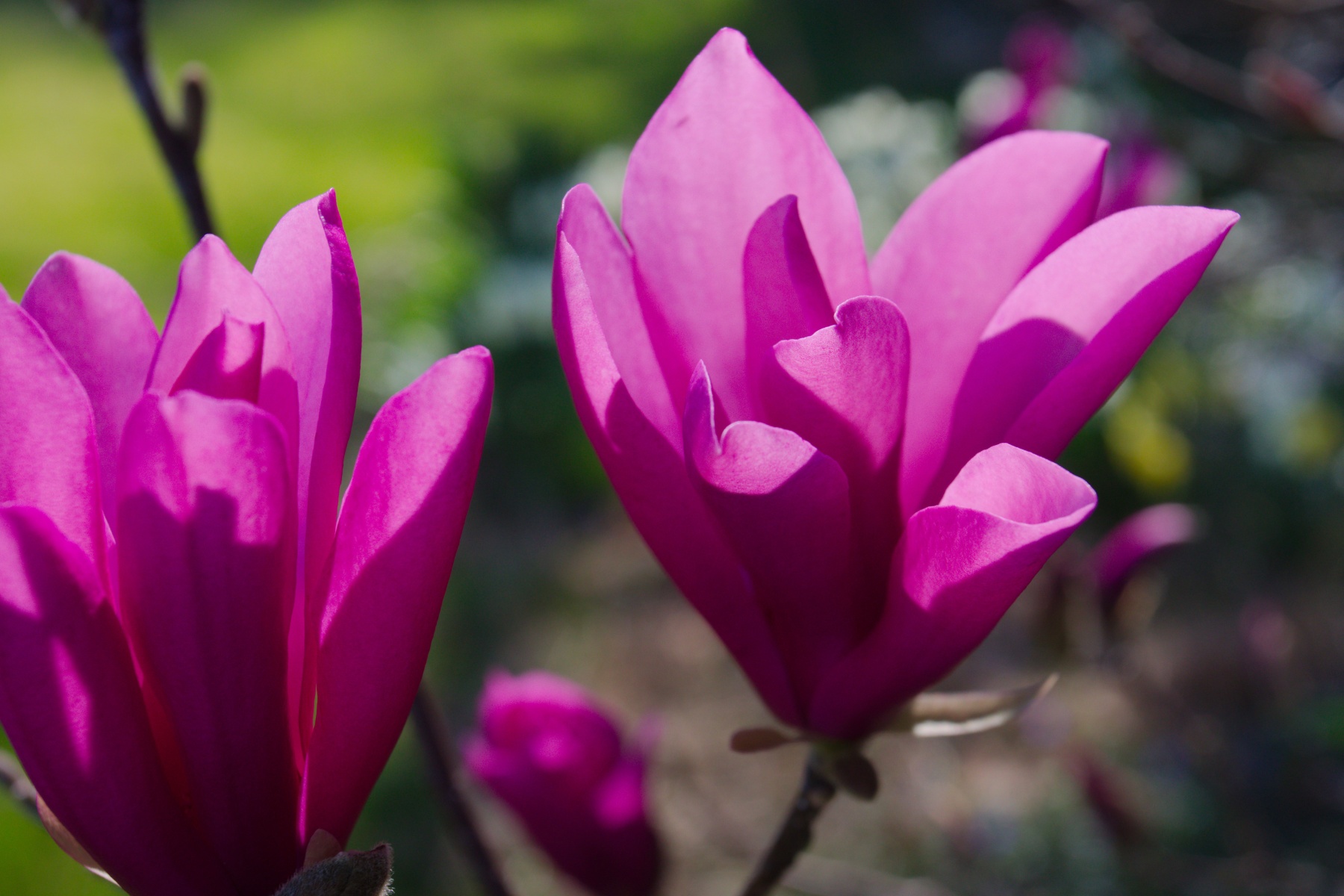
We were at Tsai-Hong’s house this afternoon and enjoyed some blooms in her garden. She has a lot of daffodils, which are wonderful, and the berries on her winterberry (Ilex verticillata) are wonderful. Nevertheless, the star of the show right now is the saucer magnolia. There are some great varieties of magnolia in the Little Girl series of hybrids developed at the National Arboretum in the mid-1950s from crosses between M. liliiflora and M. stellata. I don’t know if this is one of those or if it has M. denudata in it’s genetics, which is possible. Regardless, it’s lovely.
Seneca Bluffs
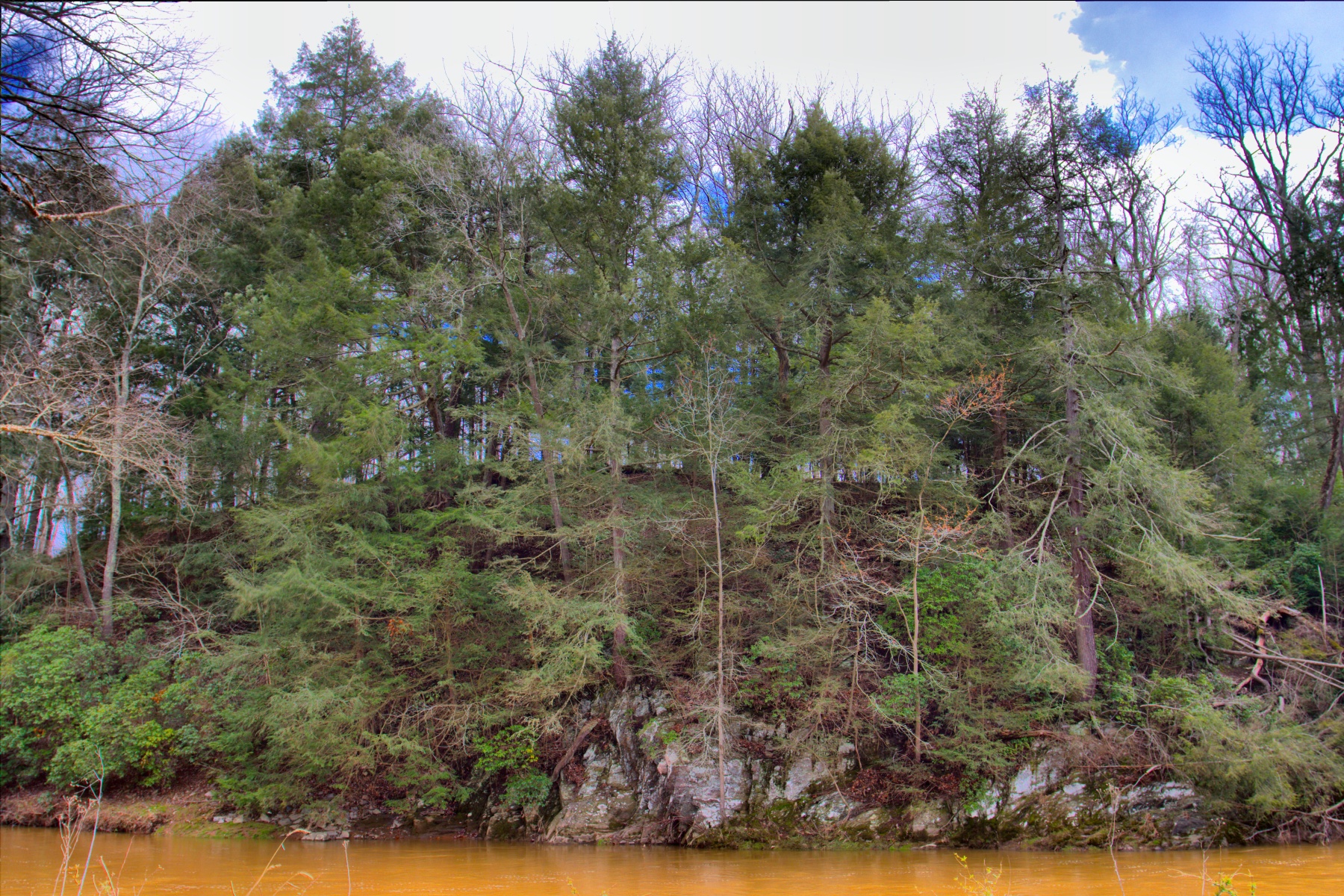
We walked out to Seneca Creek today. There were a few bluebells out but it’s a bit early for a really great show. I love the view across the creek to the bluffs where there is a grove of Canadian hemlocks (Tsuga canadensis). That’s the subject of this photo, which honestly doesn’t do it justice. I saw a animal of some sort that I think was in the weasel but I really didn’t see it well enough to know more than that. Mostly it was great to be out. The water was fairly high and we got stopped at a few side creeks where we can sometimes cross. You can also see how brown the water is. Normally it’s quite clear and a wonderful, green color.
Pavonia multiflora (Brazilian Candle Plant)
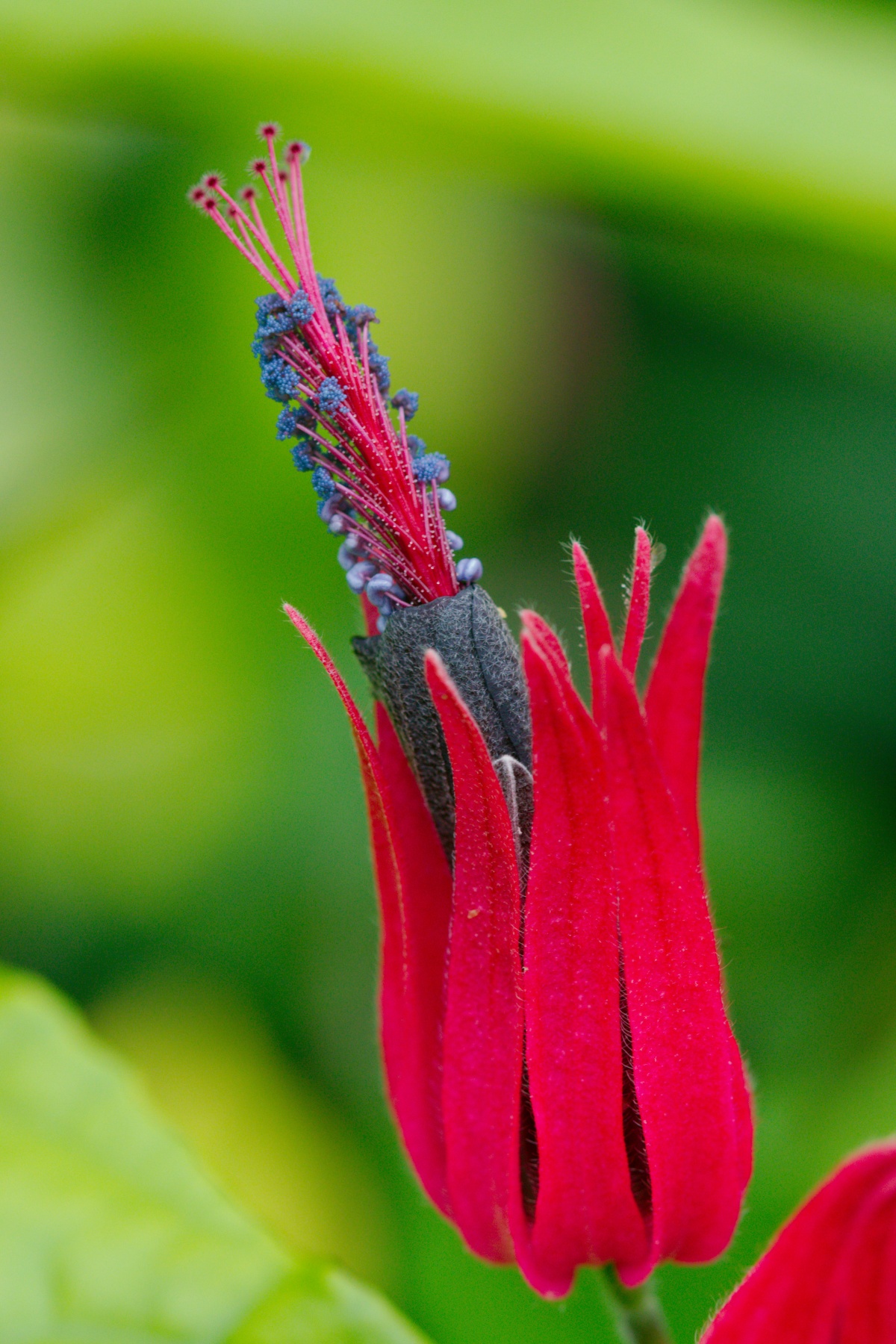
We really needed to get out today. In the winter it’s not quite as easy to find growing things, but we are fortunate to live in an area where there are places to go on days like this. Brookside Gardens, described on the Montgomery Parks Web site as an “award-winning 50-acre public display garden within Wheaton Regional Park. Included in the gardens are several distinct areas: Aquatic Garden, Azalea Garden, Butterfly Garden, Children’s Garden, Rose Garden, Japanese Style Garden, Trial Garden, Rain Garden, and the Woodland Walk. The Formal Gardens areas include a Perennial Garden, Yew Garden, the Maple Terrace, and Fragrance Garden. Brookside Gardens also features two conservatories for year-round enjoyment. Admission to the gardens is free.” We spent time both in the conservatories and walking through the grounds. This Brazilian candle plant (Pavonia multiflora) in the first conservatory has very interesting flowers.
In the outdoor gardens, most things are still dormant but we were happy to see different varieties of Chinese witchhazel (Hamamelis mollis) in bloom. The snow drops (Galanthus nivalis) were also in bloom. We went there specifically hoping to see both of those.
Winter Tree
We went for a late afternoon walk at Sandy Spring today, starting from the Friends Meeting House. It was at this Friends Meeting that my great, great grandparents meet, sometime around 1850 (they were married in 1952). One of them traveled up from Washington, D.C. and the other from Northern Virginia, which was more of an effort then than it is now (even with our traffic problems).
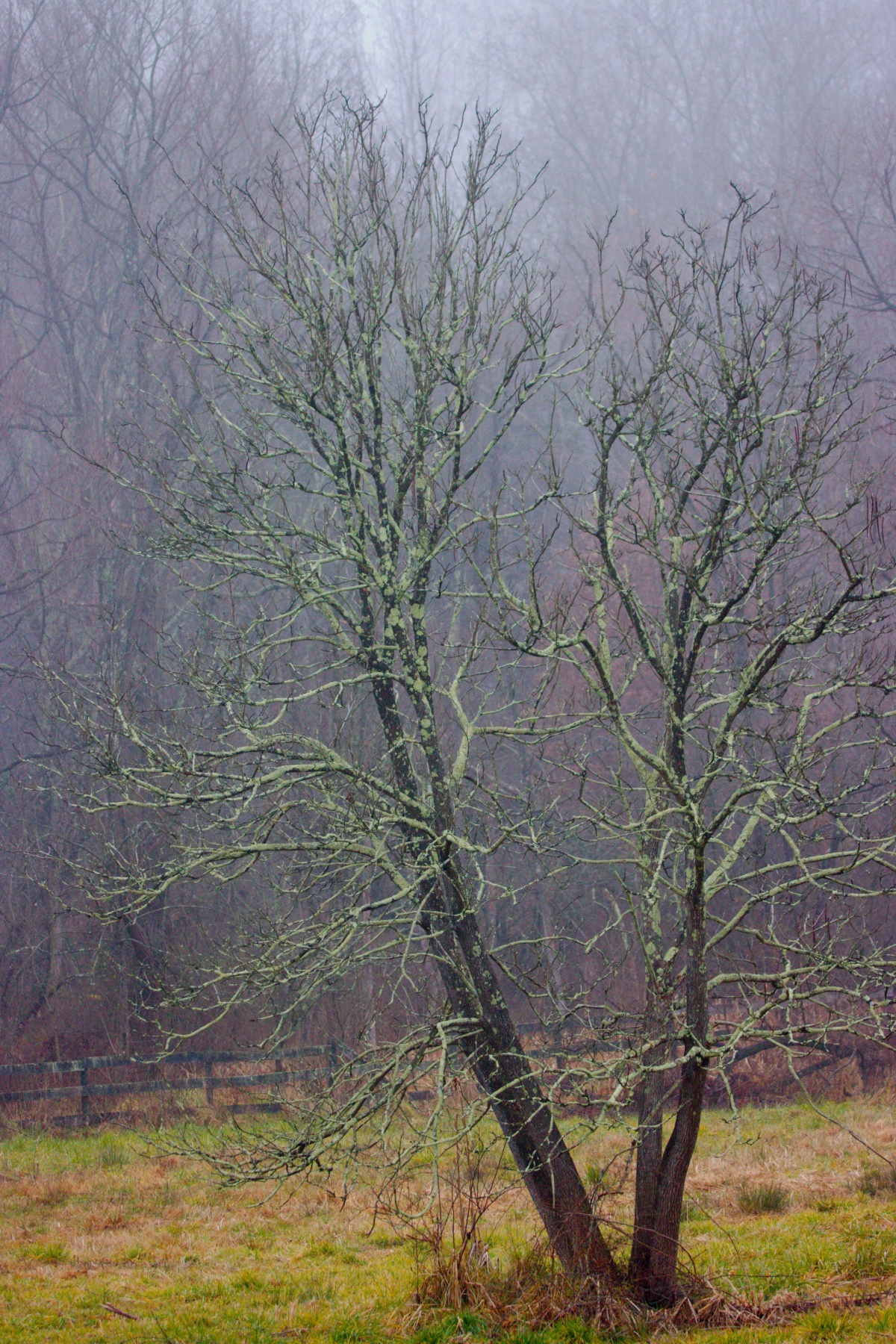
A road runs south from the meeting house across a field to the spring. We turned right just before the spring and looped around, basically circling a large field and going into the woods a little before coming back up to the spring. It was foggy day and getting foggier through the afternoon. We didn’t see many birds and I wasn’t able to photograph any. I like the way this tree looks, though, with the green lichen on it against the foggy background.
Croyden Creek Walk
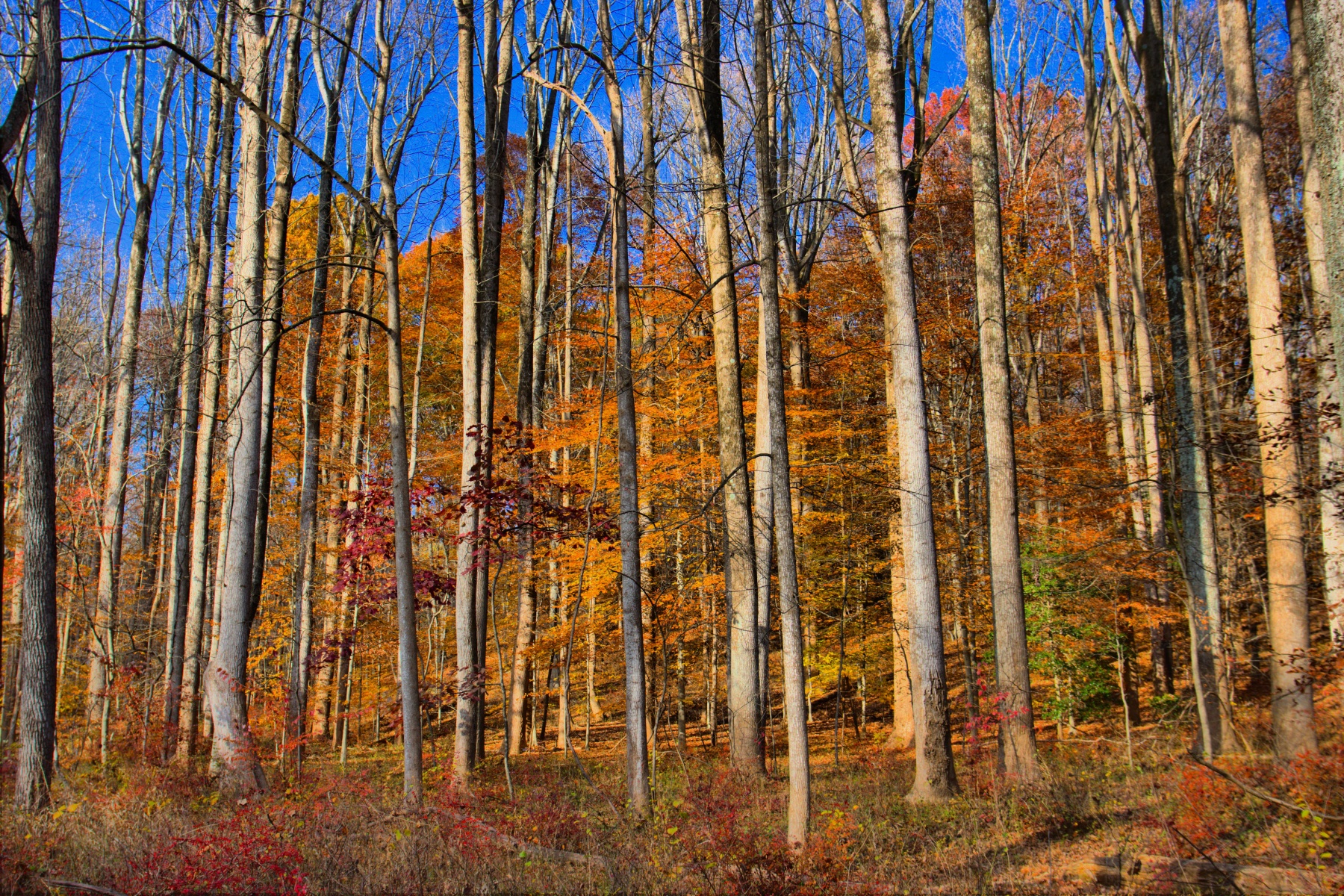
After church and a visit with Margaret, we took a walk from the Croyden Creek Nature Center. We headed down to the creak and went downstream towards where Croyden Creek joins Rock Creek, just above where Baltimore Avenue crosses Rock Creek. Then we turned uphill to the north and followed a trail that loops around close to Norbeck Road and came back to the old cut for Avery Road, when is used to go through this way. We continued upstream from there past a small pond and returned by way of the civic center fields. It was a very pleasant walk. Most of the leaves were down, especially on the tulip poplars, which are the dominant tree in these woods. But there was enough color that it was still quite pretty.
Viburnum acerifolium (Mapleleaf Viburnum)
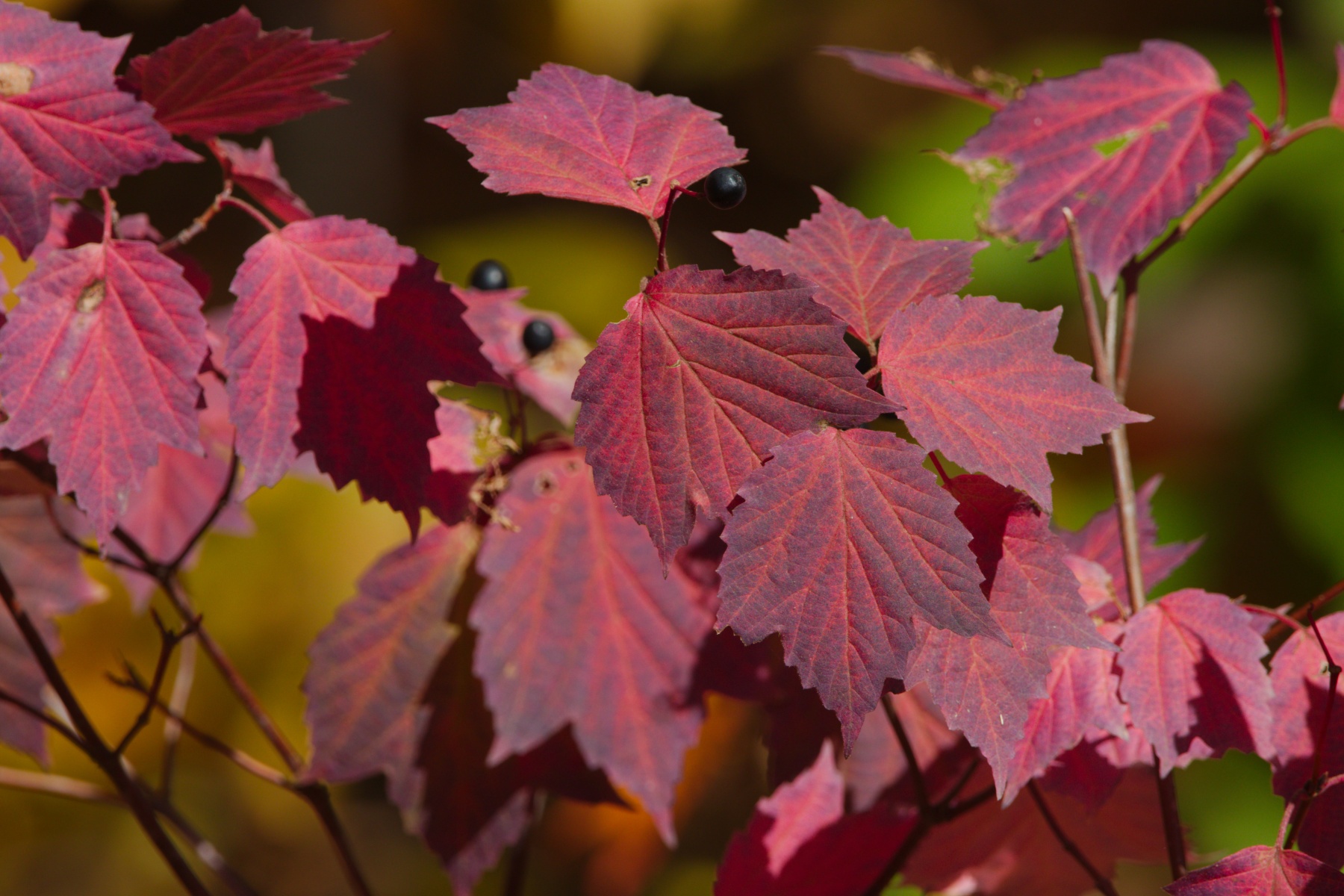
We went for a walk at Lake Needwood today. I didn’t get many pictures. We did see a few birds and I got a few of a great blue heron in a tree but they aren’t all that good. We saw quite a few of these mapleleaf viburnum (Viburnum acerifolium) growing in the woods. It’s considerably more noticeable this time of year because of it’s striking fall color. At first I thought they were small maples but the dark blue (almost black) berries gave them away. Nice woodland shrubs. It was a popular day to be out and there were lots of people on the trail.
At The General Omar Bradley Oak
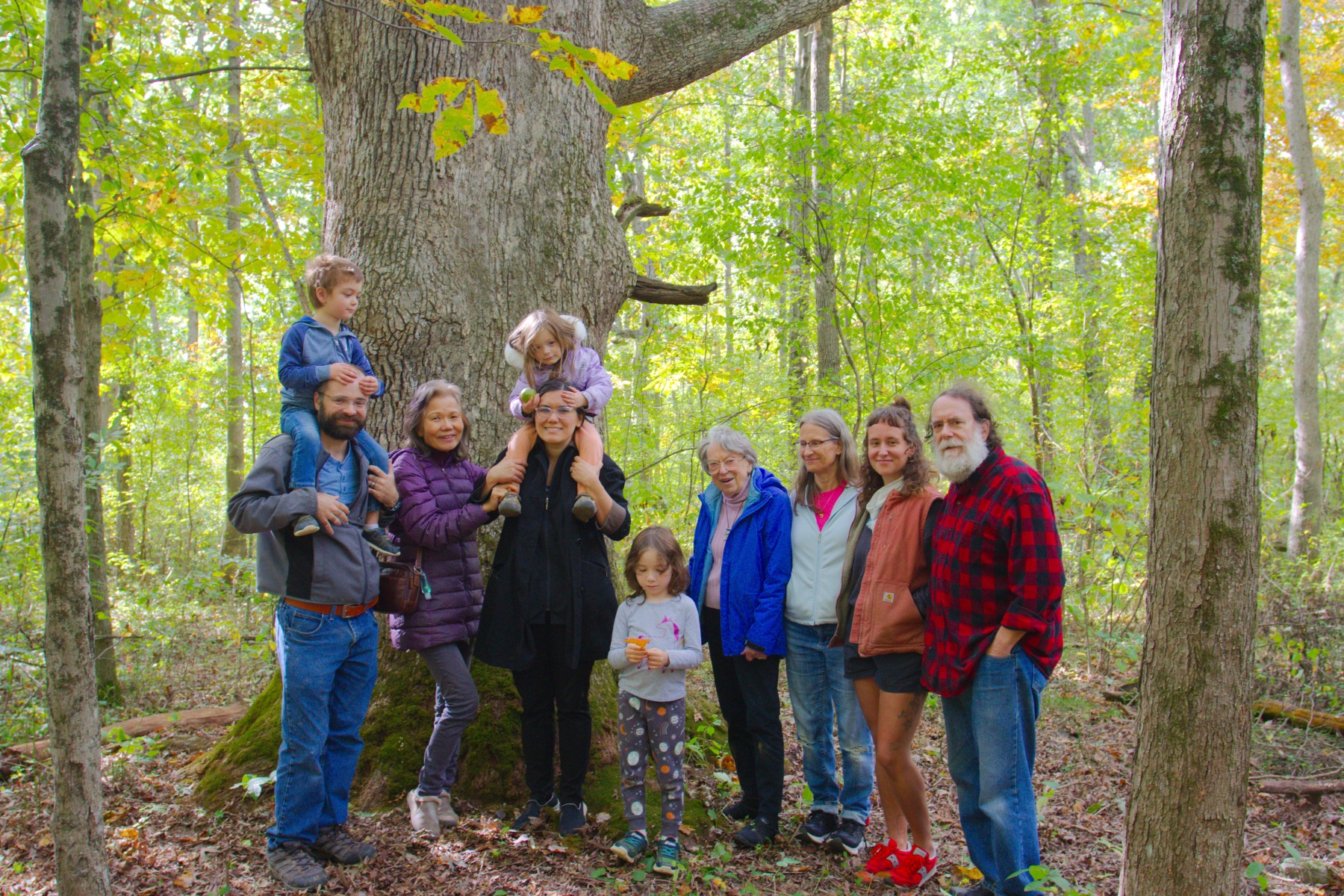
We had a beautiful day at the farm with most of the family. The weather was amazing and it was really nice to be together. We walked to the big oak tree. Our neighbors named it the General Omar Bradley and we’ve adopted that name ourselves. We don’t know how old it is but it’s almost certainly over 200. The three kids each enjoyed sawing firewood (not from the oak) and we had a nice meal. We also walked in the orchard to see all the clearing work that’s been done.
Anemone
We took a brief trip to the Agricultural History Farm Park today. After wondering through the Master Gardeners demonstration garden and taking a few pictures, we went to the dahlia garden. We were fortunate enough to run into Nick Weber, who grows both dahlias and roses. It was great to see him and get caught up on things that are going on.
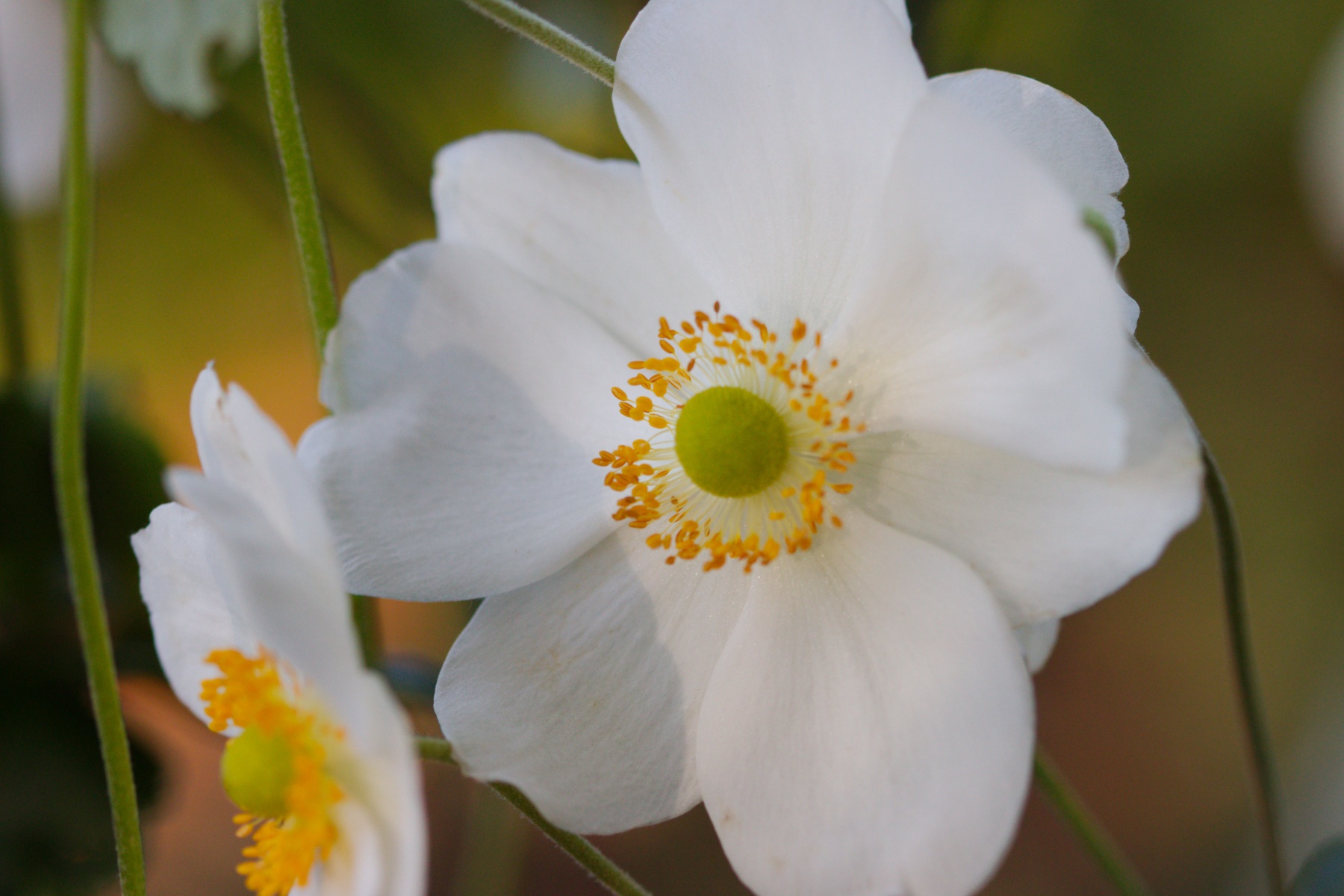
This is an anemone from the Master Gardeners garden, and I think they are beautiful. We haven’t had a lot of success with them, but I keep trying.
Dionaea muscipula (Venus Flytrap)
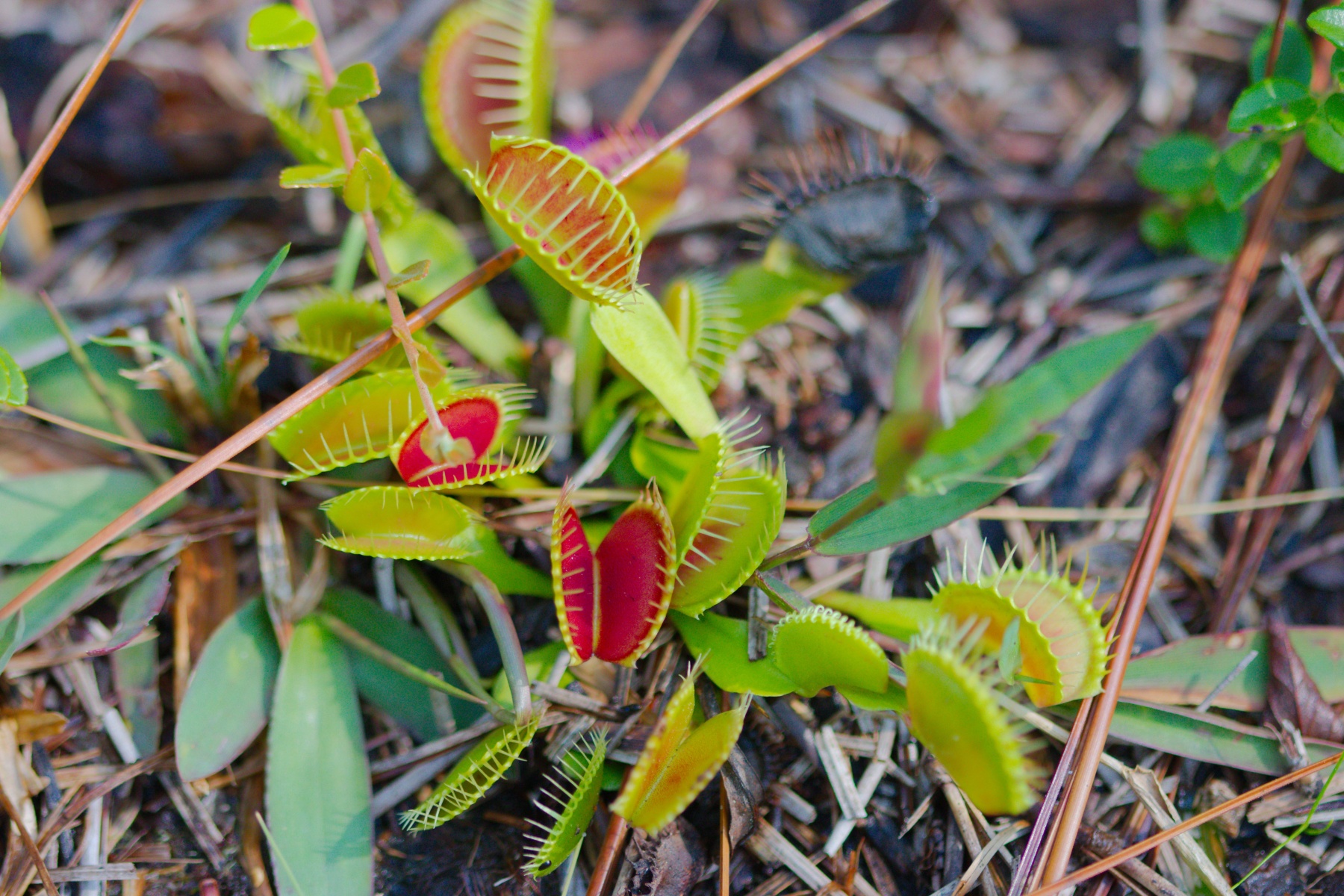
A few of us went to the Green Swamp this morning. As usual, the humidity was a bit oppressive but it was actually cooler than it’s been most years and it wasn’t until we were nearly back to the car that I was starting to feel particularly uncomfortable. The trail goes through long-leaf pine savanna for the most part, but areas of that are separated by pocosins (evergreen shrub bogs). In the past there have been boardwalks through those but this year they were gone. I found out later that the preserve was technically closed, although there were no signs to that effect anywhere that we saw. The reason was that the boardwalks were out, having been destroyed in a wildfire. We managed to get through them and found four of the 14 carnivorous plants known to grow in the swamp. The four we saw were the Venux flytrap (Dionaea muscipula) shown here, along with a few sundews (Drosery species), yellow pitcher plant (Sarracenia flava), and purple pitcher plants (Sarracenia purpurea subsp. venosa). All in all, I’d say it was a successful outing.
Our Back Garden
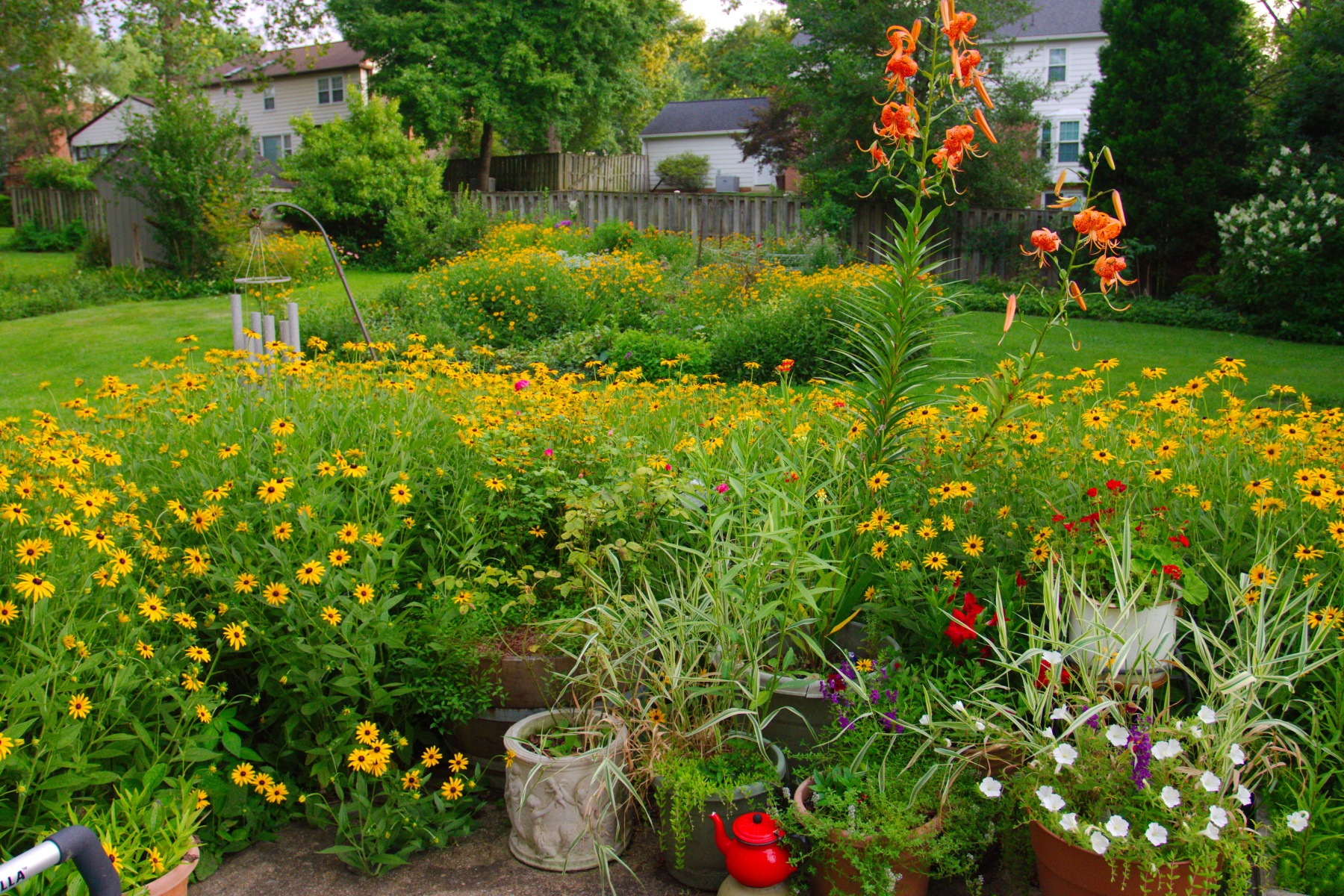
This is a good time of year for our back garden. If you don’t like orange or yellow, you might not like it as much, though. We have a few black-eyed Susans. The tiger lilies are doing well. This is a self-seeded plant that seems to be happy where it landed. You can just make out the half-barrel with some pink buds on it. That’s a rose called ‘Gabriel Oak’ and there is another rose in front of it, called ‘Rose de Rescht’ that I almost killed but which is doing pretty well again, planted in this heavy, concrete pot. The bright read below the tiger lily is a Mandevilla. Other plants include butterfly weed, geranium (Pelargonium, actually), various Sedums, and an ornamental grass, among other things.
McKee-Beshers Sunflowers and Birds
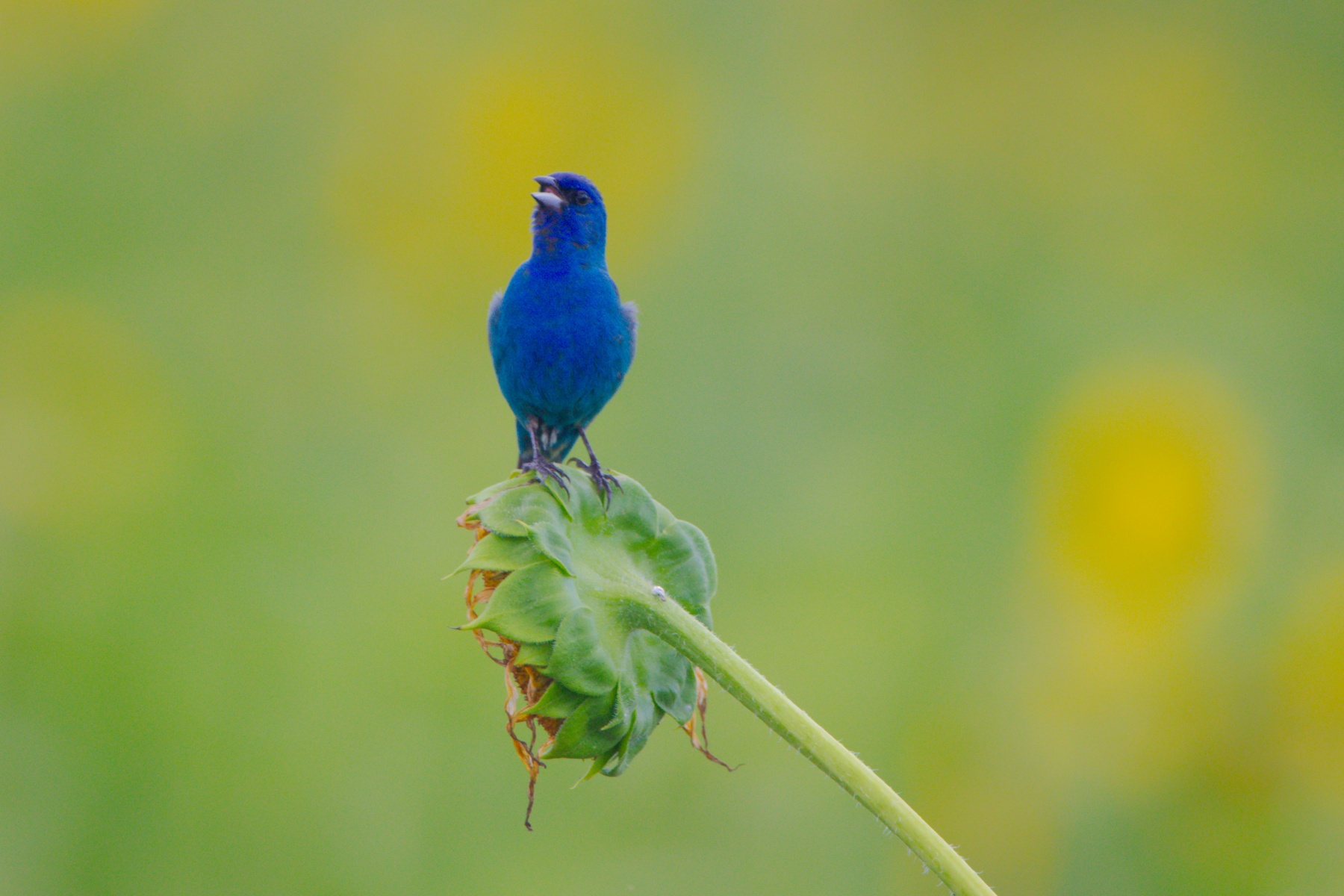
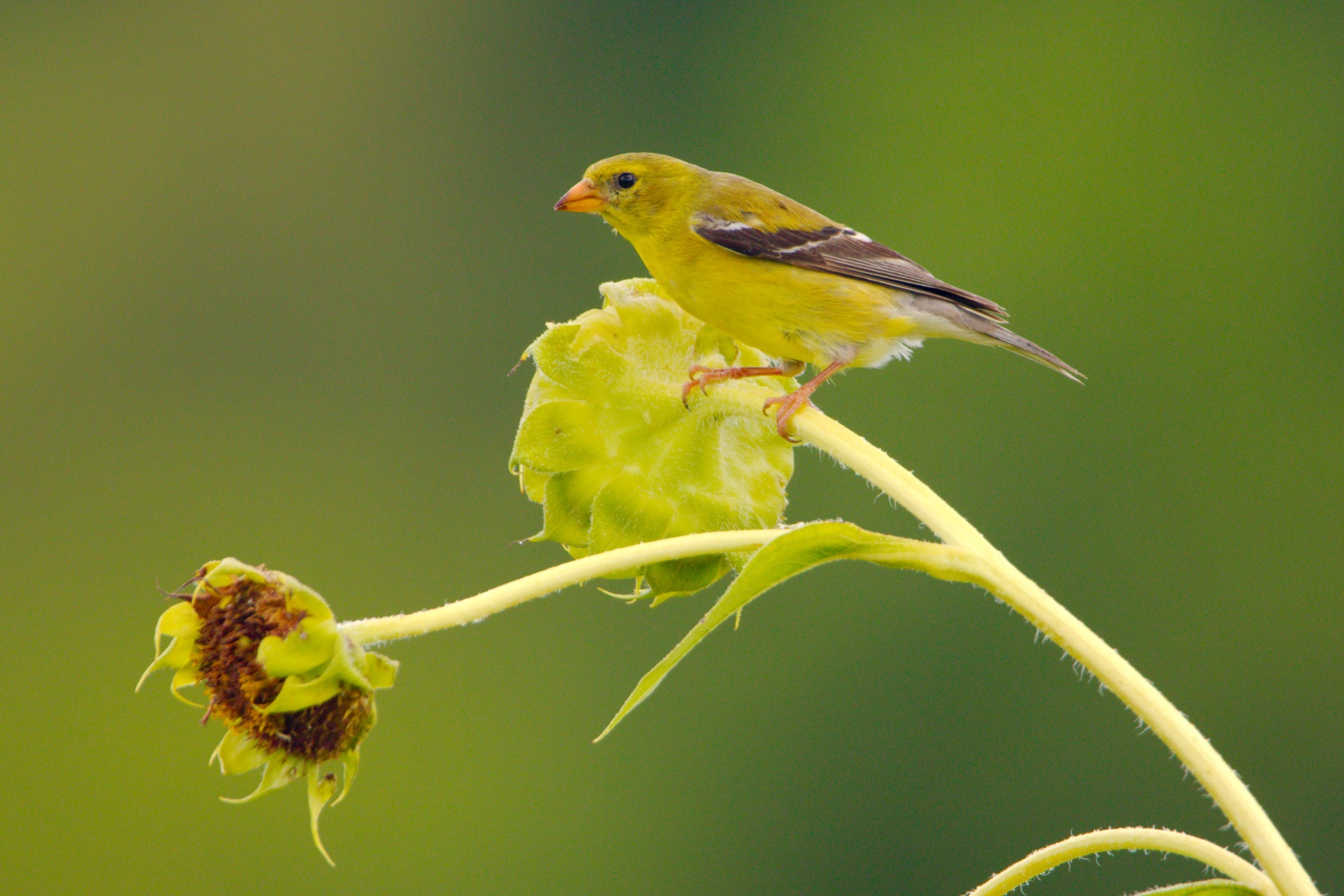
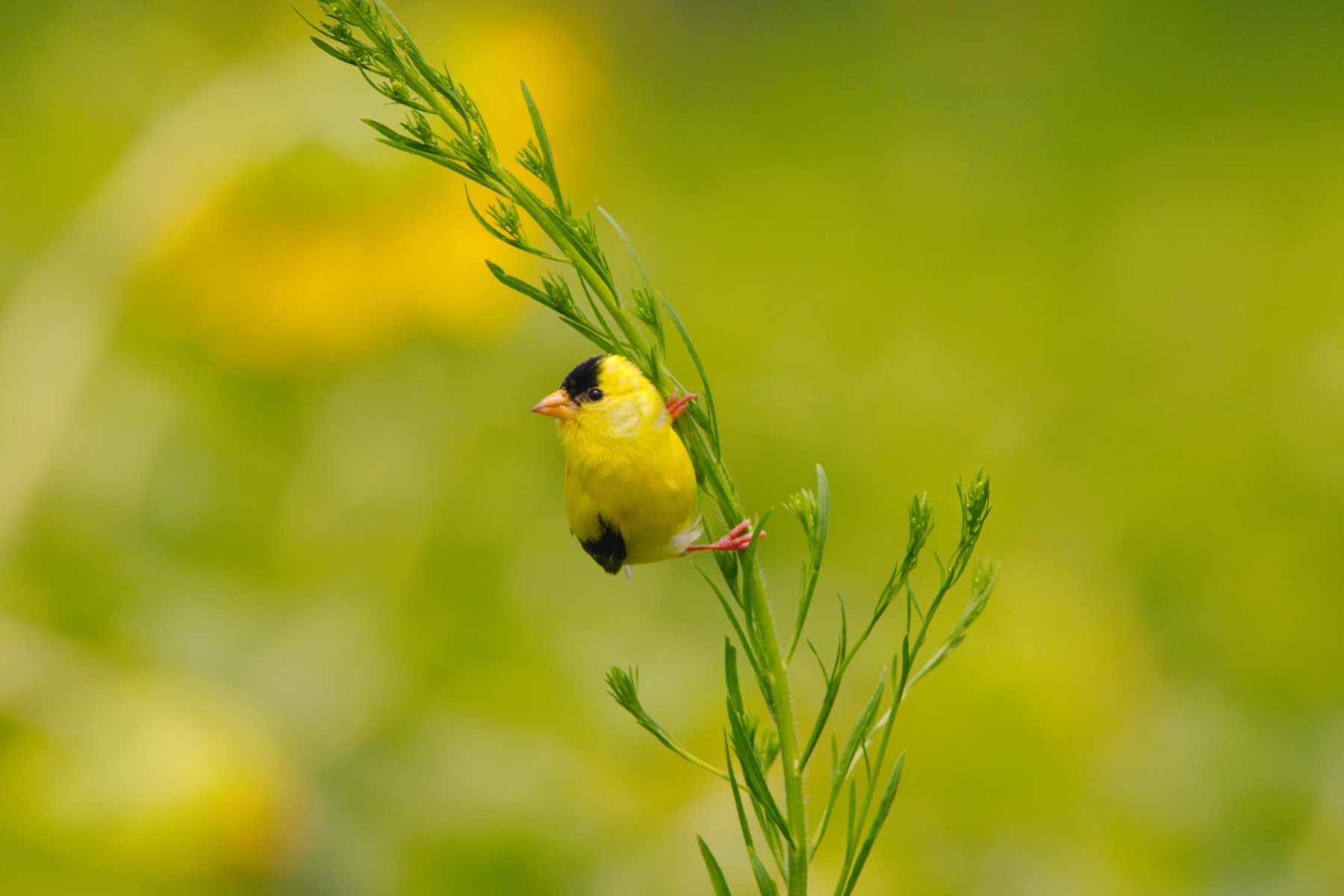
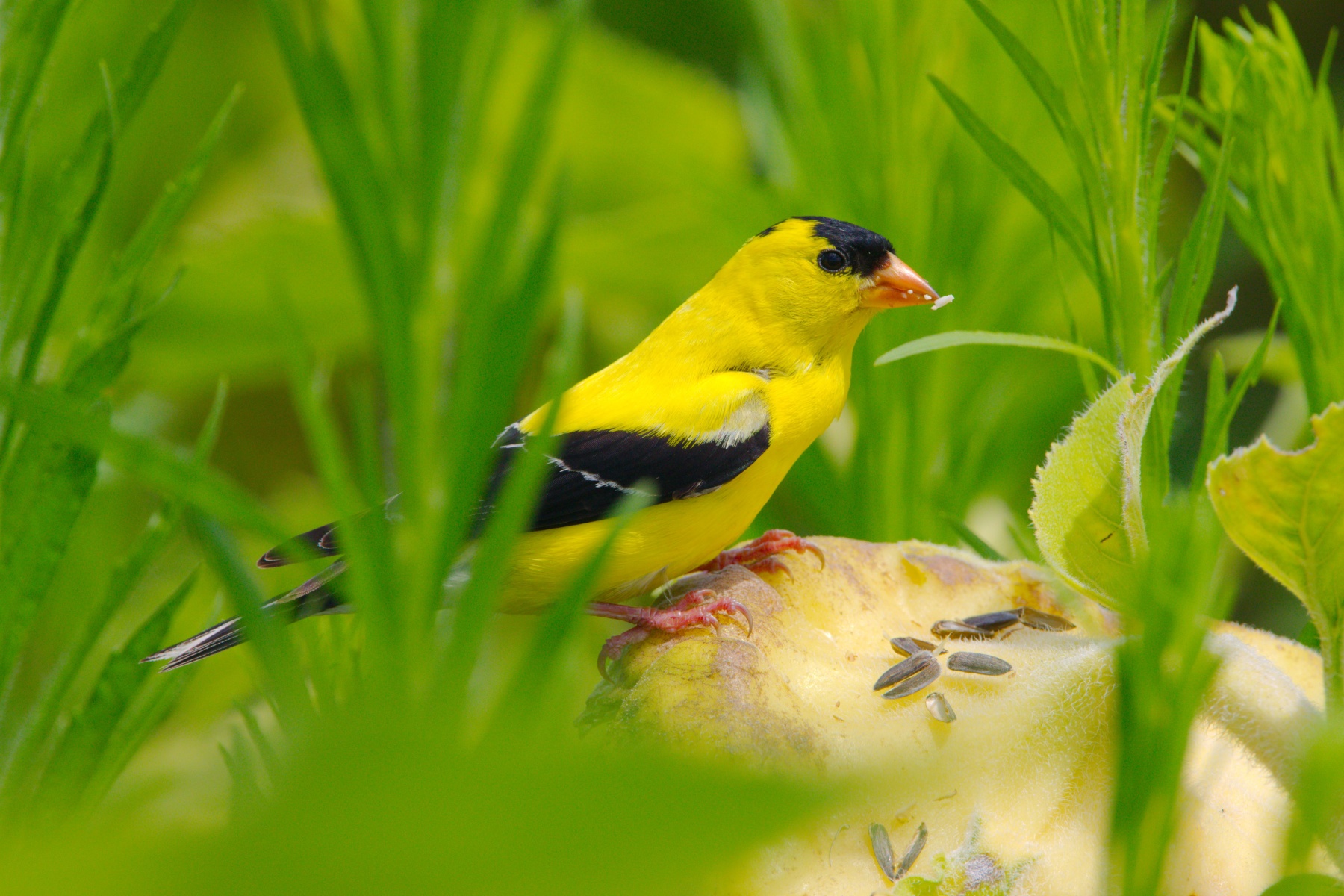
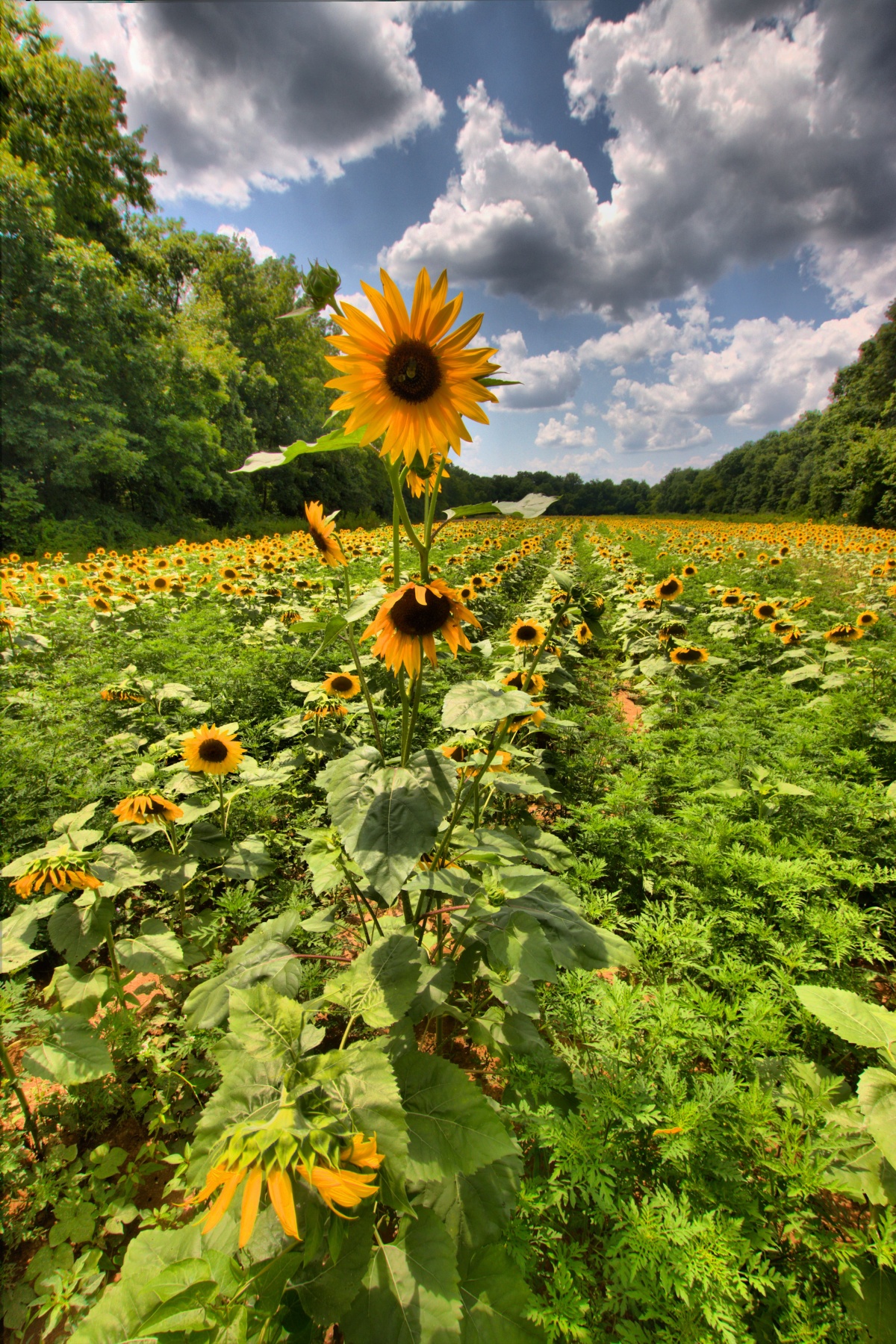
If the Kenilworth Aquatic Gardens are too much of a trek for you but you want flowers and birds, you could do worse than heading out River Road to the McKee-Beshers Wildlife Management Area. Timing your visit is a little difficult because the best time to go varies from year to year and also depends on what it is you want to see. If you just want sunflowers in bloom, then you need to go a little earlier than if you’re mostly interested in seeing birds. The two ‘seasons’ overlap but there will be more birds when the flowers have faded a bit and the seeds are more ripe. For me, I think I hit a pretty happy medium. In field number 1, the flowers were a little past and that’s where I got the pictures here of the indigo bunting (Passerina cyanea) and lots of pictures of American goldfinches (Spinus tristis).
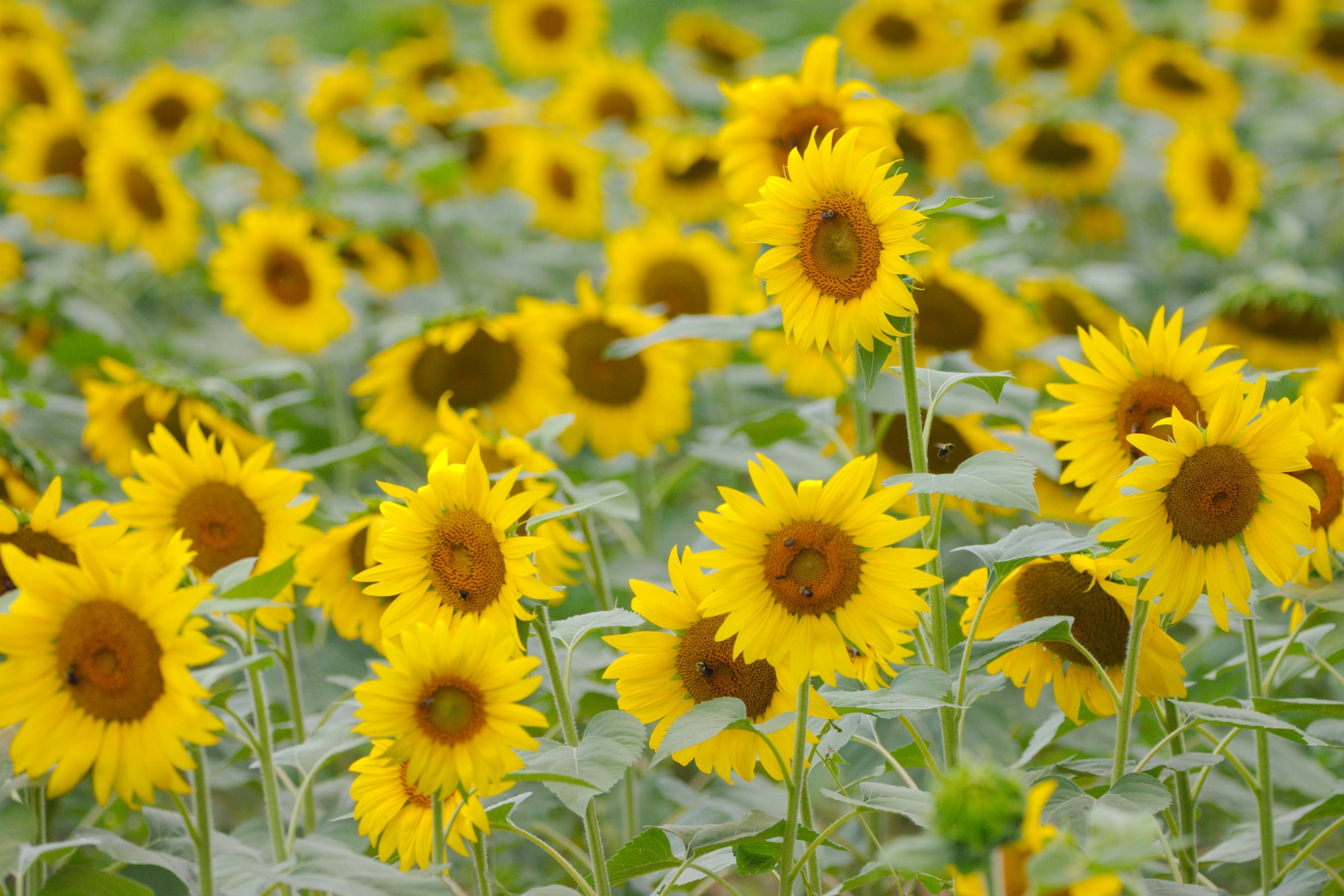
Then, walking further from the parking area to field 4, I found the flowers were in more full bloom. They were all facing to the east and the road to them is to the west. From the road it looked like there were no flowers. But I walked all the way to the far end of the field (about a quarter mile) and back on the other side. It was worth it, as from that side, there were plenty of flowers to be seen. They were much shorter than I’ve seen them in previous years. I’m not sure if that’s a function of the sunflower varieties planted or has more to do with how much rain we get while they are growing.
Kenilworth Aquatic Gardens
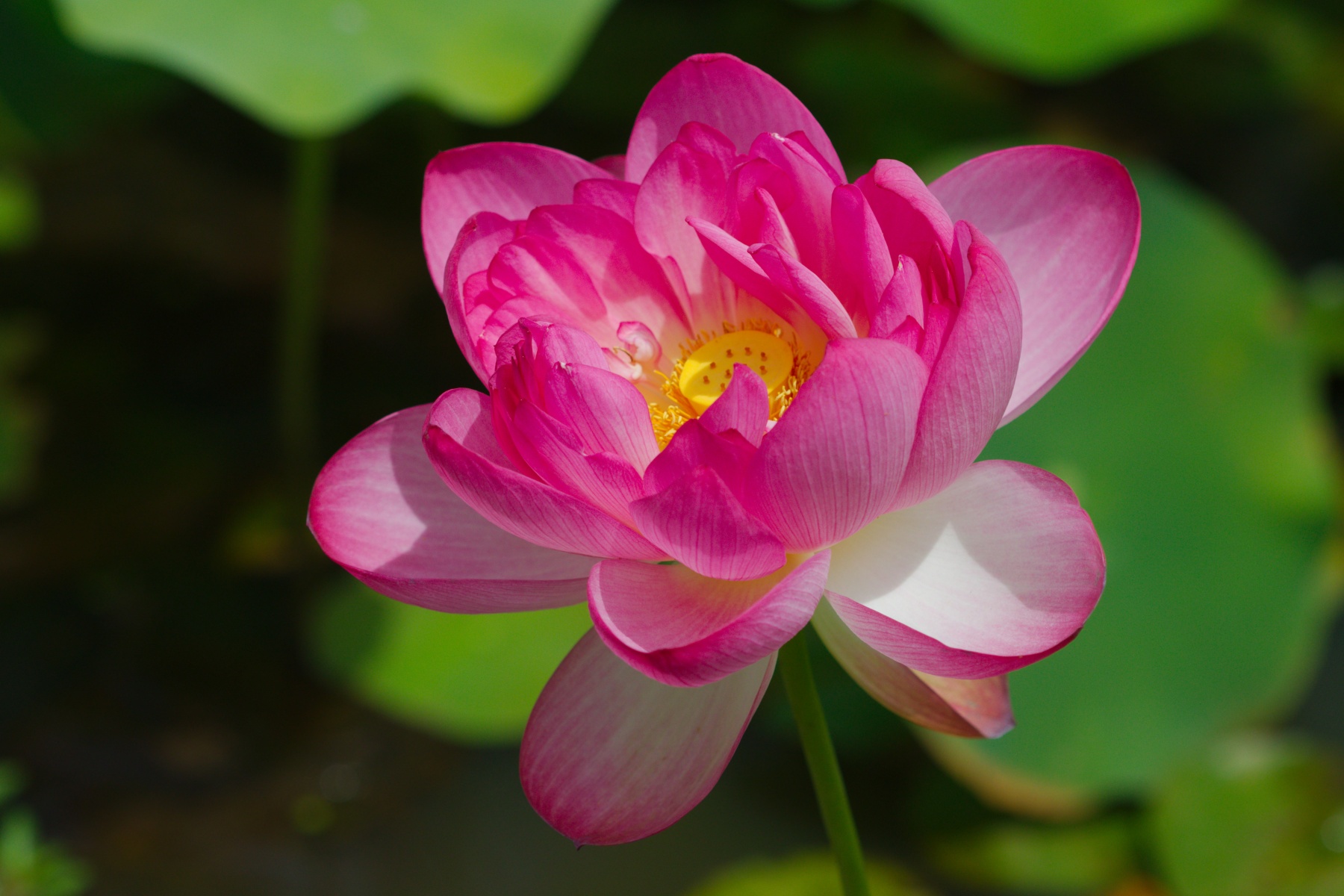
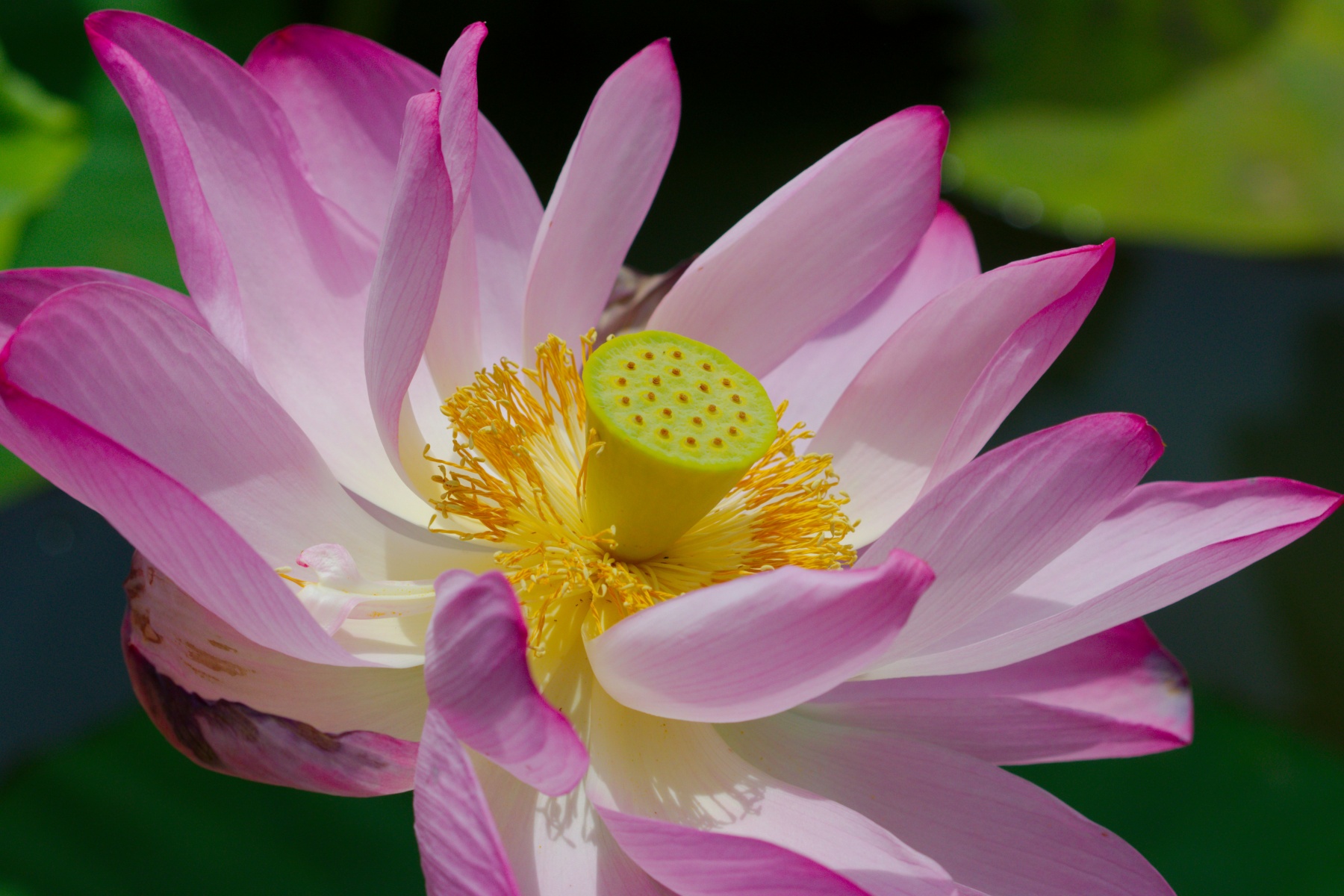
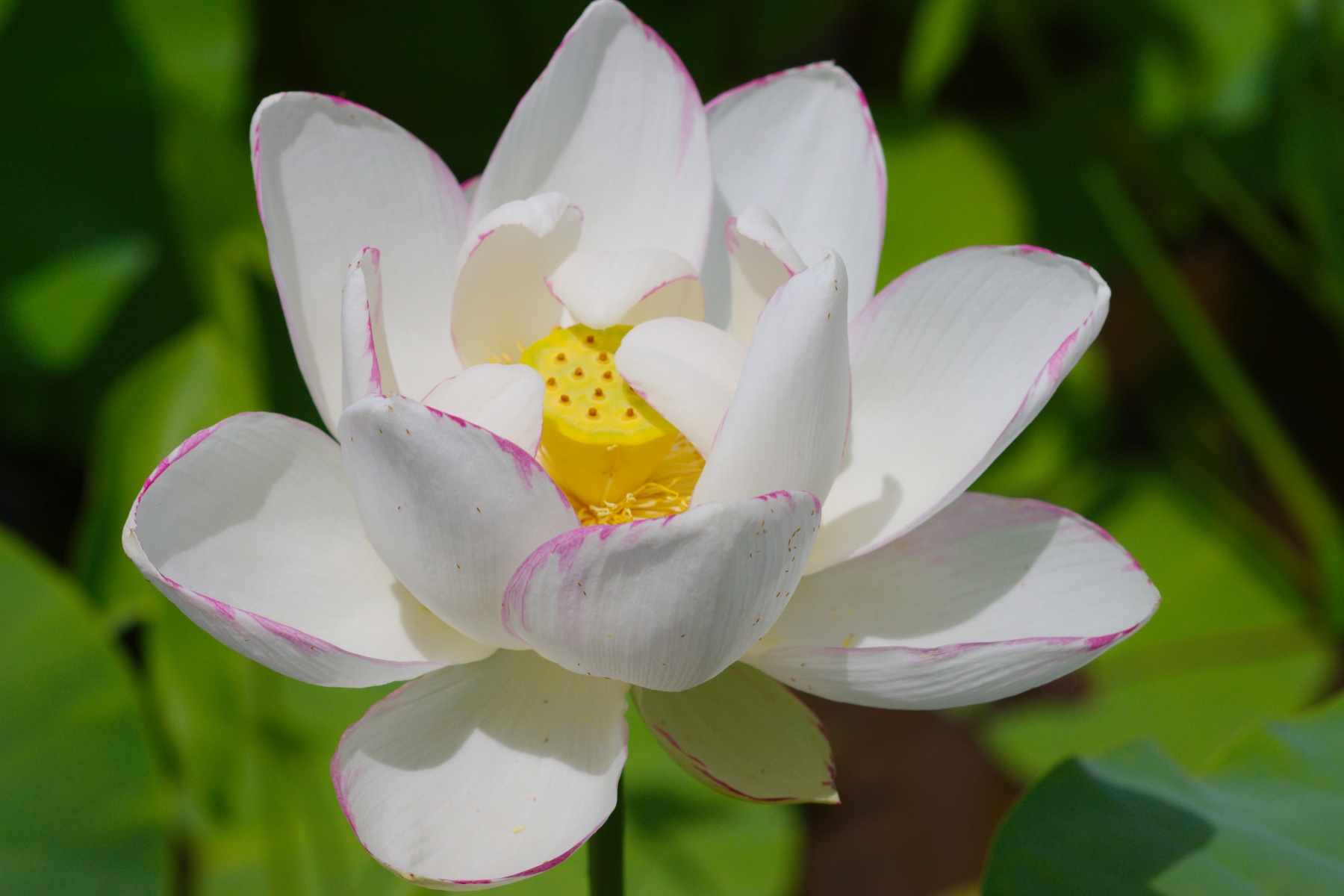
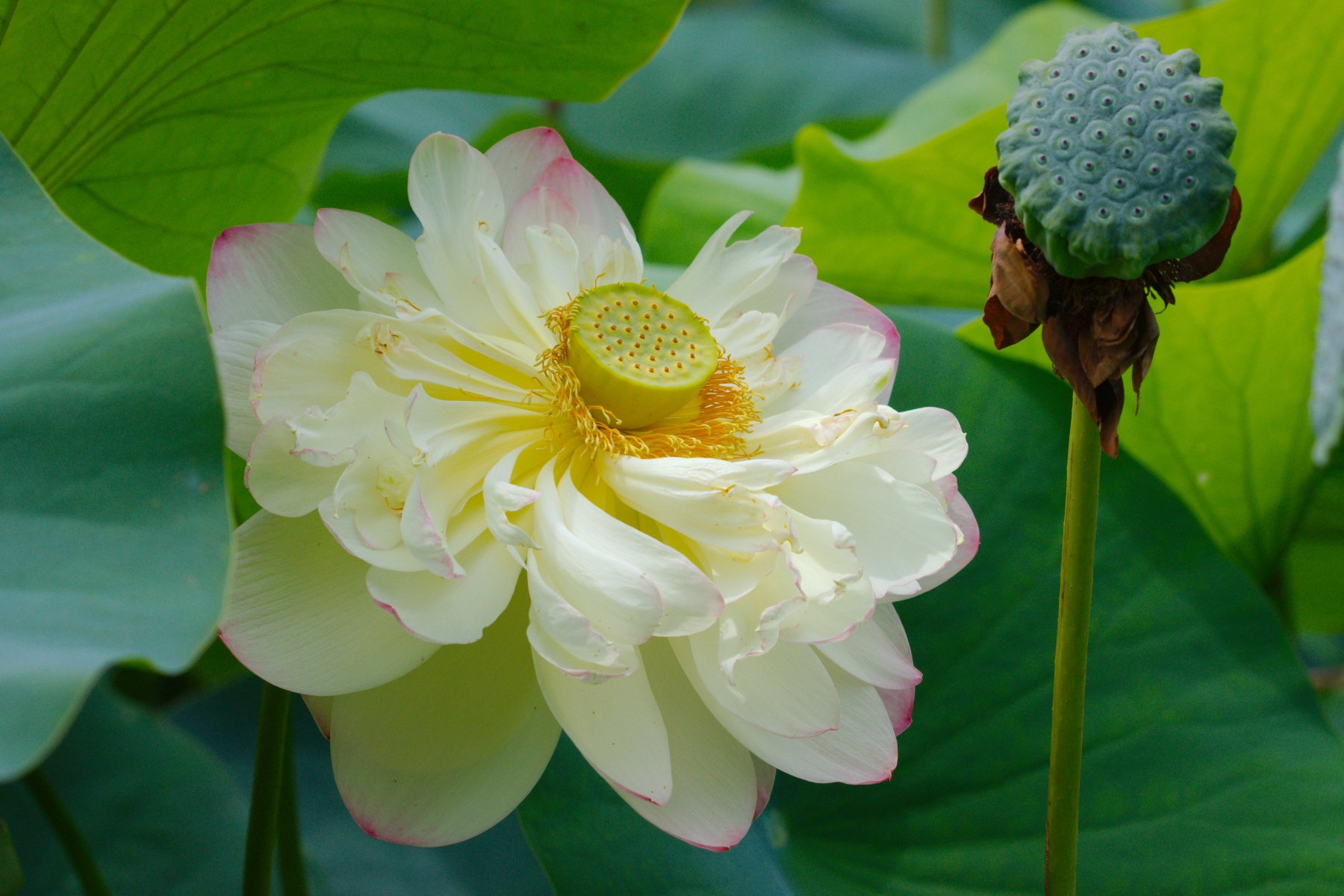
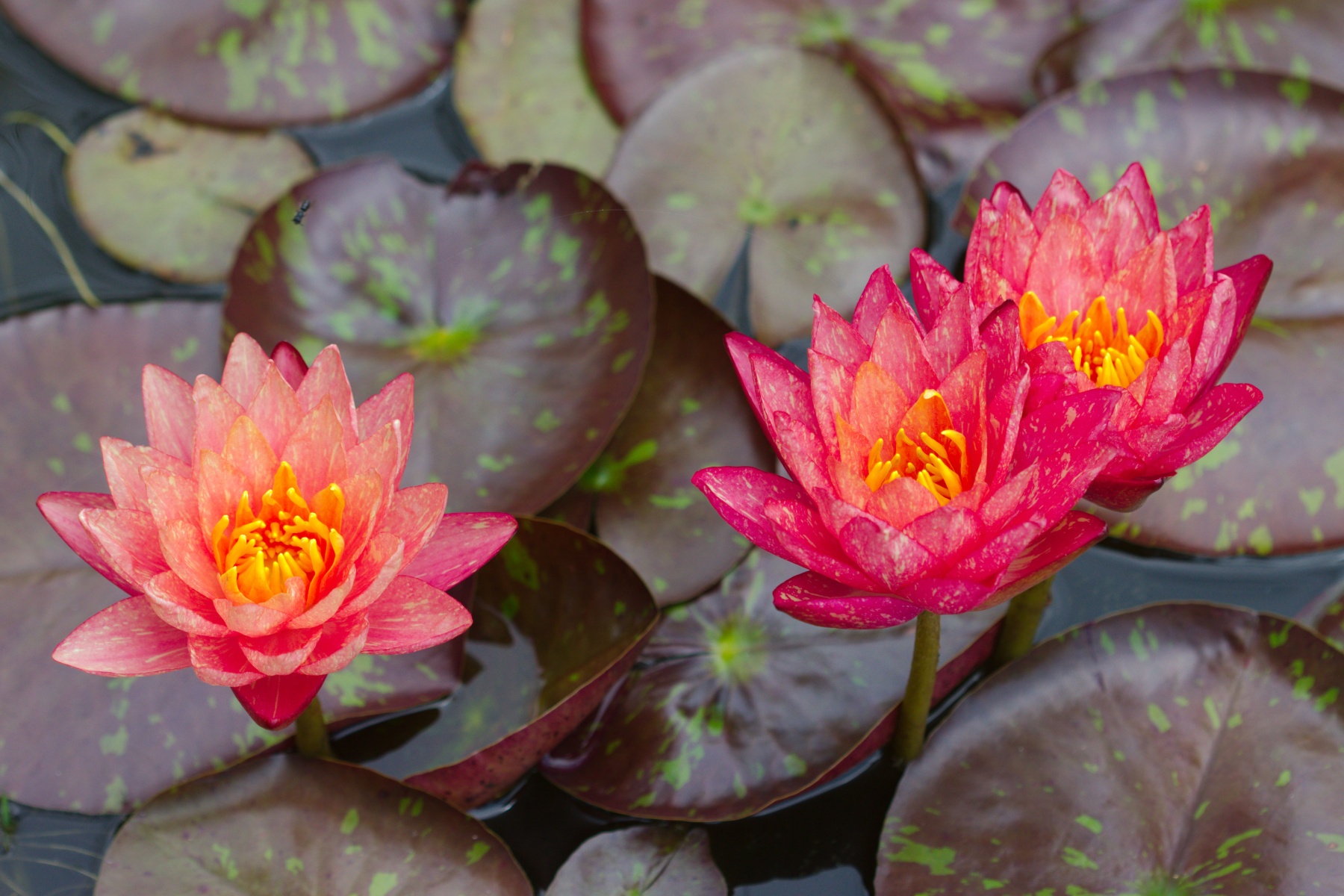
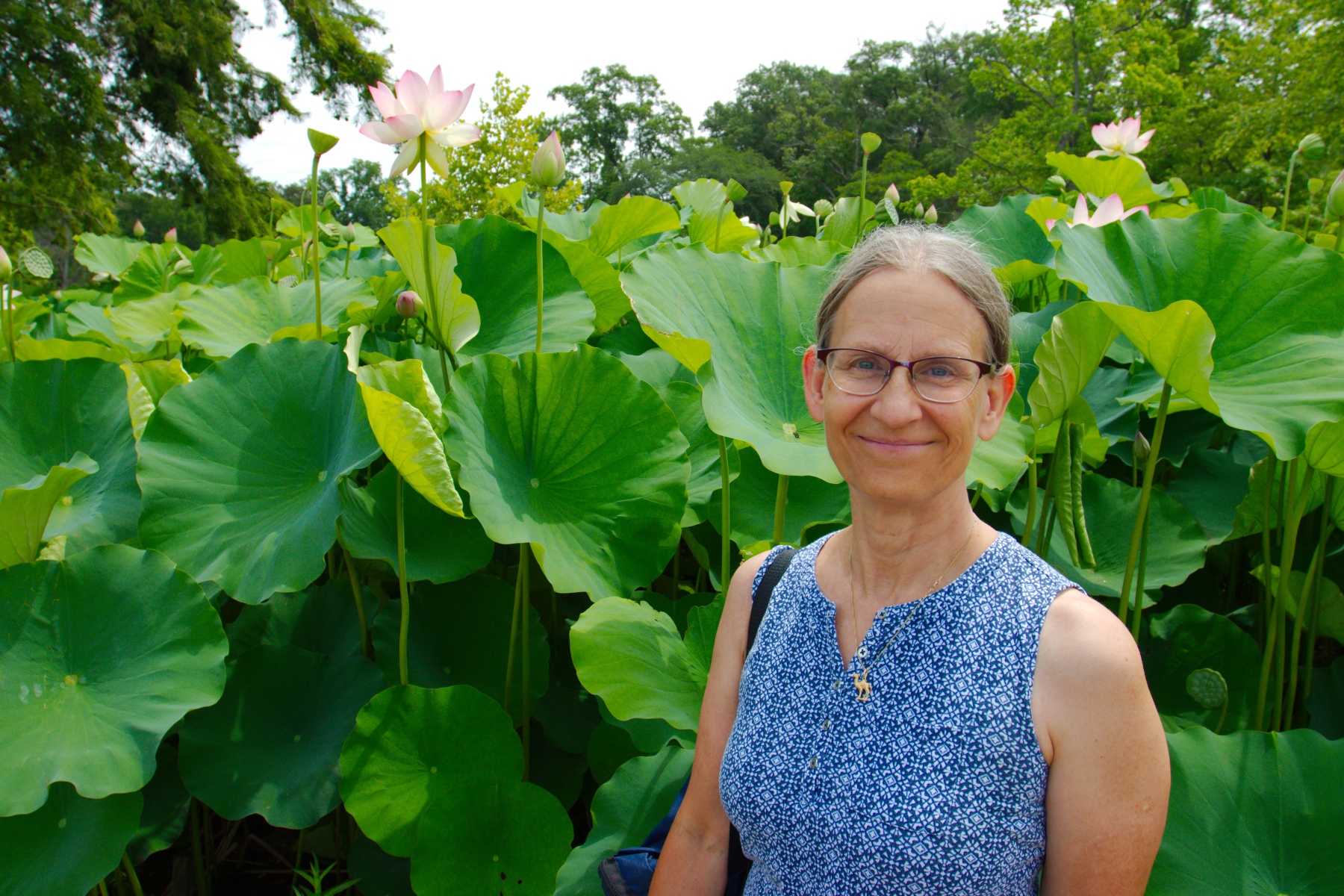
Cathy had to work this morning because their software upgrades have to be done outside business hours when no one is working with it. When she was done we drove to Kenilworth Aquatic Gardens. We didn’t know that their Lotus and Water Lily Festival was going on, so we had to park a few blocks away and it was quite crowded, but we were still glad we went. The flowers were wonderful, although the Lotuses were probably past their peak. Those blooms that there were, however, were lovely. We both took lots of photos and I took some with my 150-600mm zoom, which allowed an interesting perspective. Sadly I forgot to bring my monopod, so I had to hand hold it, which may mean some of the pictures are not good enough to show. At one point I used the branch of a tree as a support, which got a chuckle from a couple of guys who were watching me.
We especially enjoyed the walk out to the boardwalk that goes out from the southwest corner of the gardens to a marsh along the Anacostia River. We saw egrets and I got a few pictures of a pair of ospreys circling overhead. It was quite warm but on the boardwalk there was some shade and a bit of a breeze, which felt very nice.
From the gardens we stopped at three cemeteries. First we went to Fort Lincoln Cemetery, just north of the gardens and outside the District of Columbia in Maryland. Then along North Capitol Street, we went to Soldiers Home Cemetery, one of the country’s oldest national cemeteries, and Rock Creek Cemetery, where my great, great grandparents are buried (as well as their oldest son, my great grandfather’s older brother).
Cathy’s Flowers
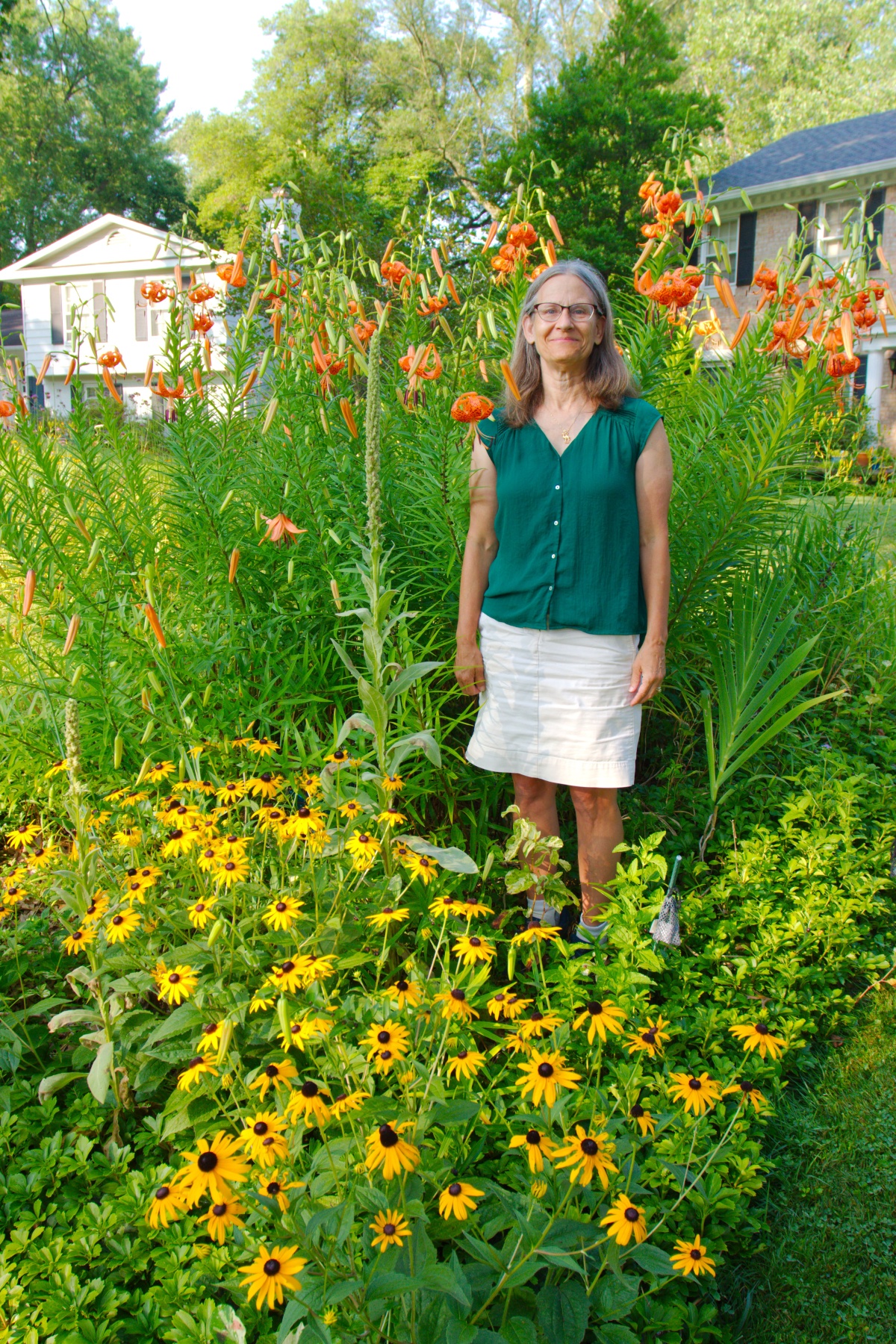
The summer blooming period has really gotten underway at our house. That mostly includes black-eyed Susan and tiger lilies, both seen in this photo with Cathy. These are in the front yard. It’s our largest stand of tiger lilies which originally came from bulbils collected from my dad’s plants in Bethesda. We have a few in other parts of the yard, near the top of the driveway and on the south end of the house and every year there are a few more. This bunch it the most impressive, though, being right out by the road.
The black-eyed Susans here are a relatively small bunch compared to what is in the back yard. I like them, although we could have about half as many and still have enough. They are fairly aggressive and even Cathy has taken to pulling a few up each year. There are about 25 recognized species of Rudbeckia. Most of ours are probably Rudbeckia hirta, native to our region and the state flower of Maryland. Some of the others, with similar flowers, are less aggressive and might be a better alternative, if you don’t want a yard full of them.
Crocosmia ‘Lucifer’
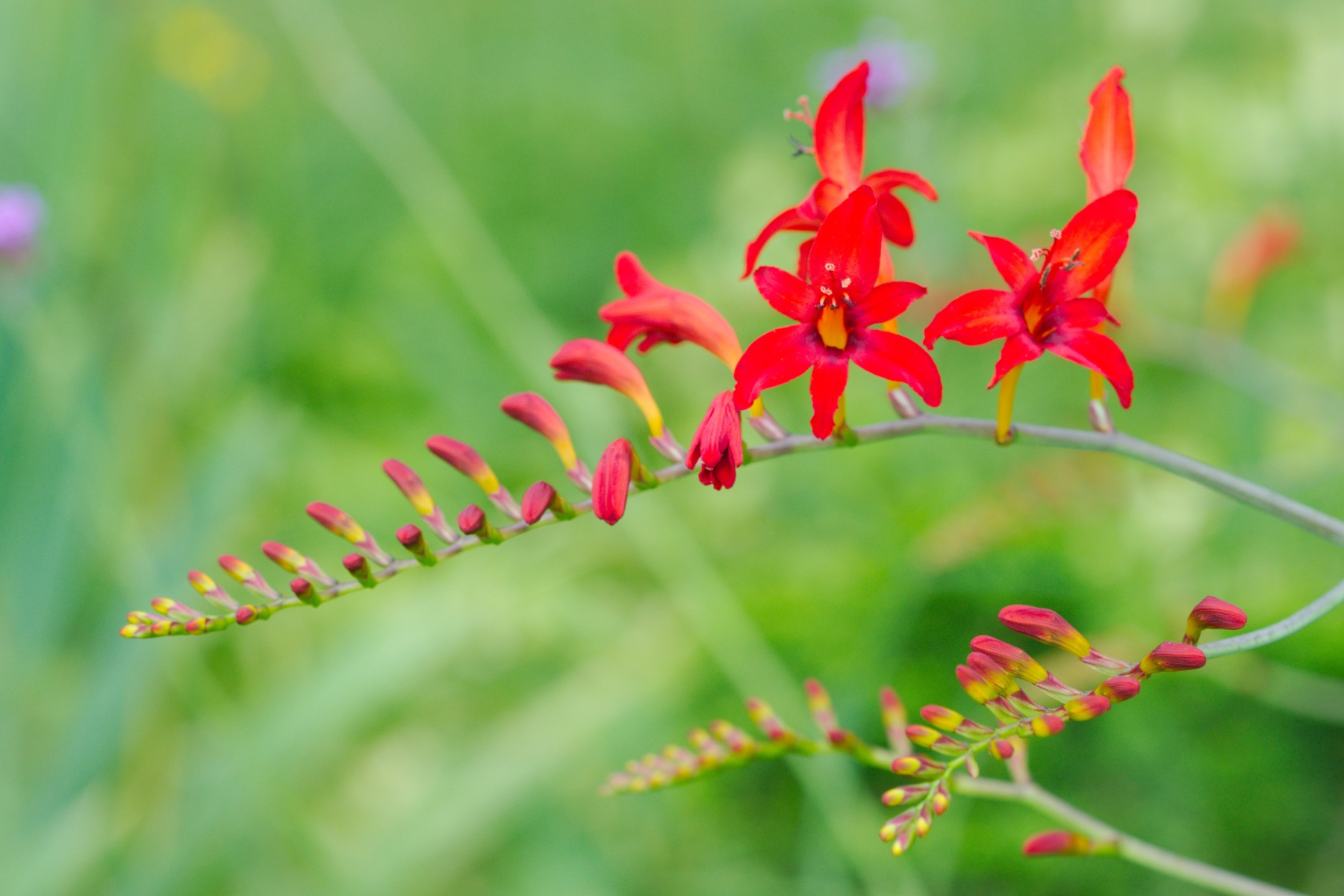
We’re back home from our grand Alaska adventure (or whatever you like to call it) and I thought I’d photograph the various things blooming in the yard. One of the best is this Crocosmia ‘Lucifer’. There are something like 7 species in the genus Crocosmia that come from the South African grasslands. The variety named ‘Lucifer’ is a hybrid by Alan Bloom (Crocosmia x Curtonus) which has flowers and foliage that are similar to gladiolus. As you can see, it has scarlet red, tubular, one-sided flowers borne along arching flower scapes. It’s one of our favorite summer blooms and every year I mean to do a little better at giving them support, although they only barely need it. We started with one or two plants and I’ve added a few more over time, so we have a nice clump of them in our front bed. We’re glad we got home while they were blooming. They attract hummingbirds, as well as the more common pollinators, which is an added treat.
Sundews on Dan Moller Trail
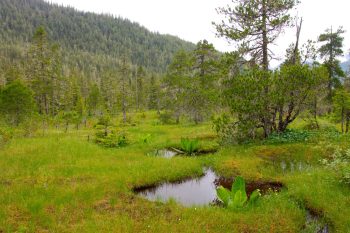
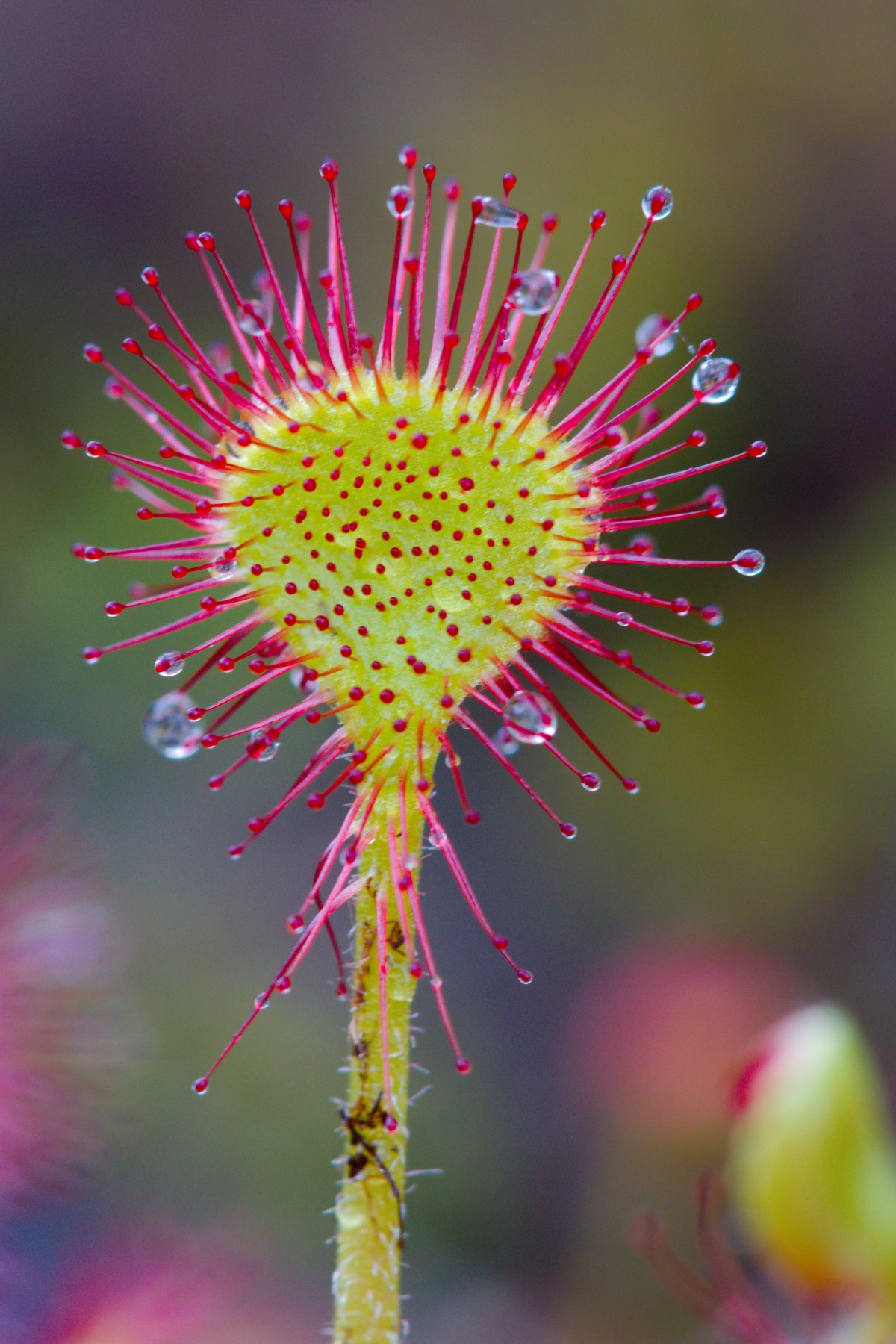
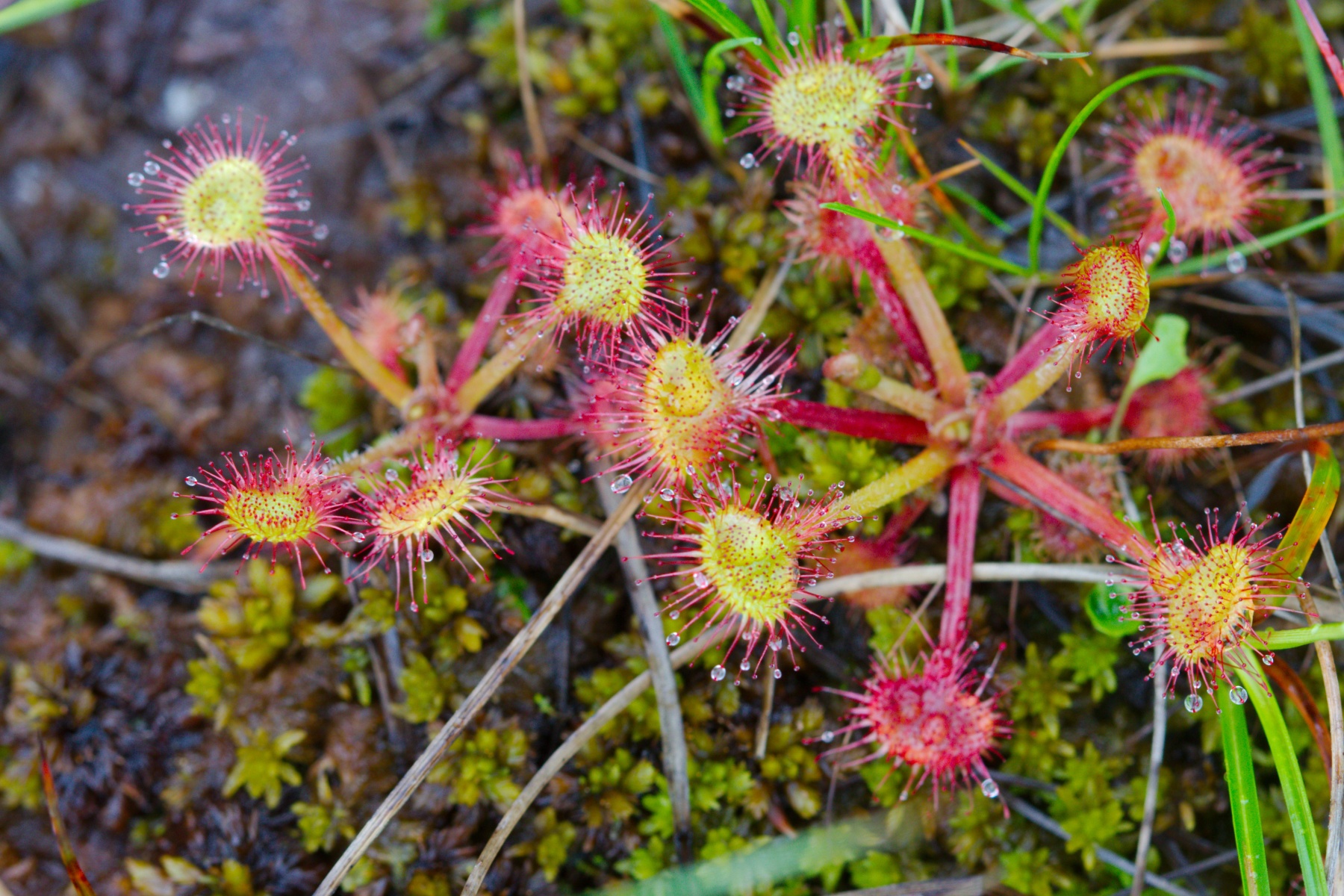
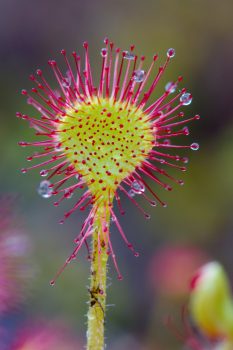
Another of my favorite trails in the Juneau area is the Dan Moller Trail on Douglas Island. We went up this with my parents and Albert in 1987 and one of my favorite pictures of my folks was taken from the top of the mountain, looking down on the cabin from above. This was also, I think, the first place we saw sundews in Juneau. There are two main species here and this is Drosera rotundifolia, the round-leaved sundew.
They are surprisingly common and at the same time, almost entirely overlooked. They grow in places that are constantly wet and at the same time sunny (or at least not shady). The slightly dryer parts of muskeg, where it’s almost constantly wet is generally the place. Once you see them, they seem to be everywhere, but until you’ve had them pointed out, they really aren’t very noticeable. The False Outer Point Trail is the other place we saw them. I understand that they are quite common on the Spalding Meadows trail, but we only did that on cross-country skis when the ground was covered with snow, so it wasn’t a good time to see them.
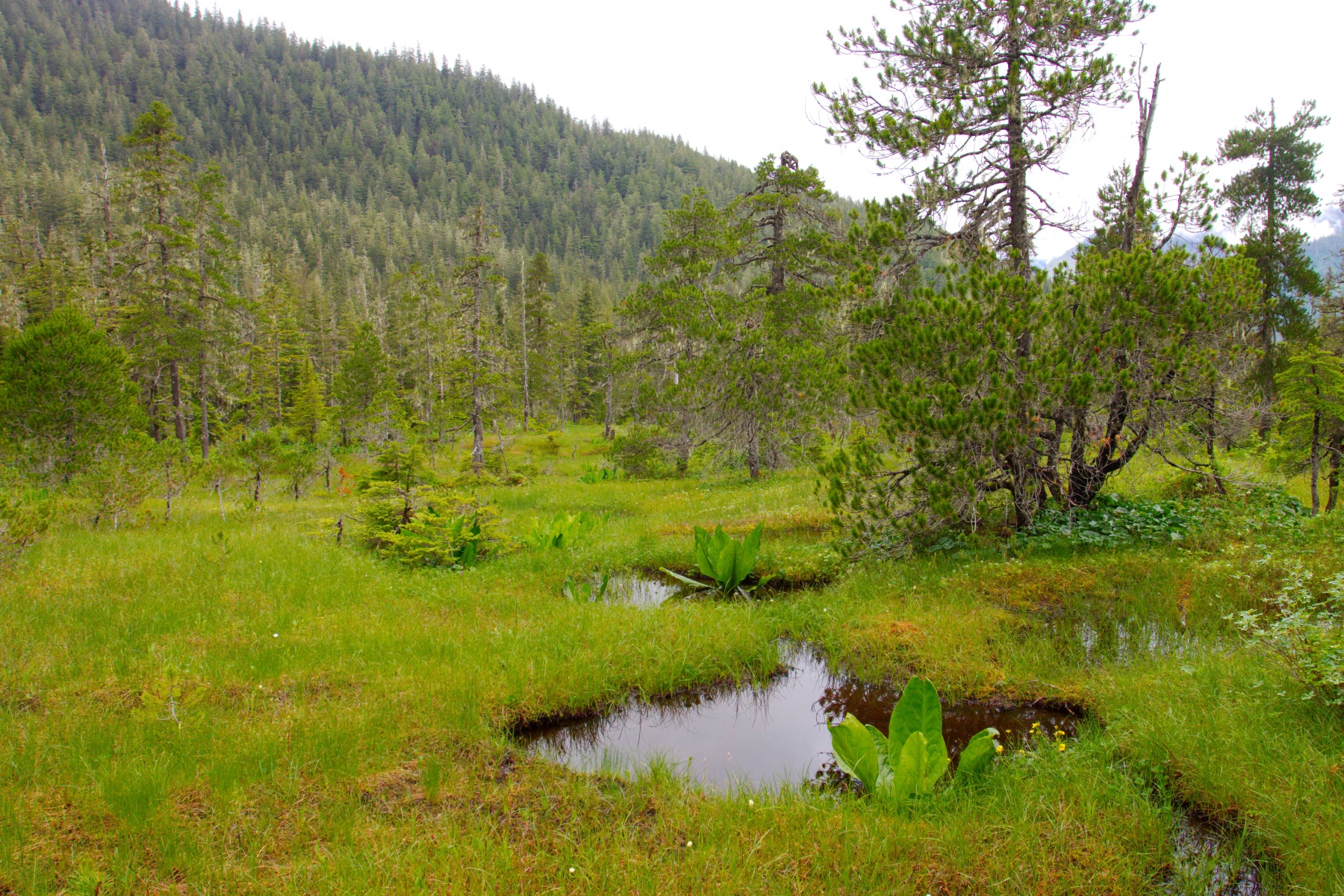
The sundews are not the only thing about the trail that I like. The combination of trees and open, meadow-like muskeg with its abundance and variety of wildflowers and plants is relaxing and beautiful to me. The Labrador tea (Ledum palustris), with its tiny, white flowers, the bog candle orchid (Platanthera dilatata, and many other little flowers are all over. None are terribly flashy but all are lovely in their own way. The usually dark water, the bright greens of the meadows, the darker green of the trees, the blue of the sky (when you are lucky enough to have a blue sky in Juneau), all combine to make a really pretty scene.
We also hiked a few miles on the Treadwell Ditch Trail, which is a relatively easy trail because it follows the contour of the land. It’s pretty, too, although quite different to the Dan Moller Trail, in spite of their very close proximity to one another. We also got a good view of downtown from the early part of that trail.