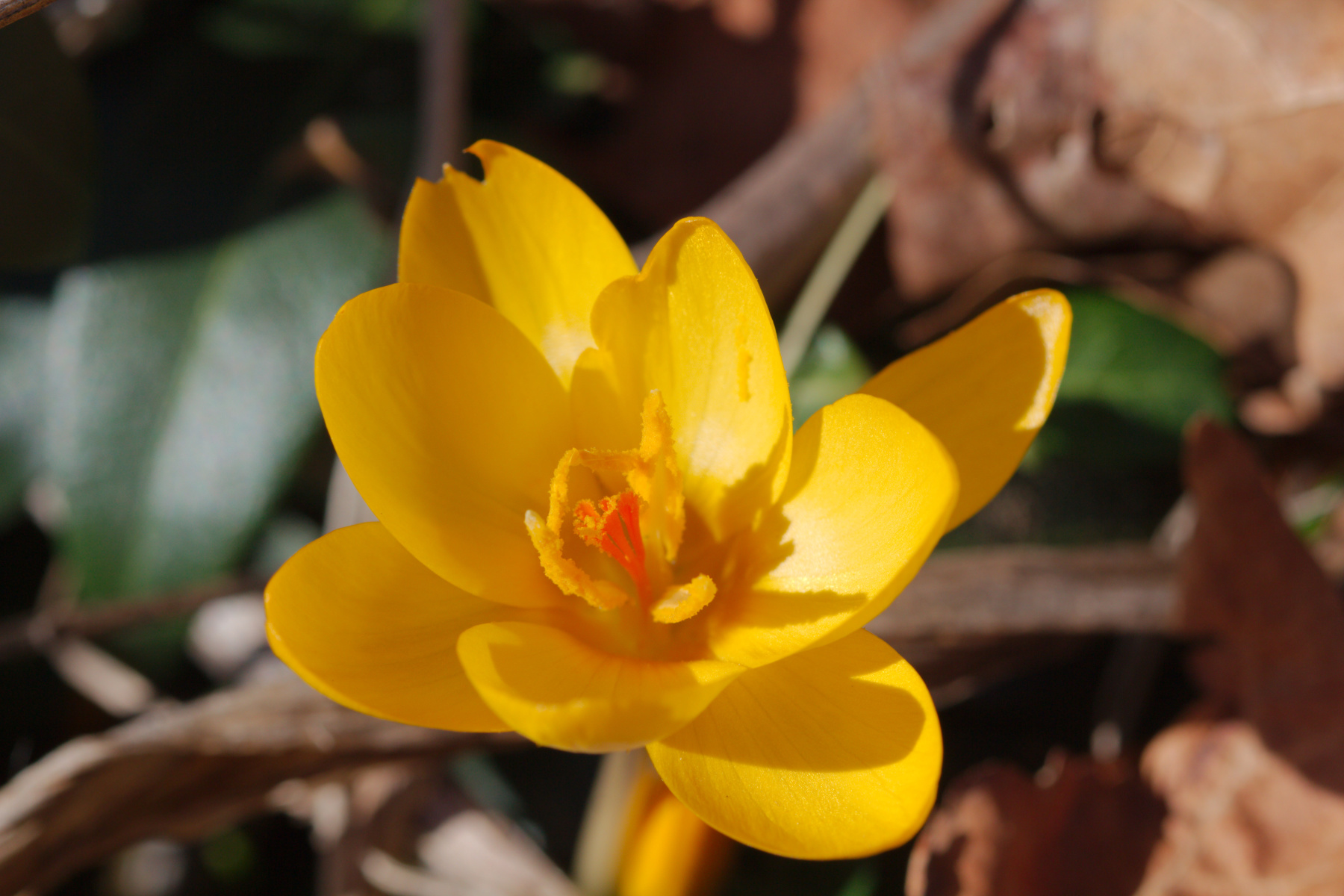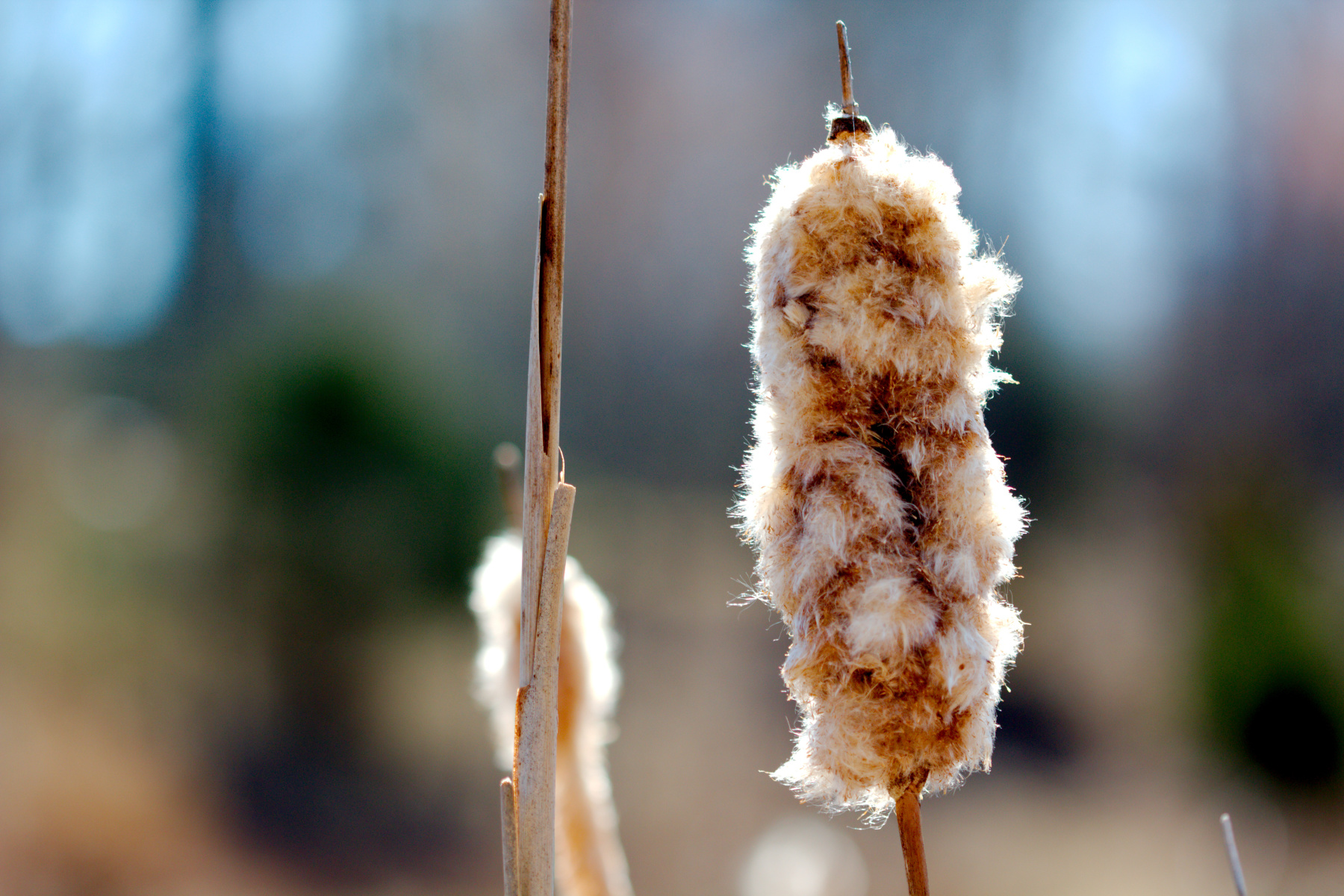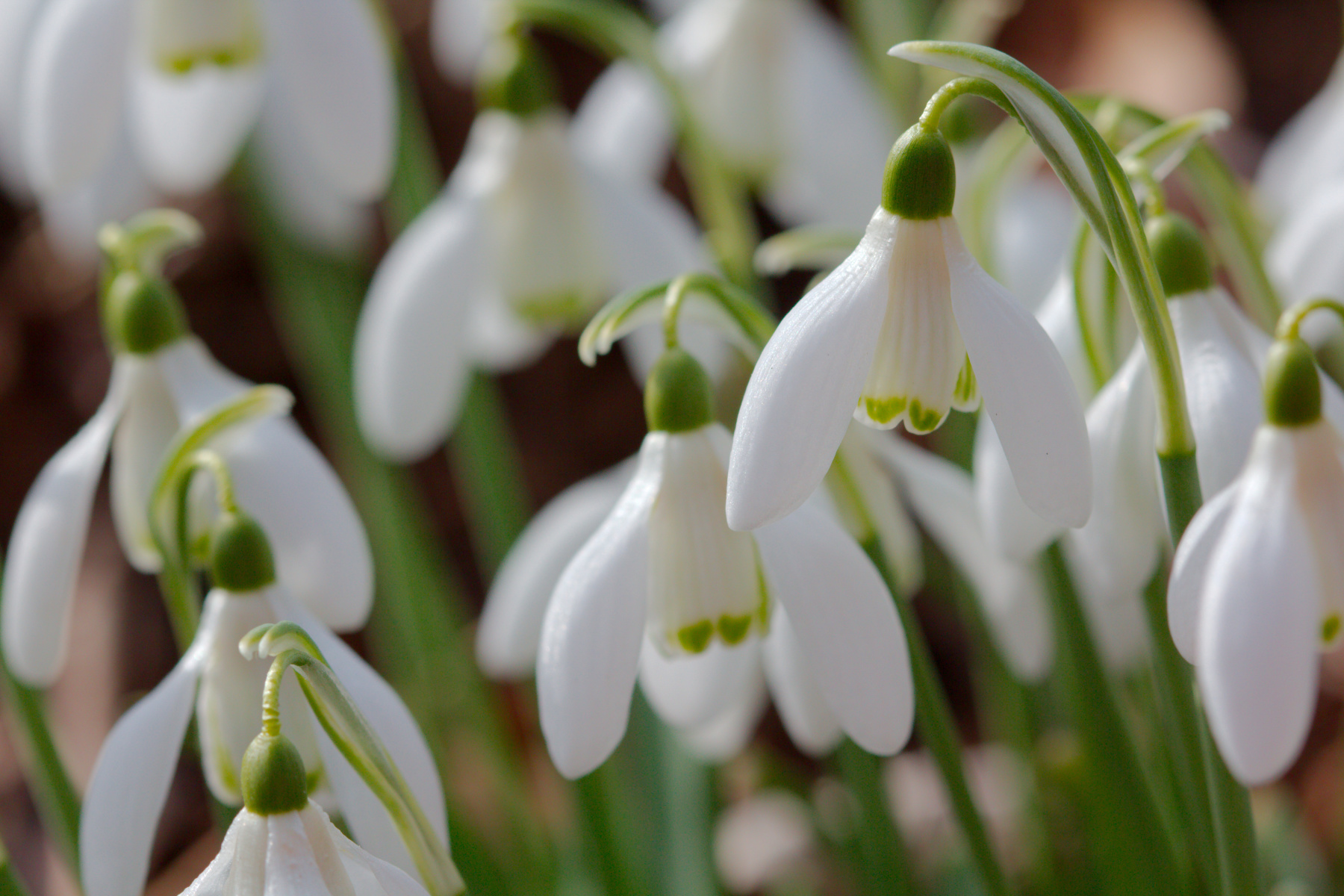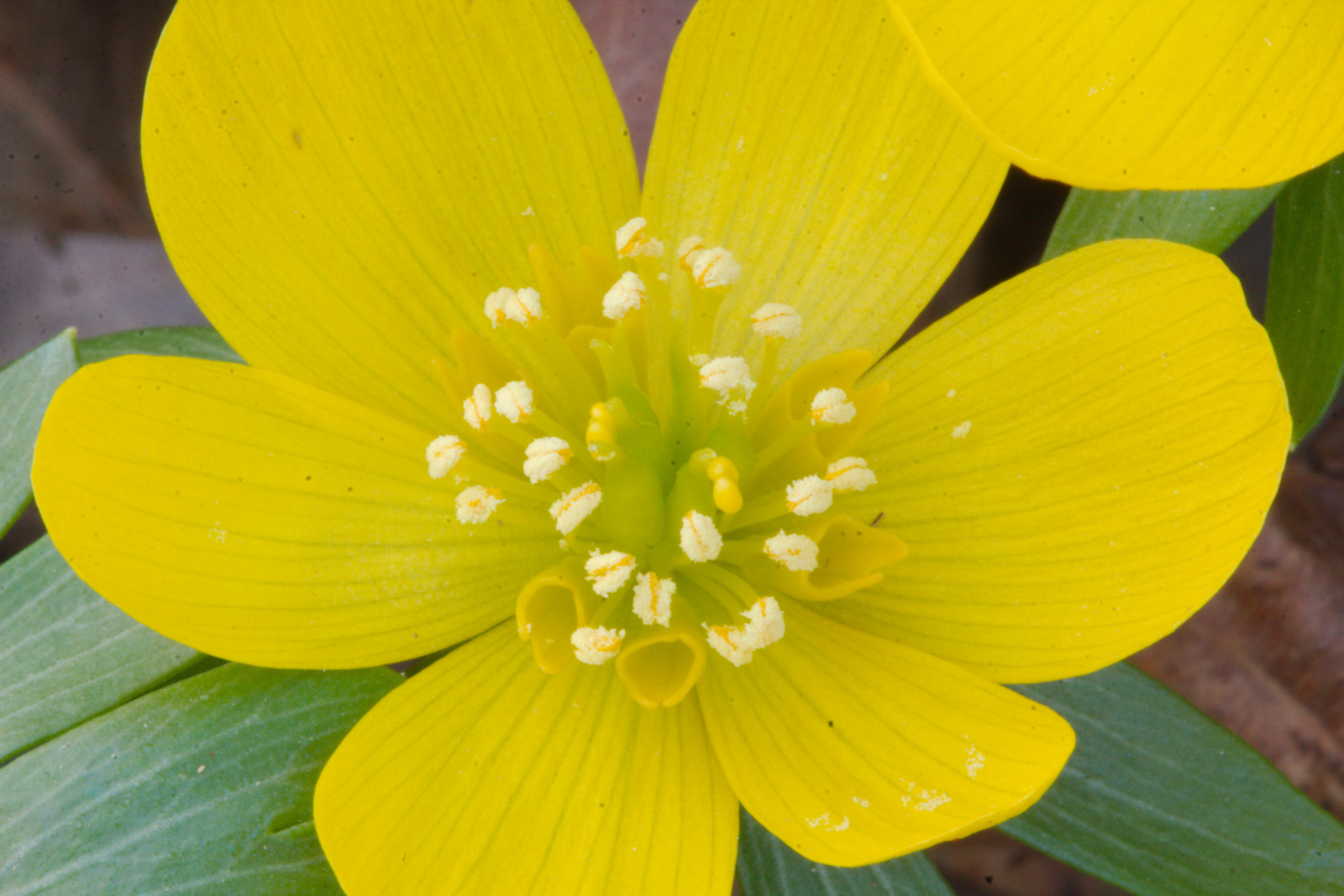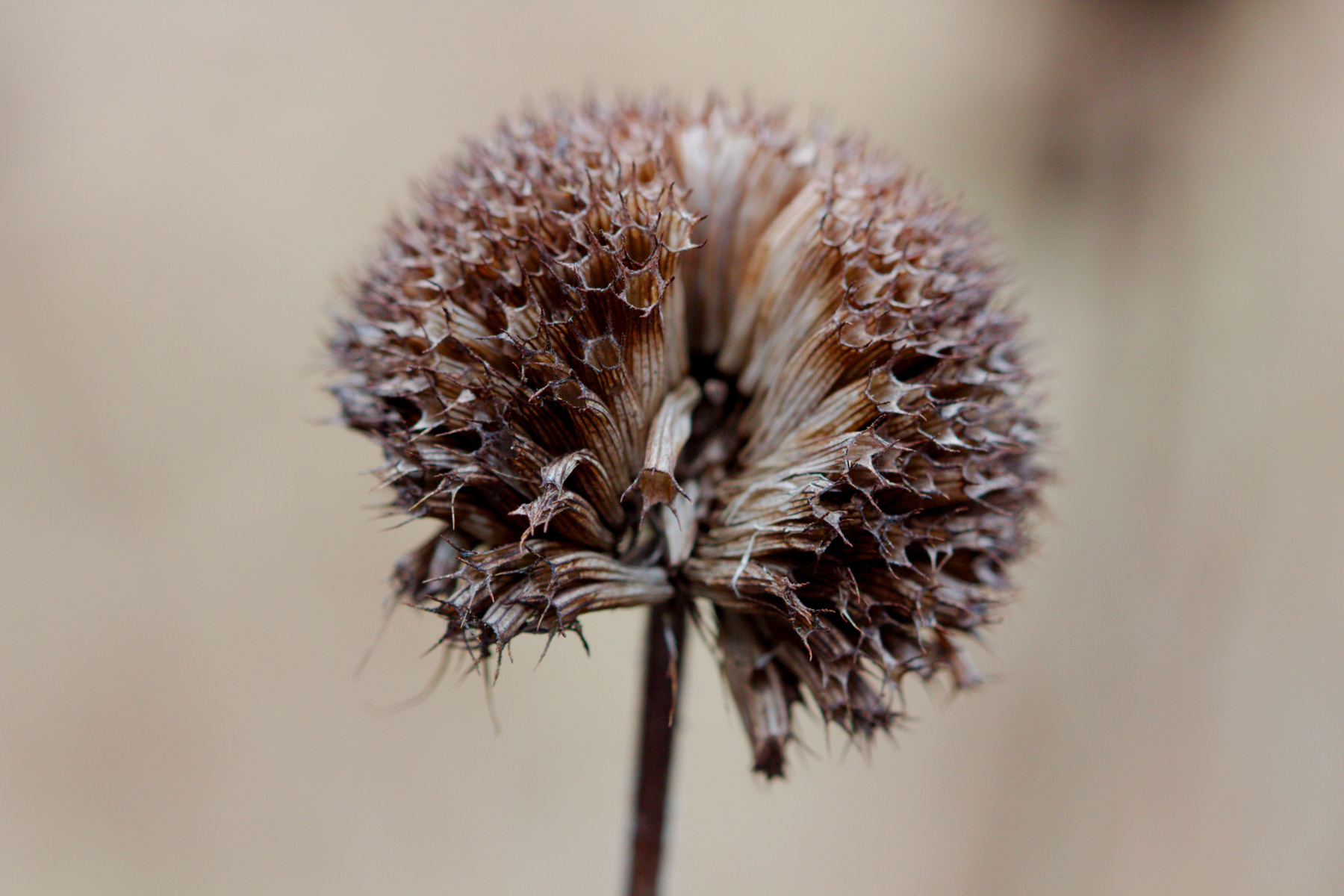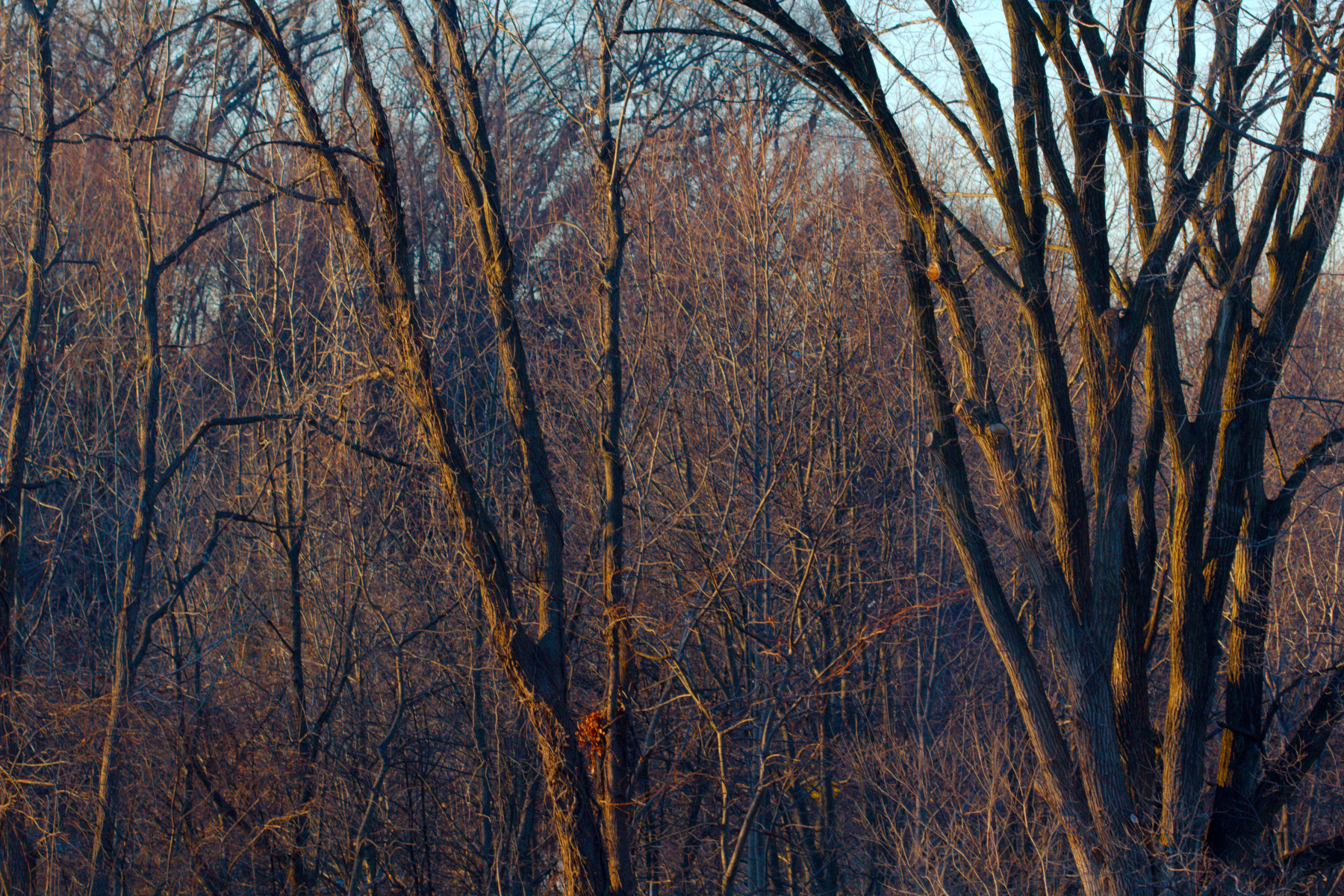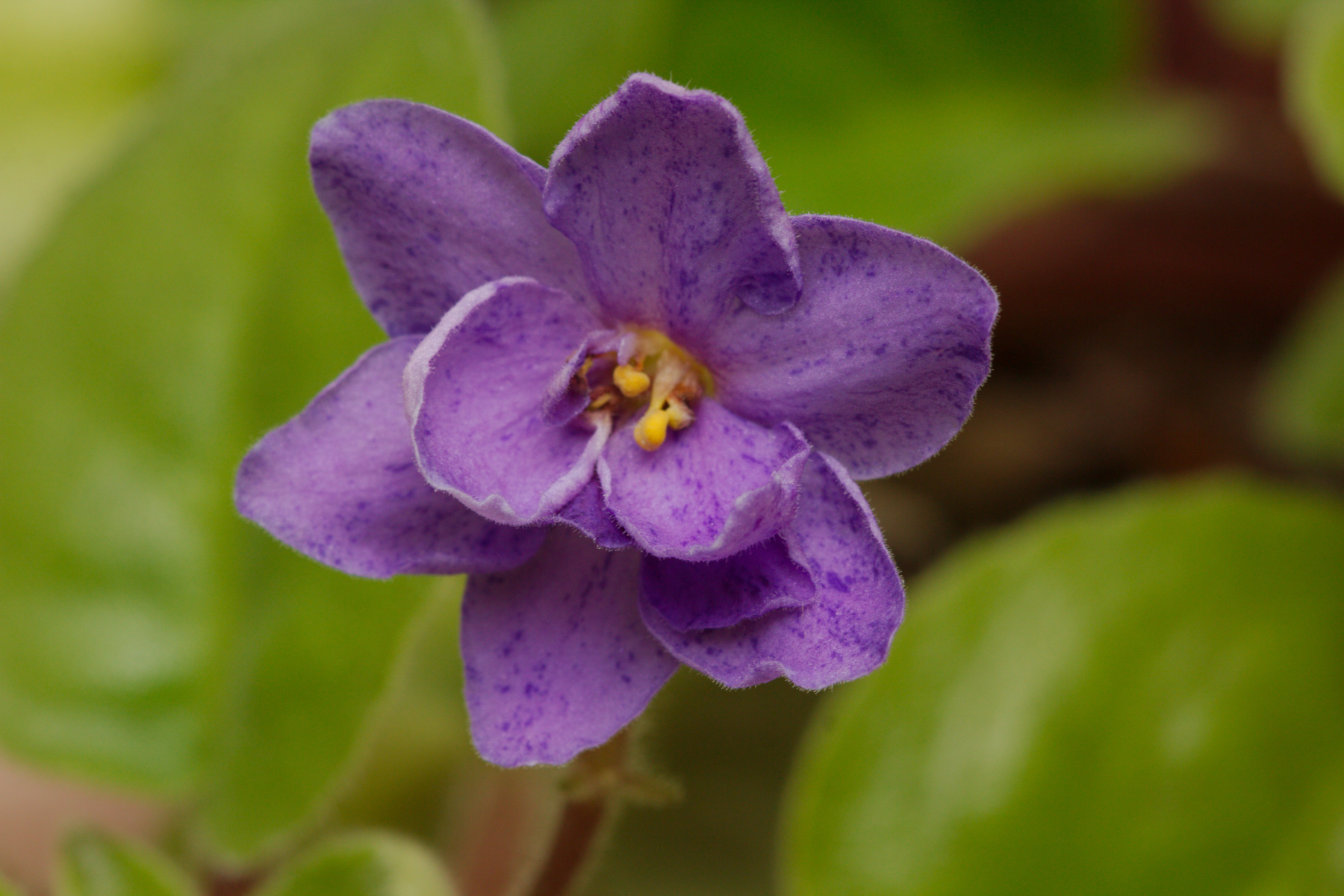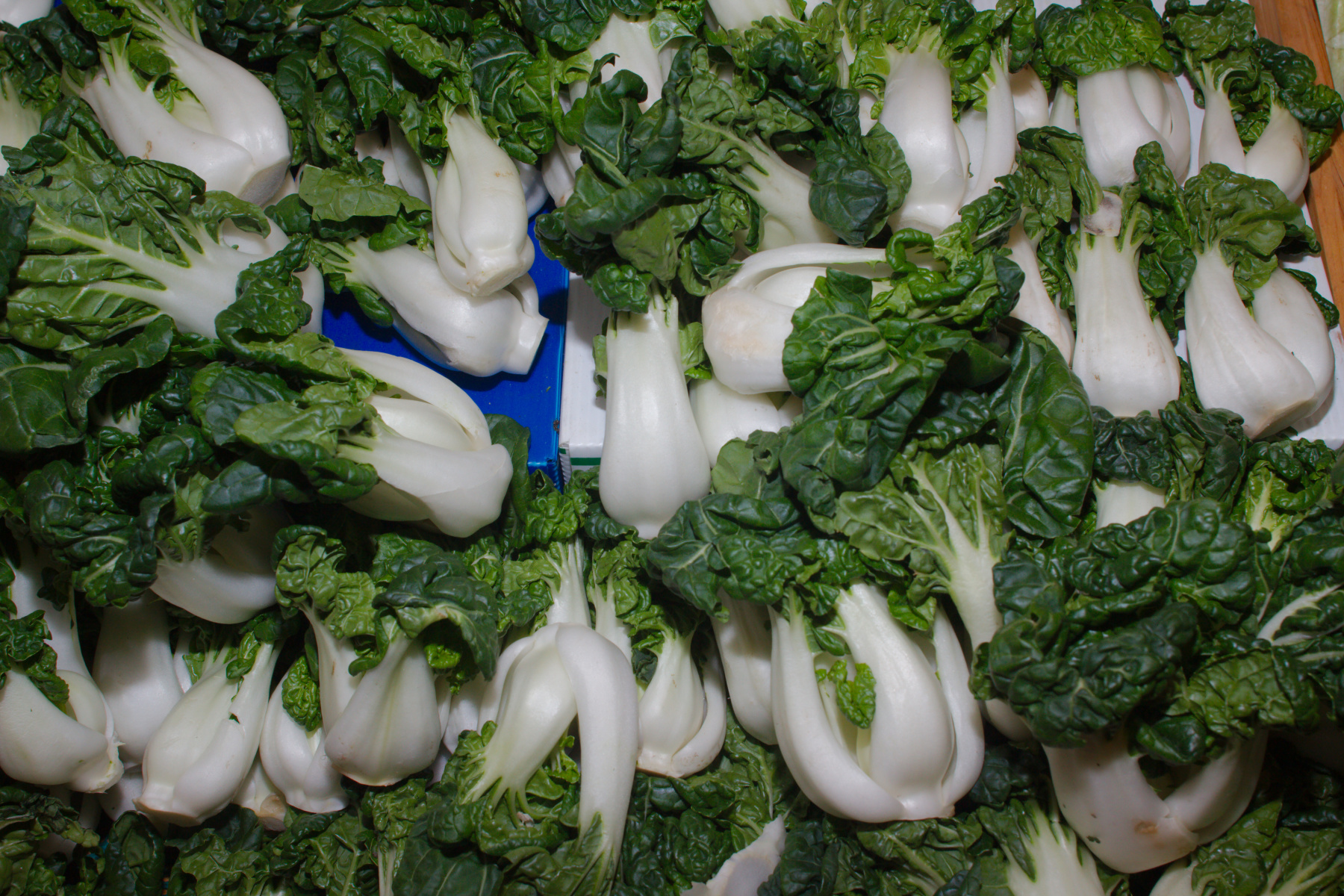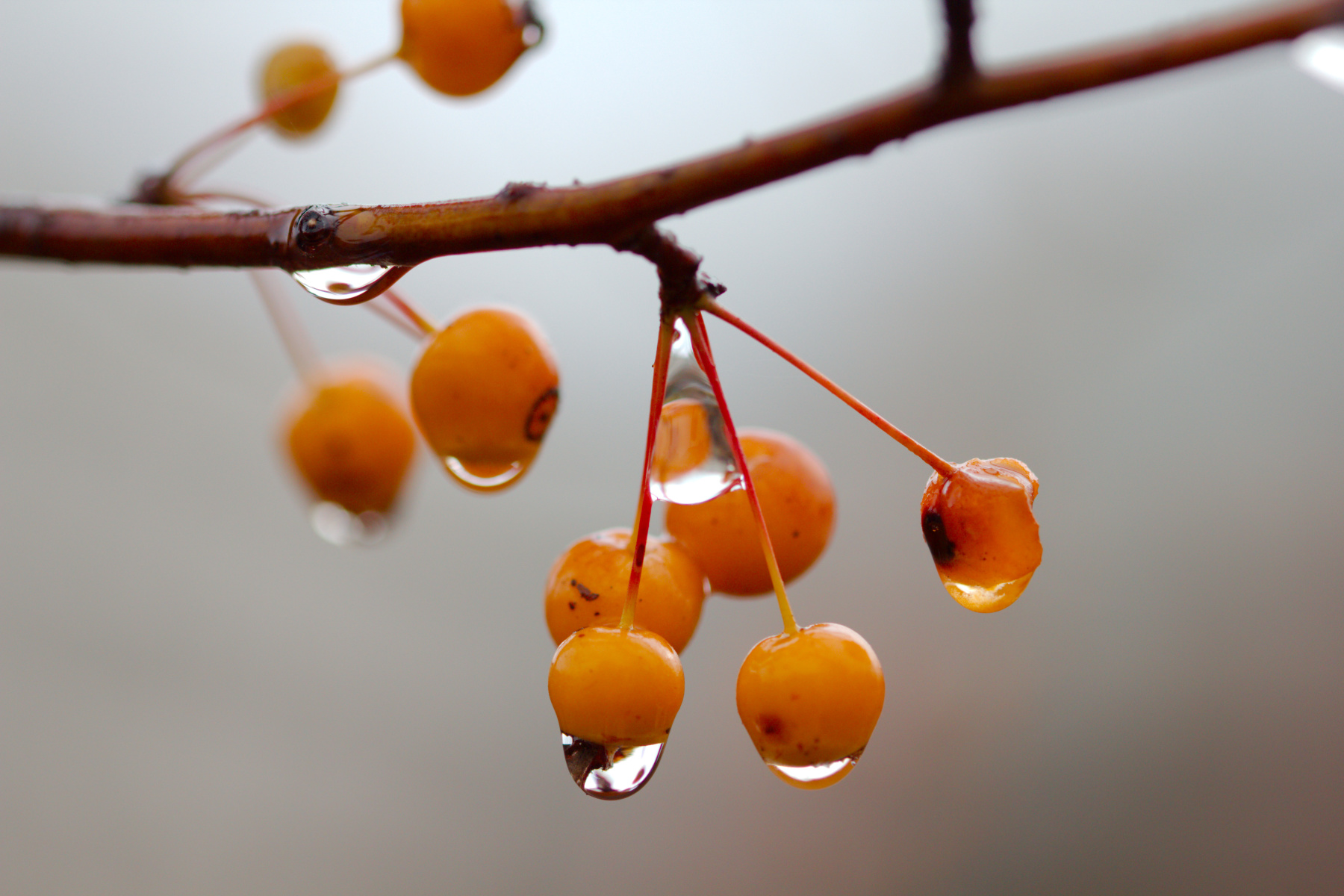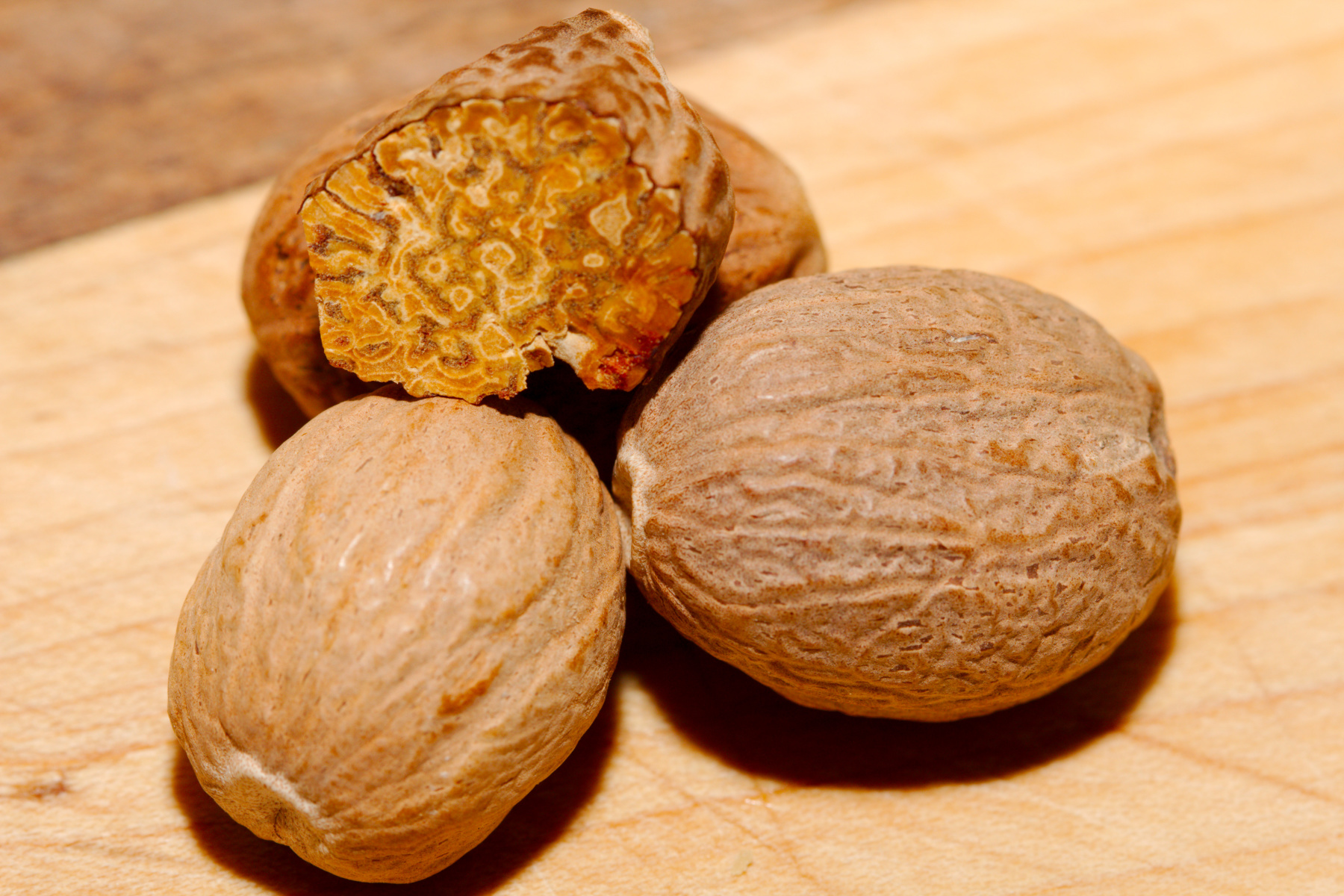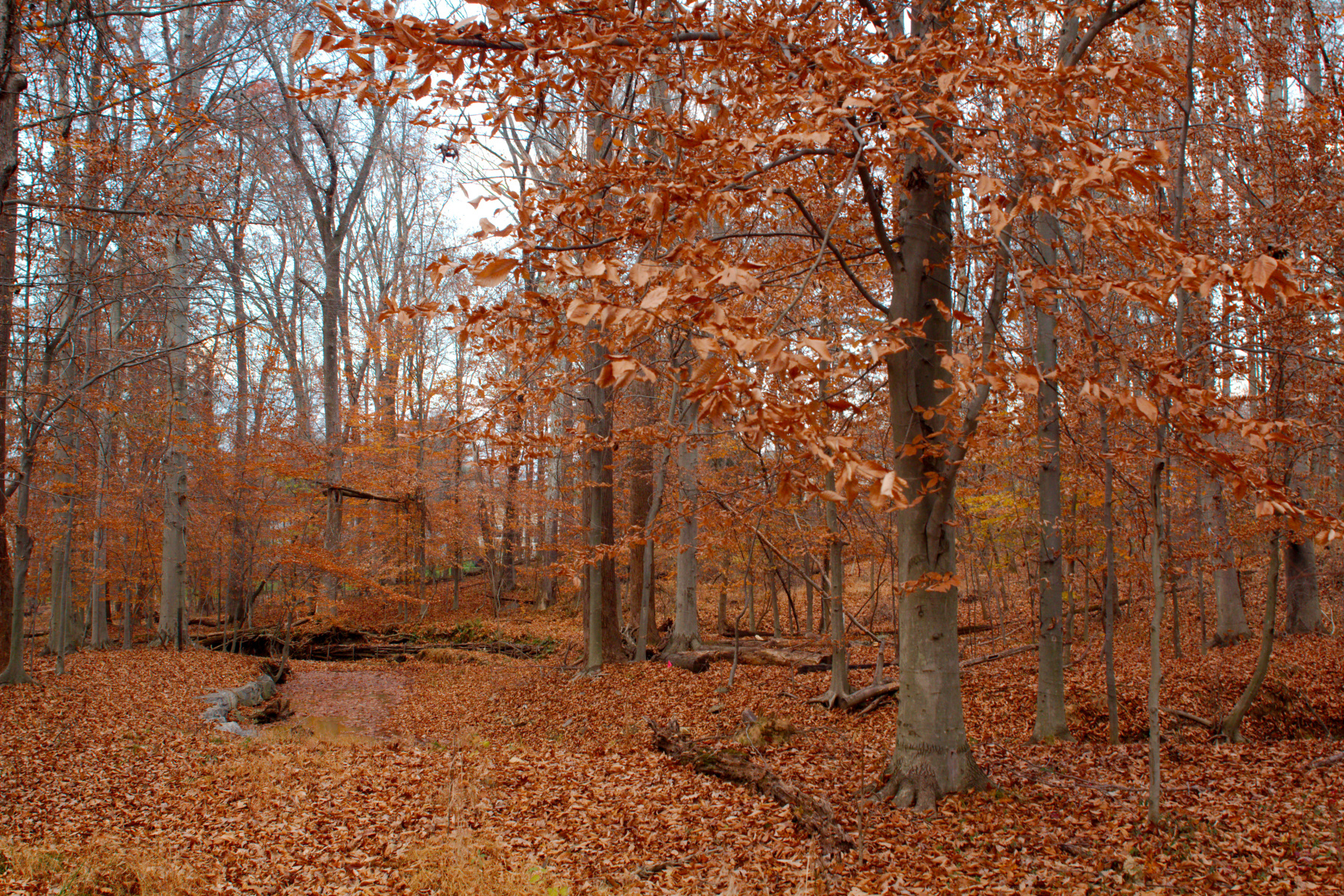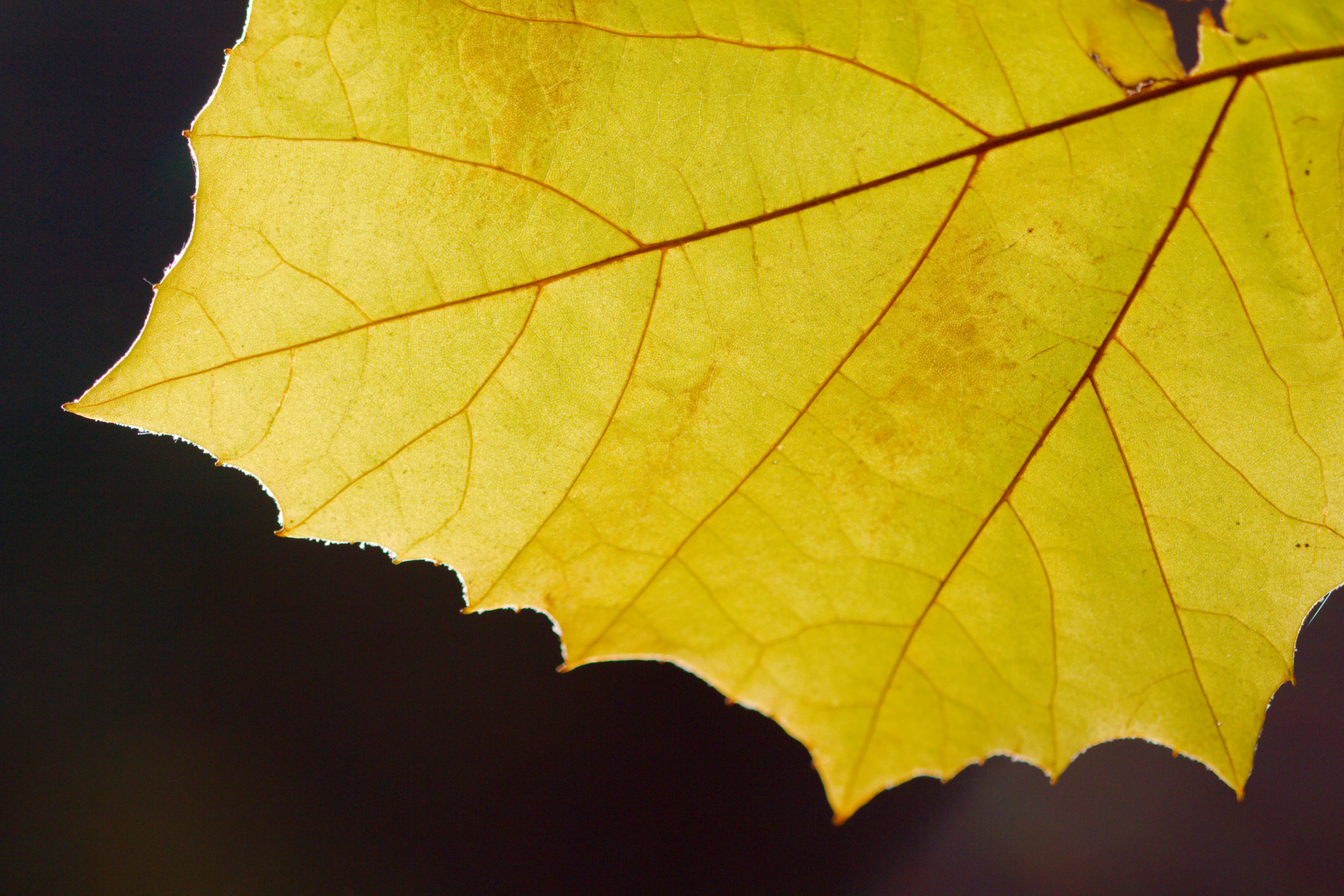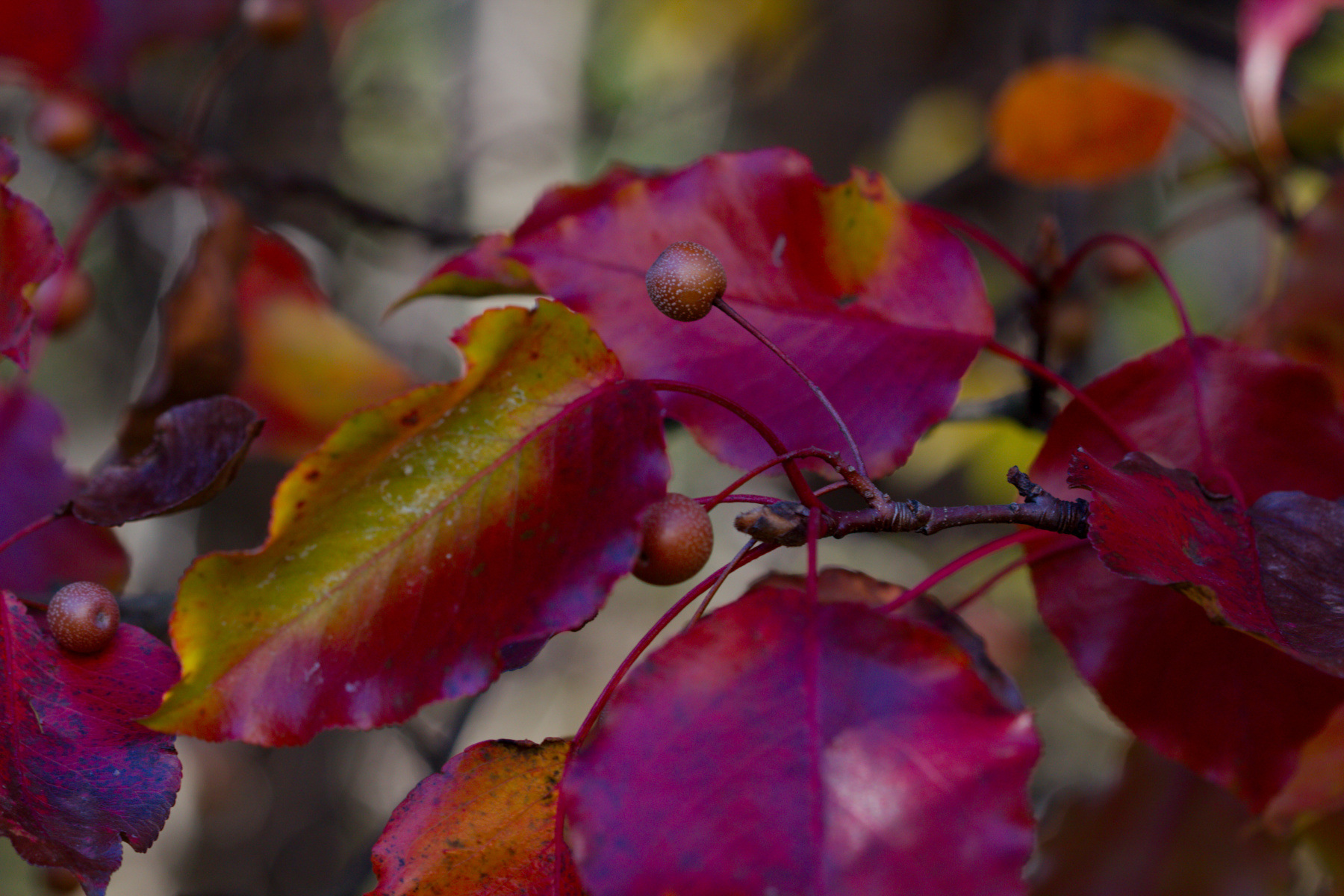
A basidiomycete walks into a bar but the bartender tells him he’ll have to leave. He says, “But I’m a fungi!” I needed to get out of my office today so I took my camera and went out into the woods next to my building. There are a few snowdrops (Galanthus nivalis) starting to bloom along the edge of the woods, which is encouraging. I also came across the carcass of a deer. There wasn’t a lot left except bones and it explained the presence of so many turkey vultures circling over head. This bit of fungus caught my eye, because of the variations of color. Very pretty, in a decaying sort of way. The ground is very wet and I really need some Wellington boots when it’s like this. I managed to stay mostly dry, though.
Flowers and Plants
I’m A Fungi
Deodar “Flowers”
These aren’t flowers, of course, as the deodar cedar (Cedrus deodara) being a gymnosperm is a non-flowering plant (the angiosperms are the flowering plants). These are the cones of a deodar cedar growing near one of the buildings on our company campus. It’s getting to be a fair size tree, with branches large enough to sit on comfortably. My grandparent’s had a deodar in their front yard in North Carolina and I’ve always been fond of them, especially when they get a little larger and start to develop their characteristic cedar shape rather than the more conical shape of the younger trees. They are native to the Himalayas and we’re near the northern edge of their hardiness range but there are enough around that it seems safe to plant one, if you have the space (which most suburban yards definitely do not have).
Calocedrus decurrens (Incense Cedar)
I’m a little late posting this but after yesterday’s snow squall, we had a nice cover of maybe as much as two inches of snow this morning. It was quite cool, down around 10°F (-12°C) and I put some salt down but being that cold, it’s not going to melt very much. I took some pictures in the yard before Cathy and I left for work. The sun was bright and was shining through the branches of trees that had some ice on them, which was lovely but hard to record very well. I decided to post this photo of snow on the branches of an Incense Cedar (Calocedrus decurrens) that is in the back of our yard. I planted four of them in the fall of 2007 and three survived. This is the tallest of them and is about 15 feet tall, I’d say. It’s starting to look like a real tree. The other two are doing fine but are not as tall, being about 12 and 7 feet tall respectively.
Hamamelis (Witch Hazel)
I’m a huge fan of witch hazel (Hamamelis species). They’re small trees well suited to the suburban landscape and wonder of wonder, they bloom in mid-winter! Many years ago my father, Cathy, and I went to Brookside Gardens in Wheaton Regional Park in February and I remember falling in love with witch hazel at that time. Now whenever I see them in bloom, I remember my dad and remind myself that this is a tree I want to plant in my yard. Now that I have a space in the front yard that needs a small tree, this may be the spring when one gets planted. There are varieties with red, orange, and yellow flowers and I think all of them are terrific. The yellow, perhaps, stands out as being the brightest but they’re all worth the effort.
Ornamental Grass
After church today we had a nice lunch with some friends. It’s good to have friends and these are among the best. It was a nice day so when we left them, we decided to to to Lake Frank and take a walk. We started at the south end of the lake and walked across the dam. From there we went through the woods on the Parilla Path to the Gude Trail, which we walked to where it hits a parking lot on Gude Drive. The round trip was a little short of three miles and it was quite pleasant. Walking west (outbound) we had the sun in our eyes, so the return journey was nicer, I think. But these tassels on some ornamental grass were nice, backlit by the afternoon sun.
Fertile Fern Fronds
This is a fertile frond of a fern growing in a shady corner of our garden. I believe it’s an ostrich fern (Matteuccia struthiopteris) but it may be something else. I know I have a few ostrich ferns in that part of the garden, but there are other ferns and I don’t remember what they all are. Anyway, these ferns are dimorphic, with deciduous, green, sterile fronds and vertical, brown, fertile fronds. These give a nice element of interest in the winter and then the spores are released in the spring.
I would like to add more ferns to this part of the garden this spring. Last year we did very little gardening except for some weeding early in the spring. During the late spring and most of the summer we were overwhelmed with a lot of other tasks and the garden got away from us, big time. This coming spring, I’d love to get back out and take the garden back, but it’s going to be a big task. Not quite as daunting as taking a piece of wild land and putting it into cultivation, but not as far short of that as I’d like. Parts of the garden really need to be dug up completely and started over. There are a few plants we’d want to dig up and put into pots to return to the garden when the time comes, but for the most part, it just needs to be started over.
Sedum and Moss
In a small pot outside our front door is a tiny little sedum with moss growing around it. This is a surprisingly hardy little plant, being able to take single digit (Fahrenheit) temperatures in an above ground container without any significant problems. We aren’t sure which sedum it is, but Cathy’s guess was that it’s “Red dragon” which seems quite reasonable. The moss in this photo, with its two calyptrae (the spore bearing capsules), is a volunteer, but mosses are generally welcome here. The only places the grow that I would prefer they didn’t is between the shingles on the roof of our garage. I like them otherwise and would happily have a garden devoted to them, if I had the time and space.
Frost
It was chilly out this morning and everything was covered with frost. I started my car and while it was warming up a little, I took some photos of frost on the leaves in the yard. Once the sun began to hit them, the frost started to melt but I wanted to get them with the sun shining on them, so I moved around the yard as the sun moved to new leaves. I really like looking at frost and don’t mind the cold too much. It wasn’t all that cold, in any case, only for or five degrees below freezing. Colder days are almost certainly ahead for us, as winter is only just starting and doesn’t get into full swing until next month.
Japanese Maple Leaves
We went for a short walk in the woods after church today. The church is near enough to Rock Creek Park that we can get there pretty easily from the back parking lot. The sky was clear today, which was very welcome after yesterday’s torrential rain. The sun was shining brightly on some Japanese maple (Acer palmatum) leaves and I took a few pictures of the back-lit leaves. None of them turned out quite as well as I would have liked, but this one is pretty nice. I really love the colors and the contrast between the leaves and the blue from the sky, filtering through the trunks of the trees.
Japanese Maples
Just over two weeks ago (on Friday, November 02, 2018) I posted a picture of Japanese maples from the other end of our neighborhood. I mentioned a week or so later that most of the leaves were down from those trees. Not all the leaves, however. We were driving home past that yard this afternoon about about 3:00 and the light was shining through the remainder of the leaves on one of the trees (the other trees in the yard are basically bare). This one tree was still amazing and I stopped to take a few pictures. A man stopped and said, “you should have seen the trees a couple weeks ago.” I said I know, they were amazing.
Milkweed Seed
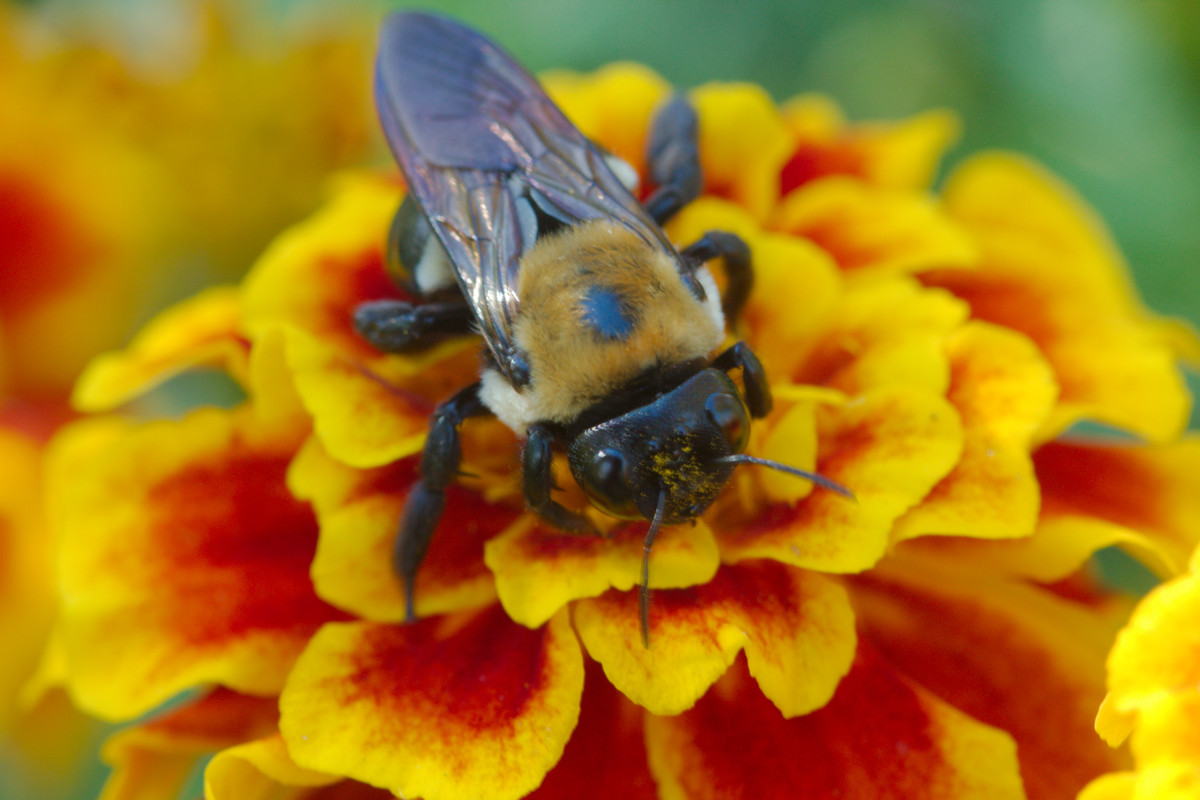
It turned cold over the last few days. Not bitter, winter cold, but relatively cold with lows down in the mid 30s. This morning it was below freezing for the first time this fall and the forecast is for more of the same. In the sus this afternoon it was pleasant enough if you’re like me and prefer cool weather to hot. The insects are starting to be less in evidence and Cathy was actually looking for dead insects in the yard to send to a friend (it’s probably just about as weird as it sounds). She found a carpenter bee and I took pictures of it before making sure it was dead with a little chloroform in a jar. I also took pictures of holly berries on the tree at the corner of our house. Then I spotted this milk weed seed on the top of a drying Verbena bonariensis stem and decided that’s what I’d use for today’s photo.
Phalaenopsis Orchids
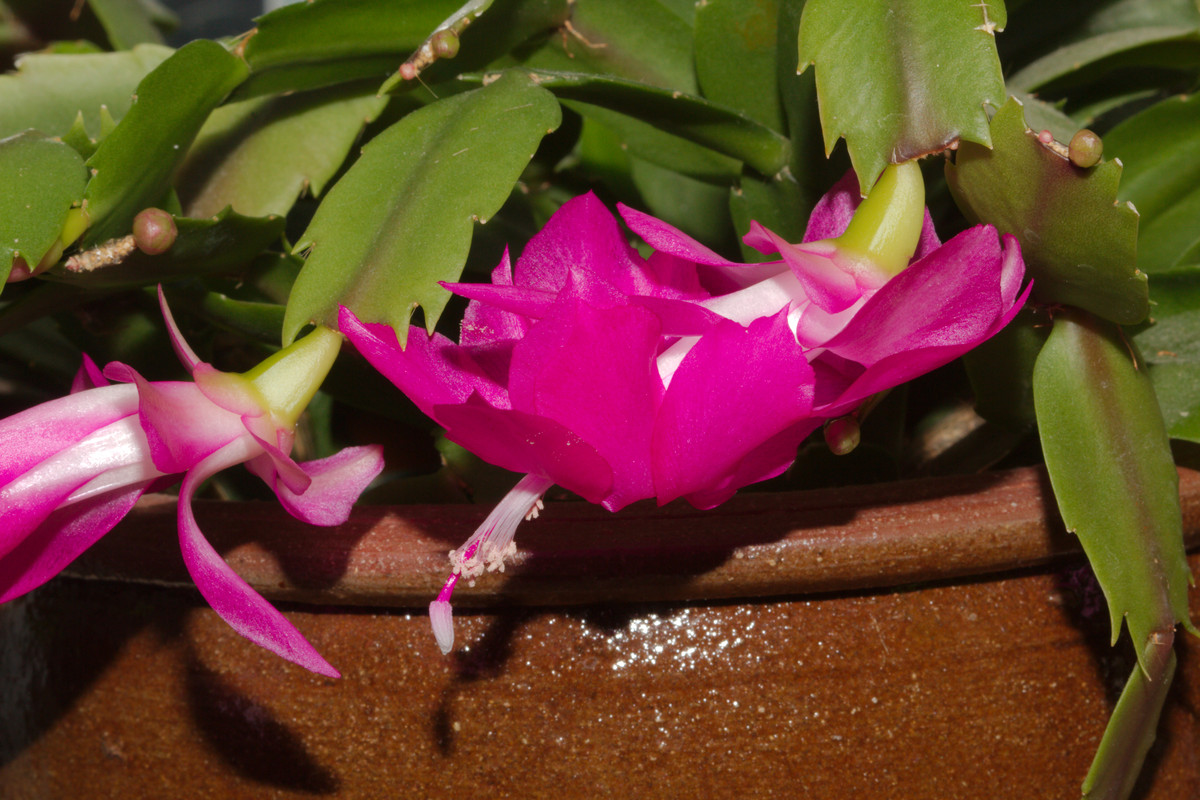
I had planned to go out and take some pictures around my office building today. The sky was clear as I came in this morning, which was welcome after the two days of soaking rain we’ve had. By midday, however, the sky had clouded up again. It didn’t rain but was a lot more gloomy than the morning promised. Of course, colors are often more intense under an overcast sky, but I never managed to get outdoors to take advantage of that. By the time I got home, of course, it was dark. That’s one problem with this photo-a-day thing in the winter. I have a lot less opportunity to get pictures outdoors. I can stop on the way to work or go out during the day, but otherwise, I’m confined to pictures in the house (or night-time pictures, which are hard). But we have this orchid in bloom, so I got pictures of it and that will have to do.
Cosmos
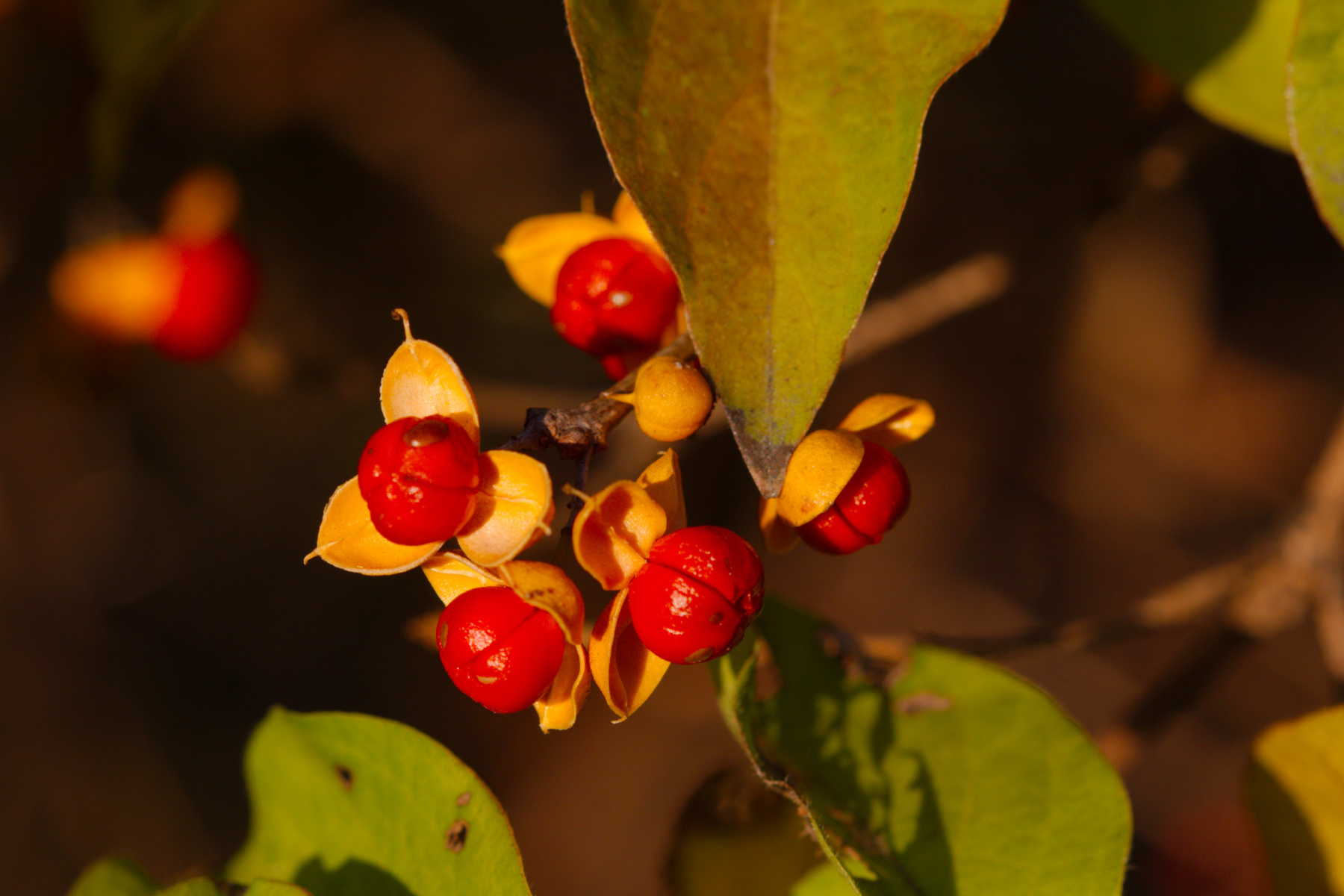
It was an absolutely gorgeous day and after church we decided to drive out to Rocklands Farm (http://www.rocklandsfarmmd.com/) and enjoy being outdoors. We walked around and I took some pictures of oriental bittersweet (Celastrus orbiculatus) growing on fence posts. The little fruits were quite lovely in the afternoon sun. I also took some nice pictures of the barn reflected in the pond that’s below it. I decided to post this picture, though, because it’s a little different from the fall colors that have so dominated my posting of late. This is a cosmos flower photographed from behind and I think it’s quite pretty in an understated sort of way.
Dogwood
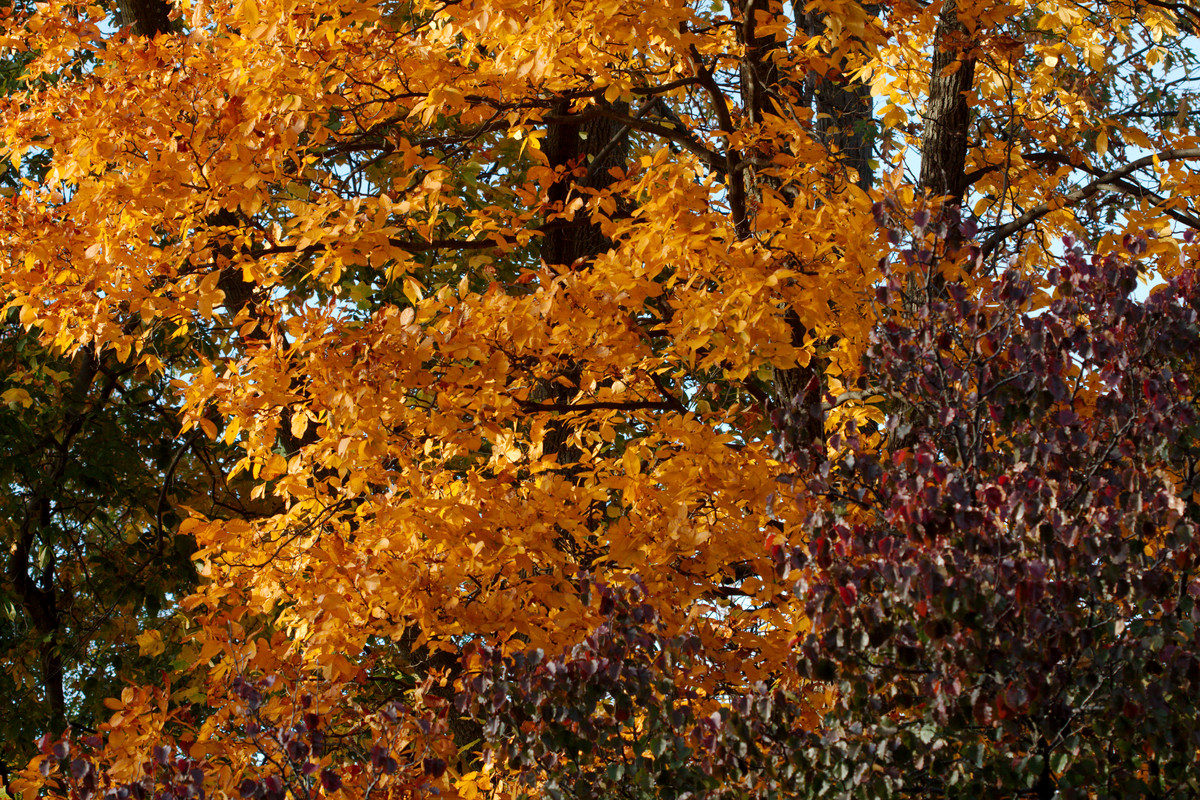
There’s an old joke that you can easily identify dogwood by its bark but you can also spot them this time of year by the color of their leaves. The deep, burgundy color really stands out, particularly against the much more common yellow of many of our other native trees. The oaks tend to be dark orange or rusty reds. The maples range in color from bright red (as in the Japanese maples seen in yesterday’s post) to pure, electric yellow. It’s really a lovely time of year and unfortunately seems to be the shortest of the seasons. The rain last night knocked down a lot of leaves and the forecast for the coming week is for a lot more rain, so by this time next week, it may only be the oaks and beeches holding onto their drying leaves.
Japanese Maples
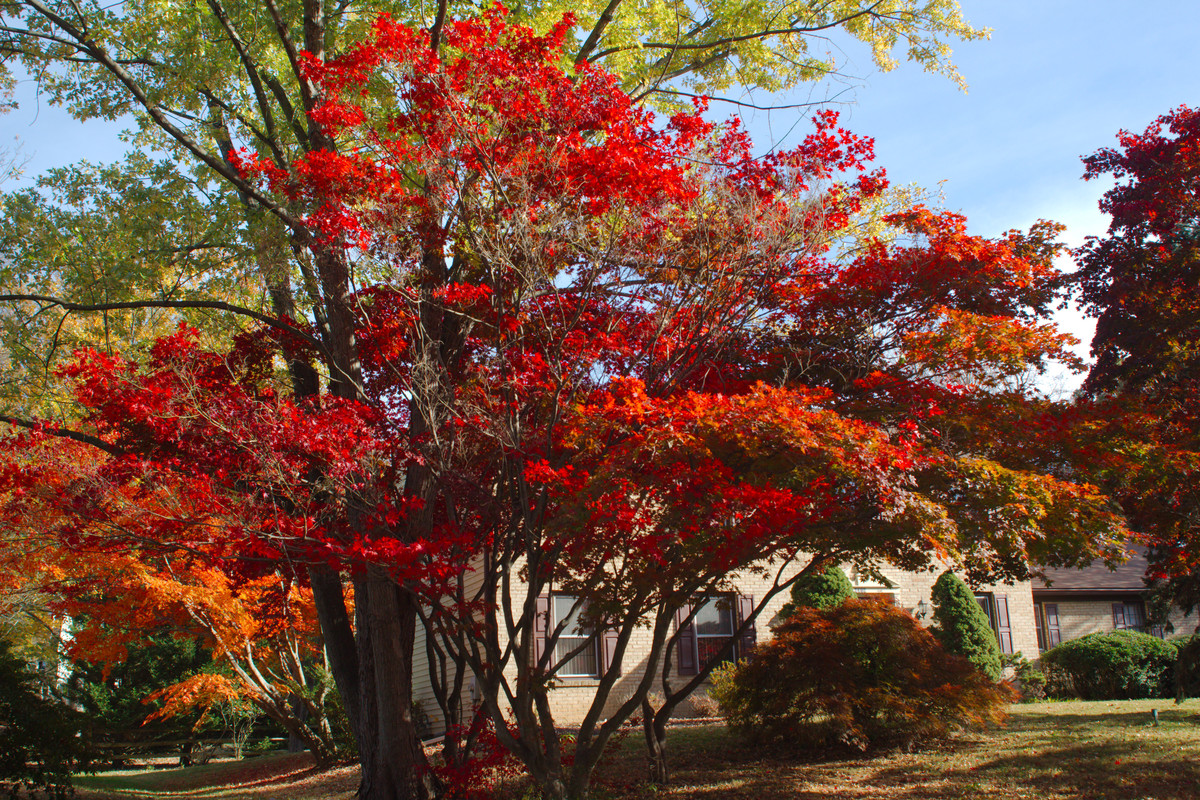
I’ve photographed these particular Japanese maples before. They are at the other end of the neighborhood and they have just about the most beautiful fall color of any trees I know. Individually they are lively but in combination they are spectacular. The near tree, on the left in this photo, is nearly red, with orange undertones. The farther tree is more orange and lighter and brighter. There is also a third Japanese maple on the right, further away still. That one is a deep burgundy color. I think this photo is improved by the small amount of gree from the azaleas in the foreground. I took quite a few pictures this morning and I like most of them. A woman walking her dog passed me and we agreed that these trees were special.
Zelkova Trees
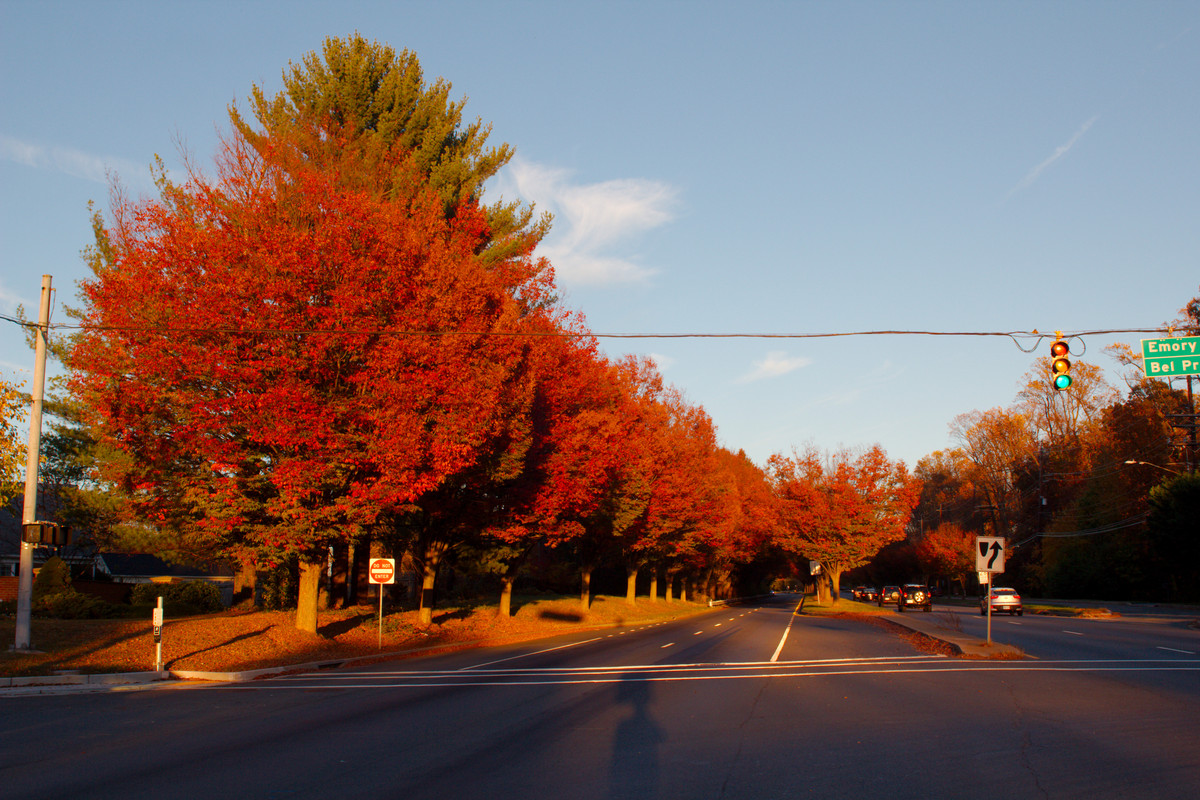
Getting pictures of the Zelkova trees that line Norbeck Road is sort of an annual thing for me. As I was driving east this evening I knew the light would be nice and with the bright blue sky and the scattered clouds, it seemed like an ideal day for it. I stopped at the grocery store but the light was still right when I was done, so I pulled off where the trees start and got out to take a dozen or so pictures. One thing that makes it hard is the contrast between the shady parts of the picture and the brightly lit leaves in the sun. But that’s part of what I like. They aren’t as fully in color as in previous years, but they’re pretty nice, nonetheless.
More Maple Leaves
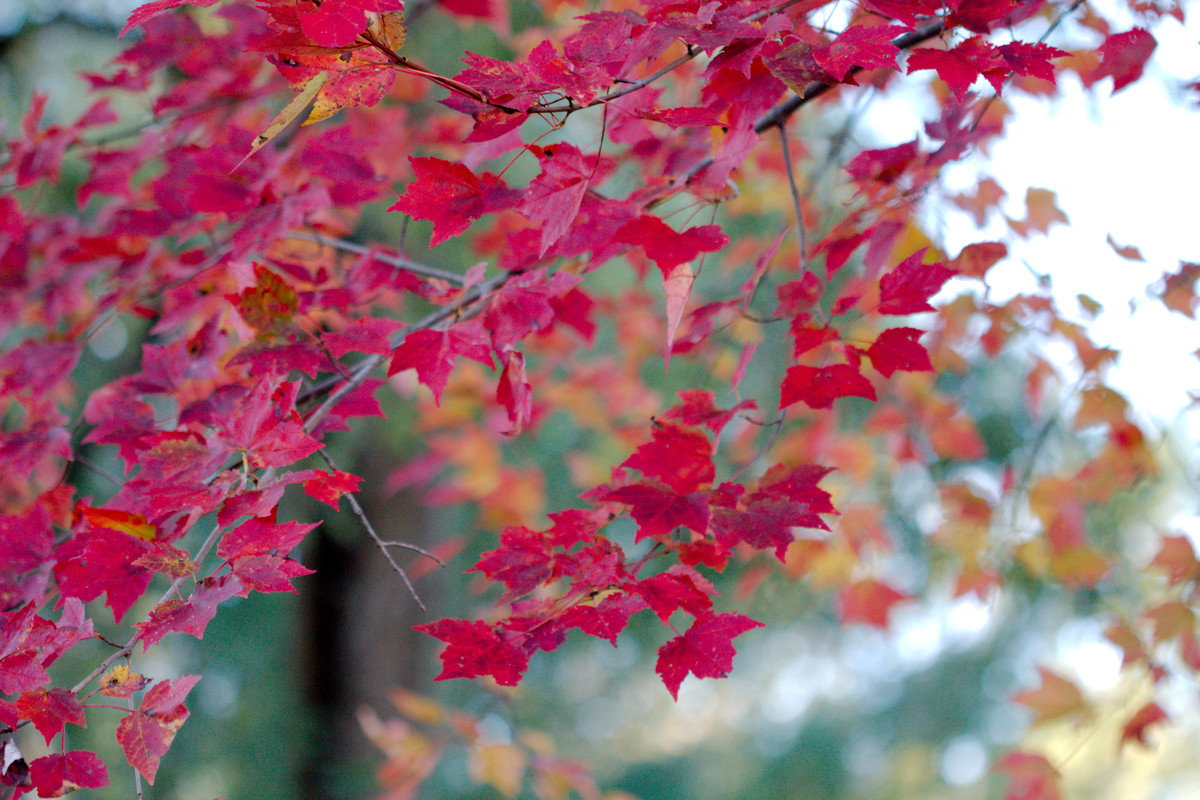
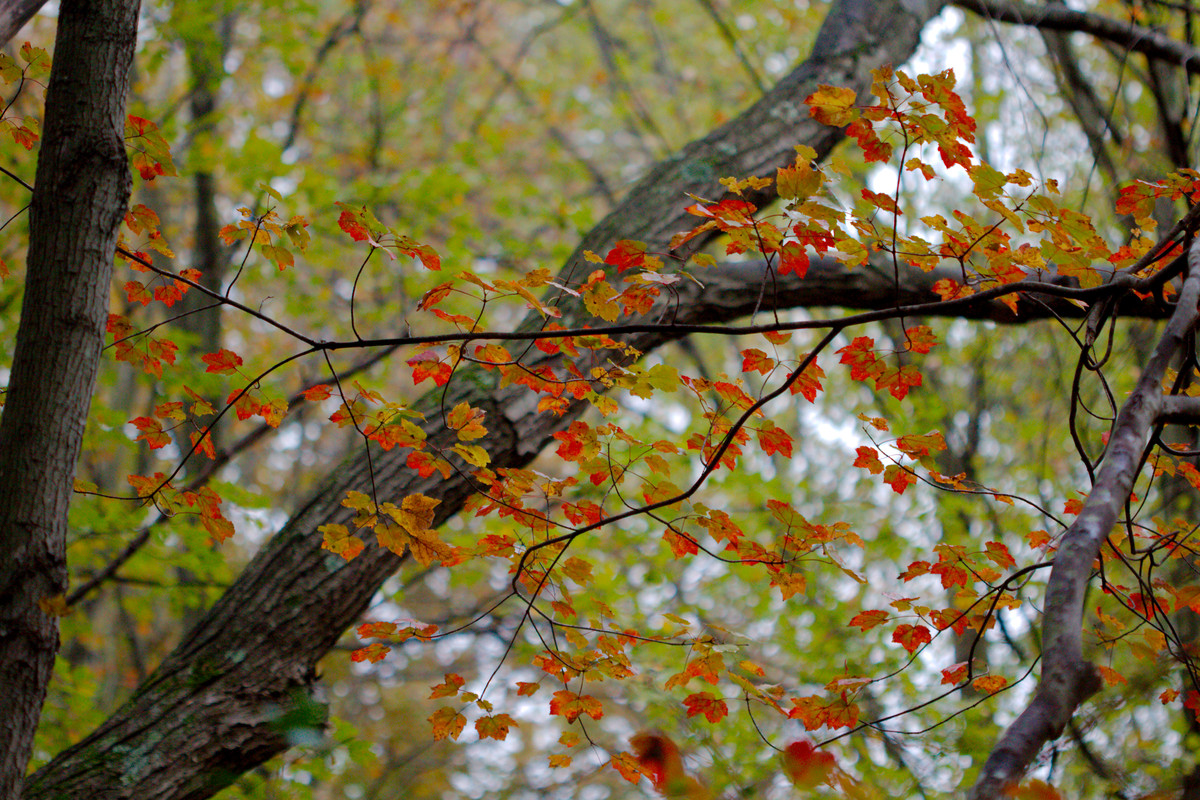
Here’s another shot of maple leaves in our back yard. I often feel like the colors in the current year are different from previous years. Not so much that they are different but that the timing is different. So I looked back at pictures of this tree the last two years to see when it was in full color. I have a picture posted on October 29 of 2017 and two pictures on October 27 and 28 in 2016. So I’d guess it really isn’t all that different this year. The leaves on the ground under the tree are just about as nice as those still on the tree. Set off by the bright green of the grass rather than the pale blue of the sky but in this case without the direct light of the afternoon sun on them.
Purple Coneflower
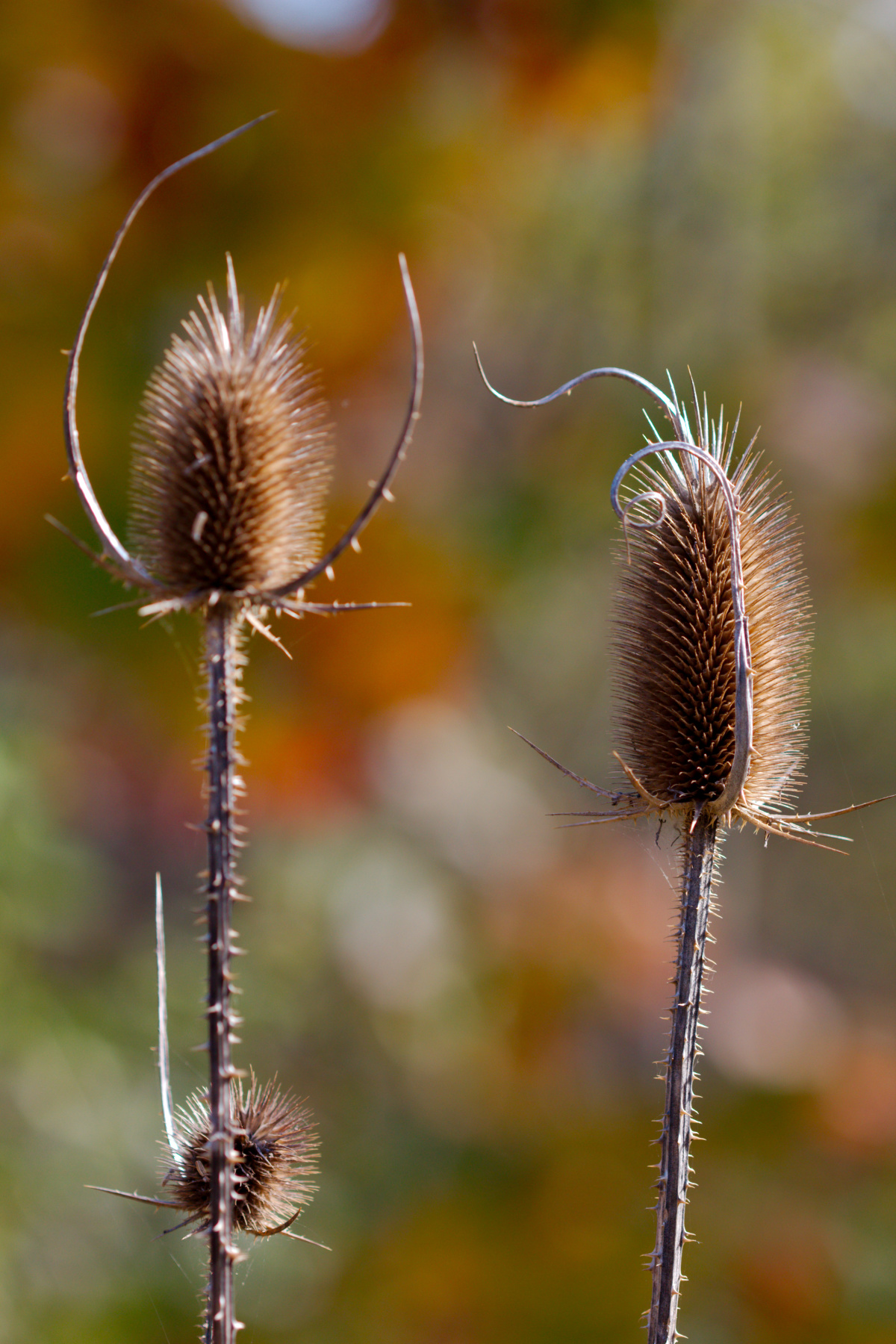
The purple coneflowers (Echinacea purporea) is long since finished blooming. In fact, most things have. There are still flowers on a few plants but they are getting fewer and farther between. But that’s not the end of interest in the garden. In the fall we start to see shapes that we don’t notice in the summer amid all the color. The seeds of this coneflower are lovely in their own way, especially the way they detach and leave this little floret of spikes as they are carried off, probably by gold finches and other small birds. The gold finches, too, have lost their summer finery and are dressed in pale brown for the winter.