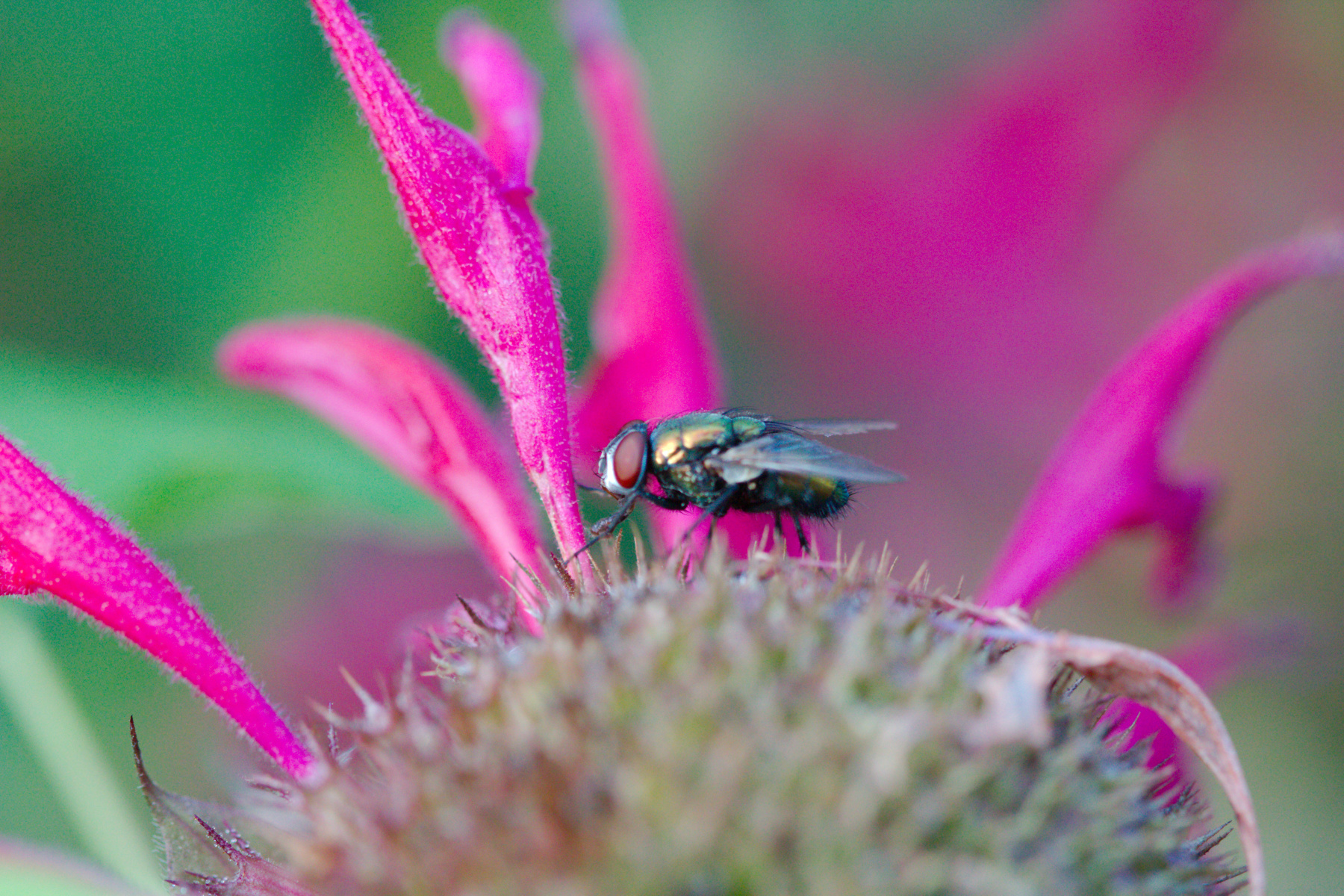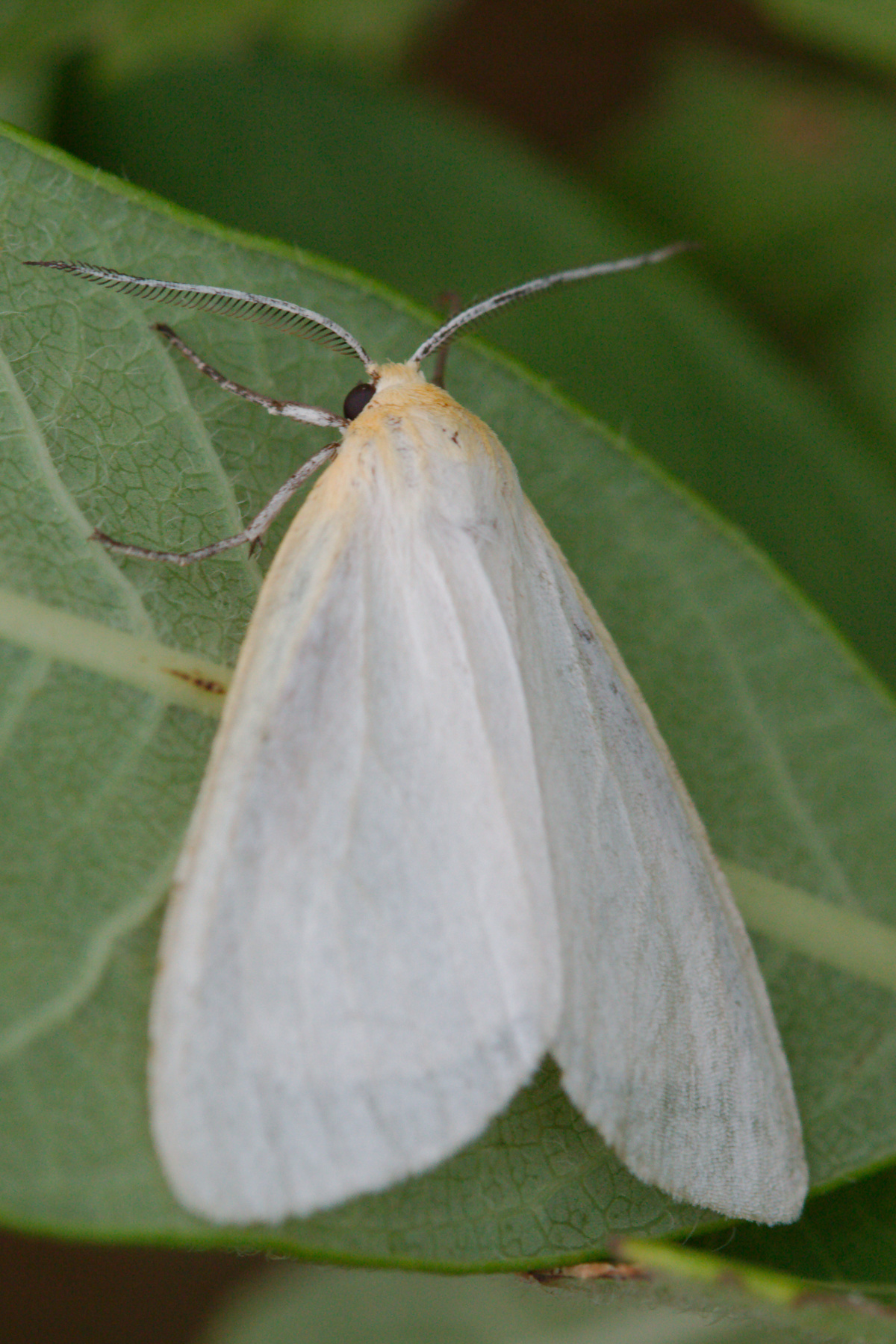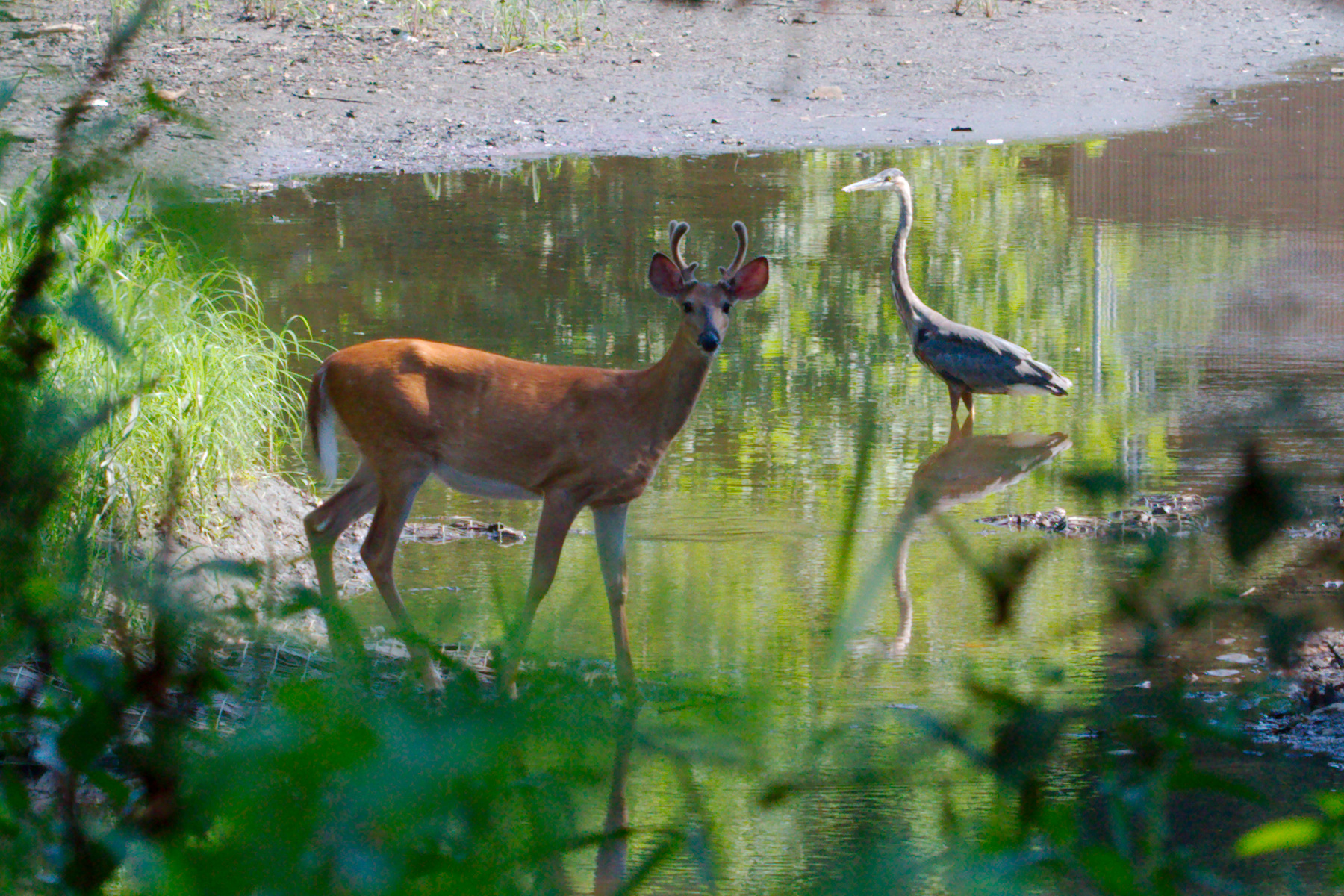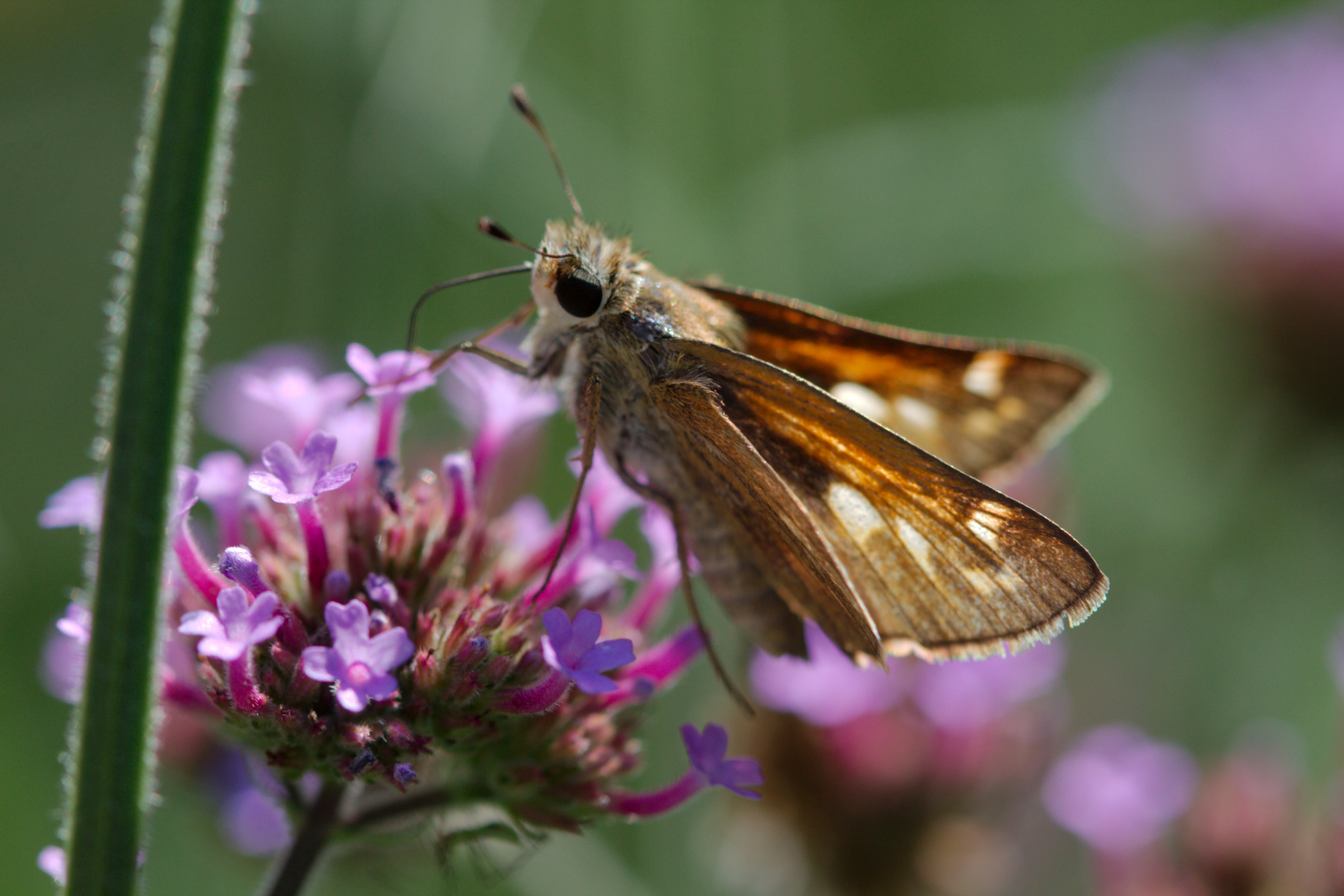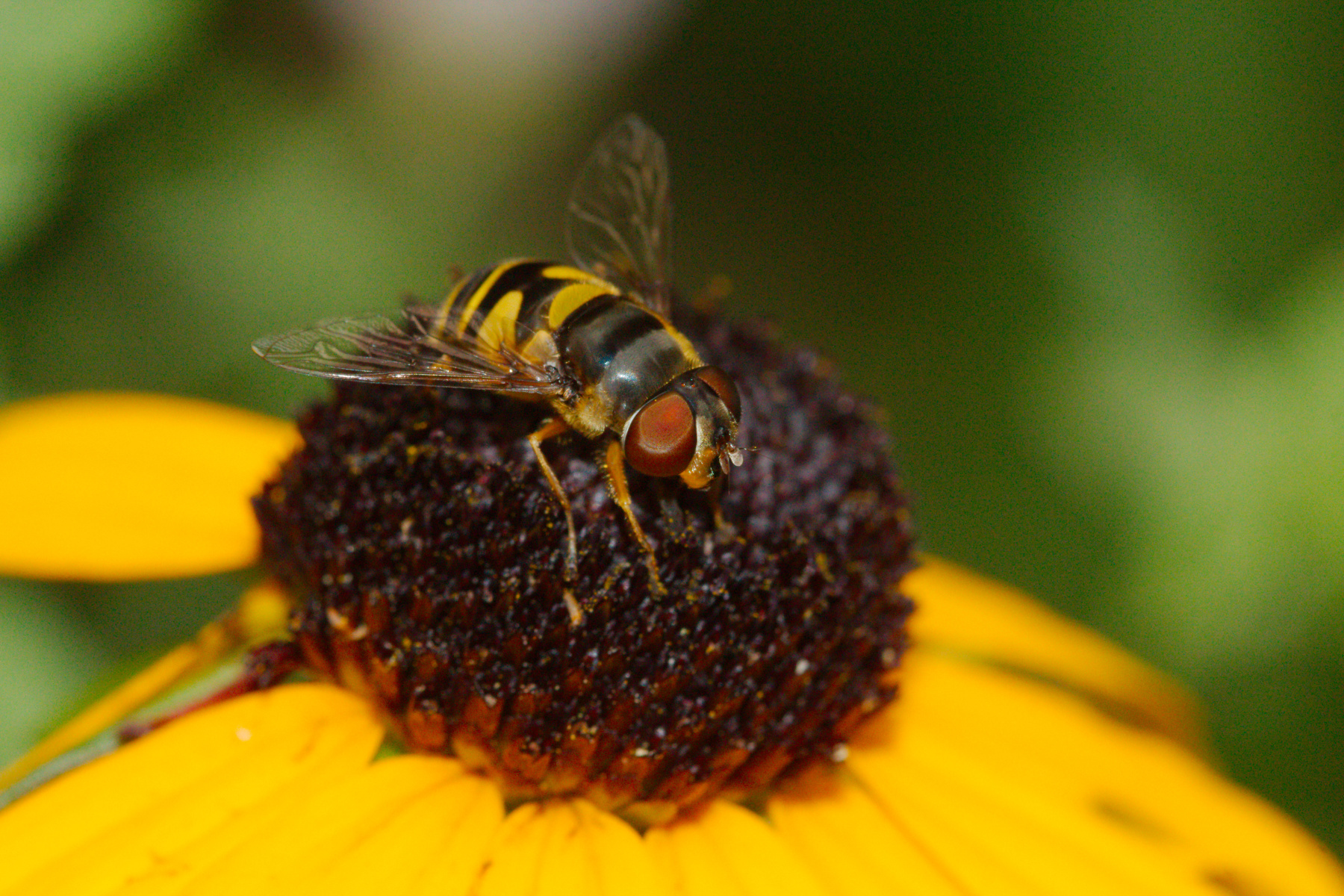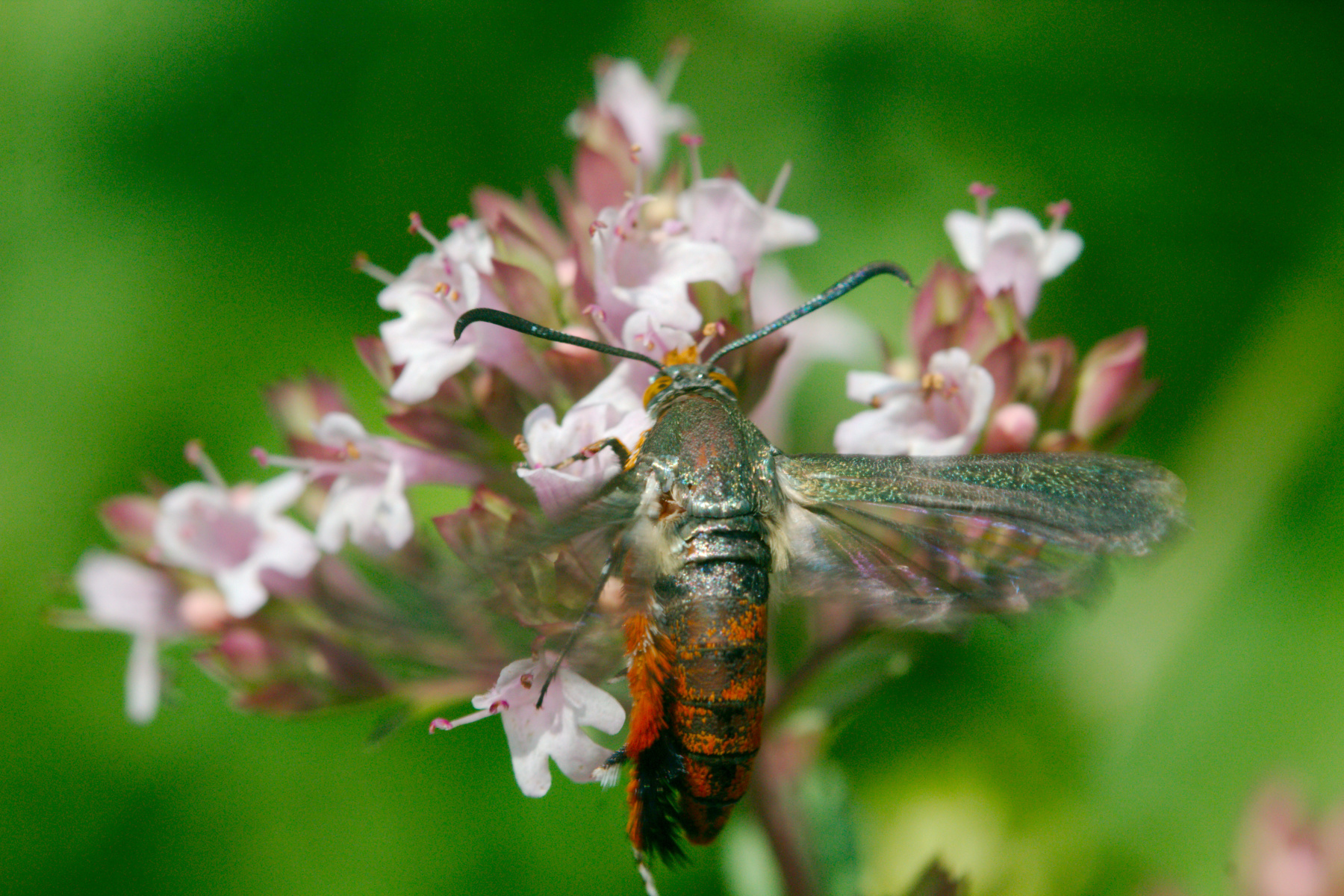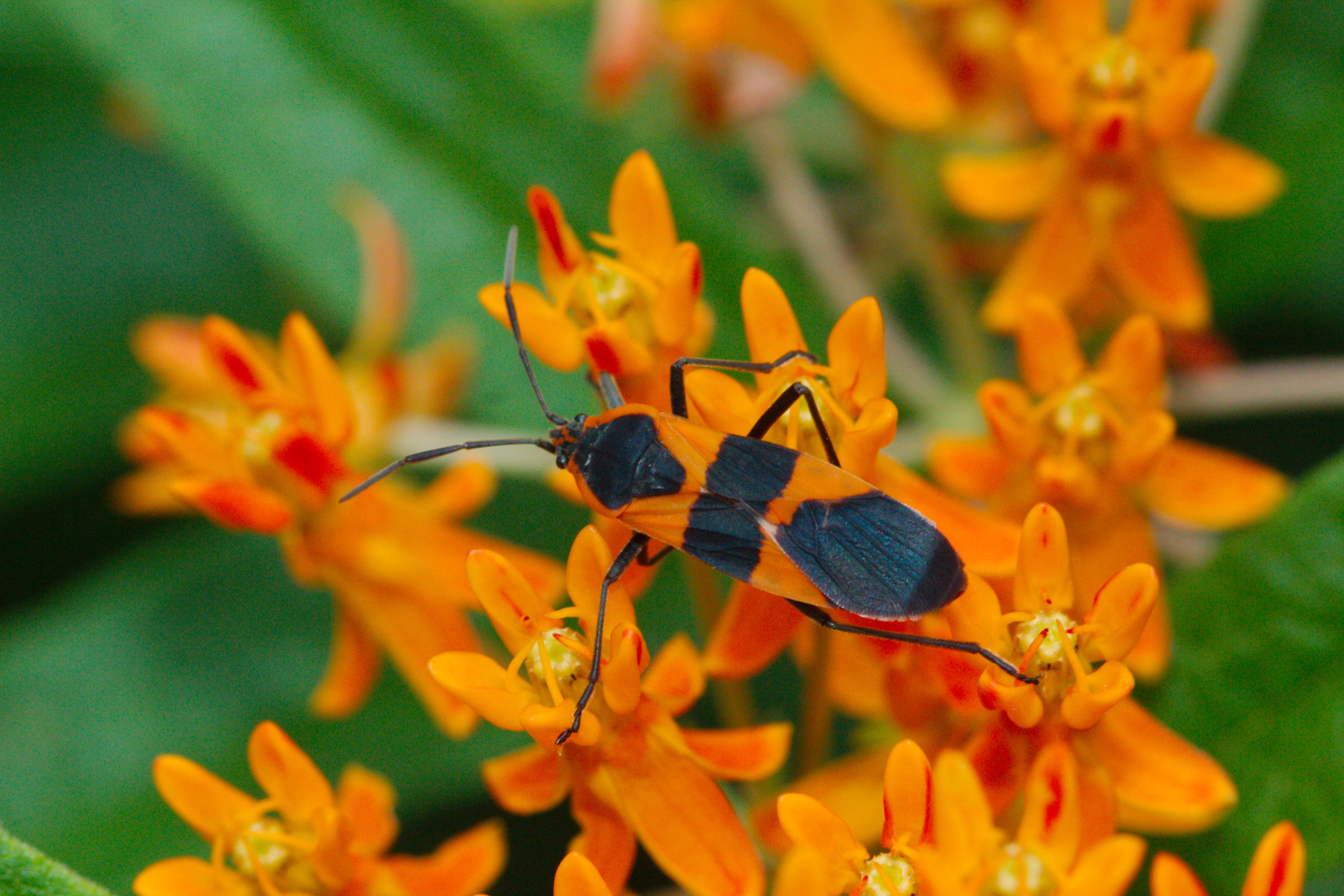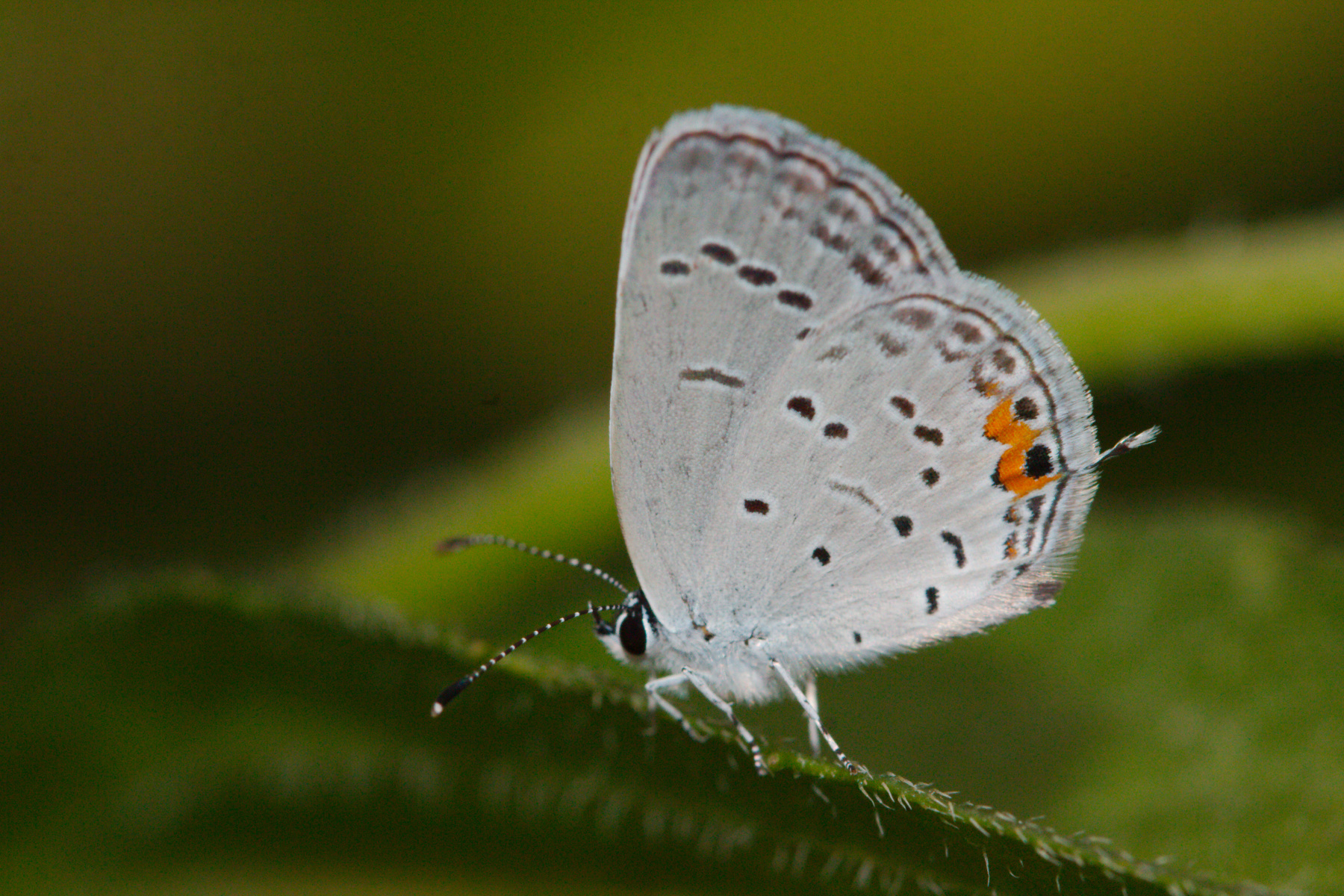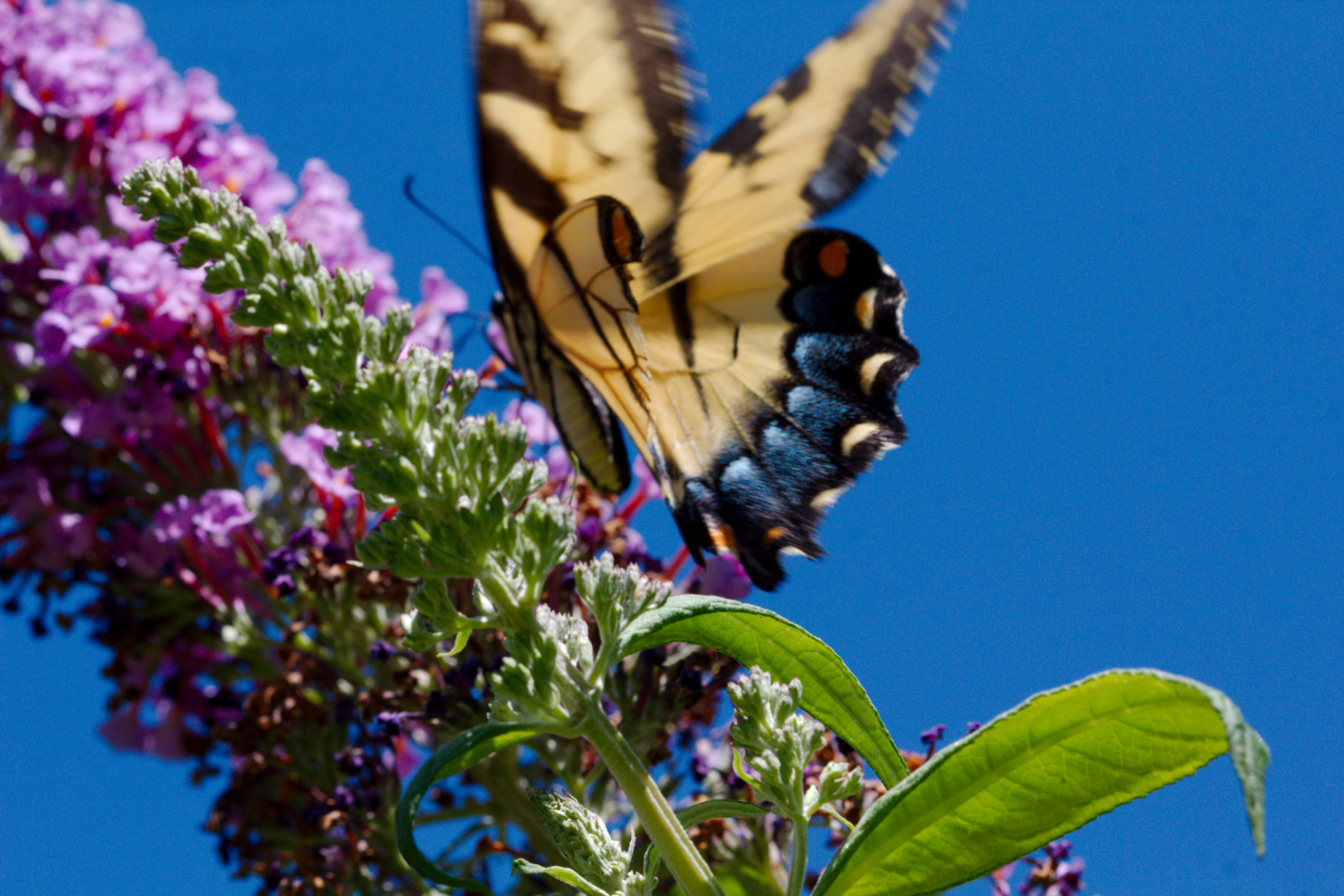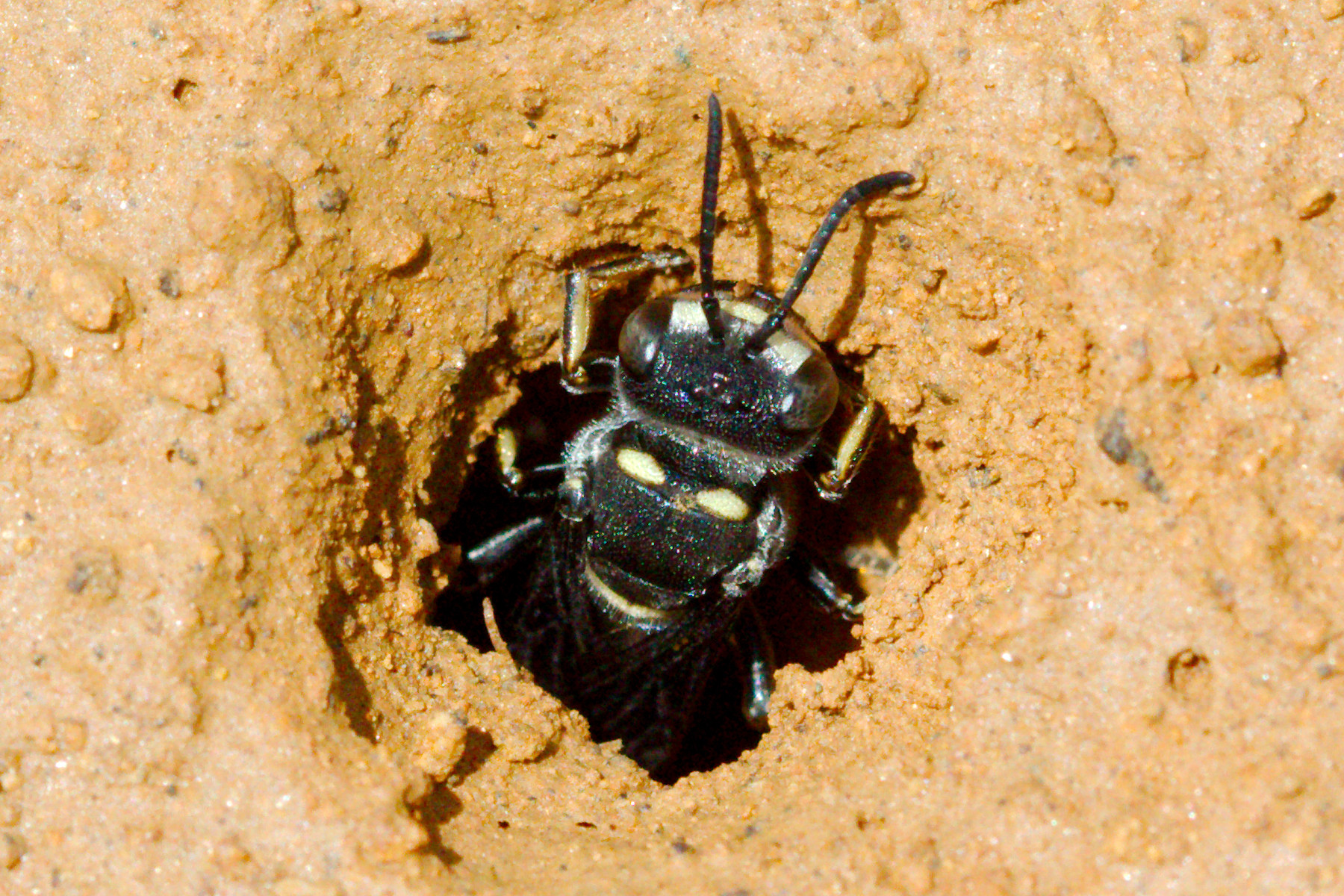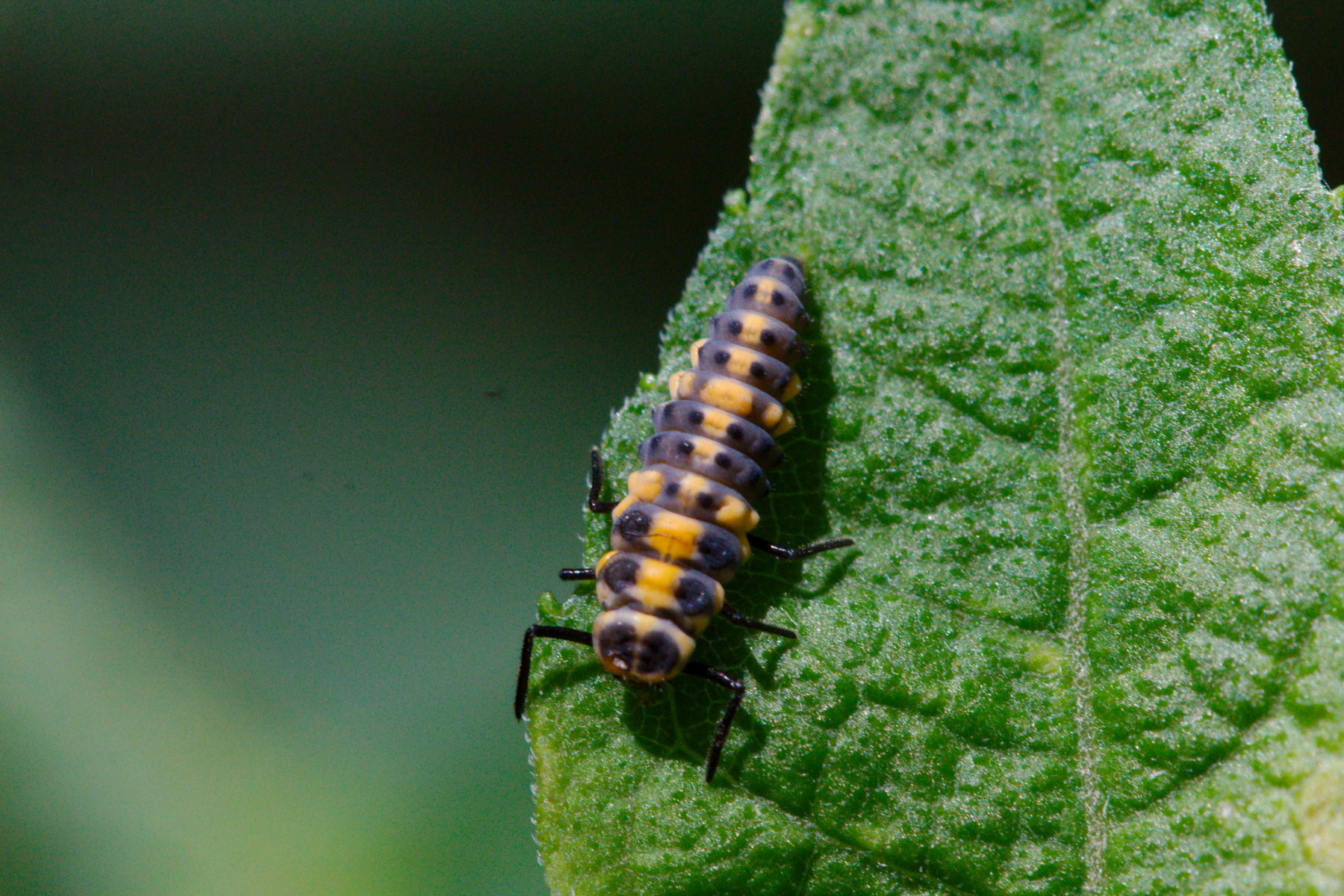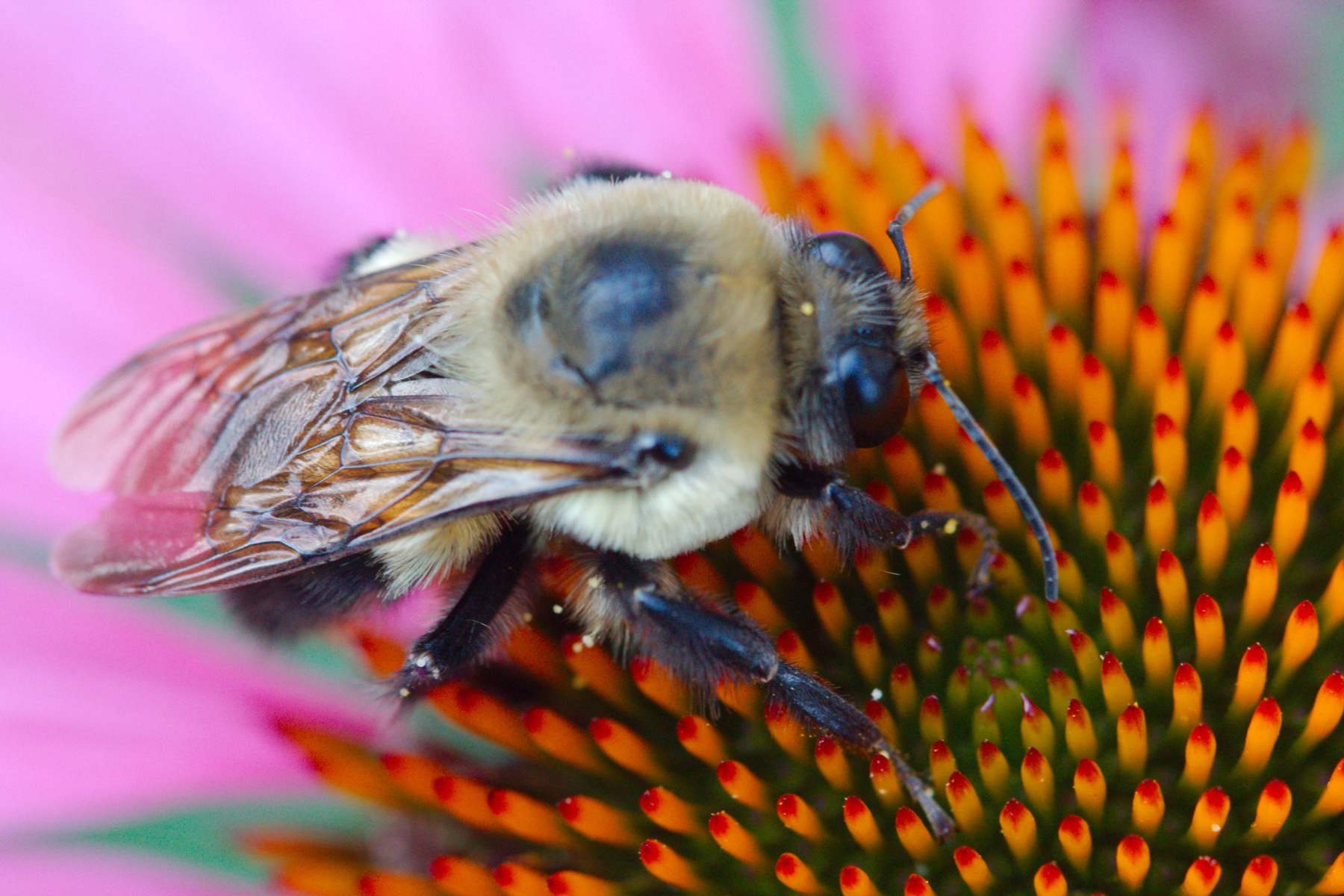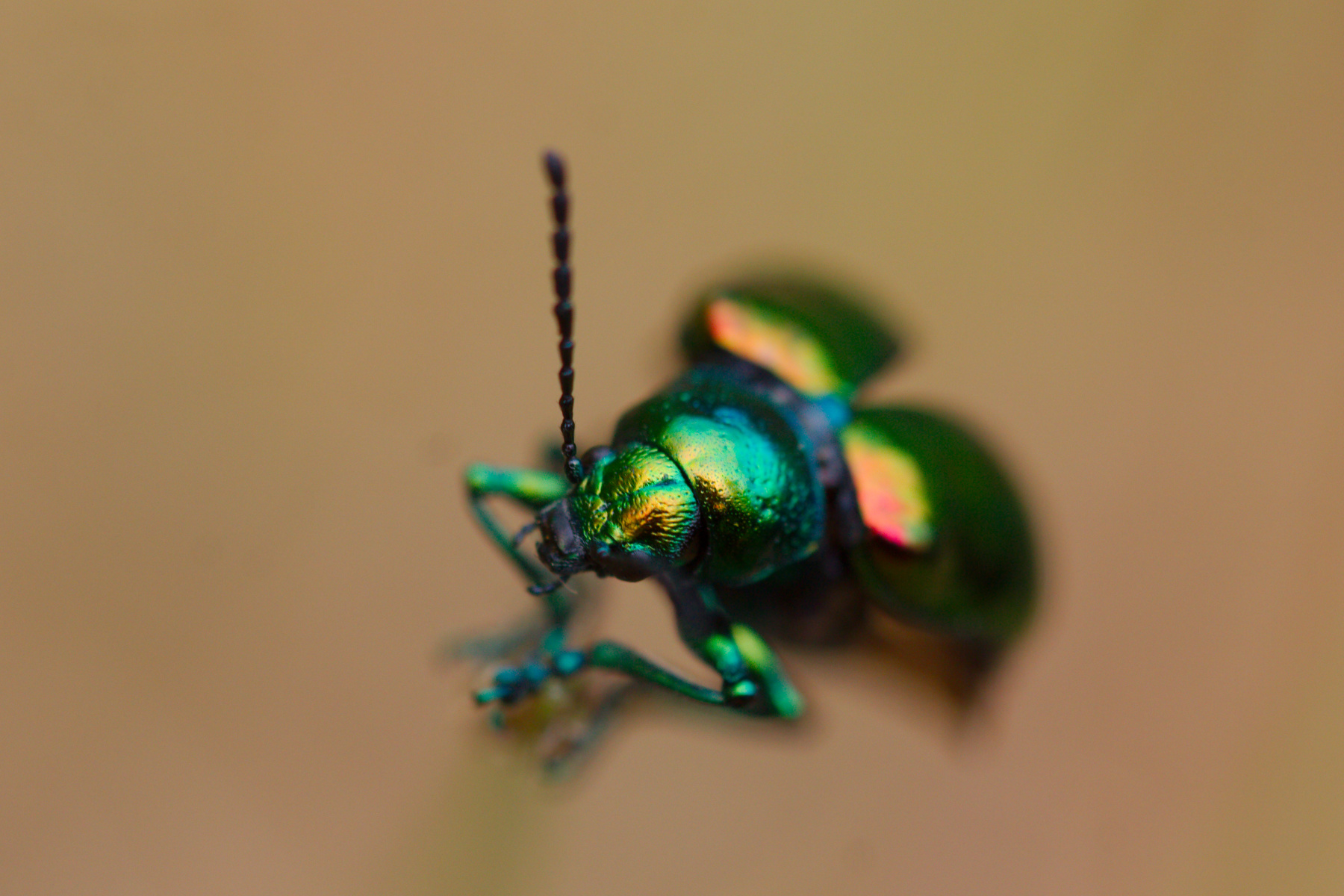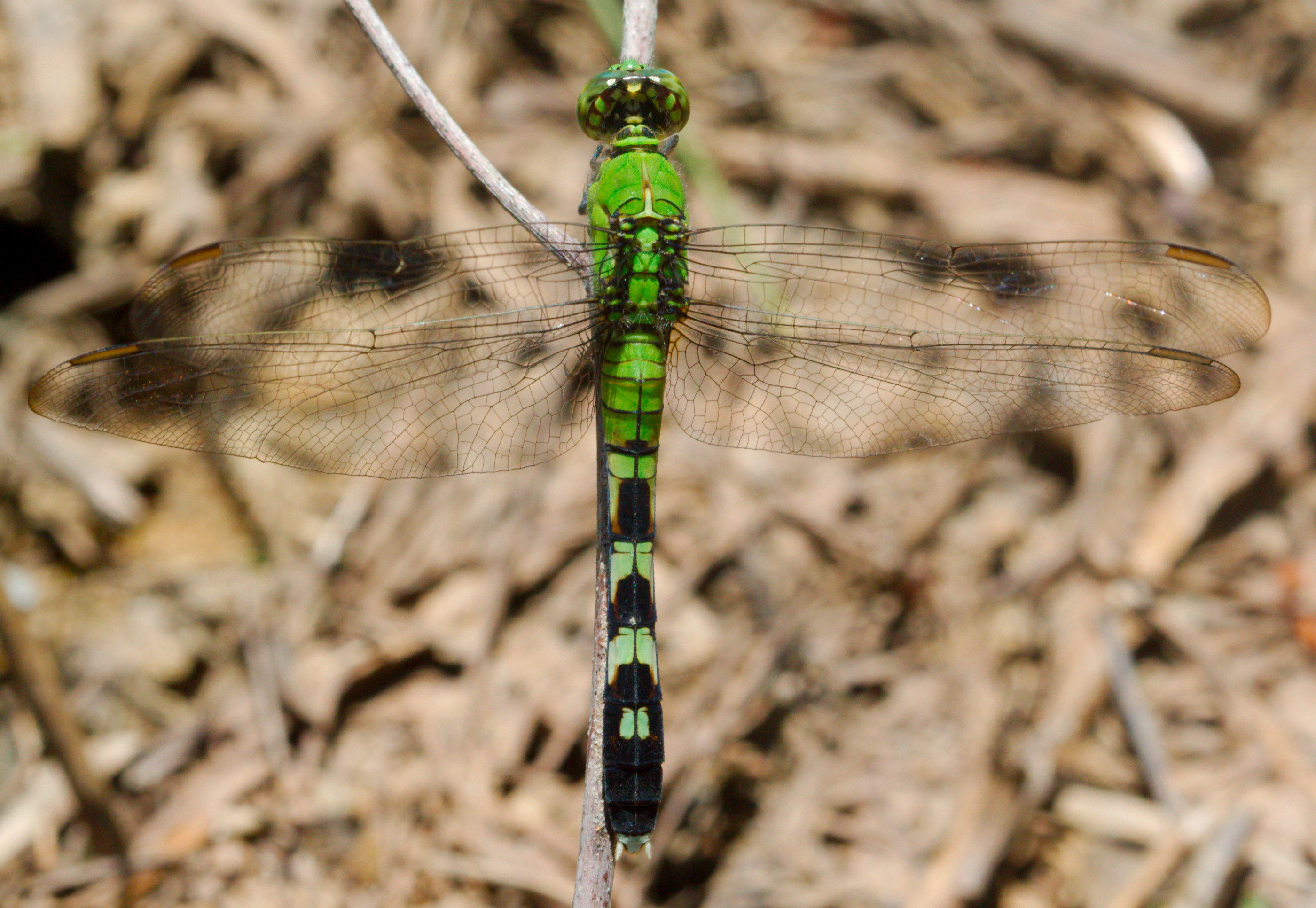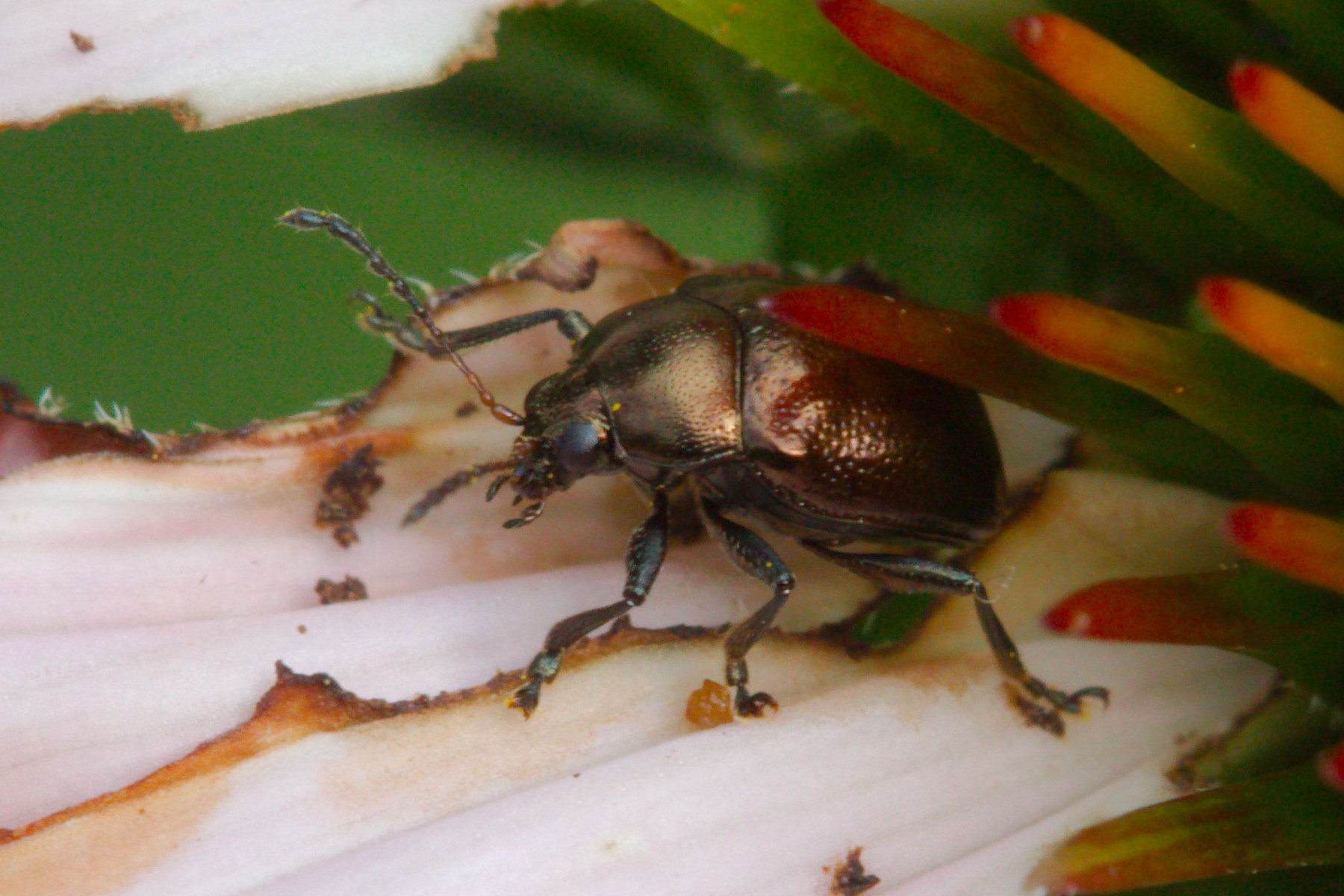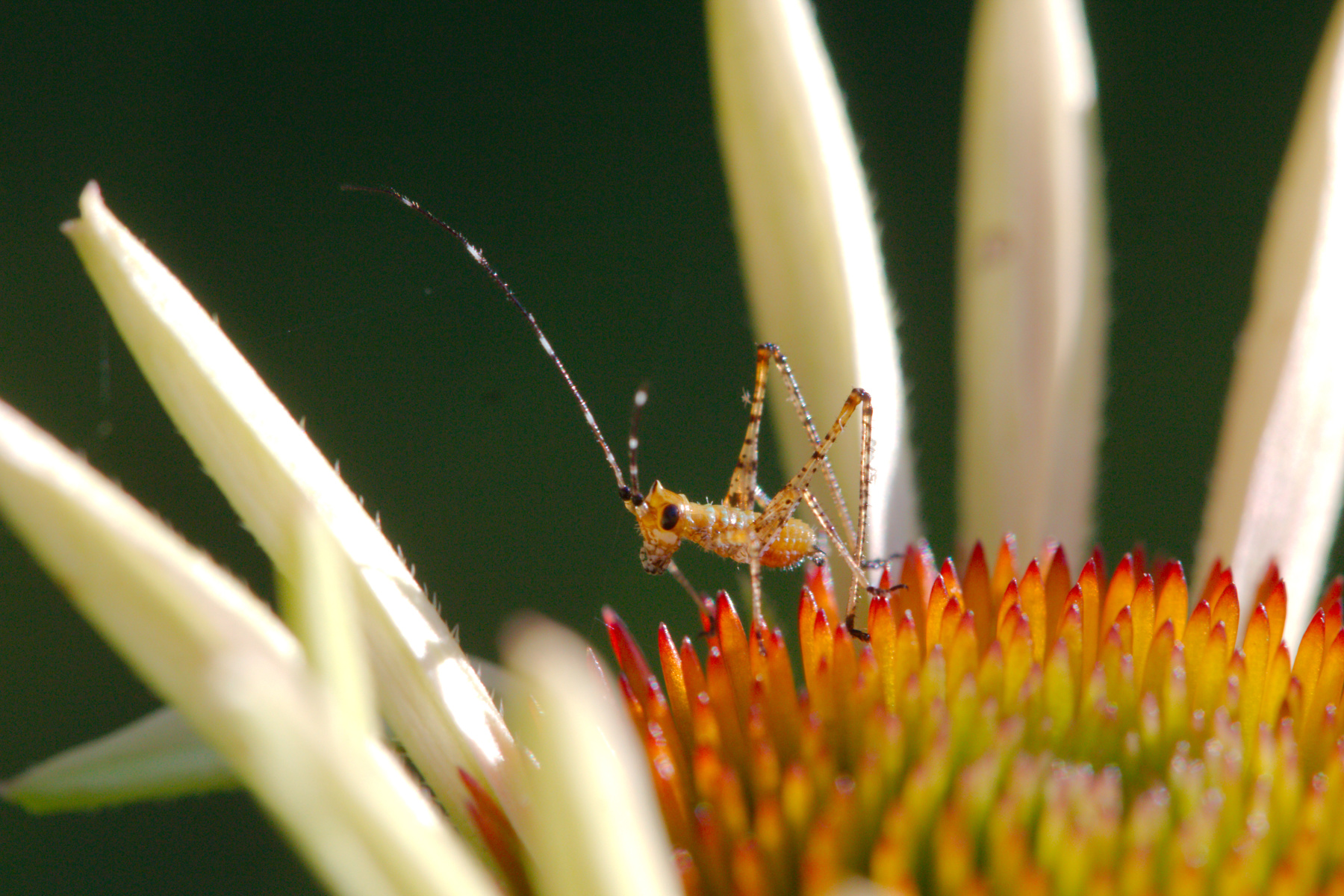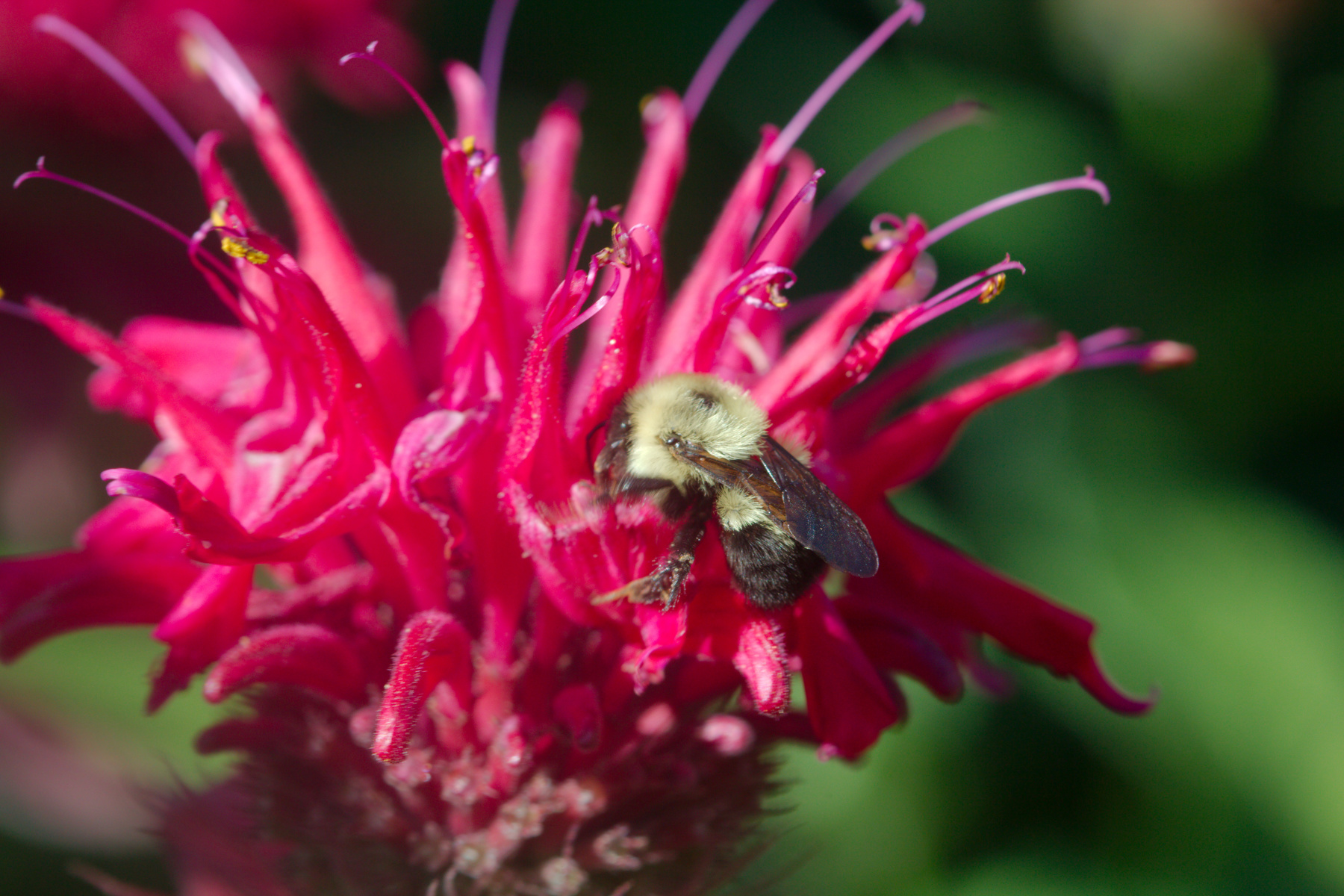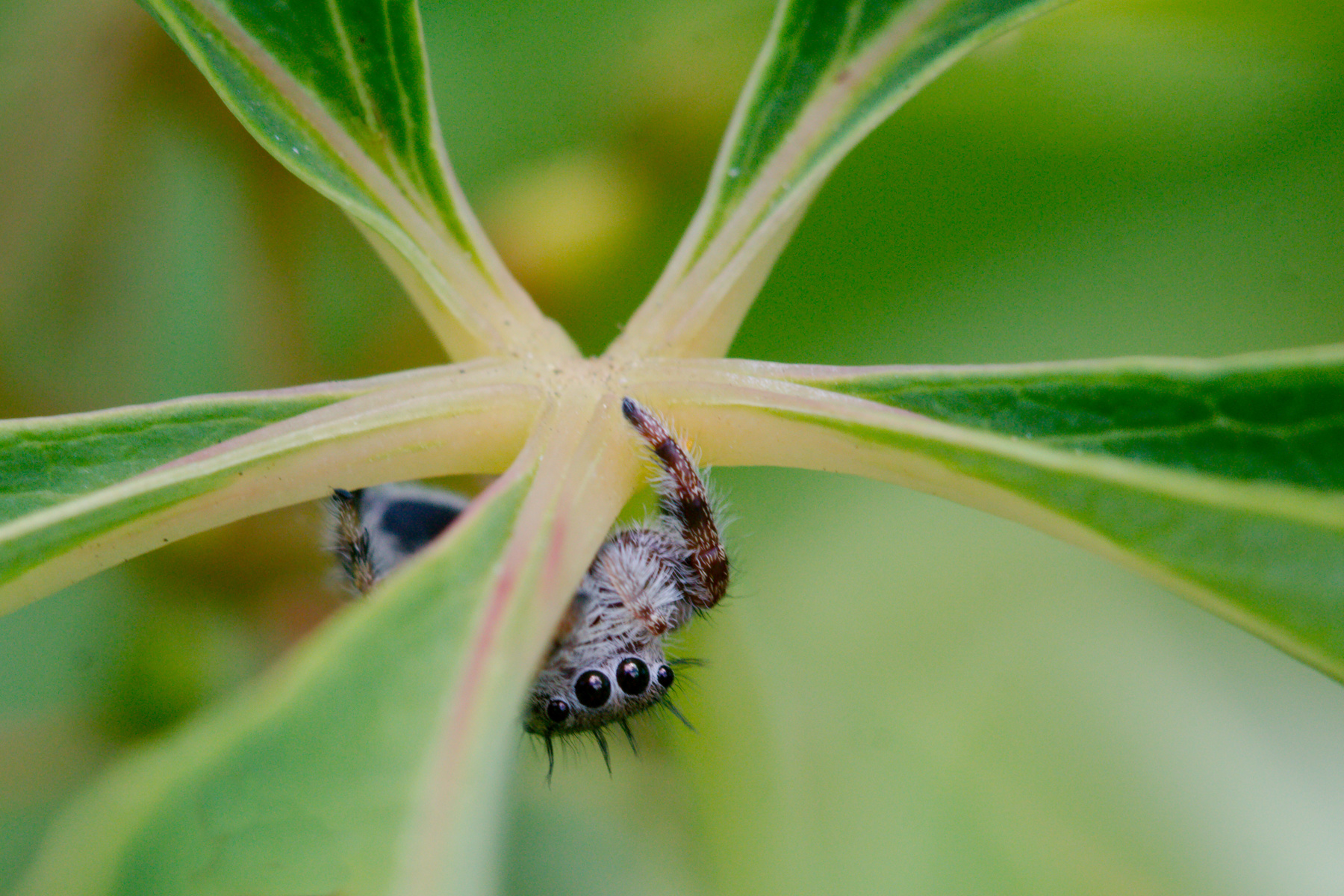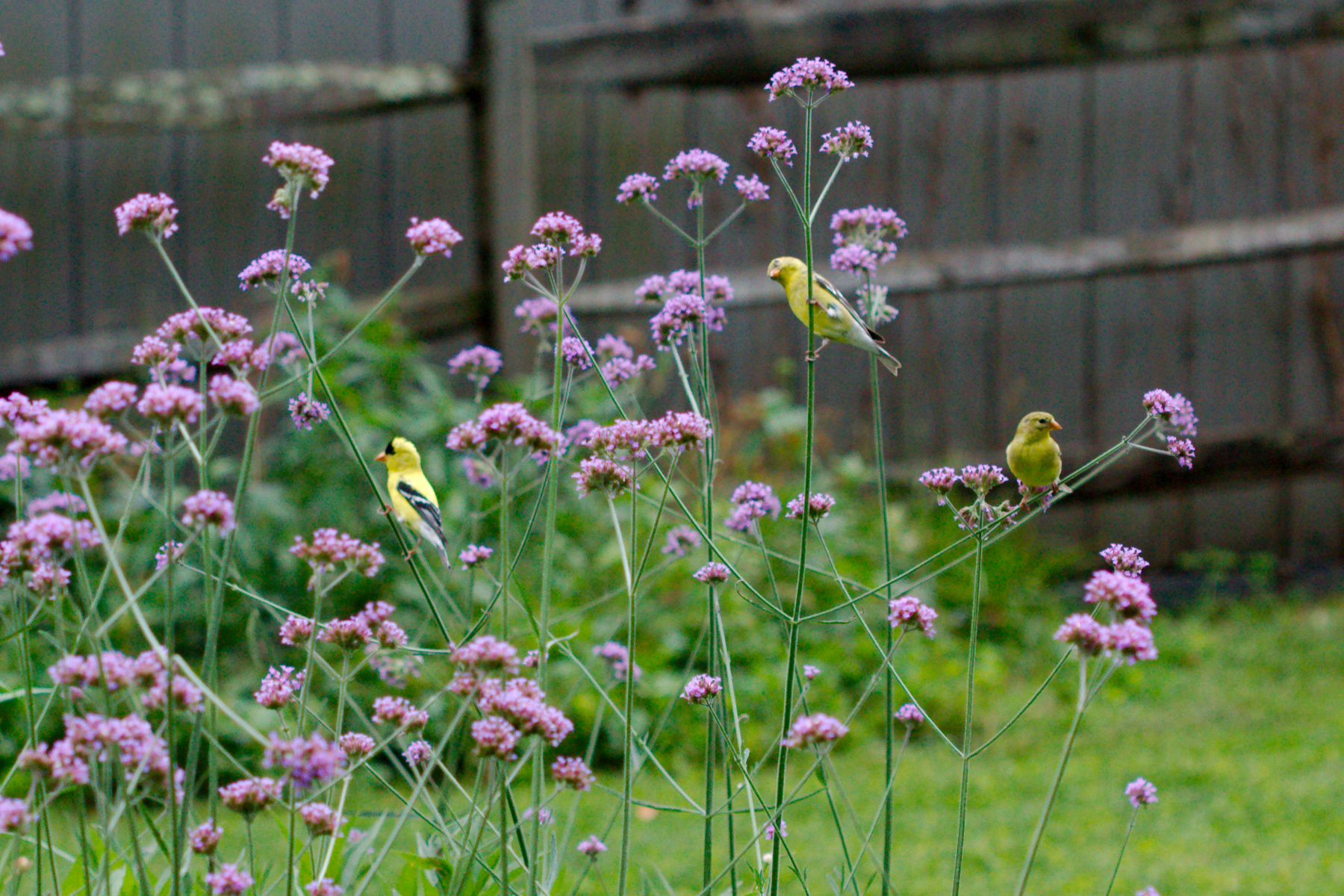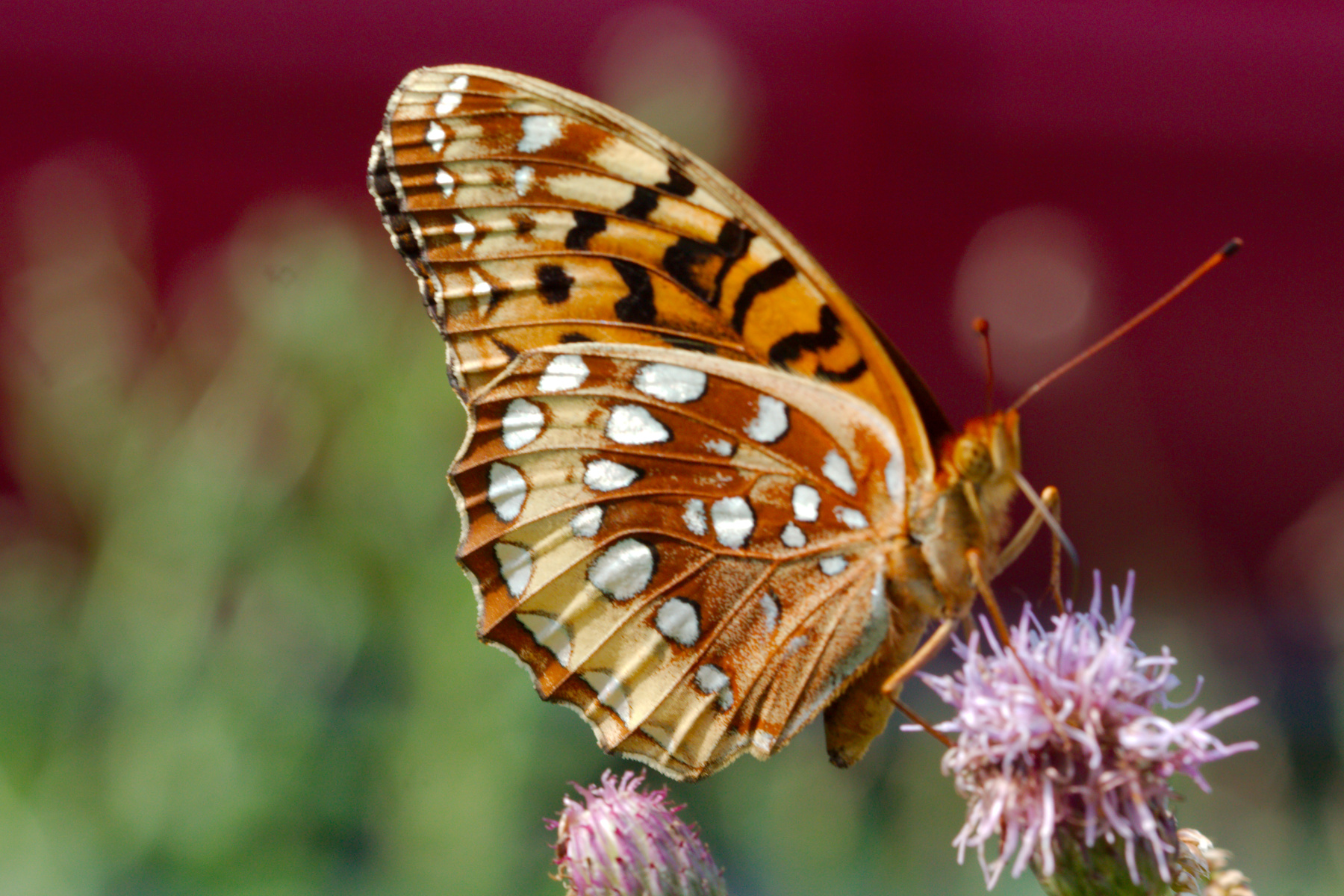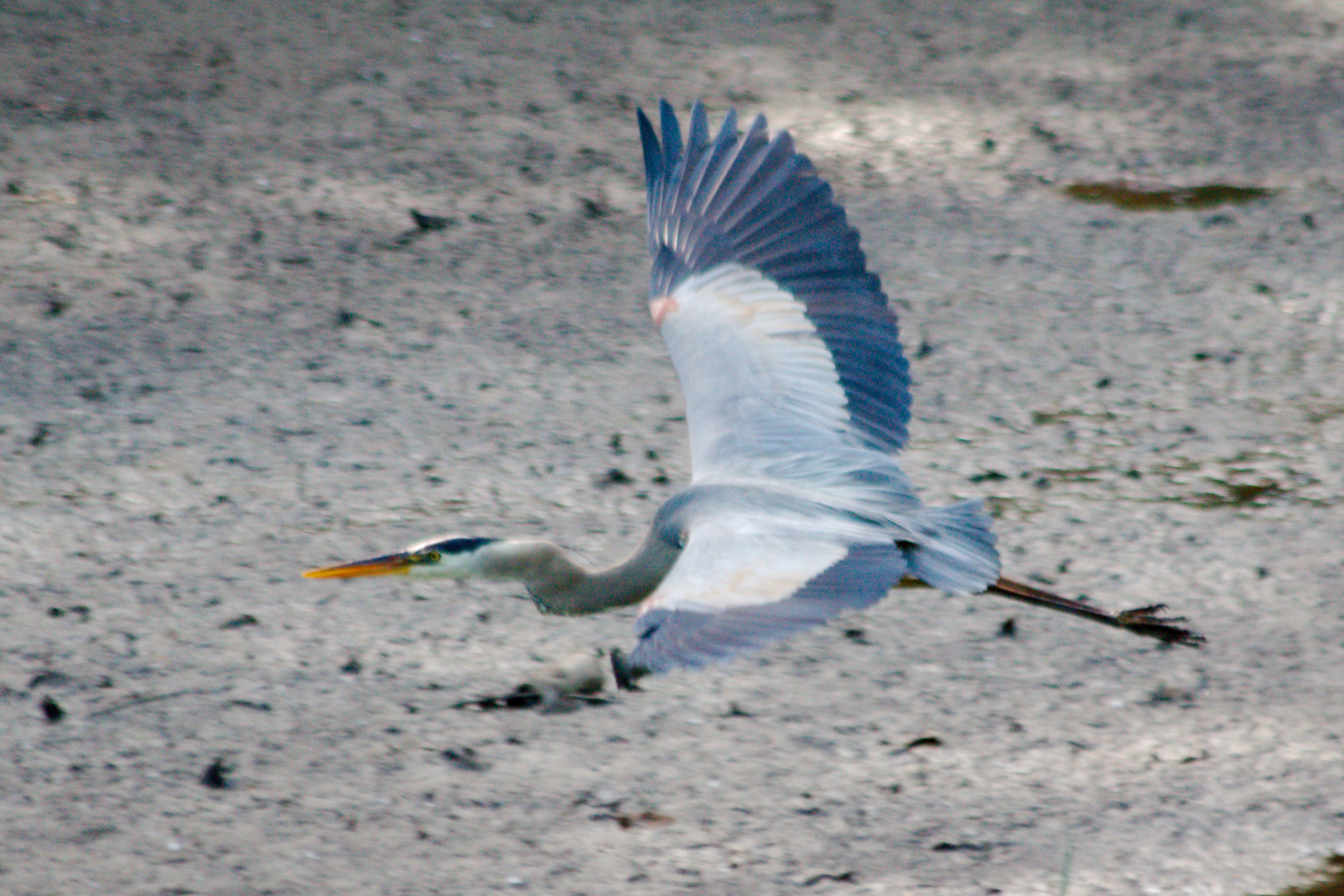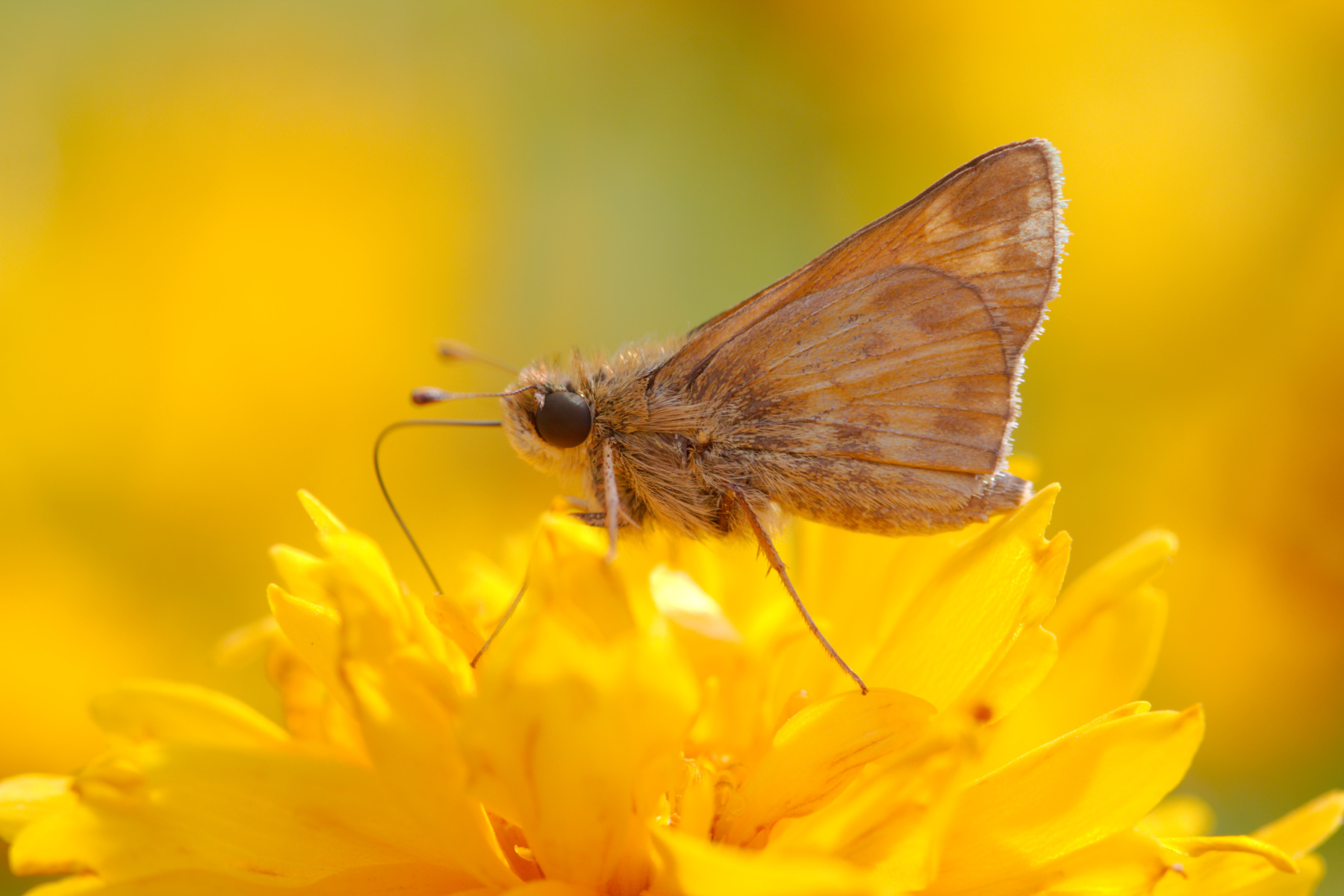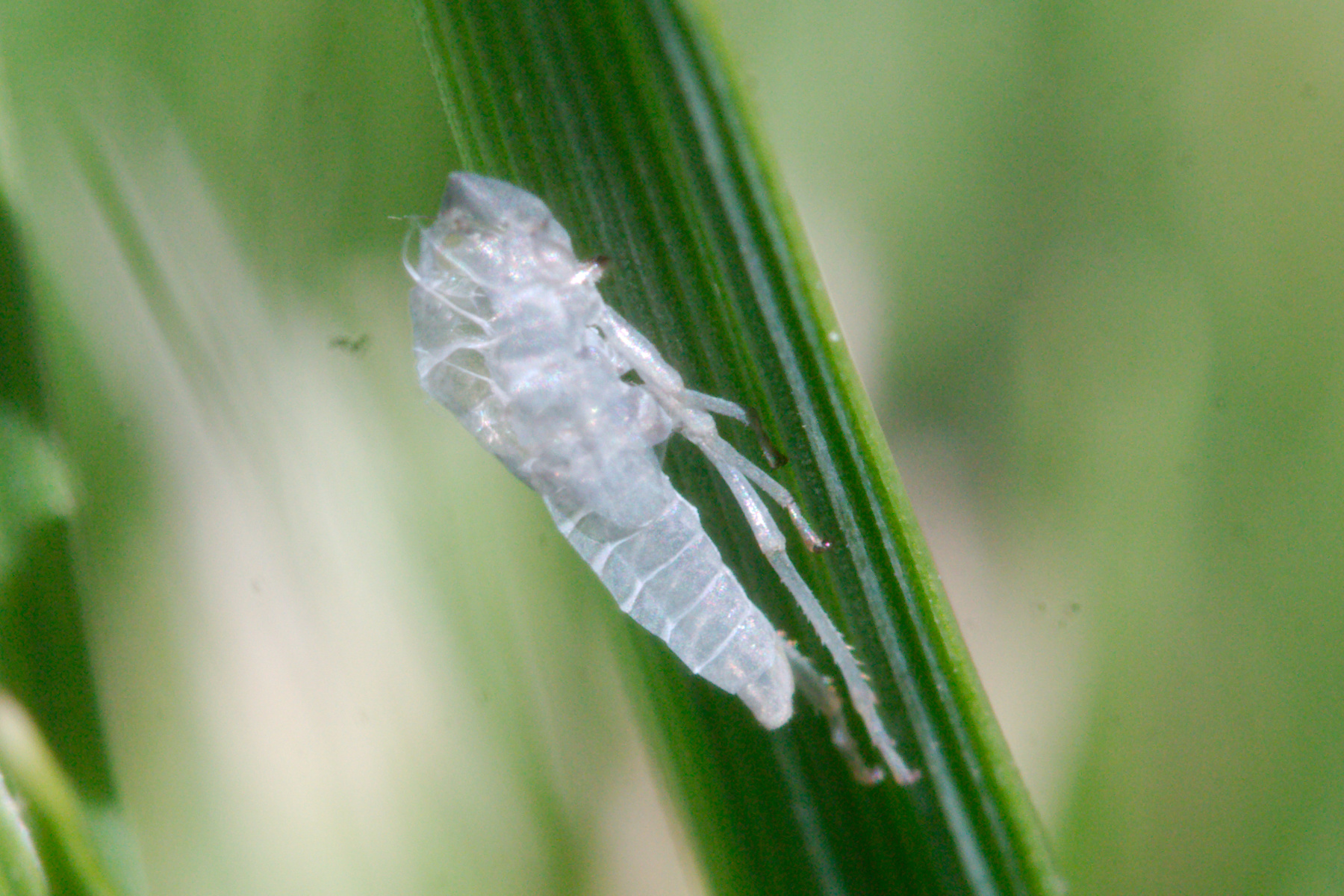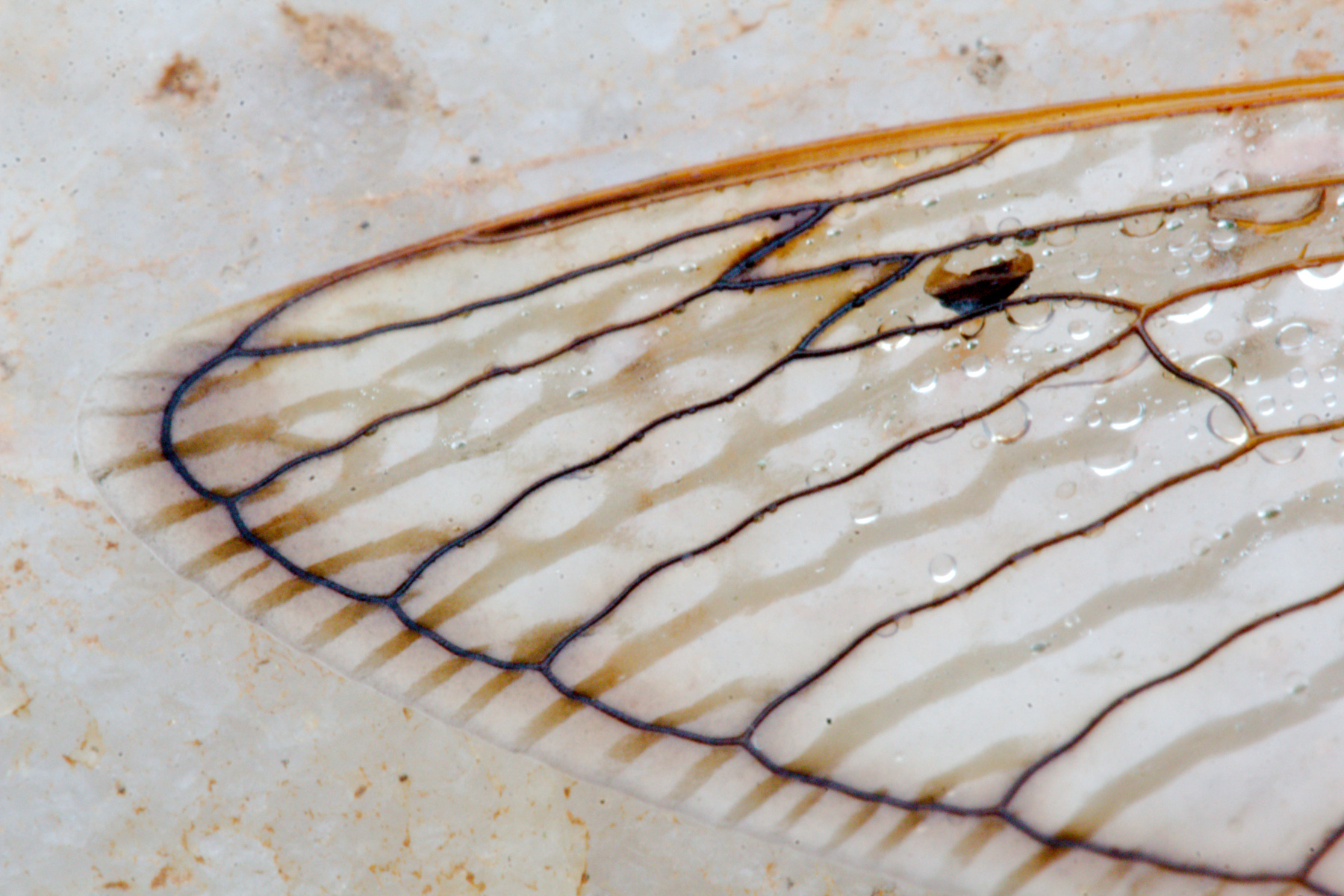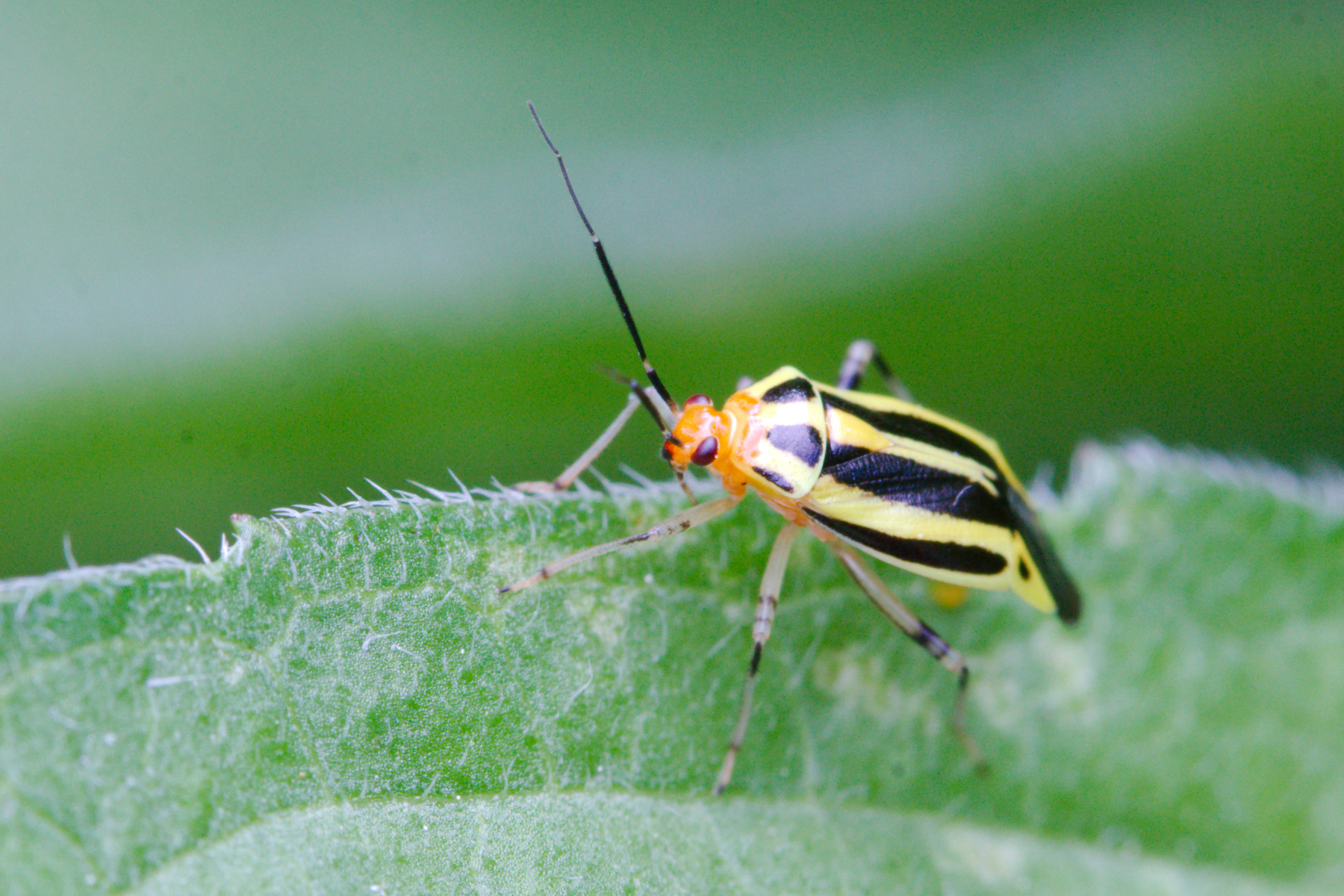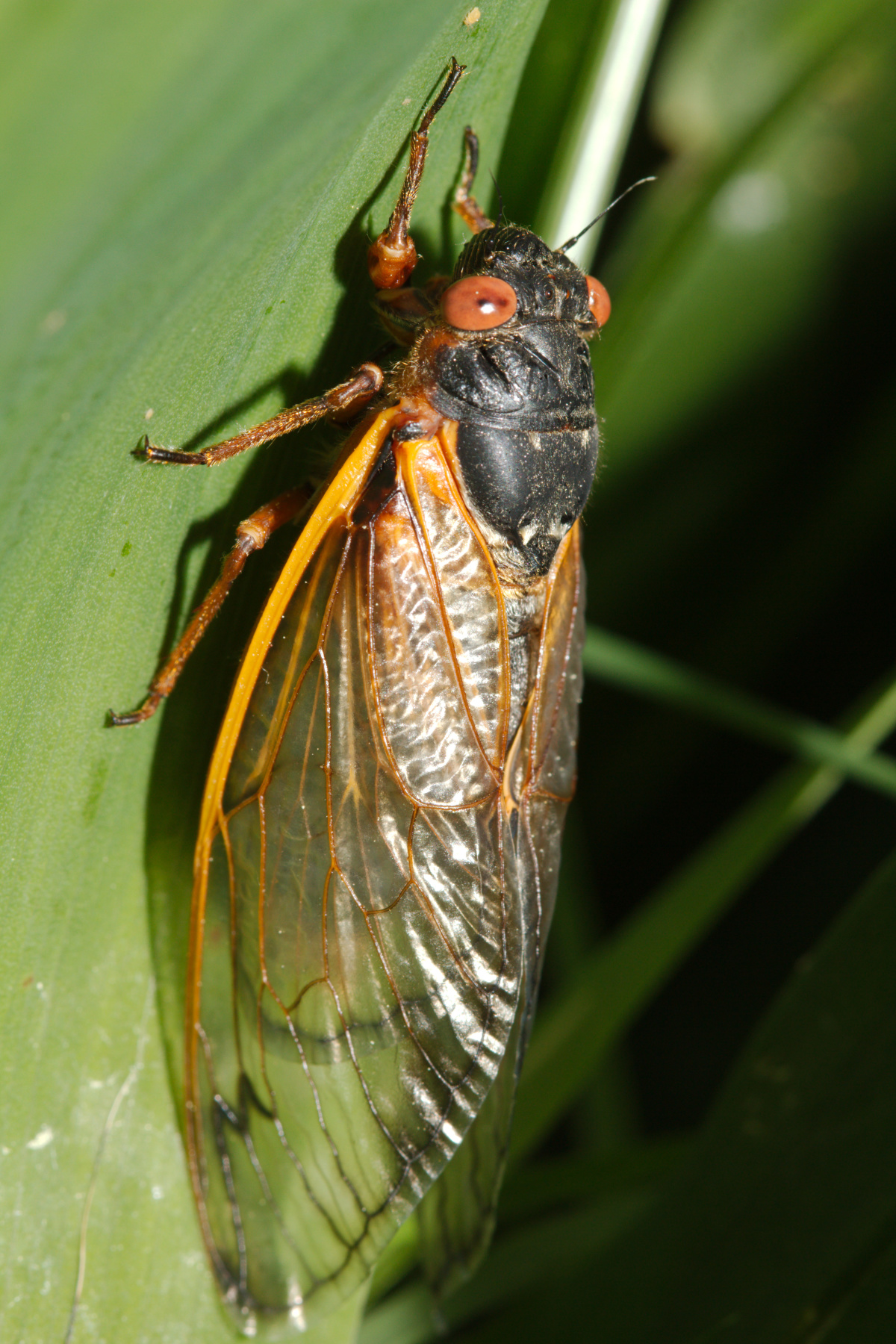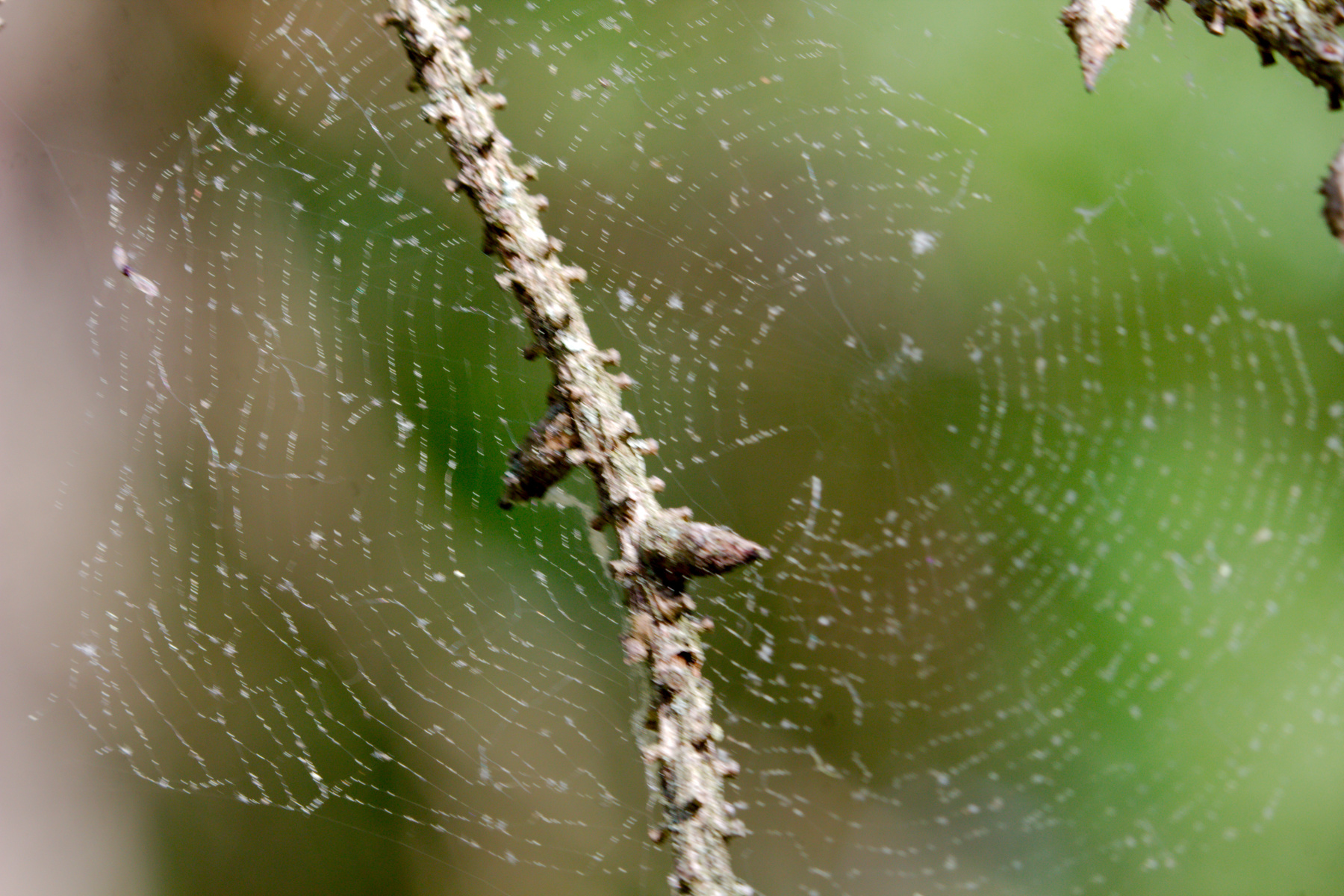
I have yet another “insect on a black-eyed Susan” photo today. These are by far the most numerous flowers in our yard this time of year. They aren’t necessarily the insects’ favorite flower but most pollinators are fairly broad minded and visit lots of different plants. The Buddleia bushes are the clear favorites with the butterflies and the mountain mint (Pycnanthemum muticum) is probably the most popular with the bees and wasps, but they all visit the black-eyed Susans, as well.
Creatures
Megachile mendica (Flat-tailed Leaf-cutter Bee)
Caterpillar
I was a little worried about sitting through church this morning but my back tolerated sitting for long enough that it wasn’t a problem. We were happy to see some friends that visited the church a few weeks ago come back again today. After church we walked to the Stadtman Preserve next door to see what was going on there. They’ve been renovating the mid-century modern house that the Stadtmans build and lived in and it’s nice to see the progress. There were naked lady’s (Amaryllis belladonna) in bloom and I got a few photos of this little brown and white caterpillar. I have no idea what sort of creature it is. I’m going to guess a moth but I won’t go any farther than that.
Atteva aurea (Ailanthus Webworm Moth)
I took some butterfly pictures this afternoon, as well as some flower pictures. While sitting in the chair that Cathy was in when I took the picture for a few days ago I could get pretty close to a few flowers without having to strain my back. Then walking around I saw this prettily colored ailanthus webworm moth (Atteva aurea) on a black-eyed Susan. It took me a while to get down on the ground to get the pictures but I think it was worth the effort. Although it’s named for and feeds on a non-native tree, the Ailanthus webworm moth is actually a North American native from Florida, where its original host was the Simarouba glauca (paradise tree) and Simarouba amara.
Junonia coenia (Common Buckeye)
I chased down some butterflies in the back yard today, including this common buckeye (Junonia coenia). They are resident year round in the south as far north as North Carolina and they move north over the course of the summer. Because of that we tend to have them later in the year than other butterflies and I’ve only just started to see them. They are pretty easy to identify and are very different to the other species that we have. This one, obviously was interested in the black-eyed Susan flowers that are in such abundance in our yard right now.
Osprey (Pandion haliaetus)
Cathy and I took a walk on the beach this morning, heading east. We stopped for a while to enjoy the tail end of the church service on the beach and then continued as far as the pier. On our way back, as we neared out cottage, we saw a bird circling over the water and occasionally diving for fish. As we got closer we were able to identify it as an osprey (Pandion haliaetus) and I was able to get a few pretty nice pictures, considering I only had a 100mm lens. I had thought about the possibility of renting a longer lens for this trip but decided against it. Birds are fine to photograph but really, this trip is not about wildlife photography, so I decided to put it off for another trip.
Eristalis transversa (Transverse Flower Fly)
I was taking photos of the black-eyed Susan flowers this evening when I spotted this little fly, a transverse flower fly (Eristalis transversa) visiting them. It wouldn’t stay still for very long and I had a hard time getting a good picture. Ideally it would be on top of the dark eye in the flower, but I wasn’t able to get that. I like the combination of colors that matches the flowers. These are pretty little flies and easily spotted in the garden. As flies go, I enjoy these about as much as any.
Tiger Swallowtail and Tiger Lily
The tigers are out in force. We have tiger lilies (Lilium lancifolium) blooming in a few areas in the yard. They are especially spectacular in the morning when the sun is on them. We also have tiger swallowtails (Papilio glaucus) in pretty good numbers. They are mostly on the tiger lilies and on the buddleia bushes and we’ve counted more than ten together on one buddleia bush. Most of them are the standard yellow and black but about ten percent are the darker version that I photographed a few days ago.
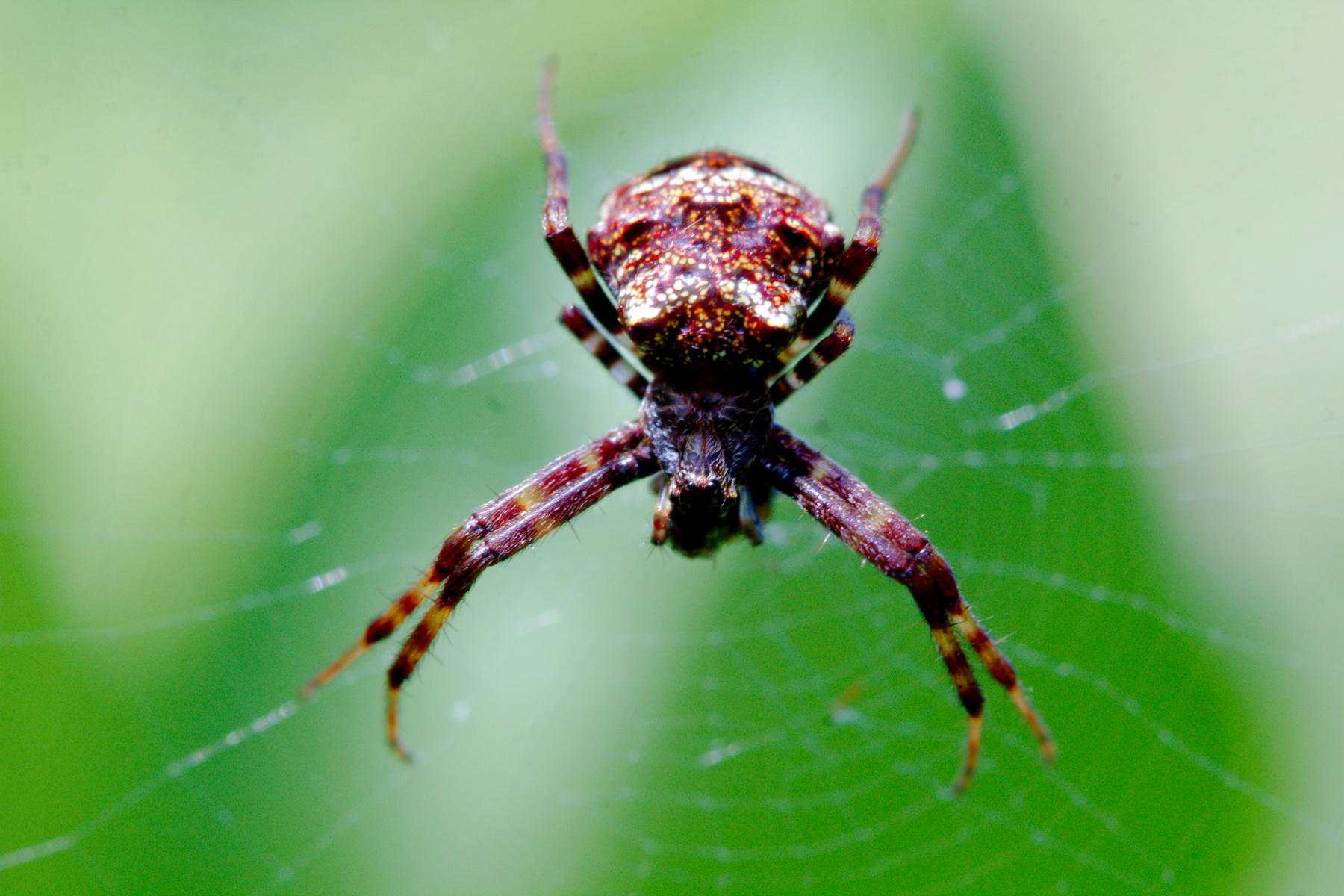
Micrathena gracilis (Spiny Micrathena)
A few days ago I had a picture of a spider web, taken in Rock Creek Park (see Thursday, July 18, 2019). I mentioned that it belonged to a spined Micrathena (Micrathena gracilis) but the spider wasn’t in the picture. Today we had a little time before church so we walked in the Stadtman Preserve for a little and I saw another spined Micrathena and got this picture of her. It frankly isn’t a great picture but you can see where it gets its “spined” appellation. Sorry I have nothing better for today. Maybe tomorrow.
Spider Web
I stopped and walked into Rock Creek Park on the way home today. It’s a nice, wooded area and generally away from traffic, so I like being there. It’s definitely high summer now and the underbrush is about at it’s deepest but I’m happy to leave the bike path and walk the short distance through the brush to the creek itself. I passed a few spider webs, which isn’t unusual this time of year, but it wasn’t until I got to this one that I stopped. This one had the sun shining on it and that made it a lot easier to photograph. This was made by a spined Micrathena (Micrathena gracilis), one of the orb weavers (family Araneidae).
Northern Flatid Planthopper (Flatormenis proxima)
I took a few pictures of butterfly weed flowers this evening and I might have posted one of them. A little later I noticed this white leafhopper and got a few pictures of it, including this reasonably sharp image. Getting a good picture was made more difficult by the breeze, which was moving the stem the planthopper was on, but this one turned out pretty well. It was sharp enough for it to be identified as a northern flatid planthopper (Flatormenis proxima), one of our more common planthoppers. They do little damage and I left him alone to get what he needed from this plant.
Polygonia interrogationis (Question Mark)
I stopped at Lake Needwood this afternoon to see what I could see. It’s gotten quite hot, with the forecast for hotter still by the end of the week. The butterflies and dragonflies like that sort of weather, and they were out in pretty good numbers. I happened to spot this question mark (Polygonia interrogationis), so called because of a roughly question mark shaped mark on the underside of their hindwings. I got one photo of the butterfly on a shrub and then if flew and landed on my thigh, thus the blue denim of my jeans. I was able to get a few pretty good photos, including this one. I also got one showing the question mark, but I think this is prettier.
Papilio glaucus (Eastern Tiger Swallowtail)
This is a dark-morph (and thus a female) eastern tiger swallowtail (Papilio glaucus) on the buddleia outside our kitchen door. The tiger swallowtails are the most numerous, large butterflies in our garden, followed by monarchs (Danaus plexippus). Otherwise, we only have occasional visitors. There are a lot of smaller butterflies and skippers, particularly small skippers. But the large, gaudy swallowtails are fun to watch and among my favorites.
Epargyreus clarus (Silver-spotted Skipper)
As we were getting ready to leave for work this morning, running a bit late, as we often do, I paused to take a few pictures of butterflies and skippers on the goose neck loosestrife (Lysimachia clethroides) growing by the driveway. This is a silver-spotted skipper (Epargyreus clarus), one of the larger skippers we see regularly in our garden, with a wingspan up to about five centimeters. It is common through most of North America and certainly common for us. They’re easily identified by the large, silvery-white irregular spot on their hind wings.
Acmaeodera pulchella
I went out to photograph flowers this evening but came across this metallic wood boring beetle (family Buprestidae) on a black-eyed Susan. There are twelve dozen species of Acmaeodera in our area and one of the experts at BugGuide.net identified it as Acmaeodera pulchella, sometimes known as the flat-headed bald cypress borer. We’re not really in bald cypress country but they feed on a pretty wide variety of trees, so that’s not really an issue.
Halloween Pennant (Celithemis eponina)
I know I’ve posted a picture of a similar dragonfly recently, but I didn’t get a lot of great pictures today so this is what I have. This is also, I think, a better picture than the one previously posted. I had originally labeled that one as a calico pennant (Celithemis elisa) but I’ve rethought that and have relabeled it as a Halloween pennant (Celithemis eponina), the same as this one. It’s a handsome dragonfly, whatever it is. I had tough time getting close enough for this picture, so I’m relatively pleased with it.
Baby Robin
The American robins (Turdus migratorius) nesting outside our front door are back to raise a second clutch. There were three in the first batch and another three now, although this photo only shows one. I don’t stay out to take pictures for very long, as that tends to keep the parents away. On the other hand, they built a next in a high traffic area and we’re not going to stop using our front door for them. They grow quite quickly and we watched the last set fledge and these three will be out before you know it. I’m thinking about doing putting something on this ledge to keep them from building another nest here next year, though. There are plenty of other nesting sites for them to use.
Halloween Pennant (Celithemis eponina)
I went out to the vacant lot next to my office today. It was quite warm but the weather patterns promise hotter weather ahead. I got a few pictures of an orbweaver spider (Leucauge venusta) but since I posted one of those recently, I’ve decided to go with this pennant, probably a calico pennant (Celithemis elisa). I also got one, not so good photo of a tailed blue, but I’m holding out for a better picture before I post one of those.
Note: I labeled this as a calico pennant (Celithemis elisa) without paying close attention to detail. I’m relabeling it as a Halloween pennant (Celithemis eponina).
Eastern Fence Lizard (Sceloporus undulatus)
After helping Jean pack up all the paraphernalia from yesterday’s wedding and reception and then a quick trip into town for breakfast (since the resort punted on supplying the complementary breakfast they had promised), Cathy, Dorothy and I went for a walk to some stone ruins on the property. When we got to the ruins, Cathy (I think) said something about it being a good place for snakes. Sure enough, there was a mid-sized eastern ratsnake (Pantherophis alleghaniensis) sunning itself in a crack in the wall. A few minutes later, when Cathy screamed, Dorothy and I assumed it was another snake but it was this eastern fence lizard (Sceloporus undulatus), just a little closer than Cathy had been prepared for. I was able to get a few good pictures before it darted away. This is a male, evidenced by the blue patch just visible on the lower part of the neck. It also has a pretty significant infestation of orange mites or some other sort of pathogen.
Firefly
This firefly, a beetle in family Lampyridae, probably in the genus Photinus, was on a weed in the back of our garden this evening. According to BugGuide.net there are 34 described species in this genus and identification of a single specimen by morphology alone is often impossible. So, I’m not even going to try. It’s a firefly and that’s good enough. One interesting fact about fireflies is that females in the genus Photuris are known to lure in males of Photinus species and eat them in order to obtain a defensive, steroid-like compound that they contain.
Eastern Bumble Bee
I went out looking for pictures as usual this afternoon, when I got home from work. There is Campanula in bloom in the yard, and I took some pictures of those flowers. They don’t tend to come out the same color in photographs as they are in real life. Not entirely sure why. Then I moved over to the gooseneck loosestrife (Lysimachia clethroides), which is a real attraction to the bees. It’s quite invasive and I really would recommend against planting it in the strongest language, but if you already have it, you might as well enjoy the bees. There were a few honey bees but mostly it was the common eastern bumble bees (Bombus impatiens) that were moving quickly from flower to flower.