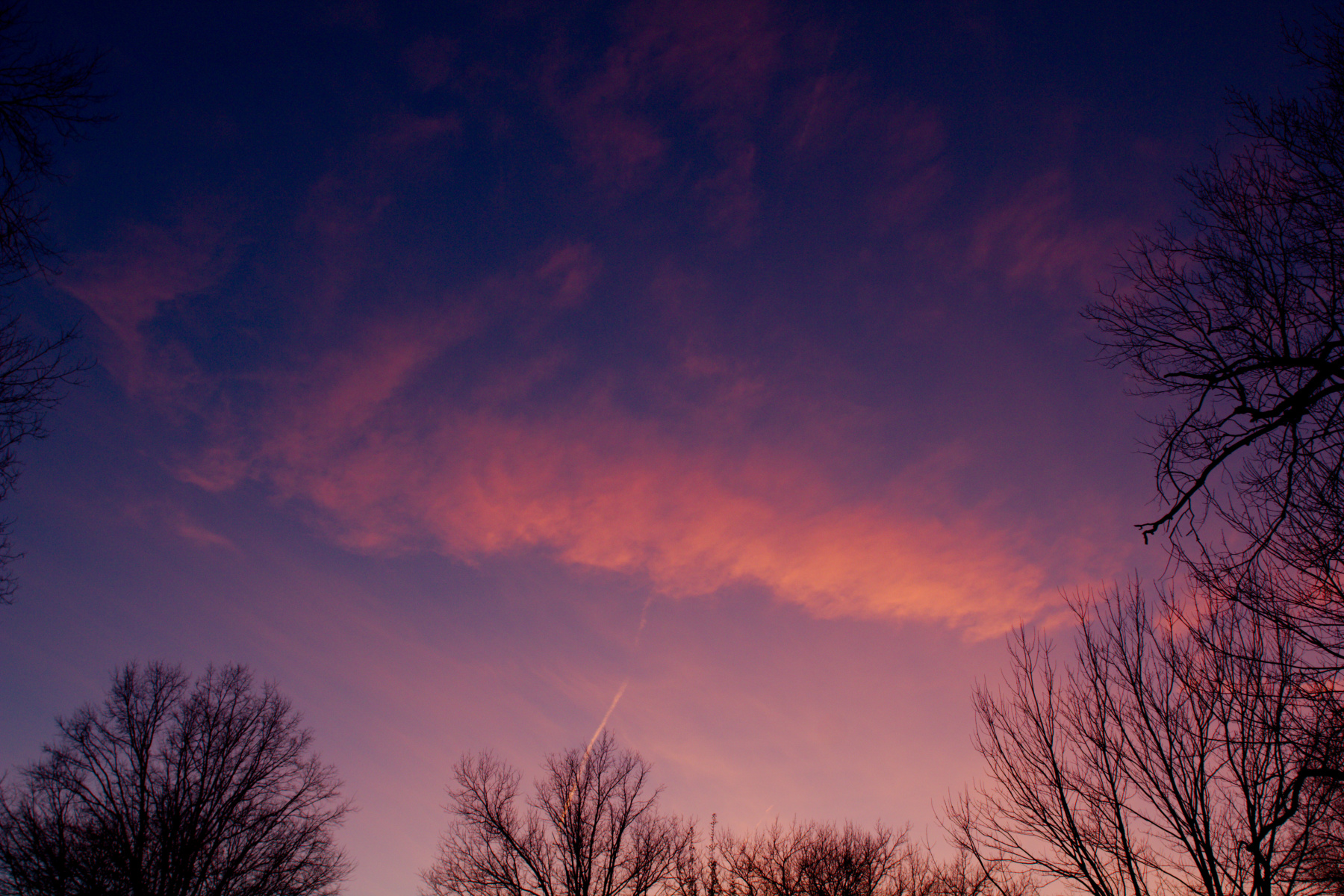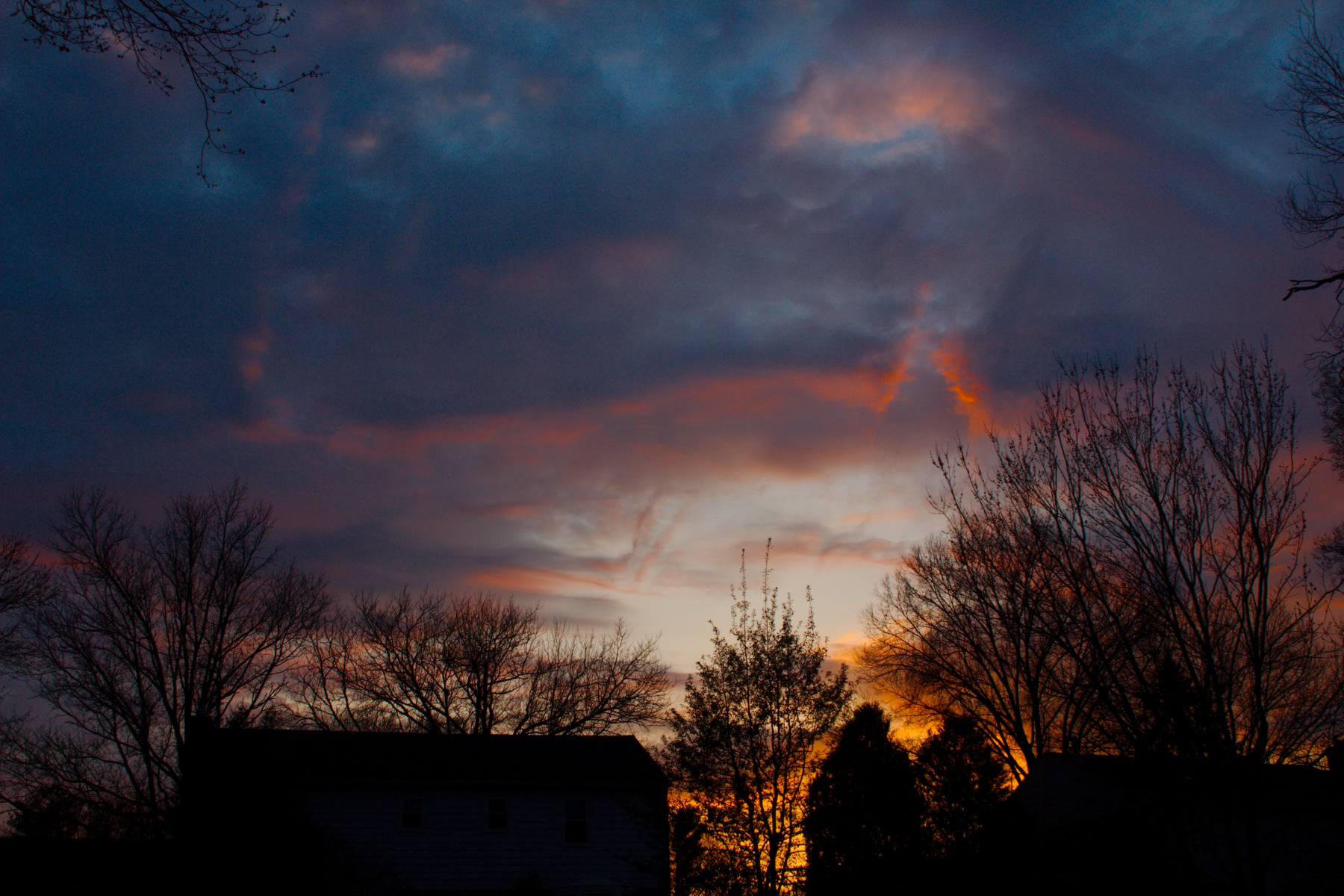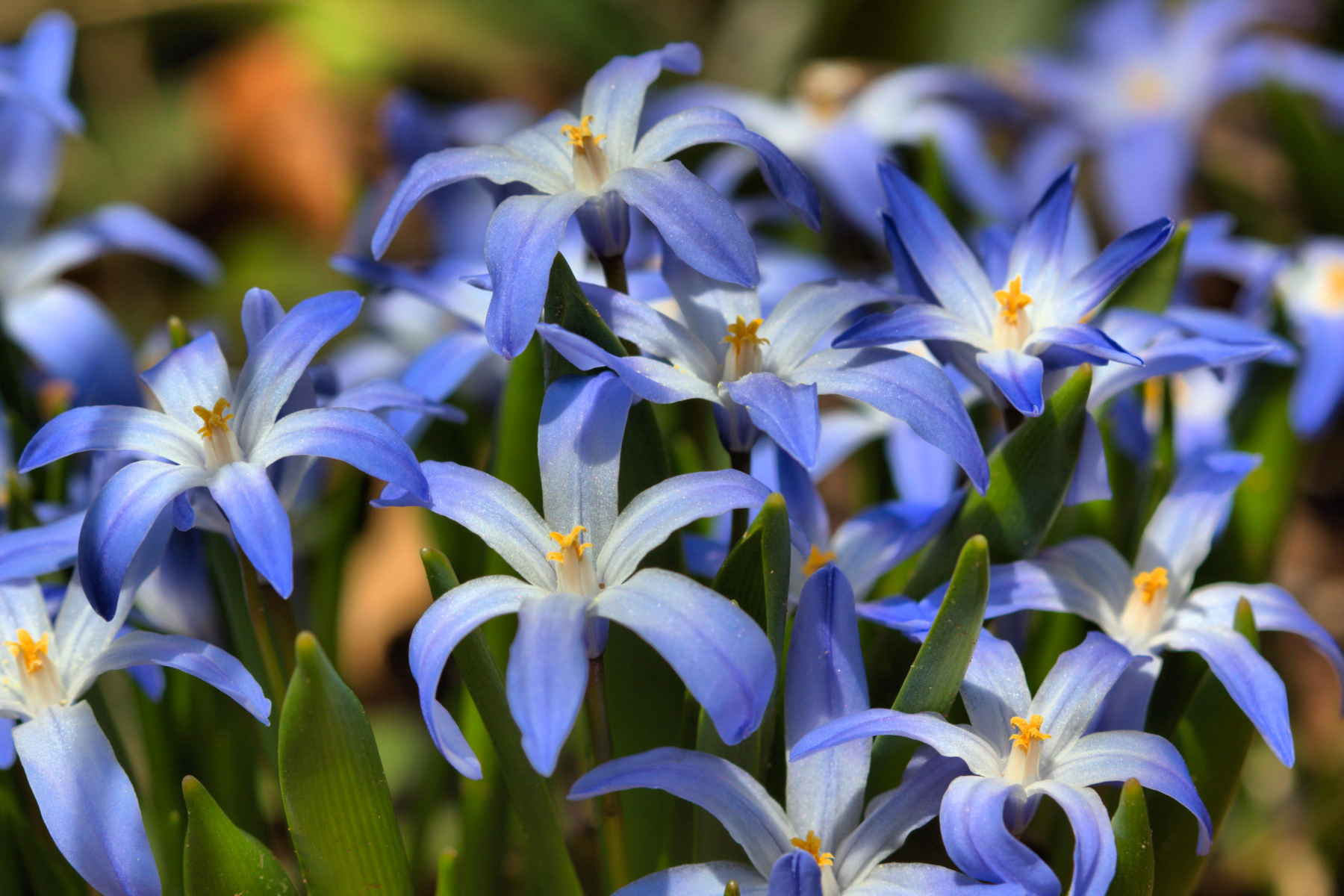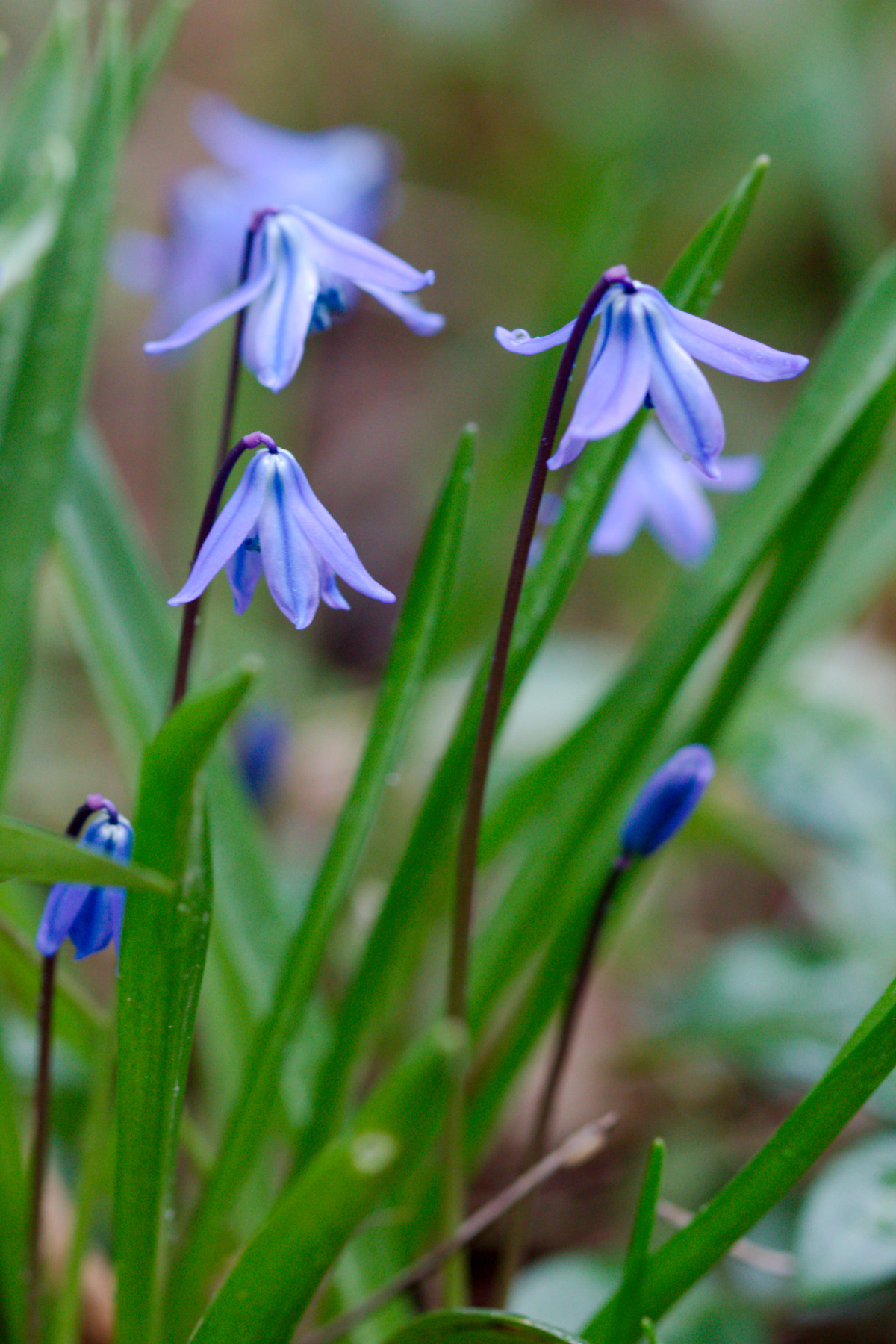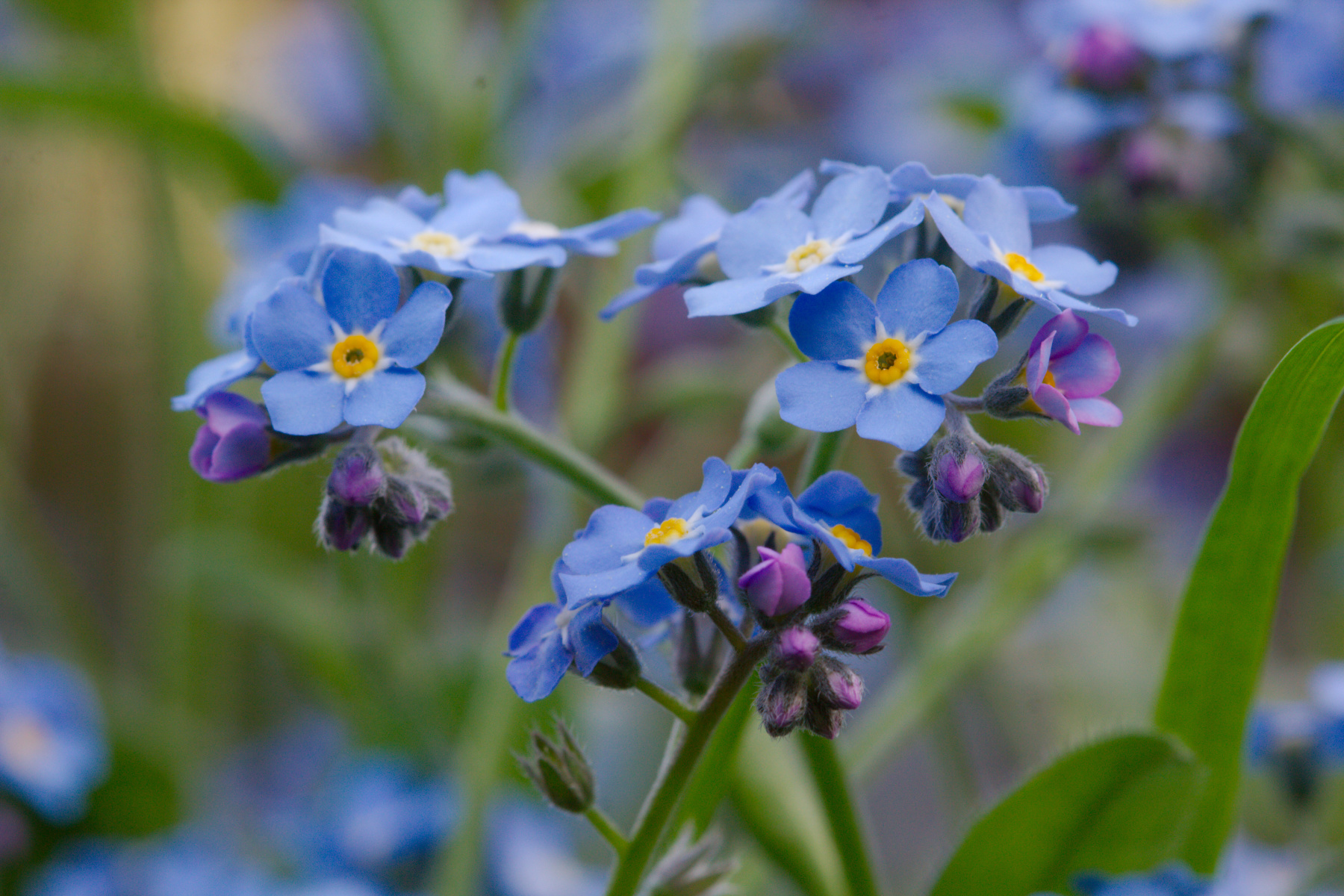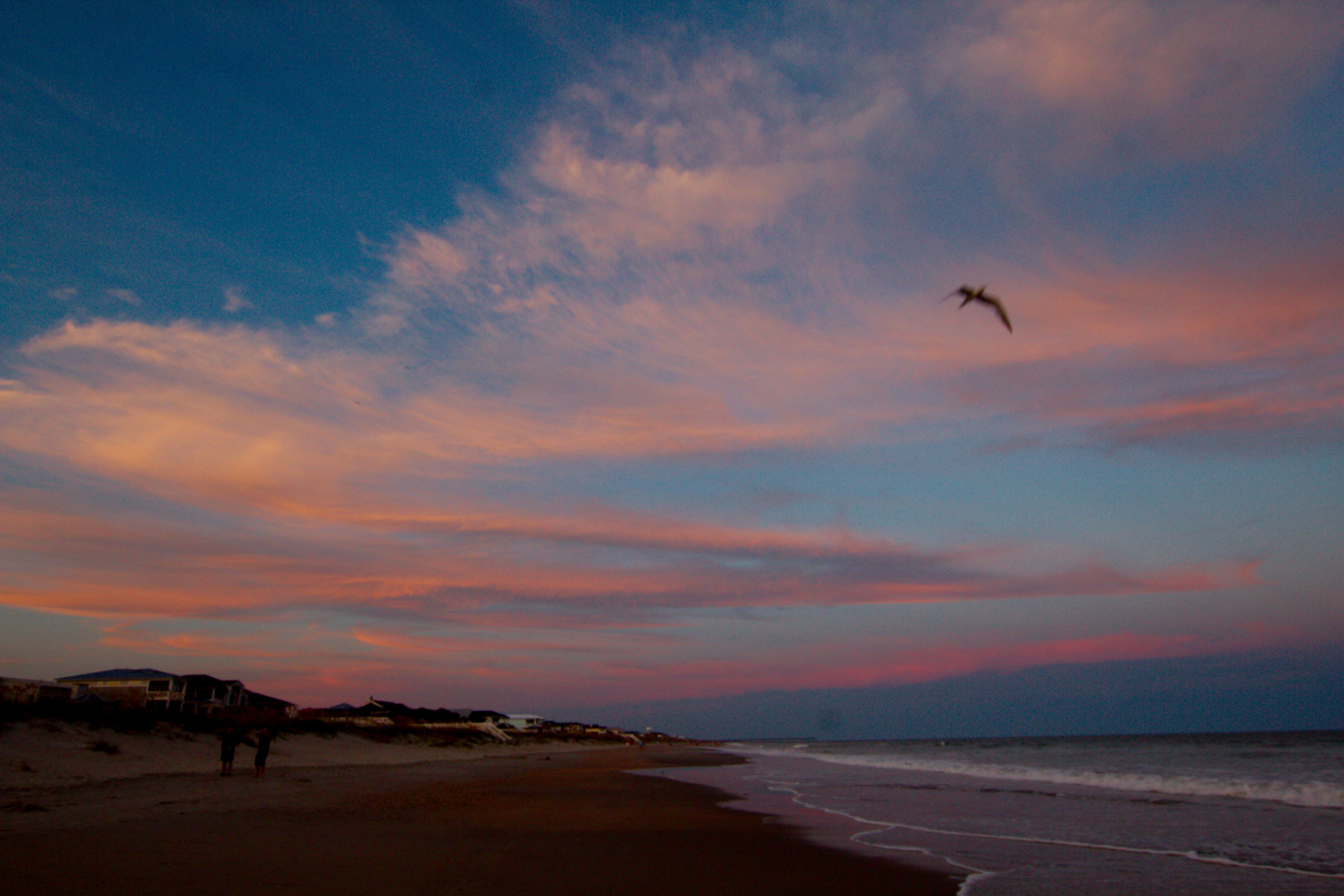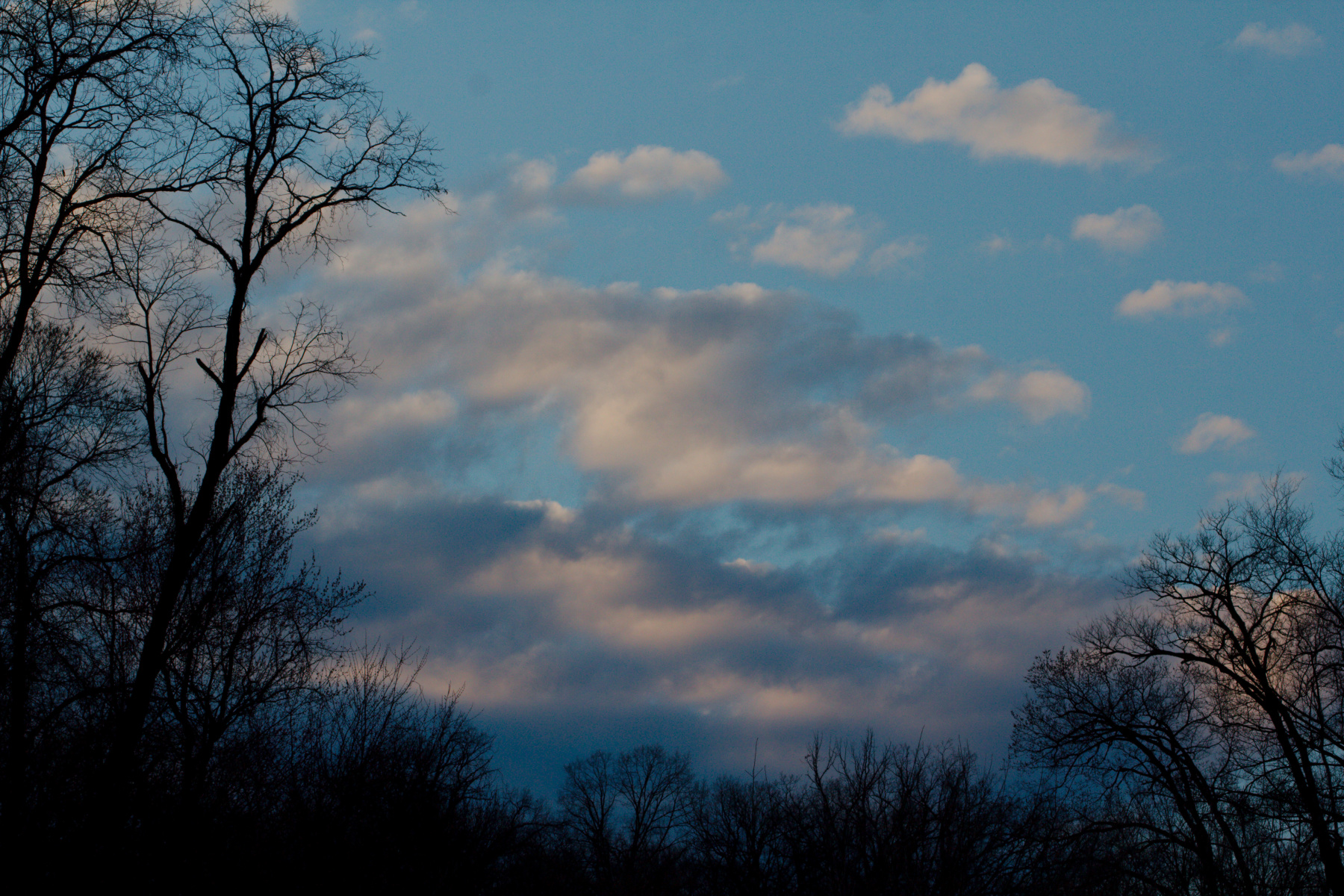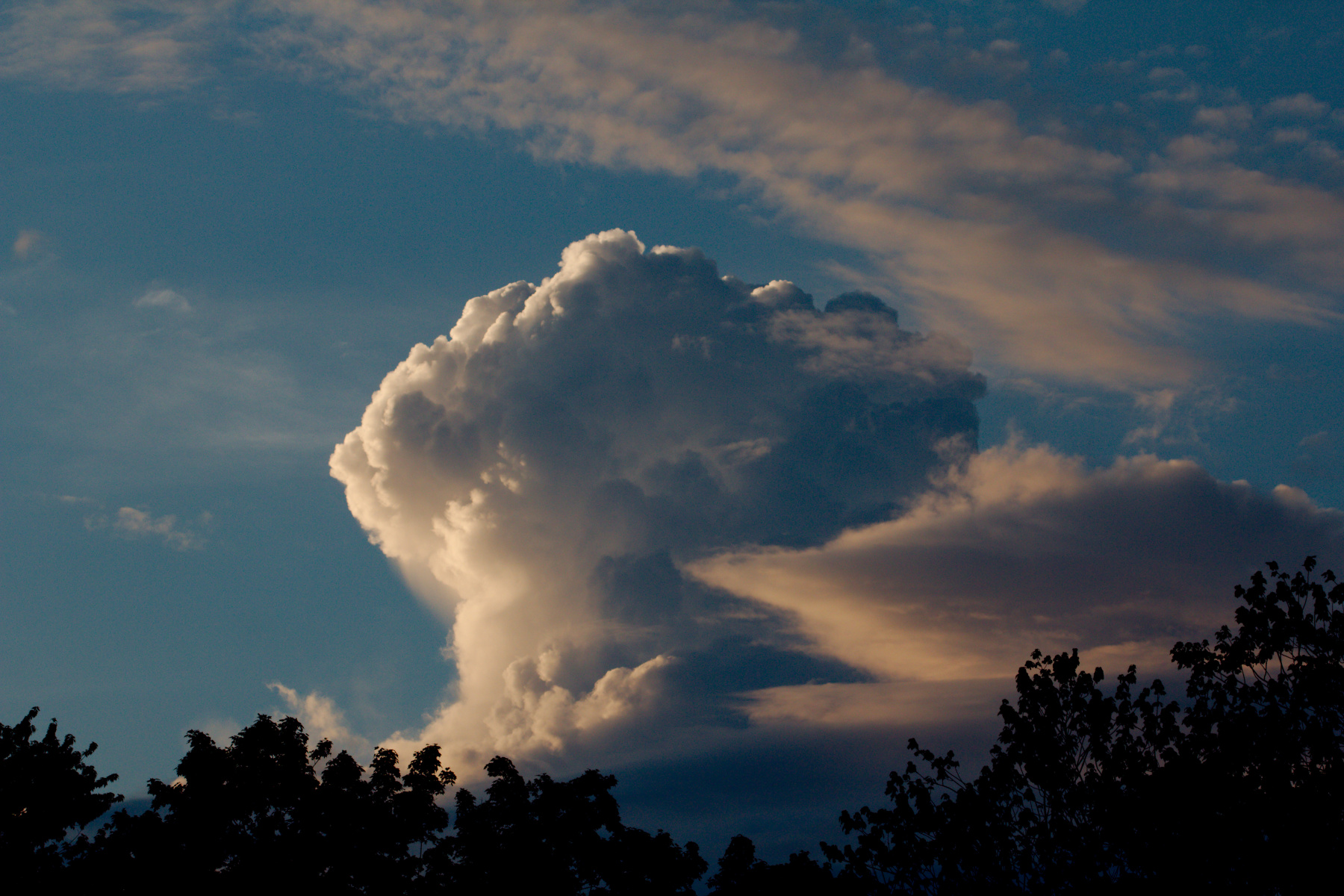
As I was driving home this evening the clouds were acting like there would be a wonderful sunset. By the time I actually got home, most of the color was gone, although there had never been nearly as much as there could have been. Nevertheless, I got my camera out and went into the back yard. This photo is looking basically southwards and I am pretty pleased with it. The colors are pretty accurate to what it looked like, with a lot of blue in the clouds themselves and three slashes of orange. I really enjoyed watching it until the orange disappeared and only the blue-grey clouds were left.
Tagged With: Blue
And More Snow
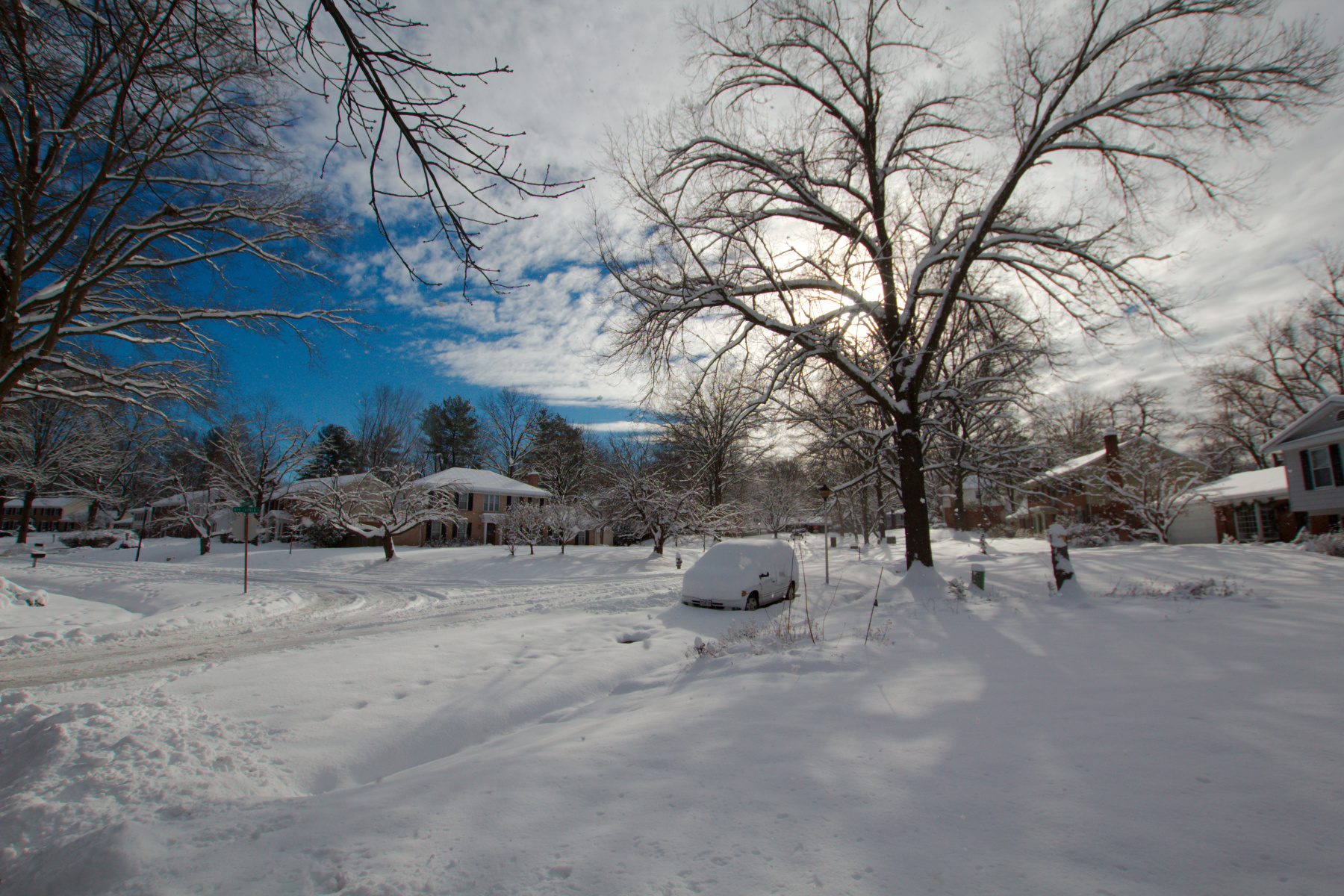
We got about six inches from late Saturday until midday Sunday. At that point I shoveled the walk and driveway and the picture from yesterday was taken about that time. Then it started snowing and was still coming down until about 11:00 PM. This morning we got up at about 5:30 and Dorothy planned to leave at 6:00 to drive back to school. There was an additional six to eight inches on the sidewalk ramp, so we got between 12 and 14 inches, I’d say. I got everything shoveled and the snow off of Dorothy’s car. In the end she waited until the sun had come up and left at about 8:00. Happily there was not much snow to our north and she had no problems getting back to Massachusetts. The sun came out later in the morning and it was quite beautiful out.
Sunset
It was a relatively uneventful day today. I got some things done that have been hanging over me for quite a long time. Well, to be more precise, I got started on some things that have been hanging over me for quite a long time, but that’s a big step to getting them finished. There was a team of men working on cutting a tree down in the neighborhood and I took some pictures of that but then we had a pretty nice sunset, so this picture took precedence. It’s wasn’t a stunning sunset but it was very pretty, I think.
Chionodoxa forbesii
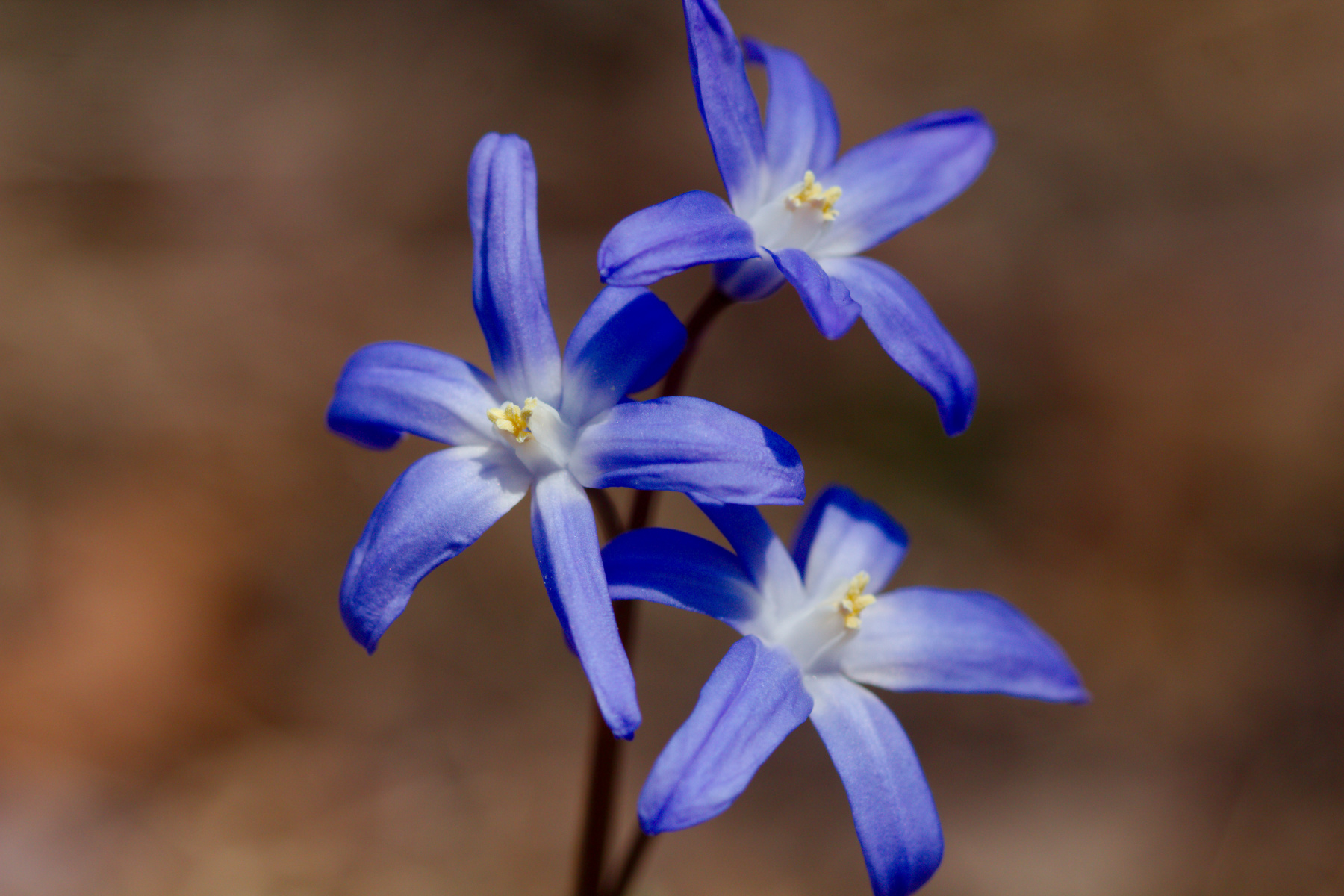
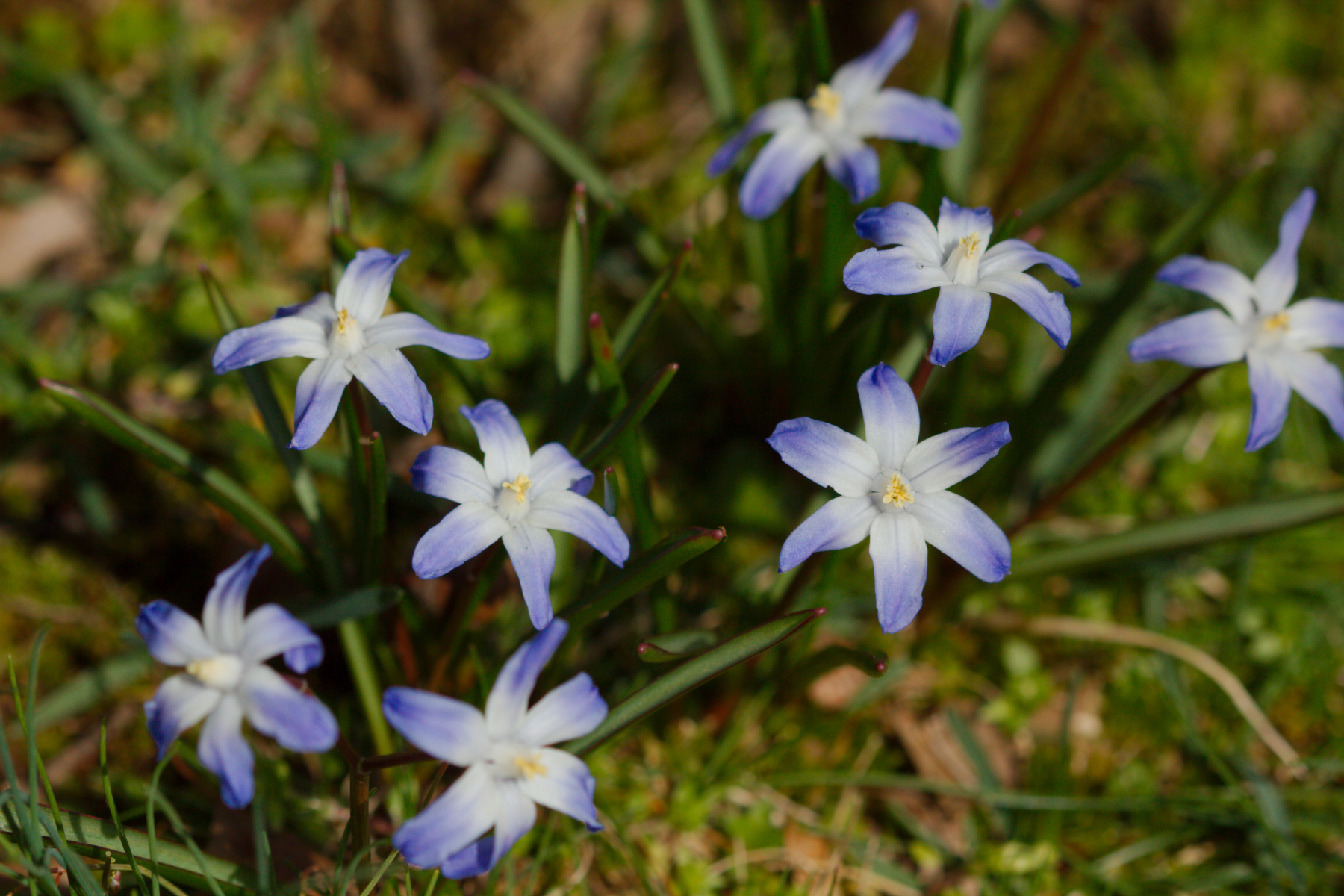
After church we walked over to the Stadtman Preserve, where hundreds of daffodils are coming up and a few blooming. There were also huge drifts of winter aconite (Eranthis hyemalis) although they were almost entirely past their bloom. There were also a very few of these Chionodoxa forbesii flowers. With the common name glory of the snow, it’s no surprise that they bloom early and they are definitely one of my favorite flowers, especially among the spring ephemerals. It is native to western Turkey and is hardy as far north as USDA zone 3. Those growing in my garden are considerably behind, but I’m looking forward to having them bloom in a few weeks.
Sunset
The sky had the promise of a really spectacular sunset this evening but sadly it didn’t follow through. It wasn’t a bad sunset, mind you, but it wasn’t as fabulous as I had hoped. The clouds were moving fast and it was changing from minute to minute. As you can see in the lower part of this picture, between the houses, the best part of the sunset was too low to be seen from our back yard. Still, it was a worth a few minutes of my time and the ground wasn’t so cold that I couldn’t be out in my bare feet for a little while.
Chionodoxa forbesii
I try not to repeat subject too often and too close together but sometimes I just have to. The Sunday before last I posted a pictures of three Chionodoxa forbesii (glory of the snow) blossoms, taken at the Stadtman Preserve on Mill Run, in Derwood (see Sunday, March 17, 2019). Two weeks later they are out in our garden and I couldn’t resist another picture. This little clump of flowers is at the south end of our house and it’s so lovely. I promise, I’m done with this flower for the year (although there’s a pink variety in another part of our garden).
Scilla siberica
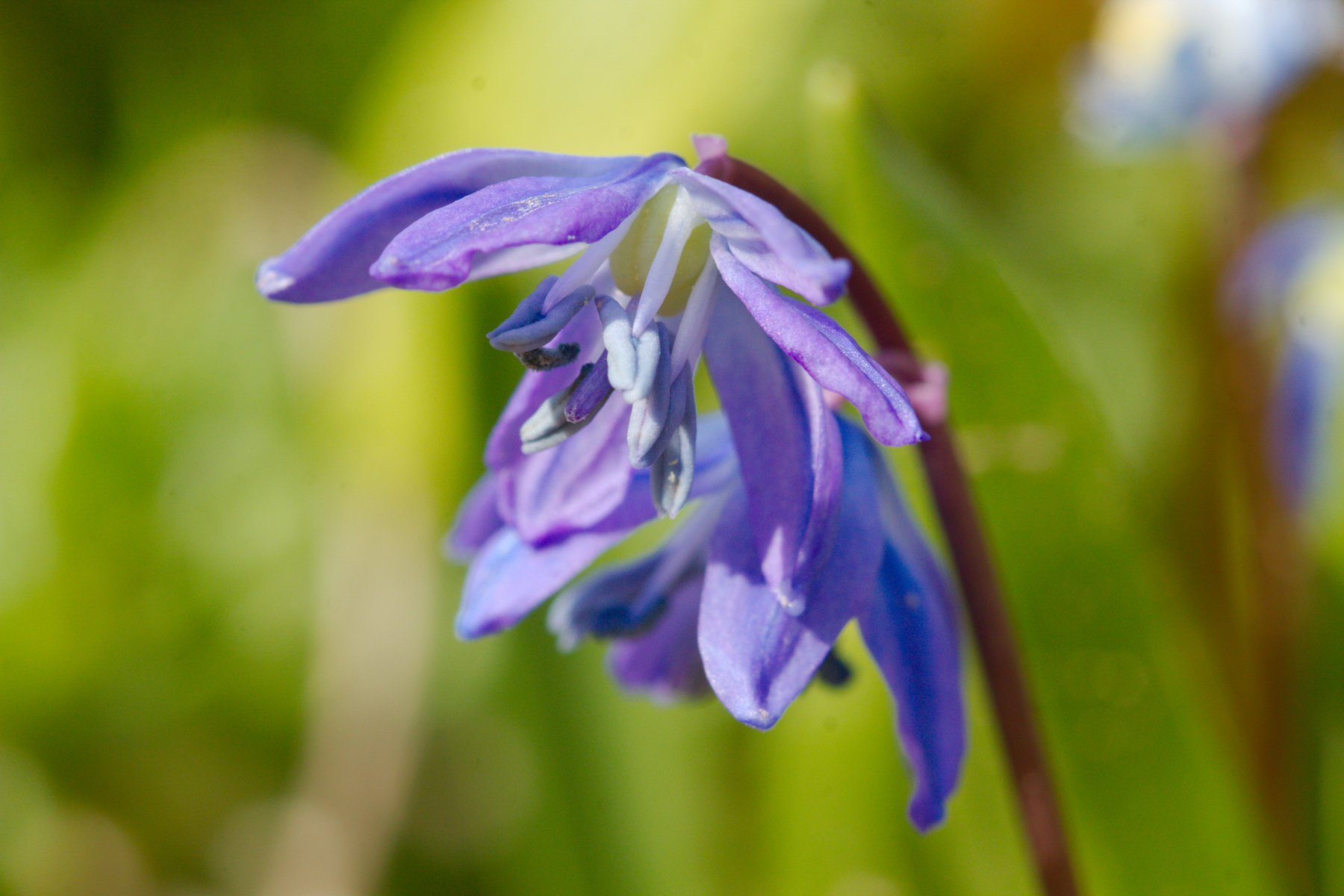
These little flowers, Scilla siberica (Siberian squill) are similar to the blue Chionodoxa forbesii (glory of the snow) that I photographed a few days ago but can be differentiated by their downward facing appearance. They are also deeper blue, in general. In my yard they bloom just a little later, but not much. These are in a bed right by the driveway so I get to see them every time I leave or get home, which is nice. S. siberica is native to southern Russia and is hardy up to USDA Zone 2.
I also have some Scilla mischtschenkoana, (commonly called simply squill) the flowers of which are almost white with just a hint of blue. They are native to northern Iran and the Caucasus and not quite as hardy as S. siberica but still plenty hardy for us here. I really should mark where all my spring ephemerals are and plant more around them this fall. I’m not sure I could ever have too many of them.
Myosotis sylvatica (Woodland Forget-me-not)
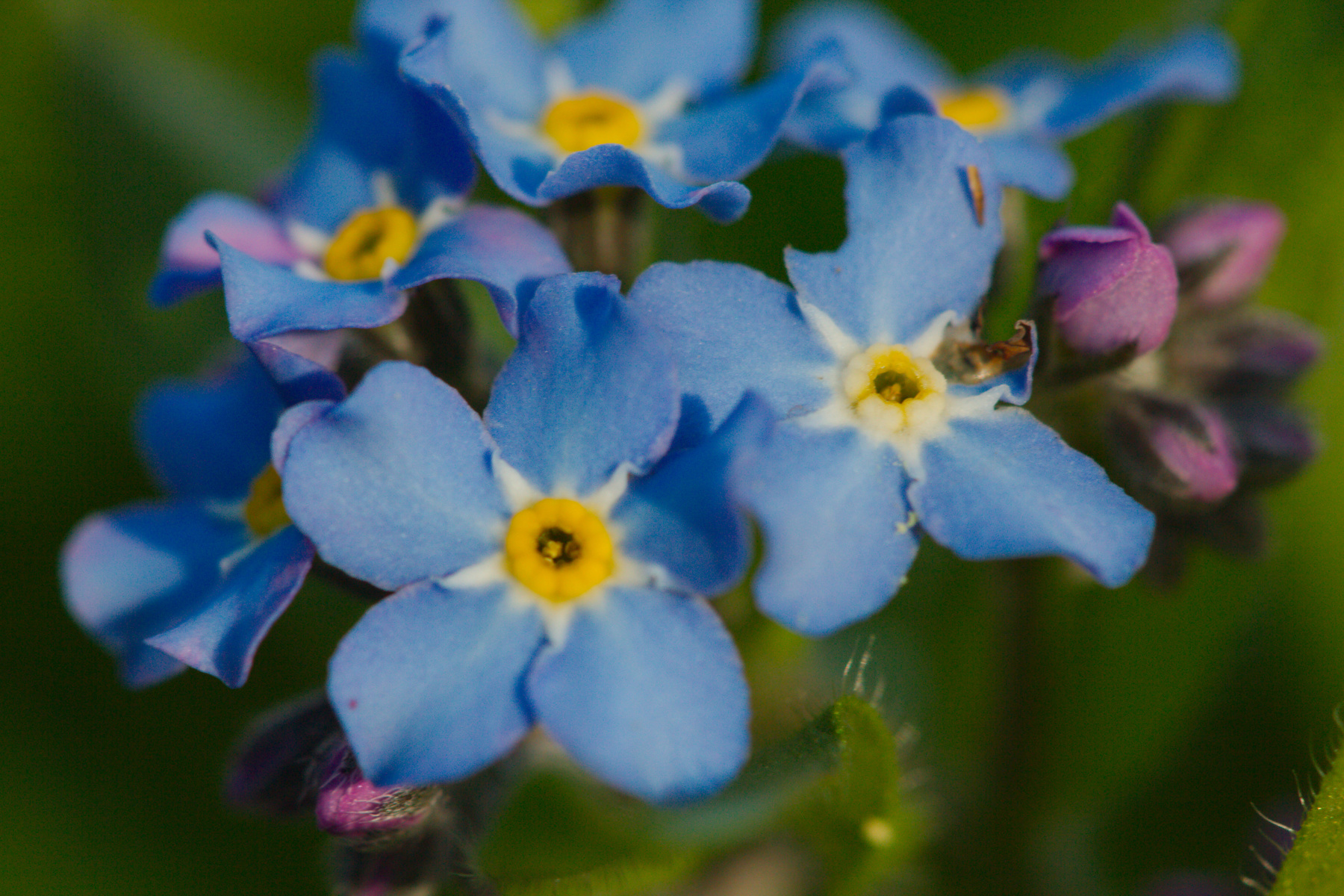
The forget-me-nots (Myosotis sylvatica) are in full bloom in our garden. They self-seed and many of them are growing out in the grass. Cathy has dug a few up to replant in the garden beds where they won’t get mowed over. We both really love the powder blue of the forget-me-nots and are happy when the start to bloom. The buds are purple and the flowers, as they start to open, turn from a pinkish purple to the pure blue of the fully-formed flowers. You can see one transitioning at the right in this photo. The yellow “eye” in the center of each bloom turns white as the flower ages.
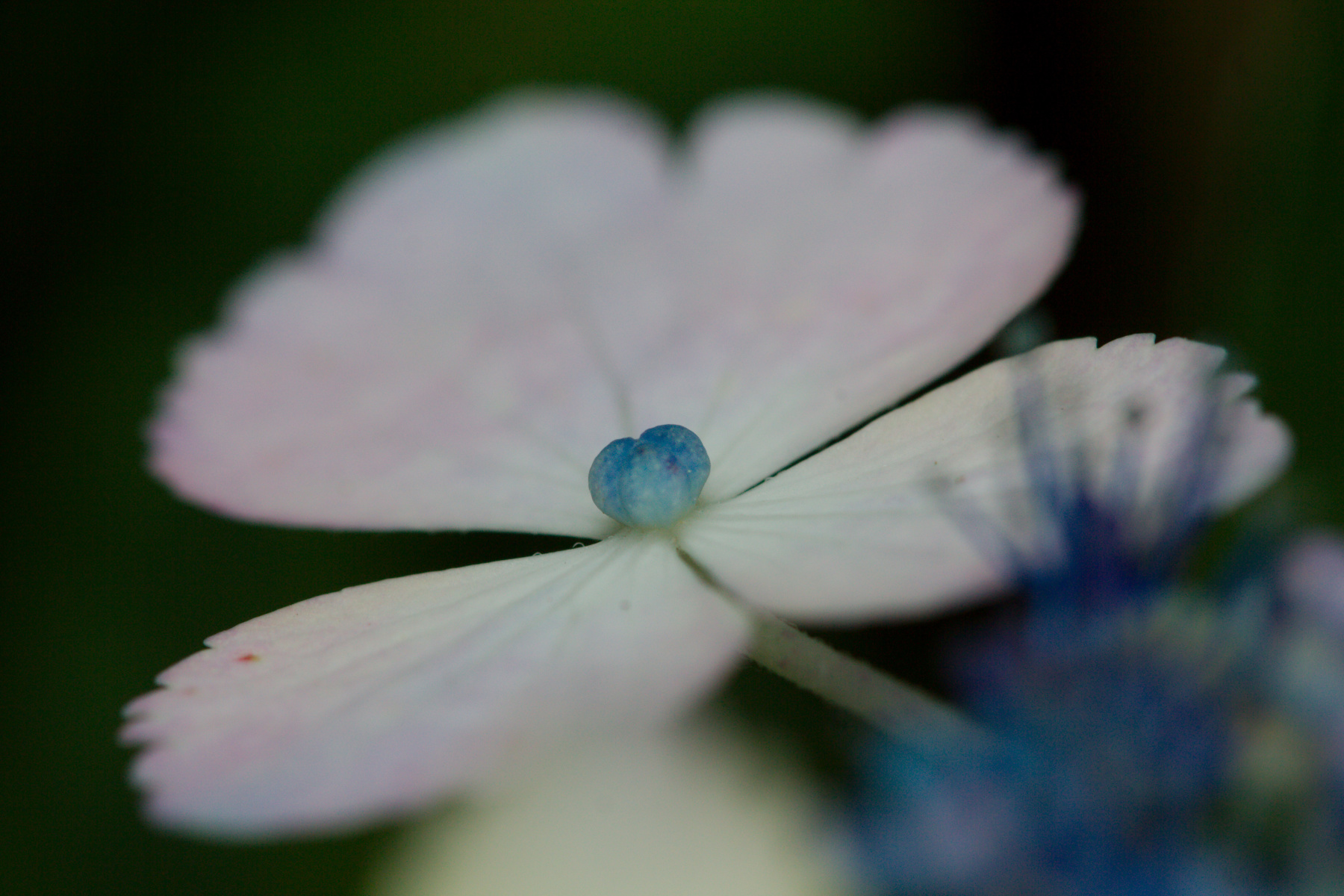
Hydrangea macrophylla
We have a pair of Hydrangea shrubs growing along the back of our garden. one of them is fairly large and growing strongly. The other, this Hydrangea macrophylla, is not so big but it’s blooming, at least. The deer seem to like it, so we’ve allowed the Forsythia to grow in front of it a little, to help protect it from them. Of course, that makes it harder for us to see, as well. You can’t have everything. The sterile florets, which have large petals, are a very pale pinkish with touches of blue. The much smaller fertile florets are quite blue, and the combination is quite nice.
Sunset, Ocean Isle Beach
Generally you look west in the evening to see the sunset and the best colors are often in that direction. This evening the best view was to the east, as seen here. Although we’re on the eastern coast of North America, the coastline runs almost due east-west right here. So, rather than the sun rising over the ocean and setting over land, it rises to the left on the beach and sets to the right. Although I took a lot of pictures, mostly what I was doing was enjoying the reflections of the light as each wave receded, leaving a very flat, highly reflective surface on the lower beach.
Sunset, Ocean Isle Beach
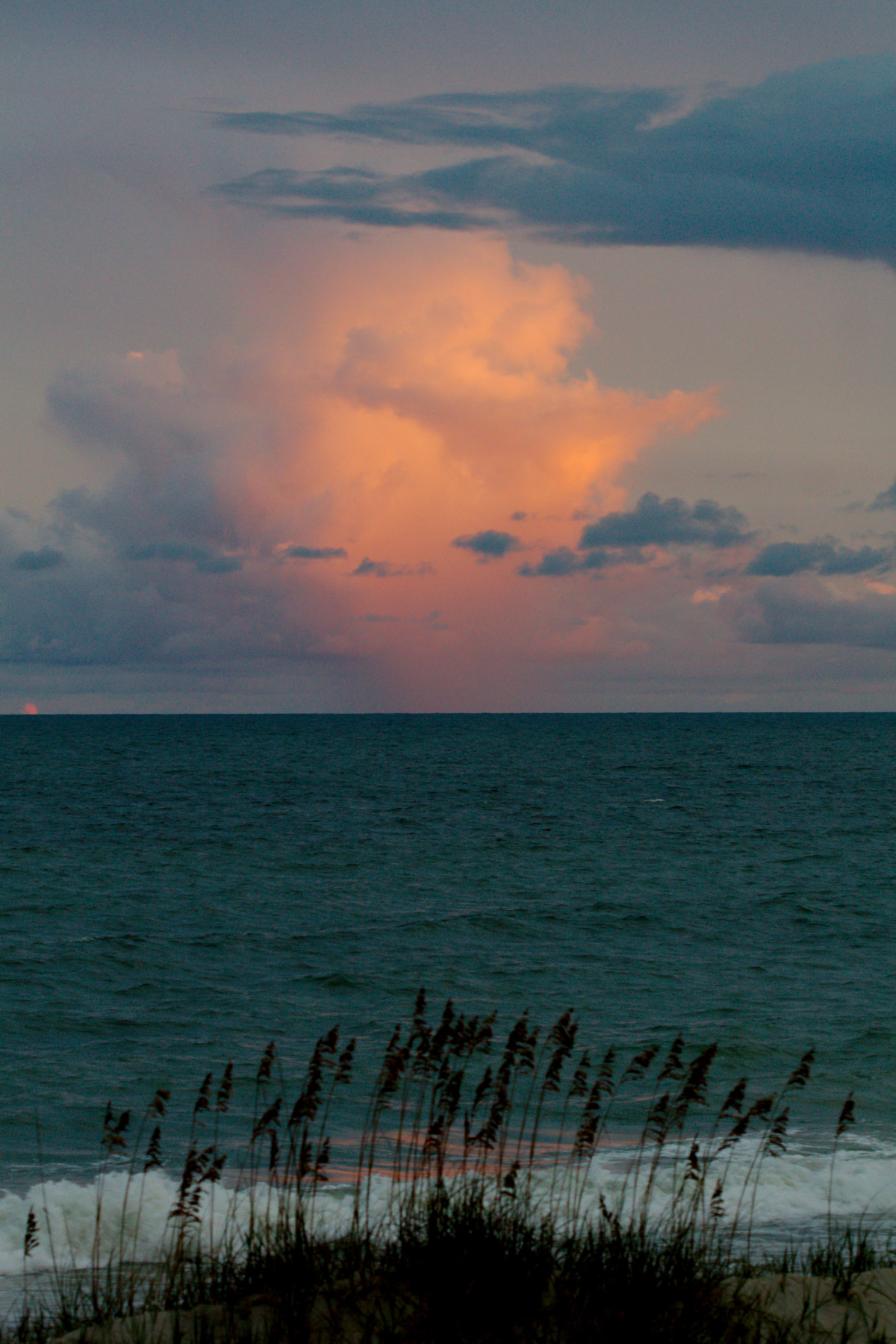
As our week at the beach came to an end, Brian from next door came over to let me know there was a nice sunset and that I should come out with my camera. There was this single cloud, far out to sea, lit by the setting sun, surrounded by the blue of the ocean, the sky, and the other clouds. I’m pretty happy with this picture as a relaxing reminder of a mostly relaxing week. Being with family for a week, it’s inevitable that there will be little things but for the most part, it was very nice and that’s how I’m going to remember it. The cottage we were in this year was good, in terms of layout, giving us the space we needed to spread out. Having the pool was a bonus and more enjoyable that I would have expected. It was shared with the three connected units, but that hardly mattered. One of those units was our cousins and it was nice being so close to them. If nothing else, it meant they could stick their head in our door and let us know about sunsets (and, as it turned out tomorrow morning, leatherback turtles (Dermochelys coriacea) hatching at the end of our path to the beach).
Sea Holly
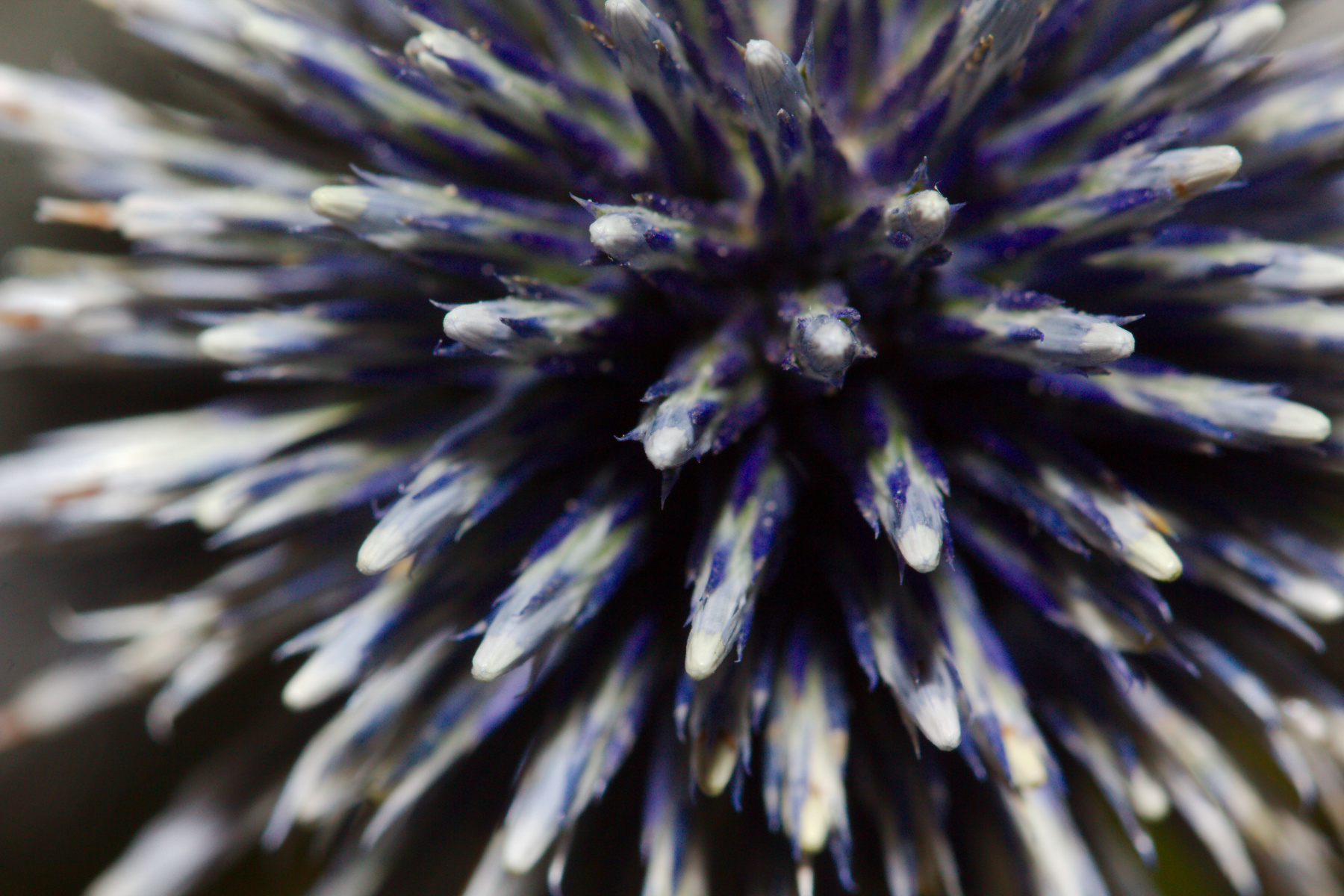
By the time I got home this evening I didn’t feel like going out looking for something to photograph. Later in the evening, as is usually the case, I wished I had, because it meant I had to find something indoors to photograph. If finding something new and interesting to photograph in the yard is a challenge, how much more so is that true in the house. Fortunately there was a vase of flowers on the dining room table and in it were the blue and grey balls of Eryngium planum, better known as sea holly. These are interesting flowers. We had some in our garden in Gaithersburg and I should plant some here. The blue would be especially nice as a contrast to all the yellow-orange of the black-eyed Susan flowers.
Lobelia siphilitica (Blue Cardinal Flower)
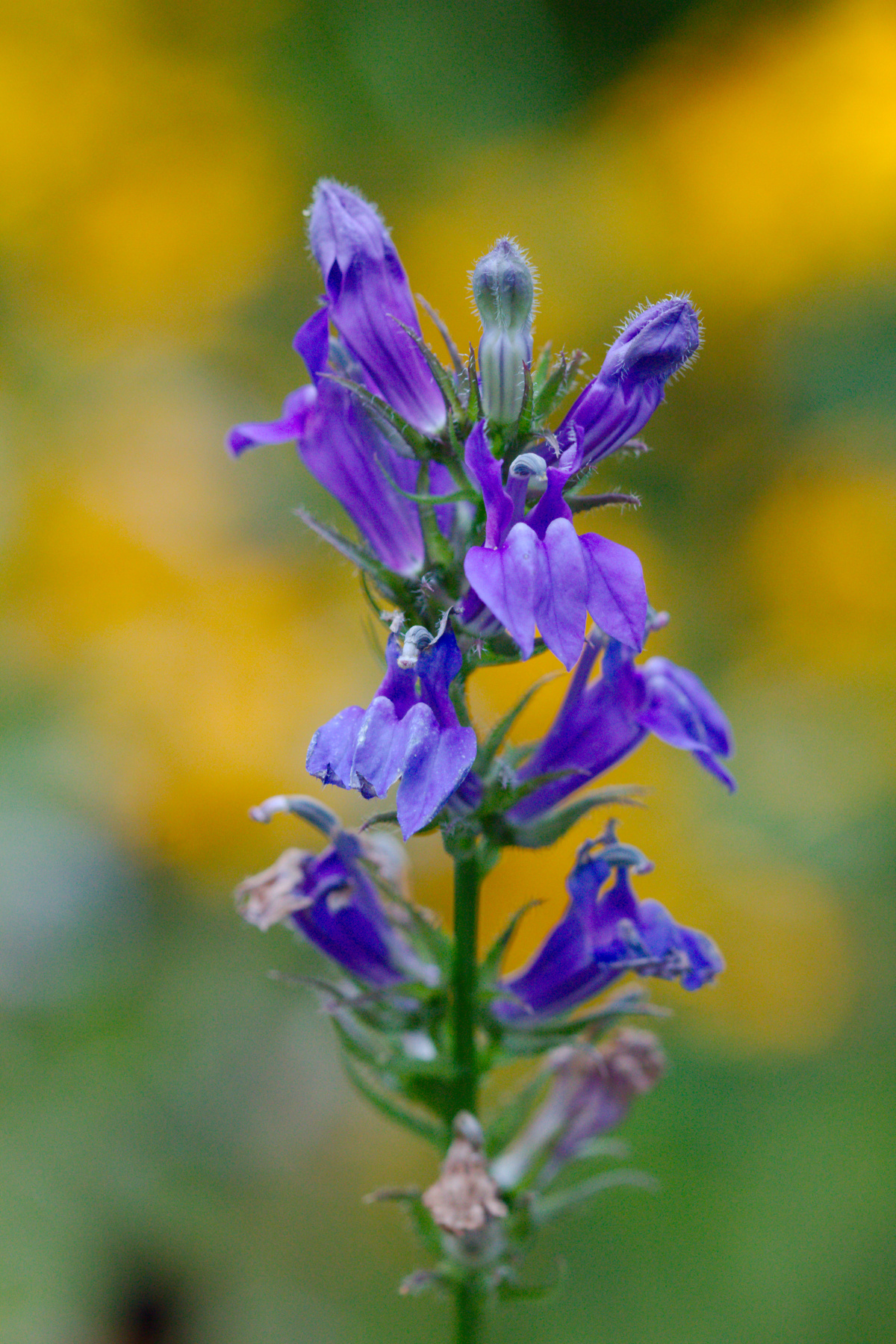
This is a really nice plant. Blue cardinal flower, Lobelia siphilitica, is an easily grown, herbaceous perennial, native to eastern North America and hardy to USDA zone 4. It needs fairly moist soil and does better here in part shade, where the ground doesn’t dry out so much, or in full sun in pots where it gets regular watering. It blooms over a fairly long period, which is always appreciated. One thing I didn’t know about it is that the species name of siphilitica is from “a prior medicinal use of the plant in the treatment of venereal disease.”
It does well in our garden and we have it scattered around. This particular plant is growing in a container on the driveway with black-eyed Susans behind it. Blue and yellow is always a good combination in the garden and with yellow being so prominent in ours, adding that touch of blue is great.
Cupido comyntas (Eastern Tailed-Blue)
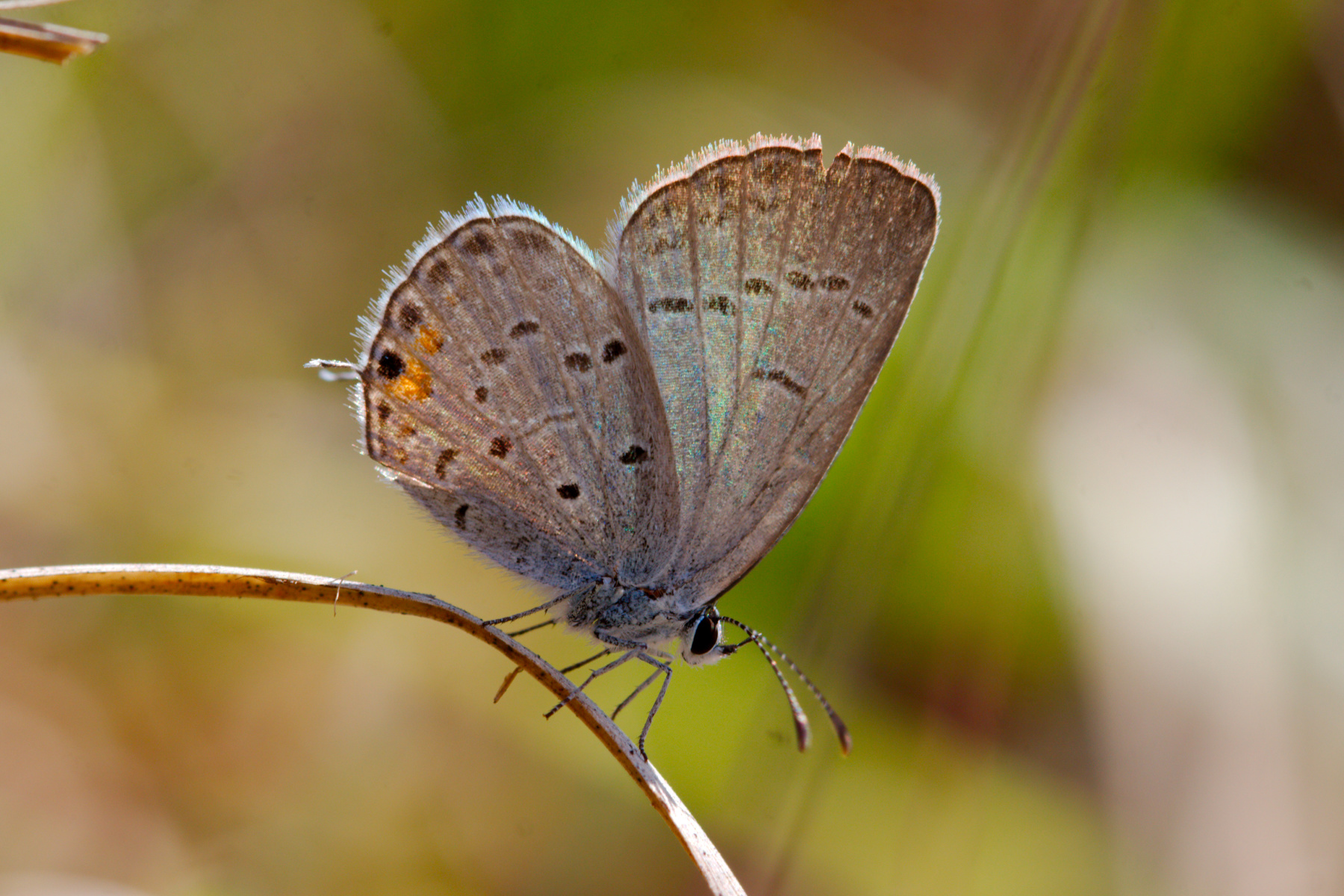
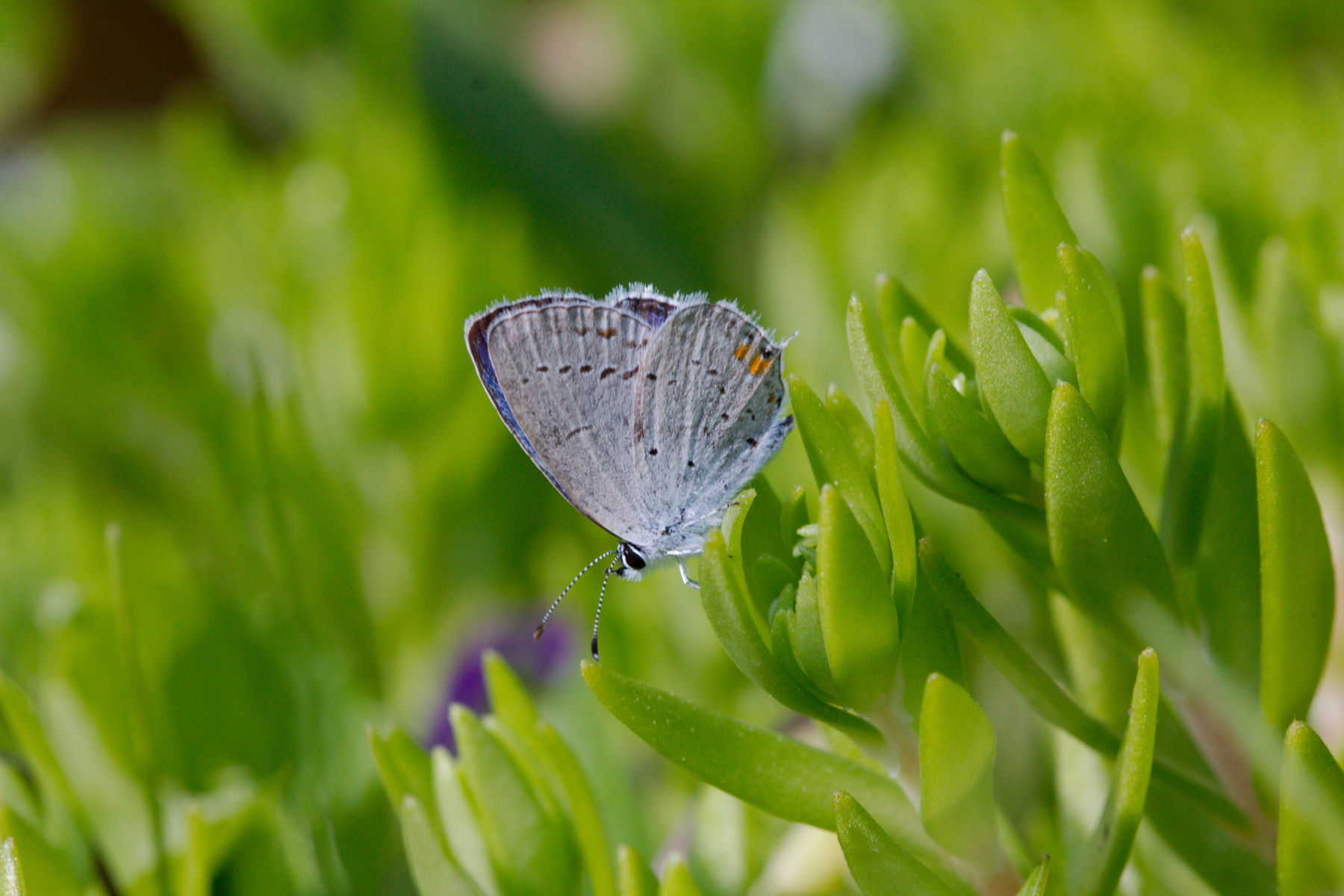
I went outside today and walked around a bit in the lot next to my office. The weather was fine and it was nice to be out in the sunshine. I startled a belted kingfisher (Megaceryle alcyon) as I walked towards a vernal drainage pond. It’s often completely dry by this time of year but it had more water in it than in previous years and it hasn’t all evaporated yet. Above it, I was able to get close enough to get a pretty good photograph of this eastern tailed-blue (Cupido comyntas). They are pretty common but easily missed, as they are fairly small and flit around near the ground. They’re worth looking out for, I think.
Reflections
Cathy and I went to Trader Joe’s after work and then stopped at the Rio for a bit. We walked around the pond and I took some photos, mostly of the reflections in the water. This is the Launch Workplaces building near the western end of the pond. I thought the reflections were nice. There was a gaggle of (probably middle school) girls on the bridge posing for group pictures on their phones and we heard the dad of one of them say something like, “Well, we’re eating now. You can take pictures or you can eat.” The girls didn’t seem interested in eating.
Tear Catcher
The story is that this is a tear catcher or tear bottle, used to collect the tears of mourners in Persia (i.e. Iran and Afghanistan). According to tradition, bottles like this (and in other shapes and from other places) were used to catch the tears and the more tears the more regret over losing the loved one. The shape of the opening, theoretically, is meant to fit over the eye, although it doesn’t really fit very well and I can think of much better designs if that’s really what it’s about.
I’ve never been terribly comfortable believing that they were ever actually used for this, but that’s the story. I’ve never found any convincing proof that they were actually used for this purpose. Interestingly, the Wikipedia page on them has very inconclusive and even somewhat conflicting statements about them and most of the statements are tagged as needing a citation, so even those are pretty suspect (not to mention that nearly everything you find there is suspect).
I don’t think this bottle is terribly old. If it is, it’s in terrifically good shape. It is, however, a remarkably beautiful, cobalt blue and regardless of the veracity of it’s origin and original use, it’s a beautiful example of the glass blower’s art.
Clouds at Dusk
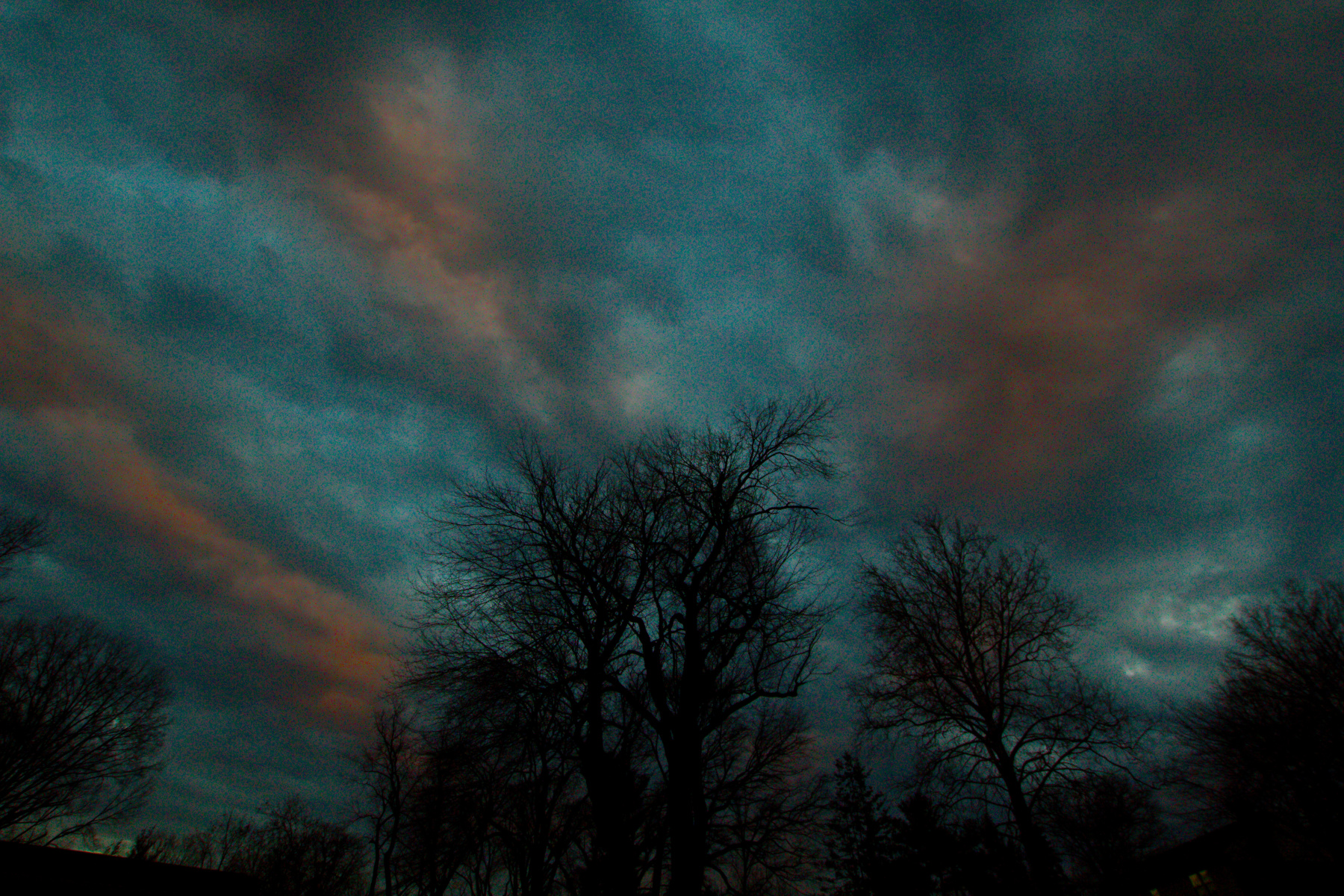
Cathy and I came to work together this morning, dropping my car off at the shop for a bit of work. The air-bag warning light is on and we need to know what that’s about. The Honda dealer said they needed to replace the sensor. They also said the rear brakes were in desperate need of work. This was when I had it at the dealer for work based on a recall notice. Since dealerships are generally more expensive than your average, independent repair shop, I figured I’d get a second opinion. Anyway, after work I met Cathy where she had parked and had a couple minutes to photograph the sky. The clouds were collecting like there would be a nice sunset but it never really materialized. The sun went down, the clouds turned from white to grey with only a hint of color. You can’t win them all.
Wild Violet
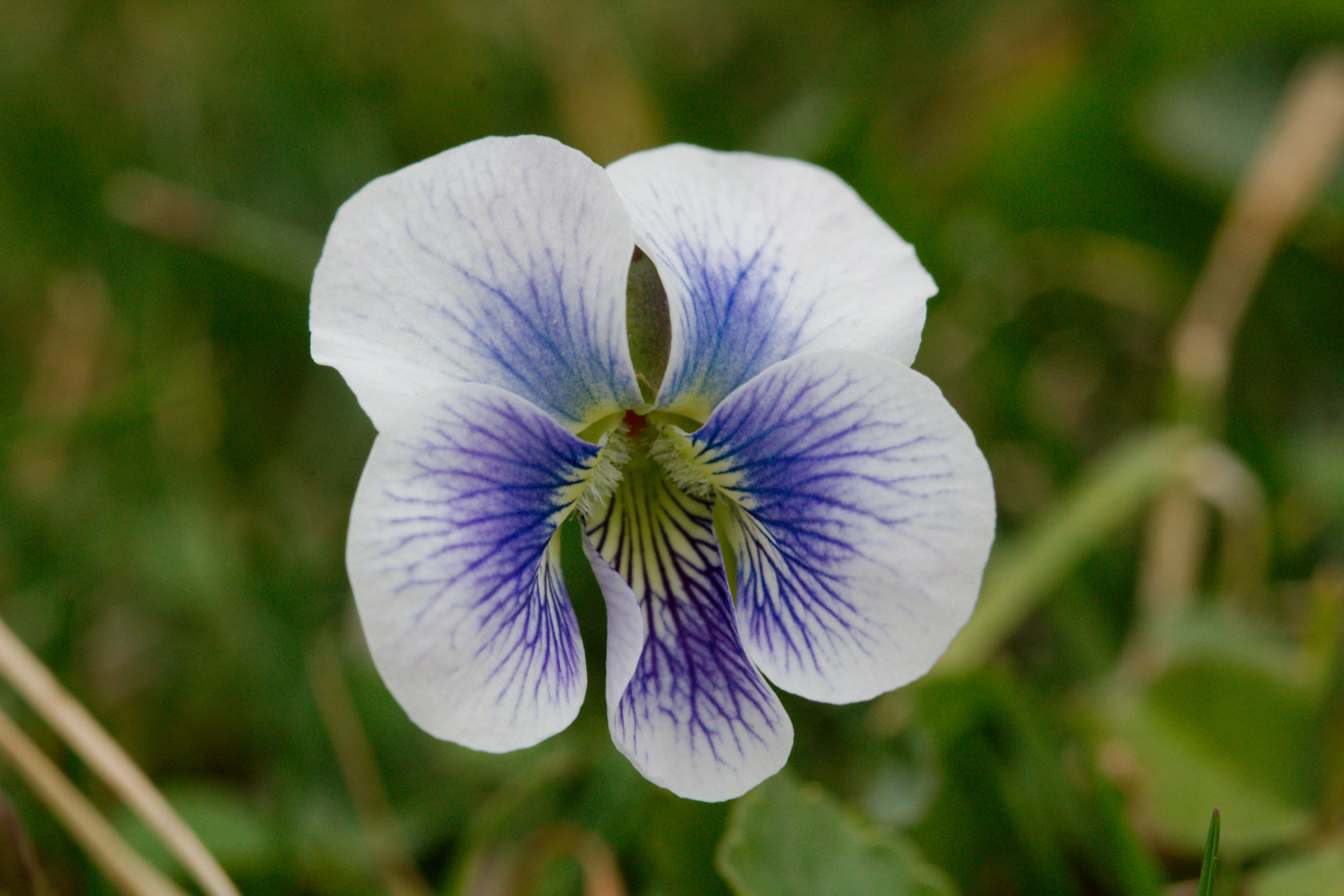
The wild violets (Viola sororia) are up in the lawn. They’re pretty difficult to get rid of but our lawn is not particularly weed free in general, so they are among the least of our worries. The flowers range in color from nearly all white to nearly all bluish purple. This one is about half way in between. We actually have a few yellow violets and I’m assuming those are a different species, possibly Viola pubescens, but I don’t actually know that. They look very similar to these, except for the flower color.
Chionodoxa forbesii
I think this is my absolute favorite of the spring ephemerals. It’s called glory of the snow in honor of it’s generally very early blooming time, sometimes when there is still snow on the ground. The genus Chionodoxa comes from the Greek words chion meaning snow and doxa meaning glory. I think it’s the color that I like best about it, along with its dainty habit and it’s remarkably easy care. It is hardy as far north as USDA zone 3. In a few short weeks it will be done and gone for the year, sleeping away both the heat of summer and the cold of next winter.
Scilla siberica
Blooming shortly after the beautiful, blue Chionodoxa forbesii (glory of the snow), the Scilla siberica (Siberian squill) are starting to come out. They are a darker blue with down-turned flowers but quite similar. In fact, “some experts have merged Chionodoxa into the genus Scilla under the belief that the differences are not significant enough to warrant separate genus status.” (Missouri Botanical Garden, Plant Finder). I don’t really care one way or the other and just enjoy them both as spring ephemerals. I look forward to their bloom every year and don’t think I could have too many of either.
Mertensia virginica (Virginia Bluebells)
Like most folks, we’re mostly confined to our house and to walks in the neighborhood. We figured that we could go for a drive so yesterday we went out and about. One place we went was the Montgomery County Agricultural History Farm Park on Muncaster Road. I didn’t take my camera with me, which is pretty unusual, so we went back there today with my camera this time. There were a few others there but everyone kept their distance from one another.
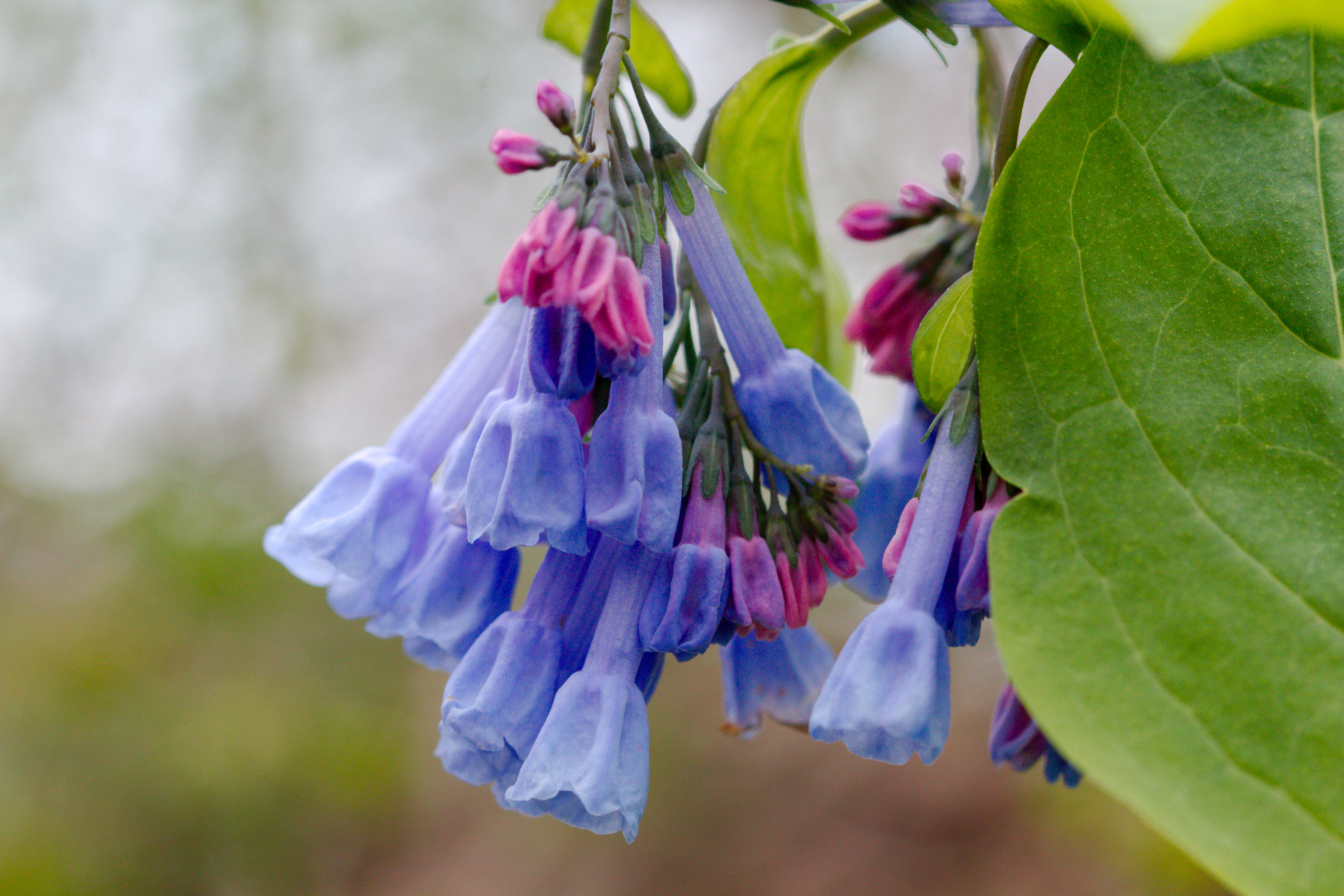
They have a small, woodland garden that is particularly nice right now, with mostly early spring blooms. These Virginia bluebells (Mertensia virginica) are just starting to open and are so lovely.
Myosotis sylvatica (Woodland Forget-me-not)
The woodland forget-me-not (Myosotis sylvatica) is blooming in our back yard. Cathy planted these and they have spread to various places, mostly in the lawn, and they are very pretty little things. Similar to the flowers of the Virginia bluebell (Mertensia virginica) he buds are pinkish purple and the flowers change to blue as they open and mature. Also, the little white “eye ring” around the center change from white to yellow. They are delicate little flowers and although they are not a native species, they are lovely and don’t go to crazy in our yard, so I don’t mind.
Eastern Tailed-Blue (Cupido comyntas)
You can pretty much be sure that if there are things blooming, there are at least a few insects about. Insects aren’t the only pollinators, of course but they do the lion’s share of the work. Nevertheless, they are not out in numbers that we’ll see later in the year. I saw and photographed two different insects today. This one is an eastern tailed-blue (Cupido comyntas) and the other was a syrphid flies (Syrphidae, probably Toxomerus geminatus). So, the insect season is getting underway.
Evolvulus ‘Blue My Mind’
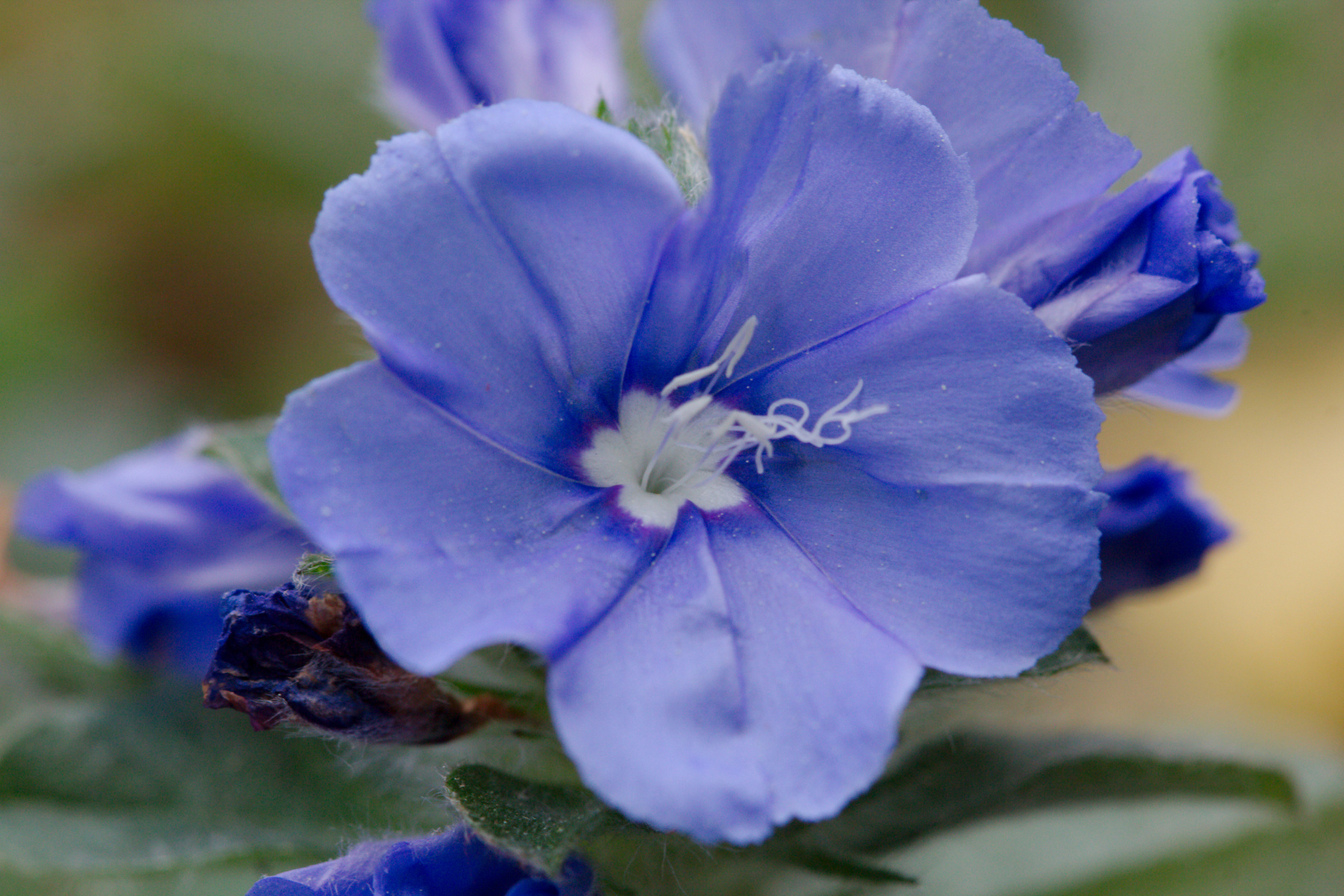
This is yet another tender perennial grown here as an annual. It’s a non-vining, morning glory-like plant native to Brazil. It’s a member of the convolvulus family (a.k.a. the bindweed or morning glory family, Convolvulaceae) but it doesn’t twine and the genus, Evolvulus, means to untwist or unravel. This variety, ‘Blue My Mind’, has beautiful, pale, sky-blue flowers about an inch across. This does really well in hanging baskets or other containers and that’s where this is destined to go, but so far it’s among the plants waiting to be potted up.
Clouds
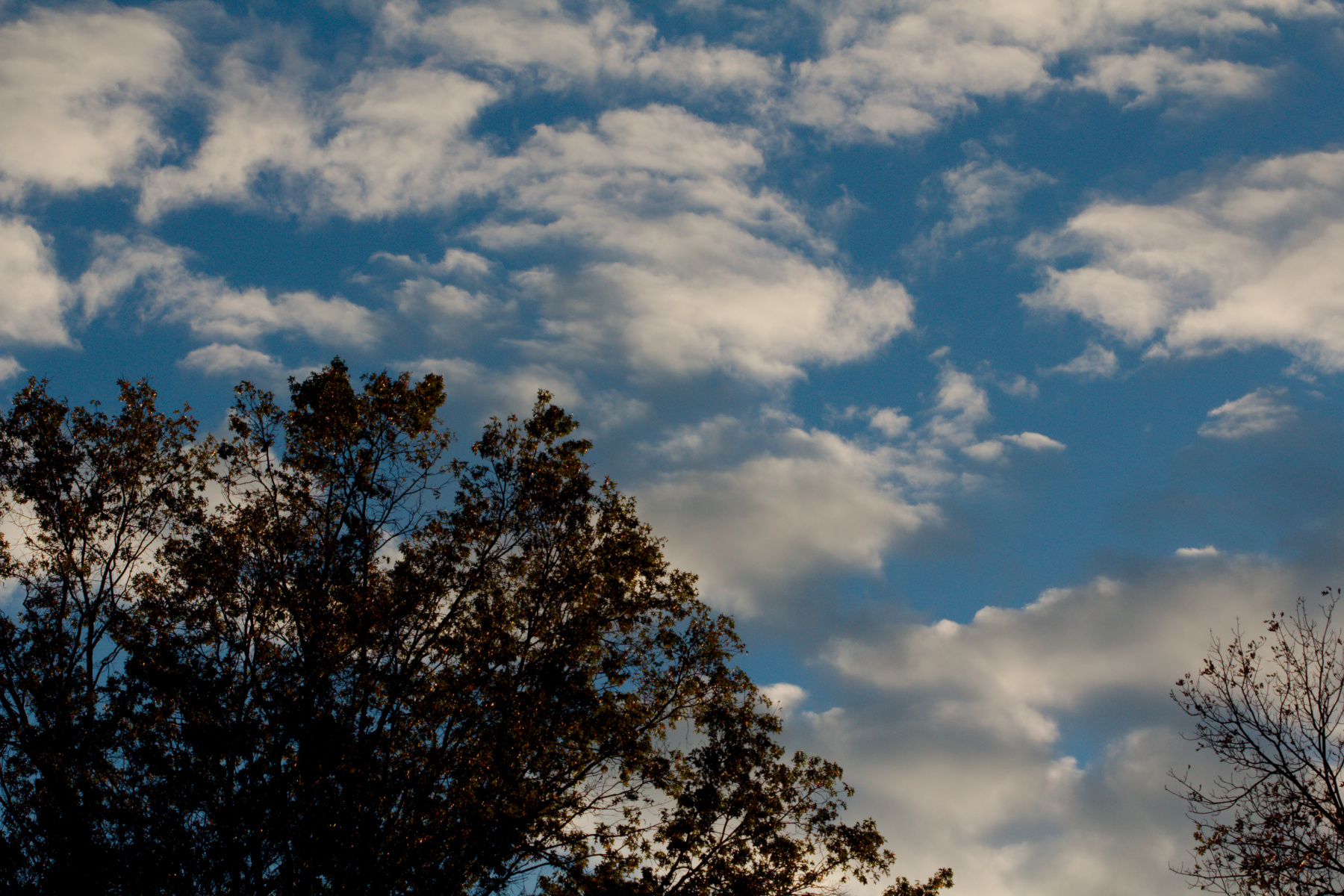
Cathy and I took a walk this evening and enjoyed an occasional view of the sky. Our neighborhood has well established trees, having been built up about 50 years ago. Different parts of the neighborhood have different street trees and some of them have lasted better than others. Many of the original red oaks (Quercus rubra) are gone, while others are very healthy. The willow oaks (Quercus phellos) are more uniformly healthy and generally quite large. There’s one street I call the cathedral because of how the willow oaks form a Gothic nave over the road. The maples (mostly red maples, Acer rubrum) are at the other end of the spectrum. Some are fine but most are less healthy or have been removed. There are sycamores (Platanus occidentalis) scattered around and they are generally healthy, as well. Anyway, the link between the trees and this photo is that the trees mean that most of the time while walking we don’t get an uninterrupted view of the sky.
Summertime
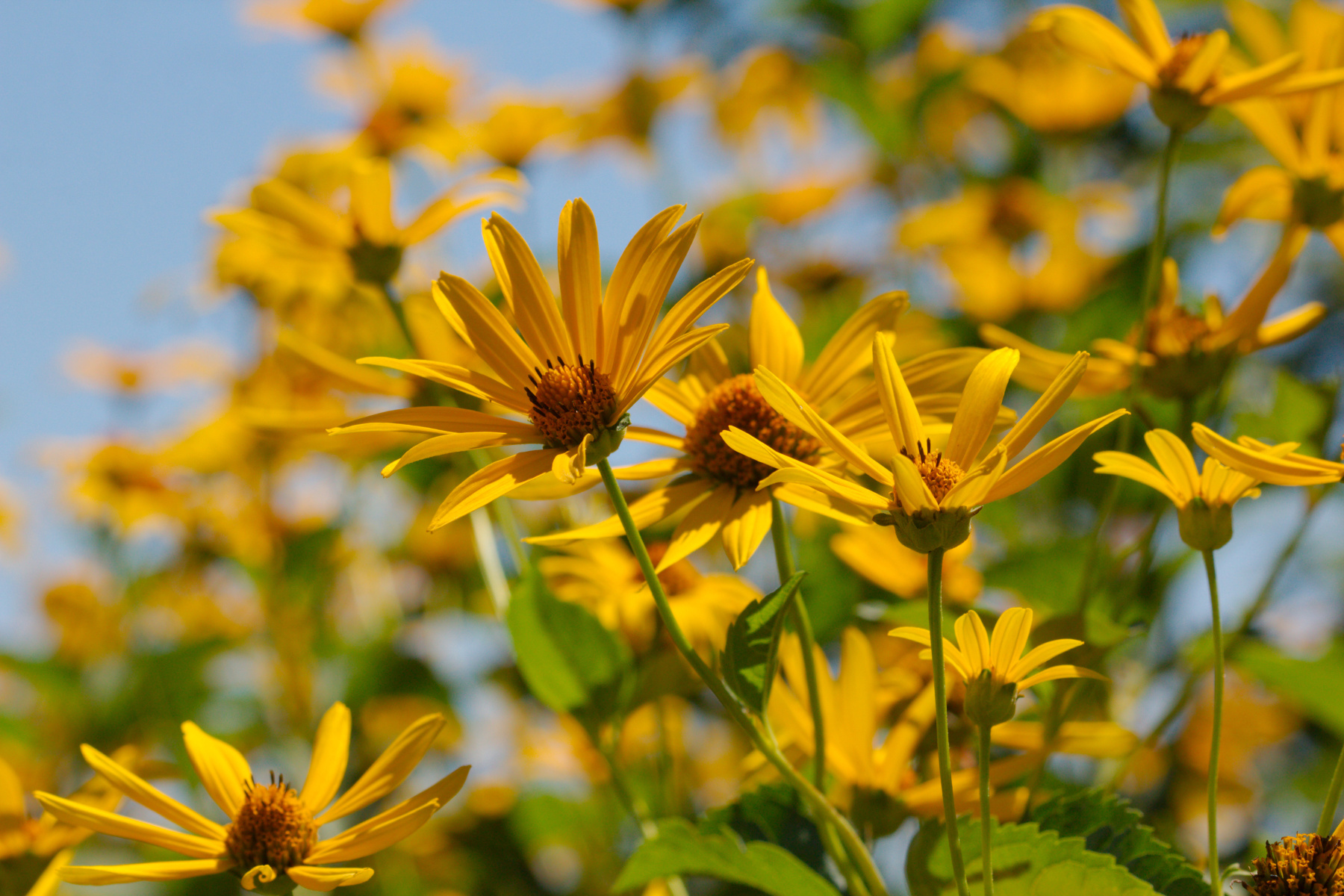
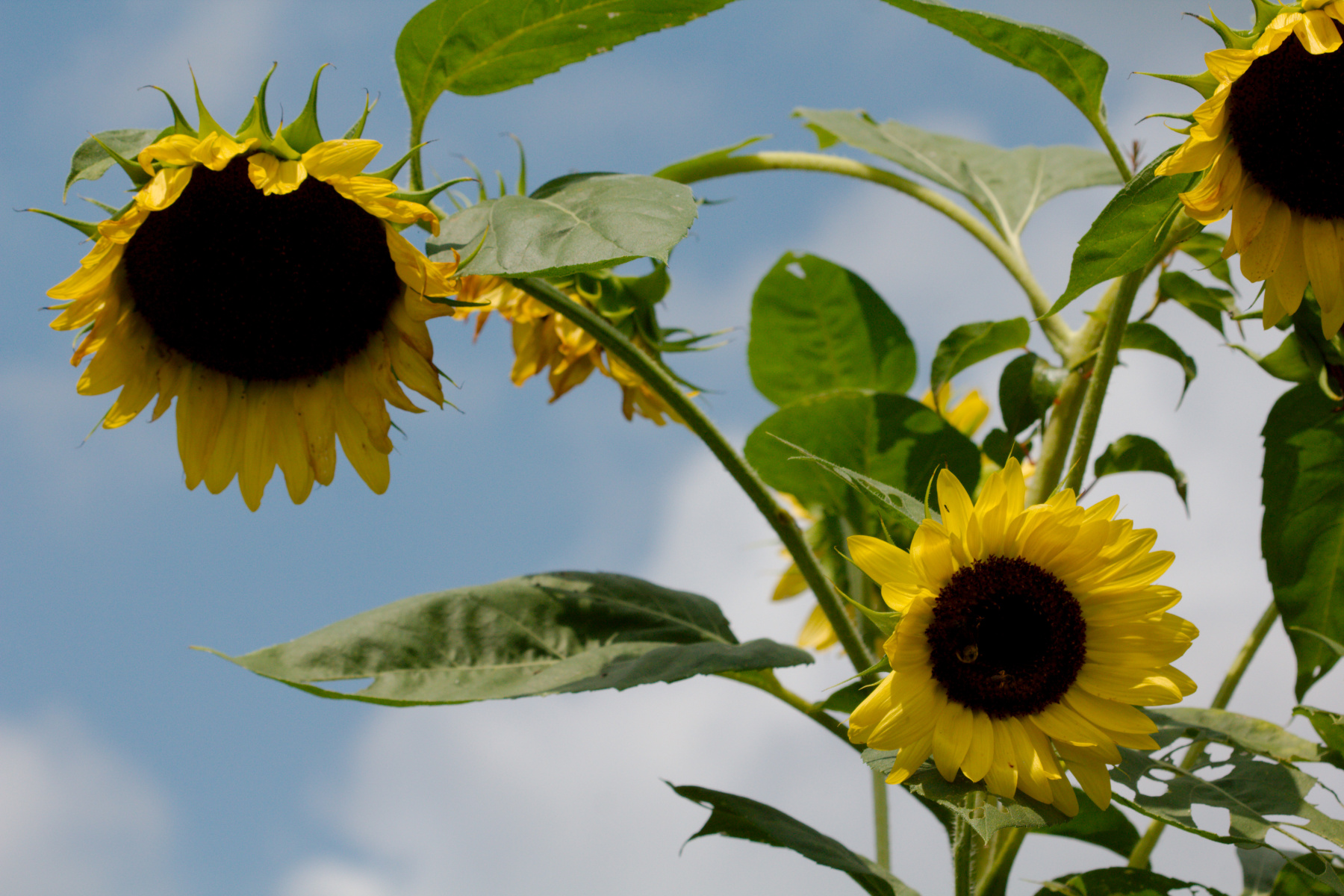
We’re in the heart of summer. We’ve had over three weeks of daytime high’s over 90&#b0;F and it approached 100°F today with even higher temperature forecast for tomorrow. In spite of the heat, Cathy and I felt like we really needed to get out. The Montgomery County Farm Park seemed like a good destination. Their demonstration garden was very nice. It’s a bit overgrown with weeds but since it’s not our responsibility, that bothered us less than weeds do at home. I think these are some sort of wild sunflower but there are quite a few plants with this basic look and I didn’t see a label on them. Regardless, this is summer. Big, bright, bold, yellow flowers against a beautiful, clear, blue sky.
Sunflowers
It was very hot today, and quite muggy, but Cathy and I have been trying to get out on the weekend, at least for a little while, regardless. We went tot he Mont. County Agricultural Farm Park today and walked on one of the trails for a while. Parts were in the shade but even then it was so humid that we were pretty well drenched with sweat. Nevertheless, it was good to be out. We also walked through their demonstration garden again. It wasn’t a lot different to the last time we went but I got a few more pictures, including a few of these sunflowers against the sky.
Cichorium intybus (Chicory)
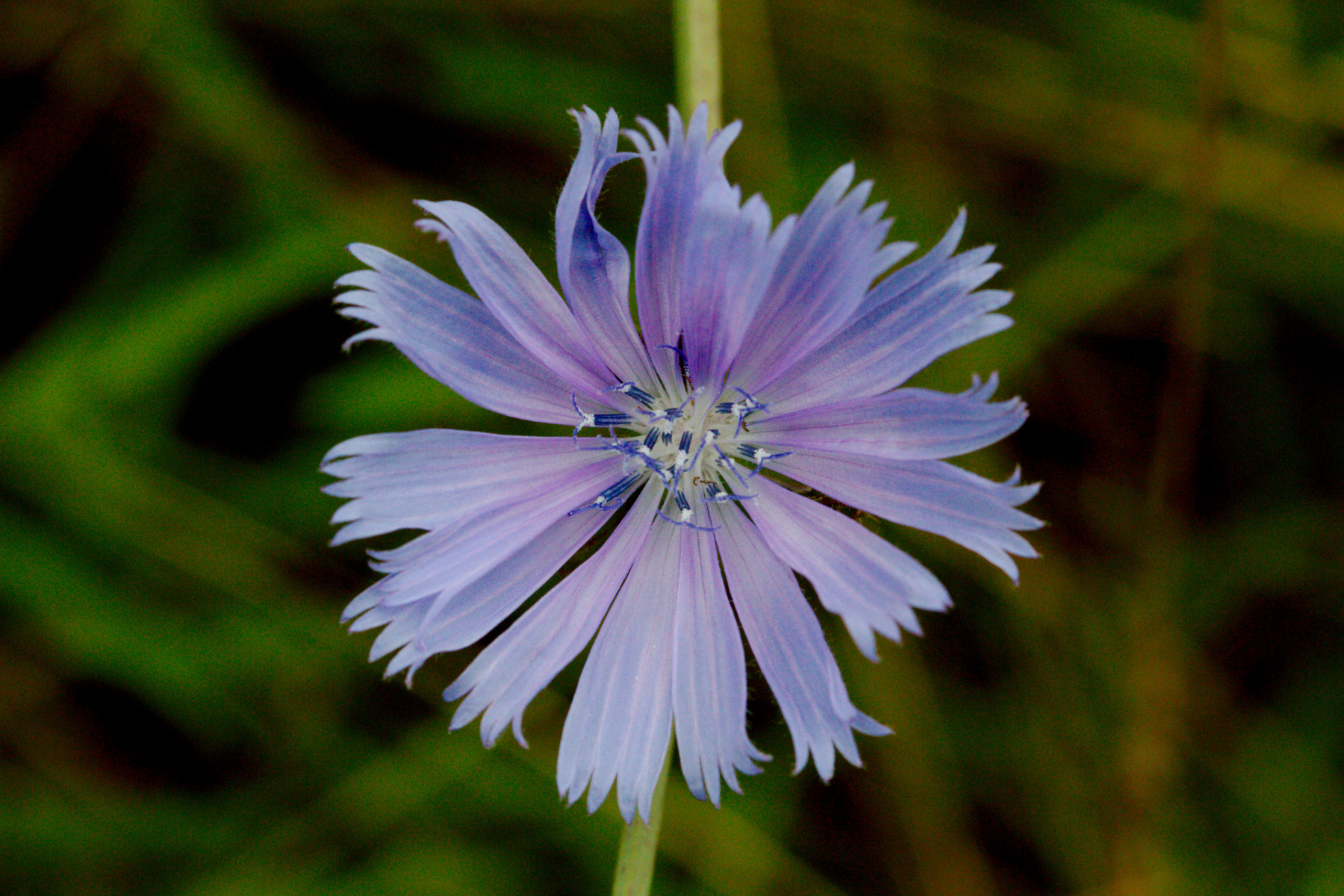
It wasn’t so hot today, although relative humidity was near 100%. Cathy and I went out for a walk at the former Redgate Golf Course, now Redgate Park. We saw a pair of white-tailed deer (a mother and fawn) as well as a few different wildflowers. This is a pretty common one, an import from the old world, but still a pretty flower. The others that I photographed were also non-natives. There was the Asiatic dayflower (Commelia communis), which has two white petal-like structures above the flower, and moth mullein (Verbascum blattaria), a pretty, little, white flower with a magenta throat and stamens. We also went to Rockville Cemetery, where we saw another fawn, and then Croydon Nature Center before returning home.
Fall Flowers
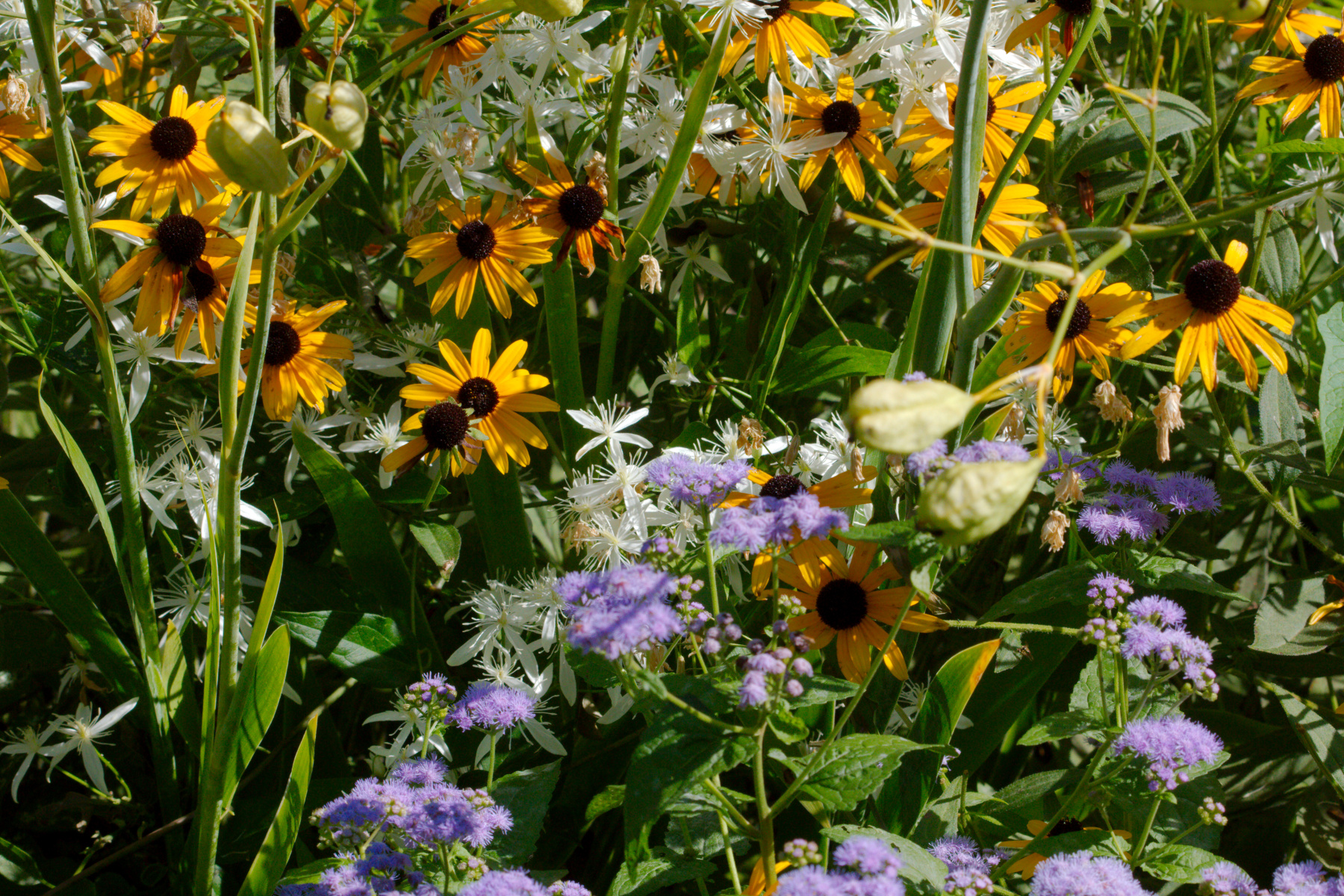
I suppose you could say these are late summer flowers, rather than fall flowers, but there’s no hard line between summer and fall. The black-eyed Susans are summer flowers and are just finishing up. There are still quite a few of them blooming but not nearly so many as there were. The autumn clematis (Clematis terniflora) is just about in full bloom, as is the blue mistflower (Conoclinium coelestinum). The blackberry lily (Iris domestica), which blooms in early summer, is nearly in seed. All together, it makes a pretty nice combination of colors and textures.
Clouds
Clouds. I can’t keep my eyes off them clouds in the sky. ‘Cause I know it won’t be long, won’t be long.
Song lyrics. Not my song, and yet, it’s a song I sometimes sing to myself as I watch the clouds rolling across the sky. It was a busy week and I’m happy for the weekend. And sitting out back and watching the clouds is a nice way to unwind. Of course, this song isn’t just about relaxing, but that doesn’t mean we shouldn’t. The song, by Barry McGuire, is a reference to Matthew 26:64, Mark 14:62, and Luke 21:27–28 (“And then they will see the Son of Man coming in a cloud with power and great glory. Now when these things begin to take place, straighten up and raise your heads, because your redemption is drawing near.”).