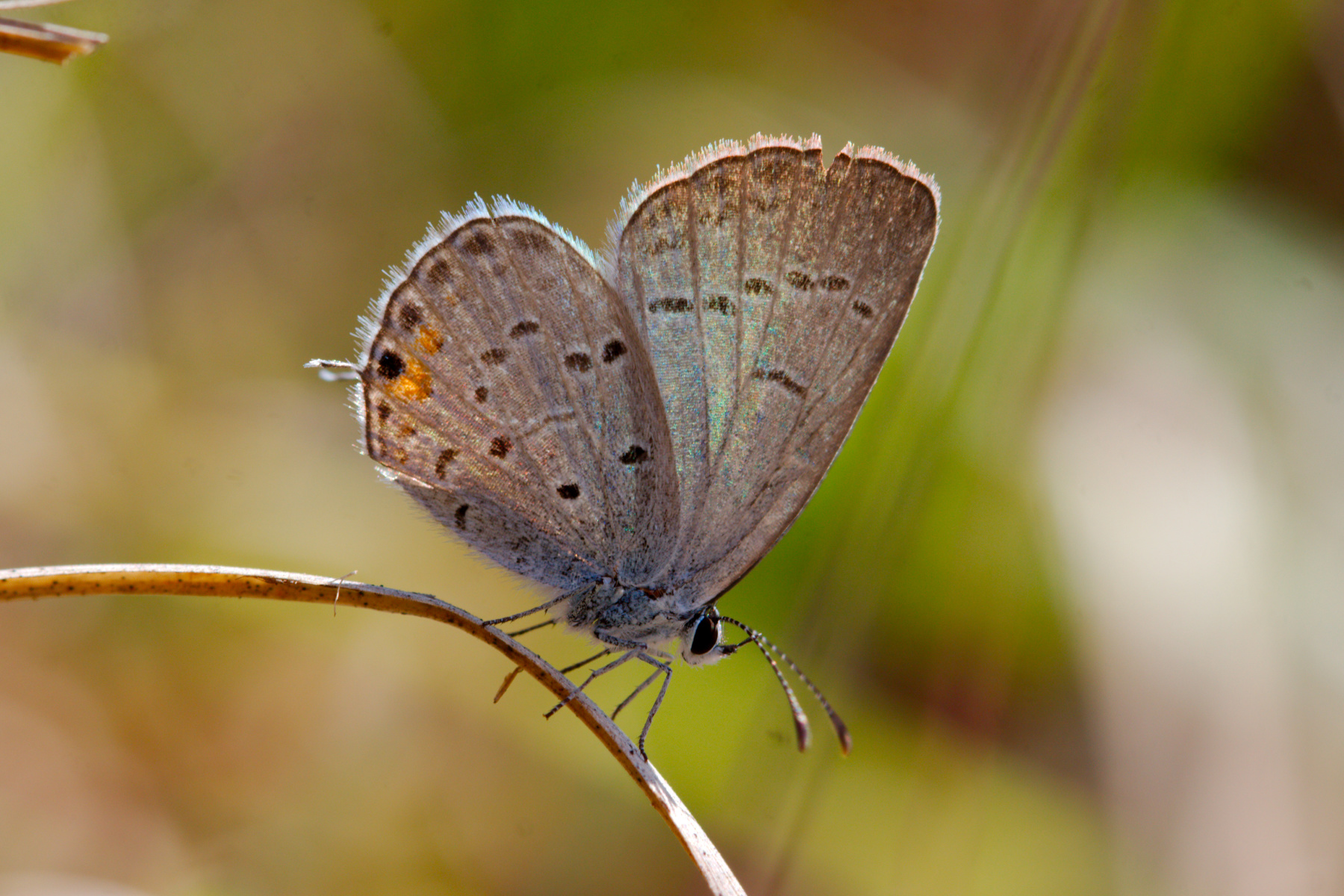
I went outside today and walked around a bit in the lot next to my office. The weather was fine and it was nice to be out in the sunshine. I startled a belted kingfisher (Megaceryle alcyon) as I walked towards a vernal drainage pond. It’s often completely dry by this time of year but it had more water in it than in previous years and it hasn’t all evaporated yet. Above it, I was able to get close enough to get a pretty good photograph of this eastern tailed-blue (Cupido comyntas). They are pretty common but easily missed, as they are fairly small and flit around near the ground. They’re worth looking out for, I think.
Tagged With: Insect
Cupido comyntas (Eastern Tailed-Blue)
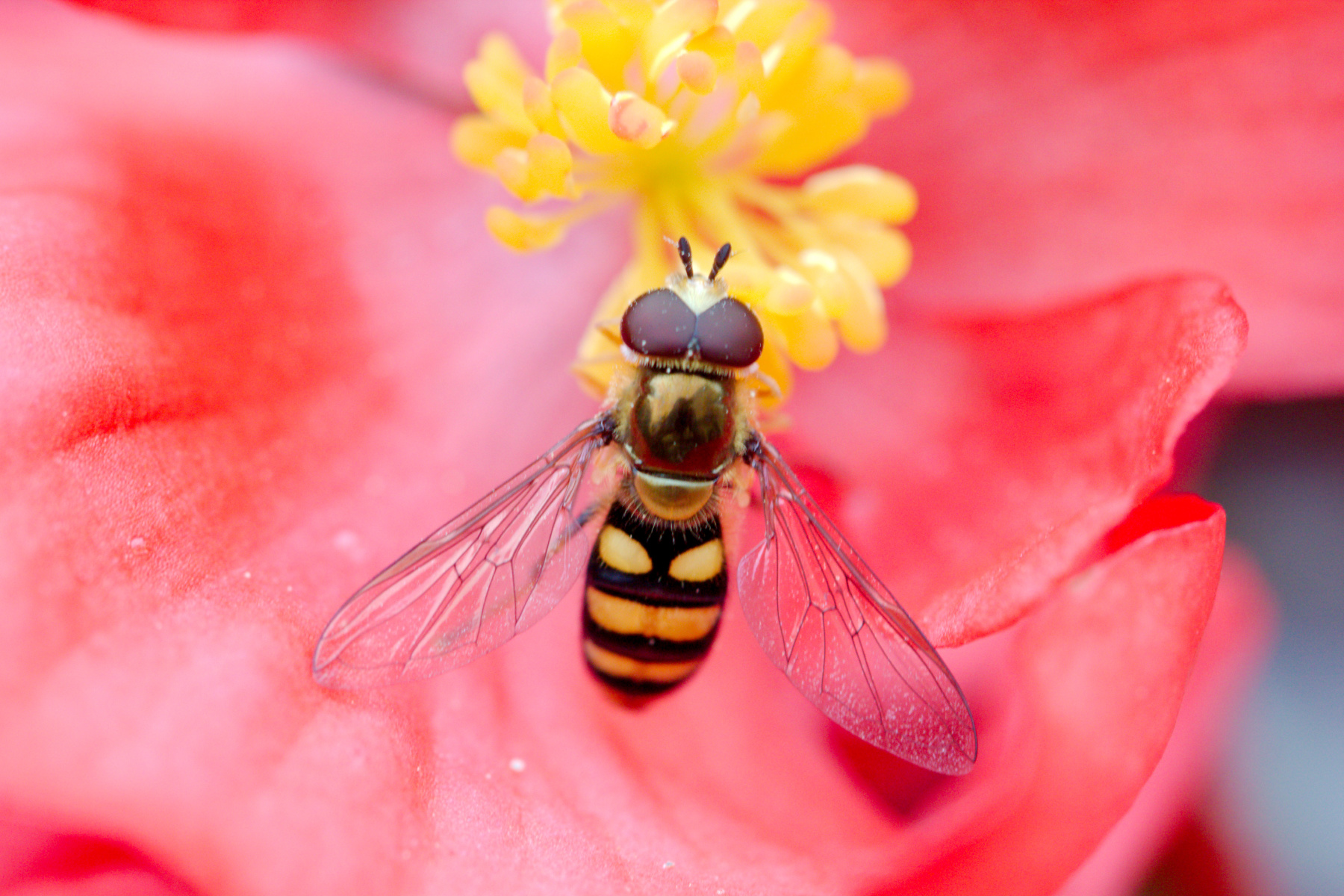
Eupeodes americanus (American Hover Fly)
Cathy and I worked in the yard this afternoon. As I’ve mentioned before, there’s a lot to be done in the yard but I think we’ve made progress, at least. I took a break and took some pictures in the back yard. There are some bracket fungi on the ground above where there used to be a silver maple. They come up every year as the roots rot. I also took some pictures of some butterflies on the flowers around the patio. Then I saw this American hover fly (Eupeodes americanus) on the begonias growing in a pot on the patio. I was able to get some pretty decent photos of it as it moved from flower to flower.
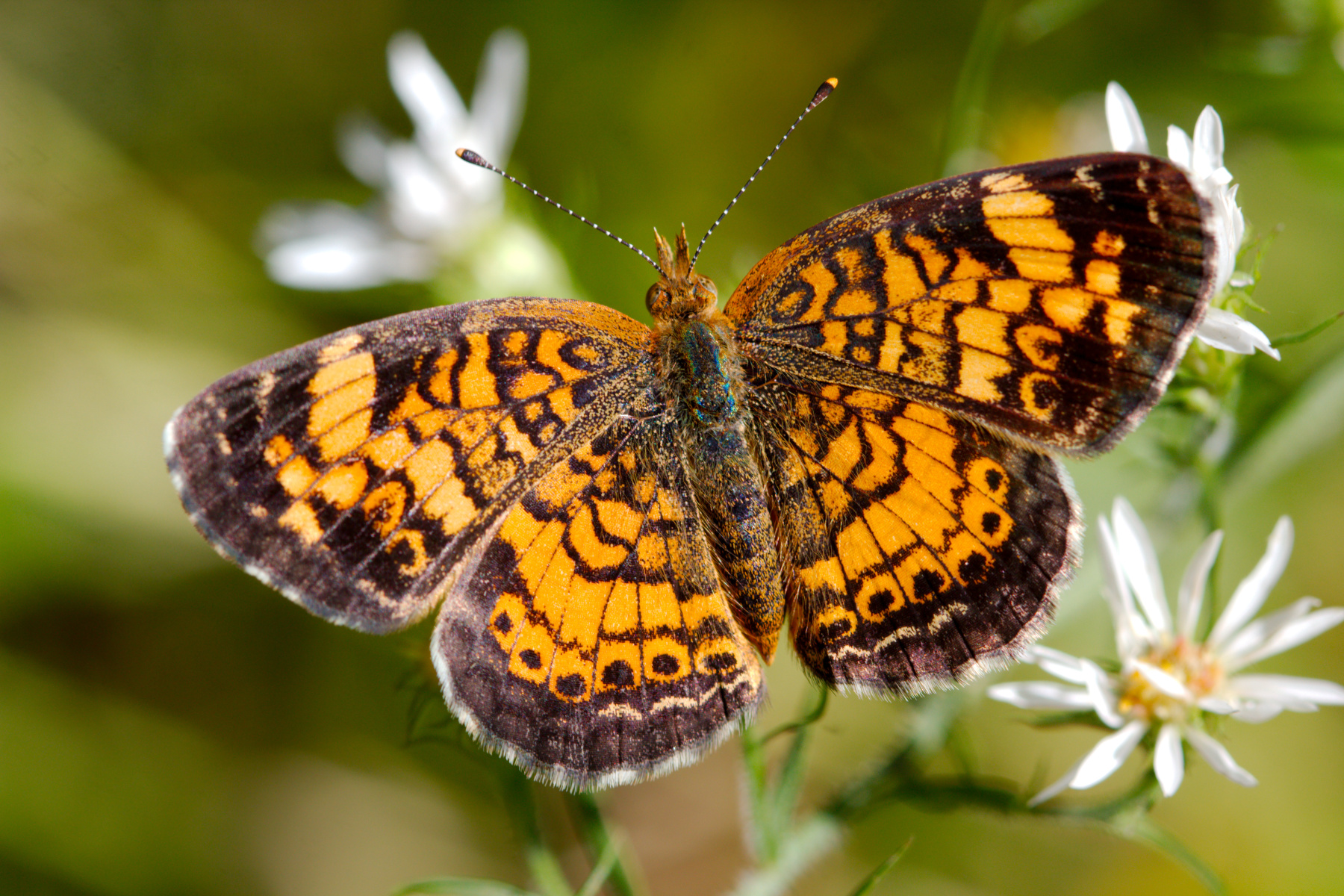
Phyciodes tharos (Pearl Crescent)
I sent outside for a little while today and took some pictures of butterflies. I was down near the storm management pond next to my building and saw pearl crescents (Phyciodes tharos) as seen here as well as cabbage whites (Pieris rapae). There were also bees around, but not so many as there were only a few weeks ago. Getting good photographs of butterflies is challenging but it’s something I enjoy. This is a mid-sized butterfly, considerably smaller than the swallowtails or monarch but larger then the blue, featured recently. They are fairly common and easily spotted but as with most butterflies, difficult to get too close to.
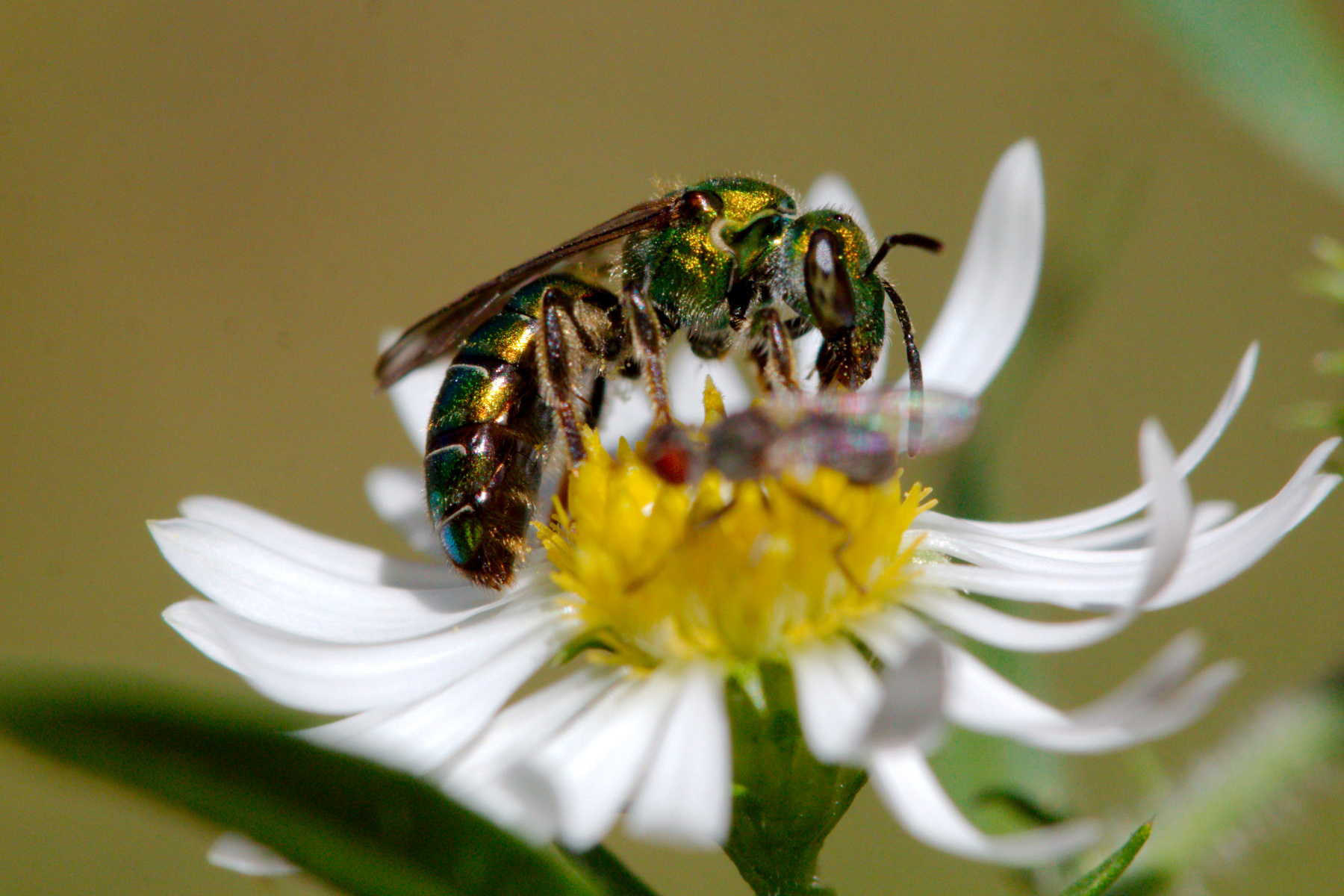
Sweat Bee
I met Cathy outside for a little while early this afternoon. As we were walking back towards the entrance to my building we saw a white-tailed deer (Odocoileus virginianus) near the parking lot and I was able to get a few nice photographs of her. Cathy went back to her office and I went down near the pond and took some photos of insects. There was a type of fly that I hadn’t seen before. I thought it was a thick-headed fly (Family Conopidae) but it was identified as a Dioprosopa clavata, a syrphid fly (Family Halictidae) that resembles a thick-headed fly. Today’s photo, however, is of this metalic green sweat bee, a female in the genus Augochlorella.
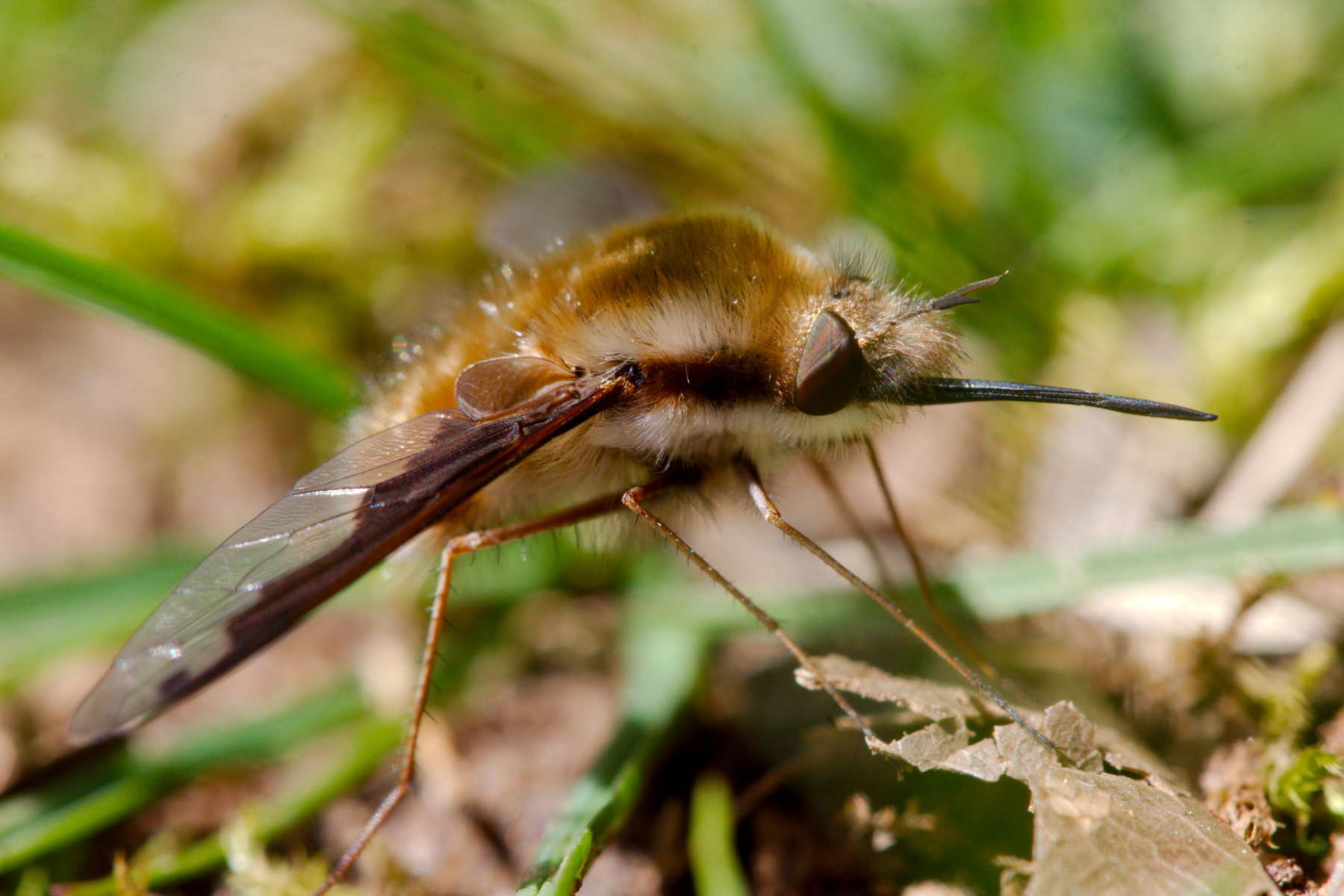
Bombylius major (Greater Bee Fly)
I went out to take pictures last this morning, taking a short break from work. I had expected to take pictures of flowers of one sort or another but I happened to see this greater bee fly (Bombylius major) and was able to get pretty close to it and got a reasonable photo. It’s a fairly distinctive looking fly, with a hairy body. Differentiating flies from bees is generally easy if you can count their wings. The order Diptera, which is the flies, is so named because they have two wings (i.e. a single pair) instead of the normal insect wing count of four (two pairs).
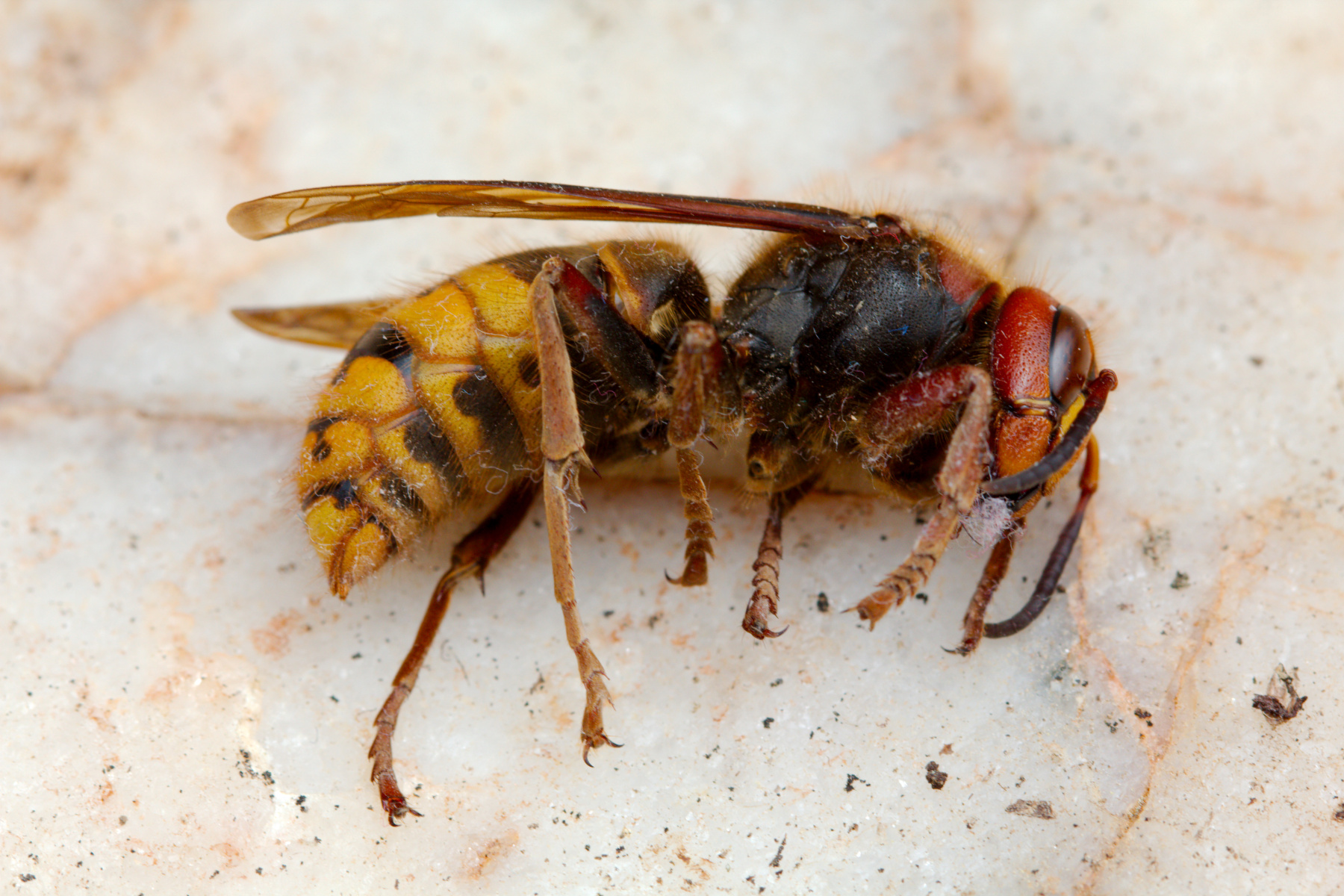
Vespa crabro (European Hornet)
This is a European hornet (Vespa crabro). It’s also dead. I found it on the floor of the basement when I stepped on it in my bare feet, which worried me a little. It was mostly dead before I stepped on it and completely dead after that. Since I didn’t get stung, I’m over it. They are predatory on other insects so in general (and outside my basement), I have no problem with them being around. They are similar in size to the eastern cicada killer (Sphecius speciosus) but are quite different in appearance. As large as they are, the European hornet is smaller than the Asian giant hornet (Vespa mandarinia, sometimes referred to as murder hornets), which can be 30% to 50% larger.
Lady Beetle
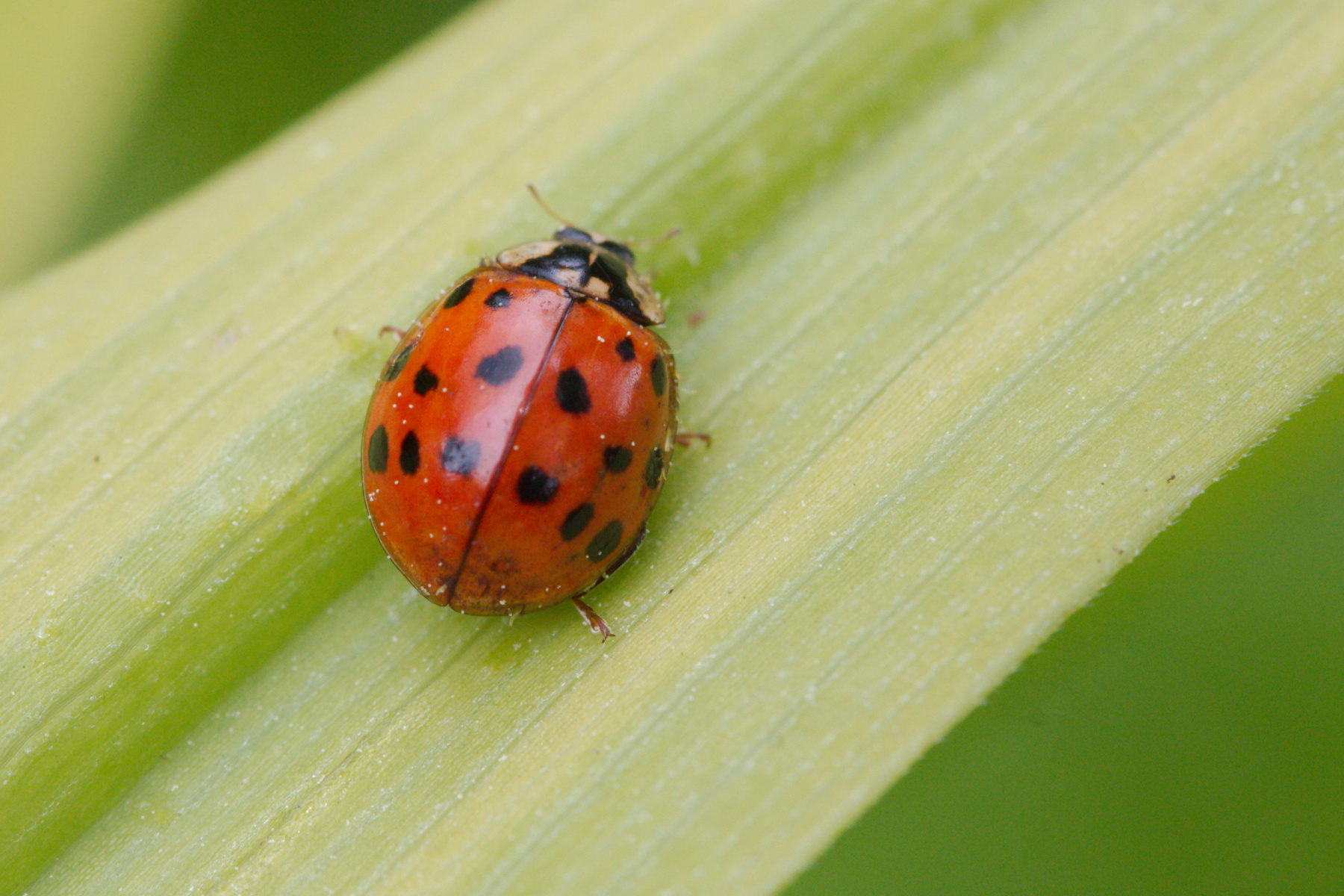
I haven’t included the specific name for this lady beetle in my title because I’m not entirely sure what it is. My guess would be that it’s an Asian lady beetle (Harmonia axyridis), though as they are quite common and this certainly looks right. But I’m no expert. I got one photo of this on a leaf before it flew away so although it isn’t as sharp a picture as I’d like, it’s all I have. These are, of course, insects that we like to have in our garden, as they eat aphids. I haven’t seen aphids in great numbers in the garden yet this year but they’ll be along before too long, have no fear. That and Japanese beetles are the two insect pests I see the most in the summer months.
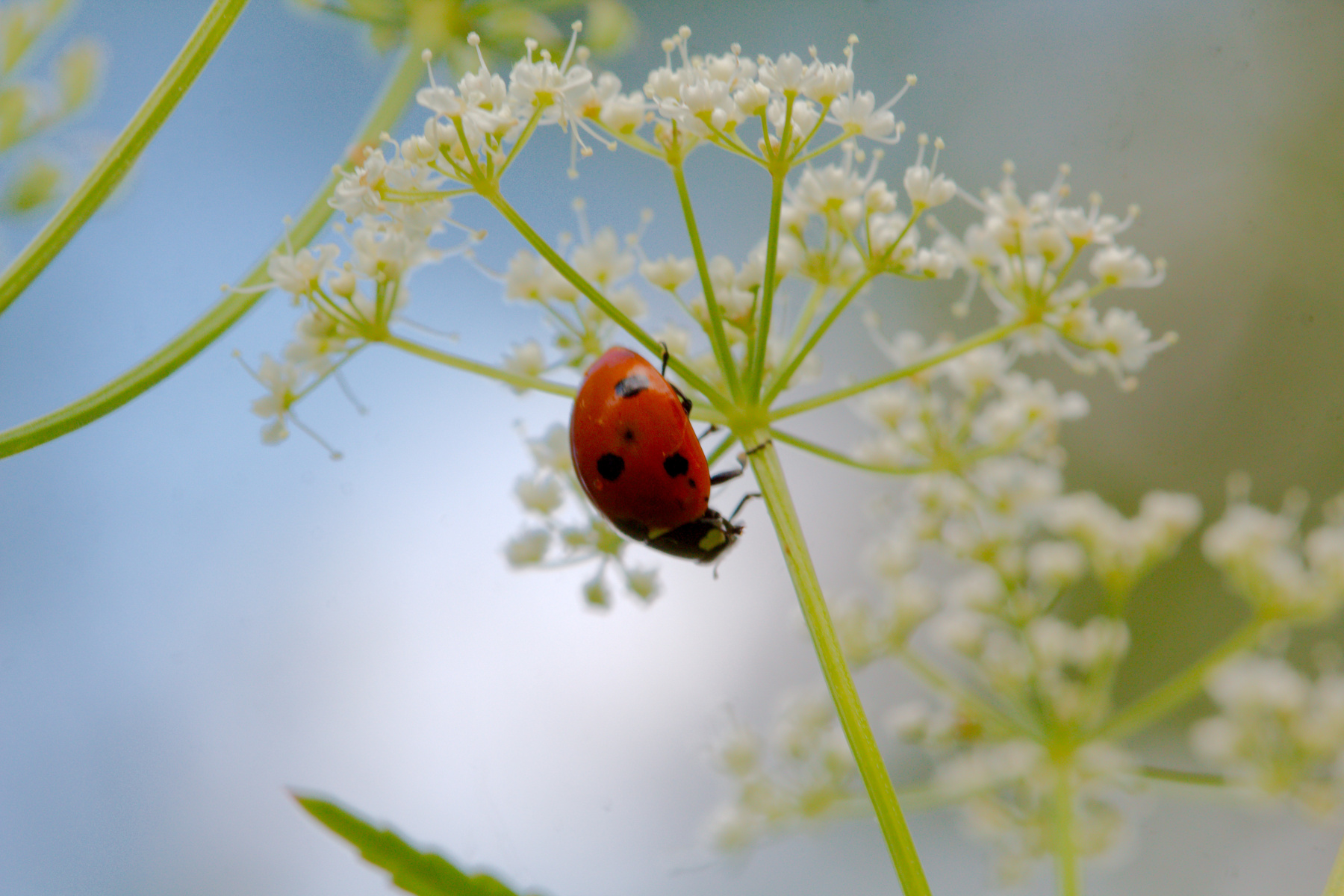
Asian Lady Beetle (Harmonia axyridis)
I took some photos of some yellow flowering sedum this afternoon but they didn’t turn out very well. You’d be stuck with them except I happened to see this Asian lady beetle (Harmonia axyridis) on a stem and got down on the ground to get a few photos of it. This plant has a flower cluster similar to Queen Anne’s lace but that’s not what it is. It’s a very aggressive weed that we picked up somewhere along the way and we really need to do something about it. But it made for a nice photograph, in this case. It may be Chaerophyllum aromaticum but I really don’t know. Whatever it is, you really don’t want any.
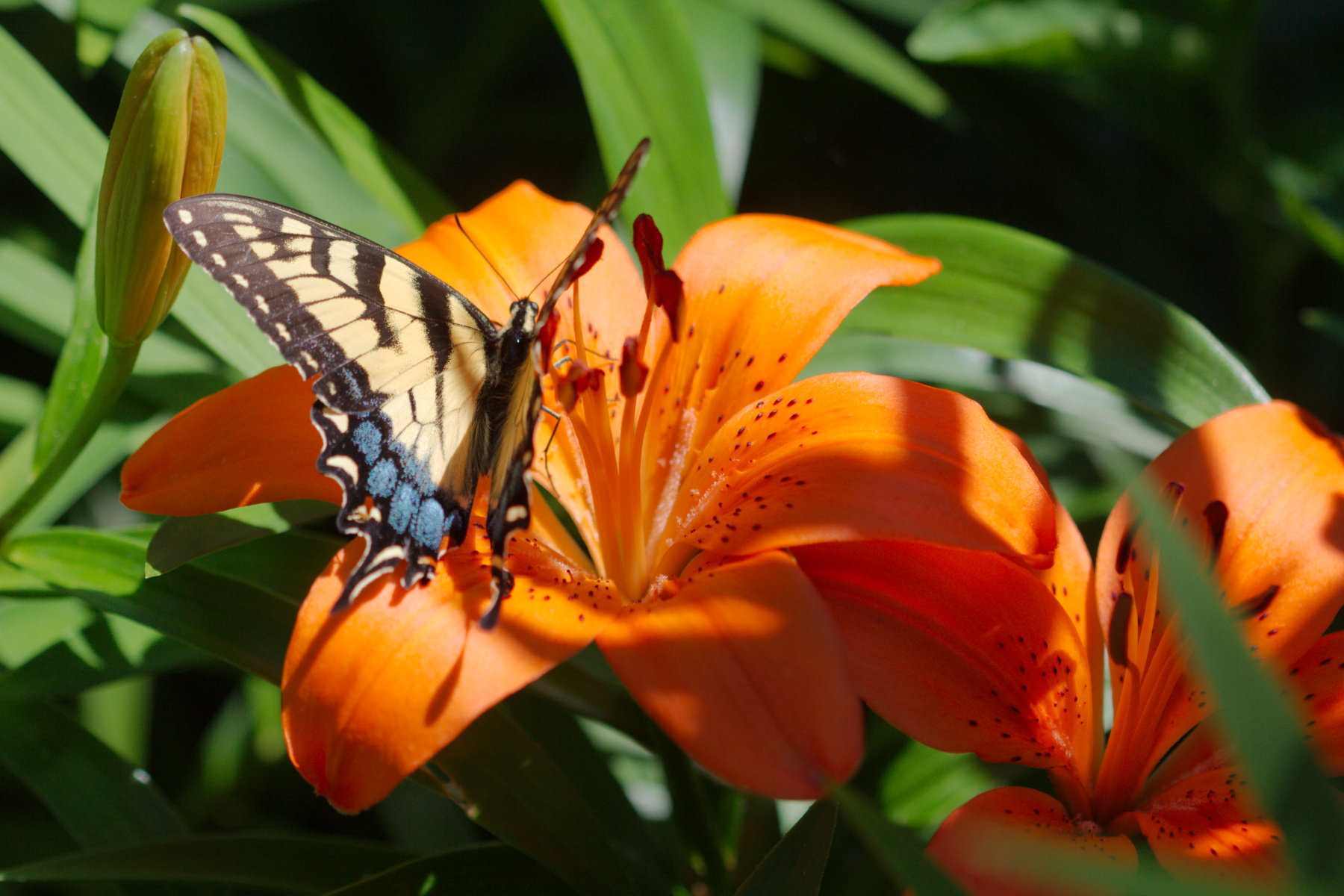
Tiger Swallowtail (Papilio glaucus)
We had our first sighting of a tiger swallowtail (Papilio glaucus) today and it was nice enough to perch on the Asiatic lilies growing in our front garden. I’ve actually seen a few butterflies around but haven’t had a chance to get any photos. Soon we’ll have them in abundance, especially when the Buddleia starts to bloom. These Asiatic lilies are surrounded by tiger lily plants (Lilium lancifolium), which are considerably taller and I’m not sure these can get the attention they deserve. On the other hand, this makes them harder for the deer to get to, which is a plus.
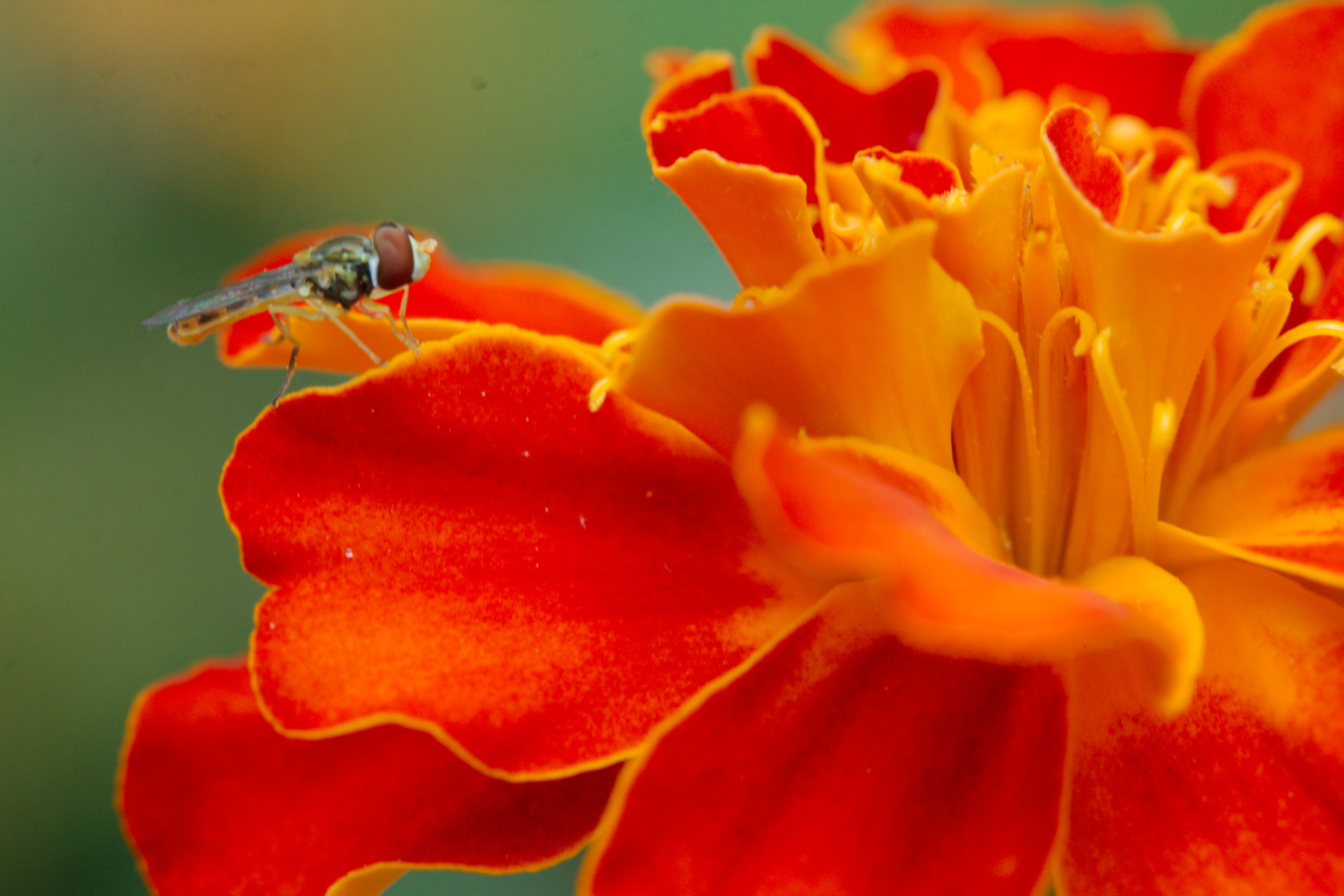
Syrphid Fly on Marigold
I went out to take some pictures of flowers today. There are a few sitting on a table that I set up for Cathy to work on and that seemed like a nice place to sit and take pictures. I took some of a coral bells plant (Heuchera x ‘Blondie’) and then I noticed this syrphid file (Family Syrphidae) on a marigold blossom. There’s only so close I can get with my 100mm macro and I’d like some way to get closer. I’ve thought about buying a Canon MP-E 65mm f/2.8 lens that gives magnifications of 1 to 5 times, basically picking up where my current lens leaves off. It’s manual focus, but at that close range, focus is as much a matter of moving the camera closer or further away from the subject.
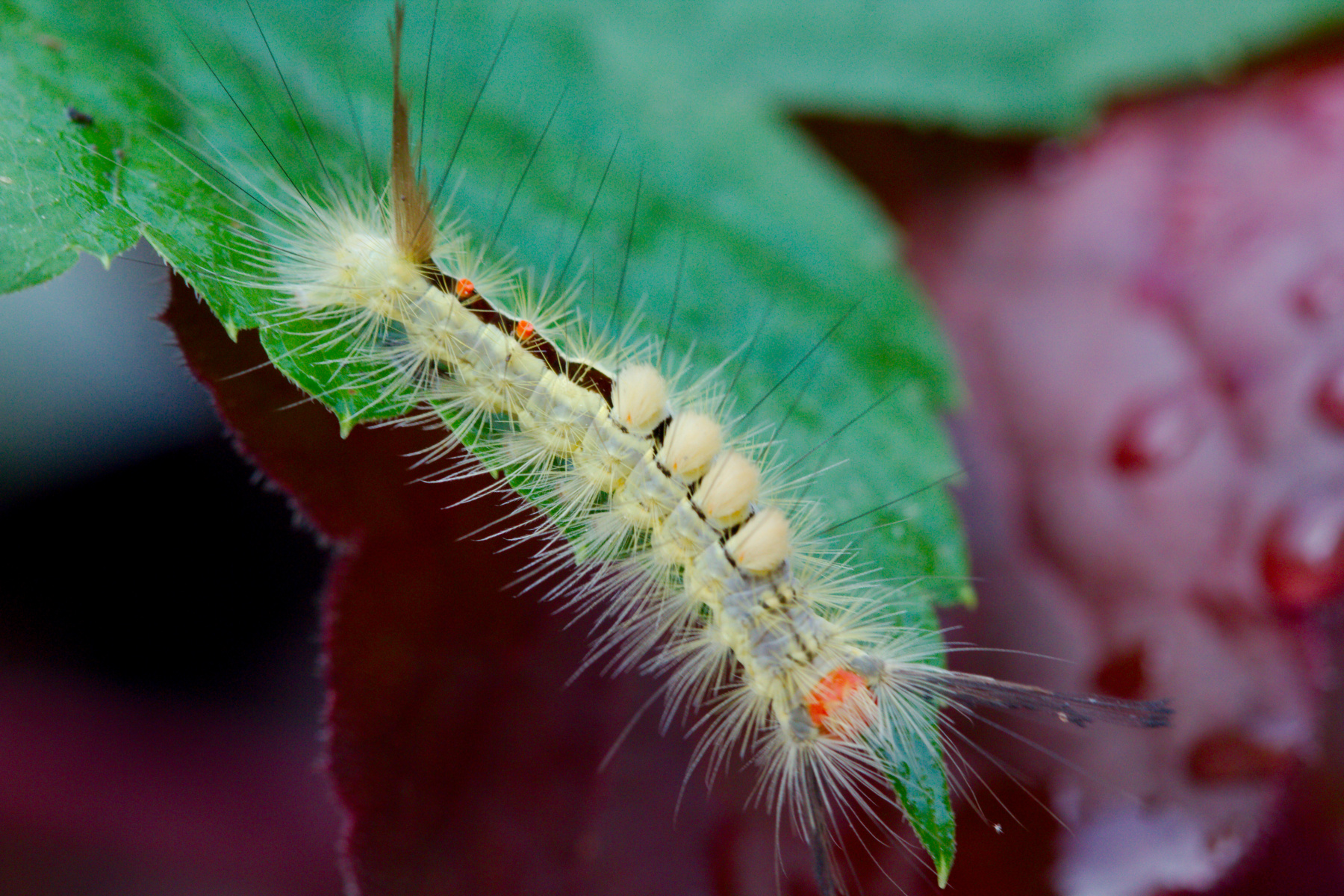
White-marked Tussock Moth (Orgyia leucostigma)
I was sitting outside this morning, taking a break from doing some yard work, when I noticed this caterpillar on the tire of my car. I moved it to a plant, figuring it would be shown to better effect there than on the black tire, and then I got my camera and took a few photos. It is a white-marked tussock moth (Orgyia leucostigma), a species native to our region. Interestingly, the adult females are wingless and therefore flightless. If you find one of these, you’ll want to avoid handling it with your bare hands. Its hair is known to cause allergic reactions, especially in areas of the body with sensitive skin. I let it crawl onto a leaf to move it, so as to avoid any issues.
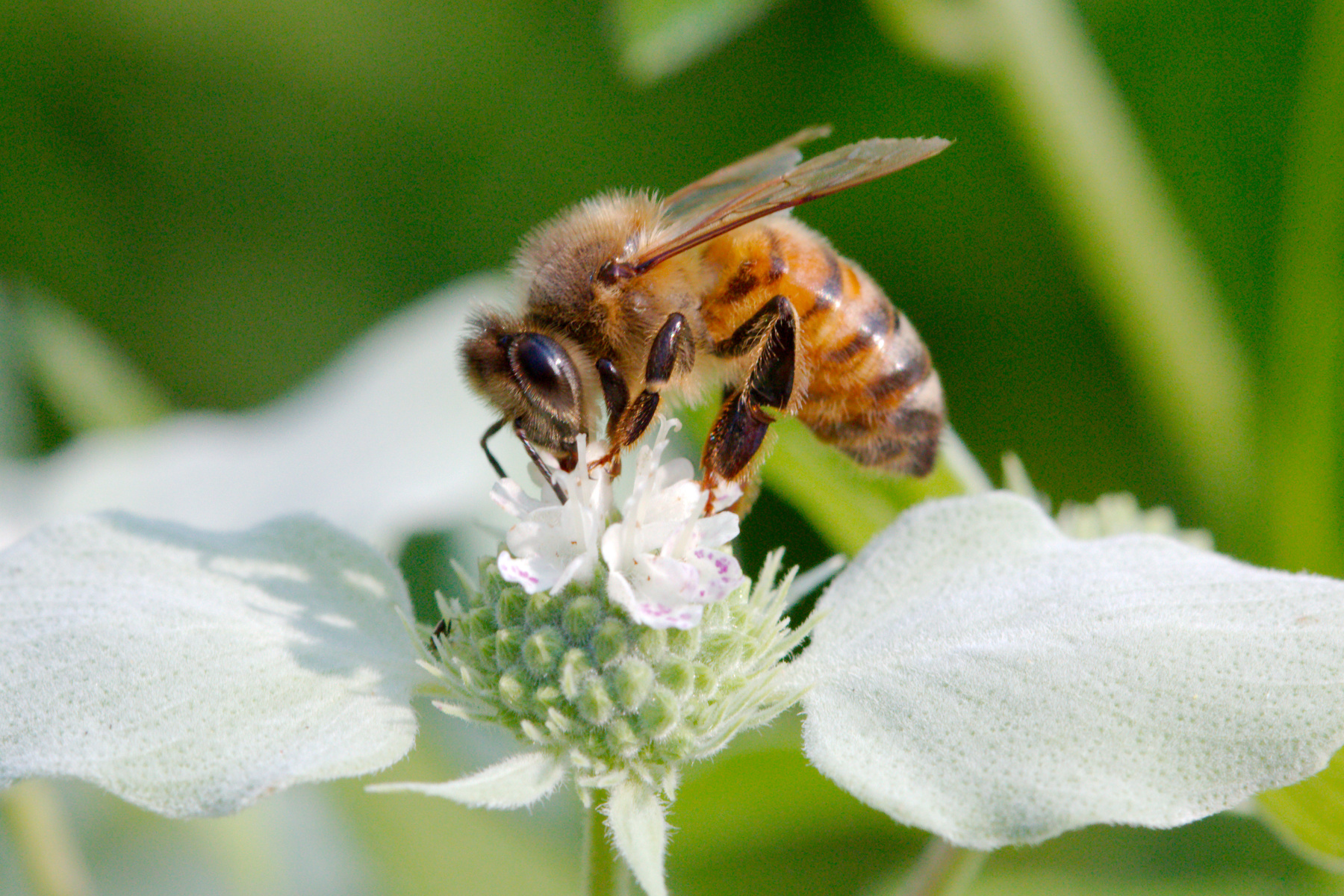
Honey Bee (Apis mellifera)
The mountain mint (Pycnanthemum muticum) is starting to bloom. I won’t claim it’s a hive of activity yet, but there’s certainly a bit of a buzz. Mostly I’m seeing honey bees (Apis mellifera) on them so far, but the mountain mint is very attractive to a wide variety of insect life from small beetles and bugs to bees and wasps, and some butterflies. The buddleia next to this tends to get more butterflies, though. It loves the sun and the insects are out in the most fierce in the heat of the day. Not my favorite time to sit there with my camera but it’s sometimes worth the effort.
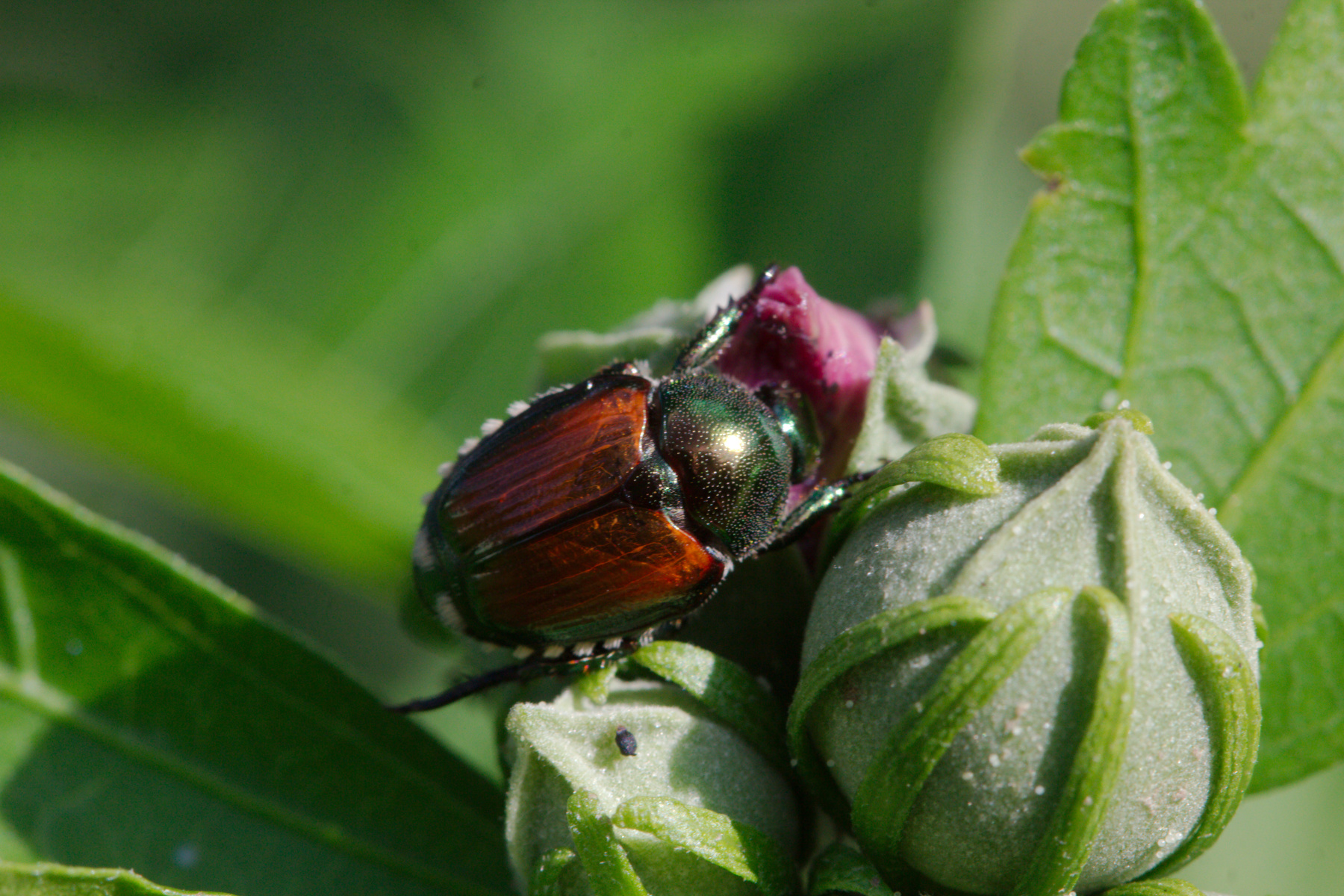
Popillia japonica (Japanese Beetle)
I am definitely not a fan of the Japanese beetle (Popillia japonica), a native of (unsurprisingly) Japan, and instroduced into North America in the early 20th century (first found in the United States in 1916 near Riverton, New Jersey). They are quite destructive of a wide variety of plants, including both ornamental plants (like roses, which they love) and agricultural crops (soybeans, stone fruits, etc.). Their larvae damage lawns, feeding on the roots of grasses. They are, of course, pretty if you can disassociate them from the destruction they cause. But that’s hard for me to do and I don’t really have a lot of sympathy for them. This one is on a rose of Sharon (a.k.a. shrub althea, Hibiscus syriacus).
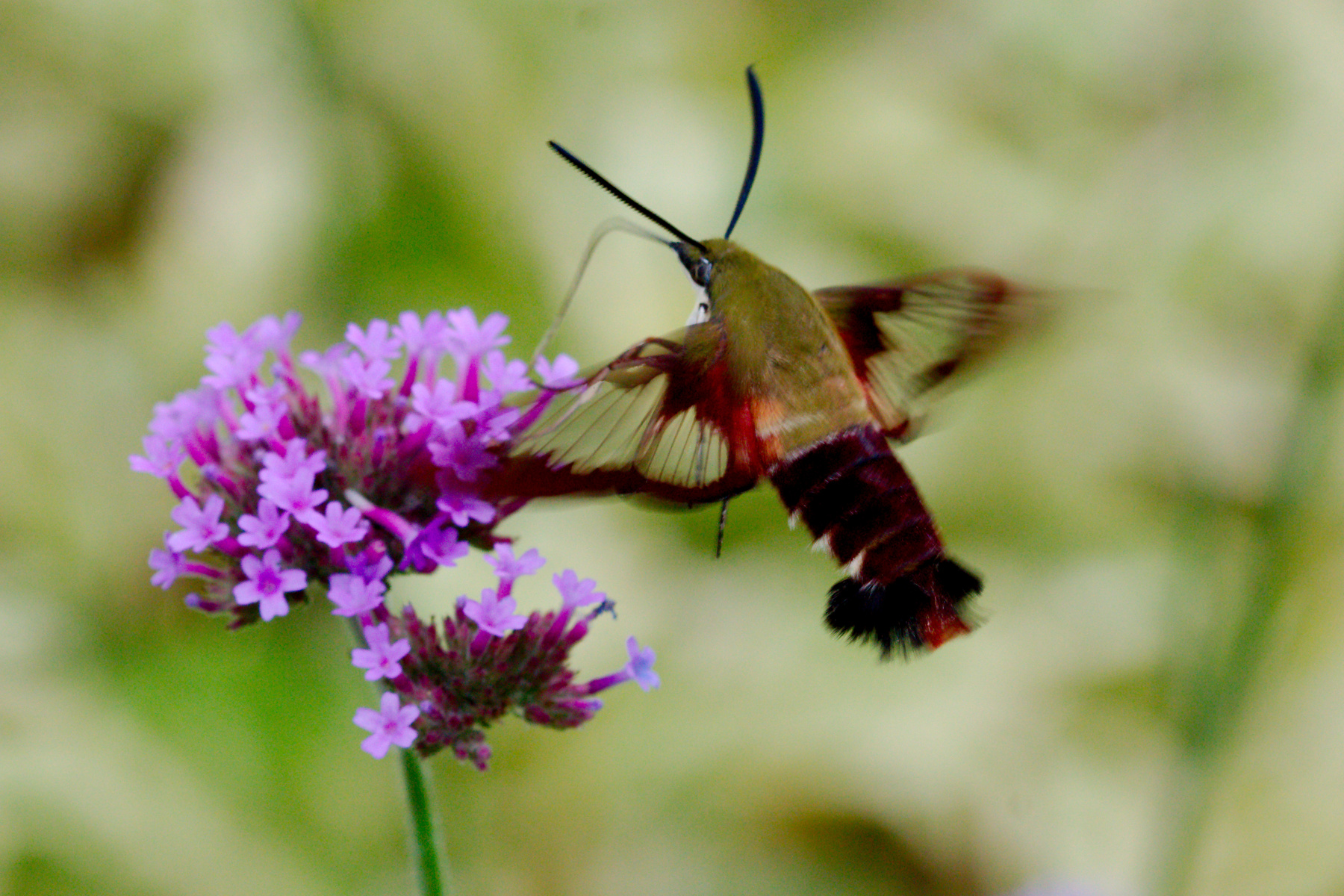
Snowberry Clearwing (Hemaris diffinis)
After we got home from visiting mom this afternoon we were sitting in the front yard. The evenings have been warm but so much nicer than it’s been during the heat of the day. Because my work setup is in the basement, I feel like I need to get outdoors some each day so I’m going out front after work to read. Today wasn’t a work day, but I sat out anyway. I had just taken a photo of the tiger lily buds when we spotted this snowberry clearwing moth (Hemaris diffinis) on the Verbena bonariensis. I didn’t really have great light for taking pictures of a moth on the wing (and these rarely land, preferring to hover). But this one turned out pretty well, I think.
Polites peckius (Peck’s Skipper)
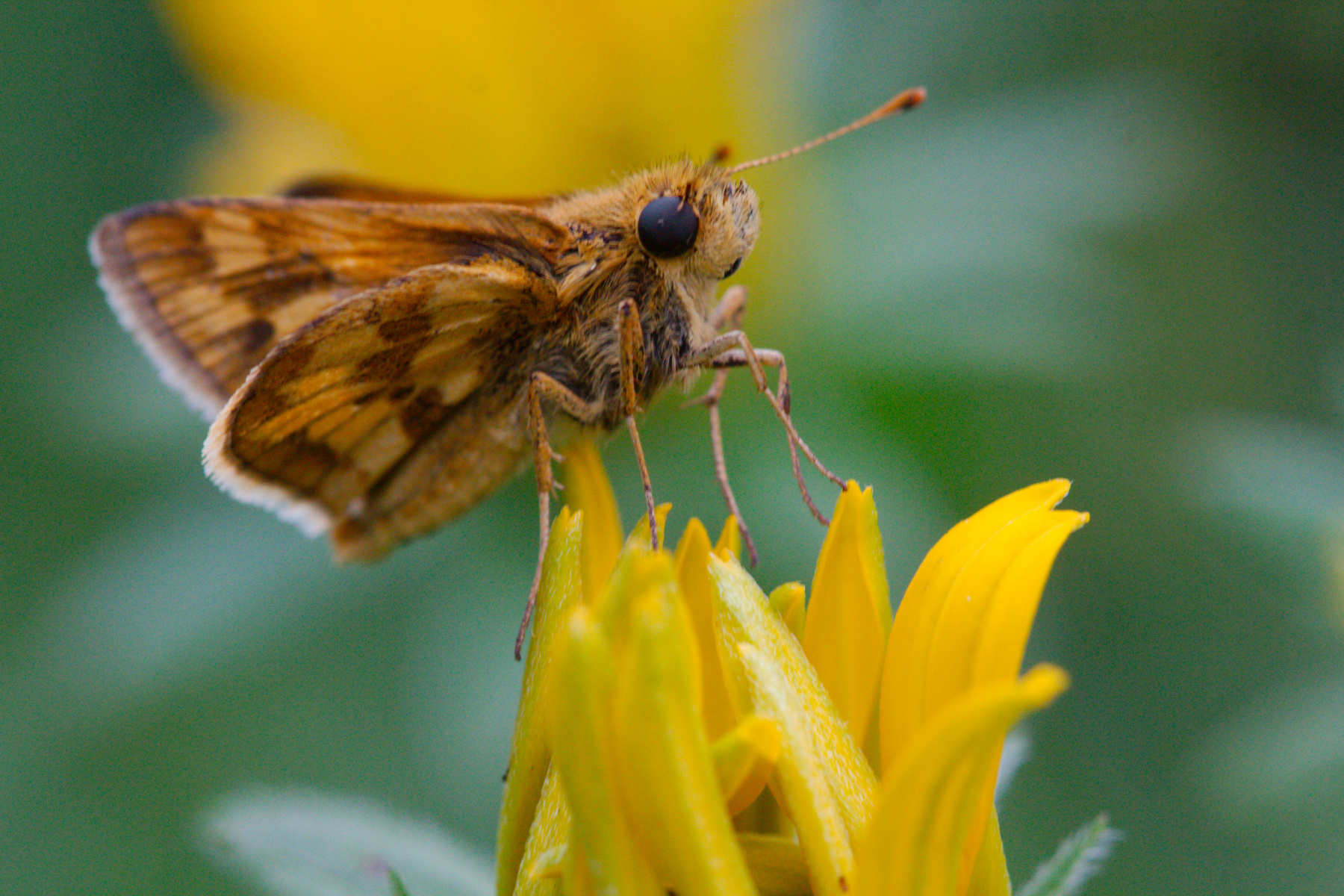
The skippers are here in their great numbers. They aren’t flashy like the swallowtails and they don’t buzz like the bees, but they are everywhere. They especially like the black-eyed Susan flowers (as seen here) and the Verbena bonariensis but they can also be seen on other plants. This is, I believe, a Peck’s skipper (Polites peckius), also known as the yellow patch or yellow spotted skipper. The larvae feed on grasses while the adults take nectar from flowers. They are widespread across much of North America.
Monarch on Butterfly Weed
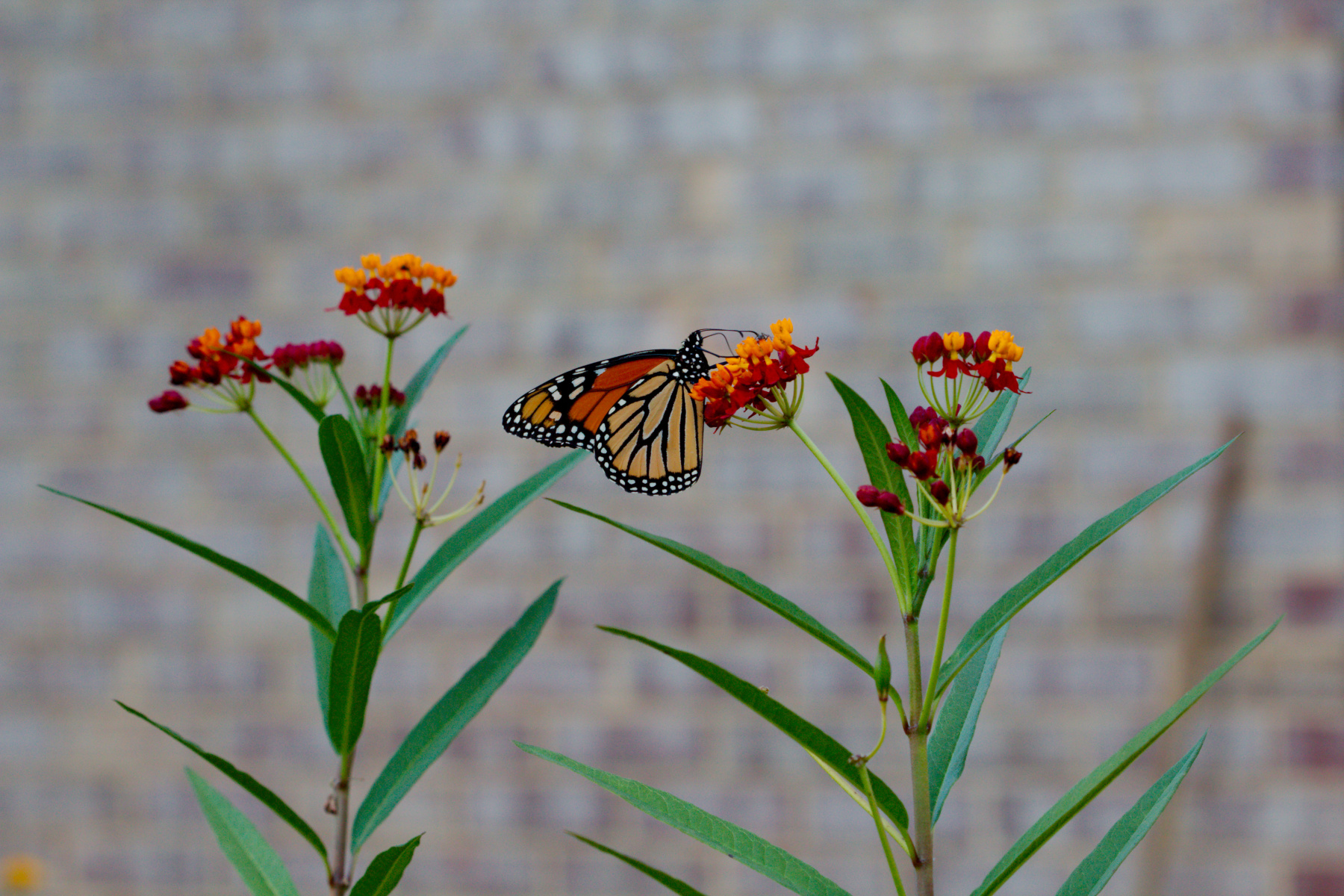
The monarch (Danaus plexippus) is one of the prettiest butterflies we get. They don’t show up in nearly as great numbers as do the tiger swallowtails (Papilio glaucus) and maybe that’s what makes their appearance more exciting. This one was on a tender butterfly weed (Asclepias curassavica) that it in a container on our back patio. I took this one photo from the lawn side of the patio before trying to get around to the other side. Just as well because it flew off after that and I got no more. I did take some more photos of the tiger swallowtails but I’m sure I’ll get more of them this summer.
Oncometopia orbona (Broad-headed Sharpshooter)
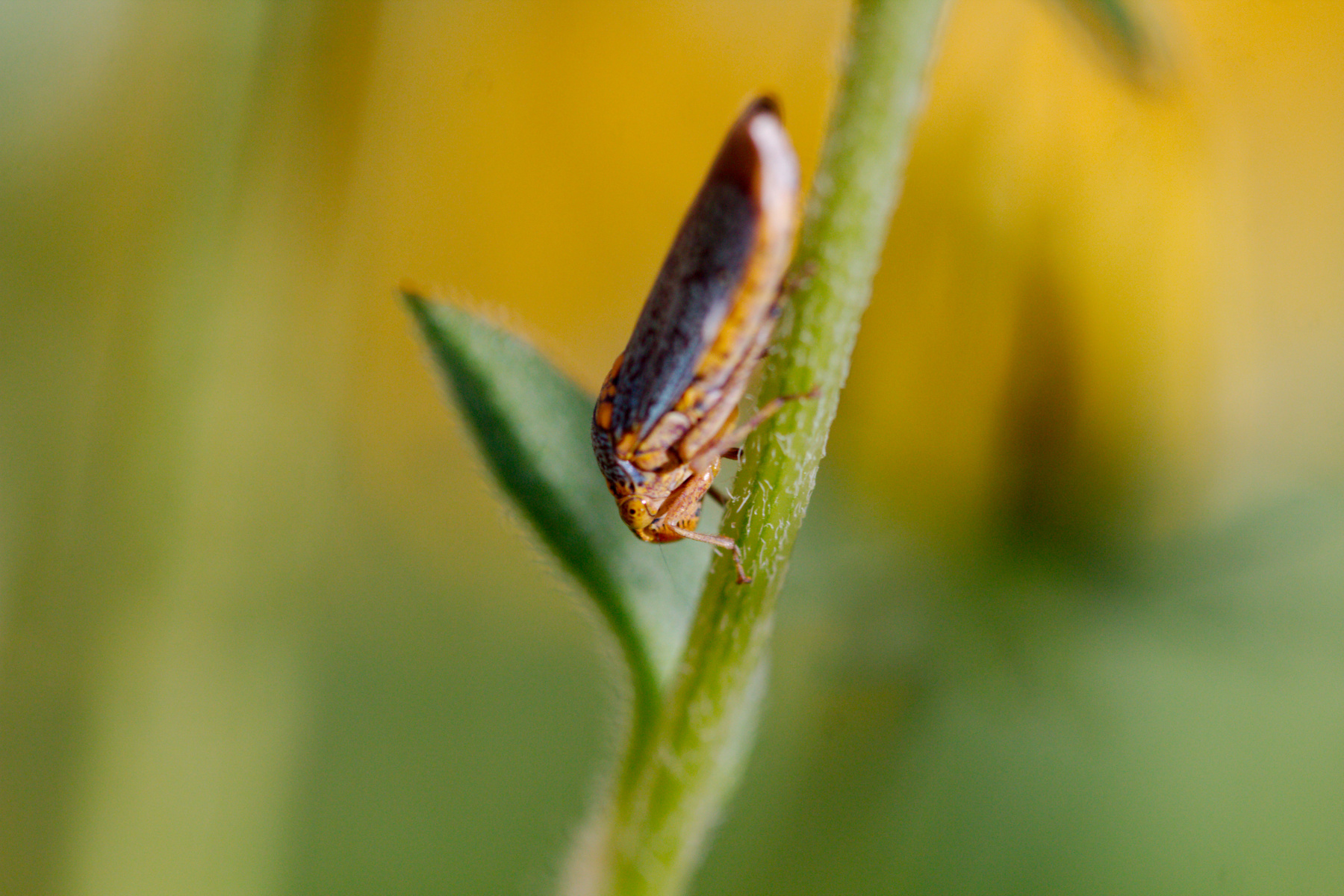
I took some photos of flowers today as well as a few of tiger swallowtails. But then I saw this little insect. It’s a leafhopper and they aren’t very big. I got two decent photos of it, one with the head and eyes in focus (this one) and the other with the body in focus but the head blurred. Nevertheless, it was enough to let it be identified as a Broad-headed Sharpshooter (Oncometopia orbona). There are four species of Oncometopia in the U.S.A. but this is the only one that’s known to be present here, so I’m pretty sure that’s right. It’s a pretty little critter.
Tiger Swallowtail (Papilio glaucus)
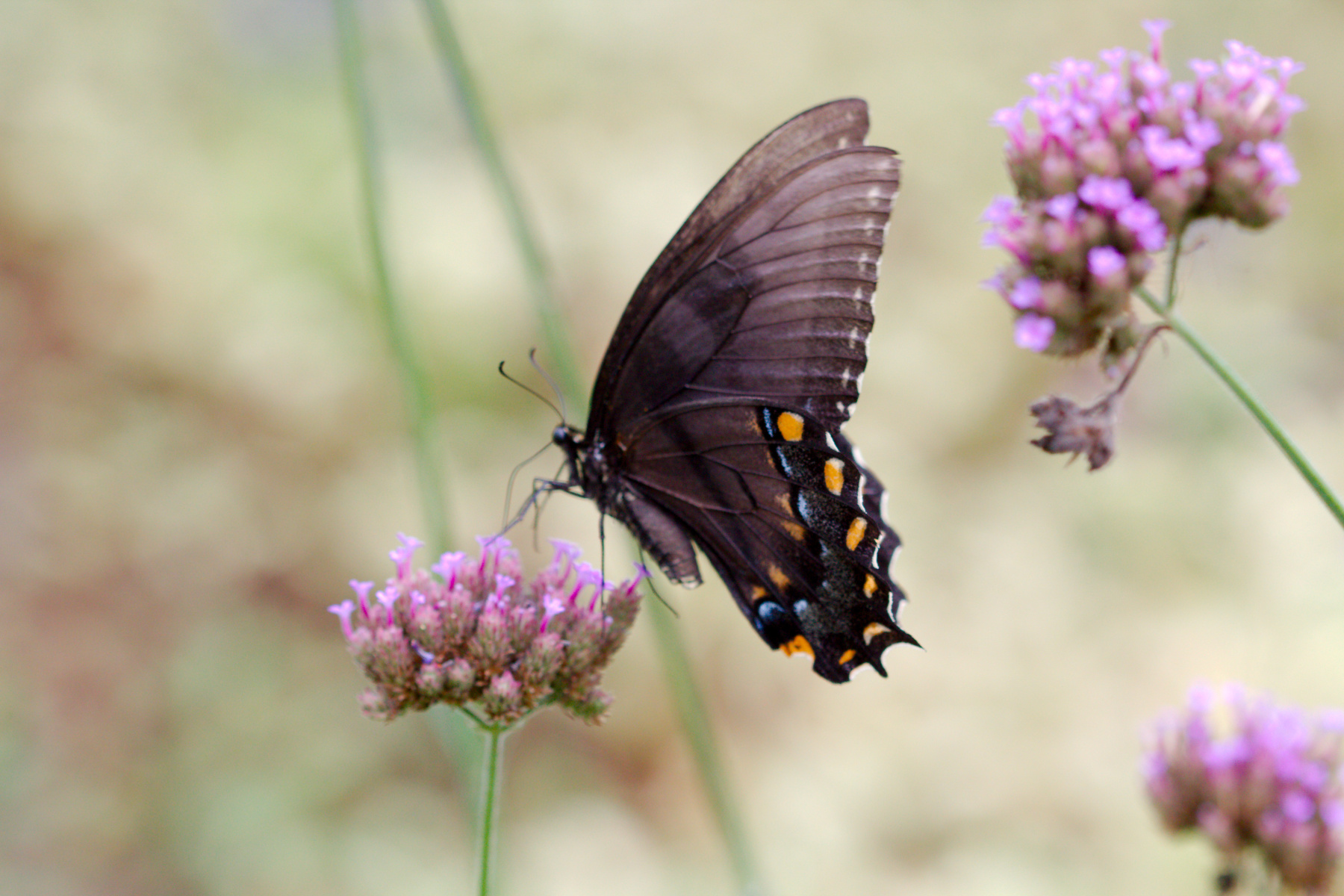
We have a lot of tiger swallowtails (Papilio glaucus) in our yard. The particularly like the butterfly bush (Buddleia) but we see them on other flowers, as well. They are often quite ragged, with torn wings and sometimes with less than half remaining. Nevertheless, they seem to get around alright. Most of them are the standard yellow striped with black but we have a significant number of the dark form, which is restricted to females of the species. This is a pretty nice one, with her wings mostly intact. As you can see, she is on a tall verbena (Verbena bonariensis).
Orange Sulphur
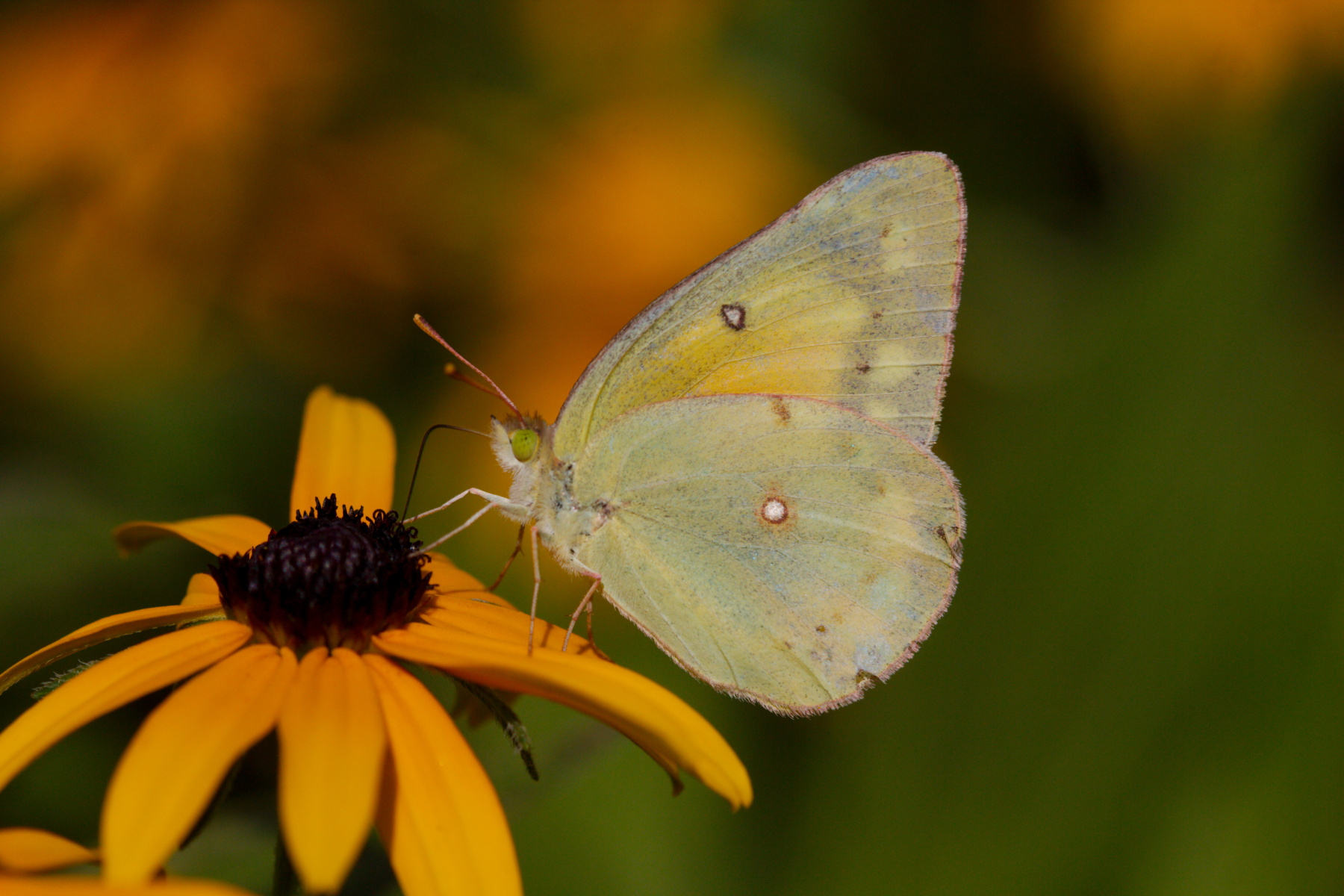
I’m not actually 100% sure of the identification of this sulphur. It may be an orange sulphur (Colias eurytheme) but it’s hard to tell for sure from the underside of the wings. It’s a sulphur, anyway, subfamily Coliadinae. I’ve had a hard time getting a good photograph of one, as they are quite shy and often don’t land when I’m near by. So, I was pleased to get this photo and a few others today. It’s a pretty little butterfly and I love seeing them on the flowers in the yard.
Calycopis cecrops (Red-banded Hairstreak)
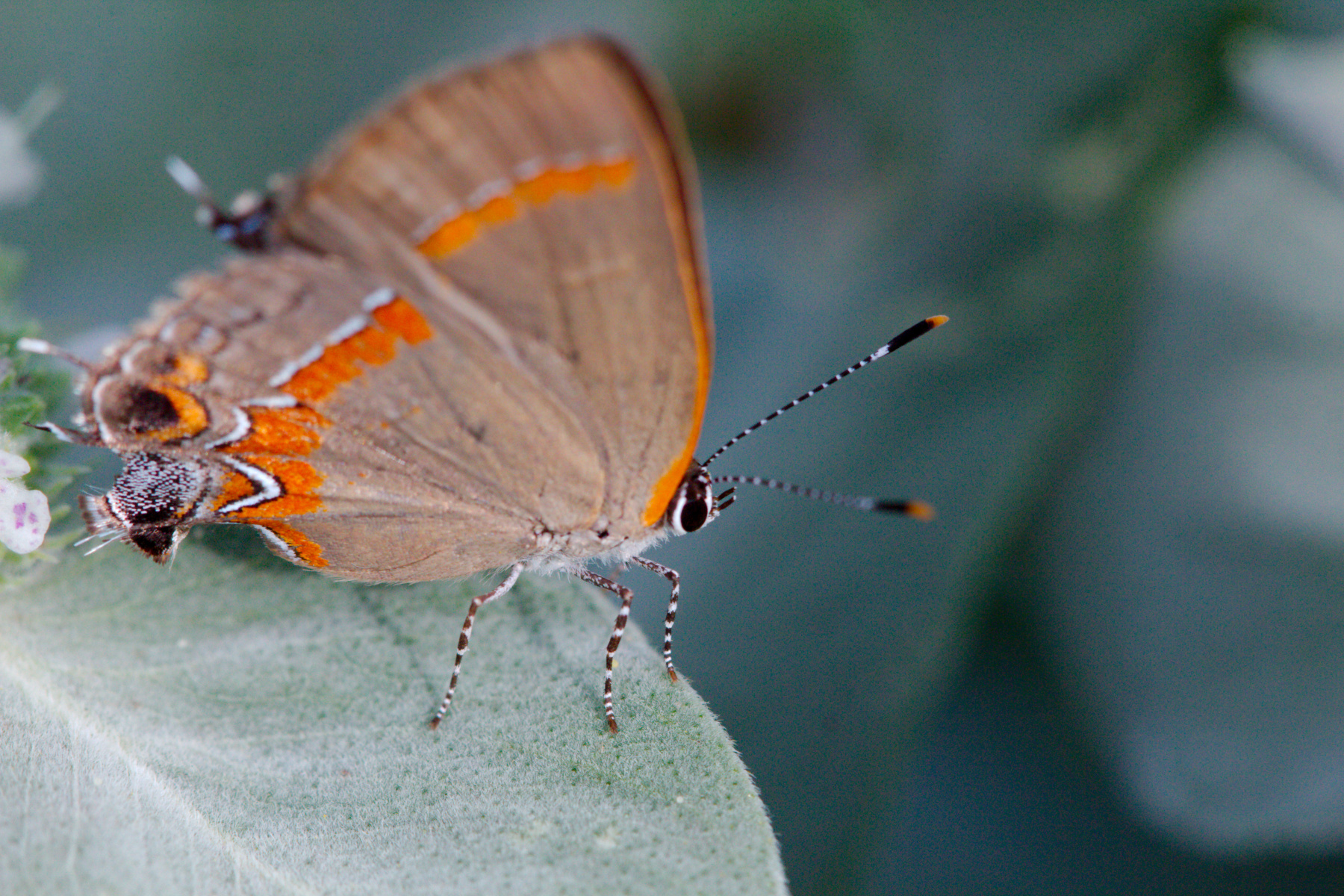
This is a pretty little butterfly that I don’t see too often in our yard. It is, I believe, a red-banded hairstreak (Calycopis cecrops). It was moving about amongst the mountain mint (Pycnanthemum muticum) and that made it hard to get a clear photo of it, but this one turned out pretty well. The hairstreaks are a subfamily (and considered as a tribe) under the Lycaenidae, the Blues, Coppers, Hairstreaks, and Harvesters. They are smallish butterflies and their “eye spots” at the far end of their hind wings presumably fool prediters into thinking that’s their head enough to improve their chance of survival.
Megachile sculpturalis (Sculptured Resin Bee)
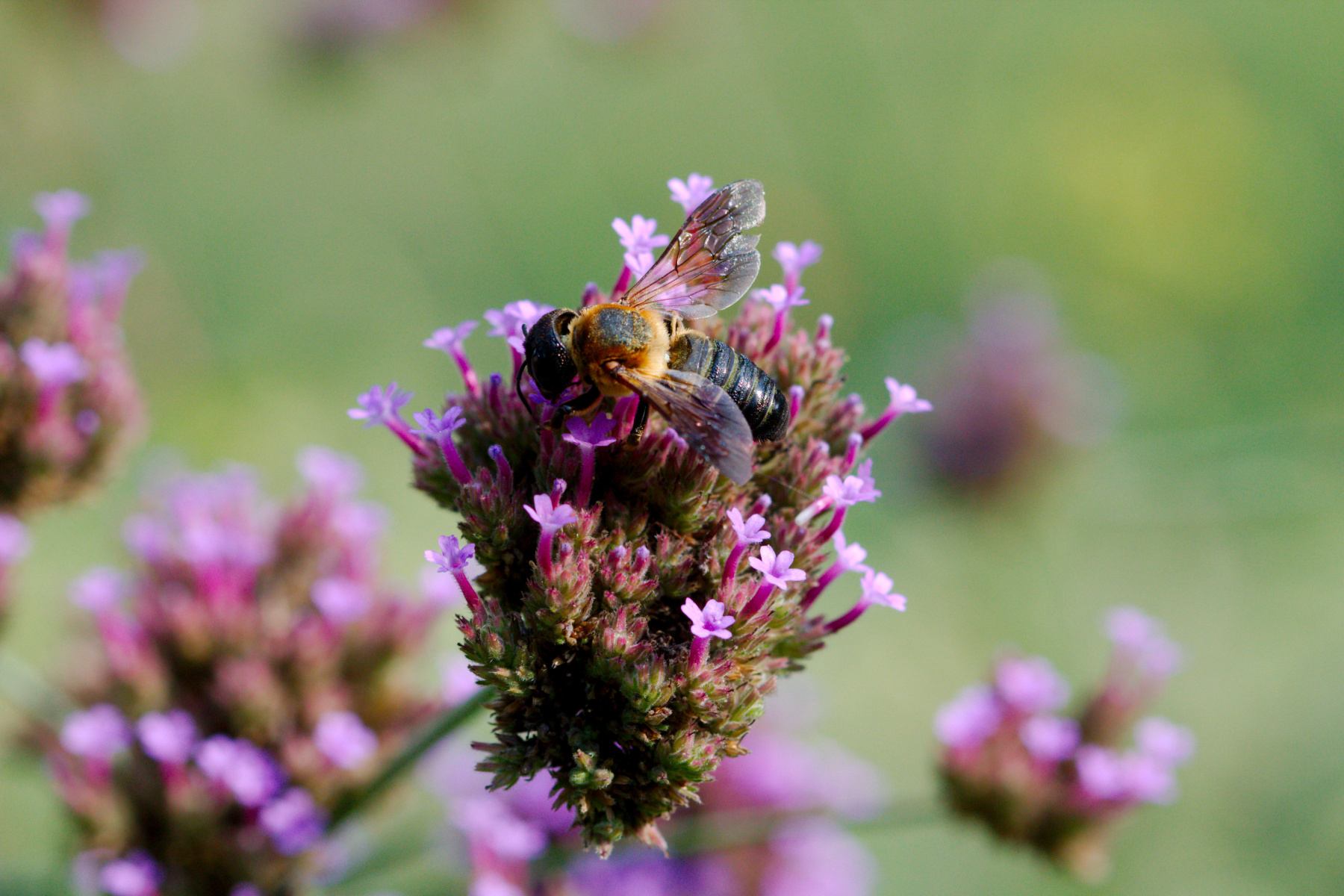
I’m pretty sure this is a sculptured resin bee (Megachile sculpturalis), a fairly common, solitary bee in the Megachilidae family (the leafcutter, mason, and resin bees, and allies). We see them on a variety of flowers in our yard. This one is on the Verbena bonariensis (tall verbena or Brazilian vervain) and that seems to be a favorite for these bees. Like most bees, they are not at all agresive and much more likely to fly away from you than bother you in any way. I think they’re quite pretty, with their furry thorax and sculptured abdomen.
Scudderia Nymph
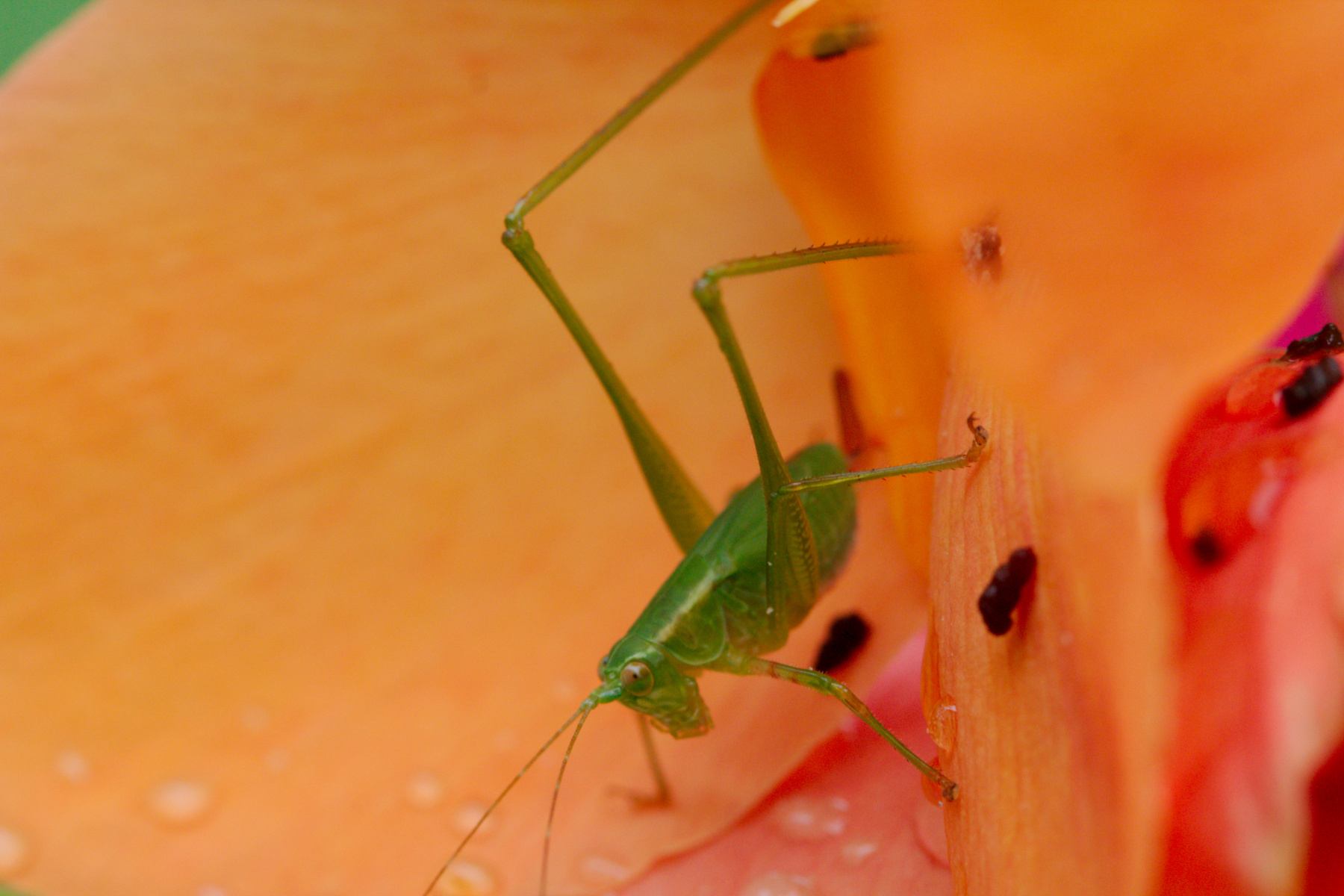
I noticed this bright green katydid nymph on the canna lily this morning. It is one of the Scudderia species. It let me get pretty close, as you can see and it actually stayed there for a few days and ate a good amount of the petals on this flower. Generally I’m not a fan of flower-eating insects but this one was pretty enough and eating slowly enough that I let it be. I like the green against the orange of the petals and even though it’s a small thing, I could see it clearly from our kitchen door, which was nice.
Spicebush Swallowtail (Papilio troilus)
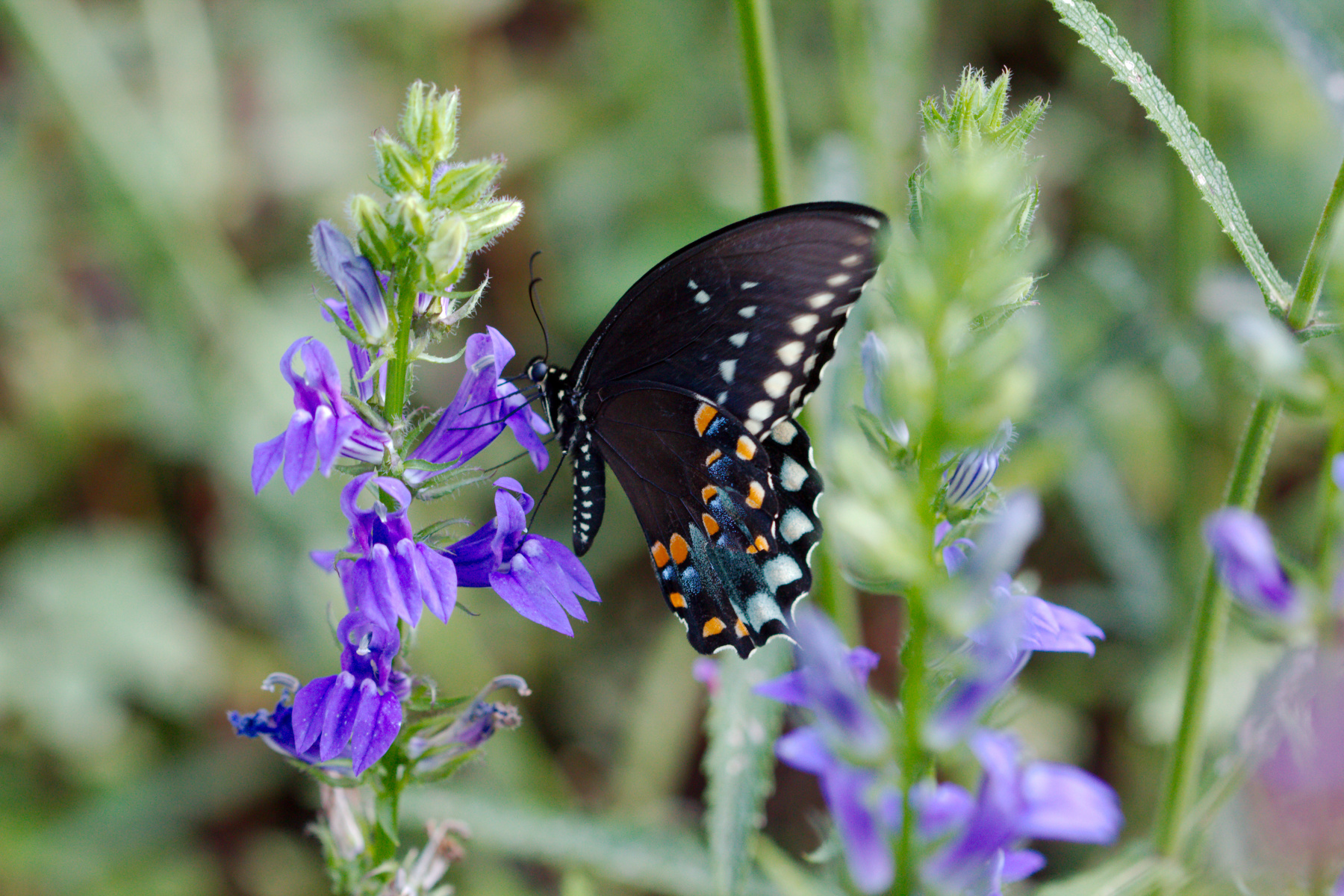
I’m pretty sure this is a spicebush swallowtail (Papilio troilus). There are three dark swallowtails that we see somewhat regularly. Most of them are dark form females of the eastern tiger swallowtail (Papilio glaucus). This is, in my experience, the second most common. Then there are the black swallowtails (Papilio polyxenes). They all look pretty similar and they all have a bit of variation in their coloration. Since I’m really not an expert, I could be wrong about this one. I’ll just leave it at that. It’s a pretty butterfly, in any case, and is enjoying the blue lobelia (Lobelia siphilitica ) in our front garden.
Monobia quadridens (Four-toothed Mason Wasp)
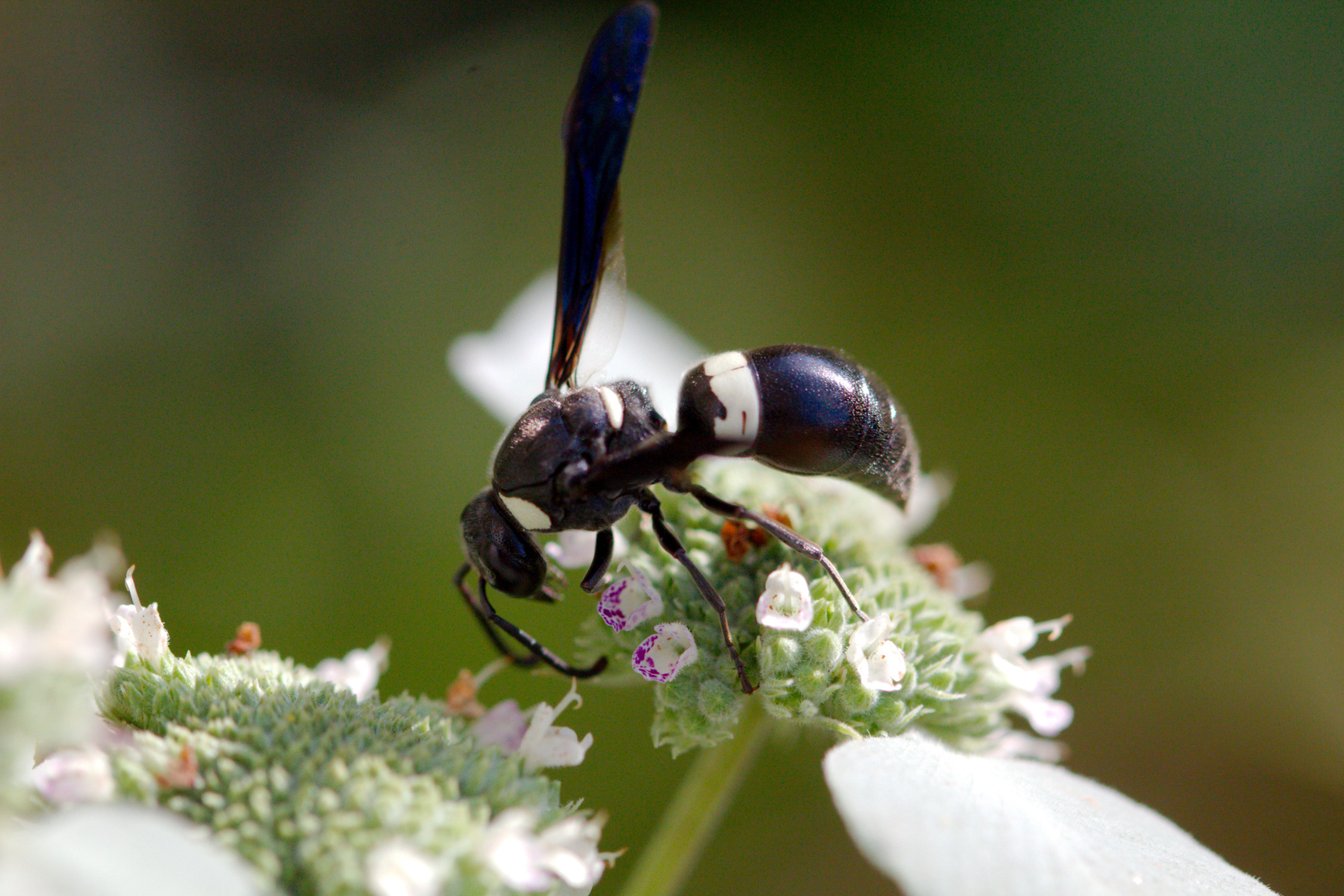
The mountain mint is really buzzing these days. The height of summer is really great for seeing bees and wasps and I really enjoy seeing them in the afternoon. The sun beating down it a bit much so I can only take it for short stretches but it’s worth it to see the variety of stinging things buzzing around. This is, I believe, a four-toothed mason wasp (Monobia quadridens). The larvae feed on leaf-rolling caterpillars so are generally considered good to have around. Their sting is something you want to avoid but like most hornets and wasps, if you leave them alone, they’ll leave you alone.
Pollinator
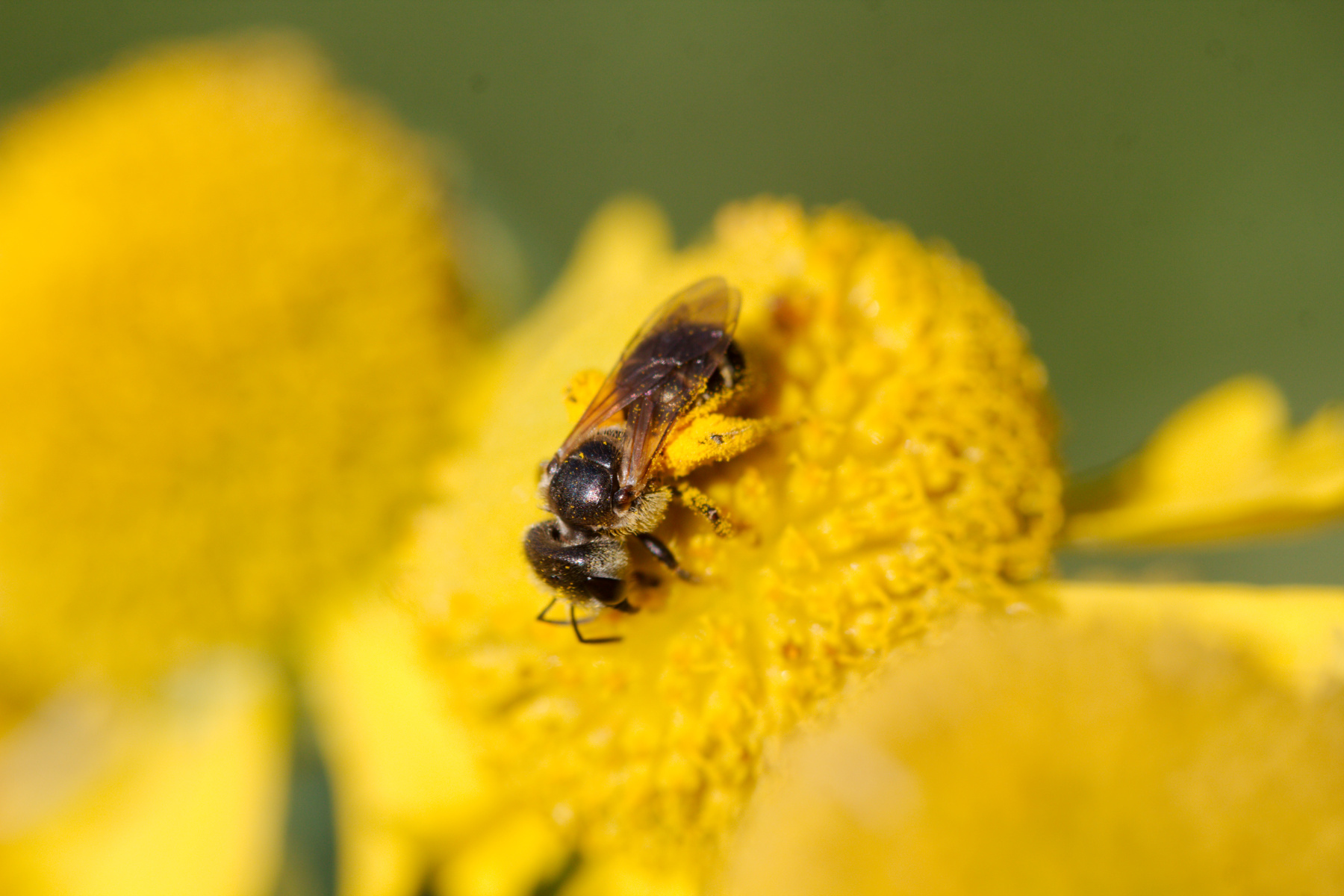
This little bee is absolutely loaded with pollen. (Side question: if pollen is spelled with an ‘e’, why does pollinator have an ‘i’ in its place?) Anyway, Cathy and I went to Meadowside Nature Center this afternoon and walked around a pond and through the woods. In addition to this little bee, I got a pretty good photo of a common whitetail (Plathemis lydia), a fairly common dragonfly. But I thought I’d go with the bright yellow of this photo instead. I’m also partial to bees, of course.
Xanthotype Species
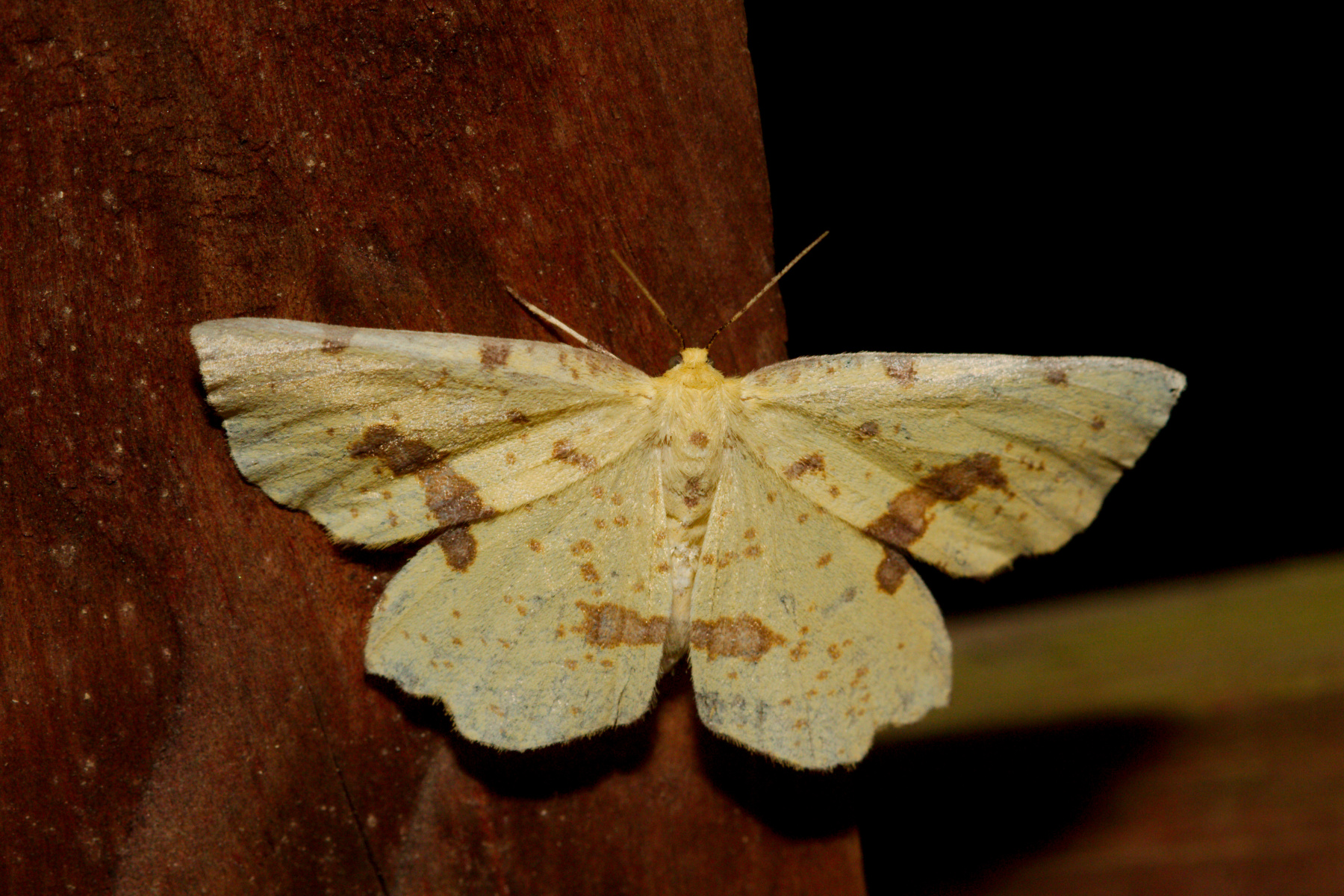
We went to Northern Virginia this evening to have dinner with our good friend, Jean. While we were there, eating in her car port, there was a huge downpour followed by a rainbow. It was actually really nice to be sitting outside but under cover during that. Then, I happened to spot this moth, which landed on the gate to the back yard. It’s a moth in the genus Xanthotype. There are five species in our area but, according to BugGuide, “adults of all species in this genus are, for practical purposes, externally indistinguishable from one another” so we’ll just leave it at that.
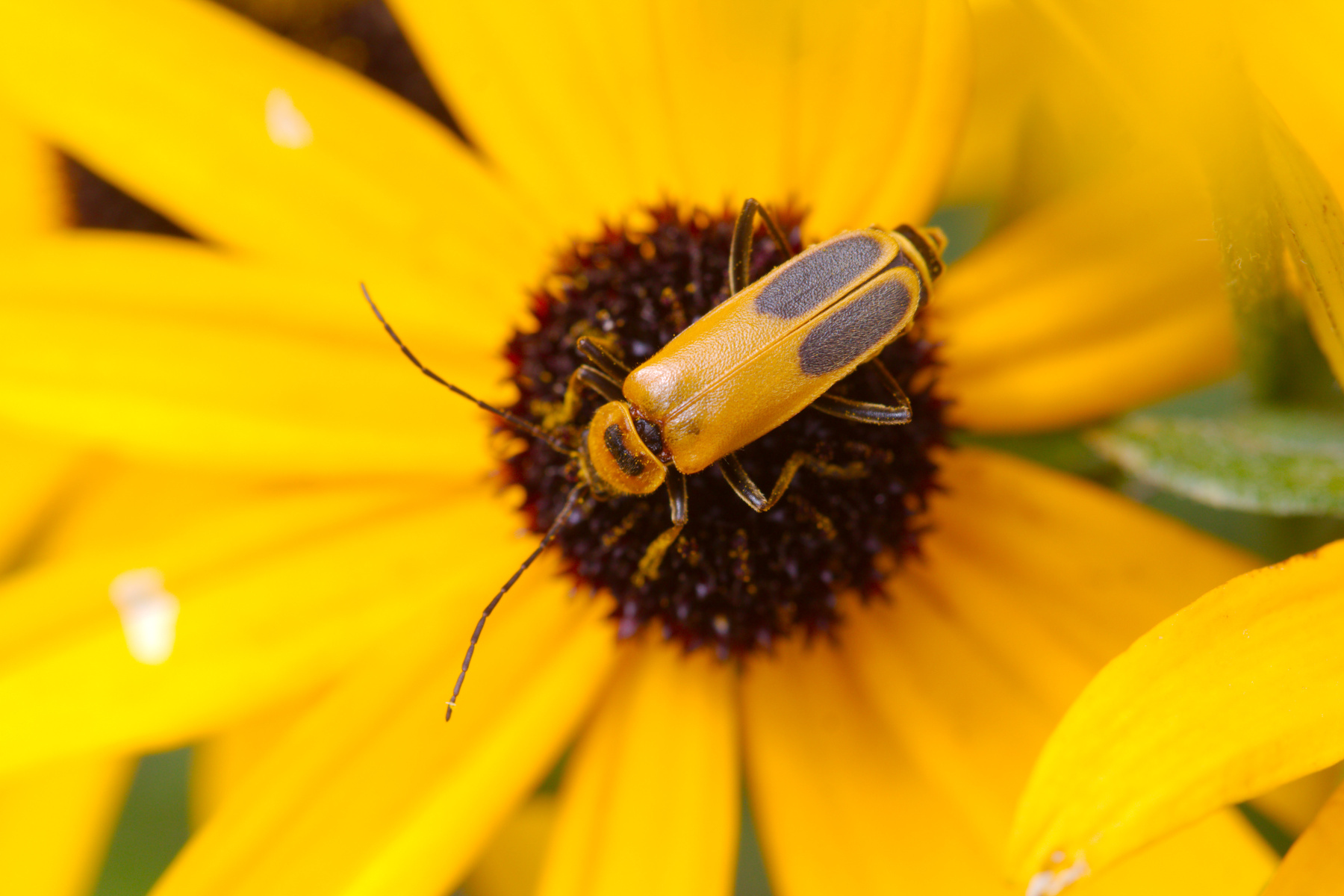
Chauliognathus pensylvanicus (Goldenrod Soldier Beetle)
This goldenrod soldier beetle, (Chauliognathus pensylvanicus) is well camouflaged against the petals of the black-eyed Susan in our back yard. Often when looking for insects, it’s a matter of looking for motion, because they blend in so well with the background. I spotted this on after taking a few photos of a monarch butterfly (Danaus plexippus), also on the black-eyed Susans. They are starting to fade, but there will still be plenty of color for a while yet. One interesting thing about this beetle is that the species epithet, pensylvanicus, is the correct spelling and the version with a double n (i.e. pennsylvanicus) is incorrect.
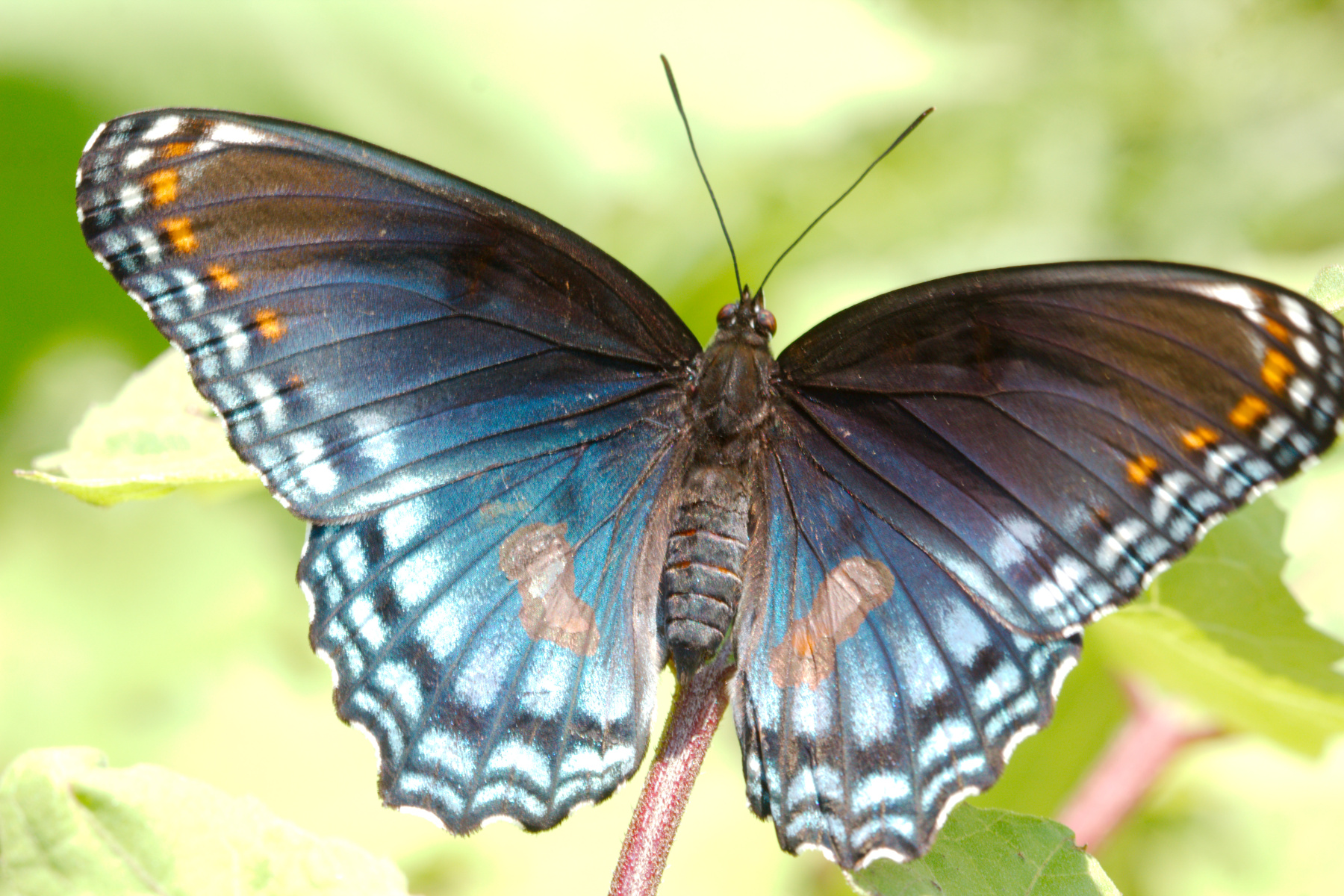
Limenitis arthemis astyanax (Red-spotted Purple)
We took an outing today to Rocklands Farm and Winery and had a lovely visit with Janis. She and Anna took us to see Anna’s flowers and then we circled back around behind the winery. The grape must that had spilled on the ground outside the work area had attracted quite a few butterflies, including this red-spotted purple (Limenitis arthemis astyanax). To me, it looks more like an orange-spotted blue, but what do I know. Their colors are a bit variable, anyway. Nevertheless, this is a pretty distinctive butterfly and always a treat to see.
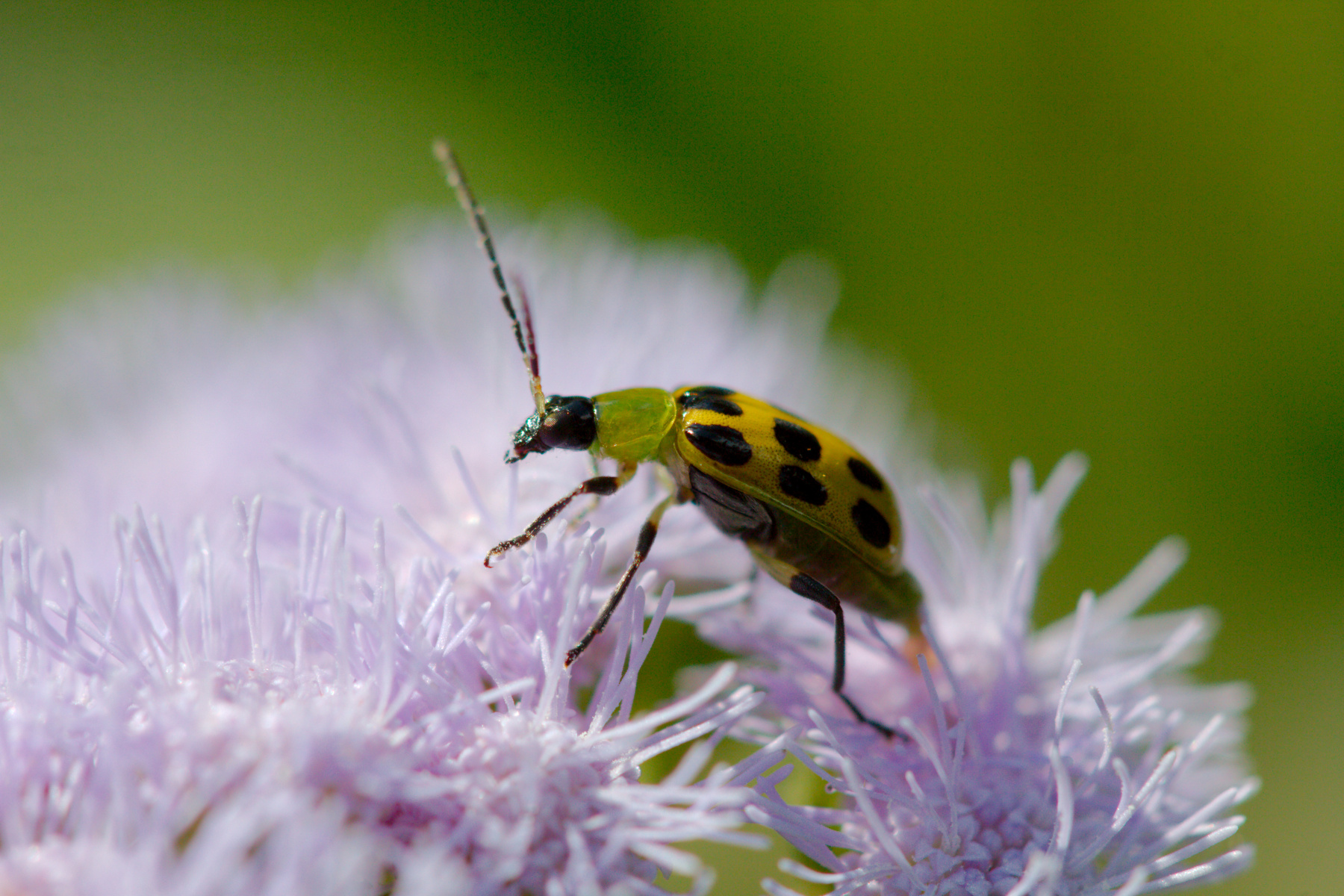
Diabrotica undecimpunctata (Spotted Cucumber Beetle)
I was down on the ground taking some photos of a skipper on some blue mistflower (Conoclinium coelestinum) when I noticed this spotted cucumber beetle (Diabrotica undecimpunctata) just to my right. I got a handful of photos of it before it flew away and I actually got a fairly good one of it just taking off. I think this is a better picture, overall, though, so I thought I’d use it. This is a destructive insect and really I should have squashed it, but it flew away before I had the chance. They do significant damage to many field crops “including cucumbers and other squashes, corn, soy.”
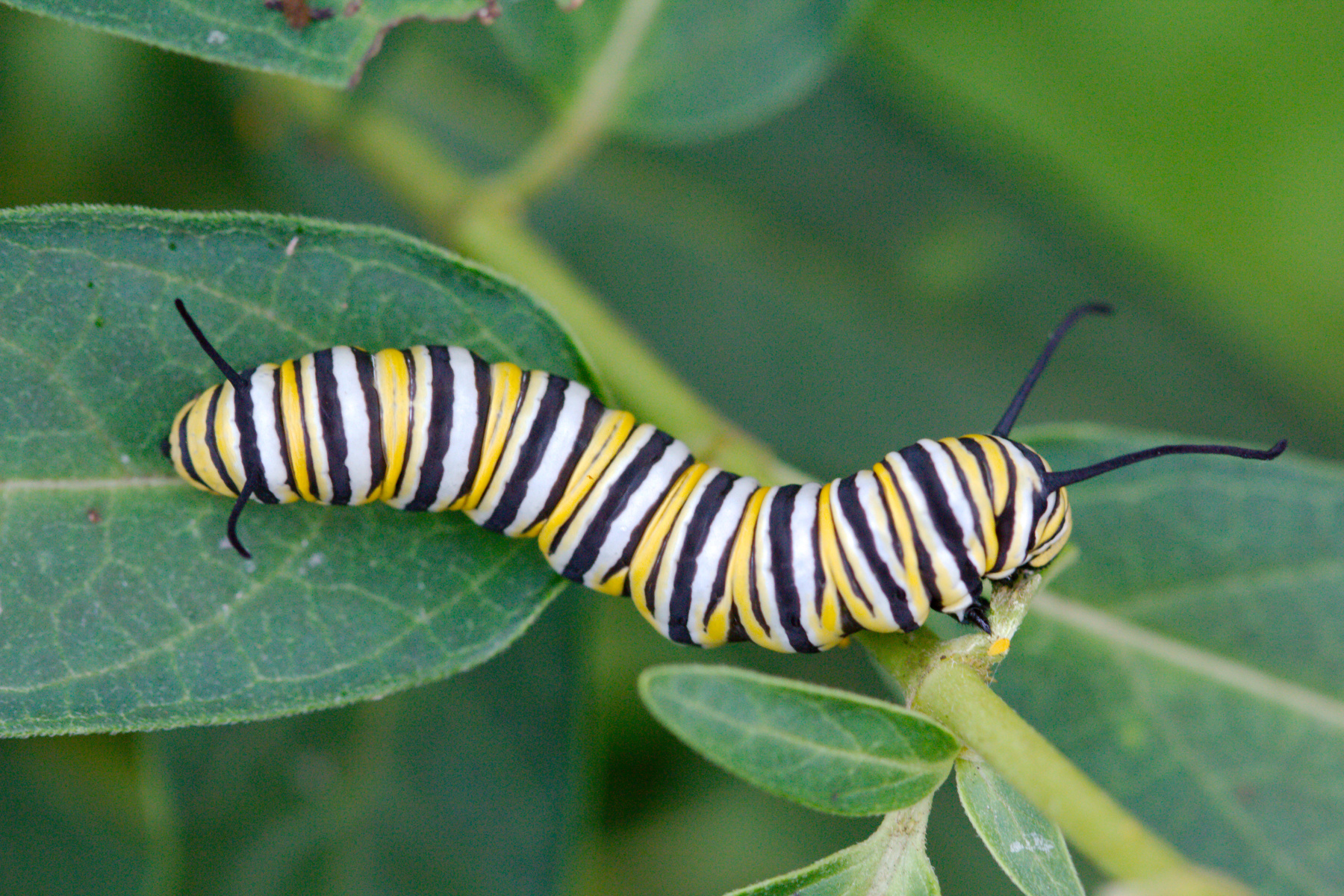
Monarch Caterpillar
We have some white swamp milkweed (Asclepias incarnata ‘Ice Ballet’) in a frequently wet part of the lawn. It bloomed for a nice, ling time this summer and as it gets more established I expect it to do even better. Yesterday Cathy noticed a caterpillar on it and I took some photos. I took a few more today. This is a monarch caterpillar (Danaus plexippus). Although I generally don’t encourage insects that eat the leaves on our plants, I make an exception for these little guys. We really enjoy the monarchs in our yard and so we put up with the feeding habits of their young.