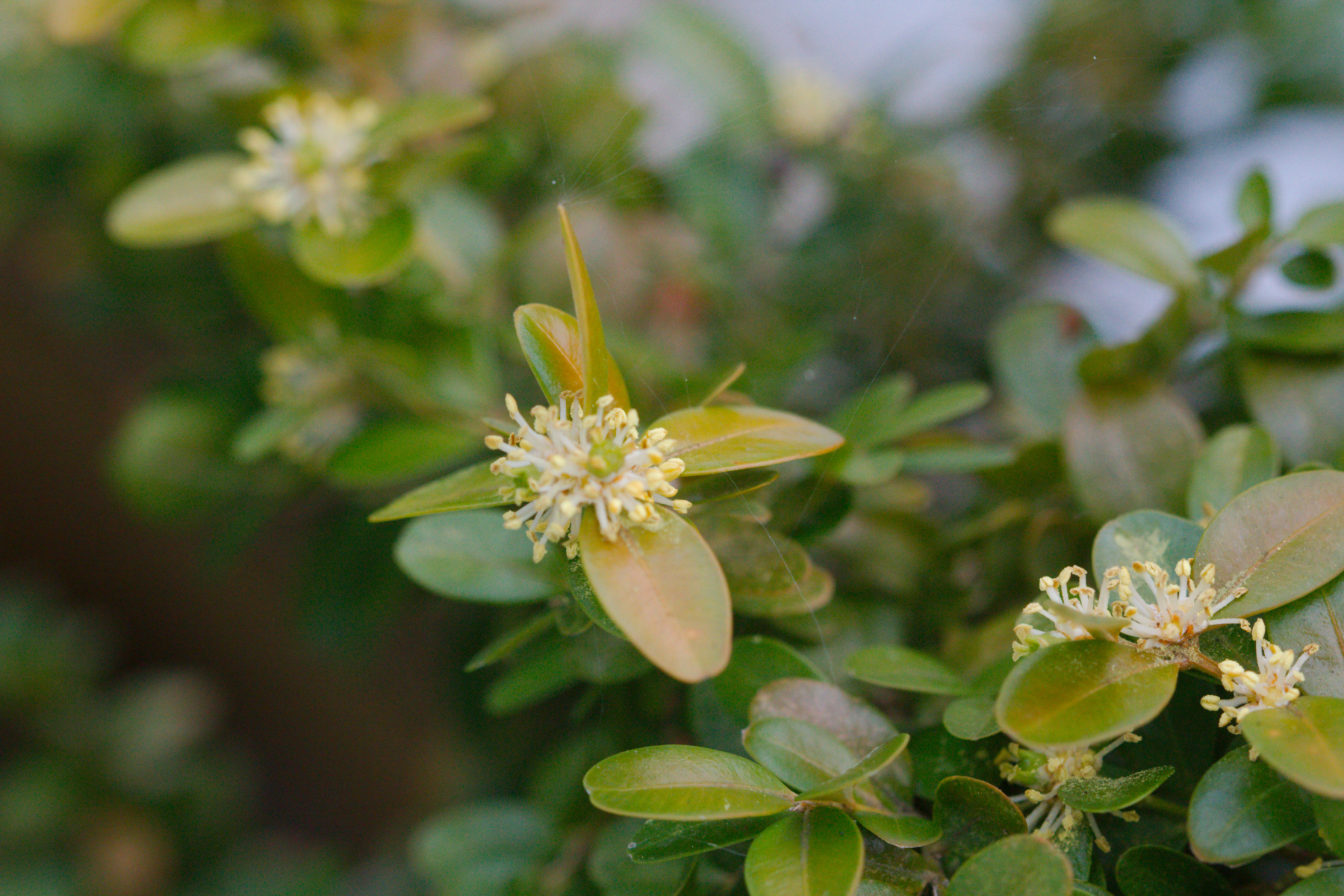
The autumn clematis (Clematis terniflora) is coming into bloom. This is a fairly aggressive vine native to Japan. It can be a little invasive but if you have a largish area to cover, it’s not a terrible choice. It’s flowers are a lovely white and come late in the summer and continue well into the fall. One of it’s common names is sweet autumn virginsbower. We have it growing on the falling down fence at the southwest corner of our house (the southeast corner of our back yard). Cathy is especially fond of it and as long as I’m allowed to keep if confined to that area, I’m happy to let her have some.
Flowers and Plants
Early Autumn
The Back Garden
This is a portion of our back garden, which, as you can see, is somewhat dominated by black-eyed Susan flowers at this time of year. They are probably just past their peak but will provide color for a bit longer as they fade from their bright orange to a more rusty, autumnal ochre. You can just make out the hardware cloth ‘fence’ around one of my roses a little to the left of center. By the end of the summer, the three roses should be tall enough that they are safe from rabbits, although there’s not really anything we can do about deer.
Pollinator
This little bee is absolutely loaded with pollen. (Side question: if pollen is spelled with an ‘e’, why does pollinator have an ‘i’ in its place?) Anyway, Cathy and I went to Meadowside Nature Center this afternoon and walked around a pond and through the woods. In addition to this little bee, I got a pretty good photo of a common whitetail (Plathemis lydia), a fairly common dragonfly. But I thought I’d go with the bright yellow of this photo instead. I’m also partial to bees, of course.
Chelone lyonii (Pink Turtlehead)
We’ve only had this native perennial a few years and this is by far the best it’s done in our garden. We have it in a somewhat shady area. Over time it should spread and form a clump, although not so much that it could be considered invasive (like much of what we have). The snapdragon-like flowers are fairly large and as you can see, they are borne in tight, spike-like terminal racemes. They are actually native to a bit further south than we are but have become naturalized over much of the east coast.
Conoclinium coelestinum (Blue Mistflower)
We picked up some blue mistflower (Conoclinium coelestinum) along with some other plants that were being given to us. It’s spread around the yard and now we have both the normal pale blue, as seen here (it’s more blue than this photo makes it look) and a white sport (or perhaps the blue is the sport). It blooms late in the summer, just starting now, and will be around into the fall. I don’t know that I’d run out an buy any, but it’s not bad to have a late summer bloomer in the garden. The skippers tend to be the most common pollinators on it, but the bees go to it some, too.
Cardinal Flower (Lobelia cardinalis)
There’s a lot in bloom right now, but there’s actually less variety than there was earlier in the year. The garden is full of black-eyed Susan and there are other, less showy flowers, like the mountain mint, which attracts so many pollinators. Around on the side of the house, in the shadier part of the garden, we have this cardinal flower (Lobelia cardinalis), which is absolutely stunning. The red is so pure and bright, especially when the sun is on it. Cathy saw a hummingbird come to this, as well, which is exciting. I suppose I should have posted a photo of the two of us, for our anniversary, but flowers are where it’s at.
Cosmos
I took more photos of the Scudderia (a genus of katydid) nymph today. It’s still in the canna lily flower and still eating the petals. I suspect it will move on pretty soon. That or it will be eaten, of course. This cosmos is growing in a small pot on our patio. We’ve never really grown them much, but they sure do add a lot of color to a garden in summer. We could do worse than have lots of them.
I also took a few photos of a dinner we had with a dear (and winsome!) friend, who has been living with her recently widowed mother-in-law. But they don’t really do justice to the great time we had.
Scudderia Nymph
I noticed this bright green katydid nymph on the canna lily this morning. It is one of the Scudderia species. It let me get pretty close, as you can see and it actually stayed there for a few days and ate a good amount of the petals on this flower. Generally I’m not a fan of flower-eating insects but this one was pretty enough and eating slowly enough that I let it be. I like the green against the orange of the petals and even though it’s a small thing, I could see it clearly from our kitchen door, which was nice.
Begonia grandis (Hardy Begonia)
Cathy has this hardy begonia (Begonia grandis) growing a few places around the house. It really seems to like the relatively shady area around our front door, which gets a little morning sun but that’s it. And even that is filtered through the foundation planting. It seems particularly happy this year, with the amount of rain we’ve had. It’s just coming into bloom, with its delicate and interestingly shaped, pink flowers. But I think it’s worth having just the leaves. We have a few little seedlings that Cathy has collected and she will try to get a few established in new places.
Arctium minus (Common Burdock)
Cathy and I went for a walk this evening. After yesterday’s rain it was cooler. Not quite cool enough to be really pleasant and still quite humid, but so much better than it’s been that we had to get out. There’s one place we walk by where the park comes right up to the road and I took this photo of common burdock (Arctium minus) along the edge of the woods. It’s a biennial native to Europe but pretty well established as a common weed here now. It has burrs that stick to fur and clothing, which helps it to spread.
Canna Lily
Cathy planted two canna lilies this spring in a container on the back patio. Our patio is generally nice in the summer, with a collection of plants in containers as well as the black-eyed Susans that surround it. This year is, I think, the best it’s ever been. This canna lily is part of the reason. It’s so bright and especially when back-lit, the dark leaves add an additional contrast. The patio is a riot of colors, with the Pelargonium right behind the canna and with all sorts of other flowers of a wide variety of colors. Definitely nice to have. We’re so fortunate.
Megachile sculpturalis (Sculptured Resin Bee)
I’m pretty sure this is a sculptured resin bee (Megachile sculpturalis), a fairly common, solitary bee in the Megachilidae family (the leafcutter, mason, and resin bees, and allies). We see them on a variety of flowers in our yard. This one is on the Verbena bonariensis (tall verbena or Brazilian vervain) and that seems to be a favorite for these bees. Like most bees, they are not at all agresive and much more likely to fly away from you than bother you in any way. I think they’re quite pretty, with their furry thorax and sculptured abdomen.
Cichorium intybus (Chicory)
It wasn’t so hot today, although relative humidity was near 100%. Cathy and I went out for a walk at the former Redgate Golf Course, now Redgate Park. We saw a pair of white-tailed deer (a mother and fawn) as well as a few different wildflowers. This is a pretty common one, an import from the old world, but still a pretty flower. The others that I photographed were also non-natives. There was the Asiatic dayflower (Commelia communis), which has two white petal-like structures above the flower, and moth mullein (Verbascum blattaria), a pretty, little, white flower with a magenta throat and stamens. We also went to Rockville Cemetery, where we saw another fawn, and then Croydon Nature Center before returning home.
Black-eyed Susan
Our yard is pretty heavy on the Rudbeckias, (black-eyed Susan) although we’ve actually gotten rid of a few. You probably wouldn’t notice and it’s going to take a bit more work if we’re actually going to cut back on them noticeably. On the other hand, this time of year, they really are wonderful in their great numbers. The insects like them, although perhaps they aren’t the favorite flower. The skippers in particular are to be found on them and that’s where I usually see transverse flower flies (Eristalis transversa).
Backlit Coneflower
The coneflower (Echinacea purpurea) is in our back garden near the back fence. In the late afternoon, backlit by the sun it’s quite lovely. The bees, particularly carpenter and bumble bees, seem to really like the coneflowers. We (and by we I mostly mean Cathy) did a lot of work in this part of the garden this summer. It had become quite overgrown with mugwort and goldenrod among the monarda, asclepias, and irises. It’s basically ready for new plants now, so it isn’t finished, but it’s so much better than it was.
Fleabane (Erigeron)
We walked another section of the upper Rock Creek trail today. We parked at Redland Middle School and went from there to Lake Needwood. This section of trail is mostly level with just a little up and down. It follows the creek and included crossing Muncaster Mill Road. Although there is a crosswalk, you pretty much have to wait for someone actually paying attention who stops, as they are supposed to do. The path and creek also go under the Intercounty Connector (MD 200). Our walk was about 2.5 miles round trip, although it didn’t actually feel like we went that far. I was nice to be in the woods, although the humidity was very high and we were pretty well drenched by the time we got back to the car.
Canna Leaves
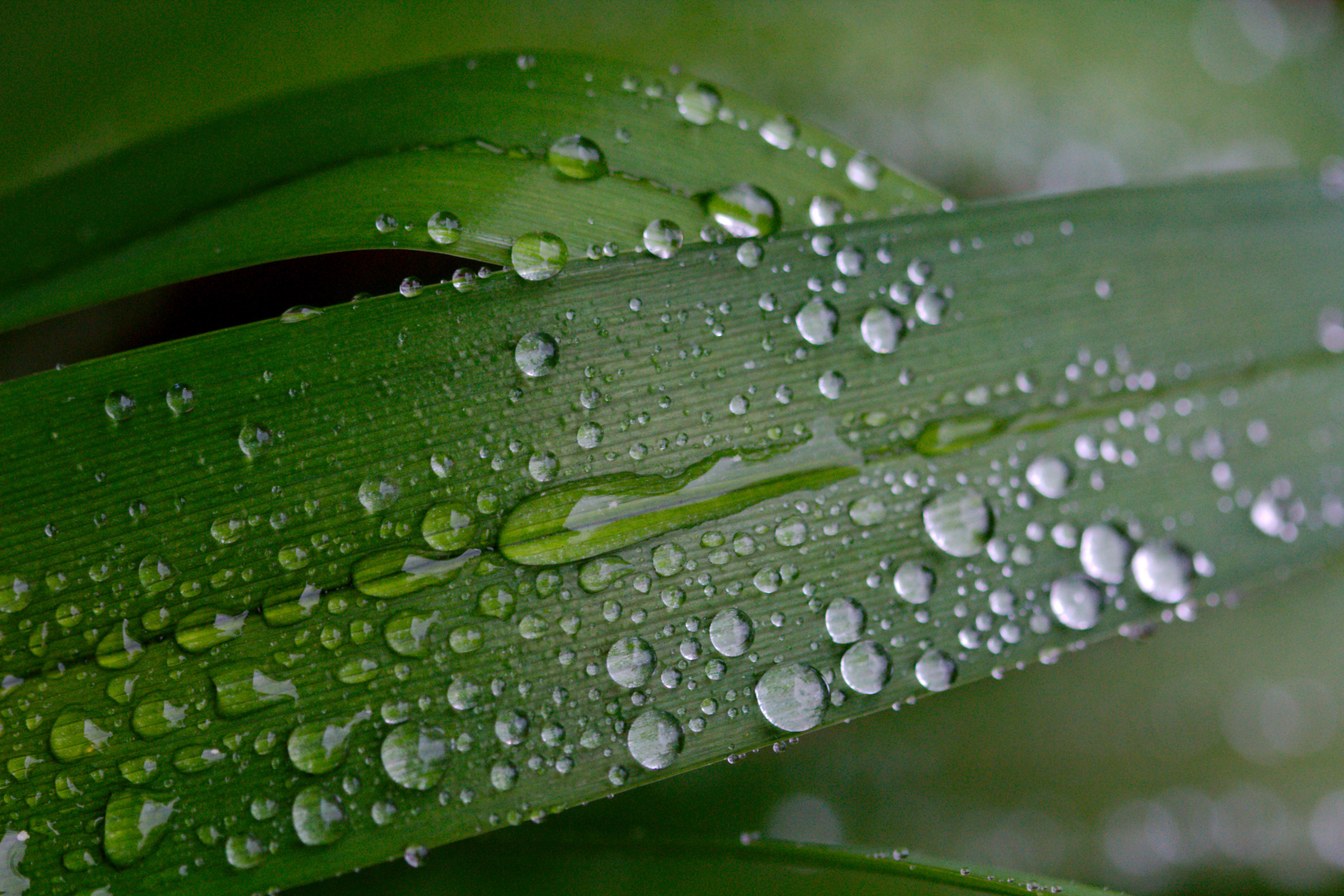
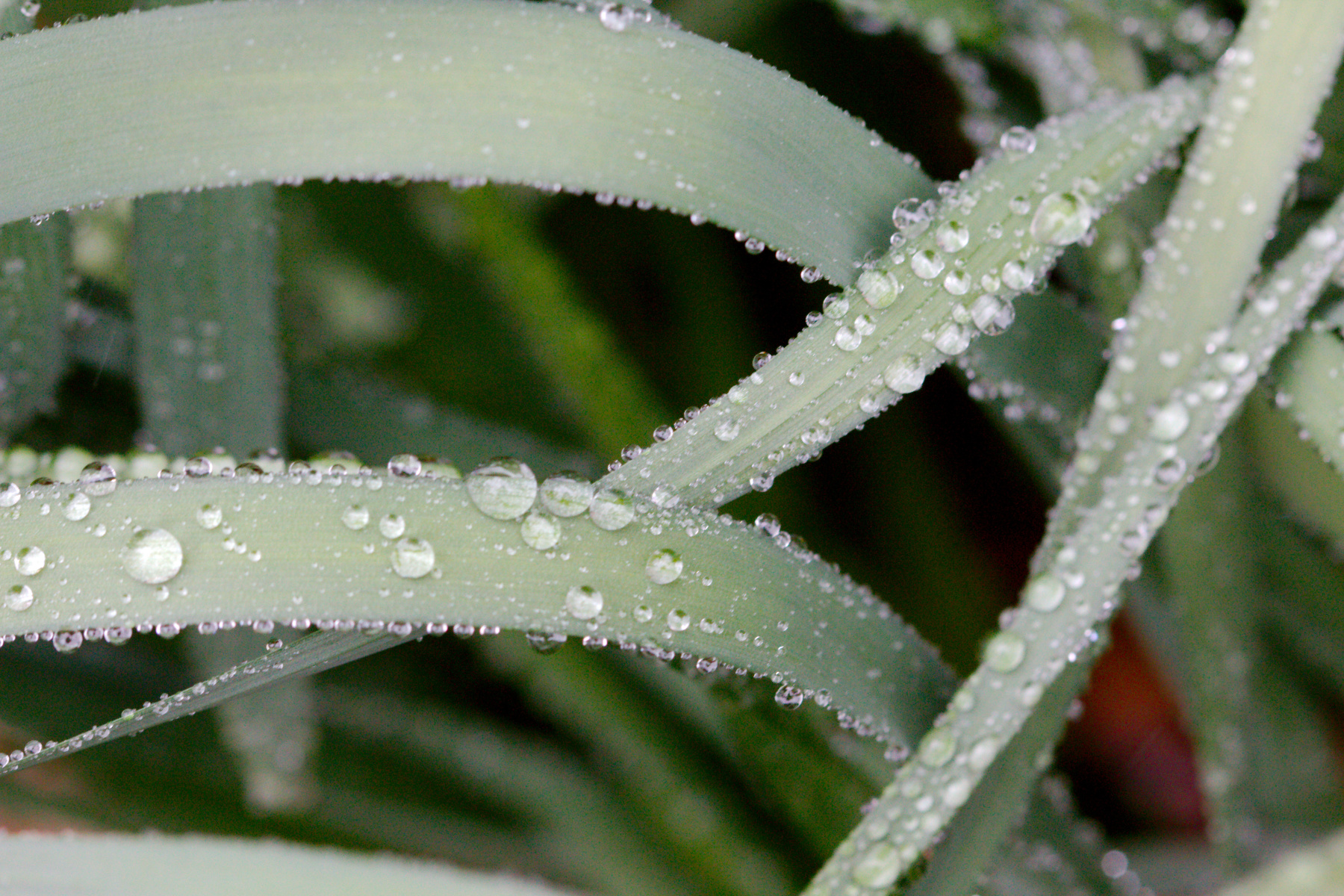
I took Dorothy to the airport this morning. It was raining so the traffic was a bit slow but other wise no problem. It continued to rain the rest of the day and I only got out for a little while to take pictures. These are canna leaves with water droplets on them. The canna is (her the Missouri Botanical Garden’s Plant Finder):
a genus of around 10 species of rhizomatous, tropical and subtropical, herbaceous perennials that produce flower spikes in summer atop erect stems sheathed in large paddle-shaped leaves. Cultivars are available with colorful foliage and flowers in a range of warm colors including red, orange, yellow, pink, and creamy white.
Rose ‘Boscobel’
This is the third of my three new roses planted this year. This isn’t its first bloom although it did take longer than the other two did to bloom. That has more to do with the rabbits nipping off the buds than anything else. It now has a hardware cloth fence around it and it’s doing much better. This one is planted near the back fence and should be visible from the house once it gets a bit taller. I have high hopes for all three of these roses and was glad to get them planted back in mid-May.
Monarch on Butterfly Weed
The monarch (Danaus plexippus) is one of the prettiest butterflies we get. They don’t show up in nearly as great numbers as do the tiger swallowtails (Papilio glaucus) and maybe that’s what makes their appearance more exciting. This one was on a tender butterfly weed (Asclepias curassavica) that it in a container on our back patio. I took this one photo from the lawn side of the patio before trying to get around to the other side. Just as well because it flew off after that and I got no more. I did take some more photos of the tiger swallowtails but I’m sure I’ll get more of them this summer.
Sunflowers
It was very hot today, and quite muggy, but Cathy and I have been trying to get out on the weekend, at least for a little while, regardless. We went tot he Mont. County Agricultural Farm Park today and walked on one of the trails for a while. Parts were in the shade but even then it was so humid that we were pretty well drenched with sweat. Nevertheless, it was good to be out. We also walked through their demonstration garden again. It wasn’t a lot different to the last time we went but I got a few more pictures, including a few of these sunflowers against the sky.