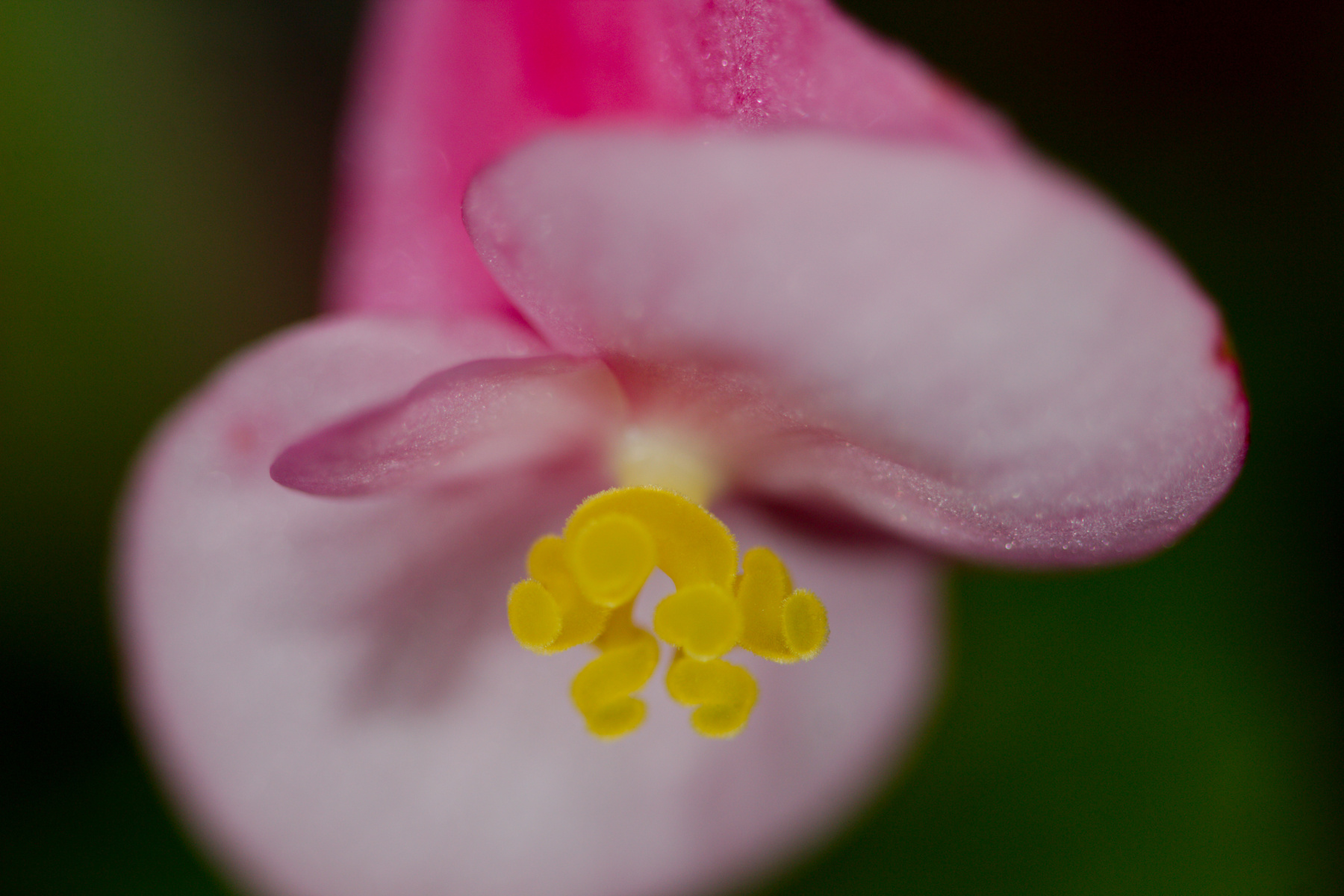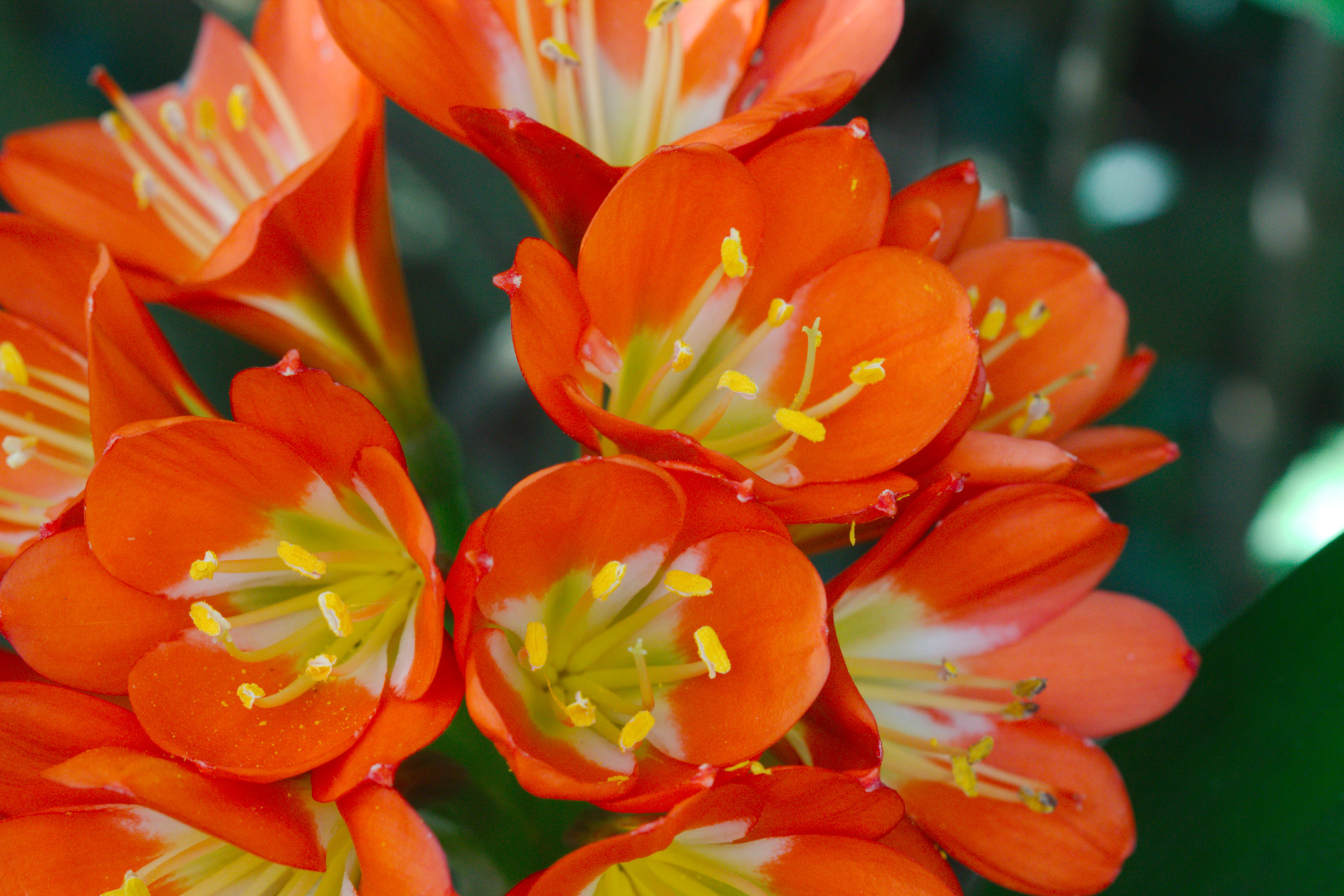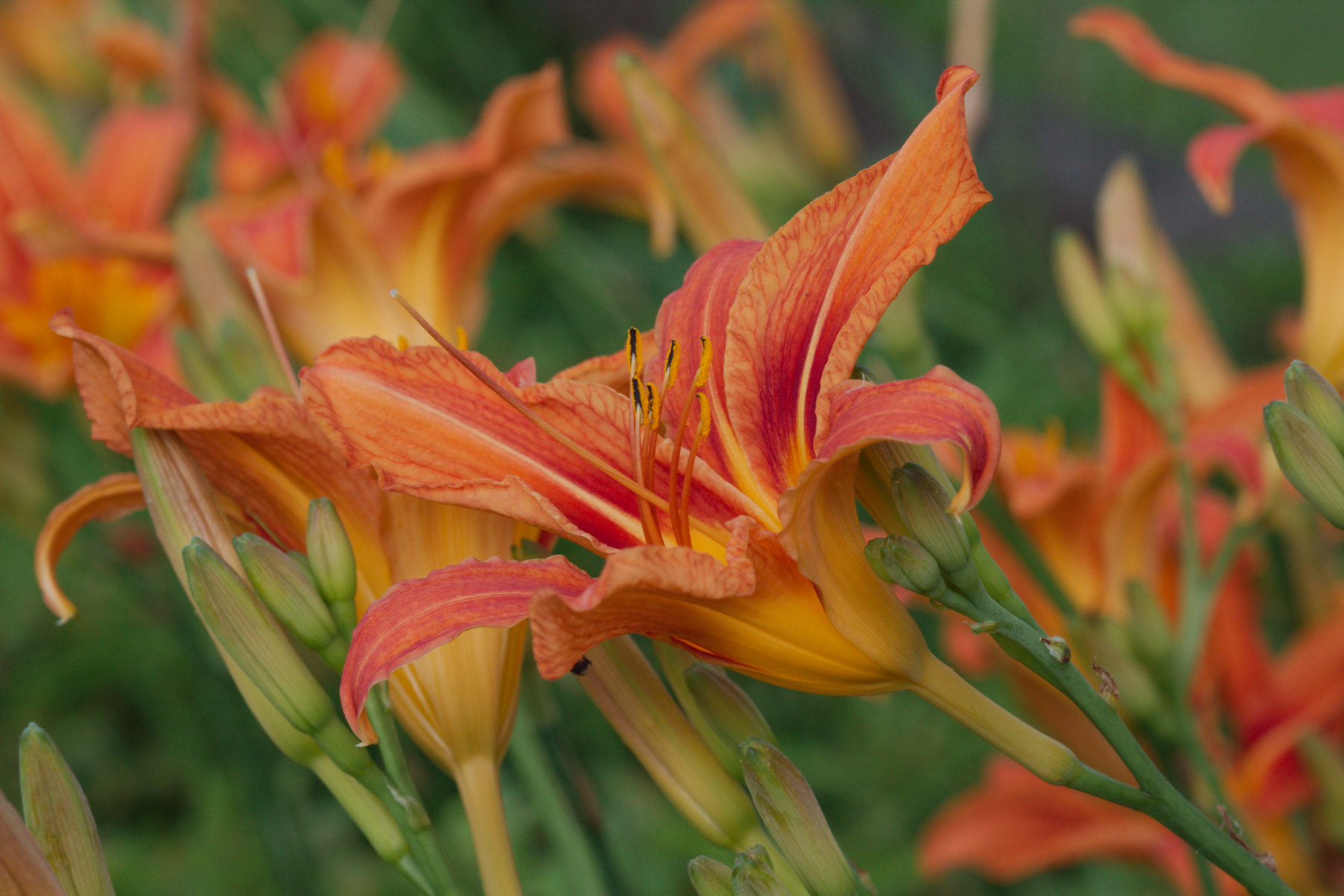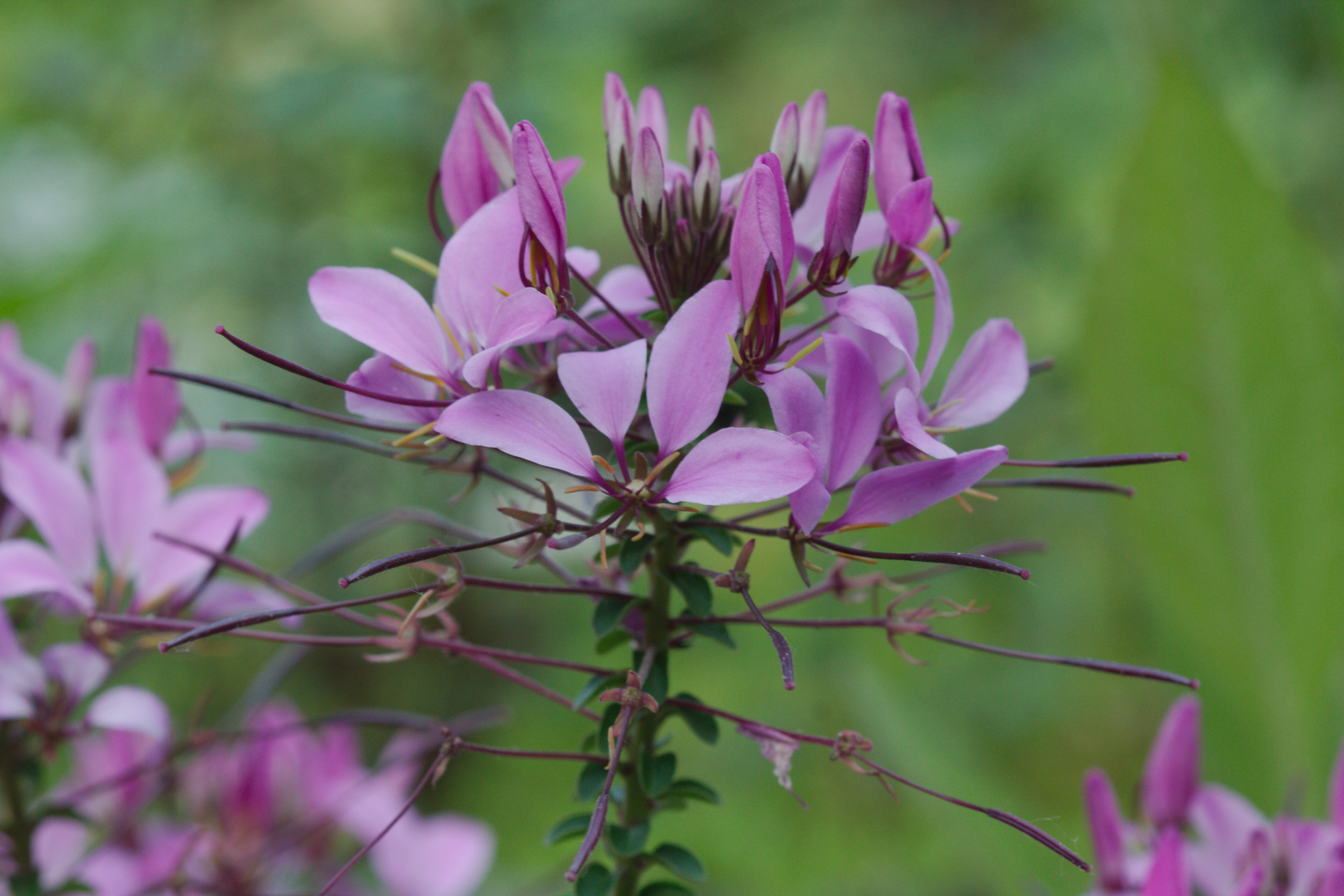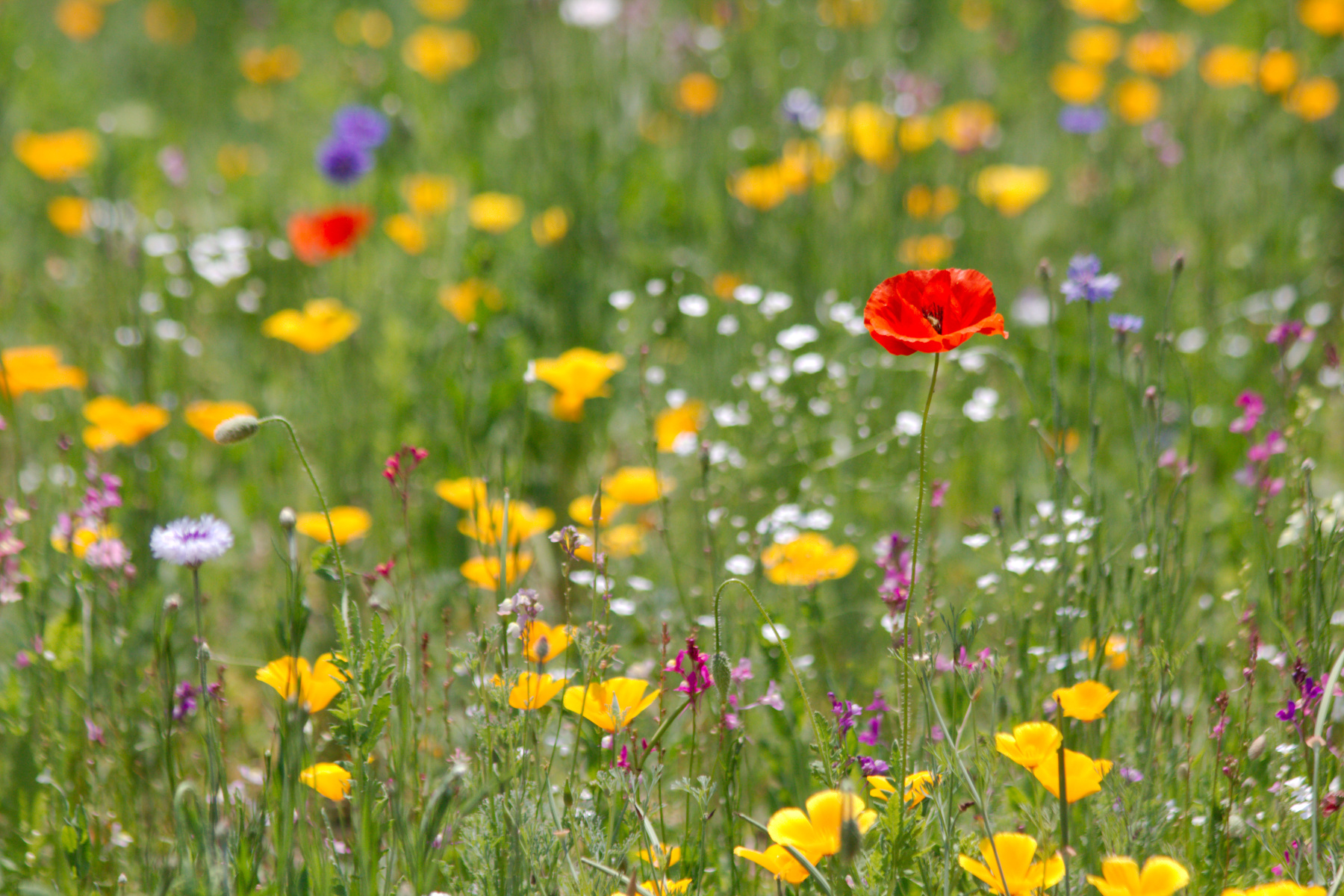
The Anthurium genus contains about 1000 species—the largest genus in the arum family—but only two of them are grown for their bright red spathes. This is Anthurium andraeanum, a native to Colombia, Ecuador, Venezuelan Antilles, and the Windward Islands. Common names include flamingo lily and painter’s palette, although I’ve only ever known it simply as Anthurium. Like many plants in the Araceae family, Anthurium species contain calcium oxalate crystals (CaC2O4(H2O)x) and are therefore poisonous to humans. They’re pretty, though.
Flowers and Plants
Anthurium andraeanum
Sunflowers
These were given to Margaret for her 92nd birthday and are quite pretty. We have them in a tall, blue vase that we were given as a wedding present and they are photographed here in front of the cherry china cabinet that I’ve used as a backdrop a few times since we moved it to our dining room. Sunflowers are great, not just because they last so long in a vase, but that certainly is a useful trait. Their combination of ray petals and the small flowers that make up the center of the flower head are just really pretty. And the color is nice, too.
Hortiboletus rubellus
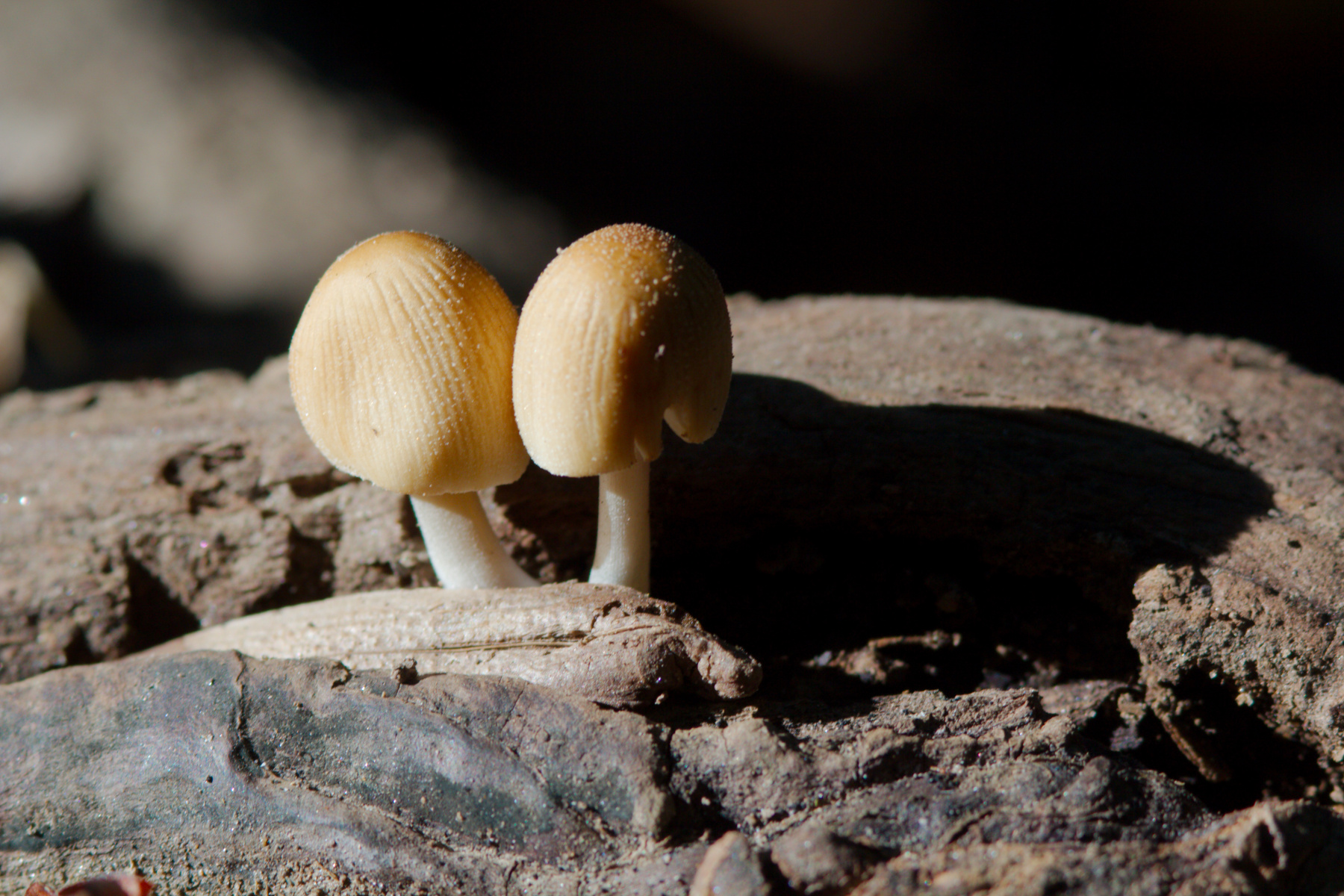
I stopped at Rockville Cemetery on the way home from work today and took a few pictures. I got a few nice shots of grave markers and thought about posting one of those but I decided to go with the fungus among us. This is, I believe, a ruby bolete (Hortiboletus rubellus). It is not terribly poisonous but not really considered to be edible, either, as it has a soapy taste. I’m not about to trust my identification skills enough to eat it, in any case. It’s a pretty mushroom, though, and happily growing in the shade of a few large oak trees.
Black-eyed Susan
I took some pictures of skippers on black-eyed Susan flowers this evening. I also got a few decent shots of a little leaf hopper, which I haven’t identified. They are quite small and this one was probably only about 5mm long. There are about 3,000 described species in north America along and it is estimated that there are more than 100,000 species worldwide, with less than a quarter actually having been described. I decided to post this picture, instead of one with an insect, just because I like the shallow depth of field on the yellow petals of the black-eyed Susan.
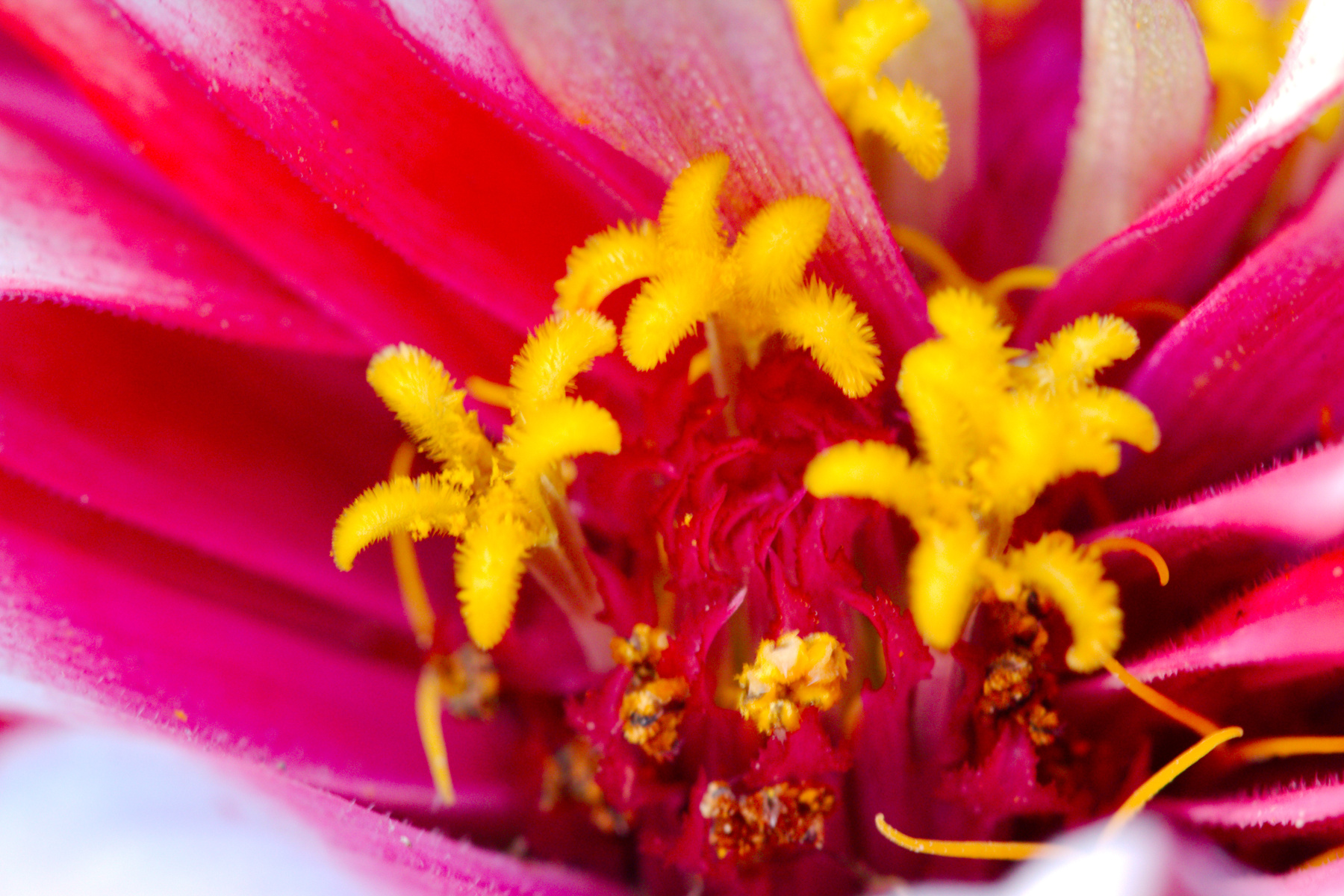
Deep Orange Zinnia
In the small garden where the county once had an oak tree, down by the road, Cathy has been growing mostly annuals each summer. We got a lot less done in the yard this year but she did manage to get a bunch of zinnia and marigold plants in the ground. There is Pachysandra terminalis already growing around the bed but she has kept the center, where the tree was, clear for her annuals. There is also Conoclinium coelestinum (Blue Mistflower), a slightly invasive herbaceous perennial, but she pulls out enough each year to keep things balanced. The blue of the Conoclinium goes well with the yellow and orange of the zinnias and marigolds.
Wilting Coneflower
Ten days ago I posted a picture of purple coneflowers in a blue and white vase against the dark cherry of a china cabinet. I was a little surprised by the relatively warm reception it received. Those same flowers are now a little bit past their prime. This is one of them, drooping and a little faded, but still quite lovely in its own way. Of course, we all want to be the strong, beautiful flower, blooming where we are planted. But that’s fleeting, as it is written, “As for man, his days are like grass; he flourishes like a flower of the field; for the wind passes over it, and it is gone, and its place knows it no more.” (Psalm 103:15-16 ESV) But even his days are not all full bloom. We start as a small sprout (metaphorically speaking), grow, (hopefully) bloom, and (even more hopefully) bear fruit. But then we grow old and begin to fade, like this flower. That, too, can be beautiful. Lord, help me to grow old gracefully.
Honey Bee on Rudbekia
As I’ve mentioned before, the garden is somewhat overrun with Rudbekia (a.k.a. black-eyed Susan) flowers. The bees don’t mind. There are, actually, other things in bloom, but none nearly as obvious. The mountain mint (Pycnanthemum muticum), for instance, is very popular with the bees of all sorts. But their flowers are much less showy. This afternoon I took a bunch of pictures of various bees on the black-eye Susan flowers. This one is a western honey bee, Apis mellifera. Contrary to popular belief, they are in no real danger of all dying out. You can, to a large degree, thank capitalism for that, although I think the danger was considerably exagerated, in any case.
Purple Coneflowers
Cathy brought some coneflowers in this evening to put in a vase in or dining room. Actually, they got knocked over when she was cutting the grass so she figured we might as well enjoy them as they die. I think they look really nice against the rich brown of this china cabinet. As you might be able to tell, the china cabinet is empty. We’ll put things in it but we haven’t gotten around to it yet. For now, the things that could go in it are in boxes and taking up space that could be used in better ways. But finding them and figuring out what we want where is a bit too much for us right now.
We don’t bring flowers in very often but I’m always glad when we do. One of the nicest photos I’ve taken, actually, is a vase of flowers, mostly roses, that Cathy arranged. It was sitting on our kitchen table and the late afternoon sun was coming in and lighting it from the side so the background went fairly dark and the flowers glowed nicely. I’ve made a few prints of that one, taken in 2010, and it’s been fairly popular. I don’t think this one will win any awards but I do like the colors and it’s a relaxing picture, to me.
Rudbekia
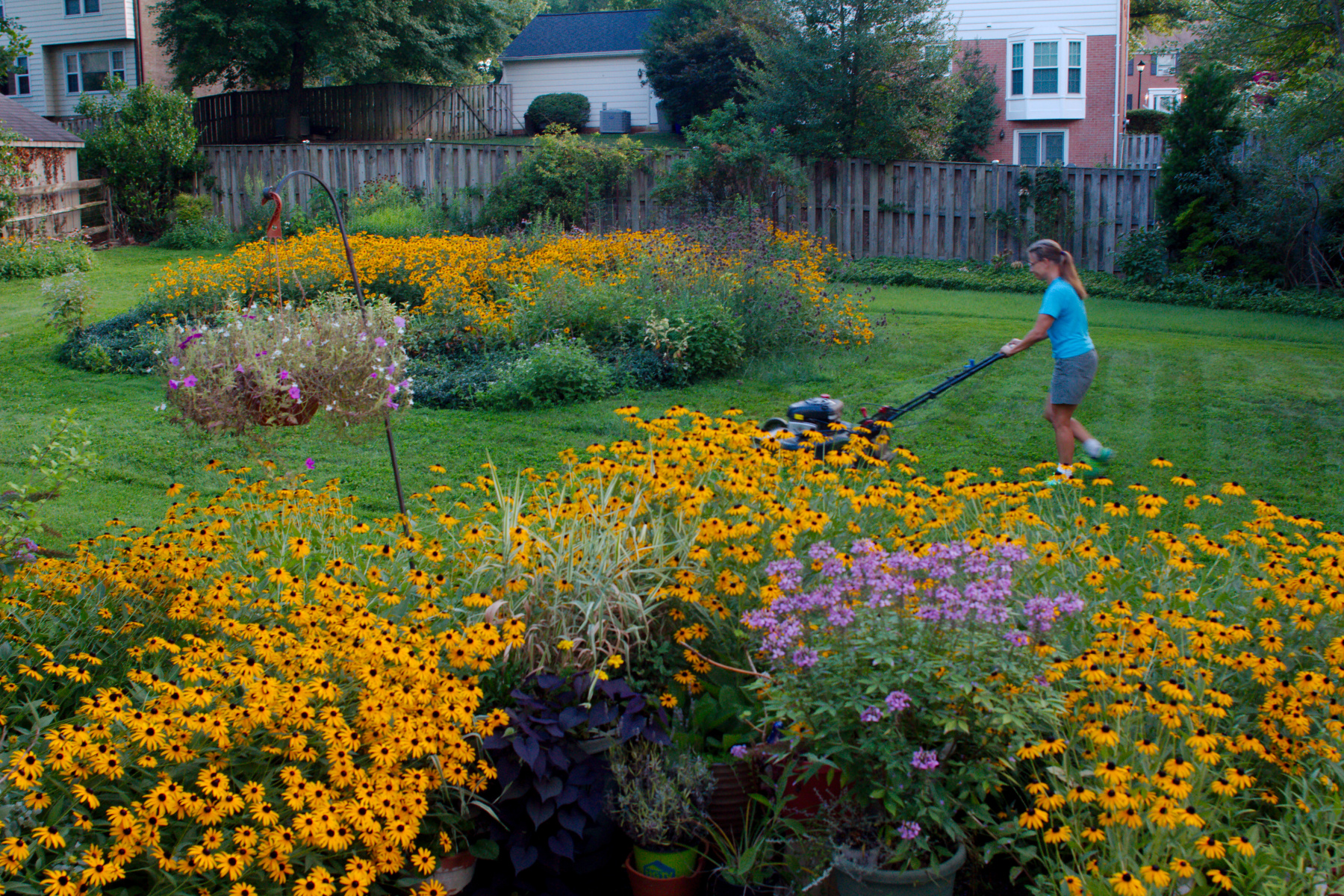
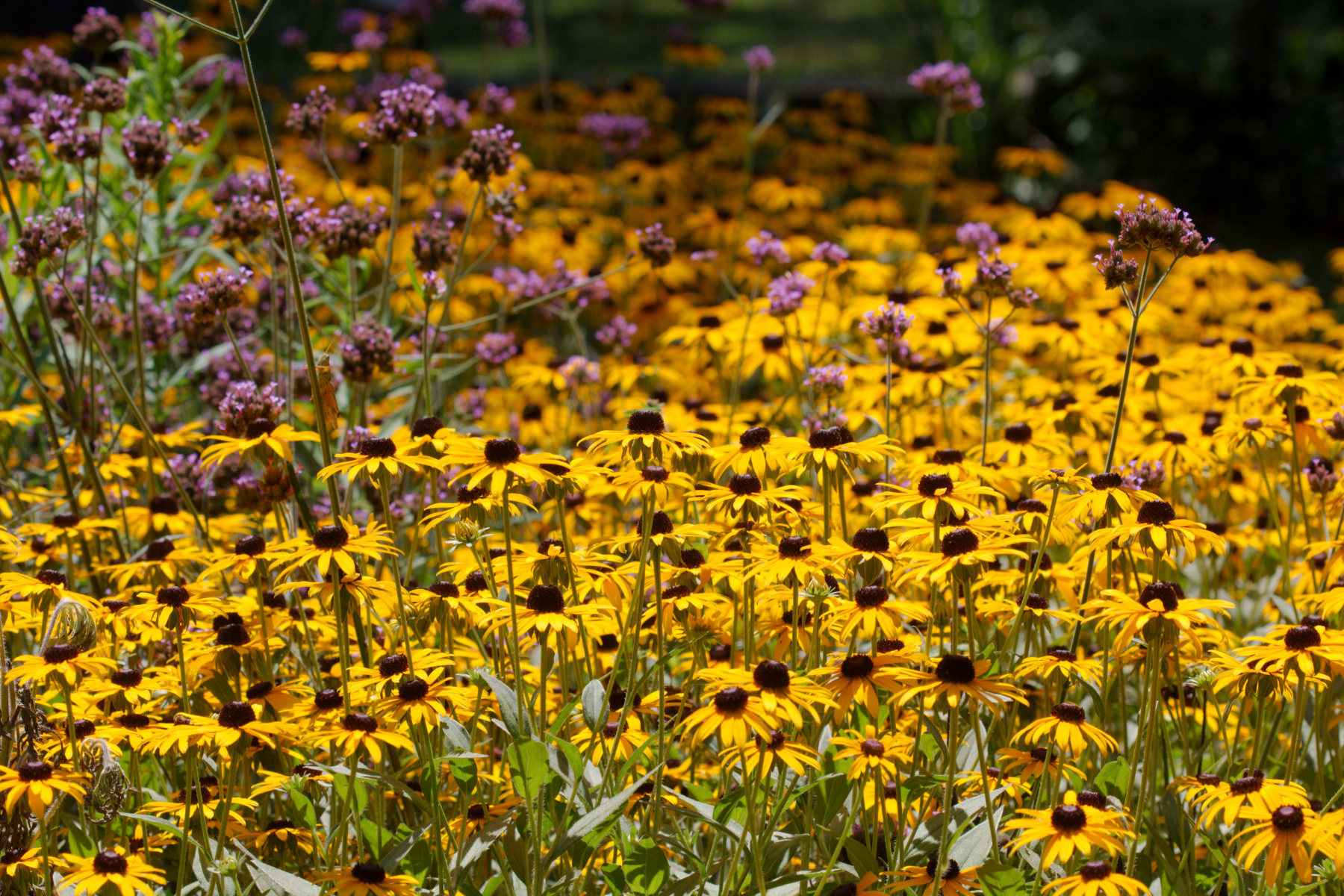
Here’s another photo of the black-eyed Susans in our back yard. After work today I sat in the back yard for a while. I decided it was time I cut my hair so I got the clippers out and did it. It was very hot and the hair stuck all over me but it’s done. While I was sitting after getting my hair cut, I enjoyed the black-eyed Susans that surround our patio. They have gotten somewhat out of control but they are lovely and if anything is going to go wild, it might as well be pretty. This is a time of the summer when there isn’t a lot else in bloom and the Rudbekia are quite welcome. Maybe next year we’ll have time to fight them back a little but for now, we’ll just enjoy their abundance.
Purple Coneflower
It’s been a good year for the purple coneflower (Echinacea purpurea) in our yard. Of course, it’s been an even better year for the weeds. With most weekends at least partly devoted to dealing with one or both of our mom’s houses, we’ve spent a lot less time in the garden this year. There is bindweed (Convolvulus species) everywhere and it’s running riot. In particular, along the back fence and the garden along the south end of the house are both totally out of control. There is significant pokeweed, goldenrod, various thistles, and even a few trees (zelkova, elm, maple, and ash). But there are some blooms that were intended, as well, including this coneflower.
Black-eyed Susan
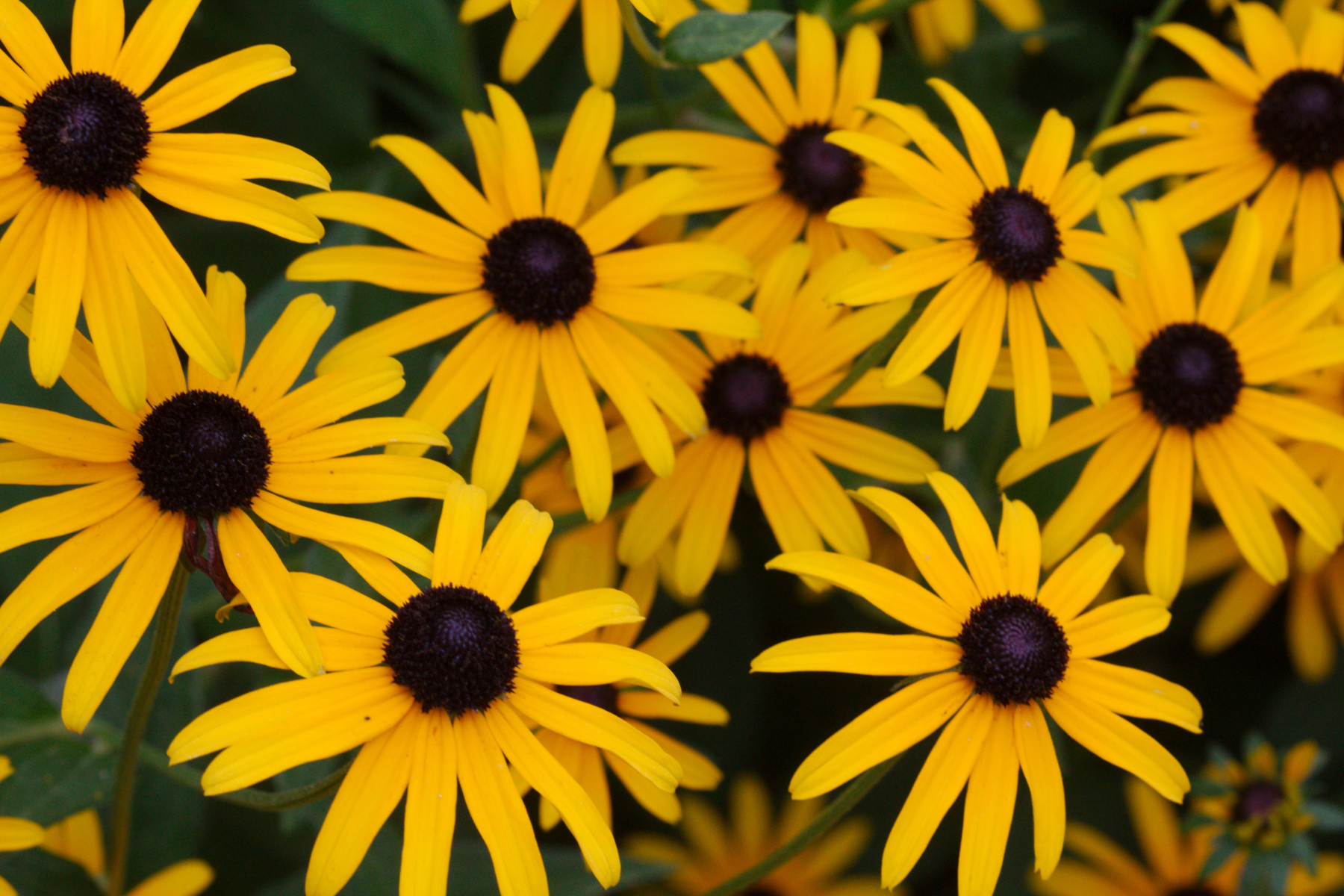
The 25 or so Rudbekia species are all native to North America and Rudbeckia hirta is the state flower of Maryland. We actually have two related varieties of black-eyed Susans in our yard and I don’t know if they are different species or different varieties of the same species. This is by far the more aggressive of the two and left to itself would probably take over the entire yard. In fact, even with some efforts to contain it, it’s taking over the entire yard. On the other hand, there isn’t a lot else blooming right now and if you look into our back yard, it’s filled with yellow, so I can’t really complain. This year, the garden has pretty much had to find for itself. Hopefully we’ll be able to do something with it next year.
Acorns
As mentioned, we went to a wedding reception yesterday for Dorothy’s friend, Kendra. Dorothy flew down on Friday evening and then today we drove her back up to Massachusetts and will be with her for the week. I say “with her” but we’ll be staying in an airbnb in Gloucester, about 25 minutes from the home she’s living in for the summer. After we arrived and got our things into the cottage, we went to see the garden Dorothy’s been growing this summer. While Cathy and Dorothy watered and did a little weeding, I relaxed in the shade and then took a few pictures. It was a long day (about 10 hours on the road) and I needed a break. The garden is in the yard of the aunt and uncle of one of Dorothy’s friends and there is a box full of acorns in the yard. That’s the subject for today’s picture.
Bumble Bee on Coneflower
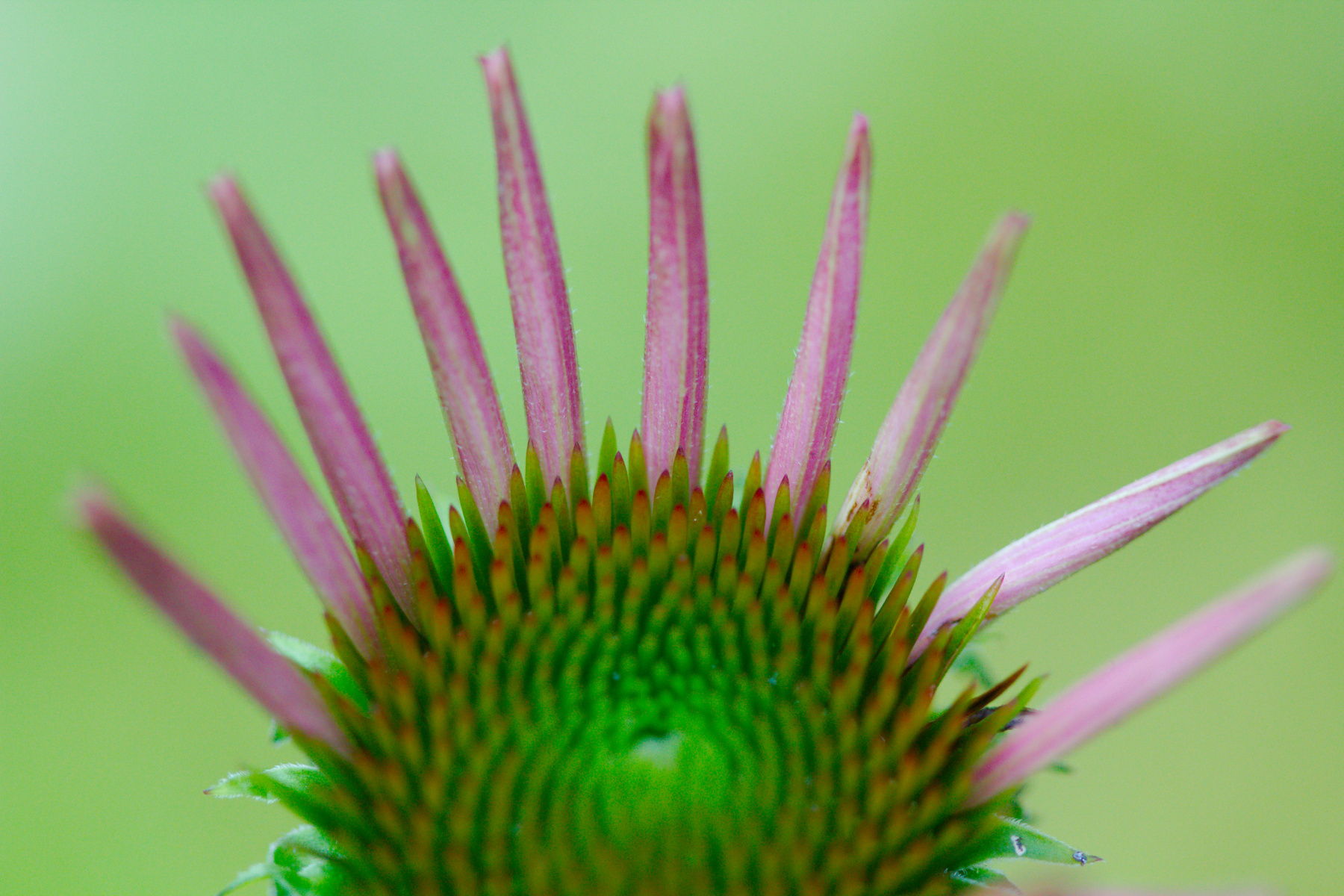
The coneflowers (Echinacea purpurea) in our yard tend to get eaten up by insects of one sort or another. I’m not sure who the culprit actually is, but they eat holes in the ray florets (the petals around the central group of disc florets), making the flowers a bit less attractive for photography. The bees aren’t bothered, of course, and this bumble bee (Bombus impatiens). The generic name Echinacea comes from the Greek word meaning hedgehog or sea-urchin, which references the spiny center of the flower. The name Bombus for bumble bees comes from the Latin (which took it from the Greek) for “booming, buzzing, humming.”
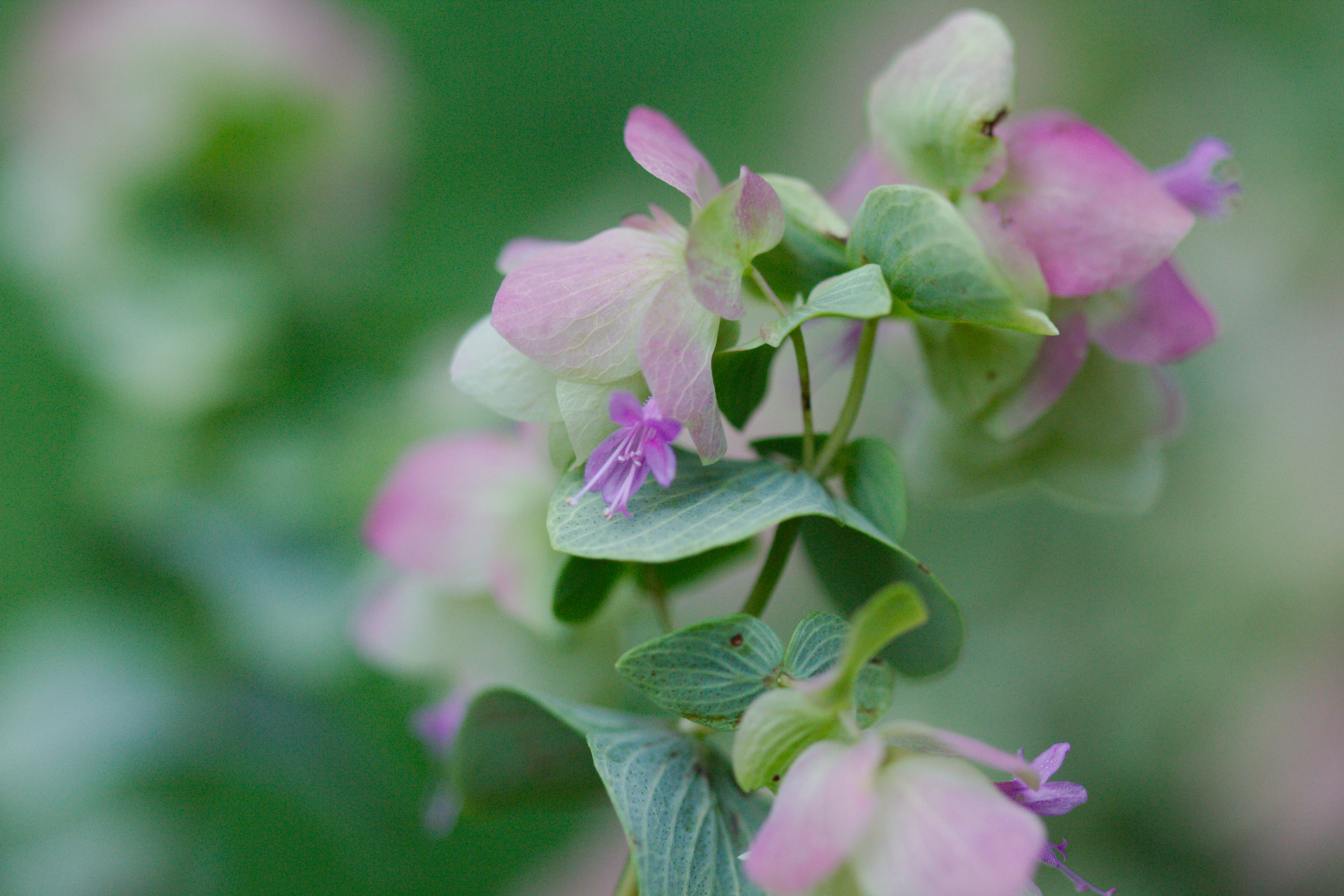
Oregano Flowers
I have a little plot with a fence around it where I grew a few vegetables when it was first put in. Summers have been quite busy and keeping up with vegetables has been tough. Also, it’s small enough that it really isn’t worth the trouble. So, I’ve planted a few herbs and don’t have to get out there nearly as often. Temperatures down to 0°F this last winter took care of the rosemary but the oregano (Origanum vulgare, a member of the mint family native to Europe through central Asia) is going strong. In fact, it’s practically taken over the entire plot.
Fig Leaves
I was down at my mom’s after work and looked around for something to photograph. There isn’t really anything in bloom in her yard right now, but the leaves on the fig tree that dad planted caught my eye. The common fig, Ficus carica, is not completely hardy in our area but planted in a protected spot and given some winter protection, it can be successfully grown. My grandparents, in southern North Carolina, got a lot more figs off their much larger tree. This tree never produced enough figs on its own to make any significant quantity of preserves so mom had to supplement it with figs bought at the market.
Rose of Sharon
When Dorothy was born and we gave her the middle name Rose, a friend gave us a small Rose of Sharon plant. We had that in a container until we moved to our current house and then Cathy planted it in the garden along the south end of our back yard. It has flourished and indeed it is something of a constant chore to pull up the seedlings that appear around the yard, but I will confess that I like the flowers on this large shrub or small tree. They appear over a long period, from early summer well into fall. The Latin name for the plant, Hibiscus syriacus, implies that it comes from Syria, but that appears to be false, being a native of eastern Asia instead.
Queen Anne’s Lace
My grandmother carried a bouquet of Queen Anne’s lace (Daucus carota var. carota) at her wedding. For their 50th anniversary party we gathered bucket loads of the stuff from empty fields and had it all round the room. You are probably familiar with the flowers, as it’s a pretty common plant all across the United States and bordering provinces of Canada as well as Europe and Asia. This is the wild carrot from which our cultivated carrot descended. It is reported to have been first developed in Afghanistan. It is a biennial plant, blooming in their second year.
Iris domestica
This is Iris domestica, often called blackberry lily or leopard lily and formerly known as Belamcanda chinensis. It’s a perennial plant that we have in various places in our garden. We gather the seeds most years and spread them in areas we would like it to grow, although I don’t know if we’re doing as well as the birds when it comes to actually spreading it. As you can see, it has vaguely lily-like flowers and they are quite lovely. They each last a day but they are born in clusters, blooming one after the next for quite a while. In case you were wondering, the genus name Iris comes from the Greek goddess of the rainbow.
Monarda, Asclepias, and a Bombus
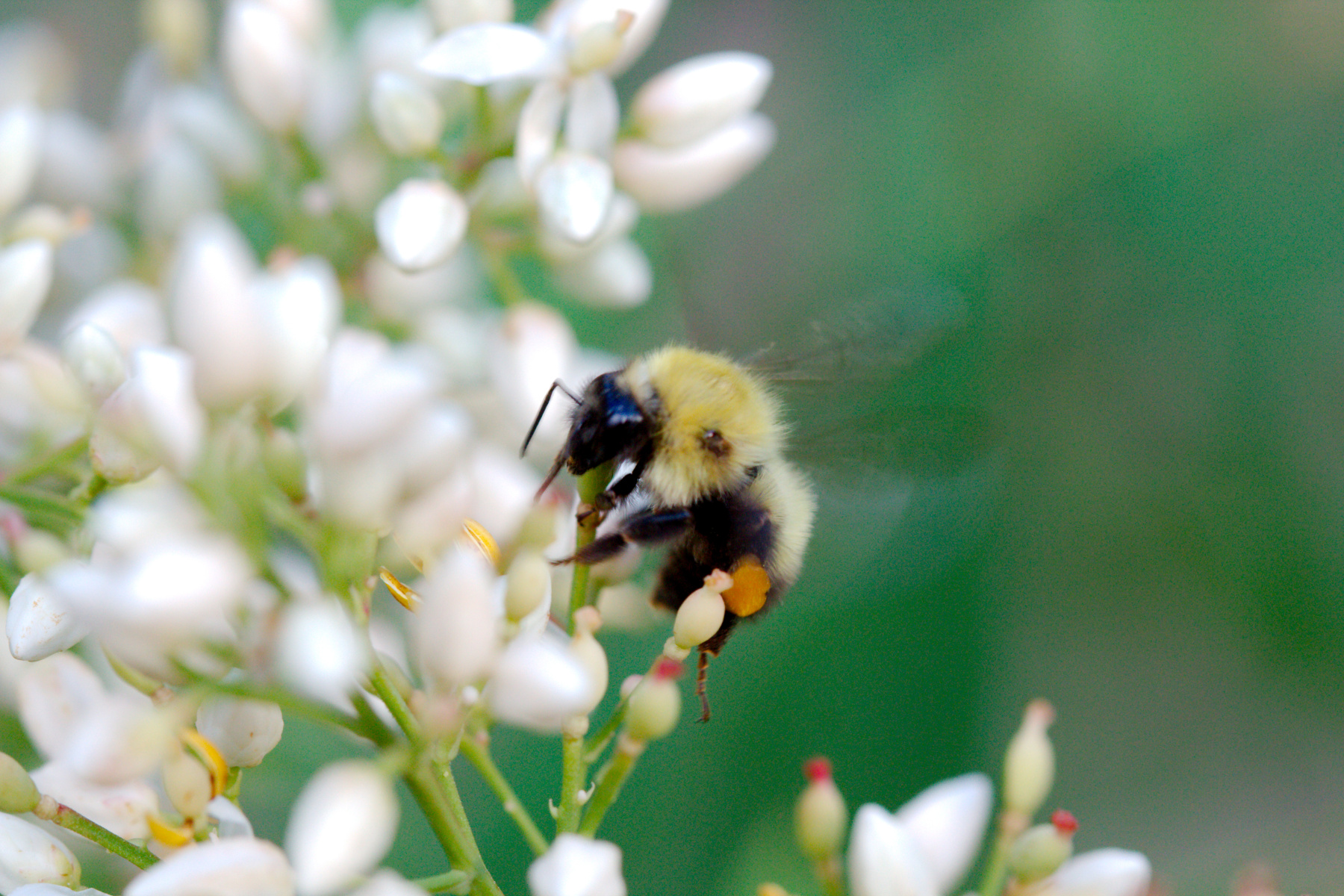
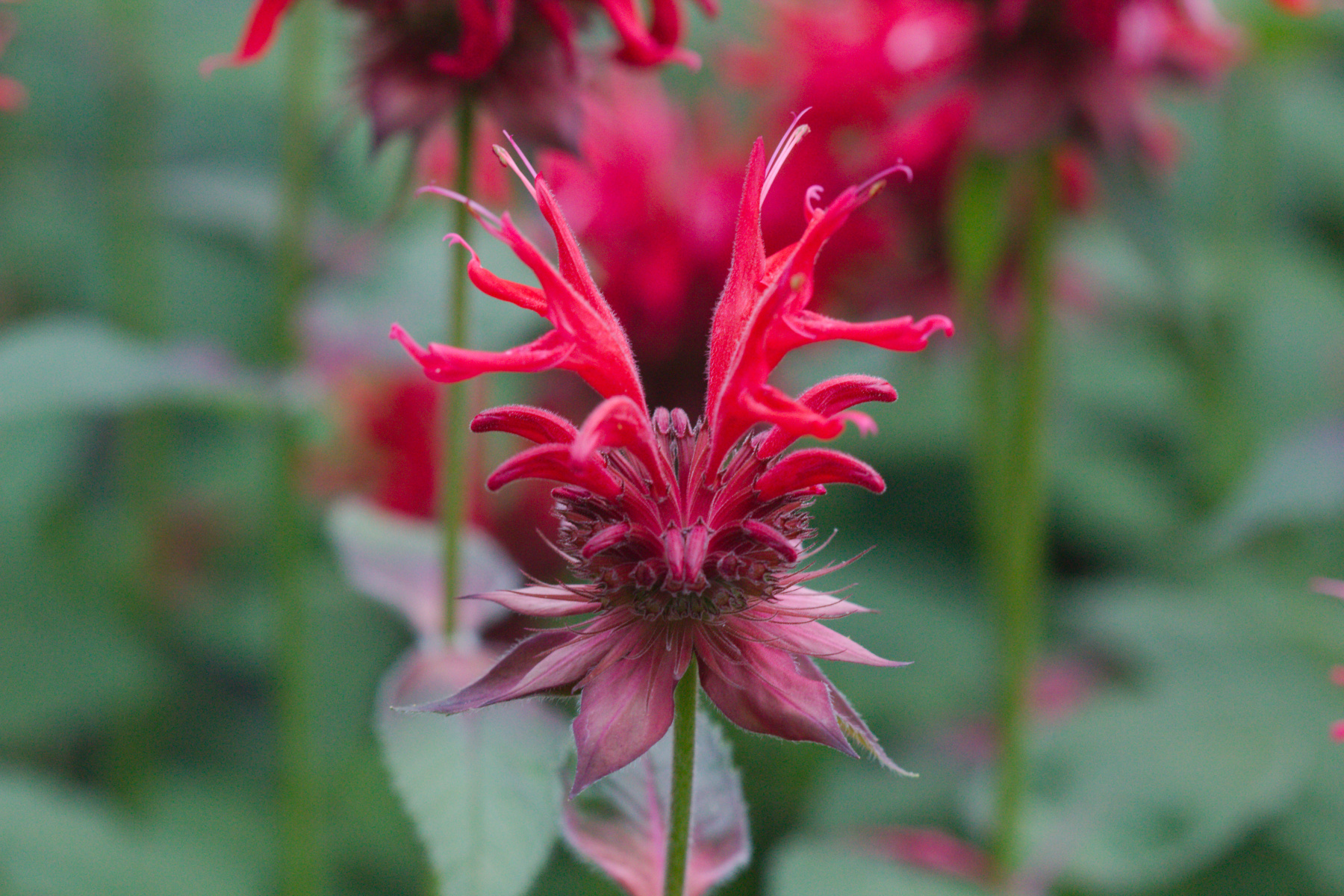
Along our back fence, the garden has really gotten out of control. With the work we’ve been doing on our mom’s houses, we haven’t really had time to give it half the attention it needs and deserves. Consequently, it’s got goldenrod, poke weed, and thistles growing in abundance. Three of our planted perennials are doing quite well, however, including the bee balm (Monarda didyma, also known as Oswego tea or bergamot) and the butterfly weed (Asclepias tuberosa) shown here. The other, not yet in bloom, is obedient plant (Physostegia virginiana). All three are native to the area and extremely tough. The bees love them and I followed this common eastern bumble bee (Bombus impatiens) for a while as he moved from flower to flower.
Hosta La Vista, Baby
The genus Hosta has about 70 species native to Japan, Korea, China and eastern Russia. They are shade loving perennials grown mostly for their foliage but they have nice, if somewhat understated flowers, as well. The name Hosta is in honor of of Austrian botanist Nicholas Thomas Host (1761-1834). My parents had these in their garden and growing up I knew it as Funkia. That’s because the genus was renamed to that in 1817 “in honor of botanist Heinrich Christian Funk under the belief at that time that Hosta was an invalid name.” Early in the 20th century the name was switched back but the plants are still referred to as Funkia by some (including my parents, evidently).
This one is growing in a container just outside our front door. There are generally two pests that eat Hosta plants. Slugs can do significant damage to them, eating holes in the leaves. In our garden, that’s generally not so destructive that we worry about it, although it can make the leaves a little less attractive. The other culprit is deer, who really seem to love Hosta leaves. Although we see deer in our yard and often see signs of their presence, they don’t seem to come too close to the house. So, we keep the Hostas close and that seems to be enough. We also put up deer repellent although I don’t actually know how much help that is. It certainly doesn’t do any harm.