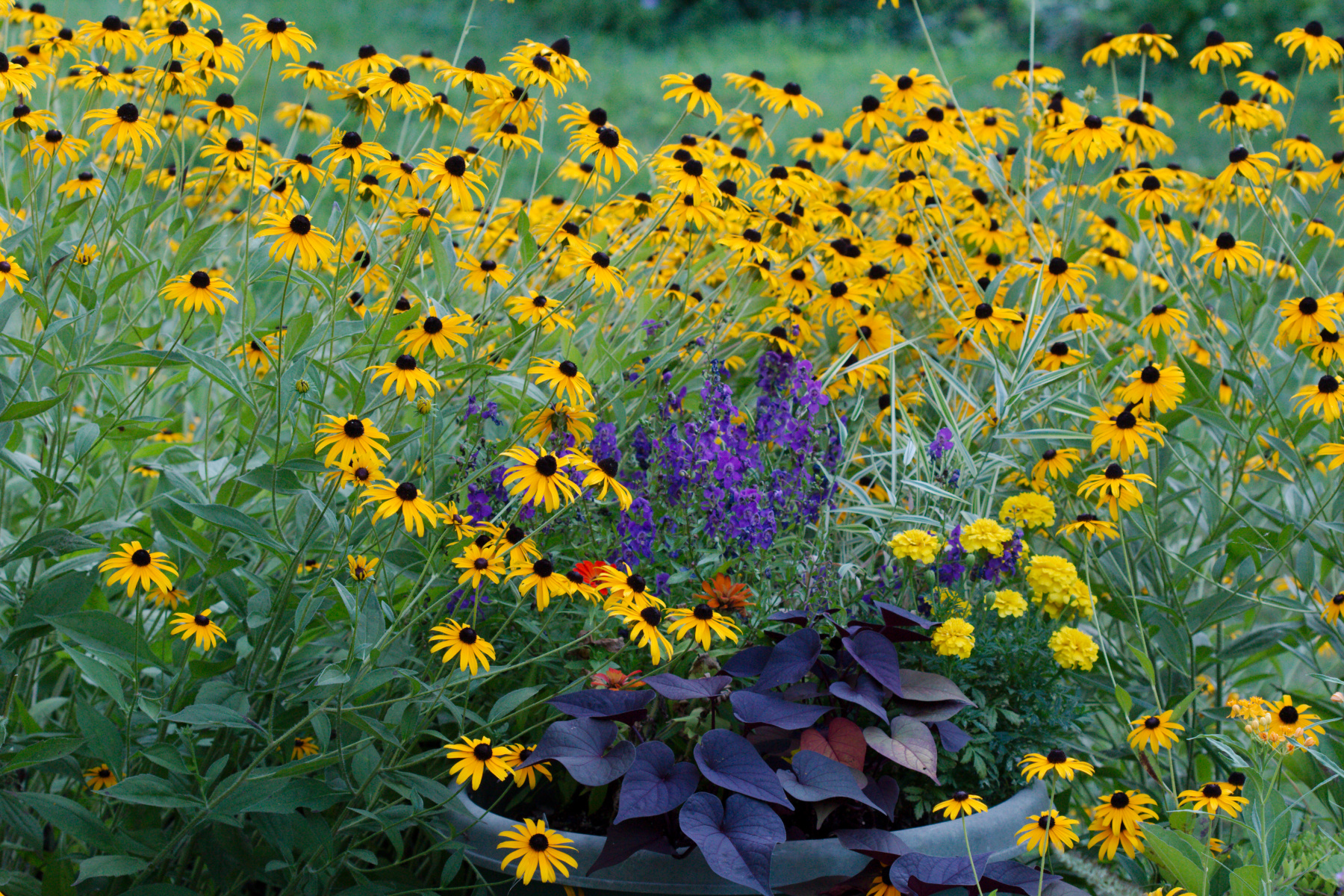
In addition to the profusion of black-eyed Susans around our patio, Cathy has potted plants along much of the edge. Some of these are perennials that she doesn’t have to do much with, but others are changed each year, planted with annuals. This year, Cathy took a lot of sedum out of a large pot, because that pot could be better utilized by something a little more striking. She planted these purple flowers (a variety of Angelonia), a sweet potato vine (Ipomoea batatas), and some orange zinnias. The purple flowers and the dark leaves of the Ipomoea, in particular, are really set off by the bright orange/yellow of the black-eyed Susans.
Flowers and Plants
Black-eyed Susan
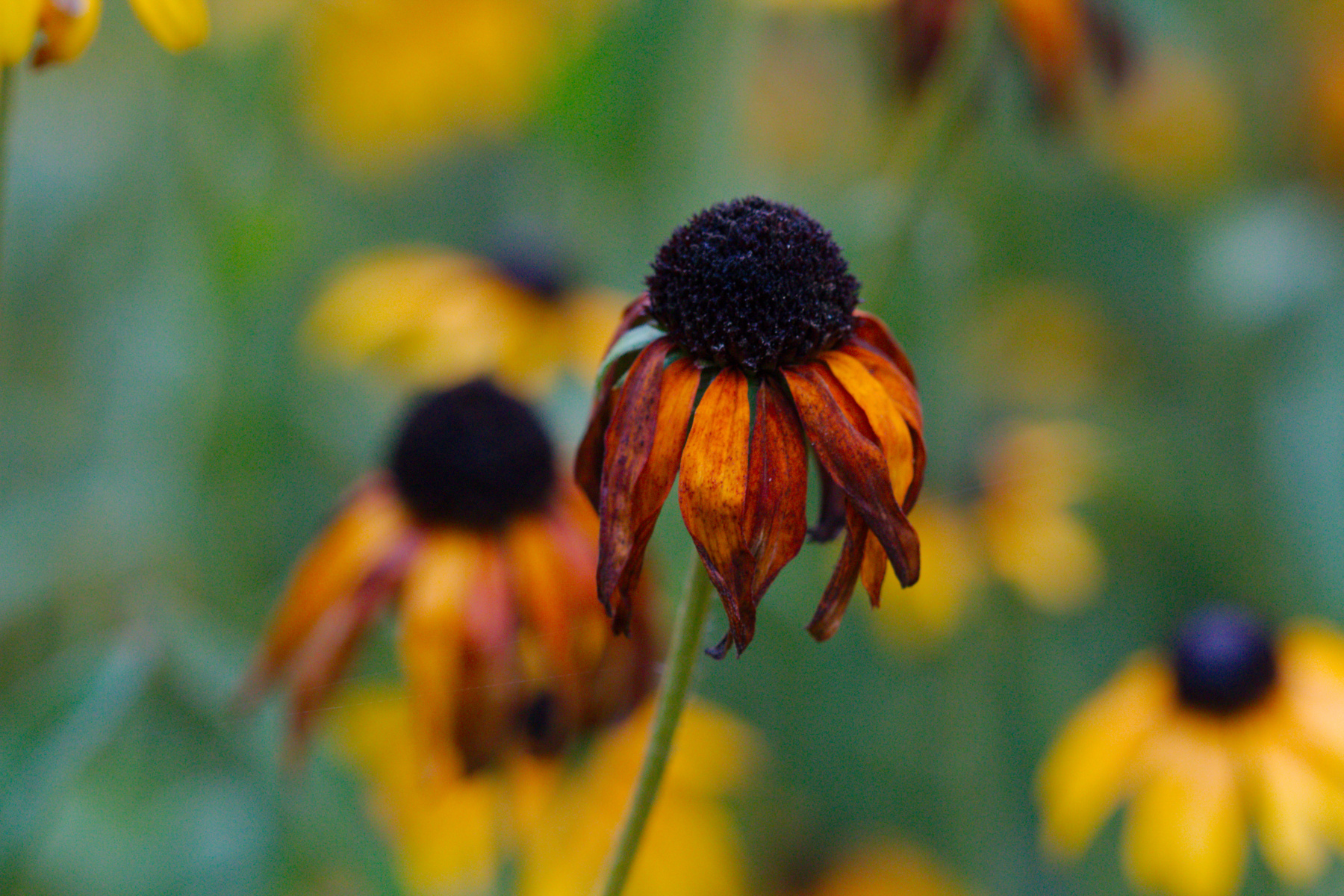
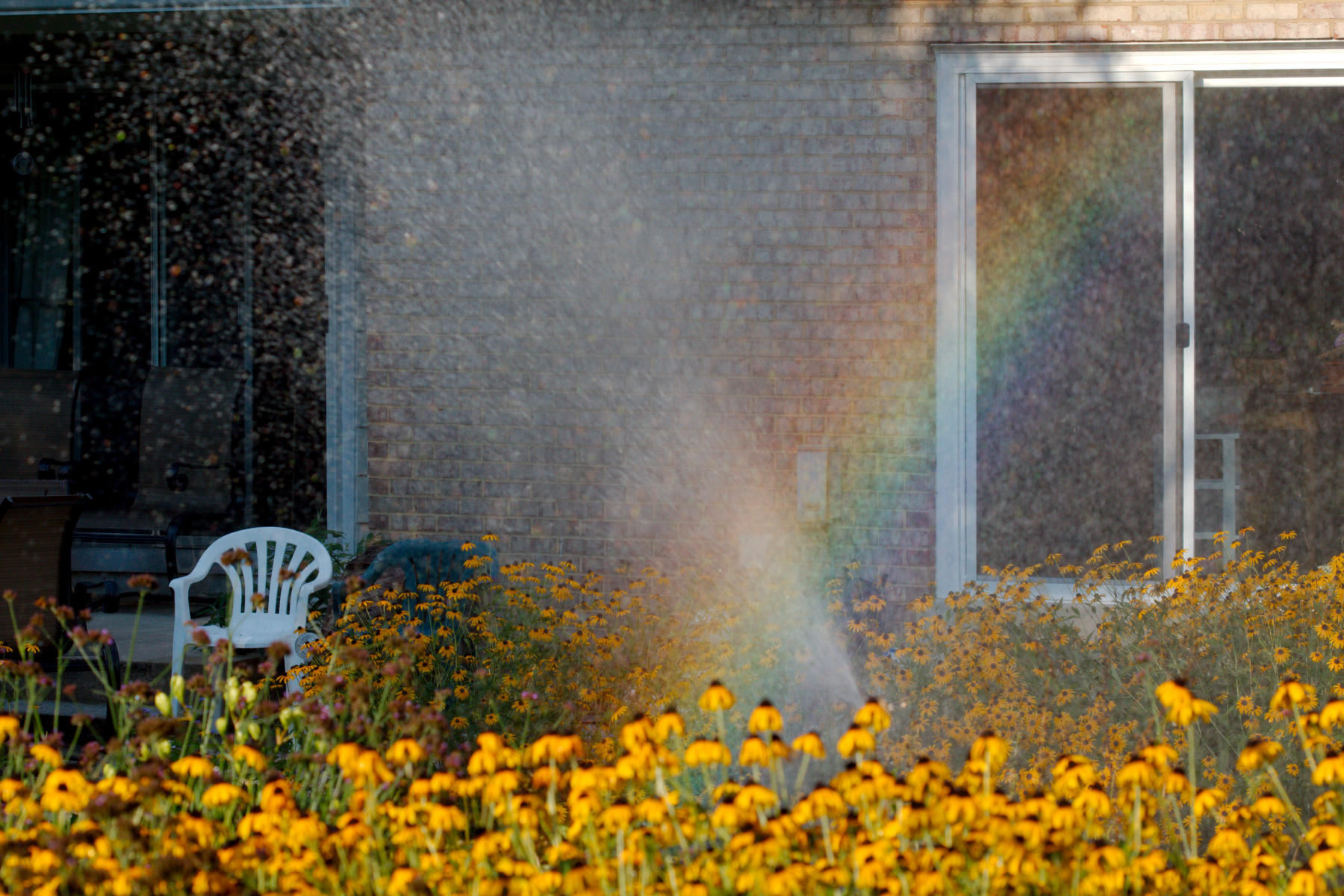
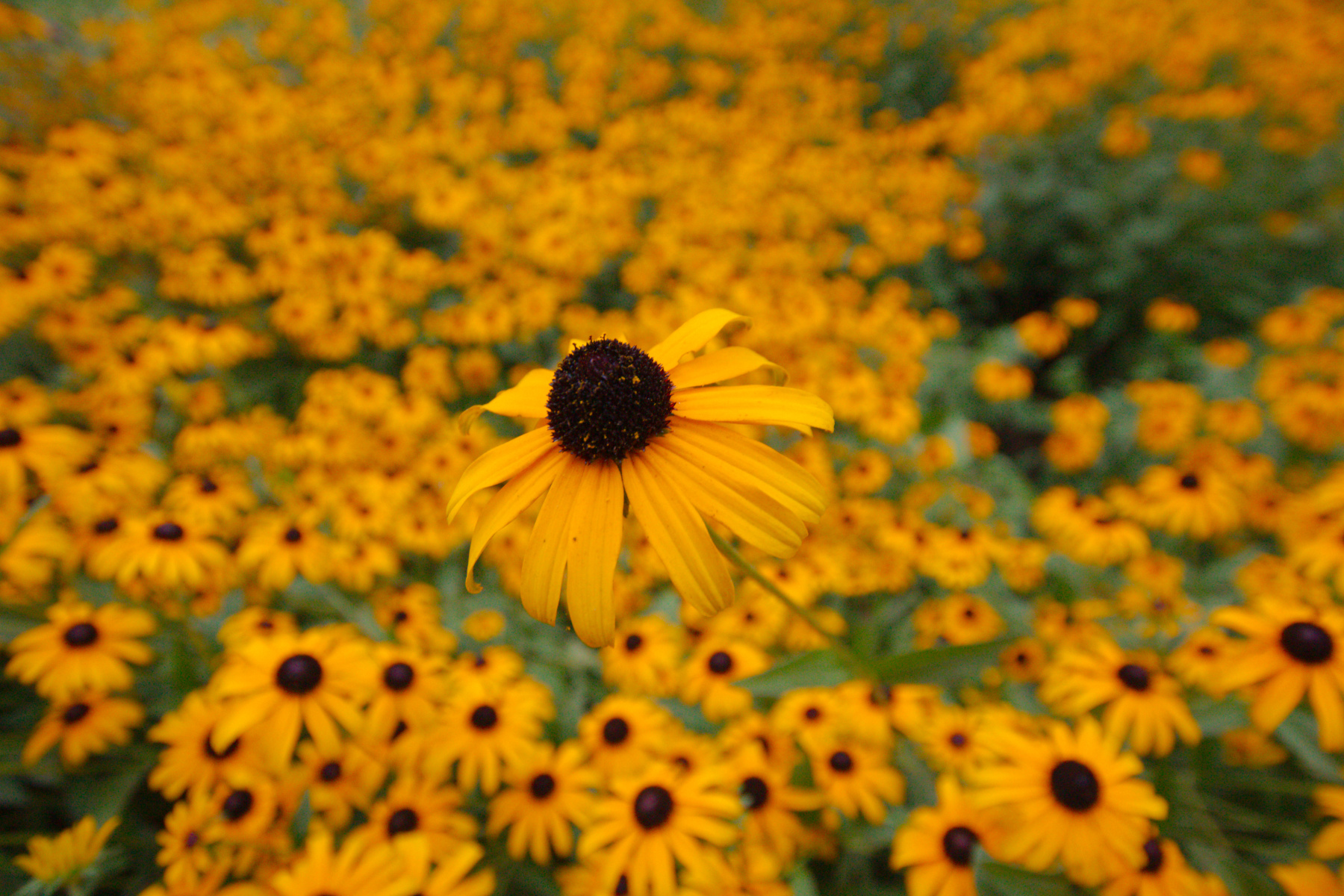
The black-eyed Susan is by far the most prominent flower in our back garden throughout most of the summer. There is a large patch of them in the central garden, where there used to be two large maple trees. There are more around the patio and outside the dining room window. They are scattered in other places, as well. While there is still a lot more green than any other color, the orange-yellow of the black-eyed Susan is clearly in second place.
Kenilworth Aquatic Gardens
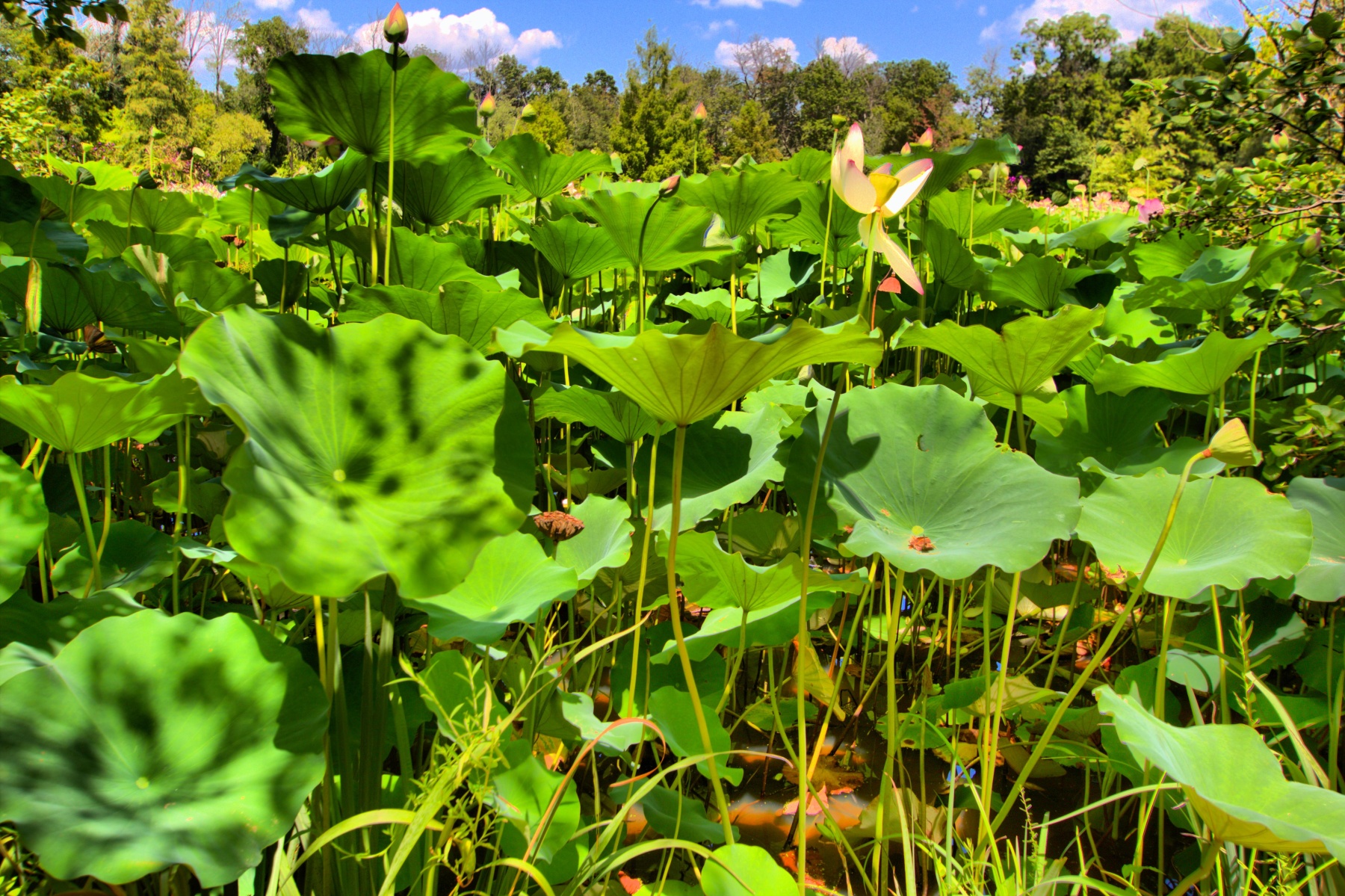
As I mentioned in my previous post, Cathy and I went to Kenilworth Aquatic Gardens today. We especially enjoyed the Lotus, which were blooming quite profusely. We also enjoyed the greens. Lotus, growing in shallow ponds, have such beautiful, green leaves and I wanted to capture the various shades produced by the shadows. I think this picture does a pretty good job of it, although you’ll have to imagine the swaying of the leaves.
Kenilworth Aquatic Gardens
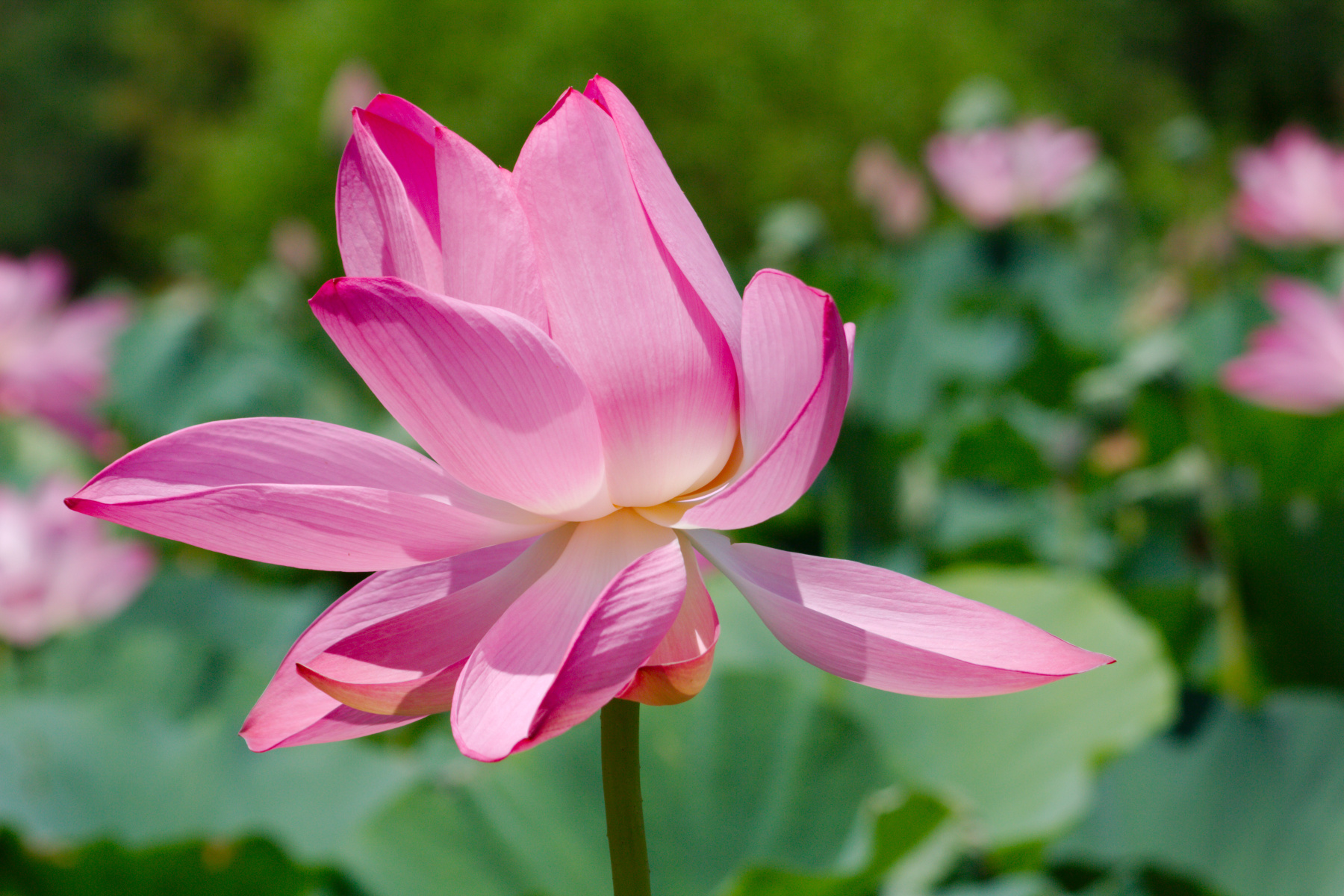
We took Dorothy to the airport today and she flew up to Boston. From the airport, we decided to pay a visit to Kenilworth Aquatic Gardens on the Anacostia River in northeast Washington. The lotus (Nelumbo nucifera) was past peak, according to the ranger on duty, but they were still blooming pretty freely. The water lilies were a little more past, but there were quite a few even of them. We also got a good view of a great blue heron (Ardea herodias) wading in one of the ponds. It was a beautiful day, not too hot and with a wonderful breeze.
Pieris rapae (Cabbage White)
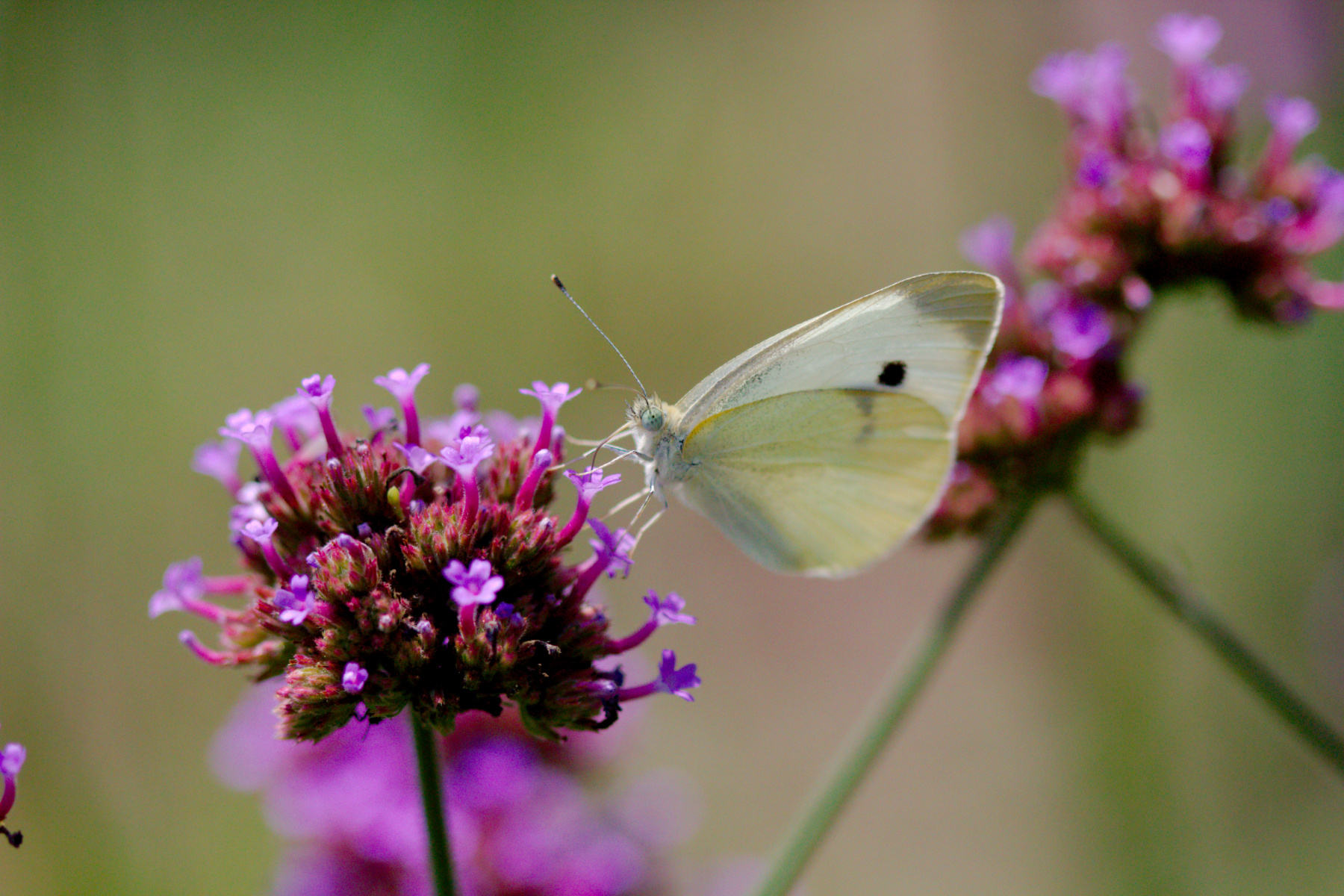
I spent a little time in the back yard chasing butterflies today. In numbers, the various skippers are by far the most prevalent in our yard. The most noticeable are the tiger swallowtails. After that, I would have to say, come the cabbage whites. Most times you can see one or two flitting about. The are in the air a much higher percentage of the time than their more common cousins and they don’t like to be approached. That means finding a likely spot and waiting. Out of all the photos I took of this one, only two were in anything like decent focus. Even they were not perfect, and that, I’m afraid, is what you will get today. Pieris rapae, the Cabbage White, on Verbena bonariensis, purple vervain.
Eristalis transversa (Transverse Flower Fly)
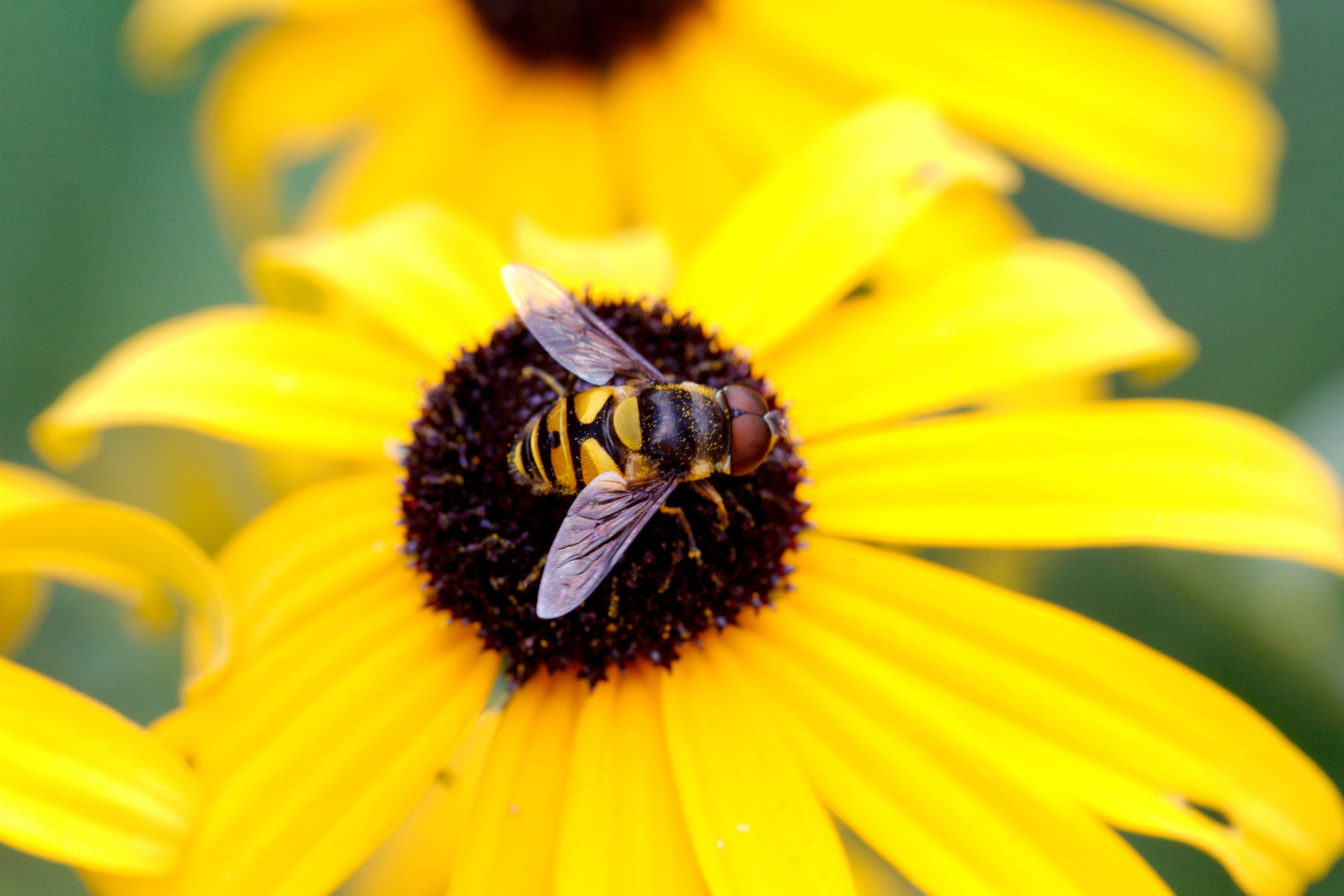
I saw a sphinx month today, which is always nice. They are such interesting things, not looking like what most people think of when the picture a moth. I got some pictures of that but decided to go with this one, a fly that I haven’t seen before today. It is a transverse flower fly, Eristalis transversa, and in this picture is on the center of a black-eyed Susan flower. I know flies are not everyone’s cup of tea, but some of them, like this one, are quite beautiful. I particularly like the way the yellow of the fly matches the yellow of the flower.
Cathy in Her Garden
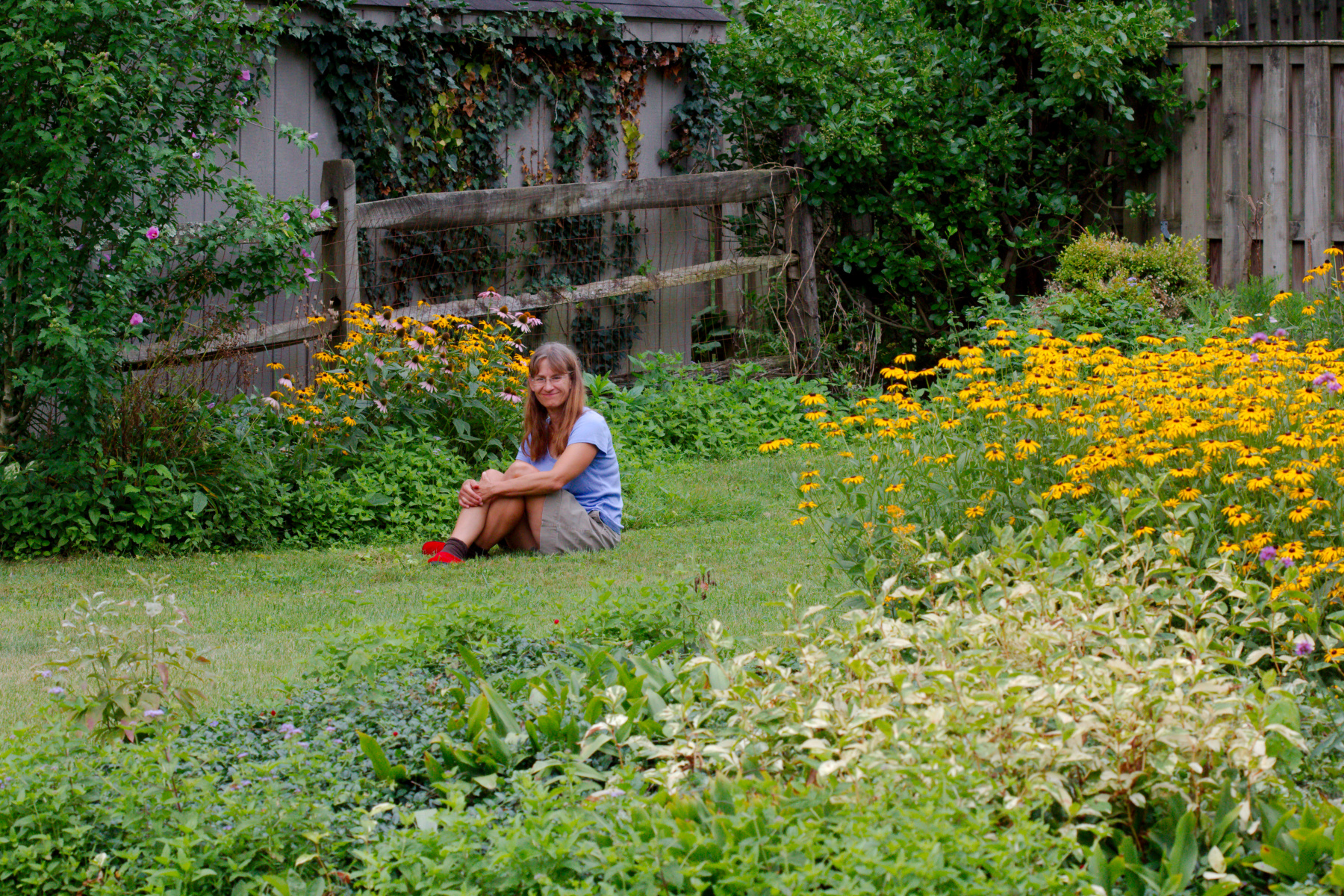
Not a joyful day, but a few moments repose in the late morning. Cathy can often be found weeding, either the garden or the lawn (which I think is probably a futile task, but I digress). As you can see, the black-eyed Susans are in full swing. There are some coneflower over Cathy’s shoulder and some Verbena on the far right (and much more of it just out of the frame on the right. The rose of Sharon (Hibiscus syriacus) is still putting out its pink-purple blooms on the left.
Grass Skipper (Subfamily Hesperiinae)
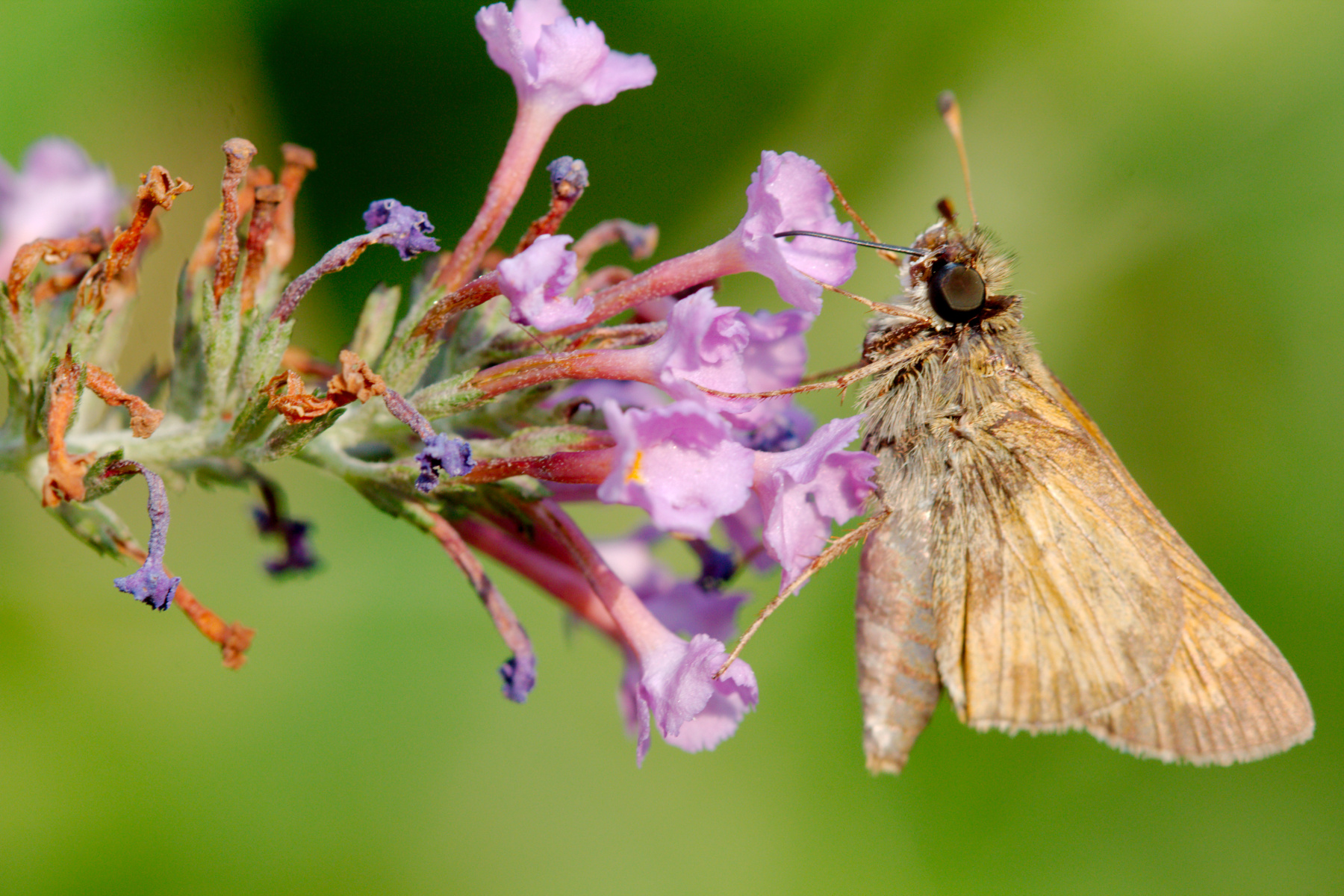
I got some pictures of grass skippers this afternoon. I don’t know which of them this is and there are quite a few to look through. I have identified Peck’s Skipper (Polites peckius) in the past and it could easily be that, but I think I will simply leave it at that. There are quite a few skippers in the back yard right now, mostly on the Verbena bonariensis and the Buddleia. That and Tiger Swallowtails (Papilio glaucus). I’m not sure how to attract a wider variety of Lepidoptera (a.k.a. the butterflies and moths).
Goldfinch In The Garden
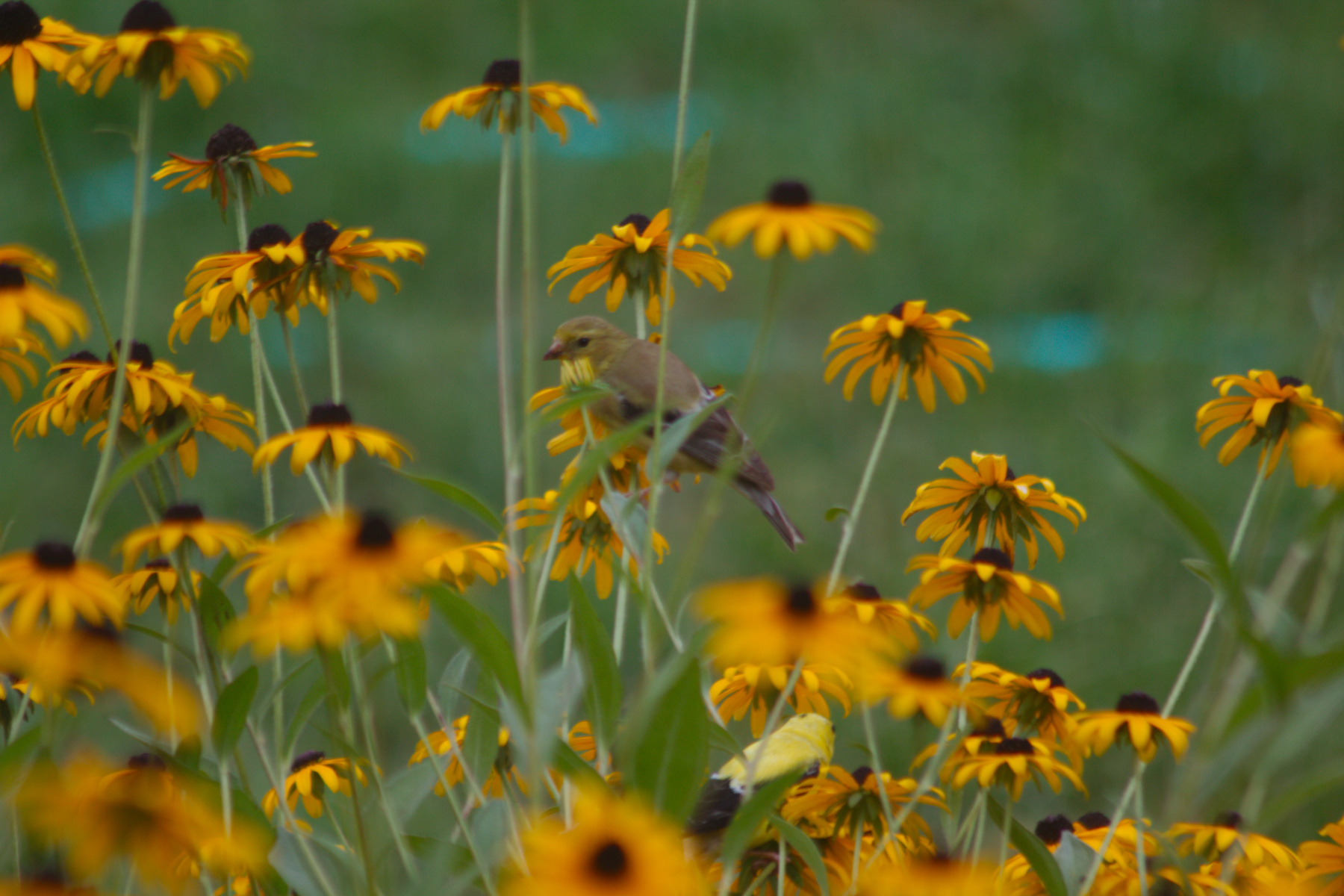
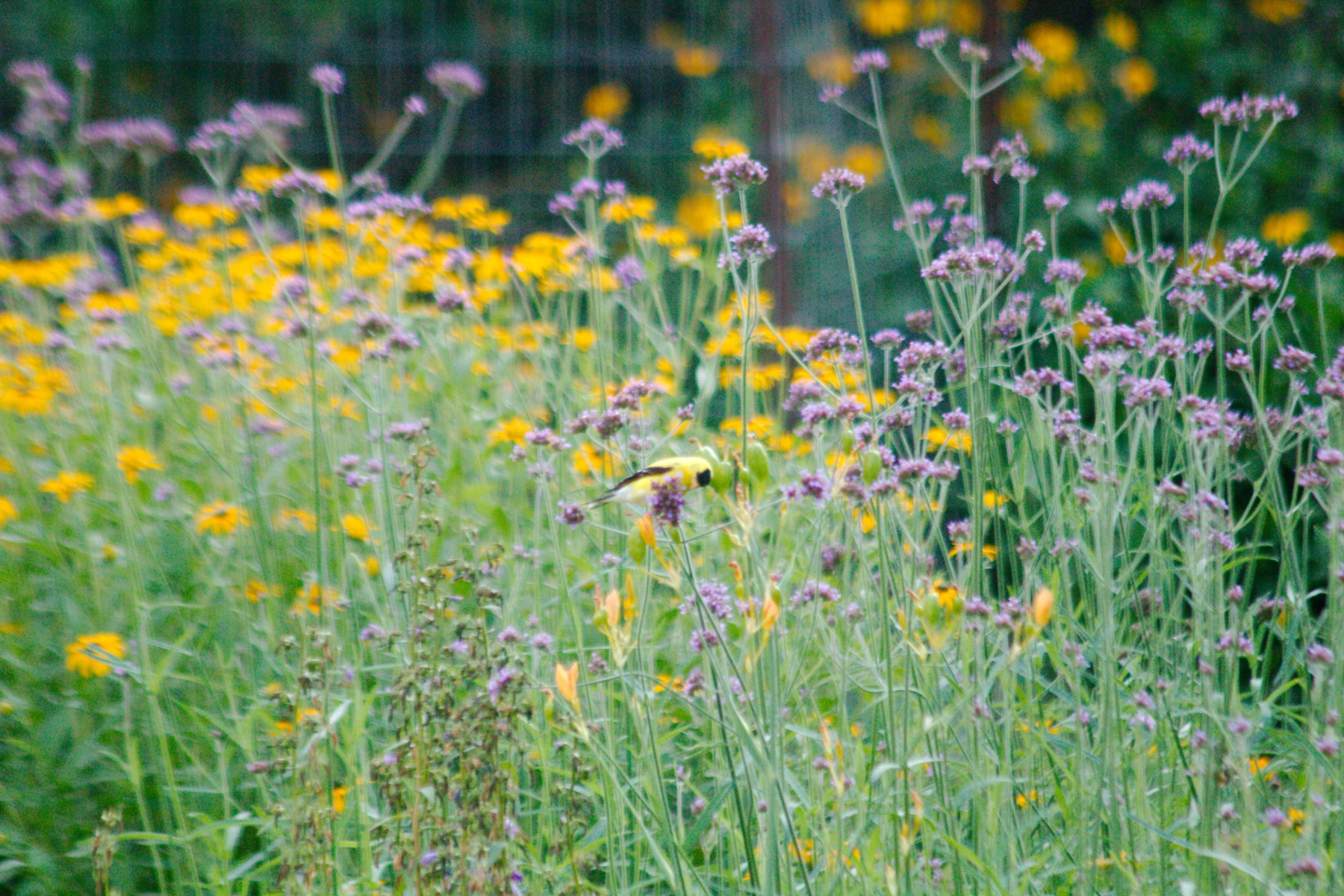
There were a lot of American goldfinches (Spinus tristis) around this evening. Actually, the bird activity seemed higher than usual overall. I don’t know if it was because of the heat and the open water of our bird bath, but that seemed to be part of it. We had cardinals, goldfinches, a immature titmouse, and catbirds over the course of about 15 minutes. This isn’t the sharpest picture ever but we especially enjoy the goldfinches when they are on the Verbina bonariensis (purple vervain). The stems are generally strong enough to hold them up but they wobble back and forth as the birds move. Sometimes they are a little tough to spot because of the yellow black-eyed Susans behind them.
Queen Anne’s Lace Seeds
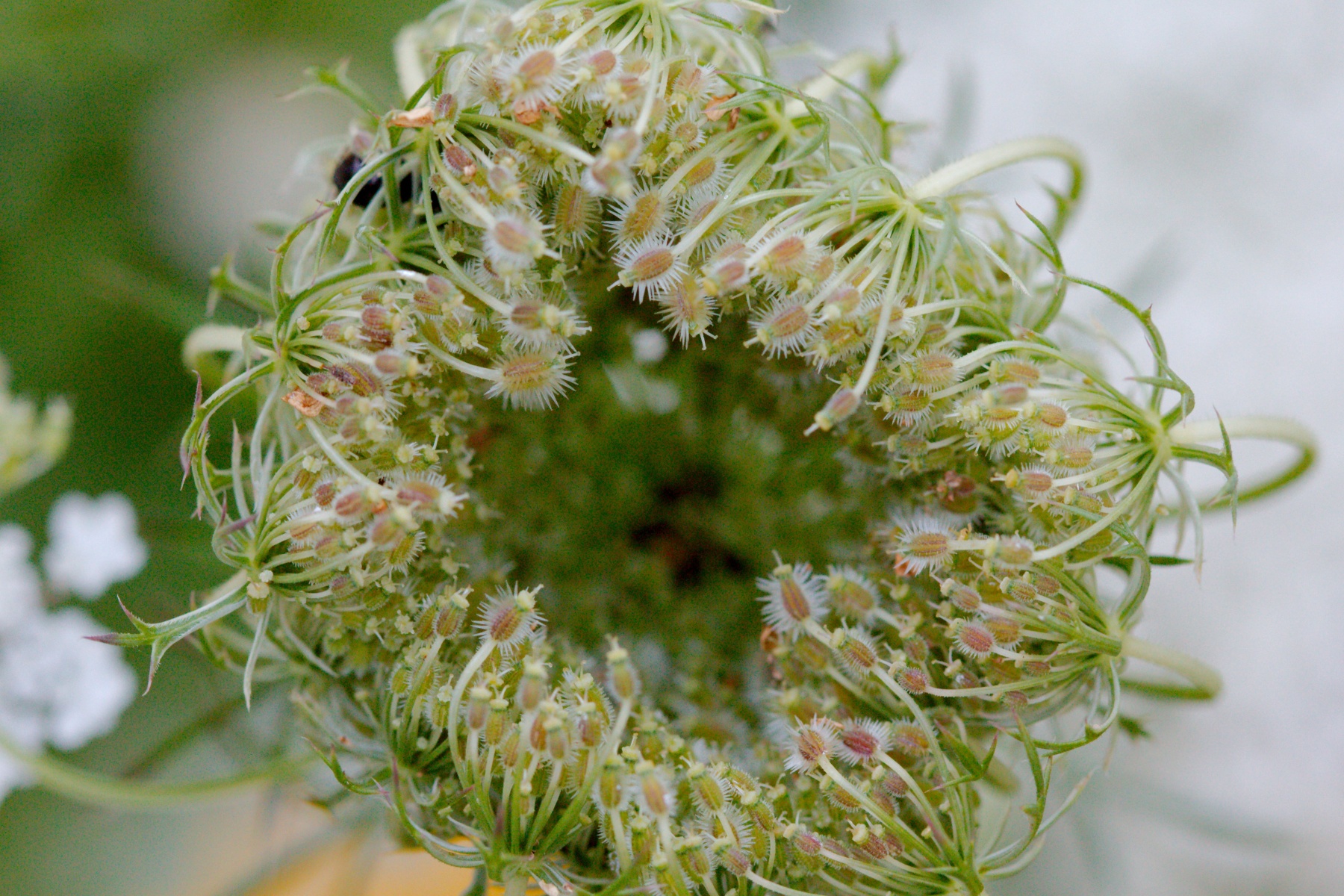
I had a close-up of Queen Anne’s Lace (Daucus carota) flowers a few weeks ago (Wednesday, July 08, 2015). The flowers are mostly finished now, with a few late blooms still doing well. The earlier flowers have started to go to seed. The flat flower-heads curl up on themselves and, where each tiny, individual flower was in the compound flower there is now a seed.
Papilio glaucus (Eastern Tiger Swallowtail)
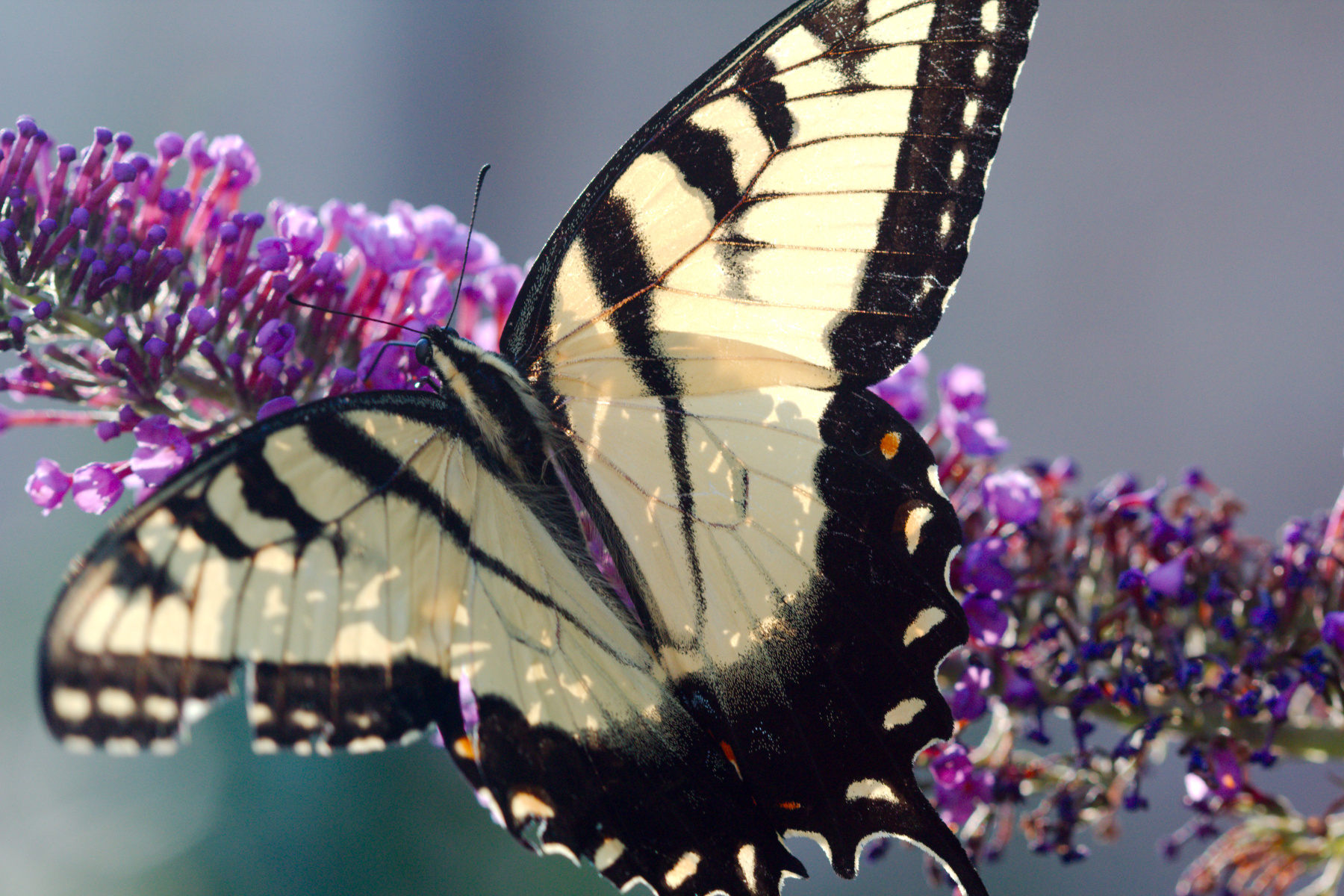
The butterfly bush (Buddleia) plants that come up like weeds throughout our yard are in full bloom and are attracting the most common of the large butterflies in our area, the Eastern Tiger Swallowtail (Papilio glaucus). This is a male, which can be distinguished from the female by the lack of blue near the trailing edge of its hindwings. Getting a good angle for a photograph is the trick, as they are generally well overhead, but this one turned out fairly well. I like the shadow of the flowers showing through his wings.
Lilium lancifolium (Tiger Lily)
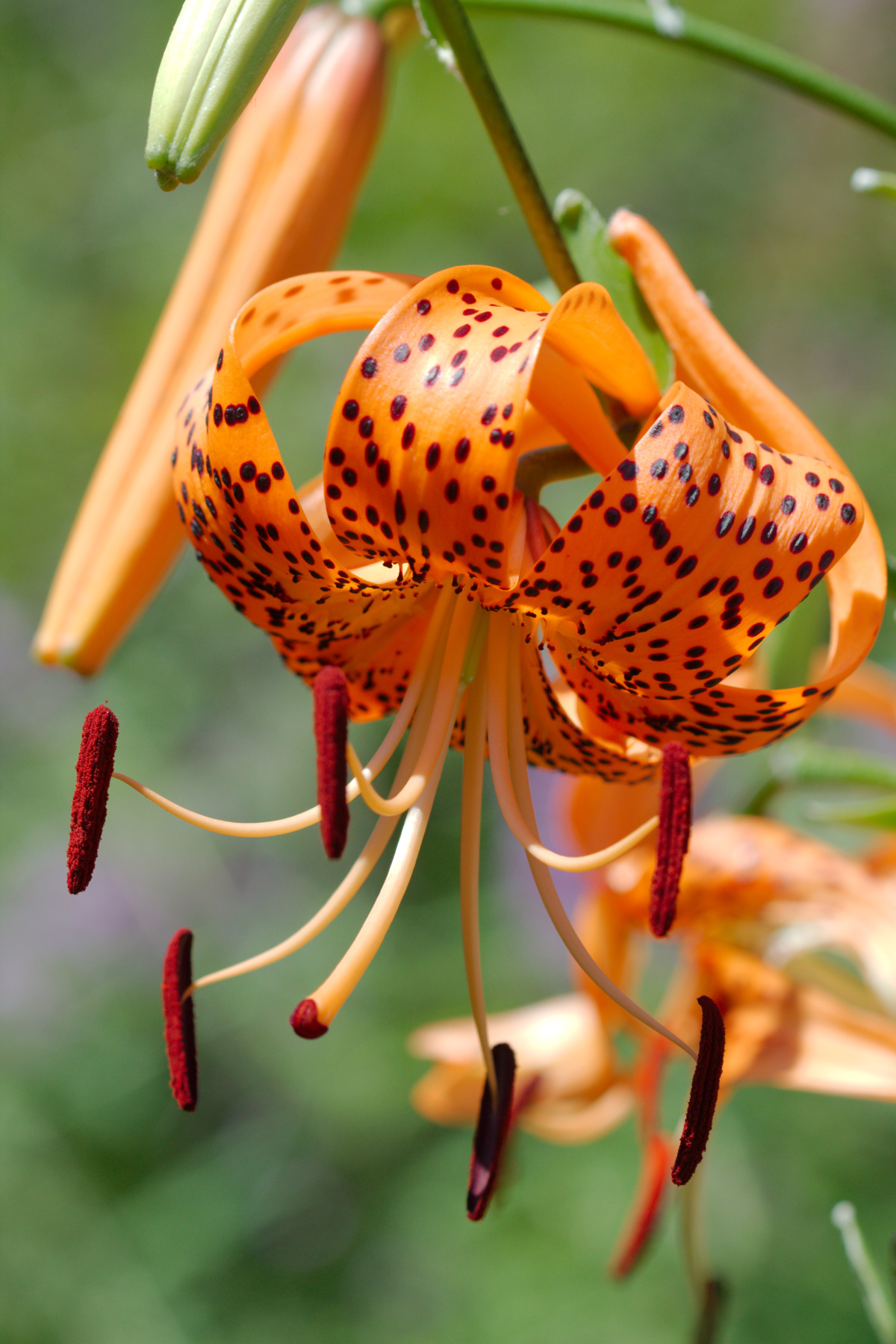
The tiger lilies are in full bloom. They bloom much later than the Asiatic lilies, which are also on much shorter stems. Actually, Lilium lancifolium is an Asiatic species, but are different to the plants usually called Asiatic, which have upward facing flowers. The tiger lily, as you can see here, has downward facing flowers. There are quite a few flowers on each plant, which stands a good seven or eight feet in height.
The similar species, Lilium superbum, is a native to the eastern United States and its common names include Turk’s cap lily and American tiger lily. It generally has fewer flowers per plant and isn’t quite so tall, but the petals of the flowers are similar in being orange with black spots and which recurve forming a very festive, Turk’s cap shape. L. lancifolium also has little bulbils in the leaf axils that can be planted and which are the easiest way to spread the plant around the yard.
Crape Myrtle (Lagerstroemia indica)
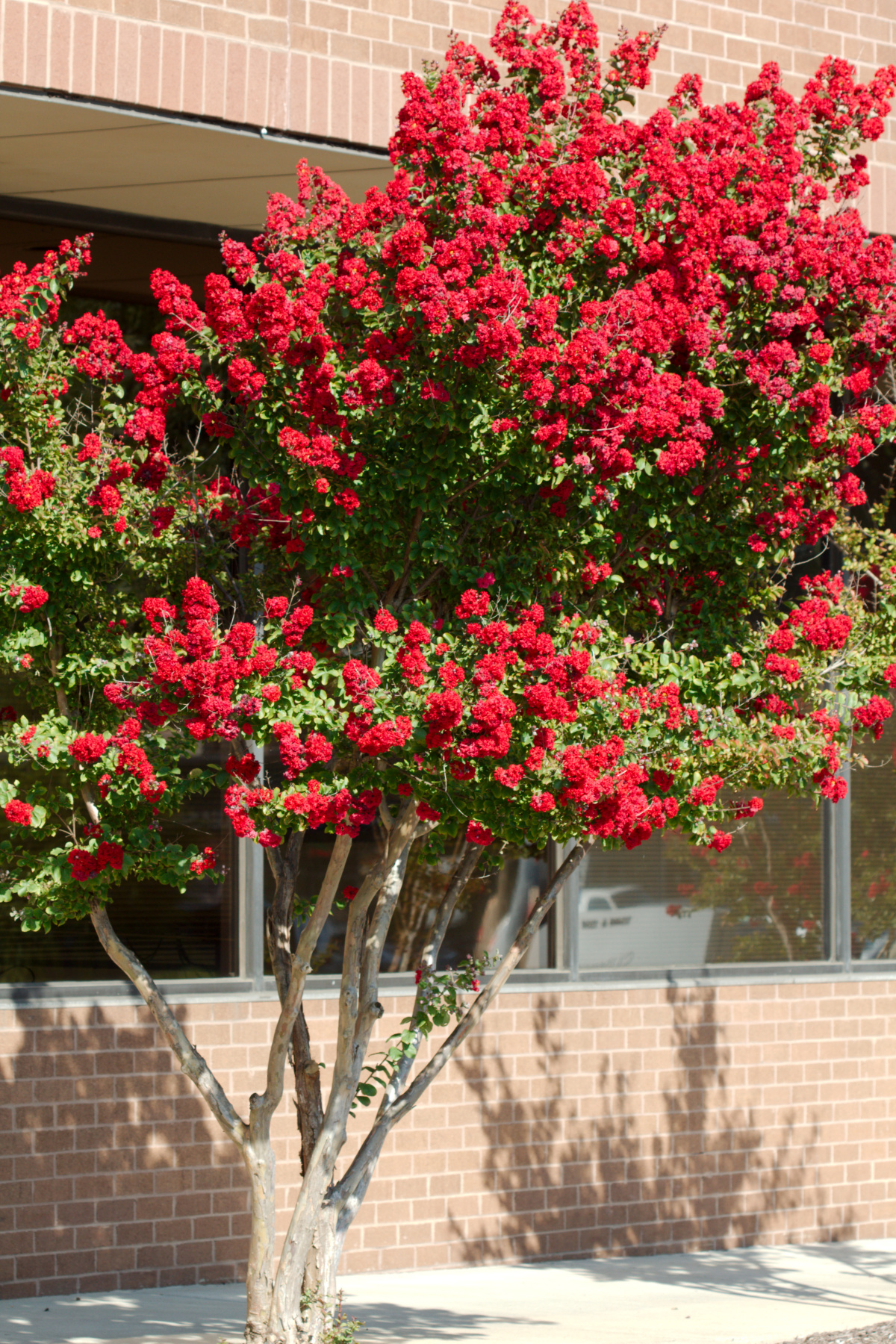
We don’t have any crape myrtle (Lagerstroemia indica) in our yard but every year about this time I think about getting one or two. I particularly like the really red varieties. The purple and white are fine but it’s the red that really get my attention.
Today, on the way down to Bethesda I took a picture of one even redder than this one, but the picture didn’t turn out well enough to use. This one is on Gude Drive and I stopped on the way home to take a few pictures. It isn’t as pure a red, but it’s still nice and I think one like this or the other red one are really great. I should do some shopping and put one in this fall. We have two places that will need small trees and this would be good for one of those two spots.
Cathy’s Front Garden
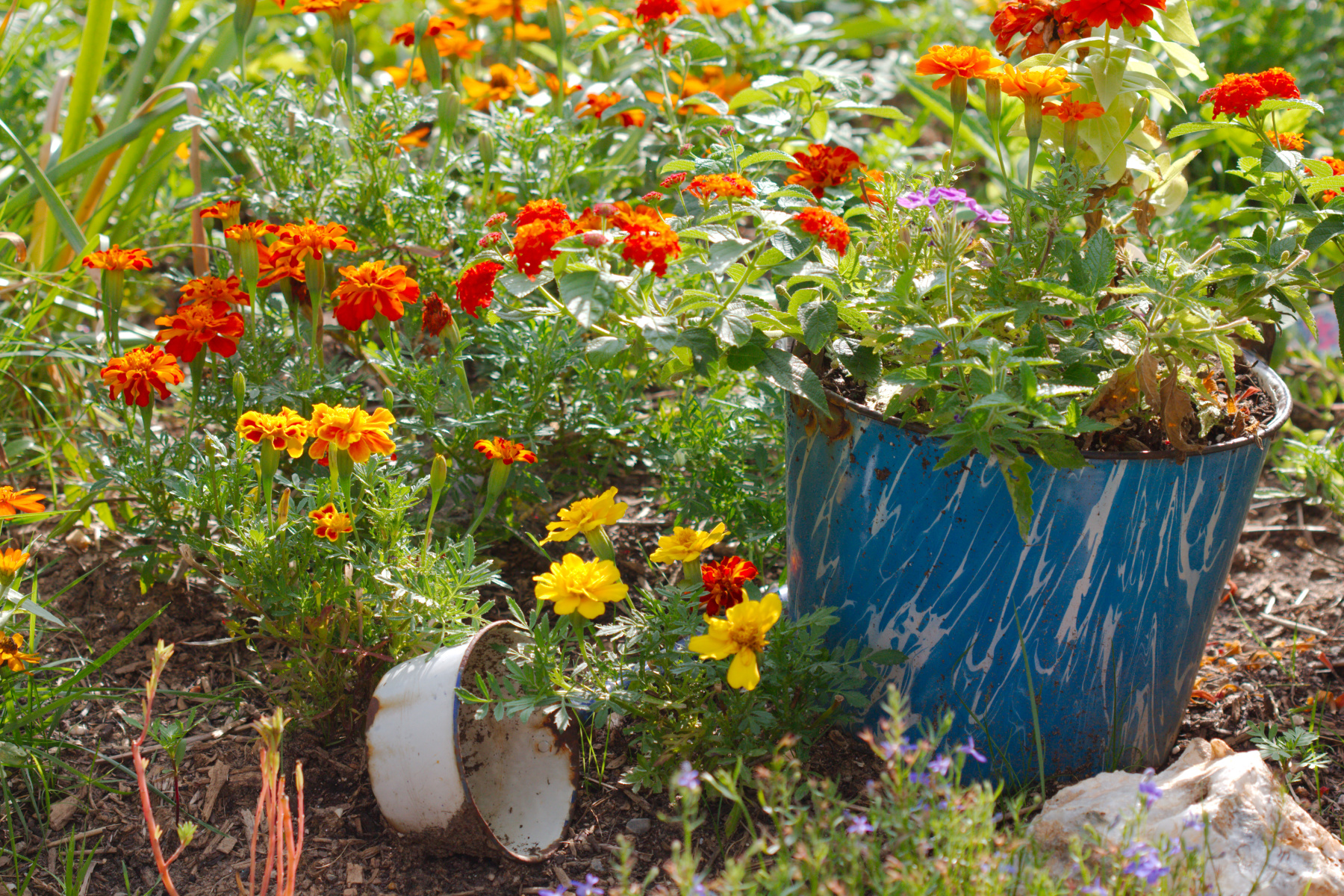
The garden that Cathy planted in the front, where there had been a tree, had started to fill in nicely. This picture is mostly marigolds but there are also zinnias, lantana, and verbena, sedum, and alyssum. This is really our only “annual” garden, the rest of the yard is pretty much either perennials or self-seeding annuals. I like the blue of the bucket along with the yellows and oranges of the flowers. Cathy may have done that on purpose.
Coreopsis
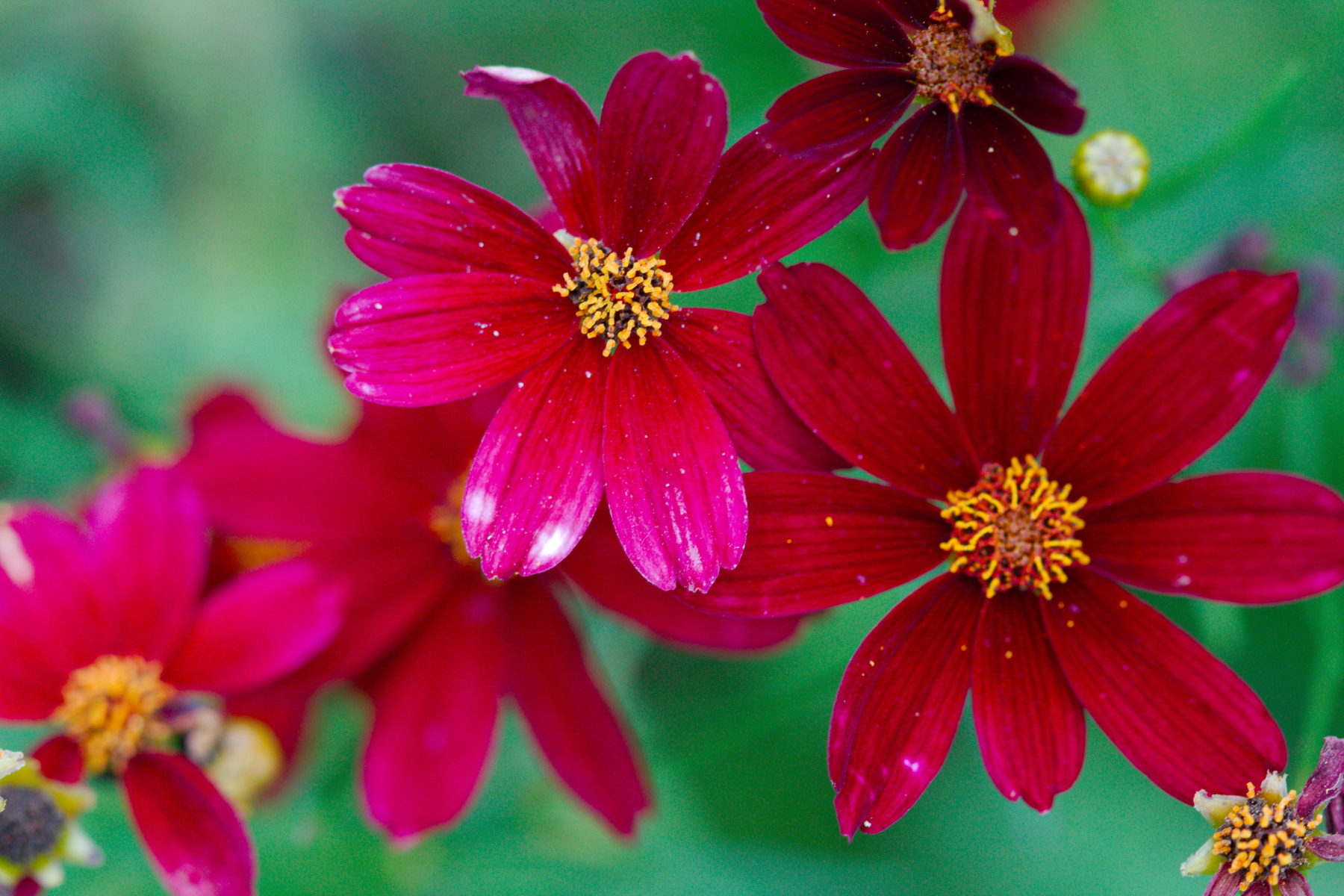
I was out back taking pictures this evening at about 7:30 and noticed these little flowers. They are Coreopsis (tickseed) of some kind and I didn’t remember seeing them before. Apparently they are something new (to us, anyway) that Cathy planted earlier this year (or maybe it was late last year). Anyway, they are quite cheery and with the amount of orange in the yard right now, they really stand out. Hopefully they will thrive and cover a little more ground in the years ahead.
Day Lily
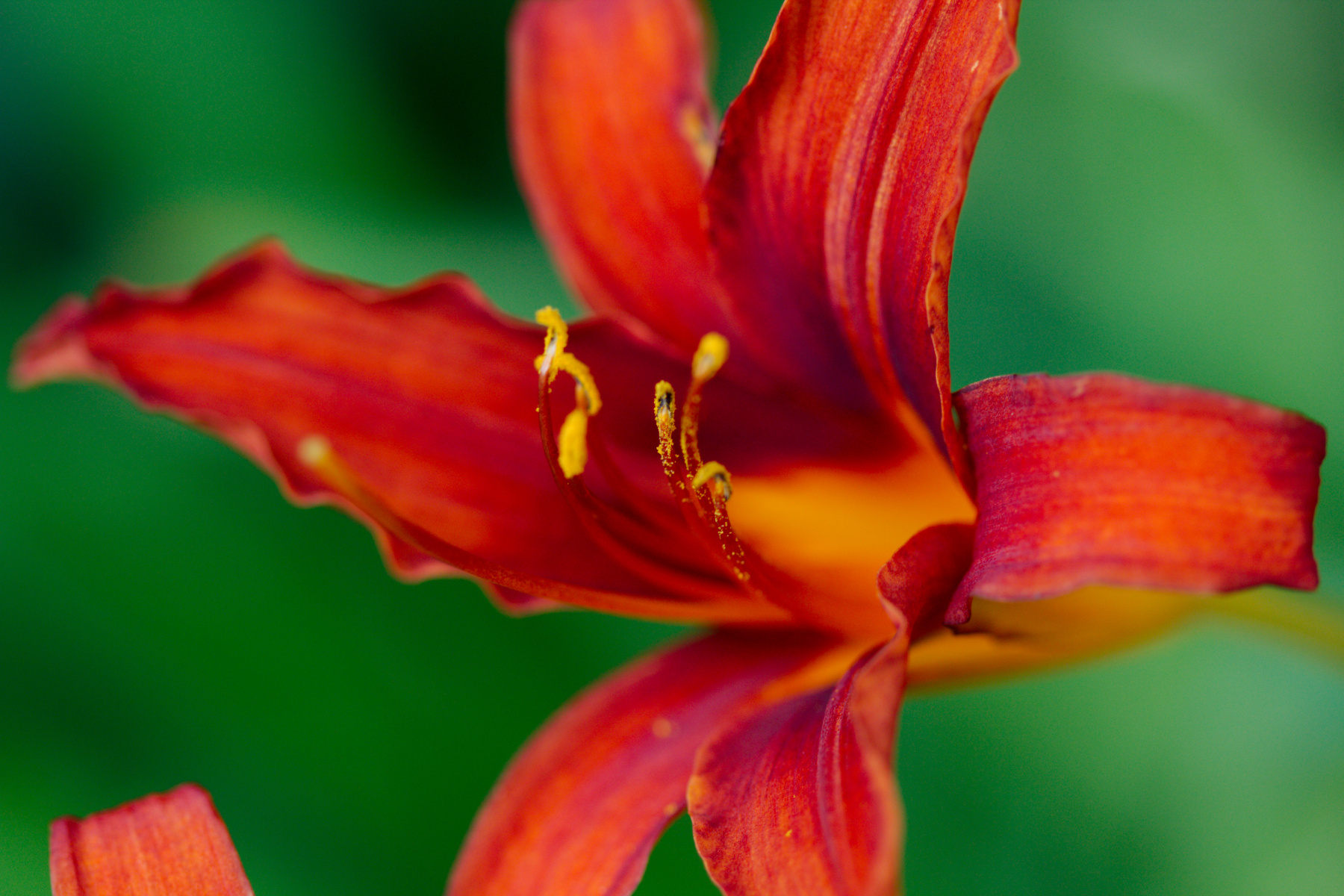
This dark but rather simple day lily is growing in the front of our house. I don’t remember where we got it but I like it a lot. This is the time of year when orange and orange-yellow predominates in our yard but frankly, I don’t mind. The color works in the heat and it really lights up in the morning and evening. This shot was taken at about 6:30 in the evening. There are so many nice day lilies available that I tend to look past them for something unique. That’s probably a mistake. They’re lovely.
Iris domestica (Blackberry Lily) with Aphid
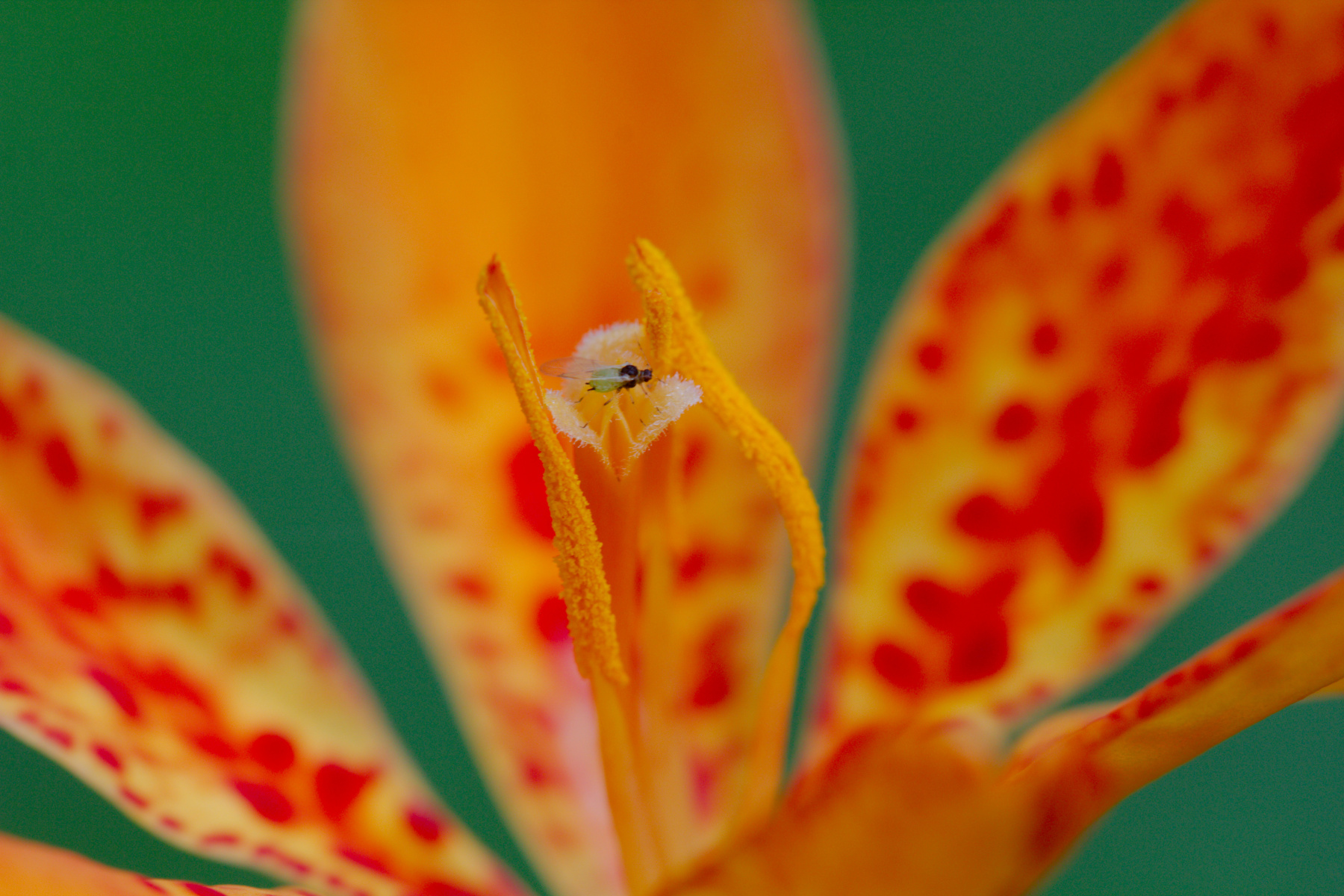
The blackberry lily, formerly Belamcanda chinensis, but now Iris domestica, has started to bloom. I collected seeds for this many years ago and I’ve had it growing around the yard ever since (and our previous yard before that). I gather the seeds each fall and spread them liberally and I’m pretty much happy to have them come up wherever they can. This one has a very tiny aphid on the stigma.
Megachile (Leaf-cutter Bee)
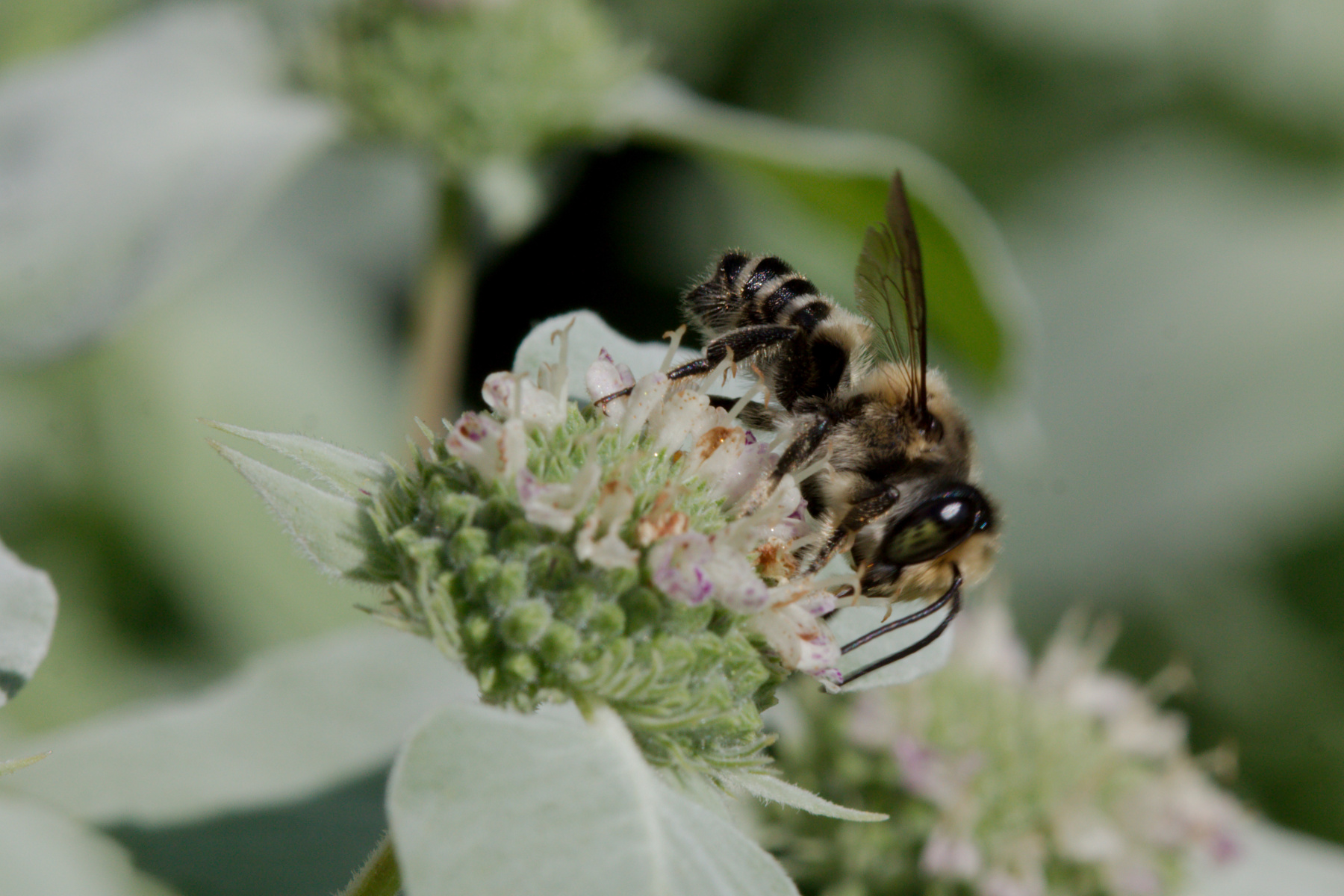
I haven’t taken the time to get a firm identification on this little bee, and the picture isn’t really good enough for a definitive ID in any case. I’m pretty sure, off the top of my head, that it is a leaf-cutter bee in the genus Megachile. The mountain mint (Pycnanthemum muticum) is at its peak (which lasts for a good long while, actually) and the bees are all over it, particularly when the sun is shining on it. That’s good for photographing them, of course, as the more light the easier it becomes, but it does mean I’m working in the bright, afternoon sun. Still, it’s one of my favorite things to do on a Saturday.
Raspberries
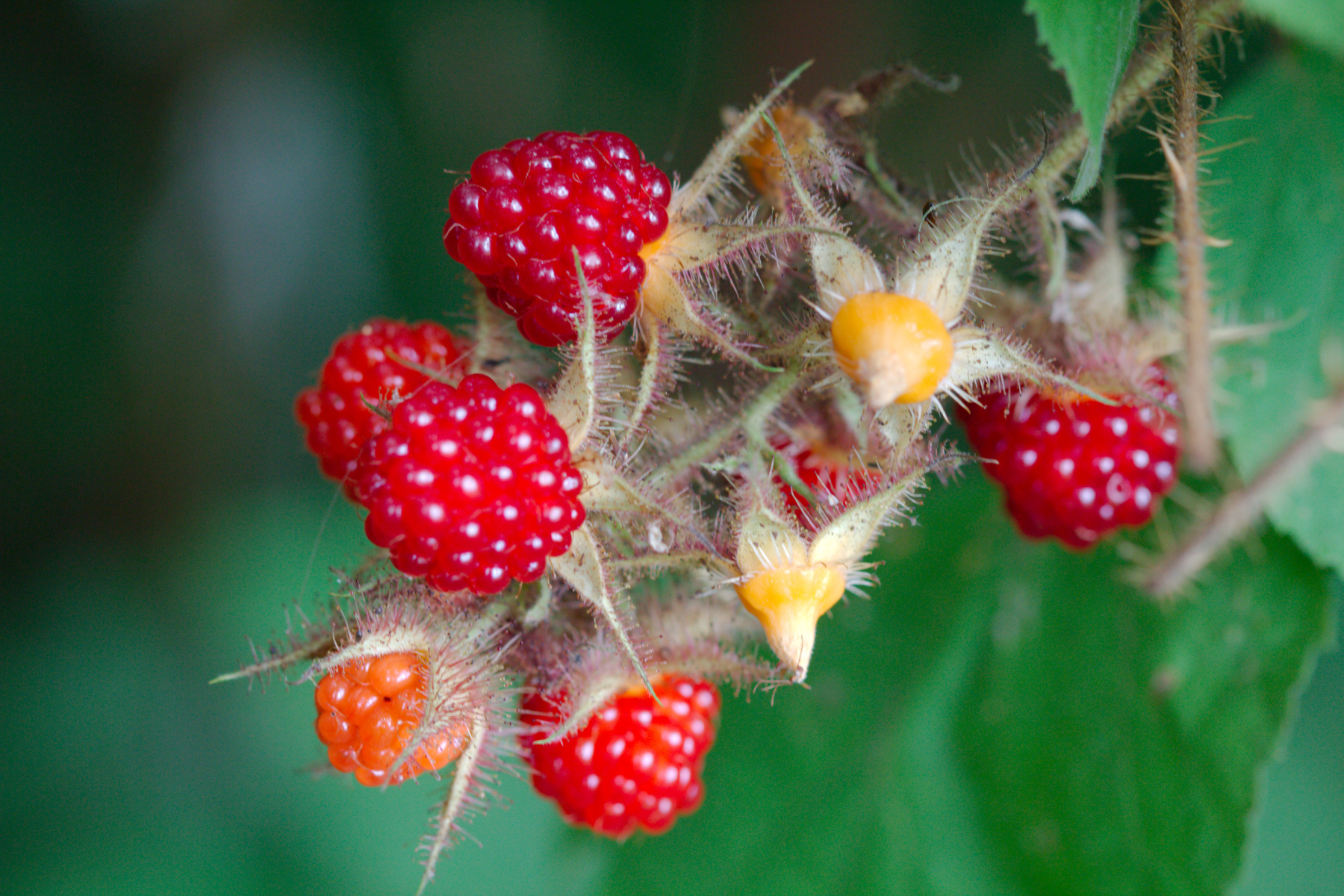
I had a meeting over in the next building early this afternoon so I brought my camera and took a few pictures as I walked by the woods between buildings. There are raspberries ripe and starting to look quite good. I didn’t have time to pick many, but I took a picture of a few before pulling them off and munching on them as I finished my walk. Wild raspberries are one of the best things about the woods around here. Delicious.
Queen Anne’s Lace (Daucus carota)
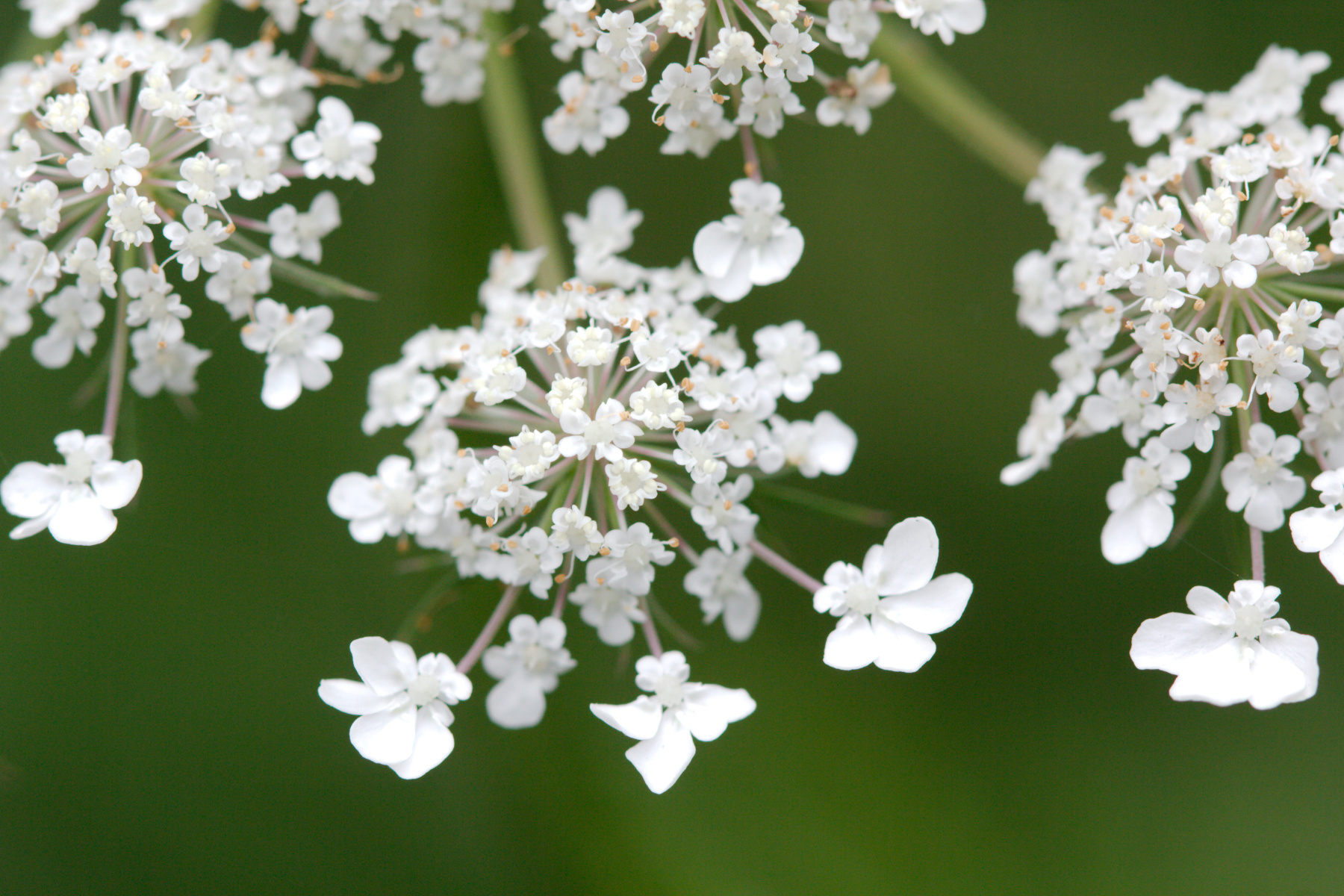
We have a Queen Anne’s Lace (Daucus carota), otherwise known as wild carrot, growing at the corner of the garage. It isn’t doing any harm in terms of overrunning our garden, at least not so far, and we decided to let it stay at least as long as it’s in bloom. This is close-up of one small cluster of flowers in one of the large clusters that make up the flowering head of the plant.
The family to which Queen Anne’s Lace belongs (Apiaceae, the celery, carrot or parsley family) contains quite a few plants familiar to cooks for root vegetables (carrot, parsnip), stems and leaves (celery, parsley, coriander/cilantro) or seeds (anise, caraway, coriander, cumin, dill, fennel, etc.). The family also contains some dangerous plants, like the giant hogweed, the sap from which can cause severe burns through phytophotodermatitis, and hemlock, with its cocktail of poisonous alkaloids and of Socrates-killing fame.
Bumble Bee on Monarda
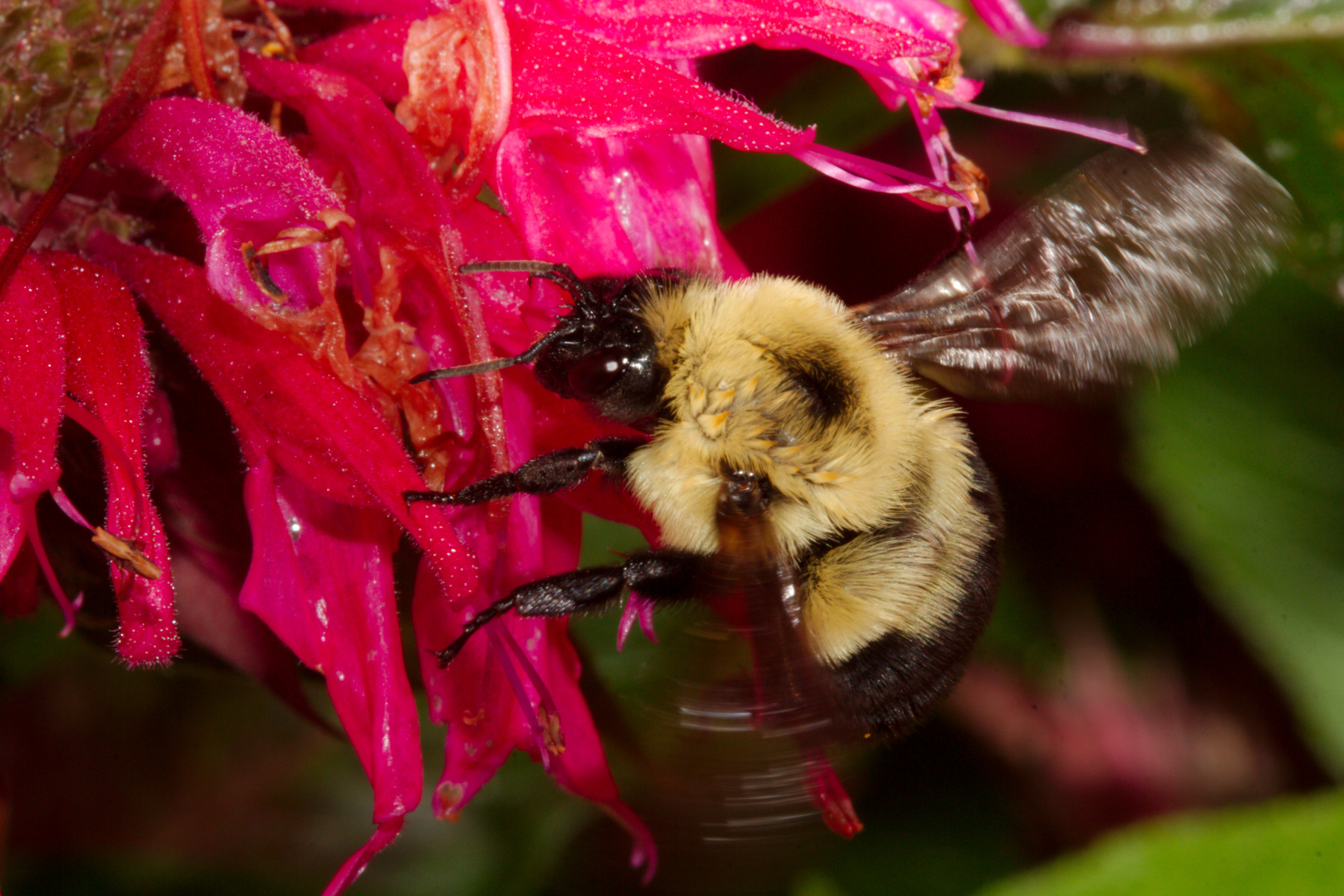
The bees are starting to get quite active now. They start when things start blooming, of course, and are never really far. But in the heat of July, when the flowers of summer are at their densest, they are easiest to find. The monarda (the aptly named bee balm) seems particularly attractive to bumble bees. The flowers are a bit past in terms of their looking all pretty for photography but the bees don’t seem to mind. I went out this evening and spent a while chasing bumble bees (Bombus impatiens) from flower to flower. This shot turned out reasonably well—the body if fairly sharp while the wings are blurred with motion.
Calla Lily
Sometimes our days don’t go according to plan. Sometimes I think we should be more surprised when they do go according to plan. We expected to go to watch fireworks this evening. It’s a pretty simple plan and fairly common for July 4 in the good, old U.S. of A. Didn’t happen.
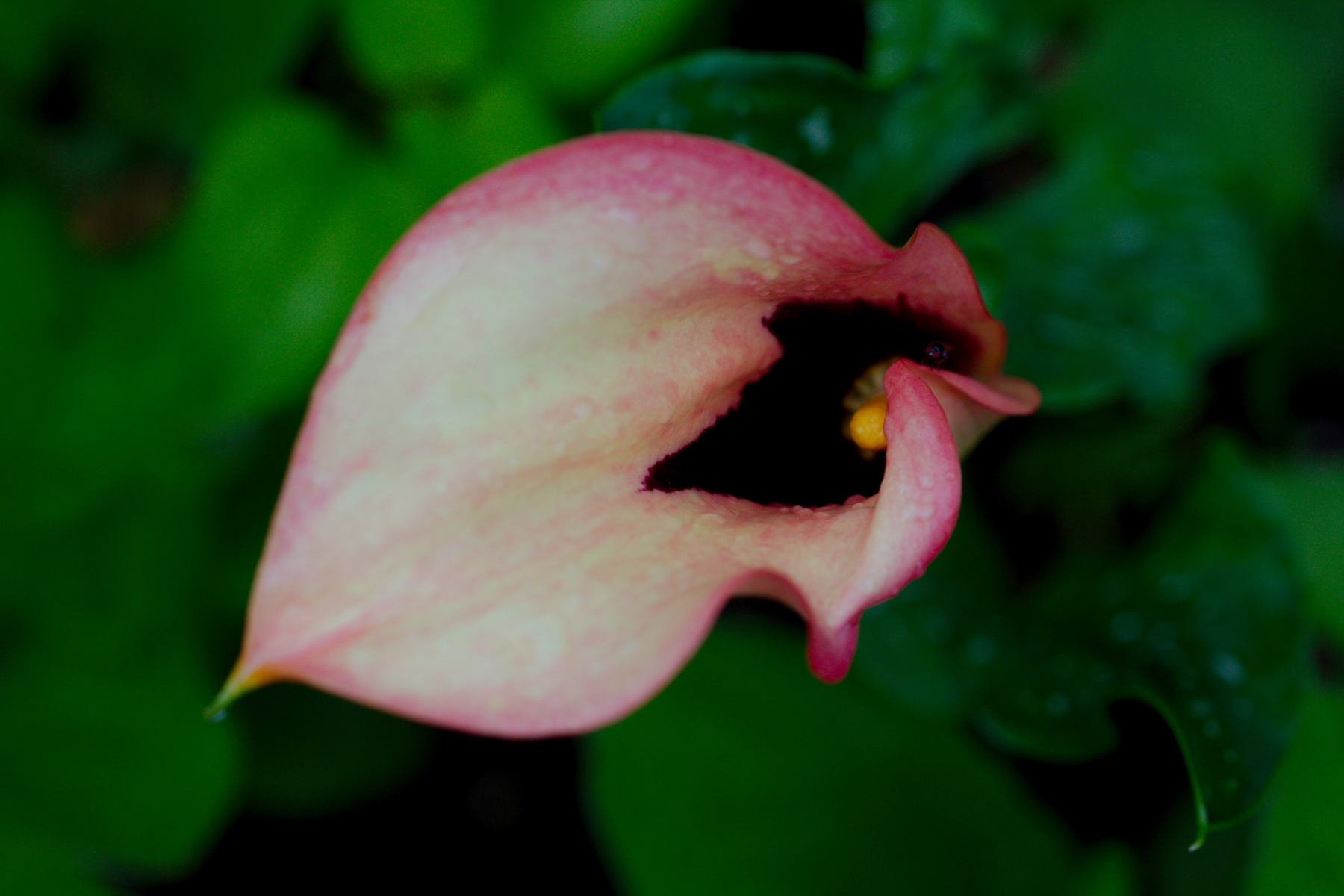
Without giving too much personal information (because anyone who needs to know the details already knows them), we spent the afternoon and evening in the ICU in Bethesda. Also, although we did not get word until tomorrow (in our time zone), so it wouldn’t have kept us home anyway, Cathy’s sister passed away late today. This calla lily is in honor and memory of her.
Caesalpinia gilliesii (Yellow Bird of Paradise)
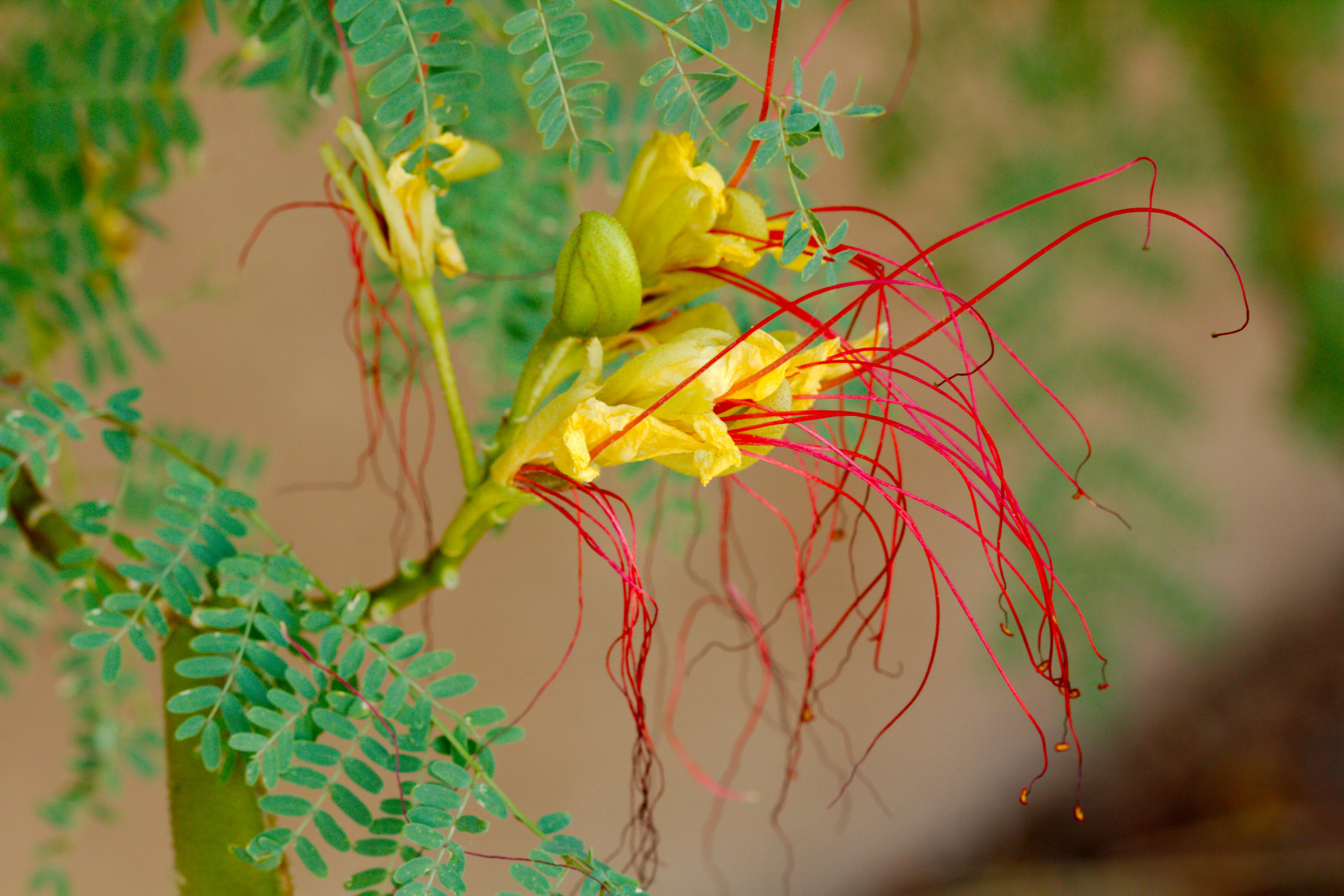
It was our last day in Albuquerque and we were sad to be leaving. I took a few pictures of Bert and Jane’s front yard while the others visited. Robert has done a nice job of xeriscaping the front yard and has three things that I photographed and identified. First, there are small, yellow chocolate flowers (Berlandiera lyrata), a member of the Compositae (or Asteraceae) family. There is also a red yucca, or more properly redflower false yucca (Hesperaloe parviflora, which is quite nice and actually seems to be quite hardy and might be worth finding for our yard, possibly in a container. Finally, there is the plant pictured here, the yellow bird of paradise (Caesalpinia gilliesii), which is a legume (family Fabaceae), not anything like the regular bird of paradise, which are in teh genus Strelitzia. It’s quite pretty, anyway.
Albuquerque Botanical Garden
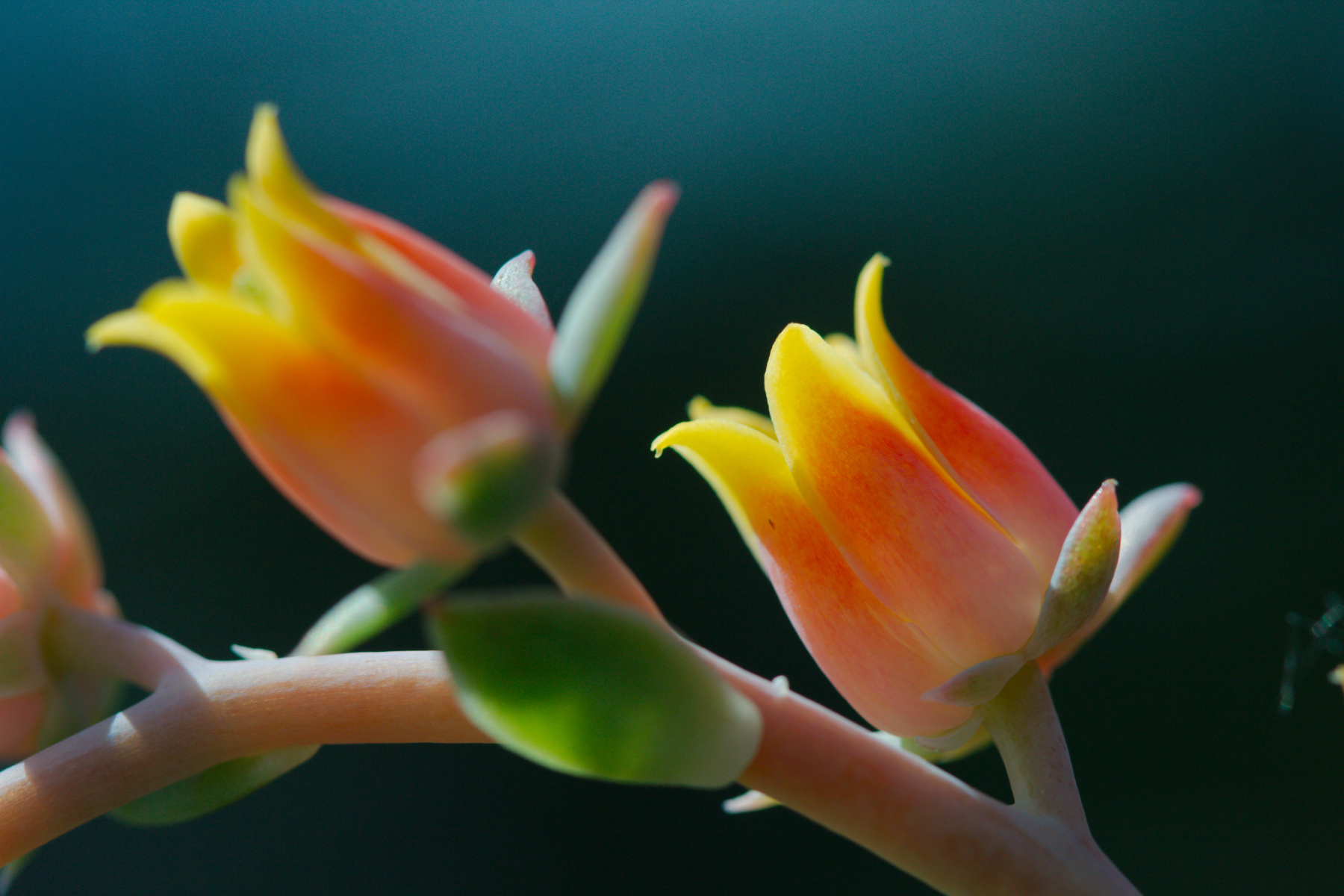
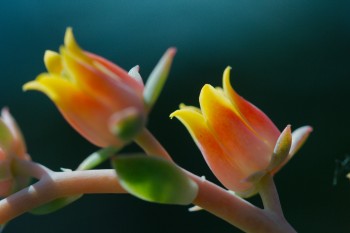
David was going to pick up his and Cathy’s mom later this morning so Cathy and I had a little free time. We drove to the botanic garden, which is part, along with the zoo, aquarium, and Tingley Beach, of the Albuquerque Biopark. It is a relatively green and lush oasis in the high New Mexico desert, close to the Rio Grande and near the heart of the city. We enjoyed pretty much each of the various gardens and the two conservatories. One of the two conservatories is dedicated to Mediterranean plants and is very lush and wet. One thing they have a lot of there are sedums, of which Cathy is very fond. I particularly like them in bloom and this first photo is of a couple sedum flowers.
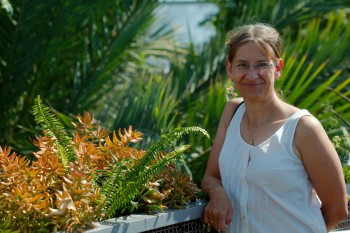
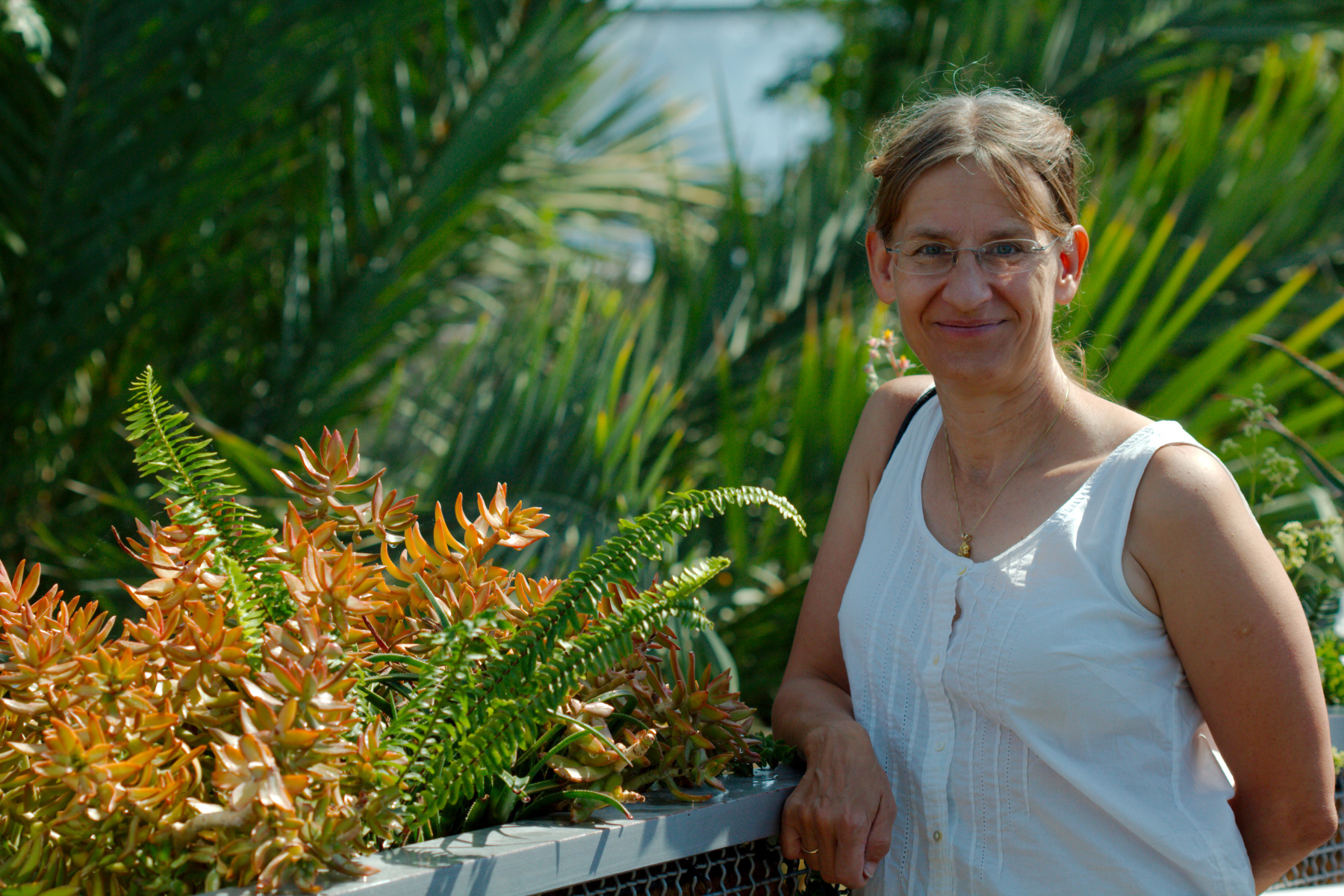
Cathy posed next to a large container of sedum and fern (the sedum is the brownish colored plant). We enjoyed the well established portion of the rose garden. There is a new section that looks like it was only completed this spring and the plants are still quite small but should be very nice in a year or two. The Japanese garden is lovely, although the local, southwest plants predominated, the feel was still appropriate for the name. Wood ducks and a black-crowned night heron were a nice addition.
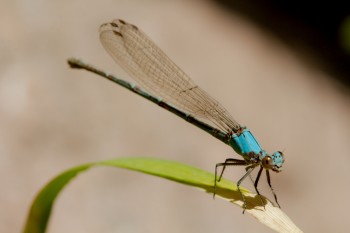
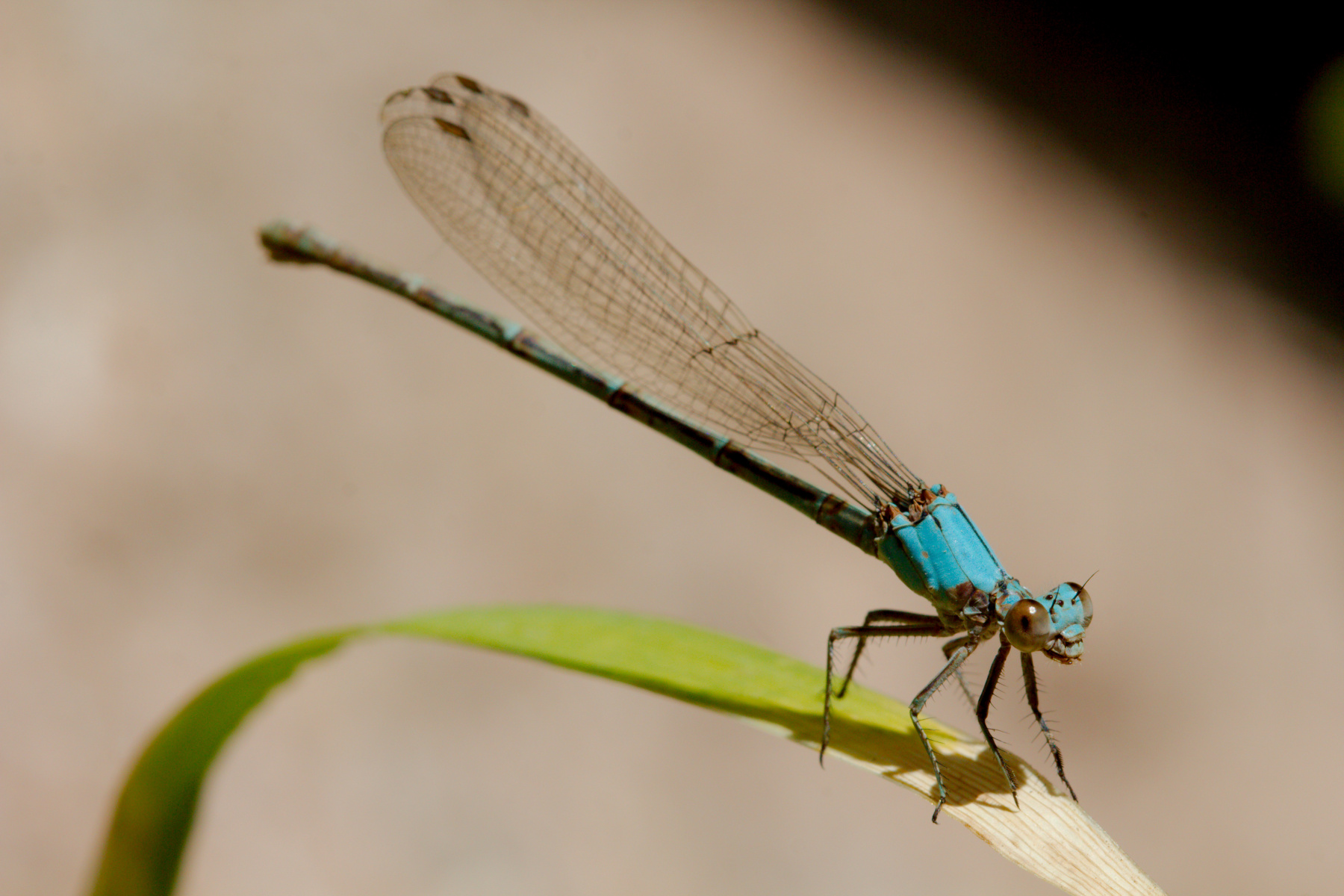
We walked out to the farthest garden area of the park, past Heritage Farm to the Cottonwood Gallery. This is a more natural setting with all native and naturalized plants, predominated by the local cottonwood tree. They were shedding their seeds, which are attached to cottony hairs, giving the trees their common name, and covering the ground with a cottony fur. We saw a cottontail rabbit, as well, and lots of dragon- and damselflies, including this blue damselfly.

Rio Grande Nature Center
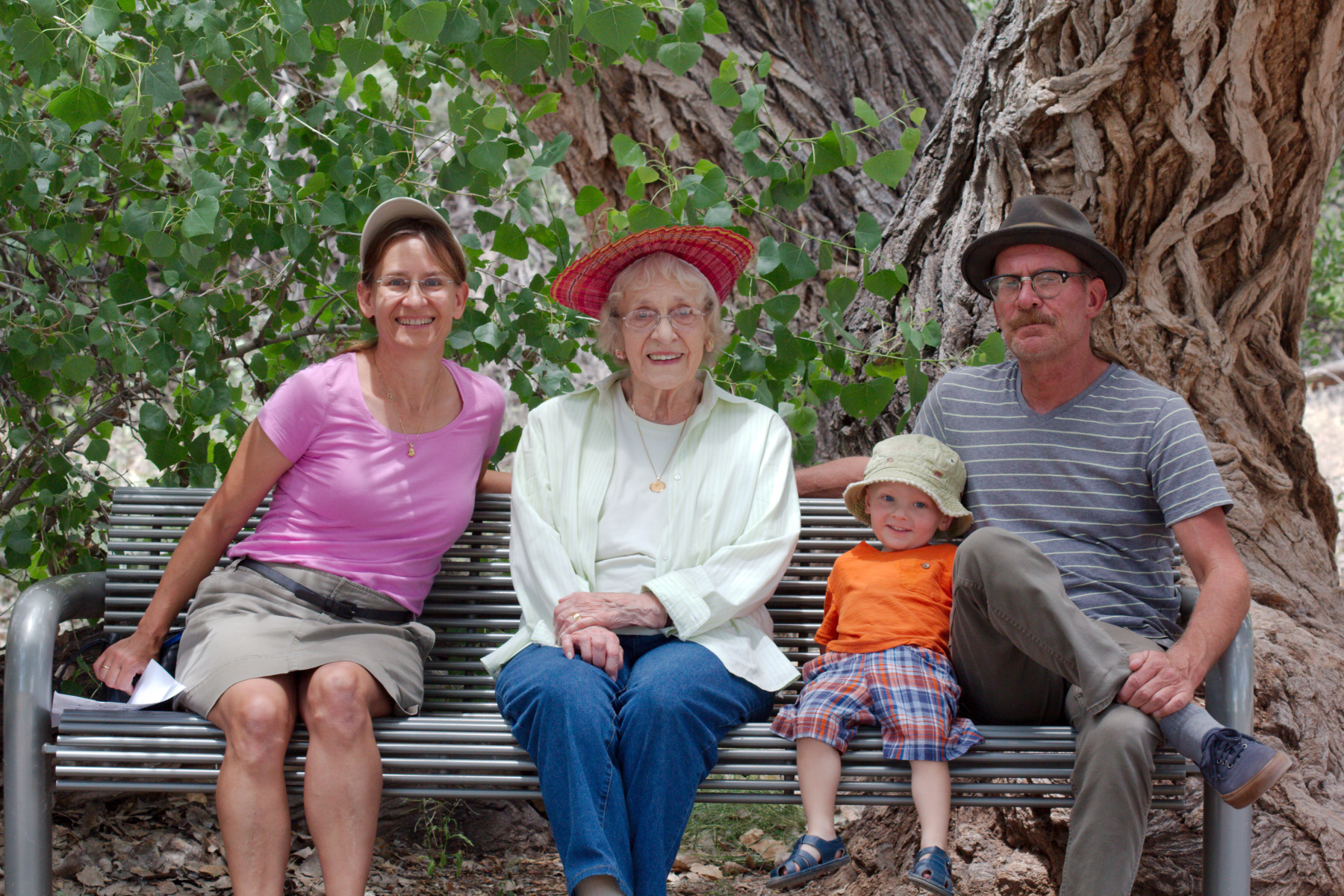
David took us to the Rio Grande Nature Center this morning, less than ten minutes from where he lives. It was pretty hot out today so we spent a while in the building, enjoying the view out over the pond where there were ducks, turtles, a swan and quite a few smaller birds. Cathy and I walked across the Paseo Del Bosque Trail to the Rio Grande and back, seeing lots of dragonflies, a huge toad, and quite a few lizards. Before we left I took a few pictures of the rest of the group on a bench sitting in the shade of a good size cottonwood tree.
Echinacea (Coneflower) (continued)
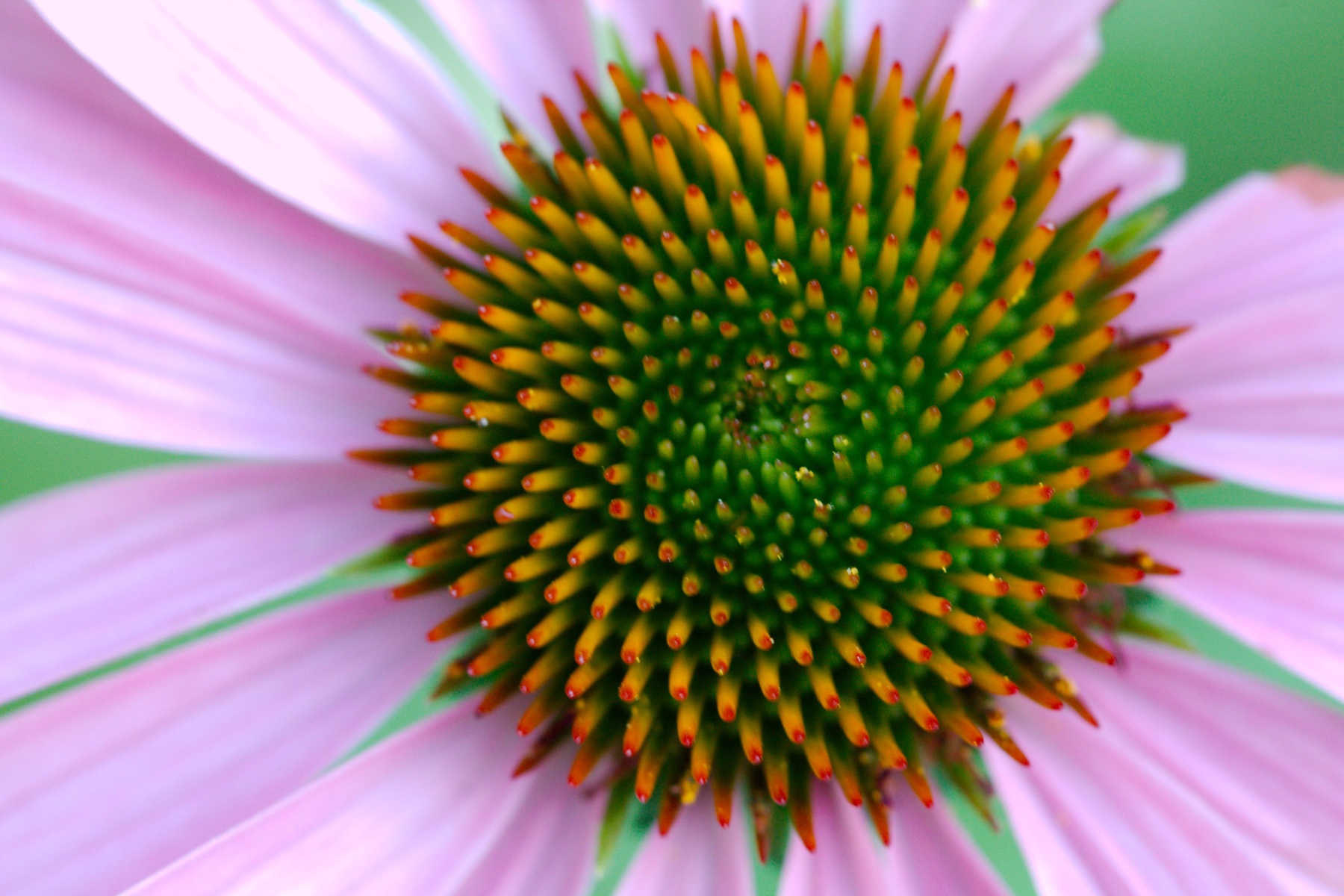
Five days ago, on the 17th of June, I posted a picture of a green coneflower (Echinacea). It was green both in terms of being not ripe and being green in color. This is the same flower, five days later, showing the more familiar colors of the flower. I like coneflowers but the petals tend to get eaten and even this flower is showing signs of insect action, with the petal on the upper right being gone.
Rosa setigera (Prairie Rose)
I went up to our family’s Pennsylvania property today to do some work on the brush growing on the dam. The pictures I took of that are more documentary than photographically interesting. Also, I’ll spare you the photo of the bloody gash on my arm from when I slipped and caught myself on a rose bush. When I was done, I rested a while enjoying the dragonflies that were in abundance. I tried to get some photographs but none of them really turned out, particularly those of the dragonflies on the wing. Just before I left, I took some pictures of the Rosa setigera (Prairie Rose) that I planted in April of 2005. It is fairly large and doing very well, blooming quite profusely.
Common Daisy (Bellis perennis)
Cathy and I went over to her mom’s house after work this evening. Well, I went after work, Cathy went earlier and spent a good while there. She planted some annuals in the pots at the top of her driveway. When I got there, I didn’t actually do much except move some heavy boxes of things that she was going to take to a shredding event tomorrow. I took a few pictures around the yard, but mostly of the daisies growing near where the sidewalk meets the driveway.
Yellow Butterfly Weed
Cathy bought two new Butterfly Weed (Asclepias Tuberosa) plants last week. Generally this has orange flowers but we have one with bright yellow flowers. She wanted more of that, so that’s what the two new plants are. They were conveniently sitting on the table out on the back patio, which made my job of photographing them that much easier. Rather than lying on the ground or squatting down for a picture, I could sit in a chair. Nice. There were ants crawling all over the flowers but that didn’t bother me much. I considered posting one of the pictures that included some ants but I decided I liked this one better.
Echinacea (Coneflower)
The coneflowers (Echinacea) are starting to come into bloom in our back yard. This one is opening up but hasn’t begun to get the orange colors that characterize the flowers when fully open. Each of the little rods in this flower head, forming the wonderful spirals that characterize many of this sort of flower, is actually a separate flower bud. The flowers themselves are quite small and the petals around the outside have only just started to grow in this flower head but will soon begin to turn a light purplish pink.