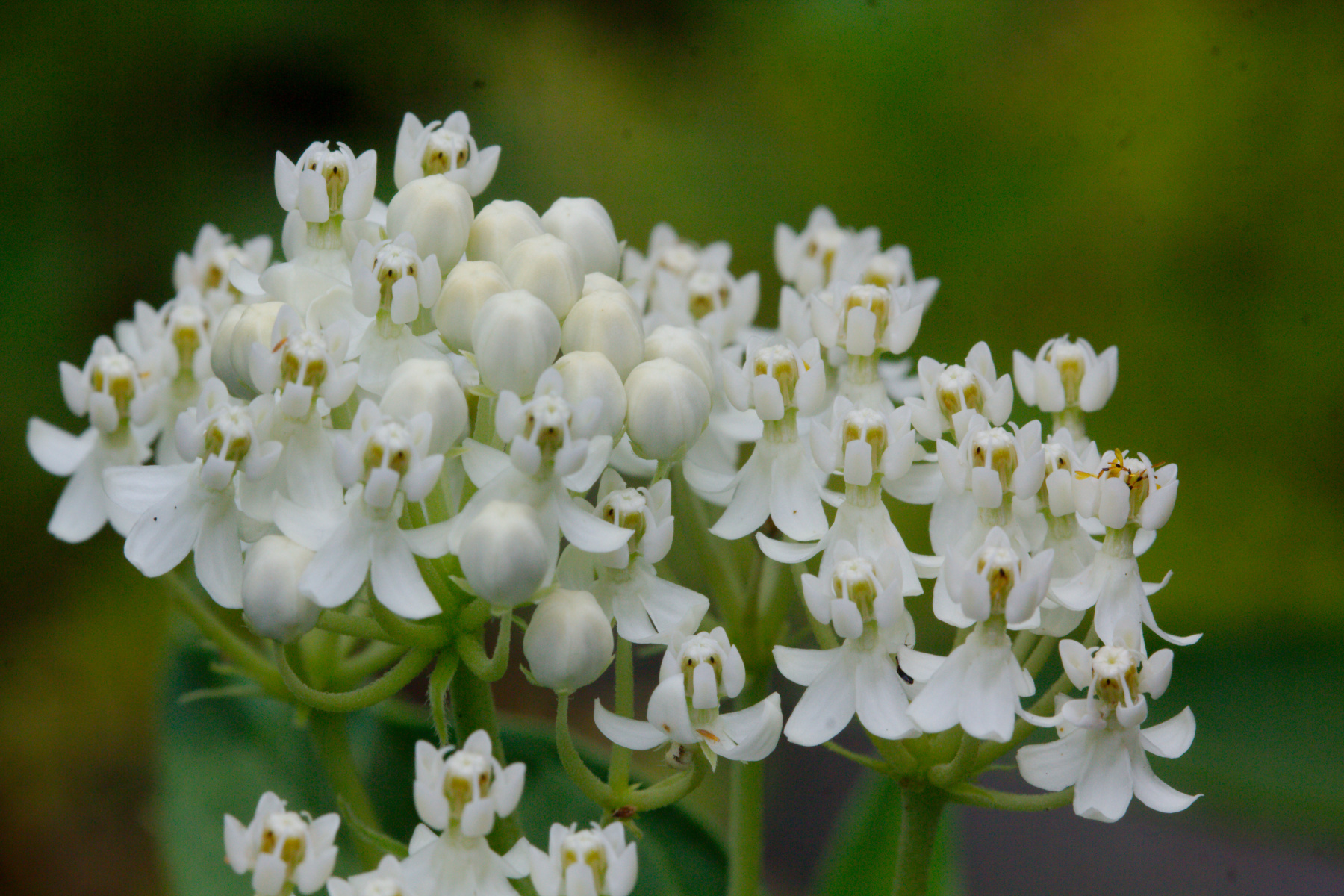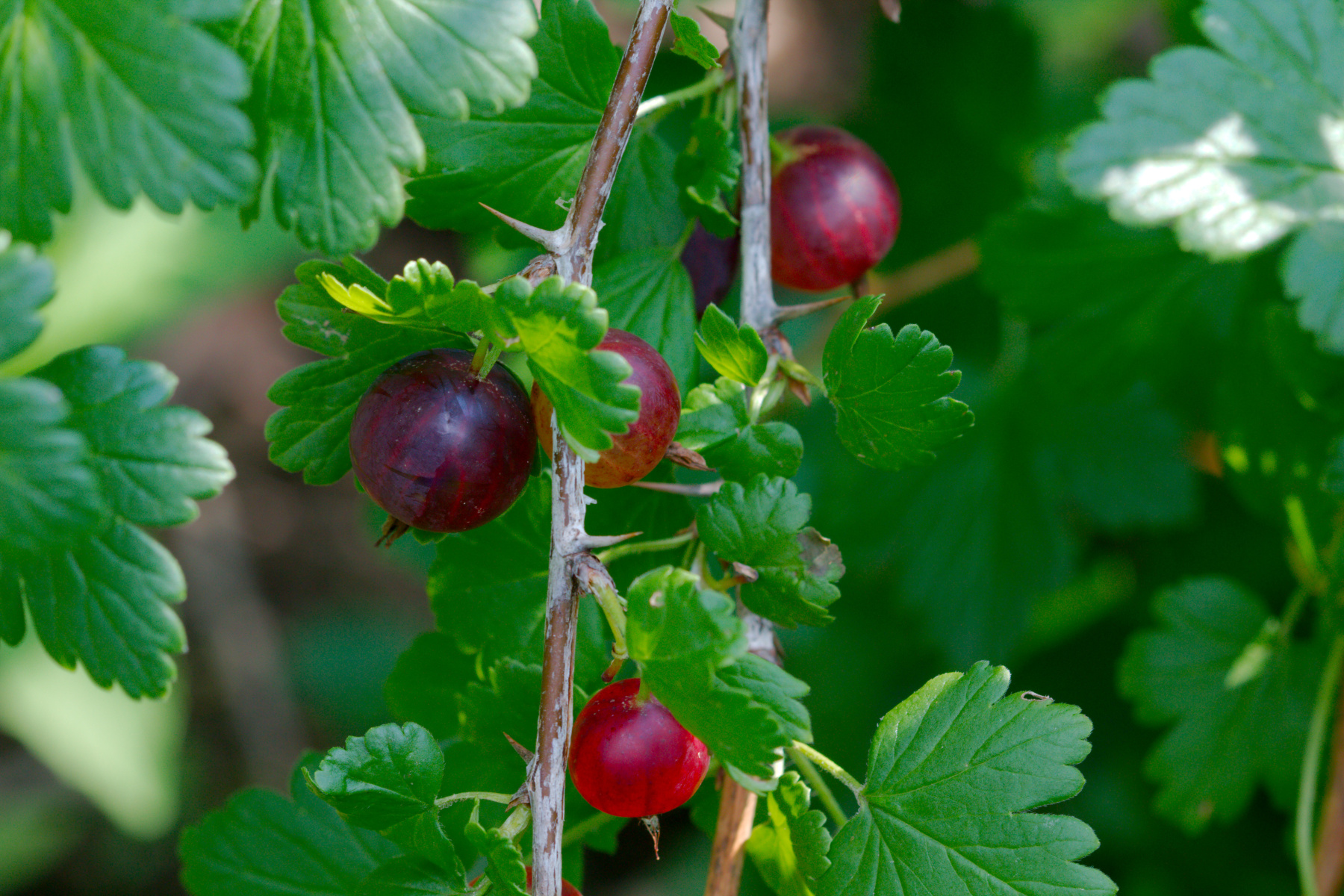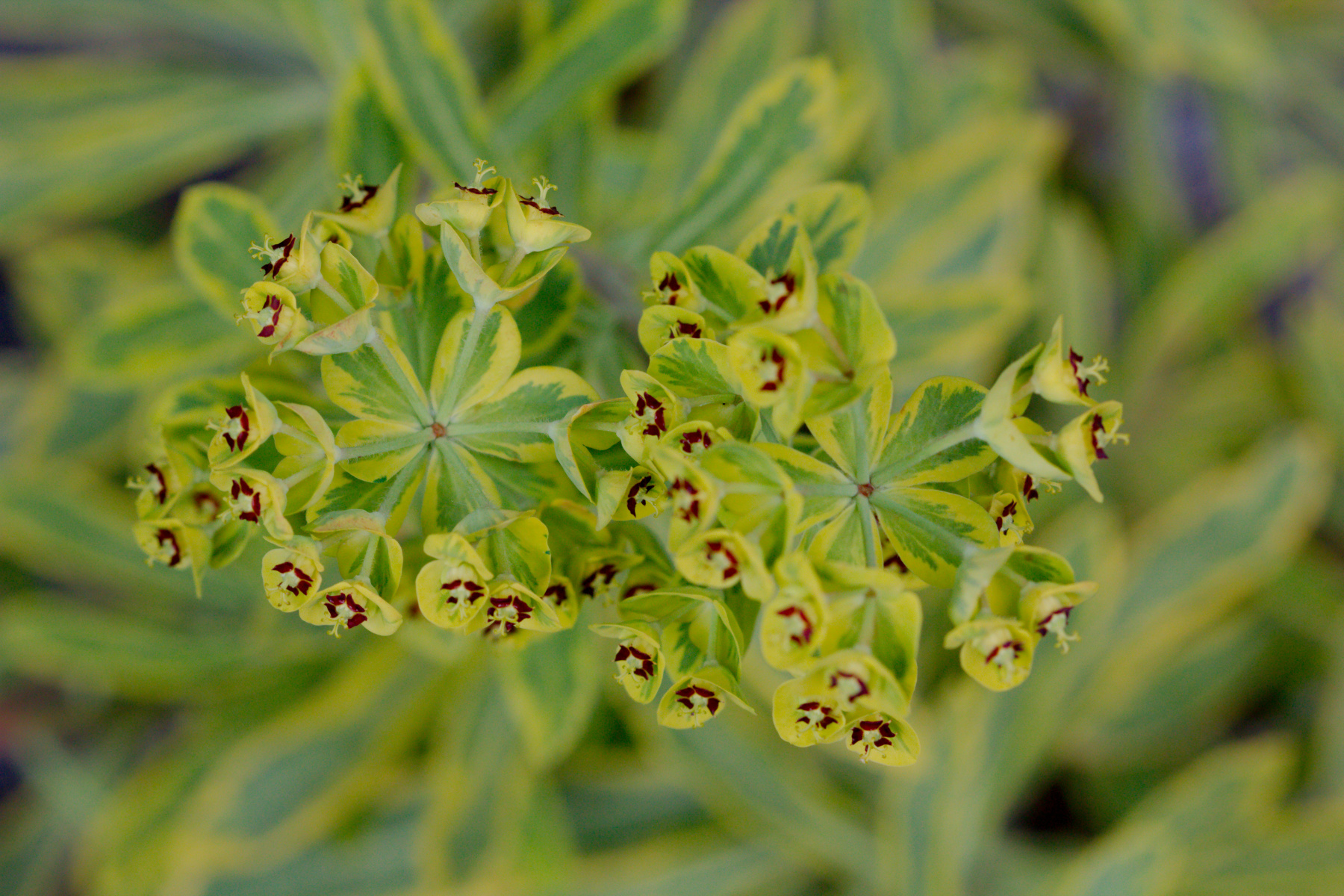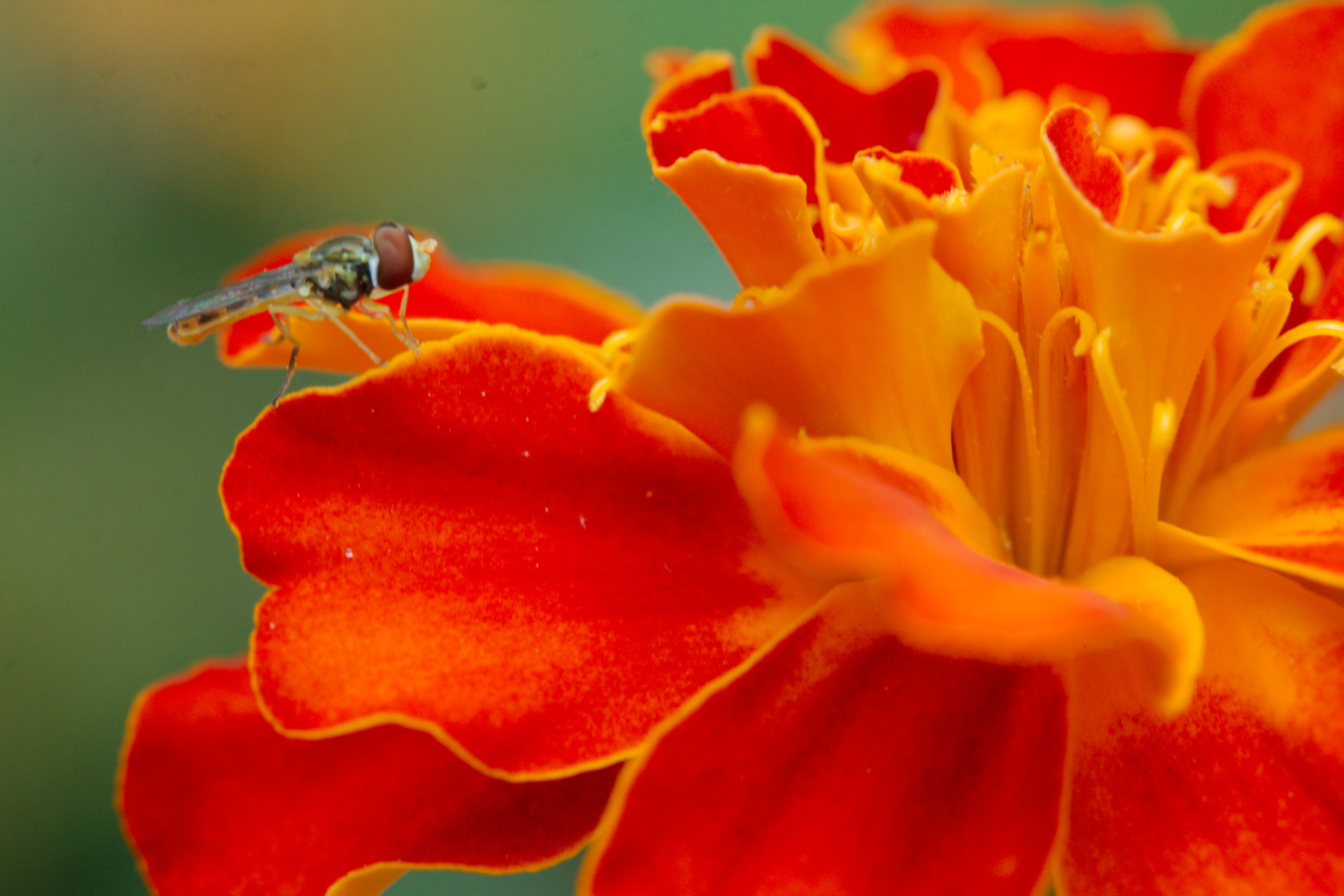
We didn’t have time for a long walk today but wanted to get out for a while. There’s a loop at the Montgomery County Farm Park the goes around this good-sized corn field and we walked around that. It can be entered from a few different places but we came in on the Upper Rock Creek Trail. We saw quite a few birds, including eastern bluebirds, a blue jay, and lots of crows. We also passed a group on horseback (people, not birds). It was cool and pleasant and good to be outdoors.
Flowers and Plants
Schlumbergera truncata (Thanksgiving Cactus)
This is the second of our Thanksgiving cacti (Schlumbergera truncata) to bloom. The first was mostly white (see Monday, November 23, 2020) and this one, as you can see, is mostly magenta. The third, also magenta, is blooming now, as well. Their flowers are really attractive and I think especially so when shown against a dark background. In this case, the background is the outdoors at night (our kitchen door) with the flower lit by my camera’s flash. S. truncata can be differentiated from the Christmas cactus (S. russelliana) by the pointy ‘teeth’ along the edges of the segments and the fact that the flowers are not symmetrical (the top half is different to the bottom half).
Mum
This mum was part of a bunch of cut flowers that we had on the table at Thanksgiving (you can see it in the photo from Thursday, November 26, 2020). It’s lasted pretty well and is still brightening up the dining room table. I’ve never really been into cut flowers but I have to admit they are a relatively inexpensive way to add a splash of color and cheer to a room. They don’t have to be particularly exotic, either. Mums, after all, are easily grown and not very expensive. So, next time you have a celebratory meal planned (or even on more mundane occasions), buy a small bouquet of flowers, stick them in a vase (or a pitcher, as these are) and put them on the table.
Camellia japonica ‘Hokkaido Red’
This spring I planted three camellias. One was a fall blooming hybrid between C. oleifera and C. hiemalis ‘Showa-no-sakae’ called ‘Winter’s Star’ (see Thursday, October 15, 2020). The other two are spring blooming Camellia japonica varieties. One of them, however, has a bloom that’s opened a bit early. It’s called ‘Hokkaido Red’. My understanding is that it was selected from plants grown from seed collected on the northernmost parts Hokkaido, Japan and grown at the National Arboretum. It’s supposed to be one of the most cold tolerant C. japonica and also blooms prolifically over a long period in the early spring. It’s a relatively slow growing shrub and of course mine was only planted this year, so it will be a while before it’s of any stature. But it looks very promising.
Sycamore Tree
This American sycamore (Platanus occidentalis) is in our neighbor’s yard. It’s a bit, healthy tree and in the summer it is often lovely at dusk with the evening sun turning the bright green leaves a wonderful orange-green that’s very hard to describe. In the winter, without its leaves, the beauty of the sycamore is in their bark, which is a lovely white, especially against the blue of a winter sky. They are large trees and generally better suited to parks and open areas but they also make a fine city tree, being quite tolerant in their habits.
Euonymus Berries
I know I posted a photo of these berries in November but that’s all I got today so I’ll have to repeat myself. They’re pretty and always come later in the year than I remember. I really need to prune these bushes heavily and will try to remember to do it early in the spring so that they will still bloom freely. The bees really love the little, sweet smelling flowers and the whole hedge buzzes for a few weeks. Of course these hedges are pretty popular with the birds, as well, both for the berries this time of year and as simple cover. Evergreens are particularly nice for that purpose.
Dried Flowers
Dorothy brought these dried flowers over a while back and they are lying on top of the large fish tank in the breakfast room. I believe they were her bouquet when she was a bridesmaid in a wedding. There’s something magical about dried flowers. Flowers are, generally speaking, transitory in nature. Their beauty is fleeting, something like a sunset. But a dried flower is a snapshot that lasts, not the same as the flower in all its glory any more than the snapshot is the scene it captures. But they both can evoke a memory or even an emotion. What a wonderful thing.
Juniper Berries
Cathy and I went for a walk late today at the Blue Mash Trail behind the Laytonsville land fill. It’s a nice, easy walk and we enjoyed the fall color still showing on a few trees. There is a fair amount of oriental bittersweet (Celastrus orbiculatus), which is pretty, even if it is a bit invasive. There’s a small group of American persimmon trees (Diospyros virginiana) but not much fruit was left at this point. This photo is of juniper berries and leaves. I particularly like this color combination. It’s especially rich on an overcast day like we had this afternoon.
Sensitive Fern (Onoclea sensibilis)
At the north end of our front garden is a relatively shady spot with some ferns growing in it. There are wood ferns of some unknown variety, a few ostrich ferns (Matteuccia struthiopteris), a Japanese painted fern (Athyrium niponicum), and quite a bit of sensitive fern (Onoclea sensibilis). This is a fertile frond of the last of those and it’s quite elegant, to my way of thinking. This and the ostrich fern have their sporangia on separate, fertile fronds. Both are often found in particularly wet locations and this allows them to keep the spores safe and dry over the winter and then drop them in the spring. At least that’s my assumption. They make a nice winter interest in the garden, as well, although I don’t think they care about that, particularly. I did plant a royal fern (Osmunda regalis) in this part of the garden last year but I’m afraid it got eaten by something. If it doesn’t come up on the spring, I may try again, giving it a little protection until it gets big enough to fend for itself. I’ve said it before but it bears repeating, I’m frond of ferns.
Schlumbergera truncata (Thanksgiving Cactus)
This Thanksgiving cactus (Schlumbergera truncata) is somewhat neglected though most of the year. That’s actually a good thing as they really don’t want to much attention. It sits on a shelf in our kitchen (breakfast room, really) and gets watered only occasionally. Then, one day around this time of year, you look over and it’s covered with these beautiful blooms. Naturally we move it to a more prominent position while it blooms and then it will go back into relative obscurity for the rest of the year.
Trees at Dusk
I love the colors at dusk. Even when the sky is clear and there’s no clouds for sunset colors to light up, the trees, particularly the trees in autumn, can be just as good a show. It’s hard to catch and I’m not sure I’ve caught it here as well as I’d like, but I think you get the idea. With leaves already turning orange and red, the addition of sunset colors only intensifies them. Even the grey and brown trunks of these oaks turn an autumn hue.
Rose ‘Perle d’Or’
The forecast said we’d have a freeze overnight tonight so I took some photos of this rose, outside our front door, figuring that they would be the last of the year. As it turns out (I know because I’m posting this two weeks after the fact) it didn’t get down below about 38°F, so I was a bit premature. Nevertheless, we’re likely to have a real freeze before too long, so I’m not upset. As you can see, although it’s the middle of November, this plant is still going strong. I have to say, it was definitely a good buy.
Pussy Willow (Salix)
Back in January, Dorothy brought some Ranunculus asiaticus for our dining room table. I posted a photo of one on Friday, January 17. They were lovely while they lasted. At the same time, Dorothy brought some pussy willow stems and I posted a photo of them the next day, Saturday, January 18. These, amazingly, have been on the sideboard in our dining room since then and are still looking pretty good.
Pussy willow is the a common name for various Salix species and Salix discolor in particular. The common name references their furry catkins, as seen in this photo. They are dioecious plants, meaning the male and female catkins are on separate plants. In general, it’s the male catkins that are used ornamentally as they are generally the more attractive of the two. They are very soft, like a kitten’s paw.
Euonymus Berries
Along the fence at the north end of our back garden is a tall hedge of Euonymus. It blooms early in the summer and then the fruit ripens about now. The birds are constantly in these bushes, eating the berries but also just hanging out. They provide good protection from preditors and from the elements. When in bloom various bees, wasps, and flies are all over them and the whole thing buzzes. The deer like them, too, and that keeps them from encroaching too much on the yard. They don’t get the tops, though, which are way out of reach, and the hedge continues to thrive.
Morning Light
I’ve been doing my weekly grocery shopping early on Sunday mornings or occasionally on Monday. The stores are not quite empty but there are more employees there than customers. This morning, when I got back from the store, the light on the trees up the street was really nice so I grabbed my camera (it’s rarely far from me) and took a few pictures. Later in the day, Cathy and I walked on a trail behind the old Rockville landfill and it was really nice to be outdoors. It was warmer than I expected but an occasional breeze cooled us off. It’s a pretty time of year.
Zelkova Alley
We worked in the garage this morning, getting quite a bit done (although if you saw it, you might not believe that). We took a trip to the transfer station (a.k.a. the dump) to get rid of a few things and as we got back, the Zelkova serrata were being lit by the late afternoon sun. I dropped Cathy and her mom off at home and then went back out to take a few pictures. This seems to be an annual photo for me, with versions taken from 2011 through 2019, except 2012, apparently. It’s worth it, though. This is really a nice tunnel of trees all year, but especially now and as the sun is setting.
Iris domestica and Marigolds
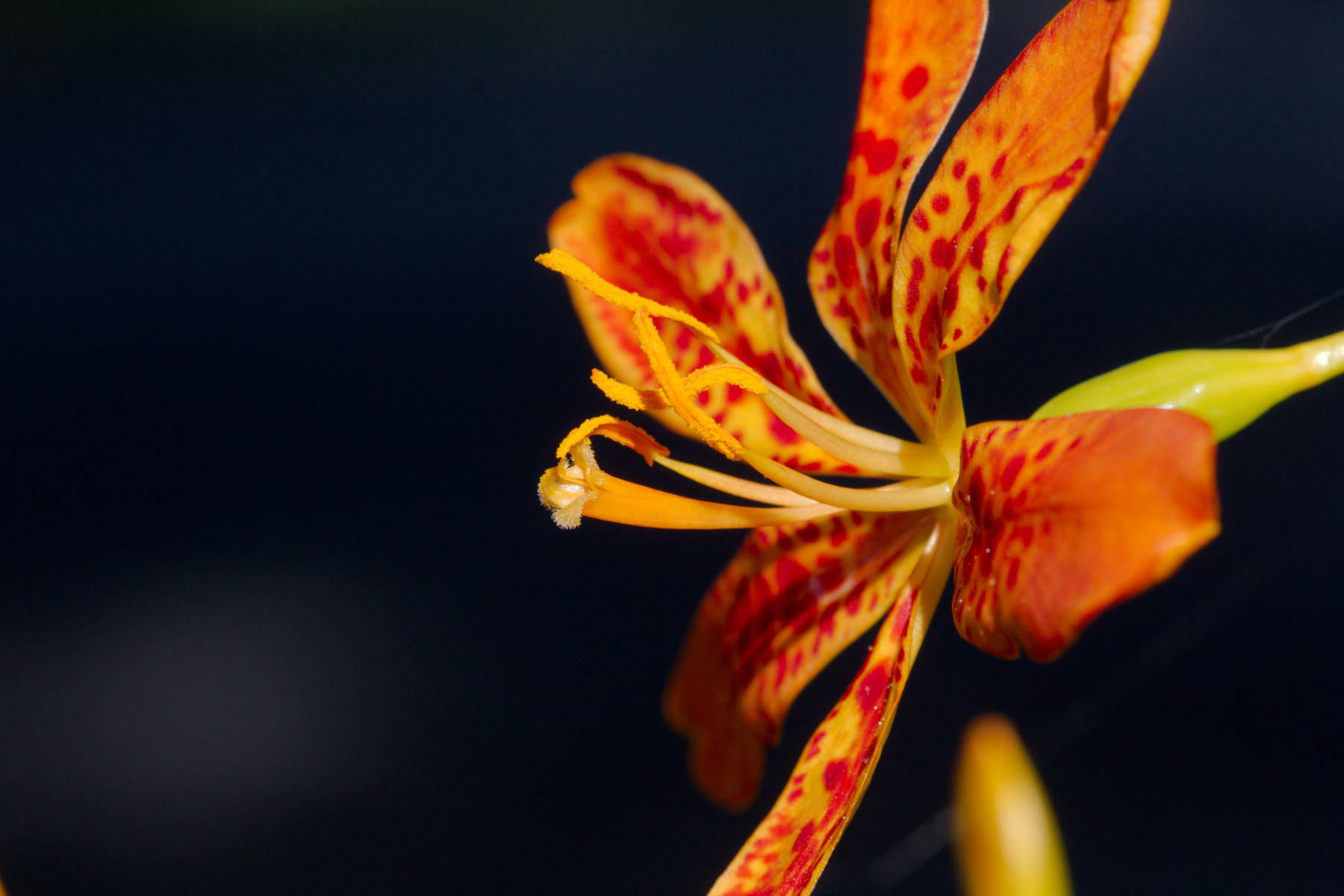
I was out front and noticed that from the right angle, the marigolds behind this blackberry lily (Iris domestica) look a bit like they’re part of the same plant and that it’s blooming. The picture didn’t actually come out as good as I would have liked, since the marigolds are a little out of focus, but you can sort of git the idea. We have quite a few of these blackberry lilies growing around the yard. Cathy scatters the seeds from them and of course the birds do the same thing. There’s one growing up the street in our neighbor’s garden and we suspect it came from here, too.
As you can see, the leaves turn yellow in the autumn and soon it will die back. The stems with their blackberry-like berries will remain until we pull the seeds to distribute and then cut the stems. The marigolds will most likely last until the first frost.
Torenia ‘Summer Wave’
We’ve grown Torenia fournieri before but I don’t think it has ever done as well as it did this year. We have a couple of them in containers on the back patio and they have been in constant bloom all summer and will probably not stop until we get a killing frost. They are also known a wishbone flower because the stamens join to form a shape similar to the wishbone of a chicken. This one is a variety called ‘Summer Wave’. Ours got a bit of sun but they are also really good for shade. You better believe we’re going to get this again next year.
Pink Hydrangea
When fresh, the flowers on this hydrangea are mostly white with a touch of pink on the edges. As they dry out, however, some of the petals deep in color to a dark pink, bordering on red. It’s not as showy as some flowers and overall, the plant is moving into winter mode. Nevertheless, the color of the petals is quite nice, especially when the late afternoon or early evening sun is shining on them. The deer have done considerable damage to this plant over the years but it keeps fighting back and had a good run this year. Hopefully that will continue.