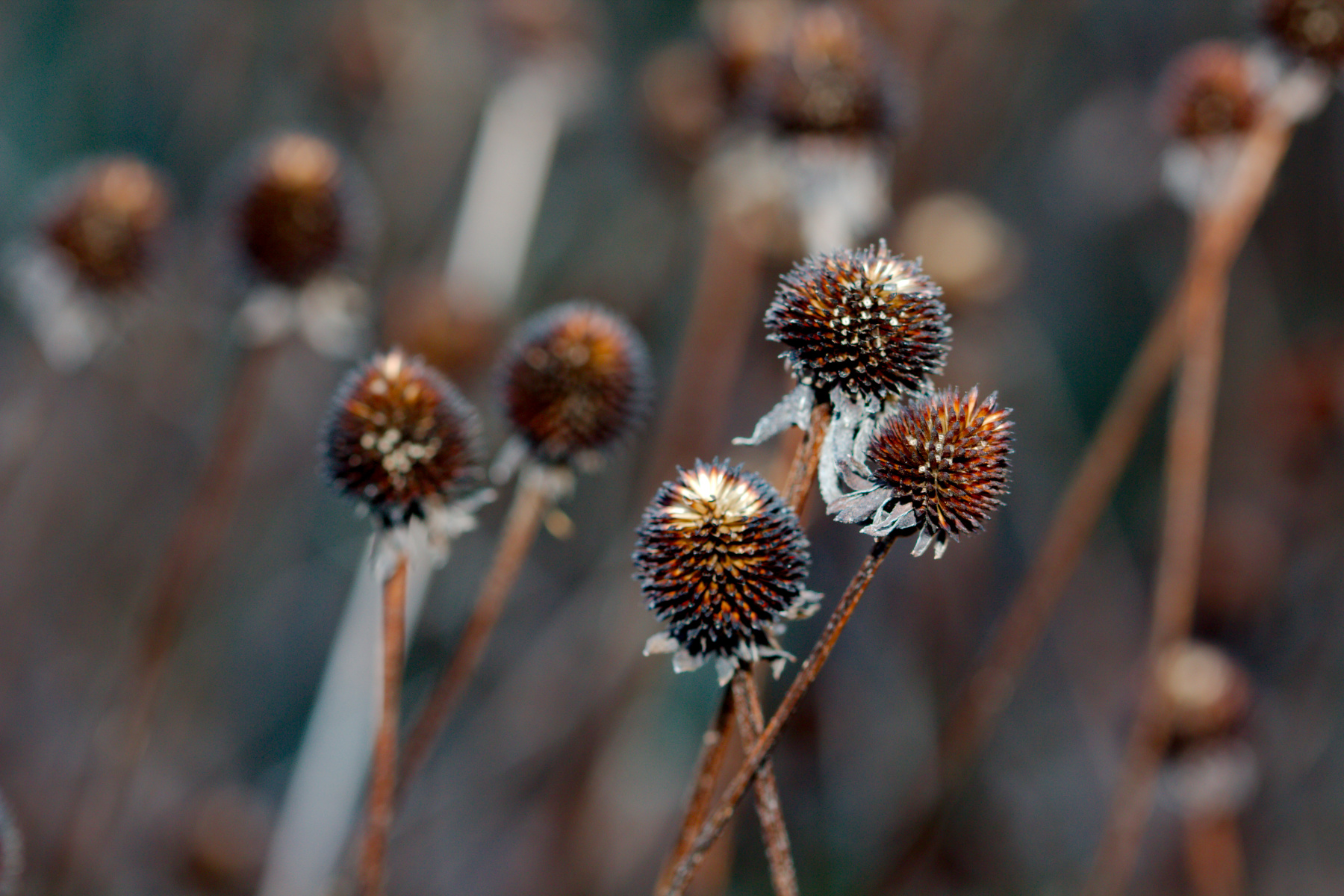
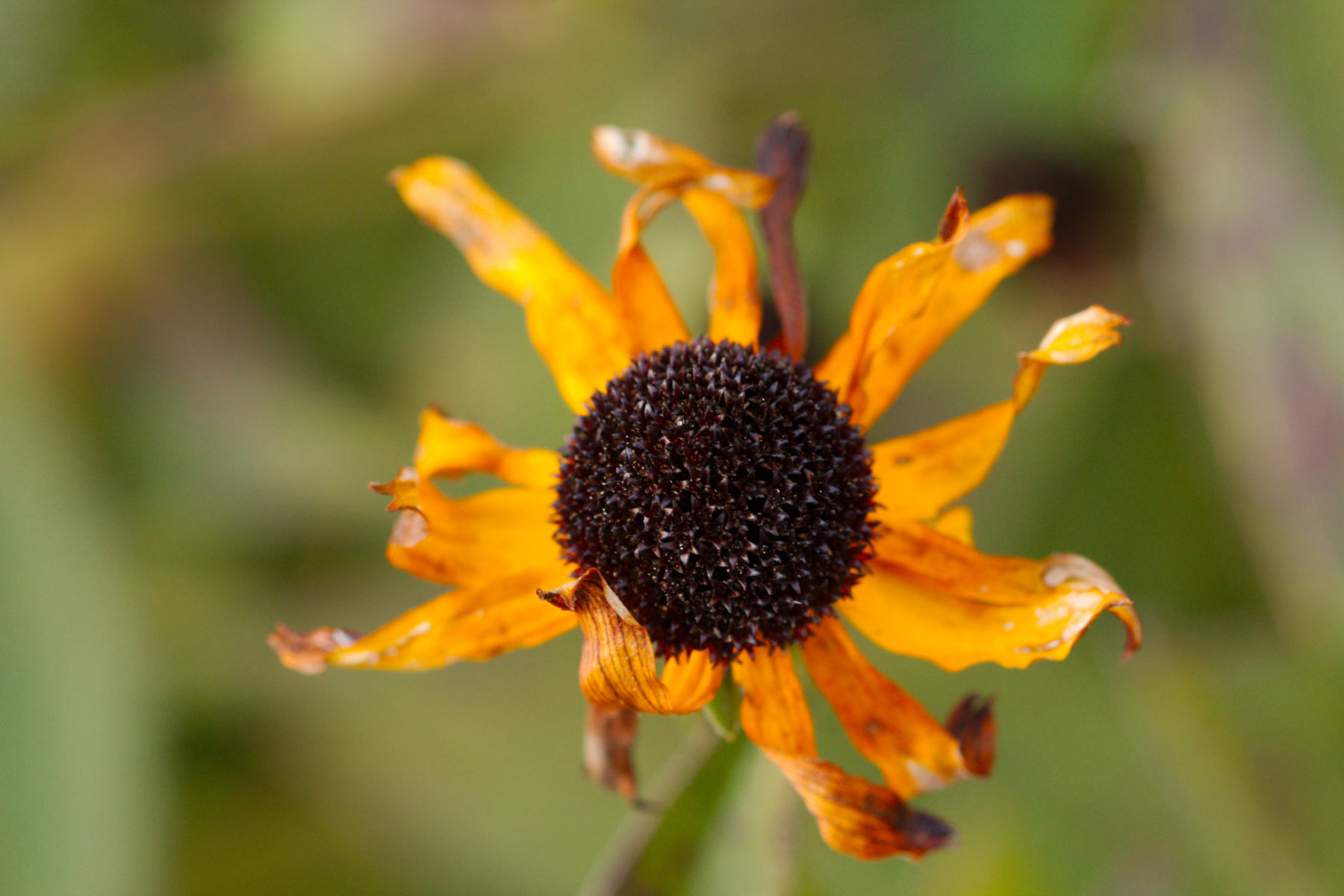
The black-eyed Susans in the yard are mostly finished now. The petals are drying up and falling off. Soon there will be nothing left but the stalks and seed heads. We generally leave those for the birds to eat during the winter. They seem to be pretty popular with the gold finches, in particular. This isn’t as good a picture as I hoped it would be. It was fairly late in the day and I didn’t bother to get my tripod, so I wasn’t able to get the depth of field that I should have. Still, I like the colors quite well. This is what autumn is about.
Tagged With: Native Plants
Black-eyed Susan
Physostegia virginiana (Obedient Plant)
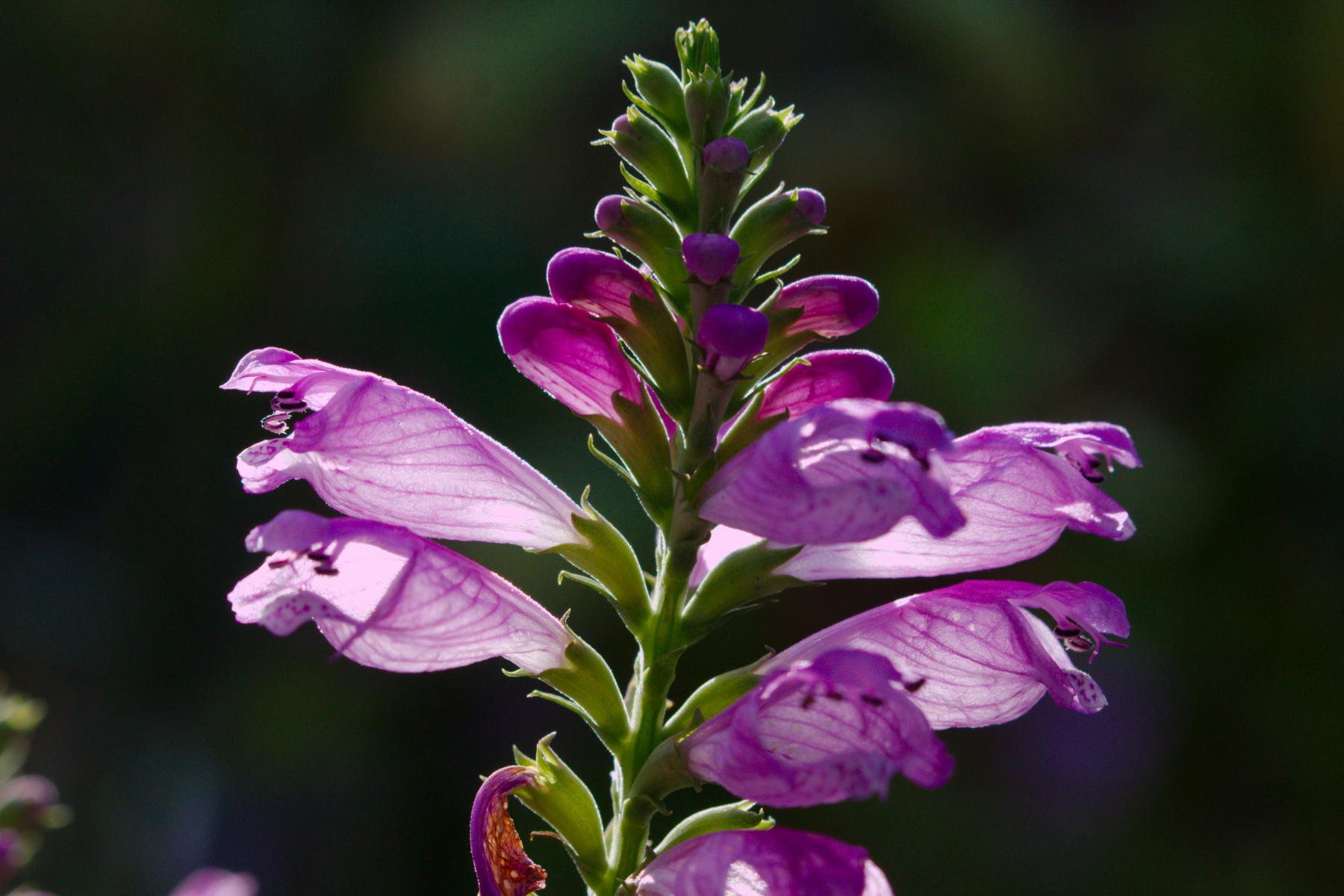
I took some photos of the obedient plant (Physostegia virginiana) blooms in the back garden this evening. They are quite pretty when back lit by the sun, as they are here. I was hoping to find some insects to photograph but for whatever reason, there weren’t many this time. There were occasional bees and skippers but I wasn’t able to get close enough to them to photograph. I did manage to get some photos of a sweat bee on the Asclepias but they were not very sharp, so I’ll pass on sharing them.
Crataegus viridis ‘Winter King’
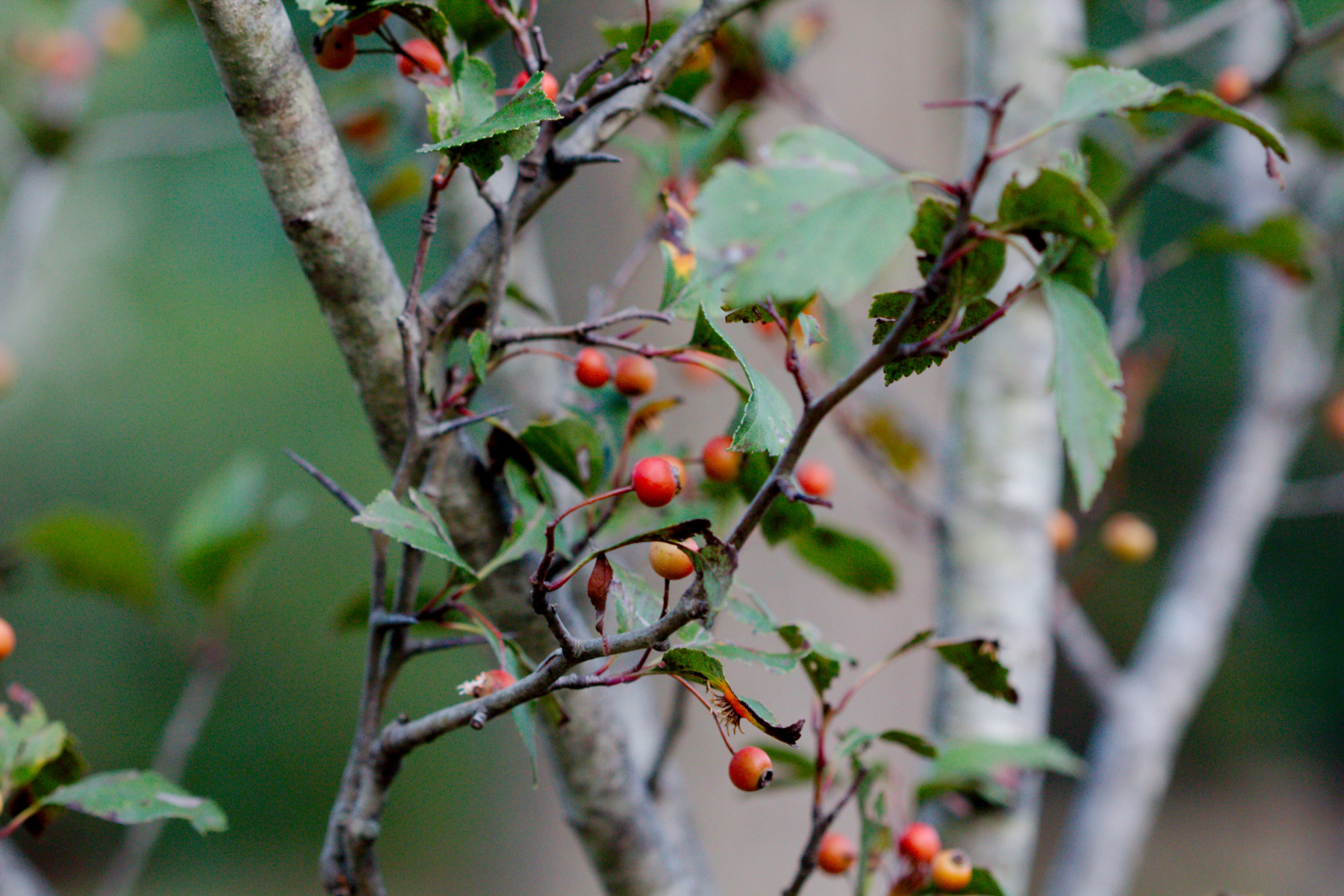
When I got rid of the nearly dead Colorado blue spruce (Picea pungens) in our front yard, we wanted to replace it with something small but with a little more interest. We decided on a hawthorn and last week I ordered this Crataegus viridis ‘Winter King’ and it was planted yesterday. The leaves are a little dry but it seems pretty healthy and I’m looking forward to the white blossoms in the spring as well as the fruit that you can see is on it now. The green hawthorn is more disease resistant than most hawthorns and ‘Winter King’ was selected, among other reasons, for that reason. This variety is also “noted for its profuse bloom of flowers, larger fruits, silvery-barked stems and more attractive fall color (purple and scarlet).”
Staghorn Sumac (Rhus typhina)
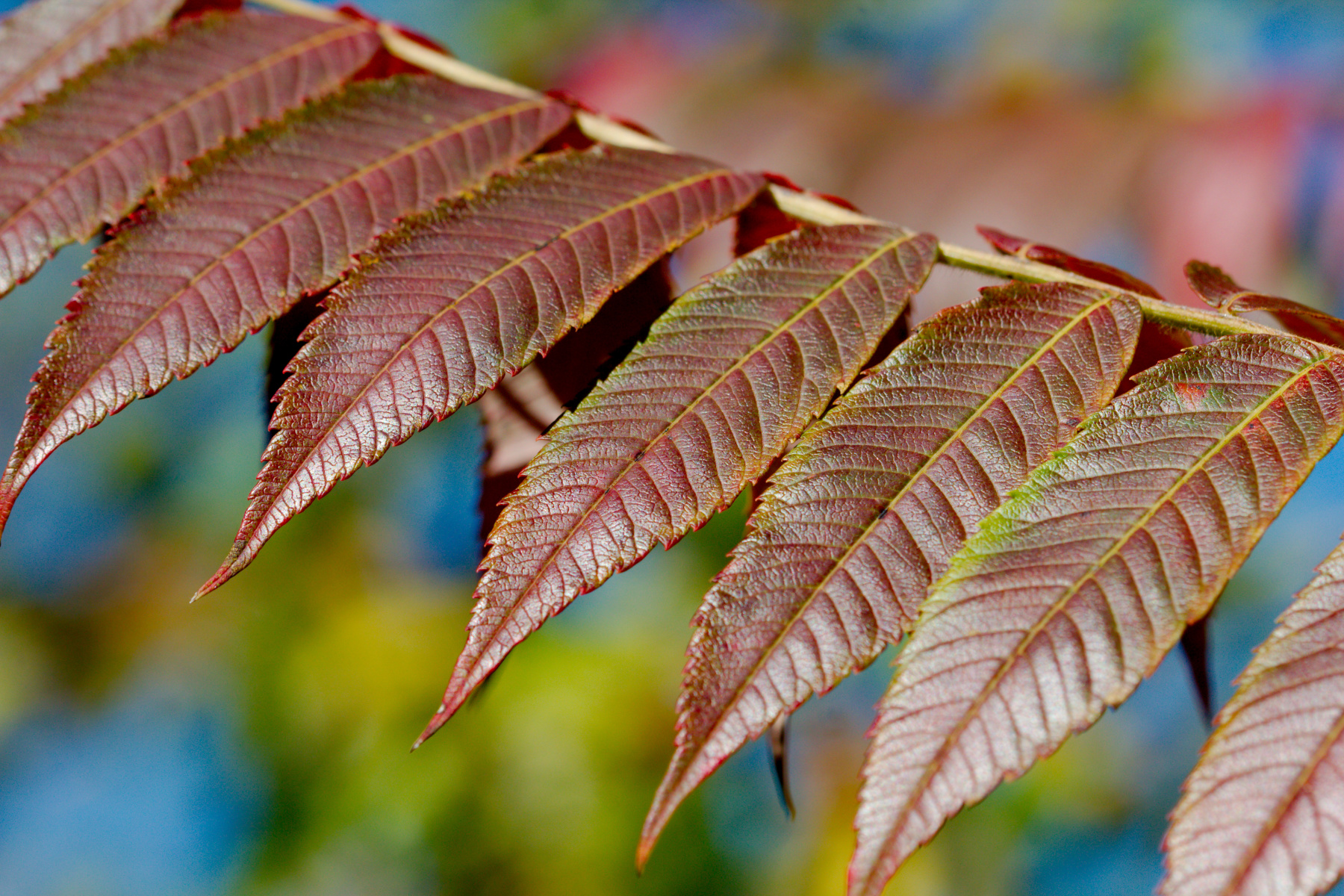
I had hoped to get outside yesterday but didn’t. Today I did, walking up the road and onto the empty lot next to my building. The vernal drainage pool is nearly dry. The small areas with water are interesting because there is something in the water that’s not happy to be quite so crowded. If it rains soon, they may be saved. The fall color has only just started to be in evidence but a few things tend to turn early and they stand out. This staghorn sumac (Rhus typhina) is an example. They are also crowned with their bright red, annual, pyramidal fruiting clusters.
Fragaria virginiana (Wild Strawberry)
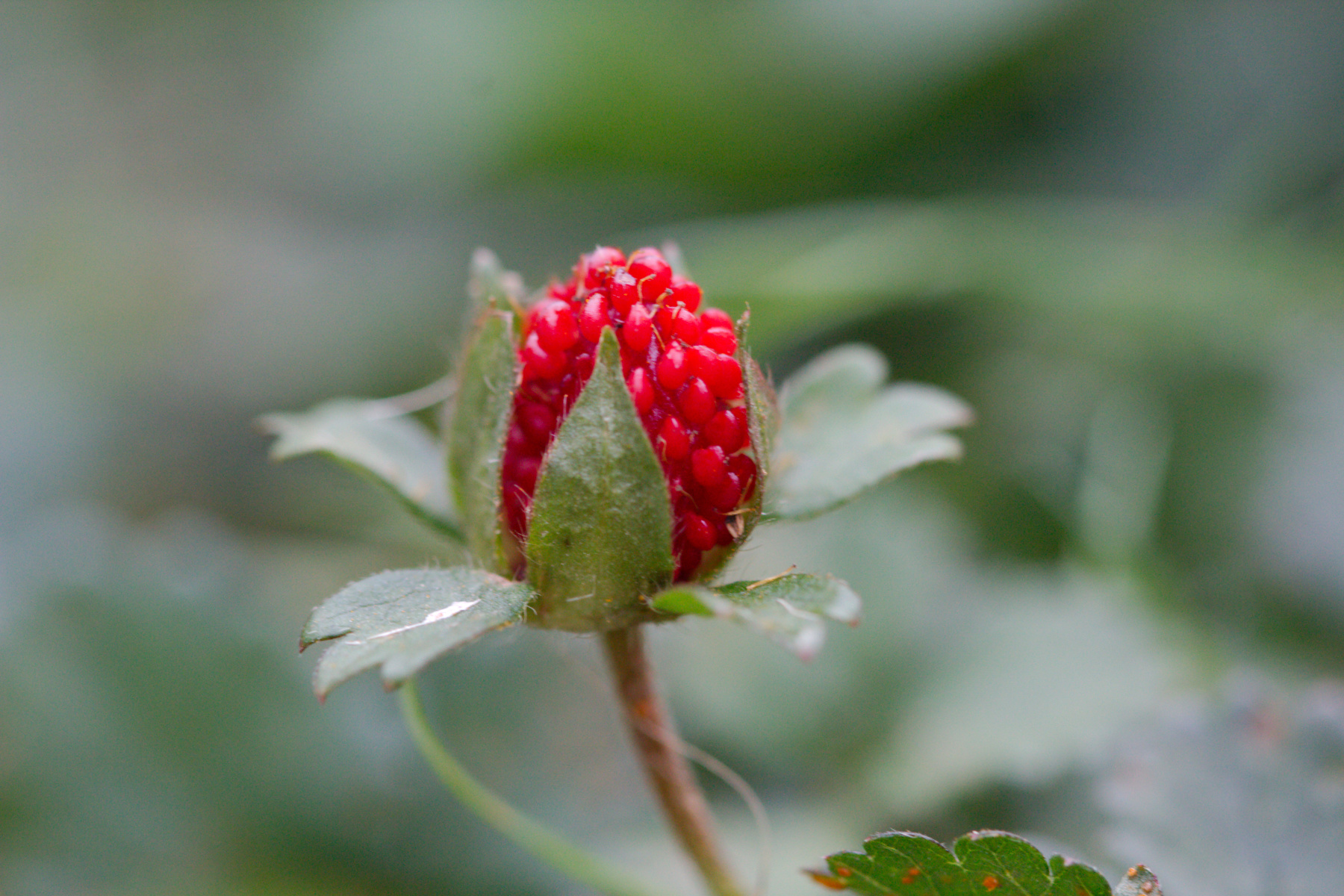
I only took a few photos today, all in the back yard. Most of them were of the maple leaves that are starting to turn red, but really they have only just started and it’s premature to have fall-color photos. This is a wild strawberry (Fragaria virginiana, also known as scarlet strawberry) growing and fruiting in the yard. This is a native herbaceous perennial and in the description on the Missouri Botanical Garden’s PlantFinder web site, it says they “spread indefinitely by runners that root as they sprawl along the ground.” They aren’t kidding. These will take over a yard. Also, “Cultivated strawberries found in stores are hybrid crosses between F. virginiana (native to North America) and F. chiloensis (native to western coastal South America including Chile) which combine the excellent taste of the former with the larger fruit size of the latter.”
Rudbeckia Seeds
I took photos of various seeds in the yard this afternoon. First I took pictures of seeds of the Euonymus japonicus. From there I moved on to these Rudbeckia seed heads. I think their form and subtle brown colors. I took photos of blackberry lily Iris domestica fruit, which do have a pretty blackberry-like appearance. I also took a few photos of the tops of Monarda and of the feathery seeds of the Clematis terniflora. None of the photos were wonderful but this one is my favorite. I also took a photo of a robin in the holly tree by the driveway.
Cattails
I left work a little early today and stopped at Redgate Park on the way home. If you’re familiar with Redgate Golf Course, then you now know about Redgate Park. I played this course back in the day—not a lot, only a couple times out of the one or two dozen golf outings of my sporting career—and but it has now been closed and is a park. According to The Sentinel, management of the course was transferred to Billy Casper Golf, a golf-course management company headquartered in Reston, Virginia. I can confirm that the state of the grounds it pretty pitiful.
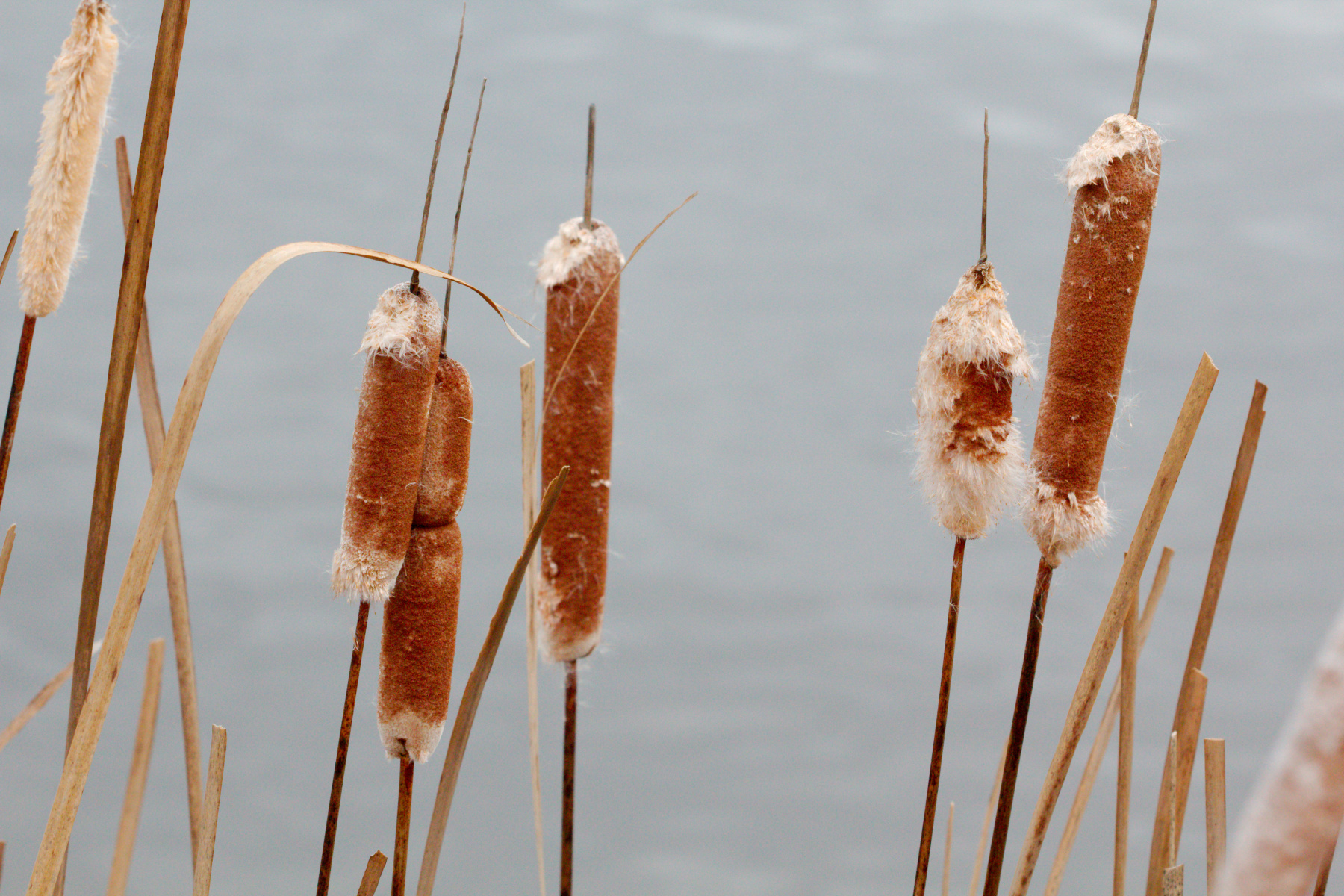
I walked around a bit and took photos of Asiatic bittersweet (Celastrus orbiculatus) as well as these broadleaf cattails (Typha latifolia). I also saw a nearly frozen snake. I’m pretty sure it was alive but it could barely move in the cold weather. Kind of creepy, actually.
Tulip Poplars
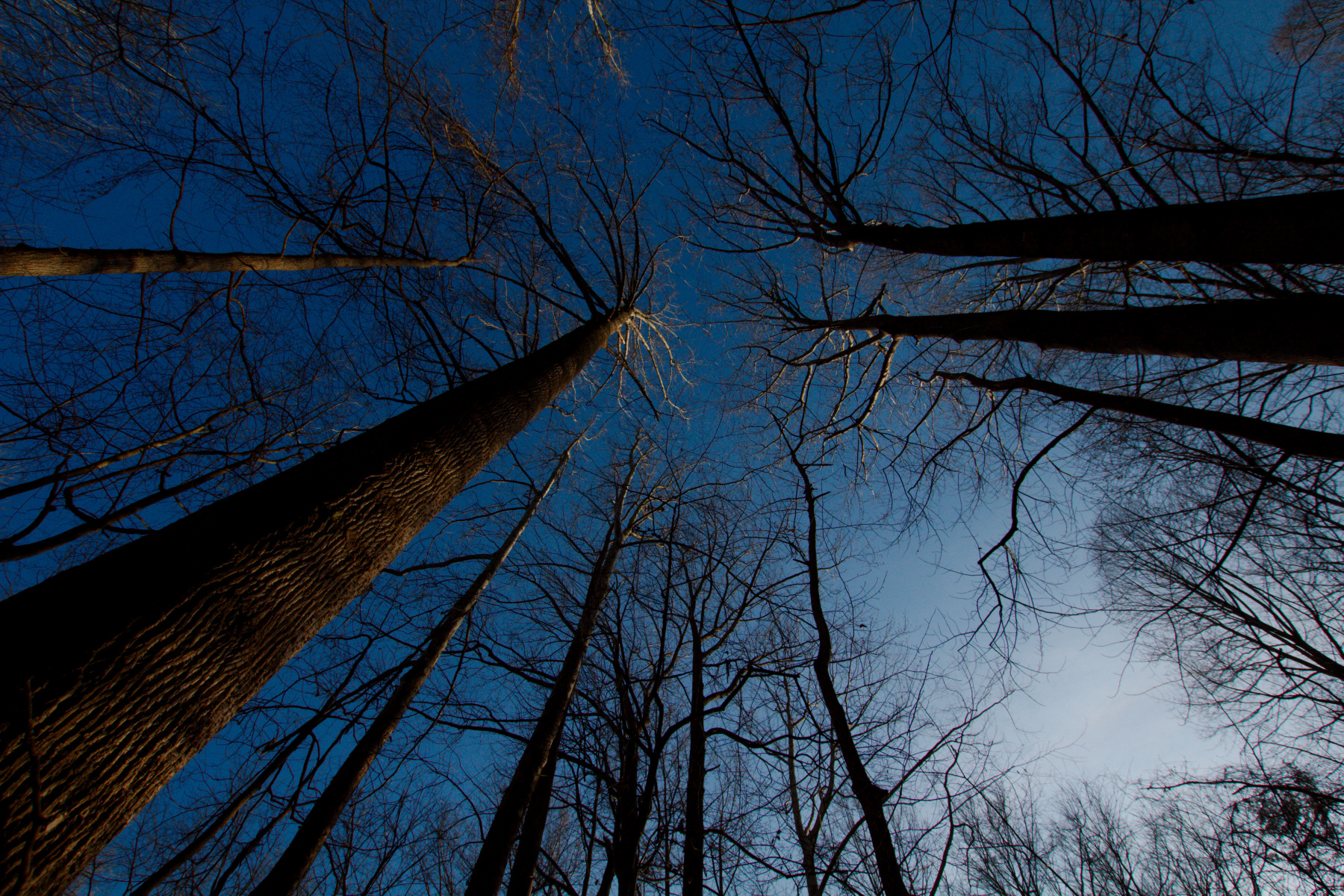
Cathy, Dorothy, and I went to Seneca Creek State Park this afternoon and walked just short of 3 miles in the woods. It was a cool but pretty day with deep blue skies. The woods are predominated by tulip poplars (Liriodendron tulipifera) with a significant number of other deciduous trees including oaks, maples, beeches, and various smaller trees. I think the fact that they grow so quickly accounts for their numbers, as they outgrow the slower growing but longer lived hardwoods. Eventually, the oaks, maples, and beeches will outlive this first growth of poplars and it will all even out or even lean towards the others. But for now, the wood is filled with the straight trunks of the tulip poplar.
Maple Blossoms
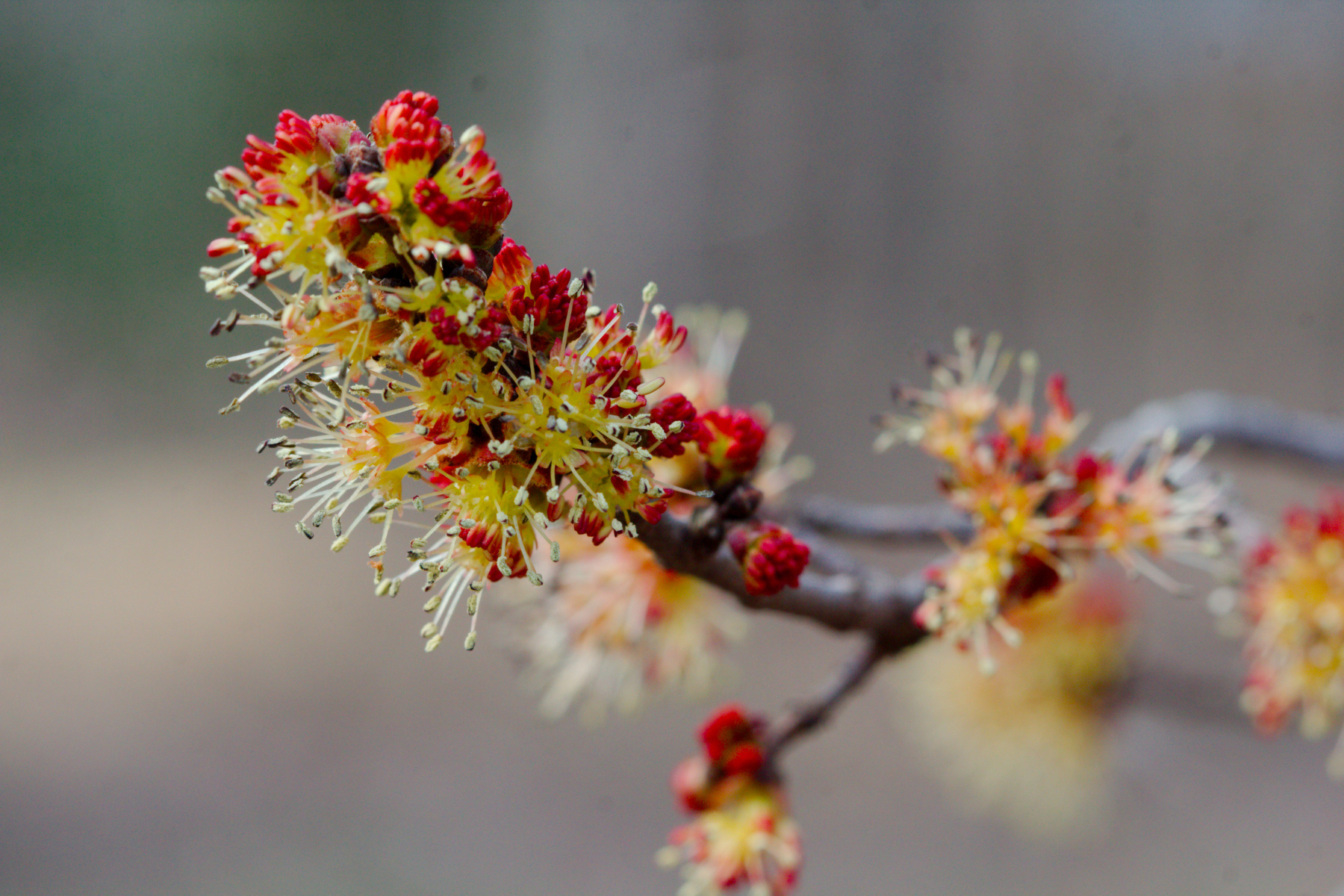
We happened to be in northern Virginia this afternoon to meet some friends for brunch. We got there a little early so we walked in a park near the restaurant and I took some pictures of three different plants that are in bloom. First, and seen here, are maple blossoms. I think this is a silver maple (Acer saccharinum) but I didn’t take the time to identify it carefully. I’m pretty sure it isn’t red maple (Acer rubrum) but it could be a sugar maple (Acer saccharum) or a number of other species. It’s a bit early even for the early trees to be blooming but it’s been such a mild winter so far, I’m not terribly surprised. It may get cold yet, of course. It’s still only mid November.
Wild Violet
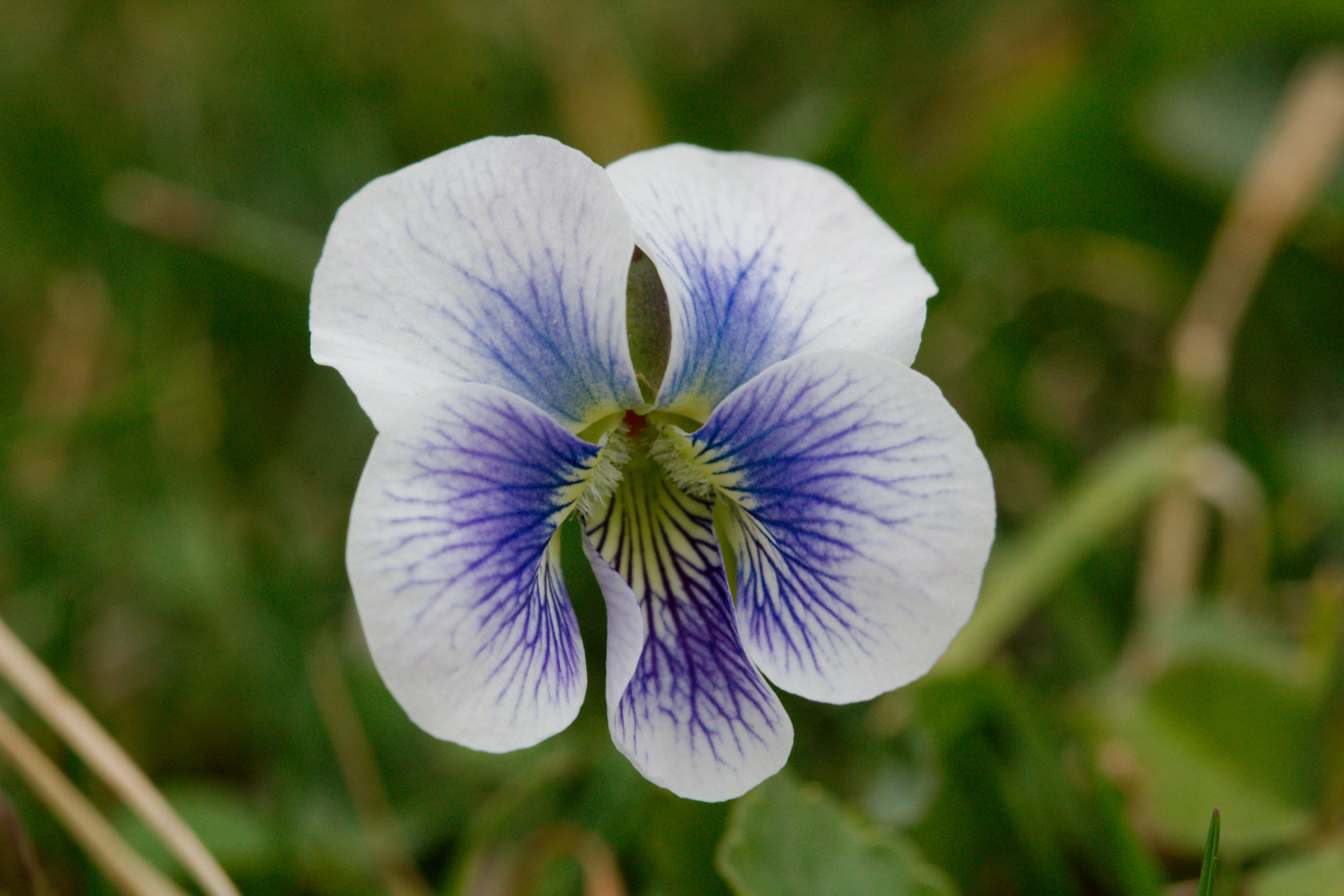
The wild violets (Viola sororia) are up in the lawn. They’re pretty difficult to get rid of but our lawn is not particularly weed free in general, so they are among the least of our worries. The flowers range in color from nearly all white to nearly all bluish purple. This one is about half way in between. We actually have a few yellow violets and I’m assuming those are a different species, possibly Viola pubescens, but I don’t actually know that. They look very similar to these, except for the flower color.
Mertensia virginica (Virginia Bluebells)
Like most folks, we’re mostly confined to our house and to walks in the neighborhood. We figured that we could go for a drive so yesterday we went out and about. One place we went was the Montgomery County Agricultural History Farm Park on Muncaster Road. I didn’t take my camera with me, which is pretty unusual, so we went back there today with my camera this time. There were a few others there but everyone kept their distance from one another.
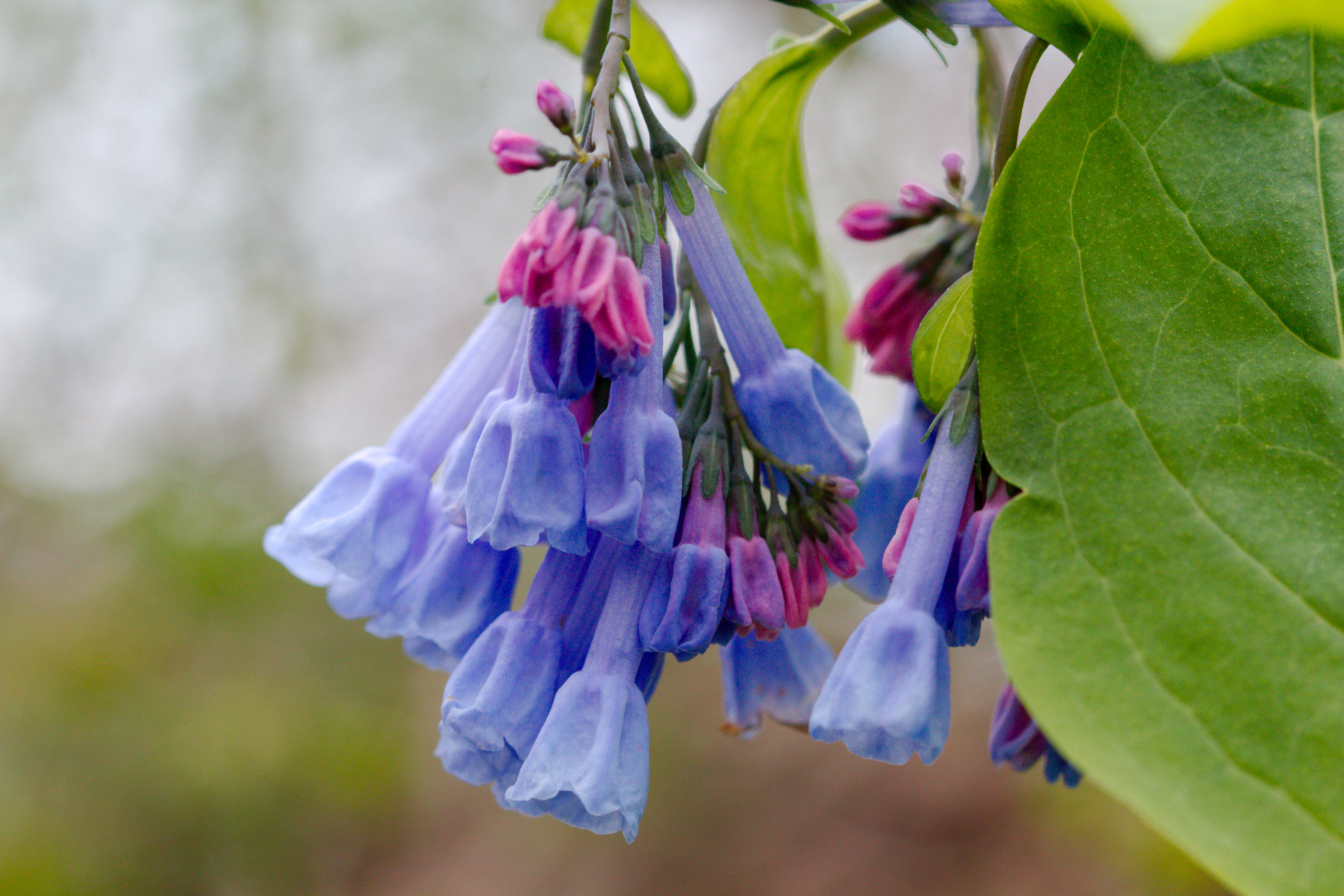
They have a small, woodland garden that is particularly nice right now, with mostly early spring blooms. These Virginia bluebells (Mertensia virginica) are just starting to open and are so lovely.
Sanguinaria canadensis (Bloodroot)
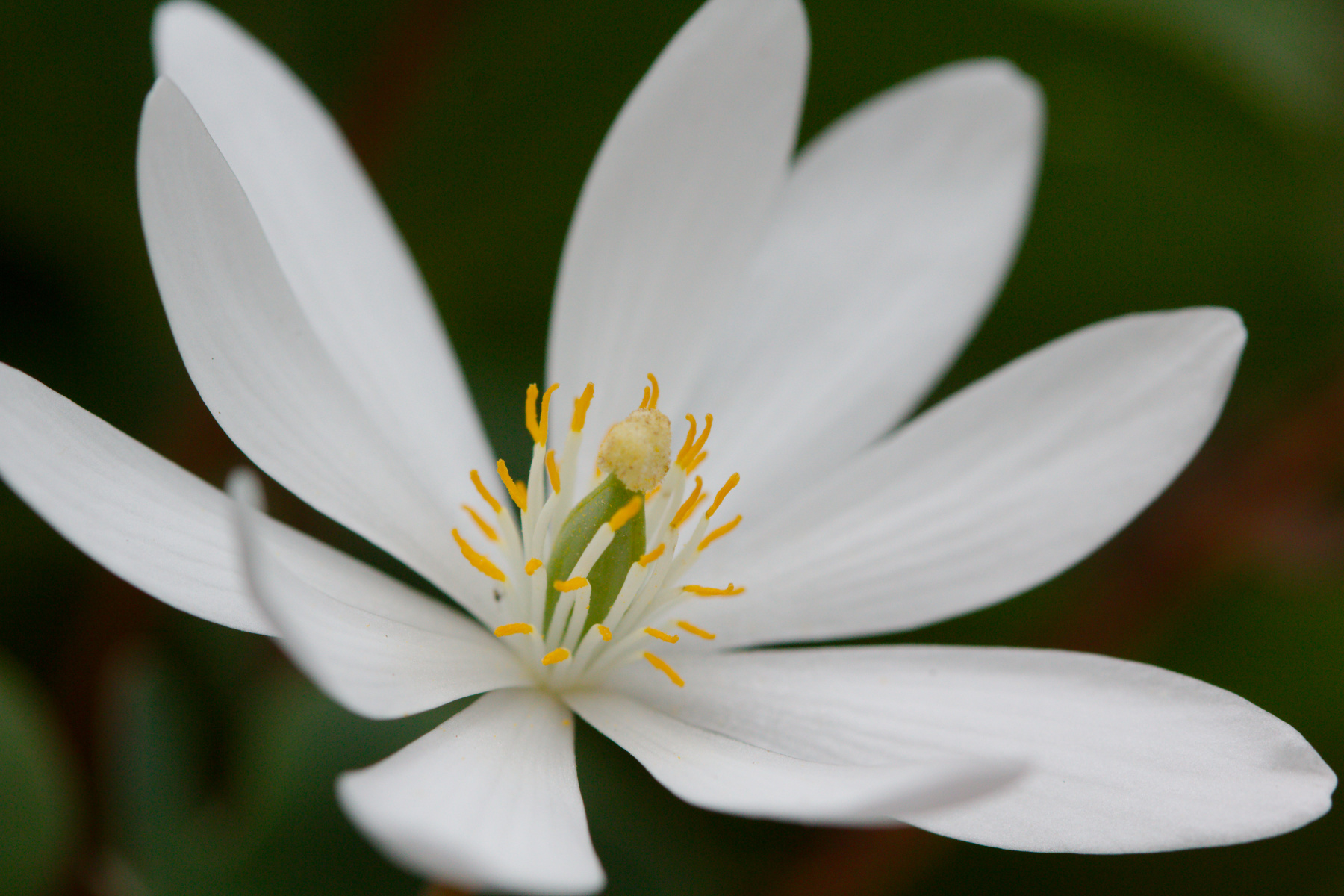
Another photo from our trip to the Montgomery County Agricultural History Farm Park on Muncaster Road. Bloodroot (Sanguinaria canadensis) has very pretty, pure white flowers that don’t last very long. I love them as a true sign of spring. There are some places where you see this native plant in the woods one day as you drive by and then it’s gone the next. The plant is still there, obviously, but not so obvious without it’s bright blooms. The leaves are quite interesting, being deeply-scalloped. The leaves continue growing after the blooms are gone, and are present until mid to late summer when the plant goes dormant.
Trillium
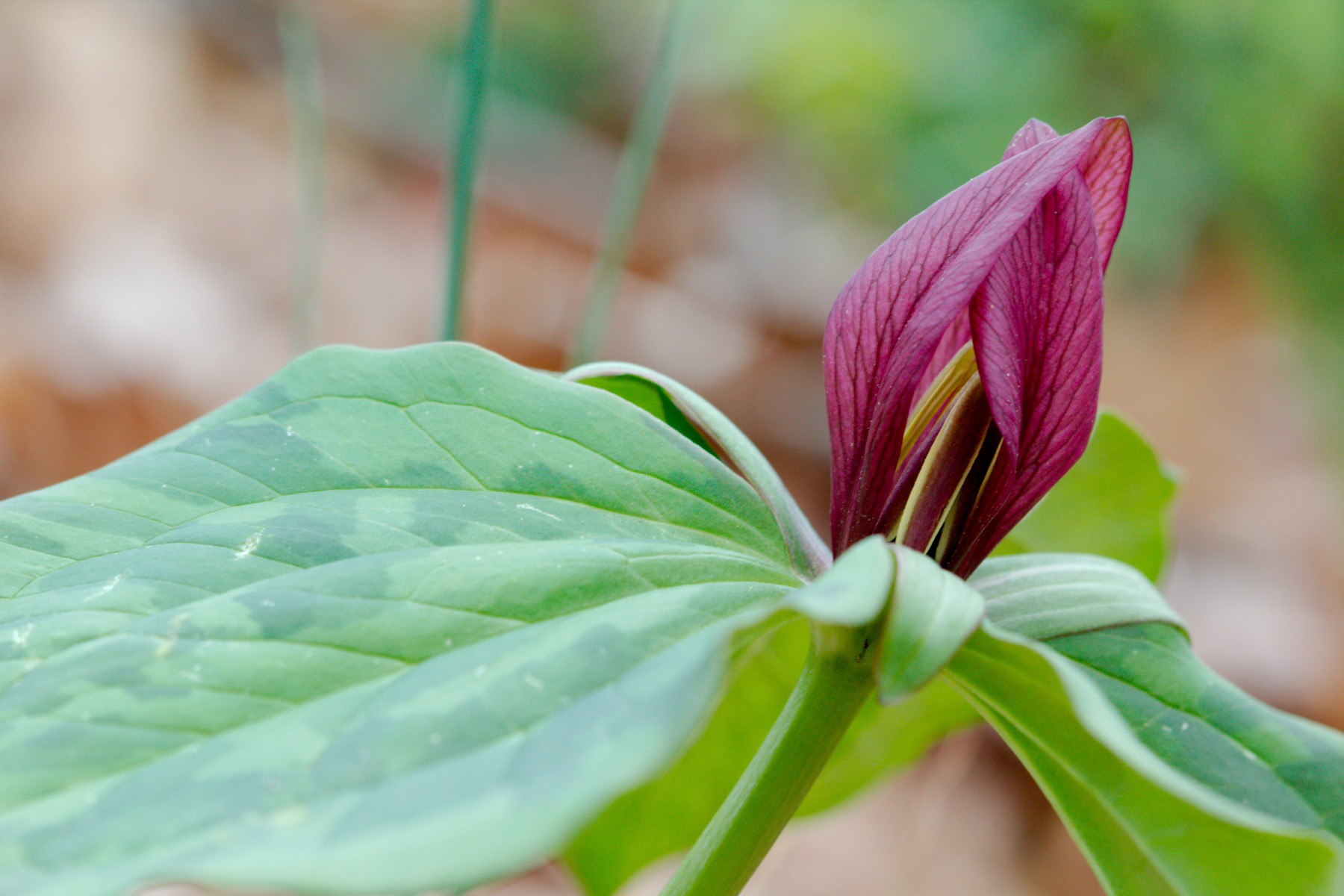
The third and final photo I’ll post from our visit to the Montgomery County Agricultural History Farm Park today. This is trillium and someone more in the know than I am could probably tell you which one. I’ll guess Trillium cuneatum, “the largest and most vigorous of the sessile trilliums that are native to the eastern U. S.” but I stress, that’s just a guess without much research behind it. Whichever it is, it’s a pretty little plant that should be in any woodland garden in our region. They don’t transplant well but it seems to me they would be worth the effort.
Stellaria pubera (Star Chickweed)
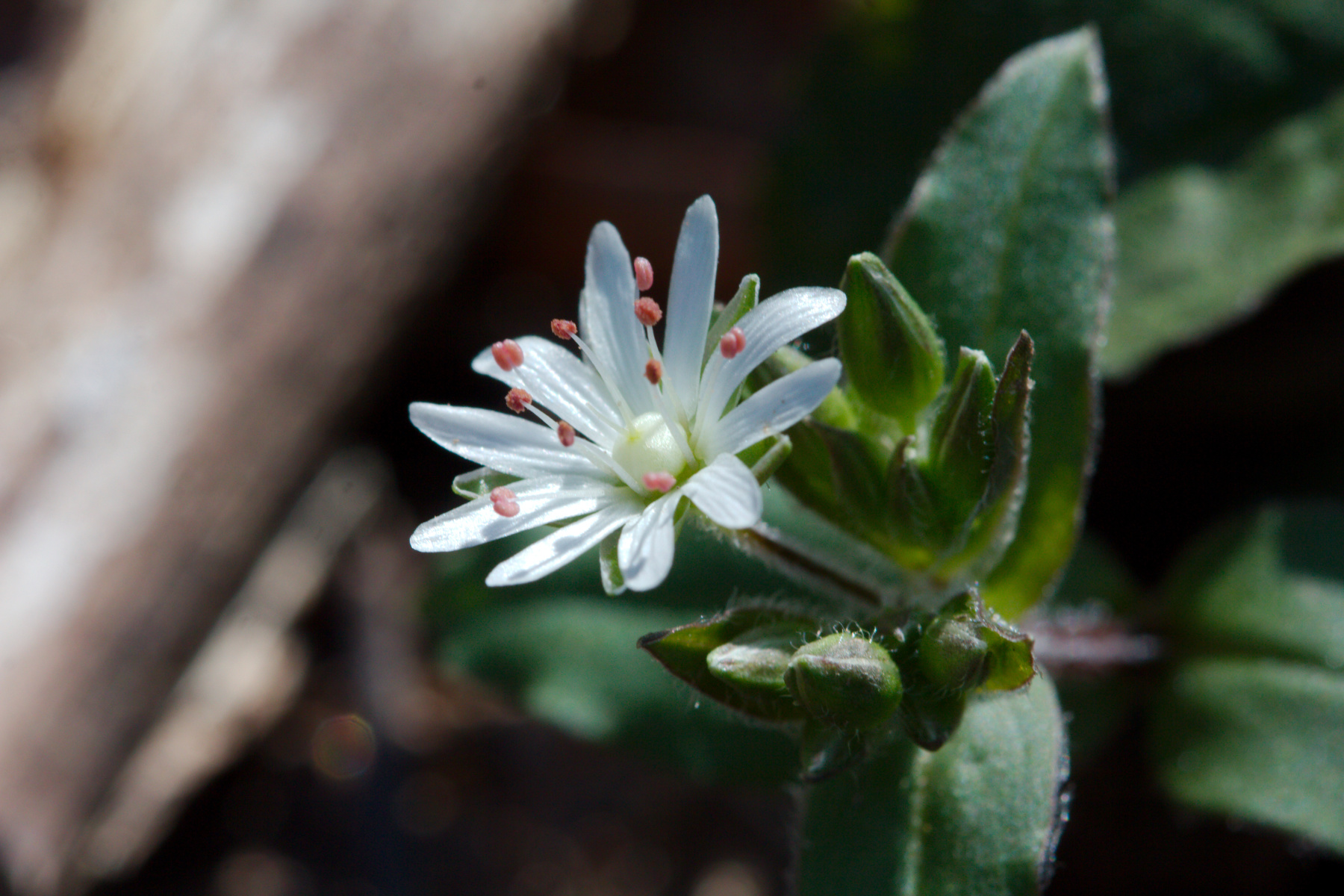
It was a lovely day today and Cathy and I went for a longish walk (about four miles) near Lake Frank. We saw one of the two bald eagles nesting there, who was by the nest, then flew off and around for a while before landing in another tree near the nest. We saw lots of wildflowers, including this star chickweed (Stellaria pubera), spring beauties (Claytonia virginica), and yellow trout-lily (Erythronium americanum). The ferns were coming up and we saw some jack-in-the-pulpit (Arisaema triphyllum). All in all, a very nice time in the woods.
Pink Flowering Dogwood
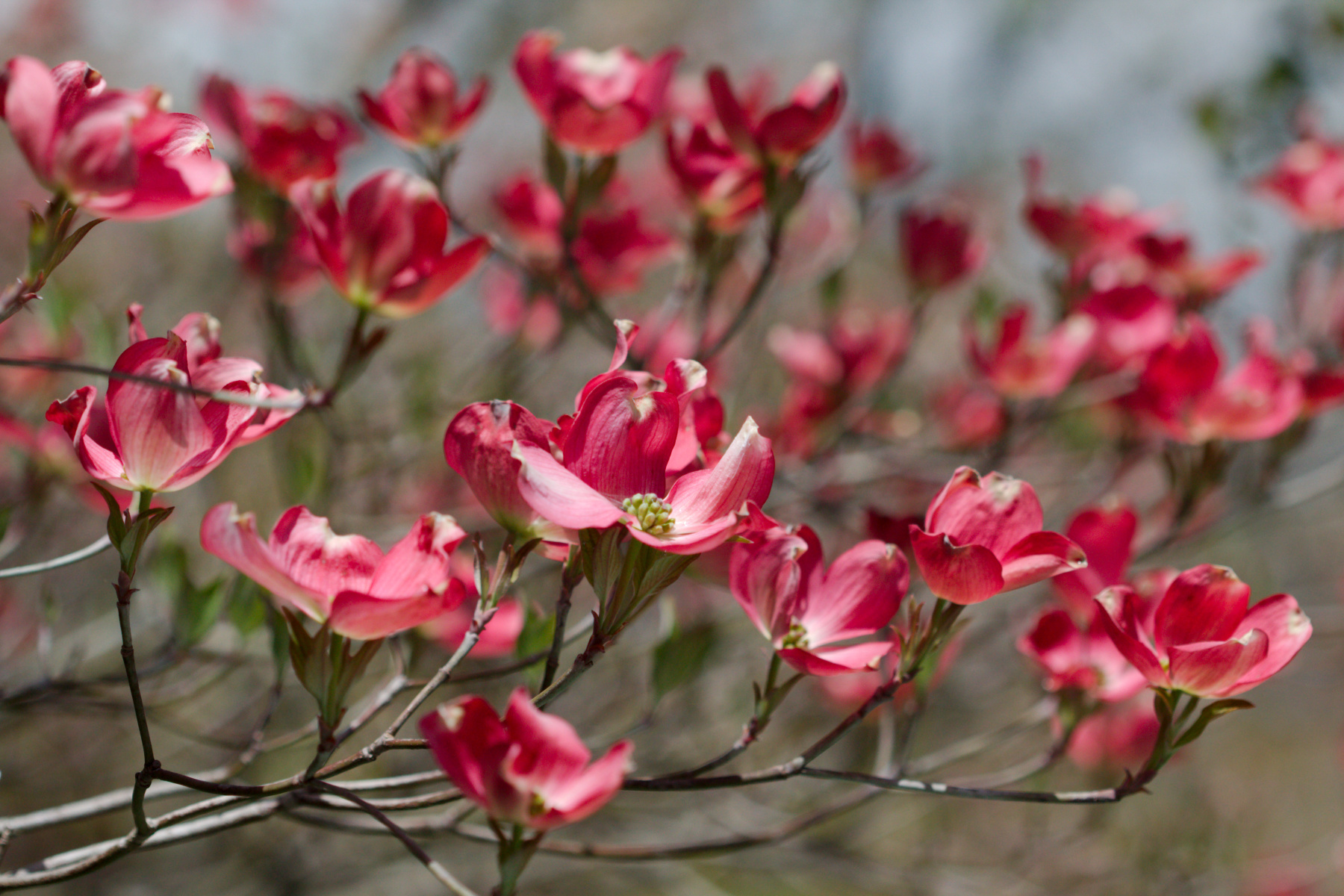
I know I’m repeating myself but this pink flowering dogwood (Cornus florida) is so beautiful I cannot help myself. It’s really loaded with flowers and they deserve to be seen. This tree is growing much too close to the house and I really need to get rid of it. I planted a camellia in front of it with the thought that when that gets big enough to stand on its own, I’d cut down the dogwood. That’s the flower I posted back on Wednesday, April 01, 2020 but as small as it is, I’m not sure I really can wait that long to get rid of this tree. So, enjoy it while you may.
Maidenhair Fiddlehead
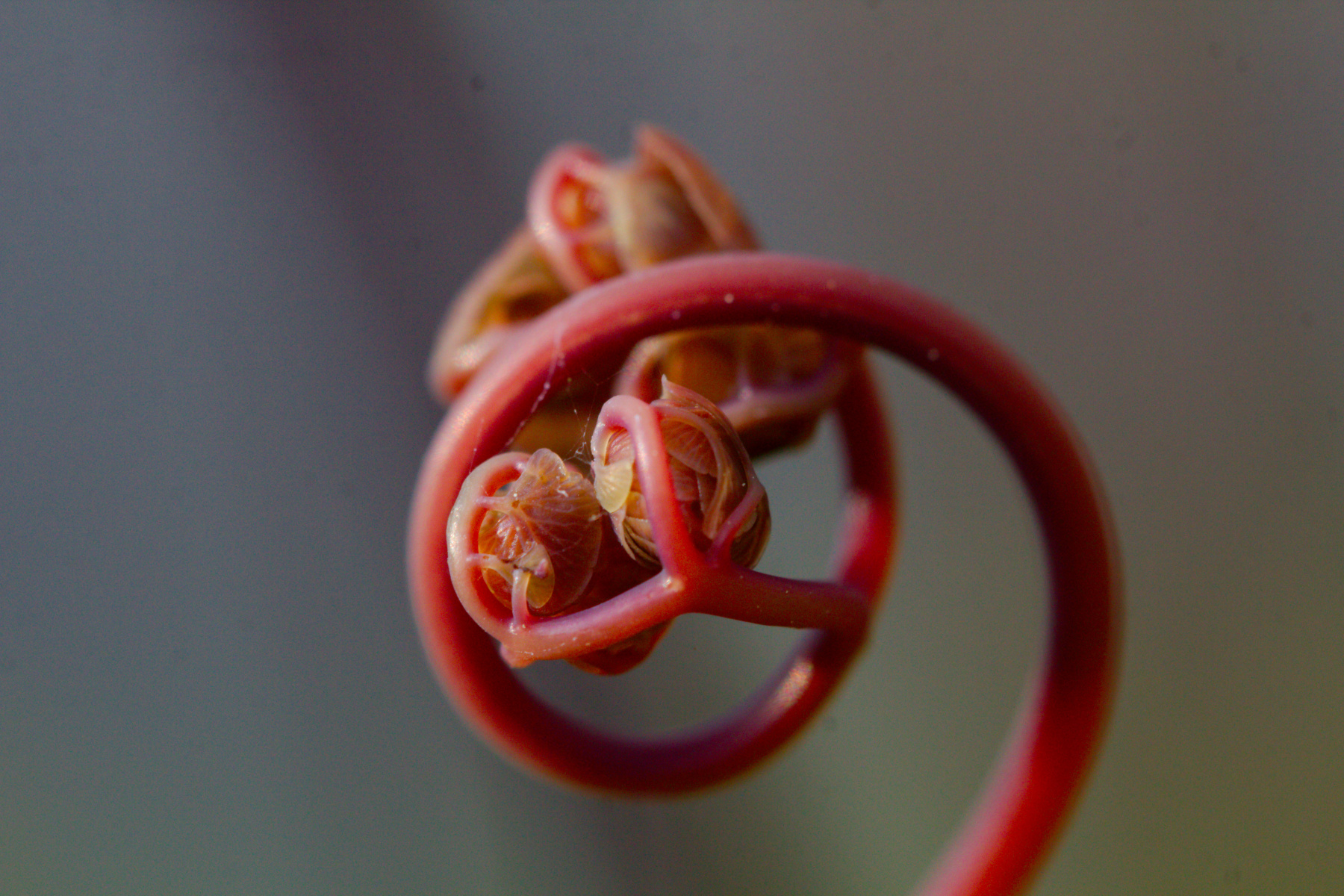
Our northern maidenhair fern (Adiantum pedatum) is coming up in the back garden. It’s really in much too sunny a spot and I think this year I really will split it and move at least some of it to a shadier, less dry spot. It does surprisingly well here, even so, only getting a bit burned late in the summer, especially in particularly dry years. It’s easily grown and one that should be in more gardens. I also think this is the year I’ll get a royal fern (Osmunda regalis), which has been on my wish list for a long while. Who knows, maybe I’ll even get around to making a water feature and bog garden.
Columbine (Aquilegia)
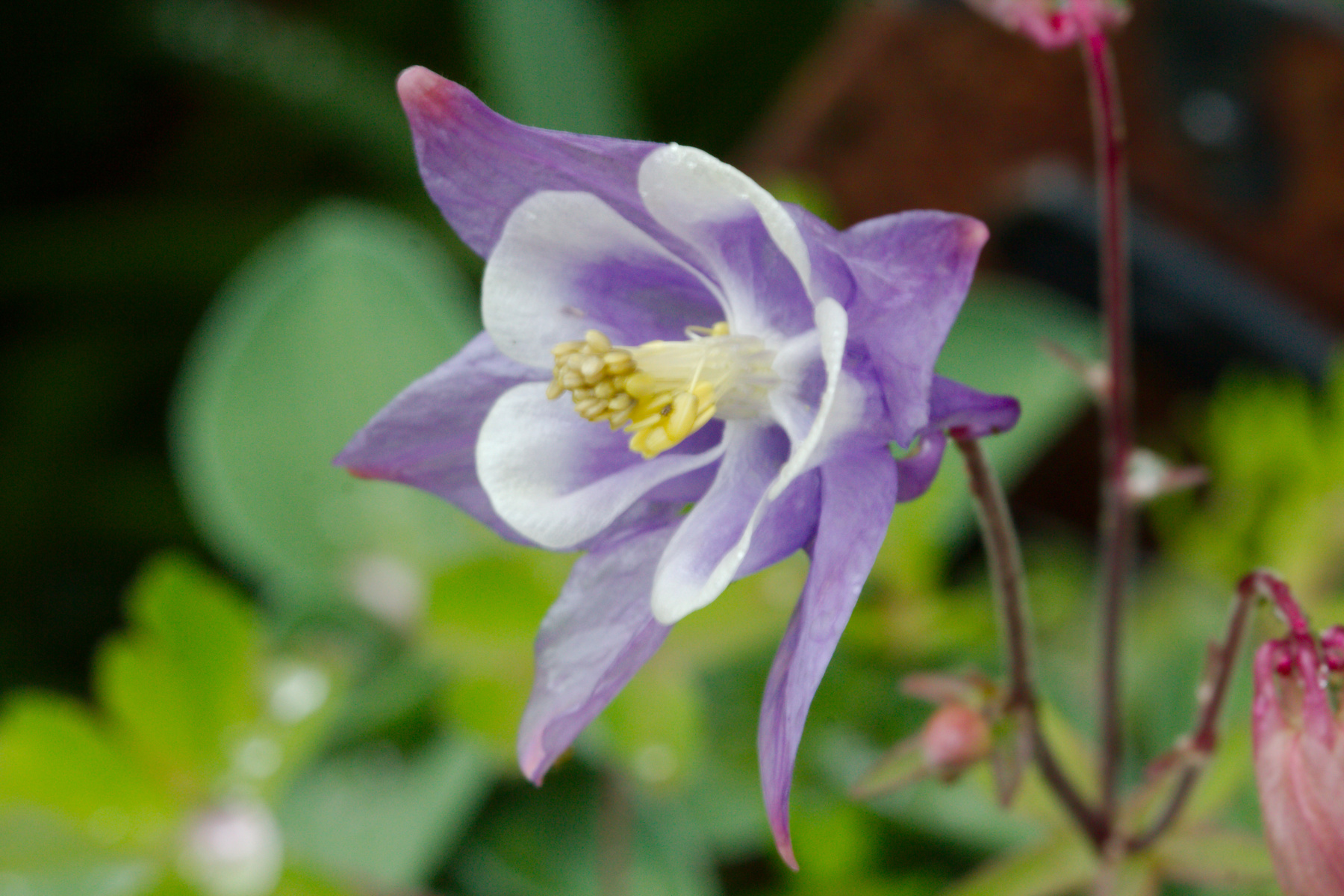
We have a number of different columbines in our yard and garden. This one is growing in a container just outside our front door. This is a relatively simple columbine flower, close to what you’d find in the wild. Some others that we have are much fancier and I’ll probably have photos of them in the days to come. They are a reliable bloomer and well worth adding to your garden, blooming after the bulbs are mostly done and before the summer blooms start, so they fill an important role in the garden plan.
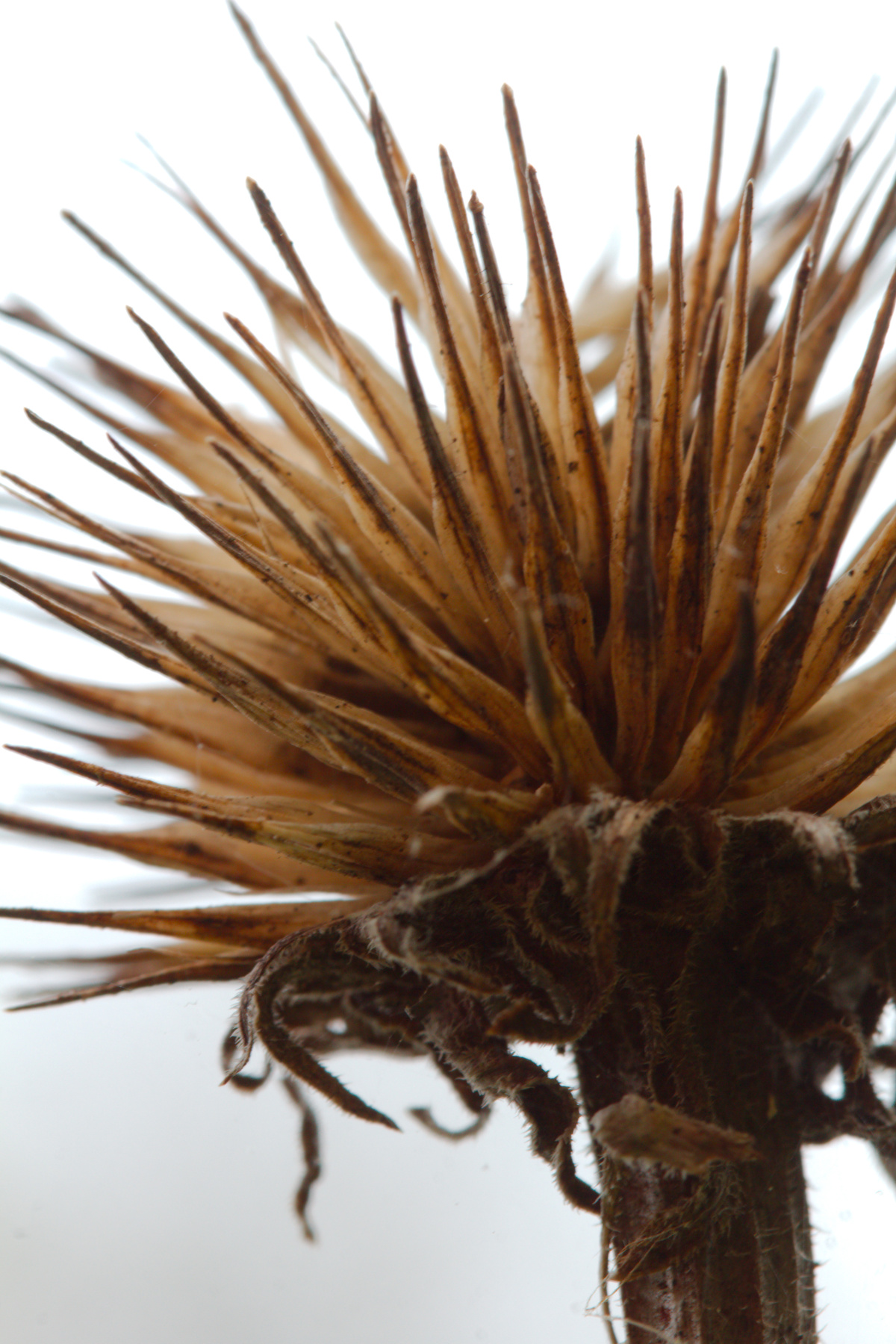
Echinacea purpurea
This is purple coneflower (Echinacea purpurea) although obviously there isn’t any purple color here right now. These are last year’s seeds, which we generally leave up all winter for the birds. They are obviously well fed, because by spring, most of them are still here. It’s just about time we cleared them all out. Most of the black-eyed Susan seed stalks have been cleared, although we’ve left some yet.
I was on the ground taking photos of a columbine (Aquilegia) and happened to notice this coneflower stem next to me, so I rolled over on my back and took a few shots, hoping to get a little detail in the seeds, which were seriously back-lit by the sky. This one turned out pretty well. I would have liked to get a little further away, as well, but I was looking nearly straight up and getting further away would have required that I dig a hole to get into. So, not going to happen.
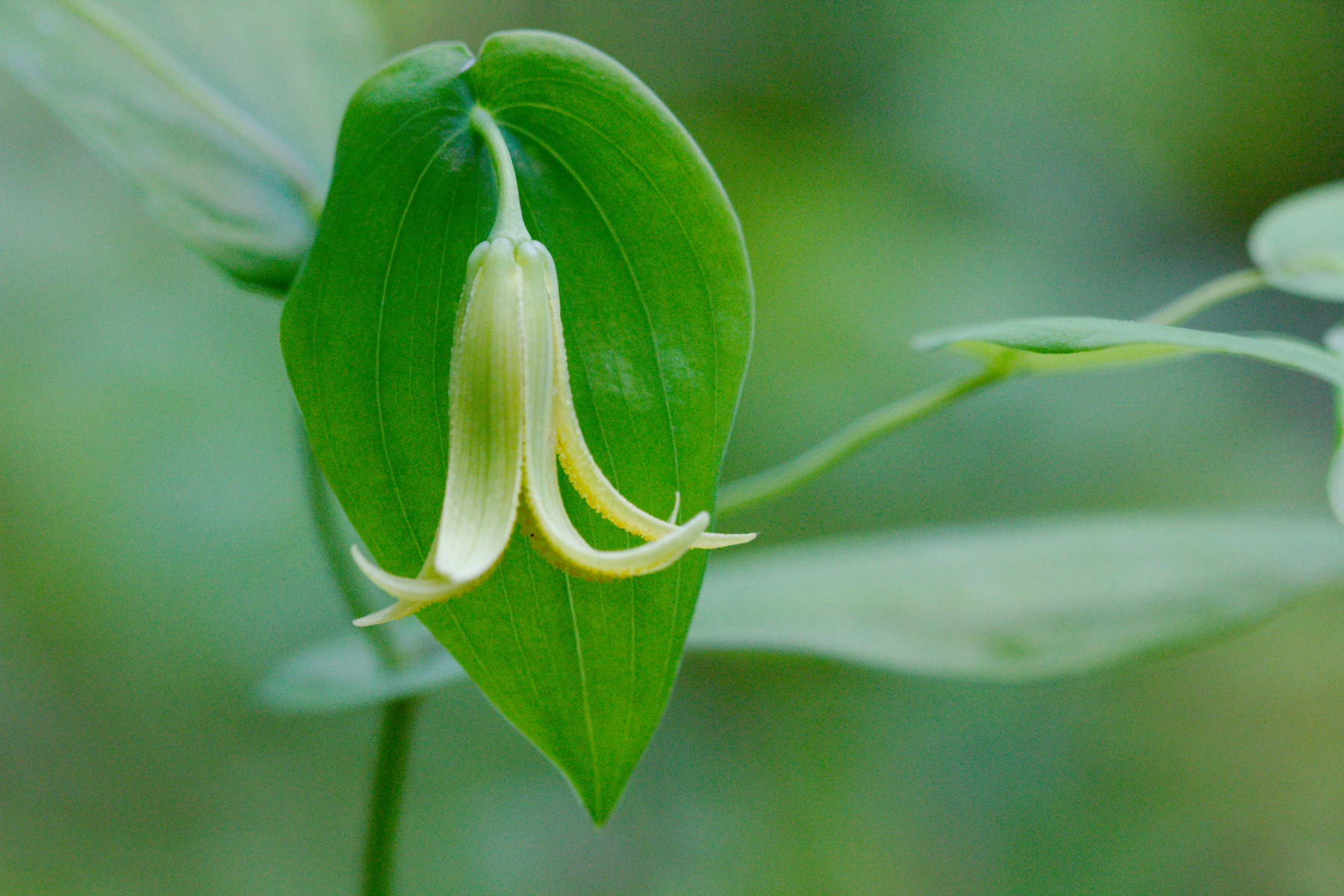
Uvularia perfoliata (Perfoliate Bellwort)
It was quite cool this morning after a soft freeze over night. There was ice in both bird baths this morning, not just the pedestal meaning it got pretty cold. I had covered my recently planted camellias and we moved some pots into the garage, so everything seems fine. We went for a very nice walk in Rock Creek this afternoon and saw lots of pretty things, including this perfoliate bellwort (Uvularia perfoliata), a pretty little wildflower we don’t see very often. The word ‘perfoliate’ means the base of the leaf surrounds or is pierced by the stem.
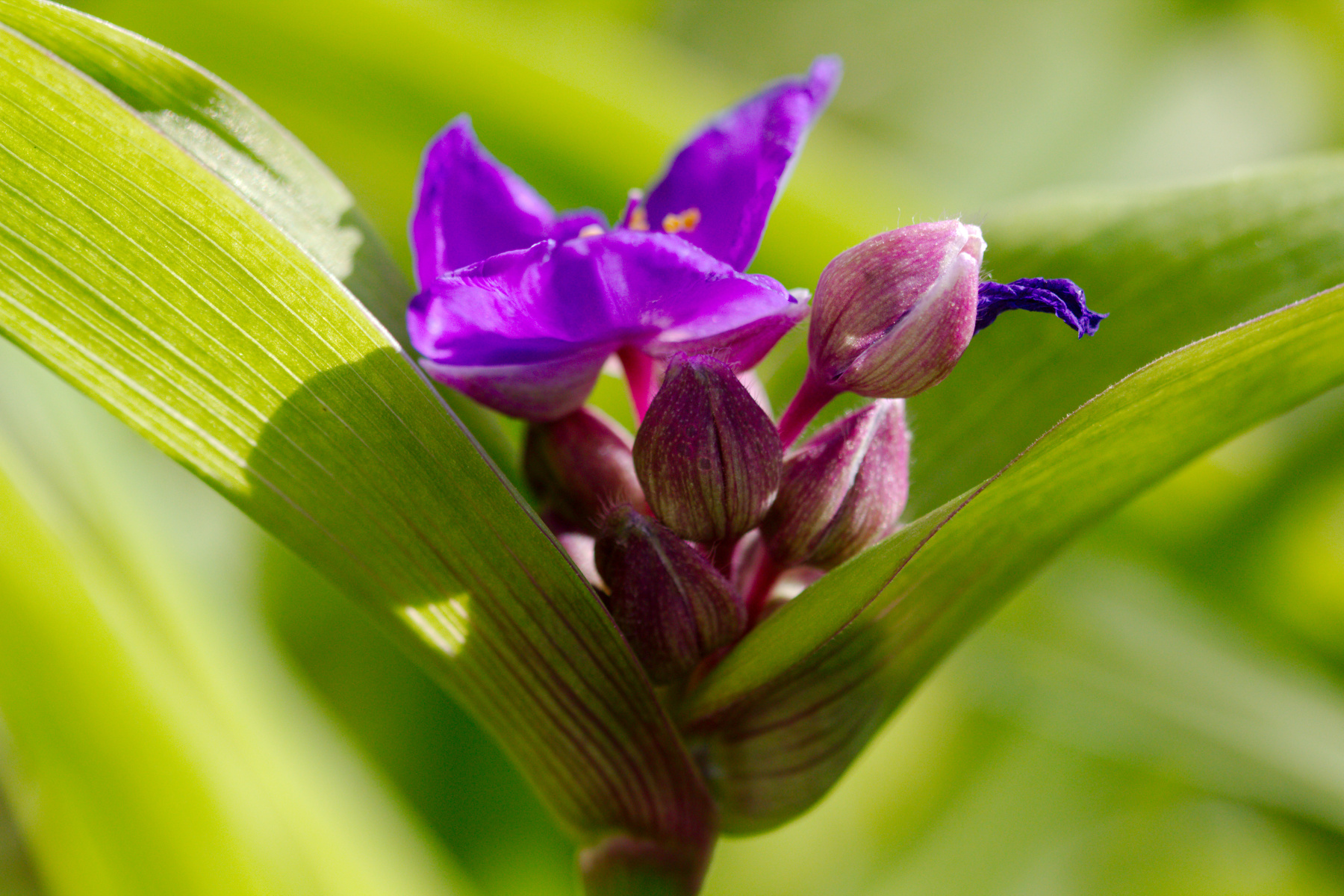
Tradescantia virginiana (Spiderwort)
One of our favorite herbaceous perennials is the spiderwort (Tradescantia virginiana). It’s a native and is easily grown in our gardens. In addition to the ‘standard’ versions, we have a few named varieties. This is one of the plain species and it’s lovely, of course. This one is right outside our back door and this is the first bloom of the year. I’ll almost certainly return to it later, when it has more flowers, or will post a photo of one of the other, slightly more exotic varieties. But they really don’t need much improving.
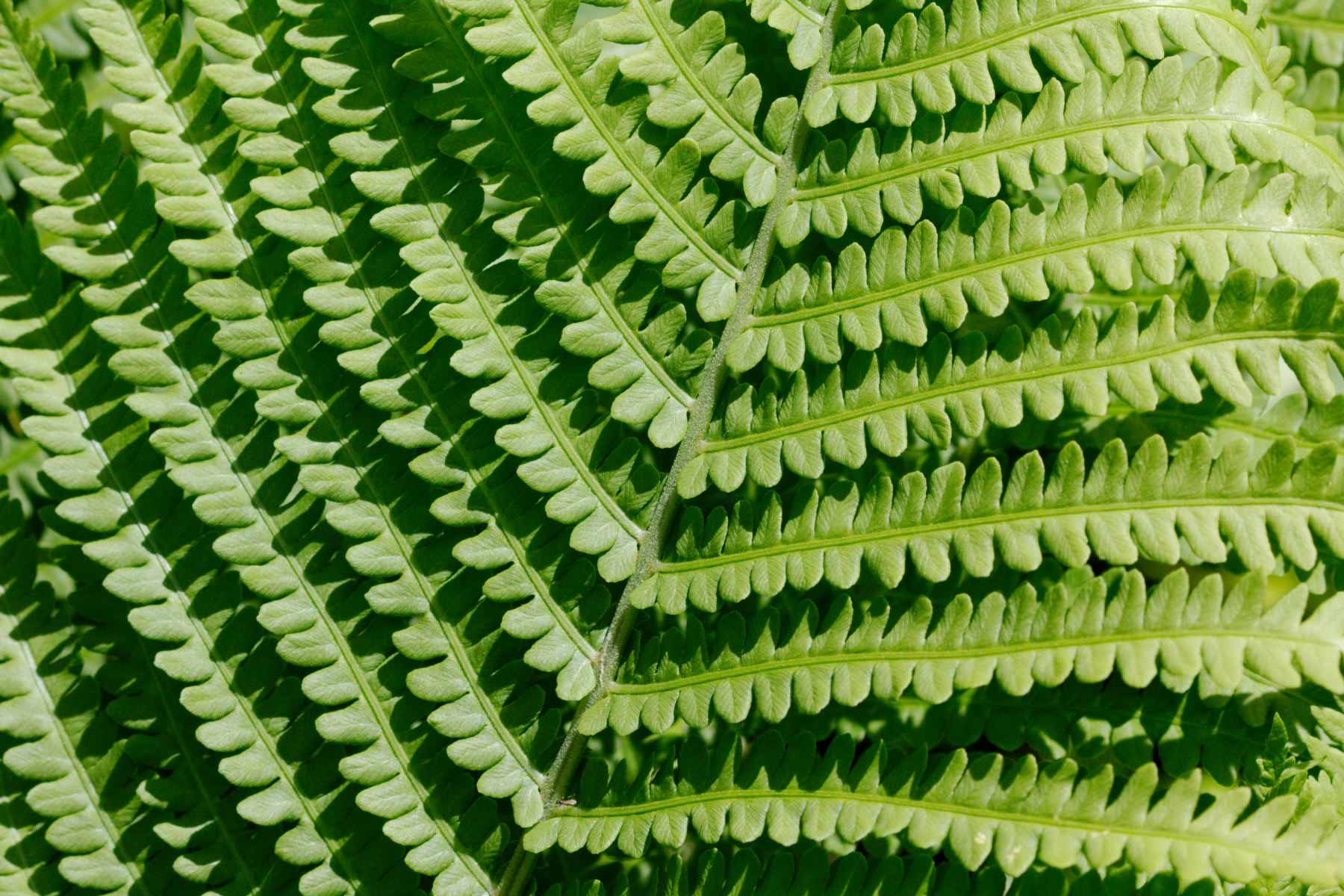
Woodwardia Frond
I’ve had a few fern photos this spring but here’s another. This is a Woodwardia of some type but I’m not sure which. It’s growing in our shade garden at the north end of our front yard and is quite happy there. We went to the garden center today and I bought a royal fern (Osmunda regalis) to plant in this part of the garden. My thought is to move the Japanese painted fern (Athyrium niponicum var. pictum) to the front of the bed, because it’s too short to be seen well where it is. The royal fern should be plenty tall so that will be nice. It’s something I’ve wanted a while.
Sisyrinchium angustifolium (Blue-eyed Grass)
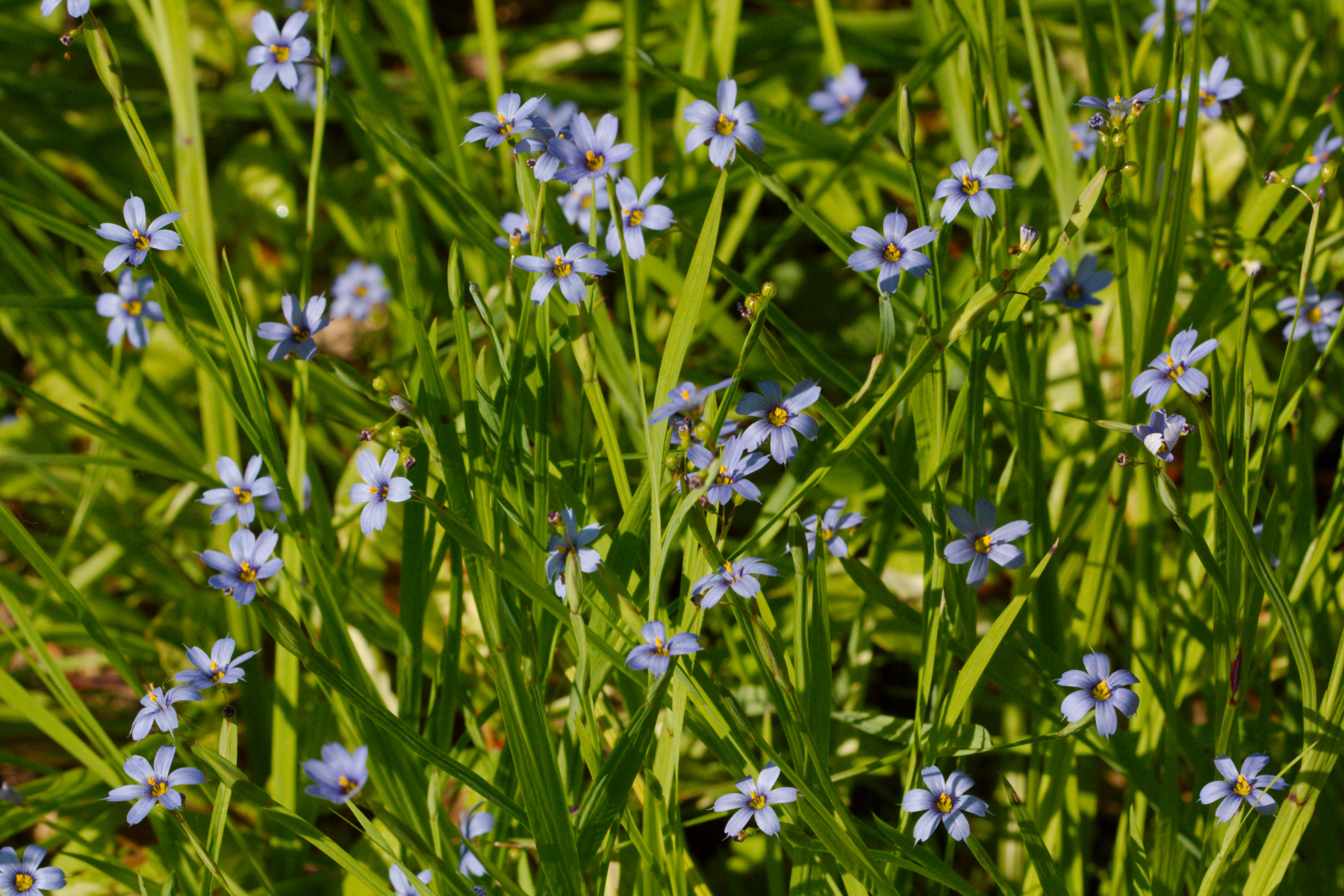
There is a lot of interest in native plants and in general I don’t mind that. They often thrive in out local conditions. It’s somewhat related to the emphasis on so-called organics (as opposed to synthetics), thinking that they are inherently better and safer. Nevertheless, some natives can easily become weeds. Blue-eyed grass (Sisyrinchium angustifolium) is a case in point. It’s actually lovely and in its place, worth growing. But be aware that it will come up around your yard and garden and if you don’t want it to take over, you’ll need to be a little ruthless in pulling it out.
Pink Spiderwort
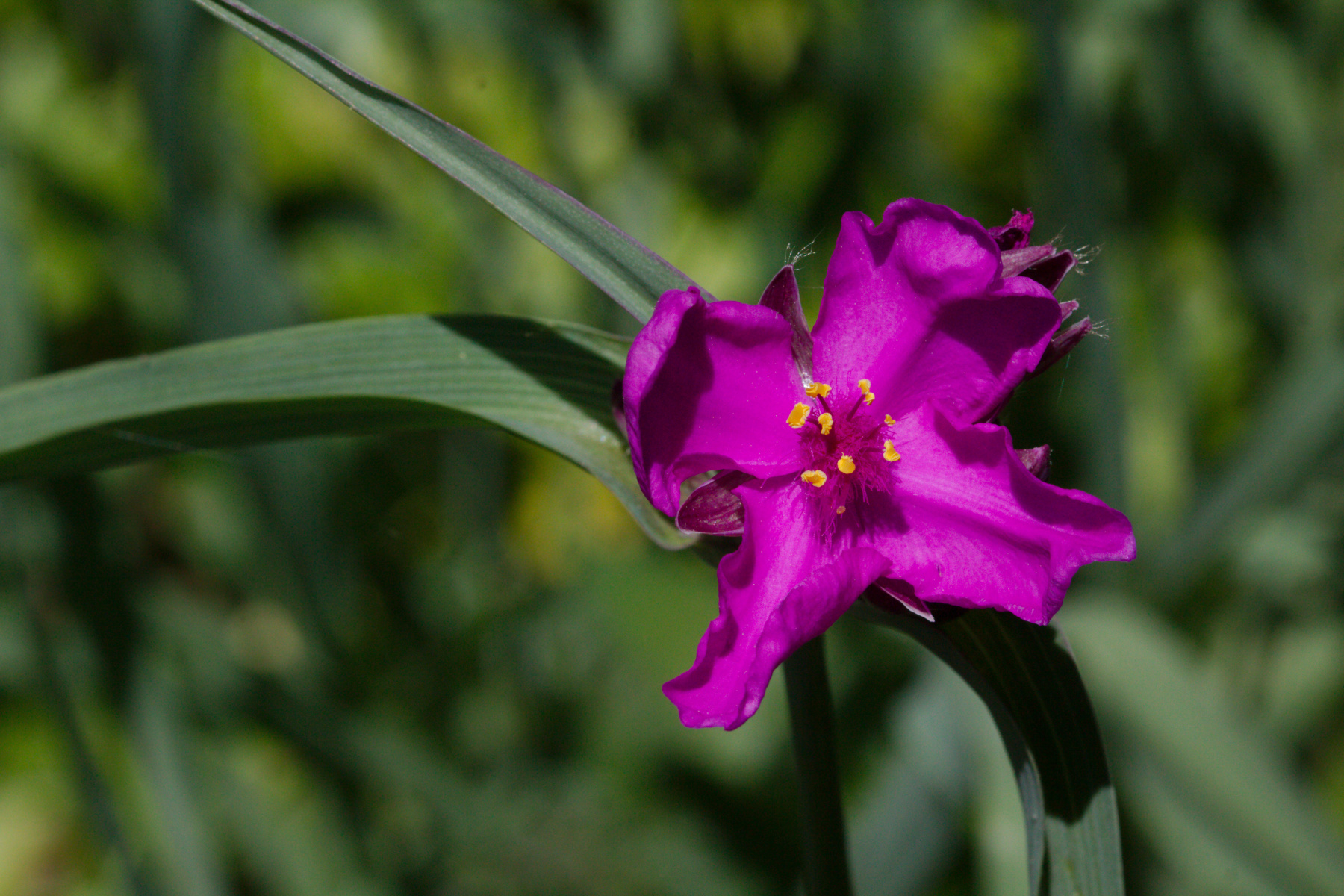
We have two of these pink spiderworts in the side garden. They really are nice and I took some photos today with this one in the foreground and with the more usual blue flowered variety being it. We don’t remember the name of this variety and it may be a type of Tradescantia ohiensis, the Ohio spiderwort, rather than T. virginiana. There are others, too, of course. Anyway, it’s a really nice flower and lovely in the border. The flowers open in the morning and then close up during the heat of the day, so best appreciated early. This was taken from about the same spot as yesterday’s photo of the wren.
Spigelia marilandica (Indian Pink)
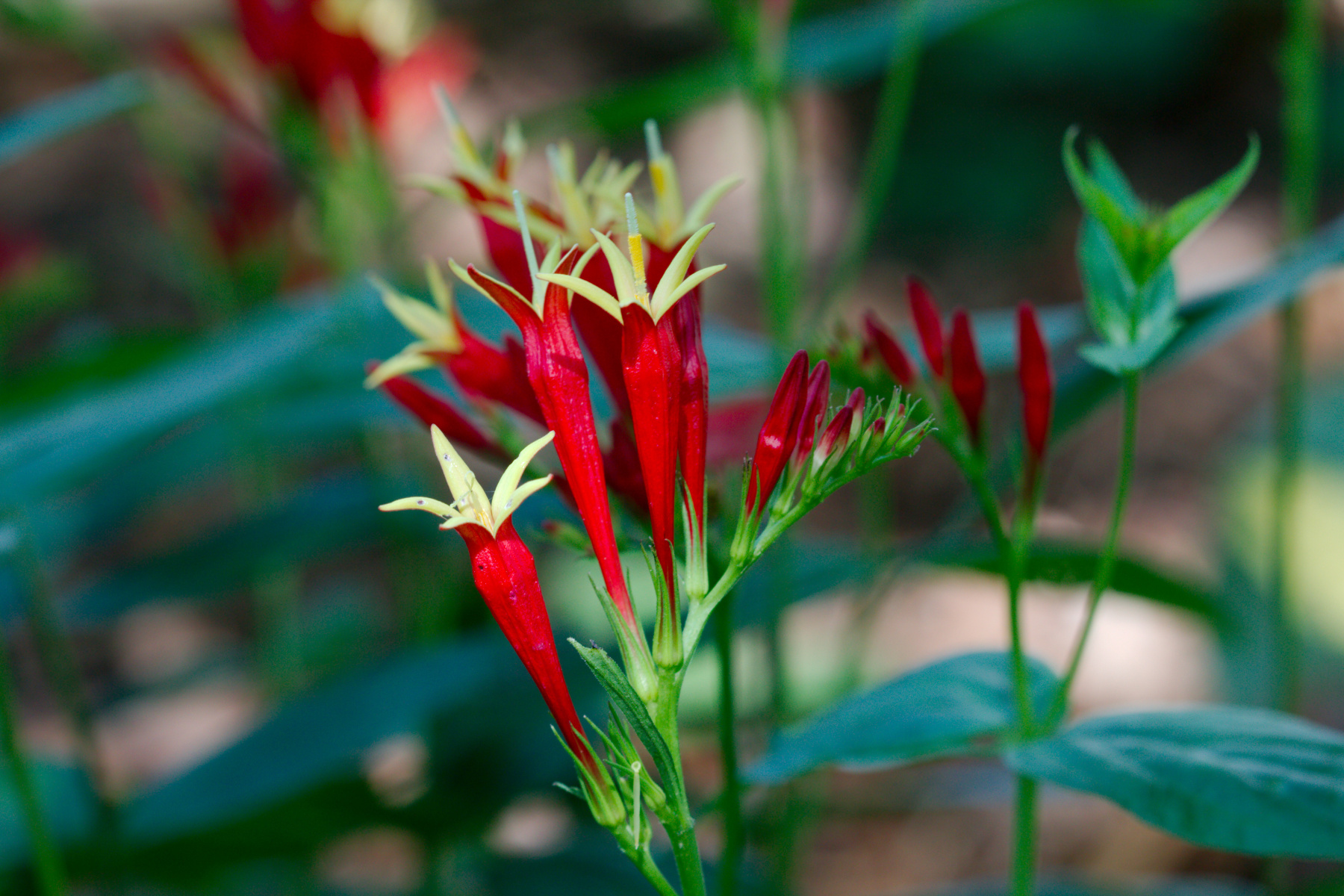
Here’s a second photo for the day. After our walk in the park, we went to the Agricultural Farm Park and walked through their demonstration garden. It’s really changed since we were here last, about two months ago. There was one plant in bloom that really caught our collective eye. It’s a Maryland native commonly called Indian pink (Spigelia marilandica). What a beautiful flower. This is something I’d really like to get. I’ve done some searching and it seems like finding seeds will be difficult. There are a few mail order places that have the plant but most of them ship in the fall. Hopefully I’ll remember to order some then.
Asclepias incarnata ‘Ice Ballet’
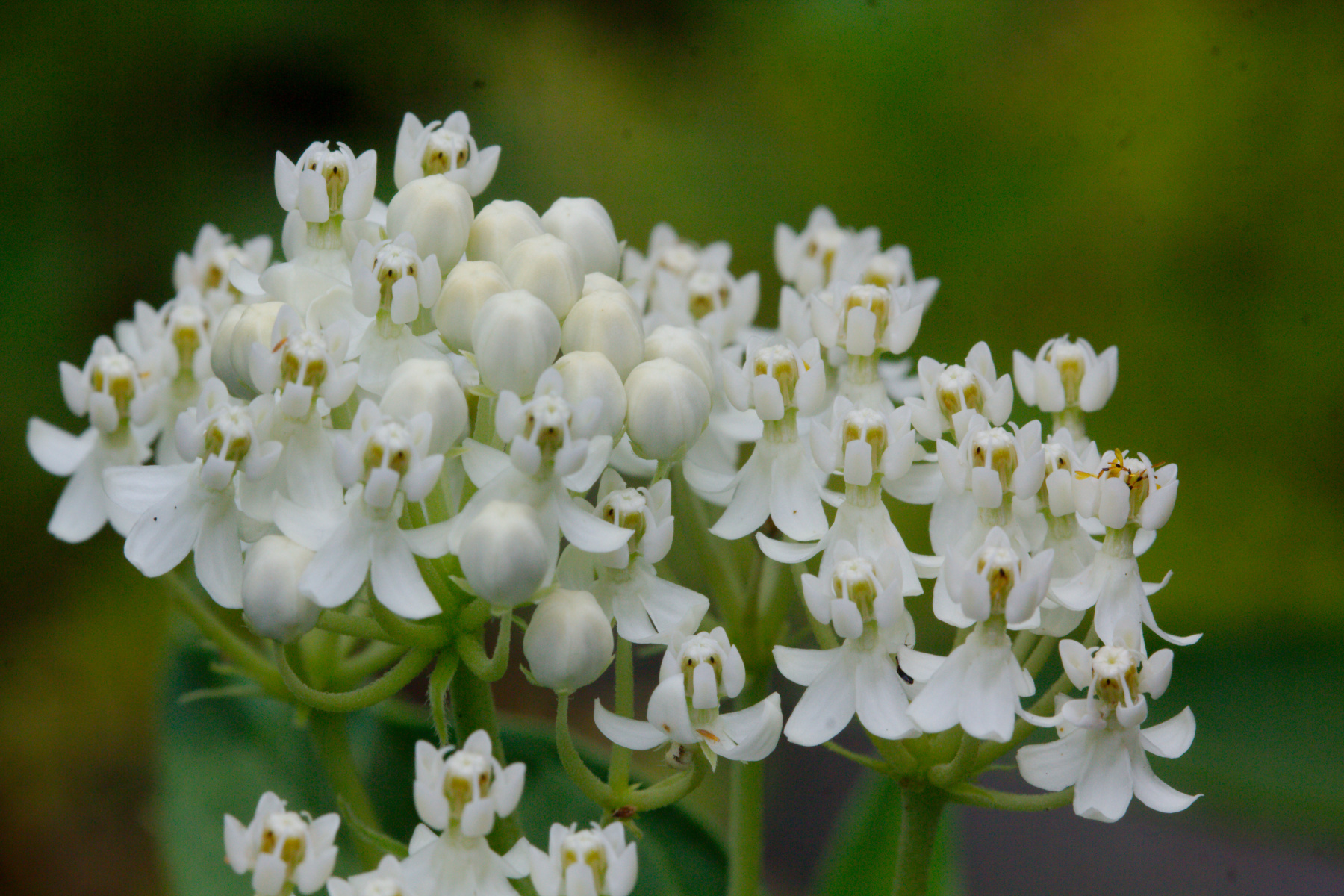
We’re big fans of Asclepias and have three species growing in our garden. We have a few varieties of Asclepias curassavica, a tender perennial native to the Caribbean and Central and South America often referred to as blood flower. We have several Asclepias tuberosa, butterfly weed, a hardy perennial native to our region. We just bought a few plants of a variety of Asclepias incarnata called ‘Ice Ballet’. The species is generally pale pink but this variety is a creamy white. It’s also a native to the area and is known as swamp milkweed. These will go in a spot that gets very wet when it rains, as these don’t mind that and there are a lot of things that won’t grow there.
Cardinal Flower (Lobelia cardinalis)
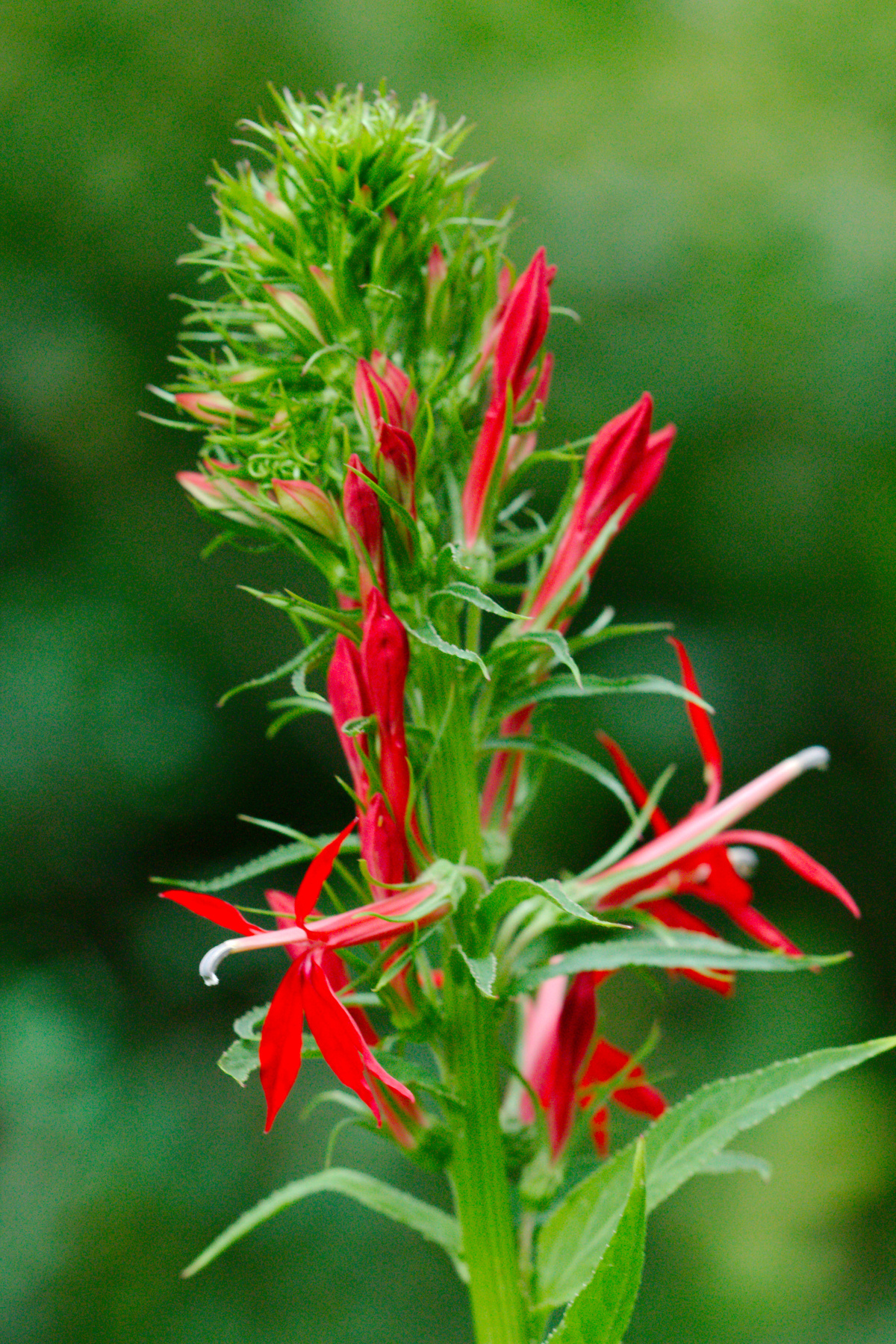
I probably should have waited a little longer to take a picture of this, since it isn’t really in full bloom yet. But I only got outside for a little while late this afternoon and this is all I took photos of. Cardinal flower (Lobelia cardinalis), is an American native and well worth growing. It really adds a splash of bright color to the garden. The only thing here is that you need to watch it in our dry summer heat that it doesn’t dry out too much. It likes moist soil and can even tolerate a little brief flooding. If you’re in a place that’s not quite so hot in the summer, you could plant it in full sun but for us, it does better with a bit of shade. This one is growing under a largish cherry tree and it a bit protected from the hot, afternoon sun. If you have a stream or pond, this would be great on the banks of that. Ours will have more flowers in a matter of days but you can already see how red the blooms are and why it’s such a nice thing in the border. We should have more than we do.
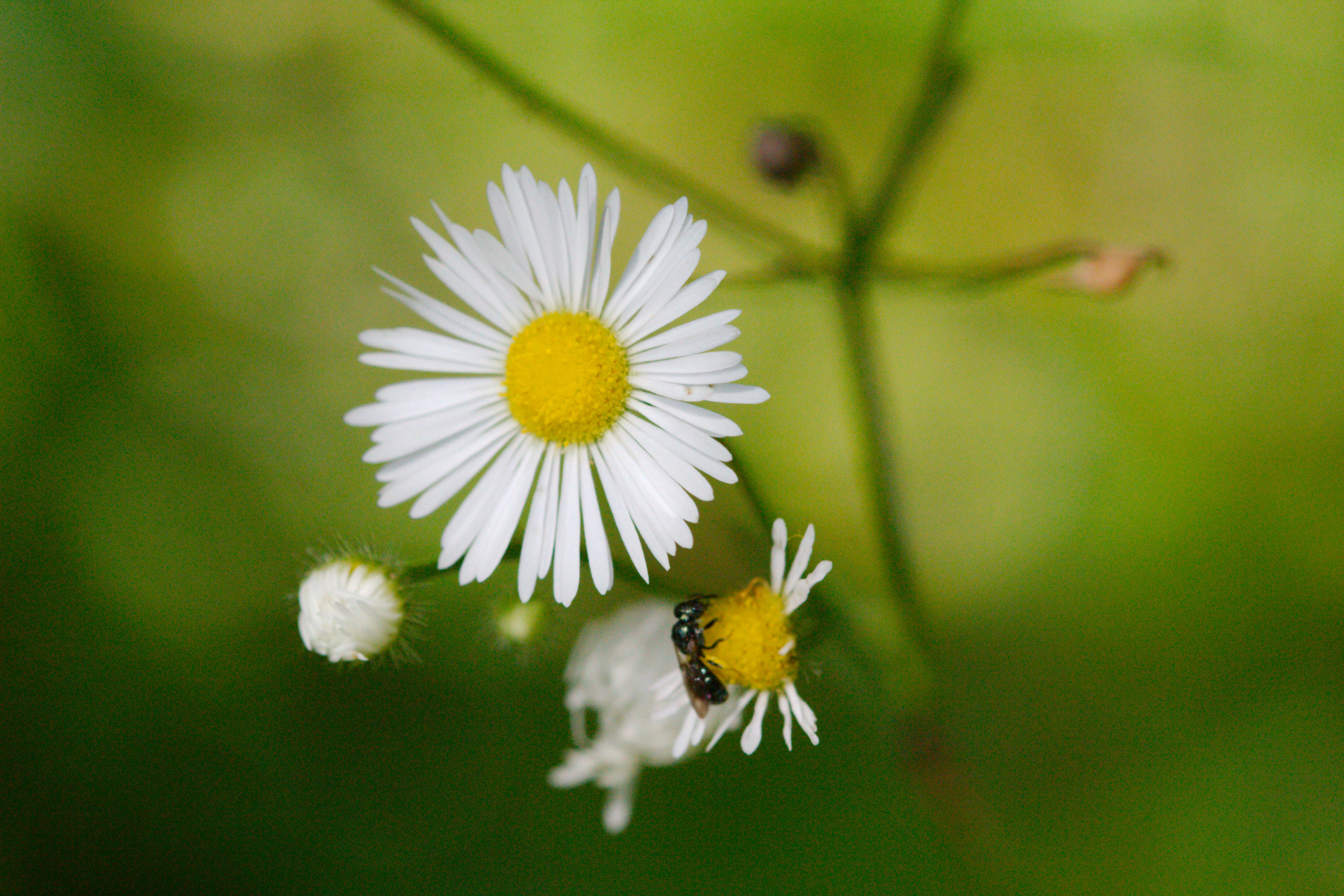
Fleabane (Erigeron)
We walked another section of the upper Rock Creek trail today. We parked at Redland Middle School and went from there to Lake Needwood. This section of trail is mostly level with just a little up and down. It follows the creek and included crossing Muncaster Mill Road. Although there is a crosswalk, you pretty much have to wait for someone actually paying attention who stops, as they are supposed to do. The path and creek also go under the Intercounty Connector (MD 200). Our walk was about 2.5 miles round trip, although it didn’t actually feel like we went that far. I was nice to be in the woods, although the humidity was very high and we were pretty well drenched by the time we got back to the car.
Backlit Coneflower
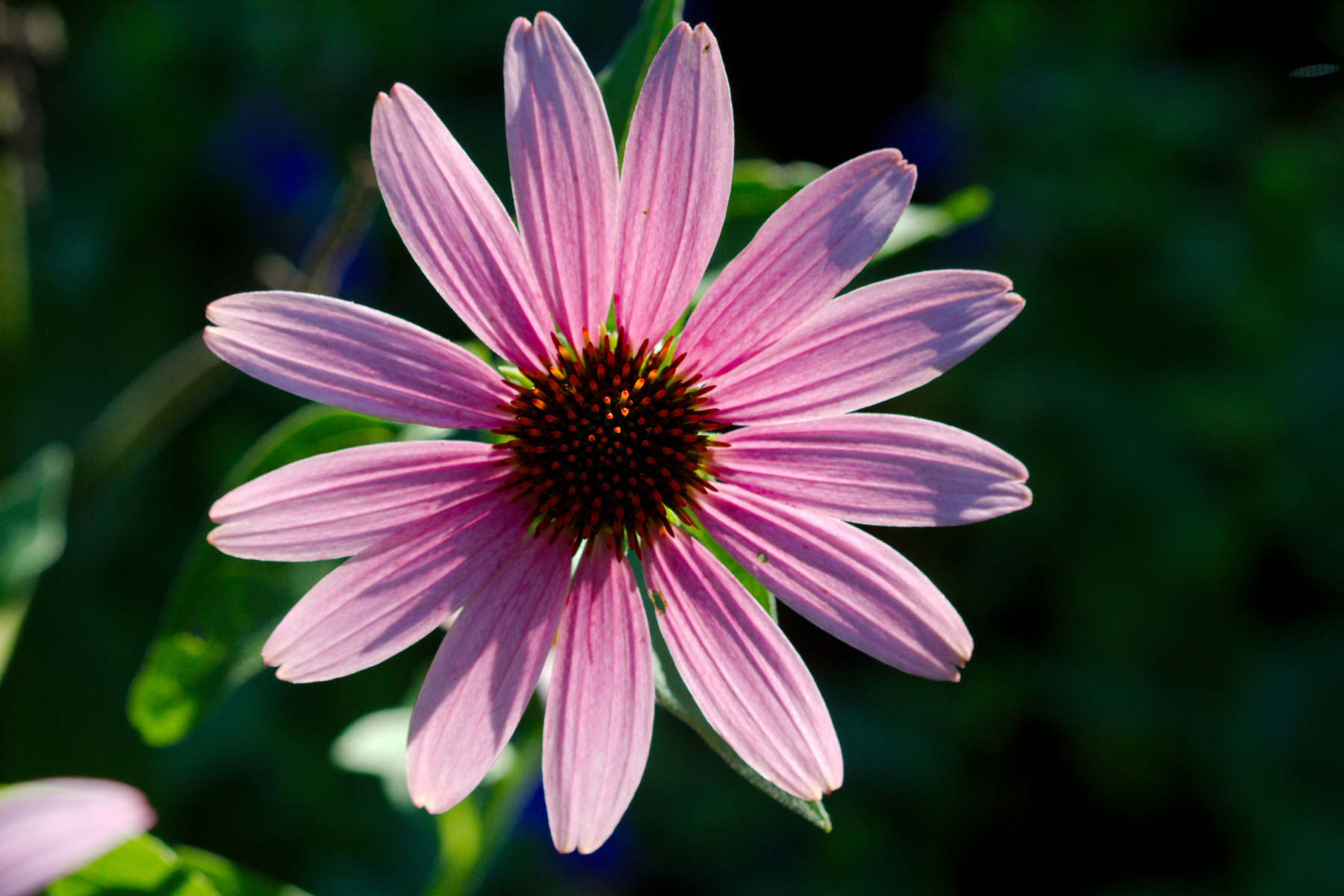
The coneflower (Echinacea purpurea) is in our back garden near the back fence. In the late afternoon, backlit by the sun it’s quite lovely. The bees, particularly carpenter and bumble bees, seem to really like the coneflowers. We (and by we I mostly mean Cathy) did a lot of work in this part of the garden this summer. It had become quite overgrown with mugwort and goldenrod among the monarda, asclepias, and irises. It’s basically ready for new plants now, so it isn’t finished, but it’s so much better than it was.
Black-eyed Susan
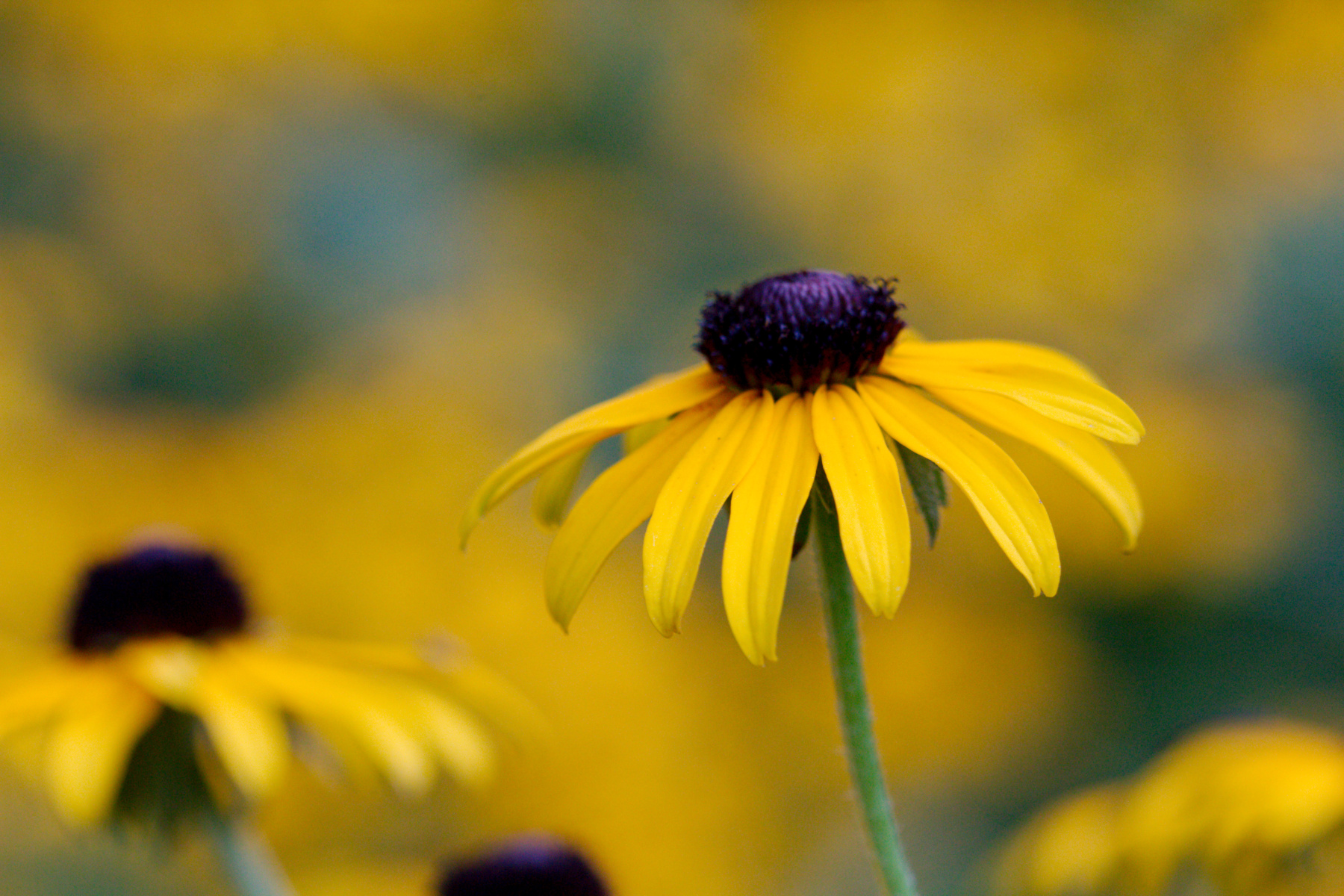
Our yard is pretty heavy on the Rudbeckias, (black-eyed Susan) although we’ve actually gotten rid of a few. You probably wouldn’t notice and it’s going to take a bit more work if we’re actually going to cut back on them noticeably. On the other hand, this time of year, they really are wonderful in their great numbers. The insects like them, although perhaps they aren’t the favorite flower. The skippers in particular are to be found on them and that’s where I usually see transverse flower flies (Eristalis transversa).