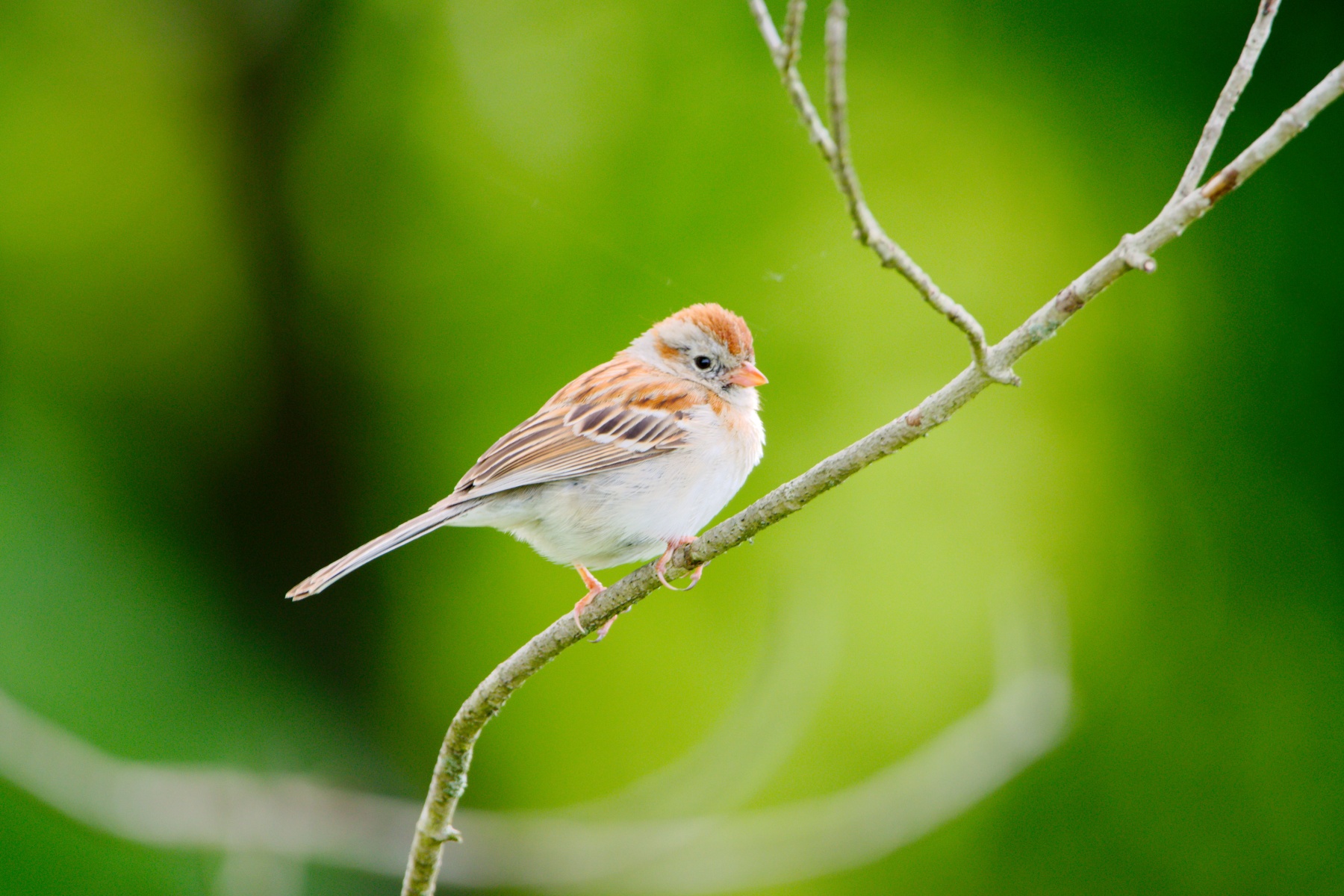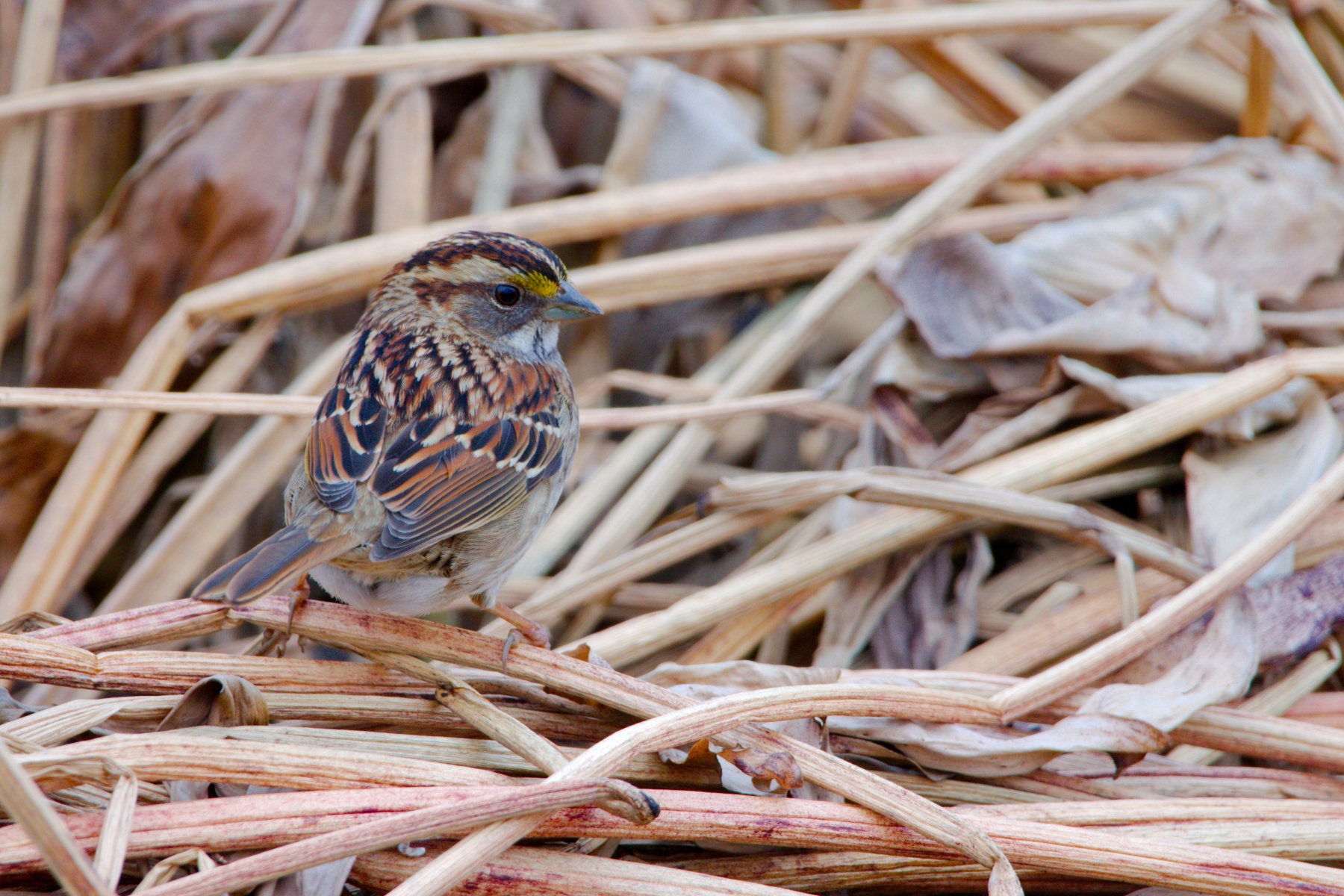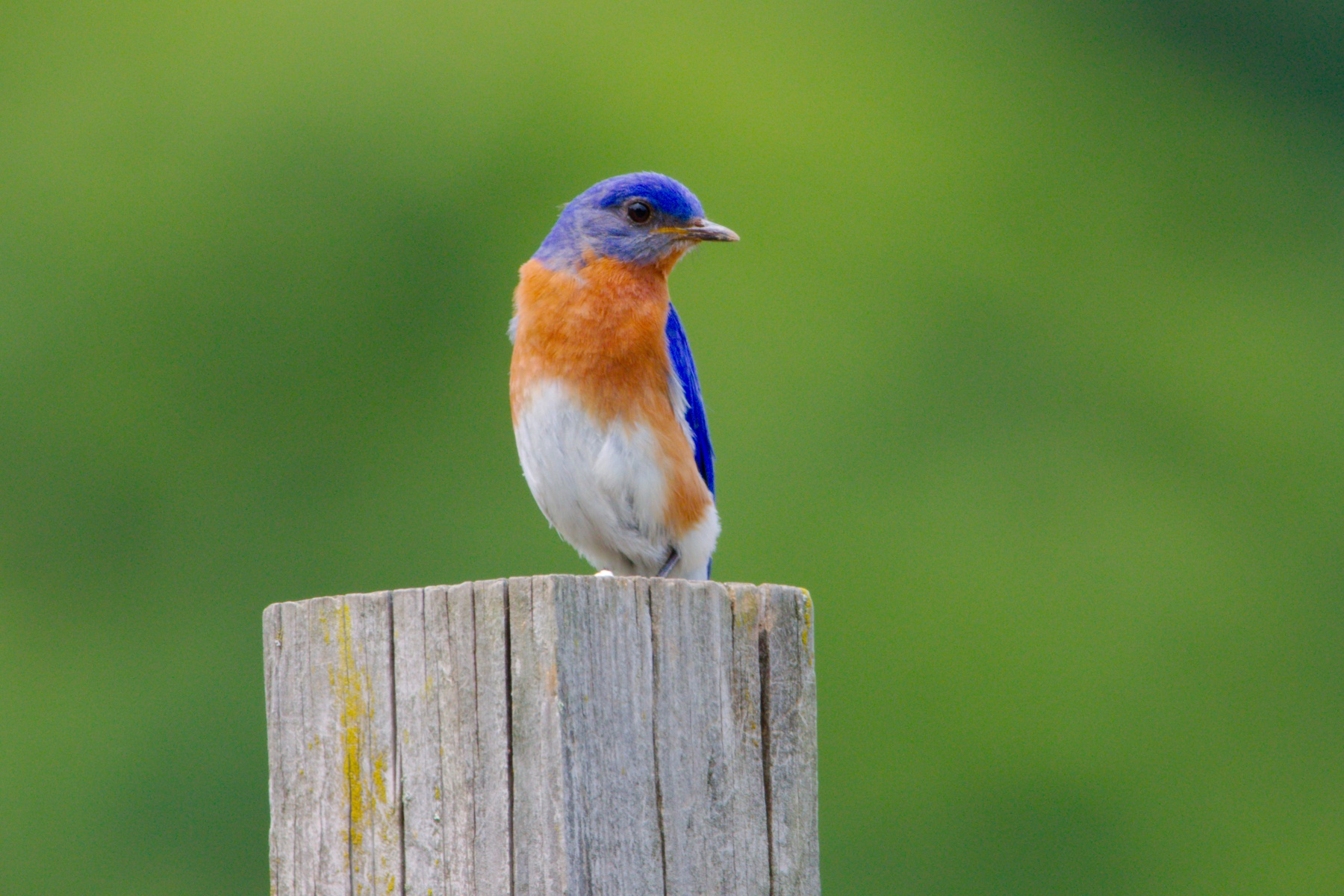
We went for a walk by Sandy Spring today, heading to the spring itself and then taking a loop down to the woods below, around past the side trail to Sandy Spring Friends School and then back up to the Sandy Spring Friends Meetinghouse, where we had parked. I got a few bird pictures, including a Carolina chickadee (Poecile carolinensis), an eastern bluebird (Sialia sialis) a gray catbird (Dumetella carolinensis), and this field sparrow (Spizella pusilla). I’m pretty sure this is my first actual photo of a field sparrow, although they are not uncommon.
Tagged With: Birds
Field Sparrow (Spizella pusilla)
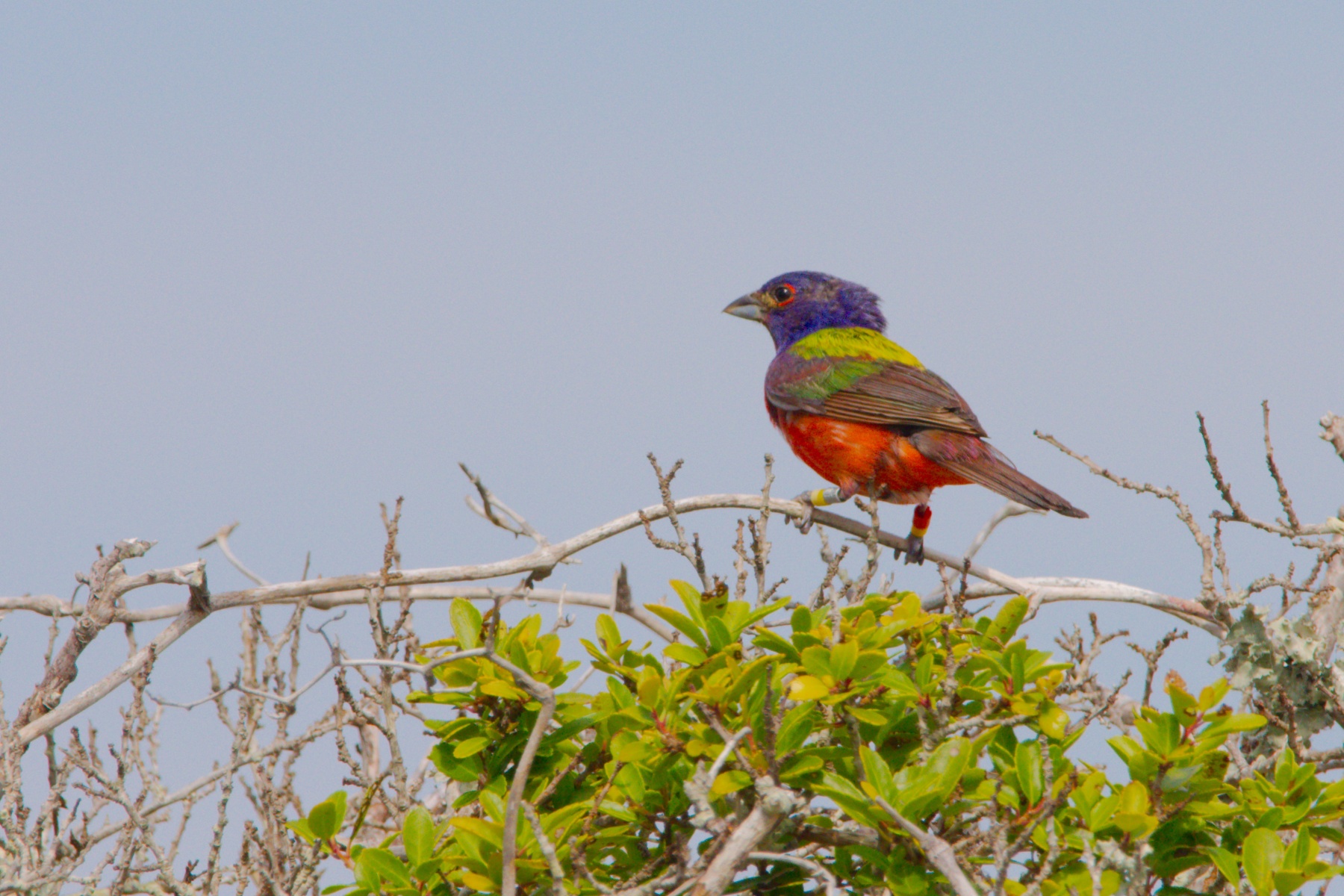
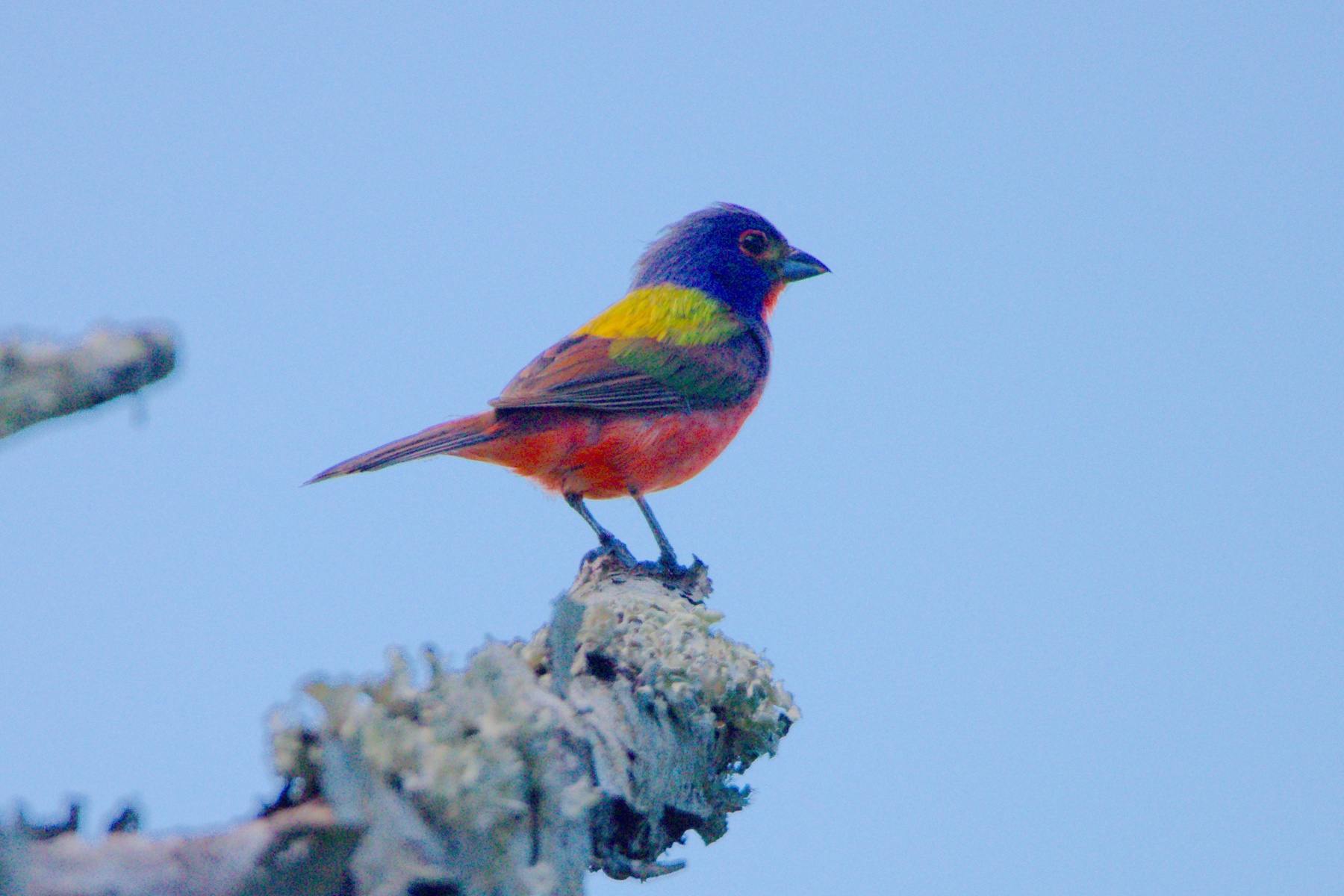
Painted Bunting (Passerina ciris)
We headed to Sunset Beach again today, leaving a bit earlier in the morning, and were able to get a parking space near the west end of Main Street. The walk to the Bird Island Reserve nature trail is about 1.25 miles. It was partly cloudy and quite windy as we walked out, but that was actually very nice. We heard quite a few painted buntings (Passerina ciris) but only saw two and only one that I was able to get a decent photo of. They certainly are pretty little things. This one sat and sang for us a good while.
Bunting and Egret
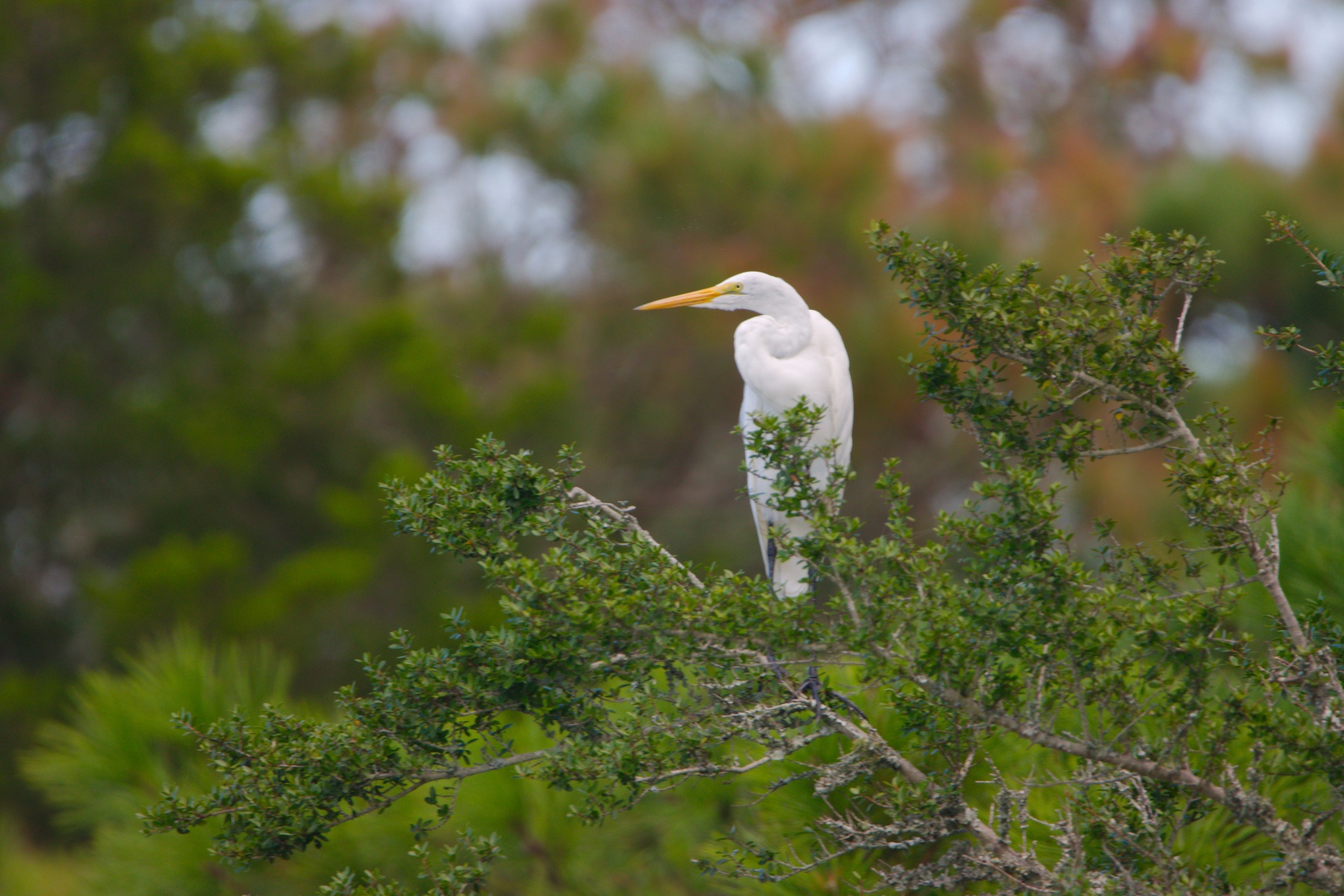
We found a little nature reserve on the map and decided to give it a try today. It’s a bit further than we’d normally go and I don’t know that we’d go again, given the distance and the fact that we had to pay for parking at $4 per hour, which is a bit steep. It does probably account for the place not having many people, though. We say another painted bunting as well as quite a few herons and egrets, including the great egret Ardea alba shown in the first photo here. If you don’t mind spending a little money and you’re near by, it might be worth a visit.
We could hear thunder rumbling in the distance and the sky was quite menacing to the south but it never got close enough to bother us at all. It’s been warm this week but nothing like what it’s been up until now. This week we had highs in the mid 80s, which is pretty good for the time of year.
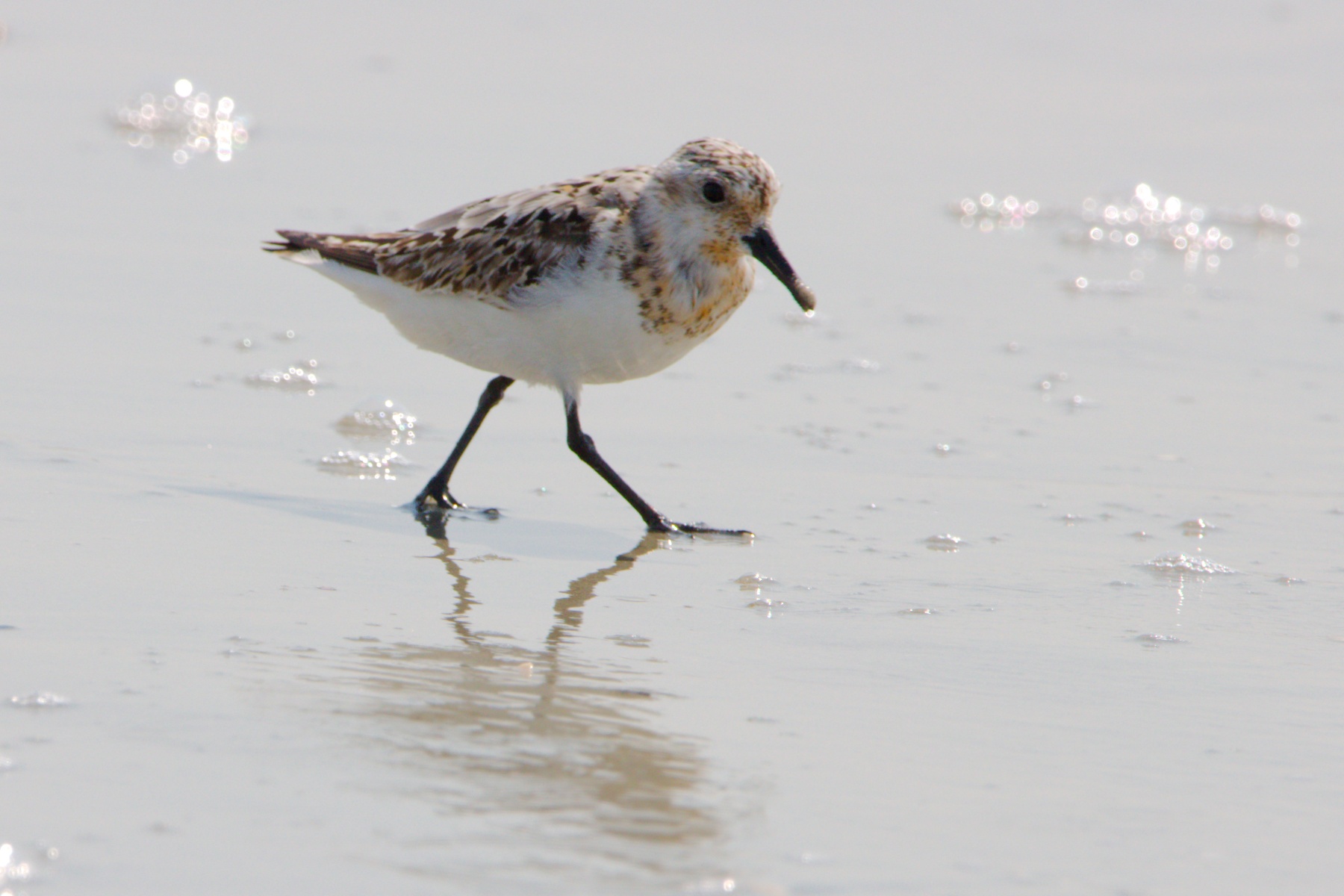
Sanderling (Calidris alba)
Cathy and I went to the east end of Ocean Isle this morning and walked along the beach. Cathy looks for coral on the beach and before today hadn’t found many pieces. Today she found as much as she sometimes finds in a week. I found a few pieces, as well, but mostly I was taking photos of birds. I got a few of a brown pelican (Pelecanus occidentalis) and some of willets (Tringa semipalmata) and quite a few of these little sanderlings (Calidris alba). They are quite numerous on the beach, running up just above waves and then following them back down to dig things up out of the sand.
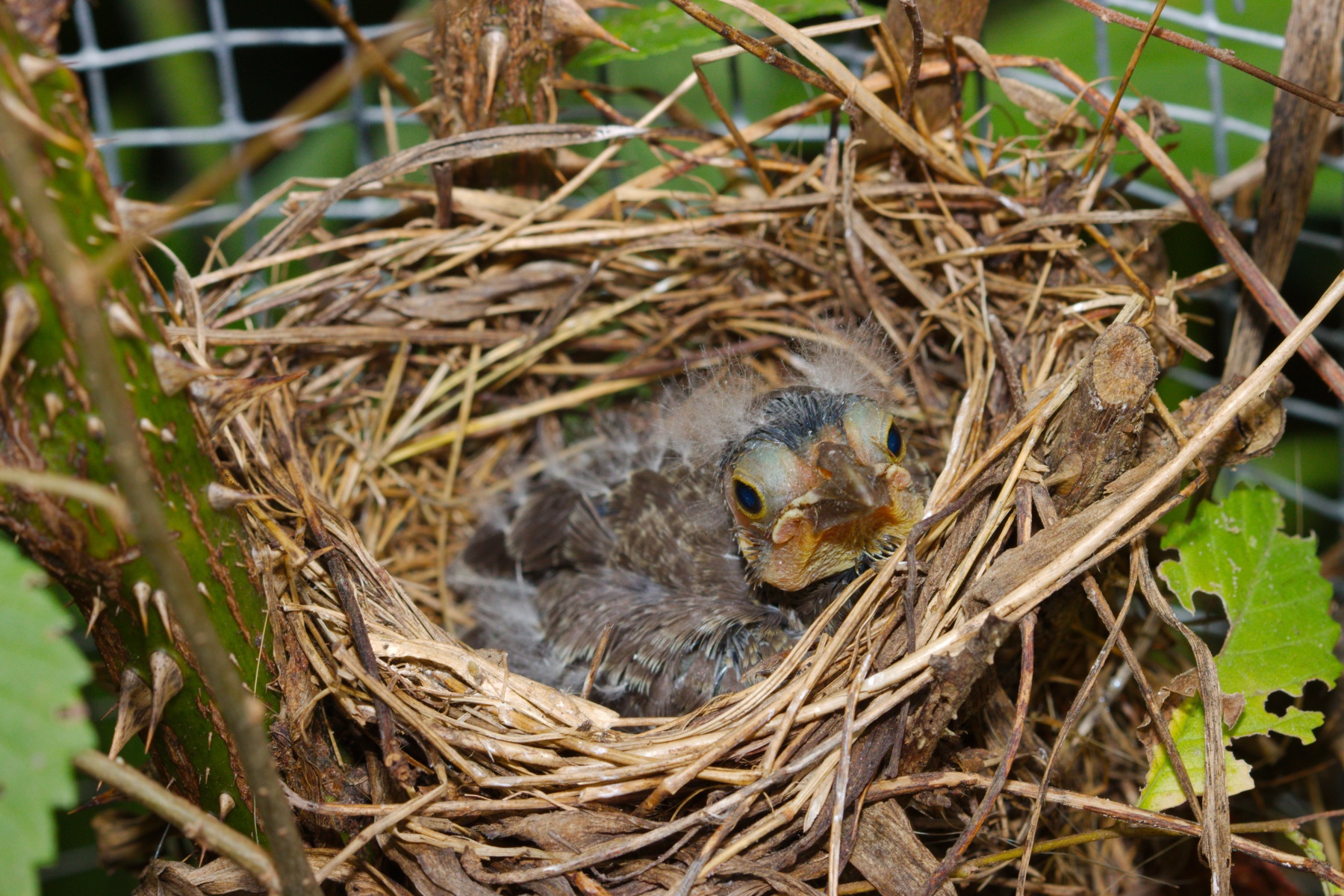
Baby Bird
I have no idea what kind of bird this is. Given its size, I’m guessing something larger than a sparrow but smaller than a crow. Possibly an America robin, but really, I have no idea. I was clearing around one of my roses today when I noticed the nest. I took a few pictures and then left things they way they were. There’s plenty more to do in the garden and I can come back and work around the rose when the bird has fledged. We see quite a variety of birds in our yard. We have multiple sources of water that we keep filled (and ice-free in the winter). We also have quite a few plants that provide food for birds that like their seeds. We also attract insects, so there are birds that come for those. Finally, we have hummingbirds and we see them both on the feeders and on flowers in the garden.
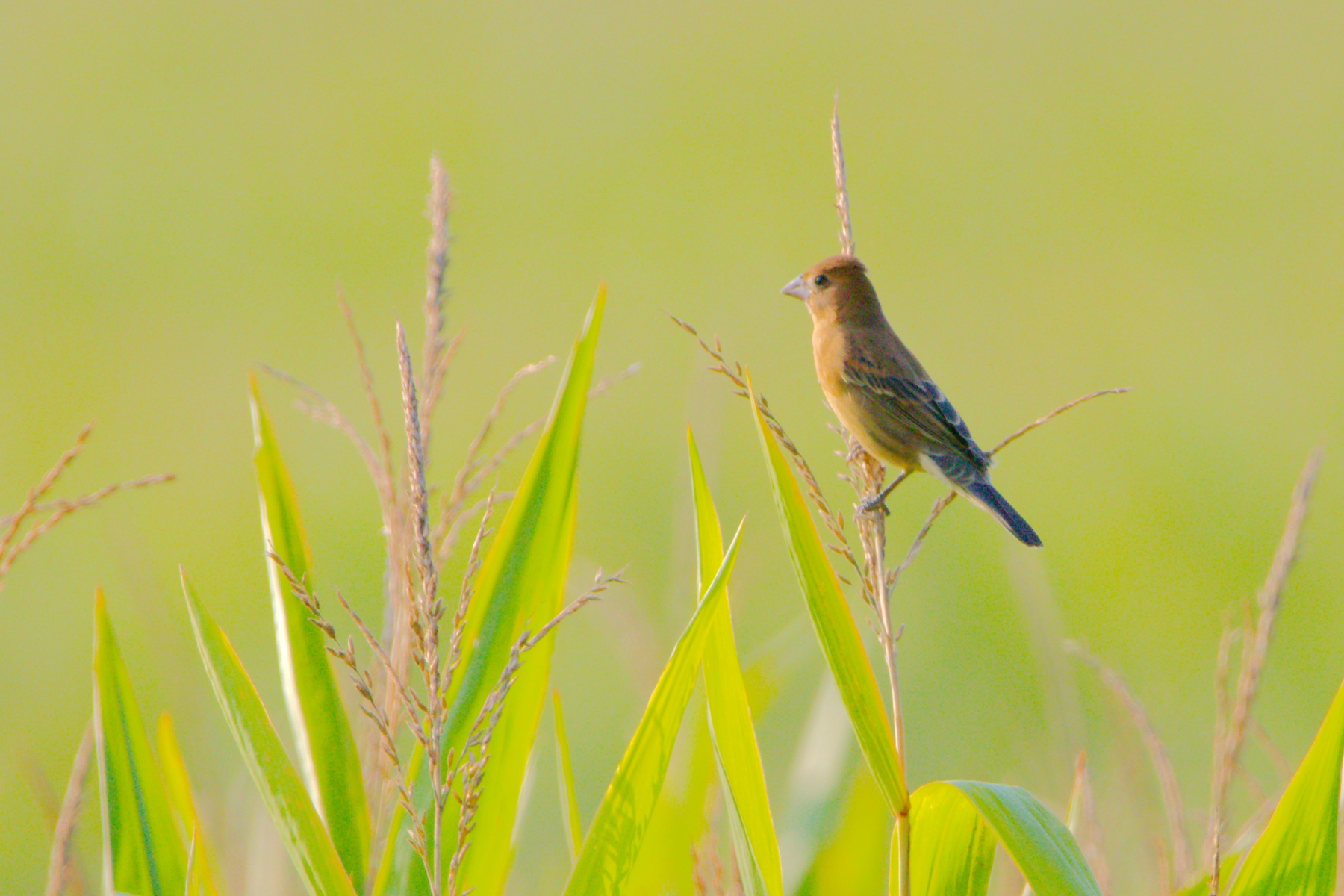
Female Blue Grosbeak (Passerina caerulea)
We decided to go over to the Agricultural History Farm Park late this afternoon. We enjoyed walking in the demonstration garden as well as seeing the dahlias. Then we walked down to the row of apple trees, a few of which were loaded with apples. On the way back up I took this picture of a female blue grosbeak (Passerina caerulea) on the corn. I thought it was a female goldfinch but when I went to confirm that, both Google and the Merlin app identified it as a grosbeak. I also got a nice shot of a female chipping sparrow (Spizella passerina, which Google misidentified but Merlin got right. And I got two shots of a male eastern bluebird (Sialia sialis), but he had his head turned away from me.
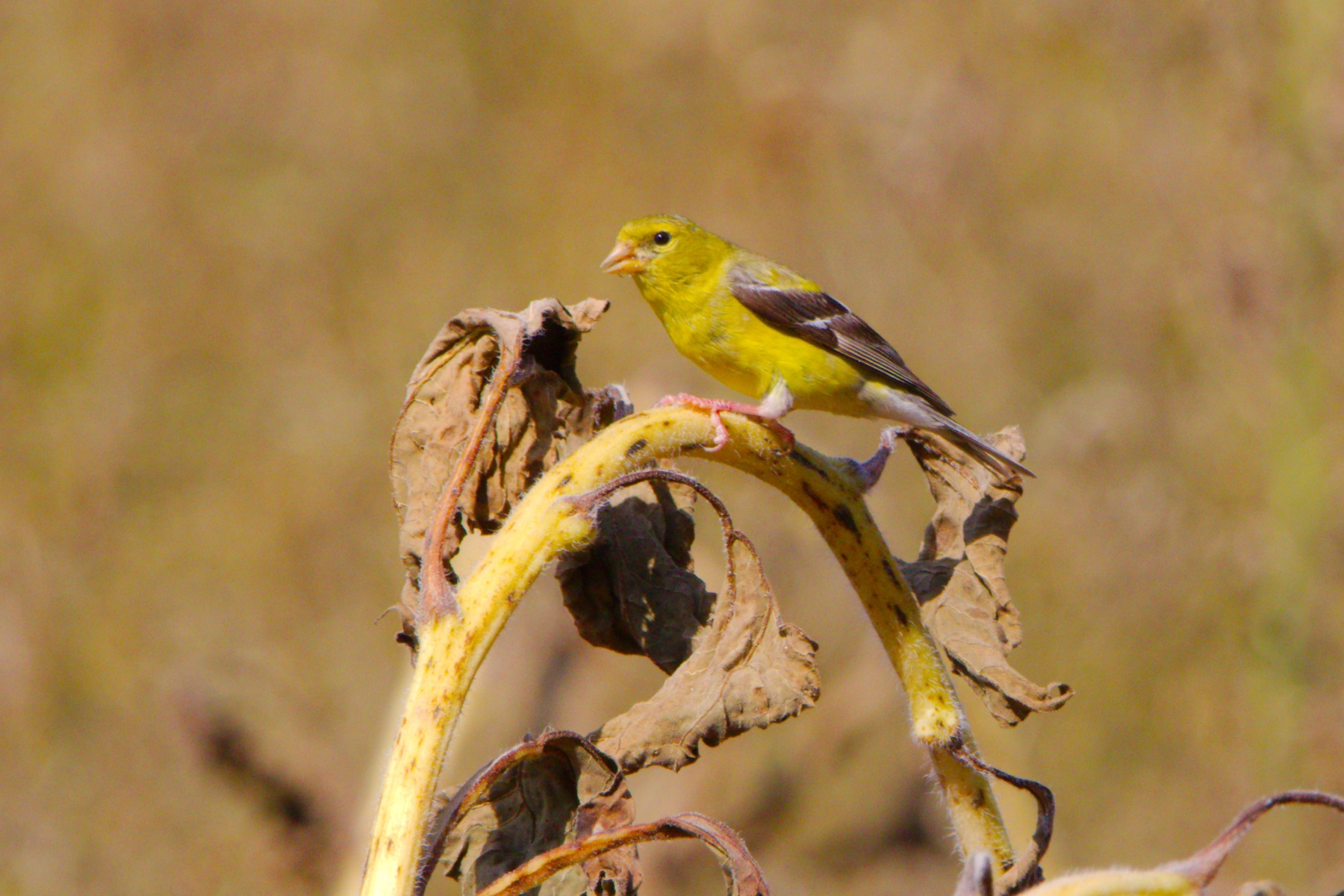
American Goldfinch (Spinus tristis)
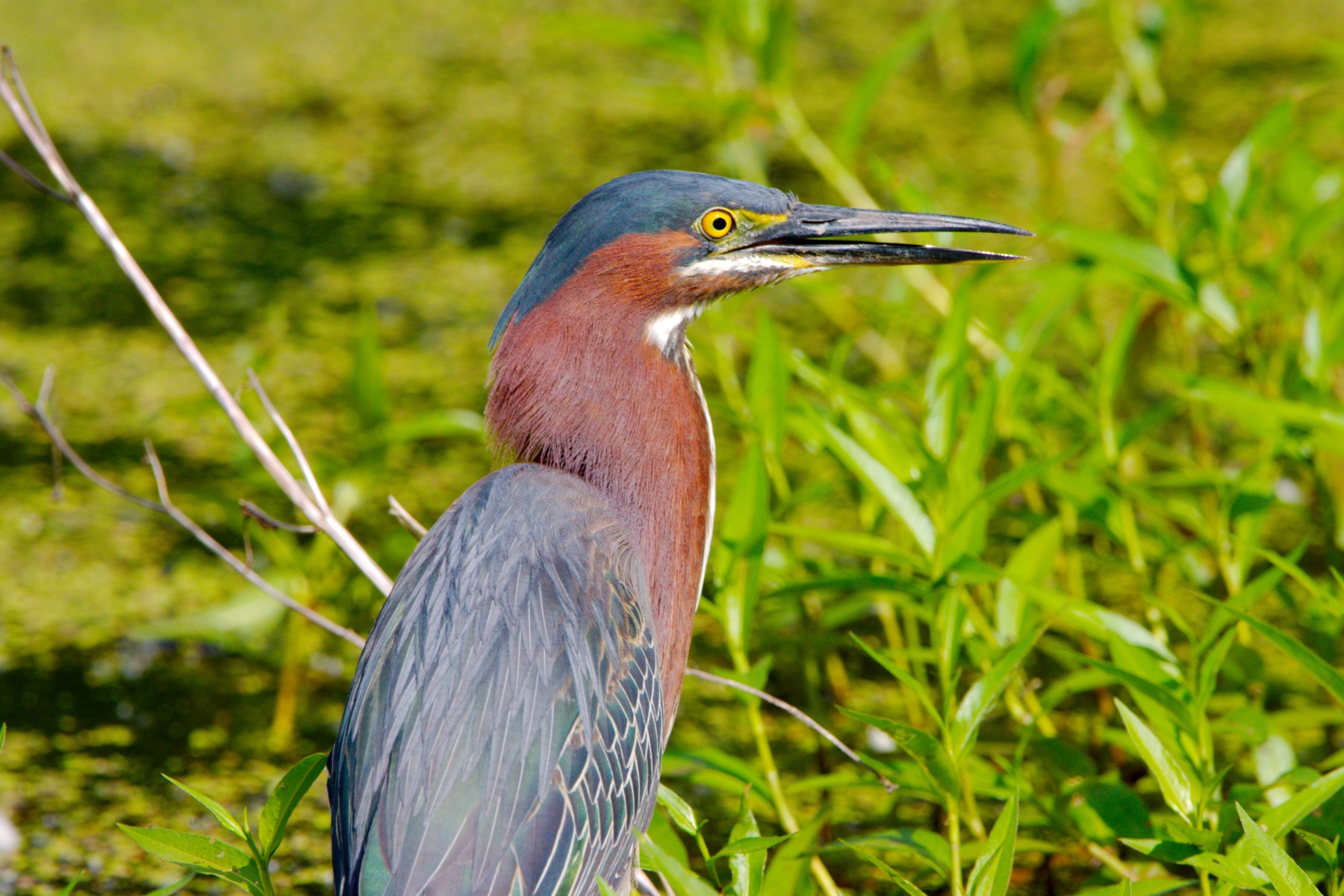
We drove out to McKee-Beshers this afternoon. We didn’t get out there when the sunflowers were blooming but thought we might see birds on the seedheads. We didn’t see indigo buntings (Passerina cyanea), probably because they are migrating south. We did, hovever see a lot of American goldfinches (Spinus tristis), like the one pictured here. I got a photo of a blue-gray gnatcatcher (Polioptila caerulea) and an eastern phoebe (Sayornis phoebe). At one area, where there are shallow ponds, we saw a green heron (Butorides virescens) and down by the river we saw a great blue heron (Ardea herodias).
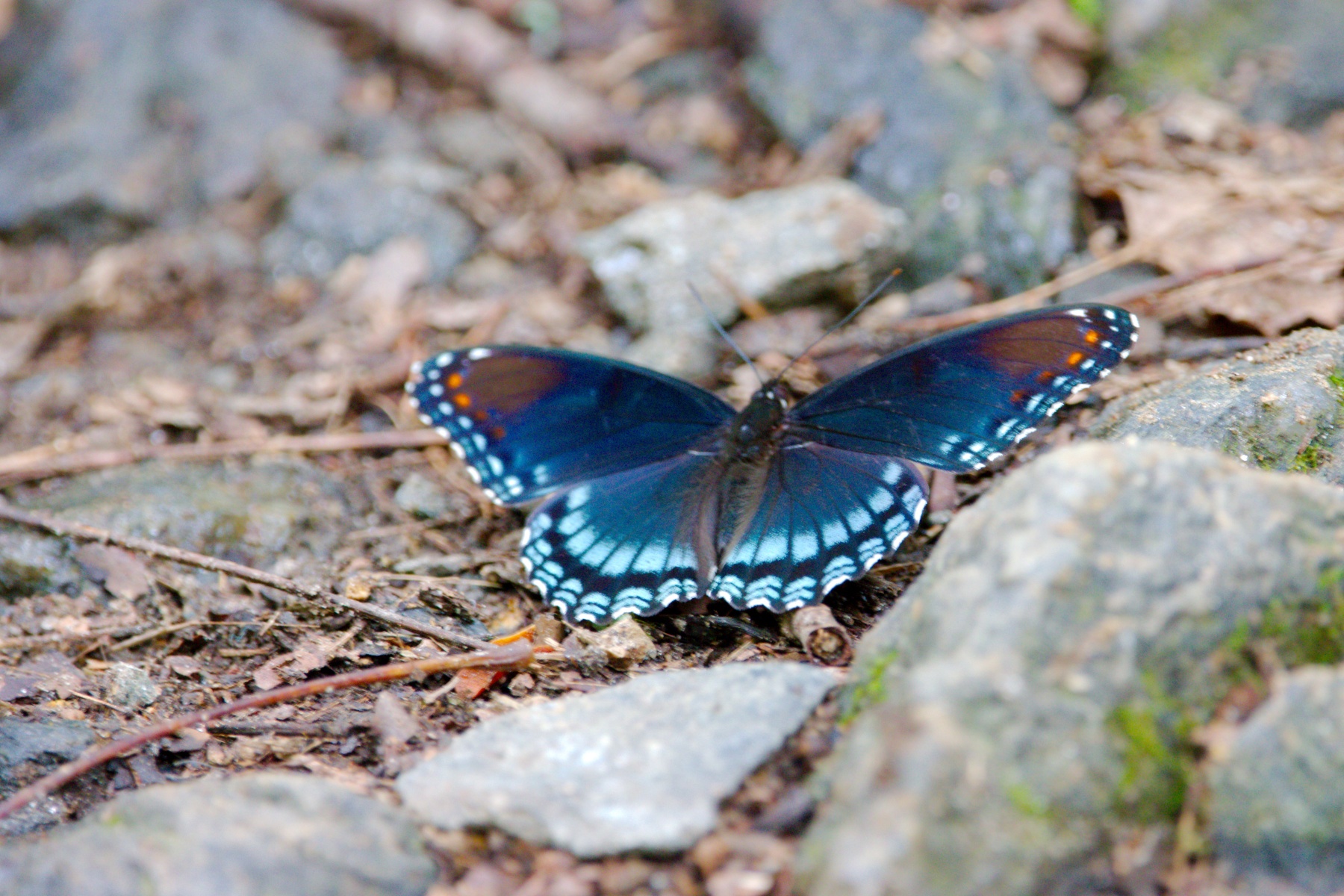
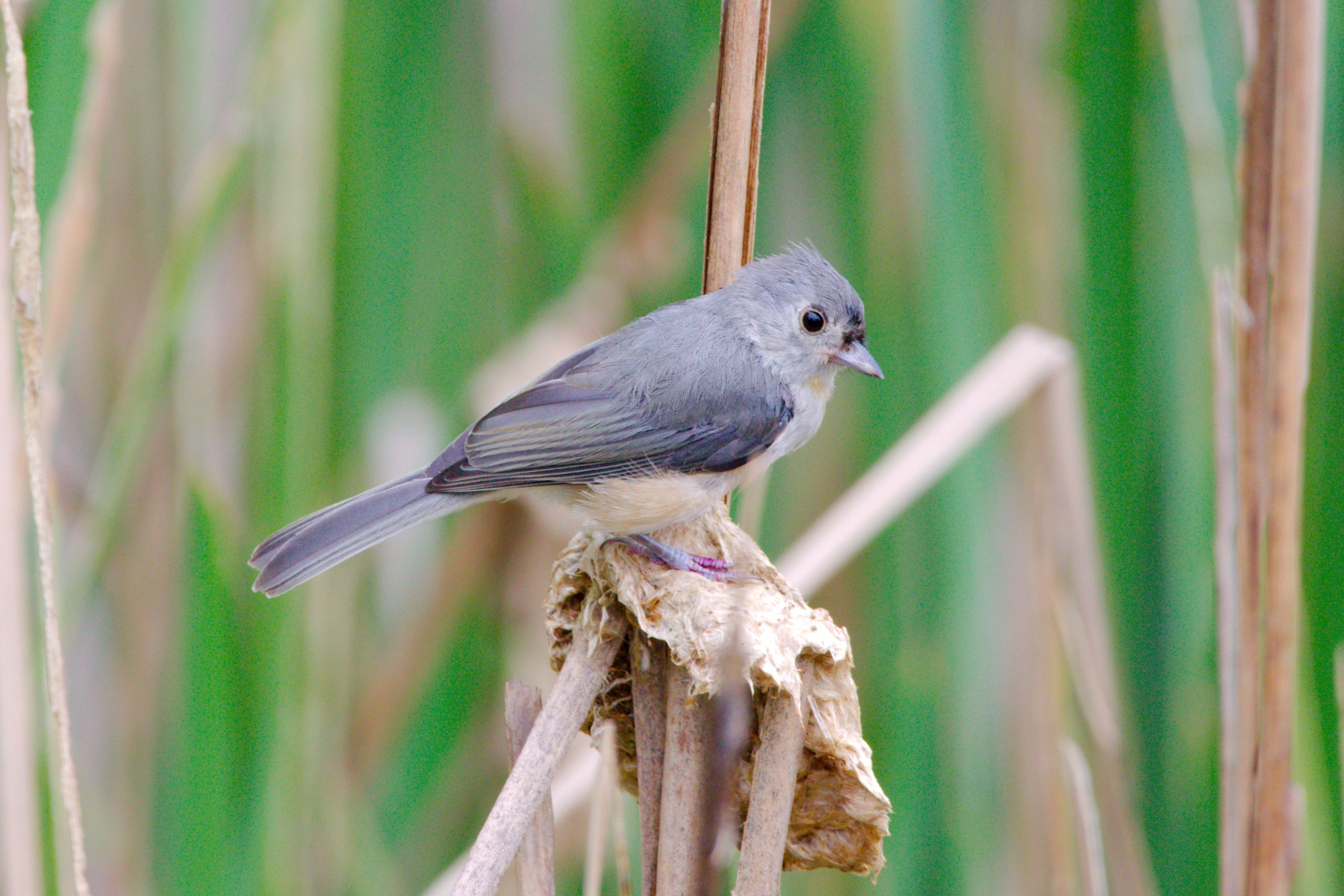
Red-spotted Purple and Tufted Titmouse
We went to great falls this afternoon and walked on the Goldmine Loop and then the Woodland Trail and back by the Burma Road, and finally down to the towpath and back to the parking area. The woods were quiet and it was a very nice walk. We didn’t see or even hear many birds in the woods but it was still really pleasant, if a bit warm and humid. We saw a butterfly that I didn’t recognize. Looking it up after getting home I found that it’s a red-spotted purple (Limenitis arthemis astyanax). I think it’s a beautiful butterfly in the genus Limenitis, the admirals and viceroy butterflies.
When we were on the Burma Road over Widewater we saw a cormorant and then down on the canal we saw more butterflies and a few little grey birds in the cattails. At first we couldn’t figure out what it was but then one hopped up onto a blade in plain sight and we could tell that they were tufted Titmice (Baeolophus bicolor).
I would definitely walk this trail again. I think it would be especially nice in the spring.
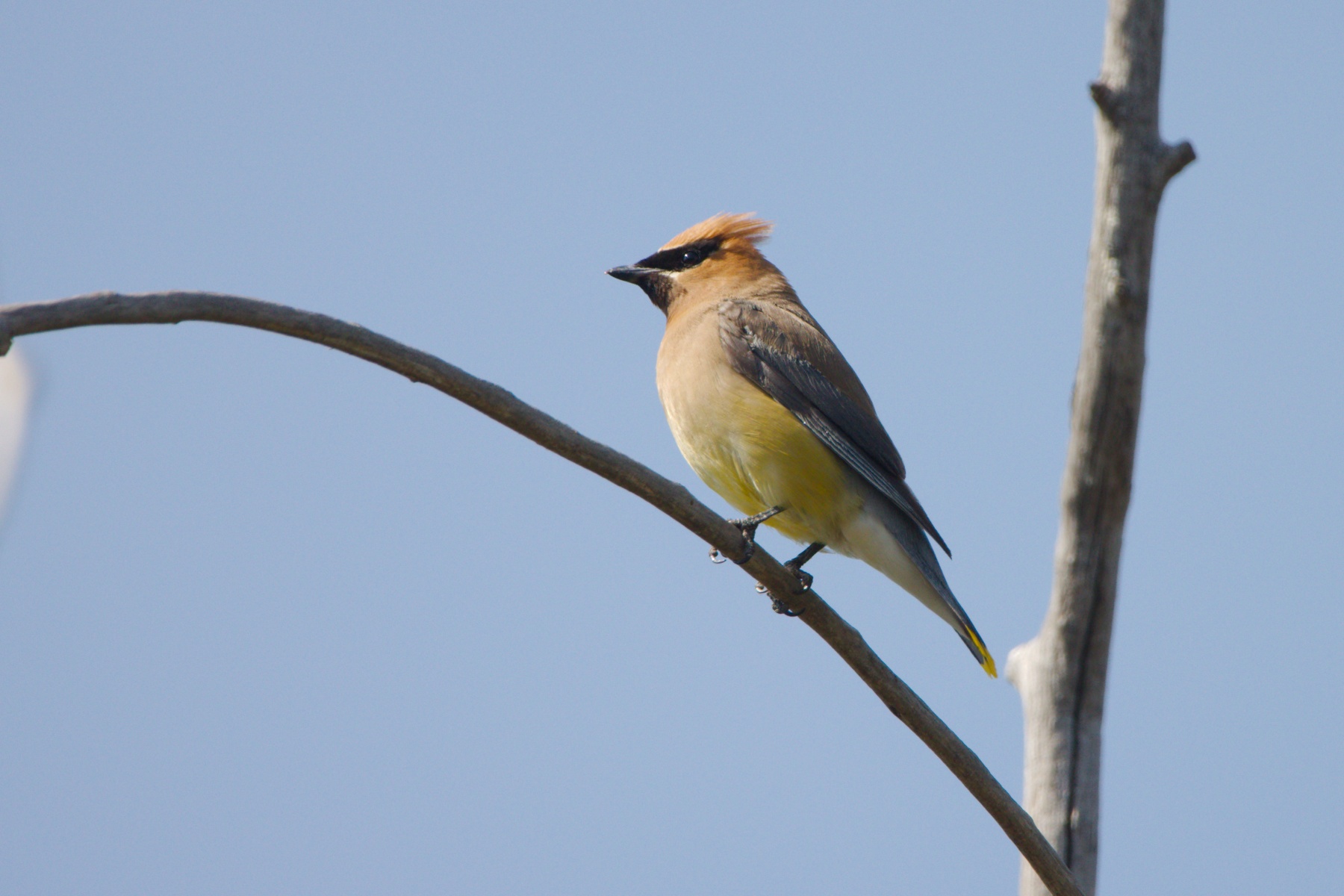
Cedar Waxwing (Bombycilla cedrorum)
Lisa dropped Cathy and me off at Drake parke late this morning. We walked up stream and across the wooden bridge at Mirror Pond. Then we turned around and went down stream past another foot bridge near First Street Rapids Park. In Pacific Park, just below the small power station we saw quite a few cedar waxwings (Bombycilla cedrorum) and I was able to get a few half decent photos. They were mostly high in a tree when not flying so I was looking up at a fairly steep angle, which wasn’t ideal. We do have cedar waxwings at home but we don’t see them often. This is the second time we’ve seen them here in three days, so we were pretty excited.
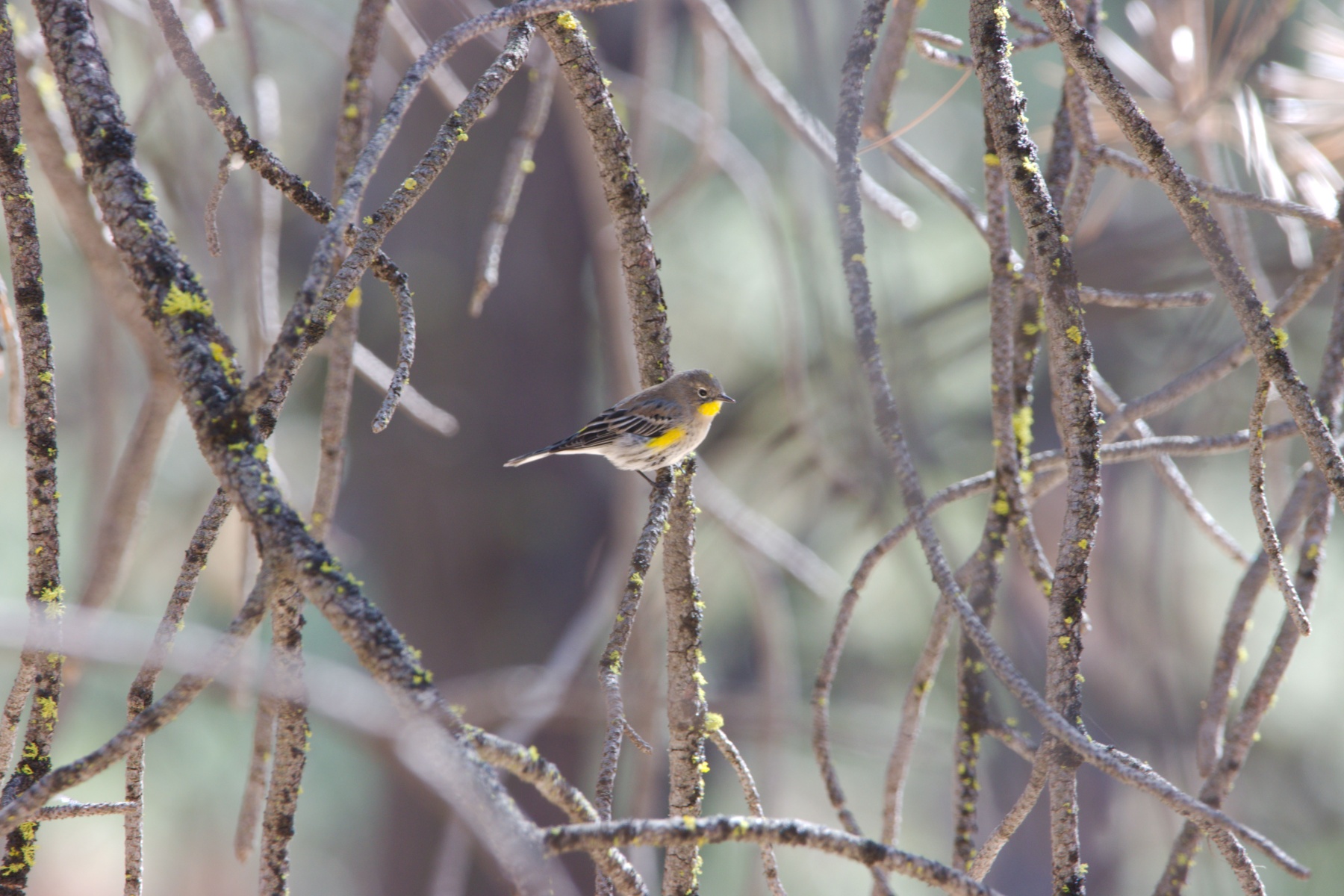
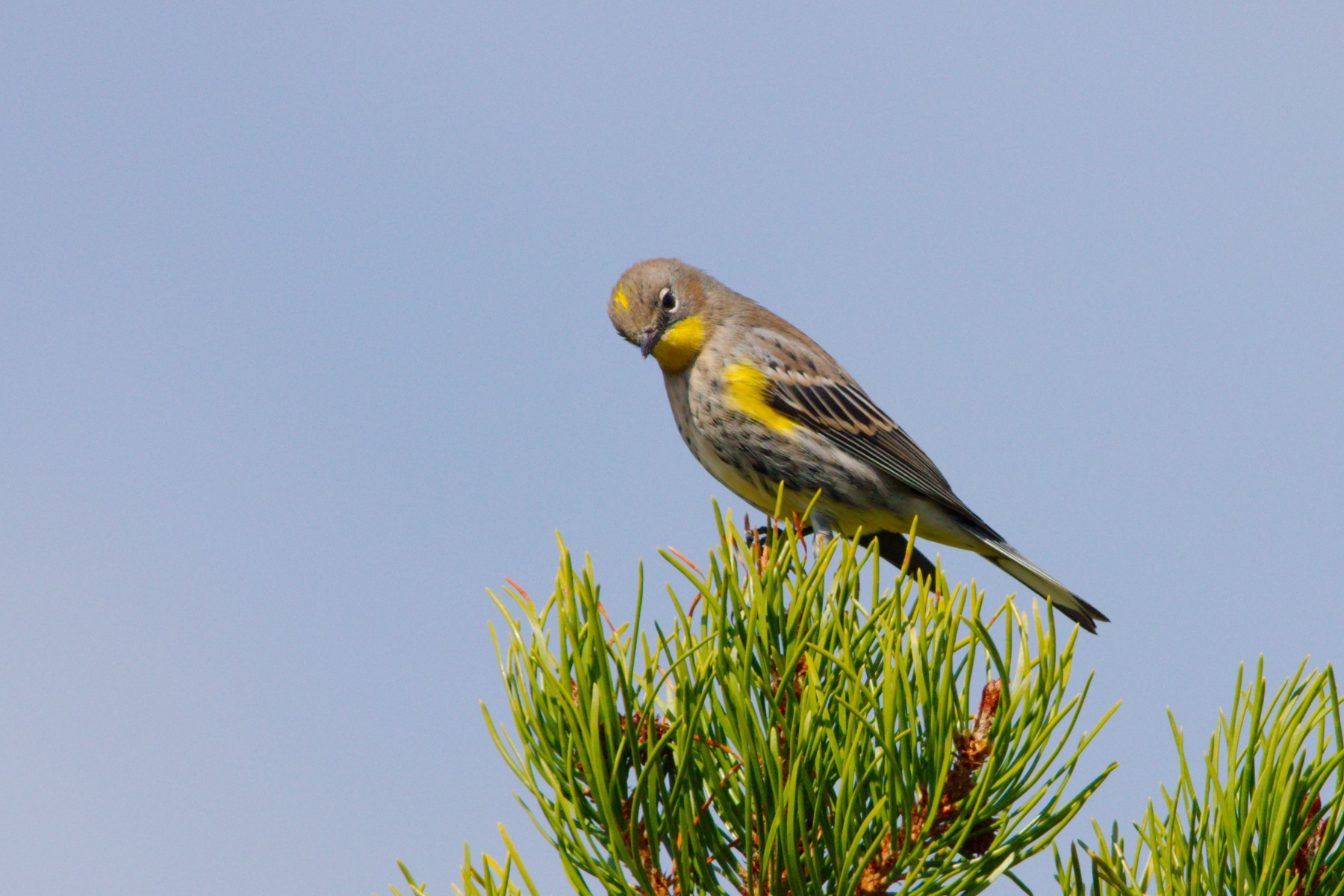
Yellow-rumped Warbler (Setophaga coronata)
As mentioned in the previous post, we visited the Lava Lands Visitor Center in the Newberry National Volcanic Monument and walked the Trail of the Molten Land trail. Back and the visitor center, there are trails in the trees and we could hear birds all around. I got just a few photos, including this one of a yellow-rumped warbler (Setophaga coronata), which is pretty good. We saw these quite a few times on our trip, so I have to assume they are quite common. Although they are, apparently, in our area on the east coast, I don’t think I’ve ever seen one before. So, that’s fun.
After this we drove up the cinder cone (Lava Butte) and enjoyed the view from the top, which was also worth the effort (especially since we were able to drive up so the effort wasn’t all that great).
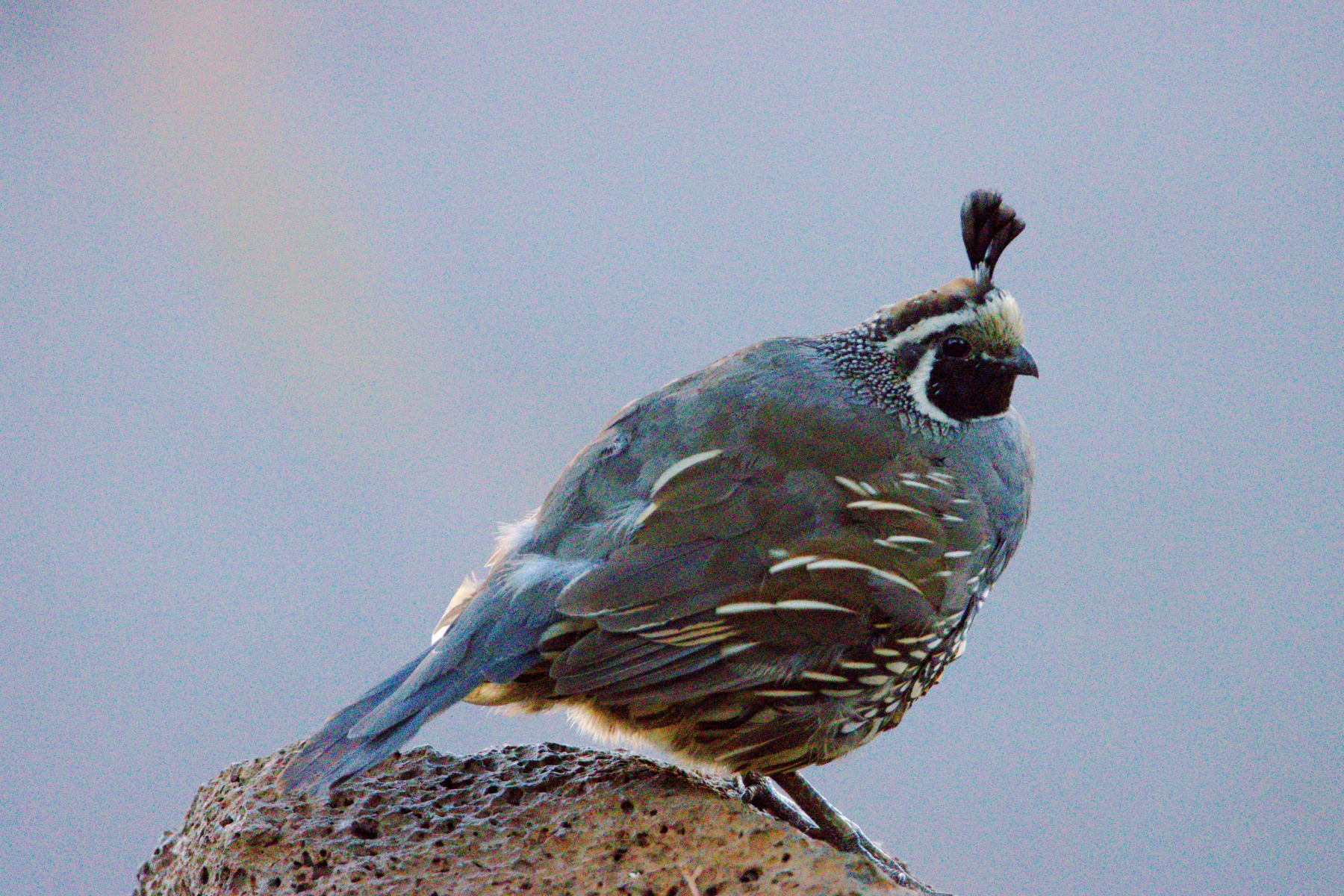
California Quail (Callipepla californica)
I’ve been waking up fairly early, partly because we’re in a time zone three hours later than home, but also partly because it’s what I do. In the early morning I do one or more of reading, editing photos from the previous day, and writing in my journal. This morning, after the sun came up but before we went out, I noticed a small flock of California quail (Callipepla californica) in the garden in front of the house. I took a few photos through the front windows and then risked opening the door to get a few more. Sadly I didn’t take the time to look closely at the camera settings before I did that, so the images were all underexposed by over three stops. I was able to get reasonable images from them, but they aren’t nearly as good as they could have been. We saw them a few more times, but never as close and never when I had the camera handy.
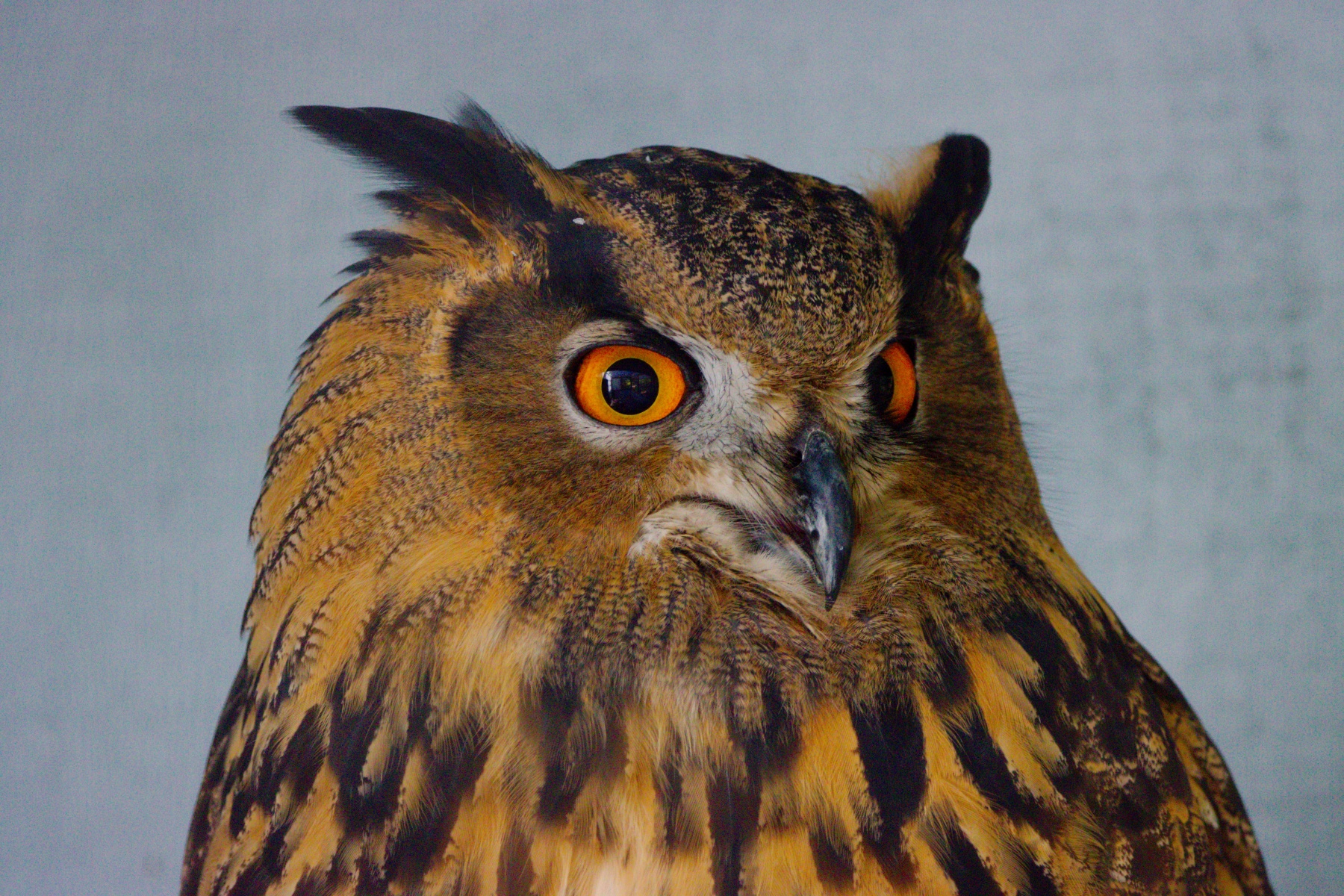
Eurasian Eagle-Owl (Bubo bubo)
This morning, Cathy, Lisa, and I drove down to the Sun River Nature Center about 25 minutes south of Bend. It’s a nice, little nature center with a pretty and very peaceful pond in the back. There were swans, as well as ducks and geese on the pond. They have a few birds kept in captivity, including Luna, a Eurasian eagle-owl (Bubo bubo). She was hatched at a wildlife center in 2020 and was brought to Sun River Nature Center at the age of one month. Because she grew up with significant human contact, she is very comfortable with the staff and volunteers. She’s also beautiful.
Yellow-rumped Warbler (Setophaga coronata)
My third photo from today is also from the Sun River Nature Center. As mentioned in a post from yesterday, we saw Yellow-rumped warblers (Setophaga coronata) fairly often on our trip. This one, I think, is a better photo than the one I posted yesterday, or I wouldn’t have repeated so soon. From the area where the nature center has its captive birds, we walked part way around the pond and then out into an area of scrub. That’s where this bird was, along with others of the same species. In fact, when it comes to songbirds, this is all we saw here. But it was enough, I suppose. They’re lovely little birds.
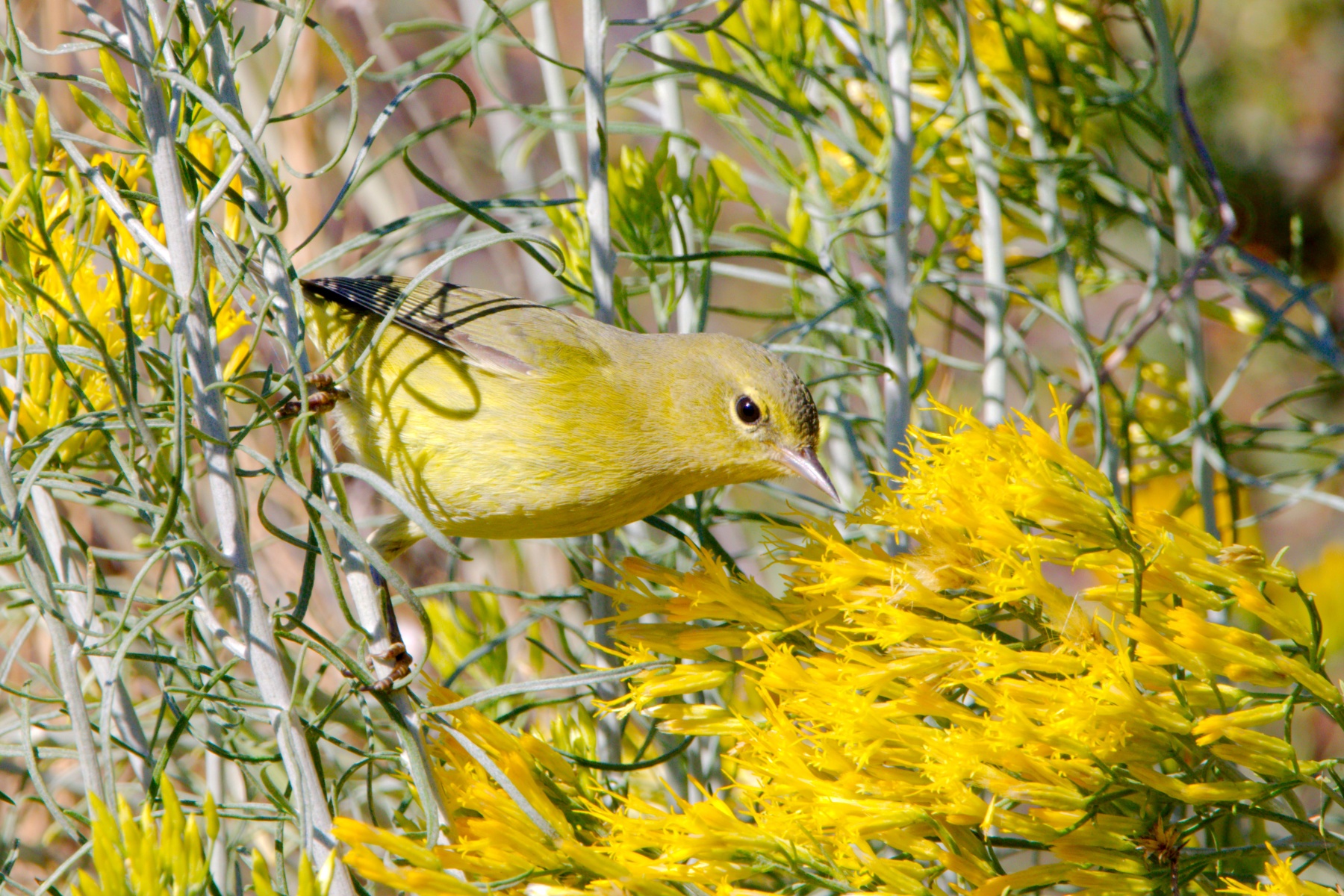
Orange-crowned Warbler (Leiothlypis celata)
Cathy and I parked on the Deschutes River and walked upstream today. First we walked in the west bank and that’s where this photo was taken. It is an orange-crowned warbler (Leiothlypis celata) and I’m quite pleased with the photo. We also saw scrub jays and quite a few ducks. At one point I realized I had lost my glasses and we walked back looking for them. We didn’t find them, though. Fortunately the were just drug-store reading glasses. I had brought two pairs but the other pair were broken a few days ago.
Anyway, we headed upstream again, this time crossing a footbridge to the other bank. It was a really nice trail alonv the river, especially after it went into the woods.
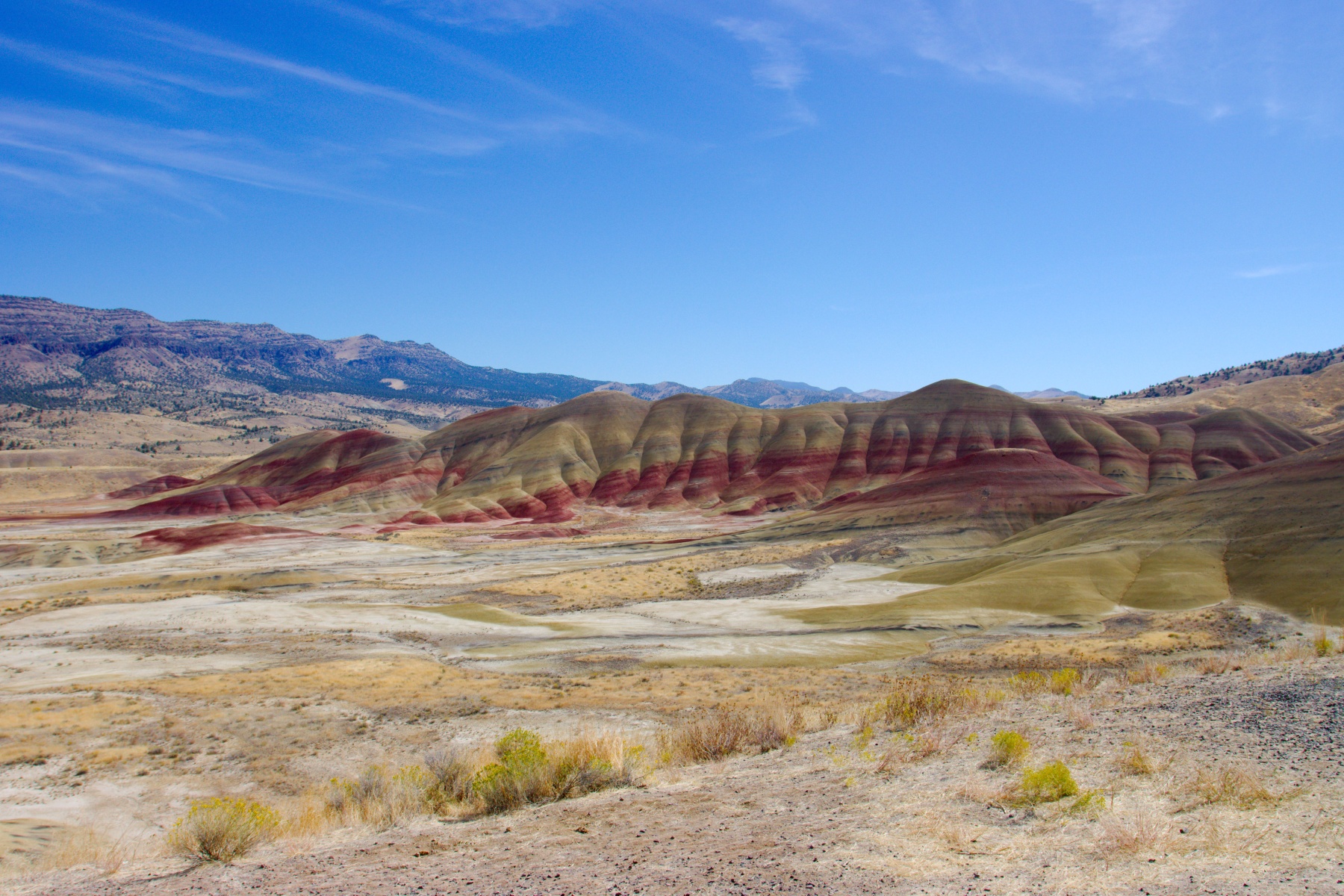
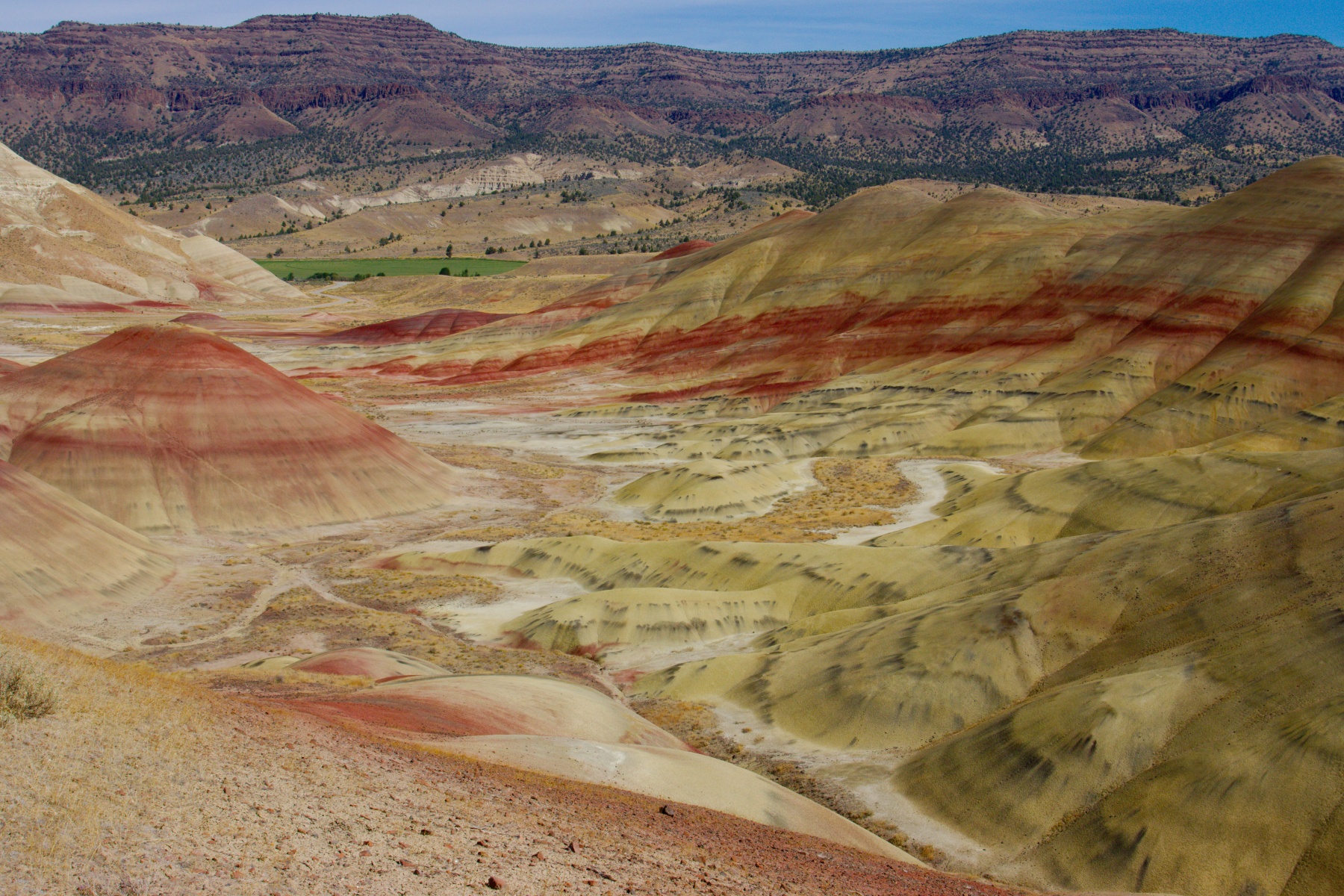
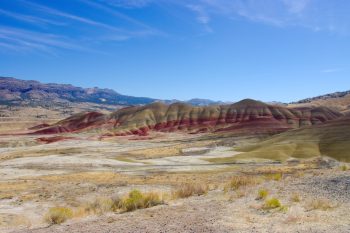
Painted Hills, Oregon
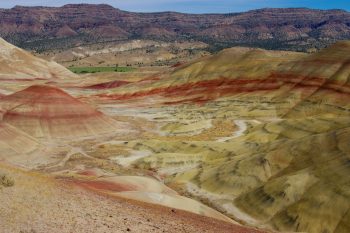
Today we took a pretty long drive from Bend to the Painted Hills off of US 26 northwest of Mitchell, Oregon. This is part of the John Day Fossil Beds National Monument. It was an 80+ mile drive north to Redmond and then east through Prineville but it’s a pretty cool place. The main visitor center for the National Monument is another 40 miles or so further along, so we didn’t go there. This is often listed as one of the so called ‘Seven Wonders of Oregon’ although there’s nothing official about that list, which I assume was put together by the tourist bureau. Here’s the list:
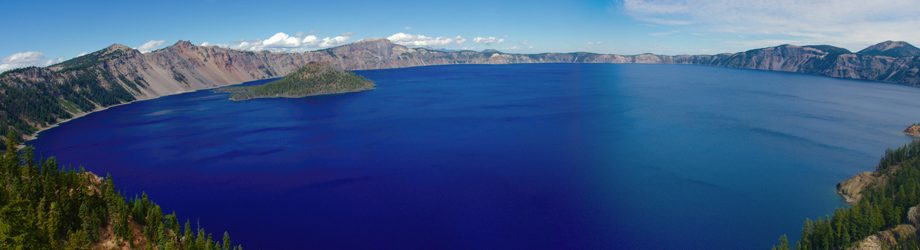
- Crater Lake National Park
- Columbia River Gorge
- Oregon Painted Hills
- The Oregon Coast
- Mt Hood
- Smith Rock State Park
- The Wallowa Mountains
We are certainly glad we visited Crater Lake, which I have to agree is in the right spot on the list at number one. Yesterday we went to Smith Rock and I’d probably rank that higher than the Painted Hills, although these are worth a visit. I cannot speak to the other items on the list, not having been to any of them. I suspect I’d rank the Painted Hills either sixth or seventh (since I know nothing about The Wallowa Mountains.
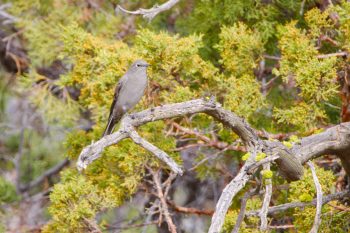
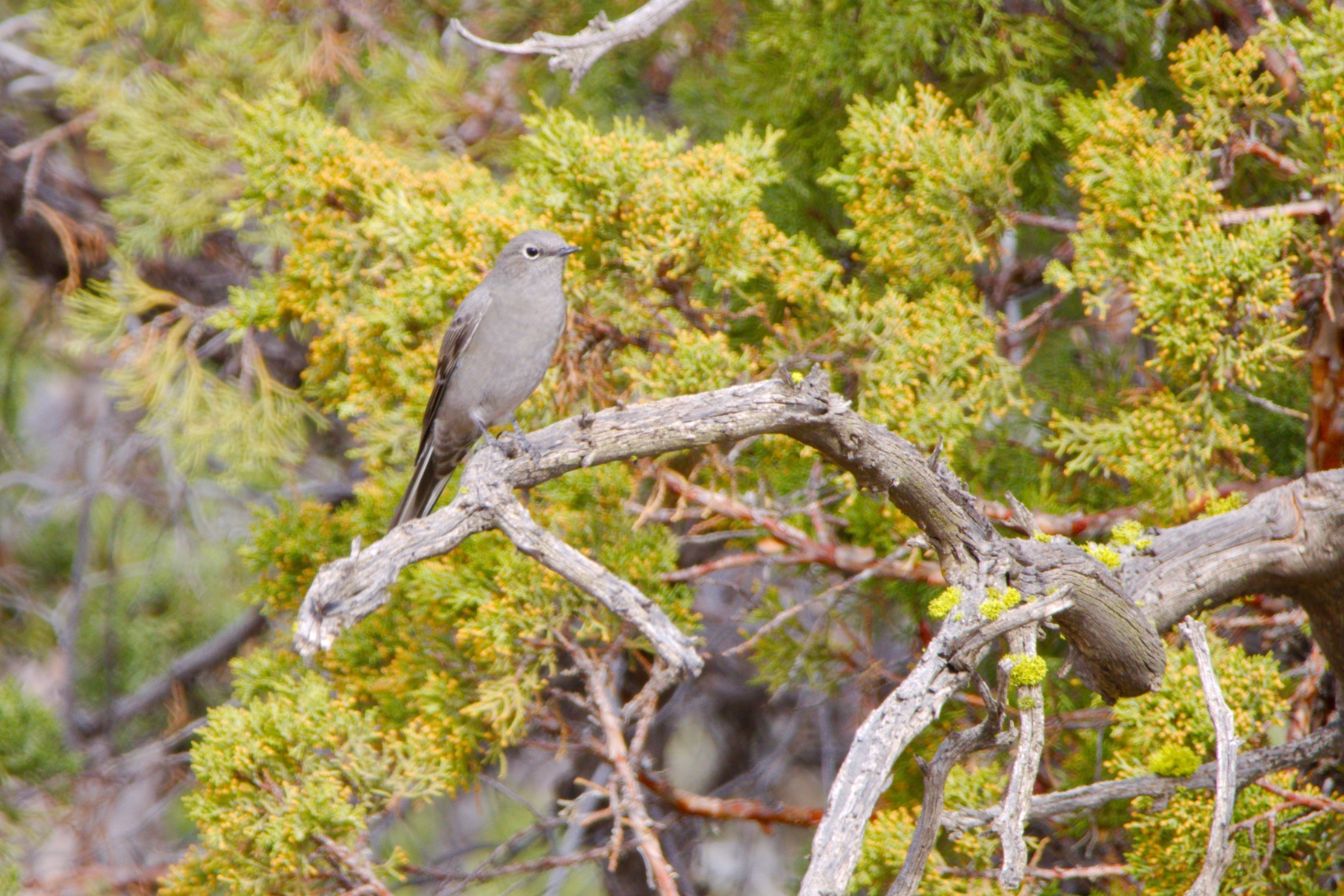
All that being said, we’re glad we came and enjoyed the views. All else being equal, if we traveled to Bend again, we’d return to Smith Rock but probably not to the Painted Hills. We did see (and I did photograph) a Townsend’s solitaire (Myadestes townsendi), a pretty little grey songbird. So that’s something. There are also some trails that we might have hiked that would have made me more likely to want to return, but perhaps I’ll never know.
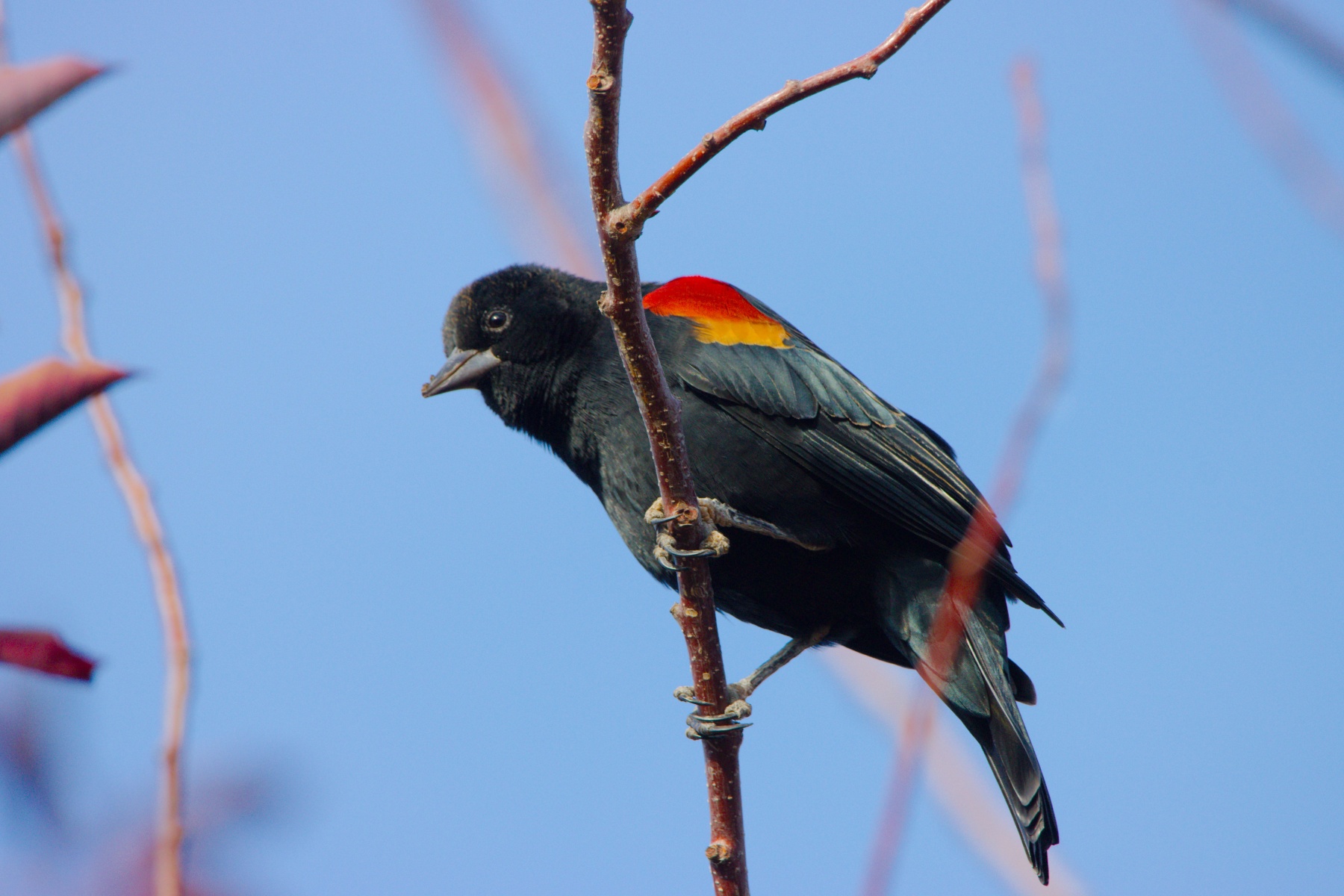
Red-winged Blackbird (Agelaius phoeniceus)
Cathy and I drove to Pine Nursery Park this morning and walked around it. It’s a fairly large park with softball and soccer fields, a disk golf course, pickleball and volleyball courts, as well as a small pond and the Forest Supervisor’s office for the Dwschutes National Forest. The pickleball courts were full with folks from a league playing in a round-robin tournament of some sort. We enjoyed the birds throughout the park and near the pond I was able to get a few nice photos of this adult, male red-winged blackbird (Agelaius phoeniceus). He was one of a large number making a pretty good racket. The pickleball players were making a racket, as well.
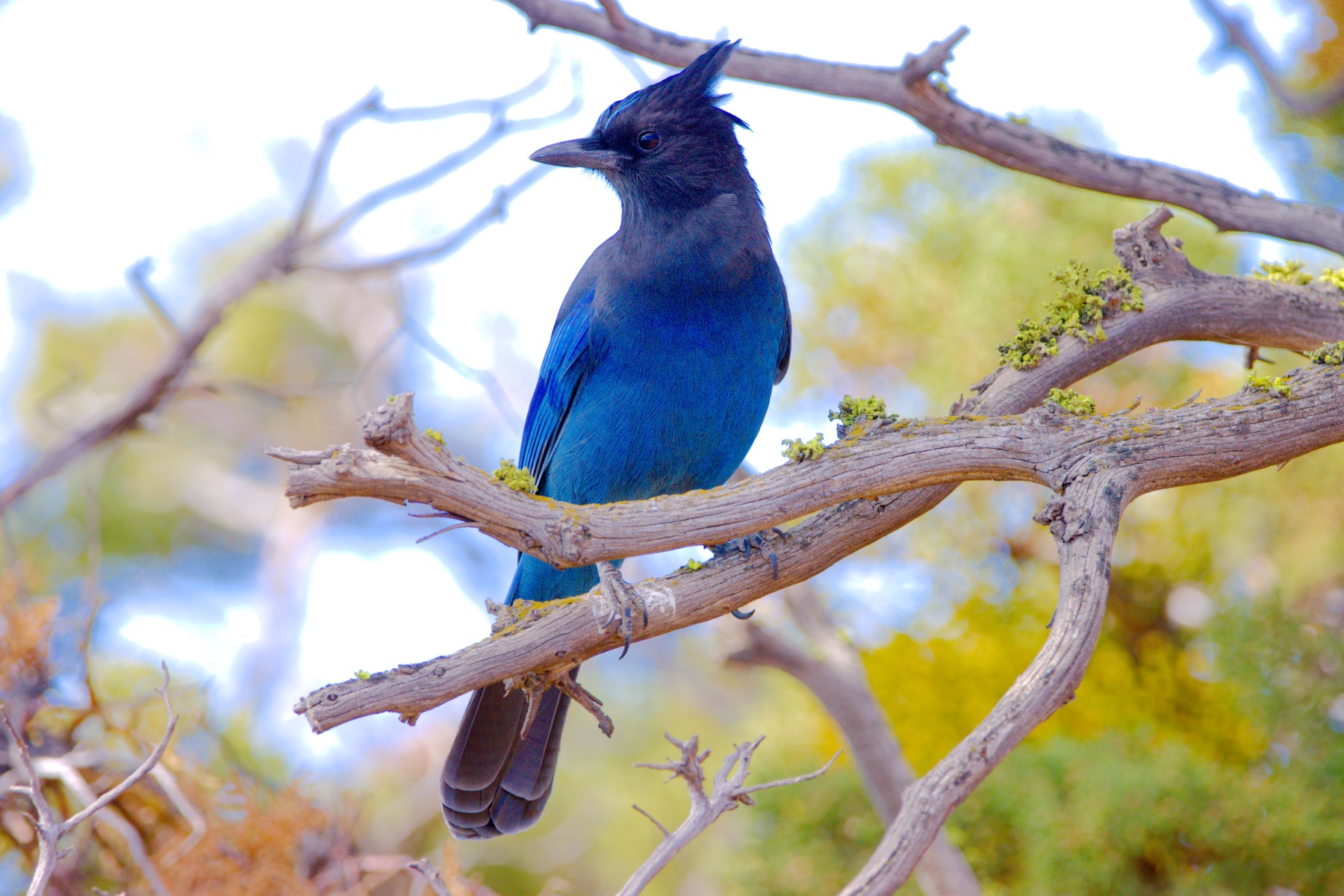
Steller’s Jay (Cyanocitta stelleri)
In the late morning Cathy and I drove to Pilot Butte. We had come up here with Brian and Lisa the other day I I tried to get a photo of where they lived but I just missed it. Having consulted a map, I wanted to try again. After doing that, Cathy and I walked a little way down the trail that climbs the butte. We saw this Steller’s jay (Cyanocitta stelleri), moving from the ground, up into a tree, and then back onto the ground again. We also saw a hummingbird of some sort perched on a branch. Google says it’s an Anna’s (Calypte anna) but my photo isn’t quite sharp enough to be able to identify it conclusively. But I’m pretty pleased with this shot of the jay.
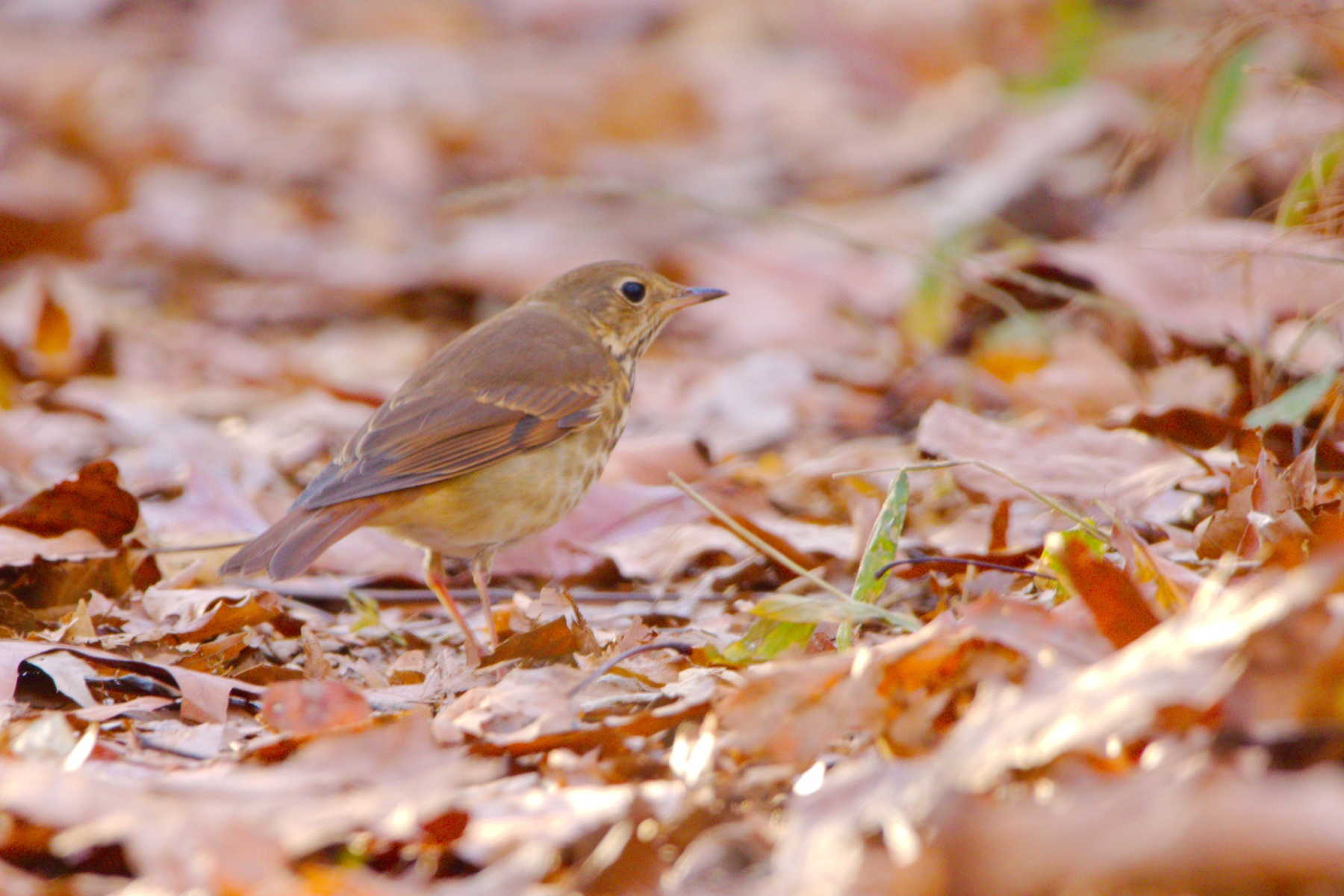
Hermit Thrush (Catharus guttatus)
As mentioned in the previous post, we went to the Rachel Carson Conservation Area this afternoon. We walked a fairly long loop, in a counterclockwise direction. The section down by the Hawlings River is our favorite part, along with the boulders in the previous post. I carried my long lens but we didn’t see much to photograph with that. Towards the end of the walk, though, we came across this hermit thrush (Catharus guttatus) who would move a little bit further down the trail as we got close and I was able to get near enough to get a pretty decent photo.
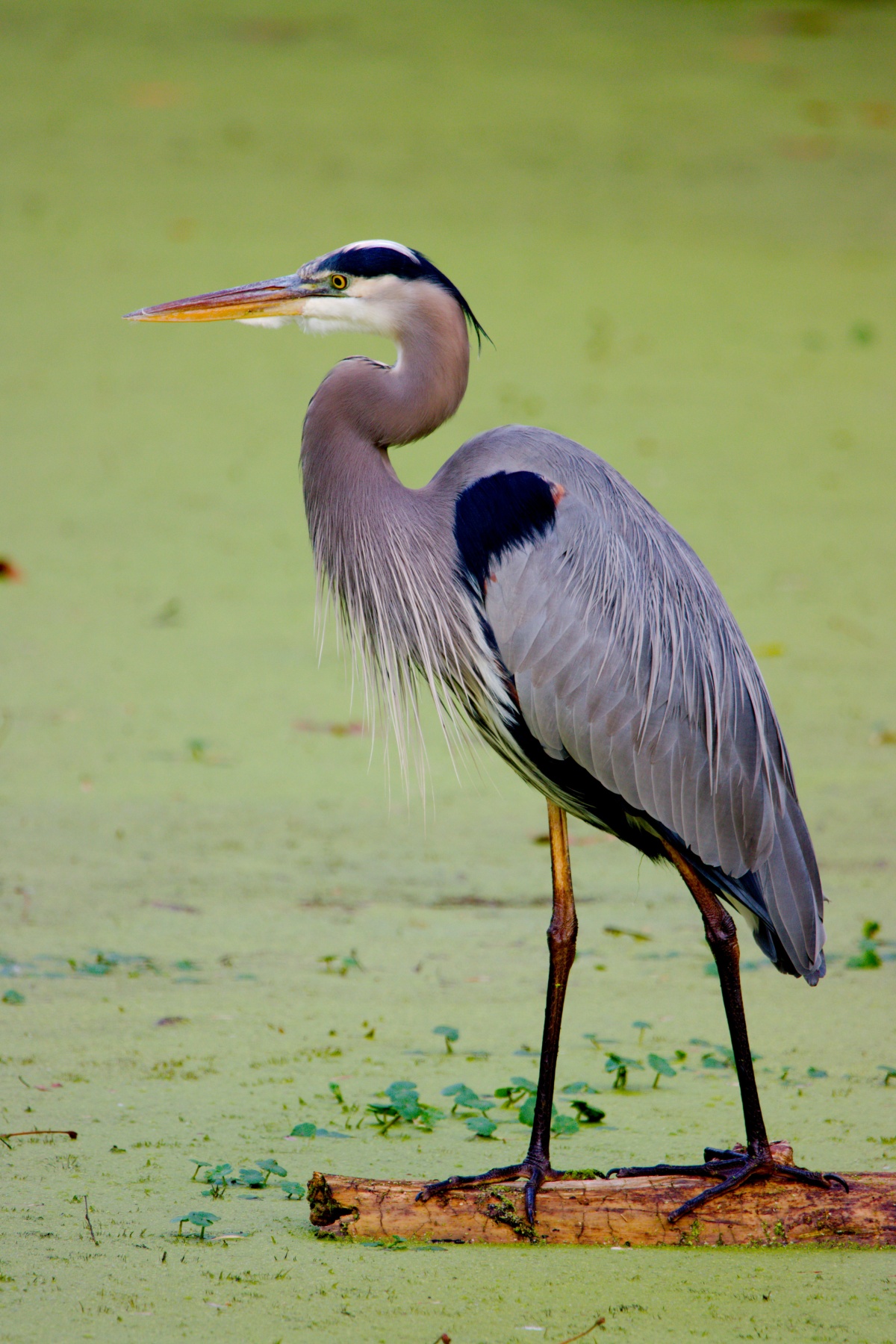
Great Blue Heron (Ardea herodias)
As mentioned in the previous post, we walked upstream along the Potomac River from Great Falls today. After about a mile on a trail down by the river, we returned to the towpath because a stream blocked our way. We could have returned to the river’s edge above the stream but we were ready to head back, anyway. A short way back towards Great Falls we saw this great blue heron (Ardea herodias) on the canal, posing very nicely for us. I like him (or her, I have no idea which) against the green of the duckweed on the surface of the canal.
Overall, I’m quite pleased with the 150-600mm Sigma lens I got a couple years ago. It’s a lot to carry but it certainly allows me to get pictures that I wouldn’t get otherwise. This one was taken zoomed all the way out to 600mm, which when you multiply it by 1.6, gives an effective focal length of 960mm compared to a full-frame 35mm camera. This one was taken with the lens on a monopod, which is how I generally carry it. The exposure was 1⁄100 second at f/6.3.
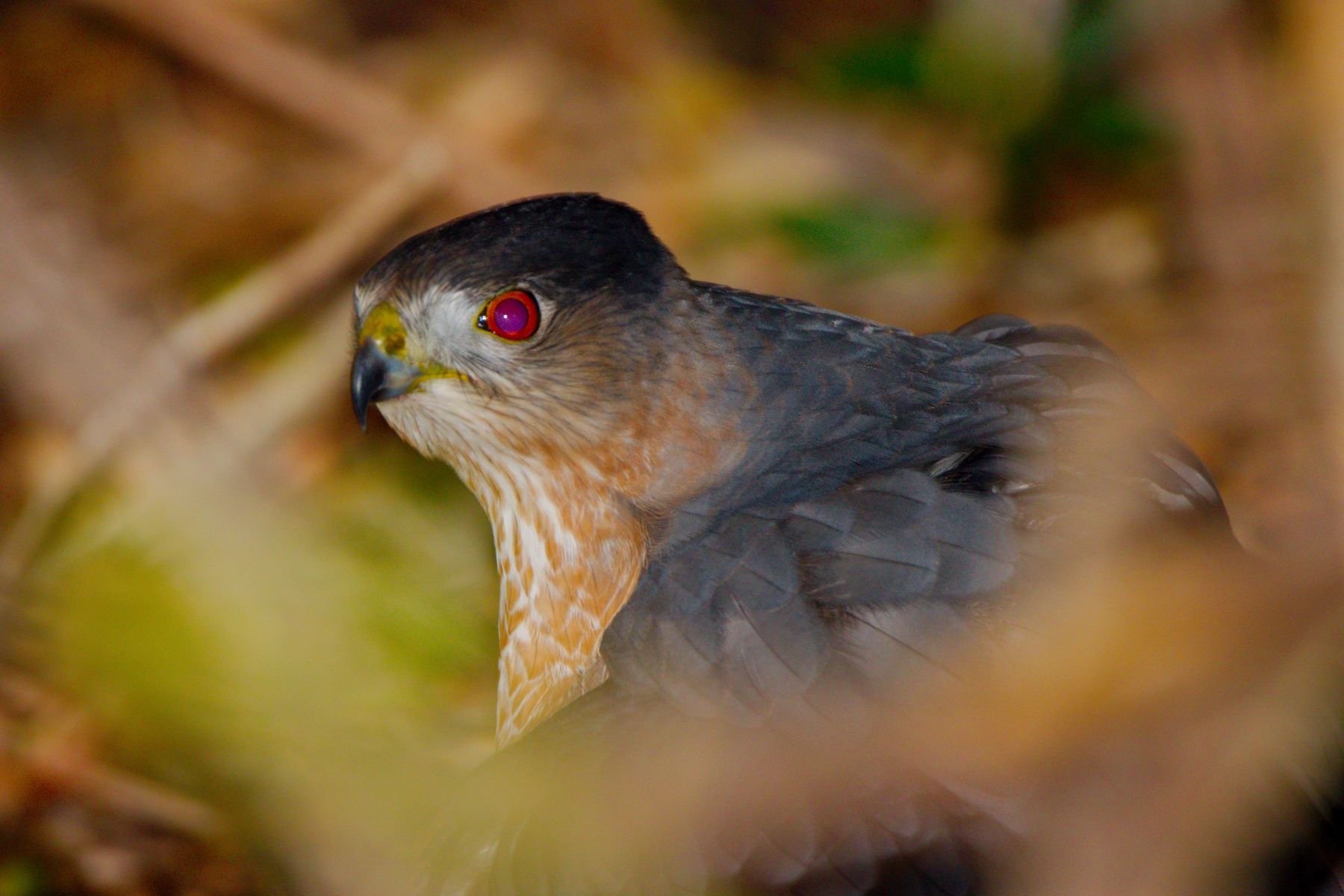
Cooper’s or Sharp-shinned Hawk
An expert might be able to tell from this photo if this is a Cooper’s (Accipiter cooperii) or sharp-shinned (Accipiter striatus) hawk but I’m pretty sure it’s one or the other. Cathy saw this one and another both flying around our yard. This one landed under bushes on the edge of our yard and I was able to get a few worse photos and this one, that at least shows this much. I turned the on-camera flash on, because it was relatively dark out or this one would have certainly been as blurred as the others.
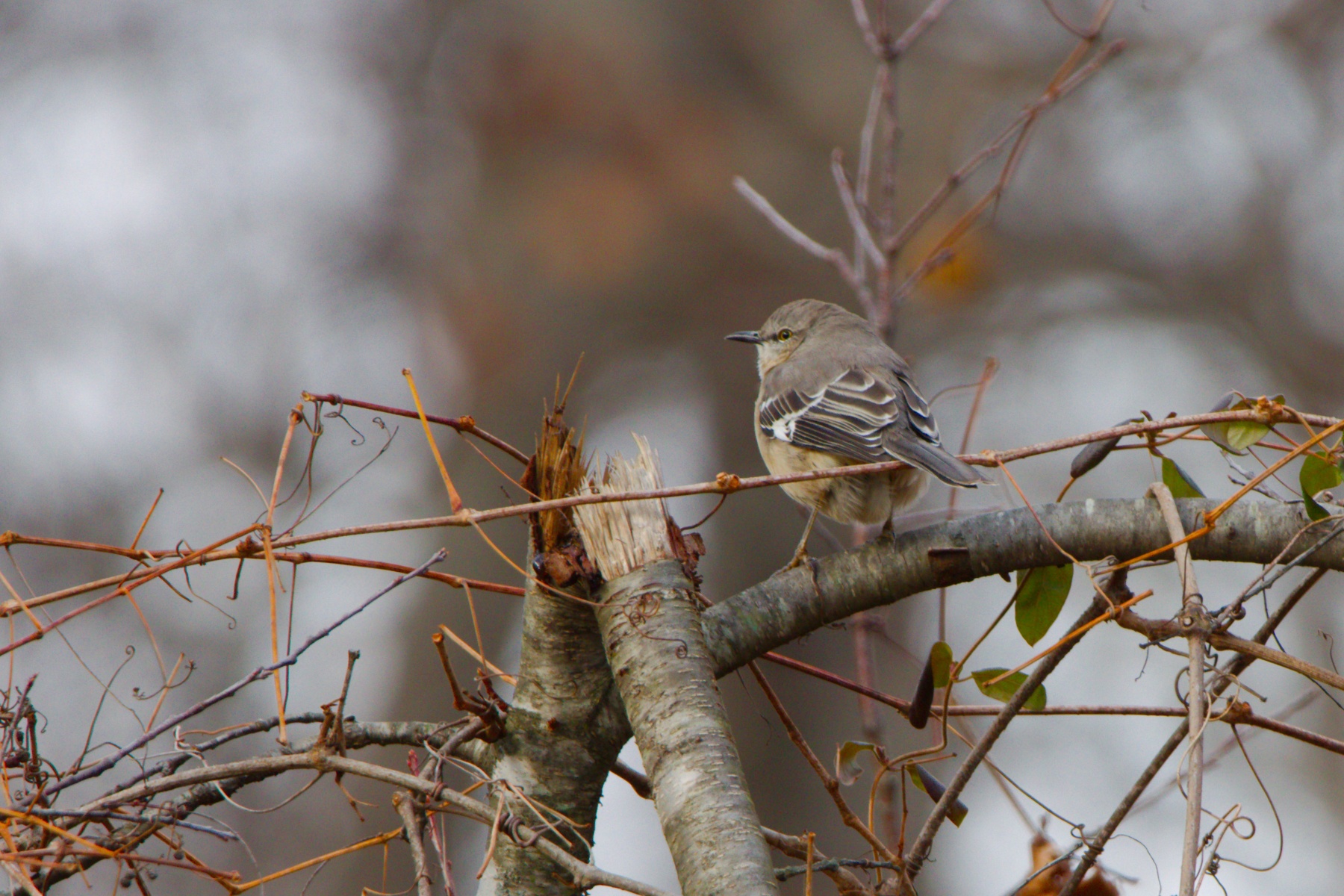
Northern Mockingbird (Mimus polyglottos)
We went for a short walk on the trails below Croyden Creek Nature Center today. There wasn’t a lot to be seen but it was still really good to be outdoors. Life has been a bit stressful lately and walking in the woods, particularly where there is water nearby, is good for us. This was the only bird we saw on the walk that I was anywhere near close enough to get a photograph. I did take a few of birds (goldfinches) on the feeders at the nature center, as well, but those didn’t turn out as well. This is our common, northern mockingbird (Mimus polyglottos).
White-throated Sparrow (Zonotrichia albicollis)
We decided to go to Great Falls today. It’s probably the most interesting part of the C&O Canal that’s close enough to get to easily and since we don’t have to pay to get in (because we have an America The Beautiful, lifetime senior pass) the fee isn’t an impediment. After walking out to Olmsted Island, as per usual, we went downstream to Widewater. We saw a great blue heron and I got a few nice pictures of that, but since I posted on just a little while ago (and that’s a better picture than I got today anyway), I’m going with this nice shot of a white-throated sparrow (Zonotrichia albicollis). This is a familiar bird, best known for its distinctive “Poor Sam Peabody, Peabody, Peabody” song.
Mallards (Anas platyrhynchos)
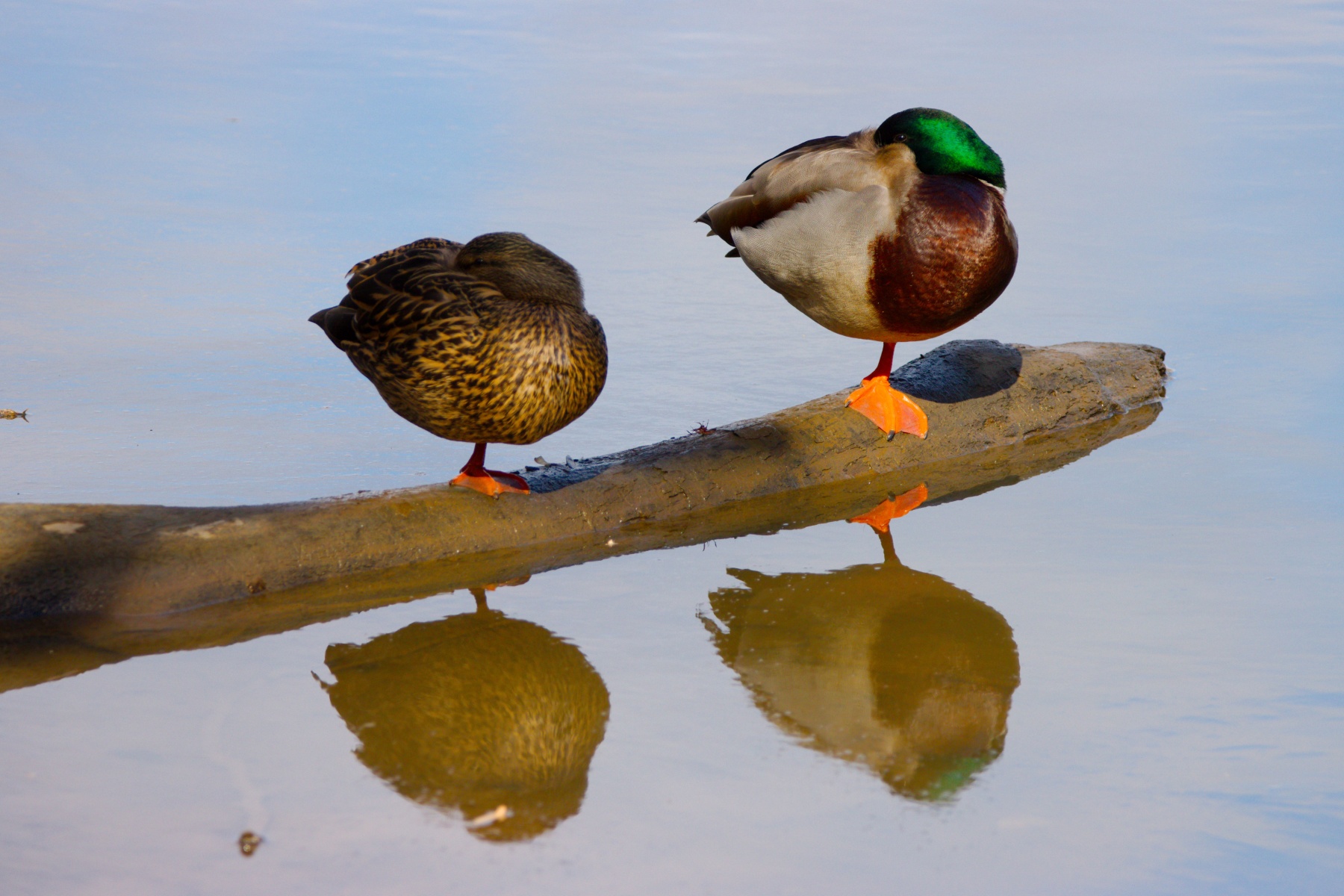
Second Christmas, like all good things, must come to an end. After another visit to grandma, we drove Jim, Abba, and Hannah to the airport a little before midday today. Their flight got cancelled but fortunately they were able to get on another flight and got home without any real problem. Cathy, Dorothy, and I walked the perimeter of of Theodore Roosevelt Island after dropping the others off. There wasn’t a lot going on but I did like these two mallards (Anas platyrhynchos) sitting on a log near the mouth of the marsh at the south end of the island.
Pileated Woodpecker (Dryocopus pileatus)
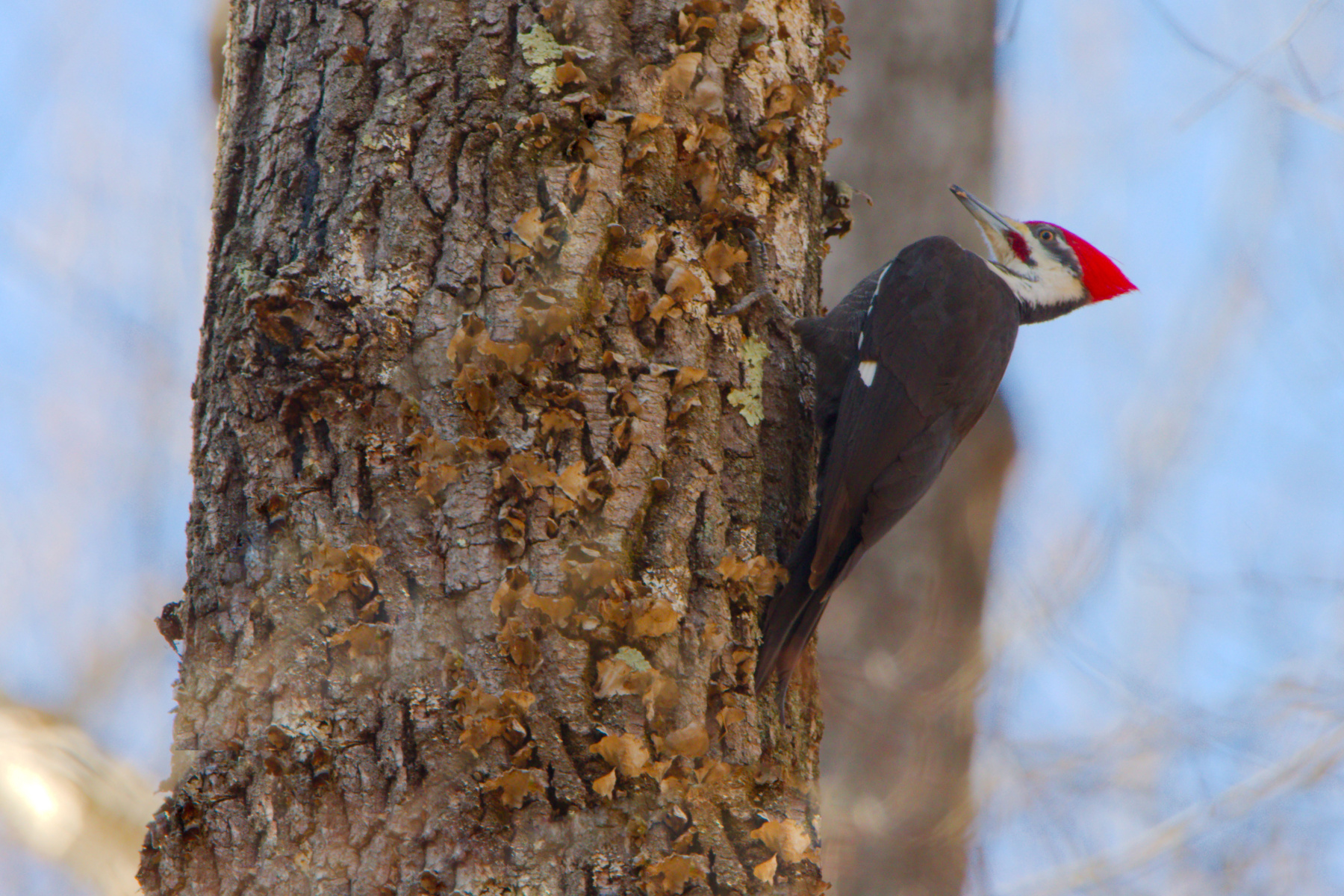
We went to Croyden Creek this afternoon, and walked the loop to the east, following the creek down towards Rock Creek, then looping up to near Norbeck Road and back to the old Avery Road cut. About a third of the way around we heard and then saw this pileated woodpecker (Dryocopus pileatus) high on a dead tree. They certainly are a treat to see, with their red crest, as they dig insects out of trees and stumps. Their call and the very deliberate thumping of their beak against the wood is unmistakable.
Tufted Titmouse (Baeolophus bicolor)
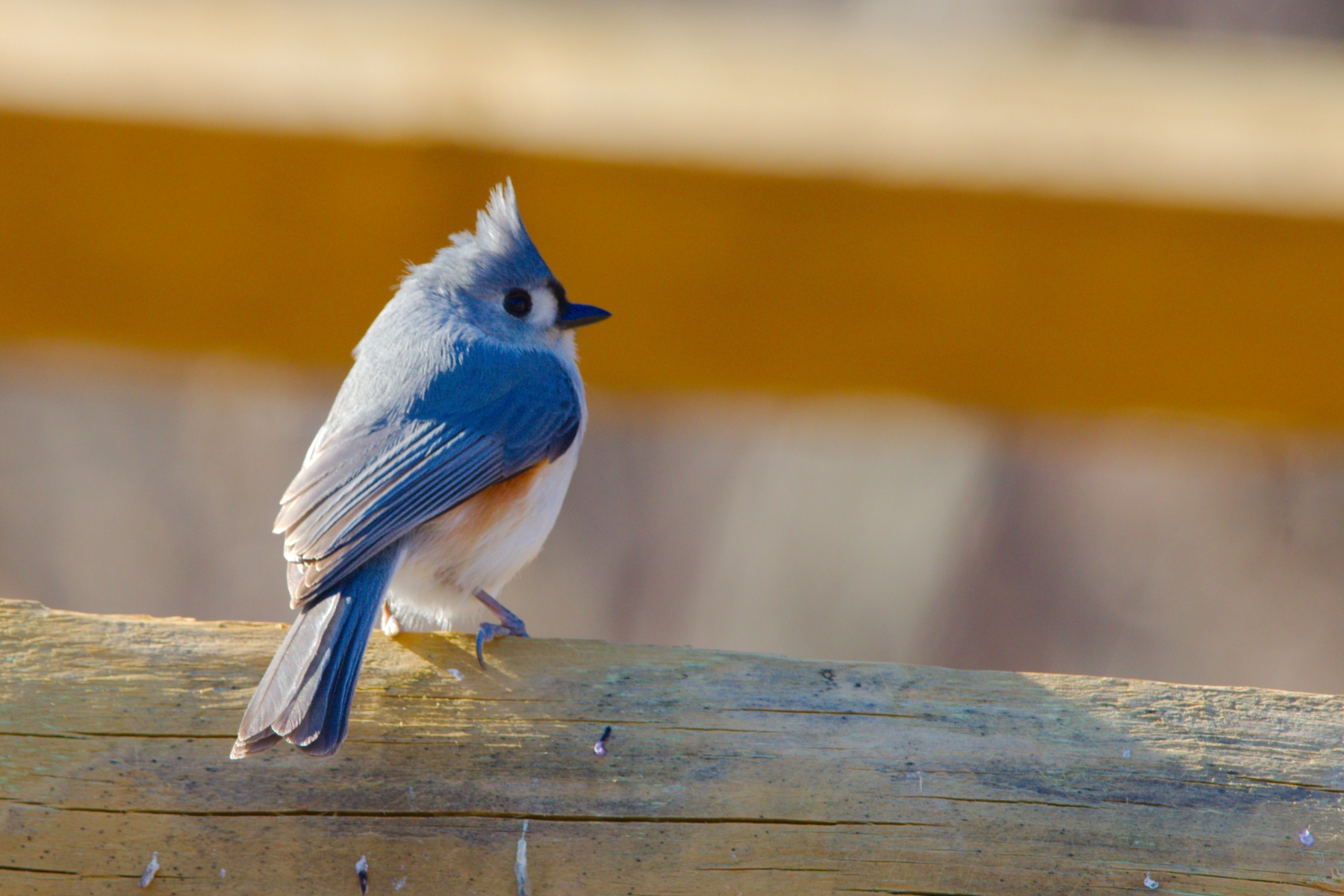
As mentioned in the previous post, we went to Croyden Creek this afternoon. After our walk, on which we saw the woodpecker, we returned to the nature center, where we had parked. I took a few pictures of birds around the feeders there. That included a northern mockingbird (Mimus polyglottos), a few dark-eyed juncos (Junco hyemalis), and this tufted titmouse (Baeolophus bicolor). This photo makes him look more blue than gray, but either way, it’s a cute little bird that is hear year round and is often heard repeating Peter-Peter.
Eastern Phoebe (Sayornis phoebe)
Cathy and I went to Seneca Creek where Berryville Road passes right next to it. We saw a belted kingfisher (Megaceryle alcyon) on a tree leaning out over the water and I was able to get a few photos, although it was pretty far away. We walked upstream and enjoyed the bluebells (Mertensia virginica) that wrre pretty much in full bloom. Some of the flowers were brown, probably as a result of the recent freeze we had a week or so ago.
We heard quite a few birds, including wood thrush (Hylocichla mustelina) and northern waterthrush (Parkesia noveboracensis). We didn’t see either of those. A blue-gray gnatcatcher (Polioptila caerulea) kept showing up on Cathy’s Merlin screen but I didn’t expect to be able to see this little, elusive bird. We did, though, and I was able to get a photo or two.
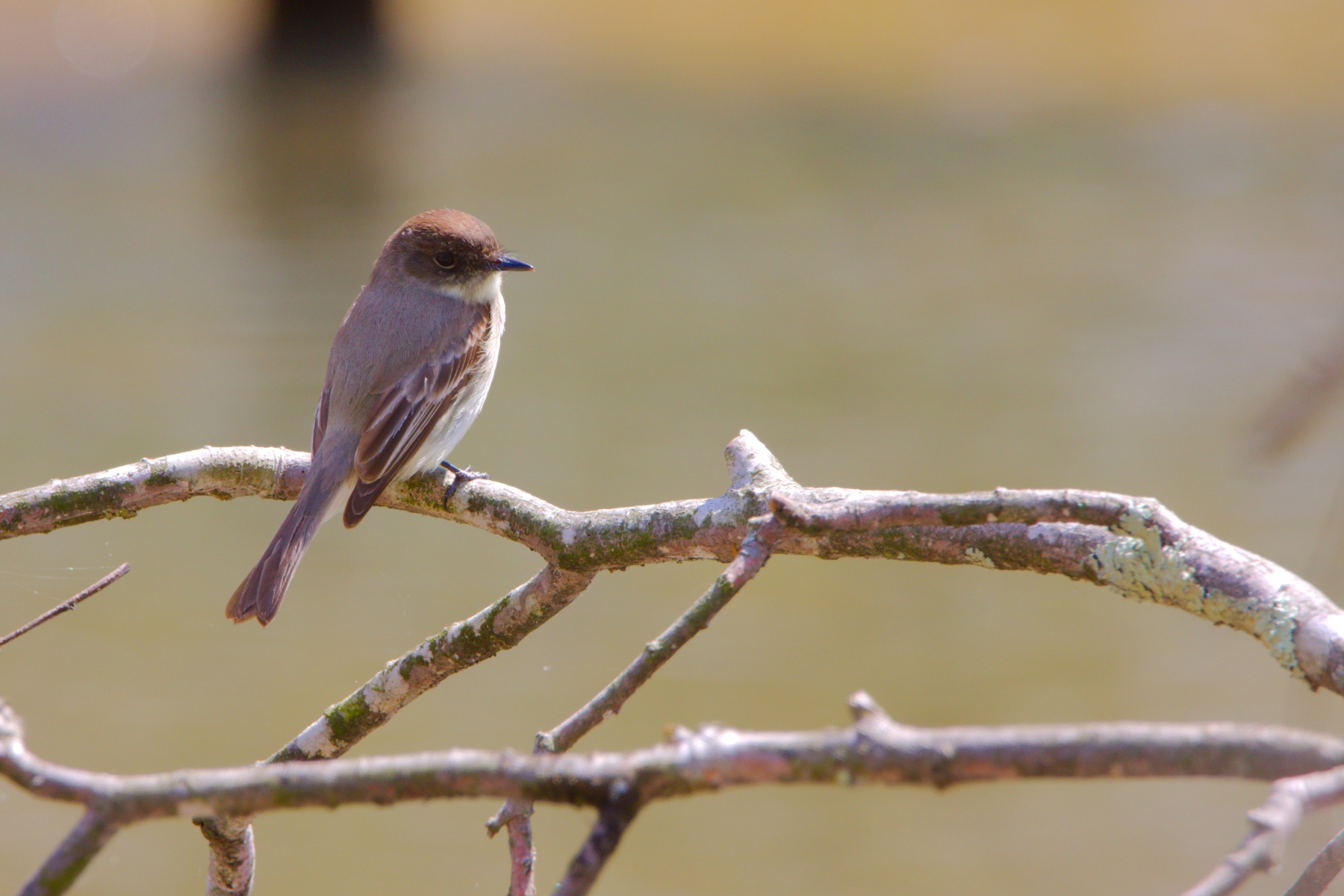
Today’s photo is of an eastern phoebe (Sayornis phoebe) who sat on a branch over the creek and let me get fairly close.
Vultures On The Church
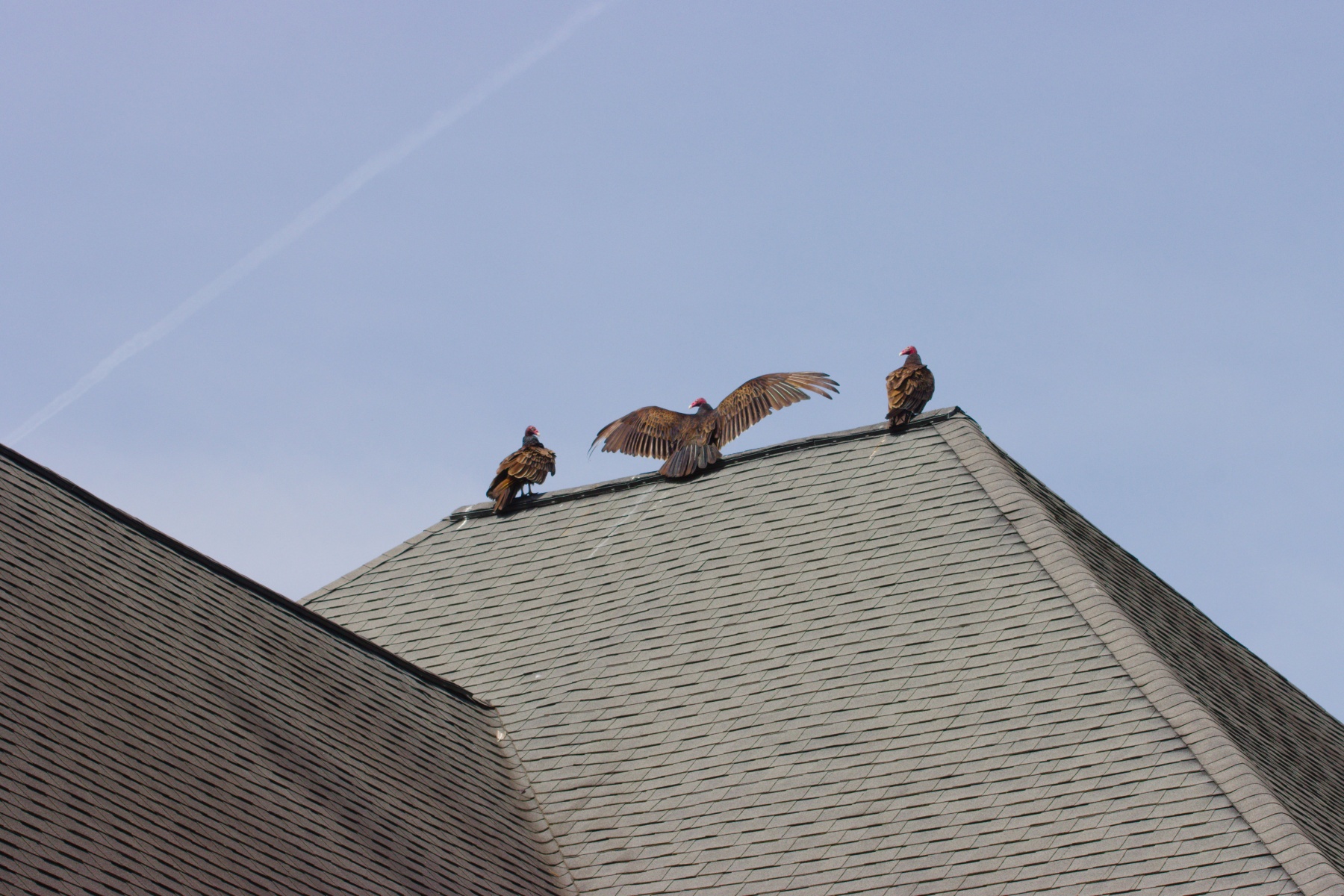
Cathy and I were quite late getting to church this morning and when we got there the parking lot was pretty full so we parked in the overflow area in the woods. As we came down the hill to the church we saw these vultures on the roof, enjoying the sunshine. I went back and got my long lens so I could get a few good pictures a bit closer than with the 100mm I have in my camera bag. And yes, I generally have my camera at church because I photograph baptisms and various events of that sort.
Birds at McKee-Beshers
After the last two weeks, Cathy and I really needed a break. The trip to the National Arboretum was wonderful but even that was a place with lots of people. Today we went to McKee-Beshers Wildlife Management Area, out River Road.
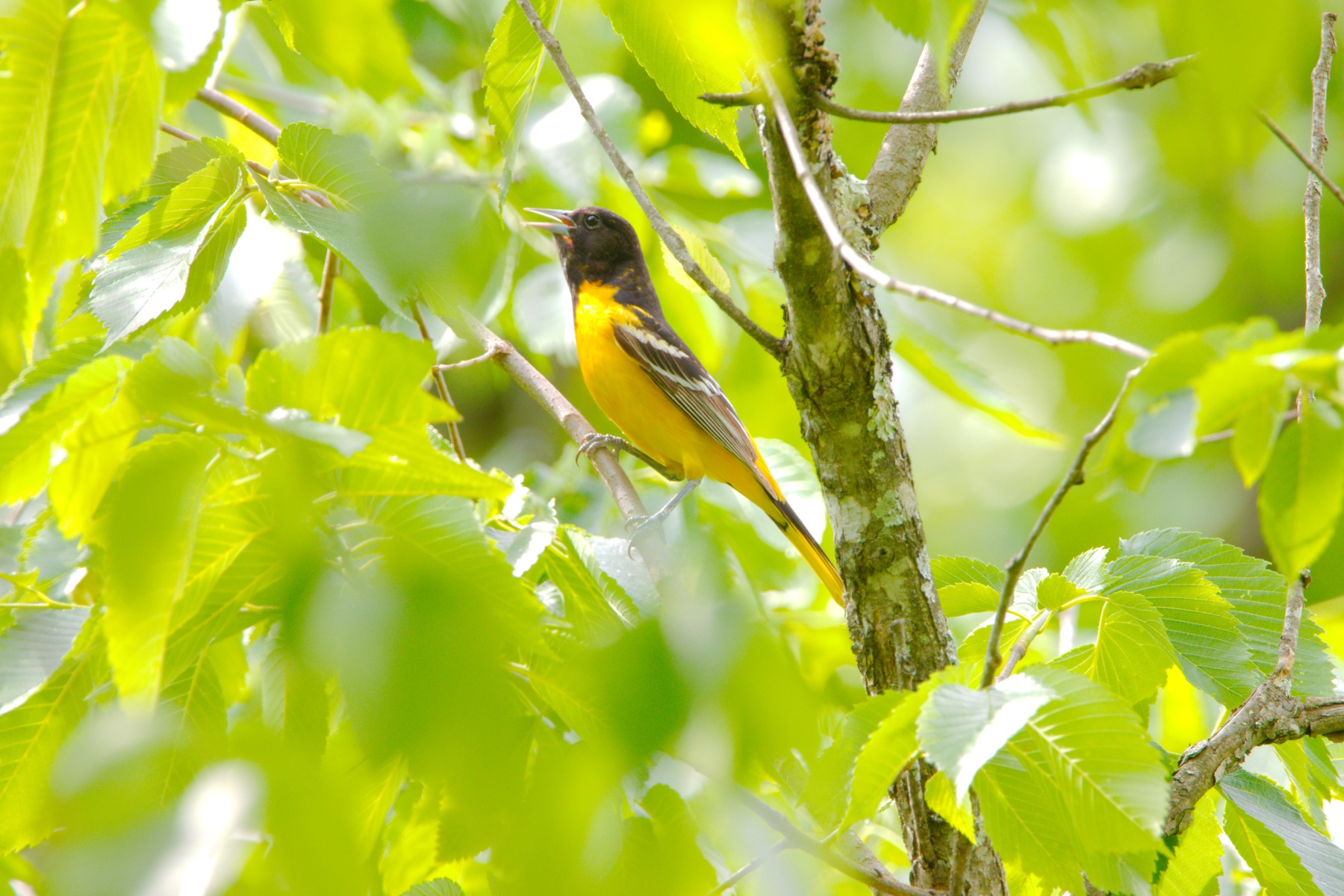
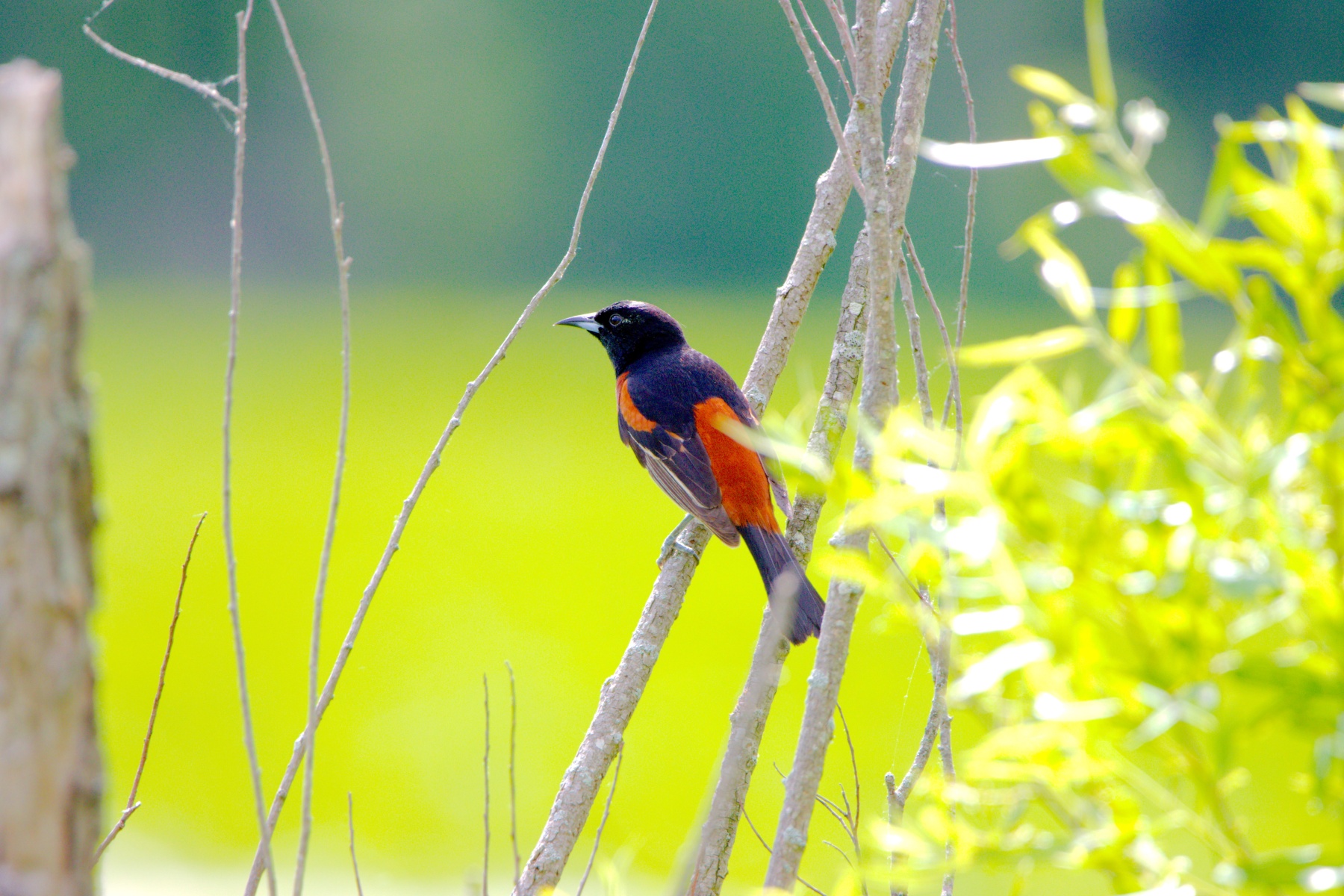
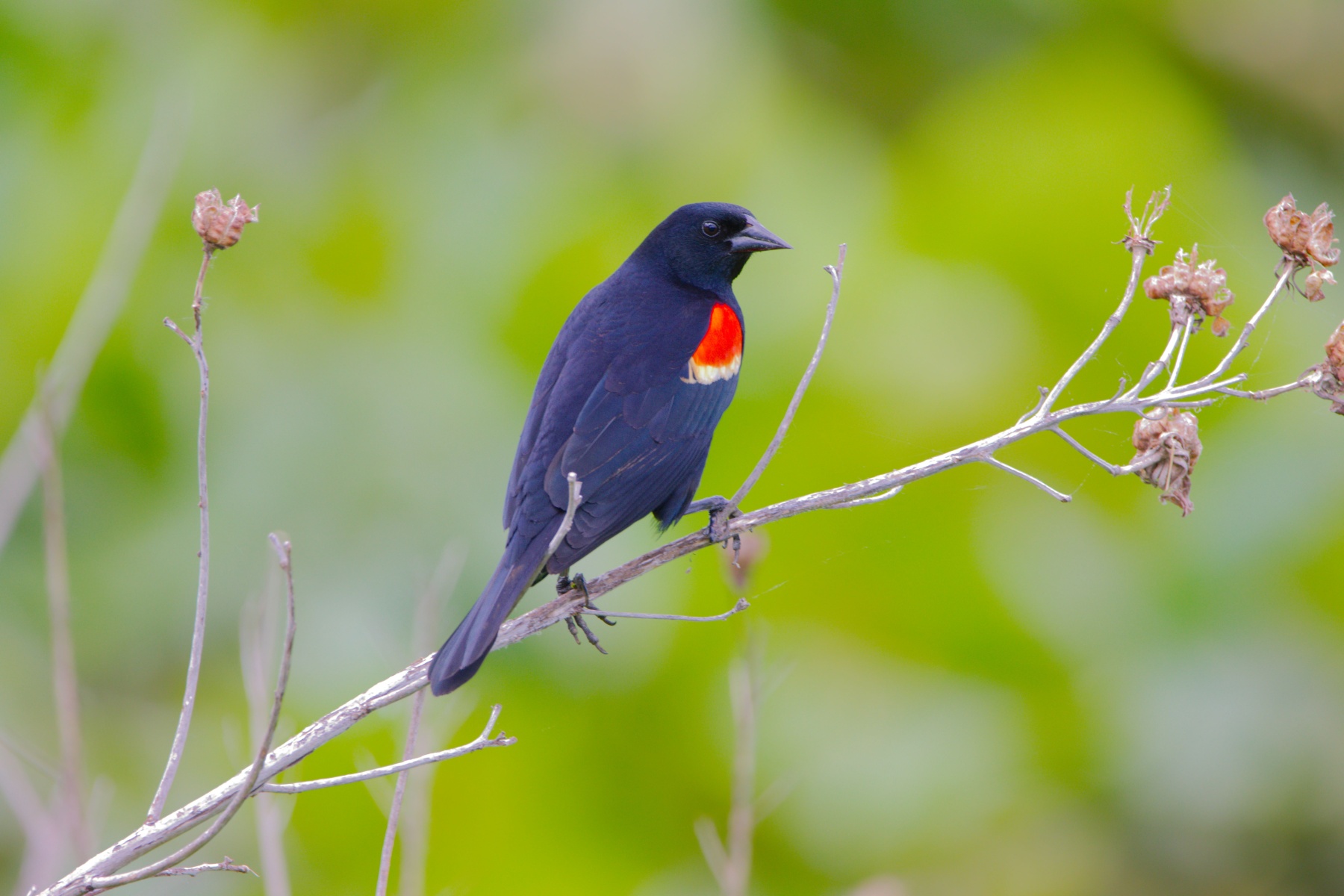
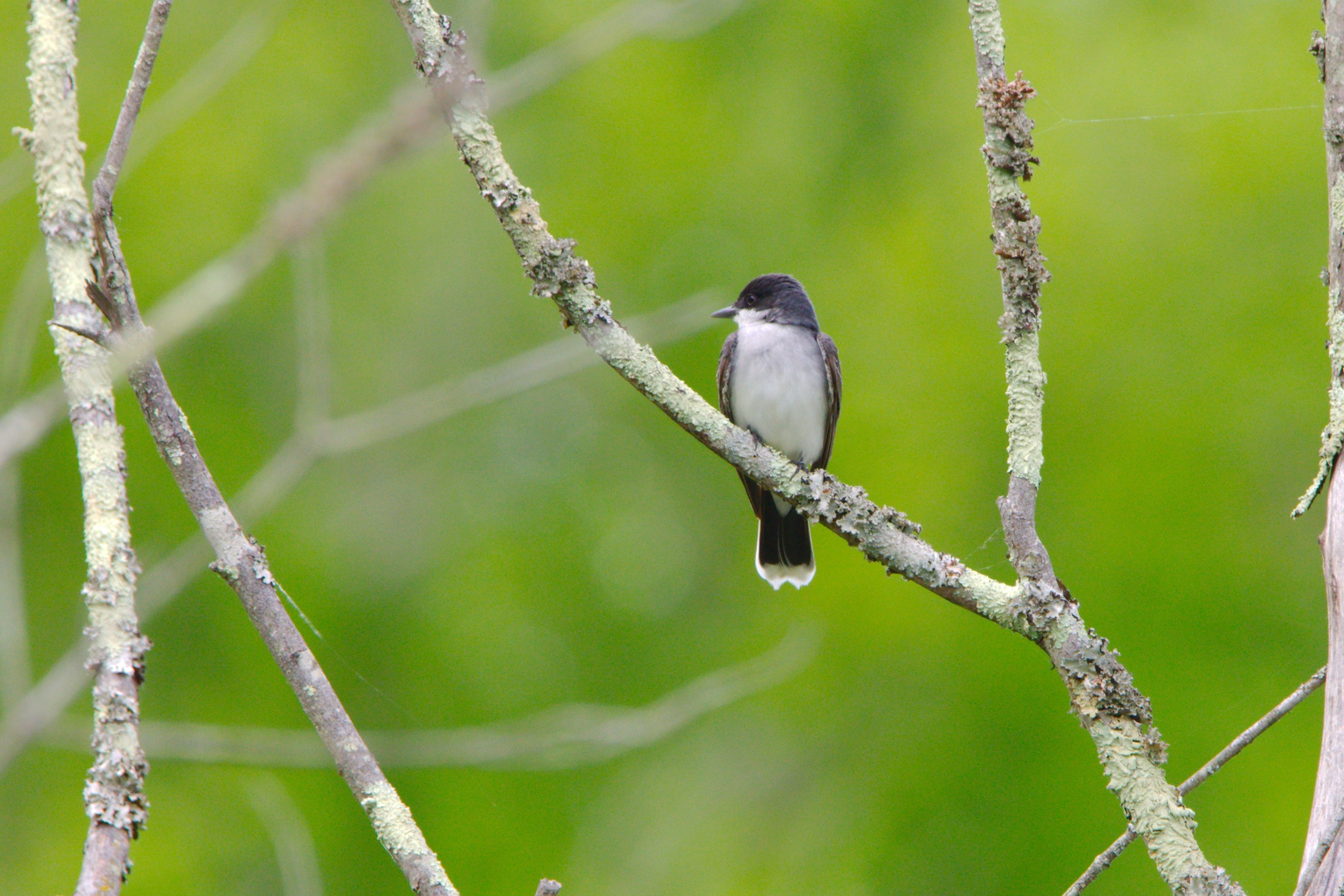
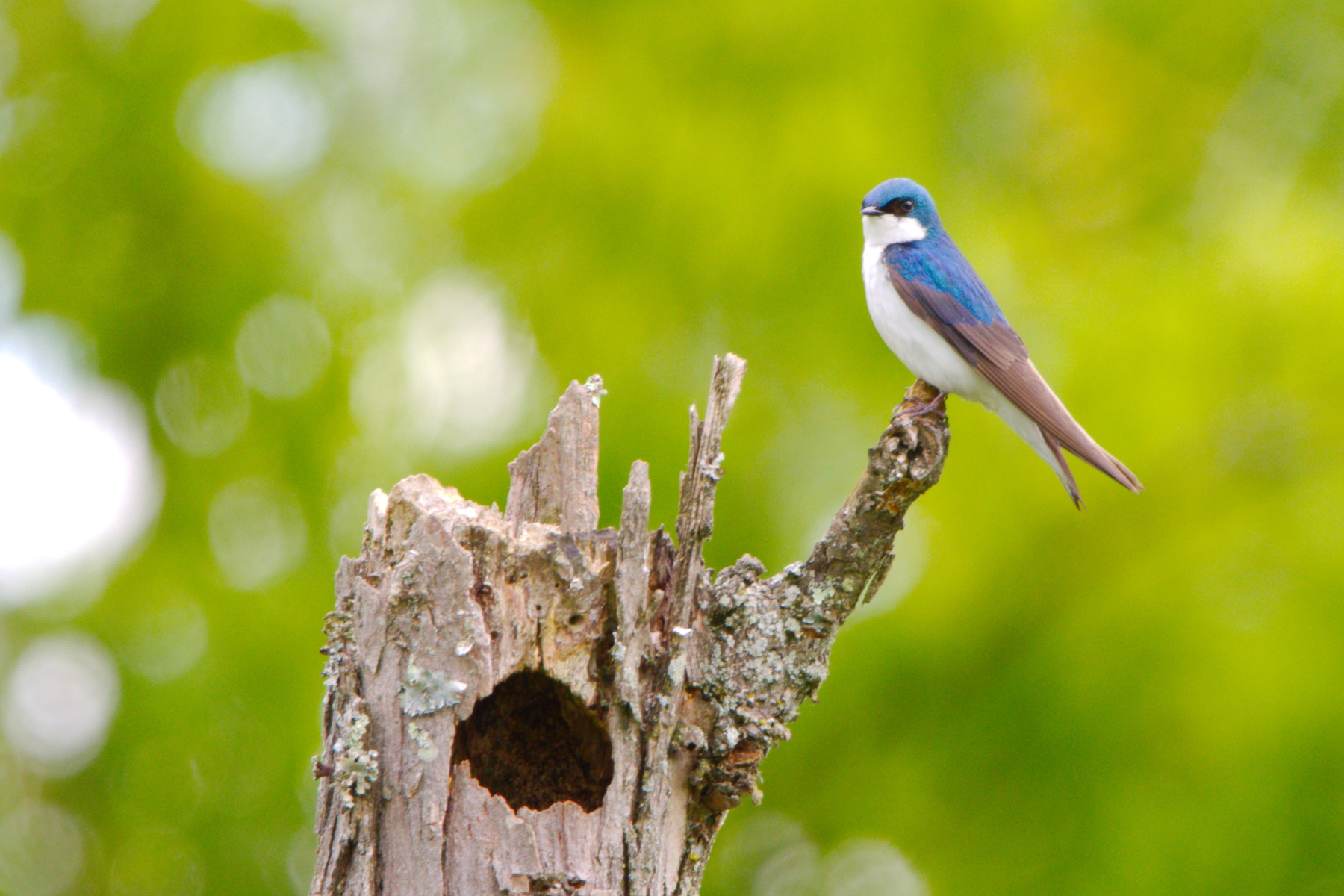
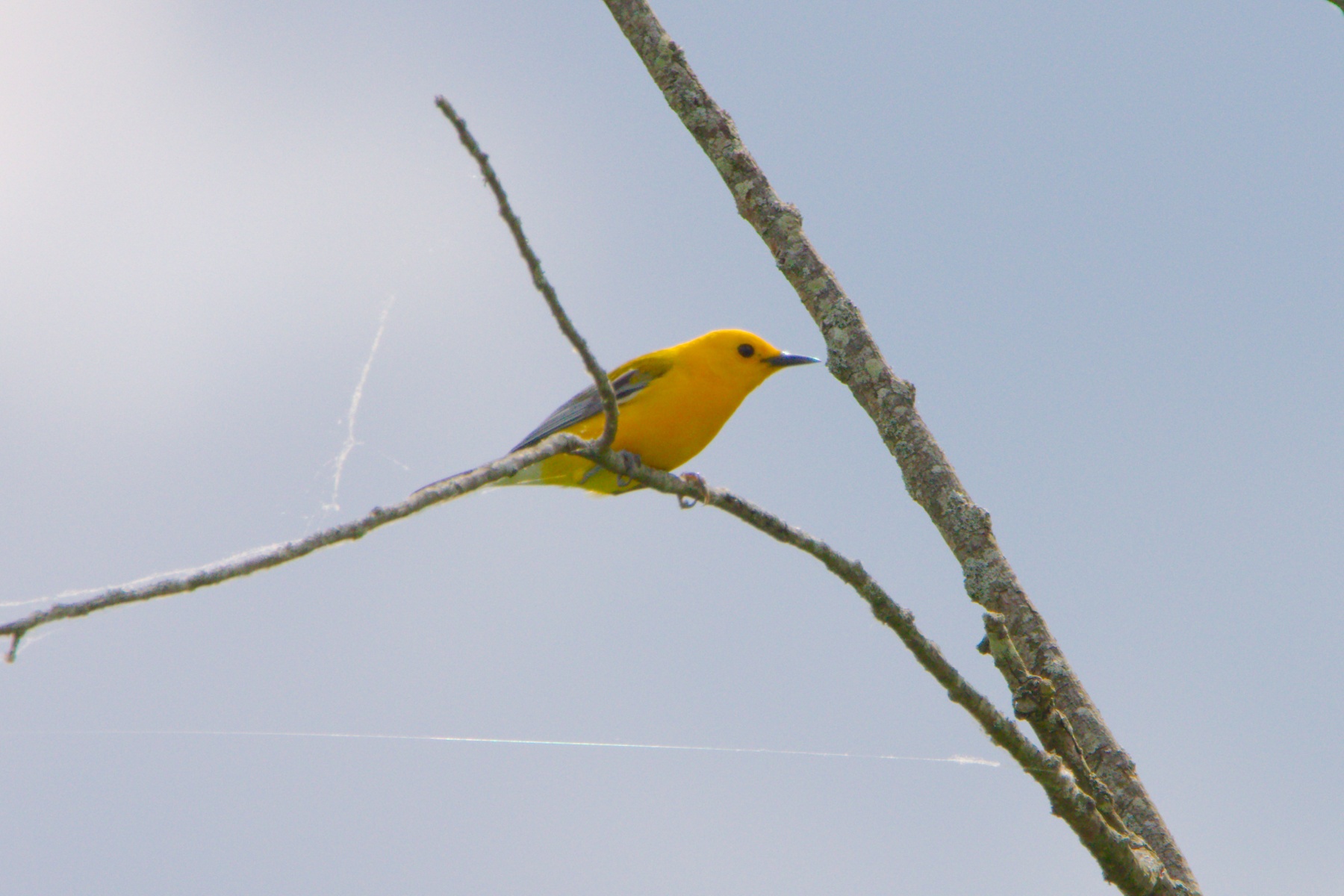
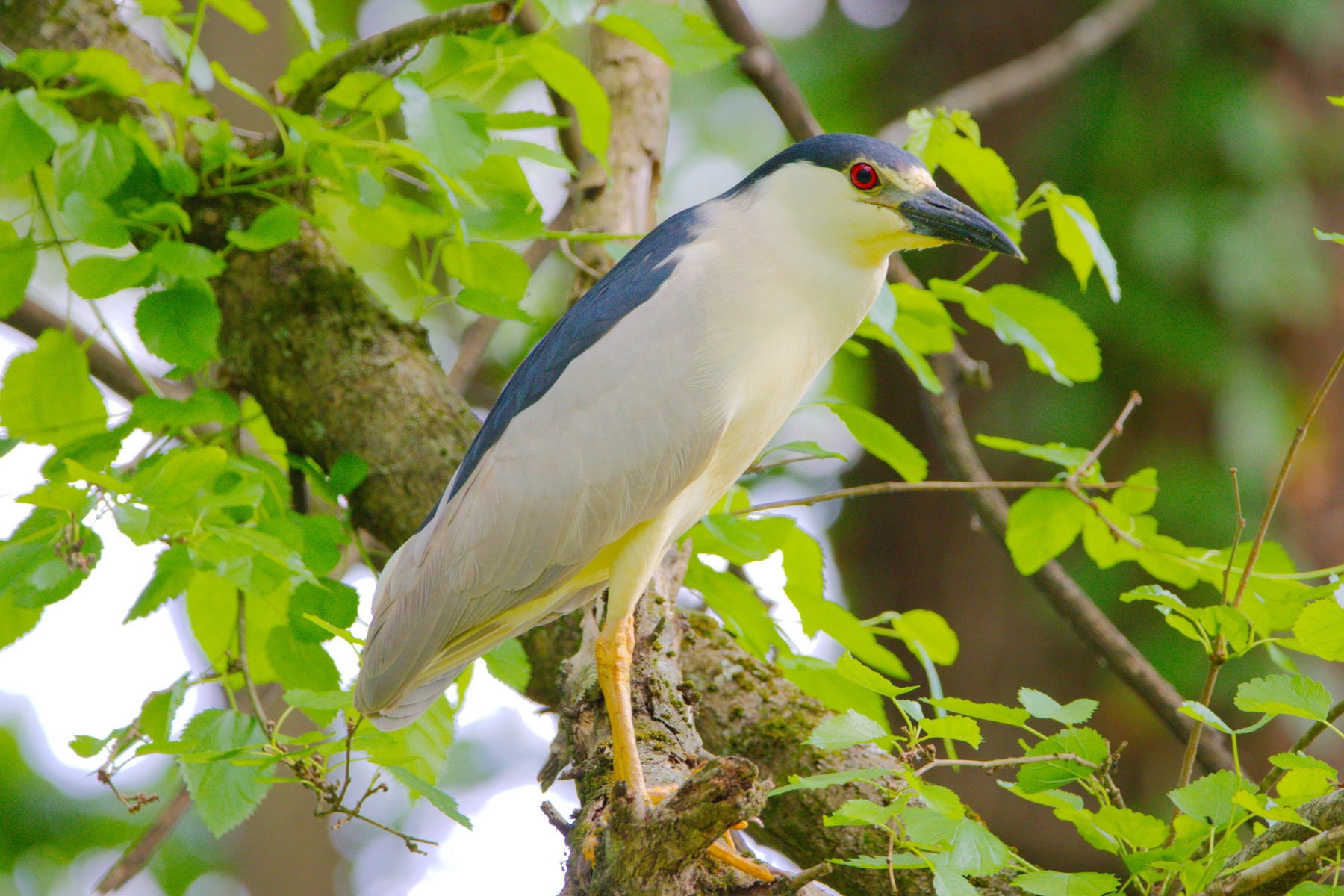
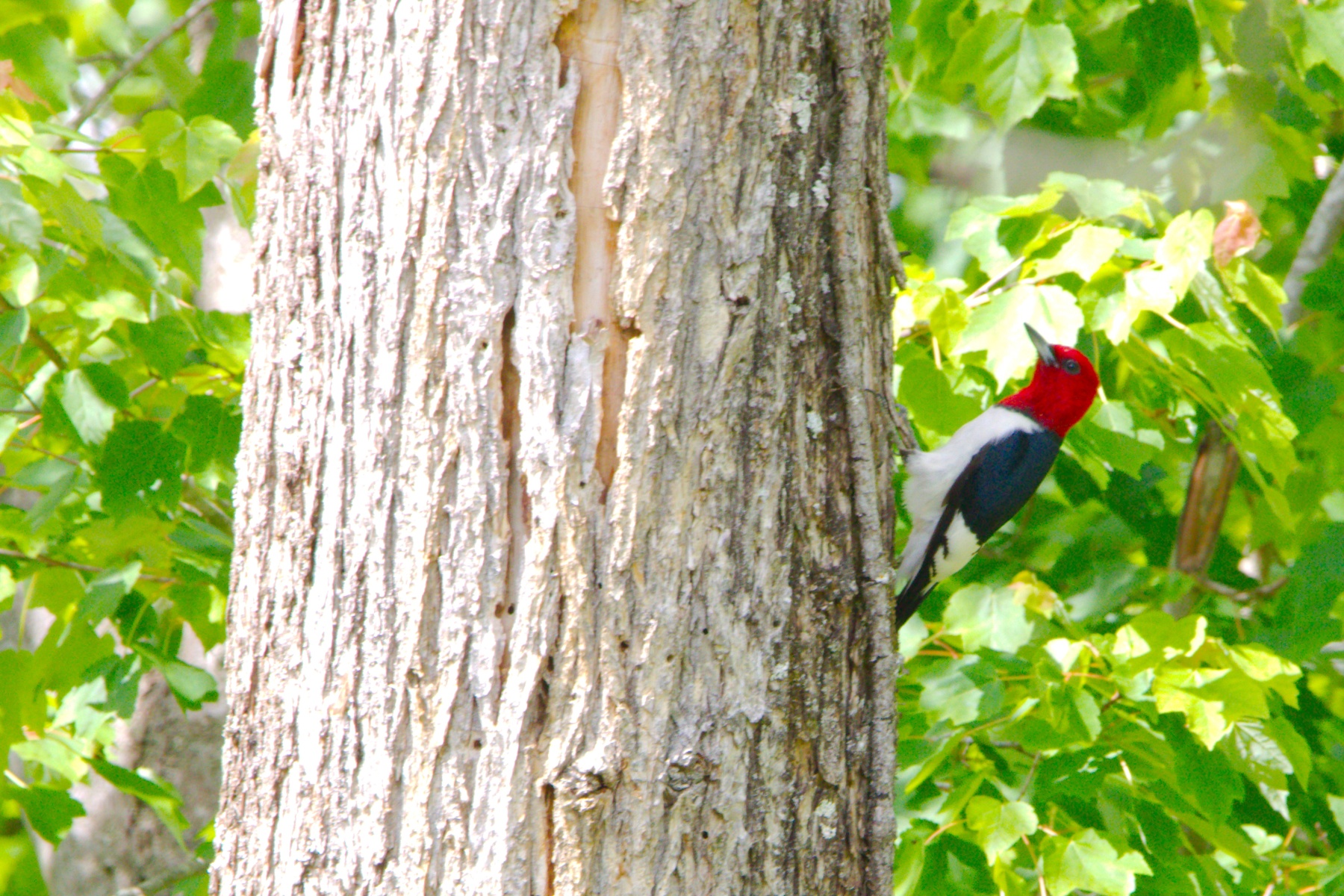
We didn’t really know what to expect but it turned out to be one of our most fruitful bird outings ever, with thses nine birds photographed and a half dozen more seen and heard. We are big fans of the Merlin app by the Cornell Lab of Ornithology. Having that listen for and identify birds by their song helped us find birds we might not have otherwise seen. I recognized the oreole songs and of course the red-winged blackbird, but I never would have found the red-headed woodpecker or the prothonotary warbler. The night heron was actually at the C&O Canal near Riley’s Lock.
Eastern Bluebird (Sialia sialis)
We went to the Agricultural History Farm Park today and, among other things, we saw a lot of eastern bluebirds (Sialia sialis). We also saw a couple song sparrows (Melospiza melodia), European starlings (Sturnus vulgaris), a mockingbird (Mimus polyglottos), and an eastern kingbird (Tyrannus tyrannus). Not bad for a short visit. The photos of the bluebirds turned out quite well, I think showing off their colors really nicely. This is probably out best place to go to see those, although we’ve seen them even in our neighborhood.
Turkey Vulture (Cathartes aura)
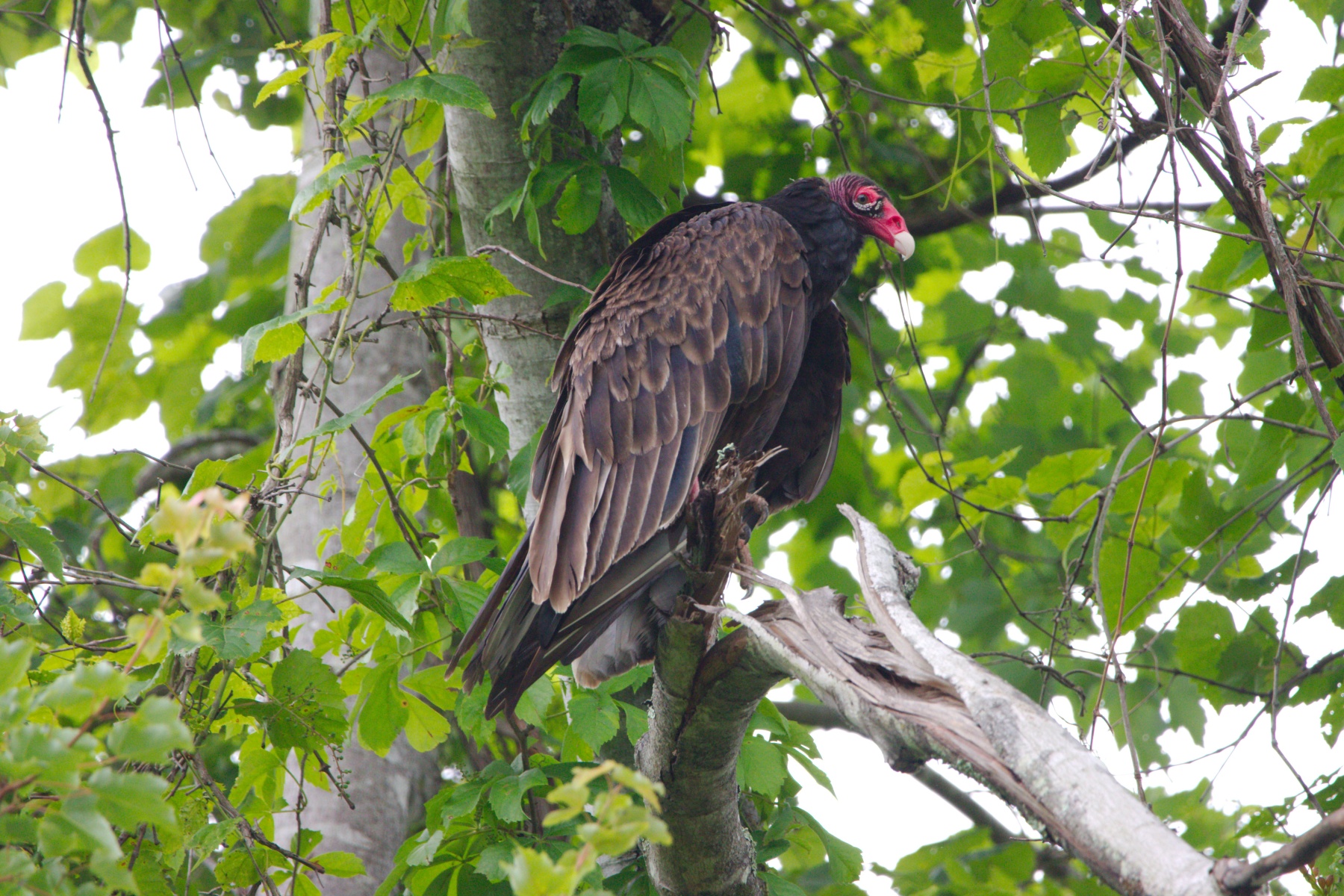
We went to Pennyfield Lock on the C&O Canal today, walking upstream just a little less than 2 miles. We took it fairly slowly and stopped to listen for—and even occasionally photograph—birds. The Merlin app identified four vireos (red-eyed, white-eyed, warbling, and yellow-throated), as well as indigo buntings, orchard oriole, and a few different fly- and gnat-catchers. I got a few nice photos of a great egret (Ardea alba), a couple great blue herons (Ardea herodias) and this turkey vulture (Cathartes aura). I also got photos that aren’t all that good but at least allowed me to identify a ruby-throated hummingbird (Archilochus colubris), an immature male orchard oriole (Icterus spurius), an indigo bunting (Passerina cyanea), and some black vultures (Coragyps atratus). The three smaller birds were way up in tree tops so the photos were not very good at all. Google lens tried to convince me that the orchard oriole was an Asian golden weaver (Ploceus hypoxanthus). Even when I included ‘Maryland’ in my description, it insisted that the picture was not from Maryland because that bird doesn’t exist here. The Merlin app did a better job with it.