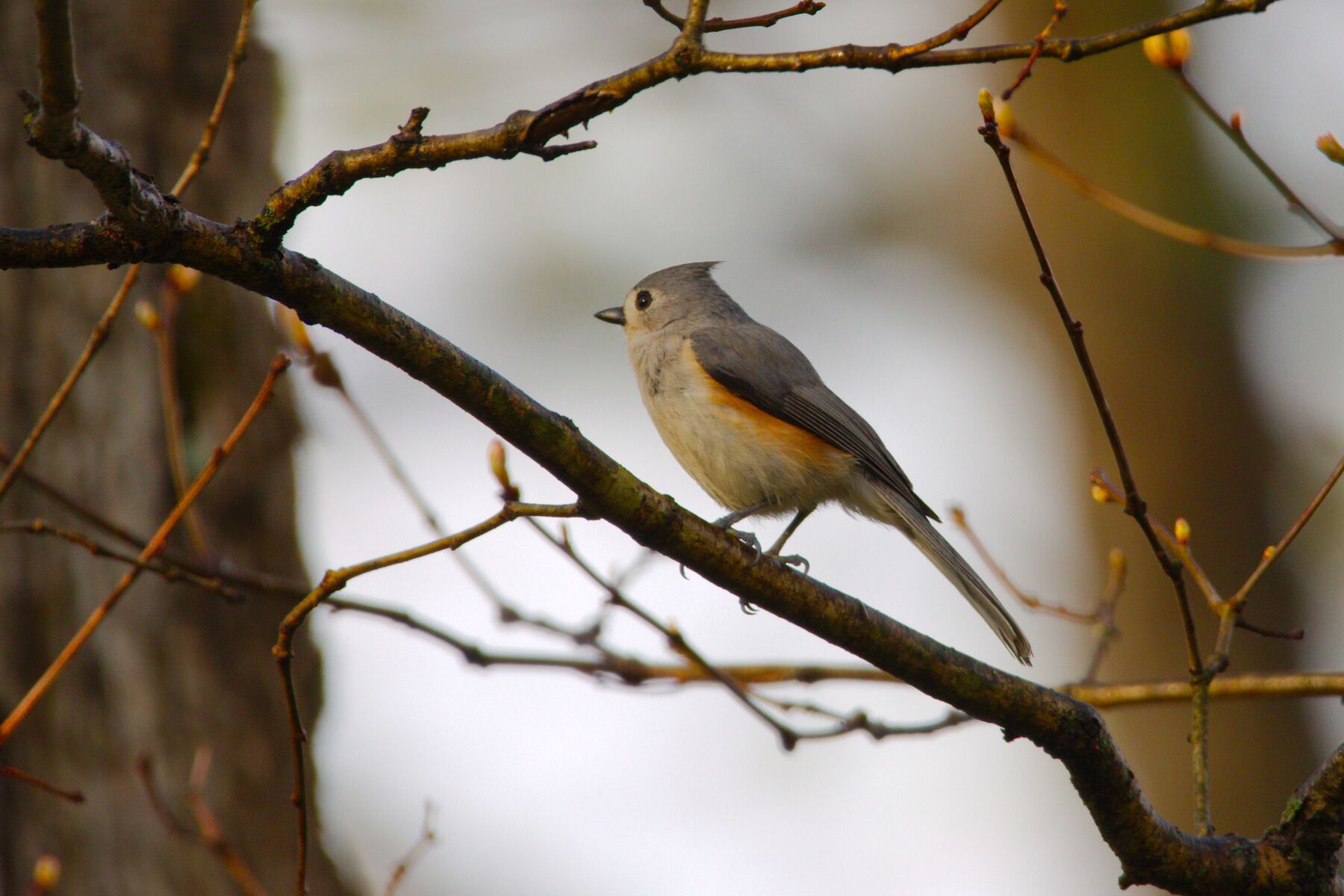
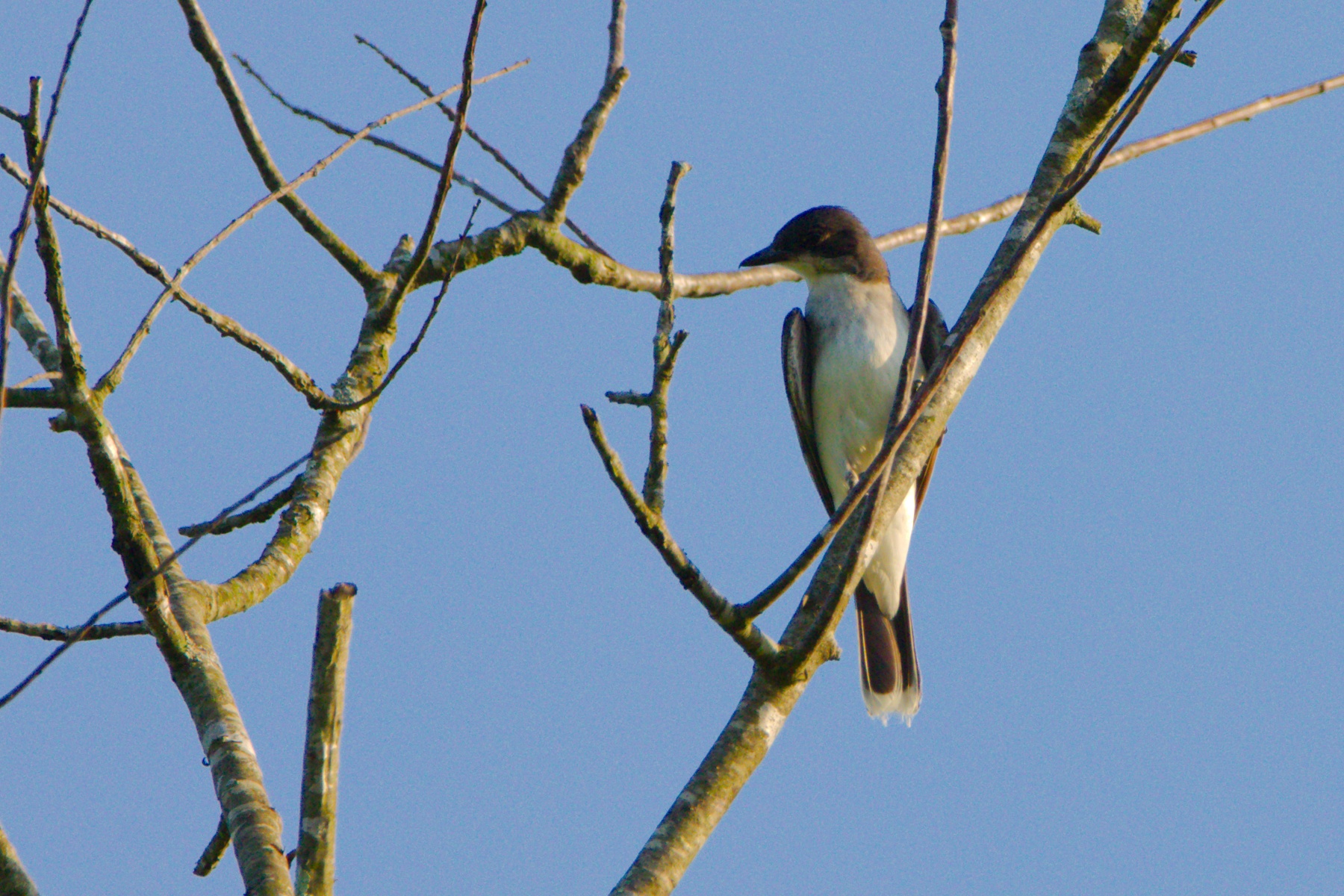
Cathy and I took a walk from the Sandy Spring Friends Meeting to Sandy Spring this afternoon. We saw and heard quite a few birds today, which we don’t always do on this particular walk. In particular, we heard and then saw a Common Yellowthroat (Geothlypis trichas) but my camera refused to focus on it so sadly I was unable to get a photograph. I did get this photo of an eastern kingbird (Tyrannus tyrannus), however, and I think it’s a pretty good one. I also got half-decent photos of an indigo bunting (Passerina cyanea), a few red-winged blackbirds (Agelaius phoeniceus), and a few pretty blurry photos of a nuthatch (not even good enough to know if it was red- or white-breasted).
Tagged With: Birds
Eastern Kingbird (Tyrannus tyrannus)
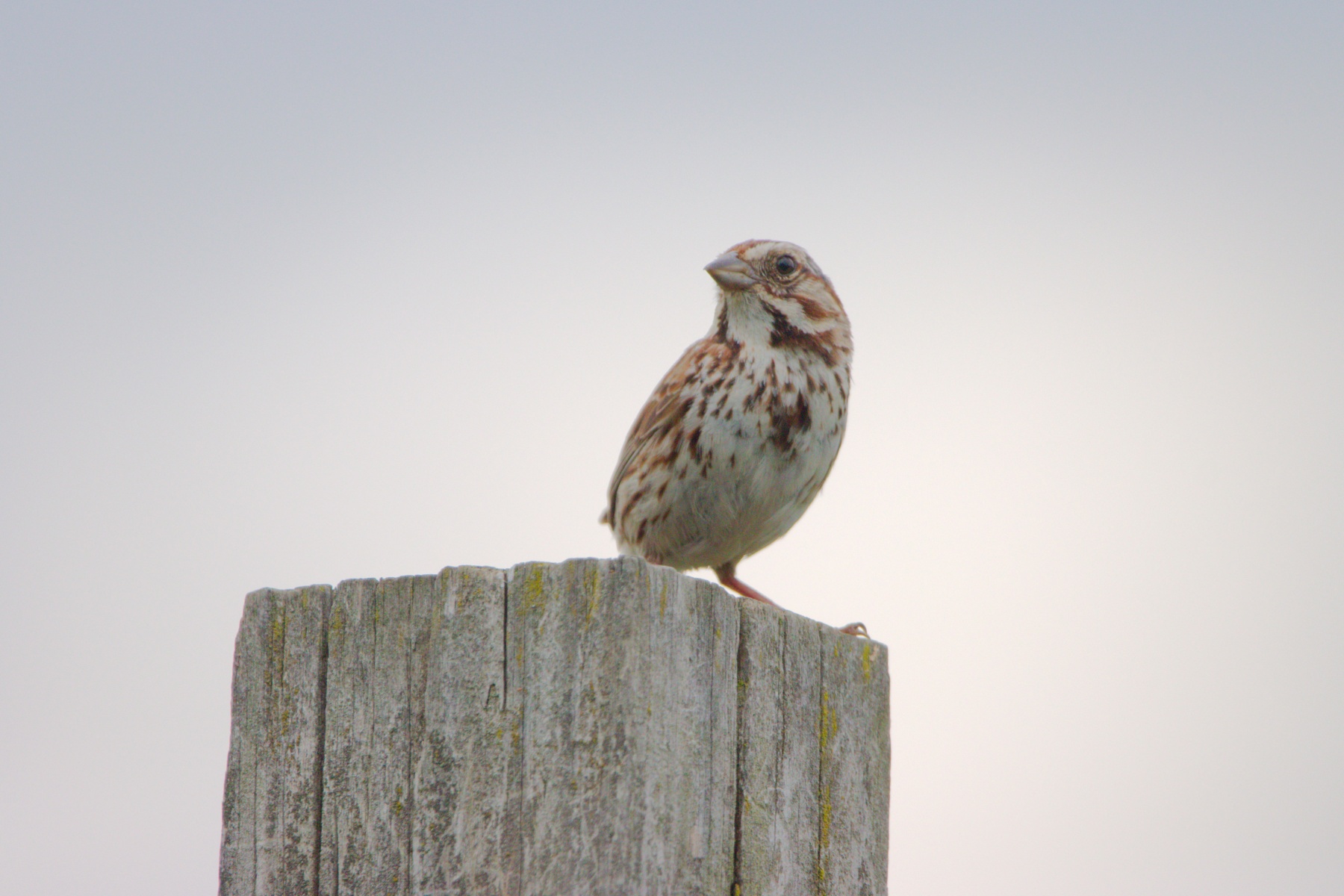
Song Sparrow (Melospiza melodia)
After church today, and before we visited Cathy’s mom, we stopped at the Agricultural History Farm Park and enjoyed a few minutes in the demonstration garden. There were Crocosmia in bloom, among other things. From the garden, we walked down through the meadow, which was rich with Helianthus and Monarda. I got one good bird photo, this time of a Song Sparrow (Melospiza melodia). It’s not the flashiest of birds, but, as the name suggests, it’s a songster with a varied repertoire. The heat of the day in the summer isn’t the best time for bird photography, but I’ll take what I can get.
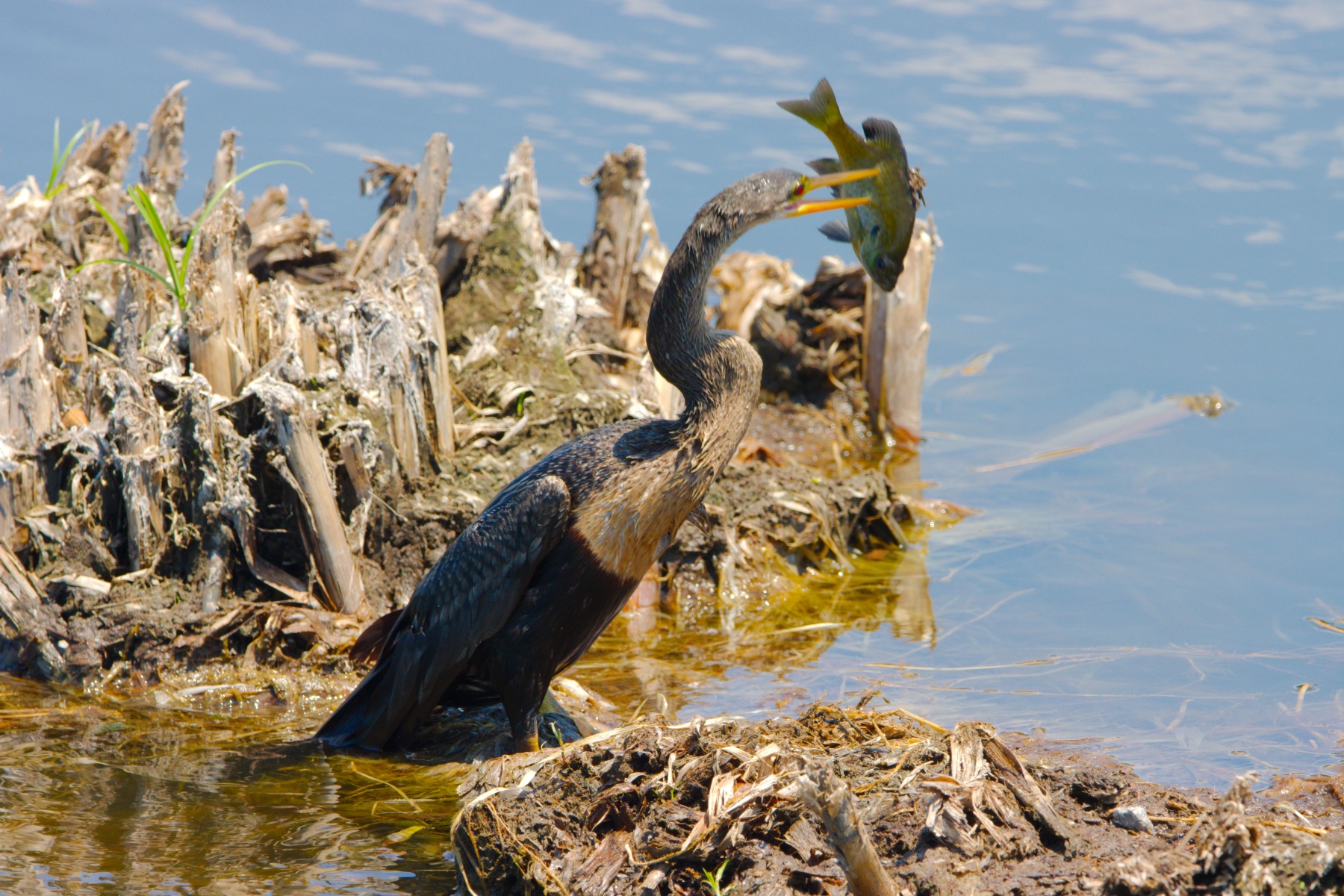
Anhinga (Anhinga anhinga)
Cathy and I went to the Carl Bazemore Bird Walk on what we call Alligator Pond on Shoreline Drive, west of the bridge to Sunset Beach. We saw a few alligators in the distance as well as a few birds. The most interesting thing was this anhinga (Anhinga anhinga), catching fish quite close to us. The first fish we saw it catch was small. Then, however, it landed a pretty good size fish (it looks like a bluegill). I got a few shots of it swallowing the fish, so I can confirm that it was an entirely successful catch.
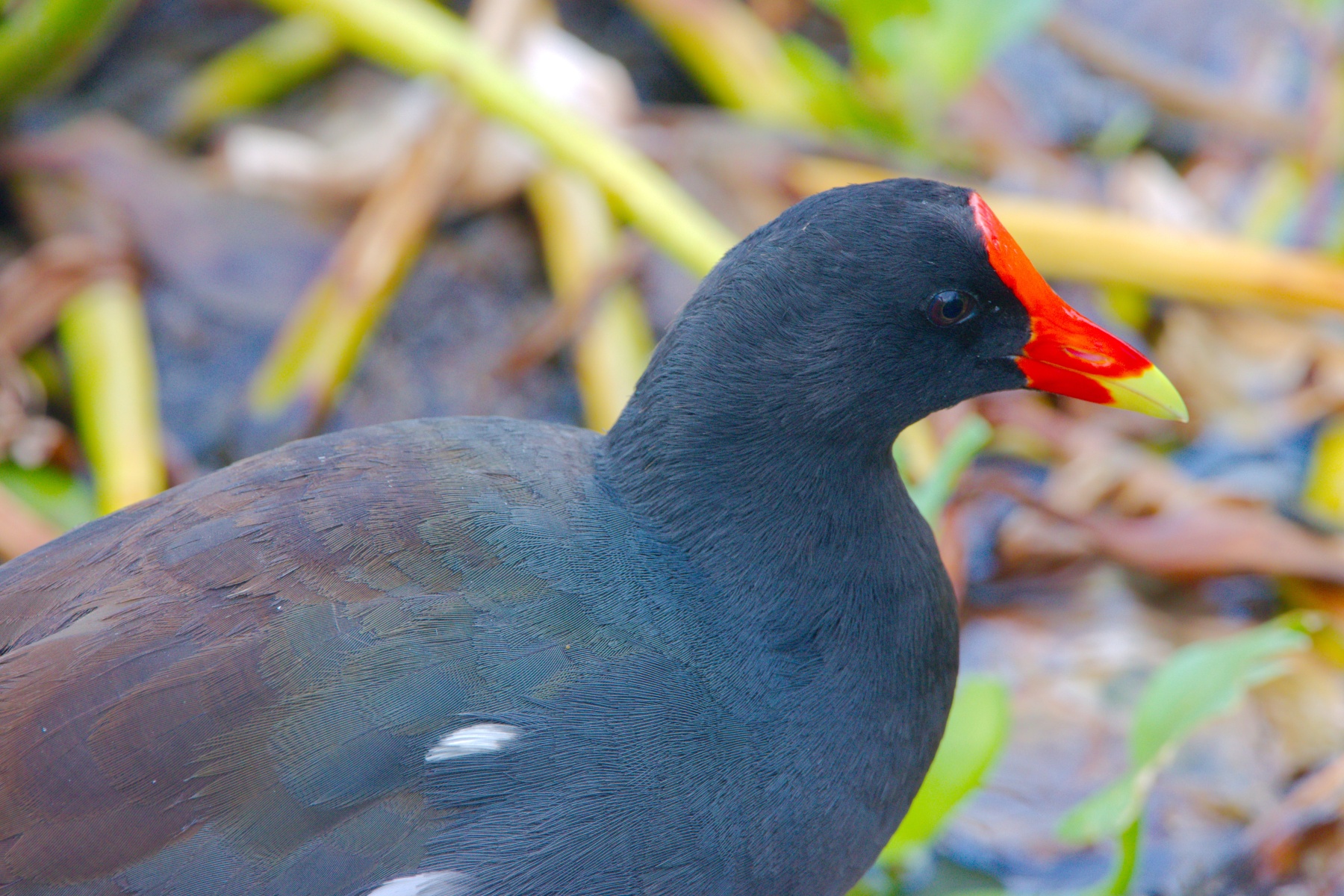
Common Gallinule (Gallinula galeata)
We went to Alligator Pond (a.k.a. the Carl Bazemore Bird Walk) again today. We saw the anhinga again but not close. We did, however, see an alligator as well as an adult and juvenile common gallinule (Gallinula galeata). They were moving around quite a bit but I was able to get close enough to get a pretty good photo of each of them. This is the adult bird. Of the two alligators we saw, one of them was quite close, lying on the surface in a clump of weeds and very well camouflaged. But it was close enough we weren’t going to miss it. I got some photos of that, as well.
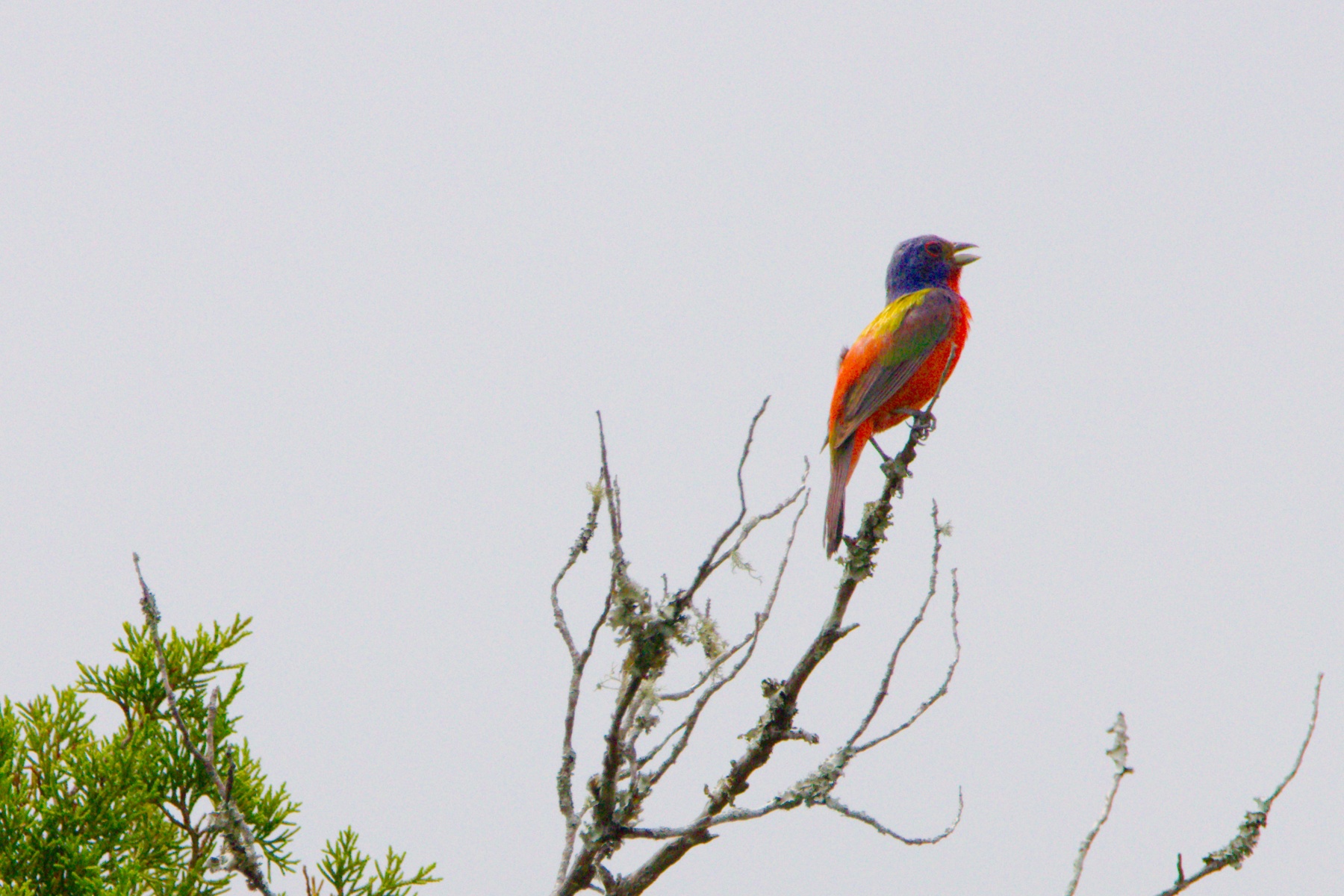
Painted Bunting (Passerina ciris)
After going to Alligator Pond (see previous post), we continued just into South Carolina to Vereen Memorial Park. This is a relaxing little park with trails through the woods and boardwalks through the marsh to two islands. I got some nice photos of a great egret (Ardea alba). Then, as we were out on the first of the two islands I hear a painted bunting (Passerina ciris) and found it in the top of a small tree. It’s tricky to get a good photo of a bird against the bright sky, but this one turned out reasonably well.
We also saw (and I photographed) eastern bluebirds (Sialia sialis), a downy woodpecker (Dryobates pubescens), a Carolina wren (Thryothorus ludovicianus), and heard but did not see a brown-headed nuthatch (Sitta pusilla).
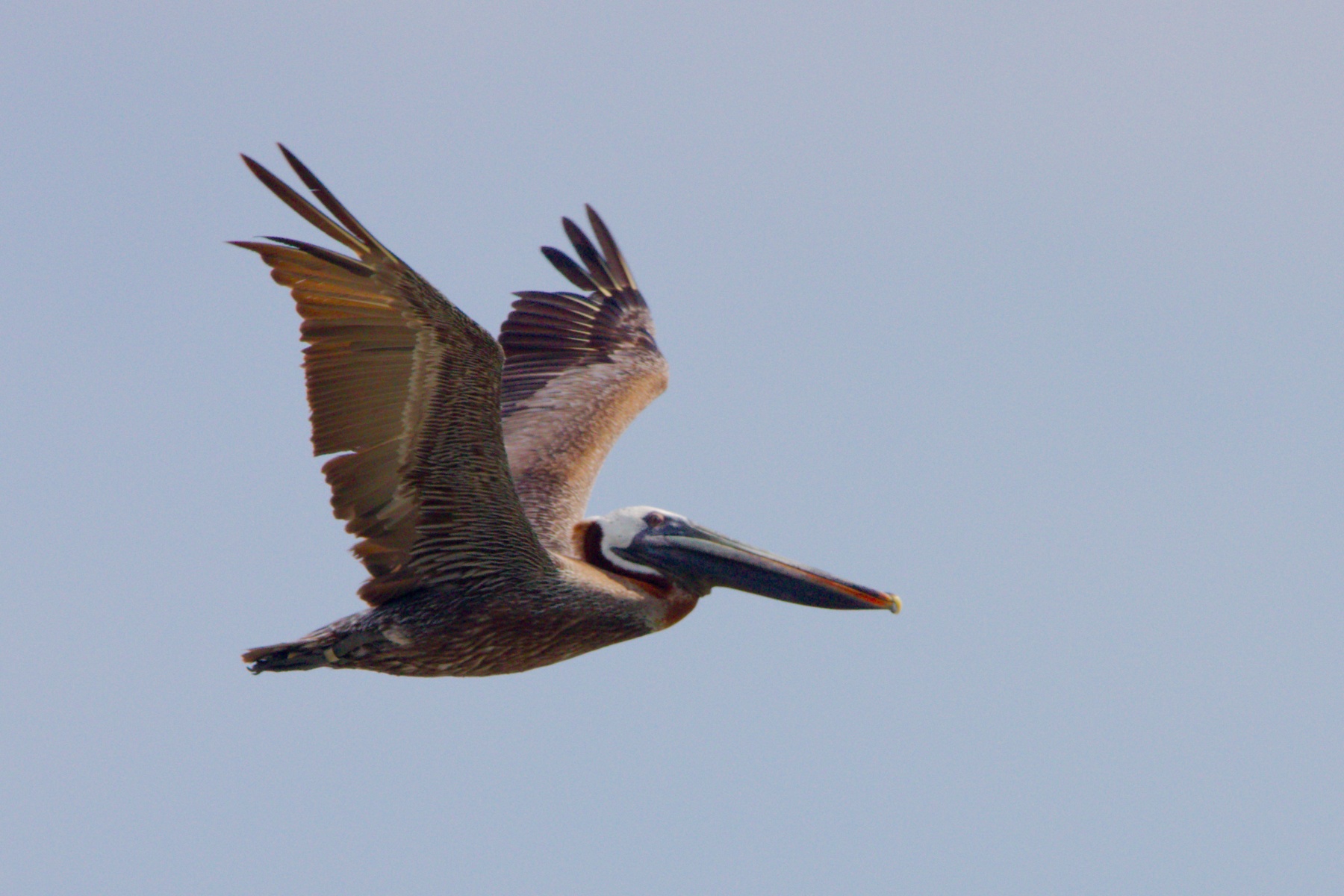
Brown Pelican Pelecanus occidentalis
Cathy and I drove to the eastern end of Ocean Isle this afternoon. First we went to the pier at Ferry Landing Park. This area was closed for renovations after Hurricane Isaias damaged the pier in 2020 and didn’t open again until the very end of 2024. After a short visit there, we parked and walked on the beach. Between November 2021 and April 2022, a groin was constructed perpendicular to the beach at the eastern end of the island. This has dramatically improved the beach stability. We looked for (and found) some pieces of coral as we walked. I carried my long lens and took a few pictures, including some of a double-crested cormorant (Nannopterum auritum) at the end of the groin and a few of this flying brown pelican (Pelecanus occidentalis).
McKee-Beshers Birds
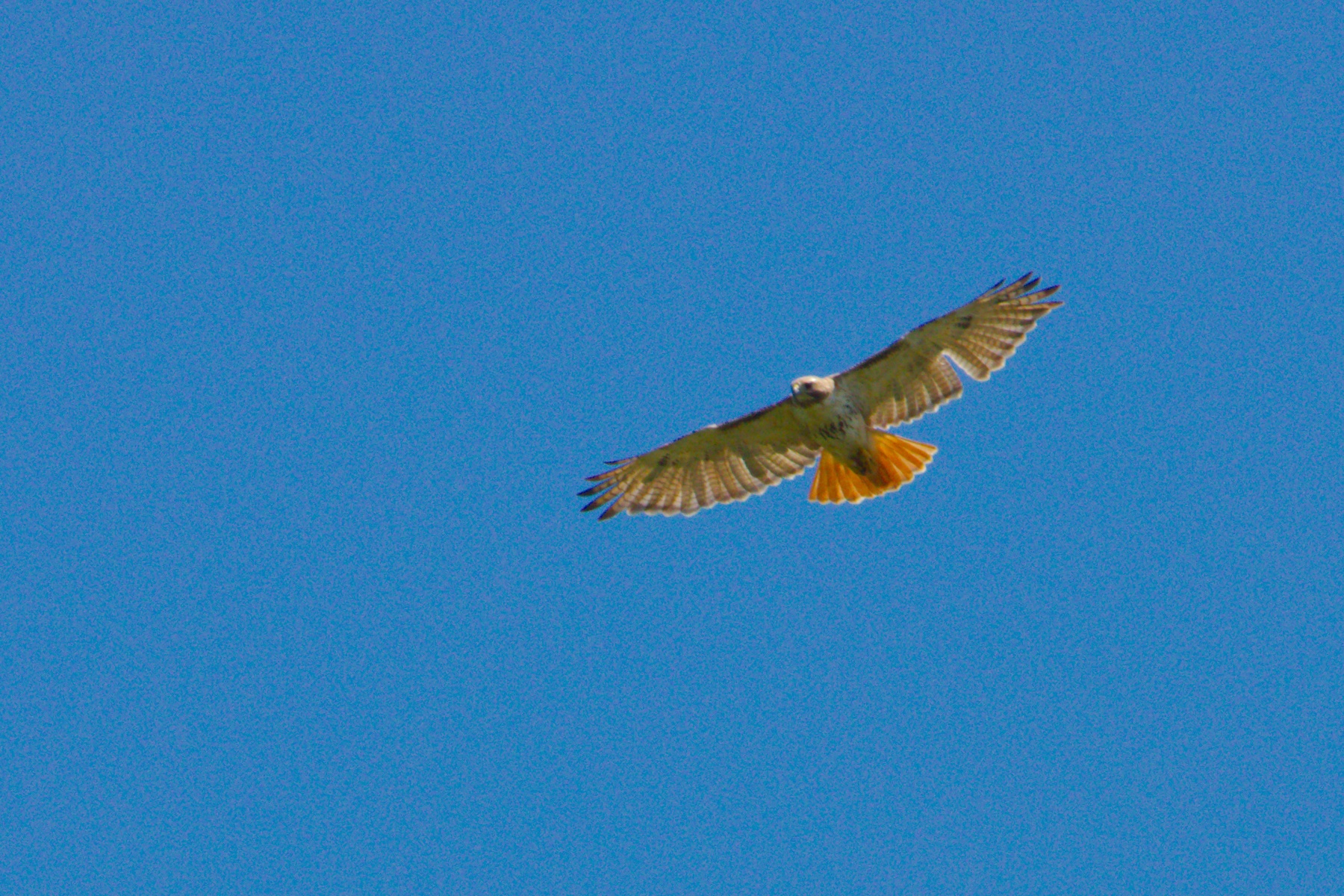
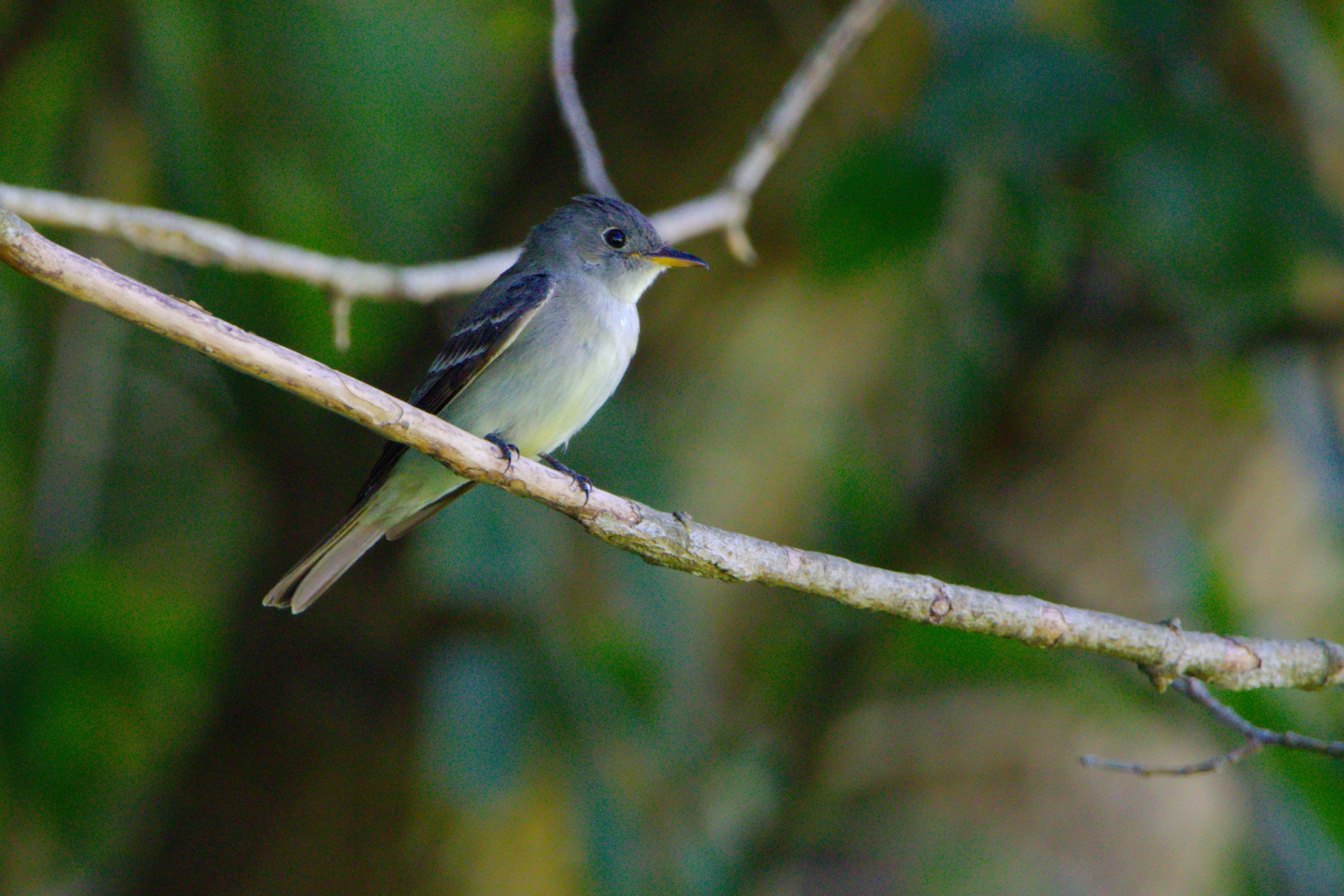
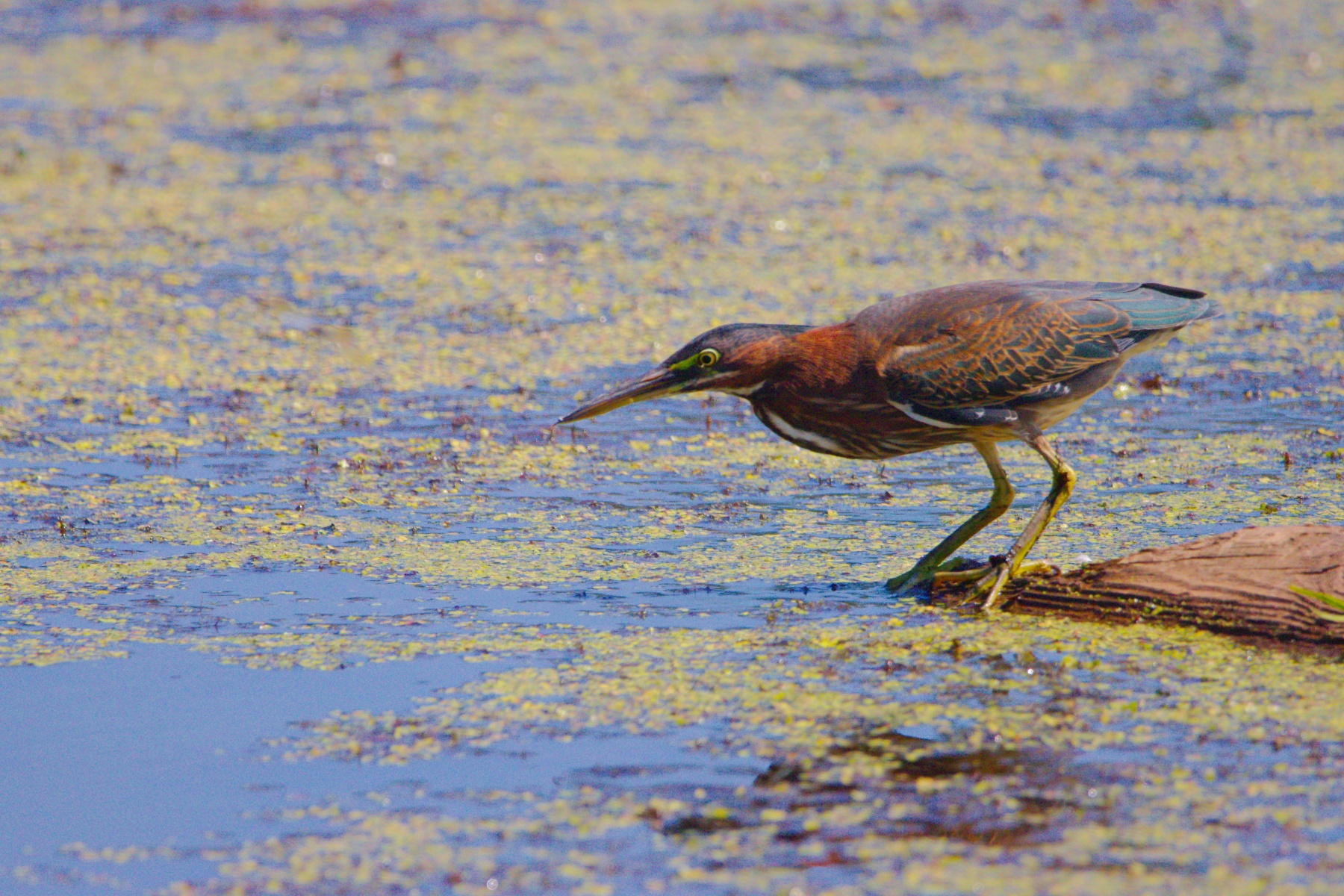
We had a nice walk at McKee-Beshers today. We first walked to fields 3 and 4, which were planted with sunflowers this year. It’s a bit of a walk, almost 7⁄8 of a mile, getting nearly to the river. The two big sunflower fields were well past peak bloom. The sunflower heads were there but almost all turned downwards. We heard quite a few birds but didn’t see all that many. We heard a lot of goldfinches and indigo buntings, as well as cardinals, but we also heard a yellow-billed cuckoo, which was a treat. I’d have been surprised if we had actually seen that. I got this photo of a red-tailed hawk (Buteo jamaicensis) circling overhead and a few nice photos of this eastern wood-pewee (Contopus virens). We returned to the car and then want to the shallow ponds at the western end of Hunting Quarter Road where we saw this green heron (Butorides virescens).
Great Blue Heron (Ardea herodias)
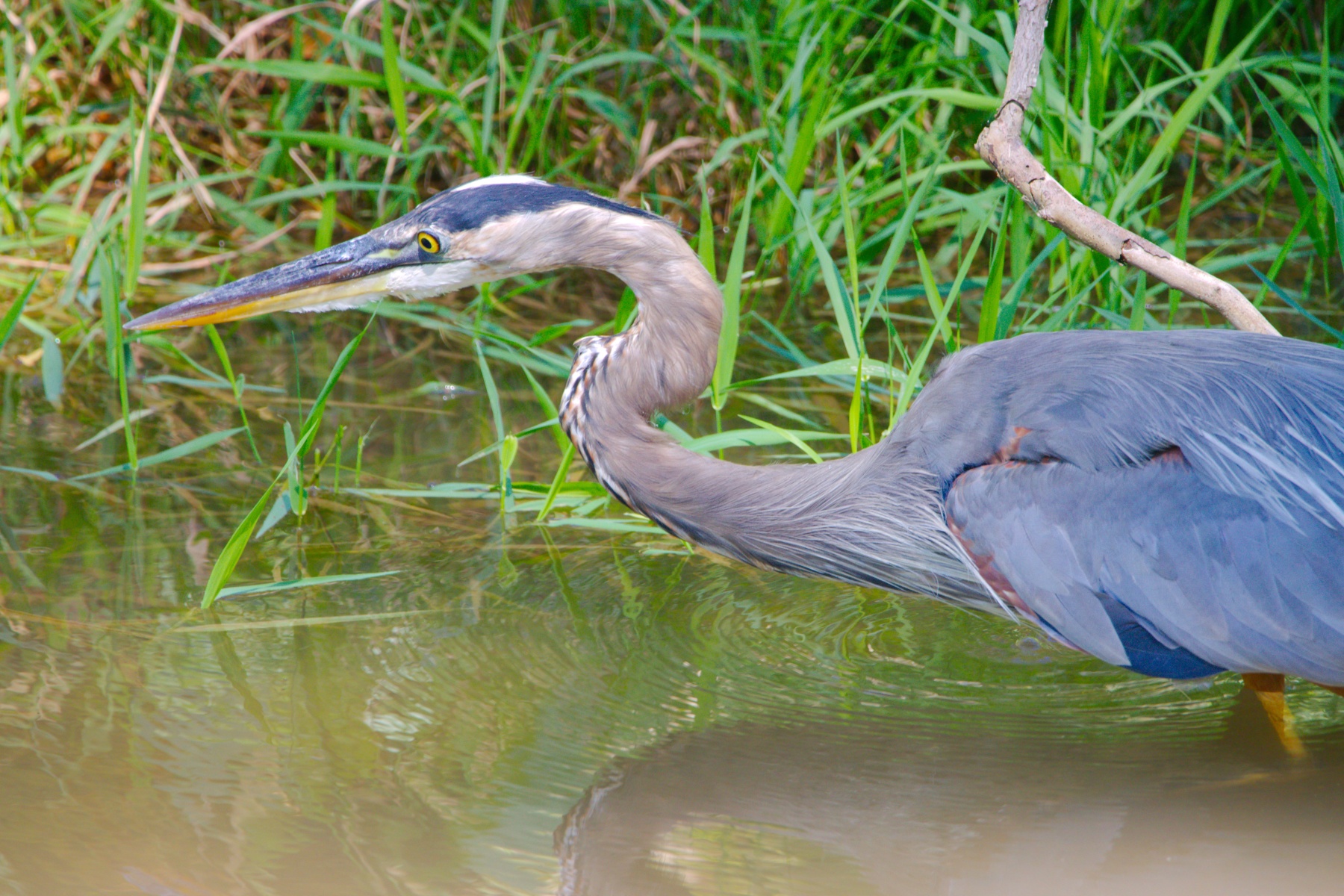
We went to the C&O Canal today, parking at Violet’s Lock, and walked down stream past Blockhouse Point. We saw this great blue heron (Ardea herodias) on our way down and again on our way back. We sat on the wall next to the towpath near Blockhouse Point and chatted with a man cycling from Maryland back to his home in Ohio. His plans were to stop for a few days for a jazz festival in Pittsburgh, Pennsylvania. He shared some pawpaws that he had collected. We had looked for them but hadn’t found any that were not still on the tree and not yet ripe. He also asked us if we’d ever tasted tamarind. I had but let him give us a few pods, which we broke open and ate. A bit further on I also got a few photos of a pair of black vultures (Coragyps atratus).
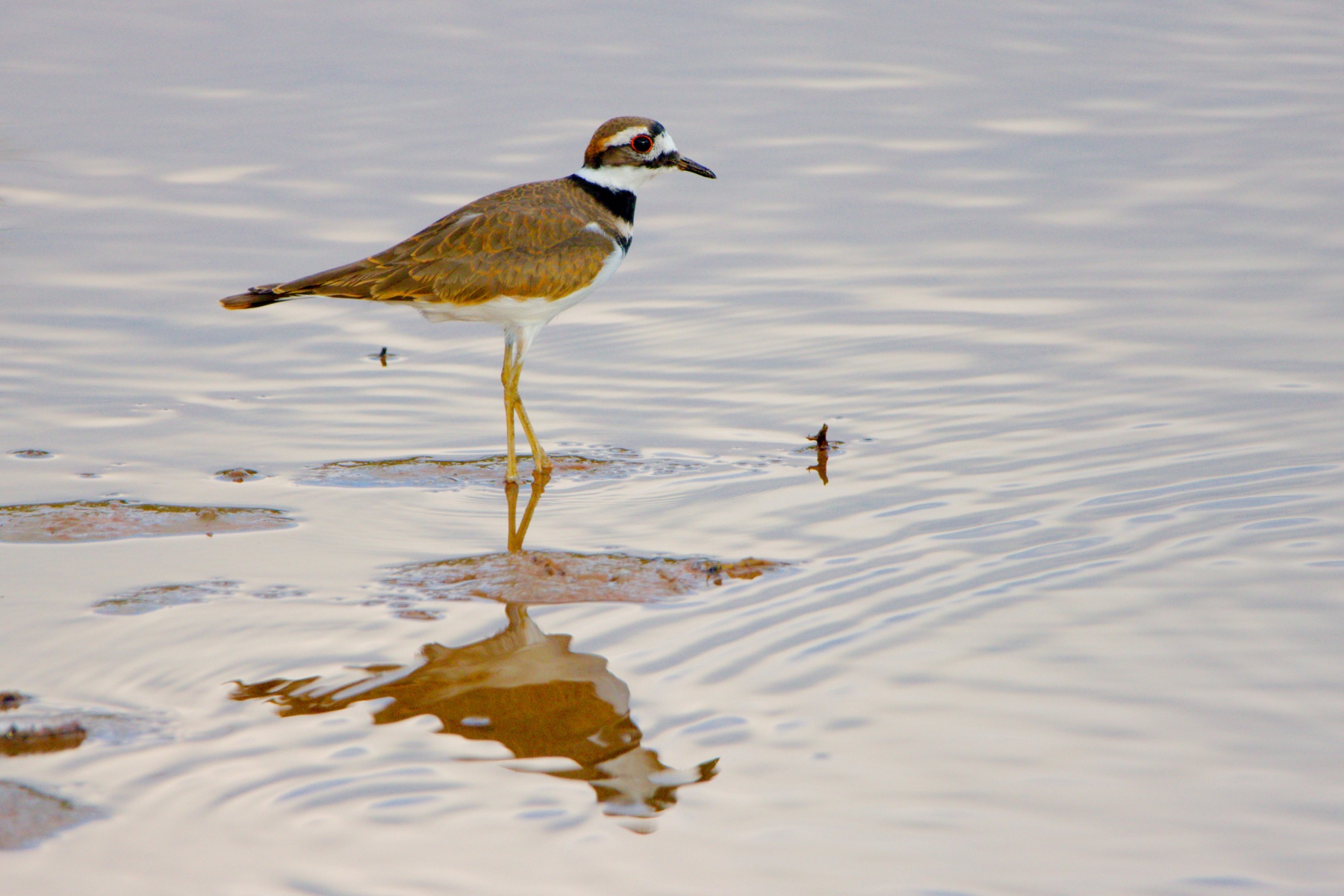
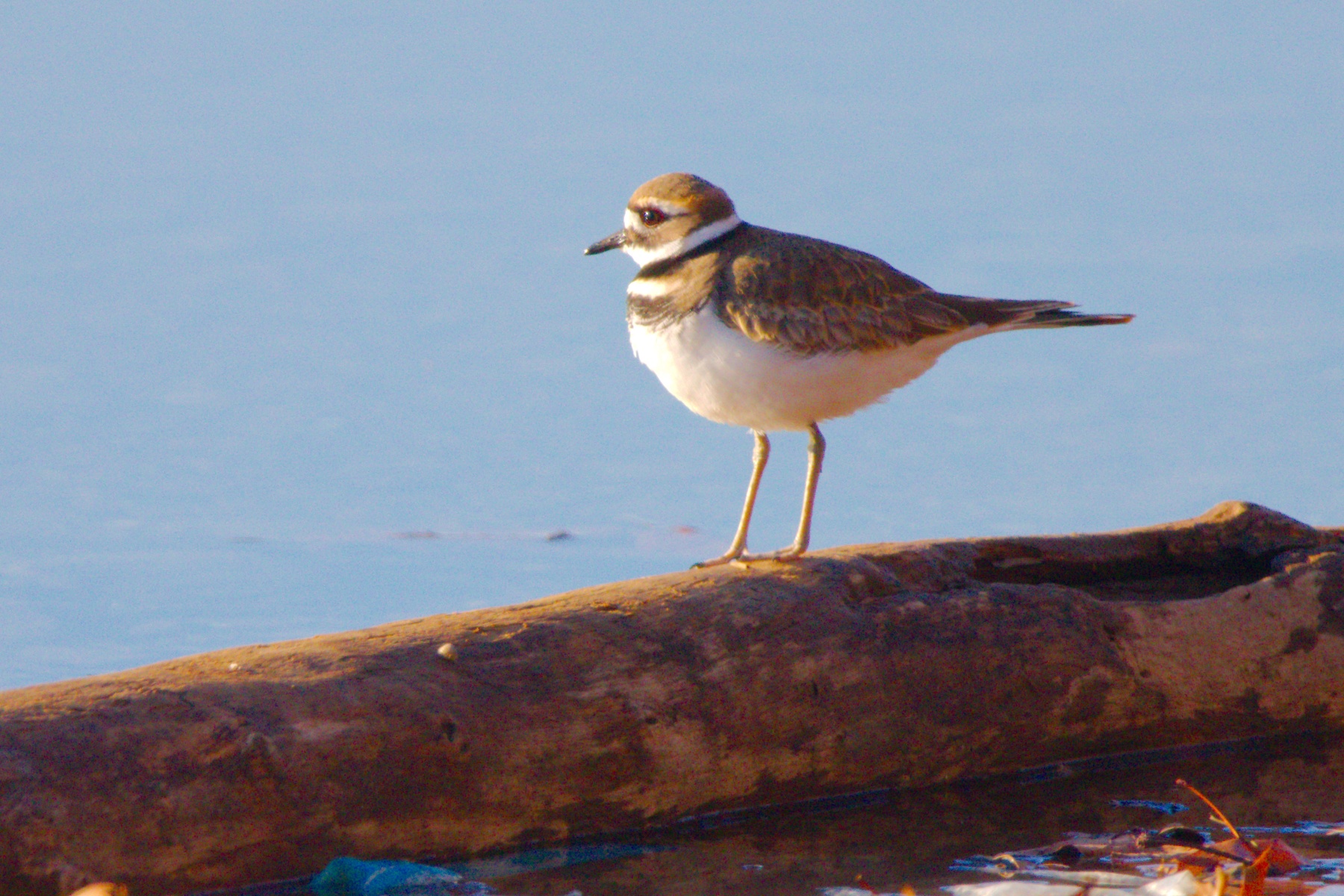
Killdeer (Charadrius vociferus)
We walked at Redgate Park this afternoon. This used to be the municipal Redgate Golf Course and the paths are the cart paths from that. There are some nice ponds, and that’s where we saw this kildeer (Charadrius vociferus). Other than that, we didn’t see too much, but it’s a nice place with a few nice specimen trees. The fairways are mostly overgrown with thistle and other weeds, but that’s a good habitat for birds. We heard a lot more than we saw and those we saw were mostly just shapes flitting around in the brush and not easily identified. But this fellow (or lady, I have no idea) was out in the open and let us get close enough for a good view.
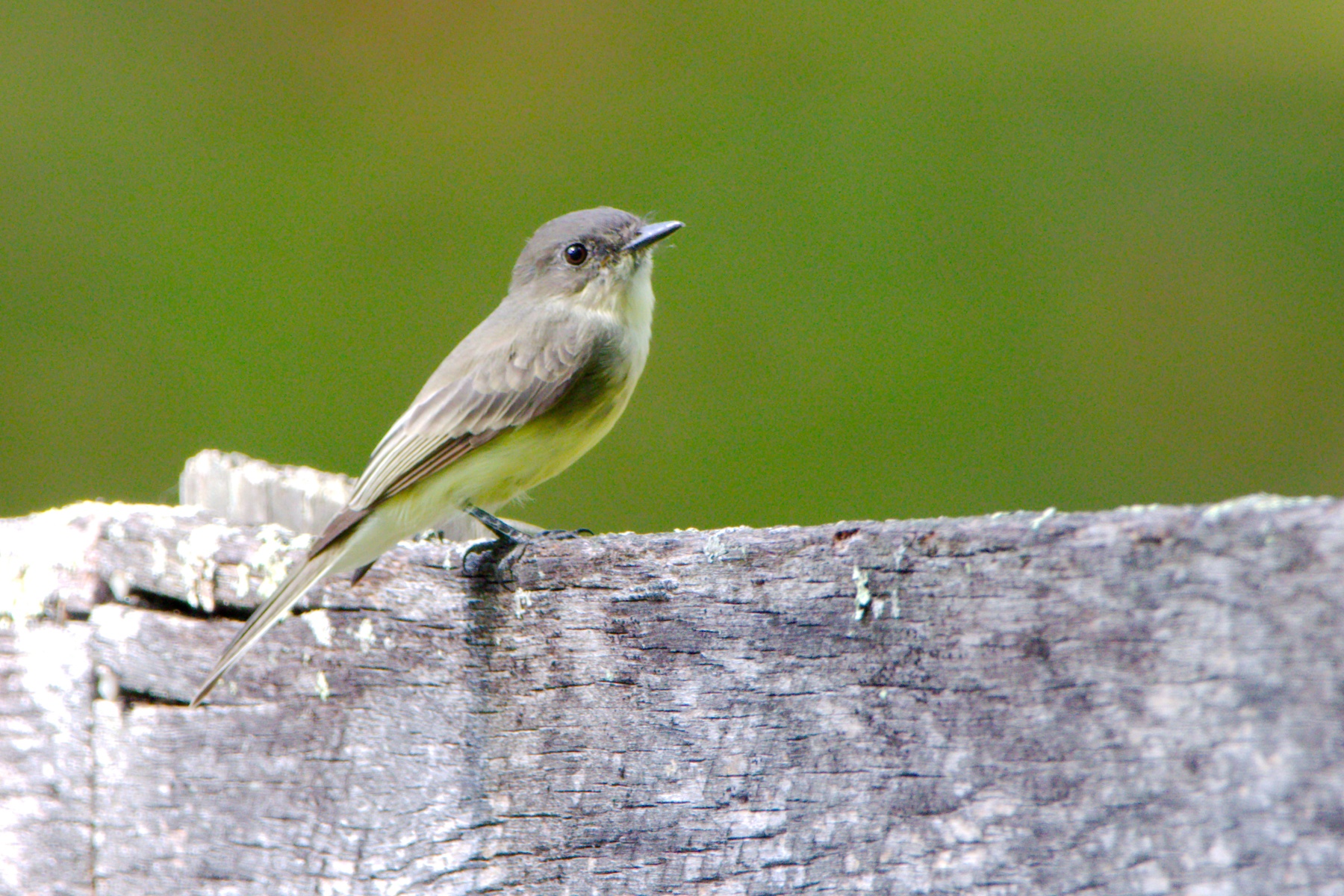
Eastern Phoebe (Sayornis phoebe)
We took a walk at Sandy Spring today, starting from the Friends Meeting House and walking to the spring and into the field and woods beyond. Sometimes we see a lot of birds here and other times, none at all. Today we got one nice view of this eastern phoebe (Sayornis phoebe) and that’s about it. It’s a pleasant walk, in any case, and we often go there after visiting Cathy’s mom, because it’s near by. The phoebe is a migrant but we are at the southern edge of their summer range and not far north of their winter range, so they are fairly common most of the year.
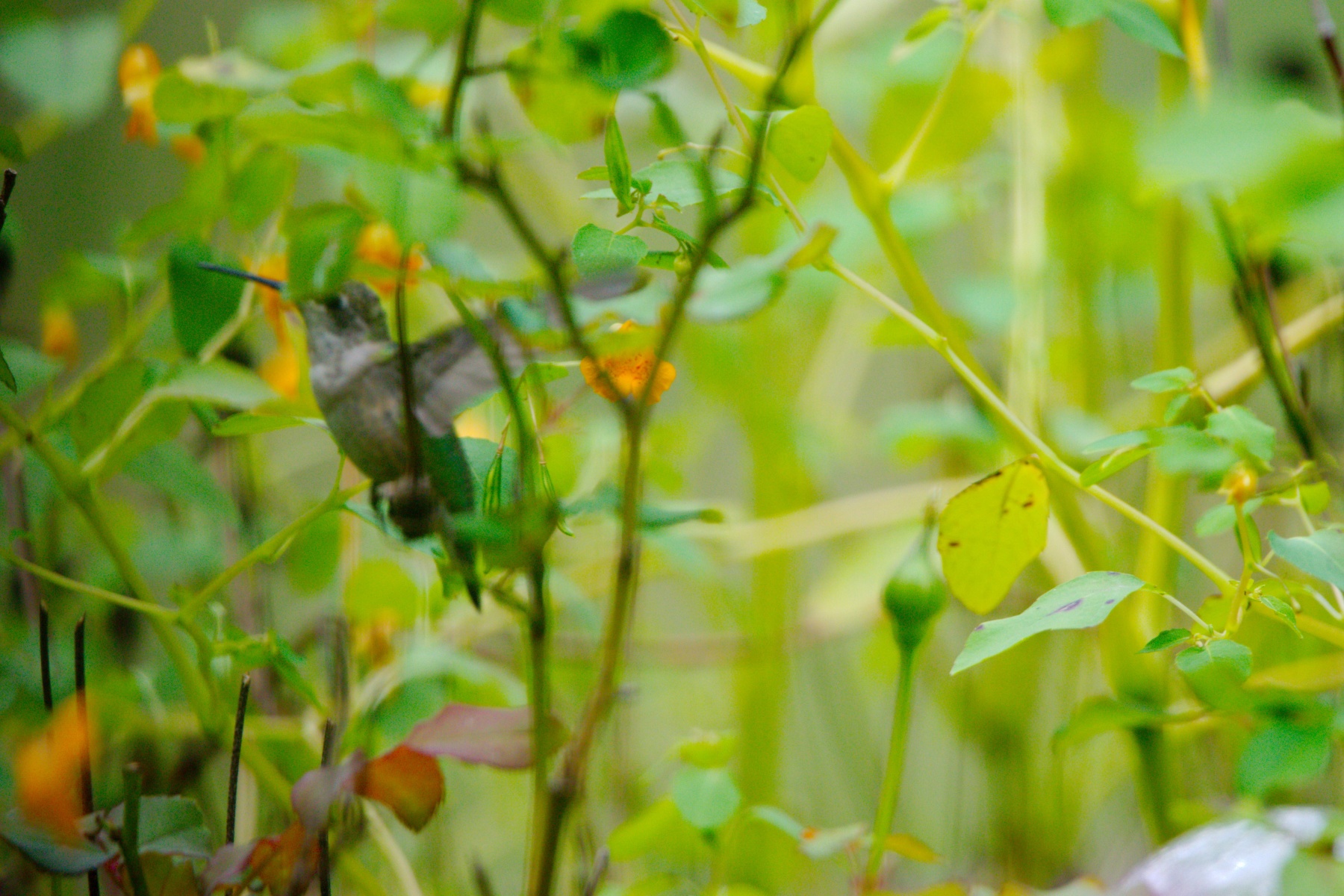
Ruby-throated Hummingbird (Archilochus colubris)
There are hundreds of species of hummingbirds that nest in the American tropics, and more than a dozen in the western U.S., but east of the Great Plains there is only the Ruby-throat (Archilochus colubris). Cathy has been putting up feeders for them and each year it seems she gets more and more of them. They are particularly numerous during the fall migration when we see them most days, although probably not the same one from day to day. This was one of the last that we saw this year. They seemed to particularly like the jewel weed or touch-me-not flowers (Impatiens capensis). Not a great photo but still, fun.
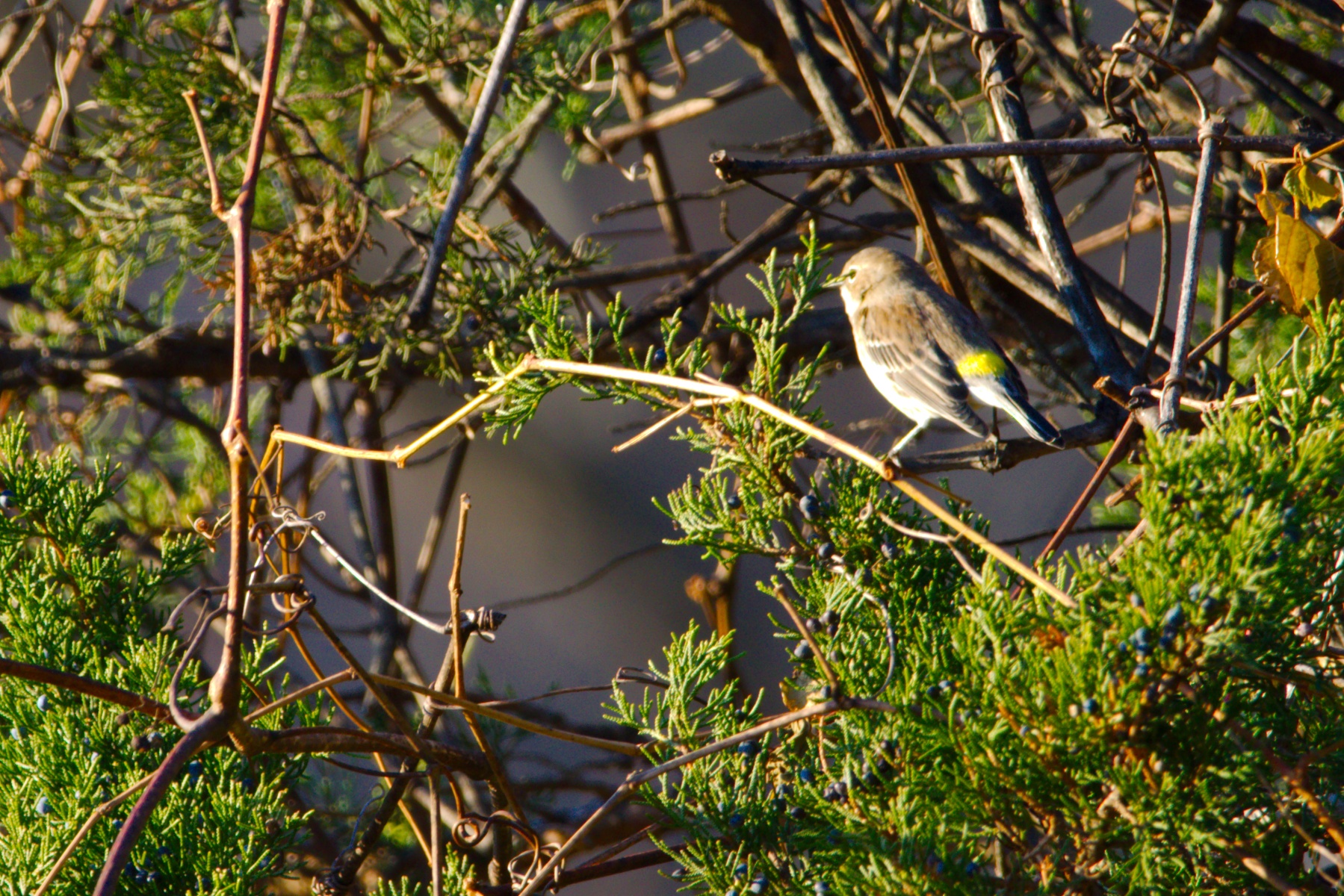
Yellow-rumped Warbler (Setophaga coronata)
We walked to Sandy Spring today after visiting Cathy’s mom. We didn’t see much to speak of but I did get this slightly soft photo of a yellow-rumped warbler (Setophaga coronata) as we were heading back out. This is our most common winter warbler. We’re on the northern end of it’s winter range and the southern end (or just south of) it’s breeding range. It’s easily identified by it’s yellow rump, seen here, although it’s often hidden when perching.
We also saw them in Oregon last year, and I got a few nice photos of those, which can be seen on my posts for Wednesday, September 18 and Thursday, September 19, 2024.
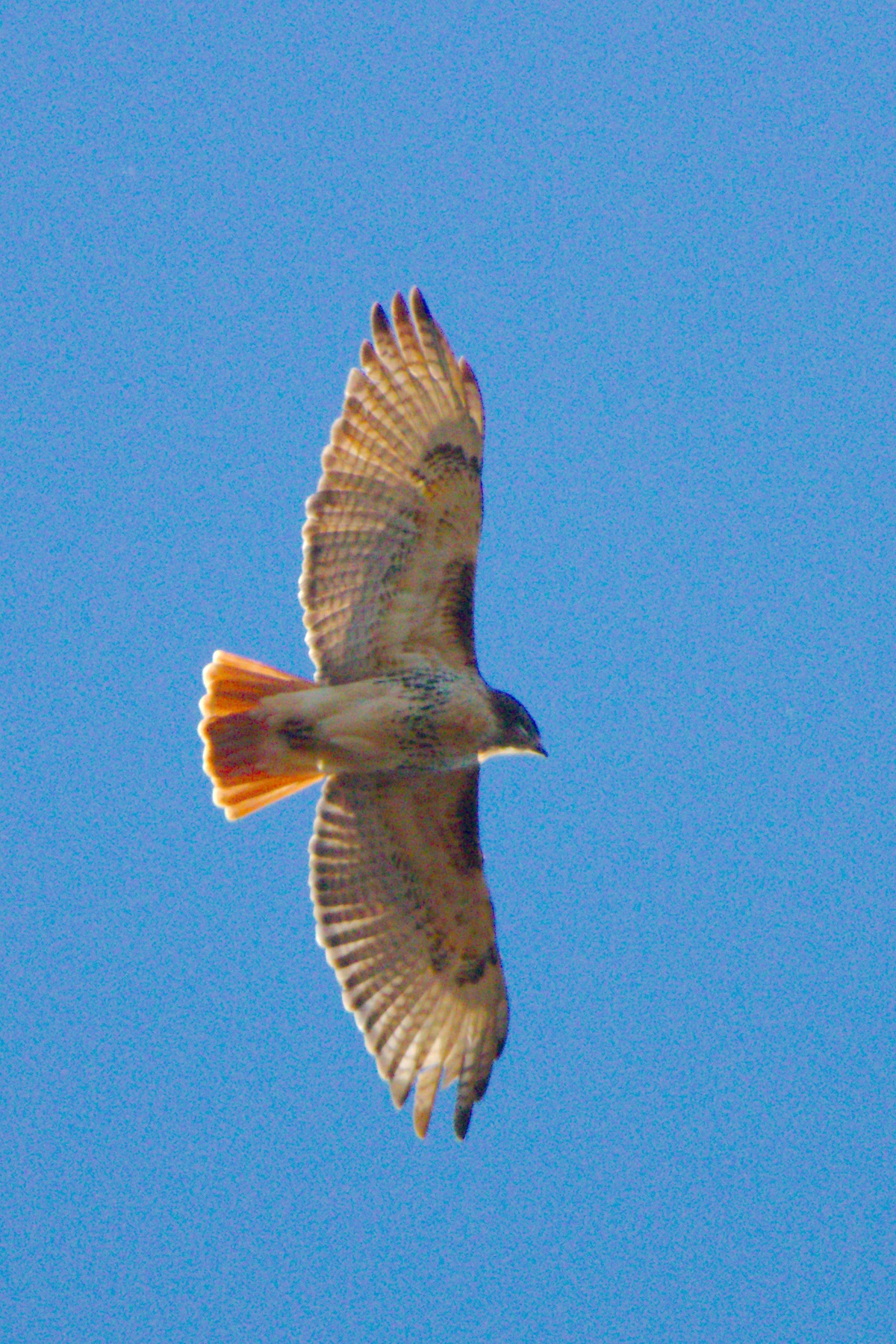
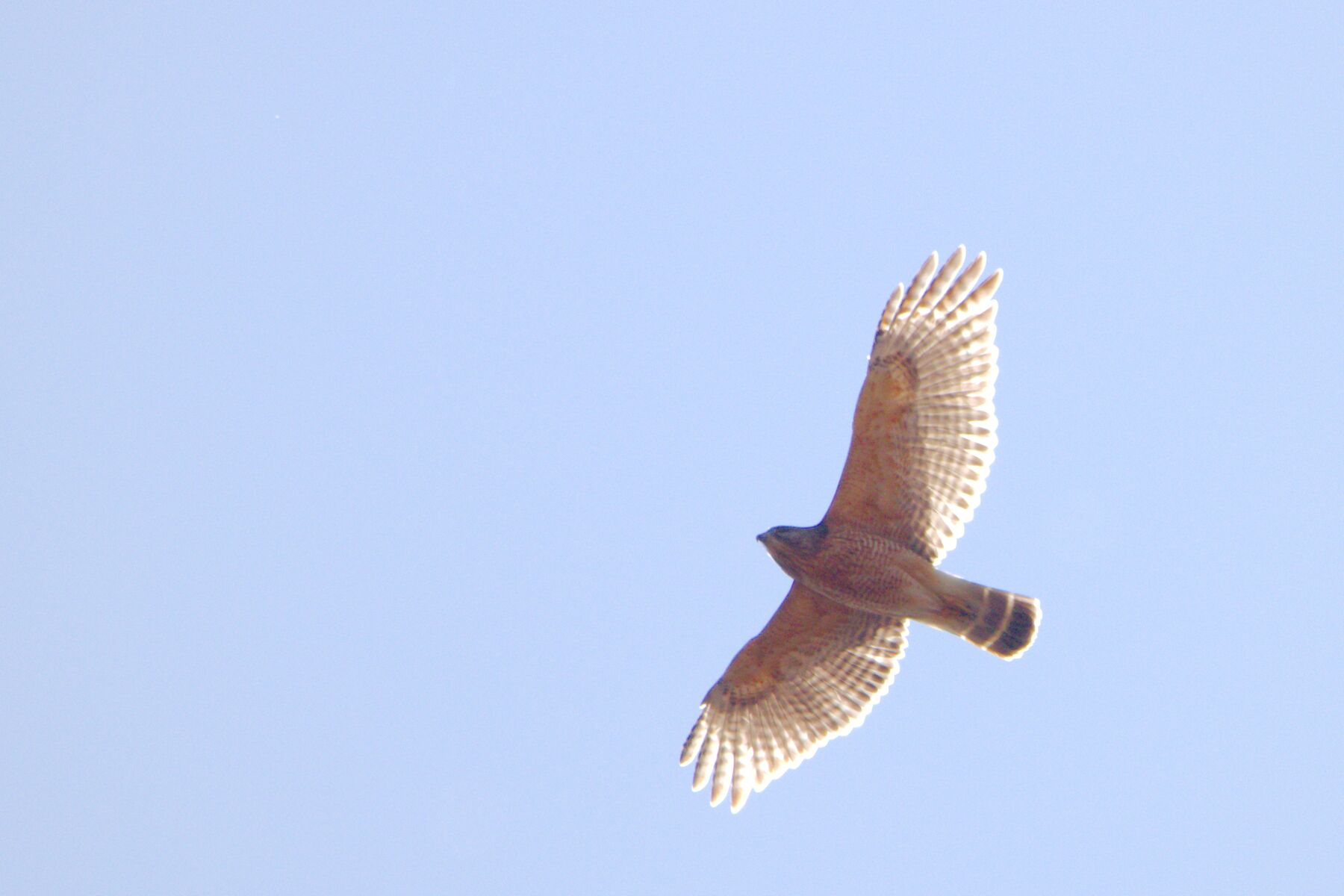
Red-tailed Hawk (Buteo jamaicensis)
We went out to McKee-Beshers today, hoping to see a few birds. I saw and got a handful of photos of this red-tailed hawk (Buteo jamaicensis) flying overhead but that’s pretty much all we saw. We heard a few birds but either didn’t see them or they were too far away to get a good look at, even through my long lens.
We did walk around and out towards the beaver lodge. It’s not clear if it’s actively in use, although there did seem to be some sign of recent activity. It was a beautiful day, in any case, and it’s great to be outdoors on days like that, especially when it’s cold and we tend to stay in doors. Being out in the sun is good medicine. Seeing hawks soaring is also pretty nice. We’ll be back here, probably a few more times, before spring but then especially once the spring season brings so many more birds back (see Sunday, May 18, 2025 for my best birding day at McKee-Beshers).
Killdeer (Charadrius vociferus)
Having walked around at McKee-Beshers and seen only a few things, we decided to continue out River Road. Eventually it ends and you have to turn onto Mt. Nebo Road, which in turn becomes W Offutt Road. We followed those and then turned left on Edwards Ferry Road. There is a boat ramp at Edwards Ferry and near that we saw (and I photographed) three killdeer (or is it killdeers). We used to see them fairly often and remember a few years where there would be one nesting on or near the parking lot at Thanksgiving Farms on Buckeystown Pike in Adamstown. We haven’t seen them much in recent years, but now this is the second time in less than three months, having seen one at Redgate Park on Thursday, September 11, 2025. They are ground-loving birds, building their nests right on the ground, but of course they fly and are good flyers. Most of the birds in the plover family are shore birds and the two we’ve seen this year were on bodies of water but the killdeer is fairly common in upland areas, as well.
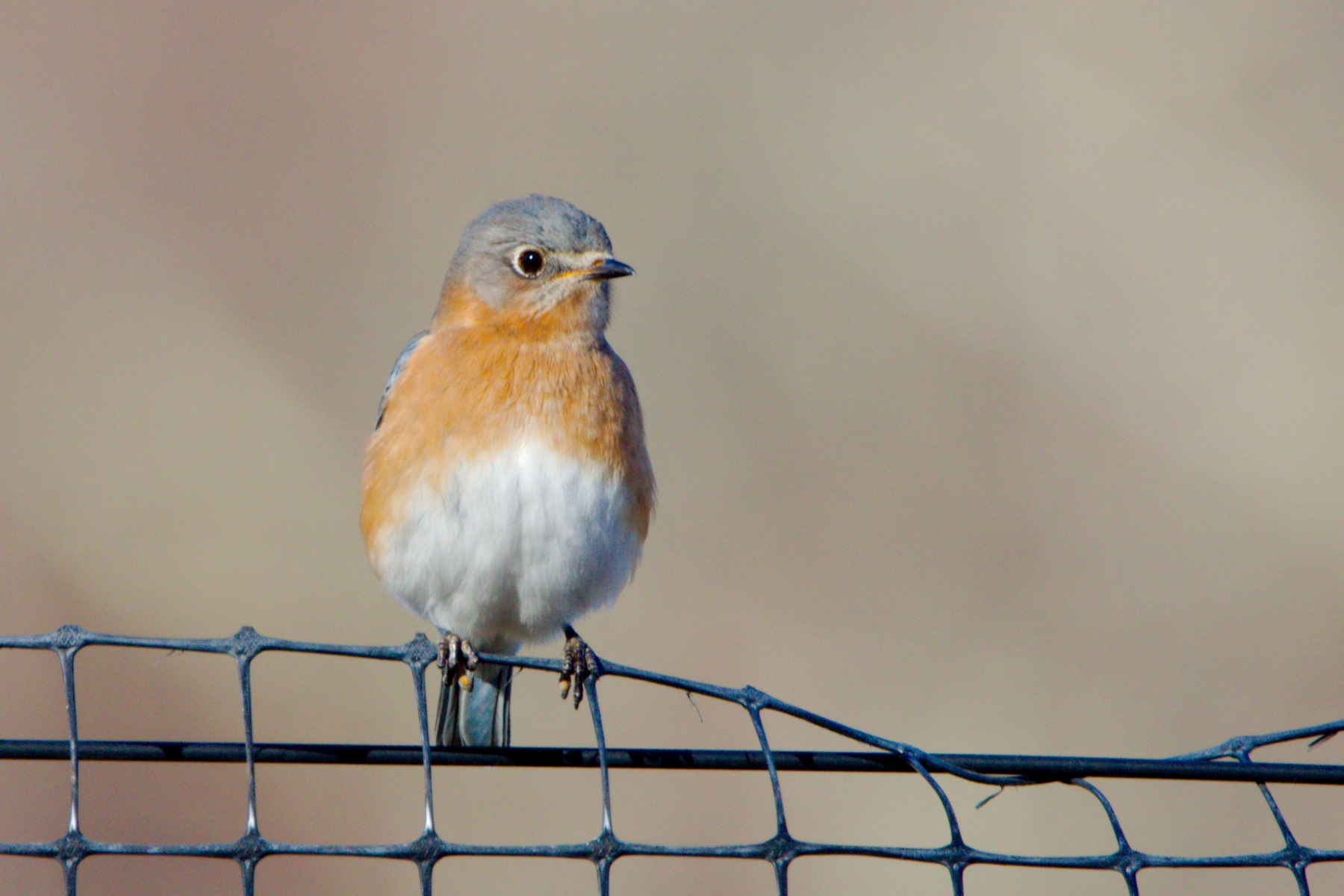
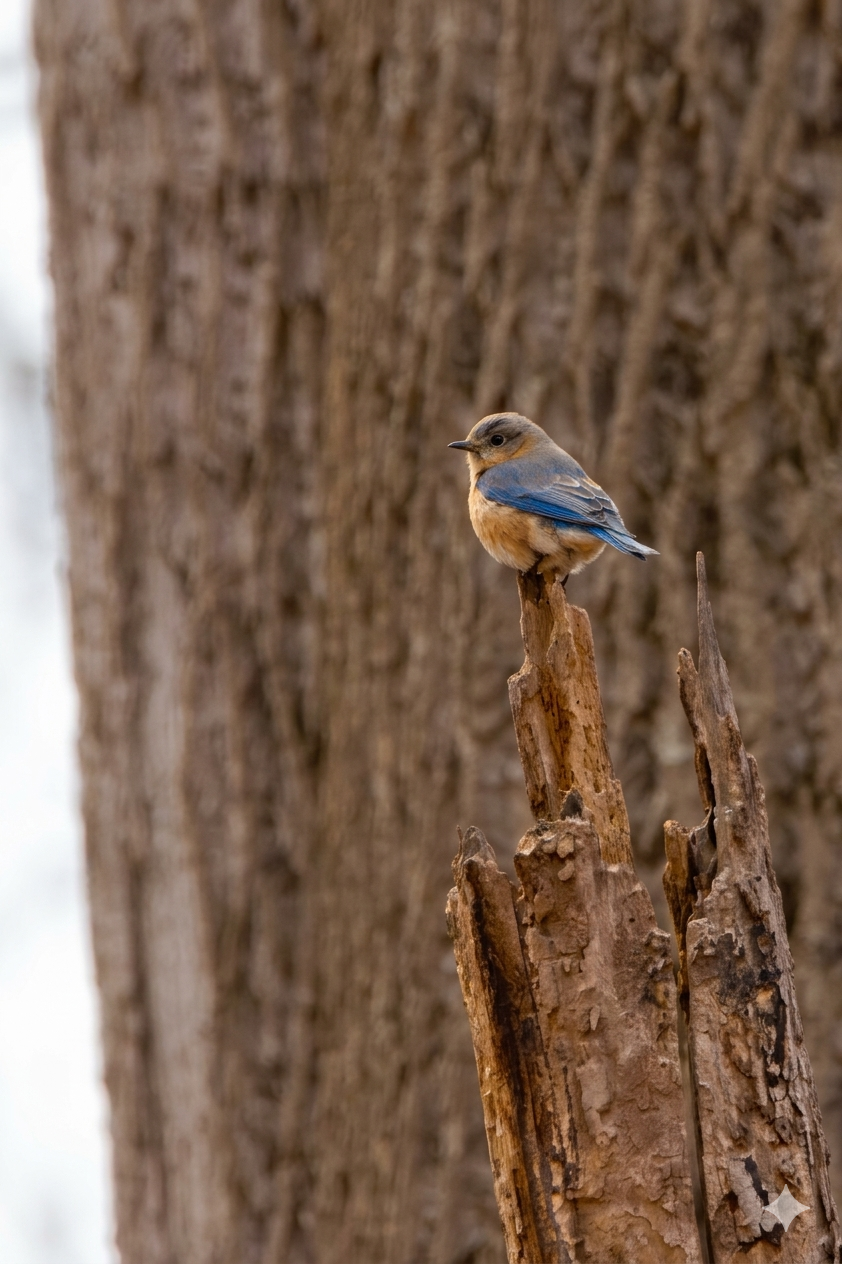
Eastern Bluebird (Sialia sialis)
We walked a little in the Agricultural History Farm Park today. There were birds around the demonstration garden, and I got a few pictures of eastern bluebirds (Sialia sialis) and dark-eyed juncos (Junco hyemalis). This is a bluebird, of course, which I really like. We see both of these birds in our yard, as well. The juncos are here in the winter, traveling farther north for breeding, but the bluebirds are here year round, which is a treat.
Once we wandered from the garden, we didn’t see many birds, but it was still a nice day to be out, with billowy clouds and cool breezes.
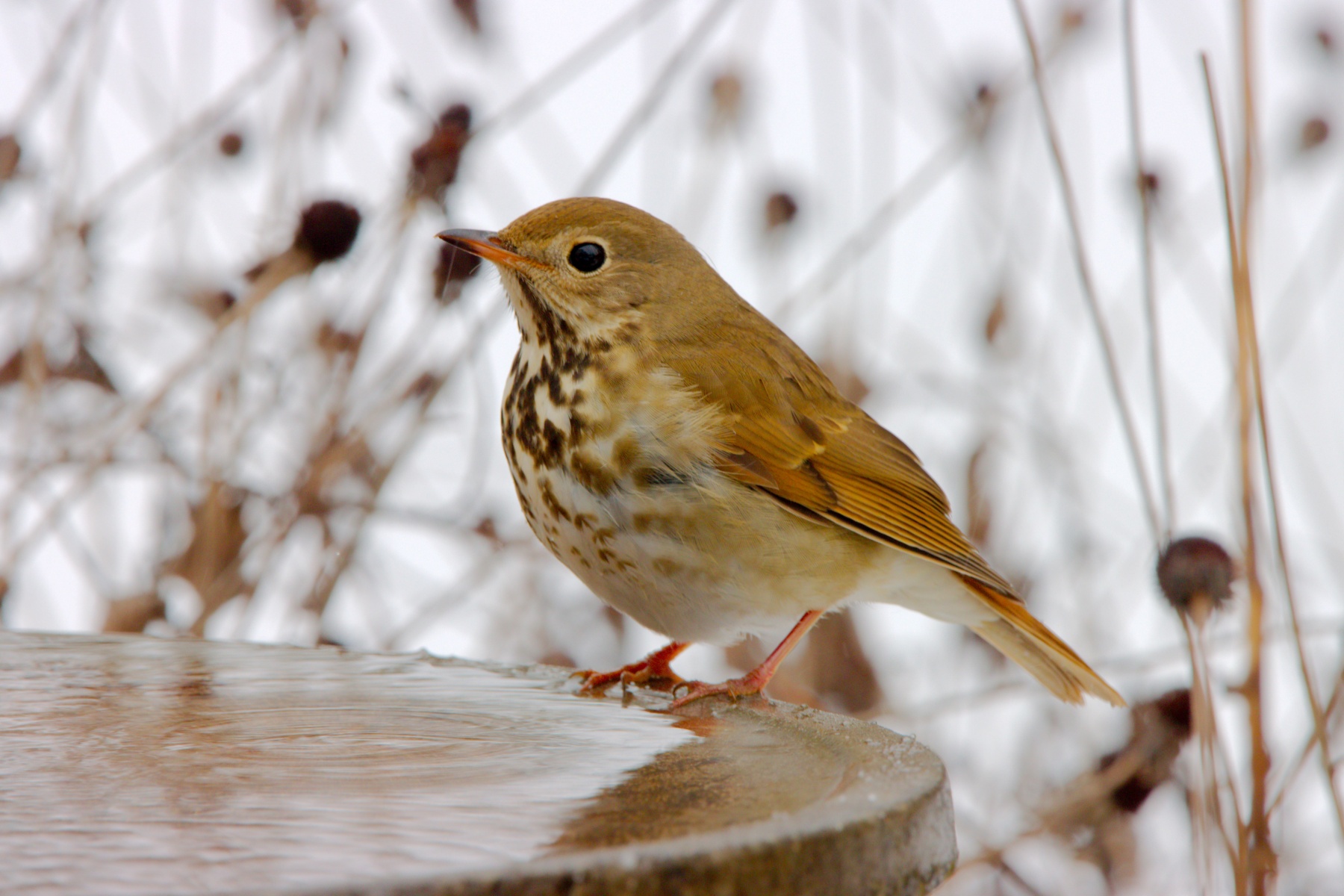
Hermit Thrush (Catharus guttatus)
After our walk, I set up my tripod and camera on the back porch. Most of the patio and outdoor area is exposed but there is a small area that’s covered and I sat there to watch for birds on the birdbaths, which have heaters in them to keep them from freezing. I got photos of a dark-eyed junco (Junco hyemalis), a blue jay (Cyanocitta cristata), a few European starlings (Sturnus vulgaris) but my favorite photo is this one of a hermit thrush (Catharus guttatus). We don’t see them very often, although Merlin hears them from time to time, especially when we walk around Lake Frank.
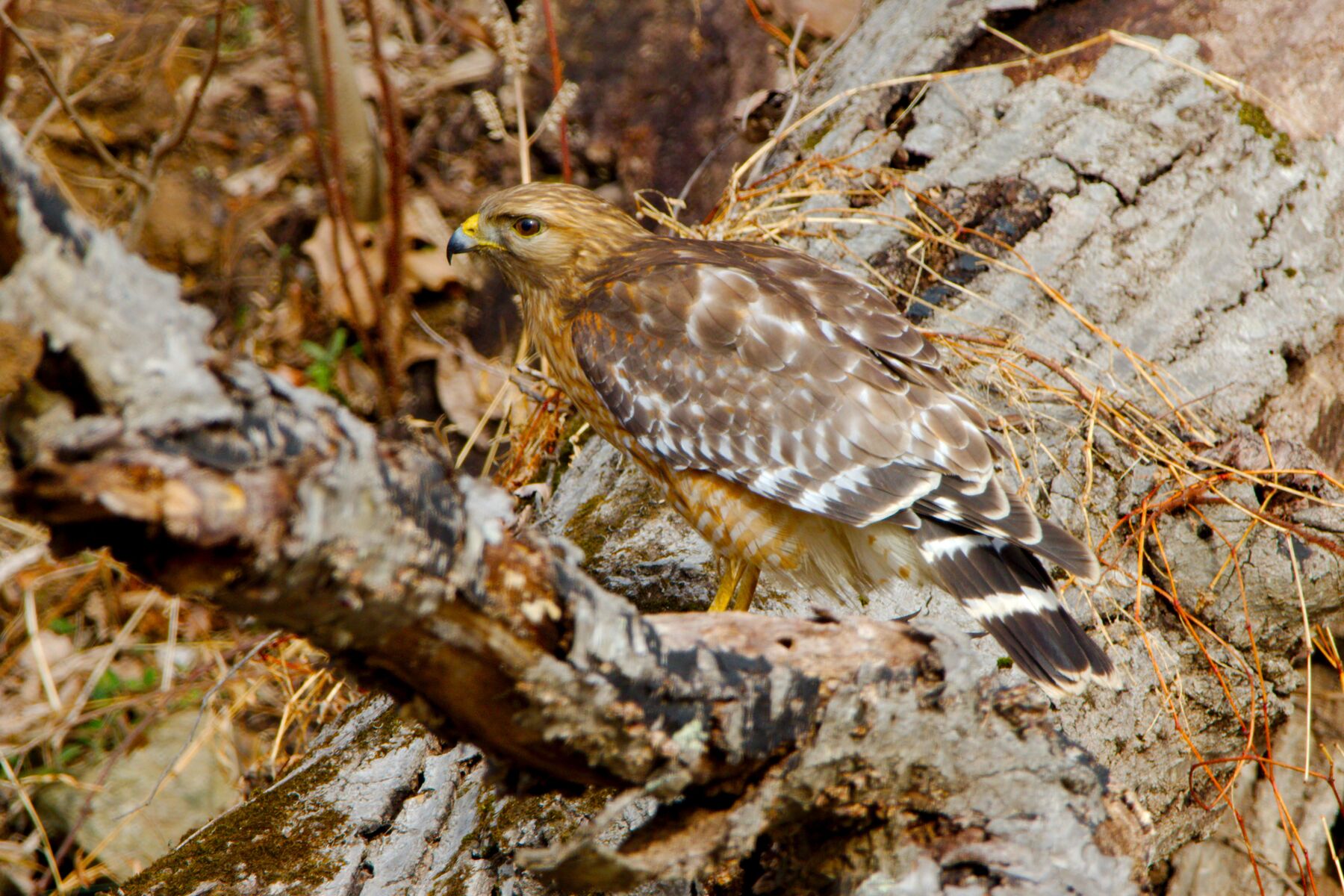
Red-shouldered Hawk (Buteo lineatus)
We went to Great Falls today. The ice and snow is finally gone and although there were some wet spots on the towpath, it wasn’t particularly muddy. After walking out to Olmsted Island and back, we saw this red-shouldered hawk (Buteo lineatus) eating something that we couldn’t quite see. It’s fairly well camouflaged against the background, so a lot of folks had been walking by without stopping. My telephoto lens told them that there was something to see and then a lot of folks stopped to watch. These are beautiful birds, quite graceful in flight. They are, however, much easier to photograph well when they aren’t flying. These are a little smaller than their cousins, the somewhat more common (here, anyway) red-tailed hawk (Buteo jamaicensis).
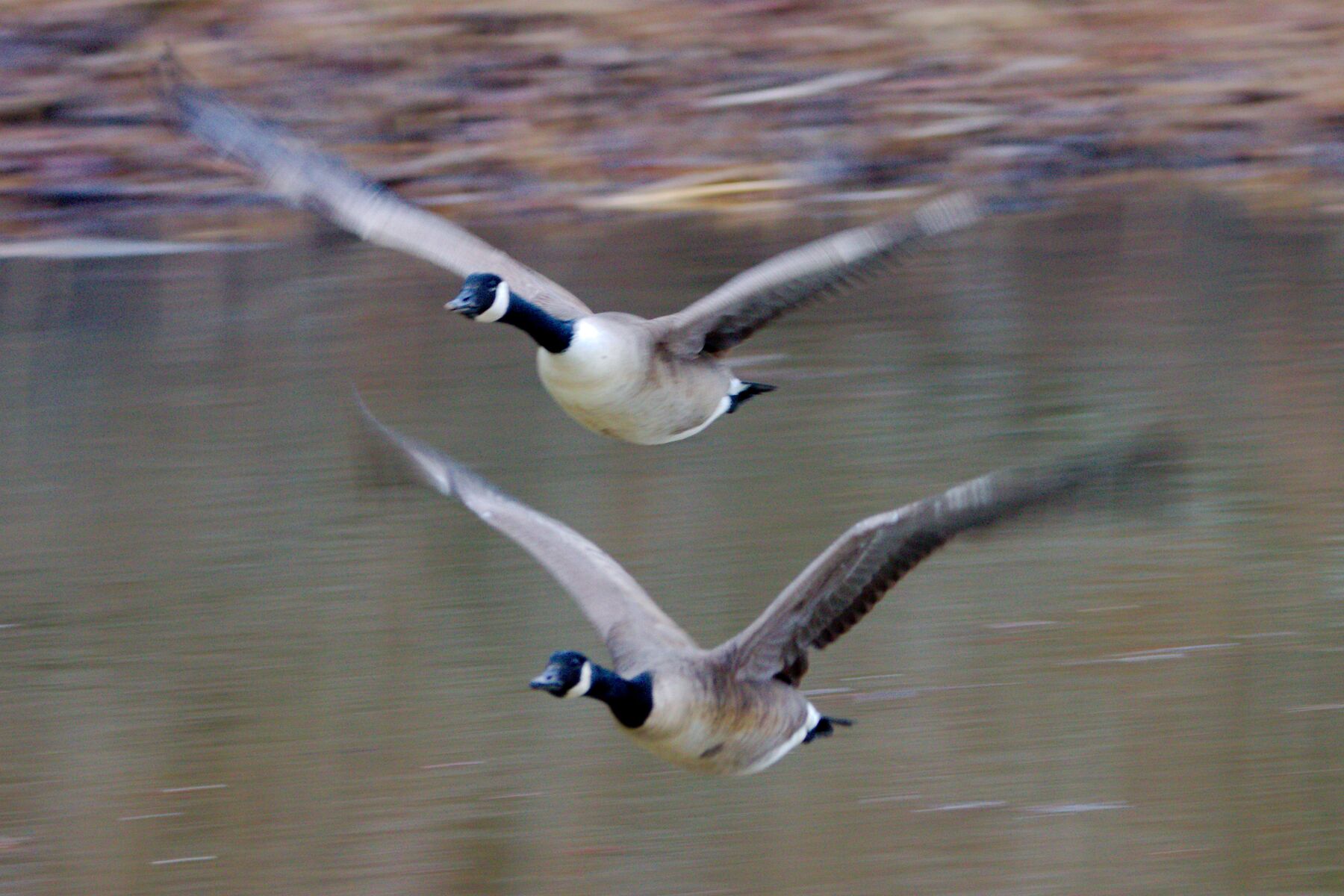
Canada Geese In Flight
Cathy and I took Dorothy and Jeff to Reagan National Airport this afternoon to fly to Florida for a friend’s wedding. On the way back, we thought we might skip Roosevelt Island but then Cathy saw a bald eagle (Haliaeetus leucocephalus) on a tree at the southern end of the island. We parked and walked around the island but the eagle was gone by the time we got down to that end. It had actually been in a tree on another small island (labeled on at least one map as Little Island) so we couldn’t have gotten very close to it, anyway.
We saw a few birds, including mallards (Anas platyrhynchos), northern flicker (Colaptes auratus), a great blue heron (Ardea herodias), and some Canada geese (Branta canadensis). This shot of two geese in flight could be better, but with my long lens, I’m still trying to master getting birds in flight.
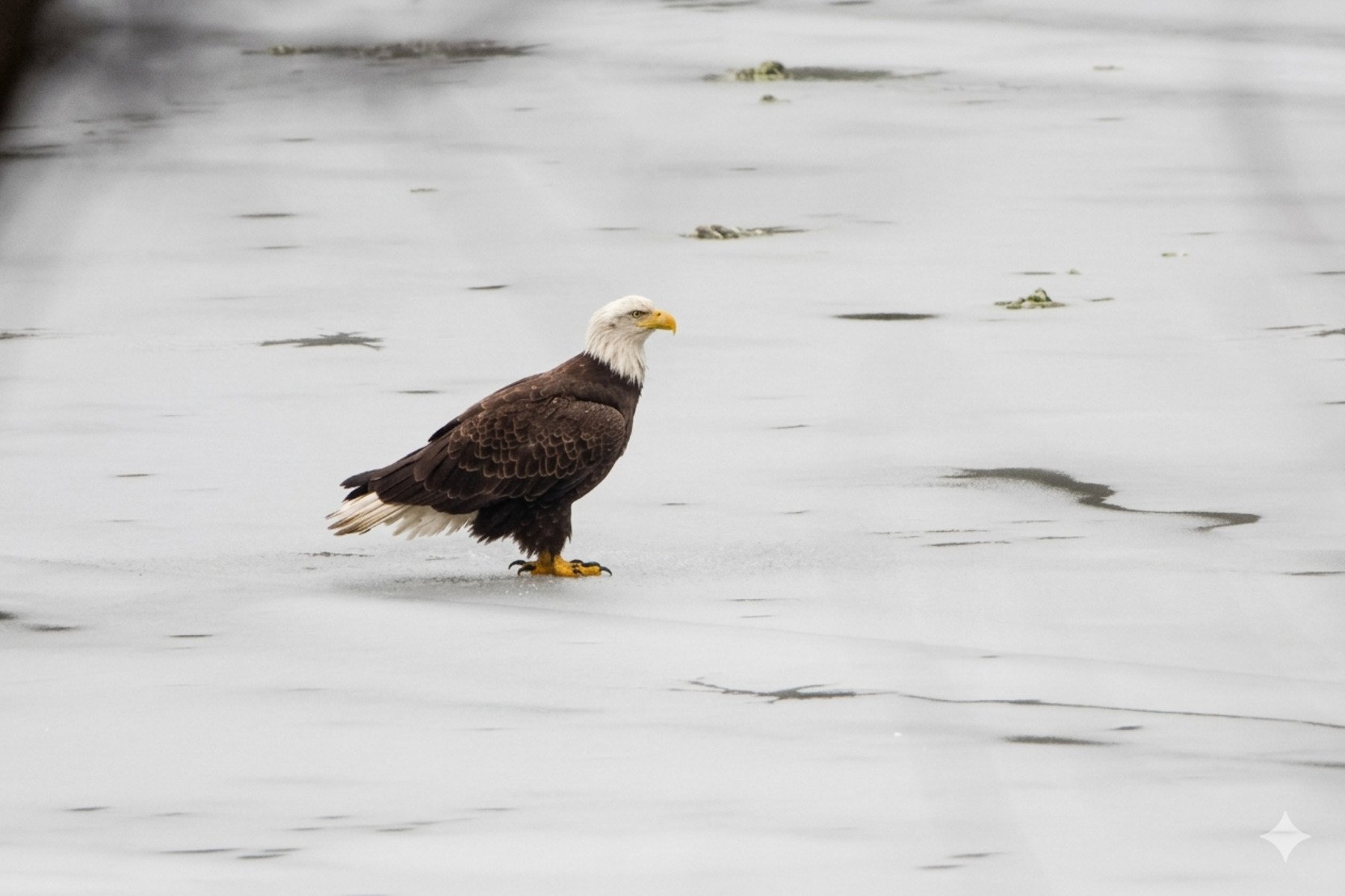
Eagle on Frozen Lake Needwood
In my last post I mentioned that we saw a bald eagle on a small island next to Roosevelt Island but I didn’t get any photos of it. Today we took a short walk on the trail on the west side of Lake Needwood, which has still got ice on about half of it. Cathy spotted this eagle standing on the ice and I was able to get a reasonably good shot of it before it flew up into the trees at the far southern end of the lake. A little later it flew past us again, heading north and out of sight. There was no chance of getting a photo of it flying, though, because there were trees between us and it.
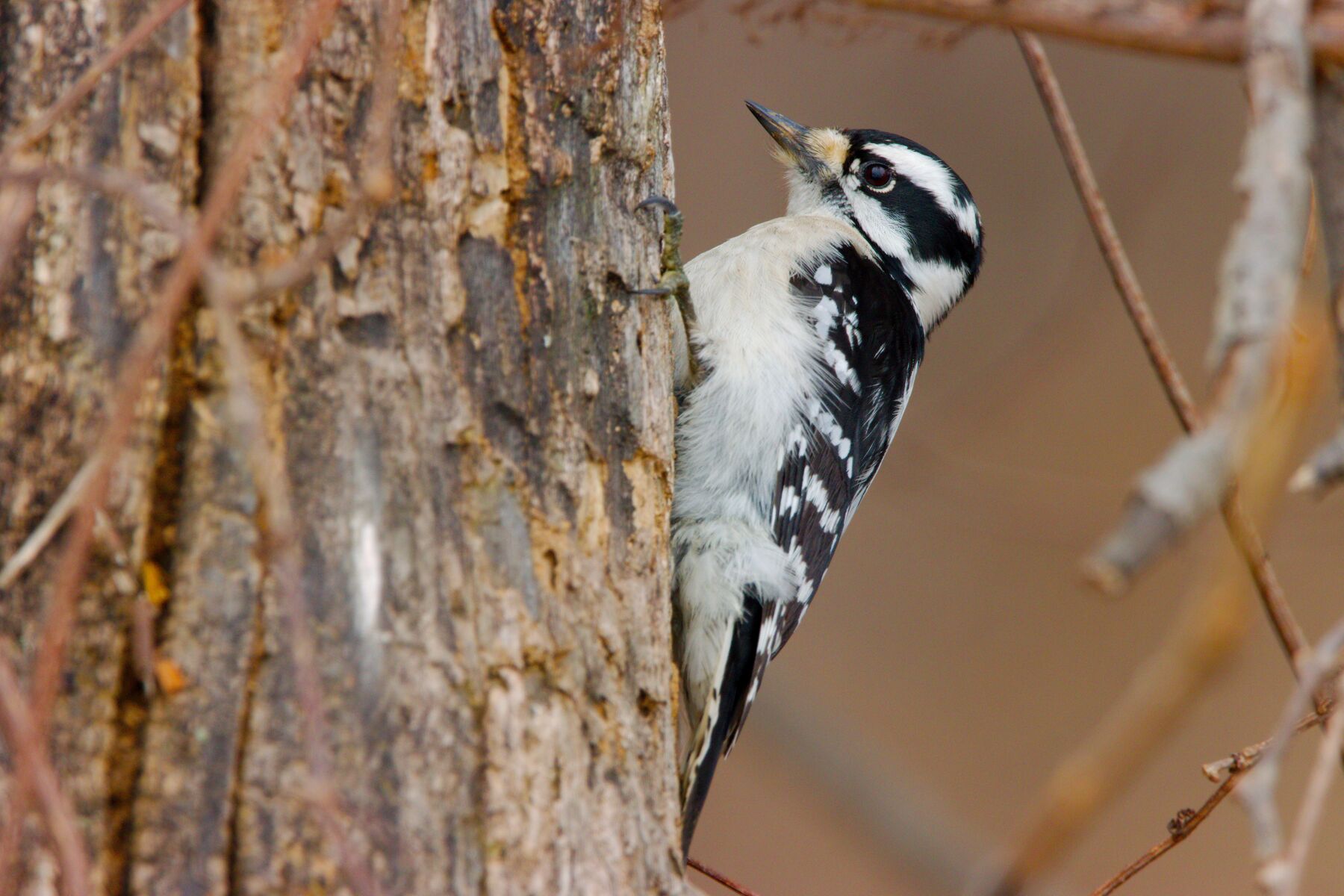
Female Downy Woodpecker (Dryobates pubescens)
We saw our second bald eagle (Haliaeetus leucocephalus) in two days today, but it was much further away and I really like this shot of a female downy woodpecker (Dryobates pubescens), in any case. We were at the Dyke Marsh Wildlife Preserve in Alexandria, Virginia, which is a nice little park on the Potomac River, just outside the Capitol Beltway. When I photograph birds, even with my rather hefty 150-600mm lens, I still have to crop them to make the bird larger in the final image. This bird let me get so close that this is the full frame, which contributes to it being so sharp. What a pretty little thing.
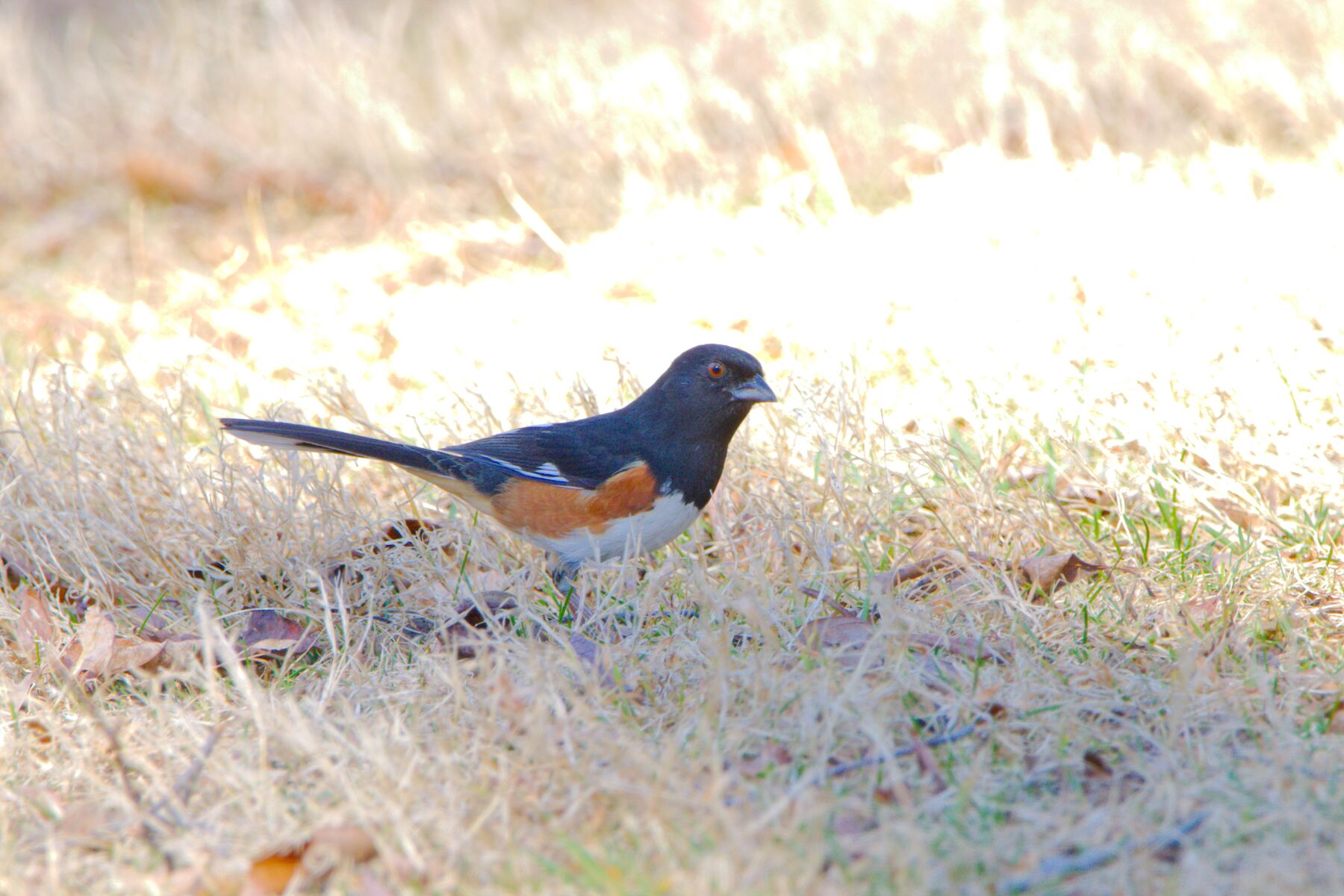
Eastern Towhee (Pipilo erythrophthalmus)
We went to Redgate Park, formerly Redgate Golf Course, this afternoon. We took Margo with us, which made taking pictures a little harder. Also, I had my camera set to manual exposure control and the setting were all wrong, so this photo was almost ruinously washed out. Because I shoot in RAW format, I was able to salvage it, though, so at least it’s an easily identifiable bird. This is an eastern towhee (Pipilo erythrophthalmus), which is fairly common here, but not easily seen, as they tend to be somewhat secretive. This one was on the ground under some pine trees and stayed there long enough for me to get ten shots, but unfortunately it wasn’t until just after the last of them that I noticed my settings were wrong.
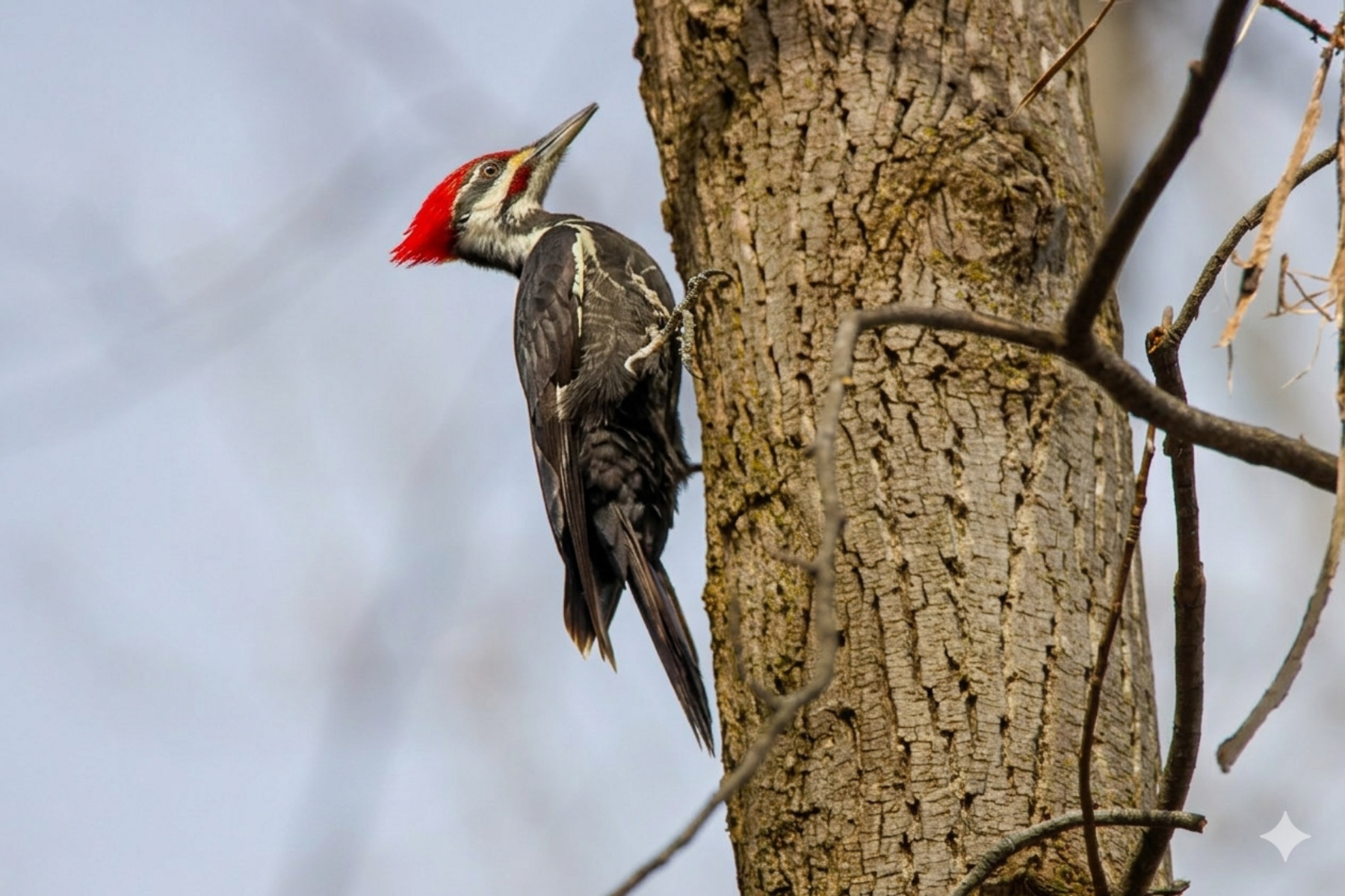
Pileated Woodpecker (Dryocopus pileatus)
Cathy has started working with the county parks archaeology group this spring and they meet at the Needwood Mansion on Wednesdays. Today I met her there after they were done and we took a walk on the western side of Lake Needwood. We saw this pileated woodpecker (Dryocopus pileatus) briefly and I was able to get one shot before it flew away. Later we saw quite a few double-crested cormorants (Nannopterum auritum) diving and catching fish, but the photos I took of them didn’t really turn out well. It’s tricky because when the go under, there’s really no telling where they will come up. If I’m looking through the long lens, I’m liable to miss them but if I’m not, it takes me a little while to find them and focus and by that time, they’ve generally swallowed the fish. Disclaimer: This image was a little blurry but I had Google Gemini sharpen it up for me.
Birds on Seneca Greenway Trail
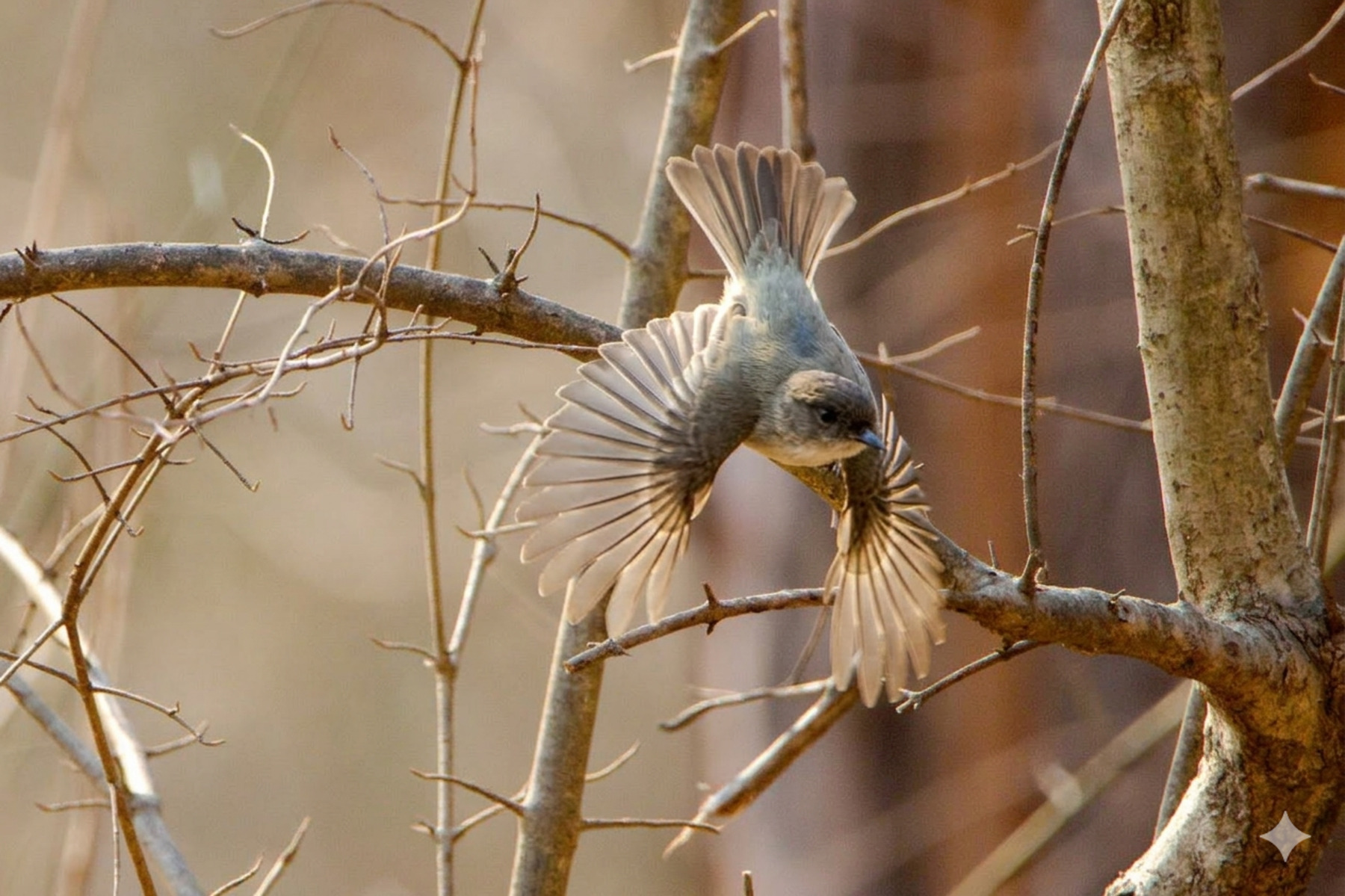
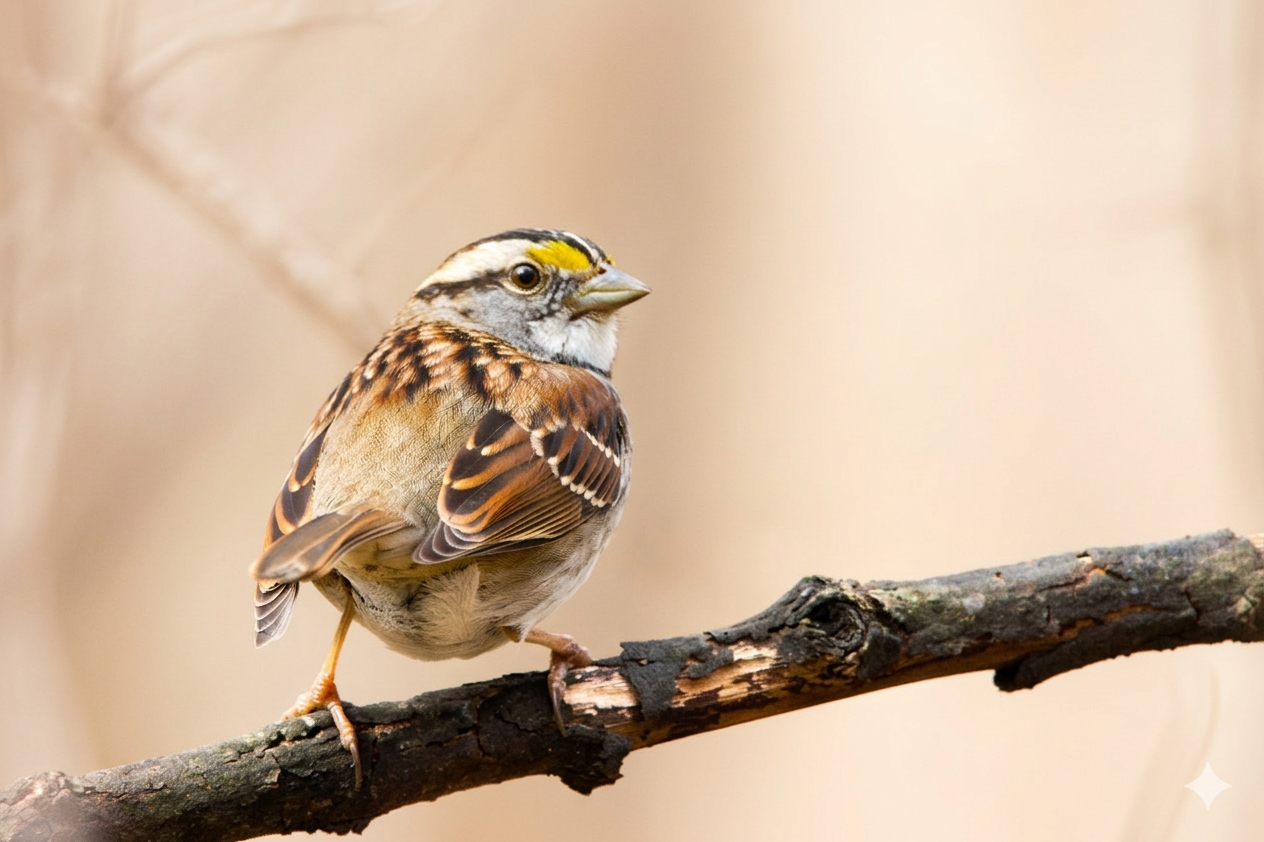
We were in the northern part of Gaithersburg this afternoon and after the errands we had, we decided to walk a little way on the Seneca Creek Greenway Trail, walking north (upstream) from MD 355 (Frederick Road). We saw quite a few eastern bluebirds (Sialia sialis) and I got what I consider a pretty nice photo of a white-throated sparrow (Zonotrichia albicollis). We walked a little over 2 miles up the trail, stopping about a half mile short of where the trail meets Watkins Mill Road. As we were coming back I got a few photos of an eastern phoebe (Sayornis phoebe), including this one of it taking off, which I really like.
Red-shouldered Hawk (Buteo lineatus)
We took a walk from Sandy Spring Friends Meeting to Sandy Spring and then down to the creek today. We didn’t see a lot of birds at first. When we were at the very bottom of the field we saw three red-shouldered hawks (Buteo lineatus) and I was able to get this photo of one of them, which turned out pretty well. We also saw an eastern phoebe (Sayornis phoebe) catching insects around the creek, which was nice. A little later there were three red-bellied woodpeckers (Melanerpes carolinus) making quite a racket in the trees and we got a pretty good look at them. Back into the field and we didn’t see much else, but we felt like we got our money’s worth, anyway.
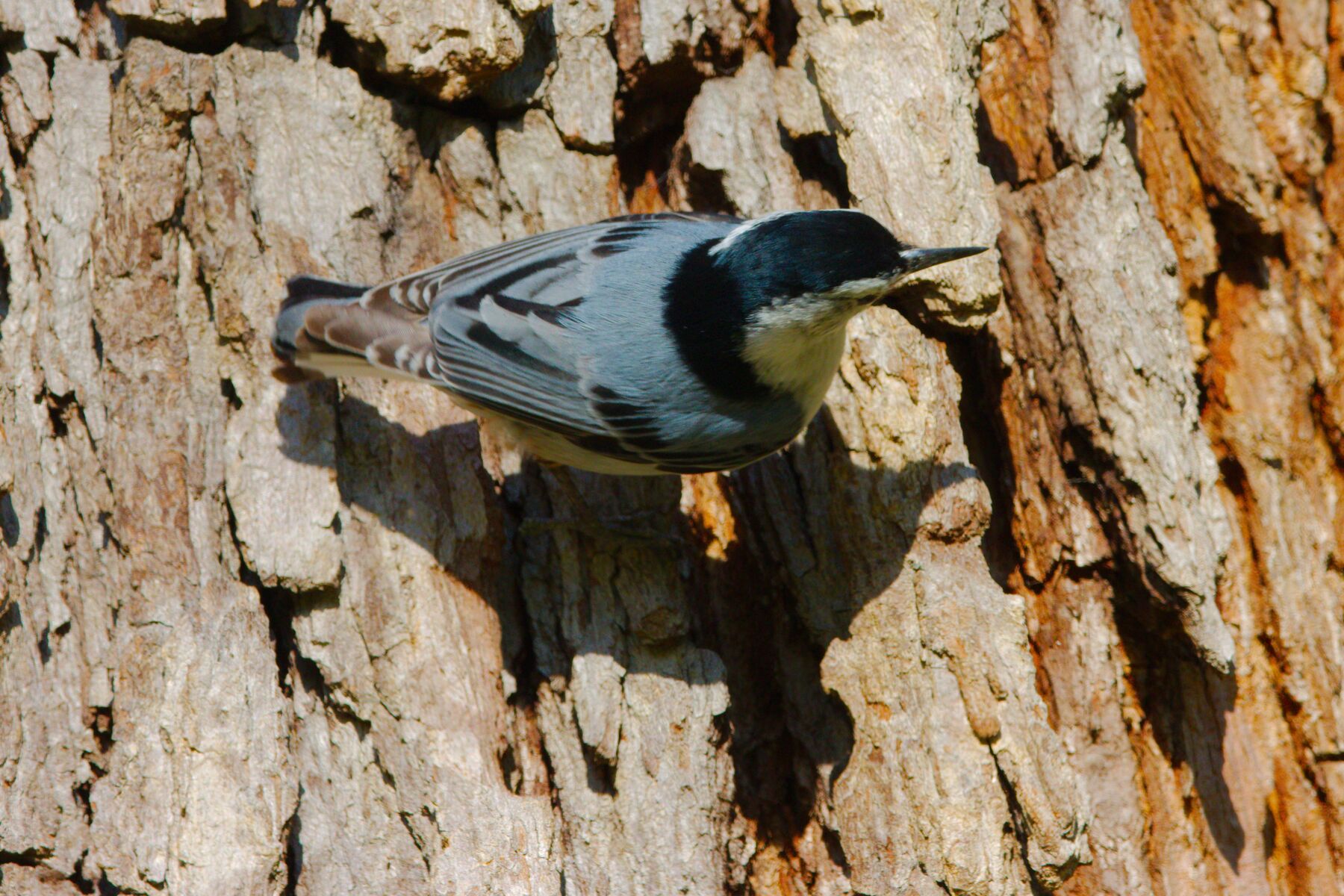
White-breasted Nuthatch (Sitta carolinensis)
Cathy and I took a walk on Cabin John Creek, walking upstream from where the creek is crossed by Bradley Blvd. We went as far as where the creek meets Seven Locks Road, near the Seven Locks Swimming Pool. We heard a few birds but didn’t see too many. I did get a few photos of this white-breasted nuthatch (Sitta carolinensis) that turned out well enough. I’d prefer to get it from the side, but you often see them from this angle, anyway. I got some pretty poor photos of a little brown bird that was working its way up a tree. They were not good enough to share but they were, thankfully, good enough to identify the bird as a brown creeper (Certhia americana), so that was fun.
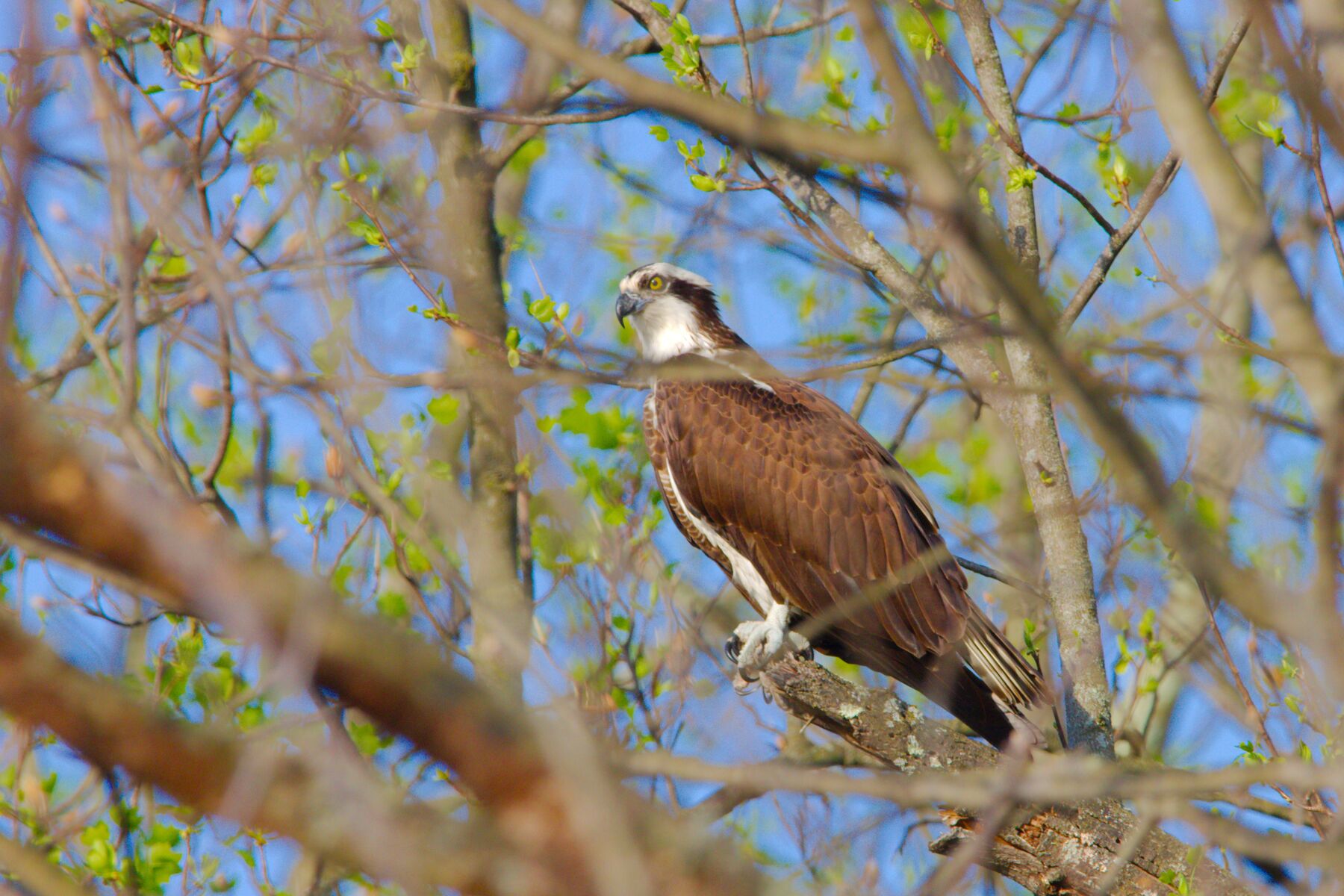
Osprey (Pandion haliaetus)
After having breakfast this morning, I was sitting outside, enjoying the morning bird songs. Glancing down across the pond I saw this osprey in a tree. I had my camera and took it down to the near side of the pond and got a few pictures. While I was there it flew, tried to catch a fish (but didn’t seem to get one), and returned to its perch. I walked around onto the dam and although this was taken through the branches of a nearer tree, I think it’s the best of my pictures before it flew off. I also heard quite a few turkeys in the woods this morning.
Tufted Titmouse (Baeolophus bicolor)
Just as I did yesterday, I sat outside to eat my breakfast this morning. I enjoyed the birds singing all around. There was a tiny blue-gray gnatcatcher (Polioptila caerulea) that landed pretty close to me but at that point I didn’t have my camera with me. Later, when I did this tufted titmouse (Baeolophus bicolor) moved around in the trees just into the woods. This isn’t as sharp as I’d like, but it’s certainly good enough to identify the bird, which is sort of the lowest level of bird photography. I have to admit that I have a lot more at this level than I do at what I might describe as the pretty good level and even fewer of the field-guide level photos.
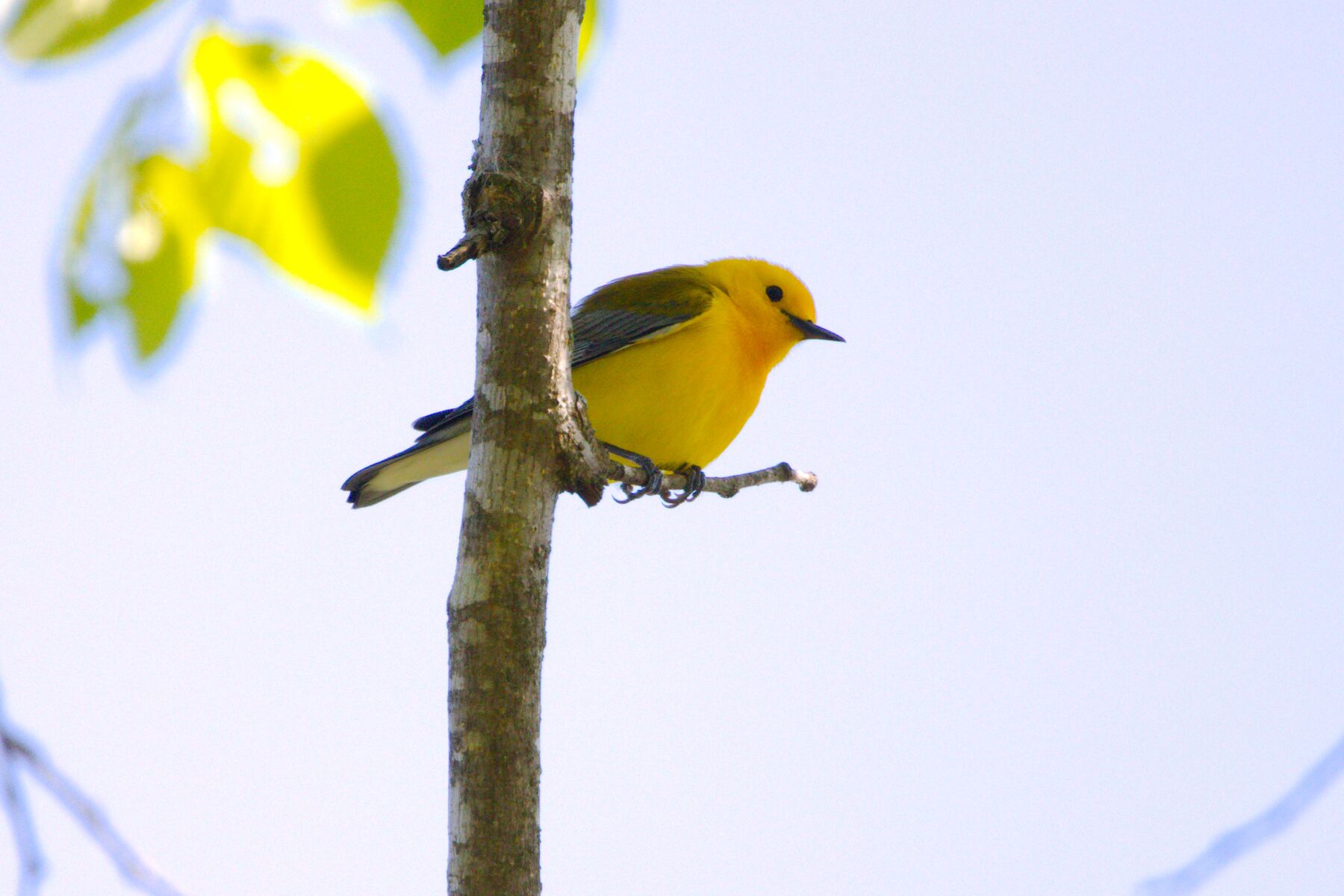
Prothonotary Warbler (Protonotaria citrea)
One of the best things about being retired is that we can go places during the day that we used to only visit on weekends. That’s what we did today, heading out to McKee-Beshers in Poolesville and parking at the furthest parking area on Hunting Quarter Road, near the dog training pond. There were a few others out with long lenses, as apparently a few notable birds had been spotted there recently. We aren’t monitoring those lists regularly so for us, it was just good luck that we happened to see this prothonotary warbler (Protonotaria citrea). We also saw (and I photographed) a greater yellowlegs (Tringa melanoleuca), an American coot (Fulica americana), and a solitary sandpiper (Tringa solitaria), birds we don’t generally see this far inland. The coot was sitting on a nest.
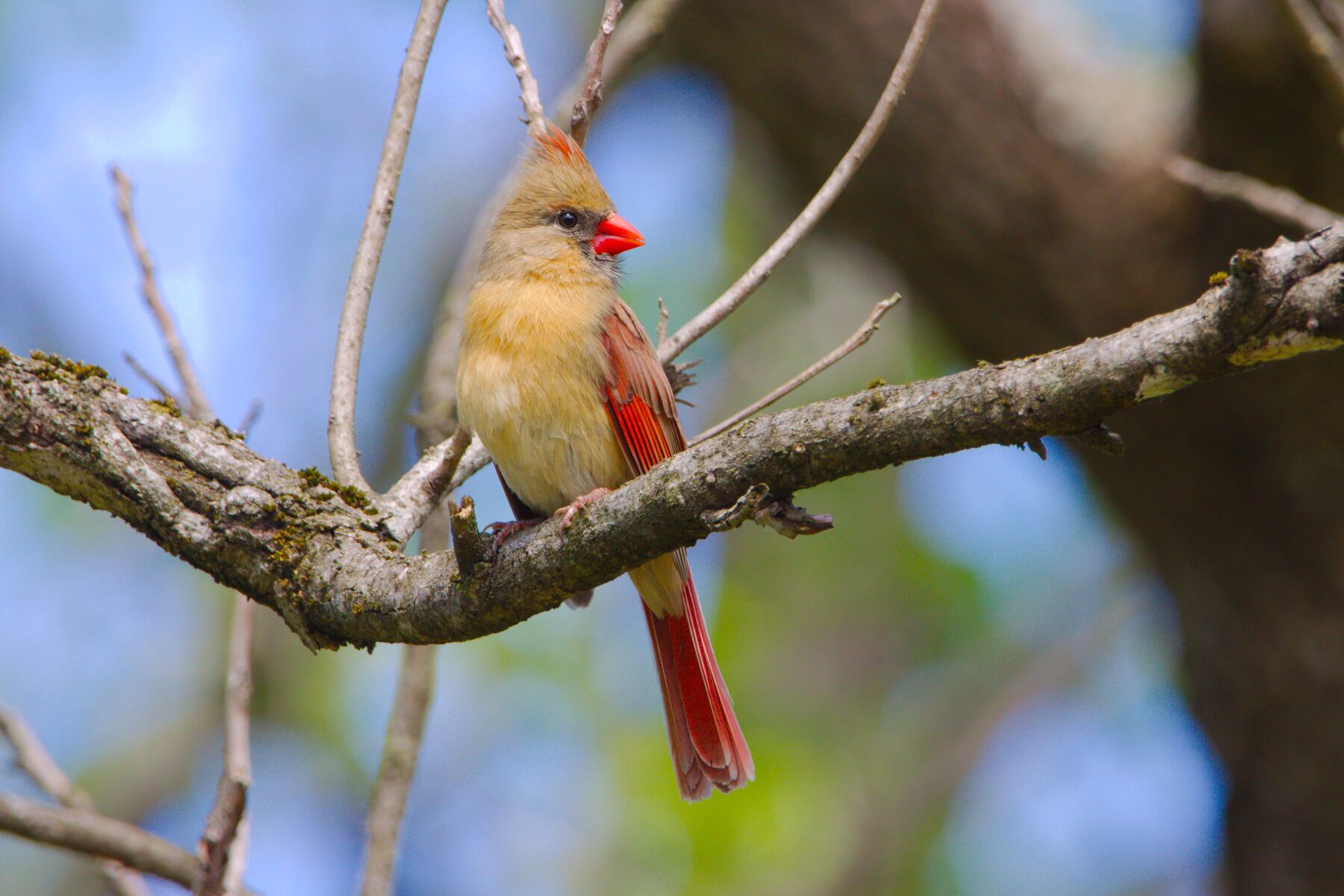
Northern Cardinal (Cardinalis cardinalis)
Cathy volunteers with the county park’s archaeology group one day a week and after she did that today, she took a walk in the woods nearby. When she came home she suggested I go with my camera. I heard three birds that I’d love to photograph but never caught even a glimpse of them. Those were the yellow-throated warblers (Setophaga dominica), pine warblers (Setophaga pinus), and northern parulas (Setophaga americana). I did see a few norther cardinals (Cardinalis cardinalis), which are among our most common and most easily seen birds. I also saw and photographed a few blue-gray gnatcatchers (Polioptila caerulea), which are easy to hear and often hard to find.
Belted Kingfisher (Megaceryle alcyon)
Today we drove to the Locust Grove Nature Center on Democracy Boulevard and walked down to Cabin John Creek, which we then followed north as far as where the creek crosses the power line cut south of Tuckerman Lane. We considered ourselves fortunate to see this belted kingfisher (Megaceryle alcyon) perched over the stream. I was able to get two acceptable photos before it flew off not to be seen again by us. It was pretty far away and this is cropped from the full size image, which is the main reason it’s not as sharp as I’d like. Still, it was a nice walk.