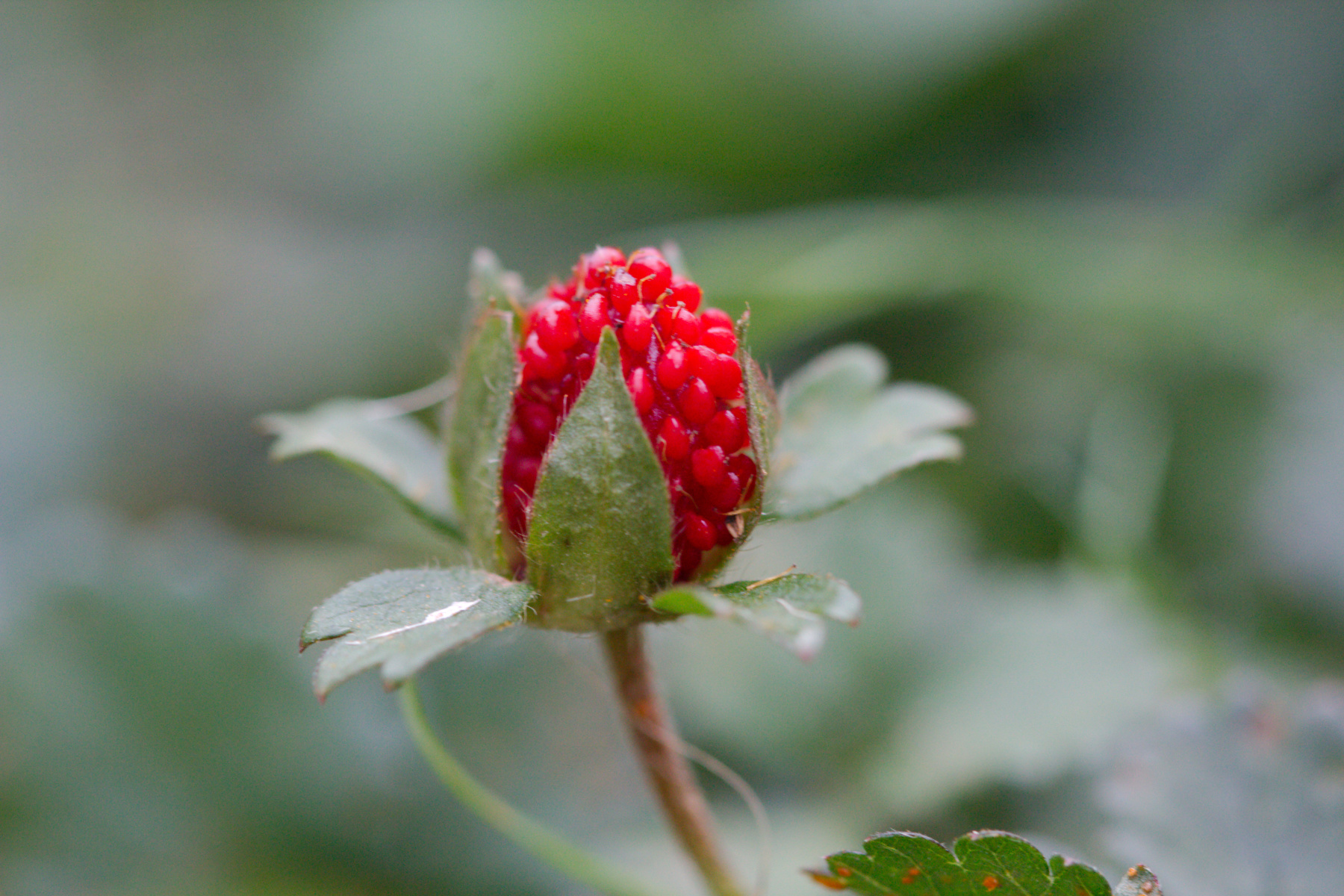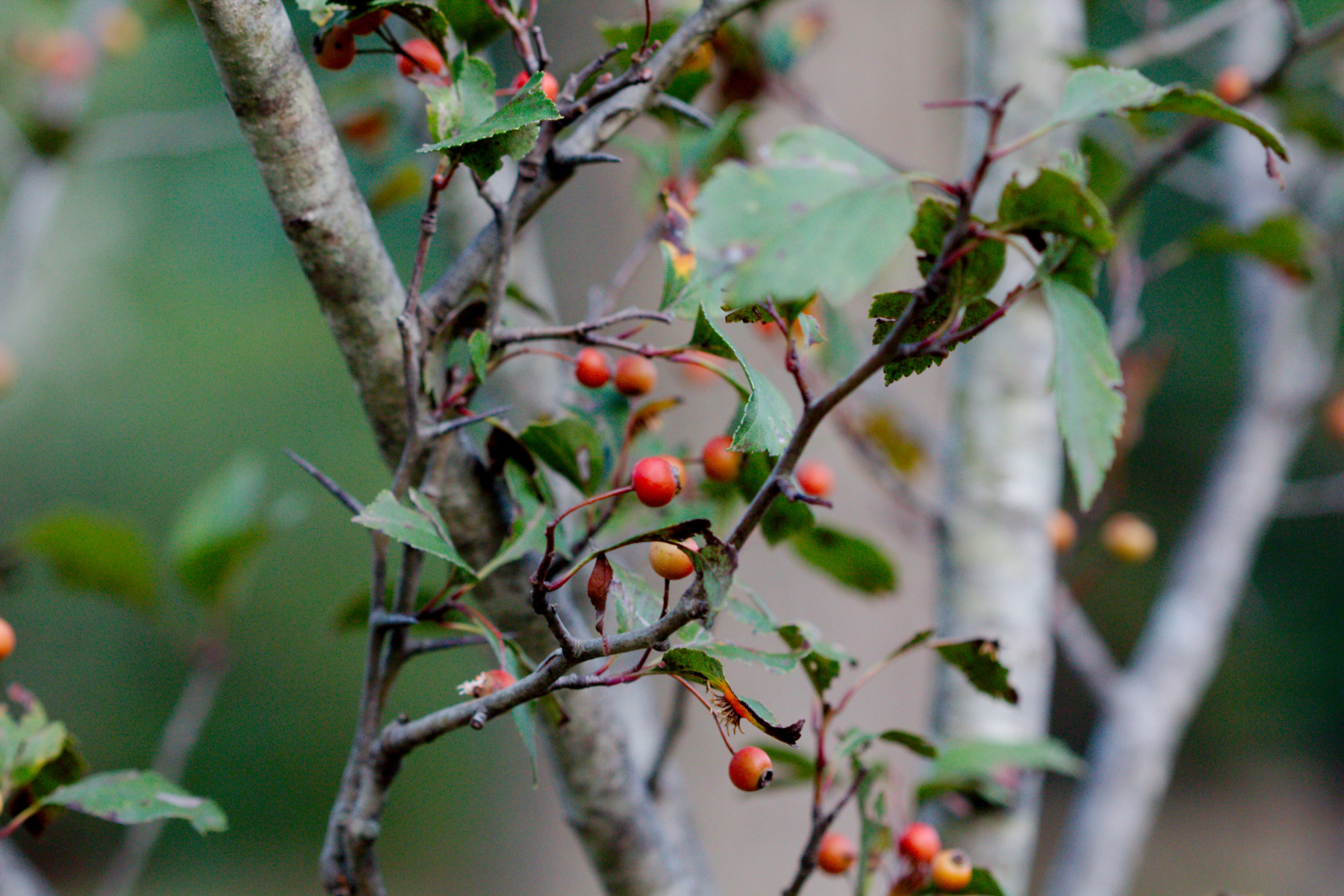
When I got rid of the nearly dead Colorado blue spruce (Picea pungens) in our front yard, we wanted to replace it with something small but with a little more interest. We decided on a hawthorn and last week I ordered this Crataegus viridis ‘Winter King’ and it was planted yesterday. The leaves are a little dry but it seems pretty healthy and I’m looking forward to the white blossoms in the spring as well as the fruit that you can see is on it now. The green hawthorn is more disease resistant than most hawthorns and ‘Winter King’ was selected, among other reasons, for that reason. This variety is also “noted for its profuse bloom of flowers, larger fruits, silvery-barked stems and more attractive fall color (purple and scarlet).”
Flowers and Plants
Crataegus viridis ‘Winter King’
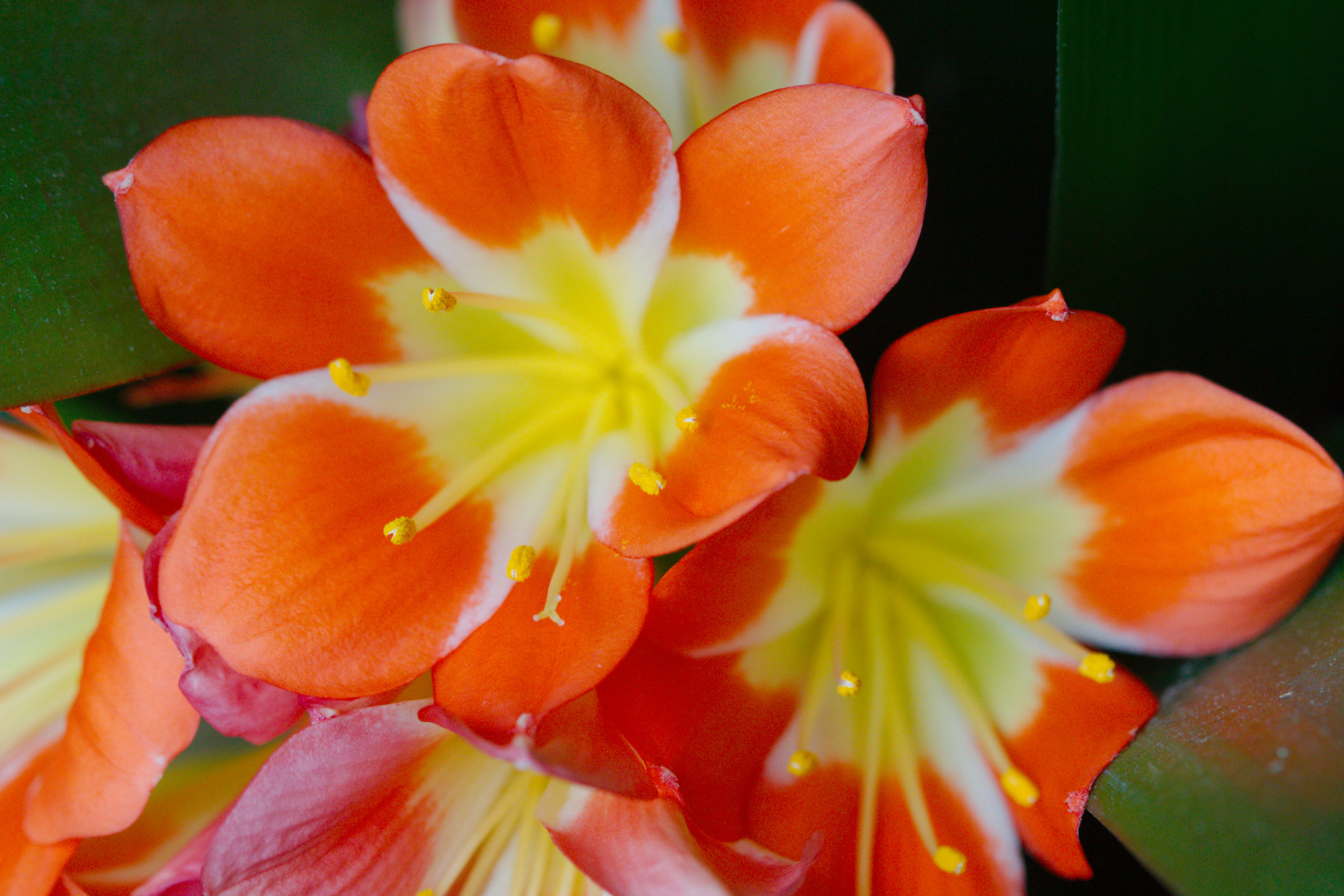
Clivia miniata (Natal Lily)
I have had this Clivia for quite a few years now, since a coworker left it to me when she stopped working here. I had it at home for a while but two years ago I brought it to my office and it’s been doing pretty well. It gets literally no direct sun light with my north-facing window but it seems to be doing well with that. They don’t tolerate frost and are grown as houseplants here but they must be wonderful in a garden in their native South Africa and Swaziland. The blooms, as you can see, are quite bright and vary a bit from the orange seen here to yellow and nearly red. Thank you, Emily, for this long-lasting gift.
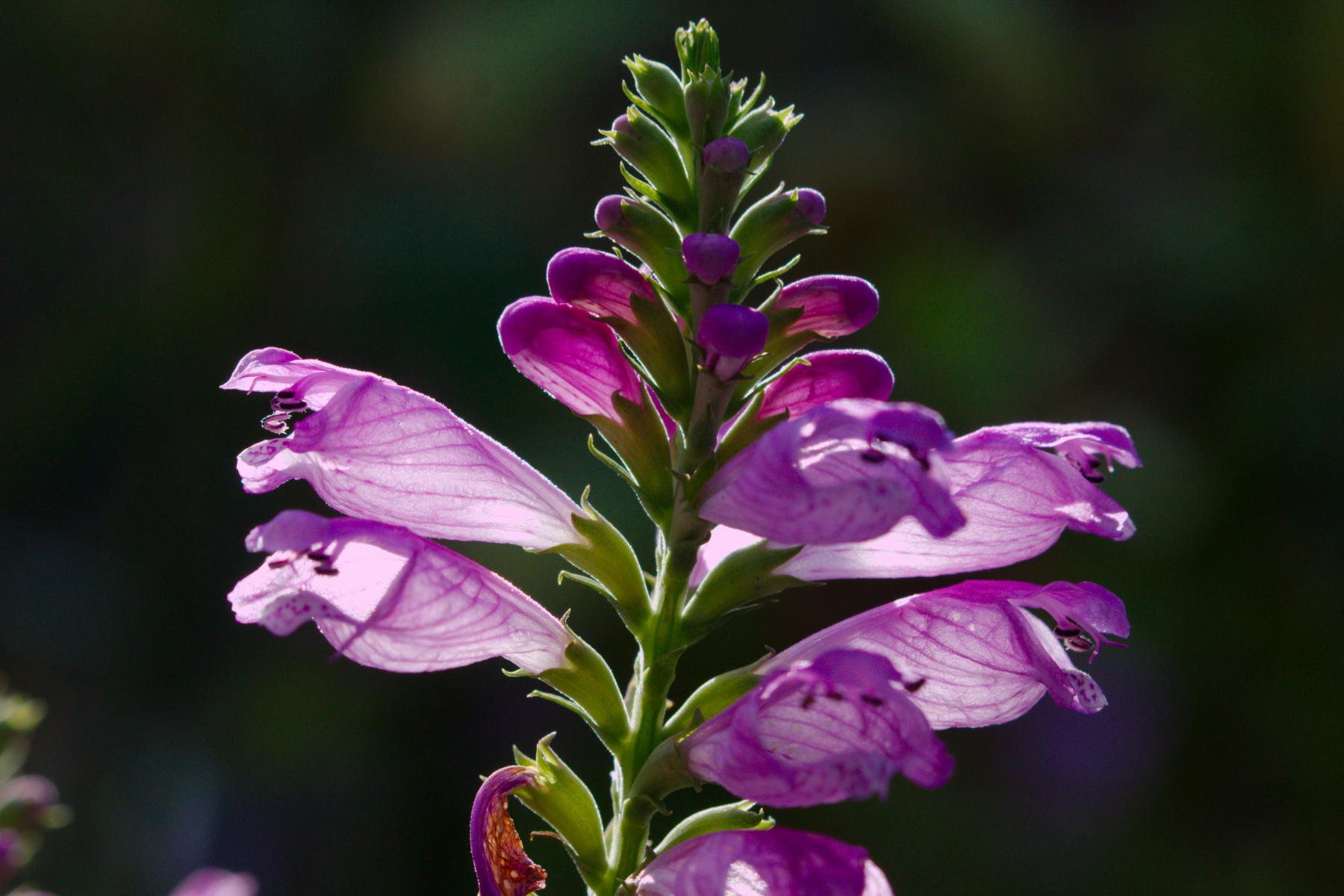
Physostegia virginiana (Obedient Plant)
I took some photos of the obedient plant (Physostegia virginiana) blooms in the back garden this evening. They are quite pretty when back lit by the sun, as they are here. I was hoping to find some insects to photograph but for whatever reason, there weren’t many this time. There were occasional bees and skippers but I wasn’t able to get close enough to them to photograph. I did manage to get some photos of a sweat bee on the Asclepias but they were not very sharp, so I’ll pass on sharing them.
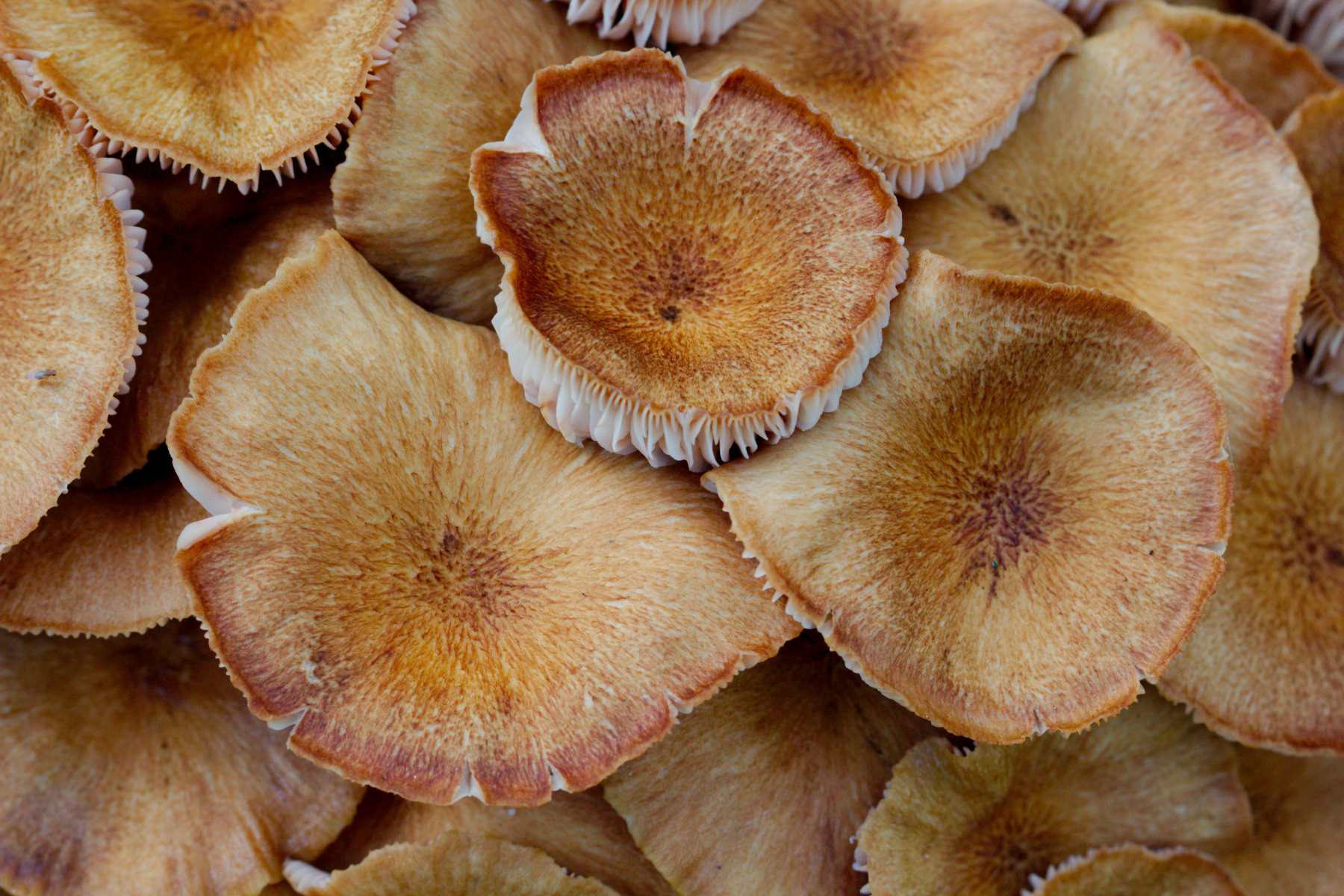
Mushrooms
It’s that time of year again. The roots of the trees that used to be in our back yard are home to a few varieties of fungus. This time of year, they send up their fruiting bodies and spread their spores to the wind. The most plentiful are these soft brown mushrooms. They come up and are there for a day or two and then turn to mush. Insects of one kind or another lay their eggs in them and the larvae eat the rotting mushrooms. They’re actually pretty gross when in that state, but right now they are sort of pretty.
A mushroom walks into a bar. The bartender says, “We don’t serve mushrooms here.” The mushroom replies, “But I’m a fungi!”
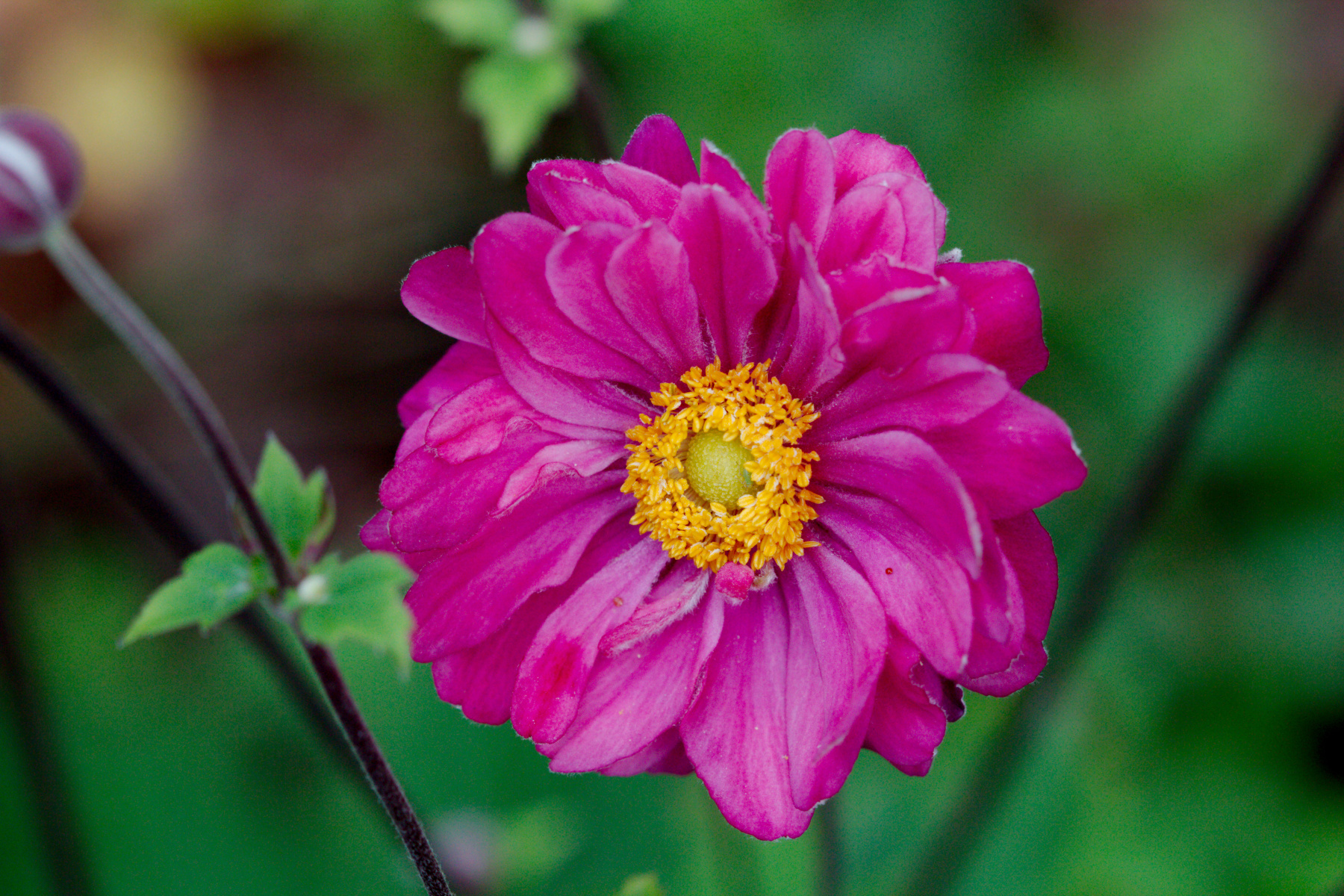
Japanese Anemone
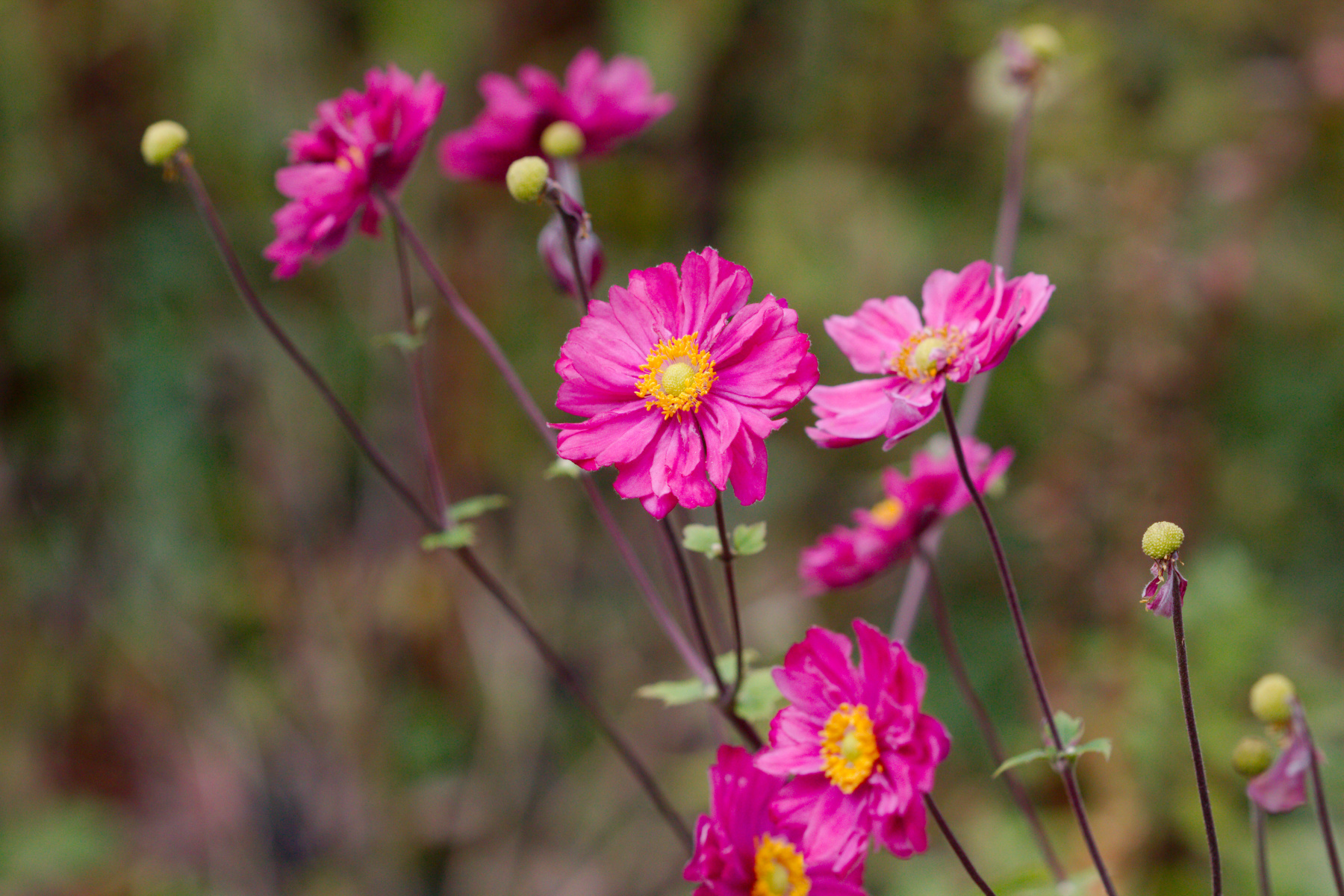
We’ve admired anemones in other peoples’ gardens for years and on occasion we’ve tried to grow them in ours but so far, nothing has taken. Cathy bought this one the other day from Stadler Nursery in Laytonsville and we’re going to give it another try. They really are lovely flowers and pretty plants in general. Hopefully we find the right spot for it where it can thrive and where we can enjoy it on a regular basis for years to come.
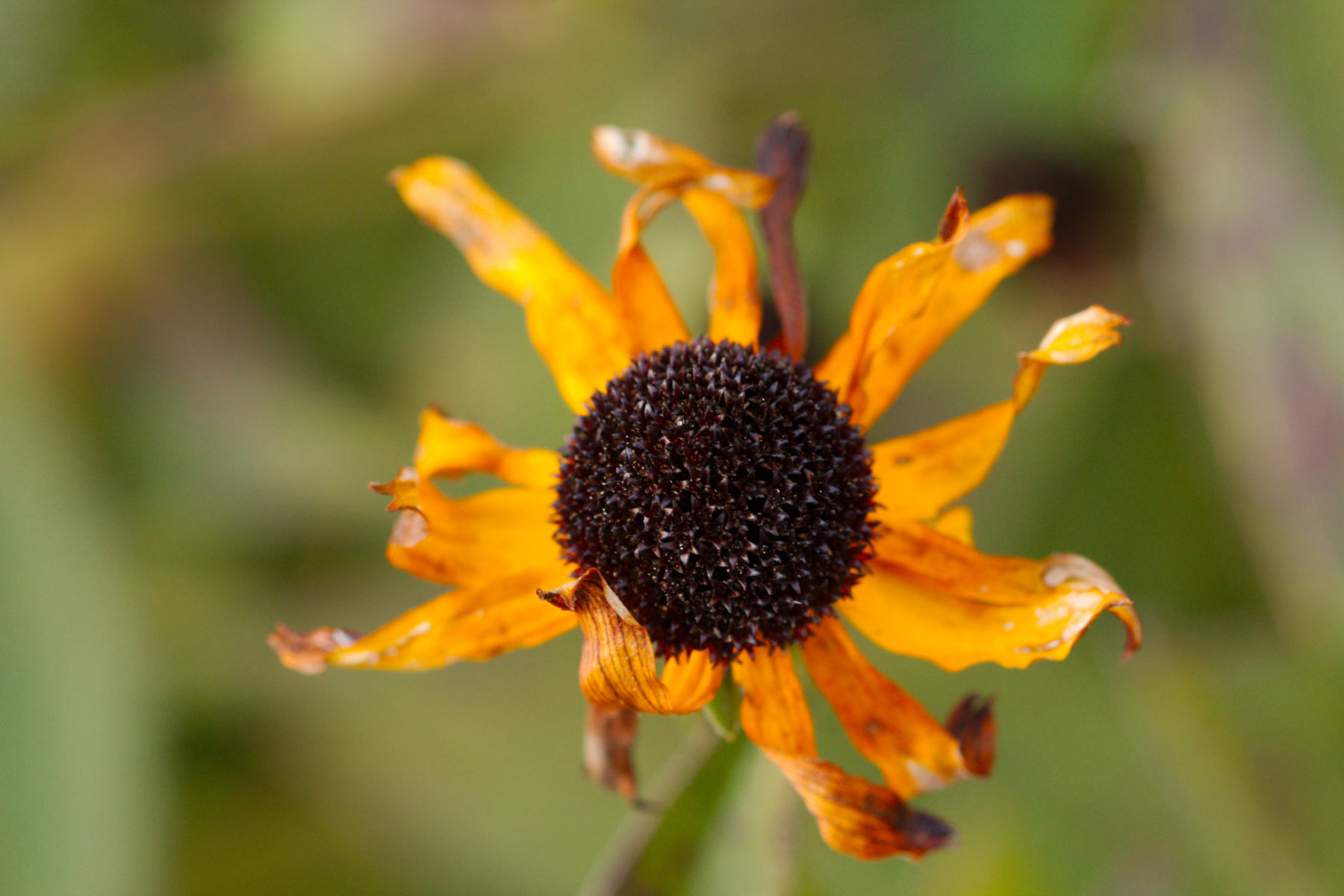
Black-eyed Susan
The black-eyed Susans in the yard are mostly finished now. The petals are drying up and falling off. Soon there will be nothing left but the stalks and seed heads. We generally leave those for the birds to eat during the winter. They seem to be pretty popular with the gold finches, in particular. This isn’t as good a picture as I hoped it would be. It was fairly late in the day and I didn’t bother to get my tripod, so I wasn’t able to get the depth of field that I should have. Still, I like the colors quite well. This is what autumn is about.
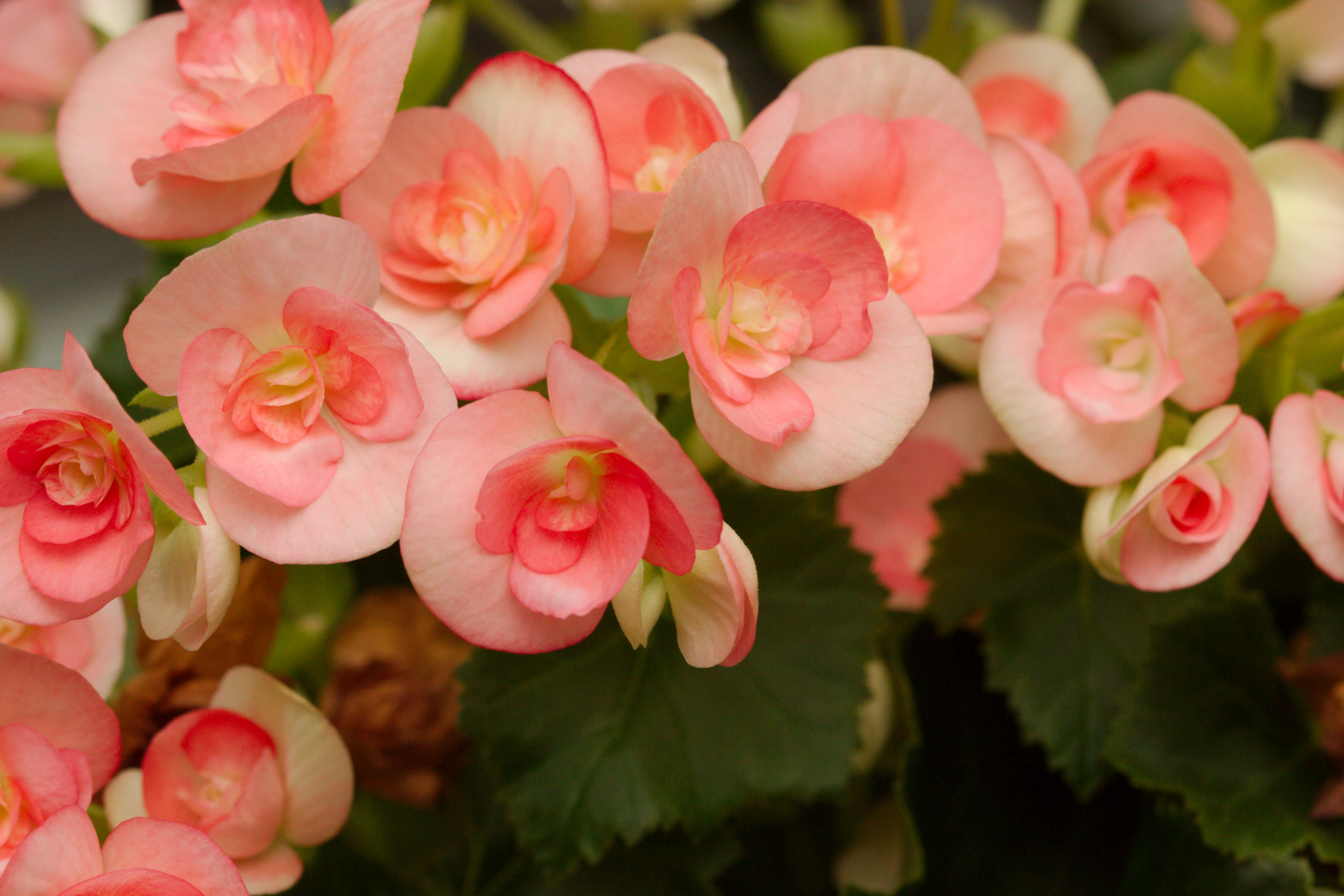
Winter-flowering Begonia
With more than 1,800 species, the genus Begonia is one of the largest genera of flowering plants. That doesn’t take into account a multitude of hybrids and cultivars. I have no idea what this variety is, but it’s a pretty, winter-flowering begonia and that’s all that really matters. There are hardy begonias but this isn’t one of them. So, it’s on a table in our dining room and provides some color, along side two deep purple African violets and sheltered by a large (and growing) fiddle-leaf fig (Ficus lyrata) and a fairly old pathos plant (Epipremnum aureum).
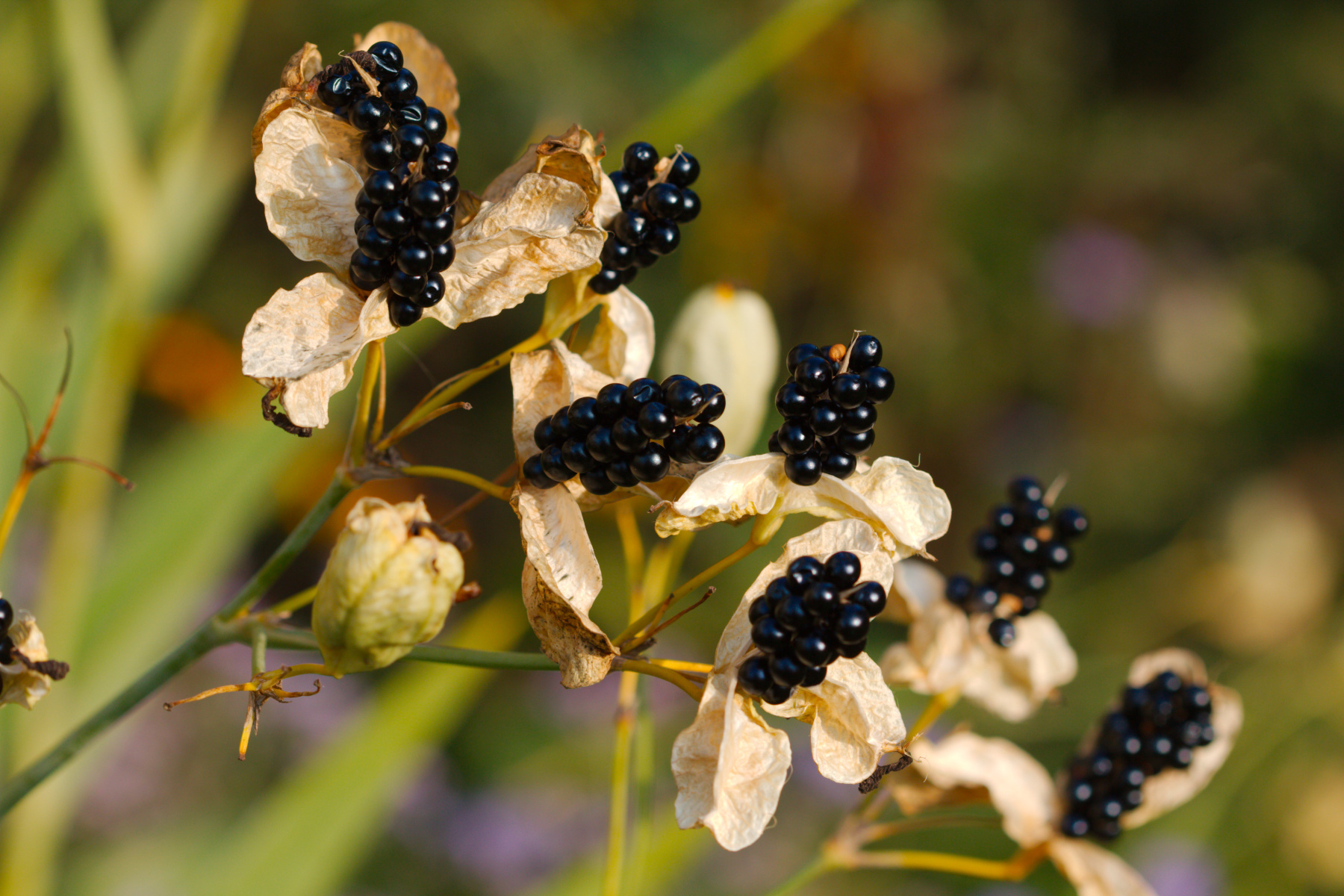
Blackberry Lily (Iris domestica)
The flowers on this plant, Iris domestica, the blackberry lily, don’t really give much clue to their common name. When they go to fruit, however, it’s a little clearer where that comes from. They do have a certain blackberry-like look to them. The flowers are a bright orange and are really lovely. The leaves are very iris-like and are beautiful, sculptural fans of varying shades of green. In fact, I’d be tempted to grow these even if they leaves were all they provided. But the flowers are welcome and I like the fruit, as well. We scatter these fairly liberally around the garden and they are now coming up in various places. They aren’t so aggressive that we worry about them taking over, either, which is nice.
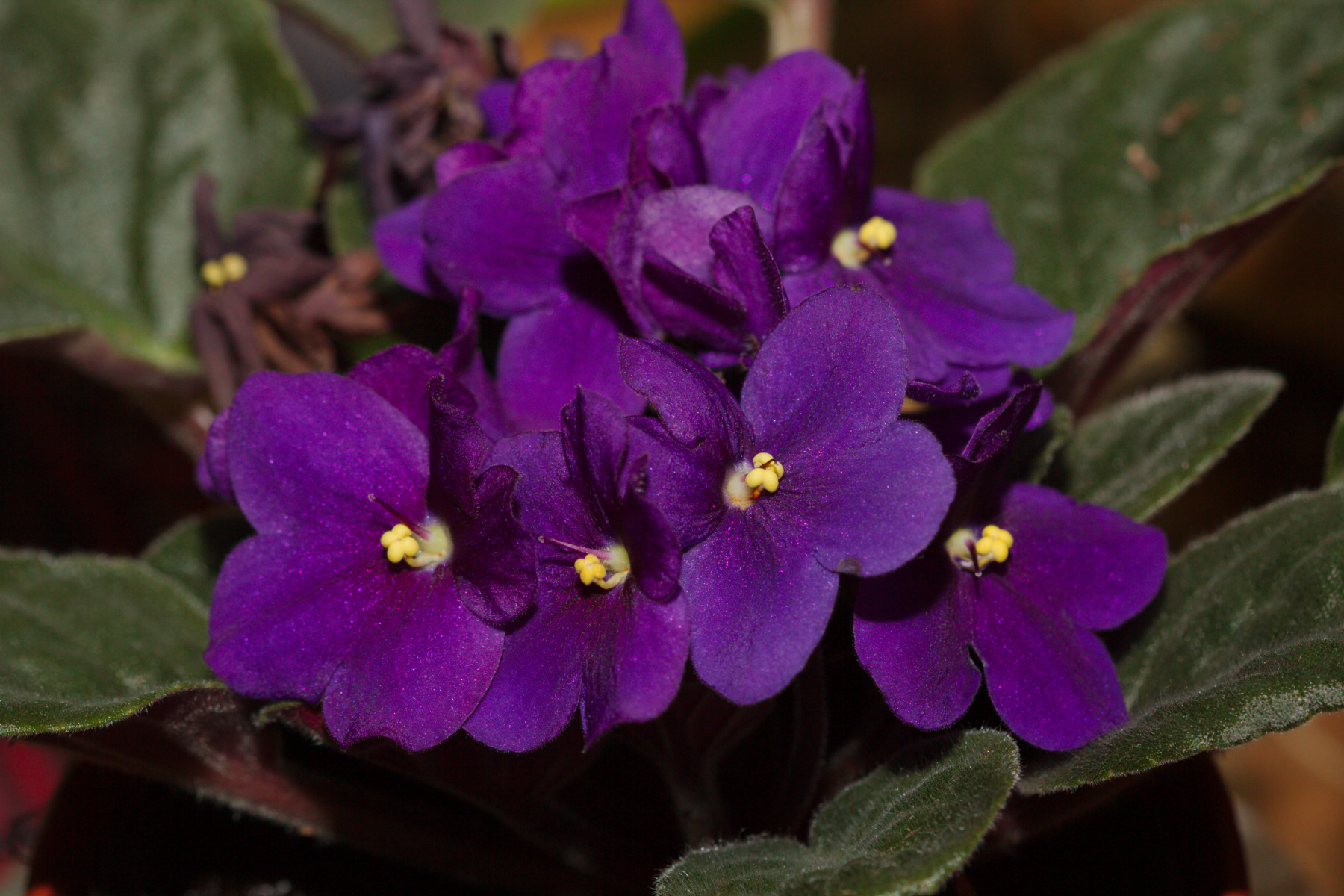
African Violets
We’ve had mixed success with houseplants over the years. When we’re not too busy, we can do reasonably well and houseplants thrive. When we’re busier, anything not particularly resilient is in pretty significant peril. Lately we’ve done reasonably and we have two African violet plants, cultivars of Saintpaulia ionantha, that arew doing well and blooming. We also have a iddle leaf fig (Ficus lyrata) that Dorothy started by rooting a leaf. It’s now about 6 feet tall and seems quite happy.
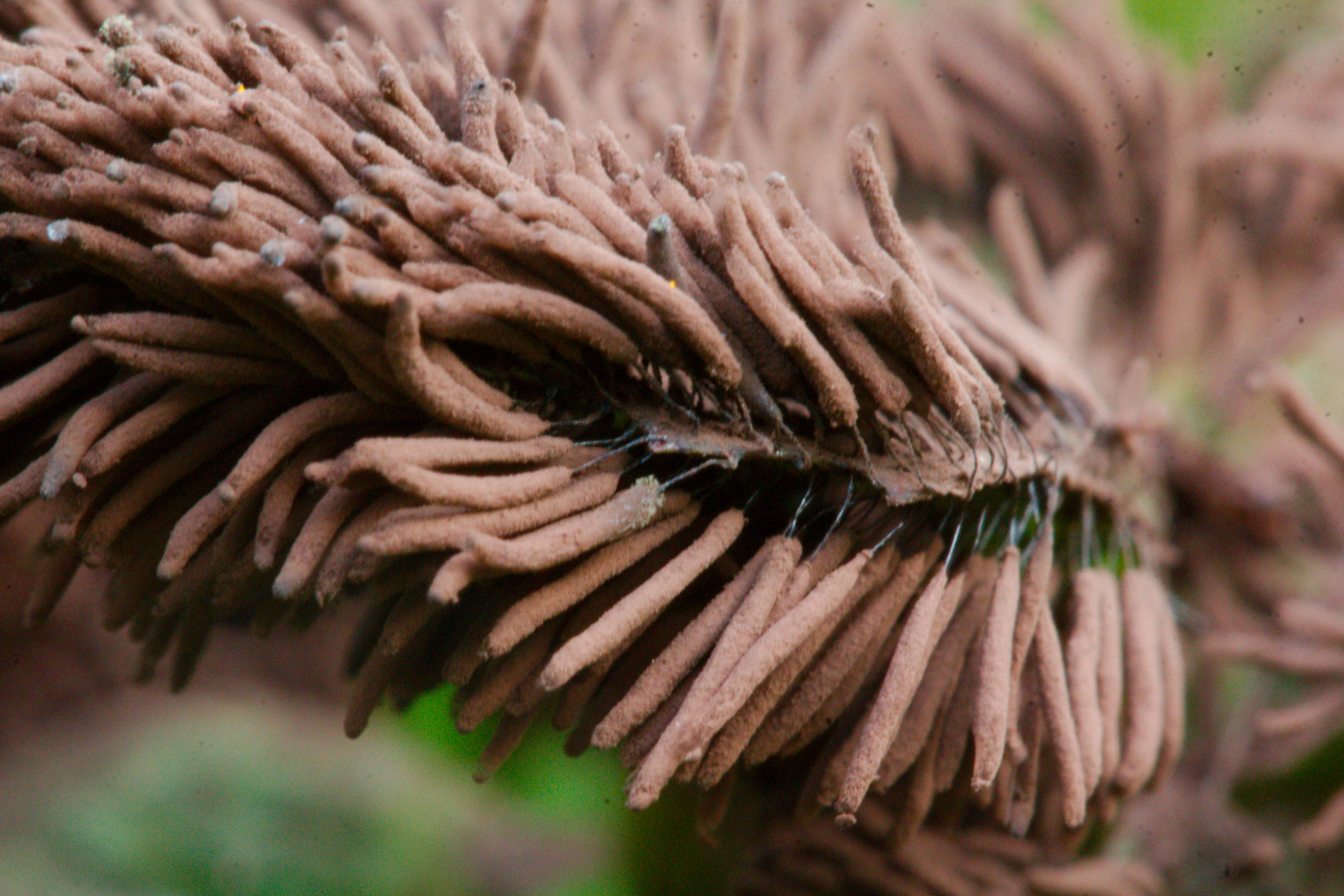
Stemonitis splendens (Chocolate Tube Slime Mold)
Cathy spotted this growing in our back yard and said I should come take some pictures. It was late in the day and the light was fading so they didn’t turn out as well as I would have liked. These are the sporangia of a slime mold (or mould in England). I believe it is Stemonitis splendens, the so-called chocolate tube slime. These don’t do any harm to garden plants, despite their somewhat alarming appearance. They actually live on the surface of leaves and are not actually parasitic. They feed on decaying organic matter and actually move in a way that seems more animal than vegetable. They form finger-like projections which then pull the body of the slime mold along. Creepy (literally!). From the Mississippi State University Extension Service:
When the slime mold is ready to reproduce, at some point during spring or summer generally following a period of rainy weather, it “crawls” up on grass blades, lower stems and foliage of landscape plants, the surface of landscape mulch, or even garden hoses. From these locations, the slime mold releases millions of dusty-gray spores.
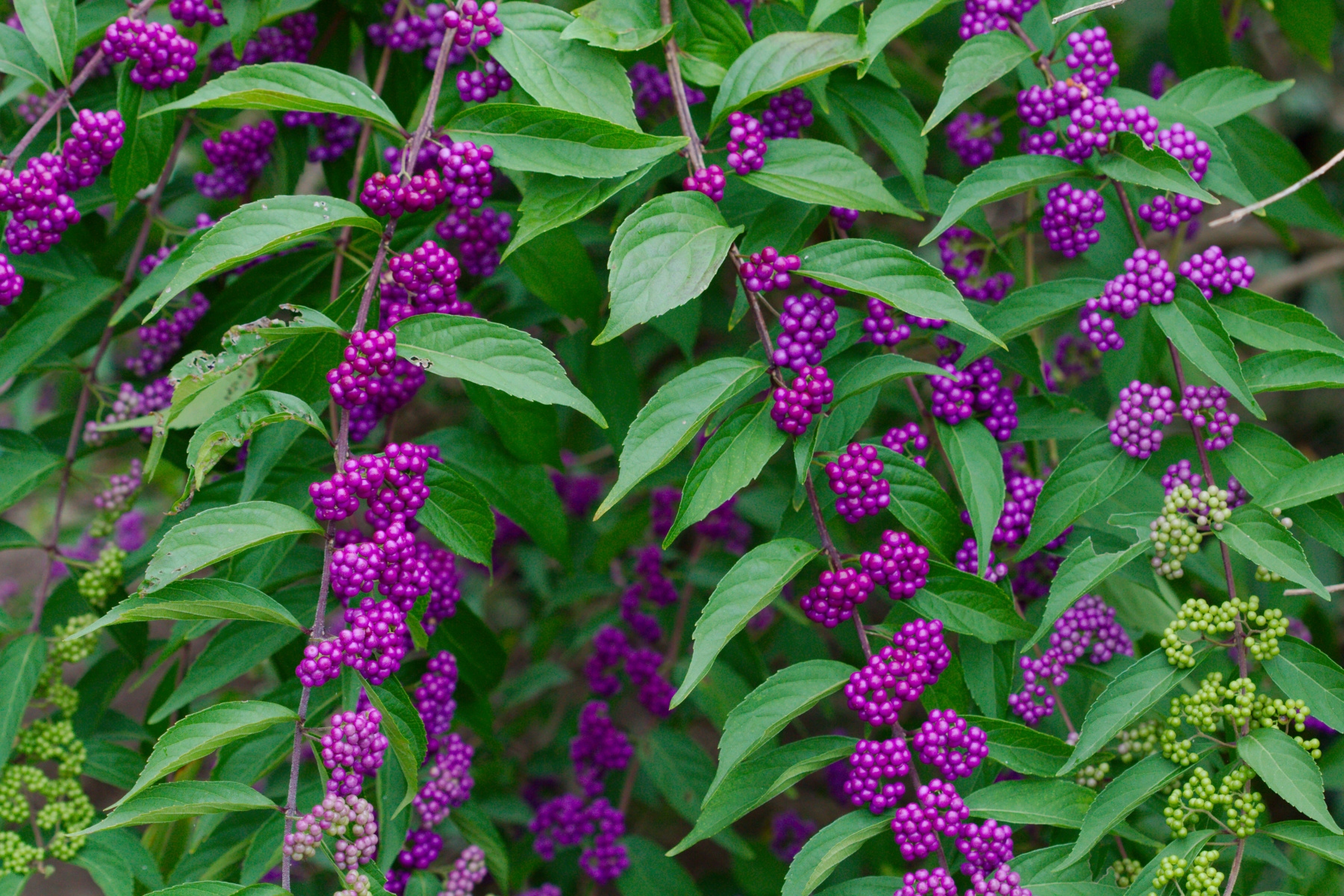
Callicarpa americana (Beautyberry)
I’ve mentioned the beautyberry (Callicarpa americana) we have in our back garden so I thought it deserved a photo. Its berries are just about at the height of their beauty right now, so it seemed like the best time. As you can see, the berries are both beautiful and plentiful. Because this shrub blooms (and therefore sets berries) on new growth, it can be cut back fairly hard each autumn or early spring and it will still produce a good display. The flowers are not particularly significant, being tiny and very pale pink. The berries, as the name implies, are the reason to grow this native. It attracts birds, who eat the berries, which is also nice.
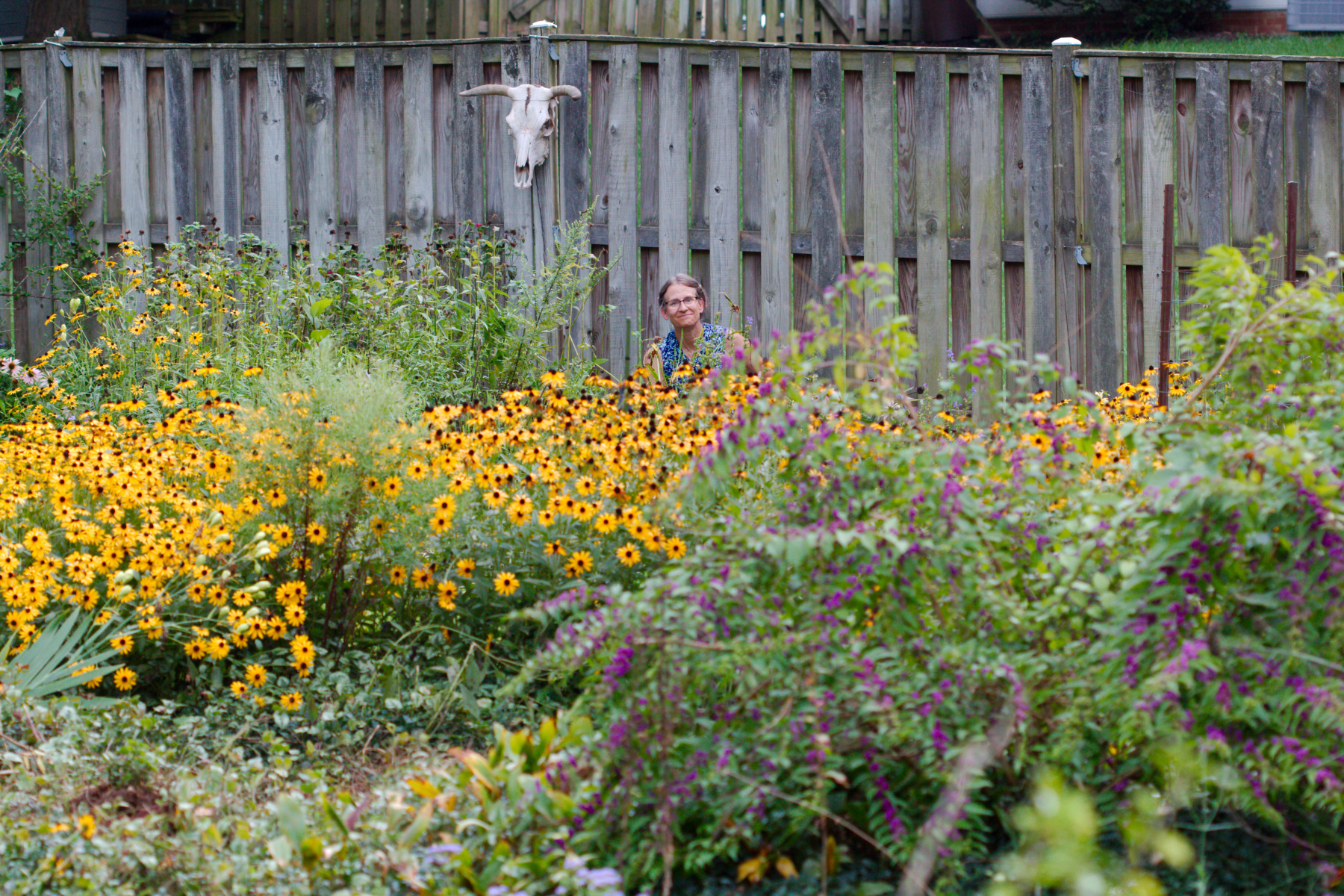
Cathy Weeding
Cathy and I have been trying to recover from the small amount of work we did in the garden in 2018. This year has been mostly recovery mode without a lot of additions but a lot of pulling and digging, trying to get at least some parts of the garden back to more garden plants than weeds. It’s an up hill battle. Along the back fence there was a huge stand of goldenrod, pokeweed, and bindweed. Cathy dug up a bunch of roots a few weeks back and we worked a bit more on it this weekend. As you can see, the central bed is full of black-eyed Susan’s and we have the volunteer American beautyberry (Callicarpa americana) growing there (the purple berries on the left). We dug out a bunch of weeds there last week, as well. Tomorrow I plan to dig up some roots that remain from the maple trees that used to be there.
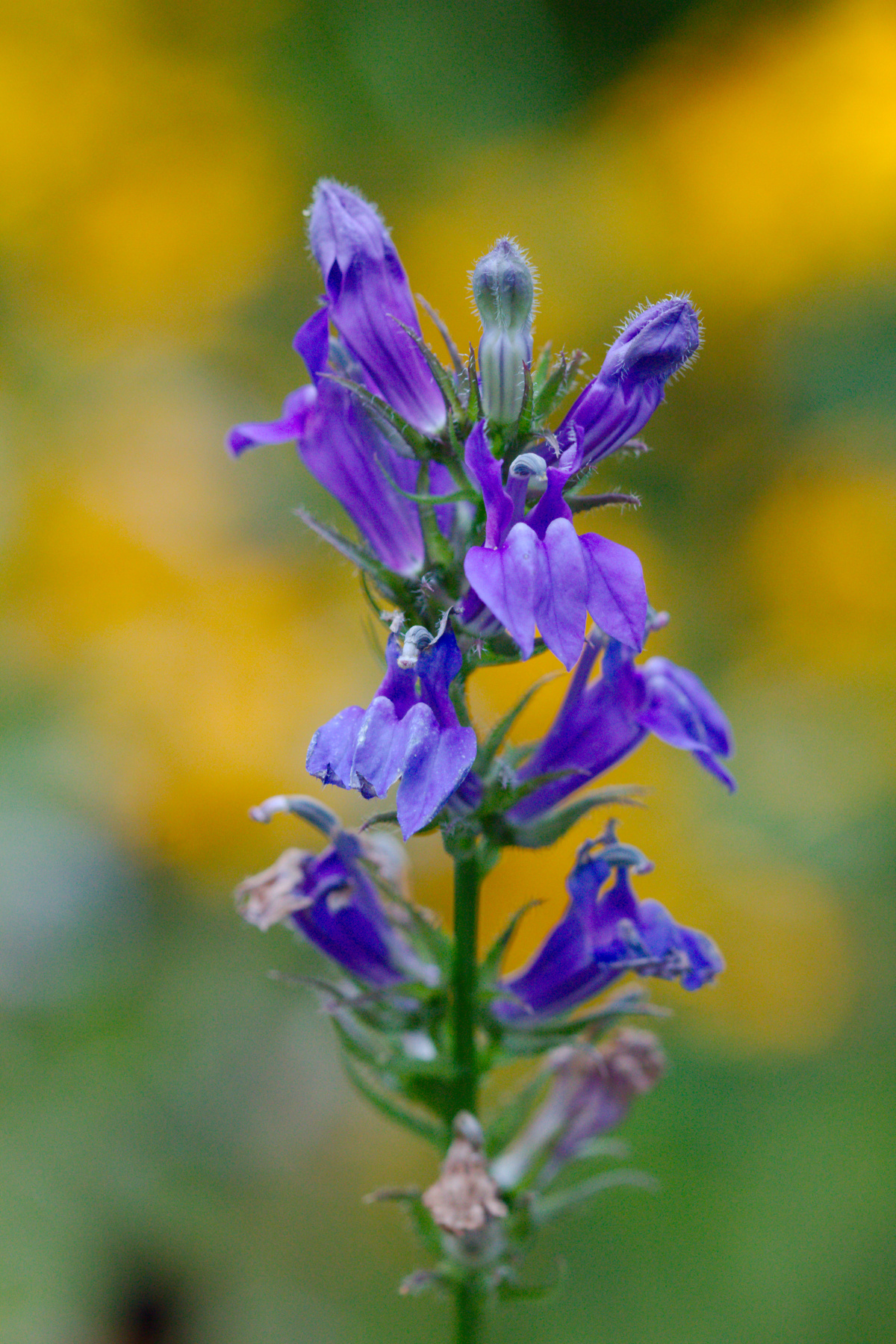
Lobelia siphilitica (Blue Cardinal Flower)
This is a really nice plant. Blue cardinal flower, Lobelia siphilitica, is an easily grown, herbaceous perennial, native to eastern North America and hardy to USDA zone 4. It needs fairly moist soil and does better here in part shade, where the ground doesn’t dry out so much, or in full sun in pots where it gets regular watering. It blooms over a fairly long period, which is always appreciated. One thing I didn’t know about it is that the species name of siphilitica is from “a prior medicinal use of the plant in the treatment of venereal disease.”
It does well in our garden and we have it scattered around. This particular plant is growing in a container on the driveway with black-eyed Susans behind it. Blue and yellow is always a good combination in the garden and with yellow being so prominent in ours, adding that touch of blue is great.
Bird of Paradise Flower
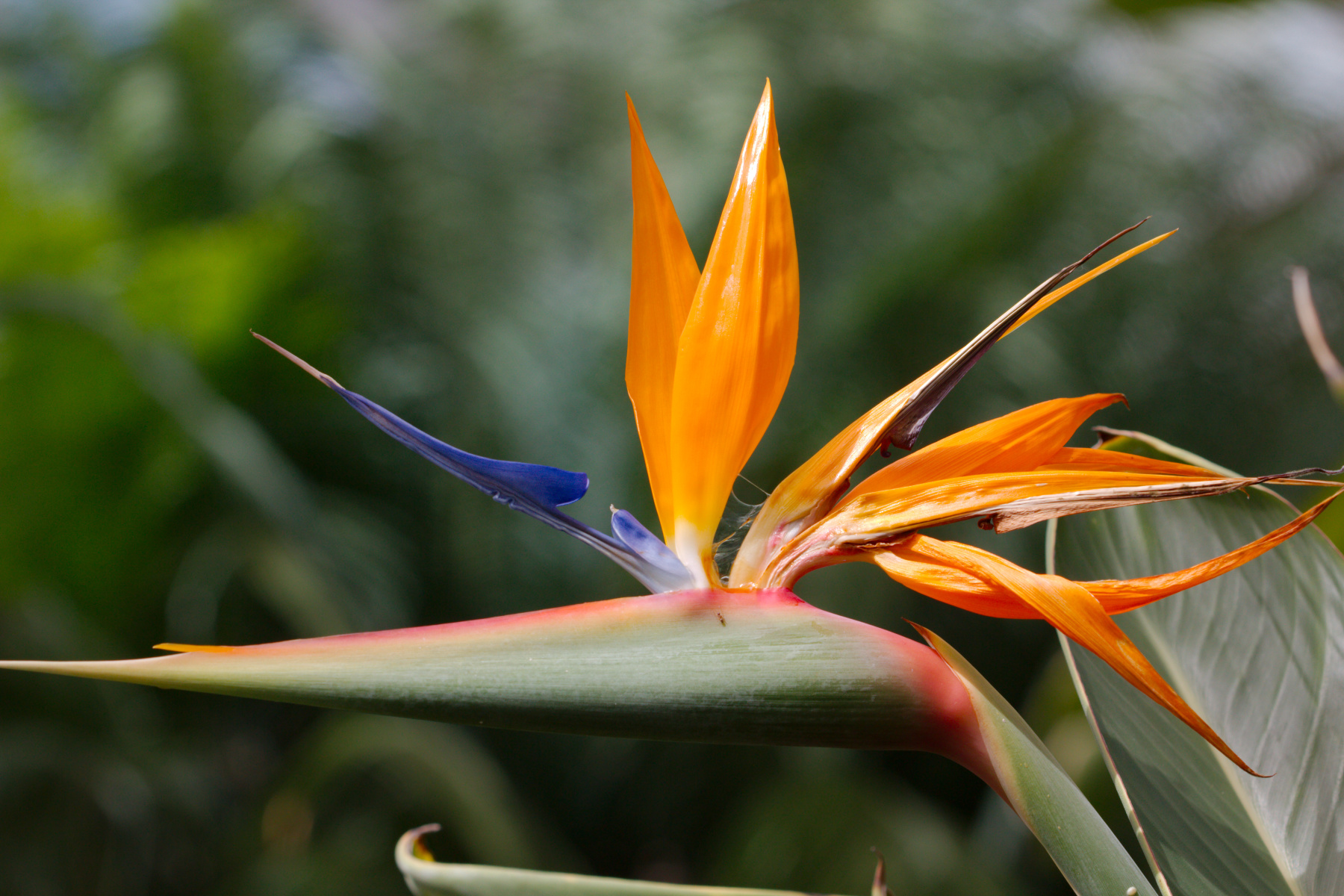
Cathy, Margaret, and I went to Brookside Gardens this afternoon. It was such a wonderfully beautiful day we were not surprised by the number of people there. Nevertheless, we were able to find a parking spot and wonder around the garden for a while. We often go there in the spring, when early flowers are in bloom. I would recommend that highly but this was a different experience. We rarely come in August because it’s so brutally hot. Today was in the mid-70s, though, and absolutely lovely. The summer flowering plants were at their best and we really enjoyed the gardens. The conservatory is always nice, of course, and this photo of a bird of paradise flower (Strelitzia reginae) was taken there. I’ve often thought about growing one of these but never got around to it. They are, apparently, fairly easy to grow, although they couldn’t take our winters and would need to come inside when it gets cold.
Sea Holly
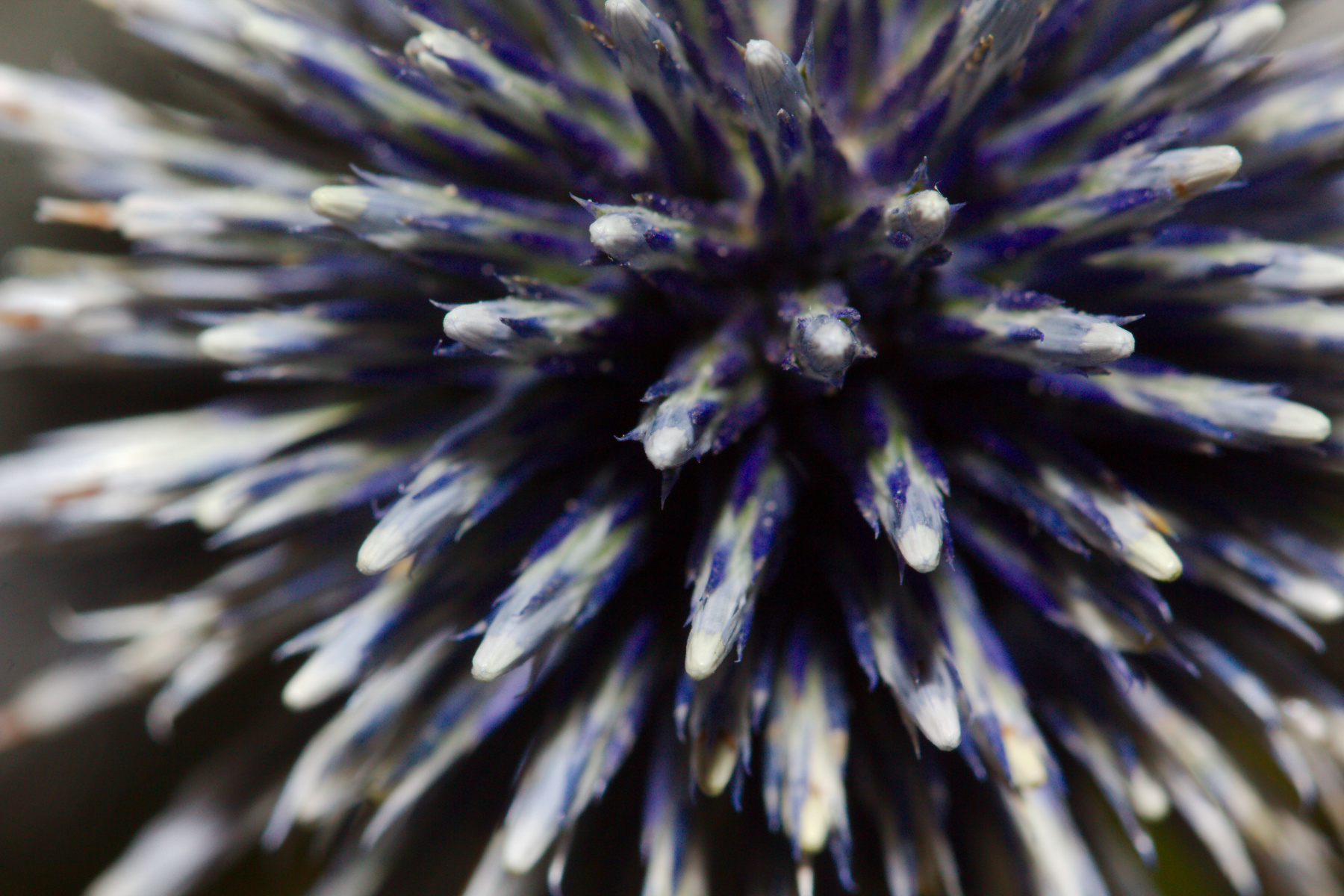
By the time I got home this evening I didn’t feel like going out looking for something to photograph. Later in the evening, as is usually the case, I wished I had, because it meant I had to find something indoors to photograph. If finding something new and interesting to photograph in the yard is a challenge, how much more so is that true in the house. Fortunately there was a vase of flowers on the dining room table and in it were the blue and grey balls of Eryngium planum, better known as sea holly. These are interesting flowers. We had some in our garden in Gaithersburg and I should plant some here. The blue would be especially nice as a contrast to all the yellow-orange of the black-eyed Susan flowers.
Zinnia
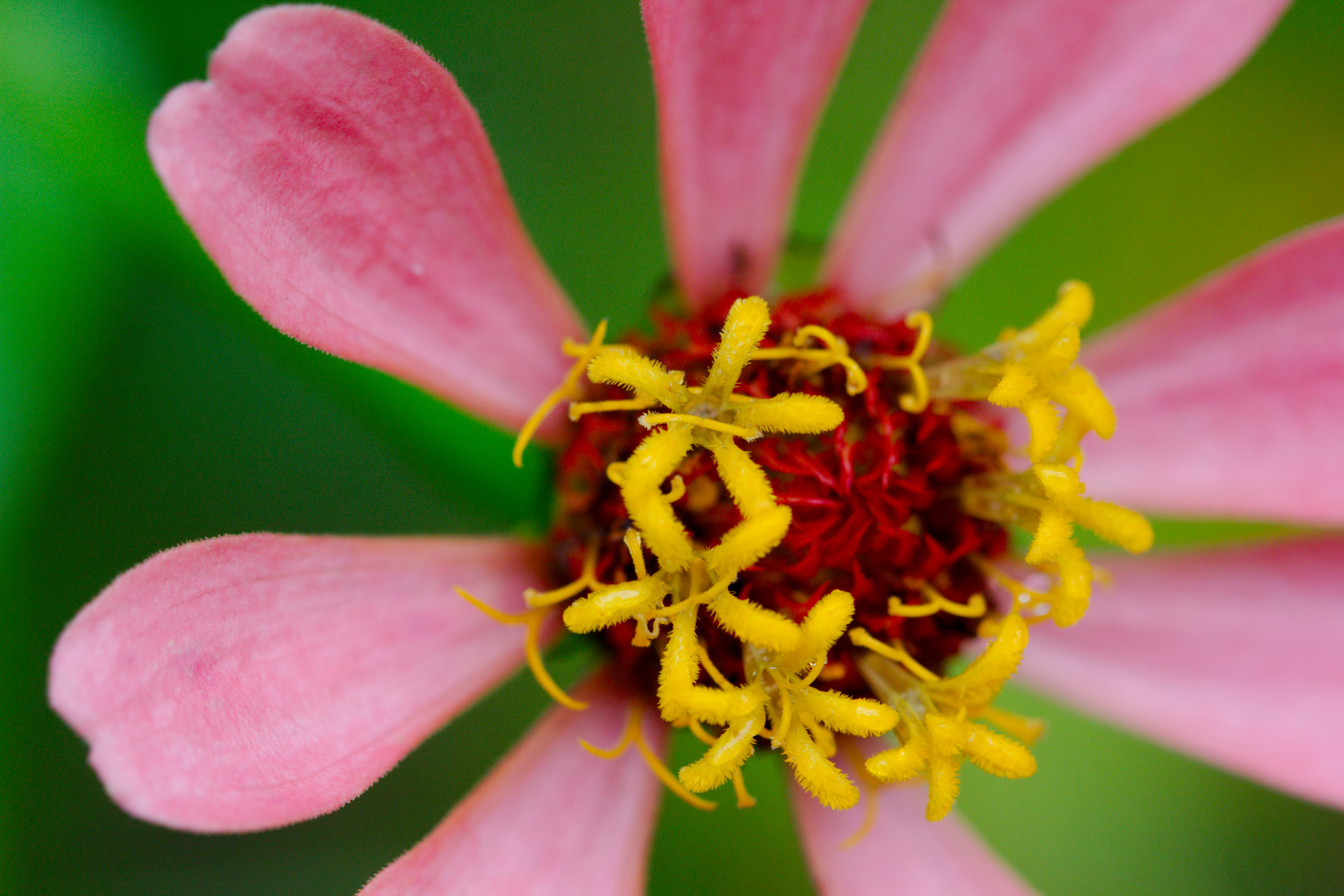
This spring Cathy planted some zinia and marigold seeds. She’s talked about doing that for a few years but this year she actually got them planted. They grew under a plant light in our dining room in the late winter and into the early spring. They probably were started a little early because by the time it was safe to plant them outside they were a bit leggy and had already started to bloom. Still, I’d say they constituted a success. This one is growing in a pot on the back patio and it has pretty flowers. Not a lot of them, but every little bit counts.
Western Honey Bee (Apis mellifera)
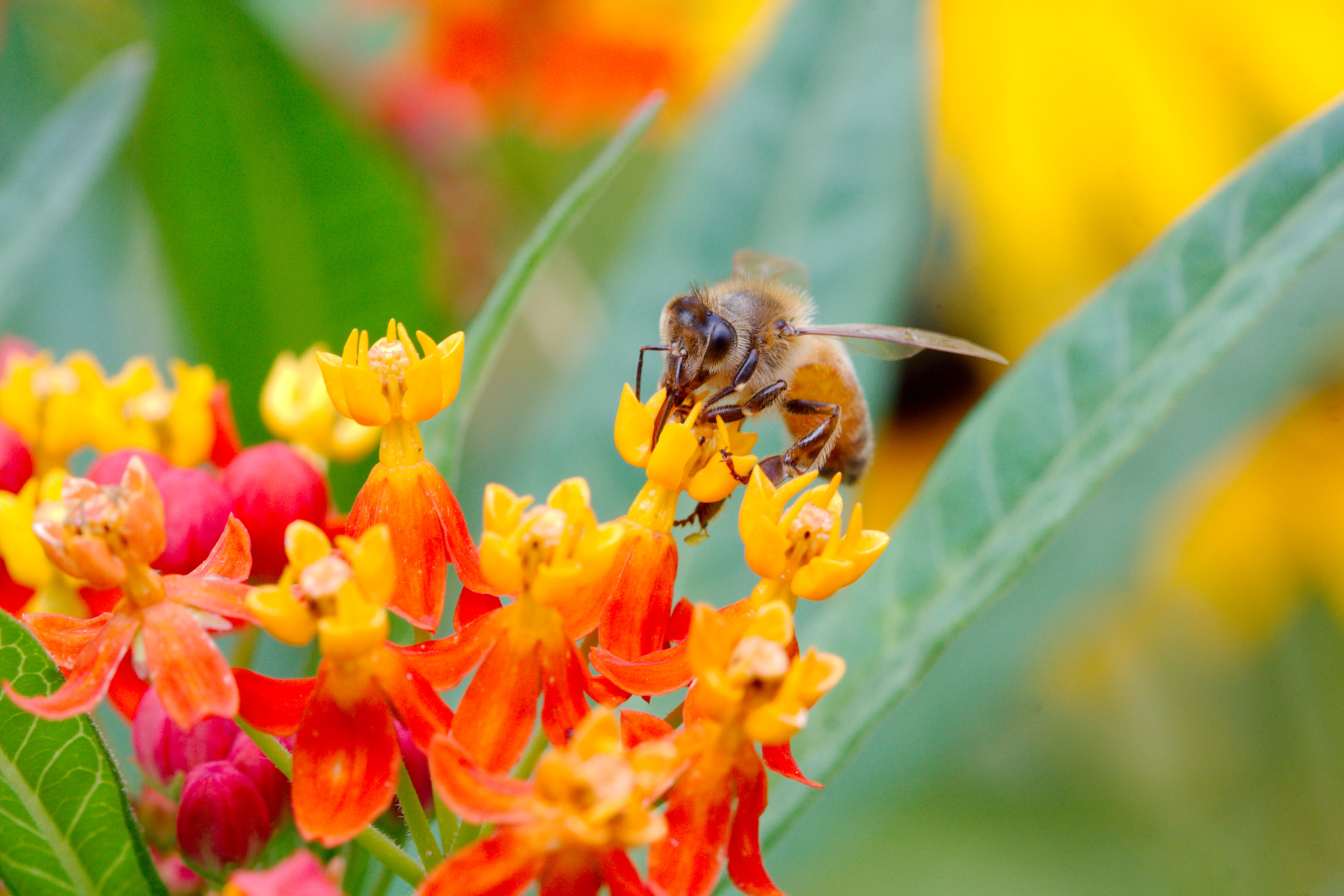
We had another day at Shady Grove Hospital today but before I went I took a few pictures in the back yard. There was a monarch butterfly (Danaus plexippus) on the butterfly weed (Asclepias tuberosa) and I had hoped to get a picture of that. I would have, except I had taken the memory card out of the camera and when I put it back in the write protection switch had been pushed into the off position and the camera would not take a picture. By the time I got it reset the butterfly was gone. I was able to get this photo of a western honey bee (Apis mellifera), instead.
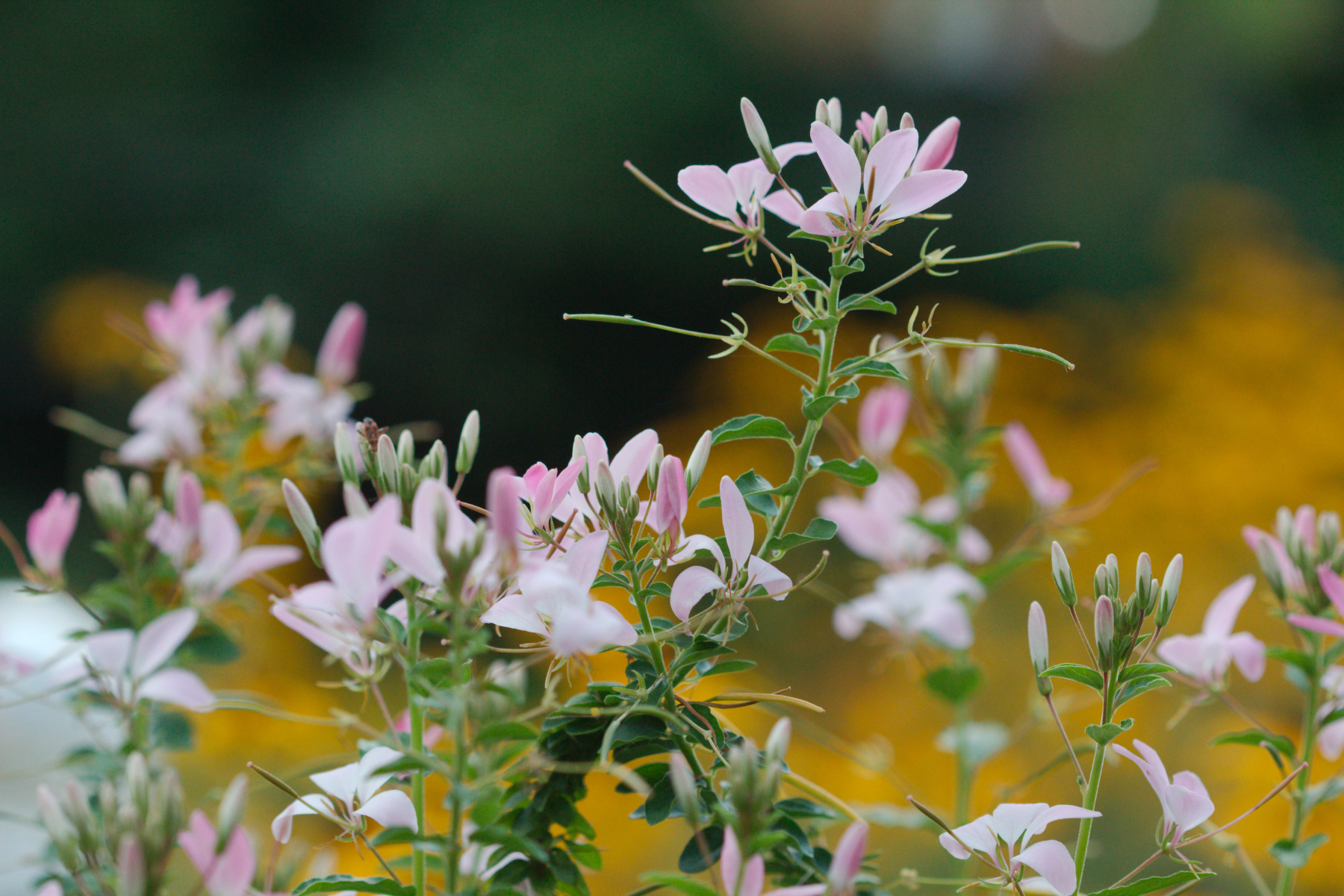
Cleome ‘Senorita Blanca’
My back was up to a full day’s work today. Although there were a few rough spots I made it through, trying to get up now and then to move around (because “Motion is Lotion” as they say). When I got home I took pictures of various flowers in the back yard. I really thought it would be pushing it to get down on the ground for photography. I did for the caterpillar photo yesterday but getting back up was a chore. So, I sat in a chair and photographed what was all around, including blue Lobelia, butterfly weed, Lantana, and a few other flowers. I like the Cleome with the black-eyed Susan flowers behind it.
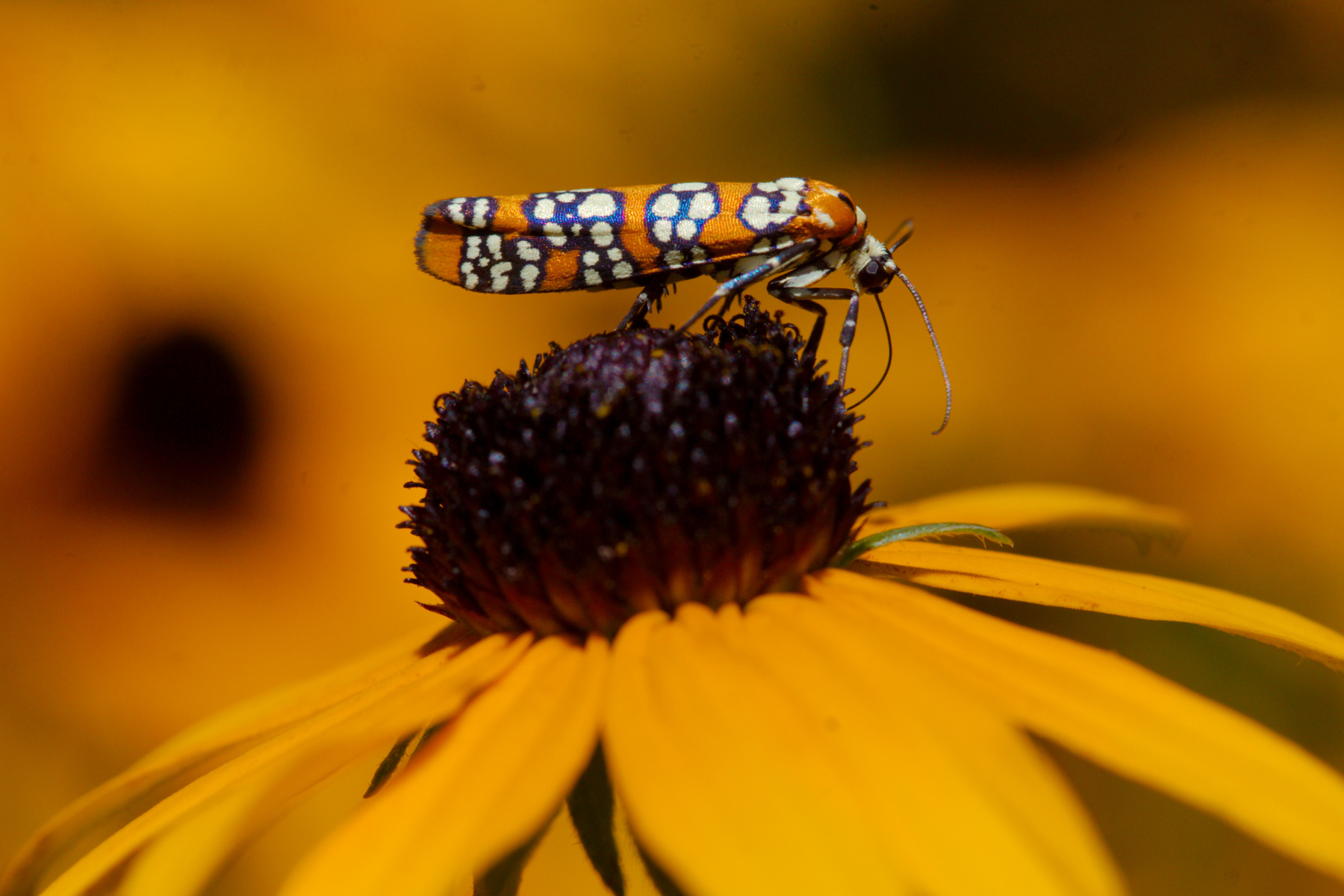
Atteva aurea (Ailanthus Webworm Moth)
I took some butterfly pictures this afternoon, as well as some flower pictures. While sitting in the chair that Cathy was in when I took the picture for a few days ago I could get pretty close to a few flowers without having to strain my back. Then walking around I saw this prettily colored ailanthus webworm moth (Atteva aurea) on a black-eyed Susan. It took me a while to get down on the ground to get the pictures but I think it was worth the effort. Although it’s named for and feeds on a non-native tree, the Ailanthus webworm moth is actually a North American native from Florida, where its original host was the Simarouba glauca (paradise tree) and Simarouba amara.
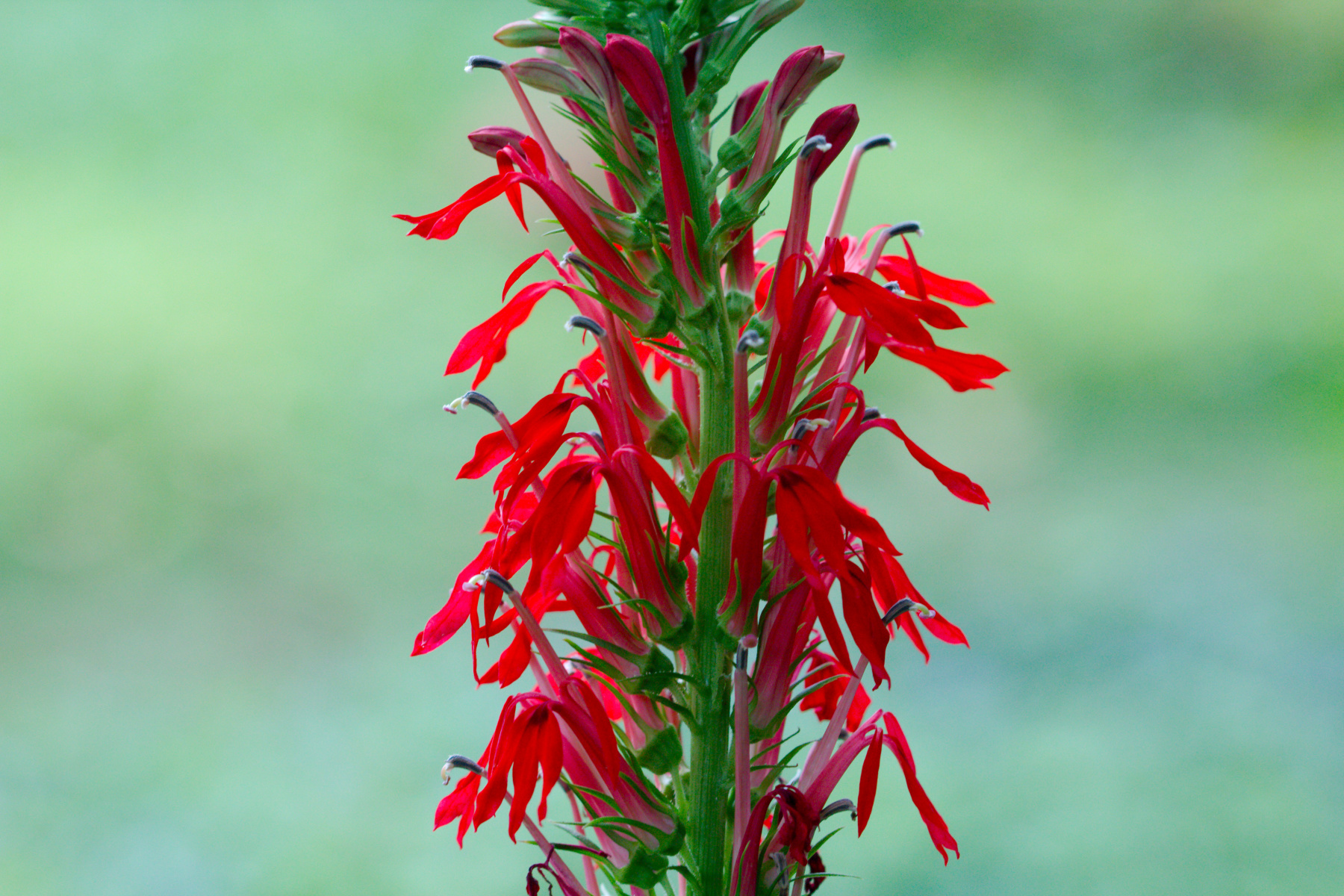
Lobelia cardinalis
This red Lobelia cardinalis is growing under the cherry tree at the north end of our yard. It’s really bright and I thought it was worth getting a picture of. With my back still bothering me I wanted to be really careful getting behind it so I could get the picture without having to bend over and with the trunk of the cherry tree available for me to brace the camera against. I was very carefully watching where I was stepping so I wouldn’t trip but about half way back, all of a sudden, I whacked my head against a ceramic wren nesting box hanging from a branch of the tree. I didn’t quite fall but it did my back no favors. Still, I got the picture. Coming back out I was even more careful where I walked and I kept an eye on that nesting box.
Cathy In The Back Garden
With my back still bothering me, I stayed home today. I did put in a little time at work, mostly a long phone call to discuss a proposal that is being written for a project that includes a web site. When Cathy got home from work I asked if I could take her picture for my photo of the day. She agreed and I took almost two dozen shots of het with her flowers. Most obvious are the Rudbekia (the Black-eyed Susans). There is also orange and yellow butterfly weed Asclepius tuberosa) on the right. In front of that is the pale pink spider flower (Cleome). There are other annuals in pots and there is the red teapot lower down.
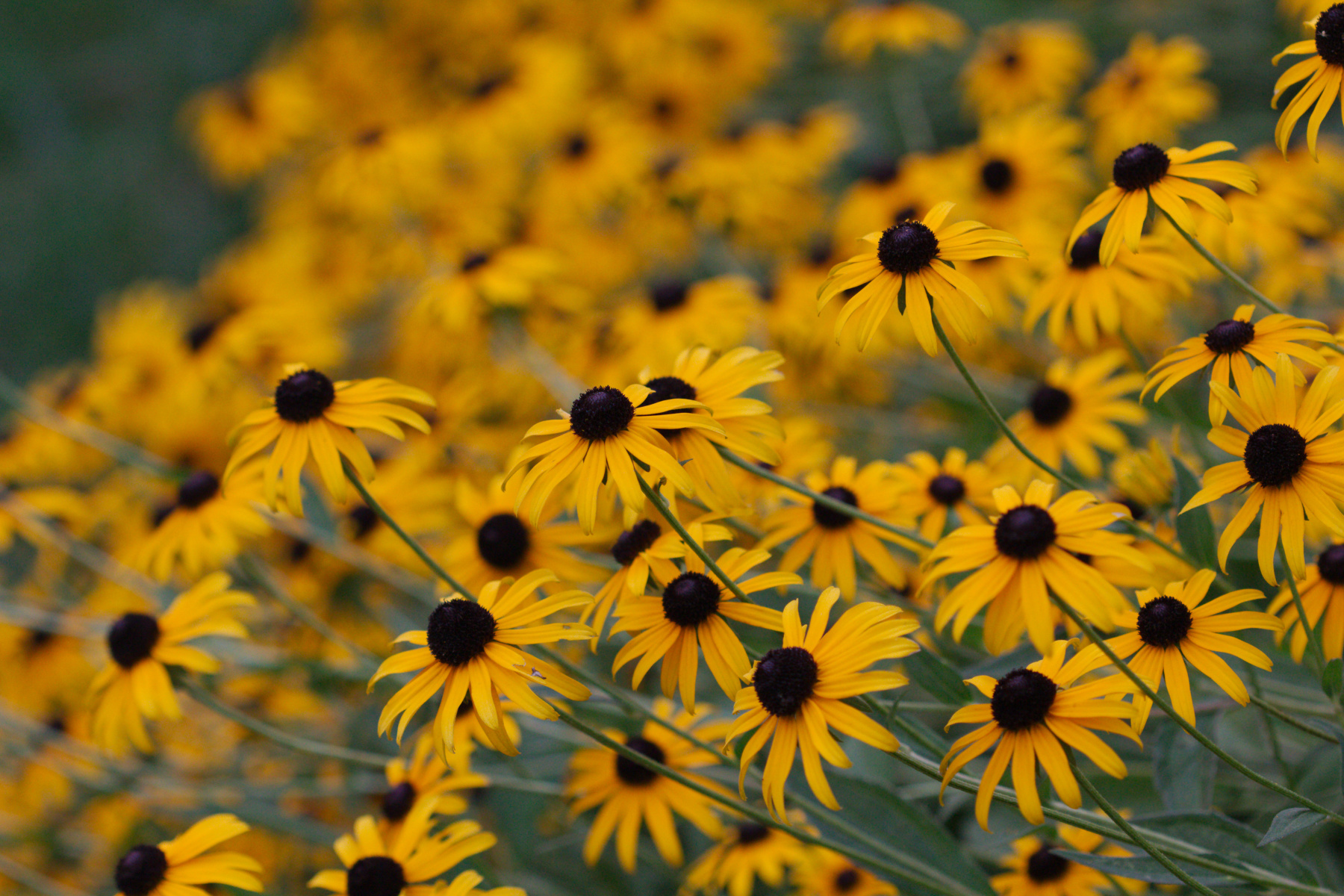
Black-eyed Susans
I’ve posted pictures that have Black-eyed Susans in them but today’s photo is just of them. To say we have a few is a bit of an understatement. The reality is that we have let them run riot and there are a lot of them in the back yard. They add so much color that we don’t really mind, especially around the patio. We’ve managed to keep one large and one small walkway through them, so we can get out into the yard. They are pretty popular with the pollinators, attracting bees, flies, moths, and butterflies. One interesting thing about them is the photos I take always look bluer than they look in real life and I have to correct for that. On the other hand, the leaves really do have a fair amount of blue in their green.
Junonia coenia (Common Buckeye)
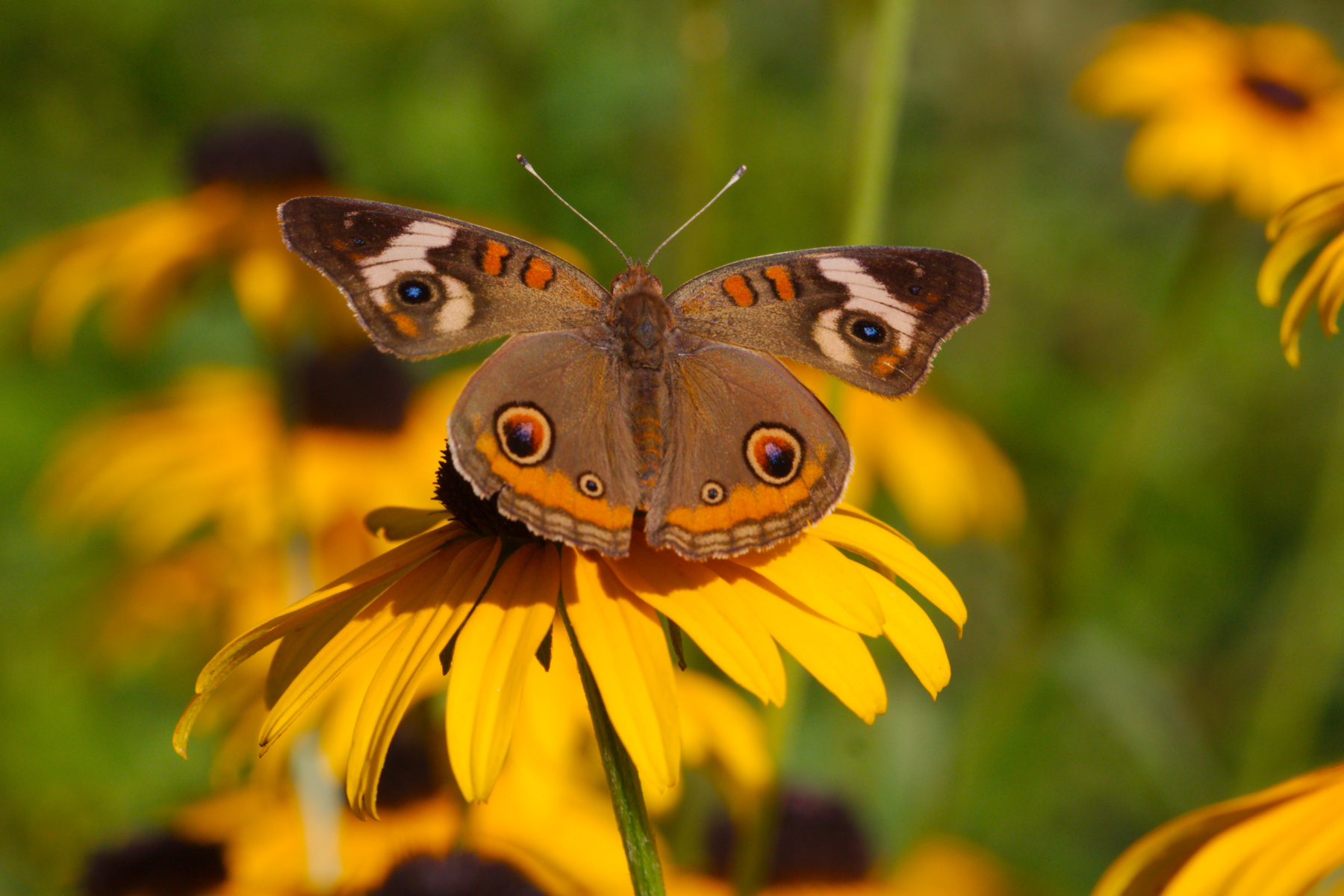
I chased down some butterflies in the back yard today, including this common buckeye (Junonia coenia). They are resident year round in the south as far north as North Carolina and they move north over the course of the summer. Because of that we tend to have them later in the year than other butterflies and I’ve only just started to see them. They are pretty easy to identify and are very different to the other species that we have. This one, obviously was interested in the black-eyed Susan flowers that are in such abundance in our yard right now.
Green Swamp
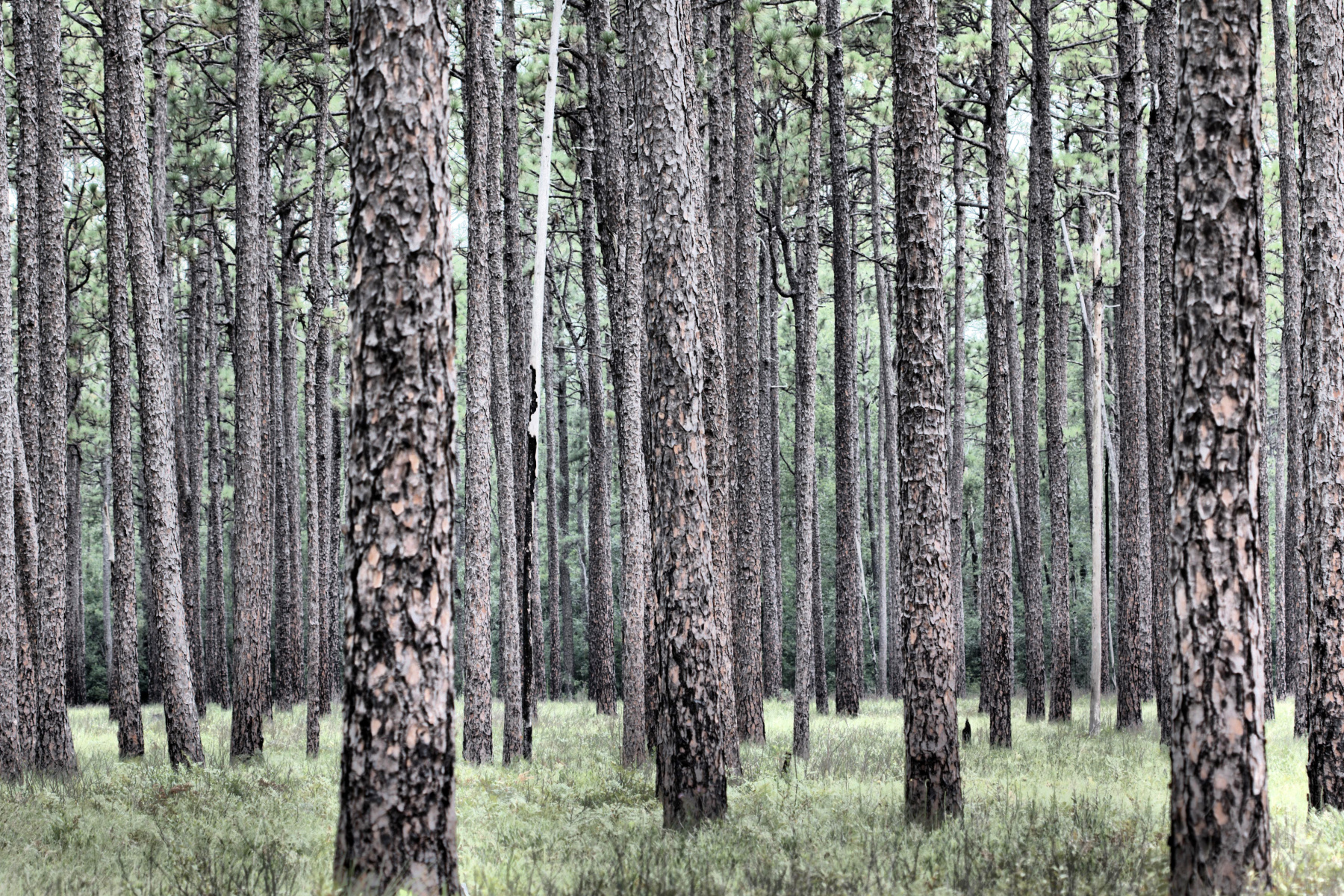
I’ve gone to the Green Swamp a few times during our weeks at the beach. Sometimes with a largish group and sometimes just a few others. I went by myself today and had a nice time. I planned not to go too far, with the primary goal of getting some pictures. I got some nice shots of Venus fly traps (Dionaea muscipula) and sundews (Drosera sp.). It was fairly dry and many of the pitcher plants (the purple Sarracenia purpurea And the yellow Sarracenia flava) were a little the worse for that. Still, I got some pictures. I also got a good shot of a palamedes swallowtail (Papilio palamedes (. But this is my favorite photo from the trip, showing the long leaf pines (Pinus palustris).
Eristalis transversa (Transverse Flower Fly)
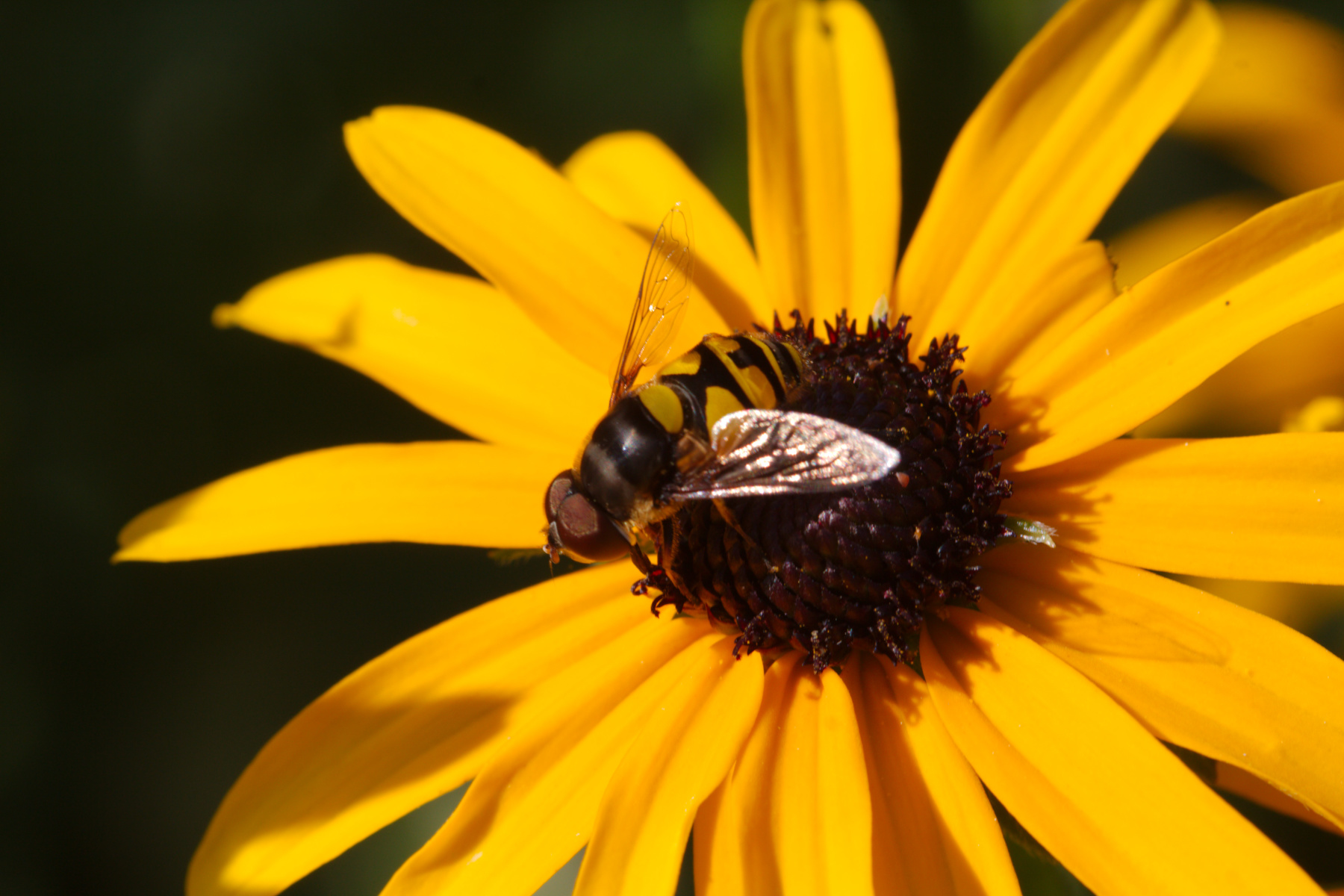
I was taking photos of the black-eyed Susan flowers this evening when I spotted this little fly, a transverse flower fly (Eristalis transversa) visiting them. It wouldn’t stay still for very long and I had a hard time getting a good picture. Ideally it would be on top of the dark eye in the flower, but I wasn’t able to get that. I like the combination of colors that matches the flowers. These are pretty little flies and easily spotted in the garden. As flies go, I enjoy these about as much as any.
Tiger Swallowtail and Tiger Lily
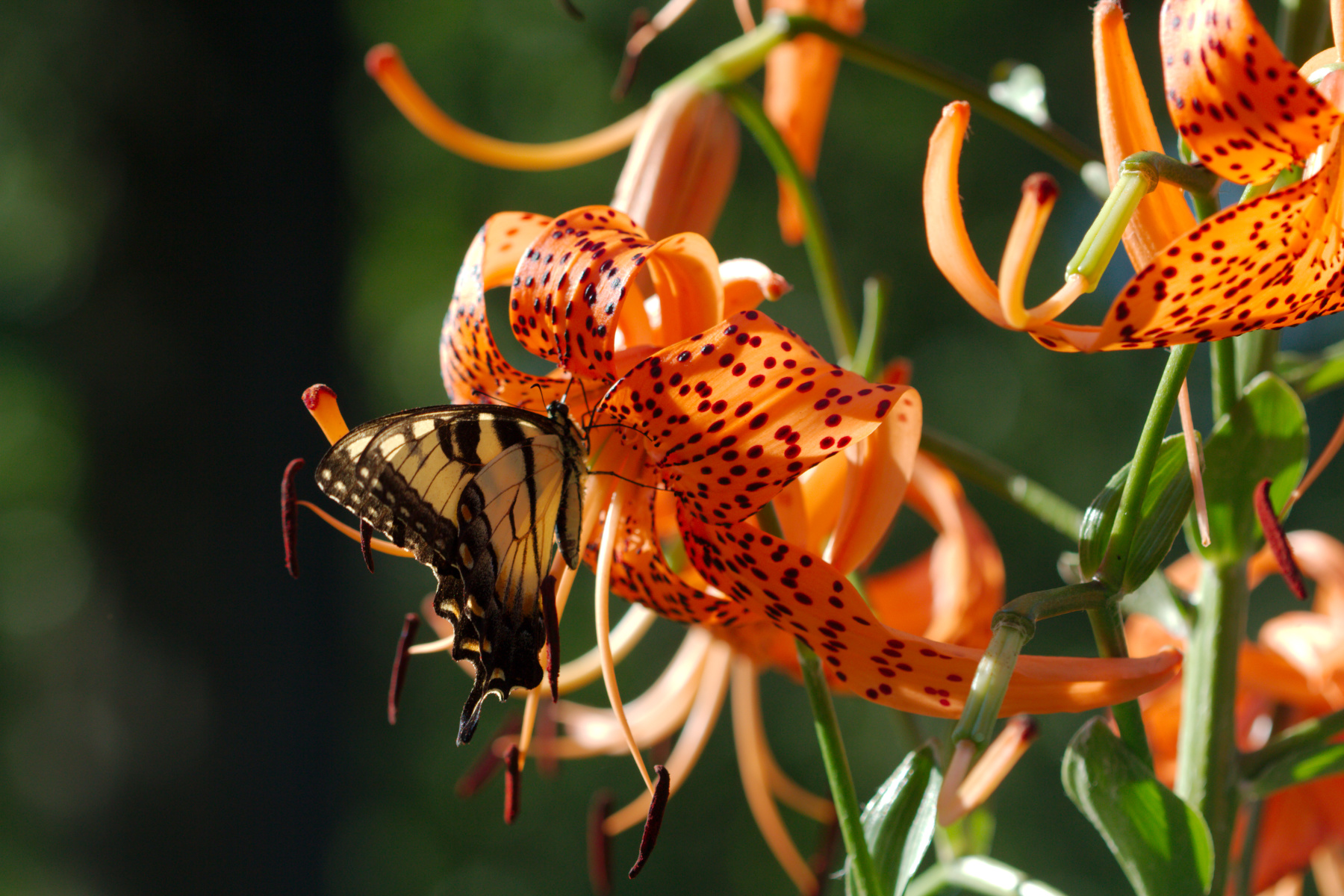
The tigers are out in force. We have tiger lilies (Lilium lancifolium) blooming in a few areas in the yard. They are especially spectacular in the morning when the sun is on them. We also have tiger swallowtails (Papilio glaucus) in pretty good numbers. They are mostly on the tiger lilies and on the buddleia bushes and we’ve counted more than ten together on one buddleia bush. Most of them are the standard yellow and black but about ten percent are the darker version that I photographed a few days ago.
Red Roses
Cathy’s mom had a visit today from an old friend and her husband. They brought these flowers, which was nice, and they looked lovely in the late afternoon sun coming in through the dining room windows. I took pictures of them from a bunch of different angles. Deep reds like this are a challenge for my digital camera and they tend to overwhelm the sensor but this one turned out pretty well. No disrespect meant towards Canon. It’s a really intense color and it came out well. Our eyes are such remarkable organs with the ability to see such a huge range of color and brightness that it isn’t actually surprising that technology is still trying to get there. We’ve come a long way, though.
Roses ‘Perle d’Or’
We’re getting a second flush of roses on the ‘Perle d’Or’ outside our front door. This small polyantha rose has a nice, apricot-yellow color with perfect, if tiny buds, opening to somewhat less perfect blossoms that are, nonetheless, quite lovely. The fragrance alone is enough to make me want this rose and putting it right outside our front door was a good choice. It has been killed back in parts in some particularly cold winters but generally it does pretty well and so far has not suffered any irreversible damage.
Back Garden at Dusk
It was a pretty evening today and I took this photo out our kitchen door at dusk. It’s hard to convey the feeling at dusk, because it tends to look like nothing so much as an underexposed photo. I obviously had to be a little careful not to lighten this photo any more than necessary, in order to retain that dusky feeling. You can see the three ornamental, lighted, garden globes in this photo, although only one of them is actually lit. A second one seems to work some days and not others. They aren’t all that well made, unfortunately, and don’t last very well. That’s a little disappointing.
Lilium lancifolium (Tiger Lily)
The tiger lilies are blooming and they are really spectacular this year. My dad had these growing in his garden and from time to time we would take the little bulbils that form in the angle between the leaves and stem on these plants and we’d put them in our garden. We continued that process, with bulbils from our own plants and now we have a pretty good number of them around the yard. These are growing in the small bed where an oak tree once grew. That tree was dying when we bought the house and has since been removed. There are daffodils there and Cathy often puts annuals in the center of the bed, but these lilies are growing towards the back (the house side). They are over six feet tall and quite striking, with racimes of large, orange, downward-facing flowers.