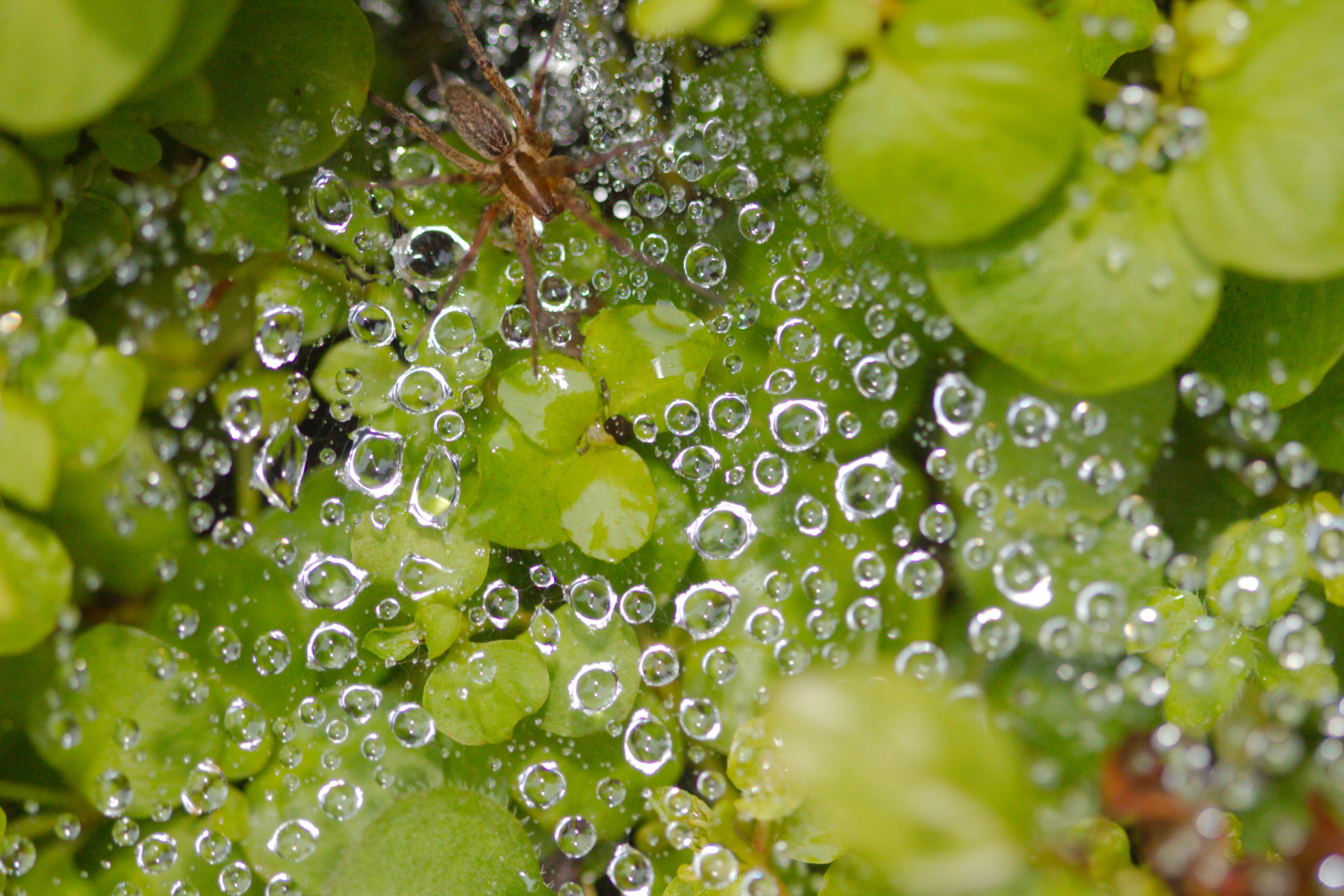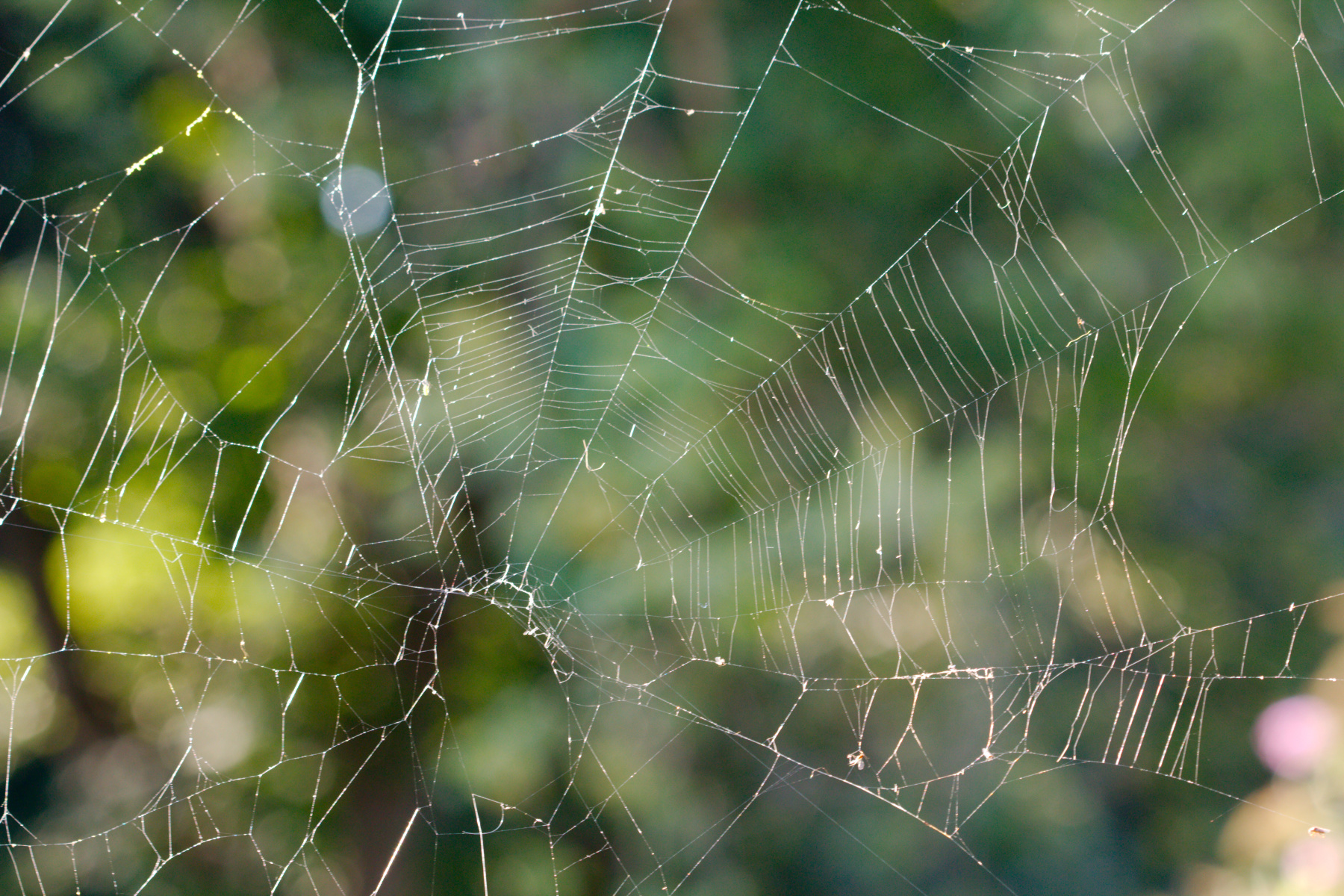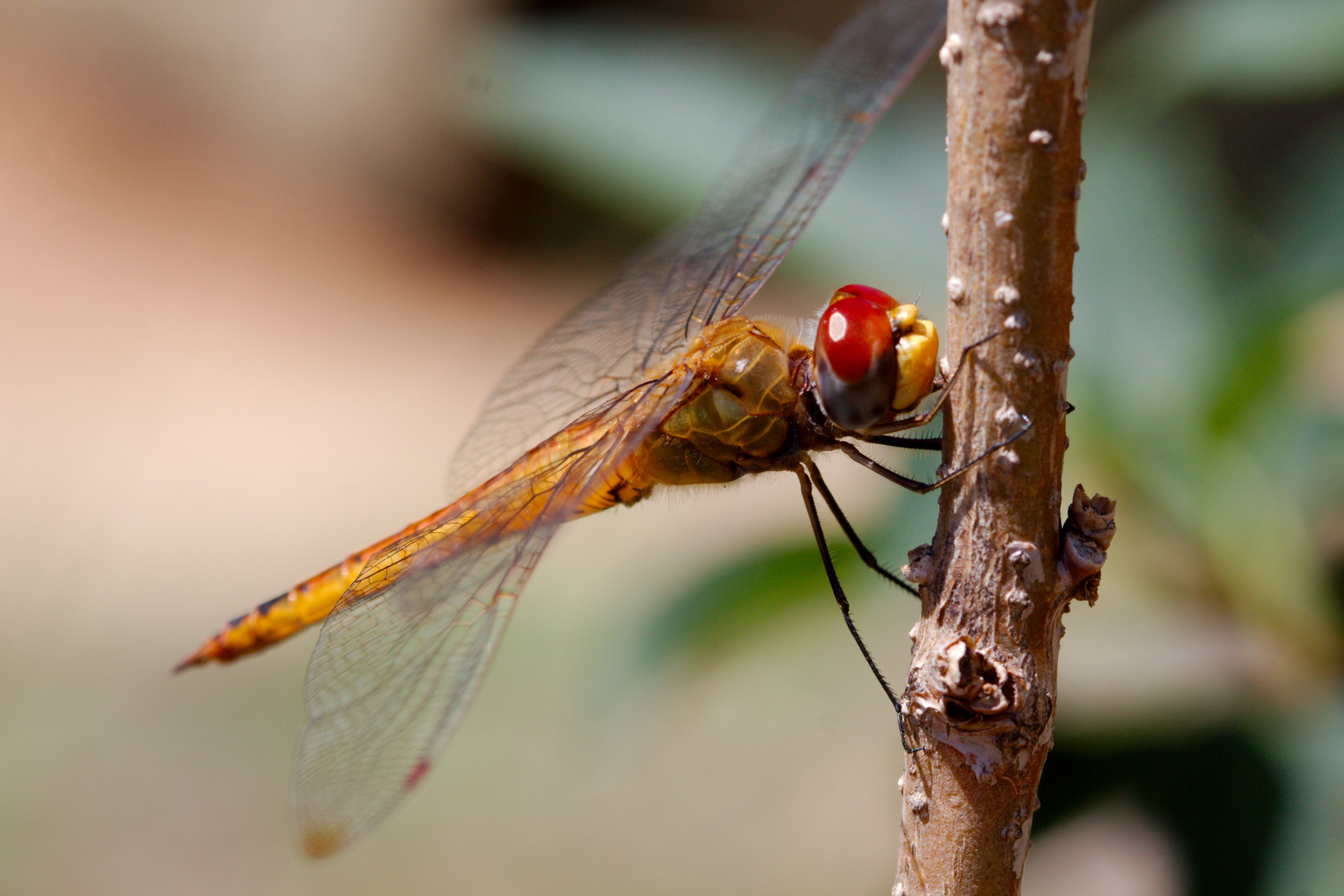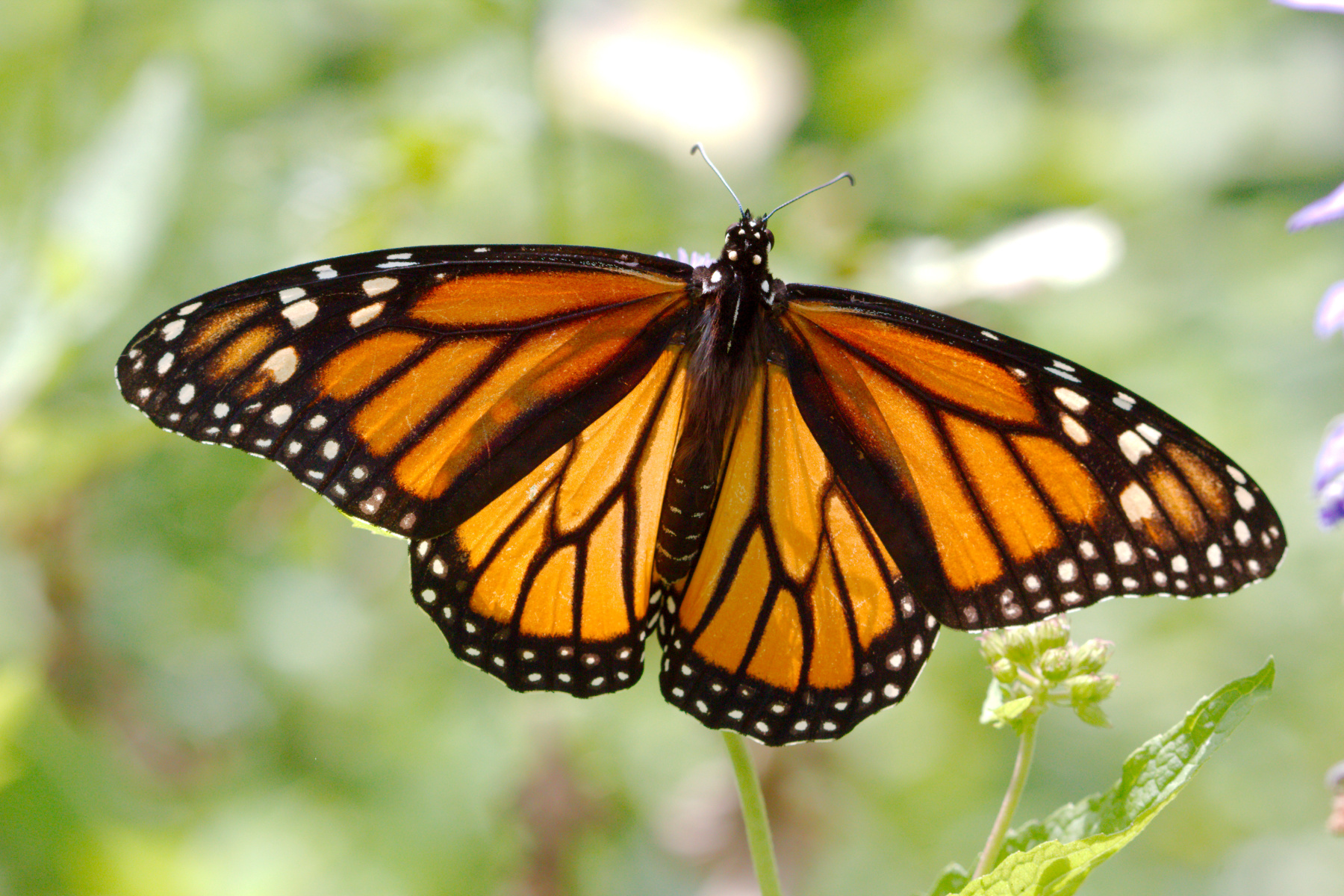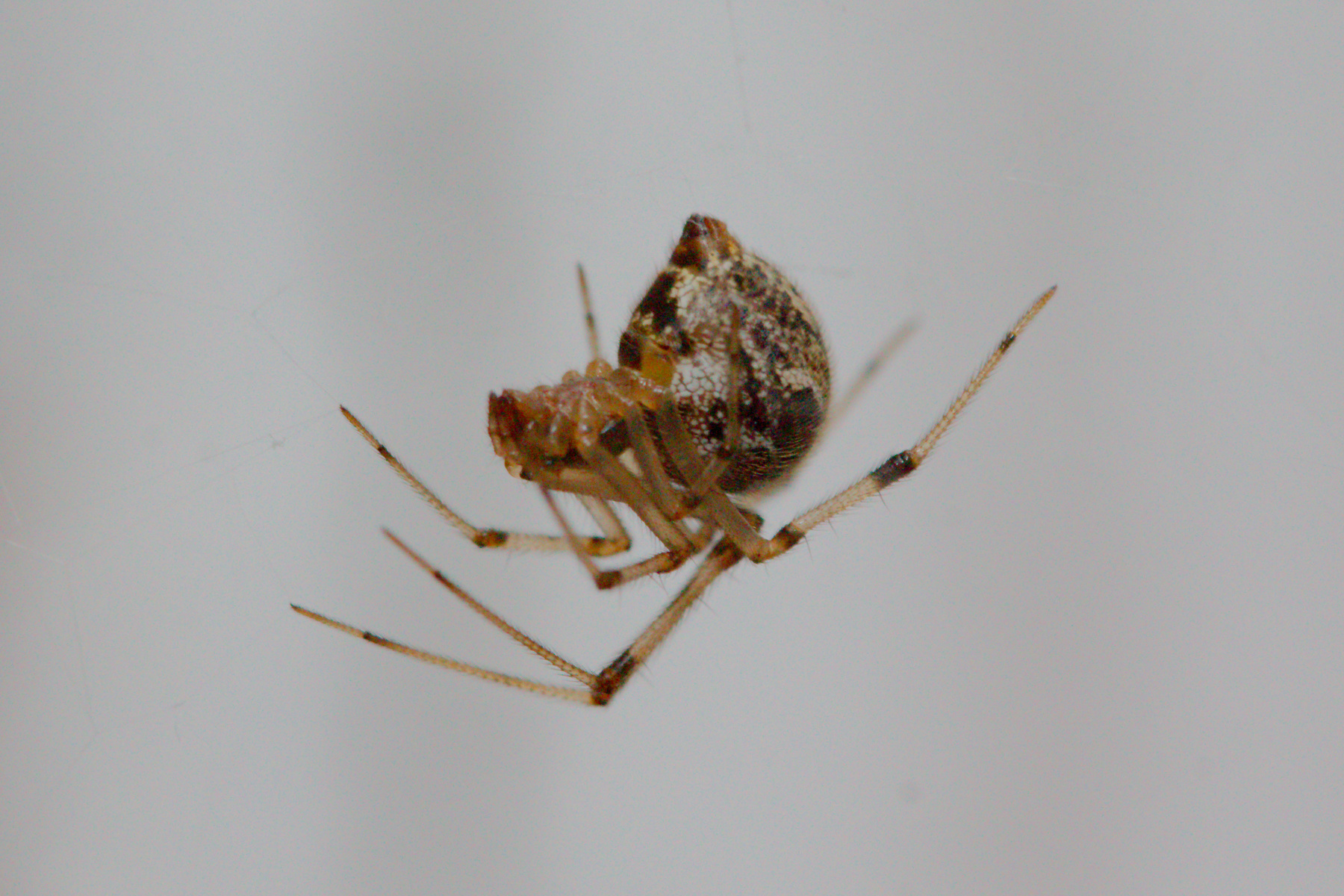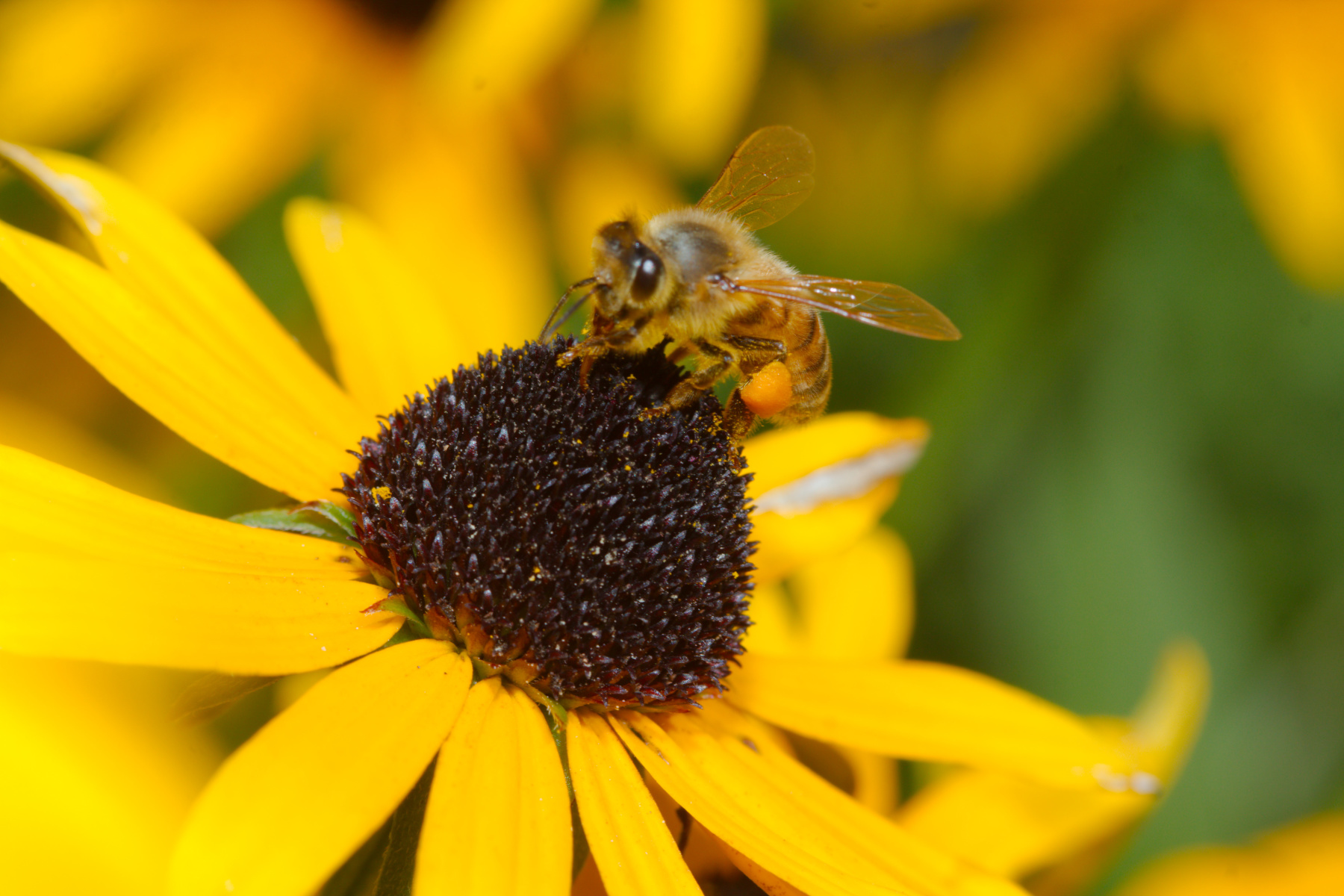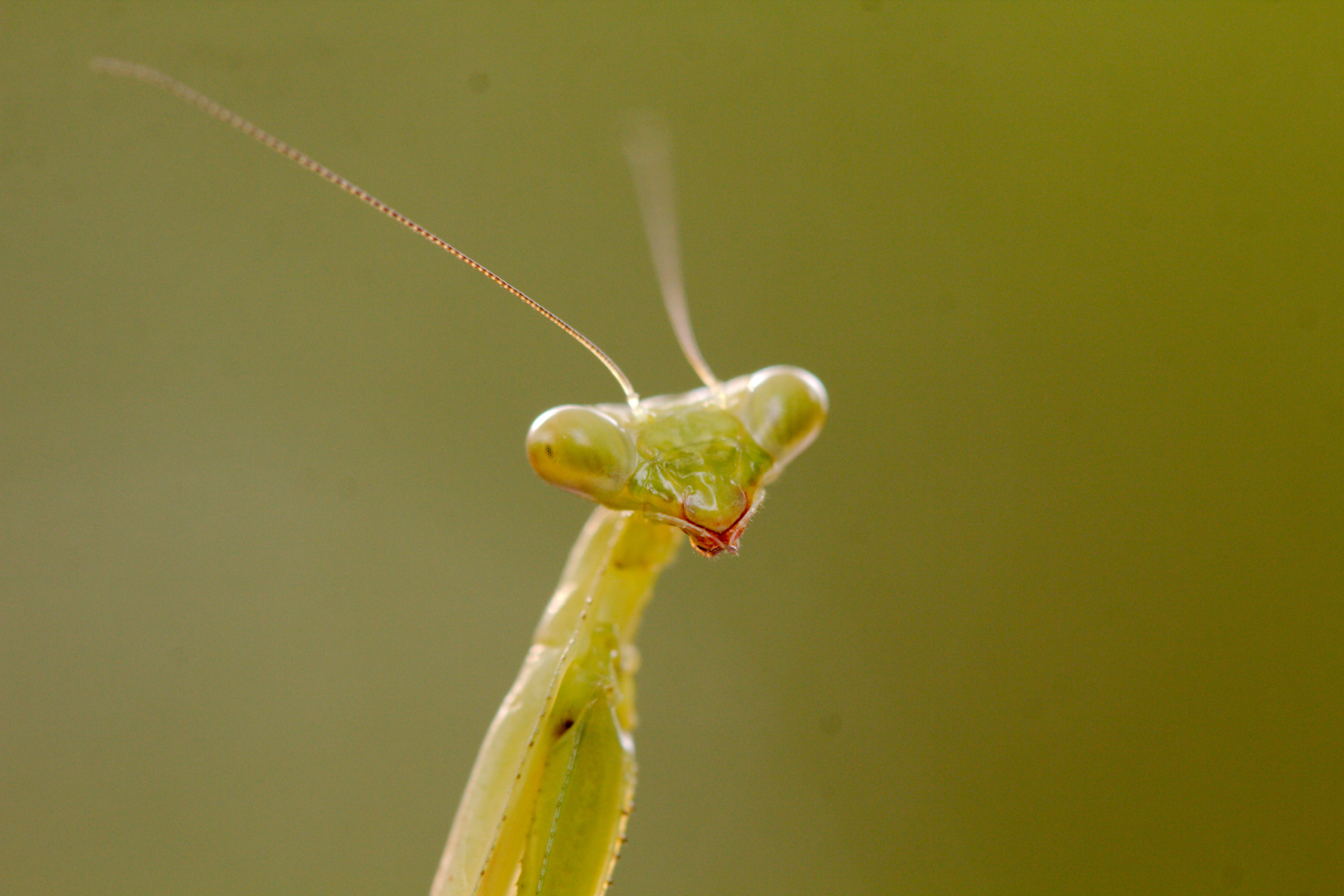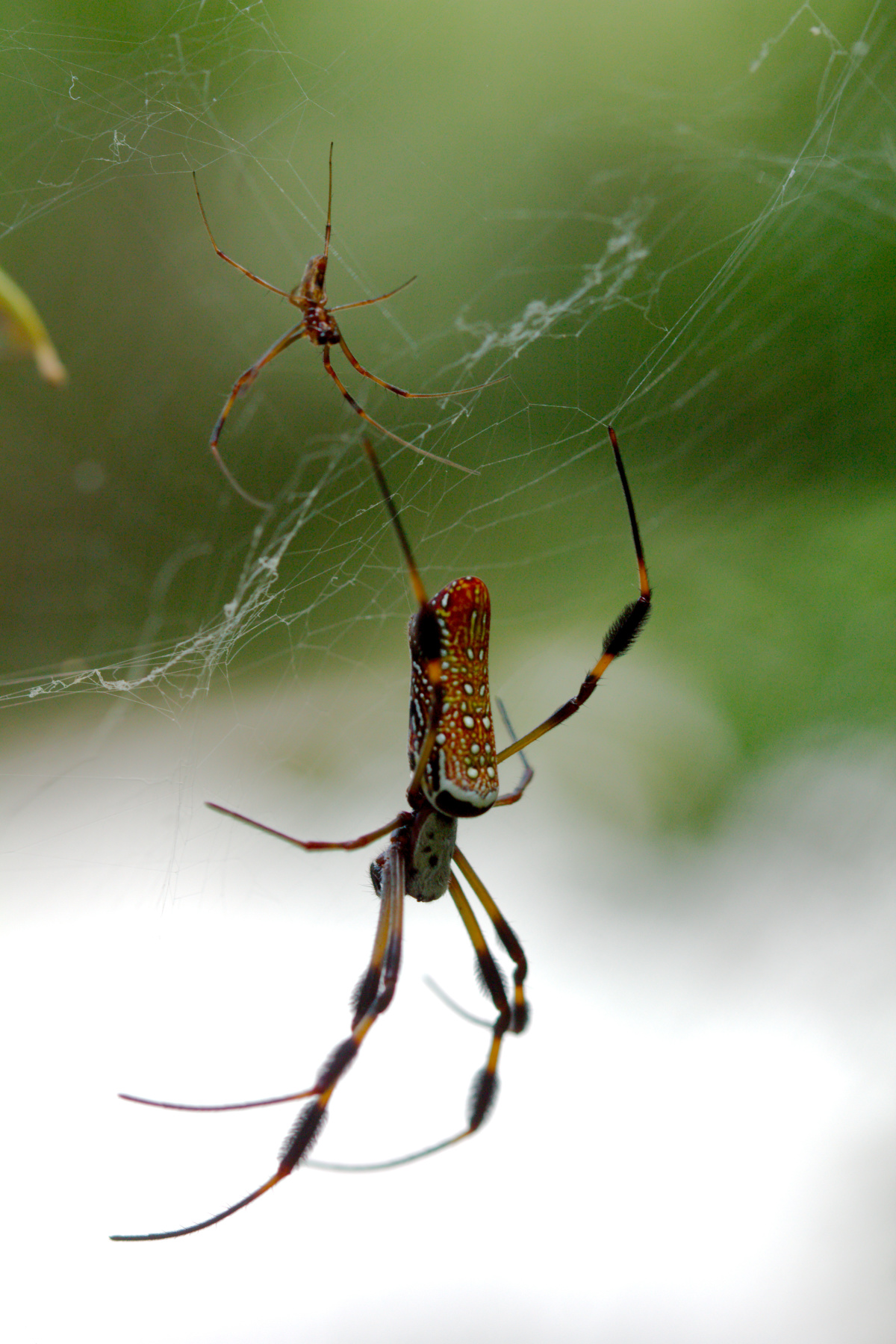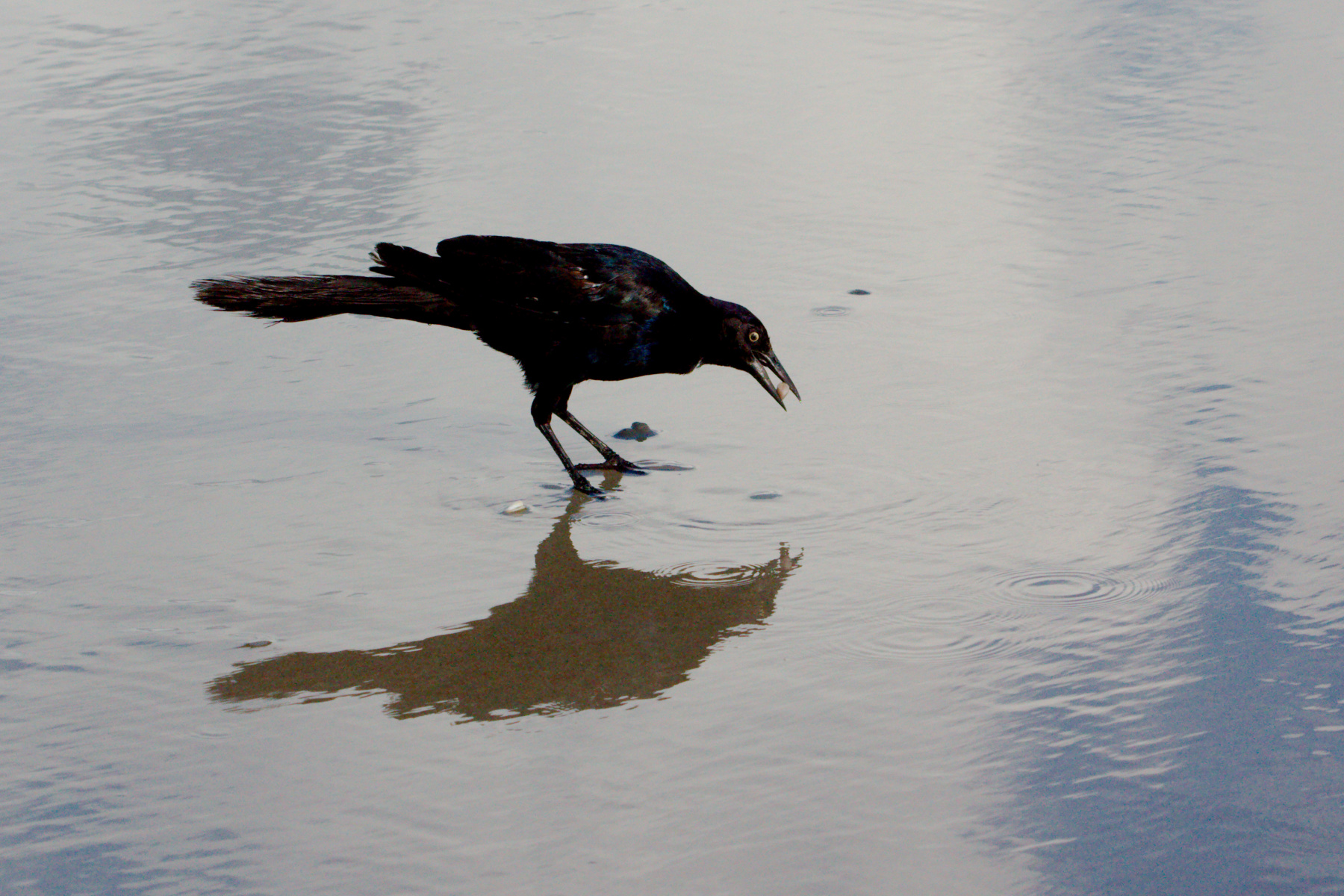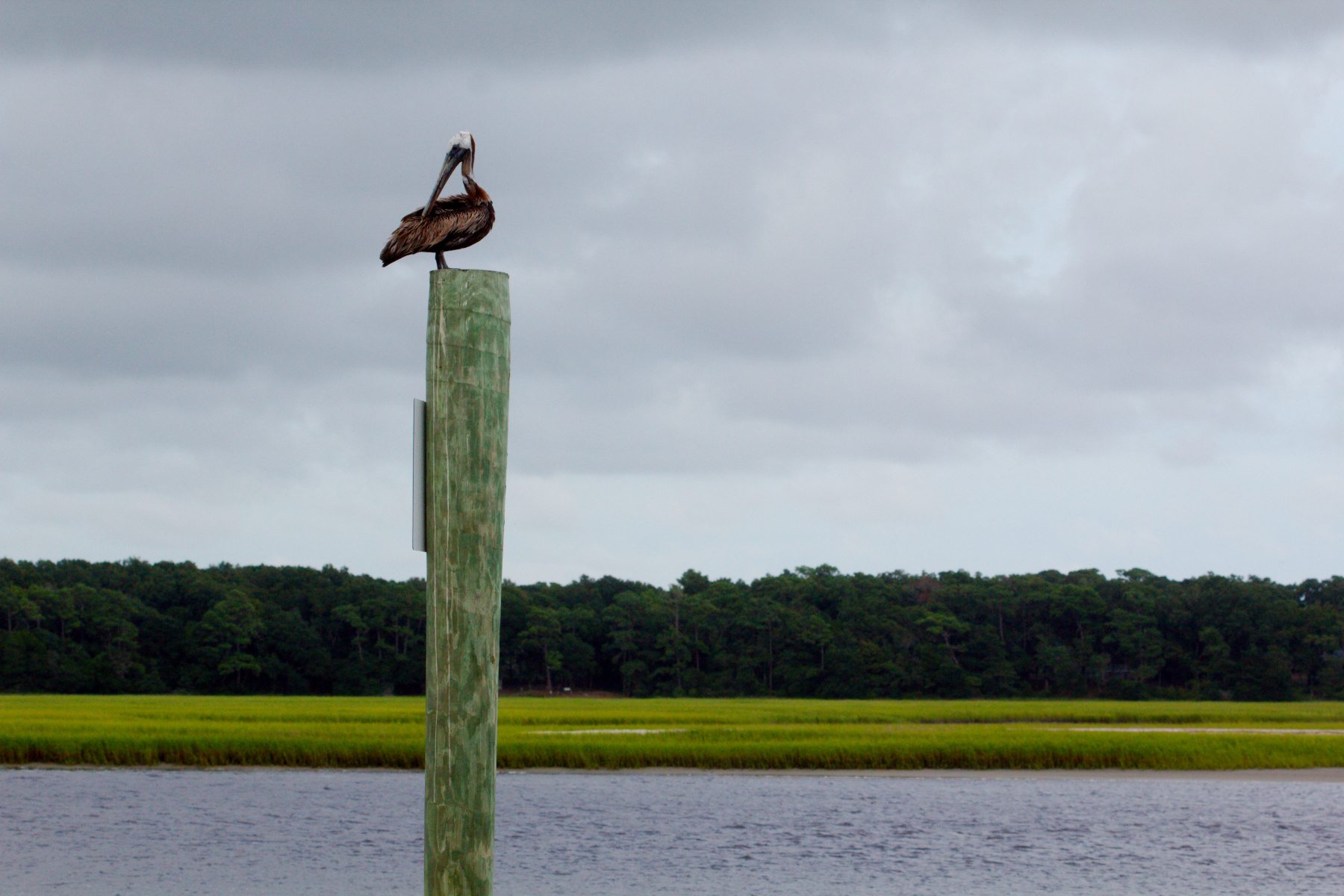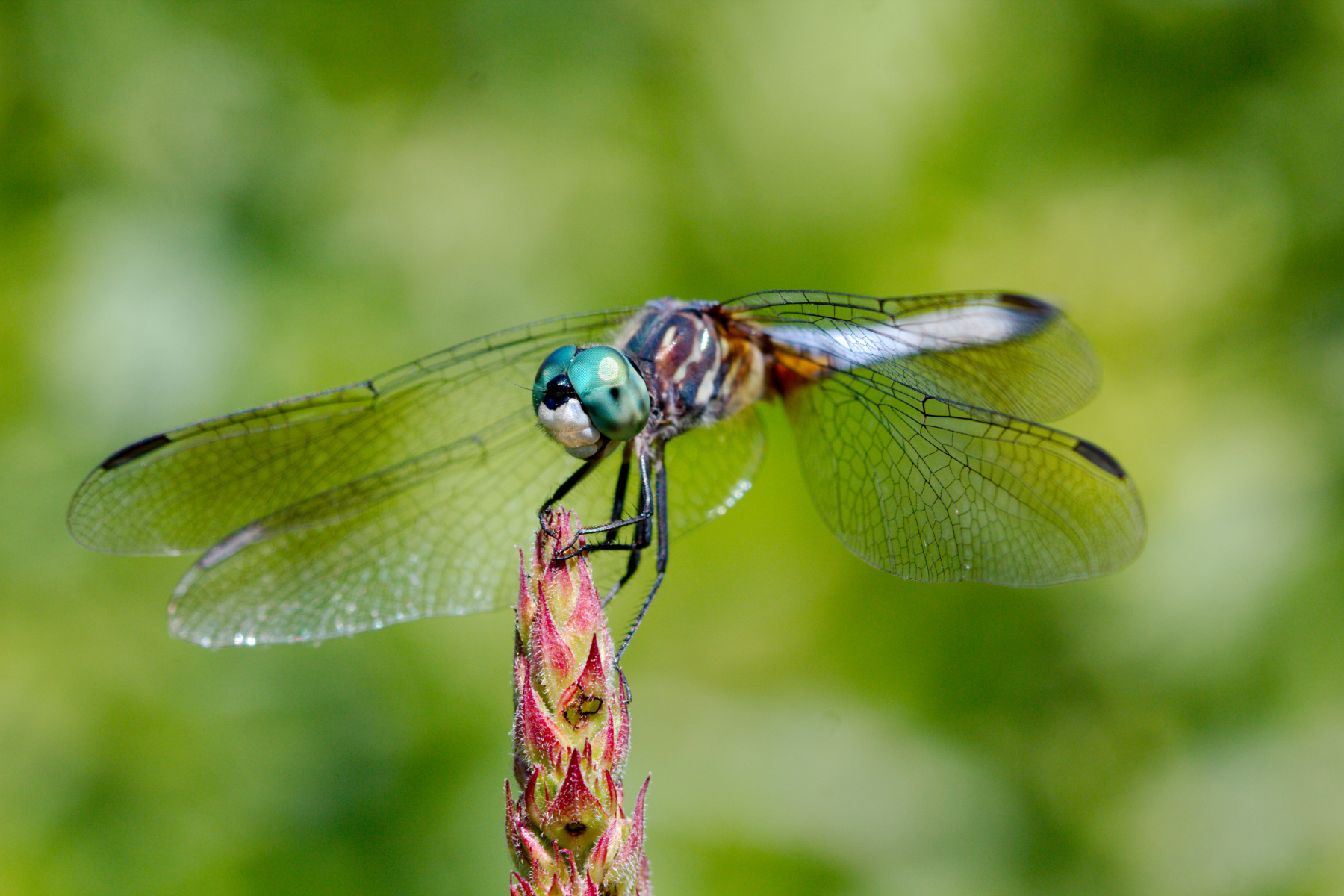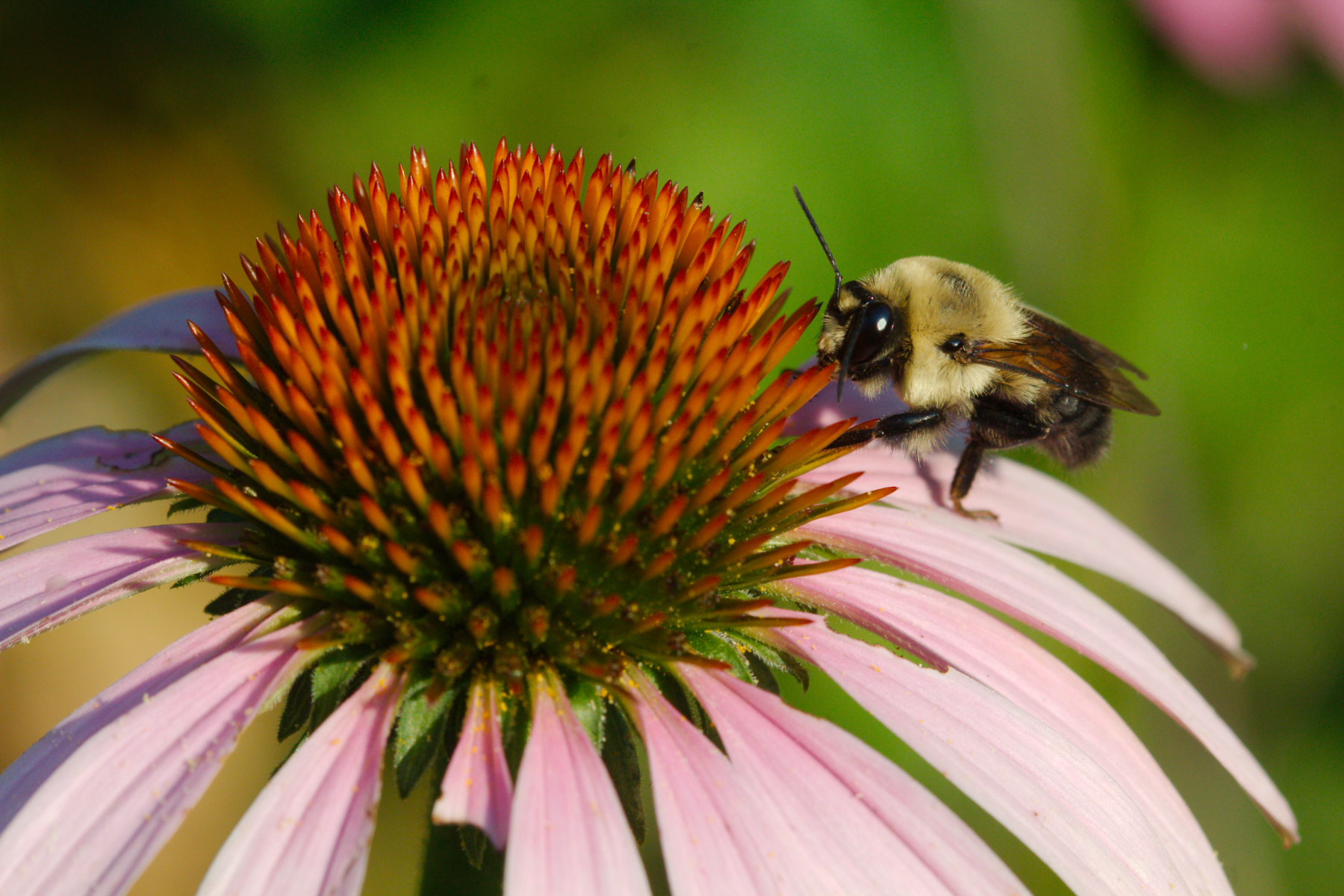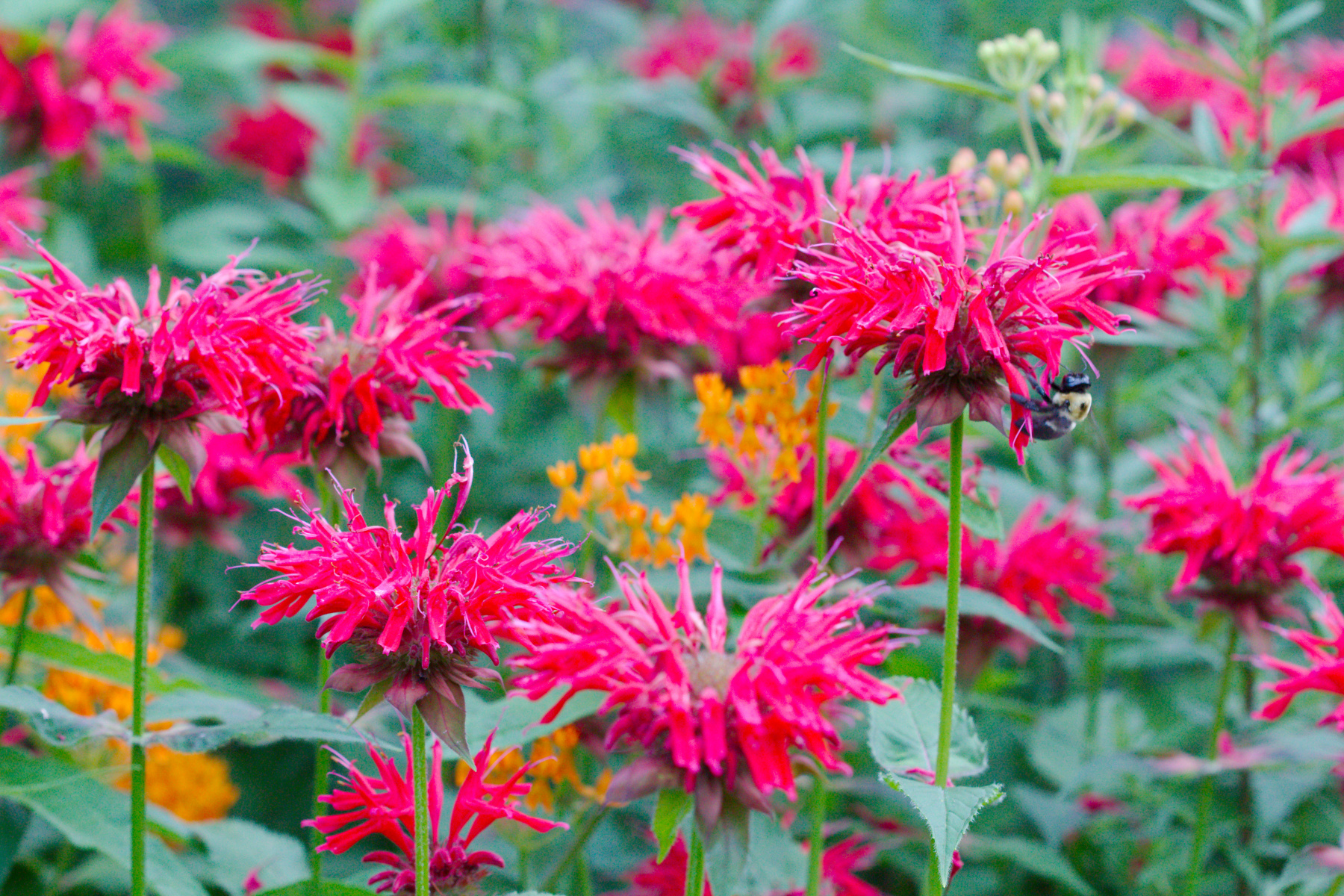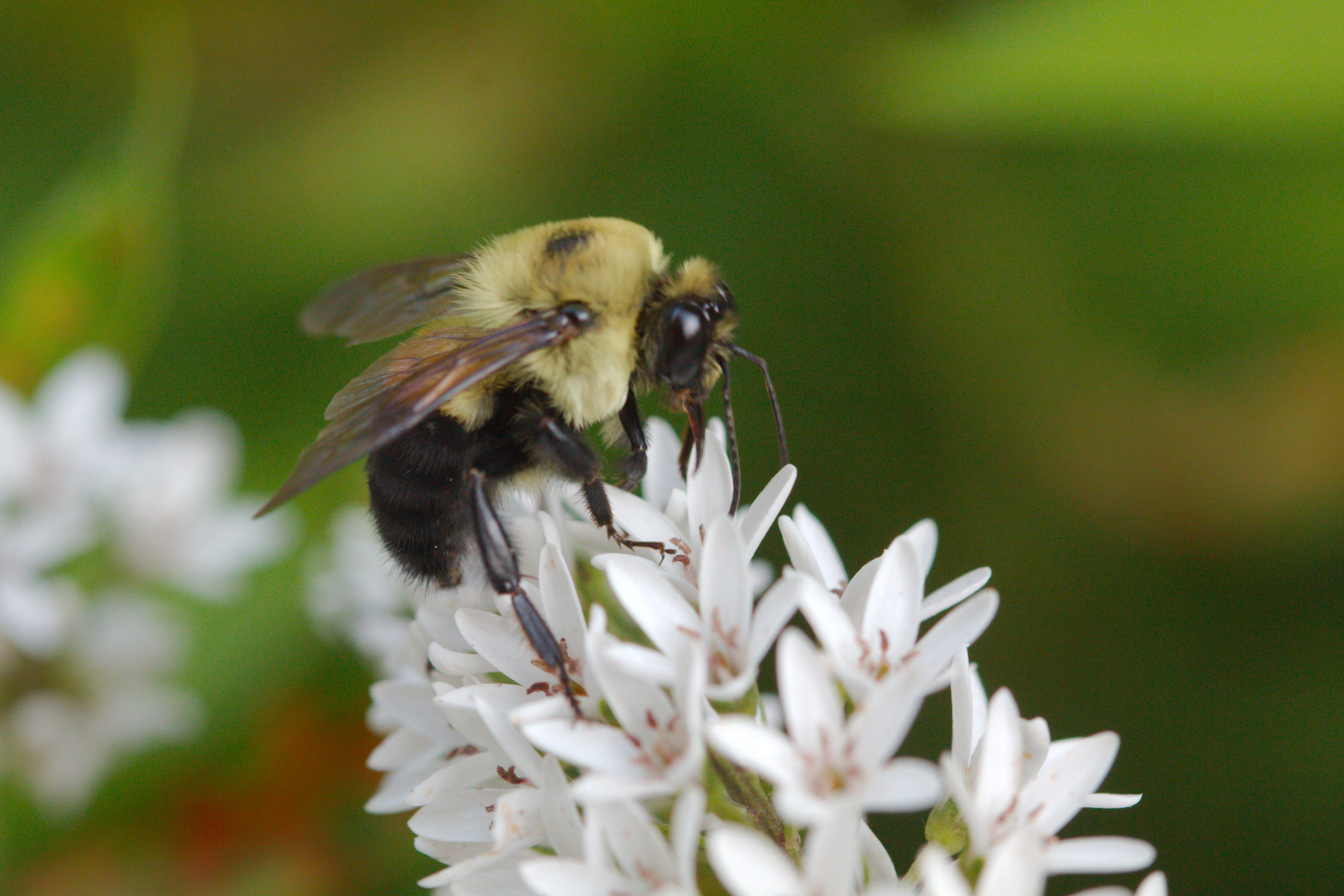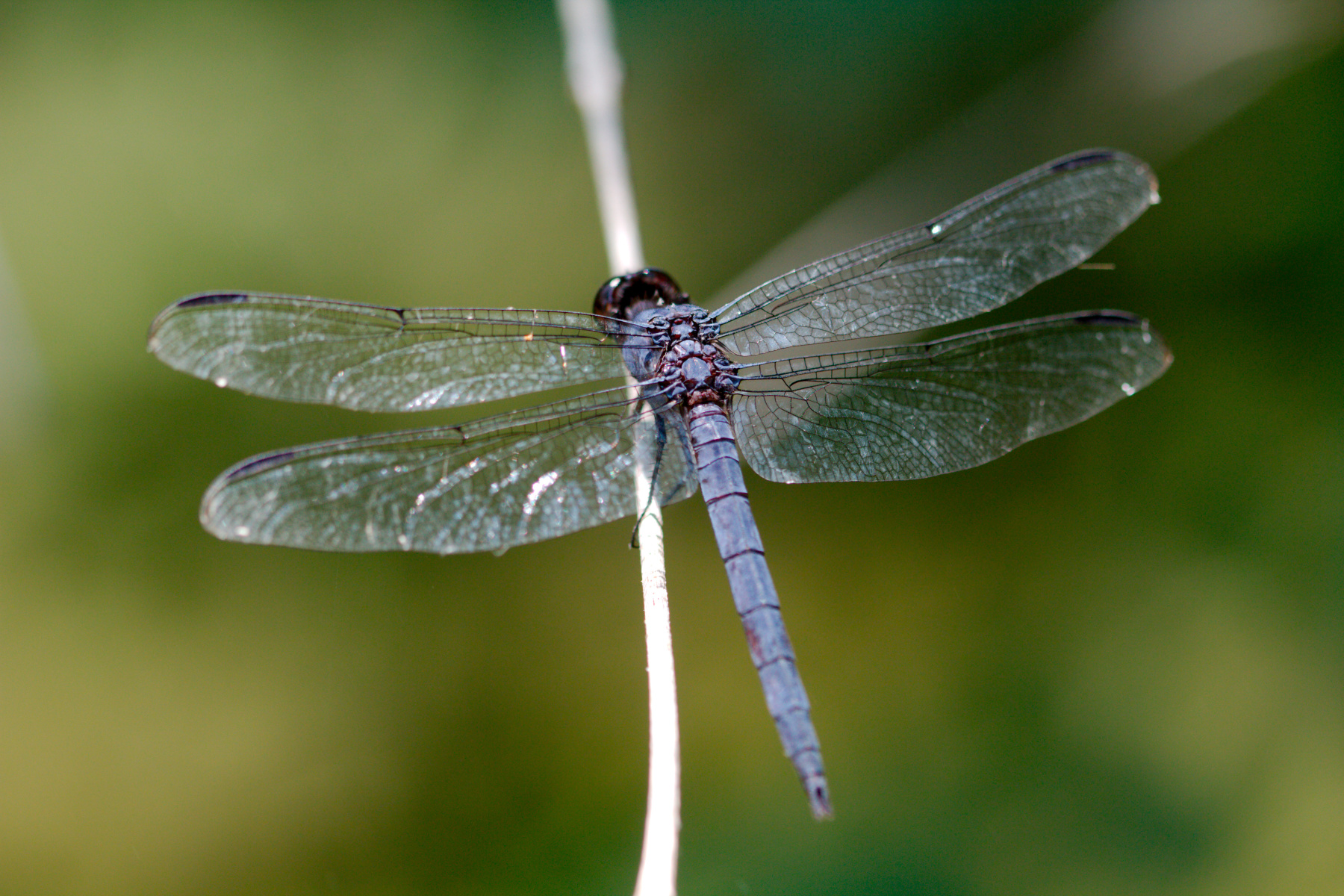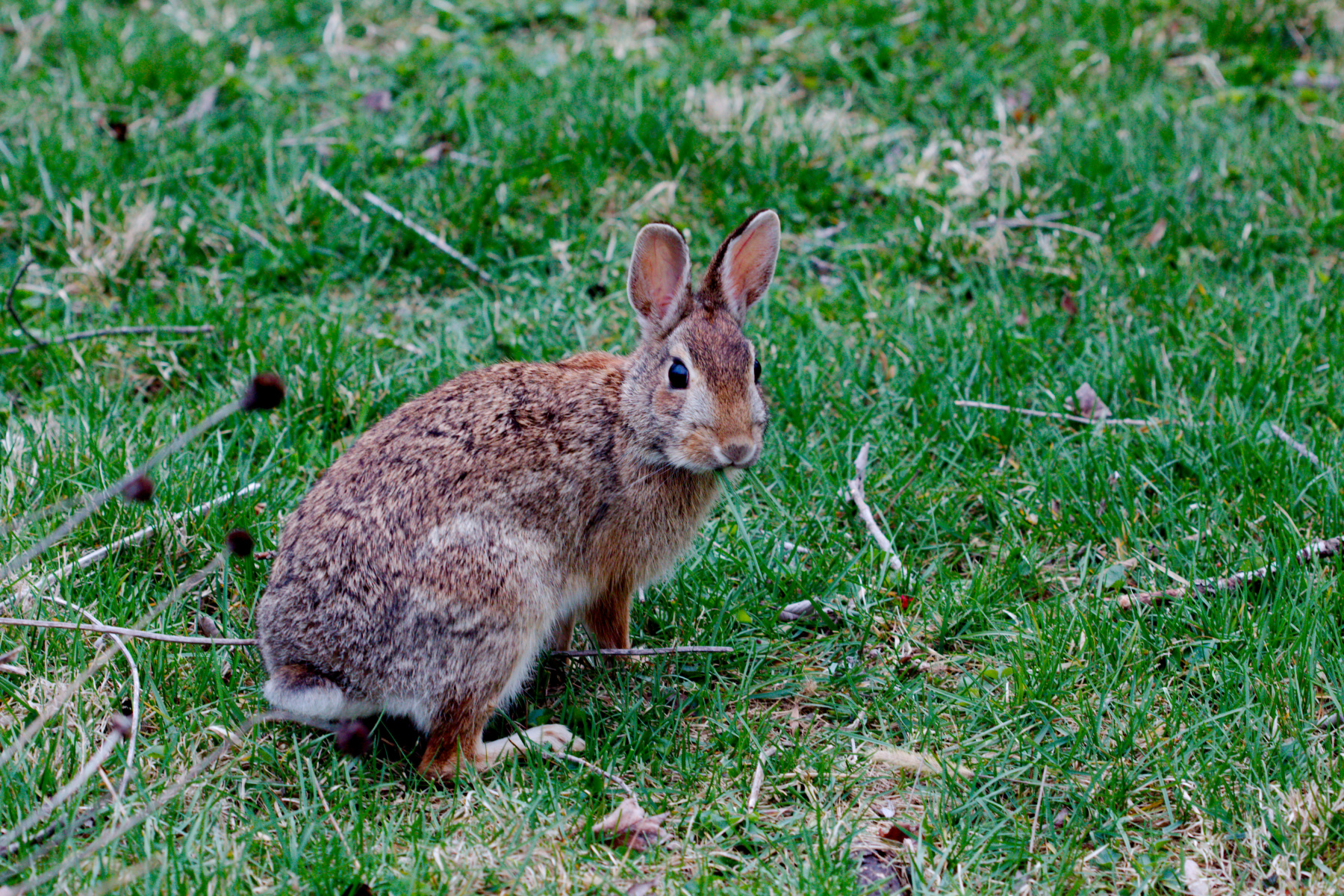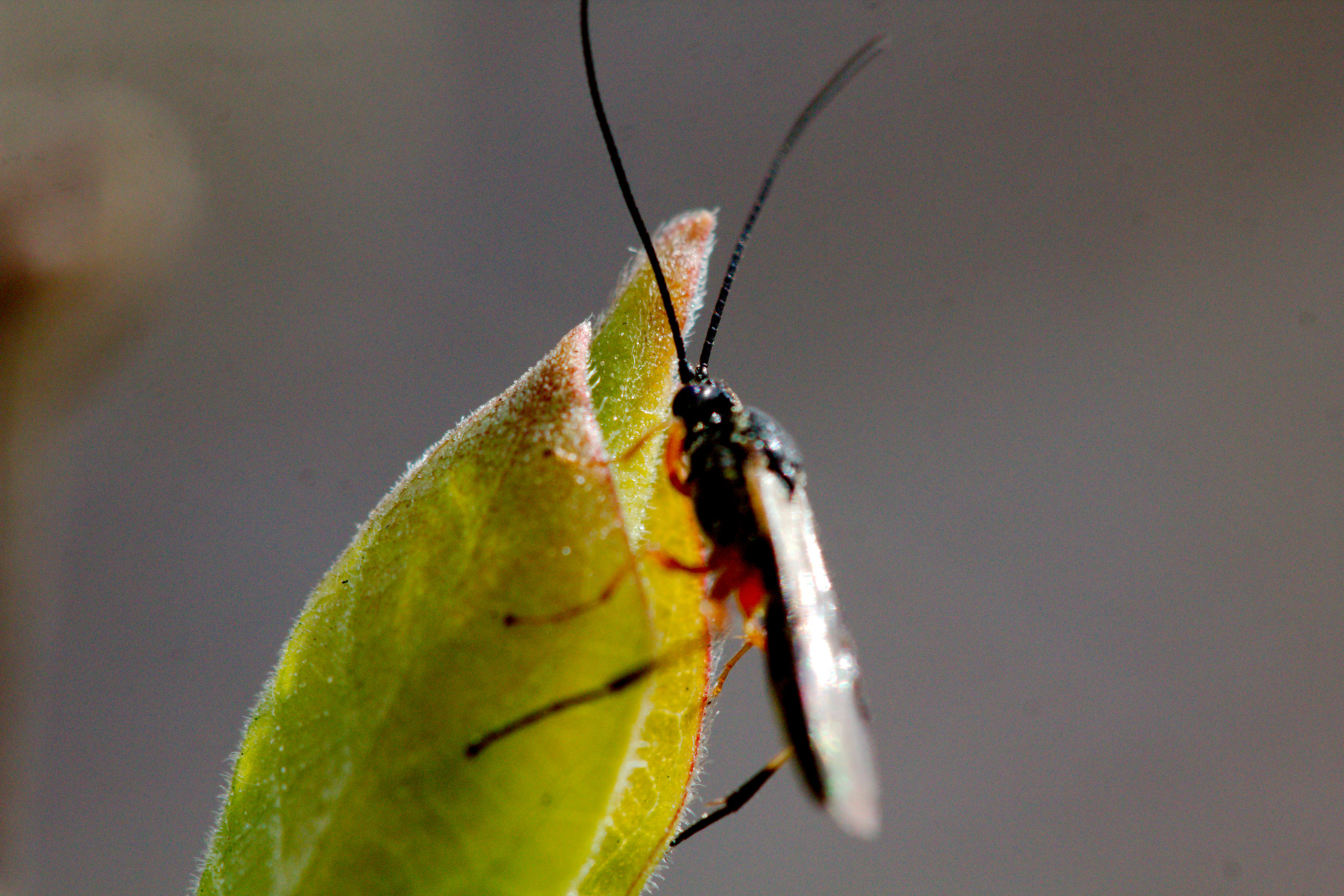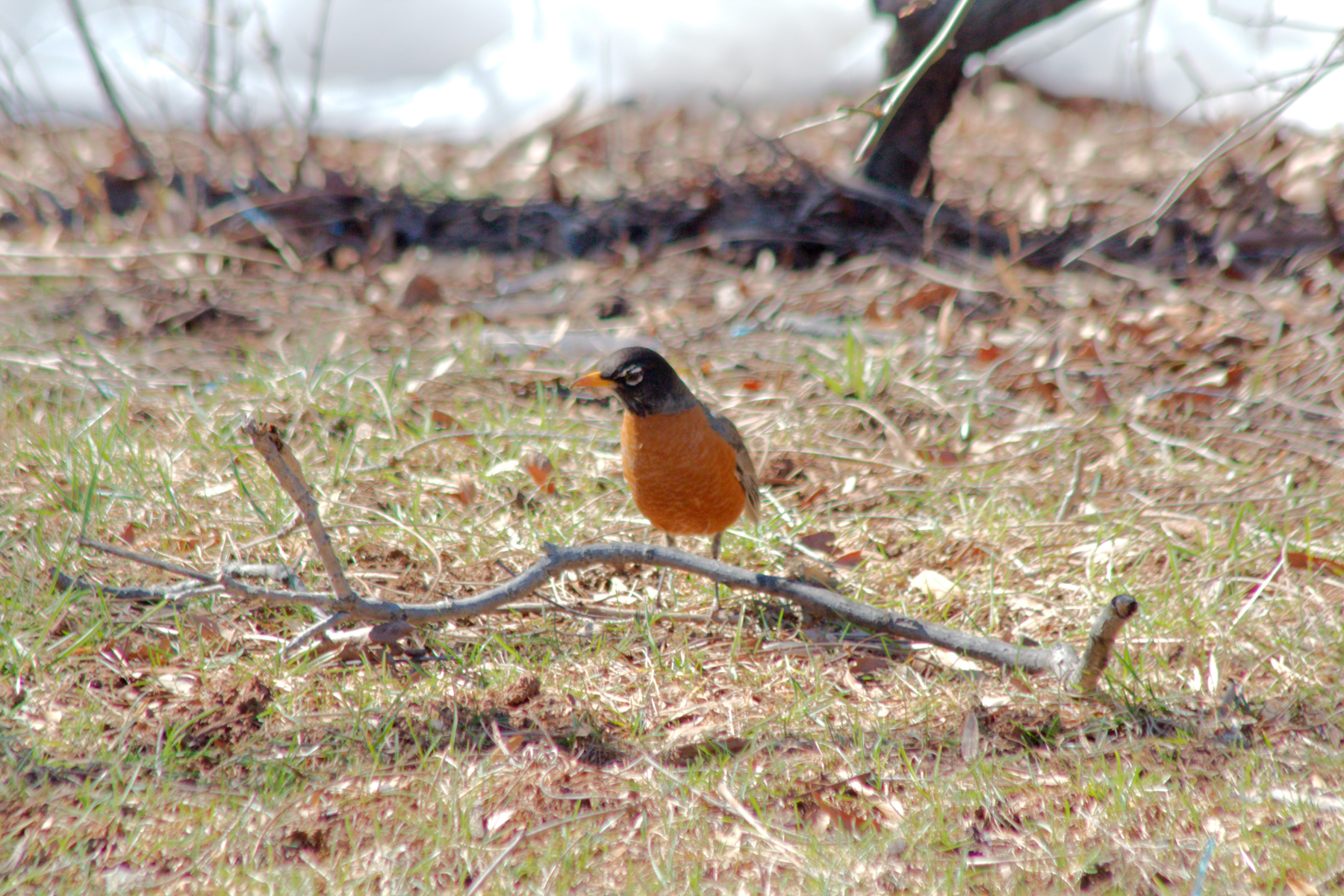
I went out to take pictures last this morning, taking a short break from work. I had expected to take pictures of flowers of one sort or another but I happened to see this greater bee fly (Bombylius major) and was able to get pretty close to it and got a reasonable photo. It’s a fairly distinctive looking fly, with a hairy body. Differentiating flies from bees is generally easy if you can count their wings. The order Diptera, which is the flies, is so named because they have two wings (i.e. a single pair) instead of the normal insect wing count of four (two pairs).
Creatures
Squirrel Chewing on Antlers
We have some antlers, collected over the years. A few of them Dorothy had hanging in her room for a while. Other have been out back on the side of the patio, along with some sea shells. We also have a beaver skull that showed up in our yard a while back. We have no idea where it came from, as it was very clean and dry, although relatively full and intact otherwise. This morning Cathy looked out the kitchen door and saw this squirrel chewing on the antlers. They’re a good source of calcium and that’s where they generally go in the wild as part of the cycle of life. It’s not the sharpest photo you’ll ever see, having been taken at a sharp angle through the regular glass of the kitchen door.
Goose Feather
Spring really feels like it’s here. The first half of March is too early to be too sure we’re completely done with winter and we’ve had big snow storms later than this, but it’s really feeling like spring this week and I think a lot of folks are hoping it’s for real. The pears are starting to bloom and I’ve seen cherries and magnolias in bloom. I went out early this afternoon and wandered around a bit looking for things to photograph and came across this feather, probably a Canada goose feather, down by a drainage pond near my building.
Oh, Deer
Cathy and I took a walk in the park this afternoon, going about four miles in all, including a wrong turn that added a half mile or so to it. I took a bit of a fall early on, when the somewhat muddy path and the moss covering it allowed my foot to move sideways suddenly. I ended up on my back, having rolled to protect my camera and I laid there long enough for Cathy to get a photo of me. We saw that the bald eagle nest is occupied again this year, which is nice to see, even if it was too far away to get a reasonable photo. During our off-trail bit, after taking the wrong path and trying to take a short cut back we happened to see two white-tailed deer (Odocoileus virginianus), including this one, quite close but through the undergrowth.
Another Hawk
I had an appointment with my ophthalmologist this afternoon so left work a little early to go to that. When I was done, I would have gone straight home but I had two errands to run first. I went to the Kentlands shopping center, first to the Giant and then to Lowe’s. As I was coming out of Giant I glanced up into the small sycamore tree by the parking lot and saw this hawk. I nonchalantly walked by and got my camera out of my trunk. I got one photo of the hawk as it flew off but it landed again only a few trees over. I don’t think this is as good a photo as yesterday’s hawk picture, but it’s not bad. I think this one is a sharp-shinned hawk (Accipiter striatus), the smaller cousin to yesterday’s Cooper’s.
Cooper’s Hawk (Accipiter cooperii)
I had a doctor’s appointment this morning and didn’t get to work until about 11:30. As I turned into the parking lot, I glanced to my right and sitting on a fallen tree limb was this hawk. I pulled into the space facing the bird but my camera was in the trunk and I knew if I opened my door, the bird would fly off. There is a small opening in the middle of the back seat that lets me get into the trunk, however, and I very quietly lowered my seat, reached through and got my camera. I took the first photo through the windscreen, which turned out reasonably well. I then lowered my window and leaned out and was able to get a few photos before he (or she) flew off into the woods. I believe it’s a Cooper’s hawk (Accipiter cooperii) rather than a sharp-shinned (Accipiter striatus), based on its size. Interestingly, both species are reverse size dimorphic, that is, the females are larger than the males.
Solomon at 34
We don’t actually know his precise birth (or hatch) date, but when we got him in October, 1986, we were told he was nine months old. So, we assume his birth date is January, 1986. That makes him 34 this month. Parrots live a good, long while and he wouldn’t be considered an old bird yet. Perhaps middle aged. He seems to be healthy enough. His beak and nails need trimming and he really doesn’t get as much exercise as would probably be good for him. Nevertheless, we’ve managed to keep him around for more than 33 years, so we must be doing something right. Solomon, despite the wisdom implied by his name, is not much of a sage. He says a few things and those a bit poorly. He can make a pretty good racket, when he wants to, however.
Solomon
It’s been a while since I’ve posted a photo of our prime pet, Solomon. Since I’ve just posted photos of Cathy and of myself, I thought I’d round out the collection. If Dorothy were home I’d post a photo of her, but she’s not (but will be soon, if all goes to plan). Solomon will be 34 years old in January. Although he was hatched in California, he spent most of his first two years in Juneau, Alaska. From there he flew (with some help) to Chicago, where he lived with Cathy’s brother. After our trip of 1988, he returned to us on the east coast and has been here ever since. He lived in the kitchen in our first house and then in the family room here until he moved to the breakfast room a couple years ago. It’s great unless you want to have a phone conversation in the kitchen, when he really gets animated and makes it pretty difficult.
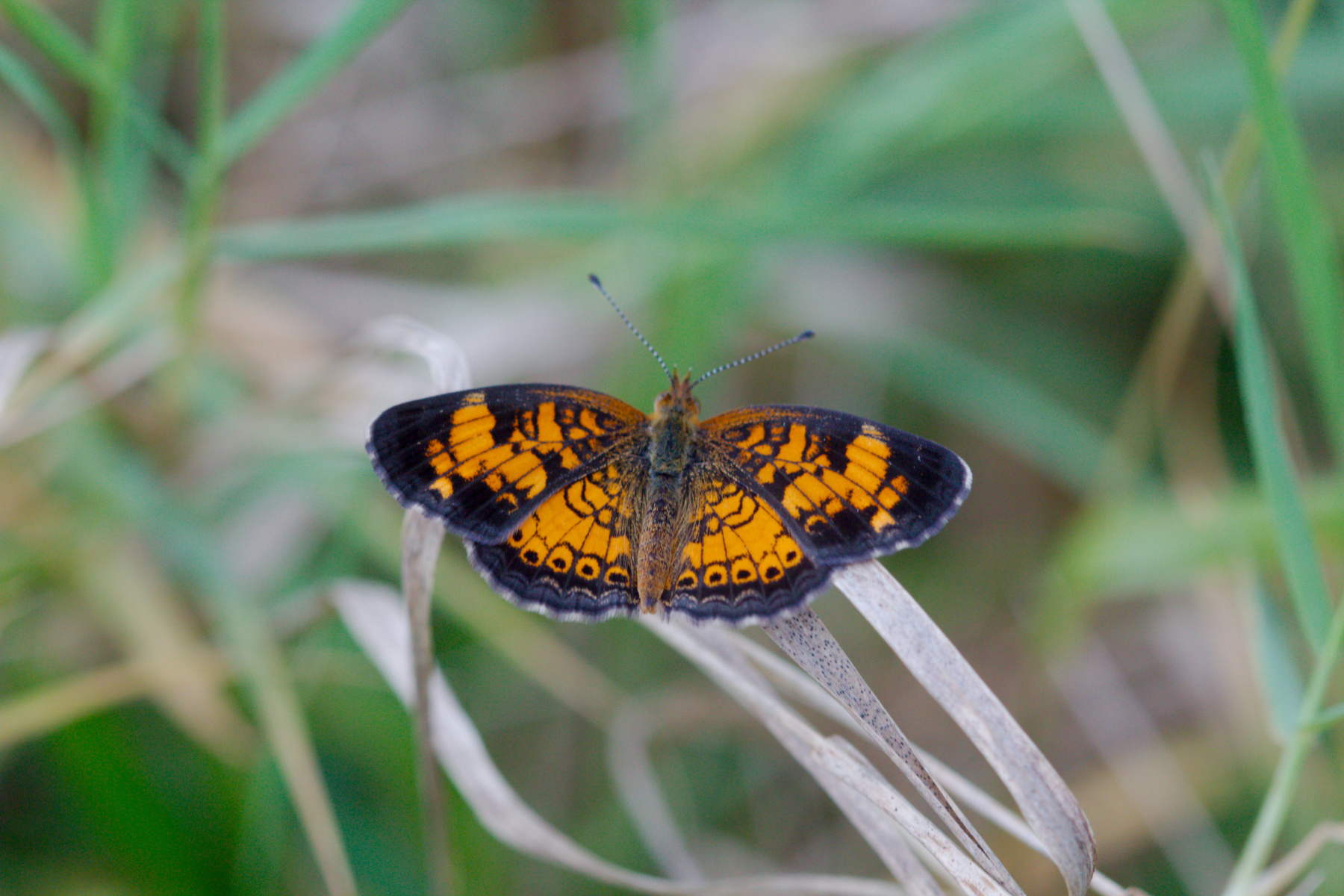
Phyciodes tharos (Pearl Crescent)
I sent outside for a little while today and took some pictures of butterflies. I was down near the storm management pond next to my building and saw pearl crescents (Phyciodes tharos) as seen here as well as cabbage whites (Pieris rapae). There were also bees around, but not so many as there were only a few weeks ago. Getting good photographs of butterflies is challenging but it’s something I enjoy. This is a mid-sized butterfly, considerably smaller than the swallowtails or monarch but larger then the blue, featured recently. They are fairly common and easily spotted but as with most butterflies, difficult to get too close to.
Eupeodes americanus (American Hover Fly)
Cathy and I worked in the yard this afternoon. As I’ve mentioned before, there’s a lot to be done in the yard but I think we’ve made progress, at least. I took a break and took some pictures in the back yard. There are some bracket fungi on the ground above where there used to be a silver maple. They come up every year as the roots rot. I also took some pictures of some butterflies on the flowers around the patio. Then I saw this American hover fly (Eupeodes americanus) on the begonias growing in a pot on the patio. I was able to get some pretty decent photos of it as it moved from flower to flower.
Cupido comyntas (Eastern Tailed-Blue)
I went outside today and walked around a bit in the lot next to my office. The weather was fine and it was nice to be out in the sunshine. I startled a belted kingfisher (Megaceryle alcyon) as I walked towards a vernal drainage pond. It’s often completely dry by this time of year but it had more water in it than in previous years and it hasn’t all evaporated yet. Above it, I was able to get close enough to get a pretty good photograph of this eastern tailed-blue (Cupido comyntas). They are pretty common but easily missed, as they are fairly small and flit around near the ground. They’re worth looking out for, I think.
Blow Fly
I took pictures of insects on aster flowers this evening. There was a bumble bee covered with little white dots that I’m pretty sure were eggs of some kind and didn’t bode well for the little critter. There was also a beautiful, metallic green, sweat bee (family Halictidae) and I got a picture of it as it lifted off the flower, which would have been amazing if it had been in better focus. The light was relatively low and I was using a flash with a white reflector for these pictures, which helped considerably. I also had a 25mm extension tube behind my 100mm macro lens, which helped me get that much closer.
Stink Bug
I happened to look out my window this afternoon and saw this stink bug on the outside of the glass. Actually, it’s not unusual to see them inside the building. My guess is that this is a brown marmorated stink bug (Halyomorpha halys) but I’m not entirely sure and I’m not going to bother looking harder at it. The banded antennae are distinctive, along with the mottled color, but again, that’s just a guess and it’s good enough for me. I also took some pictures this evening of a hardy begonia that’s growing outside our front door. Those are probably prettier than this, being pink and yellow instead of tan (and buggy). But they weren’t as good as I’d like and I can always try to get better pictures, when the light is a bit stronger.
Insects
I went on a short outing this afternoon to the Agricultural Farm Park today and spent a little time wandering around the Master Gardener’s display garden. Mostly I photographed insects (and a few flowers). It was a pretty productive outing as far as insect photos go.
- Danaus plexippus (Monarch) Caterpillar
- Murgantia histrionica (Harlequin Bug)
- Papilio polyxenes asterius (Black Swallowtail)
- Euptoieta claudia (Variegated Fritillary)
- Allograpta obliqua (Common Oblique Syrphid)
- Diabrotica undecimpunctata (Spotted Cucumber Beetle)
I’m particularly happy with the oblique syrphid fly, as that’s the first one I’ve photographed. The black swallowtail is one we don’t see nearly as often as the eastern tiger swallowtail. I’ve seen harlequin bugs on occasion but not all that often. The same is true of the cucumber beetle.
Harmonia axyridis (Asian Lady Beetle)
This is the “many-named ladybird”. It has been called ‘multicolored’ (or ‘multicoloured’ in Britain), ‘multivariate’, ‘southern’, ‘Japanese’, ‘Asian’, ‘Halloween’, ‘harlequin’ and ‘pumpkin’ ladybird/ladybug/ladybeetle. I’m going with the simple ‘Asian’ and sticking to beetle, because it’s in the order Coleoptera. It’s a largish lady beetle and this particular species is immensely variable. The “standard” is red to red-orange with 18 spots, but as you can see, this one only has 12 (six on each side). The background ranges from a slightly orangy yellow to red and there are even versions with red spots on a black background.
Carpenter Ant (Camponotus castaneus)
I came across this carpenter ant (Camponotus castaneus) in the yard today. I wasn’t sure I’d be able to get an identification on this ant. BugGuide.net says, about carpenter ants (Genus Camponotus), “This is one of the most species-rich ant genera, with perhaps 1000 species World-wide.” Nevertheless, it was identified. These are pests, of course, if they get into structures or valuable trees but they are fairly ubiquitous on almost the entire globe (only excluding the polar regions). They’re pretty things, like most insects, however.
Bombus impatiens (Common Eastern Bumble Bee)
Who doesn’t love the humble bumble bee? They are everywhere and like many of us, they are not particularly flashy or flamboyant. Nevertheless, they busily go about their business. I like them quite a bit and enjoy watching them move from flower to flower. In this case, a common eastern bumble bee (Bombus impatiens) is on wingstem, also known as yellow ironweed (Verbesina alternifolia). There were also honey bees (Apis mellifera) and ailanthus webworm moths (Atteva aurea) on the same group of flowers. It had become quite hot again, with temperatures in the low 90s, and I’m starting to look forward to autumn.
Cosmopepla lintneriana (Twice-stabbed Stink Bug)
I was out photographing flowers this evening. The light was fading and I didn’t think I could realistically get any photos of bees, wasps, or other flying insects. I was down on the ground to get some pictures of obedient plant, Physostegia virginiana, and I happened to notice this little fellow. I went in and got my flash, so I could get pictures that were worth something and I’m pretty happy with the results. This little bug (a true bug in the Heteroptera suborder) is only two or three millimeters long and if I hadn’t been down on the ground and very close, I never would have seen it. It is a twice-stabbed stink bug, Cosmopepla lintneriana. This one happens to be a nymph (an immature) and when adult will be mostly black with two red patches (the two “stab” marks of its common name).
Aphids and Lady Beetle Larva
I mentioned the aphids on the Asclepias curassavica (scarlet milkweed) when I posted the photo of the large milkweed bug a few days ago. Here’s a picture of the aphids. It was fairly dark when I took this (7:45 in the evening) and I used a flash to light them, which allowed me to get reasonable depth of field. I used a flashlight give me enough light to focus, with the camera on a tripod (which I definitely should use more often). As I was taking the pictures, I realized the aphids were not alone. There is a larva of a lady beetle of some sort (probably an Asian lady beetle, Harmonia axyridis), feeding on the aphids. Unfortunately, there are too many aphids for this lone predator, and I’m going to need to take care of them myself.
Paper Wasp
There are a few paper wasps that are very difficult to distinguish and some that are impossible without examining them at the microscopic level. A number of them are quite variable, as well, adding to the difficulty. I think this is a northern paper wasp (Polistes fuscatus) but I’m nowhere near sure. It’s a beautiful creature, whatever it is. This was taken with my 100mm lens with the addition of a 25mm extension tube in bright evening sunlight. As you can see, I was able to get fairly close and I’m pleased by how sharp this turned out. You might also notice the aphids on the underside of the leaf the wasp is on. I took some photos of those, as well, but haven’t identified them yet (beyond the generic “aphid”).