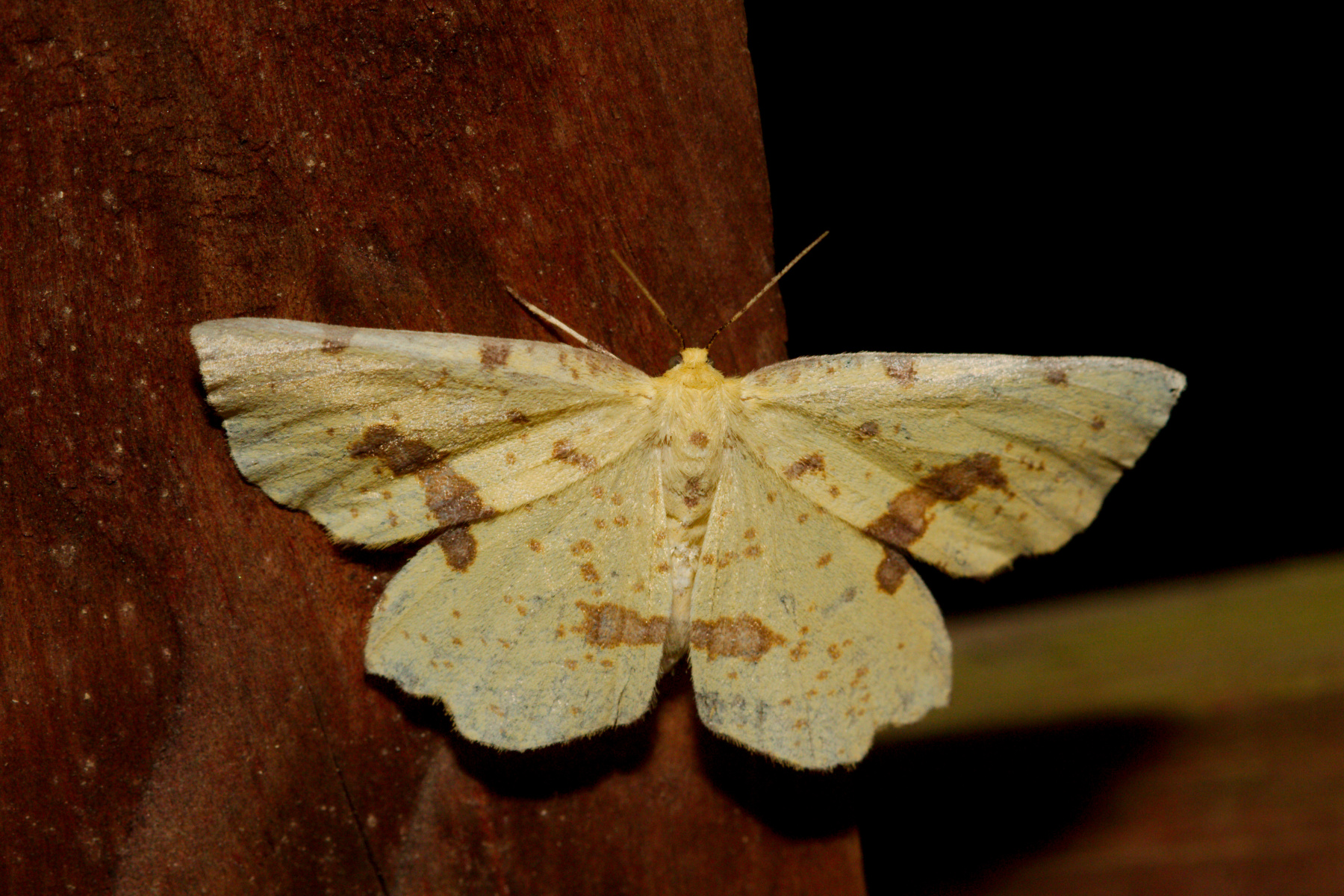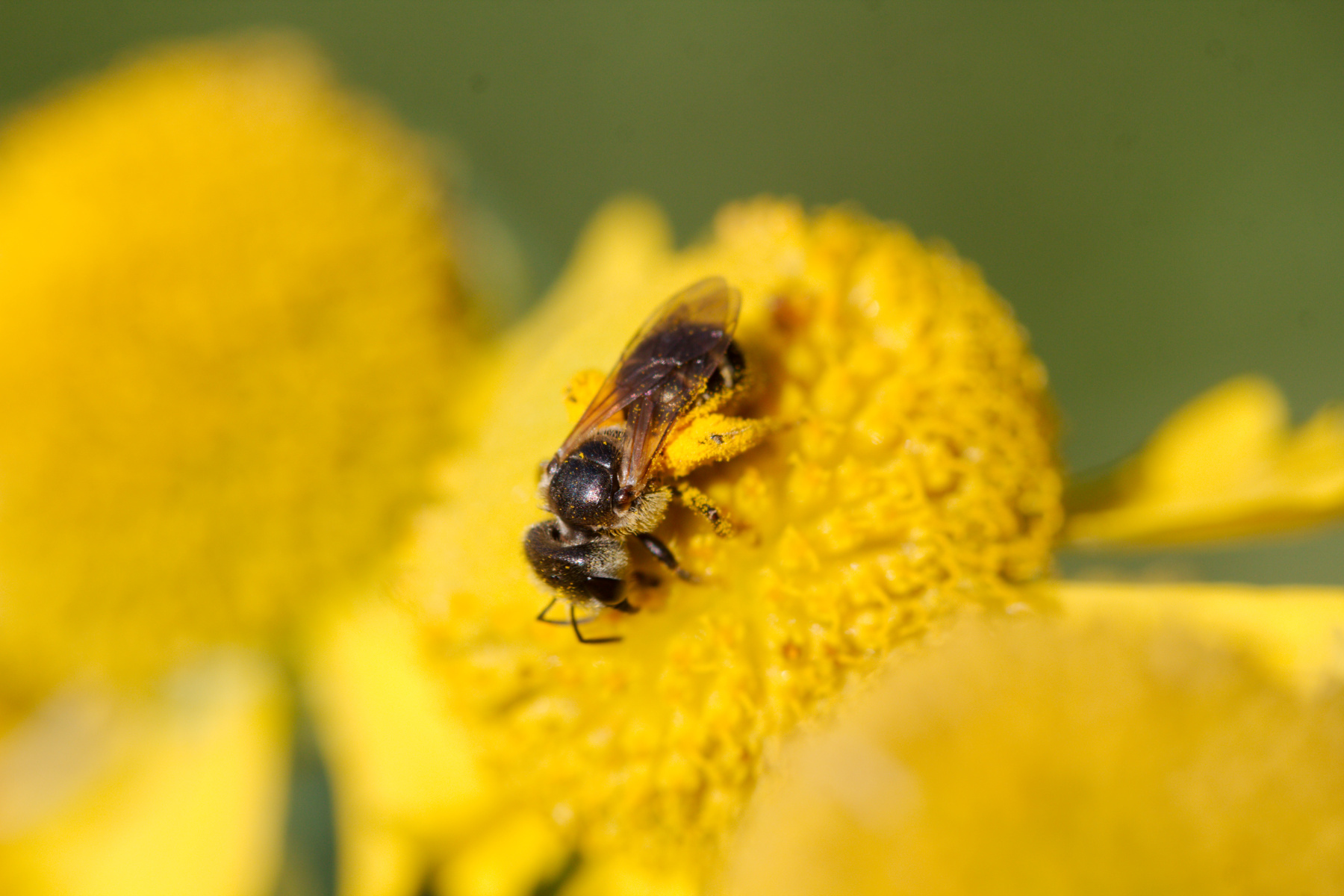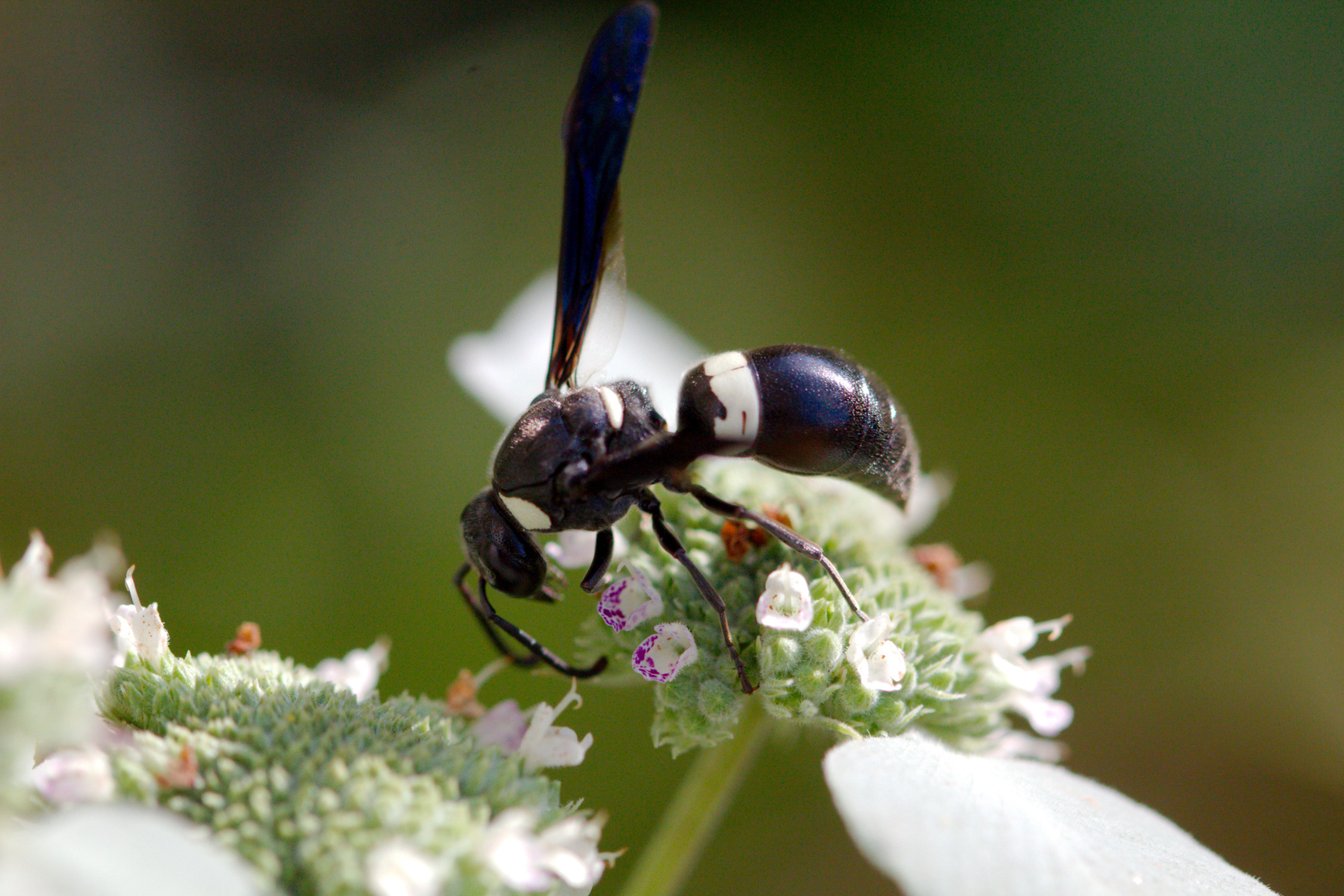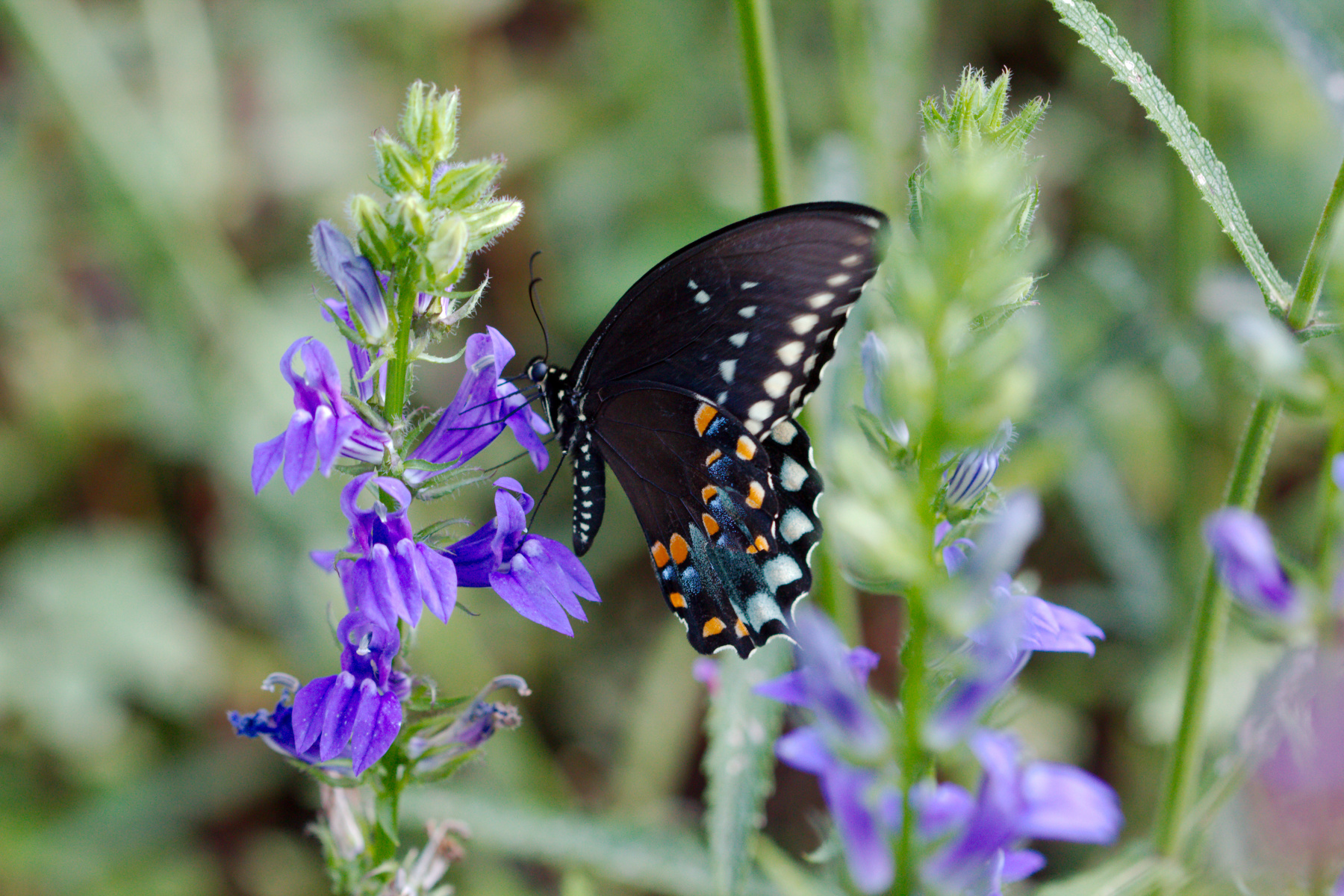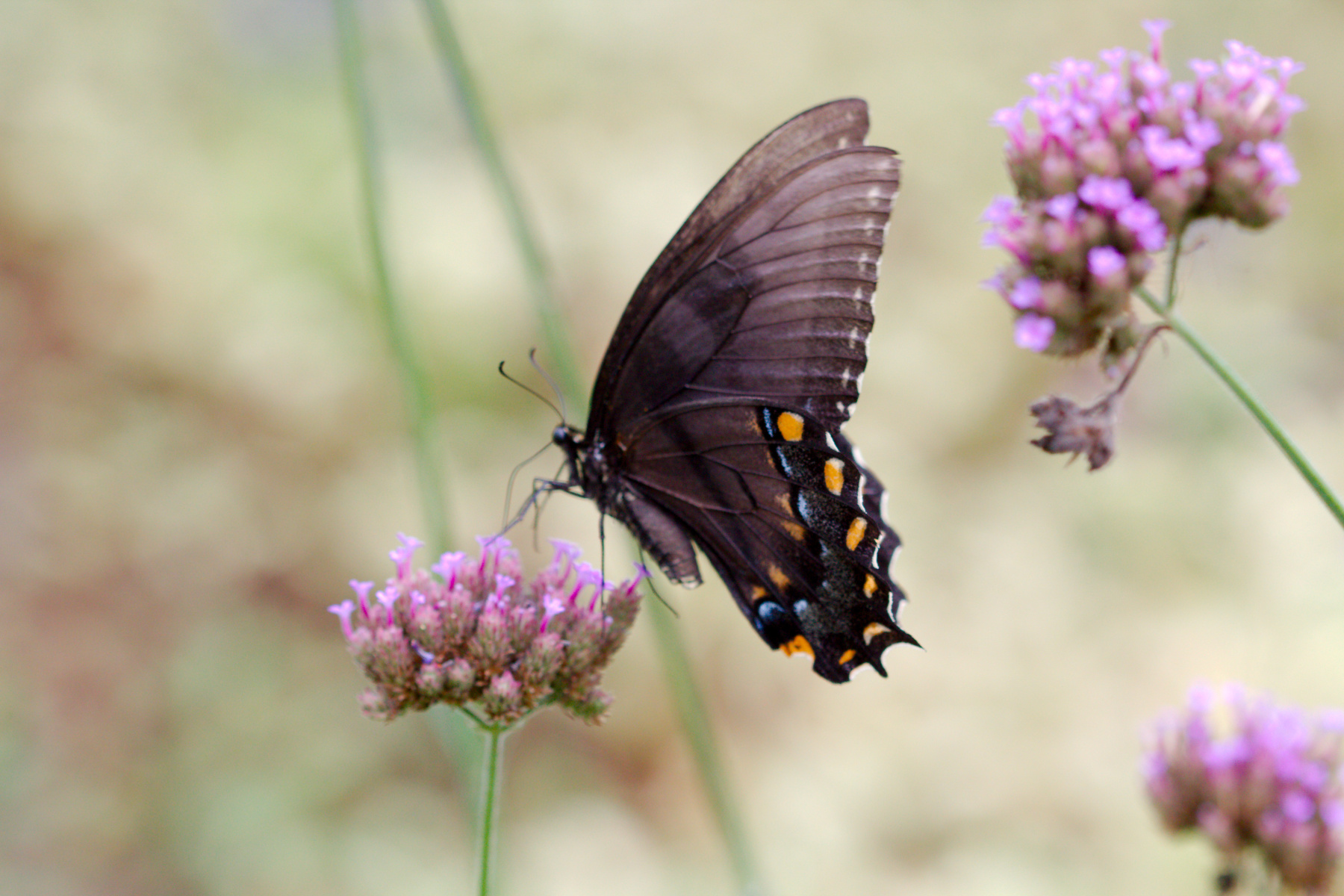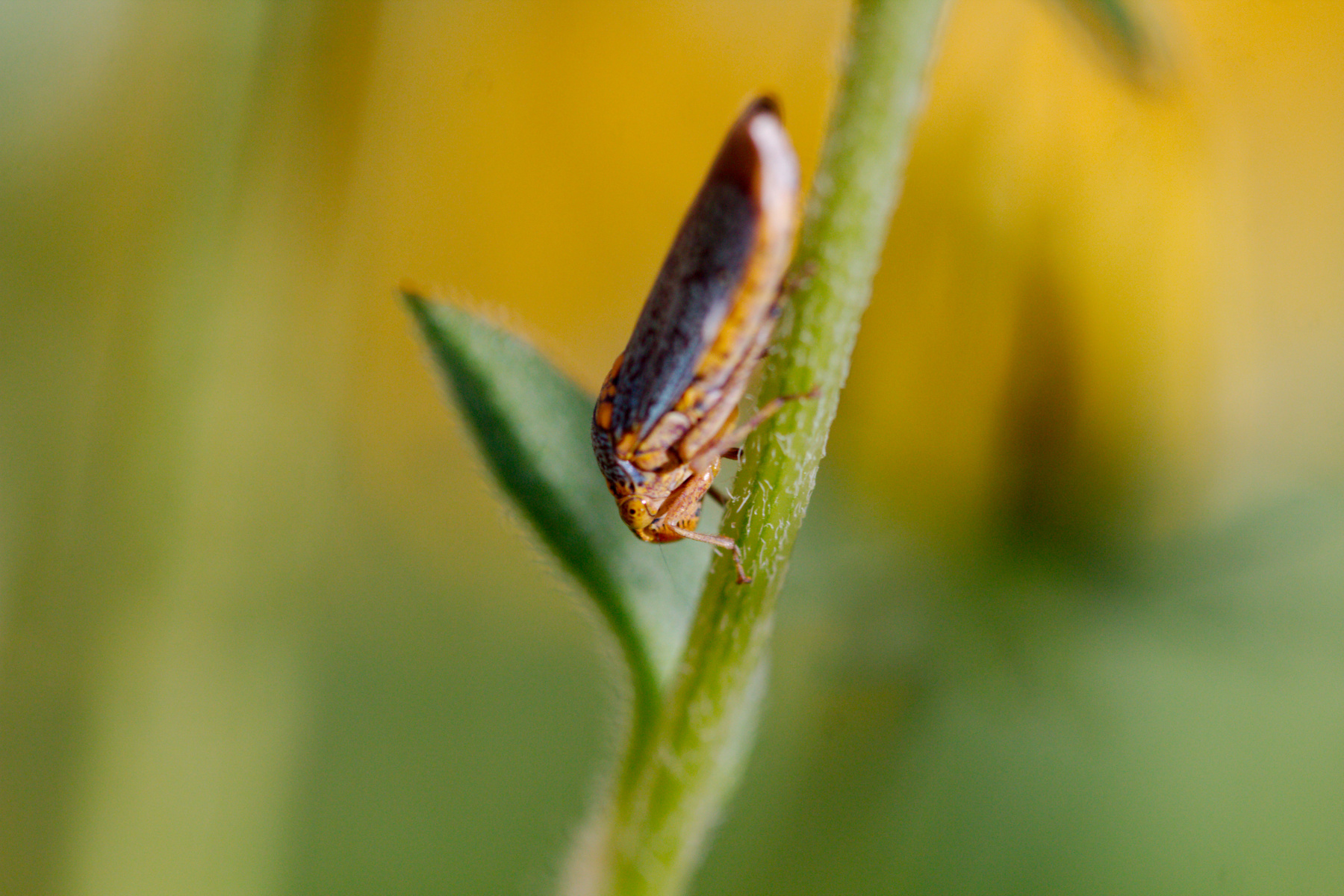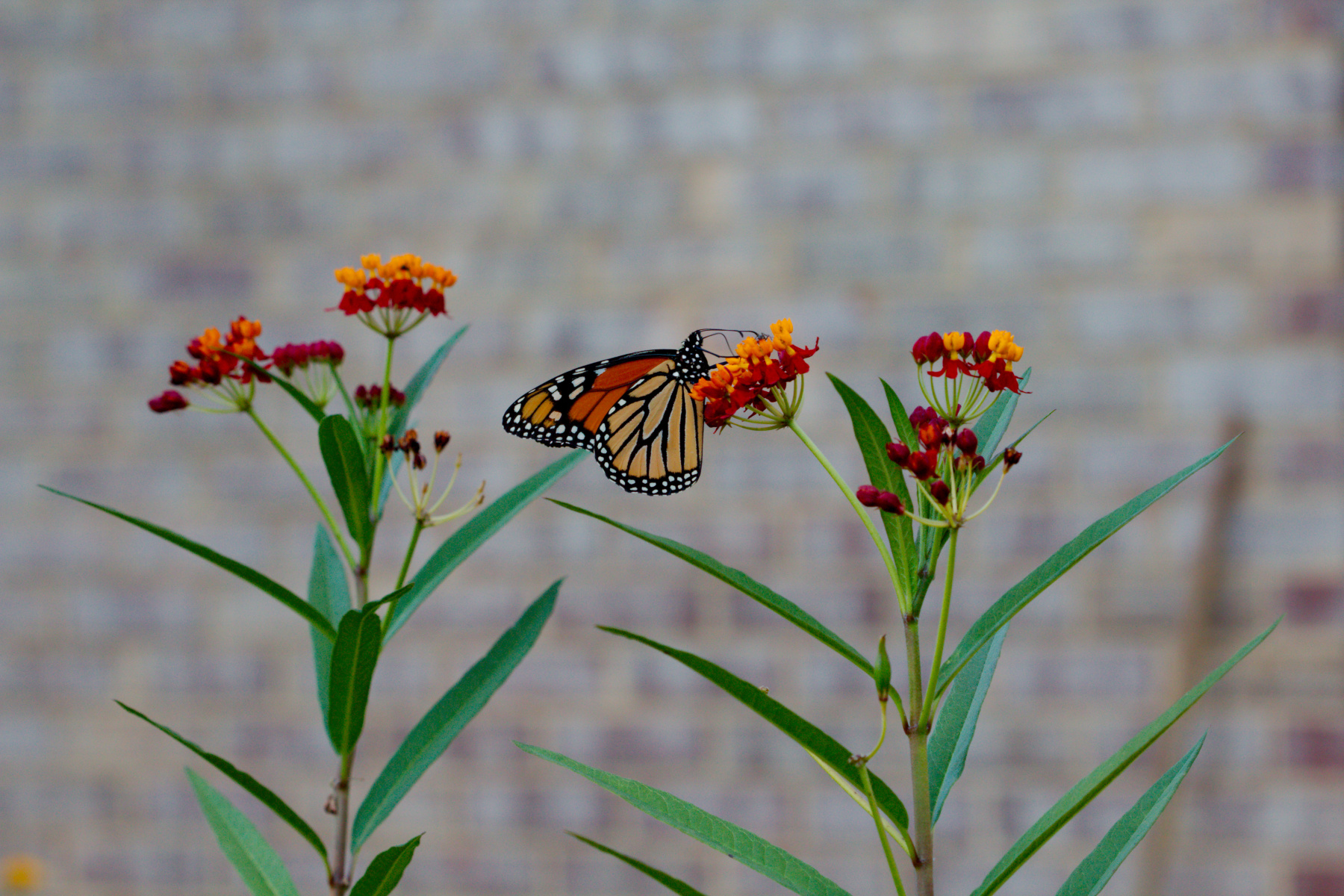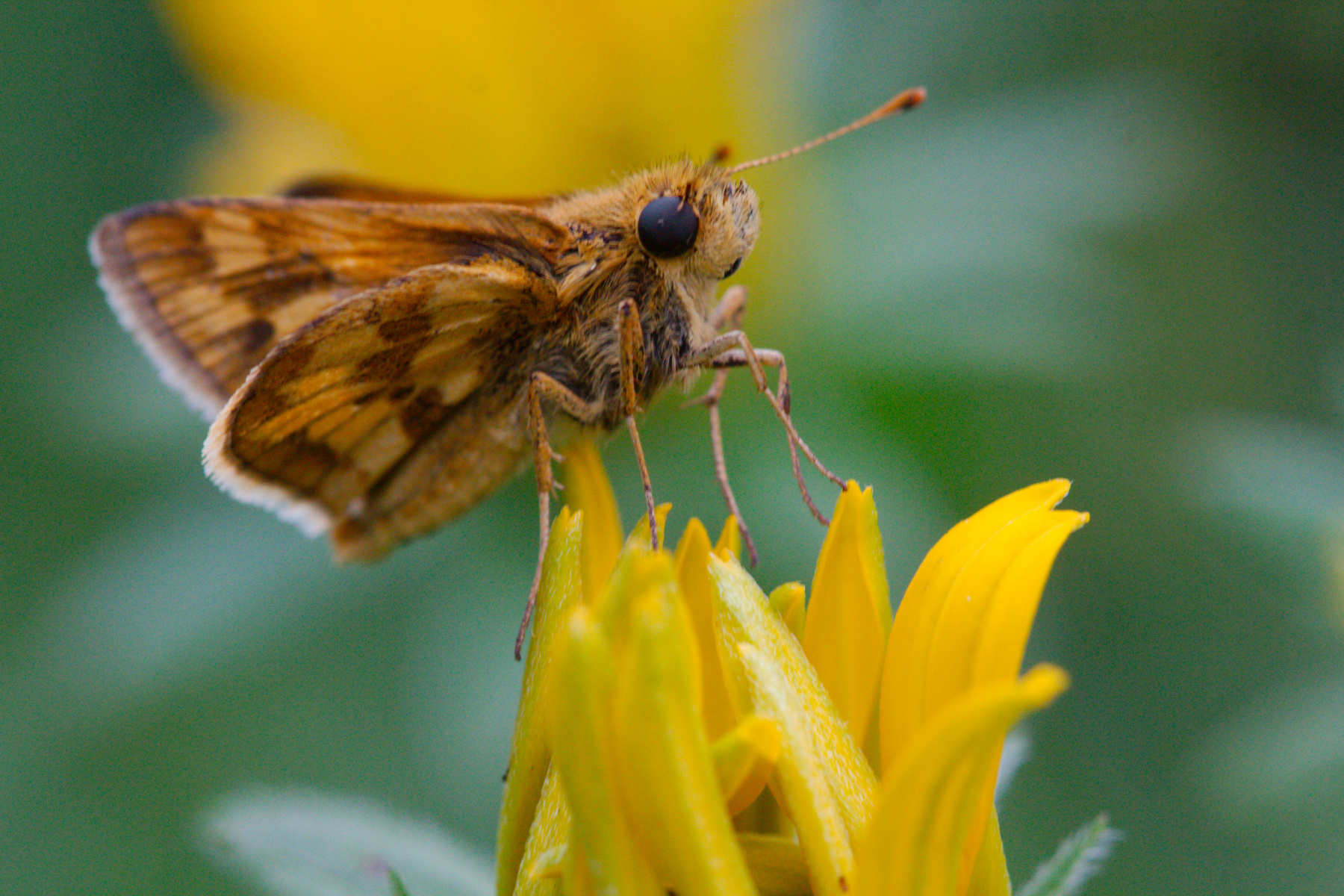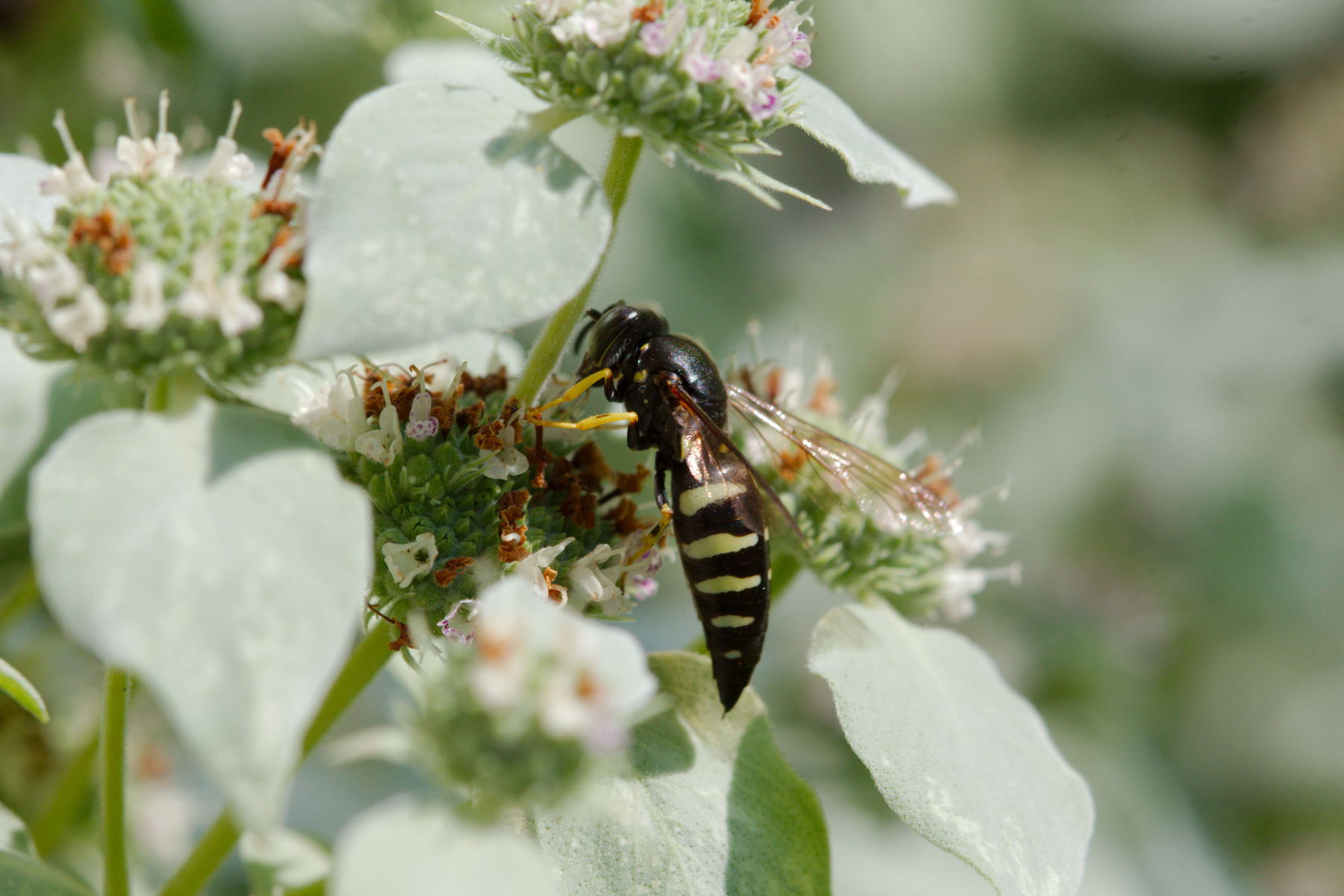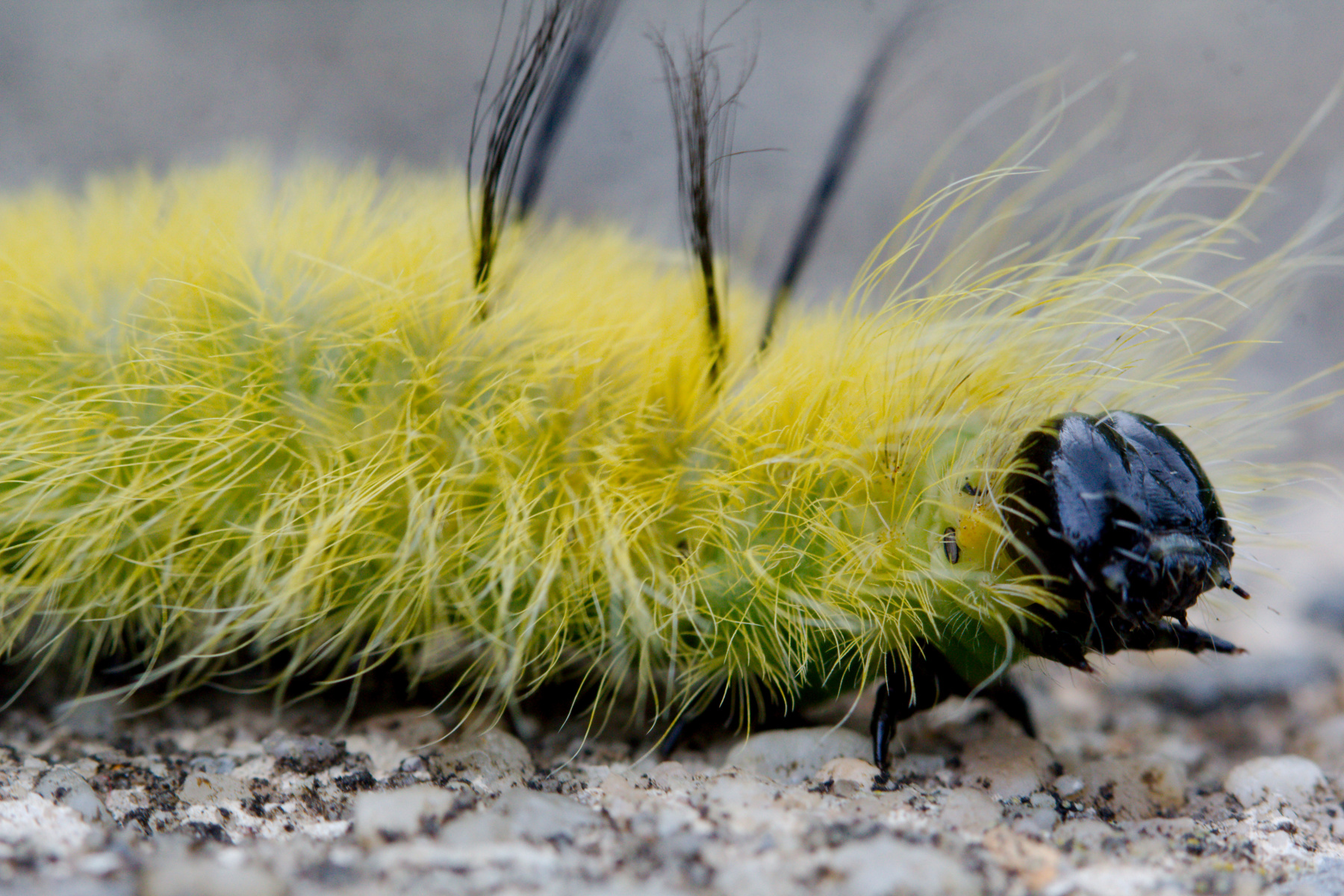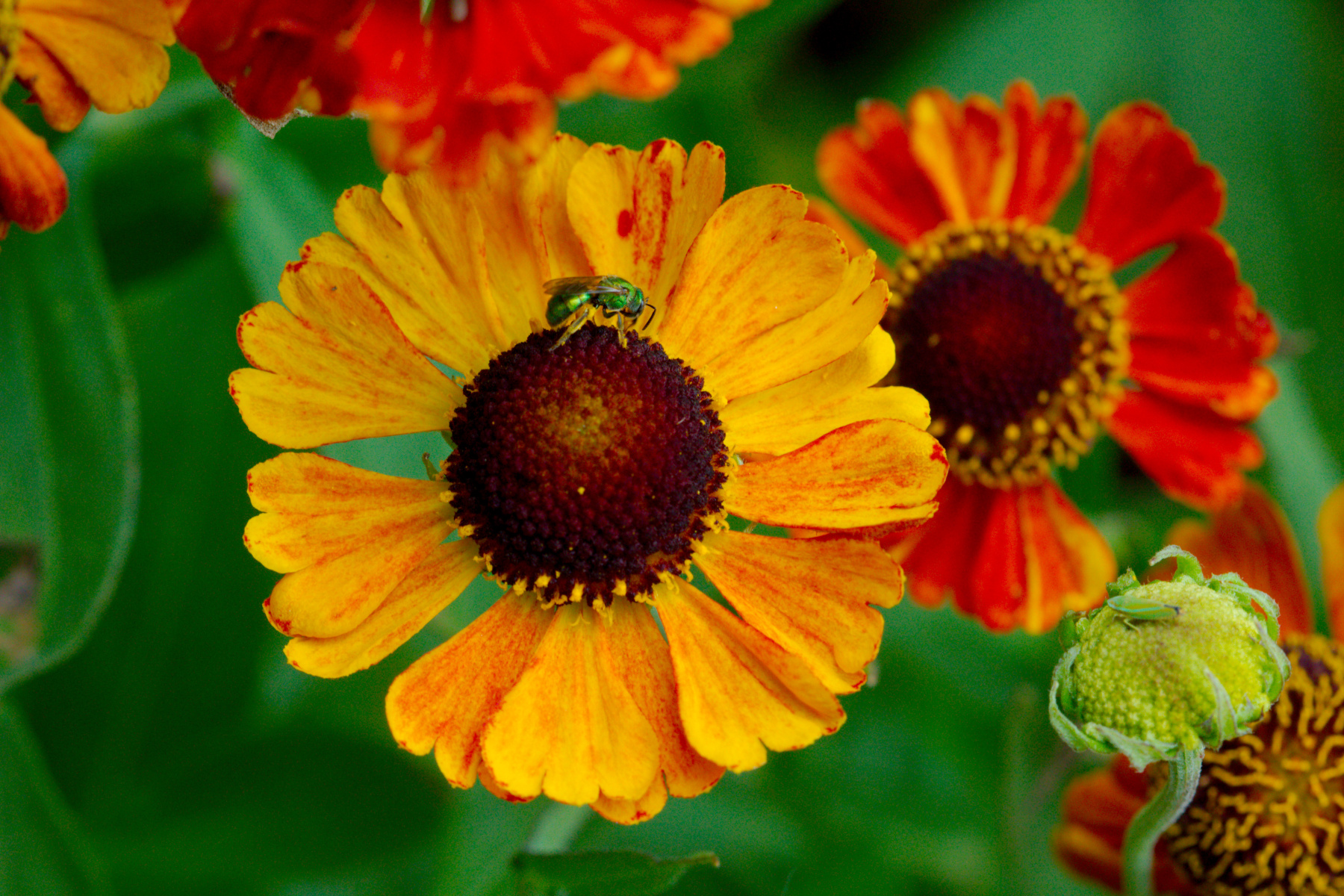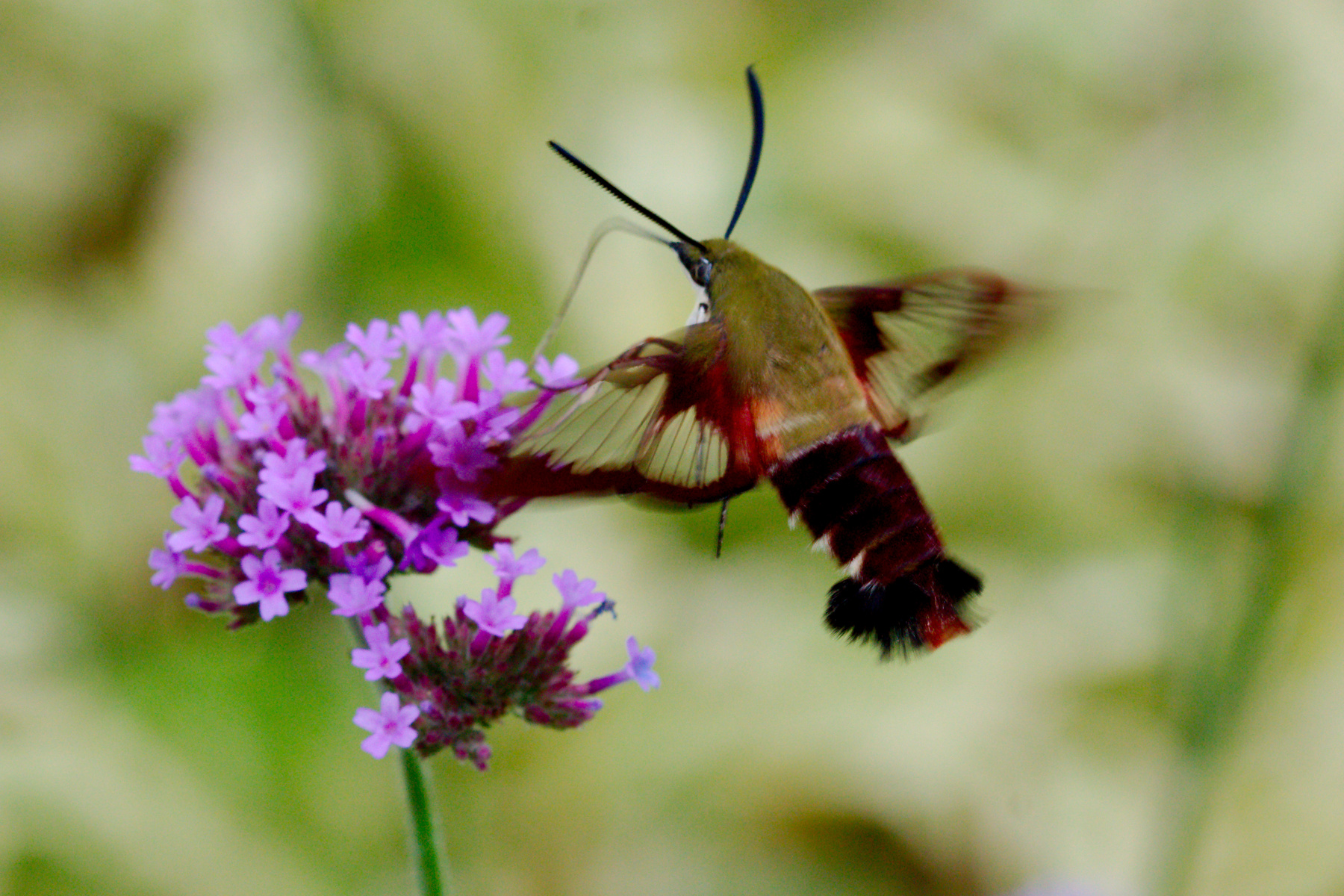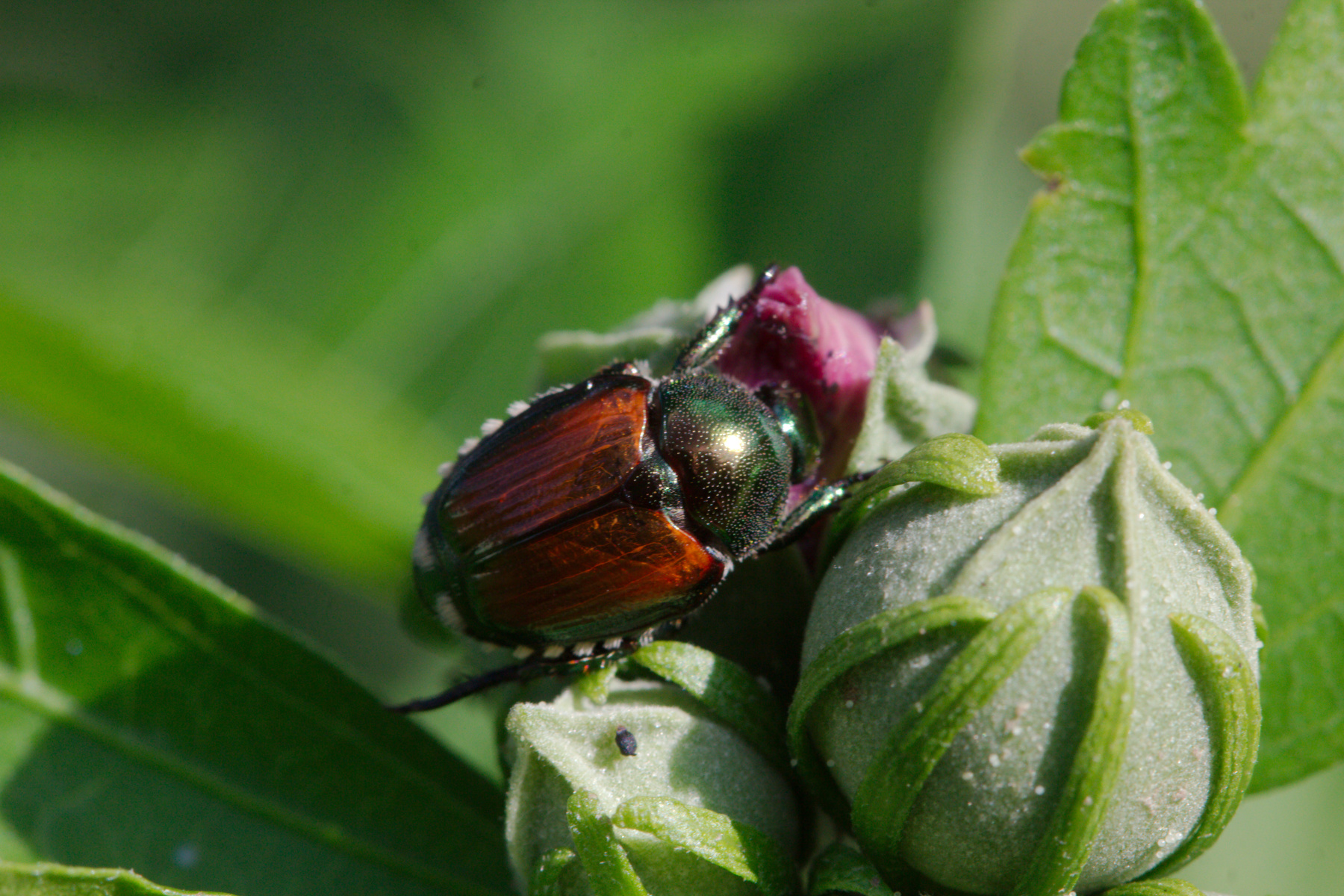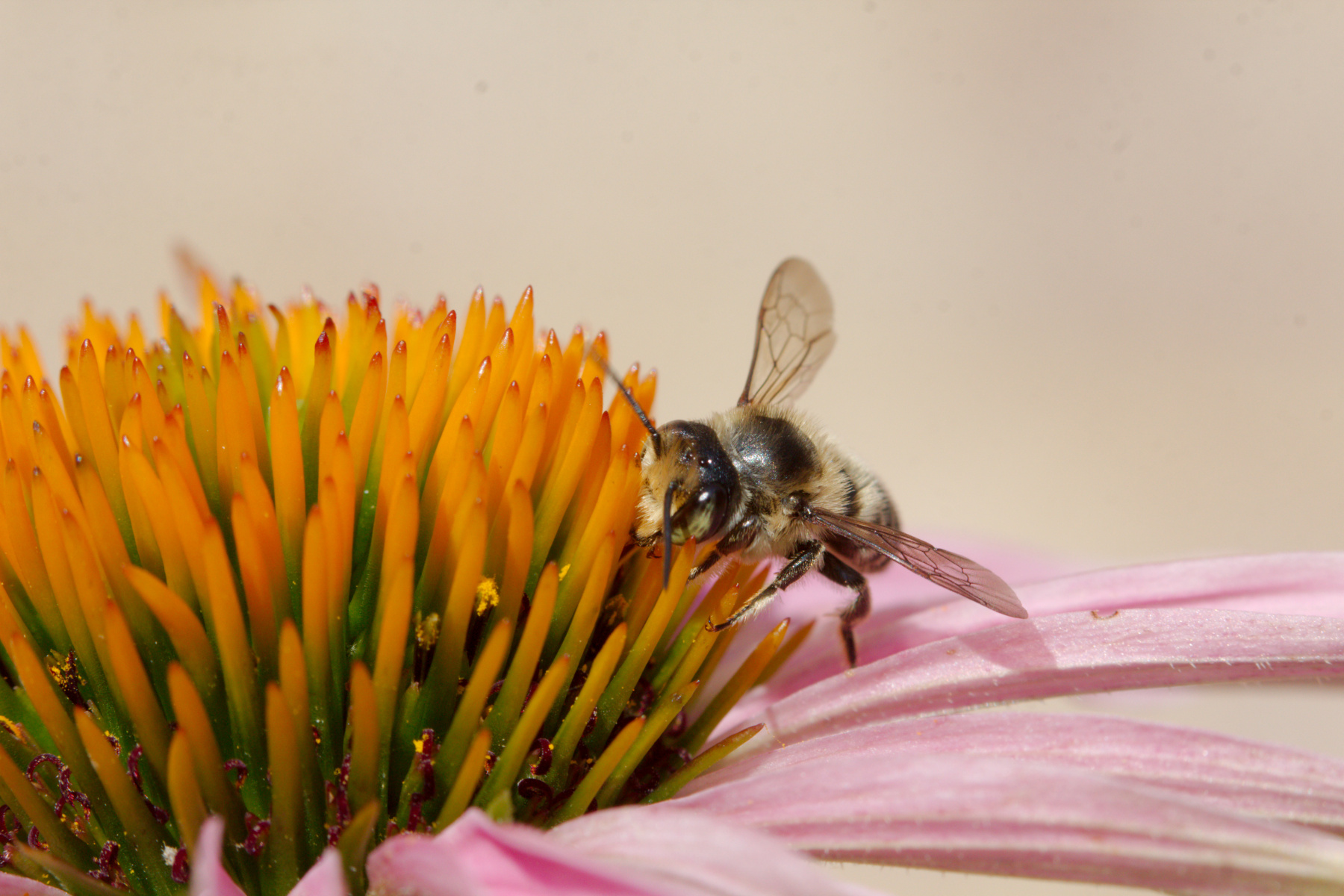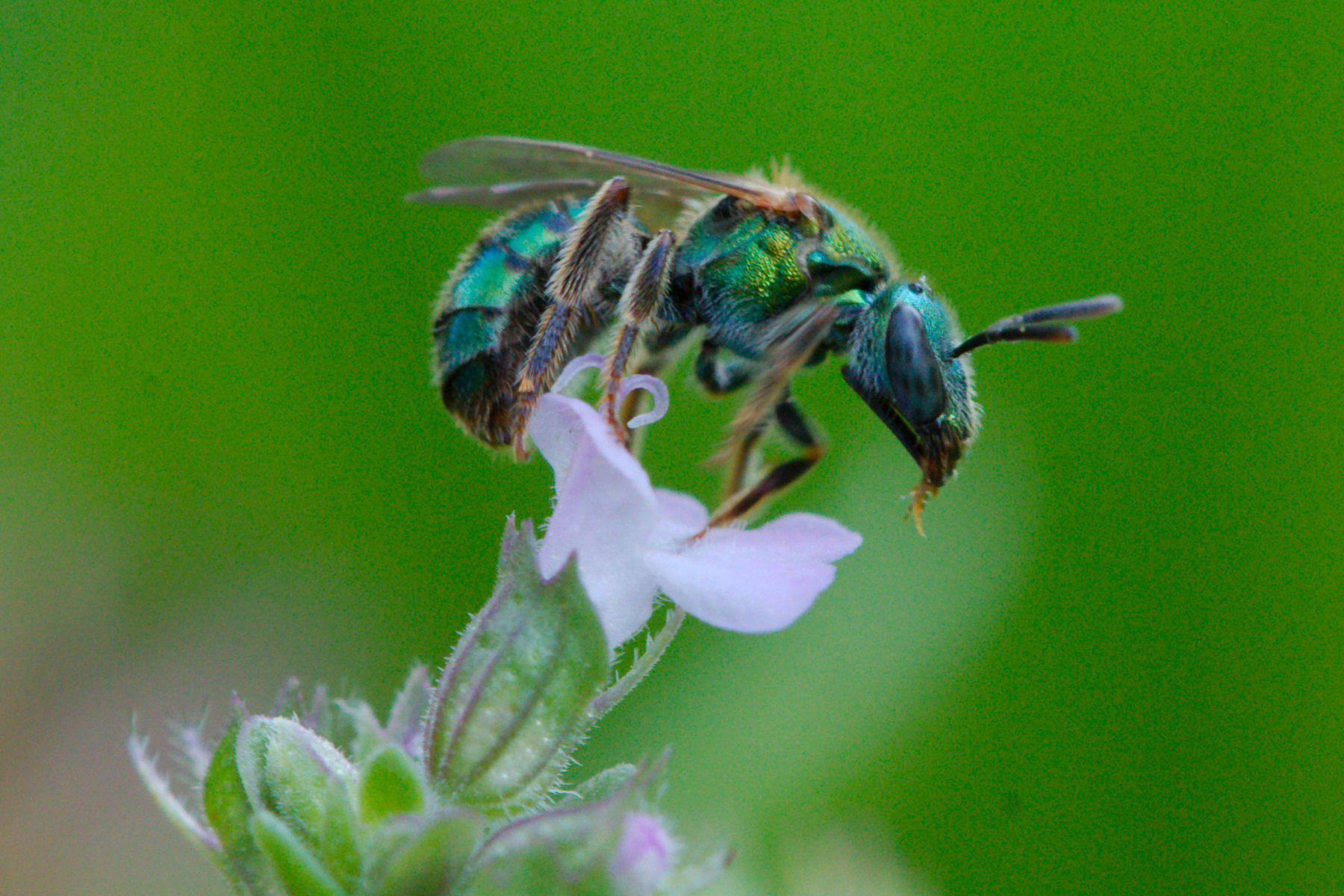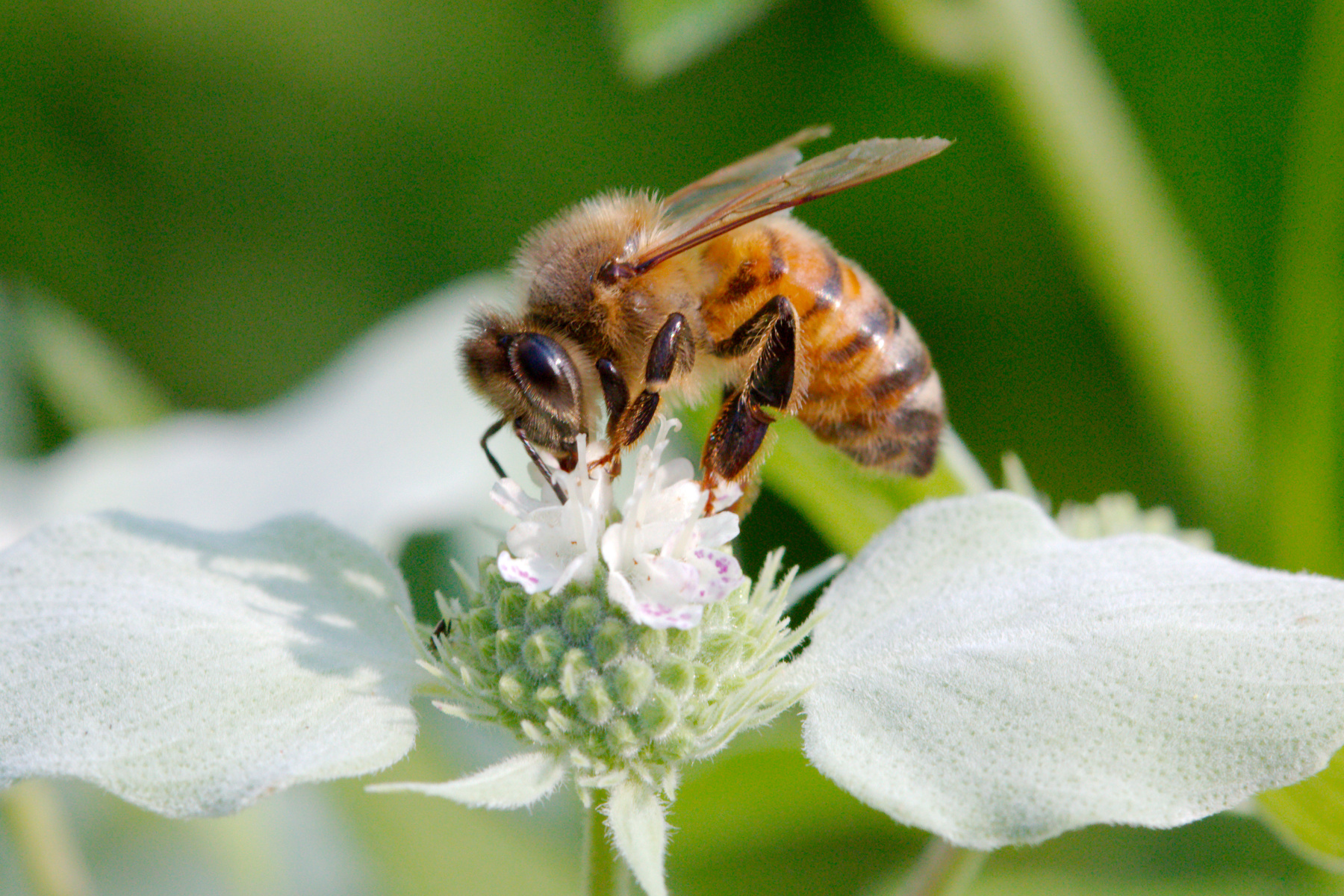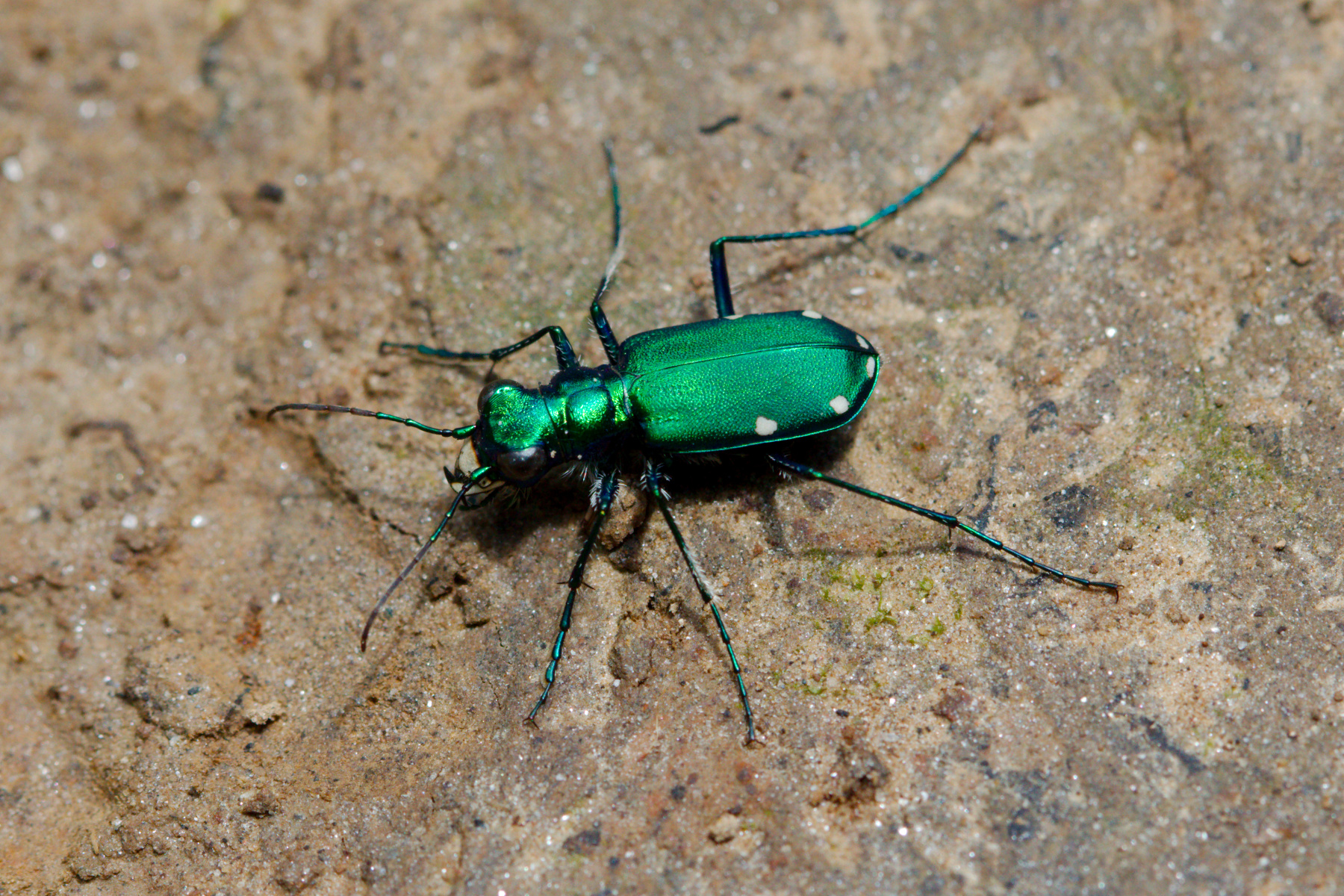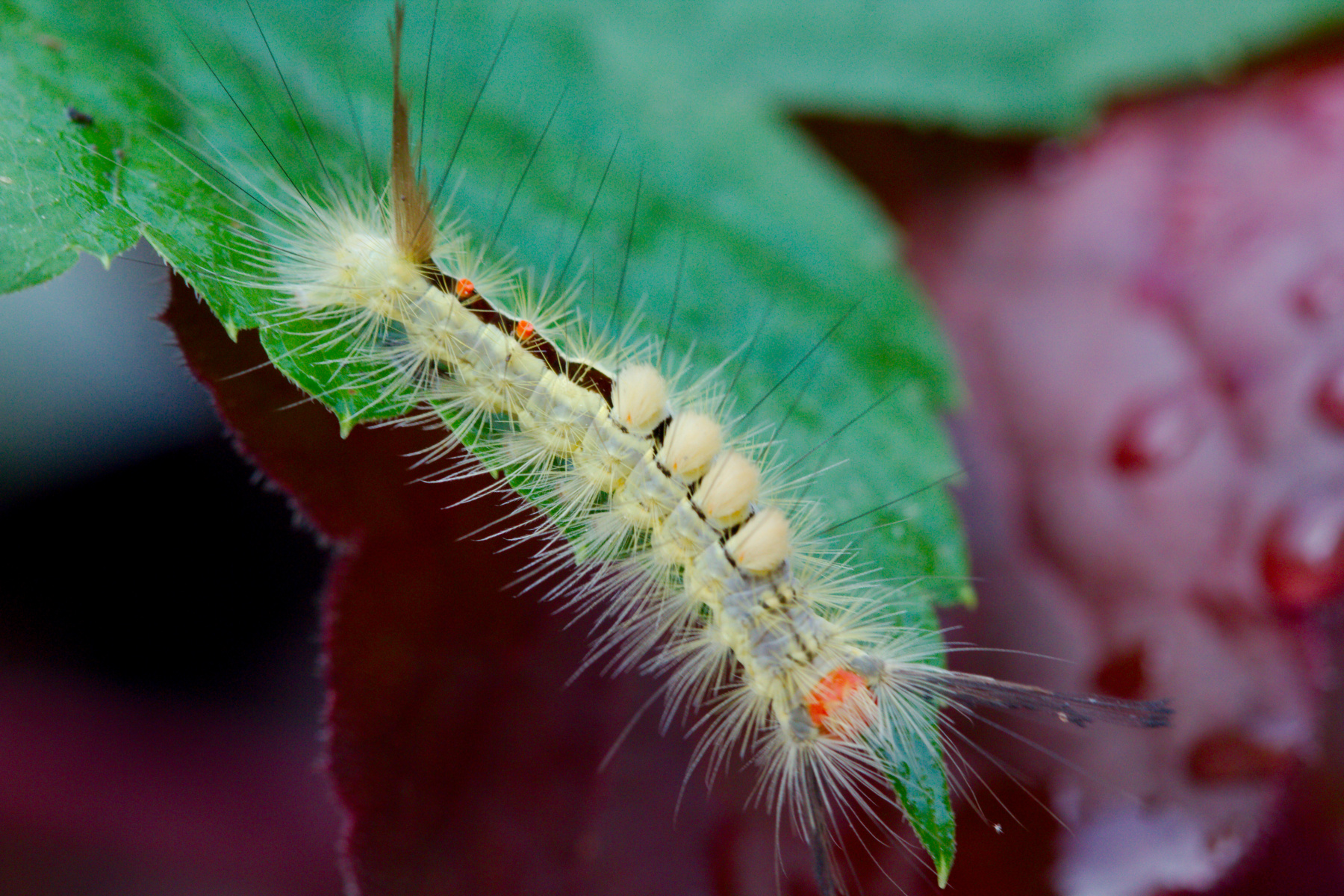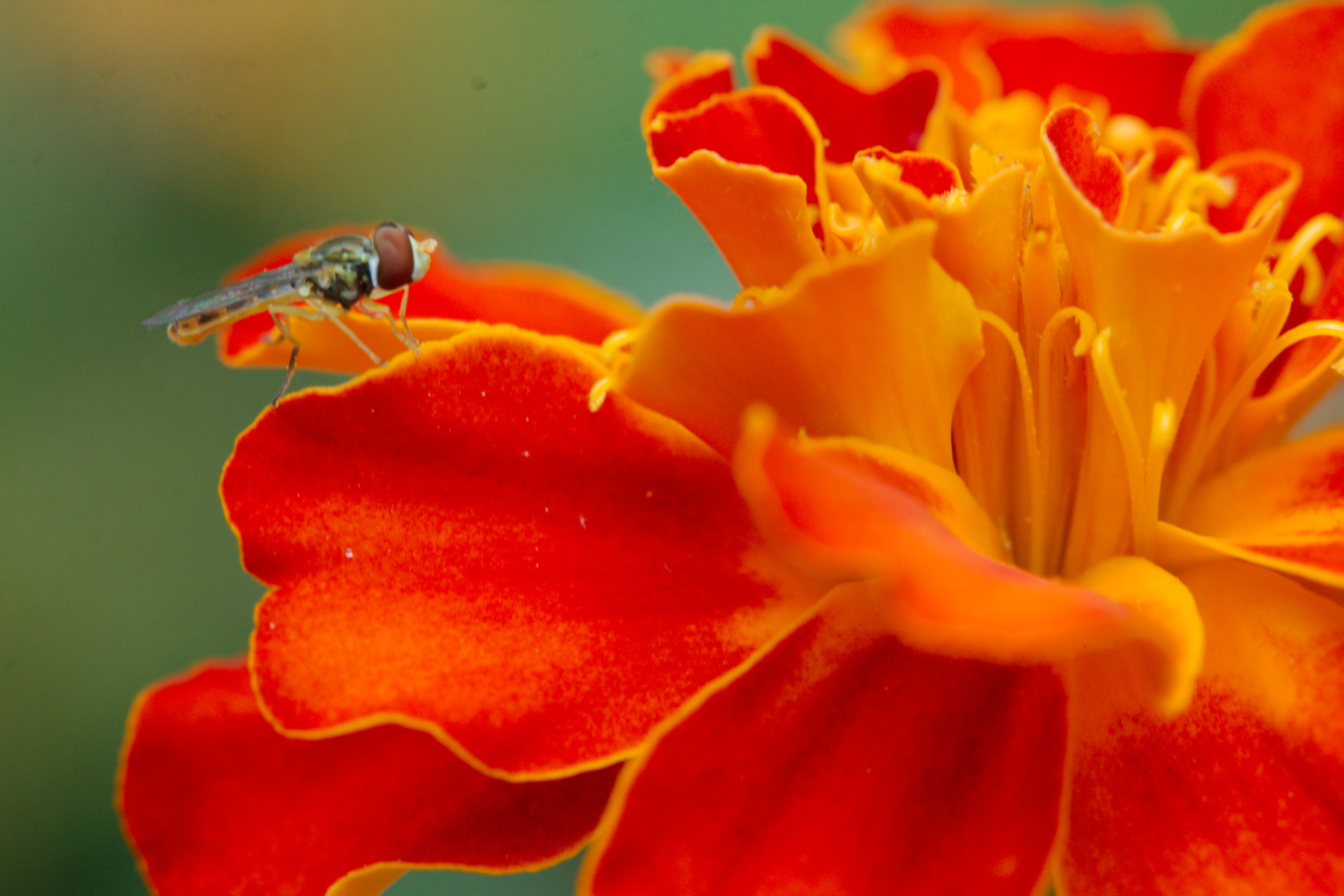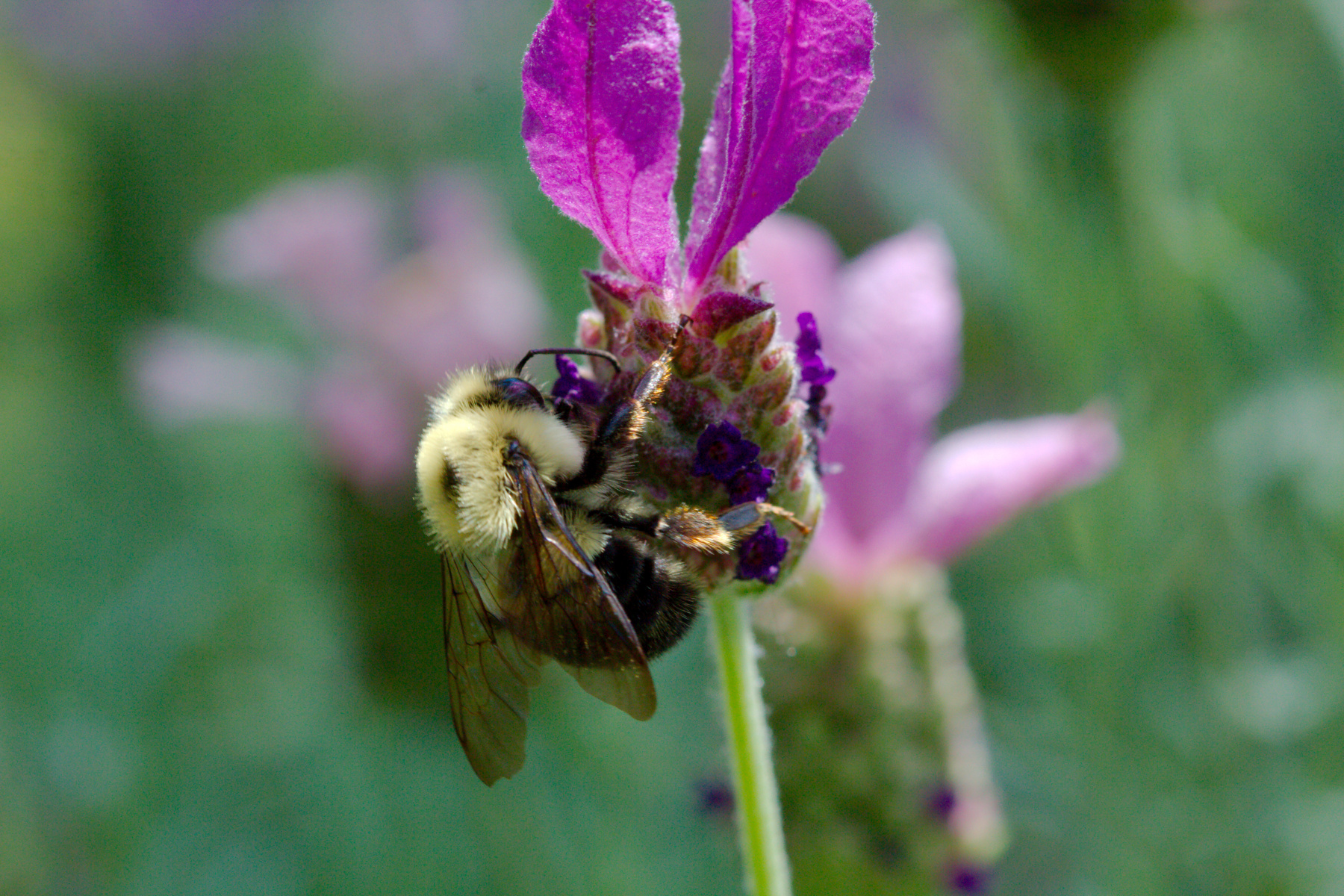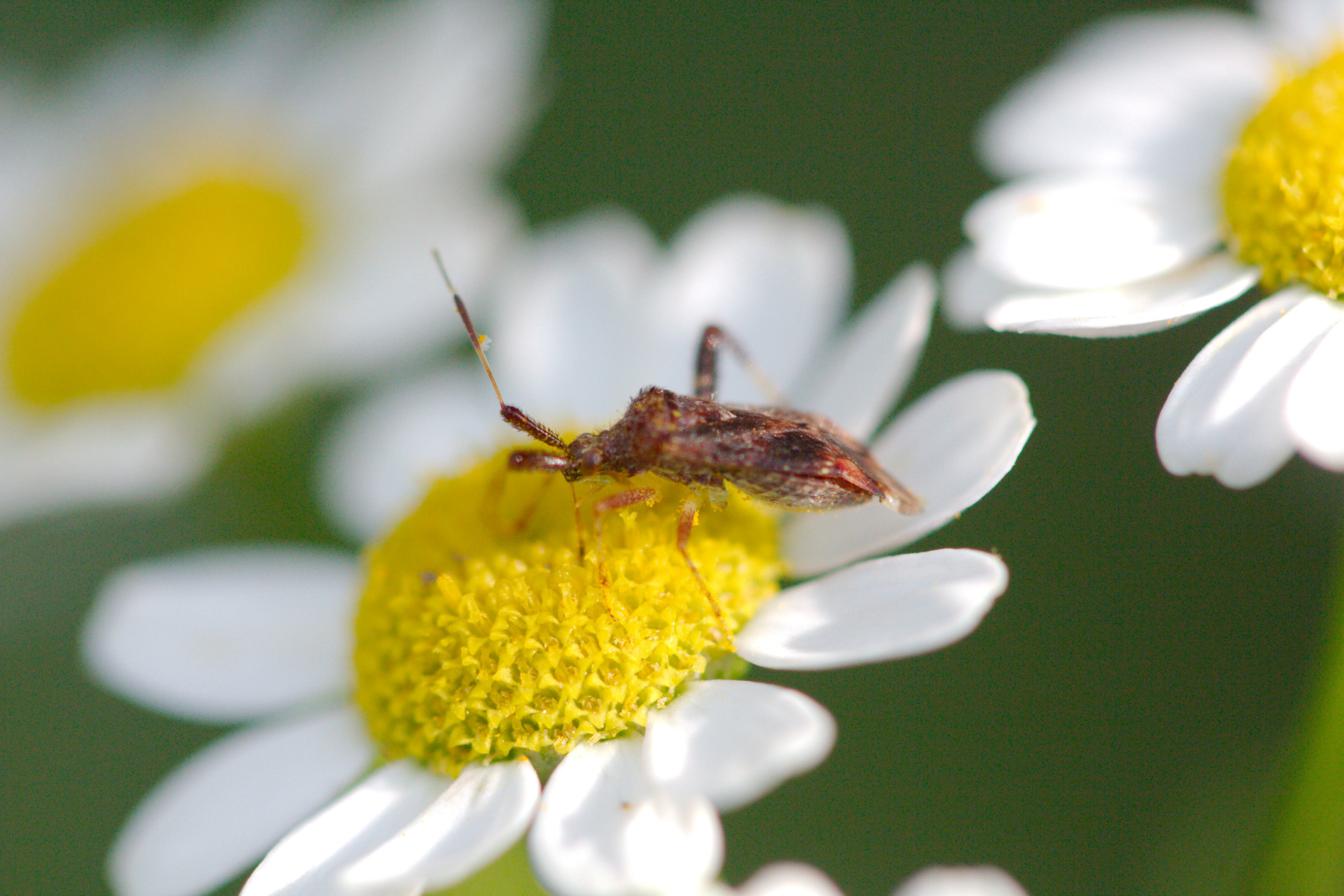
I spent the morning at Rocklands Farm today, taking pictures of some wine-making activities as well as quite a few of Greg’s cattle. I helped him separating the cattle into two groups and then herd one group to the upper end of the pasture. I took quite a few photos of ripe grapes, as well, although the anticipated harvest activities was put off so I didn’t get that. As is common, I also took pictures in Janis’ garden and got this pretty nice photo of a variegated fritillary (Euptoieta claudia) on the zinnias. All in all, it was a lovely morning.
Creatures
Euptoieta claudia (Variegated Fritillary)
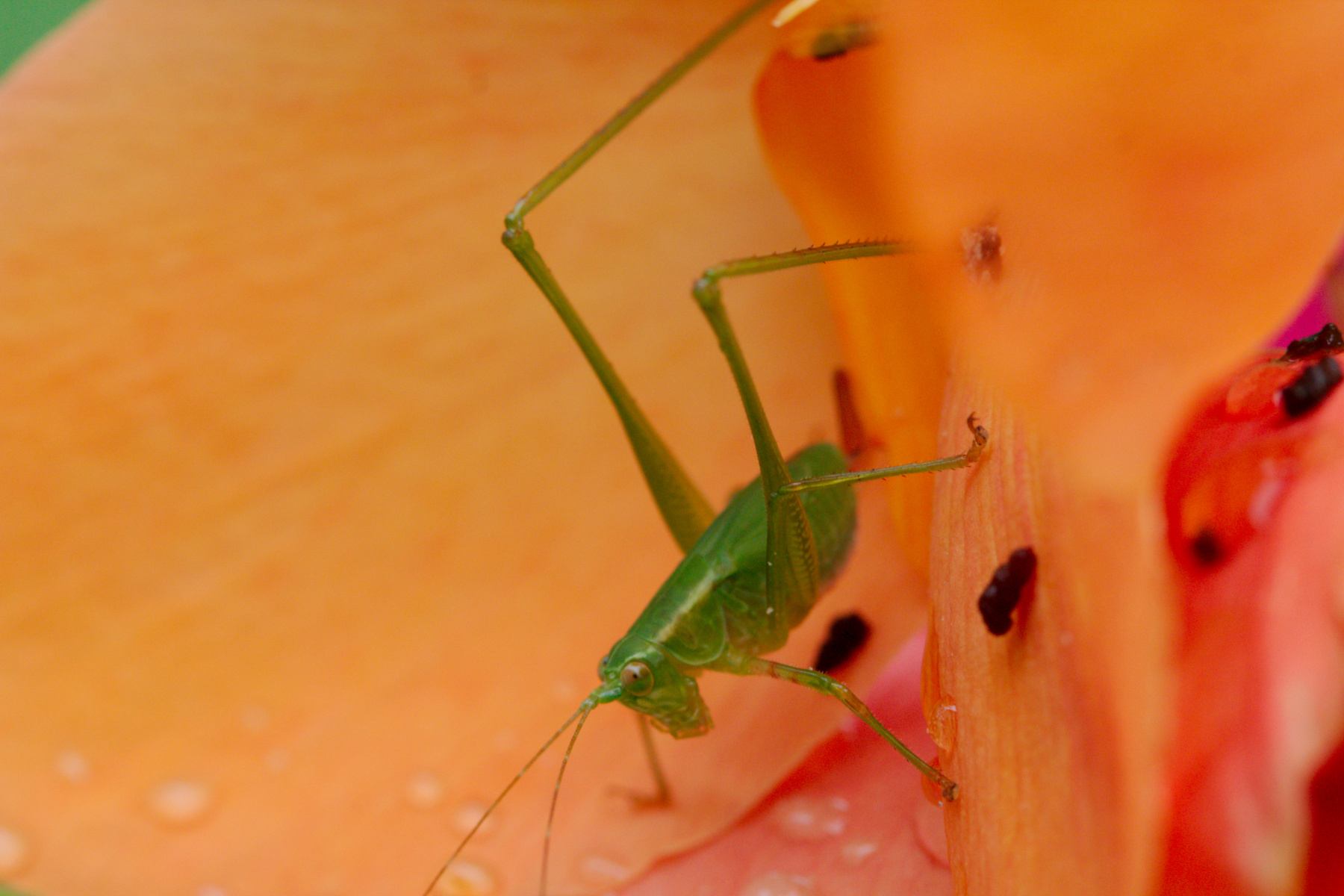
Melanoplus differentialis (Differential Grasshopper)
We had to drive out to Quince Orchard this morning and since we were already out that way we figured we might as well go somewhere and enjoy being outdoors. We continued out Rt. 28 and then turned onto White Ground Road. We stopped at the Boyds Negro School (1896–1936), across from the Edward Taylor Elementary School. Then we stopped again at St. Mark’s United Methodist Church and Cemetery. After walking around the cemetery a while, we decided to see what the Hoyles Mill Trail was like from where it meets White Ground Road (just across from the Methodist Church) to Little Seneca Lake in Black Hills Regional Park. It was a nice walk, not at all difficult with both woods and some open country, alongside corn fields (which have been harvested). I saw this grasshopper, a differential grasshopper (Melanoplus differentialis) and was able to get close enough for a pretty good photo.
Busy As A…
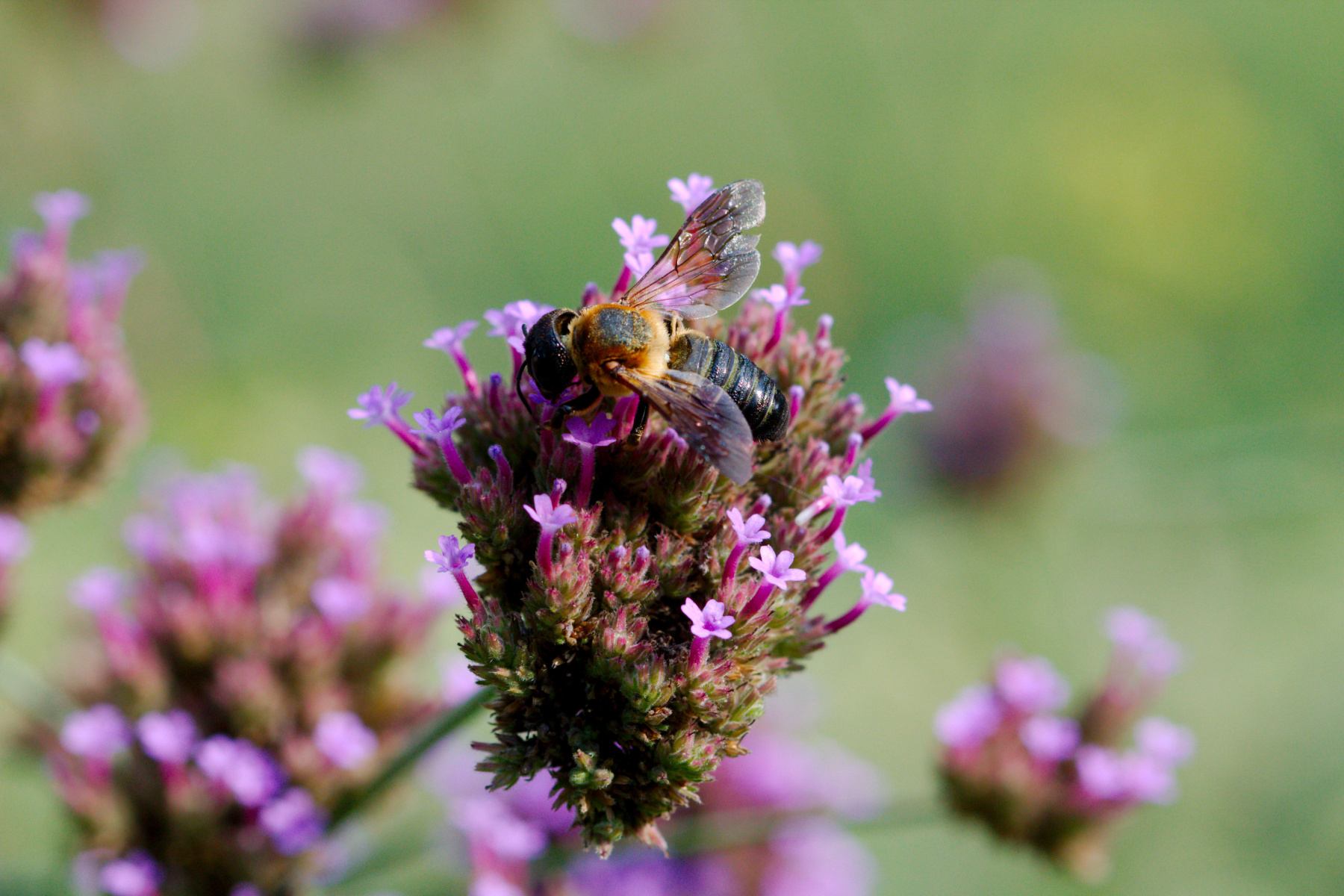
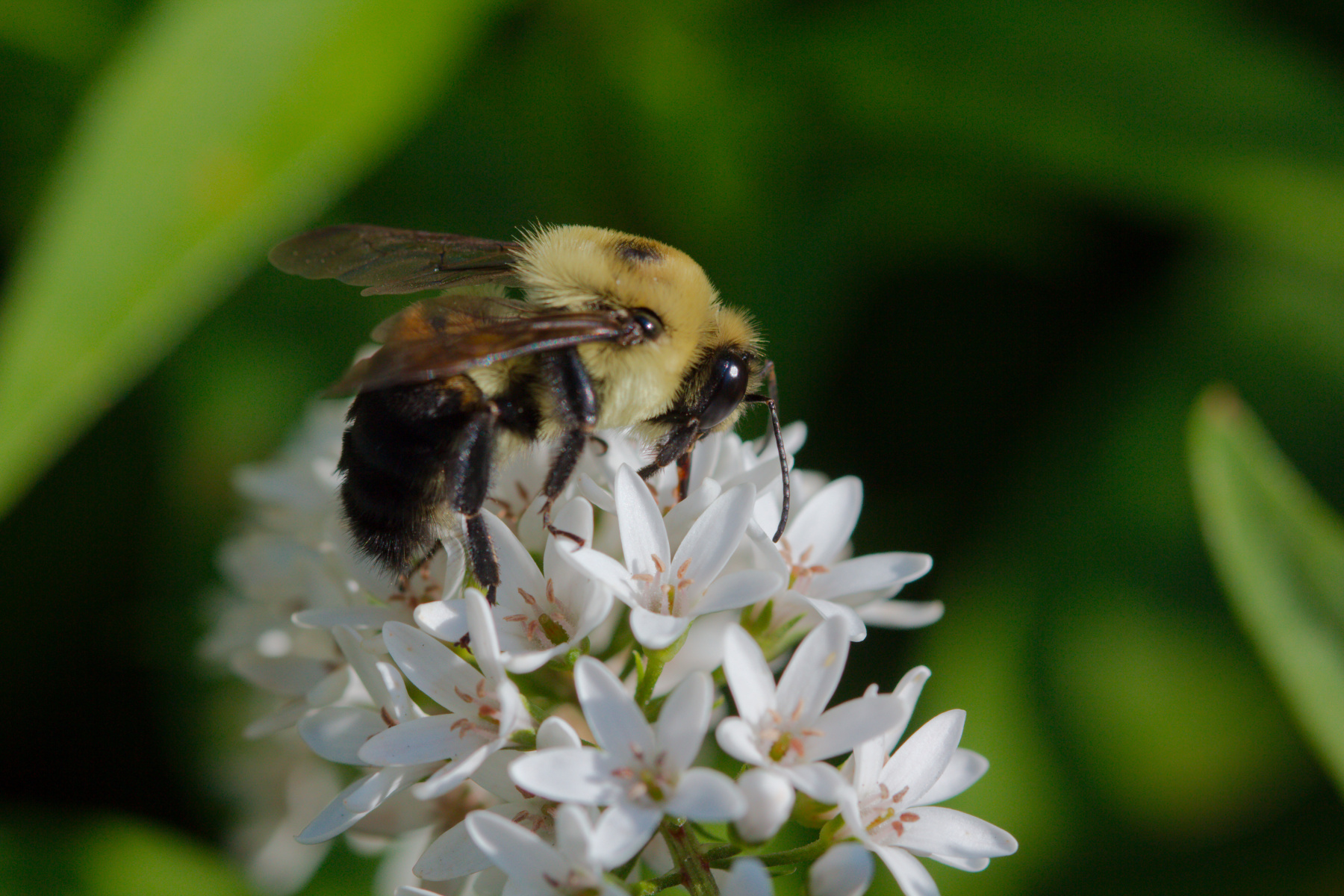
Cathy and I went to Stadler Nursery late this morning. I bought a ninebark (Physocarpus opulifolius) called ‘Fireside’. It has very dark leaves which are a really lovely red early in the year and darken until they are nearly black in the late summer and fall. As usual I also took some flower photos. Getting an insect on the wing is not something I’ve had much success doing but this one turned out pretty well. It’s a common eastern bumble bee (Bombus impatiens) leaving a Rudbeckia ‘Herbstonne’ flower. We have a lot of Rudbeckia in our yard but most of it is one variety that is quite invasive. I wouldn’t mind thinning that out and replacing some with different types and this one is pretty nice.
Moth and Eagle
We had some out of town guest this weekend but they were here mostly to do the D.C. tourist thing. Late this morning the headed downtown to hit the museums and Cathy and I decided to go to the C&O Canal, walking northwest from Pennyfield Lock. It was a beautiful day, warmer than I prefer but only by a little. In the shade and particularly when there was a breeze it was lovely. We saw lots of painted turtles (Chrysemys picta), a great blue heron (Ardea herodias) and quite a few wildflowers. For today’s post I’m putting up two photos. The first is an ailanthus webworm moth (Atteva aurea) on a sunflower (Helianthus) of some sort. The larvae live in communal webs on their host trees. Interestingly, while they are thought to be native to South Florida, the ailanthus for which they are named (Ailanthus altissima, Tree of Heaven), is native to Northern China. It is believed that their original larval host was the paradise tree (Simarouba glauca) and Simarouba amara. It started moving north around the 1850s when introduced Ailanthus altissima contacted the moth’s native range.
The second photo is, as you have probably surmised, a Bald Eagle (Haliaeetus leucocephalus). Cathy had walked a little further along and I waited in the shade at a pretty spot to take a few photos of the wildflowers there. While I was waiting for her to return I looked up and saw the eagle. I was able to point him out to a few others walking or biking on the canal but it was gone before Cathy returned. This isn’t the sharpest photo but it’s pretty clear what it is. The dark spot in the lower right is another bird. There were quite a few, flying fairly high in the sky.
Phyciodes tharos (Pearl Crescent)
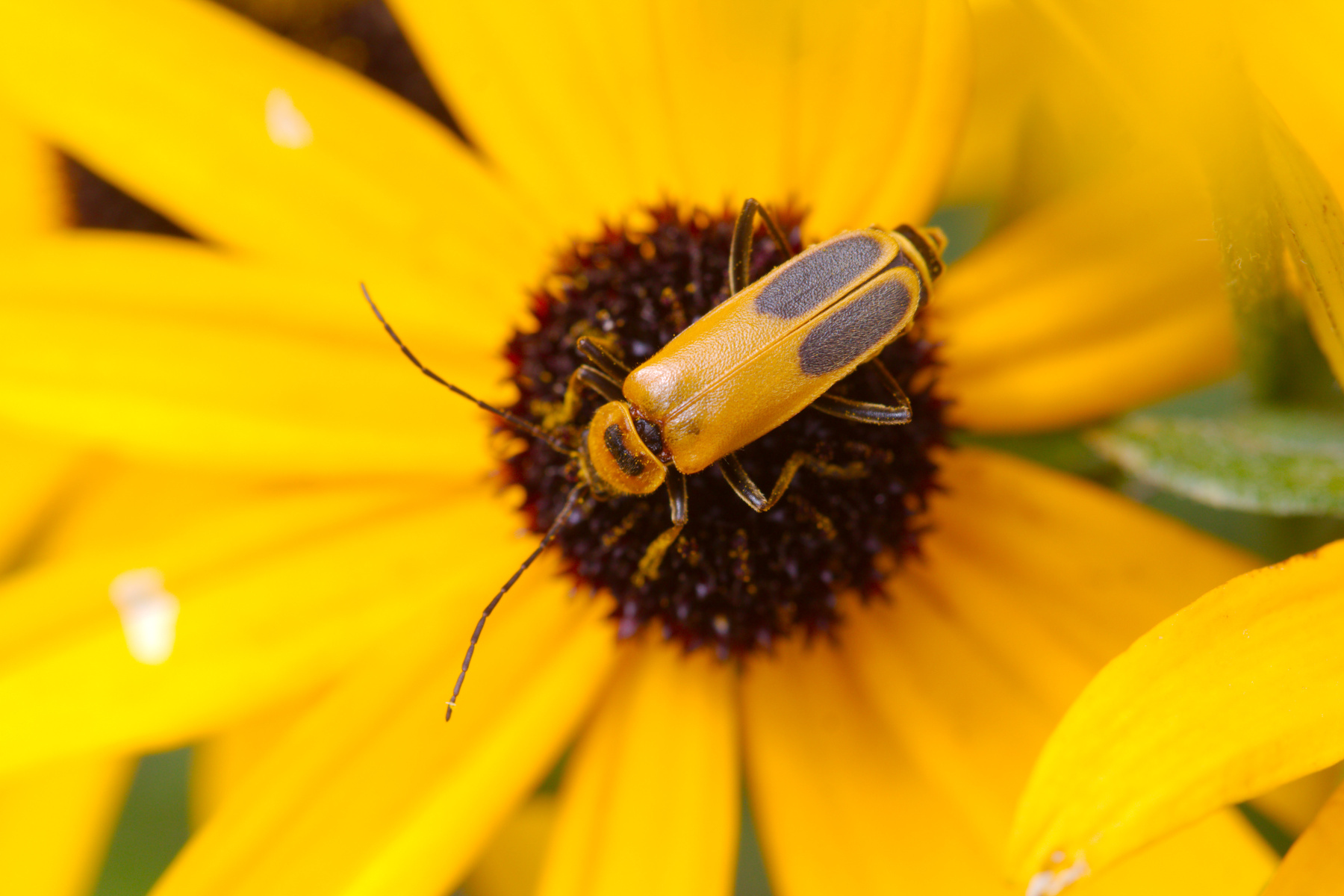
We were out at Rocklands again today. They were having a picnic for their Cellar Club and asked if I’d come to take pictures. Since many of the pictures were of people but people that I don’t really know, I decided to post this one. It’s a pearl crescent butterfly (Phyciodes tharos) and it was in Janis’ garden. This is a fairly common little butterfly but you do sometimes have to pay attention to see them. They aren’t particularly flashy. I also took pictures of a few flowers and a nice shot of a soldier beetle.
Scolia dubia dubia (Two-spotted Scoliid Wasp)
From McKee-Beshers we went to Rocklands Farm. We were greeted by Janis who took us to her garden and gave us tomatoes and eggplants. I photographed these two-spotted scoliid wasps (Scolia dubia dubia) on the Eryngium in her garden. There were probably a dozen of them on the small plant with a lot of movement. There were a few other wasps but most were this very distinctive subspecies of blue-winged wasp. We bought burgers and Brussels sprout from the Boxcar Burgers truck and a bottle of wine from Rocklands and enjoyed a warm but beautiful evening sitting by the barn. A nice way to spend a summer evening.
Diabrotica undecimpunctata (Spotted Cucumber Beetle)
Cathy’s brother arrived from the Chicago area today and in the evening we all went to the Agricultural Farm Park. In the dahlia garden, we spotted this spotted cucumber beetle (Diabrotica undecimpunctata) on a beautiful magenta dahlia. It’s not peak season for the dahlias quite yet, but there are enough blooms to make it worth visiting, if you’re in the area. The demonstration garden ‘next door’ is in fine fettle and also worth walking through. It’s in a lot better shape this summer than last year, when I suspect getting people to work on it was a bit harder.
Growing Fawns
A month ago (see Sunday, July 04, 2021) I had a photo of one of two fawns that were in our back yard. Exactly one month later, the fawns are still roaming the neighborhood and we saw them in our yard again. They were slightly more alarmed by my presence than they had been a month ago but I was still able to get fairly close to them before they took off. As you can see, they are still spotted but the spots are less well defined and obvious. We’re slightly amazed that they’ve lived this long, being so close to a busy road with all its traffic. It’s nice to see them, but then, of course, they’re here eating our garden, which isn’t so nice.
Eurytides marcellus (Zebra Swallowtail)
After spending a few hours at McKee-Beshers, we stopped at Rocklands Farm for a little while. It was closing soon and we didn’t stay long but I took a few pictures, including this zebra swallowtail Eurytides marcellus on Janis’ buddleia. I’m pretty sure this is the first of them that I’ve seen and definitely the first I’ve photographed. It’s really a striking butterfly, with the bright red on the underside of it’s wings. I was really happy to get this photo. As for the rain that had been coming down fairly heavily when we left home, the roads were drying up by the time we got out here and by the evening the sky was totally clear.
Dragonfly
I’m not 100% certain of the species of this dragonfly. I think it may be a riverine clubtail (Stylurus amnicola) but I’m not sure. This was taken on the Monocacy River aqueduct just over the line in Frederick county. It was a hot afternoon and we were glad to be in the shade on the towpath. There is fruit on some of the larger pawpaw trees (Asimina triloba) but they are a little way from being ripe. We also enjoyed watching the swifts (Chaetura pelagica) that were flying out from a ledge on the face of the aqueduct to catch insects.
American Toad
It wasn’t quite so hot this evening so Cathy and I decided to walk in the woods around Lake Frank. It was still warm and quite humid, so I ended up pretty much drenched in sweat, but it doesn’t take a lot for me to get that way. We happened to see this American Toad (Anaxyrus americanus) on the trail. It’s one of only two species of toad native to our area, so identification isn’t all that difficult. He’s a handsome fellow, don’t you think? Don’t let the frown fool you. This is ideal toad weather, especially now, with all the insects being about.
Arilus cristatus (Wheel Bug)
I happened to notice this insect on my car this morning. I’d an immature wheel bug (Arilus cristatus) and I’ve always found them to be kind of cool. The adult wheel bug has a cog-like projection on its back, which is where it gets its common name. The wheel bug preys on caterpillars, aphids, bees, sawflies, etc. so they’re actually good to have around. They do bite, if mishandled (or sometimes just handled) and their bite can be quite painful. So, I’d avoid messing with them, if you have the choice. Just leave them alone and let them eat what they eat.
Fawns
We had two white-tailed deer fawns in our back yard today. As I post this two weeks after the fact, we’ve seen them together a few times, so as of yesterday (July 17) they were both still alive. With a busy road not too far away, we’re a little surprised, to be honest. When I first saw them and grabbed my camera, I figured I’d get a picture of them just before they ran away. When I opened the kitchen door to get the shot, however, they didn’t move, so I went outside and took another. Then as I walked out onto the patio, they actually came closer and got without about 15 feet before deciding that was close enough.
Tiger Swallowtail on Milkweed
I stopped at the Croyden Creak Nature Center again this afternoon. I took a picture of Joe Pye weed here two weeks ago (see Wednesday, June 16, 2021) and wanted to see if it had started to bloom. It really hadn’t but it’s getting close. I walked around and took a few pictures, anyway, including a few of this eastern tiger swallowtail butterfly (Papilio glaucus) enjoying the swamp milkweed (Asclepias incarnata). There was also a nice buttonbush (Cephalanthus occidentalis) in bloom. It has spherical clusters of tiny flowers that like little pincushions.
Lightning Bugs (a.k.a. Fireflies)
I’m not sure how well this will show up unless it’s viewed on a largish screen. Anyway, I decided to try taking long exposures to capture the flashing lights of lightning bugs, otherwise known as fireflies. They didn’t turn out as well as I would have liked, because when I used a long enough exposure to get a lot of flashes, parts of the picture were so bright that it looked like day time. That was mostly due to electric lights from our neighbors. If I get a chance, I may try to find a darker spot and see what I can do. The trails of lights are generally made by individual insects, flying along flashing as they go.
Cicada
This was taken on June 3, almost two weeks ago as I’m posting it. That was just about the peak of the so-called Brood X cicada swarm. It really was quite noisy. In the past I would sometimes go outside if I was on the phone. Not only is reception better, but I can avoid the parrot noise that sometimes interrupts phone calls. But with the cicadas, it really wasn’t practical. It’s interesting how variable it is throughout the neighborhood and the woods. Some places you’d expect it to be bad seem to have very few. They are pretty thick right around us, though.
Celithemis elisa (Calico Pennant)
We went up to Pennsylvania today just to hang out. It was probably what will turn out to be the most pleasant day of the summer. Cool, clear, breazy and absolutely lovely. We met our new neighbors, who invited us over to see their goats, which everyone enjoyed, especially Kaien and Silas. Dorothy had a few friend with her and they cut down a few trees that I had marked for clearing. And of course we cooked burgers and hot dogs on the fire. I took a few pictures, including this one of a calico pennant dragonfly (Celithemis elisa).
Cicada Exoskeleton
We went for a walk in the park late this afternoon. We went to see if the cicada noise was louder there and were surprised to find that there were parts of the woods where we could barely hear them. Other parts were about the same as in our yard. There was plenty of evidence of cicadas throughout the woods, with the tell-tall holes in the ground where they emerged and their shed exoskeletons on leaves, branches, and trunks. I like this one, back lit by the late afternoon sun.
Peony ‘Coral Sunset’
It’s peony time here. I love peonies and it’s a little surprising I haven’t planted more than I have. We have a few on the south end of the house that were here when we moved in. This one, planted in our back garden near the fence, is the only other one we have and I planted three of them in 2014. One thing about peonies is they take a while to really get established. Once they do, of course, they are hard to beat. Even a small plant like these, which only produce one or two blooms each, are pretty amazing, though. I really like this one, called ‘Coral Sunset’. I also love the fact that I caught a little potter or mason wasp hovering near it.
The Cicadas Emerge
The cicadas are coming, the cicadas are coming. There are two, large red oak trees in our front yard, both on the county right of way and planted when the neighborhood was built at the end of the 1960s. One of them has less than a dozen cicadas on it, the other has hundreds. This is on the second and is one of a few cicadas currently exiting their exoskeleton and transitioning to adulthood. They’re kind of creepy at this stage, all white and maggot-like. Of course, they’re nymphs for 17 years, and they are king of creepy that whole time, so I guess that’s not so surprising.